Storing vinyl records correctly is essential for preserving their sound quality and longevity. Proper storage involves maintaining optimal temperature and humidity levels, positioning records vertically, using protective sleeves, and avoiding common mistakes that can damage your collection. This comprehensive guide covers everything you need to know about vinyl record storage to protect your investment for decades.
Understanding Vinyl Record Storage Fundamentals
Vinyl records are made from polyvinyl chloride (PVC), a material that’s sensitive to environmental changes. When storing vinyl records, temperature fluctuations can cause warping, while excessive humidity leads to mold growth and sleeve deterioration. According to 2026 industry standards, optimal storage conditions maintain 65-70°F temperature with 45-50% relative humidity.
The physical structure of vinyl makes proper positioning crucial for long-term storage. Records stored incorrectly develop permanent deformation that affects playback quality. Understanding these fundamentals prevents costly damage and ensures your collection maintains its value and sound integrity over time.
Optimal Environmental Conditions for Vinyl Storage
Creating the right environment is critical when learning how to store vinyl records correctly. Temperature stability prevents the vinyl material from expanding and contracting, which causes warping and groove damage. Humidity control protects both the records and their paper sleeves from moisture-related deterioration.
In the United States, climate-controlled storage rooms are recommended for serious collectors. Avoid storing records in garages, attics, or basements where temperature and humidity fluctuate significantly. Use a digital hygrometer to monitor conditions and consider investing in a dehumidifier or humidifier to maintain optimal levels year-round.
Proper Vinyl Record Positioning and Support
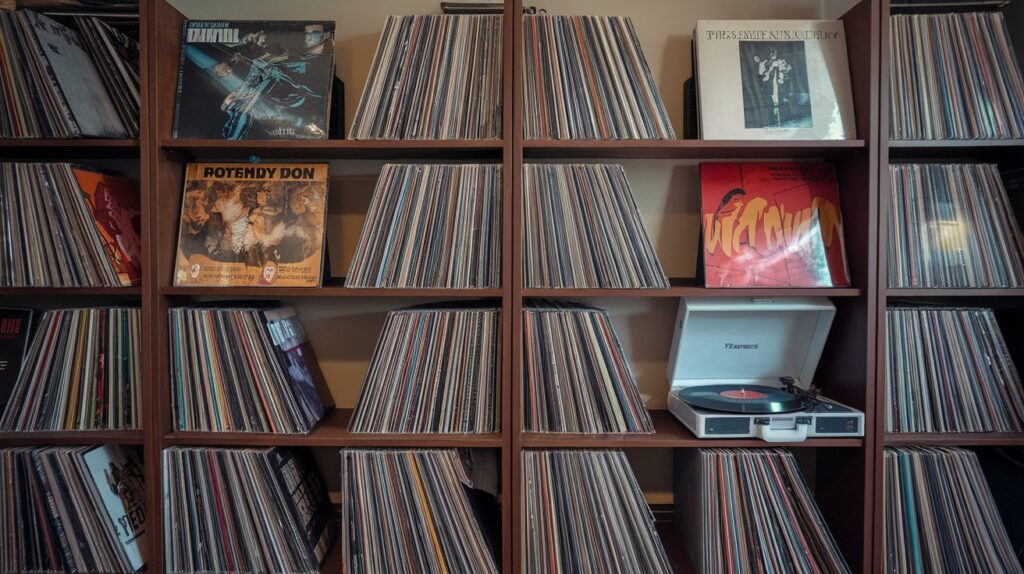
Vinyl records should be stored vertically, standing upright like books on a shelf. This positioning distributes weight evenly and prevents warping that occurs when records are stored flat or at angles. Horizontal storage causes the weight of stacked records to deform the vinyl below, creating permanent damage.
When positioning records, ensure they’re snug but not overly compressed. Leave slight gaps for air circulation and easy retrieval. Use bookends or dividers to prevent records from leaning at sharp angles, which can cause edge damage and warping over time.
Essential Protective Sleeves and Storage Materials
Quality protective sleeves are fundamental to proper vinyl storage. Anti-static inner sleeves prevent dust accumulation and reduce static electricity that attracts particles to the record surface. Replace original paper sleeves with polyethylene or rice paper alternatives that won’t shed fibers or cause scratching.
Outer sleeves protect album covers from wear, ring wear, and seam splits. Use 3-mil polyethylene outer sleeves for standard protection or 5-mil sleeves for valuable albums. Store the record and inner sleeve outside the jacket to prevent ring wear and cover damage from repeated insertion and removal.
Best Storage Solutions and Furniture Options
Selecting appropriate storage furniture ensures long-term preservation of your vinyl collection. IKEA Kallax shelf units remain popular among collectors in 2026, offering perfect cube dimensions for LP storage. These modular systems accommodate growing collections and provide stable, vertical support for records.
For premium storage, consider purpose-built record storage furniture with reinforced shelving and proper depth measurements. Wooden storage solutions should be made from sealed, finished wood to prevent off-gassing that can affect vinyl over time. Avoid metal shelving in humid environments where condensation might form.
Common Vinyl Storage Mistakes to Avoid
One of the most frequent storage mistakes is storing records in extreme temperature locations like garages or unfinished basements. These areas subject vinyl to damaging temperature swings and humidity levels that cause warping, mold growth, and sleeve deterioration. Always choose climate-controlled indoor spaces for your collection.
Another critical error is storing records at angles or horizontally stacked. This positioning creates pressure points that permanently deform the vinyl. Additionally, overcrowding shelves makes retrieval difficult and increases the risk of damage during handling. Maintain proper spacing and support for optimal preservation.
Handling and Cleaning Best Practices
Proper handling techniques are essential for maintaining vinyl record condition during storage and play. Always hold records by the edges and label area, avoiding contact with the playing surface. Clean hands or cotton gloves prevent oil transfer that attracts dust and causes groove contamination.
Regular cleaning prevents dust buildup that can cause permanent groove damage. Use carbon fiber brushes for dry cleaning before each play session. For deeper cleaning, employ record cleaning solutions and microfiber cloths, always following the direction of the grooves. Establish a cleaning routine as part of your storage maintenance schedule.
Organizing and Cataloging Your Collection
Effective organization systems make storing vinyl records more efficient and reduce handling damage from searching through collections. Alphabetical organization by artist works for most collectors, while genre-based systems suit those with diverse musical tastes. Consider digital cataloging apps to track your collection without physical handling.
Use divider cards to separate sections and make finding specific albums easier. Label shelves clearly and maintain consistent organization methods. This systematic approach minimizes the time spent searching and reduces unnecessary handling that can lead to accidents and damage to your vinyl collection.
Long-Term Storage Strategies and Insurance
For long-term storage extending beyond daily listening, consider additional protective measures. Store valuable albums in archival-quality boxes with acid-free materials. These containers provide extra protection against environmental factors and make transportation safer if moving becomes necessary.
Document your collection with photographs and detailed records for insurance purposes. Many homeowner’s insurance policies have limited coverage for collectibles, so consider specialized collection insurance for valuable vinyl. Keep storage receipts and maintenance records to demonstrate proper care in case of claims.
Related video about how to store vinyl records correctly
This video complements the article information with a practical visual demonstration.
Frequently Asked Questions
Should vinyl records be stored flat or standing up?
Vinyl records should always be stored standing up vertically, never flat. Storing records horizontally causes the weight of stacked albums to warp and deform the vinyl below, creating permanent damage that affects sound quality. Vertical storage distributes weight evenly and maintains the record’s original shape.
What are some common vinyl record storage mistakes?
Common storage mistakes include storing records in garages or basements with temperature fluctuations, stacking records horizontally, storing at angles without proper support, overcrowding shelves, and using original paper inner sleeves that shed fibers. These practices lead to warping, scratching, and permanent damage to your collection.
Is storing vinyl records at an angle a bad thing?
Yes, storing vinyl records at an angle is harmful and should be avoided. Angled storage creates uneven pressure distribution that can cause warping, edge damage, and stress fractures in the vinyl. Records should be stored completely vertical with proper support to maintain their structural integrity and sound quality.
Is it okay to store vinyl records in a garage?
No, storing vinyl records in a garage is not recommended. Garages experience extreme temperature fluctuations and humidity changes that cause vinyl warping, mold growth, and sleeve deterioration. Records should be stored in climate-controlled indoor environments with stable temperature (65-70°F) and humidity (45-50%) levels.
How should vinyl records be stored in sleeves?
Store vinyl records in anti-static inner sleeves made from polyethylene or rice paper to prevent dust accumulation and scratching. Use outer protective sleeves for album covers and store the record outside the jacket to prevent ring wear. This method protects both the vinyl and the artwork from damage.
What’s the best way to organize stored vinyl records?
Organize vinyl records alphabetically by artist or by genre, depending on your preference. Use divider cards between sections, maintain consistent spacing for air circulation, and avoid overcrowding shelves. Consider digital cataloging to reduce physical handling and implement a system that makes finding specific albums quick and easy.
| Storage Aspect | Recommended Practice | Key Benefit |
|---|---|---|
| Positioning | Vertical storage with proper support | Prevents warping and deformation |
| Temperature | Maintain 65-70°F consistently | Prevents expansion and contraction damage |
| Humidity | Keep at 45-50% relative humidity | Prevents mold growth and sleeve deterioration |
| Protective Sleeves | Anti-static inner and outer sleeves | Reduces dust, scratches, and static |
| Organization | Systematic filing with proper spacing | Minimizes handling damage and search time |