Picking Five Songs From 1977

Here is the latest in my songs series, on an unusual day. After the post I’ll have an update on this site over the next few weeks.

And now on this 50 year long musical journey we arrive at 1977. Seems like it was an interesting time in the world, a lot of weird world events and all that. It was a bit of a banner year in entertainment, as the first Star Wars movie hit theaters.

It was a mournful time in music. For one, I’m not sure this was the greatest year in music history. Kind of a whatever vibe with a lot of this stuff. I vaguely recall the 1977 Behind The Music and everyone was just like “fuck that year.” And the King himself Elvis Presley died on a hot August night.

And just three days after Elvis left the building, I was spat into existence. So no more “I wasn’t around for this year” on these posts. I was, in fact, around – though I can’t cop to having any memory of the year, obviously. I think I have one very small, vague memory from ’79 but that’s all I recall of the decade, I was busy filling diapers and crying.

But even if the year was kind of lame, I had no problem selecting five songs from it. Good music is always around.

Fleetwood Mac – Don’t Stop

This single from one of the biggest albums of all time was one of my earliest musical memories. My mom had a carrying spindle thing that held a bunch of jukebox 45’s and this was one of the singles in that set. I used to play through those 45’s a lot, and I whittled it down to the ones I really liked, this being among those. Honestly a somewhat heavy song, by Fleetwood Mac standards anyway, and a great duet between Lindsey Buckingham and Christine McVie.

Judas Priest – Dissident Aggressor

A cut from the band’s third album Sin After Sin and another testament to Priest being the glue that held heavy metal together just before metal kicked off big time. This saw Priest really up the ante with the heaviness and include some real divebombing guitars. The song was a thought piece on the city of Berlin, at the time caught in a Cold War split that was stark and honestly insane.

Heart – Barracuda

This was another of the 45’s in my mom’s tote and this would be the one I’d play over and over and over and over again. This was an aggressive song and with good reason – it was written by Ann and Nancy Wilson after the press grossly speculated on them being involved with each other despite being sisters. And that main riff of Nancy’s offers a very short and straight line to the heavy metal I would get into several years later. Definitely one of my favorite songs of all time.

Rush – Closer To The Heart

This is an all-time Rush song for sure. Well written and arranged, it brings out a sentimental flair while still sounding totally Rush. The song really opened up the world to Rush in terms of radio play, landing them a top 40 UK hit and also getting their foot in the door in the US. Always a good time to hear this one.

Kiss – Love Gun

This last slot was a tough choice – it was between this and Aerosmith’s Kings And Queens. The latter is an awesome song but Love Gun won out in the end. The album was one of my first Kiss albums and also one of my earlier music memories overall, so it’s easy to pick this signature Kiss song. It’s easy to hear why it’s one of Paul Stanley’s favorite songs.

That does it for ’77. Inching closer to the 1980’s, where this whole thing gets insane as far as picking only five songs per year.

And with that, here is a brief update – I am starting my new job next week and I’ve had a hell of a time lately with leaving my old job and getting stuff together for the new one. I am going on a two-week hiatus from this blog in order to get adjusted to my new work. I will be working a lot of hours but I think after I get into the new rhythm I should be able to get back into the swing here. I don’t know what my post frequency will be but I should be able to figure something out. See you all then.

Paul Di’Anno – 1958-2024

A brief and sad post today, as it was announced that Paul Di’Anno died earlier today. Paul was 66 and had been the first recording vocalist with Iron Maiden. He would see through the first two albums, then engage in a variety of solo and band projects after exiting Maiden in 1981.

Di’Anno had been dealing with injuries and illness for a long time, his recent appearances saw him in a wheelchair. Paul never would again rejoin Iron Maiden in any capacity, though he and Steve Harris had been met up awhile back and had been regularly communicating. Paul also met with his replacement Bruce Dickinson for the first time earlier this year, a meet-up that was reported to have been well-received by all parties.

Paul Di’Anno was a pretty rough and tumble guy – his antics would fuel Iron Maiden early on, giving them a bit of a punk edge. His same antics, often involving alcohol, would also see him leave the group. But Paul left quite the legacy in his work, both with Maiden and outside of it.

So it is a sad day in the Iron Maiden world. While other fanbases struggle a lot with members who were fired or quit, Maiden has keep a pretty even keel with its former members, especially in recent times. Paul’s works can be celebrated easily with no concerns over the perception of the other Iron Maiden material – everyone knows the first Bruce era represents the band’s classic works, but the first two albums are classics as well that were massively instrumental in shaping the New Wave of British Heavy Metal. Rest easy Paul, and may the world always know your signature sneer.

HSAS – Through The Fire

Time to dust off this old supergroup one-off and see what we have 40 years later.

HSAS – Through The Fire

Released March 1984 via Geffen Records

HSAS was the long-sough collaboration between Sammy Hagar and Neal Schon. The two had time after Journey released Frontiers and Sammy had been touring behind Three Lock Box during 1983. There were a minimum of rehearsals and the album was recorded during live shows in San Francisco in late ’83. The crowd noise was turned down for the recordings and some overdubs were needed on guitar, but otherwise the album is what was recorded on stage. For this project, Schon is handling the guitars and Hagar is confined to vocal duties.

Supergroups are often more about the members and that is certainly the case here, as the entire story of this album is in the lone paragraph above. So let’s have a look at each member of this short-lived group.

Sammy Hagar had finally established himself as a viable force in the early ’80’s after grinding away during the prior decade as a solo artist after his short tenure with Montrose. Hagar had gone platinum with Standing Hampton and then gold with Three Lock Box. In ’84 he was just a few months away from more huge solo success with VOA, and in a year’s time his world would look radically different.

Neal Schon had come up with the Santana band in 1971. After Santana, Schon and bandmate Gregg Rolie would form the band that went on to become Journey. They of course enjoyed massive success in the early ’80’s. Schon is still with Journey to this day and has a list of side projects and guest appearances that would take a book to keep track of.

Kenny Aaronson came up in New York during the 1970’s, starting as a teen with the short-lived band Dust. He’d then go on to play a long stint with Rick Derringer as well as a brief jaunt with a just-formed Hall and Oates. He was with Joan Jett and the Blackhearts in 1984 and has gone on to scores of other appearances over the years, including a stint with Bob Dylan.

Michael Shrieve began pounding the drums in earnest as a founding member of Santana, thus linking him to Schon. After leaving that group, Shrieve recorded a wide variety of solo and session projects. He had just been doing Mick Jagger’s ’84 solo album when HSAS came up.

So this is the group of clearly accomplished musicians who would convene to record this effort. There are 9 tracks at a very reasonable 36:39 runtime. Everything was written by Hagar and Schon save for the obvious cover song. Both also produced the album. A few re-issues exist but nothing with any bonus stuff that I know of. If you were to want a copy of this record, $5 and a few minutes in the record store would do the trick, it is not hard to come by.

Top Of The Rock

The opener is a very simple hard rock track that sounds exactly like something you’d expect Sammy Hagar to record in the 1980’s. It would slot in just fine on any of his solo records. There isn’t anything really special or dynamic about this song but it is a quality effort. Grade: B

Missing You

This one is another pretty straightforward track, in some sense it is almost woefully basic. But it does execute well for a song from this time period. It does sound and feel like Neal Schon has his imprint on this song and there are a few guitar flourishes here and there for a bit of excitement. Grade: B-

Animation

This one wastes a few minutes with some weird, echo-ridden intro that does nothing but then it finally gets into a very nice, heavy and groovy song. It’s honestly a bit tough to grade since it’s half really good and half kinda shit. I guess that’s one way of being average. Grade: C

Valley Of The Kings

This one is a very nice, plodding yet pounding song that does feel like it’s going somewhere. It doesn’t necessarily get there but the song is a nice premise and it hits well with its pacing and tone. Grade: B

Giza

This is nothing really more than a small outro from the prior song. It’s fine from that perspective but on its own as a track on the album it’s a total waste of time. I don’t have an issue with musicians doing odd crap like that, but given that this project had several other songs they recorded that didn’t make the album, there was clearly room for something else here. This is a royal waste of time, thankfully it only wastes about a minute and a half. Grade: D

Whiter Shade Of Pale

This is a cover of the beloved Procol Harum classic. The original is such a stunner due to its organ, psychedelic vibes and mournful tone. This rendition is a standard ’80’s guitar rock exercise that turns the song into a rock ballad. It’s not badly performed but it also strips the essence out of the song. And playing an all-time classic like this kind of exposes that the rest of the album was written in a hurry and isn’t fully fleshed out. Grade: C

Hot And Dirty

Here the band really get down and rock out. The song is again pretty basic but this is also really slamming. Schon really gets going with the guitar and this is one you can really raise your fist and yell to. Easily the highlight of the record. It’s also the least-streamed song on Spotfiy, people are missing out here. Grade: A-

He Will Understand

This song starts out as a ballad about being alone, then it starts rocking out in maybe a bit of a rock opera fashion at one point. There are the makings of a decent song here, but this is pretty disjointed and clumsy. It could have been much more than what it became. Grade: D+

My Home Town

The album ends with a banging hard rocker. It’s all about the pounding drums and bass and Schon’s flying guitar here. The crowd noise was not able to be removed here, it’s clear they are in a concert setting. A really nice way to send this album off. Grade: B+

Through The Fire did wind up with the fate of being a side project album. The collective fanbases of Sammy Hagar and Journey did not fall all over themselves to purchase the record. The album did not chart at all. The album’s only single was Whiter Shade Of Pale and it barely charted, hitting 94 on the Hot 100. The album was quickly forgotten as Sammy Hagar went into his VOA era and later into Van Halen, while Neal Schon pressed on with Journey. Hagar and Schon would reconvene decades later with the Planet Us project, though they only did two songs that were released later on a Sammy solo record.

The verdict on Through The Fire is honestly a hair more complicated that it seems on the surface. One aspect that does stand out is the production – they did a great job capturing new songs from live shows. It’s very easy to hear each instrument here and everything sounds great. It does have that live album feel to it but it was captured wonderfully. It is something that needs to be pointed out when discussing the record.

Overall though, this one doesn’t offer a whole lot. There are a handful of quality songs and there are a few missteps. It does stand out that this project had promise and could have benefited from more time in the oven. If they’d taken more time to flesh out some songs and offer up a few more dynamics, we’d be talking about a much different album.

Album Grade: C-

In the end we’re left with a footnote in the careers of Hagar and Schon, as well as Aaronson and Shrieve. That’s often what happens with these side project sort of releases – a bit of hype when it comes together, then the album quickly hits the cut-out bin as the band members go on to their day jobs. It’s a cheap and easy piece to get if you’re a Sammy or Neal completionist. (If you’re a Kenny Aaronson completionist, you need help and a large bank roll) But this album is not essential for any sort of listening beyond that, even in the backdrop of 1984 this one got left in the wake of all the massive music that came around that year.

Picking Five Songs From 1976

After a few weeks layoff due to super busy stuff, I’m getting back to this thing again. I’m also working well ahead on these now so the series won’t be interrupted again. It’s not like it takes any massive amount of time to put these posts together.

We’re now to 1976, which is the last time you’ll see me say I wasn’t around for the year. This is also where things start getting tough – this was probably the most difficult five songs I had to pick of all I’ve been through so far. Yes, the 1980’s get insanely crowded but it’s so absurd by that point that it’s actually easier to just grab five songs. This year I had to bump things left and right, and really go over the five I wanted. But I did eventually get a list together so let’s have at it.

The Runaways – Cherry Bomb

Up first is this fantastic cut from the revolutionary all-woman group. It was the start of the illustrious careers of Joan Jett and Lita Ford, but even beyond that it was a massive dose of grit and attitude. And it was seriously heavy – heavier music was about to really take off and The Runaways were definitely a part of that.

Judas Priest – The Ripper

Speaking of heavy, it’s time to welcome Judas Priest to these lists. If you’re thinking this is just the first of many appearances, you’d be right. Heavy metal was kind of in a down period as Black Sabbath were fading during this time, but Priest served as the bridge between Sabbath and the metal golden era of the ’80’s. Here they cut into the gruesome tale of Jack The Ripper, perhaps the most notorious criminal in history. The guitar work that truly set heavy metal apart is center stage here, and while Rob Halford is fairly restrained through most of the song, he lets loose at the end.

Boston – Foreplay/Long Time

Up next is a cut from the world famous Boston debut. This has one of the best instrumental sections around in the Foreplay intro. Then the song breaks into Long Time, a fantastic rocker about having to move on. The lyrics are philosophically heavy, but it’s just as easy to totally rock out to the music too. And in defiance of the “shorter is better” pop song format, this nearly 8 minute long cut still gets airplay 48 years on.

Kiss – God Of Thunder

Kiss had a banner year in 1976, releasing two of their best albums and truly becoming a force in the live market. But for all of their triumphs that year, it’s this plodding heavy metal track that Paul Stanley brought to the table that does it for me. Bob Ezrin slowed the song down and gave it to Gene Simmons to sing, and this is easily one of Gene’s biggest moments on record. Even the most die-hard of extreme metalheads get down to this song.

AC/DC – Dirty Deeds Done Dirt Cheap

Wrapping up with another list debut, AC/DC crack this one with one of their early signature songs. This snarling, tough tale of a killer for hire is both rocking and pretty funny. It’s easily one of the band’s most recognizable songs today, though it took years for it to get from Australia to the US. But the gritty rock and sing-along chorus are just too good to be passed up.

That does it for 1976. The next few weeks will close out the ’70’s as music really started changing dramatically, then the ’80’s come around and make these lists damn near impossible to do. ‘Till then.

The Saga of the Oasis Tickets

Last week was a huge moment in music – Oasis announced a series of North American concerts to be held in August and September of 2025. Their previously announced UK and Ireland shows sold out in a matter of minutes with a ton of issues surrounding demand and pricing. But Oasis were also far bigger in their native England than they were in the US, so how would the handful of North American shows fare?

Before tickets officially went on sale on Friday, October 4th, the band announced second shows for all North American dates, except one – the Chicago show at Soldier Field would remain a lone date. Lucky me, as I would be trying to secure tickets for that very show.

I did get a pre-sale code that would let me buy tickets on Thursday, a day before the general sale. I figured I’d take a shot at seeing them, I never had despite having lived in Europe through the late ’90’s and having every opportunity to see them whenever I wanted.

There are a few other things I’ve never done – I’ve never been to a stadium concert and I’ve never bought a ticket for a high-demand event. I think the 20,000 capacity amphitheater style gig is the biggest type I’ve been to, and none of those shows were sell-outs. I’ve been to several sold-out or near sold-out shows, but all of those were smaller, club-level shows at 1,000 or less capacity. I’ve never had a problem getting tickets to something even if it was a hot ticket.

But this Oasis reunion is a HOT ticket. Again, it melted down Ticketmaster in England due to demand. Many people over there were left out, which also served to increase North American demand as many from England would be trying their luck with shows across the pond.

I’ve bought tickets at box offices and record stores back in the days of paper tickets, I’ve obviously boguht online a lot in the past many years, and I’ve showed up to many shows and simply paid at the door without an advanced ticket. One thing I’ve never done is use an online queue system like what Ticketmaster had set up for these shows.

I got home on Thursday from work about fifteen minutes before the pre-sale began. I logged into my Ticketmaster account and, in what proved to be a grave mistake, I waited until the sale launched to join in. Had I jumped in right when I got home, there might have been a different outcome to this story.

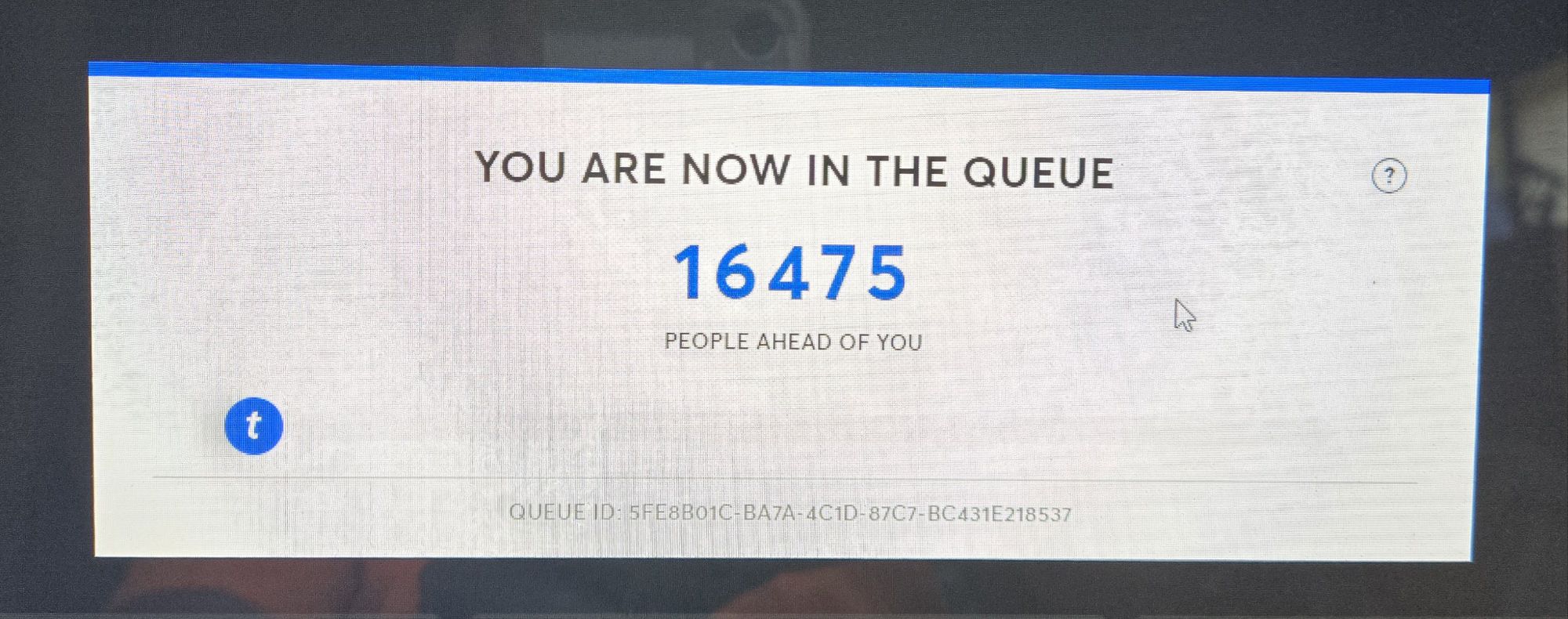
When I got into the queue, there were 16,800 people ahead of me. I was a bit miffed that I was so far back, but then I hopped on reddit to see what people were saying and I found out I messed up by not joining as soon as I could.

this was after I’d been in the queue for a few minutes

I don’t know the exact number of tickets available – Soldier Field concerts seem to run around 54,000 or so. The number of people in the queue, who could each buy 4 tickets, far exceeded the capacity. Take into account that not all tickets were sold during the pre-sale and pickings were truly slim.

Anyway, I waited 40 minutes to get in and when I did, it was a bloodbath. There were a few scattered seats, but I couldn’t get one quick enough. The GA floor only had VIP available, and it quickly came down to only having VIP seats as well, at a $600 minimum. I simply closed my browser tab and went about my day.

I did not bother trying for the general sale the next day. I believe Chicago sold out in 19 minutes, and all of the other gigs (with two shows on all the others) sold in similar fashion. I saw that quite a few people got in on the Mexico City gigs after missing on both the UK and other North America shows. I guess up next is Australia, who are getting a whole two shows.

No, I won’t be seeing Oasis next year, barring some kind of oddball luck on the resale market. I’m not inclined to pay much attention to that, honestly. I’m not really upset about it, I knew it would be kind of a lottery to get tickets and I just didn’t hit. Besides, I’ve heard from plenty of people that stadium shows kind of suck anyway, it’s more about just being there than it is taking in the show. I’ll make do with the inevitable live album and documentary when all of that comes around.

Cirith Ungol – King Of The Dead

Get out your 20-sided dice, character sheets and Dungeon Masters’ guides (first edition, of course). It’s time to go back to 1984 and get into some sword and sorcery.

Cirith Ungol – King Of The Dead

Released July 2, 1984 via Enigma Records

Cirith Ungol is well-known as a mountain pass between Mordor and Gondor in J.R.R. Tolkien’s legendary Lord Of The Rings series. It would also be known as one of the first heavy metal bands to name themselves after a part of Tolkien’s work.

Cirith Ungol the band formed in California in 1971. They would operate in the hard rock realm through the ’70’s, then shift into heavy metal when recording their debut album, 1981’s Frost And Fire. Three years later saw them ready to unleash this follow-up album.

The band was comprised of Tim Baker on vocals, Jerry Fogle on guitar, Michael Vujea on bass and Robert Garven on drums. Founding guitarist Greg Lindstrom was no longer with the band at this point but three of his song contributions were used (with his blessing, Lindstrom also would return to the band for their 2016 reunion). The band also retained creative control of their efforts and self-produced the affair.

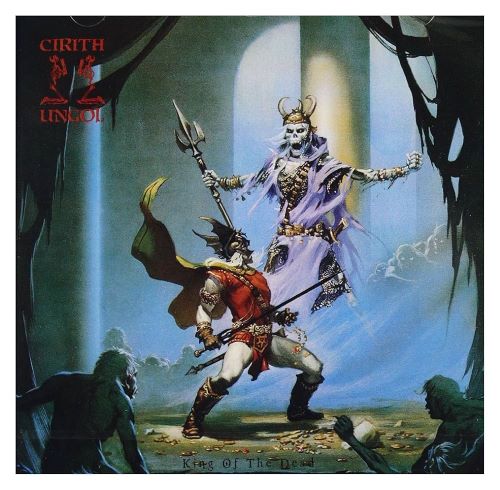
The cover art was done by famed book and album cover artist Michael Whelan. This piece is actually from a prior book cover, that being Bane Of The Black Sword by Michael Moorcock. Whelan has provided cover art for every Cirith Ungol album as well as scores of other works.

The album features 8 songs at a fairly beefy 50:17 runtime. As usual a few reissues exist with various bonus tracks, though today I’ll tackle the original album.

Atom Smasher

We get going with a brief intro then a running riff establishes itself, one that will remain throughout the song. Vocals and bass come in next and man, that bass is going off here and basically through the whole album. The song is a bit of sci-fi, featuring Atom Smasher as a title character who was genetically engineered and is out to save humanity.

As a note, I don’t know if there’s any influence for the video game character Adam Smasher from the Cyberpunk 2077 game decades later. The two have similarities, though the game guy is a villain while the song character is a hero. An interesting coincidence, if nothing else. Grade: A+

Black Machine

While Cirith Ungol would easily fit into the emerging US power metal movement, this album and especially this song saw them establish early ties into the also emerging doom scene. This is a pounding song that invites the listener to ride the black machine, which is some kind of infernal afterlife construct as the lyrics tell it. It’s another riff that just runs all day long and slams its way into your head. Grade: A

Master Of The Pit

Here we get an intro guitar solo as we make our way down to tangle with the guy who the song is named after. The song pounds its music through at a slower pace, so that our hero has time to fight the diabolical foe. This is Dungeons and Dragons put to music for sure. Grade: A

King Of The Dead

The title track offers a similar vibe to the song prior, it establishes a different boss to fight. This one is even more evil and doomy as someone called the King of the Dead really isn’t someone to mess with. Keep that shit locked away. Grade: A+

Death Of The Sun

Nothing says heavy metal like a good old fashioned apocalypse song. This “blink and you’ll miss it” track rips through with a speed and fury. When you’re messing with stuff like the Master of the Pit and the King of the Dead, sometimes the world just won’t make it. It also turns out that the death of the Sun is mostly guitar solos. Grade: A-

Finger Of Scorn

We’re brought in with a mournful acoustic passage here that builds into a louder electric effort as things go on. It’s another “humanity is doomed” song and this one carries on with a fair bit of Black Sabbath groove in it. There are also parts in the song’s latter half that might make you wonder when Iron Butterfly picked up doom metal. Grade: B+

Toccata in Dm

Here Dm does not refer to “dungeon master,” rather it’s the key of D minor. This is actually a cover song, the source being the iconic composer Johann Sebastian Bach. The original piece has a history that is honestly insane and covers volumes of books, but I’ll skip all that today.

Here Cirith Ungol do an abridged version of the piece. It’s worth noting that while heavy metal came up as an offshoot of blues-based rock, what has gone on to become heavy metal can be rather directly linked to classical music. Now – this piece isn’t entirely “for me” and I personally wouldn’t have put it on the record, but it can be worth listening to. Grade: B-

Cirith Ungol

We close things out with a self-named song for the band, which is always something interesting to check out. This returns to the power and doom formula experienced through the balance of the album. This one mostly lets the music do the talking with just a few verses to tell the tale of the sinister area of Mordor. And the music does the talking here – it’s a blend of everything the band have been doing through the record and wraps everything up nicely. Grade: A

King Of The Dead would be an influential force in two distinct US metal scenes – power and doom. The album would stand alongside works from Jag Panzer, Manilla Road and Savatage in shaping the US power metal scene, while it would also slot alongside Saint Vitus, Pentagram and Trouble in crafting the very new doom metal landscape. Though Cirith Ungol, like many of the other bands mentioned, did not achieve commercial success with their music, their name has rang as a leader of the metal underground since their recording career kicked off in the ’80’s. The band split up in 1992 and was but a cult memory until 2016, when an unlikely reunion happened. The group is presently on their final tour now, which is due to wrap up at the end of ’24.

The album offers up songs that would inspire the metal genres mentioned, but this also has a distinctly retro feel to it. Cirith Ungol were clearly rooted in their 1970’s origins, this was taking music forward while keeping at least one foot in the past. I don’t need any deliberation to score this album, the grade is already laid out in the songs above.

Album Grade: A

While heavy metal became a lucrative commodity for the music industry in the 1980’s, the slice of the money pie was usually reserved for the hair metal acts or the higher-profile thrash bands. But a wealth of underground and independent heavy metal also came from this time, and Cirith Ungol were one of the looming giants of the scene. King Of The Dead is a testament to the true power of this music.