Picking Five Songs From 1988

We are now to 1988 on this long-running series where I pick five of my favorite songs from a year. Yes, this will run all the way through this year. I imagine this will bleed into next year at this point since I took a good chunk of the early year off, so I’ll go ahead and pick five from ’25 as well.

But we’re a long damn ways away from that. Today we head to 1988. Rock was still running strong in its hair phase, though time was running out on the art form. Things were getting heavier and heavier on the metal end of things, as what we now know as extreme metal saw regular releases in ’88 and beyond. While I do love some 1980’s pop, I had kind of moved away from it by this point and was far more entrenched in the rock and metal end of things. By the time we get to the 2000’s, many of you may not recognize anything I post. But, again, we’re not there yet.

It is 1988, at least for a few minutes around here. Here are five of my favorite songs from the year (as always, not necessarily my five favorite, just five of my favorites). Enjoy.

Queensrÿche – Eyes Of A Stranger

Starting off with the final track of what is my favorite album of all time. Operation: Mindcrime is a metal “opera” with a ton of political intrigue, murder and suspense, and Eyes Of A Stranger wraps up the album better than pretty much any ending to anything in history. The main charcter Nikki is locked up in a prison mental institution, left to recall the sordid events of the album in a drugged-up haze. The production on this song and album is absolutely perfect, and the song’s drive and melody are otherworldly, as is of course the vocal performance of Geoff Tate. There are few finer examples of a song around.

Death – Pull The Plug

Death metal had been on the scene for a few years, and by ’88 it was really getting into gear. Leave it to the namesake band to deliver an all-time classic. This “thrash on steroids” delivered a savage beating to the eardrums of metalheads brave enough to move beyond the mainstream. While Death would go on to become a technical powerhouse, Pull The Plug is some good meat and potatoes, basic death metal.

Bathory – A Fine Day To Die

From Bathory’s fourth album Blood Fire Death, this saw Quorthon blend his now patented black metal with more melodic influences, eventually coining the term Viking metal. This song is an epic journey told through a group who are facing their likely end in battle. It’s a massive song that inspires even my sedentary ass to get up and strive for Valhalla.

Candlemass – Mirror Mirror

And now time for a little doom. Candlemass of Sweden had cut their third album by this point and were in the middle of an arc that is now considered hallowed in the pantheon of doom metal. While doom is traditionally slower, this is one of several Candlemass songs that runs at a faster clip at times. It’s an enchanting track about a cursed mirror that swallows the souls of whoever peers into it. The song is aided immensely by the power and range of the “mad monk” Messiah Marcolin, a true treasure of metal vocals.

Iron Maiden – The Evil That Men Do

And we wrap up with another Iron Maiden song. This one hails from Seventh Son Of A Seventh Son, which as I’ve relayed in the past is my favorite Maiden album. The song itself has a few complexities musically but is honestly one of the “simpler” tracks from the album. It is a forward, speedy driver and doesn’t let up throughout. Lyrically it is quite complex, as it deals with the album’s story of a child born of the Devil who gets up to some shit. This song is just before the child’s birth, if I’m recalling the story correctly.

That covers 1988. We are only one year away from putting a bow on the grand decade of the 1980’s. Things really do switch up after we enter the next decade.

And before I go, another quick programming note – I will continue this weekly posting format for what seems to be another four weeks, if I’m counting right. It’ll be a song and also this post, and perhaps another post in the middle of the week. I will run like this up until July 5, which is slated to be Ozzy Osbourne’s final concert. I do intend to livestream that event and I will provide a recap of it that following Monday. The week after that I will return to posting albums on Mondays, and I actually have a backlog going at this point so I should be able to keep up. ‘Till then.

Bolt Thrower – When Cannons Fade

Today I’ll actually look at something from the 21st Century for once and also have a look at what, in general, stands as the final recorded track of one of death metal’s most legendary acts.

Bolt Thrower got their start in England in 1986. From then to 2015 the band cut a blistering course through extreme metal with eight albums entirely centered around the concept of war. In 2005 the band released Those Once Loyal, which stands as Bolt Thrower’s final album, though at the time the band’s demise was not at all known.

Many extreme metal acts don’t sell enough to be concerned about charts and certifications. But this album did crack the German 100, coming it at 76.

When Cannons Fade is the final track on Those Once Loyal. There are some versions of the album with a bonus track, but in most cases this standard edition would be considered the definitive tracklisting, so we’ll just go ahead and call this Bolt Thrower’s final song. That’s of course purely a matter of sequencing and may not reflect how the album was recorded at all, but it is our listening experience when the album is played in order so it’s fair to go with this concept.

Today’s song is mid-paced though perhaps on the quicker end, with a consistent and grinding rhythm throughout. We get some flashy guitar work in spots, as is common with death metal. Lyrically the song is very much about its title – the artillery rains down and then is done, leaving a scorched earth behind. The memories of the insane shell pounding remain long after the battle’s close, as is narrated in the final verse.

In the song’s final minutes the rhythm switches up as we outro to a very fitting fade out. This is a long one and the final thing that can be heard is the drumming of Martin Kearns. It would prove to be tragically fitting that Kearns would ring out Bolt Thrower’s recorded career.

Again, the end of Bolt Thrower was not right after this album or planned at all. The band made the call in 2008 to hold of on recording music but did continue to tour in occasional fashion. The band were rehearsing for an Australian tour in September 2015 when Martin Kearns died unexpectedly at age 38. This would be the end of Bolt Thrower, as a year later the remaining members announced they would lay the band to rest. The group did consider doing something in terms of a reunion show or release in tribute to Kearns but nothing has ever come about.

In the years since Kearns’ death and Bolt Thrower’s demise, the band has remained at the forefront of death metal. A new generation of bands and fans have come into the scene, and a renaissance of “old-school” death metal modeled on the early 1990’s heyday has emerged in the 2020’s. Bolt Thrower has remained a prime influence among both new fans and old heads, often the subject of discussion, memes and the like. It’s possible that their status has even improved since the end of their playing days, though of course such things are difficult to rate.

No matter the specifics, Bolt Thrower remain one of death metal’s biggest forces, even a decade past their end. When Cannons Fade serves as a fitting and perhaps eerie end to their run.

Picking Five Songs From 1987

And now we’re on to 1987. This was a massive year at the top end of rock. It’s pretty crazy – the albums Hysteria, Appetite For Destruction and The Joshua Tree sold a combined 75 million copies worldwide. Two of those albums didn’t really gain steam until a year later, but that’s a different story.

Things were moving on musically in the later 1980’s. A lot of bands seemed to be chasing the brass ring and not quite grabbing it. Acts that had vital, fresh albums a few years back were now stagnating. There’s still plenty of good music to be found, but in retrospect, the signs of the coming nuclear assault of 1991 were already there by ’87.

But there’s no need for massive analysis of everything. All I really need to do is pick five songs I really like from 1987. Not necessarily my five definitive favorites, simply five of my favorites. This is a fast and loose exercise so let’s get into it.

Mötley Crüe – Wild Side

The Crüe got back to form after a bit of a letdown a few years prior. Wild Side is a heavy, pounding track that outlines the sleazier part of life. Not everything was fast women and good times in the ’80’s, there was a seedy side to things and Wild Side captured the grit and grime of the streets at night. This is one of my very favorite Crüe songs.

Guns N’ Roses – Welcome To The Jungle

1987 was the year GnR were thrust into the wider world. It would take them a bit to break, but break they did, to the tune of selling 30 million copies of Appetite For Destruction. The tune that really gets me going is the album’s opening track. It is a monster song, and much like the one from their bitter rivals above, relays how the big, bad city can swallow you whole. This threw a whole new level of intensity into the rock scene and made titans out of Guns N’ Roses.

Whitesnake – Still Of The Night

David Coverdale was not to be left out of the big winnings of 1987. Gambling his whole fortune on the album he’d just crafted, he would be paid back in spades as his album sold 10 million copies. While honestly just a song about a romp between the sheets, this is laid out with great care, featuring movements and interludes and the dynamite guitar of John Sykes. This song could be considered Whitesnake’s greatest triumph, though that’s not a question I’m here to discuss today.

U2 – Where The Streets Have No Name

U2 were big winners from 1987, bringing in a haul from their 25 million plus selling The Joshua Tree record. I’m not the band’s biggest fan but there’s no doubt that the album is a piece of work and that this song is absolutely stunning. This is simply a massive rock song packed with emotion and imagery that is too vivid to escape.

Dio – All The Fools Sailed Away

By 1987, Ronnie James Dio was operating without his wunderkid guitarist Vivian Campbell, who departed the band in acrimonious fashion. Though Dio’s “golden era” would be over, he was still capable of striking gold, as he did on this magnificent track. It’s a splendid quasi-ballad that stands alongside his prime cuts as one of his best works.

That wraps it up for 1987. Just two more years of the golden 1980’s to go, then things get really, really different – both in music and in my tastes.

How Much Is Too Much? Music Releases in the Modern Age

This piece of news came out around the end of last year and it was something I wanted to discuss. It’s a pretty insane statistic that takes the lead here – more music was released on a single day in 2024 than the entire year of 1989.

This staggering information came from this November 2024 article from Music Radar. The article’s focus is on subscription-based music software models, something that seems unpopular among creators. But the stat about music releases was one the press ran with to discuss in other terms outside of the debate about music software.

It is absolutely crazy to think that a single day last year had more releases than the entire year of 1989. Now, I don’t have the data in front of me to correlate any of this – the original info came from a Spotify executive. But I’m going to operate as though the information is true. It’s not like I have any reason to doubt someone who does have that info, and I’m not going to bother trying to count everything myself.

Of course, we are talking about two different worlds when lining up 1989 with 2024. One main point of the article is the accessibility of music creation now – it’s not all that hard or even necessarily that expensive to set yourself up to record music today. Gone are the days of aspiring musicians recording bedroom demos on tape recorders. The barrier to music creation isn’t really huge, a person could probably pick it up with the same cost as it might be to take up golf.

1989 was a whole different beast. If you wanted to make an album, you needed to be on a record label. It cost more than a house did back then to record an album in a studio with a producer who maybe knew what they were doing. Some independent acts were able to find studio time one way or another without label support, but the home recording market was barely there. The barrier to entry back then was a dragon that was extremely difficult to slay.

And now, of course, a person can release music easily through streaming platforms, where back in the ’80’s it required a physical release of some kind. The best a demo band was going to get was self-recorded cassette tapes. Now it’s an upload.

The difference between then and now leads to a lot of debate and questions. Was it better when acts had to have “something” to access recording technology, or is it better now that it’s accessible to most anyone who wants to give music a whirl? Some insist that we’re better off with more people able to realize their creative visions, while others contend that overall quality has dropped off a cliff and there actually should be some gatekeeping measures to keep “less talented” people out.

For me, I’m way more on the side of accessibility. I think it’s better that more people have the ability to record. Quality isn’t a concern to me because I can simply weed out what I don’t want to hear. It’s not like I’m pressing play on everything that’s released anyway – I won’t even run across 99.9% of this music being released. So it doesn’t really press me if a bunch of people are recording stuff I don’t really want to hear – I’m not exposed to it.

As a fan, it might be concerning to have so much out. It’s hard to keep up with stuff and adding more to the pile doesn’t really help. But again, it doesn’t really matter. Hell, I haven’t heard every album released in 1989, there are most likely records out there I’d enjoy that I just haven’t run across. I certainly can’t worry if exponentially more music is coming out today. It might be a pain in the ass to keep track of and I might miss quality music I would enjoy, but it’s not like I have to the time to keep up with everything anyway. I can’t really sweat it if there’s more music than what I can get to, even if some small percentage of it is stuff I’d truly enjoy.

Some will criticize the sheer amount of music coming out, and there are fair criticisms. Music creation has become kind of a slop content mill, just churn out something with a beat and get it up on Spotify to hopefully draw some streams and money. This is a real issue, though again I feel like the simplest answer is to just ignore it. I’m usually behind on music I actually want to listen to from known quality sources, so I’m not getting caught up in the “slop mill” or whatever we want to call it.

At the end of the day, I’m ok with the crazy volume of music coming out. I’ll risk having to dodge some bad stuff, which is generally easy to do, for the sake of accessibility. It is staggering to think that more music was released in a day last year than in the whole year of 1989. And I assume there were a fair amount of albums released in ’89. But I’ll keep to what I do and use the tried and true method to avoid any low-quality crap that might come out – just plug my fingers in my ears and say “I can’t hear you.”

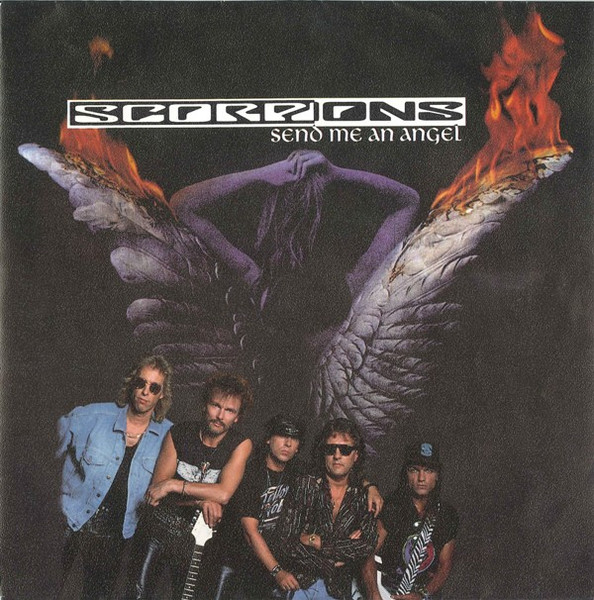
Scorpions – Send Me An Angel

Programming note – for the time being, I will keep with the format of doing a song each week, perhaps one other post, then my weekly “five songs from a year” thing. I am working on some album posts and I will resume those on Mondays when I get some posts together and can actually be working ahead for once.

Today let’s step back in time to 1990. The music world was on the cusp of huge changes, but one institution that was still running strong “as is” was the Scorpions. The German machine found great success in the early and mid-80’s, though they did flag a bit in the latter part of the decade.

They would enter the 1990’s in style, though. The album Crazy World would sell great all over the world, giving the band their only number one record in Germany. It hit silver in the UK, their only album to do so there. In the US it hit 21 on the album chart and went on to double platinum status, a very hot seller and just behind Love At First Sting as the band’s best-selling album.

The Scorpions released four singles from the record – the first two were fairly standard Scorpions rockers, while latter two were both ballads. That third single, Wind Of Change, would become the band’s biggest hit, while the fourth and final single is the reason we are gathered here today.

Send Me An Angel was released as a single in September 1991, nearly a year after the Crazy World album release. The song did modest business on the charts, going to number 44 on the Billboard Hot 100 and 8 on the Mainstream Rock chart. It had several top 10 placements throughout Europe, where Wind Of Change had previously scored at the top of those charts. It’s also worth noting that the single came out in the “ground zero” month of 1991 for the grunge takeover of MTV and radio. The Scorpions were able to keep steady while many other 80’s rockers were consigned to the scrap bin in this very time, and the Scorps were at the tail end of this album cycle.

For one other little bit of trivia, the single’s cover depicts a burning angel along with a band photo. The angel was used again a few years later as the cover for Black Sabbath’s Cross Purposes album. Sadly, the gents in the Scorpions did not also make the Sabbath cover.

Today’s song is the album’s final cut and follows a second side of steady rock and roll tracks. This ballad is a lot different, with a ethereal vibe and very atmospheric setting. It evokes a lonely wanderer in a desert setting, which the song’s video plays into.

Lyrically the verses offer the words of a wise man who provides encouragement, while the chorus is Klaus Meine offering the plea for an angel. I’ve always enjoyed when ballads go for lyrical content beyond the typical ’80’s fare of trying to get a woman’s pants off.

Send Me An Angel is a fantastic entry on the list of Scorpions ballads. While Wind Of Change was the band’s colossal hit, I’d argue that this one is the better song. And even while the Scorpions may have crafted their ultimate ballad with the titanic Still Loving You, this song is a worthy competitor in the ballad battle arena.

Picking Five Songs From 1986

Ok, so quick update first – just as I was getting ready to start blogging again last month, we wound up buying a house so that took up a bunch of my time. We are now moved and things are getting settled so I have time to get rolling again. Hopefully I can get going here again now that I’m mostly settled. It might take a minute but I should be fine.

We move on now into the later 1980’s with this long-running series. Things were getting bigger and bigger for rock music, though it could be argued that the quality was starting to wane in comparison to the absolute gold of the early decade. Rock was going hair, hair, hair; while heavy metal was getting heavier and heavier. And pop was starting to get weighed down by pale imitators of the sound that was a goldmine a few years prior. But this year was pretty good, as many acts who were “off cycle” the year prior are back and cranked out some quality music.

As usual, this is simply five of my favorite songs from the year. It is not a definitive “top five,” this is a pretty fast and loose exercise.

Iron Maiden – Stranger In A Strange Land

Maiden came back off their world-conquering campaign to kick off their “synth” arc. The results were splendid and this single is one of my all-time favorite Maiden tracks. The song is about an Arctic expedition that discovered a long-dead explorer, it is not related to the famed novel of the same name. While this one keeps the pace reigned in, it doesn’t lack for intensity as the power and melody combine to offer up the long-frozen explorer’s tale.

Queensrÿche – Screaming In Digital

This is almost a rock opera type song about man versus machine, and the now suddenly relevant topic of AI. The lyrical fare might be fresh nearly 40 years later, but the music on this is ungodly and timeless. The instruments and samples are a mesh of chaos, and Geoff Tate delivers while might honestly be his finest vocal performance ever as he handles the tradeoff “arguments” between man and machine. One of my favorite songs of all time.

Motörhead – Orgasmatron

Up next is the venerable legends with one of their many signature offerings. This is a slow, doom-laden marcher that explores the world of war, religion and political power, those dark masters that have taken the lives of many over the centuries. It’s all distilled here in the raw, primal form that only Motörhead can muster. As with the first two offerings, this ranks among my all-time favorites of the band’s catalog.

Metallica – Damage Inc.

1986 was a banner year for the band that would go on to become heavy metal’s biggest act. They released Master Of Puppets, which is often hailed as the quintessential thrash album. The album’s final track is a blistering slab of thrash, and again a song aimed at the bloody power corporations wield over rank and file citizens. The song serves as the final testament of Cliff Burton, mortally departed but always looming immortally over the metal scene he helped shape.

Dwight Yoakam – Guitars, Cadillacs

A bit of a curveball here, given the sheer amount of other heavy music that was released in ’86. But this cut from Dwight’s debut album has long been a favorite of mine. This was a good bit of barroom twang in a time when country was in a bit of a stale, pop-oriented direction. It remains one of Dwight’s top songs from a long and storied career.

That covers 1986. Next week we’ll see what’s up with one of rock music’s biggest ever years.

Picking Five Songs From 1985

Moving on with this series it’s time now for 1985. This year was not quite as spectacular as years past. A lot of the acts that cranked out music in 1984 were off cycle for this year, it was touring and live albums and not anything from the studio. And those who were on cycle didn’t necessarily release their best output. Still, there is stuff to be found here so I’ll sift through it and identify five songs I like from the year.

John Mellencamp – Rain On The Scarecrow

1985 might have been a down year for some, but it was a banner year for Mellencamp. Scarecrow remains a high water mark in his catalog and the quasi-title track is an absolute banger that laments the plight of the family farmer. It wasn’t pleasant for the small-time farmer back then and it’s no better now, if there are even any left. This song remains a lament to that way of life and also one of Mellencamp’s best tracks.

Slayer – Hell Awaits

Slayer came out with their second album and it showcased a more honed-in thrash attack compared to the debut. Still evil and sinister as can be, the song lays out what awaits for all of us heathens who headbanged to this over the past forty years. This song in particular is very brutal and fast, perhaps a taste of what was to come on the next record.

Heart – What About Love

The Wilson sisters finished recalibrating themselves for the 1980’s and offered up a self-titled album that conquered the airwaves and reshaped their sound into 80’s rock. Here we have a cover song, though one unused by the group Toronto after they wrote it in ’82. Heart would ride their version to the top ten and this single kicked off their “hair era” in style.

The Cult – She Sells Sanctuary

The Cult were one band who did strike in both 1984 and ’85. Their second album Love hit in ’85 and was the band’s breakout record. It was helped along with this single. The song is mystical, melodic and entrancing. This song also had a life on the dance circuit but it’s the original version I’m concerned with here.

Accept – Metal Heart

Accept also had back to back records in ’84 and ’85. Metal Heart was another in a line of prime German metal albums that ran through the early and mid ’80’s. The band fused a few classical music pieces into the song, both showcasing the link between classical and metal and also playing into the hilarious stereotype of metal showcased by Spinal Tap a year prior.

That wraps up 1985. Next we’ll press on into the later 1980’s and see just how the years play out before the world of music would be turned on its head with the turn of the decade.

Picking Five MORE Songs From 1984

I was supposed to post this like last month or whatever. Better late than never I guess as I get the ball rolling on this long-running series again. This is the bonus post for 1984. I did part one last month in case anyone forgot, which is probably everyone since it was awhile ago.

As always – these are five (or for this year ten) of my favorite songs from a year, not necessarily my five absolute favorites. Nothing definitive here, though these are in the ballpark. Whatever the case, let’s get to it.

Prince – Purple Rain

I’ll start off with the spectacular power ballad from the seminal album and film that turned Prince into a massive superstar. This is a gorgeous song that explores coming of age and the day of judgment, which I guess will involve rain. Not sure my copy of Revelations mentions that but I digress. While Prince showcased an array of instrumental and songwriting prowess to this point, here he lets his voice get in on the action.

Bruce Springsteen – Born In The USA

The Boss wrote this to recall the hard times Vietnam War vets faced when coming back into society. The song got confused by some as a patriotic anthem, but it is most certainly not. Rather it’s a dire look at people whose lives are essentially dead ends – no jobs, no hope, no future. I don’t know how so many people got the message mixed up, I turned seven the year this came out and I understood what it was about. No matter though, it is an awesome song and one of Bruce’s shining moments.

Hall and Oates – Out Of Touch

This crazy track was the final top ten hit for the massive pop duo. It’s quite the electro-dance number replete with the smooth harmonies Hall and Oates were famous for. I’m not a “fun and dancing” kind of person but even I can jam out to some Hall and Oates. This was a great way for them to cap off their electric string of hits through the early ’80’s.

Dokken – Don’t Close Your Eyes

This quasi-ballad but super hard rocker was one of many shining stars from the amazing Tooth And Nail record. This song is the perfect marriage of Dokken’s rock attack and melodic sensibilities that would come to define the “hair metal” era.

Ratt – Back For More

This song was re-recorded from an EP released a year prior, but the Out Of The Cellar version is one of many kick ass tracks on an amazing debut album. But this song is the one that puts it all over the edge for me, it’s snarling and pounding and right in your face. Ratt’s sound and presentation would go a long way to defining the 80’s metal movement for sure.

That does it for my bonus 1984 content. It’ll be 5 songs a year from here on out, and I think with my massive procrastination this series will now run into next year. But I’d have to count too much to figure it out one way or another, I’ll know more come September.

Spinal Tap II gets release date

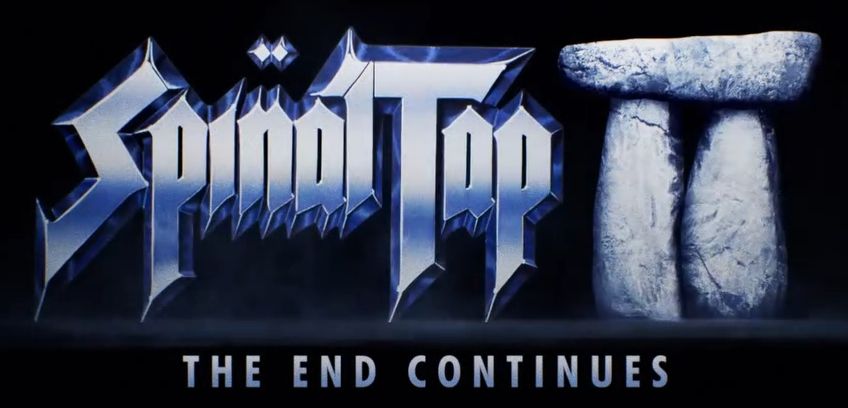
Yesterday we got official news of the sequel to the iconic movie This Is Spinal Tap. The movie is called Spinal Tap II: The End Continues and will hit theaters September 12 of 2025. This article from Consequence Of Sound lays out a lot of the details.

This sequel, which comes 41 years after the original, features the three main actors from the original film all taking up their roles again – Christopher Guest as Nigel Tufnel, Michael McKean as David St. Hubbins and Harry Shearer as Derek Smalls. Rob Reiner is again both in the director’s chair and also resuming his on-screen role as mockumentary host Marty Di Bergi.

The first movie featured an array of special guests from both the acting and music worlds, and the new Spinal Tap will feature a few returning guests and several new ones. Coming back to the film are Fran Drescher and Paul Shaffer. Drescher is confirmed to reprise her role as “the hostess with the mostess” Bobbi Flekman, while it’s not entirely confirmed if Shaffer will be back as the useless record label rep Artie Fufkin. (I would assume he is)

We do have quite the roll call for new guests in this second film. No less than Paul McCartney and Elton John will drop by, as well as Garth Brooks and Trisha Yearwood, Questlove, Chad Smith and Lars Ulrich. That’s a pretty titanic guest list and it’s most likely that we don’t have all the details on guest shots right now. And it sets up a funny possibility – both Chad Smith and Lars Ulrich are drummers, and Spinal Tap lore is not kind to drummers. Lars might meet the fictional end that some cynical Metallica fans have been longing for. (not me, I think he’s fine)

There are a host of other actors who will take up new roles, which is fairly obvious since this is a new story set a ways beyond the initial film. But there will sadly be a handful of both regular cast and guests who cannot make the sequel as they are no longer with us – Tony Hendra (Ian Faith) and R.J. Parnell (Mick Shrimpton) are gone, as are guests Bruno Kirby, Fred Willard and Howard Hesseman. (this is not a comprehensive list, the cast list for the first movie is pretty big)

In preparation for the new film, the original This Is Spinal Tap will get a new showing in theaters and then a digital and streaming release this summer.

Of course people are wondering if a sequel is really necessary, especially after this long, and if it will be worthwhile. There are several cynical comments about the new film, but with this being the Internet in 2025, those kind of comments are unavoidable. Plenty of others seem excited by the prospect of the new film, I among them. No, I don’t expect this to be as good as the first film or even nearly as so. That was a cultural moment that is unable to be replicated. But I do expect that the people involved can make an entertaining and amusing film that does justice to the Spinal Tap legacy. I’m not worried about that at all and I fully expect to enjoy the new film. These folks know what they’re doing and I don’t anticipate any real letdown here.

There’s not much left to do besides wait for the film. We don’t have a trailer yet, just a small teaser video included below. We just have to get through the summer so we can tap into another slab of hilarious rock and roll.

White Zombie – Black Sunshine

So obviously I’ve been gone for a bit. It was an unplanned “winter break” due to not much more than lack of motivation. I am looking to get back to posting and I’ll kick it off with this. I’ll switch up my format some with more posts about songs and less about albums as a way to get me back into the groove. It might take a bit for me to break back through but I’ll get there, someday.

Today I’m going back to the swamp of the early 1990’s and tackling what would be something of a breakthrough, in a roundabout way, for a long-running cult act. White Zombie had been at it since 1985 and had built a good underground reputation for themselves, but they were ready to take the next steps to mainstream success. They landed a major label deal with Geffen Records and recorded the album La Sexorcisto: Devil Music Volume One in 1992. The break would not be immediate – White Zombie toured their assess off with every metal band known to man and received a good bit of support from MTV. Their inclusion on the mega hit show Beavis and Butthead would help launch them into stardom, and the album would eventually sell two million copies as the band went white hot through the mid 1990’s.

Black Sunshine was the second single from the record, following Thunder Kiss ’65. The first single did nothing on the charts but would later catch on through MTV, while Black Sunshine did very modestly chart at 39 on the Mainstream Rock Chart (US). The band’s surge would see Thunder Kiss work its way up to 26 on the same chart about a year after the album’s release.

The song opens with a few car sound effects and a monstrous bass line that both anchors the song and takes center stage. We’re treated to a spoken word intro from punk legend Iggy Pop, who also appears in the video. The intro sets the table for the song’s protagonist, a Ford Mustang named Black Sunshine.

Once everyone kicks in we have a song that’s both groovy and menacing. It’s one heavy ass riff that runs along with the bass while Rob Zombie’s trademark snarl delivers a thesaurus full of lyrics that are loosely related to each other or anything else, but paint a picture of “badass car go fast.” This isn’t a song with a plot or narrative, it’s a vibe machine where everything supports the headbanging good time. Iggy Pop shows up again to deliver a spoken outro.

Everything blends together perfectly to deliver a fantastic listening experience. There are no unnecessary interludes or embellishments – everything here fits to create atmosphere and propel the song along.

Black Sunshine became a star on MTV as White Zombie crawled out of the underground and toward the top of the metal heap. Heavy metal in the early ’90’s was the loosely-gathered “alt-metal” collective of acts like Danzig and Type O Negative, and Pantera was moving to become metal’s most significant band as the acts of a decade prior were out of season. White Zombie found themselves enjoying mainstream success after many years in the underground. This would only last a few years, as Rob Zombie decided to end the band and launch his successful solo career.

When people look back on the raspy growls and groovy rhythms of White Zombie, there are few better examples than Black Sunshine. Their rise to the mainstream after years of obscurity provided a great soundtrack for the weird times of the early 1990’s.