Armored Saint – March Of The Saint

This week it’s back to 1984 and the debut album from California’s Armored Saint. They were a band without a scene to really “fit in” with, but they would go on to claim their own territory in the overflowing landscape of 1980’s heavy metal.
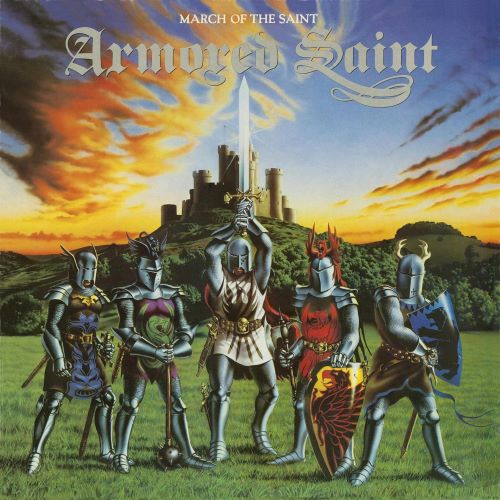
Armored Saint – March Of The Saint

Released September 26, 2984 via Chrysalis Records

My Favorite Tracks – March Of The Saint, Glory Bound, Can U Deliver

Armored Saint formed in 1982 in the US music epicenter of Los Angeles. They released a self-titled EP in 1983 and then quickly turned around to record their debut full-length. The band was nearly struck with member poaching just as they were getting off the ground, as singer John Bush was offered the vocalist position in Metallica. Bush turned that role down to focus on Armored Saint, creating one of heavy metal’s biggest “what if” moments.

The band on the debut comprised of Bush, Dave Prichard and Phil Sandoval on guitars, Joey Vera on bass and Gonzo Sandovol on drums. They had played together in various forms through their school years and this band naturally formed out of those prior relationships.

The album was produced by Michael James Jackson, who was fresh off a turn at the helm of the Kiss albums Creatures Of The Night and Lick ‘Em Up. It was not to be a match made in heaven, as Jackson was indifferent about heavy metal and the record label was micromanaging the band’s sound to create a polished offering that they thought would appeal to the masses. Joey Vera relays in this 2006 interview with Full In Bloom that the recording process of the debut left Saint disillusioned about the album’s mix and heavily in debt due to excess time spent in the studio. Vera said in the interview that the band was still in debt from that record all those years later.

While the recording process and the business end of music left Armored Saint worse for the wear, there still is an album of music to discuss here. In practical terms, this band were the heaviest thing coming out of Los Angeles, as thrash was mainly a Bay Area construct. Armored Saint didn’t really fit any of the burgeoning subgenres – they were far too heavy for hair metal and not fast enough for thrash. This could be described as US power metal, as that sound could fit a number of bands. Overall, Armored Saint were just plain old heavy metal, though.

Today’s album comprises 10 tracks at 38 minutes of runtime. The album was given a 2006 reissue by Rock Candy with a few demo bonus tracks added on but today I’ll focus on the original offering.

March Of The Saint

The opener offers a tie-in to the band’s name and is a decently paced roller that offers some nice melodic guitar accents to keep things interesting. The band’s true strength is revealed early as John Bush offers a full-throated, powerful delivery that stands apart from the all-out scream that many metal singers were going for at the time. The lyrics serve up a “war and metal” analogy that was par for the course in heavy metal at the time but it’s executed nicely here.

Can U Deliver

The next song did get a single release and also got a fair bit of traction on MTV. A quick look at its Spotify played count indicates over 8 million streams, dwarfing the six figure counts of all other songs on the album. This song did catch on, that’s for sure.

This song does sound like it straddles a line between metal and sleaze rock. The music itself is crisp and solid, though the production is a bit thin. The song is about being out on the prowl for a one night stand, though the lyrics are fairly vague and don’t descend into self parody.

Mad House

This one is a good banger of a track that’s maybe again a bit hampered by production but the song still comes through. It’s all about going to that place everyone knows is crazy and having a good time. It should not be confused with the 1985 song Madhouse by Anthrax, of course, though John Bush would later have the opportunity to sing that one too.

Take A Turn

Here’s a ballad or perhaps ballad-like offering. The song does add enough drive and pace to keep it out of total ballad territory. It’s a hook-up song, all about “taking a turn with me.” It’s again kind of vague and the lyrics aren’t immature or silly. The song’s execution keeps it from being something that could derail the album’s momentum.

Seducer

It’s another “sex” song as the title clearly indicates. Again the song works in the context of the album with Armored Saint’s able playing and John Bush’s visceral delivery. It seems like a song written to fit into the 1980’s scene but Armored Saint retain their identity on it rather than going all the way with the attempt to “fit in.”

Mutiny On The World

We exit the realm of hooking up for a bit and dive into one of metal’s tried and true archetypes, that of rebellion. The verses lay a bit quiet and let John Bush snarl through them. It’s a remarkable track that again would have benefited from a beefed-up production.

Glory Hunter

The next track really shines and feels like a truly realized and fleshed-out concept. It’s a dark tale of battle against native tribes set to music that certainly slots in well in that US power metal slot with some shades of the old familiar NWOBHM. It’s a bit of a shame the band weren’t allowed to operate more on this theme.

Stricken By Fate

The song is a tale of lovers broken apart and the wish for vindication or even revenge. The music is totally on point and keeps the album feeling cohesive. Some really cool guitar work on this one too.

Envy

Another kind of scorned lover track, this one sees the narrator looking at his partner moving on with someone else and the envy associated with that. It’s done pretty well musically and it’s a bit more of a mature and complex look at feelings that are often expressed simplistically in music.

False Alarm

The album closes on a pretty heavy jam that kicks the pace up a few notches. There isn’t much going on with the lyrics, it feels like a group of words thrown together to be able to use “false alarm” as a chorus. But the song hits the right spot even without a plot.

March Of The Saint is quite a triumph in that Armored Saint were able to forge a sound and identity even with being pushed by producer and record label to record songs that fit with the music of the time. The album remains cohesive and and gets through with all of the tracks feeling like they fit, nothing comes off as filler here.

The album was not a huge success commercially, though it did sell 125,000 copies in its first year of release and gain some buzz with Can U Deliver getting MTV play. Armored Saint would often find themselves with some hard luck in terms of trying to make it, but on the other hand they did get their name out there and are one of the more respected institutions in US heavy metal.

It would be a long and winding road for the band, who would suffer the loss of guitarist Dave Prichard to cancer in 1989, then go inactive in 1992 when John Bush took the open Anthrax singer job. Saint would regroup through the 2000’s and press on with albums and touring and also retaining their core line-up sans Prichard.

But in the framework of 1984, Armored Saint were a new force on the scene. They might have suffered a bit from not having a “scene” to be a part of when things were going either hair or thrash, but they were able to establish their own identity and set themselves on the path to becoming one of America’s classic metal acts.
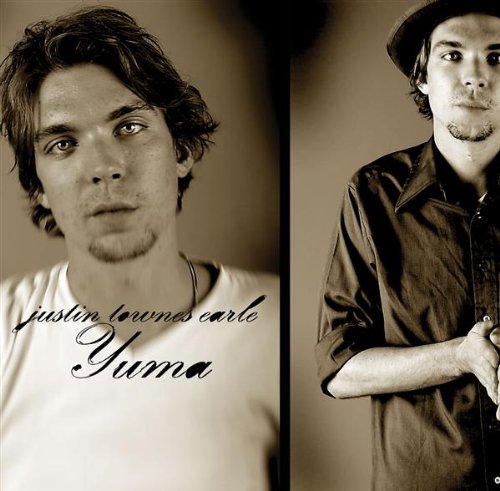
Justin Townes Earle – Yuma

This week I’m having a look at the debut offering from a second-generation artist who would embrace the independent spirit of music and leave a mark matched by few in his career. His career and life were tragically cut short, but his music still resonates today, just days after what would have been his 42nd birthday.

Justin Townes Earle – Yuma

Released February 8, 2007

My favorite tracks – Yuma, I Don’t Care

Justin Townes Earle was born in the country mecca of Nashville, Tennessee in 1982. He was the son of Steve Earle, who was just getting his alt-country career rolling when Justin was born. Justin’s middle name Townes was Steve’s tribute to good friend and mentor Townes Van Zandt. Justin would get his start in music early on, performing with a few Nashville bands as well as his father’s group the Dukes.

By 2007 Justin was ready to venture out on his own and he decided to cut an EP to have for sale while on tour. Yuma was the result. This was recorded entirely by Justin, simply him with his guitar. The release was initially self-funded and distributed, though Justin would soon sign a deal with Chicago-based Bloodshot Records and Yuma would be repressed by the label. Bloodshot would become a major player in the alternative and independent country scene and Justin would be one of its most prolific artists.

This will be a brief rundown today, as we are dealing with a pretty simple premise – 6 songs in 19 minutes. Justin recorded it over a weekend and it won’t take long to go through the particulars, though there are some noteworthy moments here.

The Ghost Of Virginia

The opener kicks off with a tall tale about a ghost train. In this case the train was Virginia, which apparently hauled Confederate troops during the US Civil War between North Carolina and Virginia. Ghost train sightings were something of a phenomenon in early railroad America and other countries. It’s an older thing of course but it’s a pretty interesting twist on the ghost thing. Train songs are literally a dime a dozen in country music, but Justin does a nice job here specifically describing the haunting visage of the ghost train.

You Can’t Leave

The second tune sees Justin strum fairly upbeat on the guitar, but the song is pleading with his woman not to leave him. Can’t have a country album without some heartbreak between couples, it’s pretty well mandatory. Hopefully it worked out for all involved in this likely hypothetical situation.

Yuma

The title track is the EP’s centerpiece and is a very sad and heartbreaking tale. In it a young man had tragically lost his girlfriend and the pain of the loss, as well as the man’s own vices, lead him to jumping from a ledge and claiming his life. Yuma recounts the man’s last hours as he has some drinks, phones home one last time, mails a postcard to home which is confirmed to be Yuma, and then succumbs to his pain and leaps off of a building.

Yuma is a very tragic song, spelling out in detail the man’s struggles against a backdrop of mundane happenings. At one point Justin remarks that “it wasn’t so much the girl, as the booze and the dope.” While Justin’s 2020 death would be due to an accidental overdose, it does feel sadly prophetic in a way hearing the song after Justin’s death.

I Don’t Care

Here Justin takes up the role of a drifter, someone with nowhere to go and looking to be anywhere but where he is. It’s a solid tale of being stuck where you’re at with no way to get where you want to be, which is anywhere else. The drifter’s lament is another highlight of this studded EP.

Let The Waters Rise

Now we get to a bit of a funny tune, at least funny in how it’s worded. Here the guy’s gal is apparently two-timing, so he wishes for the waters to rise and flood the place out. It’d be a bit overkill if applied literally but it’s quite nicely done in figurative speech here.

A Desolate Angel’s Blues

The EP wraps up with a solemn story of a person “going home.” While the imagery comes off like someone being baptized, this guys seems like he is preparing to actually drown to death. It’s a haunting yet fitting way to cap off the album.

Yuma was exactly what Justin Townes Earle wanted – a record to sell at his shows and it was a vehicle for a quickly rising star. He would soon have a record deal and also very soon be swept up in the issues of country music at the time – that is, a disdain for mainstream Nashville offerings and a desire for a savior from the independent ranks. While the anti-Nashville crowd had a figurehead in Hank Williams III, it was JTE who was often pegged as the messiah of the new country movement.

Justin did not seem pleased by or suited for such a christening. He would record 8 full-length albums, most well-regarded and praised, but it would not be JTE who would deliver a new, purer form of country that would gain mainstream attention. Not that any of us knew this in 2008, but the savior’s name was Sturgill Simpson and he was still a few years away.

For Justin, his career would be noted for his blending of country, folk, blues and soul influences at various points through his albums. He wasn’t the savior a lot of independent country fans wanted, but he was more than good enough to be regarded as a songwriter and storyteller often without peer. Yuma was the start of 12 years’ worth of releases that would carve a legacy that lives on even after Justin’s tragic demise.

Twisted Sister – Stay Hungry

Welcome to 2024, how exciting to now be close to halfway through this psychotic decade. This also does mark the 40th anniversary of 1984 and many of the world’s most brilliant albums being offered up, so I will be paying extra attention to that year as I go along through this one. I won’t be covering it every week but many of 1984’s great releases will come up this year. And what better way to kick things off than with the magnum opus of one of rock and metal’s more unique acts?

Twisted Sister – Stay Hungry

Released May 10, 1984 via Atlantic Records

My Favorite Tracks – I Wanna Rock, We’re Not Gonna Take It, The Price

By 1984, Twisted Sister had finally been releasing albums after a decade of busting their asses on the club circuit on the US East coast. Their first two albums had come and gone without a ton of fanfare, and the group were truly hungry to get a break. Between this collection of outstanding songs and some publicity assistance from politicans’ wives, Twisted Sister were about to have their break.

Twisted Sister would feature Dee Snider on vocals, the guitar tandem of Eddie Ojeda and Jay Jay French, Mark Mendoza on bass and A.J. Perro behind the drums. This was the band’s line-up through the first four studio albums, this one being the third. This would also be the band’s reunion line-up through the 2000’s until the death of Perro in 2015.

The album was produced by 1980’s rock maestro Tom Werman, who had a hand in many of the decade’s defining records. Dee Snider has been on record criticizing Werman’s tactics during the recording of Stay Hungry. Werman denies Snider’s accusations and states he only suggested the band consider a Saxon song as a cover for the record, not that there was any attempt to remove the two songs that became the band’s hit singles – I Wanna Rock and We’re Not Gonna Take It. This Blabbermouth article from last month gets into a lot of detail regarding what both Werner and Snider have said.

With all that, we’re left with an album of 9 prime rock cuts in a pretty lean 36 minutes. A huge deluxe reissue of this album features a whopping amount of bonus material and is certainly worth the purchase, though today I’ll confine discussion to the original album. There is also a re-recorded version the band did in 2004 called Still Hungry. Not a bad effort but in my eyes an unnecessary venture, as I generally agree with Werman that the album is fine as is.

Stay Hungry

The opener is also the title track and comes in hard and heavy. It is a simple and very effective message of keeping motivated and fighting on, pretty much the story of Twisted Sister at this time as they fought long and hard for the success that this very album would bring. This is a straight ahead roller of a song with some nice guitar work to keep it moving along.

We’re Not Gonna Take It

This was the album’s lead single and the vehicle that Twisted Sister drove to mainstream attention. The song insanely simple with a rhythm clearly borrowed from the Christmas hymn O Come, All Ye Faithful. This is, of course, a far more rocked-out version as it heads into the chorus and the song’s obvious point of being a rebellion anthem.

Aiding greatly in the song’s rise was the music video, which featured the band in a dark, clownish parody of glam, especially Dee Snider standing out as a nearly indescribable presence. The video starred actor Mark Metcalf, famous for his role as Niedermeyer in Animal House, as a cranky, overbearing father who gets his ass handed to him through the video.

This song would chart at 21 on the Billboard Hot 100, a career high for the band. It would also come under fire from the PMRC, the Tipper Gore-led group looking to use music as a scapegoat for society’s ills. This wound up on the list of the “Filthy Fifteen” due to “violence,” none of which can be found in the song and only a slapstick version with a trained actor seen in the video. Dee Snider would famously testify at the Congressional hearings and own the day, leaving the overly concerned senators with egg on their faces and Twisted Sister with their signature song and biggest hit that continues to resonate today.

Burn In Hell

This one comes in dark and hot with an intro that sounds like Alice Cooper is reading it, but alas he is not present. This one is about getting your shit together lest you burn in Hell, like Dee as the song’s soul-scarred narrator. It’s a very nice headbanger that keeps things going and differentiates TS from the more polished glam era that was arriving.

This song also got airtime in a movie, as the band performed it as part of Pee Wee’s Big Adventure.

Horror-Teria (The Beginning)

Up next is a two-part story piece introducing the sadistic child killer Captain Howdy. The PMRC picked a fun song about nothing violent to complain about when there was a literal song about a serial killer just two songs down on the list, but what do I know …

The first part of the song is Captain Howdy, a killer who preys on children. It’s a nice and heavy piece, warning the listener to “stay away from Captain Howdy.” The second movement of the song is Street Justice, which is the response from people outraged over the Captain Howdy murders. Howdy was let off of his court case through a technicality, and the only real way to bring him to justice now is to form a posse and hunt him down. A story song seems ambitious on the surface for a band generally dealing in simpler concepts, but this works really well and isn’t a dull spot on the album.

Captain Howdy would make it to the silver screen years later as the antagonist in Dee Snider’s 1998 film Strangeland, played by Snider himself.

I Wanna Rock

The album’s second single would also become a defining song for the band. It is another defiant anthem, this time simply stating the desire to rock. Sometimes the best songs just spell out what they’re doing and it makes a hit.

This video would also feature Mark Metcalf’s acting, this time portraying a jerk of a teacher. Twisted Sister would often stretch this song out for an extended jam live, which sounds odd on the surface for a simple, short rock song but I’ve always enjoyed their live jams of it.

The Price

We are now to the ballad, though this one is not the cut-and-paste style of love ballad at all. This is an earnest, sad song about how tough it can be to “make it” in life and the doubt over whether it’s worth it or not at times. Snider reportedly wrote this after the band were abroad recording their prior album and he’d had very little contact with his own family. It is a very moving song that has a message that carries through to this day and, while this single did not generate a hit, is still an integral part of the Twisted Sister catalog.

Don’t Let Me Down

This one is a simple and effective rocker that sees Dee questioning why nothing he does or gives is enough. While not a standout track it’s still very nice listening on an album that doesn’t really have any “filler.”

The Beast

This is fairly standard type of “predator and prey” song that a lot of bands do. Here’s it’s executed in a slower paced yet very heavy metal presentation. Some very nice, soulful guitars on this one.

SMF

The album closes on what could be considered Twisted Sister’s theme song. SMF stands for “sick motherfucker,” of course, and this name would be given to Twisted Sister fans and even the fan club. It’s another TS classic and it’s also one that Snider had to explain in front of the congress hearings for the PMRC.

Stay Hungry would be the hit record Twisted Sister had been in hot pursuit of through the 1980’s. The album hit number 15 on the Billboard 200 and was certified triple platinum in the US, and has platinum certs in several other countries. The band was thrust into the spotlight with their singles and videos, and then propped up again with the press from the PMRC hearings. The success also lifted their prior album You Can’t Stop Rock n’ Roll to gold status, and caused a hunting frenzy for the out of print, independently released version of their debut Under The Blade.

Lasting success through the rest of the ’80’s proved elusive as the band’s next two albums were not well-received. But the band’s return during the resurgence of traditional metal in the 2000’s would see them tour far and wide, establishing their legacy without the need for new material.

Twisted Sister’s wild ride led to paydirt with Stay Hungry, and it remains a solid classic and a great representation of the music of 1984.

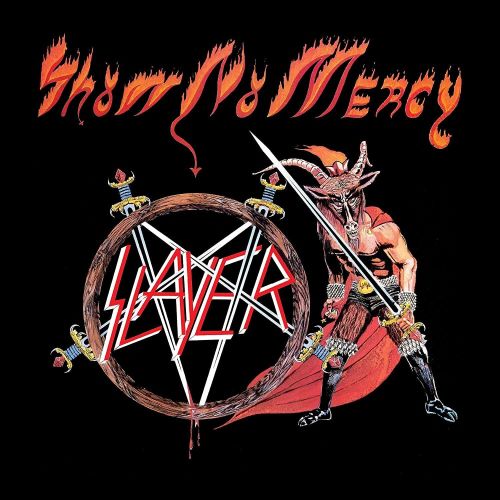
Slayer – Show No Mercy

This album just turned 40 years old last week. Let’s relieve some arthritis, check out senior discounts, and get into it.

Slayer – Show No Mercy

Released December 3, 1983 via Metal Blade Records

My Favorite Tracks – Black Magic, The Final Command, Die By The Sword

This is more than just the story of Slayer’s debut album, it’s also the story of the formation of Slayer. The band did not fiddle about with a ton of members before getting a functioning line-up together – the founders of the band were Tom Araya on vocal and bass, Kerry King and Jeff Hanneman on guitars, and Dave Lombardo on drums. The group initially played cover songs, stuff like Maiden and Priest as well as the highly influential Venom. Slayer would incorporate the leather and spikes look as well as Satanic imagery into their performances.

Brian Slagel, the founder of Metal Blade Records, happened upon a Slayer gig and got the group to commit to the third volume of the Metal Massacre compilation series. He also got the band into a recording contract and Slayer set out to get their debut album recorded. Metal Blade did not have financial backing for the album so Araya and King used their own money and borrowed more to get the album done.

This album comprises 10 tracks at a slender 35 minutes of runtime. I am not going to go through every one of them today, instead I’ll just give the tracklist and then go over some highlights.

Evil Has No Boundaries

The Antichrist

Die By The Sword

Fight Till Death

Metal Storm/Face The Slayer

Black Magic

Tormentor

The Final Command

Crionics

Show No Mercy

There are other versions of this album out and about, some have a package that includes the band’s next EP Haunting The Chapel, this is a CD I used to have way back when and kind of wish I still did. There are others that have various bonus tracks.

The sound on this album is one that can be surmised from the bands Slayer were covering in their first days – this is a mix of the New Wave of British Heavy Metal, along with a heavy dose of Venom and Mercyful Fate. I’d hesitate to call this thrash, though Slayer are clearly a defining band of that genre. This is a bit of something else, maybe speed metal on Satanic steroids. But it also isn’t really wrong to call it an early thrash banger.

This album is brash and rough, though it does flow and is very listenable. It does not descend into a near parody of heavy metal in the way many might say Venom did. While this wasn’t produced by a mastermind of the studio (Slayer self-produced along with Brian Slagel), it also isn’t crude and unwieldy the way, say, Sodom’s debut stuff was.

The dissonance that would come to define Slayer’s music was already present here, with super fast riffs running along with Tom Araya’s vocals, which for this debut could be found in the higher register. He stayed in his more usual pocket for a lot of stuff but would let out a falsetto scream on many occasions, something in keeping with King Diamond. It’s also something we wouldn’t get much more of as Slayer charted more of a thrash course and Tom decided to preserve his vocal chords for a 26 year long career of belting out some of the most subversive heavy metal to be found.

This album can be reviewed fairly simply, it is an all-or-nothing affair if a person will get into it or not – it’s an early heavy metal album, very heavy, that sets a course for being the truly monstrous stuff that a lot of other acts got accused of being through the 1980’s and the Satanic Panic. The riffs and drumming are lightning fast, if not necessarily constructed in the greatest songwriting fashion. Yet, it all holds together far better than a lot of other examples of “rough” early ’80’s metal that didn’t wind up being massively influential. These songs are “on the rails,” if only just barely, but there is a cohesive unit here.

I will say that I absolutely love this album, it is one of my favorite Slayer records. It is not their defining sound by any means, we’d get that a few years later on Reign In Blood and beyond. But this one has a very nice quality in its rawness, yet still being a functional unit. We can praise Venom all day and night for being the forefathers of the extreme metal that would come, but Slayer and Mercyful Fate were the two early bands that made this sound like actual music.

If there’s a song that hints at the Slayer to come, it’s Die By The Sword. This brutal tale of ancient warfare give the staccato, militant sort of rhythm that Slayer would employ as they went along. It remained a staple of the band’s set throughout their career, being the most-played live song from this album (just ahead of Black Magic). What Slayer was to be was truly found in this grotesque epic.

But that isn’t to discount the rest of the record – personally, I love it all. The Antichrist is a high-pitched attack that goes as fast as it can, while The Final Command builds in pitch through running riffs and Dave Lombardo’s psychotic drumming ability. Tormentor is a tale of night stalking that sees some fantastic early Araya screams, and the closer Show No Mercy is an early showcase of how the NWOBHM influenced the next generation that would be called extreme.

Show No Mercy was the first salvo from what would become a heavy metal icon. It was somewhat immature and not expertly executed, yet it works in its juvenile and unformed charm. The record would do wonders for an early Metal Blade Records, selling over 20,000 when the label had nothing that had hit over 5,000 at the time. And Slayer would be off and running, launching a tour that recruited family members as the road crew.

It would only be a few years before Slayer truly broke through, becoming one of the Big Four of thrash metal on the back of their genre-defining Reign In Blood album. But Show No Mercy should not be overlooked, nor should its follow-up Hell Awaits. This was the true bowels of heavy metal in the early ’80’s. Parents and the wives of politicians might have been upset over what a lot of other bands were doing, but Slayer was on a whole other plane of existence from that.

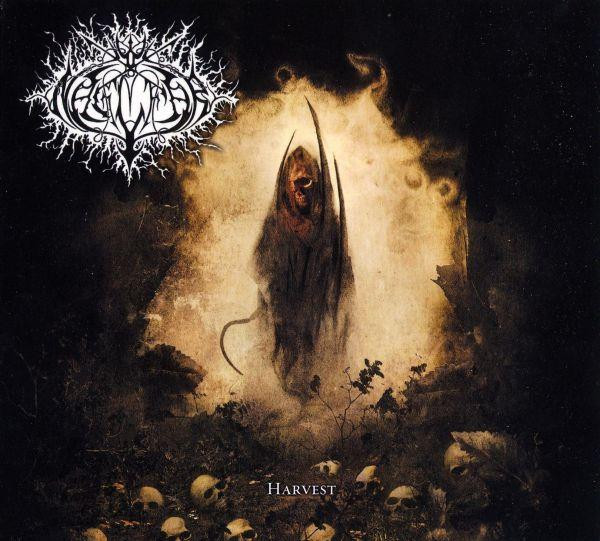
Naglfar – Harvest

Today I’m going back to 2007 and getting out a melodic black metal album that saw a subtle yet noticeable shift in the band’s sound and a change in theme from raging about external issues to focusing inward on one’s own shortcomings.

Naglfar – Harvest

Released April 2, 2007 via Century Media Records

My Favorite Tracks – Harvest, The Darkest Road, The Mirrors Of My Soul

Naglfar were fresh off their 2005 opus Pariah, which was the second to feature Kristoffer Olivius as the band’s principal member after the departure of co-founder Jens Rydén in 2003. Olivius kept at vocal duties for this album but passed bass playing to Morgan Lie. Andreas Nilsson and Marcus Norman handled guitars, and Mattias Grahn was the drummer.

While Pariah was a bomb aimed at the corruption and rot of society’s institutions, Harvest took a different approach and explored the decay of self. The themes here are depressing, bleak and suicidal. It is truly not for the faint of heart.

The album runs 9 songs out in 45 minutes. A few versions of this release had bonus material, including a DVD with live stuff, but the core album remains the same across versions.

The album opens with Into The Black. The pace is slower here, very noticeably so compared to the past few Naglfar albums. But the slower tempo works in the song’s favor, it is a creepy dive into the mind of someone who is done with life. It sets the table well for the rest of the album. Up next is Breathe Through Me, which musically sounds more like something from the prior album. It’s a faster black metal offering that gets into personal damnation, also wrapped up in the religious symbology that Naglfar often employ.

Next is The Mirrors Of My Soul and this one is a masterpiece. It a bit faster but also quite, well, groovy. It is a look at a person’s descent into total madness, with death the only option out of it. The lyrics to this one are pure poetry – the lines “Deeper into darkness, deeper I fell – When I close my eyes I see myself burn in Hell” are just amazing work by Olivius. I’ve held this as a personal favorite Naglfar track since first listen back in 2007.

It’s now on to Odium Generis Humani, which is Latin for “hatred of the human race.” This one leaves behind the self-hatred for a minute and revisits the “fuck you all” attitude of Pariah. The blistering music matches the intensity of the misanthropic delivery.

Song five is The Darkest Road and is another brilliant work from Naglfar. This is a haunting tale of someone embracing the “dark side” of life and also the nihilistic acceptance of life having no meaning. It is not necessarily a celebration, more of a matter-of-fact statement. This song was more or less an album single, and a wise pick for one as this both leaps out in its dire message and is also quite catchy.

The Way Of The Rope comes next and, if you at first think that it’s about Sweden’s long nautical history and the importance of ropes to seafaring, well, you’d be very wrong. If you guessed that it’s a savage tale of suicide, you’d be correct. After this comes Plutonium Reveries, another callback to Pariah and the misanthropic desire to see humanity perish in nuclear war as payment for misdeeds. The hits keep coming with Feeding Moloch. Moloch was an ancient entity mentioned in Hebrew texts that accepted child sacrifices, and the narrator of the song gladly supplies Moloch with its desires.

Everything winds to the end of the road and the title track Harvest. It’s clear from the drop that something extra is up here, as most of these songs run 4 or 5 minutes but this final song gets over 7. This is a dark and majestic song that feels like the whole album was building up to. Its theme is the concept of reaping what one sows, though of course it is again from a misanthropic perspective and aimed at everyone who has wronged the song’s subject, or perhaps all of humanity. While of course quite noisy like the rest of the album, the song goes out quietly with a piano outro. It’s an effective, unsettling quiet after the past 45 minutes of pure misanthropic hatred.

Harvest was another well-regarded success for Naglfar, displaying that the band still had staying power after the loss of a primary member after 2003. The band would tour behind this effort then re-enter the studio to prepare their next album in 2012. They would then take an extended layoff, something the group is known for doing, before their most recent album in 2020.

For me this has been my favorite Naglfar album, and it’s a lofty title since I love both Sheol and Pariah. The twist on theme here and the shift in music to something more catchy put this one above the others for me. When it released in ’07 I was not in the greatest of mental states, so this was either the absolute best or worst album to get into. But it all worked out in the end, and Harvest still holds up for me all these years later.

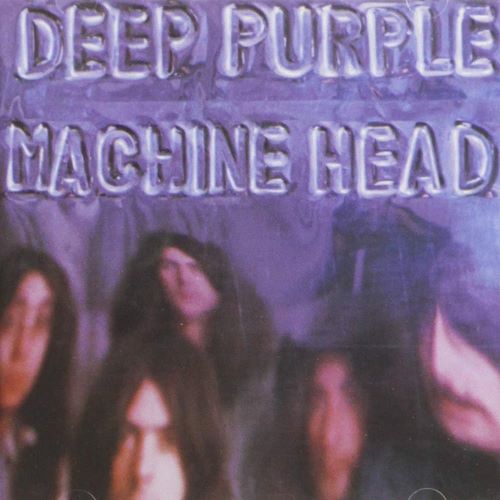
Deep Purple – Machine Head (Album of the Week)

It’s time this week for one of rock and metal’s most immortal albums. Deep Purple were looking to build on momentum from a prior album and also do a better job of capturing their live sound on a studio album when they made a series of recording choices that would both cement them as rock titans and also contribute one of rock and roll’s most infamous song origin stories.

Deep Purple – Machine Head

Released March 25, 1972 via Purple Records

My Favorite Tracks – Space Truckin’, Smoke On The Water, Highway Star

The story of Machine Head and its recording has long been etched into rock music lore. Deep Purple were out to better capture their live sound on a record. The band had established some success on the basis of their album two records ago, Deep Purple In Rock, and were convinced that bringing their live sound to a studio record would help them along. The band booked the famous Rolling Stones Mobile Studio and lined up to record at the Montreux Casino in Switzerland. The original plan was to record a live set as well as the studio album and release a double record. Of course, those plans went up in flames, as we’ll get to.

Tracking Deep Purple line-ups could drive the world’s foremost scholars mad, there is a whole lore and science behind it. This album featured the band’s Mark II roster, which would be the band’s most successful configuration. It featured Ritchie Blackmore on guitar, Ian Gillan on vocals, Roger Glover with the bass, the immortal Jon Lord on keyboards and the band’s lone constant member Ian Paice on drums.

Deep Purple would be credited as album producers. They were joined by engineer Martin Birch, who had worked with Purple on previous albums as well as Fleetwood Mac in their early career. Birch would go on to produce for Blackmore again in Rainbow, handle the early Whitesnake albums as well as the first two Dio-fronted Black Sabbath records before settling in as the long-time producer of another British band I might happen to talk about all the time on this site.

Today’s album has a fairly lean 7 songs running at 37:46. Several deluxe editions of the album are also available.

Highway Star

The album opens with a quick hard rocker that was literally written in front of journalists on a bus after one reporter asked how the band wrote songs. Blackmore started jamming on a guitar while Gillan composed lyrics on the fly about simply “being a rock and roll band.” This was also released as a single.

This ode to cars and women accomplished its mission of depicting rock and roll, and the music laid a blueprint for many bands to follow – keep things simple and just rock out.

Maybe I’m A Leo

Up next is a blues jam soaked in Blackmore’s guitar tone and spiced up with Lord’s organ work. It’s a really nice song and a good bridge from rock’s recent past to what it was becoming. There are sparse lyrics here, but Gillan laments the loss of a woman, who maybe was taken away against her will, it’s hard to tell. But she is gone and Gillan is a Leo, but not a lion. (Hey, me too. And it turns out Ian Gillan and I have the same birthday, didn’t know that.)

Pictures Of Home

We have a very amped up jam session here, as each instrument player gets a spot to go off on his chosen weapon of rock. It’s far from just an individual showcase though, it’s also a cohesive song that works when everyone’s playing together as well as when one person takes the spotlight. It also features a harrowing lyrical tale of a mountain climber stuck on a mountain, which would be a pretty awful position to be in. And there’s probably not a British rock royalty jam session going on up on the mountain to pass the time with.

Never Before

It’s another blues-based tune here also with a bit of funk creeping in on occasion. While Lord and Blackmore are up to their usual mastery here, it’s Ian Gillan that really gets a chance to shine vocally here. His tale is one of sorrow, as he’s been done wrong by a woman, but the song is pretty hard hitting and ready to soar.

Smoke On The Water

And here we are. The truth is that this song’s full details deserve their own post so I will Cliffnotes things today. DP were set to record at the Montreaux Casino after it shut down for the winter, the last gig the venue booked was Frank Zappa. A “stupid with a flare gun” decided to burn the place down instead. DP had to find another place to record and also found lyrical inspiration for a song in the fire. In fact, the song’s lyrics give most of the details of the events.

Smoke On The Water was not immediately recognized as a hit. In fact, the band had a live album and another studio record out before this was officially released as a single. The song went on to hit number 4 on the US Billboard Hot 100 and was also certified gold in the US.

But the song’s true success goes far beyond charts and sales. The Blackmore riff is perhaps rock and roll’s most recognizable guitar sound. It is simple yet highly effective, and it led to generations of future guitar players annoying music shop employees with repeated plays of a riff so simple that most anyone could play it in a few minutes. This is quite possibly the greatest contribution to rock music ever, it is that massive and influential.

Lazy

This one is nearly an instrumental and is a fantastic jam between Blackmore and Lord. The song is 7:22 in length and these two take up most of the track. It is a jam in the truest sense, with them simply going off and doing what they want to do. The small verse section is about, well, being lazy. It is split in two with Ian Gillan on the harmonica between.

Space Truckin’

The album closes with a brilliant rock and, honestly, heavy metal track. It’s a fantastic, trippy march through the idea of being just what the title says – a space trucker. It’s like Han Solo a few years before he came around. The song is carried by Jon Lord’s just plain gross keyboard riffing. This song got turned into a massive jam in live settings, including an infamous one in 1974 when Blackmore was pissed off and destroyed thousands of dollars in gear.

Machine Head was to be the magnum opus of Deep Purple’s long and storied career. The album hit number 7 on the Billboard 200, and number 1 in 8 countries, including their home UK. It was certified gold in 4 countries and 2 times platinum in the US. Bear in mind that most record labels stop certification counts due to expense and it’s likely that the record has gone on to sell vastly more.

The immortality and legend of Machine Head is undisputed. When there is a list of the greatest rock and metal albums, this album is on there. When there is a list of the greatest songs, Smoke On The Water is on there. When there is a list of rocks’ greatest guitarists, Ritchie Blackmore is there. Deep Purple would, along with Led Zeppelin and Black Sabbath, form the “holy trinity” of rock music in the 1970’s. It is the influence of these three bands that shaped the face of music to come and the foundation upon what a lot of the stuff I listen to was built on. It was Deep Purple that influenced a lot of what I and we listen to, and specifically Machine Head that spun on the turntables of the next generation of musicians over and over again. There truly is nothing without this piece of rock history.

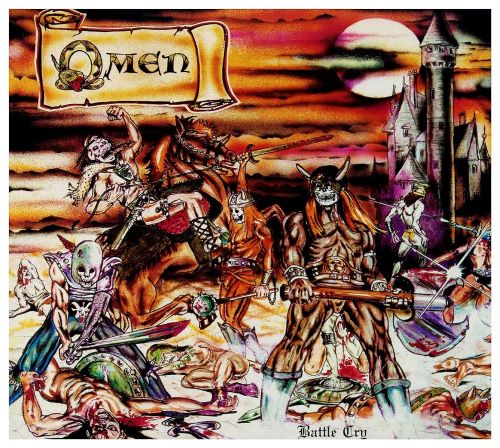
Omen – Battle Cry (Album of the Week)

Going back in time this week to one of the early foundational albums of US power metal. This isn’t the same power metal of 2000’s Europe – this is far more “meat and potatoes” metal that draws a direct line from the New Wave Of British Heavy Metal.

Omen – Battle Cry

Released November 1984 via Metal Blade Records

My Favorite Tracks – The Axeman, Dragon’s Breath, Battle Cry

Omen got their start when founded by guitarist and lone remaining original member Kenny Powell in Los Angeles, California in 1983. Powell was joined by J.D. Kimball on vocals, Jody Henry on bass and Steve Wittig on drums. The band would have this debut album ready about a year after forming.

Today’s album is rather brief, with 10 songs at 36 minutes. We are also light on background info for this one, any easily accessible digital information is very lean and any good old interviews or the like are buried in old print magazines that aren’t easy to come by. Too bad there isn’t a heavy metal library with all the old stuff accessible for reference, but there isn’t so we can run through this one pretty quick.

The album opens with Death Rider. This opens with a nice intro guitar piece and goes into a pretty fast-paced romp through a maniac tearing up the world. Up next is what I and many others consider the album’s highlight, The Axeman. This killer song offers up the impending execution of someone who tried to usurp a kingdom. This isn’t a sad ode to one’s last moments as in many other noted metal execution songs, rather this a recording of the nefarious deeds that condemned the offender.

Last Rites is next and could almost be a sequel to the prior track, though this time gallows are substituted for beheading. It’s a very nice riff that runs through this song. Dragon’s Breath comes in next and is straight out of the Dungeons and Dragons Monster Manual, of course the cool first edition with demons and shit in it. But this time it’s a dragon tearing things up in fantasy land and as this killer power metal song unfolds, it’s clear the tyrannical dragon has the upper hand.

Up next is a bit of a gag of a song with Be My Wench. I could see people having an issue with this one as some of the lyrics get at the woman in question being a bit too young to be engaging in wench-like activities, but I don’t think this was ever meant to be taken seriously. It is a pretty decent song in the end.

It’s time next for the title track Battle Cry. This is another bit of a horse gallop playing with a nice gang chorus chant as more war and carnage ensue in this unnamed fantasy land. The slaughter continues on Die By The Blade, which is pretty self-explanatory. There’s more very epic riffing from Kenny Powell on this one.

The album rounds into the close with Prince Of Darkness. While this album isn’t a concept album, this little arc of songs does almost form its own little story with this one seeing what could be the main villain in battle. Next is Bring Out The Beast, a song where a guy hooks up with a woman then all of sudden is being burned at the stake, not sure what’s up here. Pretty cool music, though. Things wrap up with In The Arena. The intro to this one is not the greatest but the song moves into a better form after that. This one is a bit slower paced than the other songs here.

Battle Cry was a rock solid debut and one of the foundational albums in US power metal. Omen would issue a few more albums in the ’80’s that furthered their initial legacy, the band would then begin a series of line-up changes and go on hiatus in the 1990’s. They would reconvene and remain a consistent touring outfit since, occasionally dropping new material as well.

Omen would not sell on the same levels as the thrash acts that took off in the mid’80’s, but they have cemented an important place as helping establish the power metal sound on US shores. Today they are hailed as a lynchpin of traditional metal and this first album is a great spot to hear the reasons why.

Ozzy Osbourne – Blizzard Of Ozz (Album of the Week)

Back to an all-time classic this week, the debut solo album from Ozzy Osbourne. It was originally supposed to be a band package presentation but instead it would be the launch for the successful and controversial solo career of the Prince of Darkness.

Ozzy Osbourne – Blizzard Of Ozz

Released March 22, 1891 (US release) via Jet Records

My Favorite Tracks – Steal Away (The Night), Mr. Crowley, Revelation (Mother Earth)

The premsie behind the album is pretty simple – Ozzy had been fired from Black Sabbath and thought he was done with music. Don Arden was the record exec who not only fired Osbourne from Sabbath but also got him lined up with a solo deal from Jet Records. Don had his daughter Sharon oversee Ozzy, who was in a dark mindset after being axed.

After some twists and turns, Ozzy would form a group with guitarist Randy Rhodes, bassist Bob Daisley, drummer Lee Kerslake and Don Airey on keyboards. The group was named Blizzard Of Ozz at first, but when it came time to release the first album things were re-done so Ozzy had solo billing.

The decisions over the band’s billing would also bleed into writing credits. Rhodes and Daisley were primarily responsible for the music on the debut album and were credited as such. Kerslake received a credit for No Bone Movies, while Ozzy was credited on all songs. The Arden management clan would subsequently decide that they did not want other musicians getting songwriting credits, something that would start a chain of lawsuits, buyouts and other legal wrangling down the line. Things were fairly conventional for the first release, but the specter of Sharon soon-to-be Osbourne was looming large already over the reigns of Ozzy’s solo career.

The album was released in 1980 in the UK and 1981 in the US. It bears 9 songs with a runtime just shy of 40 minutes. I won’t get into any of the myriad other editions with bonus tracks today, though I’ll discuss one infamous re-issue version a bit later.

I Don’t Know

The opener is a blistering metal track that sets the early tone for this phase of Ozzy’s career. The lyrics are about the plague of self-doubt, presumably what Ozzy felt after the Sabbath firing. And while everyone sounds in fine form here, it is the guitars of Randy Rhodes that jump out here. Everything is set here for the creation of a new guitar god – the tone, the writing perfectly for the song with riffs that stand out, and the solos that very few could even hope to imitate.

Crazy Train

Up next is the lead single and what would become Ozzy’s signature song, even though it didn’t crack the Top 40 on release. It’s another crazy riff from Rhodes and a catchy melody and chorus that put the song over the top and cemented it as one of metal’s most-known songs. Crazy Train has been inescapable since then, played on the airwaves far and wide. Someone would have to be born yesterday not to know this one.

Goodbye To Romance

A somber ballad here and one with a pretty 70’s bent, this is another exploration of Ozzy’s down feelings after being sacked from Sabbath. I’ve always like a sad song and this is downright depressing, so it ticks the boxes for me. Not quite what anyone was expecting but a nice song nonetheless.

Dee

A brief instrumental passage from Randy Rhodes here. It’s named in honor of Randy’s mom.

Suicide Solution

And next is the infamous track that would lead to a lawsuit over the influence music has on youth. But before that, this is a slamming heavy metal tune with a riff Rhodes had re-calibrated from his early Quiet Riot days on Force Of Habit.

The song’s message is one of caution – beware of the destructive influence of drugs and especially alcohol. It’s origin is less clear – Ozzy claims he wrote the lyrics after the drinking death of Bon Scott, Bob Daisley claims he wrote the lyrics after observing Ozzy’s own crazy behavior.

But notoriety would come calling – in 1984 a teenager committed suicide, and the parents sued Ozzy and the record label on the basis of the song causing dangerous influences. The case was dismissed on First Amendment grounds, but this and other infamous heavy metal lawsuits would take their toll on the musicians and the scene as a whole.

Mr. Crowley

Another heavy metal standard here as Ozzy jumps into wondering about infamous occultist Aleister Crowley. Ozzy has stated that he had no clue about Crowley and the song was based on not knowing anything about him, though segments of the public would interpret the song as praise of the occult and label Ozzy a satanist. Ozzy was one of the central figures of the Satanic Panic, both this and the lawsuit were key in that casting.

Regardless of the nonsense, this song is wicked in the best way possible, with sublime work especially from Rhodes.

No Bone Movies

A heavy rocker that gets into the subject of “bone movies,” or as we commonly call it, porn. A pretty quick and simple romp through the degeneration of someone who is addicted to the flesh on screen, which back then you had to go to a theater to watch. Now you can log on from home and find out what your teacher or your mom gets up to after dark.

Revelation (Mother Earth)

While Ozzy was branded a Satanist, murderer by proxy and who knows what else, one thing he apparently actually was could be called an environmentalist. This song is the first of a handful over Ozzy’s solo career that tackle the issue of man-made environmental destruction. It personifies the Earth as “mother” and showcases the assault upon her by greed and complacency.

Beyond the song’s message is one absolutely gorgeous tune. This is splendid work by all involved, of course again highlighting Randy Rhodes and his sublime guitar work. Easily one of the best of Ozzy’s solo career.

And now between two songs we have perhaps the most interesting space in recorded music. Revelation ends on a jam that picks up a bit and then closes on a note that indicates more is to come, and that more would be the album’s last song which kicks off right away. After playing this album thousands of times, it feels perfect to have the next one come in right away and it feels wrong when it doesn’t. It is one of the disheartening parts of digital music that this transition often gets cut out by automatic time gaps between songs, or passed over altogether with shuffle features. Those who don’t regularly listen to full albums would be advised to investigate this passage further.

Steal Away (The Night)

The album’s closer is another barn burner that sees Randy shredding away and Ozzy out on a dark journey with some young, impressionable gal probably. It is my favorite song from the album and one I talked about previously here.

Blizzard Of Ozz would be a solid success for Ozzy. While neither single became a hit, at least at first, the album moved copies pretty quick and eventually wound up 5 times platinum in the US. It did also place 21 on the Billboard 200 as well as 7 in the UK and 8 in Canada.

The album would help kickstart Ozzy’s solo career and both his legacy and infamy. It would also establish Randy Rhodes as a top-tier guitarist, something we would all soon be robbed of in a tragic accident.

This album was reissued several times over the years, in 2002 it was redone in very controversial fashion. The powers that be decided to remove the bass and drums that Daisley and Kerslake had originally done, both were suing Camp Osbourne over unpaid royalties from the album. The parts were re-recorded with Robert Trujillo and Mike Bordin, Ozzy’s band members at the time. Also, Suicide Solution was edited to remove sound effect bits that some had suggested were subliminal messages that encouraged suicide.

The reaction to this new version was extremely negative. The execution was not good and the reason behind it, greed, was transparent to most everyone as the stories about the lawsuit were common in metal press. Later reissues worked with the original music and this version was swept under the rug.

Whatever the management of Ozzy’s career would take, no doubt the music itself was spectacular out of the gate. This is a stellar album, performed well by all parties involved. Ozzy would have a second act to his career and Randy Rhodes would become immortal through his work on the early Ozzy stuff. Millions of budding metalheads had a new album to shred out to, and the “moral majority” had a new enemy.

Slayer – Divine Intervention (Album of the Week)

It was 1994 and Slayer were set to release a new album into an uncertain climate. The label was concerned about explicit themes, the band were writing songs more based in the darkness of reality than ever before, and their legendary drummer had quit the group a few years before.

Slayer – Divine Intervention

Released September 27, 1994 via American Records

My Favorite Tracks – Divine Intervention, 213, Killing Fields

Slayer had previously navigated a line-up change at the drum position, but back in 1987 they were able to convince Dave Lombardo to come back. In 1992, Lombardo was gone for real and for a decade, so Slayer would have to replace someone for a recording for the first time in their history. With Lombardo being considered Slayer’s strongest asset, it would be all eyes and ears on the replacement.

That role would go to Paul Bostaph, who had been the drummer for thrash act Forbidden. Bostaph delivered far more convincing performances than others who auditioned and also took the time to practice up the back catalog in the style of Lombardo to ensure fans would get the experience they wanted. He joined Slayer’s usual suspects – bassist and vocalist Tom Araya and guitarists Kerry King and Jeff Hanneman.

Slayer had gathered up a new round of songs to follow up their 1990 album Seasons In The Abyss, which was a critical and fan hit. King and Hanneman composed the music while Araya handled a fair share of the lyrics along with King and a few contributions from Hanneman. This time around the themes would be mostly based in the grim facets of reality rather than exploring the supernatural or demonic.

The focus on murder would be an issue as the album was deemed very explicit. It was banned for a time in Germany, who have very stringent laws around that sort of thing. The album’s imagery would fall in line with the brutal themes. While the cover is a well-done piece by noted metal cover artist Wes Benscotter, the CD’s inside tray and CD itself featured the image of someone who had carved Slayer into their arm with a scalpel.

This album is 10 songs that finish in 36:33, a pretty lean effort but fairly typical of Slayer.

Killing Fields

The first thing this song does is allow Paul Bostaph an extended intro to let the world know who he is. It then jumps into a mid-tempo yet very loud affair about killing, which is a theme for the record. This song has a bit more of the subtle dynamics of Slayer than a lot of others here and comes out toward the top of the heap. Good way to open things.

Sex. Murder. Art.

This one is not even two minutes long and sounds like Slayer going back to their speedy past. This is another one about brutality, as a sadist takes pleasure in consuming his victim. This one feels like a blip on the radar with how other songs get a bit more space and tempo to breathe on here but it shouldn’t be overlooked for its throwback to Slayer of yore.

Fictional Reality

It’s a shift now to political and social issues, though of course through the filter of Slayer these are looked at from a grim perspective. This one is simply about how everything is messed up and is going down the tubes, it’s not so much a message as it is an observation. The song works really well as a 90’s era Slayer track, this one fits right in.

Dittohead

The band slams through this one, also a political sort of song. The title is taken from the name given to fans of now deceased conservative media figurehead Rush Limbaugh. The song’s message of how criminals walk free in society isn’t really a diss of Limbaugh and probably more something he’d agree with.

Divine Intervention

The title track cools things off for a bit and gets into a creepy, atmospheric vibe for a bit. It’s a fitting approach as the song is one about alien abduction. This is very well done, hitting on the sheer horror of what that process would actually be like. The one departure from reality here turns out to be the album’s real highlight.

Circle Of Beliefs

Another pretty standard Slayer cut that visits the topic of religon, one of Slayer’s favorites. The lyrics don’t break a ton of new ground, it is mostly a confrontational song and some of the stuff just sounds like words put together to fill the line. It’s not all a lost cause, there are nuggest of wisdom here and the song itself is pretty good.

SS-3

Up next is a song referencing notorious Nazi Reinhard Heydrich. He was the chief architect of the Holocaust and one of the SS’s darkest figures. The song doesn’t get much into Heydrich’s dark history other than to reference his nickname the Hangman of Prague. A lot of the lyrics are about how Heydrich was successfully assassinated by the Czech resistance in 1942, with the song’s title being the license plate of the car he was in when he was attacked.

Serenity In Murder

This song would serve as the album’s single as it was released as an EP and got a video. It is just as the title suggests – another song about murder. This was one of the songs focused on when controversy arose over the album’s dark themes. It is a pretty good song, reflective again of ’90’s Slayer and also maybe a hint of shifts in sound to come later in the decade.

213

With an album centering around murder, nothing would be more appropriate as a centerpiece than a deep dive into the realm of serial killer Jeffery Dahmer, one of America’s most notorious butchers. While a bunch of Slayer songs are words thrown together to compliment buzzsaw riffs, Tom Araya truly delved into this one and delivered a very haunting and specific account of Dahmer’s tortured psyche. The idea of consuming someone to make them a part of you is in vivid detail here and this song was crafted with care and is a standout. Dahmer likely wouldn’t have enjoyed the song as he did not celebrate his terrible crimes and also he wouldn’t have much time to – he was killed in prison just two months after the album’s release.

Mind Control

As I just said above, some Slayer songs are words thrown together over riffs. This closing track is one of those. It’s suitably heavy and brutal but it’s not covering any kind of new ground. It’s just Slayer being Slayer.

Divine Intervention would come out of the gate strong – the album debuted at number 8 on the US Billboard 200, at the time a record high position for Slayer. It would gain gold certification in both the US and Canada and has been one of the band’s most successful albums.

Despite that success, this one is kind of a quiet one when discussing Slayer albums. It doesn’t have the same legacy as Seasons… or other Slayer records. It is a bit of an underrated or forgotten album. Part of that might be down to the production, which every Slayer member has said could have been better. The album was recorded in fits and spurts across multiple studios and producers were changed a few times, so there is something to that. The music still works but it does lack certain sound dynamics, even for Slayer.

I personally do rate this album pretty highly, I enjoyed it right out of the gate in 1994 on release. Sure it’s a bunch of noise, but what else is Slayer supposed to be?

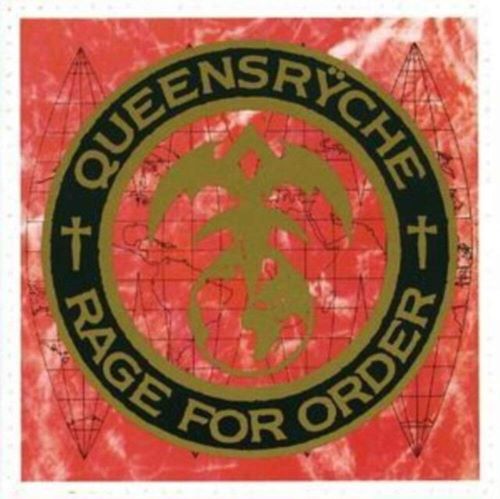
Queensrÿche – Rage For Order (Album of the Week)

A young metal band with just one album under its belt gets told by the label to “glam it up” a bit. The results were – well, not quite glam by any real measure, at least beyond the band photos.

Queensrÿche – Rage For Order

Released June 27, 1986 via EMI Records

My Favorite Tracks – Screaming In Digital, Neue Regel, I Dream In Infrared

Queensrÿche were in a bit of an odd position by the mid 1980’s – they had arrived as a heavy metal act with progressive and Judas Priest vibes. Even early on the band seemed too intellectual and sophisticated to truly dive into the glam and hair movement that was taking hold of rock music. Instead we got a grab bag of songs, some having to do with love in some darker aspects and others still getting into sci-fi or AI stuff like what they offered on their first efforts.

The band’s line-up was constant all through the ’80’s – Geoff Tate on vocals, Chris DeGarmo and Michael Wilton on guitar, Eddie Jackon on bass and Scott Rockenfield on the drums. This one was produced by Neil Kernon, who helmed the studio console for Hall and Oates’ biggest albums and has gone on to record hundreds of albums with everyone ranging from soft rock to death metal.

The production on here is worth discussing, too – in contrast to the thinner and sterile sound coming from a lot of albums in this time period, Rage For Order has a pretty full sound. It’s bright yet also full, it hits when it needs to and lets the album’s softer songs breathe. It is at times clinical, which was probably a goal since some of these songs are about computers and robots taking everything over. Getting this variety of themes and sounds down into a nice listening experience is a pretty nice accomplishment.

There are 11 tracks here that run for nearly 46 minutes, and the variety takes the listener on quite a journey. There was a deluxe reissue that offered a handful of live and demo bonus tracks, I’ll stick to the original album’s tracklist for today.

Walk In The Shadows

The opener is a pretty nice song that walks a line between being both melodic and heavy. This dark love tale was apparently inspired by vampire stuff like the Anne Rice books. The song is fairly quick and simple but does a good job setting the table for what’s to come.

I Dream In Infrared

Up next is something akin to a power ballad. This one starts out soft and lush, then builds into a really powerful surge through the chorus. It’s the earliest hint of how Queensrÿche would approach a more conventional rock song, something we’d get more of from them in 1990. The lyrics have to do with a relationship that’s clearly lost, the narrator is about to split and has pretty profound thoughts about it. As with a lot of Queensrÿche stuff there could be a deeper or more specific song meaning but I don’t know what it is. No matter, this song is spectacular and one of the band’s crown jewels.

The Whipser

The title is misleading here, this song is plenty loud. It’s got a nice and noisy riff with Geoff Tate visiting several parts of his considerable vocal range, and just the right amount of keyboard accents which Neil Kernon provided. The song’s theme isn’t quite clear, someone is being coerced or persuaded to do something likely not good. It could be vampires or robots, either are a fair guess for this album, I personally vote robots as it’s always a safe bet on early Queensrÿche stuff.

Gonna Get Close To You

Up next is a cover song – this was first done by Canadian artist Lisa Dal Bello, who performed as Dalbello. It is a creepy stalker song, and unlike The Police’s smash hit Every Breath You Take, this song is very, very upfront about being engaged in flat out criminal stalking behavior.

Queensrÿche’s cover is honestly not far removed from the original, though it’s also paired with more instrumentation to fill it out. I go back and forth on whether I’m into this one or not and overall I’m kind of not, but I will admit that they did get the sound right in terms of making it fit the album.

The Killing Words

This is another amped up power ballad. Another high quality track, this is about love going down the tubes again but the people are apparently still together, seems to be a recurring theme here.

Surgical Strike

It’s time to kick up the pace and move on from love to war. This one hearkens back some to the debut album but also still fits with the sound and vibe of this record. This one has a really nice solo then a synth transition back into the song. It’s also over as quick as a surgical strike in a hair over 3 minutes.

Neue Regel

German for “new regime” or something like that, this kicks the pace back down a notch but keeps the power going. There’s quite a bit of use of keyboards and other samples here to help create an epic build to this new order, whatever it may be. There’s a lot here but it’s not overdone, this one works great with all the embellishments.

Chemical Youth (We Are Rebellion)

It’s time to get loud again as this one aggros its way through a long and unwieldy rant about rebellion, politics and technology. I don’t know what the hell they’re talking about here but the song is still pretty good.

London

Another powerful power ballad, this one is about a tryst with someone in the city referenced in the title. A pretty nice song, quite powerful and moving, though also perhaps a notch below some other stuff here.

There’s an interesting reference to November 4th in the opening line – that day was nothing unusual on its own but is just a day removed from “Guy Fawkes Night” or the Gunpowder Treason Day in England. (remember, remember the 5th of November). Nothing in the song indicates any link to that but I thought it was a neat coincidence, especially given the multiple themes of rebellion found through the album.

Screaming In Digital

Up next is an epic foray into the world of sci-fi and AI, though AI isn’t really sci-fi anymore. This song is an absolute scorcher, with dueling vocal parts representing two characters. It’s not totally clear what’s going on here, though at least one of the participants is a machine and I’ve always assumed both are, the “newer” machine is struggling with the concept of only being a machine. It could also be a human being forcefully “induced” into the robot cult or whatever, I don’t know.

This song is an absolute masterpiece. Geoff Tate is on fire here and the song’s militant rhythm gives a machine-like feel to things to further enhance the cyborg or AI concept. The vocal trade-off can be confusing at first, but repeated listens shine a light on what’s going on, and this song should be listened to repeatedly. One of Queensrÿche’s best songs.

I Will Remember

The album ends on a quiet and somber offering that is also lyrically about AI. This explores the concept of machines “stealing each other’s dreams” and the idea of not having private thoughts that can be concealed from a digital police state. It was sci-fi at one point in time, today it’s reality – just think about buying a couch and look at the ads on your phone. But I like this quieter approach to ending the album and the song itself is quite well done.

Rage For Order was not a huge hit out of the gate – it peaked at 85 on the Billboard 200 in the US and had various other lower chart placements around the world. Critics were kind, they liked the music though found some of the lyrical fare dense. This would get a gold certification in the US and Queensrÿche would land coveted opening spots on tours with AC/DC, Ozzy Osbourne, Ratt and Bon Jovi.

Queensrÿche have often defied categorization, for good or bad, and in the early days it was usually a good thing. Rage For Order shares the band’s somewhat elusive qualities – it is a lot of things and touches on a lot of subjects, but overall it was a pretty big step forward. This moved Queensrÿche out of the “Judas Priest meets Rush” comparisons and into establishing their own sound. Their signature guitar tone is here, as are knacks for arrangement and lyrical concept. All of this would mesh just a few years later on their magnum opus. Rage For Order may be a grab bag of sorts, but whatever you grab out of it is pretty damn good.