Danzig – Thrall-Demonsweatlive (Album of the Week)

This week I’ll take a look at an EP that had both some live and studio tracks on it. One of the songs would gain hold on MTV and launch the commercial peak of “Evil Elvis.”
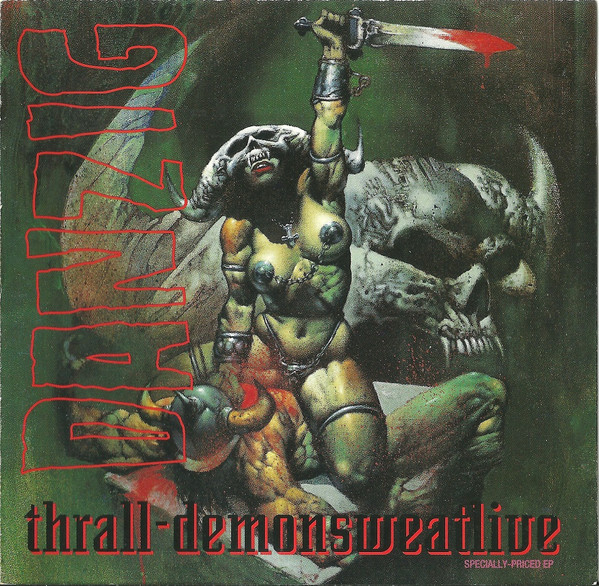
Danzig – Thrall-Demonsweatlive

Released May 25, 1993 via Def American Records

Glenn Danzig was in a pretty good spot entering 1993 – his profile had risen considerably on the back of three strong albums and the music environment was accepting of a lot of alternative metal that probably wouldn’t have gotten the time of day in the ’80’s. Danzig would become one of the flagship acts of this “alt-metal” movement with the hit contained here.

The cover art was done by renowned comics artist Simon Bisley. This was the first of many collaborations between Bisley and Danzig, as Bisley would soon join Danzig’s new comic book company Verotik as an artist.

The band’s lineup remained the same as it had since the group’s inception – Glenn Danzig on vocals, John Christ on guitar, Eerie Von on bass and Chuck Biscuits at the drums. This roster would remain for one more studio album after this then all three others besides Danzig would vacate their positions, marking the end of the “classic” era.

This EP comprises two parts, as well as a “hidden” track. The hidden song was on track 93 of the CD, leaving 86 tracks of silence between the listed songs and this bonus. This was a thing back in the CD days and not the last time Danzig would use the gimmick to place a hidden song. As a note to those hunting for this on Spotify, only the 7 listed tracks appear on that service.

Thrall

The first three songs are all new studio recordings, done in early 1993. All of the songs were knocked out in a day. Up first is the heavy banger It’s Coming Down. This is one of the heavier tracks the old Danzig lineup did. It is a very meat and potatoes metal song, with very few lyrics and just a bunch of heavy riffs and drumming. This one works pretty well and is the highlight of the new songs. There was a music video filmed for this but it contained a lot of bondage scenes in it so MTV said no. A less saucy version is linked up at the end of this post.

Up next is The Violet Fire, a bit more of a gothic vibe to this one but still a pretty heavy tune. The lyrics are about the dark arts of seduction, a Danzig staple. The last of the three studio cuts is Trouble, which is a cover song. In keeping with Danzig’s nickname and vocal styling, the song is an Elvis cover. The song is suitably spruced up for the atmosphere of a Danzig song and works pretty well. It’s fair to say that a lot of people listening to this EP in 1993 might not have been aware that this was an Elvis song.

Demonsweatlive

The four live tracks are from a 1992 Halloween concert at the Irvine Meadows Amphitheater in the Los Angeles area. The entire show was pretty available in bootleg form, though that boot probably came about as a result of this EP’s notoriety.

Up first is Snakes Of Christ from the album II – Lucifuge. Like everything here, this is an excellent live version that captures the raw and gritty sound of this music at its best. One of two cuts from the self-titled debut is up next. Am I Demon gets a whole new level of energy from the live outing and sounds like Danzig at the top of his demonic underworld. This could be considered the prime offering of the live cuts, though another one would go on to claim all of the glory.

The third song is Sistinas from III – How The Gods Kill. This is a bit of a different song, being a quiet ballad that fits Danzig’s style pretty well despite being well outside the usual heavy offerings. Even when I was a dumb 15 year old listening to this and only wanting heavy stuff I could appreciate a slower tune like this one.

Another song from the first album rounds out the live stuff – Mother was a single initially but did not move the needle back in 1988. Several years later, the song’s appearance on this EP would catapult it and Danzig into another layer of the atmosphere.

What appears first on the EP is the actual live cut from the Irvine show. It is certainly a live performance, it is a much more raw and open vocal outing from Danzig than any sort of studio track. It is a worthy live cut, as all four of these songs are, but it’s also not the version that actually got popular, even though footage from the same live performance is in the music video.

After letting the CD play for about seven minutes of silent tracks, track 93 hits with the Mother 93 mix of the song. This is a re-recorded version the band did in studio and is the single release that wound up getting so popular. The video was put with this new studio version and the release got huge traction on MTV.

Mother would hit the singles charts, getting to number 17 on the Hot Mainstream Rock Chart and just missing being a top 40 hit on the Billboard Hot 100, getting to 43. Sales of Thrall-Demonsweatlive and the original Danzig album would shoot up after the video’s explosion, netting the original a platinum cert and this EP at least a gold, its actual certification status is a bit murky and it may also be platinum.

Mother has lived on as a mainstream one-hit wonder and found use in many movies, video games and other places over the years. Danzig would depart his hard gothic metal sound a few years later, specifically citing the “MTV audience” as one he was happy to part ways with, though he did also appreciate his time in the sun.

While this is just an EP and the actual version of the song that got popular was an odd hidden track, Thrall-Demonsweatlive was a triumphant moment for the first iteration of the Danzig lineup. The breakout success of Mother can be attributed to the changed state of rock at the time, back when the song first came out it didn’t move the general music audience but did bring on some of Danzig’s core fans. This EP might not have been the touchstone moment it was without the single doing insane MTV business, but there are still several worthwhile cuts to check out here.
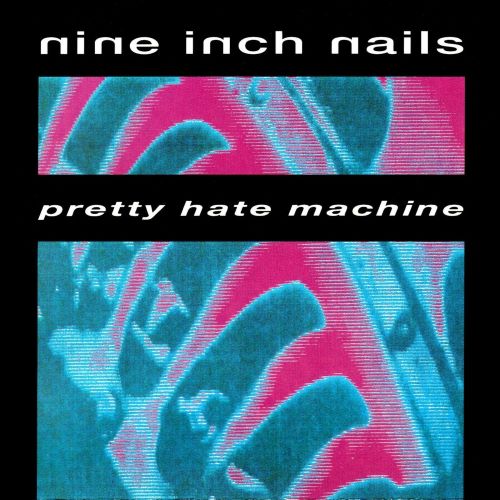
Nine Inch Nails – Pretty Hate Machine (Album of the Week)

It’s a well-told story by this point – rock music changed forever in 1991. What had been was gone and, no matter nostalgia movements, there was no going back. But the story around rock and 1991 leaves out a lot, including the huge buildup to “alternative” rock before ’91. Rock always had an alt side and several acts were already breaking the surface even before the fateful summer of grunge.

But for all the twists and turns rock and metal would take in the early 1990’s, one of the most influential artists of the era would get his start a few years sooner, in 1989.

Nine Inch Nails – Pretty Hate Machine

Released October 20, 1989 via TVT Records

My Favorite Tracks – Sin, Head Like A Hole, Terrible Lie

Nine Inch Nails was the brainchild of Trent Reznor, who would be the band’s only member for the recording of the debut album. Reznor was able to record for free in a studio in Cleveland, Ohio; where he worked during the day then was allowed to do his recording at no cost.

The music here can bear multiple descriptors and still be pretty accurate. It is inudstrial, though far more rooted in conventional rock than many legacy industrial acts. It can easily be called electronic rock, though such a term doesn’t really mean much other than synthesizers and like instruments were used. And this was certainly alternative, in that it didn’t sound like much of anything else that was going on at the time. Yet, anyway.

Trent Reznor was the only musician involved in the bulk of recording Pretty Hate Machine, though others contributed spot appearances. The album was produced by a committee though, with Reznor and four others earning production credits. Among those was Flood, who had a long career in engineering and was now stepping up into production and whose future would be entwined with Nine Inch Nails’ rise.

The original issue of Pretty Hate Machine was 10 tracks at 48 minutes. A 2010 reissue includes a Queen cover and there are some other odd editions that comprise bonus tracks taken from the album’s many single releases, but today I’ll stick with the OG tracklist.

Head Like A Hole

Opening the album is the earliest NIN signature song and the album’s second single. This one comes in with synthesizer action but also sticks to a conventional rock formation, this song is probably as close as it gets to heavy metal on the first album. The verses spell out the presence of God Money, the true all holy presence that runs everything, then the chorus ramps up and lashes out, its refrain “I’d rather die than give you control” being a very recognizable shout from over 30 years prior.

Head Like A Hole has remained a NIN staple since release and is the band’s most played live song. Note that the music video features a remix of the song, though it is not radically different from the album cut.

Terrible Lie

It’s on to another NIN staple cut, this one wasn’t a single but has been in wide circulation anyway. This one keeps a slower pace but does still hit pretty hard. It’s one that sounds mostly more conventional though it still features plenty of synth and electronic programming. This one sees Reznor questioning god and religion, something he would not stop with here. Though this one is far less blasphemous and pointed than subsequent forays on the topic would be. This one is more about the disconnect between promise and reality, and the desire to cling to the fantasy.

Down In It

Up next is another album single and also the first song Reznor wrote for NIN. This one sees Trent showing off some rap skills and also goes very hard on the electronic side of things. Reznor has said that the song is a complete rip-off of Dig It, a 1986 track from influential act Skinny Puppy. And yeah he’s right about that.

The song is about what a lot of this album is, which is late teenage heartbreak and angst. It was based on an early relationship of Reznor’s and while the song is general enough to apply to a lot of things, the relationship angle is an obvious one. Also, the end of the song literally uses the “Rain, Rain Go Away” nursery rhyme for whatever reason. Kind of funny.

There is a funny story about how the FBI became involved with lost footage from the music video, but the story is lengthy so I’ll save it for another time. It’s widely available on Wikipedia and elsewhere for the super curious.

Sanctified

Here is a more atmospheric track that employs the electric elements to great effect. It couples the idea of relationships with the holy elements of purification, as though one is ascending or cleansing through the act of being with someone. Reznor has mentioned that the “relationship” might actually be one with drugs, though the song works quite well in the more conventional context of relationships.

Something I Can Never Have

A more quite ballad, and one that’s very forlorn. This revolves around love and loss, the unobtainable and the loss of what was. Reznor would showcase a special talent for this quiet electronic ballad style over the years, of course the culmination of that is a tale for later. This song got used for the soundtrack to Natural Born Killers, which Reznor produced.

Kinda I Want To

“Nine Inch Nails” and “fun” aren’t often words used in the same sentence but here on the debut we have a bit of it. It’s more upbeat, though still a bit twisted. I know nothing about dancing but I’m sure people could dance to this. This song centers around being tempted by something and the struggle around it, though honestly it sounds like the decision to go for it is already made. There’s no telling what the actual temptation is here – sex, drugs, slot machines, take your pick.

Sin

Up next is the album’s third single and my favorite from the record. Sin is, in its original form, a bit of a dance-pop tune, though with a theme and lyrics with a much darker bent. This song was remixed extensively, several versions exist and it’s done in a different style live, with less “fun” synth and more dark tones.

Sin is about what you would think a song named Sin is about on a NIN album. It does specifically deal with what sounds like an inadequate person in a relationship who’s caught in a power dynamic and is just fodder for their partner.

There is a music video for Sin, but it features a lot of sin and isn’t around on the usual video services. It’s around in other places for the sinfully curious.

That’s What I Get

This song turns down the intensity for awhile. It opens with a very weird yet compelling noise accent, then gets very quiet through the verses as Trent laments being cheated on. The song’s second half picks it up a bit but it’s still fairly minimal.

The Only Time

As the album winds down here’s another one that’s a bit minimal but is a fair bit louder than the track prior. This one is also kind of “fun” and deals yet again with being tempted by someone and all the feelings that go along with that for a young, naive person.

Ringfinger

The closer is a bit of an electro jam, with a fair bit of synth going on that’s more of the musical main event than an accent. Lyrically this tackles the “bliss” of marriage, as the title would indicate. There’s a small section with a very twisted electronic riff that would become a NIN staple going forward.

Pretty Hate Machine was a solid debut that would kick-start the legend of Nine Inch Nails. The album would chart very modestly on Billboard at 75, though word of mouth spread news of this new act around and the band caught fire. The album would eventually be certified triple platinum. Reznor would form a band for touring, the early live incarnation of NIN included Robert Patrick, who would go on to start Filter a few years later and land some hits of his own.

The word on Nine Inch Nails spread fairly quickly, by 1992 they were a fixture on MTV and elsewhere. It was also a pretty diverse crowd checking them out – the goth kids, industrial and synth-pop fans, metalheads and rockers, and hip-hop fans all came along for the ride. Axl Rose was one very famous early NIN adopter and he would take the group on a Guns N’ Roses European tour.

By the time 1995 rolled around Nine Inch Nails was one of music’s most unique and awe-inspiring acts, and the use of electronic/industrial music would seep its way into heavy rock for the rest of the decade. While it’s easy to pick on the emotionally immature themes of Pretty Hate Machine, something everyone including Trent Reznor does, the album still resonates with fans to this day and several songs are auto-includes on a setlist that now has a ton of material to pull from.

Sure, it was grunge in 1991 that symbolically changed music forever, but Trent Reznor had his own hand in shaping the future with his unexpected debut in 1989. Things would not be the same and Nine Inch Nails were a huge part of the new machine.

Kreator – Endless Pain (Album of the Week)

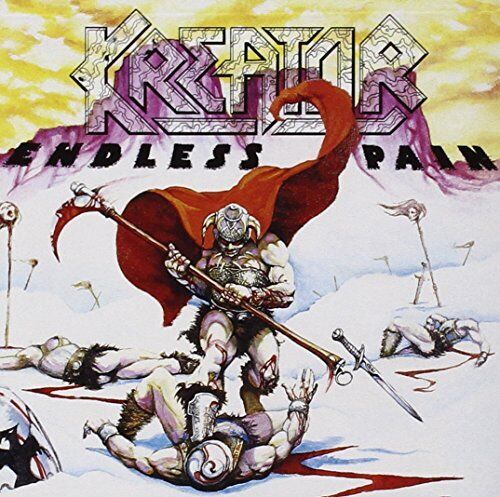
Going back to the mid-80’s to visit with a cornerstone of the German thrash scene and the debut of one of metal’s most prolific acts. This week will also showcase a new feature – me not using a shitload of words.

Kreator – Endless Pain

Released October 11, 1985 via Noise Records

My Favorite Tracks – Endless Pain, Flag Of Hate, Total Death

Kreator formed in 1982, known by the names Metal Militia, Tyrant and Tormentor before finally settling on Kreator. The band was staffed by guitarist/vocalist Mille Petrozza, bassist Rob Fioretti and drummer/singer Jürgen Reil, aka Ventor. Both Mille and Ventor remain the nucleus of Kreator to this day.

Noise Records was an upstart metal record label in Europe that was just off the ground and running by 1985. The label signed Kreator and Endless Pain was recorded in just ten days. Noise would become a hotbed of European heavy metal and Kreator would rise to be a signature act for Noise.

Endless Pain was a primitive and cruel-sounding record, a thrash album coupled with the early extreme metal noise fathered by the likes of Venom, Celtic Frost, Bathory and Mercyful Fate. This was raw, aggressive and evil – it was not cultivated for a greater pop audience, rather it was metal made by and for the growing masses who were pushing for heavier and heavier music in the wake of thrash’s arrival.

Given the album’s savage and simple construction, as well as no real need to visit the lyrical themes of each song in isolation, I’ll skip a lot of steps today and simply list the tracks, then discuss a few highlights.

There is one other thing to note here – while Mille has been the voice of Kreator for the bulk of existence, on this album Mille and Ventor split vocal duties. Mille does vocals on songs 2, 4, 6, 8 and 10 while Ventor handles the odd-numbered stuff.

Endless Pain

Total Death

Storm Of The Beast

Tormentor

Son Of Evil

Flag Of Hate

Cry War

Bonebreaker

Living In Fear

Dying Victims

This album is a buzzsaw, with lo-fi production and a savage approach to both instruments and lyrics. There is a similar cadence to many of the songs, it is in some ways an embryonic version of what Kreator would become. It doesn’t offer much in the way of variety – either you like this album or you don’t, there isn’t a lot of “track 5 is cool but 6 I can skip.” It’s an all or nothing deal.

While this could be called “underdeveloped” by some, Endless Pain is hailed as a classic just the way it is. Thrash as a whole was moving toward major label deals and high-end production values around this time in the US, while in Germany it was a far more raw offering that kept the underground and “dangerous” feeling alive – while Satanic Panic parents where wailing about hair metal, this kind of stuff was also around.

For me this album is the perfect balance of listenable production and the raw sound many metal bands were looking for, or were perhaps stuck with due to budget constraints. No this production won’t win any industry awards, but the music is clear and listenable. I have heard and even liked a fair number of awfully produced albums in my years, but Endless Pain was never one that upset me. It walks the line very well and its lo-fi atmosphere enhances the record.

And this noise would bear influence – just as Kreator and their countrymen Sodom and Destruction were keeping thrash lo-fi and running along the same lines as Venom and the like, a new group of musicians influenced by all of this would lay the groundwork for death metal and black metal. By the time 1990 rolled around, heavy metal had mutated quite a bit from how it entered the 1980’s.

A few of the songs from Endless Pain have become Kreator staples – the title track and Flag Of Hate are the signature tunes from the record, and Tormentor also sees a fair bit of play to this day. This raw set was not forgotten as Kreator refined their sound through the ensuing years, rather it was celebrated as the savage beginning of a new metal legend.

Endless Pain kicked off the nearly 40-year career of the band that became legends of thrash, German and worldwide. While US thrash was creeping up sales charts and was just about to explode in mainstream popularity, Kreator and their peers offered up a new, raw approach that would help steer several other metal subgenre offshoots in the years since. Kreator have refined and reinvented themselves over the decades but at times it seems their first notes still ring the loudest.

Monster Magnet – Power Trip (Album of the Week)

Time to head back to 1998 and revisit what wound up being a breakout album for one of stoner rock’s foundational acts. It doesn’t actually require any mind-altering substances to enjoy this whale of an album, but it doesn’t hurt either.

Monster Magnet – Powertrip

Released June 16, 1998 via A&M Records

My Favorite Tracks – Power Trip, Space Lord, See You In Hell

Monster Magnet had a good run up to 1998, being an early herald of stoner rock and getting a bit of notice from their single Negasonic Teenage Warhead off their prior album Dopes To Infinity. The early “stoner” scene got a lot of bad press for being associated with what was considered a dangerous drug at the time, now a few decades later that all seems silly.

While hailing from New Jersey, the influence for Powertrip would come from the crown jewel of the Nevada desert. Singer/guitarist and main songwriter Dave Wyndorf took up residence outside Las Vegas for 21 days and wrote a song each day after spending the night on the Vegas Strip. This 1998 interview from the Las Vegas Sun provides more info on Wyndorf’s Vegas excursion and the background for the album.

Today’s album is a long one, with 13 tracks clocking in at an hour. Bonus tracks on different editions do exist but there is plenty to talk about here already.

Crop Circle

A bit of a trippy intro leads into a bright and heavy jaunt through a very strange set of experiences. I don’t know what the hell this song is about but I’m sure drugs are involved. Comprehension is not necessary as the song is excellent and sets the table nicely for the album. There is a badass guitar solo on this one too.

Powertrip

The title track was issued as a single and is probably the second best-known track. It uses the “quiet opening/sudden shift into heavy” dynamic that several songs here employ. This one is a pretty standard hard rock track and it works brilliantly in its simplicity. The chorus’ opening line “I’m never gonna work another day in my life” sums up the song well – this is about hitting it big, perhaps in the Vegas casinos, and not having to grind it out in the work force. It’s pretty well the true American Dream now, as prosperity through wage earning has become elusive and the choices are jackpot or destitution.

Space Lord

This is the song everyone knows Monster Magnet for. It has a similar vibe to Powertrip, with a quiet build into a very loud chorus, though this song keeps the throttle down a bit. The chorus of “space lord, mother mother” was changed from its original version, I’ll let everyone guess what the first draft might have said. A few recordings of the original version are out on various compilations released years after this album.

Space Lord is about exactly what the title would imply – a crazy cosmic tyrant comes to Earth and gets psycho. It’s a cool space rock vibe with ample drugs and base urges to sleaze it up. The single would hit number 3 on the Mainstream Rock chart. The pretty crazy music video has its own place in music trivia – it was the very first video played on MTV’s new show Total Request Live in 1998. Too bad TRL didn’t keep up that kind of energy.

Temple Of Your Dreams

Up next is pretty cool and trippy song. This stays at a constant and medium pace as it goes through this weird, time-travelling and psychedelic hook up song. The chorus is wordy and a bit mysterious at points but works out to be really cool. This one was also released as a single and got to 25 on the Mainstream Rock chart.

Bummer

This one is pretty long and heads on quite a journey, but starts on familiar ground. This is a hard and rather savage admonition of someone. Wyndorf states in this 1998 interview with Beermeolides.com that the song was inspired by his experiences in the US South and the women who are concerned with image and virtue, but not really.

Later on the song heads off onto a trippy interlude where Wyndorf goes into a whole other speel. Then the song comes back and rounds off its original message one more time. It took me a bit with this one but I got to where I dig it.

Baby Götterdämerung

This one is quiet and atmospheric. It is weird, but that’s the norm here. There’s a reference to the semi-obscure Marvel Comic villain MODOK, which threw me for a loop when I first heard it. This song doesn’t entirely move me, though I’ll give points for effort and doing something different.

19 Witches

It’s back to the boogie, this time with a total rockabilly riff. This one is a fun trip to the swamps, both musically and lyrically. In the 1998 Las Vegas Sun interview, Wyndorf discusses the song’s origins – he penned it after being basically a captive of some hardcore Louisiana goth girls for a few days. At least he made it out and we got this really cool song from it.

3rd Eye Landslide

This is a monster rock tune full of grit and attitude. It gets pretty dirty, both implicitly and explicitly. There’s not much room here to dig beneath the surface, everything is out in the open here and this sounds like Wyndorf’s statement song.

See You In Hell

This track scores big with me with its creepy keyboards and absolutely twisted tale. Wyndorf, in the previously mentioned Beerandmelodies.com interview, relays that he heard an old hippie talking about a crazy experience and based this song off what he heard. He took this to some pretty twisted places, this is like a drug-fueled horror movie in song. This one is a total winner.

Tractor

This one is a re-recorded song, it was originally on the band’s self-titled debut EP in 1990. It’s a short and fun song about drugs, not much more to get into.

Atomic Clock

Heading towards the close, this one keeps things mostly slow and simple. It might be too simple but it’s an ok song, just doesn’t build to a whole lot like the other songs. Not too sure what’s going on here, but there are nukes at the end and I’m all about nukes.

Goliath And The Vampires

This is an instrumental. It’s a vibe song and it’s pretty cool to check out.

Your Lies Become You

The final track is a trippy ballad, sounds like something that could have been in a Tarantino movie. It’s not a song I’m really into, I don’t mind listening to it for the overall atmosphere but it’s not one I give a lot of spins to.

Powertrip would be Monster Magnet’s peak of success. The album charted in several countries and found itself at the top of the US Billboard Heatseekers chart. A gold certification would come in January 1999. Space Lord was a hit and was played all over the place, and can still be heard today. It and other songs were used in a variety of films and still get picked up for TV shows and video games decades later.

This was a magnificent album for its time. It might be a bit long and could dump a few tracks, but the songs that are worthwhile are plentiful and they’re home runs. Rock had totally transformed by ’98, the alt-rock revolution was complete and the old school styles of rock were almost forgotten. Wyndorf and Monster Magnet brought back the attitude, the vibes and the sounds of years past in a cosmic orgy and put the good stuff back on the map.

Dust (Album of the Week)

It’s hidden gem time this week, I’m digging up an old rock album that had some banging tunes but didn’t quite get the love it should have gotten, at least until the band’s members went on to other things.

Dust – self-titled

Released January 1971 via Kama Sutra Records

My Favorite Tracks – Often Shadows Felt, From A Dry Camel, Love Me Hard

Dust was formed in New York in 1969. Richie Wise was the band’s guitarist and frontman, while Kenny Aaronson provided bass and Marc Bell the drums. The band’s manager was Kenny Kerner, who also wrote many of the lyrics and produced the band’s albums along with Aaronson. Many of these names probably sound familiar, I’ll cover their post-Dust exploits after going over the album.

Dust were signed to Kama Sutra Records, a smaller California label who had its initial run from 1964 through 1976. It is perhaps most notable as the early home of the Charlie Daniels Band, though as we’ll see later both an executive from Kama Sutra and a member of Dust would play a huge part in rock history.

Today’s album is a lean one with 7 songs at 36 minutes, and one song taking up nearly 10 minutes of that time. Let’s head into one of the early “lost” albums of American rock and heavy metal.

Stone Woman

The opener is a very interesting track, a fairly fast psychedelic rocker with some steel guitar provided by Aaronson on top of everything. The song kind of feels like it could go off the rails but it holds together with Bell’s drumming and Wise’s electric guitar and singing about hooking up with a nice sounding gal.

Chasin’ Ladies

While the intro might lead someone to think they are listening to Mississippi Queen by Mountain, they are in fact listening to Chasin’ Ladies by Dust. While certainly inspired by Leslie West, Dust do take the track into their own territory. There is a lot of worthy guitar to take in on this tale of a man and a woman apparently splitting up and the man wishing to go find his next hook up.

Goin’ Easy

This one has a blues feel to it though the twang in the beginning does push it for a second into country. This doesn’t have a whole hell of a lot to it but it’s a decent song to check out as Wise laments the loss of a lady friend.

Love Me Hard

This one really picks things back up and gets itself into early heavy metal grounds with its riffing and drum-bashing. The song’s subject is looking for a new woman to “love him hard” after he discovers his current lady is loving other people hard. There’s a bit of an interlude where the band lays up for a moment before building back into the pounding. It’s a pretty remarkable bit of arrangement on this and other songs here from a group of teenagers who were just getting started.

From A Dry Camel

Get comfortable because we’re gonna be here for the next 9 minutes and 49 seconds. This is quite the turn, going for a dark psychedelic groove that wouldn’t be out of place on a Black Sabbath record. The song goes slow for a few minutes while it delivers its lyrical message, then it hits a very nice jam passage that’s a few minutes long and goes some really crazy places. The verses then reprise again before closing out with a bang in the final minute.

Oh, and that lyrical message? If your woman “dries up,” just hop on a camel and ride somewhere. Yeah, that’s about it.

Often Shadows Felt

This one gives off a “High Plains Drifter” or desert vibe, very gritty and sad sounding stuff to trudge through a hot and shitty landscape with. Despite the song’s more “quiet” nature, there’s a hell of a lot going on both with Aaronson’s bass and Bell’s drumming. This one comes out to a very nice track with its sweet, sad vibes.

Loose Goose

The final song is an instrumental. It’s a “rockabilly on steroids” sort of thing that could start a mosh pit.

Dust would release without any chart positions, notable sales figures or a lot of fanfare. The band would make their mark as a live draw through the Midwest US during 1971. They would record their second and final album Hard Attack and release it in 1972. After failing to gain momentum that year, Richie Wise chose to go into production and Dust would split up.

Richie Wise along with band manager Kenny Kerner were noted for their production skills by Kama Sutra exec Neil Bogart. Bogart got both into studios to kick off their production careers in earnest. Bogart wound up starting Casablanca records, and Wise and Kerner were the knob-turners for the first two Kiss albums. Wise retired from production several years ago and Kerner died in 2014.

Kenny Aaronson would go on to develop a resume that would require a book to print. He spent time with Rick Derringer and Joan Jett for awhile. He would also do stints with Bob Dylan, Billy Idol, Hall and Oates, and many others. He was part of the New York Dolls’ final line-up and was also involved with The Yardbirds in the past decade.

The name Marc Bell may not ring a bell (…), but the name Marky Ramone should. Bell/Ramone did two stints with the legendary punk outfit, playing on 10 albums and at over 1,700 live shows until The Ramones’ dissolution in 1996. Bell has since kept buys with podcasts and radio hosting, guest drumming spots and interviews.

Dust remained an obscure group, though as interest in rock and heavy metal developed through the US in the 1970s, their two albums became sought after by die-hard collectors. The albums were pretty scarce until 2013 when they were re-issued as a two-in-one package.

Dust would wind up with a legacy as one of America’s first heavy metal acts, though they didn’t get their due back in their time. Each member turned out no worse for the wear, going on to storied careers in music, and eventually the music of Dust would get out to more ears in the world once the true history of metal began being traced beyond its obvious English roots. Both Dust albums are easily worth a visit to hear some excellent rock and metal from way back when.

Queensrÿche – The Warning (Album of the Week)

This week the offering is the debut full-length from Seattle’s metal institution. While the recording and process of releasing the record didn’t go the way the band wanted, in the end a worthy album was still delivered.

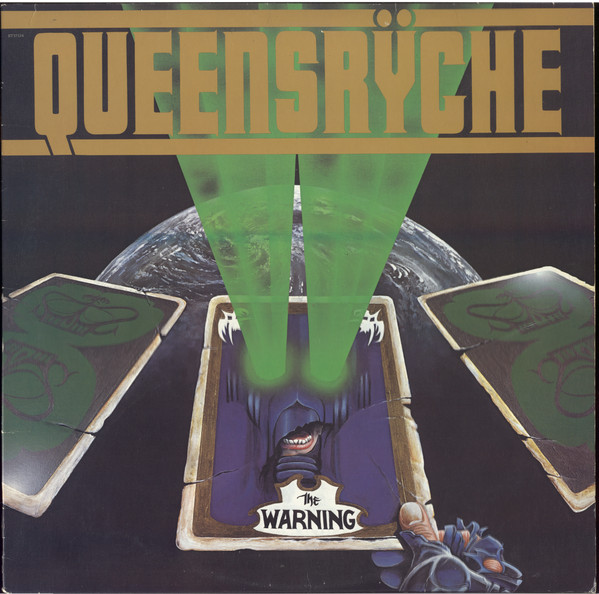
Queensrÿche – The Warning

Released September 7, 1984 via EMI Records

My Favorite Tracks – Take Hold Of The Flame, Roads To Madness, The Warning

Queensrÿche had landed a major label record deal off the strength of their self-titled demo, which was widely released as an EP and gained the band a fair bit of traction before playing a show. Now the group were armed and ready with their first full album and a new legacy was now underway.

The band’s line-up was the same as from the EP and would also remain the same for many years afterward. Geoff Tate handled vocals, while Chris DeGarmo and Michael Wilton were the guitarists. Eddie Jackson was on bass and Scott Rockenfield was the drummer. The album was produced by James Guthrie, well known for producing Pink Floyd.

It’s worth noting that the album didn’t quite measure up to what the band wanted. The recording process went over budget and EMI turned mixing over to a cheaper option, resulting in a mix that the band was not happy with. The track sequence was also not what the band wanted, it was changed while the group were out on tour without their input. This doesn’t really “affect” the album and there is no official re-done version that matched the band’s wishes but it’s album trivia worth having a look at.

There are 9 songs in 48 minutes on the original version of The Warning. Many of the songs here were inspired by George Orwell’s infamous novel 1984. The mythos of this album has its own feel, not quite a concept album but definitely an invented theme running throughout and certainly far beyond a pale copy and paste of the novel used to inspire.

The Warning

The opener and title track gets the pace set with a straightforward metal song. The song is pretty standard metal fare, though it’s also evident that Queensrÿche have some arrangement ideas that go beyond the usual stuff. The song has to do with a “child of centuries” who warns the world that time is about up. The simple chorus of “Warning” along with some nice riffs make for some good listening.

En Force

The first four minutes serve as another standard yet also excellent metal track, this time offering up the apparent leader or tyrant who is controlling things and some kind of quest to unseat them. A few bells work their way into the song’s intro, it seems Queensrÿche were keen to add to their music even very early on. The last minute of the song is a different sort of thing, with a quiet outro that seems to lament the tyrant’s iron grip on people.

Deliverance

This one might feel “simple” in comparison to what Queensrÿche would go on to create, but in all honesty this is a very well put together track especially for someone’s debut album. The band insert a few things into the song to freshen it up a bit. Also, the bass line on this one is very much worth a listen.

No Sanctuary

Here we have one that starts out as a ballad but then shifts over into a bit heavier fare, though still perhaps a ballad. It seems to be about someone looking to fight those in control, but the song’s sad backdrop indicates it might all be for naught. It’s a display that the band were not going to be a one-dimensional metal act.

NM 156

Up next is a more “upbeat” song, at least musically. This one works up into its very wordy chorus at a pretty quick pace. The song gets into 1984’s themes of thought control, though here it seems machines are tasked with executing citizens who aren’t in line. Queensrÿche were very into the concept of computers and machines running things, as evidenced from this track as well as Queen Of The Reich from the EP and Screaming In Digital on Rage For Order. As our current society becomes enveloped in AI, it seems perhaps Queensrÿche were prophetic.

Take Hold Of The Flame

The album’s second single has also become the standard-bearer for the record and the band’s most popular early song. In terms of tempo and arrangement it fits right in with everything else on the record. Geoff Tate does stand out on this one with his unreal voice, but otherwise the song doesn’t really “do” anything out of the ordinary.

Where this one does diverge is with its theme. The song is simply about going for it – many sit and waste away without taking a chance on something, so take hold of the flame and have at it. Stuff like a child of centuries or a human-terminating AI might be a bit opaque and far-off to really identify with (for now, anyway) but this song is universally applicable. Everyone can get it and a lot of people did. It is unsurprisingly the band’s fourth most-played live song according to setlist.fm.

Before The Storm

The metal spirit keeps up here on this one. The storm seems to reference a feared nuclear bomb scenario, though this is really only picked up from the words “atom split” in the second verse. This is a really good song that keeps its tempo up until the last minute, where again the band goes out on a different outro note which flows straight into the next song.

Child Of Fire

Heading towards the end with another barnburner of a song that keeps the pace up until a quiet interlude in the middle. This seems to be about some kind of malevolent conquering leader and a duel with a hero to settle the world’s fate once and for all. There’s a nice guitar solo at the end of the interlude before the song closes out the same way it came in.

Roads To Madness

The album closes with a whale of a song at nearly 10 minutes. The first half of the song is pretty standard fare, verse-chorus with nothing unusual going on. Then a quiet interlude hits for a bit, followed by a soaring end piece that takes the song to its conclusion. This is wonderfully arranged and played and is one that truly hints at what Queensrÿche would be getting up to on future releases.

This one is a bit tough to make out theme-wise, though it’s clear that someone is attempting to access some forbidden knowledge and they make their mortal exit as a result of their investigations. I probably never will know what the hell they’re talking about but I still absolutely love this song.

The Warning was a solid debut for Queensrÿche after the hype from their demo/EP. The album would not make huge moves on sales charts but did quietly earn a US gold record for half a million copies sold. Queensrÿche would open for Kiss, Iron Maiden, Dio and Accept while on tour for the record, offering their brand of metal to a variety of audiences.

This album is honesty pretty unique in the Queensrÿche catalog as it is a fairly standard metal record. The group would not remain long in this territory, choosing to explore different soundscapes on Rage For Order before crafting their magnum opus concept record Operation: Mindcrime. But here on the Warning we can hear their early sound, certainly with a bit of a Judas Priest vibe throughout but also a uniquely Queensrÿche offering. While the band would go on to some unique expressions in their creative prime, this first album should not be discounted, it is filled to the brim with quality heavy metal.

I do have an extra special version of this album, it’s a Japanese pressing in phenomenal condition. Have a gander at that below.

Megadeth – Peace Sells … But Who’s Buying? (Album of the Week)

This week it’s time to dig out the seminal second album from what would become thrash legends and another of the foundational albums of the “Big 4 of Thrash” movement.

Megadeth – Peace Sells … But Who’s Buying?

Released September 19, 1986 via Capitol Records

My Favorite Tracks – Peace Sells, Devil’s Island, The Conjuring

Megadeth had released an essentially self-produce debut, Killing Is My Business, a year prior. The album did light sales but did put the world on notice that Metallica’s former guitar player was up and running with his new outfit. Major label Capitol Records came calling on Megadeth and signed the group to a deal while the follow-up album had already been mostly recorded and really only needed a remix.

Megadeth’s line-up was the same as it was for the prior record – Dave Mustaine on guitars and vocals, Chris Poland on guitar, Dave Ellefson on bass and Gar Samuelson on drums. This line-up stability would not hold for very long.

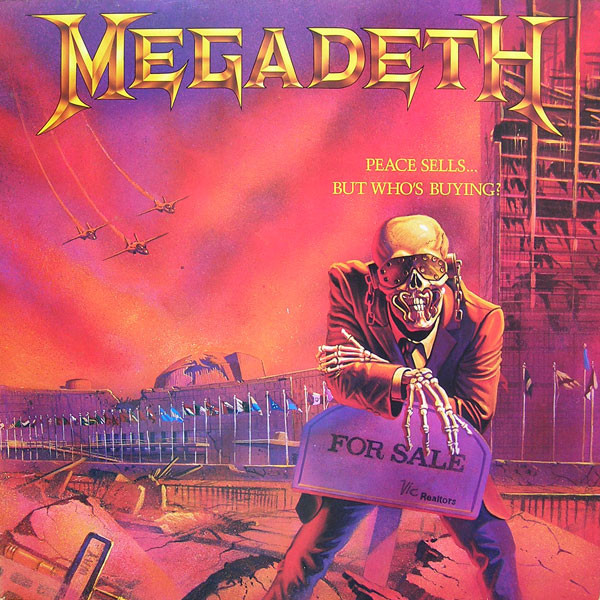
The cover art was done by Ed Repka and has been one of heavy metal’s most celebrated album covers. The distinct image of Megadeth’s mascot Vic Rattlehead on a For Sale sign outside a United Nations building that was destroyed in an apparent nuclear strike is one of heavy metal’s enduring images. It would lead to a lot of work for Repka and notoriety for Megadeth.

Today’s affair is a lean one at 8 songs and 36 minutes, though packed with songs that would come to define both Megadeth and thrash metal.

Wake Up Dead

The opener was issued as a single in the UK. The song kicks in straight away with monster riffing and a tale Mustaine spins of sneaking into his house, trying not to wake his lover because he fears she’ll kill him if he’s caught coming in late. This was apparently based off true events, Mustaine was living with one girl but in love with another, but was also homeless and needed the girl he was living with not to know he was messing around.

The lyrics are funny but rather brief, it is the guitar work that is the star of this song. Mustaine and Poland absolutely go off all over this song, both with electric solos and also some rhythm changes to keep the song fresh and moving along. It is absolute guitar wizardry on this album and it gets started right out of the gate.

The video for this song was directed by Penelope Spheeris, known for her work on the Decline Of Western Civilization series.

The Conjuring

The second track gets into the subject of evil – specifically performing occult rituals and summoning the Devil. It is another solid, breakneck thrash tune with a dash of sinister riffing thrown in to truly deliver its insidious message home.

The Conjuring was a song removed from the Megadeth setlist for many years, starting in 2001, due to the born-again Christian beliefs of Mustaine. Eventually in 2018 he was convinced to play the song again and it has been a fairly regular part of modern setlists.

Peace Sells

The sort-of title track is next and it offers up what has become one of Megadeth’s signature songs. The instantly memorable bass line opens the track, a snippet that would be used by MTV News for a very long time, and apparently without compensation. As the other instruments join it’s pretty clear this is going to be a song not to be forgotten.

The song famously rattles off a list of stereotypes about metalheads and Mustaine sarcastically retorts to each – “What do you mean I don’t pay my bills? Why do you think I’m broke?” being one of many snarling and honestly accurate observations. The song was meant by Mustaine to counter the negative perception of metalheads, showcasing that the group were far more intelligent than conventional wisdom let on.

Peace Sells hit gold as a single and has been carved in stone onto the list of greatest Megadeth songs. Even in the wake of future success for the band, Peace Sells might be the band’s most distinct and recognizable song.

Devil’s Island

The hard hitting thrash does not relent as this song slams through a haunting story about Devil’s Island, a former French prison in French Guiana in South America. The prison was infamous for ill treatment of inmates.

The song outlines the plight of a condemned prisoner who is eventually spared from execution, but must then face the reality that his life will be spent on Devil’s Island and the execution might have been a better option.

Good Mourning/Black Friday

This two-part song begins with an instrumental, then transitions into a savage account of a serial killer inspired by occult influences. Black Friday goes a pretty breakneck pace through the account of this butcher. The song has become a something of an unofficial theme for the day after Thanksgiving in the US, at least among metal fans.

Bad Omen

This one builds with an elaborate intro before launching into a more mid-paced version of the sound found elsewhere on the album. It’s another guitar wizard entry, with both leads and some of Mustaine’s god-level rhythm work. This song is also about the occult, this time a few people stumble into a satanic ceremony where the participants basically get what they asked for, of course it doesn’t end well.

I Ain’t Superstitious

Up next is a cover song, from what was originally a blues tune in the 1960’s penned by Willie Dixon and performed by Howlin’ Wolf. The song was famously covered by Jeff Beck, with Rod Stewart on vocals.

Megadeth’s version is suitably thrashed up for the record, it isn’t a stumbling block and the music perfectly fits the album. It also manages the great task of also not sounding like shit, something that can easily happen when metal bands decide to “spice up” non-metal songs. The Megadeth-isms work pretty well here and the song is an enjoyable listen.

My Last Words

The album closes with one last thrash barnburner and of course another guitar workout. This one goes all out as Mustaine relays a tale of people playing Russian roulette. The song perfectly matches the intensity that must be felt when playing one of the stupidest “games” ever invented. While the song stays on the rails much of the time, it does twist and turn a bit towards the end and the hard-hitting outro/chorus. It is perhaps one of thrash metal’s underrated tracks and one that Dave’s former bandmate Lars Ulrich cites as his favorite Megadeth song.

Peace Sells … But Who’s Buying? was a true moment of arrival for Megadeth. The album did not chart well initially but did see sales that would lead it to a US platinum as well as other international certifications. It was well-received critically on release and in years since has gone on to be considered one of the cornerstone albums of thrash metal. It joins Metallica’s Master Of Puppets, Slayer’s Reign In Blood and Anthrax’s Among The Living as the pillars of the Big 4 of Thrash.

The Megadeth line-up would not hold for long after the album’s release – both Chris Poland and Gar Samuelson were fired for excessive drug use just after touring for the record. Both Mustaine and Ellefson would remain and cycle through a few members before nailing down the band’s most stable line-up entering 1990.

For Megadeth it would mark only the first of many career achievements. While many bands only get to record one great album, Mustaine and company would do it again a few albums down the line with Rust In Peace, then they would achieve heights of commercial success next on Countdown To Extinction. Many acts would give up valuable body parts to record one thing as great as Peace Sells…, yet for Megadeth it was but one of several notches in the belt. The argument over Megadeth’s best moment can be contested, though this album is certainly in the conversation.

Liam Gallagher – Why Me? Why Not. (Album of the Week)

This week’s pick goes a bit back to 2019 and the second solo album from Oasis’ cantankerous former frontman. Liam Gallagher had returned in 2017 after a hiatus and was an in-fashion hero for a crowd now well engaged in Britpop nostalgia. His first album was an unexpected success, could he keep it up?

Also, as a note – I had totally forgotten that brother Noel was releasing a record last Friday when I decided to pick this Liam album for AotW. Or maybe I did it subconsciously, I don’t know. Either way, here it is.

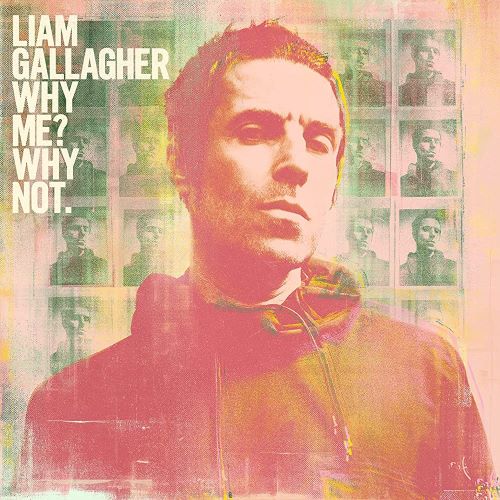
Liam Gallagher – Why Me? Why Not.

Released September 20, 2019 via Warner Records

My Favorite Tracks – Once, Shockwave, The River

After the explosive break-up of Oasis in 2009, Noel Gallagher launched straight into a successful solo career while Liam and the rest of Oasis fell short with their Beady Eye project. Liam returned to the scene in 2017 with his solo debut As You Were, absolutely defying skeptics by picking up a UK number one and taking high spots on charts all across the world. The table was set for a knockout follow-up.

Liam has crafted his solo albums with the collaborative help of many musicians. While Liam’s own lack of songwriting has been a criticism of him from some circles, it is fairly standard business in the music industry so I don’t see the issue.

The actual writing, performing and production credits for the album are far too extensive to go over here. Two primary contributors were Greg Kurstin and Andrew Wyatt, both of whom have very impressive music resumes. Both would shape the bulk of the album’s songs as well as produce a majority of things.

As for the album’s name, this Radio X article tells the story – the name is based off two drawings done by John Lennon that Liam had come into possession of. One was a purchase, the other was a gift from Yoko Ono.

The standard release comprises 11 tracks with 39 minutes of listening. There are other versions with different bonus tracks but I have the standard vinyl so that’s what I’ll run down. 3 bonus tracks are available on Spotify’s version of the album.

Shockwave

The opener kicks things off with a barnburner. A little bit of a honky tonk flavor seasons this mid-tempo banger that sees Liam fully embracing his return to the limelight. It’s no secret that Liam is one of rock’s bad boys and he counters his detractors with this excellent song.

One Of Us

Another single release, this song mellows things about a bit and gets into some more melancholy territory. The song is clearly about Liam’s estranged relationship with Noel and is most likely a call to get Oasis back together. The video clip only furthers the concept, using a famous shot of the brothers from the past and updating it to today’s sadder state of affairs. The songs goes out on a bit of a gospel kick which seems a bit odd at first but I’ve gotten used to it.

Once

This was also a single and was the song that really made me truly sit back and pay attention to what I was hearing. This is a sad ballad about the realization that you can’t recapture the magic of years gone by, you really only can do it once. The song might have roots in Liam’s brotherly relationship but the theme is universally applicable.

There are touches of what might be over-production in the song, such as the echoing “once” in the latter part of the song, but small issues don’t derail the magnificence of this track. Now with three albums to his credit, this song is easily the best of Liam’s solo career. The video for this one is also great, it features Manchester United football legend Eric Cantona delivering a magnificent performance.

Now That I’ve Found You

This one moves on to more upbeat territory, it’s a pretty simple yet very effective number. The song does have more serious underpinnings, though – it is about and dedicated to Liam’s daughter Molly, who Liam did not have a relationship with until Molly was 20.

Halo

This song is a fast one with a piano-driven focus. On first listen I wasn’t all that into it but after repeat spins this moved up to being a preferred tune. The song is simple and is dedicated to Liam’s fiancee Debbie. It’s a fair bit of fun on an album that has its share of haunting moments.

Why Me? Why Not

The title track is another bit of simple but nice pop and rock. It does see Liam exercising his vocal range a bit more, something he’s been able to start doing again after years of medical issues nearly ruined his voice. This song’s theme is pretty well spelled out in the title – why not Liam?

Be Still

This one runs with a nice, kind of dirty guitar riff (I would’ve liked a bit more dirty but look at what I normally listen to). The song is a bit of a tribute to Liam’s mother Peggy, who was a guiding force in the Gallagher brothers’ somewhat shambolic early life, and remains so today. This song is another that sees Liam rise up and move on despite the obstacles in his way, a pretty standard theme for his career.

Alright Now

The next track has a very old school, classic song feel. It’s a bit of a departure but it’s nicely done and doesn’t veer so far off that it’s distracting. No telling what it’s about, seems to be one of those “that’s how life is” kind of songs, with the good and bad and all inbetween.

Meadow

If someone wasn’t aware that Liam was a huge fan of The Beatles, this song will inform of that fact. It’s pretty standard lyric-wise, hold your head up and press through the bullshit. Feels maybe a bit abstract compared to the rest of the album but still a workable song.

The River

This was a single and is another total banger, another hard rock track akin to Shockwave. This time Liam is advising against trusting the way things are going. It’s a very fitting track for the modern day and the dystopian atmosphere around everything. A very nice way to pick up some steam after the last few songs meandered a bit.

Gone

The album closes with an epic kind-of ballad featuring some attention-grabbing instrumentation. The song deals with the end of a relationship, no real idea exactly who Liam might be singing about here as he’s had a few end in his day. This one got released as the final single but that was just after the COVID lockdowns started happening so it kind of got lost in that shuffle.

Why Me? Why Not. was another smash success for Liam Gallagher. The album gathered another UK number one and also hit on charts in over 20 other countries, which included 5 other top 5 placements. The album was certified gold in the UK. Just as a wave of Britpop nostalgia was rising up as that group were nearing the 25th anniversaries of their milestone efforts, Liam struck gold as a solo performer.

There wouldn’t be a huge touring cycle for the album due to COVID but some songs were worked into an MTV Unplugged set and also as Liam did a performance while floating down the River Thames in 2020. Regular touring resumed in 2021 and Liam finally went out with these songs as well as working in a number of old Oasis favorites.

Liam Gallagher isn’t everyone’s cup of tea, both musically and personality-wise. But he showcased the ability to step out of his brother’s shadow in his solo career, moving albums and live tickets at a fever pace. Bringing a collection of songs of this caliber certainly didn’t hurt.

Judas Priest – British Steel (Album of the Week)

This week it’s an all-time classic, really just me typing the band and album name should suffice for build-up.

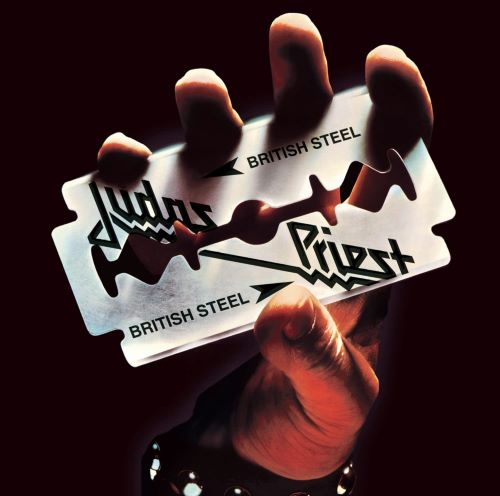
Judas Priest – British Steel

Released April 11, 1980 via Columbia Records

My Favorite Tracks – Living After Midnight, Metal Gods, Breaking The Law

Judas Priest were coming out of the 1970’s on a string of albums that slowly gained them recognition and where they shaped a commercially pleasing yet still distinctly heavy metal sound. Their prior album Killing Machine had gained a fair bit of notice and their first live record Unleashed In The East was a hit that showcased the highlights of their early career. And now the stage was set for Priest to truly establish themselves as metal stars at the turn of the decade.

The band’s line-up would hold through the decade – Rob Halford of course holding clinics at vocals, the guitar duo of Glenn Tipton and K.K. Downing, Ian Hill on bass and Dave Holland on drums, he having joined the band a year prior. The album was recorded at Tittenhurst Park, at the time property of Ringo Starr, which Ringo had acquired from John Lennon. Priest were going to use the studio on the grounds but found the house itself more suitable and that’s where British Steel was tracked.

There are 9 songs to go over in a 36 minute runtime, so nothing bloated here but these are some of heavy metal’s most significant songs. I’ll be using the modern reissues as my sequencing guide here, they are in the same order as the original UK/international versions. The US originally had a version with Breaking The Law opening and a few other songs swapped later on.

Rapid Fire

The album opens with a metal attack that kicks in right off the bat. The song chugs along with a monster riff that goes all over the place. The lyrical fare is about the world being done in by a battering ram, which might be figurative but is probably literal as the album has a pretty apocalyptic theme. That’s one big battering ram but the cosmos offers boundless possibilities. The solos on the song aren’t done in a conventional fashion – they’re inserted in vocal breaks on the third verse, creating a vocal/guitar trade-off kind of thing, pretty cool stuff.

Metal Gods

It’s on to another world-ending proposition, as this time robots are taking over and killing everyone. This would be a popular scenario throughout entertainment in the ’80’s. Metal Gods goes hard while also maintaining a steady pace and very smooth and almost quiet chorus.

Breaking The Law

One of the album’s singles and the band’s best-known track. The riff is fairly simple yet so, so effective at hooking a listener in and also making aspiring guitarists want to play it. The lyrics tackle the frustration of working class life in a recession and the ultimate decision to go out and raise some hell with a lack of other options. The simple chorus of chanting “breaking the law” is just as catchy as the opening hook and the song quickly infected airwaves. A goofy music video that features the band robbing a bank to score a gold record for British Steel would only enhance the song’s reach.

Breaking The Law stands as the most recognizable Judas Priest song around, perhaps only challenged by You Got Another Thing Coming. But this one has been all over the place for decades now and hasn’t ever really left the airwaves. The song’s deeper exploration of socio-economic woes might have been left behind, but the simple, catchy effectiveness has people breaking the law all over the world.

Grinder

This one starts out with a nice rock riff but then gets heavier as it goes along. While the song has been misinterpreted by many to be about sex, it’s actually about how the powers that be basically “grind up” the rank and file citizens. The song is a great showcase of the line between rock and heavy metal, and how at the time there really wasn’t much of a line, Priest were significant in taking things in a heavier direction.

United

This was crafted as a stadium anthem, something Priest did a fair bit of during the early ’80’s. It’s a simple song with a message of unity, both within the metal community that had been overlooked by the explosion of punk rock, and the general population who were being trampled by the establishment. It could be said that the song is a bit too simple, but it’s certainly in keeping with Priest’s direction at the time.

You Don’t Have To Be Old To Be Wise

Listeners could be forgiven for thinking that an AC/DC album suddenly came across their speakers. This one is about casting off the chains of society, again an ever-present theme, and going out on your own to blaze a trail. It’s something Priest certainly did during this time frame.

Living After Midnight

This is a good old party song, as usual it’s simple and very effective. While the song celebrates the night life, it was actually conceived because Glenn Tipton was keeping everyone else up with late night guitar playing, Halford eventually told him “you’re really living after midnight,” thus naming the tune. While not quite as renowned as Breaking The Law, this one does present as one of Priest’s most-known songs.

The Rage

The intro begs to be on a Police record but then a full-on heavy metal assault comes in. This one definitely moves the line in terms of heavy metal and where Priest would be off to on the next few albums. This one is a bit unusual as it doesn’t have a chorus, it is a few verses of Halford evoking the same “damn it all and go for it” spirit that embodies much of the album.

Steeler

The tempo goes up on the closer as Halford again embraces a self-motivation sort of theme. This song lets the guitars carry it, as both Tipton and Downing provide some fireworks to wrap up the album.

British Steel was a triumph for Judas Priest. It would hit platinum in the US and Canada, and peaked at number 4 on the UK albums chart. And the legacy of Breaking The Law has carried through over the decades.

The album was a massive point in the evolution of heavy metal. While bearing plenty of rock influence, Priest crafted simple, to the point songs with easy-to-chant choruses that would take hold of live crowds all over the world. Heavy metal was going to move in a whole new series of directions through the 1980’s and Judas Priest were possibly the chief architects of that movement.

Priest would take the British Steel sound and work upon it on their next two albums, crafting a trifecta of heavy metal records that would influence the world over. And a host of British and American bands, and of course many others from all over, would find influence in British Steel and heavy metal would have its golden years through the next decade. This is one of heavy metal’s most important records, hands down.

Skid Row – Slave To The Grind (Album of the Week)

Today it’s time to get into one of my absolute favorite albums. The second Skid Row album came at the tail end of the “hair metal” era and delivered such a fierce punch that the band would outlive their genre by several years.

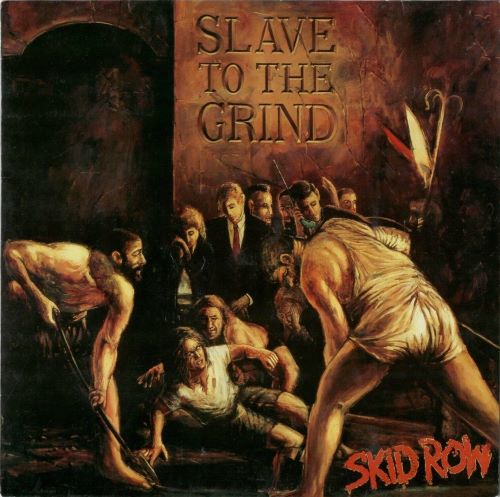
Skid Row – Slave To The Grind

Released June 11, 1991 via Atlantic Records

My Favorite Tracks – Wasted Time, Slave To The Grind, Riot Act

Skid Row made quite the fuss with their self-titled debut album in 1989, moving several million records and getting hit singles with the ballads I Remember You and 18 & Life. It seemed as though the group should have a cakewalk to more success, yet things were not certain for anyone by the album’s release date of summer 1991.

Skid Row would throw their own wrench into the formula – instead of writing about love, sex and partying, they crafted an album with heavy themes about society’s ills and problems. The topical shift would be very timely, as the great hair party of the ’80’s was coming to a quick close. Skid Row had a bit more bite and edge to them anyway, so their focus on more worldly affairs would benefit them as the rock tides shifted through the rest of 1991.

The album was recorded without event and with the same line-up that offered the debut. Dave “Snake” Sabo and Scotti Hill were the guitar tandem. Rachel Bolan was on bass and joined Sabo to write the bulk of the music. Rob Affuso manned the drums, and the singer with the insane voice was Sebastian Bach.

There is a lot to talk about today, as the album is loaded with tracks and was also offered in different versions – a “clean” copy for sale at major retailers with the song Beggar’s Day, and an explicit version with Get The Fuck Out instead. Though it’ll make for a super long post, I’m going to take the step of including both songs in this rundown. Both are worthy of discussion and modern versions include both in some capacity so I’ll give both the time. That will provide 13 songs with a runtime over 50 minutes so there’s a lot to go over.

Monkey Business

The opening track was also the album’s lead single and hit MTV a bit before album release. The song starts off slow but quickly establishes that is is, in fact, a complete ass kicker of a track. It’s a heavy, groovy song that slams in and stomps all over the place. The lyrics are pretty crazy and not entirely clear, it could be about addiction or just the shit state of people down on their luck, or some other metaphorical thing not clear on reading.

Slave To The Grind

The title track was another single and also another total monster of a song. It slams in right off the start and does not relent to the end, it is a flat out banger. It is a dire look at the “assembly line” nature of soulless, grinding work life and the desire to break out of it, a tale as old as time, or at least industry. And sadly, it hasn’t gotten any better in the 32 years since the song came out.

The Threat

So far this album has not let up, this is again another one that pounds the listener into dust. The band maybe lets off by a hair on this one but that isn’t saying much, this still goes hard. It has to do with the rebel or outsider being a threat to the status quo of society, which is the place rock music occupied for much of its viable life. This is definitely not a “bang bang, good time, hookers and blow” album.

Quicksand Jesus

And now we take it way down for the first of a few ballads. But unlike the generic “love you, miss you” ballads that were a dime a dozen in hair metal’s heyday, Skid Row kept all of them here on different and darker themes.

The song tackles the issue of religious faith and how it can come and go depending on life’s circumstances. While the song was not in any way challenging religion, the usual televangelist hacks took exception to the song and complained about it on TV. There is no room for nuance when you’re screaming about things on TV in the name of God for money.

Psycho Love

The next track picks the pace back up and also serves as the most direct link between this and Skid Row’s first album. It’s another straigt-ahead banger with lyrics that evoke some seriously twisted stuff. And the truth behind the words is even more sinister than the songs lets on – Rachel Bolan has stated that Sebastian Bach wrote the song about a prostitute who kills her customers before she does the job she was hired for.

Beggar’s Day

Now it’s onto the 6th track and the one that can be different based on which version of the album you’re looking at. Beggar’s Day was the song for the clean version of the records. To the shock of no one, this is another total headbanger about some gal named Suzie who is apparently going after some people. No real clear meaning here but the song is a total banger and should have been included on all versions of the album. It does not detract from the album at all and in fact plenty of fans dig this one more than the dirty song that replaced it.

Get The Fuck Out

The song for the explicit version is pretty clear in its message and reason why it was excluded from mass retail sale. A lot of hair metal played around the central issues it was dealing with using clever turns of phrase and stuff like that. This song just spells it out – we partied, we had a good time, now it’s over so get the fuck out. It is pretty crude but that’s honestly more refreshing than years of beating around the bush like many bands did.

Livin’ On A Chain Gang

The hard rocking keeps right up here with another song about the shitty parts of civilization and how the powers that be keep people down for profit. These songs don’t offer much in the way of hope out of the cycle, but we can at least headbang through it.

Creepshow

It’s another visit to the sleazy side of life here. Not a whole lot to discuss, other than the lyric “hit me with a shovel ’cause I can’t believe I dug you.” That has to be one of music’s most immortal lines ever, I can’t believe Bob Dylan or Paul Simon hadn’t come up with that one years before Skid Row.

In A Darkened Room

Up next is another ballad and this one is a tough one. The lyrics aren’t entirely clear about it, but the song is about child abuse. While some rock and metal bands have gone into weird places when handling this topic, Skid Row did a pretty good job crafting what turns out to be a very sad song about it.

Riot Act

It’s not only back to the hard and heavy but it’s time for a bit of punk. It’s a total slam of the institution and powers that be, a favorite target of the Skids by this point. The song makes being a rebel and outcast cool and turns the conventional wisdom of society on its head. It isn’t necessarily a viable life path but it’s still fun.

Mudkicker

It’s one more slamming tune. This one goes a tick slower than a lot of others but keeps a heavy tone throughout. This one is a bit obscure but it’s still taking aim at the system’s corruption but there’s no easy to digest narrative here. By this late point of the album it’s just rage and go.

Wasted Time

The album closes with a third ballad and another single. This one goes to a whole other place as it explores the dark depths of drug addiction. The song was inspired by the struggles of former Guns N’ Roses drummer Steven Adler, a friend of the band. It is a tremendous song and my favorite on the album. I won’t say too much more about it since I’ve already done that – the song was a prior S-Tier song pick – that post can be found here.

Slave To The Grind was another success for Skid Row. The album hit the top of the Billboard 200 on release and would go on to double platinum certification in the US. It also got various gold, silver and platinum awards in other former British colonies and the UK itself. None of the five singles were huge hits like the pair of ballads from the first album, but critical and fan response for this second album was over the moon.

Skid Row would go on a series of huge tours on this album cycle – first opening for Guns N’ Roses that summer, including the infamous riot show in St. Louis. Then the Skids took out Pantera and Soundgarden for a trek, essentially foreshadowing the changing of the guard to come. All of this was going on as the hair metal kingdom was going down in flames. Skid Row themselves did not fall victim until a few years later when they tried emulating the sound of the times and fell on their faces, eventually splitting Bach from the rest of the band.

While it can be said that Skid Row didn’t enjoy the same level of success found on their debut record, it’s no doubt that Slave To The Grind was a fantastic achievement. The album flows well even loaded down with so many songs and the theme and heavy vibe through the record keeps the band out of the cliche territory that helped usher in the end of the hair days. Skid Row’s edge and attitude might have cut a bit too hard at times for off-stage antics, but it was the perfect recipe for successful hard rock in 1991.