Sanctuary – Refuge Denied (Album of the Week)

For this week it’s time to look at a profound debut album in metal, the start of a Seattle metal institution and a curious guest shot in the producer’s chair.
Sanctuary – Refuge Denied

Released in 1988 via Epic Records

My Favorite Tracks – Battle Angels, Soldiers Of Steel, Die For My Sins

Sanctuary had formed in 1985 and recorded a demo in 1986. The demo generated some buzz and guitarist Lenny Rutledge made a power play to help his band get some notice – he approached Megadeth mastermind Dave Mustaine after a show. Mustaine was very receptive to Sanctuary and offered to help produce a full-length album.

Sanctuary was comprised of Lenny Rutledge and Sean Blosl on guitar, Warrel Dane on vocals, Jim Sheppard on bass and Dave Budbill drumming. This line up would hold through the first album and tour.

The music here falls somewhere between thrash and US power metal. It’s a bit of both but not entirely in one realm or the other. It’s not unusual for Seattle bands to defy categorization.

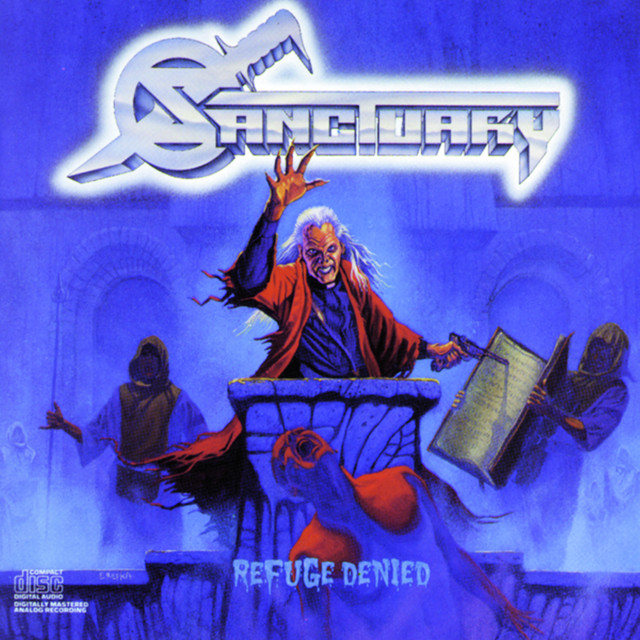
The cover art is worth of discussion, this being one of many pieces from Ed Repka, one of heavy metal’s most renowned artists. There’s a priest or something with a gun doing some crazy shit, the clergy were prime targets of late ’80’s metal bands. Repka’s art is pretty instantly recognizable to a person who has possessed a lot of metal albums over the years.

One small note – there is no specific release date for Refuge Denied. There are copies out there in some territories that released in 1987, in the US it was 1988. I would guess it was an “end of year/start of year” thing but it’s not something I really want to put in the research to find out.

There are 9 songs in a 39 minute runtime, a decently sized album but fully packed with the goods.

Battle Angels

The proceedings open with a masterpiece of a song. It gets going right off the bat and settles into a mid-paced affair before Warrel Dane kicks off the singing. Dane keeps things in a human range in the first verse before ascending to vocal godhood through the chorus. Dane’s soaring vocals along with the riffs and rhythm sections shape an absolute gem of 1980’s metal.

The song is pretty well about what the title suggests – a group of angels coming down to have some holy retribution on sinner’s asses. It’s not quite a story from the Bible but it will do.

Termination Force

Next we get a song with a fair bit of dynamics and arrangement, showcasing that Sanctuary are not a one-trick pony. The song begins in slow fashion but slams into a faster and louder sort of chorus section. There’s a bit of a good old fashioned thrash gang chorus here, and Dane is all over the map with his singing. This is another stomper and Sanctuary are really bringing the goods here.

Die For My Sins

This is a fairly standard melodic metal song, might have a small degree of similarity with the early work of fellow Seattle residents Queensryche. Warrel Dane is still wild on this one, though maybe held back a hair compared to the two prior tracks. A very nice thrash section with the solo in the middle of this one too.

Soldiers Of Steel

Another mid-paced effort with some vocal parts in the verses that show Warrel Dane’s more normal range and the one he’d use for the bulk of his career. He still goes off on the quasi-chorus portions. This one is along the lines of the old US power metal sound.

Sanctuary

We get a self-named song but sadly it was not on a self-named album as well, so no trifecta here. This one also starts off slow but quickly goes into thrash territory. It’s an exploration of some kind of warrior from the future who is leaving the timeline, or something like that. They aren’t going out quietly, that much is for sure.

White Rabbit

Yes, this is a cover of the Jefferson Airplane classic. It is suitably metal-ized for the album and isn’t an attempt to just perform the song as it was. This is enjoyable though it might fall a bit short of a home run. It would mark the start of many times Warrel Dane would take songs from outside of metal and totally mess with them. This also features a solo and backing vocals from Dave Mustaine.

Ascension To Destiny

Apparently the time-traveling warrior from two songs ago didn’t get too far, or maybe this is a different warrior but they are back and ready to whip some ass. The cadence of the chorus had a danger of coming off the same as Battle Angels, but Dane deftly side-stepped the issue by switching up the vocal rhythm here.

The Third War

This one goes pretty hard and heavy and unveils a prediction about the third World War. They peg 1999, which didn’t quite hit the mark but they probably weren’t terribly far off the way things are going in 2023. Another heavy one as we get to the end of the album.

Veil Of Disguise

The closing track starts off in the ballad realm for its first few minutes before picking up steam and rolling out on a heavy note. It is more of the same melodic mastery from Dane and the guitarists and leaves the record without a dud across its nine tracks.

Refuge Denied was Sanctuary’s introduction to the world. Upon release it did not catch fire, in fact only selling around 7,000 copies in its first year or so. The band would slowly catch on over the years and as of 2011 this album has moved over 200,000 copies.

The most noted feature of Sanctuary on their debut was of course Warrel Dane and his insane vocals. His wail was something not easily replicated or matched, there aren’t many singers walking who could handle getting the highs he could reach while also maintaining a true vocal body along with it. And this would impact even Dane – he apparently suffered a vocal injury sometime in 1988 and his days of wailing like on here were over. He would go on to have a successful career as a singer but it wouldn’t be with the kind of shrieks and wails found on this record.

The battle for any kind of commercial success would be a losing one for Sanctuary in their first go round. Their second album Into The Mirror Black would see higher sales and some video airplay, but the band was still on the outside looking in to the music business. Guitarist Sean Blosl would leave first and be replaced with Jeff Loomis. After the band had serious discussions about their place in the music scene after the arrival of grunge in 1991, Sanctuary would split up.

Lenny Rutledge and Dave Budbill would head off on other endeavors, while Dane, Sheppard and Loomis would form Nevermore and carry on for the next 15-plus years. Sanctuary themselves would reform in 2010 after Nevermore broke up, and Sanctuary would continue to run even after Warrel Dane’s death in 2017.

While Sanctuary’s time is broken up into two periods separated by a 20 year gap, their early work would come to be appreciated by a wider audience as traditional metal caught on again in the 2000’s and also as Nevermore fans explored the members’ pre-dated work. Refuge Denied did not get its due back in the day, but today it is hailed as a classic of US heavy metal.
Heart (Album of the Week)

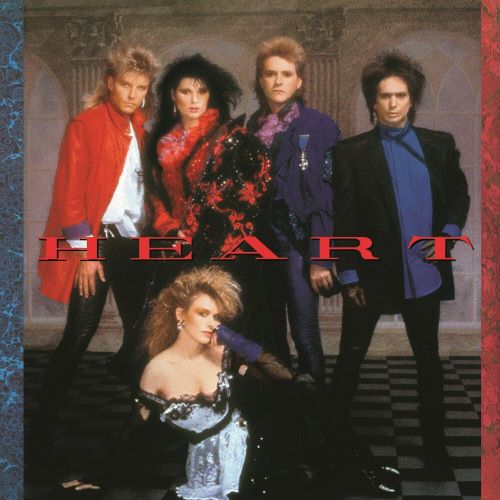
For this week I’m pulling out one of rock music’s greatest transformation albums – a band shifting their sound to fit with the times. Some call that selling out, others call it the smart play. In the case of Heart it was very much the latter, and the group would land the biggest success of their career by fully embracing the glitz of 1980’s hair and glam rock.

Heart – self-titled

Released June 21, 1985 via Capitol Records

My Favorite Tracks – What About Love?, If Looks Could Kill, The Wolf

Heart began in the 1970’s and released a string of renowned albums that resided in the hard rock/folk rock realm, an interesting combination not heard every day. The band gained notice with their unique blend of music and also for their front-line sisters, guitarist Nancy Wilson and lead vocalist Ann Wilson.

Then the 1980’s came and rock music changed. Heart entered the decade well enough but had two dud albums through the early ’80’s. It could be said that Heart’s musical transition was started on those albums, though the true fruits of the change would arrive with this self-titled record in 1985, just as hair metal and its associated sounds were becoming the music of the day.

The songwriting on Heart is its own tale, as some of the songs were shaped by the Wilson sisters and several others were done by outside songwriters. I won’t be running down each individual one, just a few of the more notable ones, because it would make this post 10,000 words long. Credits are available in the album’s liner notes and in many places on the Internet for those curious. The album was produced by Ron Nevison, who was one of the go-to producers of the 1980’s.

Heart boasts 10 songs in 39 minutes so not an overly stuffed album, but half of these songs were singles and a few were major hits so there’s plenty to talk about here.

If Looks Could Kill

The album opens with a cover tune of a song also done in 1985 as a dance song. Heart took a more rock approach and fashioned a pretty cool song out of it. It’s very synth heavy, which would figure since it came from the dance/disco world but it’s translated well to the melodic rock environment. The song sees a cheating lover being the object of scorn.

If Looks Could Kill was the album’s fifth and final single, and also the only one not hit the Billboard 100’s top 10.

What About Love?

Another cover song, this time from Canadian band Toronto and one that group did not release originally. Heart would up with the song and would make hay with it, hitting the top 10 of the Billboard 100.

While unfortunate that Toronto did not get to enjoy the original fruits of their labor, this song fits the Heart album like a glove. It is a defining power ballad of the ’80’s and was the keys to the car for Heart’s comeback. It is a song that reminds people who are chasing their “way to the top” that love is still out there and is a more important force than whatever comes at the end of the rat race.

Two notable guests appear to help with backing vocals – Grace Slick and Mickey Thomas from Starship.

Never

Another album single and one that would get to the 4 position on the Billboard 100. This is an upbeat, very poppy melodic rock offering about being disgruntled by love but being ready to give it another go.

These Dreams

Up next is another single and Heart’s first chart-topping hit. The song was originally written by the songwriting duo of Bernie Taupin and Martin Page, two folks who’ve had hands in countless hits. The pair offered the song to Stevie Nicks, who turned it down. Heart were more receptive to it and the rest is history.

Heart switched tack on this song as Nancy Wilson handled the vocals. Nancy had been ill during recording and the production team was quite happy with her raspy take, so much so that she’d be asked in the future to “get sick again” to emulate her style here.

These Dreams is an atmospheric track with the lyrical concept of going to a different world while sleeping and getting away from the issues of regular life. The album’s liner notes dedicate the song to Sharon Hess, a fan who was battling leukemia and met the Wilson sisters during the recording of the song. Hess died just before the album’s release.

The Wolf

Here we hit the first of a few songs that weren’t singles. This is a very nice track that’s all rock and deals with a man out on the prowl who isn’t worth the trouble he brings. This song didn’t get the attention of the hit singles obviously, but it’s well worth a listen as it’s a great ’80’s rock song.

All Eyes

Its 2 for 2 on album deep cuts here with another good rock song. It’s a nice song about hooking up, pretty standard fare for the time. So far the album’s deep cuts compliment the singles well and make for a nice album listening experience.

Nobody Home

This one is a slow ballad that also kind of throws things off for a moment. It is very keyboard driven, which is not a problem in and of itself but the key part sounds like the soundtrack bits of a Final Fantasy video game. FF didn’t exist when this song was recorded but it’s the vibe I get from the song.

The song doesn’t pick up much steam as it goes along even with other instruments coming in. It’s a nice enough sentiment about someone finding no one around when they inevitably fall, but the song doesn’t do a lot for me.

Nothin’ At All

This was the album’s fourth single and also the fourth straight to hit the Billboard 100’s hallowed top 10, hitting exactly that position. This is a very easy-going rock track about how sometimes love just happens super easy without any fuss or drama. The video for this one was pretty popular and features the band simply goofing around.

What He Don’t Know

It’s back to the rock, this one is a fairly tame number but it does pick things back up after that last song. This one puts the shoe on the other foot in contrast to the opening song, as this time a couple is cheating while the singer’s significant other is unaware. It was fairly scandalous song material for the day as adultery and cheating was a huge deal back then, but no one gives a damn today. I don’t recall this song catching any actual grief though.

Shell Shock

The album closes on one more really cool song, it’s a straight ahead rock song. Ann Wilson is going a bit rapid fire in the verses here, it’s a neat way to wrap up the record.

Heart was not only a return to commercial success for the band, this was the peak of their album success. The record topped the Billboard 200 and was on the charts for 78 weeks. It has been certified 5 times platinum in the US and 6 times in Canada. Along with four straight singles in the top 10 of the Billboard Hot 100, and this was a massive win for Heart’s ’80’s glam makeover.

Heart were successful in updating for the times and re-energizing their career, though for some it was too drastic of a move away from the classic sound that made them popular in the first place. I personally have no issue with it at all – while I think their ’70’s output is spectacular, I also love their ’80’s hair era. The songs were there and the band rode the wave of big hair and power rock/pop, usually doing it better than many others in the same era.

This would mark the start of a three-album run that saw Heart churn out more hits, including the biggest single of their run in 1987. After the “big hair” era ended, the Wilson sisters would return to their roots and explore more of the work that put them on the map in the first place. But they certainly left their mark on the 1980’s.

Orange Goblin – Healing Through Fire (Album of the Week)

This week I’m actually grabbing an album from this century, it’s back to 2007 and the very general genre descriptor of “stoner metal” for an ace of a record that would cast a new spotlight on a long-running band.

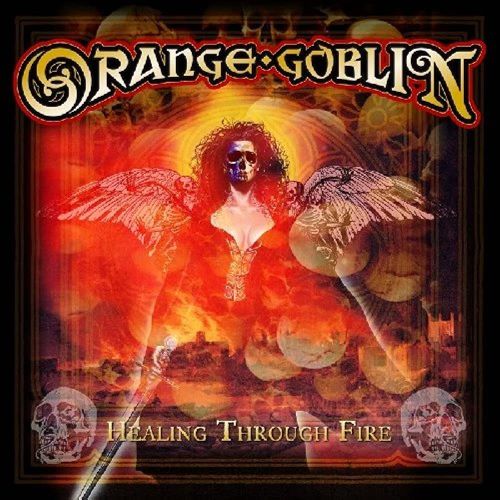
Orange Goblin – Healing Through Fire

Released May 21, 2007 via Sanctuary Records

My Favorite Tracks – They Come Back (Harvest Of Skulls), Cities Of Frost, The Ale House Braves

Orange Goblin of London, England had been active since 1995 and were on their sixth album at this point, and also first for what was a semi-major record label with Sanctuary. While the record deal would not really pan out as Sanctuary would essentially fold a year later, Orange Goblin would see expanded interest with this release.

Healing Through Fire is not a concept album but does tie a few themes through its songs, the theme being the Great Plague of medieval Europe. The plague’s worst years were in the 1300’s, though this record does reference events and people of 1600’s England as well, a century which also saw plague outbreaks.

Orange Goblin’s lineup had been stable through this point, with Ben Ward on vocals, Joe Hoare on guitar, Martyn Millard on bass and Chris Turner with the drums. Keyboards on the album were provided by Jason Graham. The album is a fairly lean affair with 9 songs in 43 minutes. Note that there is a deluxe reissue version with a ton of bonus and live tracks.

The Ballad Of Solomon Eagle

The opener kicks off loud and groovy with some very active riffing that clearly separates Orange Goblin from the more monotonous strains of stoner rock out there. The song deals with Solomon Eccles, also known as Solomon Eagle. Eagle was from 1600’s London and had been a composer, but later denounced his prior life and became a Quaker. This group were religious pariahs during this time. Solomon was known to go through public with few clothes on, if any, and denounce civilization. His proclamations of the end were fueled by the Plague as well as the 1666 Great Fire of London. He is a pretty curious person to feature in song, something he wouldn’t have liked as he considered music a sin after his Quaker conversion.

Vagrant Stomp

Another loud and stompy song that gets into some gross medical stuff from the time period. The song also uses the phrase “terminal spirit disease” in its lyrics, that also being the title of a 1994 album from Swedish melo-death pioneers At The Gates. No idea if the reference was meant for anything.

The Ale House Braves

This one is a faster-paced slammer that paints a picture of economic class disparity in medieval England. The destitute have nothing to lose and are coming for the well-off, a tale as old as time. There’s a very nice old-school guitar jam in this one too.

Cities Of Frost

Things slow down a bit here, which in stoner/doom parlance means it gets even heavier. This excellent song is a death march through a town being destroyed. No real clue what this is about, possibly the London Fire but it’s not specifically mentioned. Could be some random stuff that doesn’t tie into any real theme. While Orange Goblin are clearly their own entity, this is a song that gets a bit into High On Fire territory.

Hot Knives And Open Sores

Another one about the Plague and how gross everything was. I can’t imagine how nasty it would have been in the days before modern medicine when people were using every stupid thing in the book to try and treat the disease.

Hounds Ditch

More classic rock-based groovy stuff, again dealing with the piles of bodies around plague-ridden London and all the things that come to feed on the dead. This one switches to a pretty heavy end section to really emphasize the problem with lots of diseased dead bodies laying around.

Mortlake (Dead Water)

A quick and quiet instrumental gives a bit of a break here before jumping right back into the plague-laden mess.

They Come Back (Harvest Of Skulls)

This amazing song truly spells out the cost of the plague and its all-consuming nature. The dead themselves were a source of infection and would claim the living. This song has some very cool tempo changes and really brings the point home about how people thought the plague was a punishment from God and that it would be the endtime judgment a lot of people were waiting for.

Beginner’s Guide To Suicide

The closing track takes a left turn and lays out a slow blues-based effort. The lyrics are a haunting depiction of someone choosing suicide by poison as opposed to suffering from the plague. It’s a pretty harrowing position to be in but I’m sure plenty had to make that choice. The song is very well done and caught a lot of interest, today it stands as the band’s most-streamed track on Spotify.

Healing Through Fire was a watershed moment for Orange Goblin. While the album did not bust through charts, it truly put the band on the map and established their sound after several years of occasionally wandering through different parts of the rock and metal universe. The stoner genre had always been a constant presence though with a bit of a low ceiling in terms of dynamics and creativity, Orange Goblin were one band who showcased a higher degree of songwriting and arrangement to make something truly special out of the music.

The band’s choice to shape the songs around a theme was interesting and clearly paid off. It’s no secret among metal bands that the Great Plague is a fertile ground for lyrical inspiration, it was one of the most brutal times in human existence. Orange Goblin did fine work with the Plague as their creative backdrop.

The next decade would go well for Orange Goblin, three albums through the 2010’s would see the band’s stock continue to rise. While now an entity for nearly 30 years, it’s fair to say they really hit the nail on the head in 2007 with Healing Through Fire.

Soul Asylum – Grave Dancer’s Union (Album of the Week)

This week I’m taking a look at one of the breakout alt-rock albums of the early ’90’s. Soul Asylum had been a long-running independent band by 1992, but a massive single would propel them to the top of the board.

Soul Asylum – Grave Dancer’s Union

Released October 6, 1992 via Columbia Records

My Favorite Tracks – Without A Trace, April Fool, Black Gold

Soul Asylum found the stage for success when rock music turned on its head in the early 1990’s. What was alternative and independent was now mainstream, and Soul Asylum were gearing up their sixth album by this point. The band was experienced and ready to break out.

The lineup at this point had been stable for awhile but was going to experience a shift. Dave Pirner was the band’s frontman and rhythm guitarist, Dan Murphy provided lead guitar and Karl Mueller was on bass. Grant Young was the band’s drummer but issues cropped up during recording and Sterling Campbell was brought in to supplement the drumming. Each drummer played on roughly half of the album. Young would remain the band’s drummer for the tour but Campbell would take over before the next album.

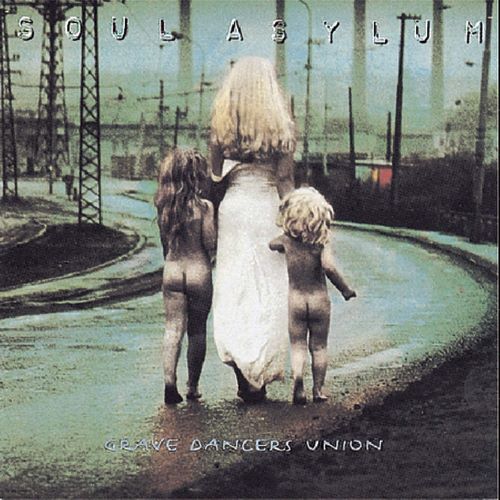
The album’s cover photo was a curious choice, it is a 1970 photograph by Czech artist Jan Saudek titled “Fate Descends Toward The River Leading Two Innocent Children.” Other Saudek photos have been used in cover art over the years, this being the most prominent one.

The album runs through 12 songs in fairly quick 44 minutes. There is a reissued version with live bonus tracks but I’ll be tackling the main release today.

Somebody To Shove

Opening with the album’s lead single and very nice song. It has a great hook and a nice concept about being frustrated with trying to fall in love. This was Soul Asylum’s introduction to the world at large and it worked well, as the song landed toward the top of the Alternative and Mainstream Rock charts.

Also of note – both this and the Black Gold music videos were directed by one Zack Snyder. Not sure if there are Snyder Cuts of these videos, I’d assume not.

Black Gold

The second single kept the ball rolling for this album until the train was ready to leave the station. Though a very sad song, the chorus keeps things squarely in the rock realm. The lyrics do offer a ton of room for interpretation, though it is generally given that the song is about the Persian Gulf War of 1991. For me the lyrics hit pretty hard, especially the parts about being in a small town, and as it turned out my ticket out of there was the military.

Runaway Train

Probably not a more fitting name for a song that would become the vehicle to smash success in music. The song itself is a forlorn ballad that Dave Pirner wrote about depression. The song also features a cameo – Booker T of the MGs provided keyboards.

This desperate single would climb to number 5 on the Billboard Hot 100 and was everywhere on release. It was aided in great part by its music video, which took a different tack and featured pictures of missing children. The video and missing kids were changed for each major territory, and in the US there were 3 versions of the video each with different missing children.

The video is credited with helping locate at least 26 of these missing kids. This doesn’t have the happy ending it might convey, as many of the missing kids were murder victims. And several of the featured children were never found.

While the truth behind the video’s children might be stark, the song Runaway Train was a huge leap for Soul Asylum. The single itself went gold in the US and won the Best Rock Song Grammy in 1994. Its success would also fuel sales of the album and this would wind up being a runaway hit.

Keep It Up

After the weight of the prior song, this is a more uplifting tune both in music and theme. On its own it’s not a song I’d be all that into, but it does serve a great place in the album’s sequencing to come just after Runaway Train. And in general it was a more uplifting alternative to the gloomy grunge of the day.

Homesick

Another sad song, this one is hauntingly quiet as the narrator longs for a place they’ve never actually been. Not a ton to say about this one but it’s pretty well done.

Get On Out

Again keeping with the sequencing of going sad/uplifting, this one hammers at the depression and bad thoughts. This is a pretty good one and very well written.

New World

Another sad and quiet one though this one is a bit more abstract in theme. It does have to do with being stuck in a small town but it gets into some other territory as well. Like most everything else on the album it works pretty well.

April Fool

As the album winds toward its last third we take a detour into massive riffs. April Fool is a great song that combines riffs that are near heavy metal with some silly lyrics to paint a picture of cool and hip. It’s a departure from the album’s norm and it’s a wonderful back-half gem, though we’re just getting started on that front.

Without A Trace

The late-half gems continue with this amazing song. This did actually get released as a single toward the end of the album’s life cycle. While many of the songs here are either sad or not, this one combines all sentiments and distills them into an essence greater than the sum of its parts.

Dave Pirner wrote the song about always being on the move to try and find something new or try and get away from the trappings of the old place. And the guitar hook on this is just spectacular. It’s like a ’90’s country song but put on rock steroids.

Growing Into You

This one is a pretty straightforward alt-rock slammer. It doesn’t quite hold up to the two preceding tunes but it’s a nice song worth the time.

99%

One more hidden gem before the album winds down. This is a sloppy, distorted mess, which is always right up my alley. It’s also a pretty accurate treatise on love and how it’s a 99% thing. Not much else to really say about it, just a nice, dirty love song.

The Sun Maid

The album closes on a quiet and very melancholy track. It’s a departure from the songs prior to it for sure. The song in and of itself is not bad by any means but I’ll admit I’m one of the people who aren’t’ all that into it. It just crashes the mood after all the rocking out that just happened. I know some people passionately defend this song and I’ve had arguments over it in the past, but I’m not gonna be swayed off my position after 30 years.

Grave Dancer’s Union was the album that put Soul Asylum on the map. It charted at number 11 in the US and held high spots in many European countries. It has at least two US platinum certifications and maybe even three, this information is a bit hard to nail down sometimes.

It would not be a long stay in the mainstream eye for Soul Asylum. Their next album would produce another hit single but the band would ease back into the independent scene after that. This was more their moment in the sun than a great arrival. Soul Asylum are still an active outfit today.

For me I very much enjoyed this album when it came out, even though at the time I was mostly exploring the extreme metal scene. These songs had the right amount of creativity, sadness and wit to stand out from others in the alt-rock crowd. This is decidedly a rock record but it certainly has shades of country to it. It was fantastically written and played, and it remains a staple of the ’90’s alt-rock era.

Iron Maiden (Album of the Week)

As of last Friday, April 14, Iron Maiden’s debut album is 43 years old. Seems like as good of time as any to explore it here.

Iron Maiden – self-titled

Released April 14, 1980 via EMI

My Favorite Tracks – Iron Maiden, Transylvania, Phantom Of The Opera

Iron Maiden had spent five years playing in pubs and shifting line-ups in advance of their full-length debut, but the actual recording process for the record took all of 13 days. The band had mis-fired on two attempts to record the month prior and went through two producers before settling on Wil Malone. This would not be a fruitful partnership as Steve Harris recalls that the band did most of the actual production.

The recording line-up would be bassist and band founder Steve Harris, Dave Murray and Dennis Stratton on guitar, Paul Di’Anno at vocals and Clive Burr on drums. By album four, only Harris and Murray would remain of this line-up.

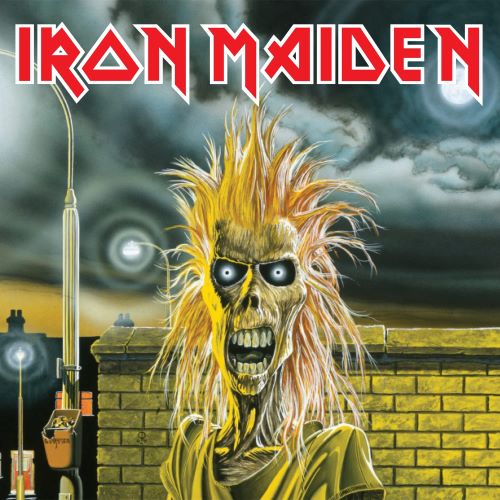
The cover art depicts the band’s legendary mascot Eddie. This was not Eddie’s cover debut as a shadowy form of him appeared on the Running Free single and the Japanese single release featured Eddie in full form, but this album still serves as the popular introduction. Derek Riggs was the artist behind Eddie’s appearances through Iron Maiden’s first decade of operation.

The album would release with 8 tracks, but I will be covering the US version which also offered the song Sanctuary. This was added to subsequent re-issues later on, though the current day pressings seem to omit it.

Prowler

The opener slams in with great guitar work between the Murray-Stratton duo and the signature rumble of Steve Harris’ bass. Di’Anno sings a desperate tale of a depraved man out to stalk and flash women.

I am warmed to the album’s production after decades of hearing it, but I will admit that Prowler is one song that maybe could have used a bit more work in the mixing stage. Still a very nice track but I can hear where it could be cleaned up a touch.

Remember Tomorrow

A remarkable song that starts out slow and contemplative but later launches into a Maiden guitar fireworks show fast break, showing that the band would forego typical pop-based song structure in their expressions. The song’s title was a phrase Di’Anno’s grandfather used frequently.

Running Free

This was the band’s debut single and still lives today as an iconic track. It is a simple banger that would get an extended live cut with a call and response passage added. The song is about the simple pleasures of being a wild and crazy youth and was based in part on Di’Anno’s young lifestyle.

For more on the single of this song, visit my recap of it as part of my Iron Maiden singles series.

Phantom Of The Opera

We move now to an extended cut and one with shifts and movement as Maiden take on the famous novel which has been adapted musically far and wide. The groundwork for the Iron Maiden sound to come can be found here, with a focus on epic storytelling. Phantom remained a staple of the live set long after Paul Di’Anno’s exit from the band and the song is hailed as one of the best from the early era.

Transylvania

Up next is the band’s first instrumental. The song was originally intended to have lyrics but after hearing the instrument cuts they decided to keep it as is. This is a fantastic song that plays out just fine without words and I’d say ranks at the top of the band’s handful of instrumental tracks. Transylvania would see a fair bit of stage time in the band’s early years and then again in 1993.

Strange World

Now it’s on to a song that’s aptly titled as this is very strange and a huge departure from what is recognized as the Iron Maiden sound. This is a trippy, atmospheric track that doesn’t feature the distinctive Maiden rumble at all. The song is maybe about vampires, or drugs or who knows what. It’s very odd and it’s jarring to hear when set against the rest of the album but it’s not bad in and of itself.

Sanctuary

The US bonus track slots here on original pressings of the album, note that re-issues can have it in different spots. This song about a killer on the run from the law would be a mainstay of early Maiden setlists. For more on this one, head to my rundown of the Sanctuary single.

Charlotte The Harlot

Here we have one of just a few songs written entirely by Dave Murray. This is celebrating a woman of the night and Murray has stated it’s based on a true story, though that story has never emerged. While the song itself is not the most celebrated track from this album, Charlotte would make three further appearances in Iron Maiden songs before her story was completed in 1992.

Iron Maiden

The album closes with an eponymous song, which is always a treat when a band does that on a self-titled album. And this one is truly a gem – there is no more signature Maiden sound than the guitars and bass on this song. Just as the chorus says, Iron Maiden’s gonna get you, and that they did with this track. This is the band’s most-played song live.

Iron Maiden marked the start of a heavy metal legacy. The album would hit number 4 on the UK charts and get platinum certifications in the UK and Canada. Critics took to Maiden right out of the gate, and the band found ready and willing audiences when they entered new countries to play there for the first time. The days of grinding in London pubs were over and the world was waiting. The New Wave of British Heavy Metal had been bubbling around England for years and Iron Maiden helped bring it into the light for the world to experience.

The raw production gave the album a “metal meets punk” feel, though band members insist they were not chasing punk as a sound. But the identity would follow Maiden through the Paul Di’Anno era and a subset of fans lament the turn toward something more akin to power metal that Maiden took when Bruce Dickinson stepped into the singer’s role. Those fans represent a minority of course, but they are out there.

For me I was a hair too young to catch this on release, I was not quite 3 years old when this album hit. It would be several years later when I got into Maiden and backtracked through the early stuff. This one was always a favorite of mine, I loved the raw energy yet still finding a lot of the band’s signature sound that was present on later albums.

This album was the start of something very special and a legacy that has now run close to half a century. All things must end, but they also must begin and Iron Maiden’s start was a great thing.

Van Halen – For Unlawful Carnal Knowledge (Album of the Week)

This week it’s time to head back to the fateful year of 1991, but in this case it’s to visit a band that was immune to the tectonic shift in rock that year. Van Halen were riding high heading into their third album with Sammy Hagar at the mic. While many dismissed Van Hagar as AOR rubbish that didn’t hold a candle to the beloved David Lee Roth era, VH were cranking out number one albums and hit singles as well as arenas full of eager fans.

Van Halen – For Unlawful Carnal Knowledge

Released June 17, 1991

My Favorite Tracks – The Dream Is Over, Poundcake, Judgment Day

Van Halen spent a year recording their first effort of the 1990’s. While Andy Johns was tabbed to produce, the band also brought in an old friend – Ted Templeman, who had famously guided the band’s early albums but had been absent through the Van Hagar era. The duel producers were a means to satisfy Sammy, who apparently didn’t enjoy working with Johns.

This album would see Van Halen forego the synth-based AOR rock of the late ’80’s and move to a heavier song structure based on guitar, and the occasional power tool. While I’m sure the band made the decision on their own terms, it did coincidentally fit with the times as the album’s release slotted in the summer that hair metal, AOR and other venerable forms of rock met their mainstream end.

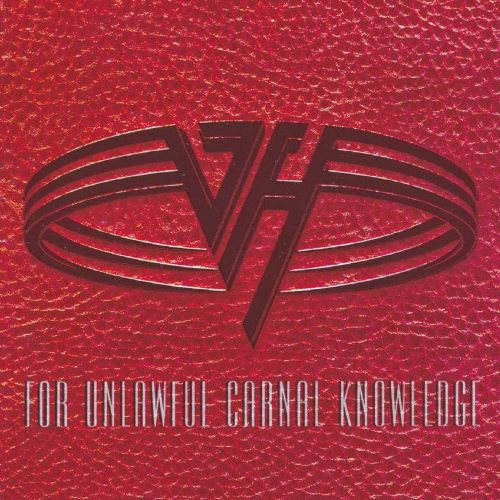
The album cover is nice though also basic, but the real art lore was in the inner booklet pictures. In first pressings of the album, one photograph showed a blackboard with a bunch of phone numbers on it. Some of the phone numbers got massive amounts of calls, so the record label repressed the album with the phone numbers removed. Note that these CD and cassette versions are not hard to acquire, it was a mass produced item so the phone numbers version carries no premium. Vinyl copies of the album did not have the blackboard photo that I know of, but vinyl of this album is scarce and does command huge value.

And of course there’s the album title. If it isn’t obvious, it spells out FUCK. The phrase was NOT the origin of the actual word “fuck,” which is a thing that’s out there but isn’t true.

There are 11 songs running at near 52 minutes total, time to head on in.

Poundcake

We start off with Eddie using a drill to mess with his pickups and then we’re off to the races. This is a heavy, driving track that doesn’t go too fast but really slams its point home. And that also happens to be what the song is about – slamming the point home with a nice, lovely woman.

Judgment Day

This one retains the heaviness but gets a bit faster as Sammy extols the virtues of kicking back in life and staying out of the ambitious rat race. This song was a big hit with my teenage self, perhaps informing me a bit more than it should. But hey, it’s all good.

Spanked

This one is pure sleaze and grime. This is some monster heaviness from Eddie and the band, it goes a degree further with it than Van Halen ever really went before. This one also has a good helping of the backing vocals that Van Halen were famous for but were not emphasized a lot on this album.

The song is about the old 1-900 numbers, which were a pre-Internet outlet for the sexually frustrated gentleman. They were total rip-offs as magazines were far cheaper, but I guess nothing beats that “personal” interaction. The song today would be about OnlyFans.

Runaround

One of the album’s featured singles, this track is a bit of a faster-paced and a less R-rated version of a sex song. It could be considered basic but it’s a pleasant song and I don’t find anything wrong with it. The video makes use of the rotating stage Van Halen were into using in their live shows, a pretty obvious fit given the song title.

Pleasure Dome

This one is a bit of an oddball. It’s still fittingly heavy for the record but is also a bit out in left field, at least in vibe it’s reminiscent of the prior album OU812. It seems like someone is caught in an artificial utopia of some sort but is aware and wants out, some kind of virtual reality or simulation kind of thing maybe. There is some seriously crazy riffing from Eddie on here, it hangs back a bit in the song but its truly something to behold.

In ‘N’ Out

A bit more of an “open” rocker here, it’s a song about how money makes the world go around and most people are basically screwed no matter what they do. The song’s loose rock vibe is a bit in contrast with the grave subject matter but it’s a sign that Van Halen were willing to explore more serious lyrical fare, something that comes up again on this album.

Man On A Mission

Another bit of a loose and upbeat song, this is Sammy motivating himself to go out and get his girl. Parts of the song are a bit self-help in nature and then other parts are total sleaze, it all works pretty well overall.

The Dream Is Over

A total vibe shift here from going out and getting some to a stark condemnation of the system and its leverage against the average citizen. This one really came from out of nowhere and delivered a powerful statement about the workings of society. Eddie and Sammy had discussed turning an eye toward more serious lyrical fare and they hit on it big time here. The song feels like nothing less than a death certificate for the American Dream and feels just as relevant today as it was 32 years ago.

Right Now

The album’s huge hit and a song that caused a lot discussion back on release. This was another of the songs with a more serious look at things and is the song Sammy Hagar has declared his proudest lyrical moment from his Van Halen days.

Right Now is about embracing change and reaching for it in the moment, even in the face of great adversity. The music video featured a bunch of random footage with text of things that were going on “right now,” some funny but many serious. The video was a smash hit and is likely the band’s biggest of their career.

Right Now was also used by Pepsi in a huge advertising campaign for Crystal Pepsi. The story of that soda is an odd one all its own, but for Van Halen it caused a fair bit of anger for the band “selling out” to corporate interest. Eddie justified the licensing, saying that the ad agency would have simply hired some jingle writers to do a basic cover of the song anyway, and he was correct in that assessment.

316

This instrumental track was originally written during the 5150 era but was brought back out by Eddie when his son Wolfgang Van Halen was born. Wolfgang’s birthdate was 3-16-1991, thus giving a title to the piece. This one is a quiet and reflective piece that sequences very well after the thematically heavy nature of Right Now.

Top Of The World

The album ends with a more “standard” Van Halen track that connects more to the prior Van Hagar releases. It’s a pretty simple and uplifting song that pretty well says what the title communicates. It’s a pretty nice way to close a record that was filthy in parts and serious in others.

For Unlawful Carnal Knowledge was another smash hit for the Van Hagar camp. It spent 3 weeks at the top of the Billboard 200 chart and would come out with 3 US platinum certifications. Singles from the album were all over radio and MTV, and the band’s tour for this cycle was one of their longest. While success can be defined by many different metrics, this period was easily one of the band’s most successful. Music critics were not very into this album, but the record won the popularity contest.

For me personally this was a pretty watershed moment in my music history. The summer of ’91 was when I really took off as far as getting into music goes, and I went to get this one on the day it was released. Along with it I also bought an album that had just come out a week prior, that being Skid Row’s second album Slave To The Grind. I went back and forth between both albums constantly and both tapes got wore out pretty quickly.

The “Van Hagar” era gets a fair bit of flack from Van Halen fans, with many people living and dying on the classic catalog built in the band’s first frame with David Lee Roth. I would never in a million years argue against that period of the band. But to discount Sammy’s tenure is short-sighted and for me, this album is the high point of that time.

Black Sabbath – Dehumanizer

This week it’s a visit back to 1992 and how a handful of line-up changes, some planned and one not, spawned a reunion. And then winds of another reunion would quash this reunion. The Black Sabbath soap opera rolls on.

Black Sabbath – Dehumanizer

Released June 1992 via IRS and Reprise Records

My Favorite Tracks – I, TV Crimes, Letters From Earth

Black Sabbath had been on a wild run of line-ups and albums through the 1980’s. While Tony Iommi had found stability at vocals with Tony Martin for a three album run, the other players in the band came and went like one of those temp hiring services.

Eventually a line-up was nailed down – Iommi, the returning Geezer Butler on bass, and Cozy Powell to drum. Powell was soon out though with a hip injury and was replaced with Vinny Appice, who was previously Sabbath drummer during Ronnie James Dio’s first Sabbath stint.

And Dio himself was brought in to make a full reunion of the Mob Rules line-up. Except that Tony Martin briefly came into the studio to try out the songs but didn’t stay due to solo commitments. I don’t know why this was a thing but it was and it was probably a sign of things to come. But at least for this album, Dio was back in Black Sabbath.

The album was recorded in an odd and expensive manner, going back and forth between England and the US. It turned out to be a pretty expensive logistical mistake but it worked out well creatively, as the band honed down a basic and heavy sound. While the 1980’s music scene turned its back on Black Sabbath, the band were in a position to capitalize on the 1990’s music scene turning its back on the ’80’s.

Today there are 10 tracks in 52 minutes to go through. There are several different bonus versions around as well as a bootleg that offers a bunch of bonus stuff, including a few tracks with Powell drumming.

Computer God

The album kicks off in heavier than hell fashion, right out of the gate with monster Iommi riffs and the familiar tone of Dio leading the proceedings. This song gets into the idea of computers becoming sentient and taking over the world, something Dio called science fiction in 1992 but we are so gloriously close to 31 years later. There’s also a wild solo from Iommi here.

After All (The Dead)

A slower and haunting track that truly brings out Sabbath’s doom leanings. The song gets into the issue of wondering what the afterlife is like and if the dead can talk, and reaching the conclusion that there’s only one way to find out.

TV Crimes

A massive rocking song here that dials it up to 11 and takes aim at the scourge of televangelism that plagued American society around this time. The TV preachers were known for their sermons with their hands out for follower donations, while taking the cash to spend on hookers and drugs, as well as other extravagant purchases. Many of the same preachers were ones to call out the “evil” of heavy metal music, so it was a field day for metal bands to return the favor and call out the hypocrisy of the preachers. This has been a fan favorite from the Dio and Sabbath collaborations.

Letters From Earth

A slower-paced affair with riffs aplenty that sees Dio writing letters to God from Earth about how everything is screwed. The song is pretty similar to a collection of essays from Mark Twain of the same title. The Twain essays were not published until many decades after his death as his surviving daughter was concerned about Twain’s very scathing tone towards religion in the essays. I don’t know if there is a connection between the Twain writings and this song, I had thought I’d seen Dio reference Twain in a past interview but I have no luck on finding that.

Master Of Insanity

A song brought to the band from Geezer Butler and his prior solo project. It’s a smashing hard tune about going mad and the capacity of anyone to find the worst version of themselves. Geezer brings in a few crazy bass lines for this one and the song moves around in different arrangements a bit.

Time Machine

Another slamming song and one of heavy metal’s great motivating tracks. The time machine is a figurative device here, the song suggests that we have control over our own destinies and can “use the time machine” to chart the course of our lives. There was an alternate version of the song recorded for the soundtrack to the Wayne’s World movie.

Sins Of The Father

A bit slower but still hard as hell here. The polar opposite of the last song, this one gets into a person suffering for the ill actions of someone else. It is wrapped in the religious symbolism around sin and all that sort of suffering for what happened before. Though the song does still offer the chance of breaking free of the vicious cycle.

Too Late

This one starts off in ballad territory before ramping up the heavy a bit later into the song. It’s a nice contrast between quiet and loud in parts. The moral of this story is not to sell your soul to the Devil because, well, you sold your soul to the Devil and that turns out to be a bad thing. So don’t do that.

I

The hardest song to search for on Google in history storms in with a massive riff that marches through the balance of the track. Dio is lit up on this one, the concept behind it is how he uses criticism of his music as fuel to create rather than being dragged down by it. He becomes an all-conquering monster here and the song is pretty emblematic of his career. This is easily my favorite off this album one of my top Dio Sabbath tracks overall.

Buried Alive

The album wraps up with a song that goes even harder and heavier. It’s a track about being “buried alive” by the constraints of a religion that offers no truth but a lot of dogma. When a person spends their time worried about the weight of their sins they don’t truly live a life and they wind up buried in the guilt and trappings. A quite elaborate philosophical statement to close the record.

Dehumanizer brought Black Sabbath back to a semblance of success. The album charted at number 28 in the UK and 44 in the US, as well as scoring good positions on the charts of many other countries. The stage would seem to be set for a great tour cycle behind this effort, but it was not to be.

The band would tour for a few months but then trouble struck when Sabbath was invited to open what were to be Ozzy Osbourne’s final concerts in November. Dio was not into the idea and he promptly left the group, taking Vinny Appice with him. Black Sabbath would play the shows with Rob Halford famously providing the vocals, and the original incarnation of Sabbath did a few songs during Ozzy’s set.

Dio was back into his solo career, with a few albums that bear some influence sound-wise from Dehumanizer. Black Sabbath would regroup with Tony Martin and release a few ill-received albums before finally biting the bullet and pulling off the reunion with a suddenly unretired Ozzy in the later ’90’s. This series of events would put Black Sabbath’s rights and management in the purview of Sharon Osbourne, and the campaign to have Ozzy-era Sabbath recognized as the “only one” was now underway. This did not stop the Dehumanizer line-up from reconvening one more time under the Heaven and Hell name for several tours and one more album in the late 2000’s.

For all the ups and downs of Black Sabbath, Dehumanizer came as an unexpected and well-received work at a time when the band had not been firing on all cylinders. The prior albums with Tony Martin were of quality but did not break the market in any meaningful way, and Martin’s second stint after was not well-received. It could be said that Dehumanizer is Sabbath’s last great album, depending on personal feelings over the final salvo 13. This one’s only real competition might come from the Heaven and Hell record, though it’s fair to say this one wins that battle.

While the band didn’t fully capitalize on the record, Dehumanizer was a fantastic album that brought a new sense of respectability back to Black Sabbath, if only for a moment. In hindsight it’s one of the band’s better albums overall and it stands head and shoulders above Sabbath’s other work of the time period. While it’s a shame the group couldn’t hold together in the mire that is the Sabbath soap opera, just the existence of this album is enough to hang one’s hat on.

Johnny Cash At Folsom Prison (Album of the Week)

This week I’m heading in to one of music’s most significant and unique live albums. One of America’s most iconic performers and a totally captive audience forged history one Sunday morning in a California prison.

Johnny Cash At Folsom Prison

Released May 6, 1969 via Columbia Records

My Favorite Tracks – Folsom Prison Blues, Cocaine Blues, The Legend Of John Henry’s Hammer

The history of Johnny Cash and prison performances goes all the way back to 1956 and his second single, Folsom Prison Blues. After release the song circulated among inmates and it became a favorite among them, they would write Cash asking him to perform at their prisons. Cash obliged and began a run of prison concerts. Both the inmates and Cash enjoyed the performances and the shows became an occasional part of his schedule.

By 1967 Cash had a bit of a career layoff, the given reason being drug use. He got cleaned up a bit and then approached a newly-reorganized Columbia Records country division about doing a live prison album. A maverick exec agreed and the plan was put in place to record live at Folsom. It took a while for the show to materialize but it was finally recorded in January 1968.

Cash and his outfit recorded two full sets on a Sunday morning – much of the material that would make the original release is from the first set, only two songs from the second were included as the band sounded tired and down on the later set. A 1999 re-issue saw 3 more tracks included, and this edition is what I’ll be discussing today. A later 2008 release saw both sets offered in full as well as a documentary in a Legacy edition. I am currently looking to get that version and may do a rundown of it when I get it, but today will be a more comprehensive look at the wider release.

The album opens with Folsom Prison Blues, which is an obvious choice to open a concert at Folsom but was also Cash’s long-time opener anyway. The song runs on a pretty upbeat tempo despite being about a man languishing in prison while free people ride the trains to anywhere. It’s pretty easy to picture yourself on the train rolling along to the music, going to anywhere but Folsom Prison. The infamous line “I shot a man in Reno just to watch him die” is here, though it was cut out of the single release after the assassination of Senator Robert F. Kennedy.

Up next is Busted, a song originally penned by Harlan Howard. It is a sad but also funny song about being broke, something that hasn’t changed much since the 1960’s. Then comes Dark As A Dungeon, a tragic tale about working in a coal mine written by Merle Travis. The song resonated through the mining community as mining work is extremely tough, though on this live cut there is some funny banter between Cash and an inmate. After the song Cash lets the crowd know the concert is being recorded and you can’t say “hell and shit.” Cash then goes into one of his originals, I Still Miss Someone. It is a brief lament about an old lover and would become a frequent setlist inclusion after the Folsom concert.

It’s now on to Cocaine Blues, another tale about ending up put away for murder and one of the highlights of the record. The song was originally written by Troy Arnall and recorded by Roy Hogsed in 1944. Cash’s version changes up a few lyrics to suit the Folsom audience and also throws the word “bitch” in, something that got a bit of discussion through the years and Cash went back and forth on through different versions.

Cocaine Blues sees Willy Lee shoot his woman for being unfaithful, then he hides out in Mexico but is found and brought back for trial. The lesson is apparently not to use cocaine, as opposed to maybe don’t shoot people. Though I guess the song isn’t as interesting without the murder, I don’t know. The song was a hit with the inmates and also the people on the outside.

Up next is 25 Minutes To Go which was originally composed by Shel Silverstein. It’s a funny look at someone condemned to execution who is counting down each minute by observing what’s about to happen to him. Cash famously skips a few of the minutes in the song but his delivery is spot on. Cash then next announces he’s going to do Orange Blossom Special and then do a few ballads by himself. He also has some trouble locating his setlist in a funny bit of banter.

Orange Blossom Special is an old 1938 tune from Erwin T. Rouse that was a popular hit at bluegrass festivals and a favorite of fiddlers to play. Cash had recorded a studio cut of the song a few years prior to the Folsom concert and brought it out live here. He also used a harmonica to replace the fiddle parts and the performance marks yet another highlight from the set.

And now it’s into a trio of sad ballads. First is The Long Black Veil, a 1959 song first recorded by Lefty Frizzell. In it a man is executed despite not having committed the murder, the problem is his alibi – he was in bed with his best friend’s wife during the murder. Send A Picture To Mother is a Cash original that sees a man in prison relaying to his released cellmate to give regards to the narrator’s family. Ending the trilogy is The Wall, a Howard Harlan-penned song about a prisoner who is lovesick and dies trying to climb the prison wall.

Up next is a trio of funny songs Cash had done on a novelty album a few years prior. First comes Dirty Old Egg-Suckin’ Dog, written by Jack Clement and originally performed by Cash. The poor dog keeps eating the owner’s chickens and is the target of contempt. Clement also wrote the next track, Flushed From The Bathroom Of Your Heart, a funny track that laments the loss of the narrator’s woman. The humor wraps up with Joe Bean, a young man who is being executed for a murder he didn’t commit. Joe’s mother knows his alibi – he was robbing a train when the murder was committed. The governor doesn’t pardon Joe but does wish him a happy birthday, which falls on the same date as his execution.

Cash would then introduce his wife June Carter to duet on a song. There’s some funny banter between the two before they go into Jackson, one of the more famous offerings from the pair. The song was originally written in 1963 by Billy Wheeler and Jerry Leibler. Cash and Carter had a hit with their version in 1967 and the performance of it here was a huge hit with the crowd.

The next two selections are from the day’s second set. First is Give My Love To Rose. It’s a Cash original where a man finds a dying person who was just released from prison. The ex-con was trying to make it back to see his family one last time but won’t make it so the man agrees to give his love to Rose. Cash then pulls out another original, I Got Stripes. Its another tune lamenting being in prison, assuredly another hit with the crowd of prisoners.

Up next is The Legend Of John Henry’s Hammer. The origins of the song are murky but are centered around a real African-American freedman who drove steel on the railroad lines. Henry famously raced a steam powered machine and won the race, though it cost him his life.

Cash’s rendition includes the sounds of spikes being driven and the various sounds of the steam engine. In this version John Henry bests the steam machine but succumbs to over-exertion the next morning. It is a true man versus machine tale that highlights the encroachment of technology on human life. John Henry has to drive steel to feed his large and destitute family, the advancement of technology doesn’t do him any favors.

The set heads into the home stretch with Green, Green Grass Of Home. The song was a very popular standard written by Curly Putnam and performed by Porter Wagoner and Tom Jones, among many others. A man is walking back through his hometown recounting memories, though in reality he is actually walking to his execution. The song has a very uplifting feel despite its pretty morose twist.

The set ends with Greystone Chapel, which is a very unique bit of lore from this live set. The song was written by Folsom inmate Glen Sherley, the song is about the very chapel at Folsom. The Folsom minister gave Cash a tape of the song the night before the live show and Cash decided to perform it. The song is a praise tune that uplifts the bastion of the chapel in the face of Folsom prison.

Note – the story of Glen Sherley is an interesting one, but one that won’t fit in today’s already-crowded post. I’ll do some digging on his tragic tale and offer up a separate post later on.

The band jams out a bit to wrap up the set, to a thunderous response from the crowd. The recording ends with the second set’s conclusion, which introduces Johnny Cash’s father Ray, as well as the warden (who doesn’t get the same loving reception Mr. Cash does).

Johnny Cash At Folsom Prison was an unconventional experiment that paid huge dividends for Cash’s flagging career. The record would top the country charts and also spend a very long time on the Billboard Pop Albums chart, the precursor to the Billboard 200. The album spent a total of 124 weeks on the album chart.

The legacy of At Folsom Prison is vast. This live set has books and documentaries about it and it is widely hailed as one of music’s greatest live performances. It was a landmark moment in Johnny Cash’s career and set him on a course for more hitmaking in the early 1970’s, including a handful of other prison performances. This was one of the Man In Black’s several career reinventions, a theme he’d continue until his death in 2003.

Beyond the scope of the album’s place in music, Cash was also noted for his egalitarian treatment of prison inmates. Many people simply cast off prisoners as people suffering the consequences of their actions, but Cash approached them as humans and did not let them rot forgotten. It’s a type of outreach that’s hard to quantify but certainly had its effects. One 1958 Cash performance at San Quentin had a great deal of influence on one of the inmates there – a guy by the name of Merle Haggard. By the time Cash was releasing live prison albums, Haggard was well on the way to his own country stardom.

Johnny Cash was a country legend, but also didn’t always fit the scene. His out-of-the-box approach to doing a live album shaped a legacy otherwise unseen in music. It is a vital piece of country music history and music as a whole.

Lamb Of God – Sacrament (Album of the Week)

This week’s pick is going to turn 17 later this year, which is just screwed if you ask me. Pardon me for a moment while I tend to my joint pain.

Lamb Of God – Sacrament

Released August 22, 2006 via Epic Records

My Favorite Tracks – Walk With Me In Hell, Redneck, Descending

Lamb Of God were riding a high after the splendid reception to their 2004 landmark Ashes Of The Wake. (that Album of the Week post can be found here). Heavy metal as a whole was well on the rise in the mid 2000’s and Lamb Of God were becoming a huge part of the resurgence.

The only real way to go was up, and the band would do just that with their fifth album. Lamb Of God were breaking out of the metal underground and becoming a familiar name across the music landscape as a whole. The album today is 11 songs in 46 minutes so let’s get at it.

Walk With Me In Hell

The opener leaps out with a massive riff and the sense that something beyond just a song is going on here. Guitarist Mark Morton wrote the track knowing he was on to something more and was able to work the chorus into a dedication to his girlfriend, who would later become his wife.

One of the album’s three singles, Walk With Me In Hell exploded out of the gate and became an instant classic. It remains today as one of the band’s signature songs.

Again We Rise

The song is bordering on death metal territory with its insane guitar work and pace. Lyrically it deals with the issue of “modern” US Confederates, or people who praise the losing side of the American Civil War eons after the war ended. This is not a flattering portrayal of that crowd. And the issue would only increase in scope after 2006.

Redneck

The lead single slams in both musically and lyrically. It’s a thunderous groove metal masterclass and a pointed confrontation song. This quickly became a crowd favorite and today sits behind only Laid To Rest as the band’s most recognized song.

While Lamb Of God is often dark and dreary, Redneck is a pretty fun song. The music video is an absolute laugh riot, with the band being booked to play a kid’s birthday party and the hi-jinx that ensue.

Pathetic

Another twisted riff from Mark Morton and some great drumming from Chris Adler shape this next track, which thematically is Randy Blythe screaming at someone who sucks. It’s kind of a connecting theme of this album. Lamb Of God played this song live on Conan O’Brien’s show in early 2007, and it became far more common to see metal acts on the late-night shows after that.

Foot To The Throat

A political track this time, as the band takes aim at politicians and other “powers that be” keeping the rank and file citizens down. The music is as unrelenting as everything else on the album.

Descending

Another brutal track nearly in death metal territory, the song has lyrics purporting to reflect the duality and contradiction of religion, yet unverified sources indicate that the song is really about alcoholism. Either way it’s an album highlight.

Blacken The Cursed Sun

This was the album’s third and final single. The song is a very dark and dreary affair about being at the end of your rope and going out with one final push. There’s a bit of a call and response anti-sermon kind of thing at the end that’s pretty cool.

Forgotten (Lost Angels)

A short but slamming track that is chock full of Morton riffs and takes aim at Los Angeles and the fake and plastic culture. It was reportedly inspired by shady music industry execs. Taking aim at Los Angeles has been a favorite pastime of heavier bands but LoG pull it off in pretty convincing fashion here. This is also a song that invites comparisons to the prior kings of groove metal, that being Pantera.

Requiem

Don’t be fooled by the title – this song is not a requiem from the punishment the album delivers. It’s another song with some religious symbolism and being down and out and trying to go for it one more time after being completely broken. It has a spoken word portion that’s hard to make out in the middle before a bit of soloing. It’s another track where Chris Adler is pounding the piss out of the drums too.

More Time To Kill

This one’s a pretty evil track aimed at someone who is dying but was on the wrong side of the ledger with the narrator. It’s another confrontation, go get bent kind of song. No clue what the story might be behind this one but it’s very hard feelings and not for the faint of heart. Also a bit of black metal style vocals from Randy Blythe here, pretty neat little part.

Beating On Death’s Door

The closing track keeps with the “fuck you” theme, this time it’s about a woman of ill repute who apparently pissed some people off. The song is more aimed at the unlucky sap this woman ended up with. A fittingly brutal end to a brutal album.

Sacrament was a huge success for Lamb Of God. It joined Ashes Of The Wake with a US gold certification for more than 500,000 copies sold. It peaked at number 8 on the Billboard 200 and even higher on several other US subgenre charts. Redneck was nominated for a Grammy in 2007, an award that went to Slayer. Several metal publications had this at or near the top of their year-end lists for 2006, back when print media was still a thing.

While it was the prior album that truly broke Lamb Of God into a wider audience, it felt like Sacrament was their true superstar turn. The band had previously been a part of the wider “New Wave of American Heavy Metal” movement, but by this time had broken free and far wider than the more underground sensibilities of that designation.

And the inevitable comparisons continued for LoG – both fans and detractors noted the “new Pantera” vibe to Lamb Of God, something not really present in their more extreme early days. And on this album those comparisons seemed at least somewhat valid, even if LoG were still their own distinct entity. It’s probably fair to call them the spiritual successors to Pantera’s crown, but LoG are far from a pale imitator of a past revered act.

With Sacrament, Lamb Of God solidified their place on the top of the metal mountain, or maybe scrap heap is more appropriate. They are still going all these years later, through some kind of crazy drama and all the changes in the times. A lot of riffs and a bit of cussing can take you pretty far sometimes.

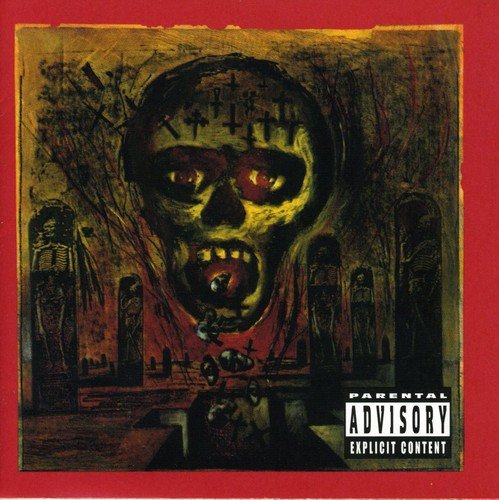
Slayer – Seasons In The Abyss (Album of the Week)

This week it’s time to head back to 1990 and have a look at an album that propelled Slayer into a new decade.

Slayer – Seasons In The Abyss

Released October 9, 1990 via Def American

My Favorite Tracks – Seasons In The Abyss, Dead Skin Mask, Skeletons Of Society

Slayer had quite a run of it through the late ’80’s, what with essentially redefining thrash metal with Reign In Blood and then pulling up on the throttle and chilling out a bit on South Of Heaven. The change in speed and/or sound did not resonate with everyone but was probably a wise choice, as attempting to do RIB again would have likely proven disastrous.

The band hit the studio with Def American mastermind Rick Rubin to crank out their next album and hit on a bit of gold with a combination of their more mid-tempo fare along with some bursts of energy. Slayer would also mostly pull back their lyrical fare from the demonic and supernatural to more of a look at real-world issues.

Seasons In The Abyss comes in with the standard American Recordings track list of the time at 10 songs (that’s all Rubin and company would pay a group for) and a run time of 42 minutes, which is a virtual eternity in Slayer world.

War Ensemble

The opener sets a quick pace as the band pound through a dark look at war, one of metal’s favorite topics. This is a stark look at the true scope of a battle and it’s supplemented with a very aggressive and re-energized Slayer. We don’t necessarily know what or where this battle is, though the Rhine is mentioned so Germany is a good guess, but it is definitely brutal.

Blood Red

The pace comes down just a hair as the band shred through a condemnation of governments using violence to silence their citizens. This one is quick and dirty and the next song kicks straight off.

Spirit In Black

This time we do revisit the more supernatural with a descent into Hell. Tom Araya is running the show as some poor sap is sent on his way to the eternal torture chamber. The song gives a few call backs to prior Slayer works, such as “blood forever rains” and “Hell awaits.” It’s also clear that the band did not piddle around with finding new guitar tones or anything – they have their sound locked in and banged this out efficiently.

Expendable Youth

A song that discusses gang violence, though of course in Slayer fashion. Gangs were the number one scapegoat of media and politicians around this time and of course the root causes of gang existence were never truly addressed. Slayer are not offering any solutions, though, this is more of an observation of the battle for turf and the cold reality of bodies on the ground.

Dead Skin Mask

This track is a look at infamous murderer and grave robber Ed Gein, the real-life influence for many Hollywood serial killers. Slayer amps up the creepiness factor with a twisted riff as Tom Araya yells through the process of a killer’s mind deteriorating. It would mirror how Gein would claim that he did not remember moments during his murders or grave robbing. This one has been one of Slayer’s marquee tracks through the years.

Hallowed Point

Pretty simple here – the band kicks the speed up a fair bit and discusses the issue of hollow point bullets, which were a hot-button issue in the early 1990’s. The bullets expand on impact and can literally tear apart a person’s insides, as opposed to the more straight shot of a “typical” bullet. The song does not really participate in the debate over the bullet, rather it simply follows the journey from firing to shredding someone apart.

Skeletons Of Society

The tempo on this one goes way down, almost to a doom metal pace. The song marches through the eyes of a survivor of an apparent nuclear holocaust. It’s probably not shocking that Slayer’s version of the post-apocalypse is a grim one. The solos from Kerry King and Jeff Hanneman here, always dissonant, are an extra special touch on this track that’s a bit of a departure from the album’s norms.

Temptation

Back to a thrash pace again and also the topic of satanism and the old classic stuff like possession and being corrupted. While couched in a lot of fanciful and supernatural stuff, the song does make a fairly real-world point about how it’s always evil that is the tempter and the attractive option, at least viewed through the lens of belief in that sort of thing.

Born Of Fire

Slayer breaks it open speed wise here as they get at least within the ballpark of Reign In Blood speed. The song is kind of a stock rundown of more evil imagery as the lyrics were written last minute by Kerry King. While Slayer’s slower pace has worked well through this album, it is nice to hear some straight-ahead bashing for a bit.

Seasons In The Abyss

The album closes with a track that really slows things down and gets into some gnarly sounding tones. A creepy intro runs for a few minutes before the song really kicks in and picks things up a fair bit. The lyrics are a bit more abstract here, they are dealing with the concept of The Abyss as presented by noted occultist Aleister Crowley. I personally have no clue what it’s really about so I’ll leave it alone. A brilliant video was also filmed for the song and was shot in Egypt, adding a huge degree of visual awe to the song.

Seasons In The Abyss would mark another notch in Slayer’s now-lengthened thrash belt. The album would get to number 40 on the Billboard album charts and also break on several other nations’ charts. An eventual US gold certification would come, and the album has sold at least 800,000 copies.

For Slayer it was a boost in reputation after South Of Heaven and its transitional nature left some fans alienated. Now people were used to the newer Slayer sound, and there were still a few all-out thrash moments to be had. It also positioned Slayer quite nicely entering the 1990’s, as their style would fit in with rising “alt-metal” movement while conventional thrash fell by the wayside. These songs, both in studio and live form, would frequent MTV programming, especially Headbanger’s Ball.

Though Slayer would make it through the very tough 1990’s relatively well, it wouldn’t come without some cost – drummer Dave Lombardo, often regarded as the band’s best asset, would quit the group in 1992. But he left after a successful album and tour cycle for a record that reinvigorated long-time fans and brought in many new ones, myself included.