David Bowie – Suffragette City

Today I’m entering territory I’m not horribly familiar with – I honestly have not listened to a ton of David Bowie. I hit on this song today because I’ve been hearing it around a fair bit lately after not hearing it for a very long time, and also because it does come from the one Bowie album I am somewhat familiar with.

Suffragette City comes from Bowie’s fifth album The Rise and Fall of Ziggy Stardust and the Spiders from Mars, released in 1972. The song was released as a B-side to the single Starman a few months before the album hit stores. Suffragette City later got its own single release in 1976 as part of the greatest hits compilation Changesonebowie. That single did fail to chart, though our song today is a beloved part of the Bowie catalog and can’t be contained by mortal constructs like lousy charts.

Bowie was joined on this song by his Spiders from Mars band on this effort. Bowie handled vocals and some guitar, while his legendary companion Mick Ronson did guitars, piano and synth. Trevor Bolder was on bass and Mick Woodmansey, whose last name is amazing, on drums. Bowie produced alongside Ken Scott.

Today’s song is a total rock and roll banger. It runs in the proto-punk space, with a fast tempo and a bit of boogie with the piano running along too. It does seem another nod from Bowie to The Velvet Underground, a group Bowie admired and had paid homage to previously. While clearly informing the punk rock to come, the song is also an early example of glam rock, something Bowie was a huge contributor to around this time. And the song’s false ending before a “wham, bam thank you ma’am!” and another run of the ending chorus is just great work.

In an interesting bit of trivia, Bowie at first tried to give the song to someone else. He wanted Mott the Hopple to record this track, it was Bowie’s way of trying to keep the troubled band from breaking up. Camp Hopple rejected this song but did record another Bowie-penned tune, All The Young Dudes.

Now comes the question – what the hell is this song about? And honestly, there are no clear-cut answers.

The only concrete thing that Bowie really offered is that he was inspired by Stanley Kubrik’s film A Clockwork Orange when making this album. Bowie wanted to incorporate some of the lingo and alternate language stuff that was in the film into his work. Bowie does mention droogie in the second verse, a very common term from the movie. It doesn’t really tell us what the song is “about” but it does give us an idea as to his headspace at the time and that he might be talking in code on purpose.

Beyond that, we are left to speculate. The term “suffragette” refers mostly to the drive to allow women to vote across various nations in the early 1900’s. The word can also be more loosely applied to refer to women’s liberation and/or feminist causes.

But our song today has precious little to do with women’s progress. The line “this mellow thighed chick just put my spine out of place” pretty well rules out any advancement of women’s causes or shattering of the glass ceiling here. The song is clearly Bowie addressing a friend named Henry, and Bowie is asking his friend not to come around because he’s wrapped up with a woman.

So what is really going on here? Well, there are two prevailing theories, both of which are coherent and make sense, so we can get right into them.

The most practical and seemingly fitting narrative is that the song is a coded communication of Bowie’s bisexuality. The friend Henry was a male lover, and Bowie was spending time at “suffragette city,” or hooking up with women for a spell instead. Bowie doesn’t want Henry around because things are swinging the other way right now. It’s a logical explanation that fits everything very well, though to my knowledge there is zero confirmation of this idea.

The other theory is a time-honored crutch for what rock songs are really about and also, well, a time-honored crutch for David Bowie – drugs. “Henry” is a slang term for heroin, and the song could be Bowie trying to shake the demon because he’s into a girl. It’s also a fair guess but again, I don’t see any evidence to corroborate the theory. I’m not a Bowie expert but he never seemed to be one to unveil the meaning behind his songs anyway so guessing is what we’re left with.

Whatever Suffragette City is about, this is one absolutely monster song that flexes real rock muscle and gets the job done. I hadn’t heard this song in many years when it came on a month or so back when I was eating at Arby’s, of all places. For whatever reason, the Arby’s right by my house has a pretty nicely curated selection of classic rock playing in the dining area. And Bowie has been popping up a lot lately on others’ blogs and in-person conversations so I figured it was as good a time as any to revisit this belter of a tune.
Sepultura – Arise

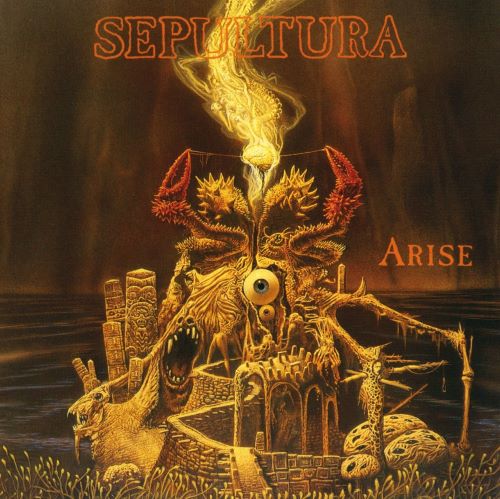
This week I’ll leave 1984 alone and explore other waters. We can politely ignore the fact that I’m going to the other massive year in my musical fandom, the apocalyptic soundscape of 1991. And few soundscapes were more world-ending than that of Brazil’s metal madmen and their extreme thrash masterpiece.

Sepultura – Arise

Released March 25, 1991 via Roadrunner Records

My Favorite Tracks – Dead Embryonic Cells, Arise, Infected Voice

By 1991, Sepultura were through a few demos and two full-length efforts, and their profile was on the rise all through the world. As heavy metal was moving into more extreme directions, Sepultura were in prime position for their “thrash plus” metal to have an even bigger impact, which it certainly would.

Arise was recorded at Morrisound Studios in Tampa, Florida during 1990 and ’91. It was produced by the band as well as Morrisound mastermind Scott Burns, who had a massive impact on the early 1990’s metal scene. Burns cranked out a host of extreme metal’s finest albums out of the Morrisound hotbed, and this one was one of the crowning achievements from that period.

Sepultura’s line-up was the same as it had been through their full-length recording history – Max Cavalera was on guitars and vocals, his brother Igor Cavalera was the drummer, Andreas Kisser was the lead guitarist and Paulo Jr. was credited as the band’s bassist. In a twist, Paulo Jr. did not actually play bass on the albums, it was Andreas Kisser who actually recorded the bass parts. This was the final album for that arrangement, Paulo did begin recording bass on the follow-up Chaos A.D.

Today’s album features 9 songs in 42 minutes, a tad more bulky than a lot of peers at the time. A few re-issues and other editions exist with bonus tracks, they can be worth seeking out as they have a supremely excellent cover of Motörhead’s Orgasmatron.

Arise

The title track opens as many songs here do, with a creepy industrial-tinged intro. The setup is brief as the band slams in with riffs coated in their sick guitar tone, simple yet amazingly effective at hooking the listener in to this maelstrom of instrument bashing.

Arise may come off as an uplifting thing on surface level, but this song is about the war between religions, politics and other ways people define themselves as “better” and how it is killing the world. We only “arise” after the obliteration of mankind, under a pale grey sky – this is the end of it all, not a self-help track.

This was released as a single and got a music video, featuring the band playing in a desert. A few poked fun since the scene mimicked Slayer’s Seasons In The Abyss video. MTV was not a fan of the video in the US, not airing it due to a figure of Jesus hung on a cross and in a gas mask.

Dead Embryonic Cells

Another brief, crazy industrial sequence opens into another absolute scorcher of a thrash track. A sick rhythm riff slices through while Andreas offers up some trippy leads over everything. The song is about how people are born into a world already up shit creek. This is not simply a straight up thrash number, either – this song goes through several movements and changes, all the while retaining its core and brutal aura. My personal favorite of the entire Sepultura catalog.

Desperate Cry

This gets a nice, brief acoustic opening segment before launching into its doom-thrash main bit. It’s a tortured song (go figure) about someone facing their dying moments. The acoustic bit pops up again briefly in the middle, before more electric chugging commences to headbang out to the end.

Murder

This is a pretty straight ahead track in terms of thrashtality. The song is a grim look at Brazil’s prison system and their very, very bad track record in dealing with inmates. The topic is grotesquely disturbing and continues to this day, as I understand it.

Subtraction

On to another song that is like a thrash homing missile, this one takes off and doesn’t stop until it hits the target. There is a fair amount of “chug” and groove in this one too, showcasing that Sepultura would be a massive influence on 90’s metal to come. The song is about how a person loses their individuality through the pursuit of money and glory – subtraction of personality, as Max howls in the chorus.

Altered State

Here we get a howling wind start and some South American tribal drums to kick things off. This would be a new addition for Sepultura but would be far from the last – this drumming style would permeate Chaos A.D. The song’s title was taken from a movie of the same name and is about human experimentation on brains, fun stuff.

Under Siege (Regnum Irae)

A small bit of a stylistic departure here as the song moves quite slowly, but the doom-thrash thing fits the album well. Parts of the lyrics are transcribed from the controversial The Last Temptation Of Christ, and the song is about how people are generally born into or forced into their religion of “choice,” rather than freely picking it. In the hands of lesser bands this concept could have fallen apart pretty quick, but Sepultura show they are quite capable of working with different lyrical and musical concepts here.

Meaningless Movements

It’s back to full on thrash here, though still tempered a bit in pace. The song is another study in religion and the effects it can have on personality, essentially warping someone and especially casting out anyone with a dissenting view.

Infected Voice

The album’s closer is a true testament to Sepultura’s sheer thrash insanity, this song goes harder than hard. The running joke has been that the song is about Max Cavalera’s actual voice, which would get confused with a rabid grizzly bear before it was compared to another singer. But the song is actually about the fear of growing up, essentially, having to make tough decisions and all of that. It’s actually the most pragmatic song on an album full of deep and dark themes.

Just as music was shifting rapidly in 1991, Sepultura would truly announce their presence with Arise. The album would chart in at least six countries, no super high positions but a truly international showing. It would gain a silver certification in the UK as well as gold in Indonesia. By 1993 the album had shifted one million worldwide units, just as their true mainstream arrival in Chaos A.D. Would launch.

Arise is also critically hailed by many as Sepultura’s finest hour. The reviews from the metal press have been glowing, both on release and in the 33 years since. It makes many metal “best of” lists. The critical acclaim at the time helped vault Sepultura into widespread coverage just as heavy metal was again mutating into many other forms. The band’s influence on the mainsteam of 90’s metal can be heard in both the “groove thrash” and alt-metal to come and even in the nü-metal that would comprise the latter half of the decade. And Sepultura were kingpins of the extreme metal movement, being vastly influential to death metal and most any form of the world’s darkest arts.

I would personally hear this album for the first time in the late summer of 1991, just as I entered my freshman year of high school. A dude in front of me in algebra class knew I liked metal and asked if I’d heard this yet. I had not, so I borrowed his walkman for a minute and checked this out. I was totally blown away. I had been into the “big four” by this point but hearing this was a total ass kicker. Thank you Shane, wherever you are, for introducing me to this and shaping my musical journey, as well as probably truly rotting my young brain.

Sonata Arctica – Dark Empath

So I started this blog in August of 2021, after a few months of planning beforehand. I can’t count the number of times I’ve planned something for this and then been derailed by new releases and information.

I had intended to do an Iron Maiden album ranking as one of my first posts, but just as I was beginning to plan this all out in early 2021, Maiden announced a new album. Took me two years to do that ranking.

I also recall having a post about the fantastic movie This Is Spinal Tap ready to go when, just hours before the post, the actor who portrayed drummer Mick Shrimpton died. I went ahead with the post, but the eerie timing was just unreal.

And now, a new one – a few weeks back I was planning a huge post about something I had originally teased a year or more ago. Sonata Arctica, the stalwarts of Finnish power metal (and far beyond, honestly) have a complicated and intertwined series of songs known as the Caleb Saga that paints a deep and dark picture and runs through a lot of the band’s career. The main story tells a tale of lovers and adversaries Caleb and Juliet. It’s not just lovers – this saga involves a lot of early abuse and neglect, a whole truckload of stalking, and at least in the given canon ending of the saga, Juliet’s ultimate and only way out via dispatching Caleb. (that means killing)

But there are a few other songs tied into the Caleb saga over the years that aren’t necessarily canon in terms of how the story flows, but they are thematically tied to the same pair. They can be considered alternate endings or parallel dimensions, whatever you wish. But it’s a songwriting well that Tony Kakko goes down a fair bit for inspiration and almost always cranks out a belter when he does.

My intention is to compile a post detailing the entire Caleb saga. There are five past Sonata Arctica songs tied to this saga over the band’s career, which began in 1995 but started proper in 1999. They came into form in the early 2000’s, and by 2004 they had found solid ground as a band equally owing to European power metal and American prog/classic rock with Reckoning Night and among that album the excellent song Don’t Say A Word, the “second” part of the Caleb saga and where it became a multi-song story in the first place.

I have previously covered Don’t Say A Word as part of a now-defunct series, but the words written remain true and it is one of the best highlights of Sonata Arctica’s catalog. It brought the Caleb saga to life, and the band has run with the premise for 20 years since it became a true story.

And, as I more than mentioned earlier, my posts often get thrown off just before I go with them. I have what is currently the base of a Caleb saga post ready to go, just needing to cross a few t’s and such. And, here comes the inevitable curveball.

Sonata Arctica are due to release a new album on March 8th of this year. Clear Cold Beyond is not just a statement of fact regarding where the band live in arctic Finland, it is the group’s 11th studio album. It is the first album in 5 years, after a few acoustic tours and dealings with COVID.

Now, none of this is new information. The band released this info back in November, along with the album’s first single First In Line. But it’s the newly-released single Dark Empath that gains the attention today.

I’m sure the hook here is obvious since I’m 600 words into a post about Sonata Arctica, a new album and the Caleb saga. But if anyone is missing the point, Dark Empath is the newest entry in the Caleb saga. From interviews Tony Kakko has given, this song is not necessarily “canon” to the saga but is another branch of it. This occupies similar space to 2019’s song The Last Of The Lambs from Talviyö. While that song might be considered a hair “light” in relative terms to this dark stalker saga, I don’t think Dark Empath treads as lightly. This is a very dark and all-encompassing song, the narrator who is presumed to be Caleb is still stalking his prey, presumed to be Juliet. But Caleb sees weakness in Juliet’s new love and is ready to bare all to her, exposing her own inadequacies as well as his. And Caleb continues with the “one and only” talk, as if Juliet can only belong to him after all they’ve been through, which in canon involves ignoring the fact that Juliet killed Caleb for – you guessed it – stalking.

I don’t really know what keeps Tony Kakko involved in still writing these songs after all this time, clearly it’s a wellspring of inspiration for him. But here in 2024, a full 23 years since the song The End Of This Chapter and the kick-off to this long-winding saga, we get a new song to fortify this winding story, and one on an album that the band has promised to hold closer to the group’s older legacy.

So at some point in the near future, probably after this new album releases, I’ll deliver my long-overdue post on the whole of the Caleb saga, as twisty and turning as it is. But until then, we get this new entry to the series, and one I’m very happy to hear and I feel slots well alongside some of the absolute bangers the band have already offered in this story, including one of their best songs. March is proving to be a very busy release month for metalheads, and Sonata Arctica have made sure to call attention to their album.

Mercyful Fate – Don’t Break The Oath

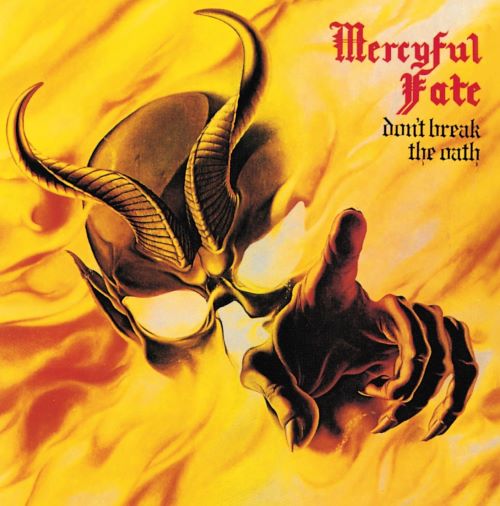
This week it’s back to 1984 and it’s time to look at an album that can only be called one of the most influential records to the entirety of heavy metal.

Mercyful Fate – Don’t Break The Oath

Released September 7, 1984 via Roadrunner Records

My Favorite Tracks – Gypsy, The Oath, Desecration Of Souls

Mercyful Fate formed in Copenhagen, Denmark in 1981 and by 1984 were on to their second full-length record. The band were quickly making waves on the back of the Melissa album, but were also running into issues while on tour – an opening spot for Ozzy Osbourne was canceled due to illness, and a UK tour with Manowar was scrapped after a single gig when the members of Manowar acted like assholes to Mercyful Fate. But the group of Danes were poised to become one of metal’s most noteworthy acts regardless.

The band’s line-up was the same as the debut recording – the guitar tandem of Hank Shermann and Michael Denner, Timi Hansen on bass, Kim Ruzz on drums and one Kim Bendix Petersen at the mic. Mr. Petersen is obviously far more recognizable by his stage name of King Diamond.

While Mercyful Fate would go on to influence metal bands all across the spectrum, their own sound was fairly traditional metal, along with a few prog elements. The themes were greatly influenced by evil and the occult, and whether or not many like this band or not comes down to King Diamond and his falsetto delivery. That tends to be the sticking point for some.

Don’t Break The Oath comprises 9 songs at around 43 minutes, an album of pretty fair length. Some reissue versions include the demo Death Kiss, which is an earlier form of opening track A Dangerous Meeting. It has been reissued several times again over the years but is almost always the original tracklist when done.

A Dangerous Meeting

Killer riffs open this dark story of a group who looks to lead a séance. “They should have known not play with the powers of Hell” says one line in the song, and the group meets a gruesome yet rather undefined end as their summoning attempt goes awry. This one stays fairly simple for the first few minutes, with a great Denner guitar solo, then shifts tempo a few times to close out this cautionary tale of playing games with dark forces. Some bells ring us out to close this excellent opener.

Nightmare

Up next is another grim story, this of a nightmare someone has of a witch coming to life through a book and convening her coven to sing and drive the subject mad. This nightmare is recurring every night for the tormented narrator. The madness is highlighted at the end with King Diamond’s tauning wail “you are insane!” And, like all of these songs, there are some fantastic solos from both Denner and Shermann.

Desecration Of Souls

This song is a dank as a dungeon, it descends to the bowels of Hell itself. It is the soundtrack to some various hijinx going on at a local cemetery – necromancy, cult lust and even weeping widows don’t pass muster on this unholy ground. This song has a very nice, primitive feel to it.

Night Of The Unborn

The guitars here have a very nice “classic rock on steriods (and a bit of evil)” feel to them. King Diamond goes full-on with the falsetto here, he is unrelenting in his delivery on this song. The restless spirits of the unborn are coming out tonight to haunt the priest, their attack represented in a guitar frenzy at the end of the song.

The Oath

Now on to what many consider to be the masterpiece of Mercyful Fate. This song gets going with an eerie introduction passage, building a creepy atmosphere for what’s to come. What is that? A fantastic rolling riff and a slam through King Diamond pledging an oath, and it’s not an oath of office. Ol’ Satan himself gains another devotee through this dark passage. This song is a magnificent triumph for Mercyful Fate.

Gypsy

A nice fat riff runs constant through this trek as a man discovers secrets from a gypsy woman in a caravan. In shocking news, we discover that both the song’s subject and the gypsy woman are children of the devil, I’m sure that was a twist ending no one saw coming. This is a quite simple yet very effective song that remains my favorite from the album.

Welcome Princess Of Hell

Another cavernous, classic rock meets evil song here. The title might suggest a date between King Diamond and a princess of Hell, but the title is actually a typo – it was supposed to be “Princes Of Hell” and King is having a crystal ball Zoom meeting with them. The actual lyrics do reference the proper “princes” as opposed to a singular “princess.” Either way, it is yet more thunderous evil mischief to dig into.

To One Far Away

A brief instrumental provides a short respite before the final bellow of evil. Very nicely done guitars here and a song that’s in and out quickly, doesn’t overstay its welcome.

Come To The Sabbath

The album closes with one of Mercyful Fate’s most beloved songs. Unlike the opening track where a group of novices meet their demise at the hand of dark magic, here a group that know what they’re doing are out to petition the Dark Lord for favor.

The favor is a specific one, with ties to the band’s prior album – here, Satan is being asked to place a curse upon the priest who executed Melissa, the namesake of the first album and a witch who was the object of affection for the narrator. It would mark the first hints of King Diamond’s long running interest in storytelling across multiple songs, as well as the witches who would be the subject of many of those stories to come.

Don’t Break The Oath was another shot across the metal world by Mercyful Fate. The band would continue to be one of the most widely-cited influences when anyone from any shade of heavy metal talked about what led them to play. In fact, this album wasn’t the only metal masterpiece conceived in their own rehearsal room – in early 1984, Metallica used the room and MF’s gear to practice for the recording sessions for Ride The Lightning, which was recorded in Copenhagen.

Metallica have been very loud about their love for Mercyful Fate, constantly citing them as influences, doing cover versions of MF songs and having the band appear at Metallica’s 30th anniversary concert. But Metallica is far from the only one – Mercyful Fate’s influence covers the scope of thrash, death, black and other forms of metal through the 1980’s and beyond. It is rare to encounter a band or artist who wasn’t led down the dark path by MF and especially this second album.

For Mercyful Fate themselves, they wouldn’t last a whole lot longer after the album. Hank Shermann wished to write more commercial music, something which King Diamond was totally opposed to. King would leave Mercyful Fate and start his acclaimed solo career, while the rest of the members pursued other projects. The band reformed in 1992 and had a solid run of albums through the end of the decade, they have been largely on hiatus since but have made occasional live appearances and are said to be working on a new album.

But for fans of heavy metal, the shadow cast by Mercyful Fate and Don’t Break The Oath is long, and of course full of darkness and evil.

Closing Time? The Plight of the modern music venue

A disturbing trend has been moving through music in the past several years. It was already happening before 2020, but the COVID pandemic really thrust it into high gear – small music venues have been closing, and at an alarming rate.

That rate is very telling, and it’s not isolated to the United States – this September 2023 article from mixmag estimates that 10% of UK grassroots music venues would close by the end of 2023. Though I don’t have word on if that came to be, I’d say the estimate was fair since a good bit of the year had already passed. And even without this stat, if you pay attention to music news at all, you’ve surely noticed several doom and gloom articles about the state of smaller music venues.

Closing venues may not seem like a huge deal to some – these are very small businesses that cater to somewhat limited audiences, and there are the stereotypical cracks about small music places – the bathroom of death being just one.

But the loss of music venues is a massive deal to music – it eliminates the place that musicians have to play. Sure, the Internet is here and makes it easier than ever to “get your stuff out there.” But – getting anyone to actually pay attention to it is another matter. Do anything on social media – post a song, an article, hell – a blog, and you’ll find it takes thousands upon thousands of impressions to generate tens of actual plays or views. Nothing about using the Internet to gain exposure is as easy as just posting it – not music, not blogging, not OnlyFans, not anything.

The music venue is the one place where people will be interested in underground or independent music. It is where people go to specifically seek that out. There is no more receptive audience for music anywhere than at a music venue.

And this plays out at all levels – I listen to a lot of underground and extreme metal. These are bands that are internationally known but let’s face facts – the audience for extreme metal isn’t usually massive. These bands will often play 300 or 500 capacity venues, the same kind of venues that host other forms of independent and local music. Losing these spots is the loss of an opportunity to see bonafide national touring acts, there are only a handful of extreme bands who draw the numbers to fill larger venues.

And the biggest impact of venue closure is to the local scene. Sure, things have changed from the old days – bands don’t have to “pay their dues” for years on the live club circuit before “making it.” But bands still have to have their first handful of gigs somewhere, even if they do catch fire early and make a name for themselves. These local venues are the lifeblood of emerging bands of all stripes – those who might go on to be signed acts, those who stake out a claim as a noted regional act, and even those who are local “weekend warrior” type bands.

The local venue gives all these bands and the fans a place to meet, mingle and network. They aren’t just important places, they are the place to meet up and get to business. It’s where you say “hey” to the like-minded people in your network and get to hear what’s going on in the scene. And for many in scenes that aren’t mainstream, this is the only social network around besides online. It’s what people look forward to and gear up for, going to these small shows, to see the bands and to touch base with friends and acquaintances.

I am totally a product of this culture. I have spent the better part of the 2000’s being at local shows. Many times that meant seeing bands that maybe I knew one of. Other times it meant I was there for a band or two comprised of good friends, and a few other bands of the same style and mind that I was into. And other times I wandered in to a local club, not even knowing that a national touring act was playing that night, and was blown away by a spectacular performance by a band that I don’t even listen to.

And I did thrive on the social scene just as much as the music itself. I’m not the most social person on the planet, and I also don’t have “approachable” written on my face as a 6’3”, mean looking dude. But at a local show I could spend plenty of time greeting show-goers and people in bands, all people I came to know and would call friends on some level or another. Those nights were as meaningful as any in my life, actually being welcomed and appreciated just for being in a space and time to check out a form of music.

As I’ve gotten older I don’t go out as much, though there has been life in our local scene these past few years. But all those years I did spend going out do mean a lot to me, and to think that this way of life is threatened by business issues and real estate prices is hard to swallow. I had a very hard time in my life in 2006, I truly had to reset everything I ever knew, and being able to go to local shows with friends was the lifeblood that honestly kept me going through that time. To see the scene possibly falling apart is tough to deal with, even if I’m nearly 20 years removed from that time.

This post was originally inspired by the closure of a very meaningful local space. I intended to eulogize it here, but after typing I’ve decided to give that eulogy in a separate post. I think this post today will be better served to address the larger issue, then I can offer a more meaningful post for the venue I’m talking about later.

I know that the world is going very cold and corporate. Things that don’t generate millions or billions don’t really mean anything. We don’t ascribe value to art, it is treated as a joke in the quest to become a shareholder. But art is the essence of life, and for many of us around my age we have ties to these venues that are now shuttering due to real estate hedge funds and equity holder interests. With these small music venues closing at an alarming rate, I do worry about the future. I don’t know what to do about it, this is not a post addressing a problem with a solution at the ready. I can only address the problem and hope forces align in a better direction.

I’ll leave off with this old Saxon song, a classic from their vital period. I can only hope that the bands will have a place to play on in the future. It means everything to them, and it also means everything to those of us who were watching and listening.

Charley Crockett – $10 Cowboy

My song pick this week is hot off the presses and the advance single for a new album from an act in country music who has been building a ton of momentum in the 2020’s and has arrived on the grander stage.

Yesterday on January 22, Charley Crockett made the announcement of his new album $10 Cowboy. The album will release on April 26. Along with the album information, Charley also released the album’s first single which is the title track. He also performed the song on Jimmy Kimmel Live on the 22nd.

The name $10 Cowboy takes its inspiration from when Charley was busking on street corners years before transitioning to a “proper” recording artist. Each bill hitting the tip jar was a hard-won victory for the street kid, and today he shows that he maintains his perspective even after becoming the talk of country music.

And this song has a bit of a punch behind it. Charley has always shown capable of writing a smooth tune, but this one comes with the kind of grit you’d associate with the subject matter. Of course, a guy who’s recorded 13 studio albums in 9 years would surely venture into other territory, but this one is a very welcome entry in the catalog.

This song also isn’t entirely “new,” it has appeared at times during Crockett’s tours in 2023. And it’s also not even the first new music for Charley this year – right as the year turned, he released a duet with his hero and friend, the venerable Willie Nelson. It’s going to be yet another busy year for Charley.

In a few months we’ll see what the album $10 Cowboy holds, it automatically becomes one of country’s most anticipated albums of 2024. If the title track is anything to go by, Charley is adding even more depth to his arsenal and may be poised to conquer even beyond the heights he reached with 2022’s The Man From Waco. While a number of detractors pop up to fling accusations of “hipster” when Charley is mentioned, he’s also grown his fanbase by leaps and bounds in the past few years, and 2024 may be yet another “Year of Charley.”

Armored Saint – March Of The Saint

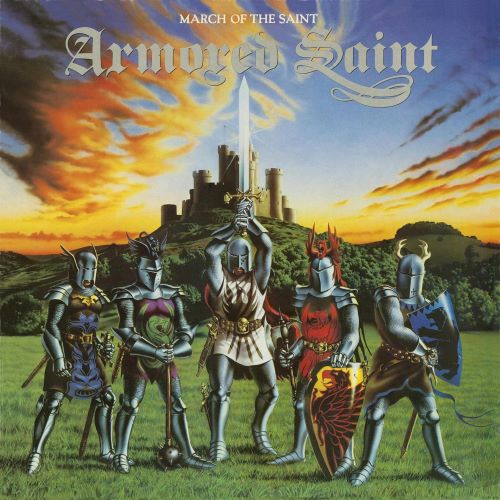
This week it’s back to 1984 and the debut album from California’s Armored Saint. They were a band without a scene to really “fit in” with, but they would go on to claim their own territory in the overflowing landscape of 1980’s heavy metal.

Armored Saint – March Of The Saint

Released September 26, 2984 via Chrysalis Records

My Favorite Tracks – March Of The Saint, Glory Bound, Can U Deliver

Armored Saint formed in 1982 in the US music epicenter of Los Angeles. They released a self-titled EP in 1983 and then quickly turned around to record their debut full-length. The band was nearly struck with member poaching just as they were getting off the ground, as singer John Bush was offered the vocalist position in Metallica. Bush turned that role down to focus on Armored Saint, creating one of heavy metal’s biggest “what if” moments.

The band on the debut comprised of Bush, Dave Prichard and Phil Sandoval on guitars, Joey Vera on bass and Gonzo Sandovol on drums. They had played together in various forms through their school years and this band naturally formed out of those prior relationships.

The album was produced by Michael James Jackson, who was fresh off a turn at the helm of the Kiss albums Creatures Of The Night and Lick ‘Em Up. It was not to be a match made in heaven, as Jackson was indifferent about heavy metal and the record label was micromanaging the band’s sound to create a polished offering that they thought would appeal to the masses. Joey Vera relays in this 2006 interview with Full In Bloom that the recording process of the debut left Saint disillusioned about the album’s mix and heavily in debt due to excess time spent in the studio. Vera said in the interview that the band was still in debt from that record all those years later.

While the recording process and the business end of music left Armored Saint worse for the wear, there still is an album of music to discuss here. In practical terms, this band were the heaviest thing coming out of Los Angeles, as thrash was mainly a Bay Area construct. Armored Saint didn’t really fit any of the burgeoning subgenres – they were far too heavy for hair metal and not fast enough for thrash. This could be described as US power metal, as that sound could fit a number of bands. Overall, Armored Saint were just plain old heavy metal, though.

Today’s album comprises 10 tracks at 38 minutes of runtime. The album was given a 2006 reissue by Rock Candy with a few demo bonus tracks added on but today I’ll focus on the original offering.

March Of The Saint

The opener offers a tie-in to the band’s name and is a decently paced roller that offers some nice melodic guitar accents to keep things interesting. The band’s true strength is revealed early as John Bush offers a full-throated, powerful delivery that stands apart from the all-out scream that many metal singers were going for at the time. The lyrics serve up a “war and metal” analogy that was par for the course in heavy metal at the time but it’s executed nicely here.

Can U Deliver

The next song did get a single release and also got a fair bit of traction on MTV. A quick look at its Spotify played count indicates over 8 million streams, dwarfing the six figure counts of all other songs on the album. This song did catch on, that’s for sure.

This song does sound like it straddles a line between metal and sleaze rock. The music itself is crisp and solid, though the production is a bit thin. The song is about being out on the prowl for a one night stand, though the lyrics are fairly vague and don’t descend into self parody.

Mad House

This one is a good banger of a track that’s maybe again a bit hampered by production but the song still comes through. It’s all about going to that place everyone knows is crazy and having a good time. It should not be confused with the 1985 song Madhouse by Anthrax, of course, though John Bush would later have the opportunity to sing that one too.

Take A Turn

Here’s a ballad or perhaps ballad-like offering. The song does add enough drive and pace to keep it out of total ballad territory. It’s a hook-up song, all about “taking a turn with me.” It’s again kind of vague and the lyrics aren’t immature or silly. The song’s execution keeps it from being something that could derail the album’s momentum.

Seducer

It’s another “sex” song as the title clearly indicates. Again the song works in the context of the album with Armored Saint’s able playing and John Bush’s visceral delivery. It seems like a song written to fit into the 1980’s scene but Armored Saint retain their identity on it rather than going all the way with the attempt to “fit in.”

Mutiny On The World

We exit the realm of hooking up for a bit and dive into one of metal’s tried and true archetypes, that of rebellion. The verses lay a bit quiet and let John Bush snarl through them. It’s a remarkable track that again would have benefited from a beefed-up production.

Glory Hunter

The next track really shines and feels like a truly realized and fleshed-out concept. It’s a dark tale of battle against native tribes set to music that certainly slots in well in that US power metal slot with some shades of the old familiar NWOBHM. It’s a bit of a shame the band weren’t allowed to operate more on this theme.

Stricken By Fate

The song is a tale of lovers broken apart and the wish for vindication or even revenge. The music is totally on point and keeps the album feeling cohesive. Some really cool guitar work on this one too.

Envy

Another kind of scorned lover track, this one sees the narrator looking at his partner moving on with someone else and the envy associated with that. It’s done pretty well musically and it’s a bit more of a mature and complex look at feelings that are often expressed simplistically in music.

False Alarm

The album closes on a pretty heavy jam that kicks the pace up a few notches. There isn’t much going on with the lyrics, it feels like a group of words thrown together to be able to use “false alarm” as a chorus. But the song hits the right spot even without a plot.

March Of The Saint is quite a triumph in that Armored Saint were able to forge a sound and identity even with being pushed by producer and record label to record songs that fit with the music of the time. The album remains cohesive and and gets through with all of the tracks feeling like they fit, nothing comes off as filler here.

The album was not a huge success commercially, though it did sell 125,000 copies in its first year of release and gain some buzz with Can U Deliver getting MTV play. Armored Saint would often find themselves with some hard luck in terms of trying to make it, but on the other hand they did get their name out there and are one of the more respected institutions in US heavy metal.

It would be a long and winding road for the band, who would suffer the loss of guitarist Dave Prichard to cancer in 1989, then go inactive in 1992 when John Bush took the open Anthrax singer job. Saint would regroup through the 2000’s and press on with albums and touring and also retaining their core line-up sans Prichard.

But in the framework of 1984, Armored Saint were a new force on the scene. They might have suffered a bit from not having a “scene” to be a part of when things were going either hair or thrash, but they were able to establish their own identity and set themselves on the path to becoming one of America’s classic metal acts.

Joe Walsh – Rocky Mountain Way

I am still behind on getting posts caught back up, I’ll just skip things here and there until I can truly get caught up and then ahead. No real big deal, I don’t guess.

Anyway – today I want to have a look at Joe Walsh’s breakout song from his solo career. While Walsh’s marquee performance will always be tied to the Eagles and usually Hotel California, there’s little doubt that Rocky Mountain Way is one of a small handful of Walsh’s landmark solo cuts.

The song comes from what turns out to technically be Walsh’s debut solo album The Smoker You Drink, The Player You Get in 1973. The album was billed as Joe Walsh, though the players actually went by the name Barnstorm, the group Walsh formed after quitting The James Gang in 1971. Barnstorm released a self-titled record in 1972, which was well-received critically but not a hot seller.

This album would do better business, hitting number 6 on the Billboard Pop Albums chart and receiving a US gold certification. Rocky Mountain Way hit number 23 on the Billboard Hot 100, Walsh’s first true chart success.

Rocky Mountain Way is a blues-rock jam with one big, fat riff guiding it along. The song meanders along at an easy pace, it is not in a hurry to go anywhere and we are all the better for it lingering around. Walsh also employs the talk box in the song, while its use is panned in general it is a great fit in this particular song.

Lyrically, the song is about how Joe’s move from The James Gang to going solo was a good move for him. It was his way of pushing back the regret of leaving a band with success to risk it on his own. Joe relays in a 2021 interview with Howard Stern (embedded below) that he was mowing his lawn in Colorado when he was “knocked back” by the majesty of the Rocky Mountains in the background. He went into the house, suddenly having words for the music he’d already recorded, and also amusingly left his lawnmower running while crafting the lyrics. Walsh also calls this song the greatest solo song he ever wrote in the interview.

Over the years the song has remained as a staple of rock radio and is ever present in entertainment. Baseball’s Colorado Rockies play the song after every home win (insert jokes here), and the Denver Broncos use a Godsmack cover version during their games. The song has appeared in several movies and is also a part of the Grand Theft Auto franchise, having appeared on the rock radio station in GTA 4.

Rocky Mountain Way is Joe Walsh’s most-played live song, according to setlist.fm. Not only that, but it ranks number 8 in terms of the most-played songs on The Eagles list as well. The song even ranks in another artist’s list with no relation to Walsh – Canadian rockers Triumph covered the song and played it a lot on tour and it secures the number 6 spot on Triumph’s live list.

There’s little doubt that Joe Walsh will be most remembered for his contributions with The Eagles, not the least of which is his part in the solo that closes out Hotel California. But his solo material also deserves consideration, and Rocky Mountain Way is perhaps the top of the heap in terms of magnificence. That fat riff places you right in a smoky dive bar of days past and is one of music’s great moments.

Tom Petty – Love Is A Long Road

Time now to look back on a song that’s 35 years old now and was never a single in the first place, but just last month got about the biggest bump in visibility a song could possibly get.

Tom Petty released his first actual solo album, as in not entirely written and recorded with his band the Heartbreakers, in 1989. Full Moon Fever was a smash hit, heading to five times platinum sales in the US and generating three Top 40 hits that are some of Petty’s most recognizable songs. Petty would work with his Traveling Wilburys buddy and ELO mastermind Jeff Lynne on much of the album, though today’s song was co-written with fellow Heartbreaker Mike Campbell.

Love Is A Long Road cuts a familiar vibe for late ’80’s music. There is a bit of synth but the song is otherwise standard rock and easily at home on a Tom Petty record. It’s a tale of getting into somebody but finding that the actual act of being in love and carrying on in that manner is a lot tougher than simply falling for someone. It’s another take on the mentality of “the chase is better than the catch” and it’s certainly a part of life. Mike Campbell stated that he was inspired by a motorcycle when writing the song.

This song didn’t get released as a single but it was the B-side to Petty’s massive hit Free Fallin’. Radio stations wound up putting on the other side of the 45 record and this one got a pretty decent amount of airplay, so much so that the song wound up charting at number 7 on the Modern Rock chart. That’s quite the feat for something that didn’t get the promotion machine of a single behind it.

If that was the end of this song’s story it would be fine enough – charting like that as a B-side is impressive. But 34 years after the song’s release it would gain one hell of a second life, becoming attached to the hottest entertainment property in existence.

In early December of 2023, Rockstar Games released the first trailer to Grand Theft Auto VI. To say this is a hotly anticipated game would be a vast understatement – it is easily the most anticipated video game of all time and probably the most widely anticipated entertainment release of any form, ever. The prior game raked in over a billion dollars in its first 24 hours on sale and it will likely be a 12 year gap between it and this new installment.

Rockstar have a history of using the right music to market their games as well as programming in-game radio stations with solid hits. In this case, Petty’s song was chosen to feature in this first trailer, which garnered over 120 million views in its first few days online.

This spotlight sent Love Is A Long Road into hyperspace. The song saw a nearly 37,000% increase in Spotify streams after the trailer released, and digital sales propelled the song to number 7 on the US Rock Digital Song Sales Billboard chart.

Merely being attached to the GTA 6 hype is pretty monumental for a song of this age, no matter the impressive stature of the artist in question. But there’s more to this pairing of Tom Petty and Rockstar Games. GTA 6 will be set in a fictionalized version of Florida, also Petty’s home state. The vibes of Love Is A Long Road perfectly fit the Florida-ized game and also call back some to GTA’s prior installment set in Florida, the total ’80’s atmosphere of GTA Vice City. It’s a multi-tiered stroke of genius to use this song to plug the game.

Love Is A Long Road is a nice song from a fantastic album, and here we are all these decades later with the song front in center in a way no one would have dreamed of way back when. A shame that Tom isn’t around to see his handiwork, but it will be fun to cruise the streets of Vice City in 2025 with this song playing on the system of whatever stolen car I’m in.

Justin Townes Earle – Yuma

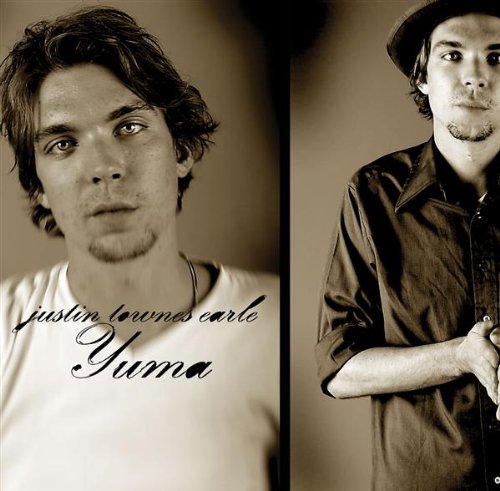
This week I’m having a look at the debut offering from a second-generation artist who would embrace the independent spirit of music and leave a mark matched by few in his career. His career and life were tragically cut short, but his music still resonates today, just days after what would have been his 42nd birthday.

Justin Townes Earle – Yuma

Released February 8, 2007

My favorite tracks – Yuma, I Don’t Care

Justin Townes Earle was born in the country mecca of Nashville, Tennessee in 1982. He was the son of Steve Earle, who was just getting his alt-country career rolling when Justin was born. Justin’s middle name Townes was Steve’s tribute to good friend and mentor Townes Van Zandt. Justin would get his start in music early on, performing with a few Nashville bands as well as his father’s group the Dukes.

By 2007 Justin was ready to venture out on his own and he decided to cut an EP to have for sale while on tour. Yuma was the result. This was recorded entirely by Justin, simply him with his guitar. The release was initially self-funded and distributed, though Justin would soon sign a deal with Chicago-based Bloodshot Records and Yuma would be repressed by the label. Bloodshot would become a major player in the alternative and independent country scene and Justin would be one of its most prolific artists.

This will be a brief rundown today, as we are dealing with a pretty simple premise – 6 songs in 19 minutes. Justin recorded it over a weekend and it won’t take long to go through the particulars, though there are some noteworthy moments here.

The Ghost Of Virginia

The opener kicks off with a tall tale about a ghost train. In this case the train was Virginia, which apparently hauled Confederate troops during the US Civil War between North Carolina and Virginia. Ghost train sightings were something of a phenomenon in early railroad America and other countries. It’s an older thing of course but it’s a pretty interesting twist on the ghost thing. Train songs are literally a dime a dozen in country music, but Justin does a nice job here specifically describing the haunting visage of the ghost train.

You Can’t Leave

The second tune sees Justin strum fairly upbeat on the guitar, but the song is pleading with his woman not to leave him. Can’t have a country album without some heartbreak between couples, it’s pretty well mandatory. Hopefully it worked out for all involved in this likely hypothetical situation.

Yuma

The title track is the EP’s centerpiece and is a very sad and heartbreaking tale. In it a young man had tragically lost his girlfriend and the pain of the loss, as well as the man’s own vices, lead him to jumping from a ledge and claiming his life. Yuma recounts the man’s last hours as he has some drinks, phones home one last time, mails a postcard to home which is confirmed to be Yuma, and then succumbs to his pain and leaps off of a building.

Yuma is a very tragic song, spelling out in detail the man’s struggles against a backdrop of mundane happenings. At one point Justin remarks that “it wasn’t so much the girl, as the booze and the dope.” While Justin’s 2020 death would be due to an accidental overdose, it does feel sadly prophetic in a way hearing the song after Justin’s death.

I Don’t Care

Here Justin takes up the role of a drifter, someone with nowhere to go and looking to be anywhere but where he is. It’s a solid tale of being stuck where you’re at with no way to get where you want to be, which is anywhere else. The drifter’s lament is another highlight of this studded EP.

Let The Waters Rise

Now we get to a bit of a funny tune, at least funny in how it’s worded. Here the guy’s gal is apparently two-timing, so he wishes for the waters to rise and flood the place out. It’d be a bit overkill if applied literally but it’s quite nicely done in figurative speech here.

A Desolate Angel’s Blues

The EP wraps up with a solemn story of a person “going home.” While the imagery comes off like someone being baptized, this guys seems like he is preparing to actually drown to death. It’s a haunting yet fitting way to cap off the album.

Yuma was exactly what Justin Townes Earle wanted – a record to sell at his shows and it was a vehicle for a quickly rising star. He would soon have a record deal and also very soon be swept up in the issues of country music at the time – that is, a disdain for mainstream Nashville offerings and a desire for a savior from the independent ranks. While the anti-Nashville crowd had a figurehead in Hank Williams III, it was JTE who was often pegged as the messiah of the new country movement.

Justin did not seem pleased by or suited for such a christening. He would record 8 full-length albums, most well-regarded and praised, but it would not be JTE who would deliver a new, purer form of country that would gain mainstream attention. Not that any of us knew this in 2008, but the savior’s name was Sturgill Simpson and he was still a few years away.

For Justin, his career would be noted for his blending of country, folk, blues and soul influences at various points through his albums. He wasn’t the savior a lot of independent country fans wanted, but he was more than good enough to be regarded as a songwriter and storyteller often without peer. Yuma was the start of 12 years’ worth of releases that would carve a legacy that lives on even after Justin’s tragic demise.