This was supposed to be last Friday’s post. Go figure that a holiday and an extra day off would cause me to miss a post. But I digress.
Here we are. This is my weekly series where I pick five of my favorite songs from a given year. This time around, that given year is 1991.
It’s safe to say that 1991 is the most important music year of my life. I have all the love in the world for 1984, as I put on display a lot of last year. But nothing was as earth shattering and life altering as everything that happened in 1991.
It wasn’t just everything that happened in music, either – I turned 14 and started my freshman year of high school in 1991. In fact, my birthday was about a week after Metallica released their megalithic self-titled album. Everything was changing fast and I honestly wasn’t even on top of it all – both in life and in music. It would all come together eventually (in music, not in life…)
But today’s exercise is pretty simple – I will select five of my favorite songs from the year. Five is barely a drop in the bucket in terms of the music of 1991, but I’m going to keep this series on the rails and just handle it like any other year. If/when this site gets to 2031 I will dedicate the bulk of that year’s posts to reminiscing about 1991, and probably in a big blowout way that dwarfs even what I did for 1984. Something to look forward to in 5.5 years, I guess.
Sepultura – Dead Embryonic Cells
We kick off with this slice of obliteration from the album Arise, often regarded as the Brazilians’ magnum opus. It is equal parts thrash precision and a savage beating, with Sepultura crafting a sound that would serve as a bridge into extreme metal. The song is about being born in a world that is essentially dead and the brutality of the music captures the sentiment perfectly.
Skid Row – Wasted Time
The closing track from the seminal Slave To The Grind album is a ballad by which the bulk of other ballads can be judged. This haunting tale captures someone in the throes of drug addiction, the song was written about former Guns N’ Roses drummer Steven Adler. Sebastian Bach’s vocals soar here and everything comes together for a song that is simply beautiful.
Ozzy Osbourne – No More Tears
The tides of music were shifting in grand fashion in 1991, but the Prince of Darkness could still be counted on to deliver a worthy tune. Ozzy had a bit of a renaissance year in ’91 with the No More Tears album being a huge hit and this title track becoming one of his several signature tracks. This song is the twisted tale of a serial killer, but not told in open terms. Still it’s ominous and creepy.
Mötley Crüe – Primal Scream
Hair metal was being cast out by the second half of 1991, but no one gave Crüe the memo. They put out a greatest hits set with a handful of new songs on it, and this new track was electric. This was heavy, gritty and pounding, seeing the band move up a weight class in the heavy department. It foretold a massive new decade for Crüe, which did not pan out at all, but this kick ass song was a welcome drop in the minefield of ’91.
Carcass – Corporal Jigsore Quandary
By ’91 Carcass were on their third album and had shifted their sound from grindcore to death metal. This prime cut saw the band incorporate a bit of technicality into a very smooth death metal vehicle. And while the title and lyrics are overly wrought, as usual for earlier Carcass, the song is essentially about someone putting a human body back together. It is likely that the person doing the re-assembly is the same person responsible for the body’s dismembered state.
And that does it for five songs from the crazy year of 1991. I had originally thought picking a further five songs as I did for 1984, but in the end I decided against it as I want my focus to be on pushing on with the series.
Next week – I was originally going to restart album posts, but last week’s historic gigs have given us a handful of songs to go over so I will spend a few posts looking at stuff from both the final Ozzy show and the Oasis reunion instead. And I’ll press on with this, jumping in to 1992 where rock and metal were off to the races in many different directions.
So Ozzy Osbourne and Black Sabbath’s final show this past Saturday took up a lot of my attention, but a very historic gig happened just a day before. Cardiff, Wales was ground zero for the thing a lot of people thought would never happen – Oasis are back together, and have played their first (and second) show in 16 years.
Noel Gallagher did what he seemed dead set against doing – rejoined with brother Liam Gallagher and brought Oasis back for what has been called a “victory lap.” This tour does several more shows in England and a few in Ireland before hitting up North and South America and Australia, Japan and South Korea. Nothing has been confirmed for next year yet, but a tour of the European continent as well as a possible 30th anniversary show at the Knebworth grounds are strongly rumored.
Joining the Gallagher brothers are a handful of Oasis past members from various points, as well as a new face. Original member Paul “Bonehead” Arthurs is back, as are 2000’s era guitarist Gem Archer and bassist Andy Bell. Debuting on drums is Joey Waronker.
This is the part where I mention that I am one of the many unlucky ones who did not get a ticket to any of the shows (I only tried for Chicago). In all reality I’m ok with that now since I have a mortgage to wrestle with. I will suffice with whatever live album eventually comes from this, as well as the mountain of bootleg vids and audio already out there.
Anyway, the Oasis machine is back in business and business sounds pretty good. There are a ton of clips and vids from the shows out there. Quality varies by phone and angle, of course, but in the better-filmed clips I have to say the band is sounding really good. They sound vital and hungry, not like they’re just out doing a cash grab. While they are raking in money hand over fist and have truckloads of merch for sale, they came out and made sure people got a show worthy of the premium ticket prices.
There isn’t a whole lot more to say right now – the shows will (most likely) roll on, hopefully they don’t have to pause for some unforeseen issue and hopefully they hold it together and make it through the gigs. Word on the street is that they have contract clauses that make it very, very financially un-viable to cancel shows due to old fashioned brotherly love, so I would assume the gigs go on as planned.
I know that some people are unhappy that Oasis are back together, but judging from the live clips I’d say plenty more are very, very happy. Oasis themselves seem happy to be back, and I’m quite happy they’re back at it even if I won’t take it in. Here’s to ya.
Note – I am putting a few video clips in, no clue how long these will stay up
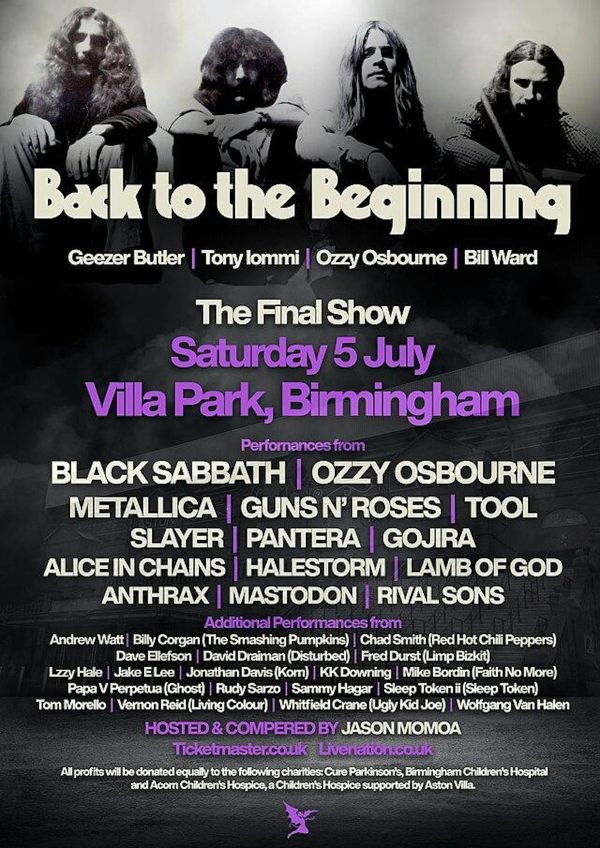
Last Saturday on July 5th, Ozzy Osbourne hosted a special event in his hometown of Birmingham, England. This concert, dubbed “Back To The Beginning,” was a huge, star-studded affair that marks Ozzy’s final live performance.
This massive show was staged at Villa Park, the home of Aston Villa Football Club. Given attendance was 40,000. The event was also streamed, though it was a two-hour delay. This stream was how I took the show in. The event raised a considerable amount of money for a handful of Birmingham area charities.
There was a lot of buzz going in to the event – many wondered if Ozzy would be able to perform at all. The answer was a resounding yes. The concert’s somewhat unusual itinerary was also a source of concern – most bands were getting very short 15 minute sets with a bit more time afforded to a few marquee acts at the end. Many wondered how the show was going to go off with all the logistics involved, but a rotating stage and other accommodations made it run like clockwork.
A final source of controversy revolved around an act that Sharon Osbourne said was thrown off the show. This is a whole story unto its own so I won’t get into it here as it’s not relevant to the show itself. As of my writing in the afternoon of Sunday, July 6th, we do not yet know the identity of the jettisoned act. Sharon is supposed to reveal this information at some point soon.
Tom Morello of Rage Against The Machine fame was the musical director for the event. The show also had a host – you could be forgiven if you thought you were supposed to acknowledge your tribal chief Roman Reigns as the host, but no that was his clone, actor Jason Momoa.
This massive concert lasted ten hours so it was a hell of a time commitment. For me I had to miss the first portion of the stream as I had stuff to do around the house, like mowing the lawn in 85 degree hell heat. I picked up on the first all-star jam and watched through to Metallica’s first song, when I had to split because I was due at the theater for a showing of This Is Spinal Tap. Thankfully there was a few days of replay time for the stream so I was able to catch everything I missed, especially the main event of Ozzy and Black Sabbath.
I won’t run down the entire show as that would just be wasting words for the sake of it. I thought all of the bands did fantastic. For such a huge logistical challenge, most everyone sounded fine and the few hiccups there were weren’t glaring or show-ruining.
The time between the brief set changes was filled with video clips of fans as well as some tributes from musicians. Those included Dolly Parton, Def Leppard, AC/DC, Elton John as well as Judas Priest, who were unable to play the show due to already being booked for the Scorpions’ 60th anniversary concert the same night. Jack Black and Fred Durst each sent in pre-recorded performances of Mr. Crowley and Changes, respectively.
For a complete rundown of who performed what, the Wikipedia article on the show is honestly the most concise and easiest to read of the lists out there.
Both of the all-star jams were of special interest. The first one was especially cool as Jake E. Lee took the stage after not having contact with Ozzy in decades and just eight months after being shot multiple times in a botched robbery attempt. It was also nice to hear two songs from The Ultimate Sin album, a record that Sharon especially has run down over the years. Lzzy Hale did a fantastic job singing the title track from that album, it was one of the highlight performances of the show. Later in that same set, Whitfield Crane of Ugly Kid Joe came out and did a stellar rendition of Ozzy’s Believer. And the first all-star set concluded with a somewhat unlikely figure, as Yungblud performed Changes in one of the most talked-about and pleasantly surprising moments of the show.
The second all-star jam opened with Billy Corgan, K.K. Downing and others offering up a Judas Priest song, then having at Sabbath’s Snowblind. Sammy Hagar then came out with Vernon Reid of Living Colour for Flying High Again and Montrose’s classic Rock Candy. Following a rendition of Bark At The Moon from Ghost’s singer Tobias Forge (I don’t know what he’s calling himself these days), we got what was, at least to me, a surprise guest as Steven Tyler took the stage. Tyler sounded great and while his guest shot was only three songs, it does give hope that he might be able to pilot Aerosmith through their own farewell show of some sort.
After several hours of bands and all-star jams, it was finally time for the show’s reason for being. There wasn’t a ton of build-up or anything – after the set change, Ozzy was on hand for his solo set. Ozzy came out from the stage floor in a huge throne from which he’d perform. He is left unable to walk after Parkinson’s disease and spinal injuries. His band included a cast of his former associates, including Zakk Wylde, Mike Inez, Tommy Clufetos and Adam Wakeman.
Ozzy’s set comprised five of his classic songs – I Don’t Know, Mr. Crowley, Suicide Solution, Mama I’m Coming Home and the ubiquitous Crazy Train. Everything went off without a hitch and Ozzy sounded really good despite his physical condition. While the affects of age and debilitation are there, he still sounded strong.
And Ozzy was ever the showman – as he has always done, he implored the crowd to get into it by yelling, showing their hands and the like. The Prince of Darkness is clearly able to still command an audience. The power and energy of an Ozzy Osbourne performance was present and accounted for, any concerns about his ability to make it through the set vanished as he ruled over his domain.
After the solo set there was one more set change, and it was time for the final event – Black Sabbath, with all four original members present. While Black Sabbath bowed out on a farewell tour in 2017, drummer Bill Ward was controversially not included in that tour. Everyone had expressed regret for that decision in the years since, and for this final bow, Bill Ward was on hand alongside Tony Iommi, Geezer Butler and Ozzy Osbourne.
Sabbath performed four songs – War Pigs, N.I.B., Iron Man and Paranoid. Before going into Paranoid, Ozzy mentioned that it would be Sabbath’s final song ever and thanked the fans for everything over the years. With the stone cold classic knocked out, it was all over.
The film crew chose to focus on fireworks over the stadium rather than what was going on with Ozzy. Apparently the other members of Sabbath gave him a cake to commemorate the occasion. It was kind of odd not to show any real interaction with the rest of the band, but I guess those fireworks weren’t cheap.
And with that, Ozzy Osbourne’s live performance career is now over. He has mentioned still being able to record so we’ll see if the book’s shut or not on his studio output yet. Sharon Osbourne did relay that she is now happy to leave the music industry, so we’ll see if Ozzy will get to recording or not.
I will admit I was a bit concerned at how this event would go off, but after watching it I have to so it went off great. It was a fitting tribute to a man and band that have been the influence to several generations of heavy metal, rock and beyond. It is sad to think that the Prince of Darkness won’t be electrifying stages and terrorizing the populace, but this man definitely earned his rest at this point. Cheers to you Ozzy, may your retirement suit you well.
Super quick one today – kind of pointless post but I figured I’d take a moment to discuss this.
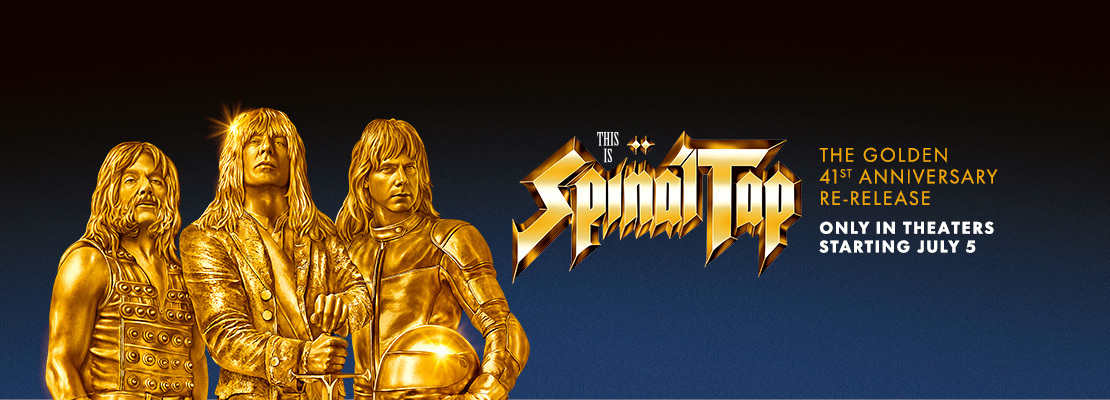
We are a few months away from the release of Spinal Tap II: The End Continues. This flick will be the sequel to the much-loved 1984 masterpiece This Is Spinal Tap, the great mockumentary that put rock and metal under a hilarious and critical lens.
While Spinal Tap II isn’t coming until September, there is a treat coming this weekend for fans. The first film This Is Spinal Tap will get a limited theatrical run over the July 4th holiday. This will only be for the few days following the holiday as far as I know – one local place is showing it on the 5th, 6th and 7th.
There are a few bonus features tossed our way, in case the thought of watching a 41 year old film you’ve seen dozens of times isn’t that appealing. First, Rob Reiner will reprise his role as Marty Di Bergi to offer up a new introduction. And we will also get a sneak preview of the new film. I’m sure the new bonus footage is brief, but it’s a fair little bit of a draw to go hang out in a movie theater and be treated to the fantastic film again.
Obviously since I’m talking about this I have my tickets for the Saturday showing and will be there. I won’t bother doing a report on it, the new snippets don’t really warrant their own post and I’ve already talked about the original film. I never need an excuse to put the movie on so watching it again is no problem for me. And this will make a busy Saturday for me, as Ozzy Osbourne’s final show is also happening that day and I’ll take that in via streaming as well. I’m glad I have an extra day off to process all of this heavy metal madness.
And that is about all I have to say on it. I’ll be at the theater this coming weekend to enjoy one of my favorite films, and I’ll be there again in September to enjoy the sequel. I know some people are cynical about the new film, but I’m old and tired and I’m ready to just enjoy something. I trust the people involved with the film to deliver something that entertains me for the film’s runtime. I doubt it will be as good as the original, but few things are. I’m sure there will be plenty in the new film to enjoy.
This coming weekend will feature the final performance of Ozzy Osbourne, an event I intend to cover next week. With that I figured I’d get into a song of his as a taster for the weekend.
Bark At The Moon was the title track from Ozzy’s third album, released in 1983. It was also the album’s lead single. The song hit number 21 in the UK and 12 on the US Album Rock Tracks chart. The album would go on to sell over 3 million copies in the US.
The road to Bark At The Moon was not smooth. In 1982, beloved guitarist Randy Rhodes tragically died in a small plane accident with Ozzy looking on. Ozzy would cycle through a few guitarists to replace Rhodes on tour, but later decided on Jake E. Lee for the album. There are some crazy stories from this time, one being how George Lynch was initially hired for the role and was then unceremoniously cast aside in favor of Lee. Another is Jake Lee’s royalty situation – he and Bob Daisley were forced to take buyouts on the album to hand all songwriting credits over to Ozzy. There is of course more to those stories but those are for another time.
Though the loss of Randy Rhodes is immeasurable, Ozzy would be off to the races with Jake E. Lee. Bark At The Moon features plenty of kinetic guitar work, keeping it in line with the guitar god legacy established on the first two Ozzy solo albums. Lee was certainly able to put his stamp on things, even if he didn’t receive songwriting credit for the work he did.
The music video features Ozzy committed to an asylum and being pursued by a werewolf. It’s goofy for sure but pretty fitting of the song and of MTV in those early years. One funny bit of trivia – Carmine Appice appears in the video as the drummer, though it was Tommy Aldridge who played on the album. Appice did not have a long stint in Ozzy’s band – he was dismissed and Aldridge returned for the rest of the tour.
One final bit of lore – Bark At The Moon features in a video game I bring up a lot, it being my favorite of all time – Grand Theft Auto: Vice City. Well, at least it did feature for awhile. It was on the original Playstation 2 release of the game. After some time Sony Records had a series of disputes about licensing, and Bark At The Moon was removed from the game’s many re-releases over the years. It was a nice addition to the V-Rock metal station and I do miss driving around Vice City with it blaring on the car stereo.
So all these years later we come to the end of Ozzy’s career, at least in live performances. Jake E. Lee is slated to perform at the event – the specifics of his performance are unknown and it’s very unlikely he’ll play alongside Ozzy. Whatever the case, we should get a fitting final rendition to close out one of rock and metal’s craziest careers.
All right, it’s time to continue on with my long-running series where I pick five of my favorite songs from a year. Not necessarily my five definitive favorites, but five of my favorites. As always.
This year is 1990. We have left the golden decade of the 1980’s in the dust and music was shaping up to be a hell of a lot different. Even though the symbolic marker of the change was 1991, there was plenty of evidence that things were getting really different just a year before. Music was moving into other territories and a lot of the 80’s standards were about to be left behind. I was entering my teenage years just as the decade kicked off so I was in prime position to take in these changes, even if I didn’t quite know what all was going on right off the bat.
That’s about enough of the lead-in, this isn’t a comprehensive analysis of what happened in the early ’90’s, this is just a list of five songs I really like from 1990. Let’s have at it.
Megadeth – Tornado Of Souls
By 1990 I was moving way more into heavy metal as a whole, it was becoming my favorite form of music and that hasn’t changed 35 years later. Megadeth released their magnum opus Rust In Peace this year and it is in my top five of favorite albums of all time. A lot of the album if full of nuclear war and the government sucks kind of stuff that Dave Mustaine is very fond of, but this song is more personal and involves past relationships and rebounding from them. And of course it’s chock full of guitars, the kind of stuff only Mustaine and Marty Friedman could get up to. One of metal’s greatest songs.
Kreator – People Of The Lie
We’ll stay with thrash and this time visit the German titans on their fifth album, the excellent Coma Of Souls. Here Kreator aimed their sights at Nazis, the scourge of their own country. The song is a powerful rant against the shallow stances of Nazi believers. Sadly the song has become much more relevant today, but this was an excellent thrasher with a great message back in the day.
The Black Crowes – She Talks To Angels
Rock was by no means dead in 1990, but it sure was changing. One face of that change was the sudden ascent of the Black Crowes, a blues-based/jam band sort of prospect armed with a cache of catchy, infectious and effective songs. My favorite of the bunch is this somber ballad about a gal who is caught up in a drug addiction. While the song is not based in much reality, it is a haunting and touching affair that rings true no matter what the calendar says.
AC/DC – Thunderstruck
Ok, so not everything changed in rock in 1990. The good old standard AC/DC arrived on the scene yet again, this time armed with the stellar Razor’s Edge album. The opening track and lead single became one of the band’s hallmark songs, yet another addition to their playlist on classic rock radio that is played to no end. It’s easy to hear why – this is one massive slab of rock badassery. It’s guitars upon guitars, pounding drums and screeching, which is just how I like it.
Judas Priest – Painkiller
So Priest didn’t have the best latter half of the ’80’s – Turbo and Ram It Down aren’t “bad” albums per se, but they aren’t highlights of the Priest catalog either. The band reconvened as the decade changed and HOLY SHIT did they find the heavy metal again. Painkiller is a blast of molten hot metal unlike that which the band had even done to this point, despite being one of the signposts of the genre. This song and whole album will rip your face off, and that’s exactly how we like it around here. And by we I mean me, as I’m the only one typing bullshit on this site.
That wraps up 1990. Suffice to say, next week’s post will be somewhat important, as 1991 will be upon us. It was such an important year to music as a whole and my own musical fandom that it might require something a bit special. We shall see next week.
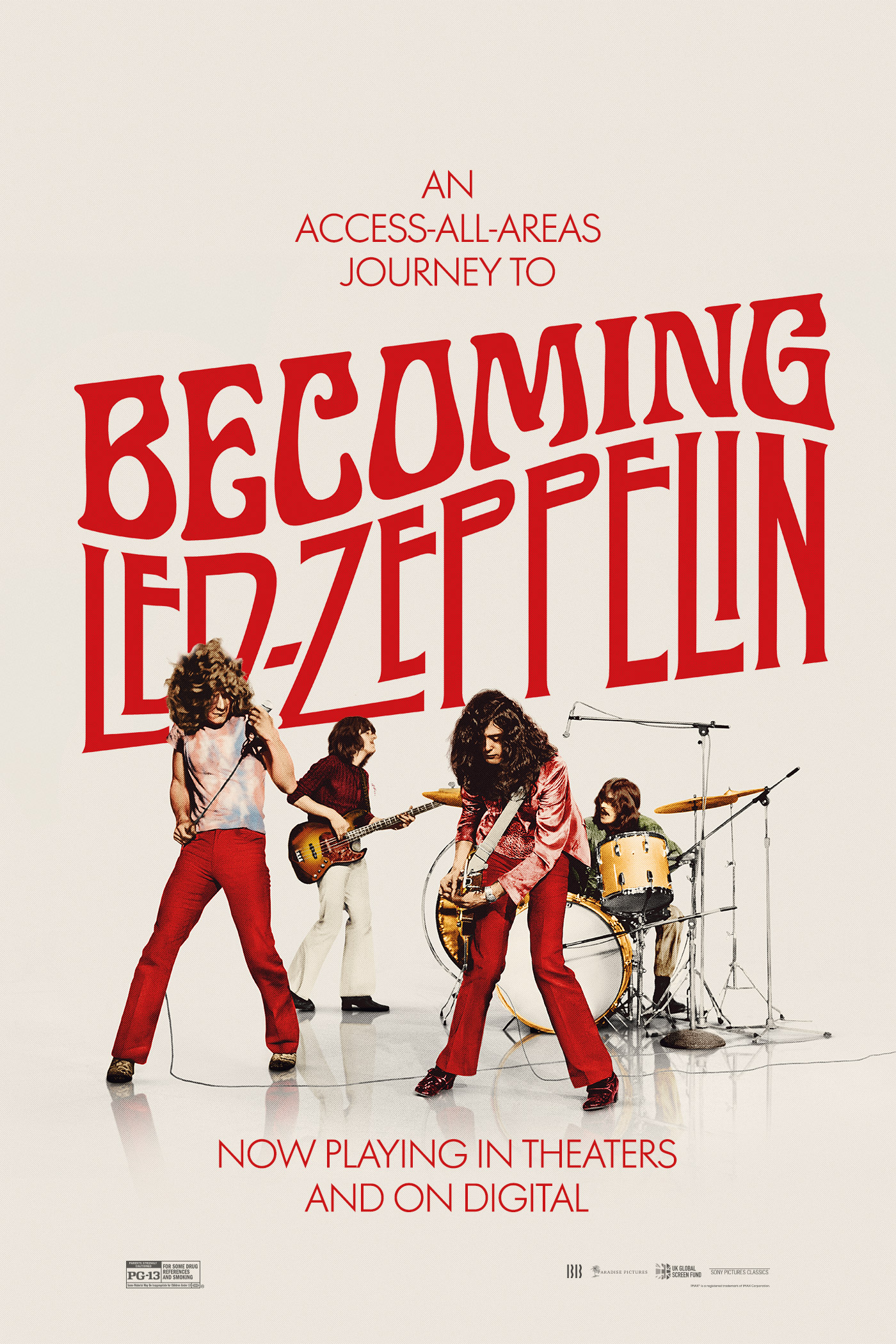
Earlier this month we got a real rarity – a Led Zeppelin documentary with the full cooperation of the surviving members. Becoming Led Zeppelin was filmed a few years back and, after some theatrical screenings, hit streaming services earlier this month.
The film was put together by Bernard MacMahon and Allison McGoutry, who had previously worked on a music series called American Epic. The series had attracted the attention of the former Zep members, two of whom can be famously prickly about discussing their past. But everyone was on board for this specific treatment, which as far as I know is the first and only Zep documentary done with the participation of Page, Plant and Jones.
This documentary is not a tell-all that follows the band’s entire career. This focuses on what the members were doing in the years before Zeppelin and then runs through the release of Led Zeppelin II and a few landmark gigs from that time frame. And I’ll say that I prefer it this way – I honestly was not terribly familiar with Jones, Plant or Bonham’s pre-Zep days and this was a nice deep dive into their early musical forays. Page I had more knowledge of but it was still nice to have the run down.
What we get is the three surviving members saying their pieces in separate interviews. Some people lament the lack of interaction between the participants but I wasn’t concerned about it. John Bonham is represented by archival interview recordings from 1980, not long before his death. While the three living members don’t speak with each other, they do seem to listen to Bonzo’s parts at times.
I don’t know if this film is for people not familiar with Zeppelin – the pre-Zep days are covered fairly in-depth, but then the film moves fairly quickly through the key events of the band’s formation and rise to success. I do feel like some knowledge of the band’s progress might be warranted to fully appreciate this doc, but it’s entirely possible that folks who aren’t that familiar with the band might still get something out of this.
The main criticisms of the film I see are the separate interviews and also that the film ends “abruptly” without continuing on through their whole career. I’m personally fine with how it was done and I don’t share these criticisms. The only negative point I have to mention is that the audio is kind of hosed – the music performances are LOUD and the talking audio is very, very quiet in comparison. This might work well in an IMAX theater setting, but my humble home TV is not an IMAX. It can be a bit tough to pick up what British people are saying when the audio is super quiet, and the subtitles don’t always help because they are white and fairly often display on very light backgrounds, rendering them unreadable. I had to actively work my volume control through the film to keep things on the level.
That is my only real criticism. Beyond that, this is a very well-done film that offers a lot of lore for the pre-Zep days and hits the highlights of their first few years. There are several live clips in the film well worth checking out. I don’t know the ins and outs of how previously available some of the music footage is, some of it is billed as available for the first time (at least officially).
I do highly recommend this film for anyone with any kind of interest in Led Zeppelin. It’s wonderful to hear the guys talk about their upbringing and the band’s formation, especially the interview with the long-departed John Bonham. We also get plenty of Jimmy Page showcasing his drive to push for more success and John Paul Jones being along for the ride despite having a successful career as a session musician. And while Robert Plant has at times been reticent to lean on past glories, here he is fully willing to revisit his early days and the formation of the band. His recounting of his tough go of it before Jimmy Page found him is compelling, and his tales of working with Bonzo despite John’s wife totally not being into Robert is funny and heartwarming.
There isn’t much more for me to say – this is a great film on one of rock’s biggest bands, and we get the most compelling part of the story with the early years. This is well worth the watch.
This week I’m going for a bit of an oddball pick for me. It’s originally from 1990 but the song would gain a second life several years after its release through the wondrous mechanism of pop culture.
Blues Traveler got their start in the 1980’s and would offer up their debut album in 1990. It was a self-titled effort and, while it didn’t light the world on fire, the band did get play on college radio and the ball got rolling for them. But Anyway was the lead track from the record and, at the time it didn’t move mountains but did get some buzz on the independent circuit.
Irrelevant to the song but a fun bit of trivia – Joan Osborne provided backing vocals on two songs on the Blues Traveler debut record. This was all a few years before everyone would get famous.
But anyway, Blues Traveler would release a handful more albums up to their set four, released in 1994. This featured the song Run-Around, which became a top ten hit and instantly made the band a household name. The song won a Grammy and the album slammed sales racks for six million copies in the US.
Blues Traveler were now in demand across the spectrum. Their blend of alt-rock and jam band sensibilities gave them a very wide appeal, and one area they became very in-demand was movie soundtracks. Someone could write a decent-sized book on the number of soundtracks that Blues Traveler wound up on in the middle of the decade. The band was so in-demand that their old albums all hit gold in 1995 and movie makers revisited their old catalog for hidden gems to add to their films. This would give But Anyway a second life in a very memorable part in a fantastic film.
In 1996, the Farrelly Brothers released Kingpin. The movie was a dark comedy starring Woody Harrelson and Randy Quaid as an alcoholic, down on his luck bowler and an Amish bowling prodigy, respectively. It also featured Vanessa Angel as a whore and Bill Murray as a total asshole in a performance that should have won awards.
I won’t get too much into the movie but I will say Kingpin is absolutely worth a watch. I just went back and watched it for the first time in a long time very recently, when I knew I was going to cover this song. You’ll laugh, you’ll cry, you’ll make damn sure to pay your rent on time.
Blues Traveler and But Anyway got big billing in the film – the band was featured at the end, dressed up in Amish garb and teaching the Amish village how to throw down. Singer John Popper also got a part as the host of the huge bowling tournament that’s pivotal to the movie. As you might have already ascertained from the video clip, footage from the movie is featured in the song’s music video as well.
All this, but how’s the actual song? But Anyway is a fun, upbeat dive into some mid-paced and music-filled blues rock. Lyrically it pokes fun at life’s silly situations in a playful manner. Musically the band shows off some real chops, including an extended breakdown/jam session that’s cut out of the single version. But there’s plenty of bass and harmonica fun to be had on the full studio cut.
But Anyway would wind up hitting the charts six years after its initial release. It hit number 5 on the Adult Alternative chart and 24 on the Mainstream Top 40 in 1996. Blues Traveler would go on to some more mainstream success through the rest of the 90’s. While they are now more of an independent act these days, the band has kept around all this time, including annual July 4th performances at the famed Red Rocks amphitheater in Colorado.
Blues Traveler were all over the place in the mid-90’s and But Anyway is just one testament to their infectious hold on listeners’ ears around that time. It took a movie tie-in to bring this older song a new life but it was all pulled off splendidly, and we’re left with both a song and movie worth checking out.
Welcome back to the “five songs from a year” series. Simple premise, as always – I choose five of my favorite songs from a particular year (not necessarily my five favorite, just five favorites). I started at 1967 and will run all the way through 2025.
Today is bittersweet as I’m now 22 entries into the series, which is really good. But it’s also sad since this is the final entry from the 1980’s. I grew up in that decade and it was a wonderland of entertainment of all avenues. It’s an era that hasn’t been, and probably can’t be, replicated.
All things must come to an end though, and here we are at the end of the ’80’s. Let’s get into my five picks from the end of the line.
Mötley Crüe – Kickstart My Heart
The Crüe had themselves a banner year in 1989. Their album Dr. Feelgood was a well-produced and written affair that saw them ride the end of the hair metal wave on top. The album contained this song, which ranks among the band’s very best. This is a total ass kicking burst of adrenaline that celebrates the band’s triumph of adversity and Nikki Sixx’s cheating death a few years prior. It doesn’t get much better.
Neil Young – Rockin’ In The Free World
Neil Young did NOT have a good decade in the 1980’s. He recorded some off the wall stuff and literally got sued for not sounding like himself. He spent the latter part of the ’80’s righting the ship and then lightning struck at the ass end of the decade with what has become one of his most well-known songs. Neil wrapped up criticism of the first George Bush administration in both poignant and noisy form. The political ramifications of the song have lived on for nearly 40 years since and the track is one of Young’s most beloved cuts from a discography that has roughly 9,000 albums in it.
Nine Inch Nails – Sin
The times they were a changin’, and the proof was in the pudding even before the decade turned. One signpost of the change was the advent of industrial and electronic music, and Nine Inch Nails would lead the charge into the next decade. This one has a bit of a dance beat to it, which isn’t really my thing in general but I’m cool with what Trent Reznor gets up to here. The song is about power struggle, control, lust and other cool stuff like masochism. It’s a twisted good time.
Aerosmith – What It Takes
When that gal who you had that crazy fling with in the last song is done with you, you can lean on this somber ballad from Steven Tyler and company to pull you through the tough times. This isn’t just a breakup song, it’s a lament of the most painful kind of loss, the end of that deep relationship that was supposed to be “the one.” The band did work with Desmond Child to craft this one but wanted to capture a different essence than the “big-time” ballad they went for on the album prior. I’d say they hit a home run.
Faith No More – Epic
Another sign that things were about to get a lot different was Faith No More’s 1989 hit album The Real Thing. It was their first with new singer Mike Patton and the band would become one of the harbingers of the coming weirdness of the next decade. This one would combine hard rock and a rapping vocal style, so feel free to direct the blame for nü-metal right here.
But there’s a lot more here than the primordial ooze that Korn and Limp Bizkit would crawl out of. This has pounding verses and a soaring chorus that will get wedged into any listener’s head. It’s full of musical movements and switches, including a moving piano outro that really flips things on its head. Faith No More were out in left field even for the coming alt-rock revolution, and the next decade would have their stamp all over it.
That does it for 1989 and the golden decade of the 1980’s. Next week I press on into the sea of changes that turned popular music on its head.
It’s time to go back to the 1990’s, which I’m known to do a hell of a lot. Today I’m going to look at one now-lost aspect of album releases specific to the CD format – the hidden track.
The hidden track came into life when the CD became the dominant format in music. It was really easy to tack some extra, unlisted crap on to an album. This could happen before the CD of course, but it really became a thing in the early ’90’s. Sometimes these were bonus songs, other times they were epilogues or outro pieces that weren’t “proper” songs. And in some cases it was simply goofing off.
It honestly was pretty easy to identify an album with hidden tracks – many albums inserted several tracks of silence and put the bonus track at a later number, like 69 (nice) or 99. If you put a CD in and the player said there were 99 tracks, you knew there was mischief to be found. Not everyone did this, though – sometimes these tracks were just added on at the end, but would still display 15 as opposed to the listed 14.
Today I’m going to visit a handful of hidden tracks that I specifically remember. I’m not going to do a deep dive on the matter as a whole – there are a ton of albums with this kind of thing. Check out the Wikipedia list for a not-even complete accounting of hidden tracks. Just be aware that the streaming era has essentially “unhidden” these songs, and that different CD reissues have also exposed them on track listings or even removed them in some cases.
Ozzy Osbourne – Hero
This first example comes from 1988 and was honestly just a straightforward bonus track, unlisted but added to the CD and tape copies of No Rest For The Wicked. It is a full-on song that was unlisted for reasons unclear to me. It was written by the same group that wrote the rest of the album so this wasn’t Sharon trying to hide money from people as she loves to do. The song is pretty good, I don’t necessarily get why they did it this way but I guess it came off as a nice bonus when you played the album the first time.
Danzig – Mother
Mother was originally a song on Danzig’s first solo album but it would come back to prominence several years later on the Thrall-Demonsweatlive EP. This version launched Danzig into a brief period of MTV fame in 1993. There is a live version of Mother that is the EP’s last listed song. Then, on certain CD pressings, many tracks of silence played until track 93, where a re-recorded version of Mother appeared.
This one is interesting as this hidden track is actually the version used as the single. The song played on the famous video isn’t the live cut, it’s this re-recorded studio track. I’m not sure how subsequent CD pressings may have handled this odd bit of sequencing.
Danzig would use the hidden track trick on his next album IV – there is an invocation tacked on at track 66.
For more about this EP, check out my past review of it here (oddly, one of my most popular posts).
Sepultura – Clenched Fist
Clenched Fist isn’t the hidden track here – it’s the final song on Chaos A.D. After a quick moment of silence, a hidden gag pops up that is the band members laughing manically. Hearing it for the first time was massively unsettling and it is a vivid memory even over 30 years removed. There were a lot of these hidden tracks that were goof off type stuff, this one was pretty funny and somewhat disturbing.
I know Marilyn Manson can be a heated topic of discussion but today I’m confining the topic to this hidden track, which I believe is significant to this topic. This is another track buried by silence, this is track 99, while tracks 17 through 98 are varying lengths of quiet. This is found on Manson’s 1996 album Antichrist Superstar, which is a concept album and also part of a conceptual trilogy.
This piece is a brief one that serves as both an outro and intro – it opens with an extension of the album’s final track Man That You Fear, then goes into a minute or so of distorted speaking and ambient noise. At the track’s conclusion, it goes into a different spoken sequence that ties back into the beginning of the album with Irresponsible Hate Anthem. It’s not essential by any means to the album’s story but it does provide a nice bit of spice and lore to things, essentially looping everything back around.
Note that this one sometimes bears the title Empty Sound Of Hate and other times, such as on streaming services, is listed as Untitled.
Overkill – Rehearsal Jam
On their 1994 album W.F.O., Overkill tacked on a neat little bonus. And this one is actually a bit of a chore to get to. The album proper is 11 tracks, while tracks 12 through 95 are each a few seconds of silence. Track 96 is also silent but runs for nearly 3 minutes. Then track 97 really screws with you – it’s a whopping 9 minutes of nothing. I don’t know the reasoning behind that, but it’s kind of a baffling thing. It’s not just a hidden track, this stuff is buried in silence.
Track 98 is where the action is. After yet another minute of nothing, we get a rehearsal clip featuring bits of a few cover songs. We get bits of Black Sabbath’s Heaven and Hell, Judas Priest’s The Ripper and Voodoo Child from Jimi Hendrix.
After this little informal jam, we get the real main event – track 99 with another 4 seconds of silence. Then the album is finally over.
This one is more of an idle curiosity and more so for the bizarre sequencing rather than the actual jam. The rehearsal is fine, there’s nothing special about it and I guess it’s a nice little easter egg. But the mind boggles at how this was laid out.
Nine Inch Nails – Physical and Suck
We get a few hidden tracks on an EP here, that being the hallowed 1992 Broken set which was a molten slab of industrial metal. In keeping with Nine Inch Nails, the circumstances on these are, of course, weird.
There are two hidden tracks that are both cover songs. Physical is a cover of an Adam And The Ants song and is straightforward, nothing weird to discuss here. The other track is a cover of the song Suck by Pigface. This one is a bit odd, as Trent Reznor was once a writing partner for Pigface and was a primary songwriter of the track. There were different versions of the song around, one pre-dating Reznor’s involvement with Pigface, and the inclusion of the song on Broken coupled with Reznor’s writing credit caused some issues.
The really weird part of this is that you get wildly different versions of the album depending on what you buy. If you get this on vinyl, you get the hidden tracks as a separate 7-inch record. On cassette, the tracks are simply listed and aren’t really “hidden.” On CD is where it gets really screwy – first versions of the EP put the hidden tracks on a separate three-inch disc, while later issues put the songs on as hidden tracks with many tracks of silence between them and the EP proper. Some versions of the EP also don’t list the last “real” song Gave Up and it sort of becomes a hidden track on only those oddball copies. And there are other track list discrepancies across different formats that I won’t get into here. It’s kind of a collector’s landmine getting into this one – honestly, just find a version and go with it.
I discussed this EP not long into starting this blog, this blurb I did today is almost as long as my full review earlier. Probably not a good thing but I’m not keeping track.
Cracker – Euro-Trash Girl
Our final entry is easily the most significant of these tracks. On their 1993 album Kerosene Hat, alt-rockers Cracker offered up no less than three hidden tracks. There was an actual reason for this – the record label was concerned about having too many songs on the album, so Cracker chose to do their remaining material unlisted. The song I Ride My Bike is a pretty cool song, then the final bit is a snippet of the title track in acoustic fashion.
But the star of the show is the first hidden track, Euro-Trash Girl. It’s a twangy track about a guy who is over in Europe trying to find his dream girl, but winds up in a bunch of crappy situations instead. This unfortunate story goes on for over 8 minutes and the guy never gets his girl.
Euro-Trash Girl quickly became hot among the fanbase and the song wound up released as a single. It is today Cracker’s third most-played live song, just behind their two singles Low and Teen Angst.
This one is also kind of funny since both Euro-Trash Girl and I Ride My Bike were previously released on an EP the year before. But it took being included as hidden cuts on the album with their biggest hit to get real traction, then one song becomes a beloved fan favorite. Music can be funny stuff sometimes.
Those are a handful of hidden tracks that stand out most to me. I know many of you were into music in the same era and probably have some funny or favorite hidden track moments that stick out for you, let me know below what you recall from the wild and crazy era of CD track sequencing.

 The Crooked Wanderer