Moving on with the songs by year thing, it’s time for 1972. This one was pretty easy, I have a few of these left before things get really crowded. We’re also now five years away from when I was actually around.
Deep Purple – Smoke On The Water
One of rock’s most immortal songs with the craziest of stories behind it. Perhaps the most iconic riff in history too. I know this song is over 50 years old so I don’t take it for granted that everyone “knows” it, but I do think just about everyone knows this song.
Alice Cooper – School’s Out
This might be The Coop’s prime anthem, kinda hard to say. But this song is an absolute blast. It’s great every year when school lets out for the summer, it’s great in movies about school, and it’s still great as an adult because school being out means less traffic and headaches than normal.
Neil Young – Heart Of Gold
Neil was 26 when he wrote this sad, sad song about searching for love and growing old while striking out. He’s now a few months from his 79th birthday and has about that many studio albums to his credit. But this song still resonates as one of his signature tracks. His unique vocal timber and acoustic guitar made some damn fine music.
David Bowie – Suffragette City
I talked about this song earlier this year. A nice, crazy and noisy affair with attitude and a great false ending. On heralded album full of classics, this one still jumps out to me. Bowie influenced rock of all stripes with this song and album.
Humble Pie – 30 Days In The Hole
This is a fun song about using every type of drug known to man and getting put away for it. Humble Pie were a supergroup before anyone really knew what that was, though Peter Frampton was gone by the time this song came out. This is one of those songs that wasn’t a hit at the time but it got picked up by FM radio and became an enduring classic in the years since.
That does it for this post. The ’70’s keep pushing on next week.
As for next week – the Album of the Week post will be held back until Tuesday. It lines up in order to celebrate the 40th anniversary of the album on the exact day. Not sure what album came out on September 3, 1984 that I’d be interested in…
Today I’m entering territory I’m not horribly familiar with – I honestly have not listened to a ton of David Bowie. I hit on this song today because I’ve been hearing it around a fair bit lately after not hearing it for a very long time, and also because it does come from the one Bowie album I am somewhat familiar with.
Suffragette City comes from Bowie’s fifth album The Rise and Fall of Ziggy Stardust and the Spiders from Mars, released in 1972. The song was released as a B-side to the single Starman a few months before the album hit stores. Suffragette City later got its own single release in 1976 as part of the greatest hits compilation Changesonebowie. That single did fail to chart, though our song today is a beloved part of the Bowie catalog and can’t be contained by mortal constructs like lousy charts.
Bowie was joined on this song by his Spiders from Mars band on this effort. Bowie handled vocals and some guitar, while his legendary companion Mick Ronson did guitars, piano and synth. Trevor Bolder was on bass and Mick Woodmansey, whose last name is amazing, on drums. Bowie produced alongside Ken Scott.
Today’s song is a total rock and roll banger. It runs in the proto-punk space, with a fast tempo and a bit of boogie with the piano running along too. It does seem another nod from Bowie to The Velvet Underground, a group Bowie admired and had paid homage to previously. While clearly informing the punk rock to come, the song is also an early example of glam rock, something Bowie was a huge contributor to around this time. And the song’s false ending before a “wham, bam thank you ma’am!” and another run of the ending chorus is just great work.
In an interesting bit of trivia, Bowie at first tried to give the song to someone else. He wanted Mott the Hopple to record this track, it was Bowie’s way of trying to keep the troubled band from breaking up. Camp Hopple rejected this song but did record another Bowie-penned tune, All The Young Dudes.
Now comes the question – what the hell is this song about? And honestly, there are no clear-cut answers.
The only concrete thing that Bowie really offered is that he was inspired by Stanley Kubrik’s film A Clockwork Orange when making this album. Bowie wanted to incorporate some of the lingo and alternate language stuff that was in the film into his work. Bowie does mention droogie in the second verse, a very common term from the movie. It doesn’t really tell us what the song is “about” but it does give us an idea as to his headspace at the time and that he might be talking in code on purpose.
Beyond that, we are left to speculate. The term “suffragette” refers mostly to the drive to allow women to vote across various nations in the early 1900’s. The word can also be more loosely applied to refer to women’s liberation and/or feminist causes.
But our song today has precious little to do with women’s progress. The line “this mellow thighed chick just put my spine out of place” pretty well rules out any advancement of women’s causes or shattering of the glass ceiling here. The song is clearly Bowie addressing a friend named Henry, and Bowie is asking his friend not to come around because he’s wrapped up with a woman.
So what is really going on here? Well, there are two prevailing theories, both of which are coherent and make sense, so we can get right into them.
The most practical and seemingly fitting narrative is that the song is a coded communication of Bowie’s bisexuality. The friend Henry was a male lover, and Bowie was spending time at “suffragette city,” or hooking up with women for a spell instead. Bowie doesn’t want Henry around because things are swinging the other way right now. It’s a logical explanation that fits everything very well, though to my knowledge there is zero confirmation of this idea.
The other theory is a time-honored crutch for what rock songs are really about and also, well, a time-honored crutch for David Bowie – drugs. “Henry” is a slang term for heroin, and the song could be Bowie trying to shake the demon because he’s into a girl. It’s also a fair guess but again, I don’t see any evidence to corroborate the theory. I’m not a Bowie expert but he never seemed to be one to unveil the meaning behind his songs anyway so guessing is what we’re left with.
Whatever Suffragette City is about, this is one absolutely monster song that flexes real rock muscle and gets the job done. I hadn’t heard this song in many years when it came on a month or so back when I was eating at Arby’s, of all places. For whatever reason, the Arby’s right by my house has a pretty nicely curated selection of classic rock playing in the dining area. And Bowie has been popping up a lot lately on others’ blogs and in-person conversations so I figured it was as good a time as any to revisit this belter of a tune.
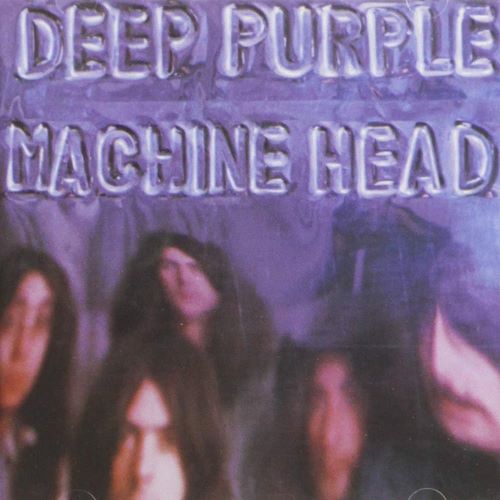
It’s time this week for one of rock and metal’s most immortal albums. Deep Purple were looking to build on momentum from a prior album and also do a better job of capturing their live sound on a studio album when they made a series of recording choices that would both cement them as rock titans and also contribute one of rock and roll’s most infamous song origin stories.
Deep Purple – Machine Head
Released March 25, 1972 via Purple Records
My Favorite Tracks – Space Truckin’, Smoke On The Water, Highway Star
The story of Machine Head and its recording has long been etched into rock music lore. Deep Purple were out to better capture their live sound on a record. The band had established some success on the basis of their album two records ago, Deep Purple In Rock, and were convinced that bringing their live sound to a studio record would help them along. The band booked the famous Rolling Stones Mobile Studio and lined up to record at the Montreux Casino in Switzerland. The original plan was to record a live set as well as the studio album and release a double record. Of course, those plans went up in flames, as we’ll get to.
Tracking Deep Purple line-ups could drive the world’s foremost scholars mad, there is a whole lore and science behind it. This album featured the band’s Mark II roster, which would be the band’s most successful configuration. It featured Ritchie Blackmore on guitar, Ian Gillan on vocals, Roger Glover with the bass, the immortal Jon Lord on keyboards and the band’s lone constant member Ian Paice on drums.
Deep Purple would be credited as album producers. They were joined by engineer Martin Birch, who had worked with Purple on previous albums as well as Fleetwood Mac in their early career. Birch would go on to produce for Blackmore again in Rainbow, handle the early Whitesnake albums as well as the first two Dio-fronted Black Sabbath records before settling in as the long-time producer of another British band I might happen to talk about all the time on this site.
Today’s album has a fairly lean 7 songs running at 37:46. Several deluxe editions of the album are also available.
Highway Star
The album opens with a quick hard rocker that was literally written in front of journalists on a bus after one reporter asked how the band wrote songs. Blackmore started jamming on a guitar while Gillan composed lyrics on the fly about simply “being a rock and roll band.” This was also released as a single.
This ode to cars and women accomplished its mission of depicting rock and roll, and the music laid a blueprint for many bands to follow – keep things simple and just rock out.
Maybe I’m A Leo
Up next is a blues jam soaked in Blackmore’s guitar tone and spiced up with Lord’s organ work. It’s a really nice song and a good bridge from rock’s recent past to what it was becoming. There are sparse lyrics here, but Gillan laments the loss of a woman, who maybe was taken away against her will, it’s hard to tell. But she is gone and Gillan is a Leo, but not a lion. (Hey, me too. And it turns out Ian Gillan and I have the same birthday, didn’t know that.)
Pictures Of Home
We have a very amped up jam session here, as each instrument player gets a spot to go off on his chosen weapon of rock. It’s far from just an individual showcase though, it’s also a cohesive song that works when everyone’s playing together as well as when one person takes the spotlight. It also features a harrowing lyrical tale of a mountain climber stuck on a mountain, which would be a pretty awful position to be in. And there’s probably not a British rock royalty jam session going on up on the mountain to pass the time with.
Never Before
It’s another blues-based tune here also with a bit of funk creeping in on occasion. While Lord and Blackmore are up to their usual mastery here, it’s Ian Gillan that really gets a chance to shine vocally here. His tale is one of sorrow, as he’s been done wrong by a woman, but the song is pretty hard hitting and ready to soar.
Smoke On The Water
And here we are. The truth is that this song’s full details deserve their own post so I will Cliffnotes things today. DP were set to record at the Montreaux Casino after it shut down for the winter, the last gig the venue booked was Frank Zappa. A “stupid with a flare gun” decided to burn the place down instead. DP had to find another place to record and also found lyrical inspiration for a song in the fire. In fact, the song’s lyrics give most of the details of the events.
Smoke On The Water was not immediately recognized as a hit. In fact, the band had a live album and another studio record out before this was officially released as a single. The song went on to hit number 4 on the US Billboard Hot 100 and was also certified gold in the US.
But the song’s true success goes far beyond charts and sales. The Blackmore riff is perhaps rock and roll’s most recognizable guitar sound. It is simple yet highly effective, and it led to generations of future guitar players annoying music shop employees with repeated plays of a riff so simple that most anyone could play it in a few minutes. This is quite possibly the greatest contribution to rock music ever, it is that massive and influential.
Lazy
This one is nearly an instrumental and is a fantastic jam between Blackmore and Lord. The song is 7:22 in length and these two take up most of the track. It is a jam in the truest sense, with them simply going off and doing what they want to do. The small verse section is about, well, being lazy. It is split in two with Ian Gillan on the harmonica between.
Space Truckin’
The album closes with a brilliant rock and, honestly, heavy metal track. It’s a fantastic, trippy march through the idea of being just what the title says – a space trucker. It’s like Han Solo a few years before he came around. The song is carried by Jon Lord’s just plain gross keyboard riffing. This song got turned into a massive jam in live settings, including an infamous one in 1974 when Blackmore was pissed off and destroyed thousands of dollars in gear.
Machine Head was to be the magnum opus of Deep Purple’s long and storied career. The album hit number 7 on the Billboard 200, and number 1 in 8 countries, including their home UK. It was certified gold in 4 countries and 2 times platinum in the US. Bear in mind that most record labels stop certification counts due to expense and it’s likely that the record has gone on to sell vastly more.
The immortality and legend of Machine Head is undisputed. When there is a list of the greatest rock and metal albums, this album is on there. When there is a list of the greatest songs, Smoke On The Water is on there. When there is a list of rocks’ greatest guitarists, Ritchie Blackmore is there. Deep Purple would, along with Led Zeppelin and Black Sabbath, form the “holy trinity” of rock music in the 1970’s. It is the influence of these three bands that shaped the face of music to come and the foundation upon what a lot of the stuff I listen to was built on. It was Deep Purple that influenced a lot of what I and we listen to, and specifically Machine Head that spun on the turntables of the next generation of musicians over and over again. There truly is nothing without this piece of rock history.

 The Crooked Wanderer