Ozzy Osbourne – Blizzard Of Ozz (Album of the Week)

Back to an all-time classic this week, the debut solo album from Ozzy Osbourne. It was originally supposed to be a band package presentation but instead it would be the launch for the successful and controversial solo career of the Prince of Darkness.

Ozzy Osbourne – Blizzard Of Ozz

Released March 22, 1891 (US release) via Jet Records

My Favorite Tracks – Steal Away (The Night), Mr. Crowley, Revelation (Mother Earth)

The premsie behind the album is pretty simple – Ozzy had been fired from Black Sabbath and thought he was done with music. Don Arden was the record exec who not only fired Osbourne from Sabbath but also got him lined up with a solo deal from Jet Records. Don had his daughter Sharon oversee Ozzy, who was in a dark mindset after being axed.

After some twists and turns, Ozzy would form a group with guitarist Randy Rhodes, bassist Bob Daisley, drummer Lee Kerslake and Don Airey on keyboards. The group was named Blizzard Of Ozz at first, but when it came time to release the first album things were re-done so Ozzy had solo billing.

The decisions over the band’s billing would also bleed into writing credits. Rhodes and Daisley were primarily responsible for the music on the debut album and were credited as such. Kerslake received a credit for No Bone Movies, while Ozzy was credited on all songs. The Arden management clan would subsequently decide that they did not want other musicians getting songwriting credits, something that would start a chain of lawsuits, buyouts and other legal wrangling down the line. Things were fairly conventional for the first release, but the specter of Sharon soon-to-be Osbourne was looming large already over the reigns of Ozzy’s solo career.

The album was released in 1980 in the UK and 1981 in the US. It bears 9 songs with a runtime just shy of 40 minutes. I won’t get into any of the myriad other editions with bonus tracks today, though I’ll discuss one infamous re-issue version a bit later.

I Don’t Know

The opener is a blistering metal track that sets the early tone for this phase of Ozzy’s career. The lyrics are about the plague of self-doubt, presumably what Ozzy felt after the Sabbath firing. And while everyone sounds in fine form here, it is the guitars of Randy Rhodes that jump out here. Everything is set here for the creation of a new guitar god – the tone, the writing perfectly for the song with riffs that stand out, and the solos that very few could even hope to imitate.

Crazy Train

Up next is the lead single and what would become Ozzy’s signature song, even though it didn’t crack the Top 40 on release. It’s another crazy riff from Rhodes and a catchy melody and chorus that put the song over the top and cemented it as one of metal’s most-known songs. Crazy Train has been inescapable since then, played on the airwaves far and wide. Someone would have to be born yesterday not to know this one.

Goodbye To Romance

A somber ballad here and one with a pretty 70’s bent, this is another exploration of Ozzy’s down feelings after being sacked from Sabbath. I’ve always like a sad song and this is downright depressing, so it ticks the boxes for me. Not quite what anyone was expecting but a nice song nonetheless.

Dee

A brief instrumental passage from Randy Rhodes here. It’s named in honor of Randy’s mom.

Suicide Solution

And next is the infamous track that would lead to a lawsuit over the influence music has on youth. But before that, this is a slamming heavy metal tune with a riff Rhodes had re-calibrated from his early Quiet Riot days on Force Of Habit.

The song’s message is one of caution – beware of the destructive influence of drugs and especially alcohol. It’s origin is less clear – Ozzy claims he wrote the lyrics after the drinking death of Bon Scott, Bob Daisley claims he wrote the lyrics after observing Ozzy’s own crazy behavior.

But notoriety would come calling – in 1984 a teenager committed suicide, and the parents sued Ozzy and the record label on the basis of the song causing dangerous influences. The case was dismissed on First Amendment grounds, but this and other infamous heavy metal lawsuits would take their toll on the musicians and the scene as a whole.

Mr. Crowley

Another heavy metal standard here as Ozzy jumps into wondering about infamous occultist Aleister Crowley. Ozzy has stated that he had no clue about Crowley and the song was based on not knowing anything about him, though segments of the public would interpret the song as praise of the occult and label Ozzy a satanist. Ozzy was one of the central figures of the Satanic Panic, both this and the lawsuit were key in that casting.

Regardless of the nonsense, this song is wicked in the best way possible, with sublime work especially from Rhodes.

No Bone Movies

A heavy rocker that gets into the subject of “bone movies,” or as we commonly call it, porn. A pretty quick and simple romp through the degeneration of someone who is addicted to the flesh on screen, which back then you had to go to a theater to watch. Now you can log on from home and find out what your teacher or your mom gets up to after dark.

Revelation (Mother Earth)

While Ozzy was branded a Satanist, murderer by proxy and who knows what else, one thing he apparently actually was could be called an environmentalist. This song is the first of a handful over Ozzy’s solo career that tackle the issue of man-made environmental destruction. It personifies the Earth as “mother” and showcases the assault upon her by greed and complacency.

Beyond the song’s message is one absolutely gorgeous tune. This is splendid work by all involved, of course again highlighting Randy Rhodes and his sublime guitar work. Easily one of the best of Ozzy’s solo career.

And now between two songs we have perhaps the most interesting space in recorded music. Revelation ends on a jam that picks up a bit and then closes on a note that indicates more is to come, and that more would be the album’s last song which kicks off right away. After playing this album thousands of times, it feels perfect to have the next one come in right away and it feels wrong when it doesn’t. It is one of the disheartening parts of digital music that this transition often gets cut out by automatic time gaps between songs, or passed over altogether with shuffle features. Those who don’t regularly listen to full albums would be advised to investigate this passage further.

Steal Away (The Night)

The album’s closer is another barn burner that sees Randy shredding away and Ozzy out on a dark journey with some young, impressionable gal probably. It is my favorite song from the album and one I talked about previously here.

Blizzard Of Ozz would be a solid success for Ozzy. While neither single became a hit, at least at first, the album moved copies pretty quick and eventually wound up 5 times platinum in the US. It did also place 21 on the Billboard 200 as well as 7 in the UK and 8 in Canada.

The album would help kickstart Ozzy’s solo career and both his legacy and infamy. It would also establish Randy Rhodes as a top-tier guitarist, something we would all soon be robbed of in a tragic accident.

This album was reissued several times over the years, in 2002 it was redone in very controversial fashion. The powers that be decided to remove the bass and drums that Daisley and Kerslake had originally done, both were suing Camp Osbourne over unpaid royalties from the album. The parts were re-recorded with Robert Trujillo and Mike Bordin, Ozzy’s band members at the time. Also, Suicide Solution was edited to remove sound effect bits that some had suggested were subliminal messages that encouraged suicide.

The reaction to this new version was extremely negative. The execution was not good and the reason behind it, greed, was transparent to most everyone as the stories about the lawsuit were common in metal press. Later reissues worked with the original music and this version was swept under the rug.

Whatever the management of Ozzy’s career would take, no doubt the music itself was spectacular out of the gate. This is a stellar album, performed well by all parties involved. Ozzy would have a second act to his career and Randy Rhodes would become immortal through his work on the early Ozzy stuff. Millions of budding metalheads had a new album to shred out to, and the “moral majority” had a new enemy.
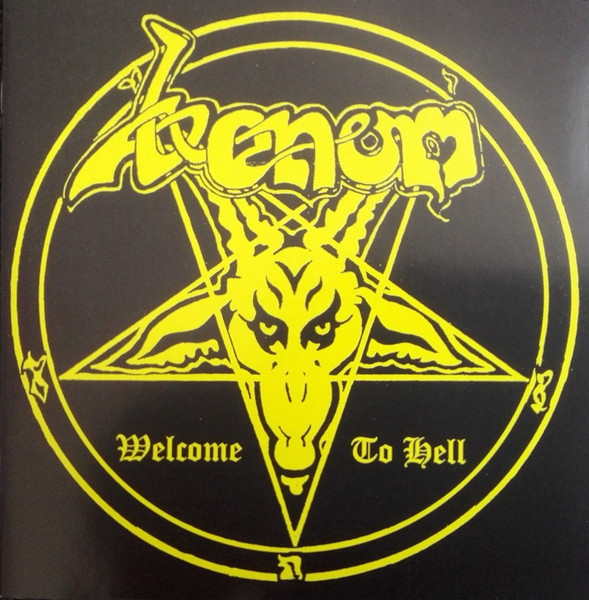
Venom – Welcome To Hell (Album of the Week)

Two weeks in a row for debut albums – this week it’s a first offering from a band that would cast a wide influence on what would come to be known as extreme metal. While much of early 1980’s England was in the midst of the New Wave of British Heavy Metal scene, one band would take noise, speed and Satan to a different level.

Venom – Welcome To Hell

Released December 1981 via Neat and Combat Records

My Favorite Tracks – In League With Satan, Live Like An Angel, Welcome To Hell

Venom was formed when the three core members eventually came together out of the ashes of other bands. Conrad Lant would handle bass and vocals, Jeff Dunn tackled guitar and Tony Bray sat on the drum throne. The three would choose stage names – Cronos, Mantas and Abaddon, and be more known by those names in the pre-Internet era. Much of this first album was composed of tunes that Cronos and Mantas each had worked up in some stage and brought to their new band’s sessions.

There were two other members of Venom early on, but both Alan Winston and Clive Archer would leave the group before the recording of the album.

Venom would record their early demos at Impulse Studios in the Newcastle area, where Cronos had a job and traded work for Venom’s studio time. They would land a record deal with Neat, a British label who also happened to own Impulse Studio. Venom recorded the album proper in a few days, and Neat released the record after a few more days and not much in the way of mixing and mastering. This raw, unpolished sound was not entirely intentional on the band’s part but would wind up being a key point of influence on the later black metal movement.

Venom would use overt Satanic imagery and lyrical fare as an attention getter, but would also fully commit to the gag in a way that pushed beyond the “quasi-satanism” of Black Sabbath and earlier acts. The band’s interest in Satanism and the occult would play into the Satanic Panic of the 1980’s and even later land the group a coveted spot on the PMRC’s Filthy Fifteen list. (I’ve covered the list in the past here).

Today’s album holds 11 tracks with a running time near 40 minutes. There won’t be much in the way of technical proficiency to discuss, but a lot of ripping through songs about evil and lust and the influence many would bear later on the metal scene.

Sons Of Satan

It’s fair to call this a collision of musical parts being played together at once as opposed to a cohesive song. The lyrics implore the righteous youth to abandon their path and join the satanic Venom legions. And perhaps against the odds, Venom would succeed in their dark recruiting mission.

Welcome To Hell

The title track is a much more put-together affair than the opener, though still swamped in the lo-fi buzz that would come to be a defining point of the band. The lyrics are a crude pounding through the glorification of Hell and the end of the world, with a spoken word portion of Psalm 23 from the Bible thrown in because why not.

Schizoid

While the title implies a mental disorder of some kind, the song is about a serial killer. It’s a pretty good song though it’s hard to ignore the awful drum sound here, certainly a case of something that would have sounded better with more work in the studio.

Mayhem With Mercy

A brief instrumental that isn’t of note itself. The Norwegian black metal band Mayhem would name themselves from this track and then go on to live in infamy in the 1990’s.

Poison

A nice song about a girl who entices the song’s narrator, though the girl is of course evil and all that. The lo-fi production works pretty well here. It is worth mentioning that hair metal act Poison did NOT name themselves after this track.

Live Like An Angel

A very nice song here that would be an early influence on thrash metal. This song would be bundled with In League With Satan for release as a double A-side single. This did illustrate that Venom’s primitive sound was down more to studio limitations than musical effort.

Witching Hour

All hell breaks loose on this, one of the most celebrated tracks from the album. So lo-fi it can almost hurt to listen to, but also a fantastic slab of sick heavy metal. It’s pretty easy to find a cover version of this song on any number of underground metal bands’ albums.

One Thousand Days In Sodom

Bit of a concept piece here, I guess, as Venom explores the sin and decay of the city of Sodom, as told in the Bible. It should be no shock that Venom’s recounting of the story does not align with Christian teachings. A very nice riff here and some pretty well-done songcraft. It is widely reported that the German thrash band Sodom named themselves from this song, though I can’t locate actual confirmation of that tidbit.

Angel Dust

In keeping with the lyrical themes that piss off the “moral majority,” we now have a song about drug use. Angel dust is the common street name for PCP, which is honestly a pretty messed up drug. While the song is clearly glorifying drug use, I don’t recall that the members of Venom were particularly taken with drugs, this is just another character piece.

In League With Satan

We are now at what is largely considered the highlight of the record. In keeping with actually doing everything that other bands were incorrectly accused of, the beginning features a backwards-recorded Satanic message. And the main lyrics of the song have the similar Satanic messages said normally. This is a very nice and evil sounding song that hypnotically marches through its dark message and generates the kind of sound that other metal bands would strive for.

Red Light Fever

The album closes with a savage rip through a song that is not about running red lights in traffic, but rather the seedy red light districts of infamy. While Cronos finds himself a good time gal, he realizes that she’s just doing her job and his moment of glory is just a moment.

Welcome To Hell was the start of a sound and scene that would not light up mainstream sales charts but would spread a wide influence across what would become new strains of heavy metal – not only ignoring the criticisms of theme and imagery, but embracing those themes. Venom’s second album Black Metal would give a name to the most infamous of these subgenres of extreme metal, and Venom’s honestly unintentional lo-fi sound would shape the early recordings of that movement.

Venom would gain notoriety for their sound and antics, but were outpaced by the movements of other metal bands. By the end of the 1980’s thrash metal was king and several versions of extreme metal were entering their prime years. Venom themselves would go through a series of line-up changes and dramas, though they are still active with Cronos being the sole original member and have released 15 studio albums with a variety of line-ups over the years.

Venom and Welcome To Hell are viewed in a positive light in terms of influence and legacy, though in the realm of sound they aren’t particularly noteworthy among critics. Yes, the album does sound like shit. Listening closely today it’s a bit of a slog to get through, though for me personally there are worthy songs under the layers of badly done studio work. But I imagine this was a different thing to hear in the early 80’s when the average listener didn’t have the context to understand recording techniques – this sounded pure evil.

At the end of the day, even if it sounds like a bad attempt at recording, the influence of Welcome To Hell far exceeds any technical limitations. For all of the finger wagging at heavy metal and its supposed immorality, Venom were actually providing that unironically. In the family tree of extreme metal, this is the trunk.

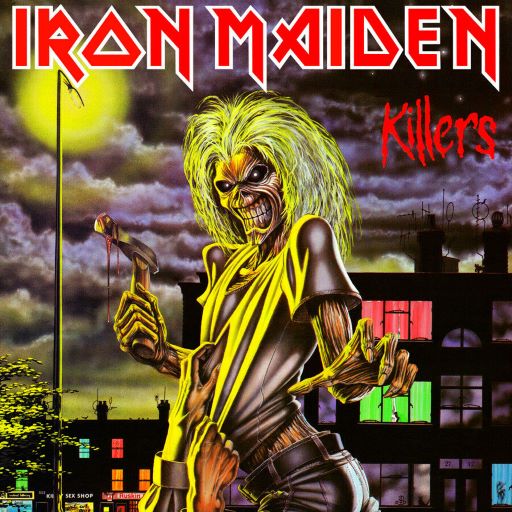
Iron Maiden – Killers (Album of the Week)

This week I’m going back to the second album from the band that would go on to become my favorite musical act ever. The album got solid reviews from critics and fans but would be the end of a brief beginning era for the group, who would soon re-tool and launch their signature sound on several coming albums through the 1980’s.

Iron Maiden – Killers

Released February 2, 1981 via EMI Records (U.K.)

My Favorite Tracks – Murders In The Rue Morgue, Wrathchild, Purgatory

This album has several versions – for this write-up I am using what is up on Spotify, a 2015 remaster that mirrors the initial British release. I have the original U.S. release on vinyl and a 1998 reissue on CD that feature the bonus track Twilight Zone, but for purposes of simplicity I’ll be covering the UK version. Other territories in the world got other versions of the album with slightly altered track listings.

Iron Maiden would see the first of a few significant lineup changes prior to recording Killers. Guitarist Dennis Stratton left the group due to disagreements with bandleader Steve Harris and manager Ron Smallwood. Stratton was replaced by Adrian Smith, who would go on alongside Dave Murray to establish Iron Maiden’s signature twin guitar attack through the rest of the 1980’s.

Killers was written almost entirely by Steve Harris, with a few notable exceptions – the title track is co-credited to singer Paul Di’Anno, and there is some funny business with the opening instrumental in terms of songwriting. Most of the songs except for two were written before the band recorded their self-named debut a year prior.

The Ides Of March

The first of two instrumentals on the album, which is a curious choice for the group. The song itself is fine and serves as a good intro to the album.

There are questions raised over the songwriting credits to this. Harris is the only credited songwriter for the song on Killers. However, a very similar-sounding instrumental called Thunderburst appears on fellow NWOBHM group Sampson’s 1980 album Head On. It credits the Sampson band members (including one Bruce Dickinson) as well as Steve Harris. It was Samson drummer Thunderstick who served as the common link – he had been in Iron Maiden in the late 70’s before that group recorded and apparently brought this instrumental over to Samson. It is a bit of interesting trivia if not much more, though there have been several other questions about where Steve Harris got songs from over the years.

Wrathchild

The “signature song” from Killers, this is the only song from the album that is still consistently performed live by Maiden. It opens with a trademark bassline from Steve Harris and gets down and dirty with a sound that still suits Paul Di’Anno but does seem to be morphing more into the business the band were about to get to after Killers. It features plenty of lead guitar flourishes and establishes the trademark rhythmic drive that the band would stake their name on. The song was one of two singles from the album, released as a “double A-side” with the US bonus track Twilight Zone.

Murders In The Rue Morgue

This is one of the two songs written specifically for the Killers recording sessions. It is an excellent tune that turns up the pace and fits with the “proto-punk/metal” hybrid the band had on offer on their debut. It is perfectly suited to Paul Di’Anno’s brash singing style. It’s a bit of a shame this song is kind of lost to time as it would be a joy to hear it today.

Another Life

This upbeat number hits home with more trademark Smith and Murray guitar work. The song rolls away with Di’Anno’s typical delivery and stands out a bit amongst the rest of the “leftovers” that Killers is home to.

Genghis Khan

The album’s second instrumental and apparently not one ghostwritten by a former member. I don’t mind the track at all but it doesn’t necessarily stand out and feels like a bit of padding for a record with a lot of songs but a fairly lean running time under 40 minutes.

Innocent Exile

It’s another song that, while not exceptional, does possess the hallmarks of that early Maiden sound and puts in a workmanlike performance on the album. It’s certainly fitting for the band at the time and it makes for a worthwhile listen.

Killers

The title track has always stood out a bit, as many of Maiden’s title tracks do. The tune gets a little time to build rather than being a brief attack like so many of the other songs. It displays a bit of both where the band was and where they were going. It’s another song that wouldn’t hurt by the occasional inclusion on a live set, though this album as a whole seems to be left aside for consideration anymore.

Prodigal Son

Up next is what stands out as the biggest departure sound-wise for Iron Maiden. Nothing across the rest of their 17-album catalog sets itself apart nearly as much as Prodigal Son does, save for perhaps the B-side Burning Ambition that was never released on an album. It is also the other song besides Murders… that was not written well ahead of time.

The songs is about someone who has consumed himself through the use of black magic or other mystic arts. It rolls more in the vein of a 70’s rock tune as opposed to the heavy metal that the band were playing at the time. It has an almost folk-like undertone to it. Many in the fanbase are very turned off by the song, I myself find it a nice inclusion though I certainly see where it sticks out like a sore thumb from the rest of the band’s work.

Purgatory

If the prior track is the band’s biggest departure from their sound, Purgatory is the biggest and brightest display of what Iron Maiden had on offer in the early 80’s. The blistering track slams through with those now well-known bass and guitar lines that just seem to roll off the instruments for the band. This song was released as the album’s second and last single. And in a bit of trivia – the artwork Derek Riggs originally drew for Purgatory’s single was held back by the band and used as the cover for The Number Of The Beast.

Drifter

The album and the Paul Di’Anno tenure of the band concludes with Drifter. It’s a fast and fine rocker that wouldn’t have been out of place on the debut. It wraps the up the album nicely.

Killers stands out as a record perhaps greater than its status as a collection of Steve Harris’ leftovers. Though the Paul Di’Anno era is widely revered in Maiden fandom, this album does tend to fly under the radar at times. The record did not perform as well in the UK charts as Iron Maiden did and only one song remains today as a typical inclusion into the band’s live set. Di’Anno would soon be booted from the group for a number of reasons and the band would go on to new heights with his replacement. I don’t spin this album as much as others from the catalog but I never find myself being upset when I do play it.

This song didn’t have an easily found live version with Paul, so this one with Bruce will do