Ozzy Osbourne – No Rest For The Wicked

For this week I’ll continue discussing Ozzy Osbourne, honoring the legend who passed away July 22nd. Today I’ll get into the album he did to introduce the world to his new guitarist and to bow out of the 1980’s.

Ozzy Osbourne – No Rest For The Wicked

Released October 24, 1988 via Epic Records

Ozzy was still holding serve in the late ’80’s, with albums still going double platinum and certainly maintaining his reputation as the Prince of Darkness. While hair metal ruled the day, Ozzy was holding a winning hand with a heavier brand of rock and metal.

Where Ozzy did have to retool was in his band lineup. Randy Castillo returned on drums, but everyone else besides Ozzy was either a new or returning hand. Bob Daisley once again came around to play bass. John Sinclair also signed up to play keyboards. The album was produced by Roy Thomas Baker, whose studio credits are roughly five miles long.

Most significantly, Ozzy had a new axe slinger. Moving on from Jake E. Lee, Ozzy gambled on a young New Jersey player who had sent in an audition tape. Zakk Wylde would get the gig and become Ozzy’s most enduring guitarist after all was said and done.

Today’s album is a standard affair with 9 songs at 43:08. The album’s last song, Hero, was originally unlisted but is now labeled on subsequent reissues and streaming services. The album has been reissued with a couple of bonus tracks.

Miracle Man

We open hot out of the gate with an absolute shredder and the album’s lead single. Zakk Wylde introduces himself and his tone pretty quick and provides the drive behind this headbanging track. Here Ozzy is having a go at a nemesis who had plagued him for years – the televangelist Jimmy Swaggert, who by this time had fallen into scandal. Swaggert’s resulting fall from grace was like serving up a meatball pitch to Ozzy, who hit the home run and sent it out of the stadium. Ozzy would also get the ultimate last laugh – living 22 days after Swaggert passed away on July 1, 2025. Grade: A+

Devil’s Daughter

The shredfest continues as this time Ozzy does holy battle with the devil’s daughter. I’m not sure who the devil’s daughter was, but I’m sure she was a formidable foe. We get a creepy interlude with babies crying and keyboards before Zakk rips up the solo on this one, pretty cool song. Grade: A

Crazy Babies

Up next was the second of two singles. This one gets a lot of divided opinions – some feel the song is awful, others enjoy it as a nice piece of hot rock. I’m in the second camp, I think this song is really good. The lyrical fare is also a topic of debate – some think it’s about babies born into crack addiction, others think it’s an ode to Ozzy’s wild and crazy fanbase. I’m again in the second camp, though like anyone else I have no damn idea what it’s really about. But I enjoy it nonetheless. Grade: A

Breakin’ All The Rules

We have one here that sounds like it could have come from the prior album, The Ultimate Sin. It is still suitably heavy and hard and keeps the album moving along. Ozzy is taking on some unnamed adversary by doing just what the title says. Nothing diverges from the path here, another really good track. Grade: A-

Bloodbath In Paradise

If things were a little too “pretty” for some, this one should spice things up nicely. This is a creepy track about the infamous Tate-LaBianca murders. Everything is going at 11 here and this song is just splendid. Grade: A+

Fire In The Sky

A more atmospheric but still quite heavy track here that tackles someone who got along in life with a lot of deep-seated problems and now those issues are finally creeping out for all to see. This might be a bit introspective for something from the Prince of Darkness but the song still works well. Grade: B+

Tattooed Dancer

No introspection here – this is a wild and crazy song that flies off the seat of its pants. The title outlines exactly what the song is about. I’m sure we could dive deep and explore how “bad” the lyrics are in today’s socio-political contexts, but I have better shit to do. Grade: B+

Demon Alcohol

This one is really interesting, as Ozzy embodies the dark spirit of the literal spirits that often consumed him. He would continue to have his struggles over the years, but the song is a pretty cool look at the grip of addiction. And, in keeping with the rest of the album, quite white hot and rocking. Grade: A-

Hero

This song was originally unlisted, I’ve never come across the reasons why. It is shiner and brighter perhaps than the rest of the album but it’s not a massive departure either. It is also warm and sentimental, which is a bit of a departure for the record but not anything out of bounds when truly examining Ozzy Osbourne. It was a nice little bonus for those of us who played the album the first time without knowing it was there. Grade: B+

No Rest For The Wicked was another explosive round in the arsenal of Ozzy Osbourne. The album hit number 13 on the Billboard 200 and had several European chart placements. It is certified double platinum in the US and platinum in Canada.

Ozzy and company would tour behind the effort, though with one lineup change – Bob Daisley was out after recording, and Geezer Butler famously rejoined his old Sabbath bandmate for the shows.

This one is extremely easy to assess – I like everything here and enjoy the album from front to back. It’s not of the same “weight” as earlier Ozzy recordings, but honestly nothing is and it’s a fool’s errand to grade a person’s work against their most significant. The final verdict here is really simple.

Album Grade: A

Ozzy continued his decade of destruction with No Rest For The Wicked, and the start of the next decade would only bring greater success for the Prince of Darkness. He was now armed with a trusty guitarist who would stick around for a bit and things were still coming up aces. Ozzy would have one of his darkest personal moments in the year after this album’s release, but eventually he was able to rehab back into reality and continue adding to the legacy that we still celebrate today.

Death – Leprosy (Album of the Week)

The argument over who, where and when death metal started is one that has raged since its inception in the 1980’s. I won’t be arguing all of that today, rather I’ll be looking at the second album from one of death metal’s pioneers.

Death – Leprosy

Released November 16, 1988 via Combat Records

My Favorite Tracks – Leprosy, Pull The Plug, Left To Die

Death had a very curious and drawn-out early history, with founding member Chuck Schuldiner releasing a series of demos under different names and with various casts of band members. In 1987 Death released their debut album Scream Bloody Gore. A year later found Death with Schuldiner and a totally different line-up to record the next album. Rick Rozz, who had played on some early Death demos, was back in on guitar. Bill Andrews came in on the drums. Schuldiner handled bass on the album as well as his usual guitars and vocals, though Terry Butler was brought into Death to take over bass after recording. Butler is credited with being the bassist in the album’s liner notes, however.

The album was recorded at Morrisound Studios in Tampa, Florida. This would become the home of early death metal as the first concentrated scene was centered in Florida. Dan Johnson was the album’s producer and Scott Burns its engineer, Burns would go on to be involved in many early death metal classics.

This album comprises 8 songs at a 38:37 runtime. All songs are credited to Chuck Schuldiner and Rick Rozz jointly, except for Leprosy and Pull The Plug solely to Schuldiner, and Primitive Ways only to Rozz. All lyrics were provided by Schuldiner.

The album opens with the title track Leprosy. This one is a bit longer than anything else on the record and burns a fair bit slower than a typical thrash song, thrash being the direct progenitor of death metal. As with a lot of death metal, there is a “still fast even when slow” quality to it.

Leprosy is a non-scholarly look at the affliction, with people cast out of their towns to literally rot away of the disease in exile. The song switches up tempo and inserts movements to keep things fresh, this is not simply a “thrash on steroids” offering. While it would be a few more albums before Schuldiner took Death in a truly progressive direction, early indications were already present on songs like this.

Up next is Born Dead. This one is a “thrash on steroids” track that shreds through a dystopian world where people are basically disease fodder and existence is about useless. Forgotten Past is next and is a straightforward chugger that sees someone use the occult to learn that they were a horrible person in a past life. After that is Left To Die, a song that exemplifies the sound of early death metal as it offers an account of what is likely a front line soldier whose life is forfeit.

Up next is one of Death’s standard-bearing songs with Pull The Plug. This is a perfect marriage of brutality and technical proficiency. As the shock value of early death metal wore off, the underlying technical aspects would become a main driver of interest in the music. Lyrically it is an awful tale of someone on life support who can hear people making the decision about what to do with him. The title offers up exactly what the subject wants to happen. Pull The Plug has been a crowd-pleaser with Death audiences since its release and it remained a staple through the span of Schuldiner’s career.

Another straightforward pounder comes next with Open Casket. The band shreds through another burner with a few tempo changes thrown in for variety as the lyrics explore the simple yet creepy concept of open casket funerals. The pounding continues on Primitive Ways, which is a look at the (generally wrong) idea that prehistoric people were bloodthirsty savages who lived in a kill or be killed environment. Not scientifically accurate stuff but suitably brutal for the proceedings at hand. The album closes with Choke On It, a song that offers the same brutal thrashing technical fare as the rest of the songs and explores the horrific concept of someone dying due to hyperventilation.

Leprosy marked a shift for Death from the absolute raw brutality of Scream Bloody Gore to a more refined thrash-centered sound that offered up a fair few technical leanings as well. The stylistic shift would become a hallmark of Death’s career – while the next album Spiritual Healing is similar in tone to Leprosy, subsequent albums would continue pushing the technical and prog envelope and leave the old school death metal sound behind just as quickly as Chuck Schuldiner and company had helped establish it.

As Death’s styles shifted, so did its band members. Schuldiner would be the sole constant member and bandleader. Terry Butler and Bill Andrews hung around for the next album, but each Death album after featured a revolving door of musicians, many of whom became revered figures for their Death output as well as other projects. Death would continue until 1998, when Schuldiner ended the band to pursue a different progressive metal style with Control Denied. Schuldiner was diagnosed with brain cancer and died in December of 2001.

In the decades since Schuldiner’s death, his band Death has taken on a god-like status in the ranks of death metal and beyond. Leprosy was a formative offering that helped define the new genre of death metal and get Death notice as a band to watch. Over 20 years after Schuldiner’s passing, Death is still at the forefront of the genre that Schuldiner spearheaded.

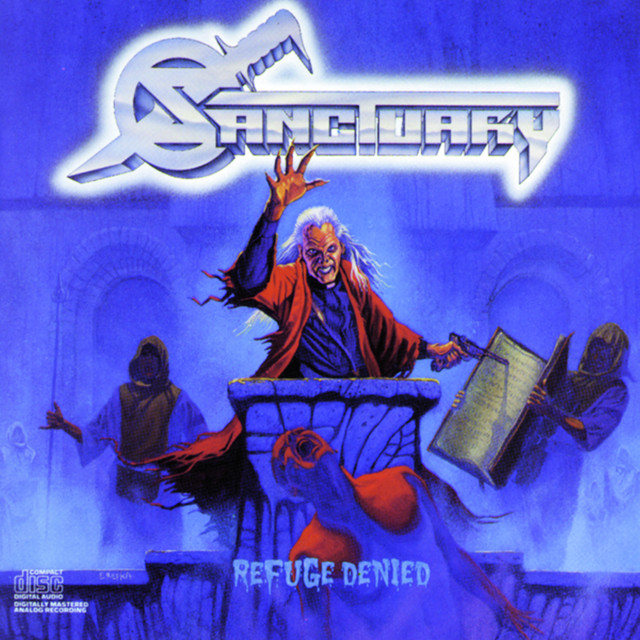
Sanctuary – Refuge Denied (Album of the Week)

For this week it’s time to look at a profound debut album in metal, the start of a Seattle metal institution and a curious guest shot in the producer’s chair.

Sanctuary – Refuge Denied

Released in 1988 via Epic Records

My Favorite Tracks – Battle Angels, Soldiers Of Steel, Die For My Sins

Sanctuary had formed in 1985 and recorded a demo in 1986. The demo generated some buzz and guitarist Lenny Rutledge made a power play to help his band get some notice – he approached Megadeth mastermind Dave Mustaine after a show. Mustaine was very receptive to Sanctuary and offered to help produce a full-length album.

Sanctuary was comprised of Lenny Rutledge and Sean Blosl on guitar, Warrel Dane on vocals, Jim Sheppard on bass and Dave Budbill drumming. This line up would hold through the first album and tour.

The music here falls somewhere between thrash and US power metal. It’s a bit of both but not entirely in one realm or the other. It’s not unusual for Seattle bands to defy categorization.

The cover art is worth of discussion, this being one of many pieces from Ed Repka, one of heavy metal’s most renowned artists. There’s a priest or something with a gun doing some crazy shit, the clergy were prime targets of late ’80’s metal bands. Repka’s art is pretty instantly recognizable to a person who has possessed a lot of metal albums over the years.

One small note – there is no specific release date for Refuge Denied. There are copies out there in some territories that released in 1987, in the US it was 1988. I would guess it was an “end of year/start of year” thing but it’s not something I really want to put in the research to find out.

There are 9 songs in a 39 minute runtime, a decently sized album but fully packed with the goods.

Battle Angels

The proceedings open with a masterpiece of a song. It gets going right off the bat and settles into a mid-paced affair before Warrel Dane kicks off the singing. Dane keeps things in a human range in the first verse before ascending to vocal godhood through the chorus. Dane’s soaring vocals along with the riffs and rhythm sections shape an absolute gem of 1980’s metal.

The song is pretty well about what the title suggests – a group of angels coming down to have some holy retribution on sinner’s asses. It’s not quite a story from the Bible but it will do.

Termination Force

Next we get a song with a fair bit of dynamics and arrangement, showcasing that Sanctuary are not a one-trick pony. The song begins in slow fashion but slams into a faster and louder sort of chorus section. There’s a bit of a good old fashioned thrash gang chorus here, and Dane is all over the map with his singing. This is another stomper and Sanctuary are really bringing the goods here.

Die For My Sins

This is a fairly standard melodic metal song, might have a small degree of similarity with the early work of fellow Seattle residents Queensryche. Warrel Dane is still wild on this one, though maybe held back a hair compared to the two prior tracks. A very nice thrash section with the solo in the middle of this one too.

Soldiers Of Steel

Another mid-paced effort with some vocal parts in the verses that show Warrel Dane’s more normal range and the one he’d use for the bulk of his career. He still goes off on the quasi-chorus portions. This one is along the lines of the old US power metal sound.

Sanctuary

We get a self-named song but sadly it was not on a self-named album as well, so no trifecta here. This one also starts off slow but quickly goes into thrash territory. It’s an exploration of some kind of warrior from the future who is leaving the timeline, or something like that. They aren’t going out quietly, that much is for sure.

White Rabbit

Yes, this is a cover of the Jefferson Airplane classic. It is suitably metal-ized for the album and isn’t an attempt to just perform the song as it was. This is enjoyable though it might fall a bit short of a home run. It would mark the start of many times Warrel Dane would take songs from outside of metal and totally mess with them. This also features a solo and backing vocals from Dave Mustaine.

Ascension To Destiny

Apparently the time-traveling warrior from two songs ago didn’t get too far, or maybe this is a different warrior but they are back and ready to whip some ass. The cadence of the chorus had a danger of coming off the same as Battle Angels, but Dane deftly side-stepped the issue by switching up the vocal rhythm here.

The Third War

This one goes pretty hard and heavy and unveils a prediction about the third World War. They peg 1999, which didn’t quite hit the mark but they probably weren’t terribly far off the way things are going in 2023. Another heavy one as we get to the end of the album.

Veil Of Disguise

The closing track starts off in the ballad realm for its first few minutes before picking up steam and rolling out on a heavy note. It is more of the same melodic mastery from Dane and the guitarists and leaves the record without a dud across its nine tracks.

Refuge Denied was Sanctuary’s introduction to the world. Upon release it did not catch fire, in fact only selling around 7,000 copies in its first year or so. The band would slowly catch on over the years and as of 2011 this album has moved over 200,000 copies.

The most noted feature of Sanctuary on their debut was of course Warrel Dane and his insane vocals. His wail was something not easily replicated or matched, there aren’t many singers walking who could handle getting the highs he could reach while also maintaining a true vocal body along with it. And this would impact even Dane – he apparently suffered a vocal injury sometime in 1988 and his days of wailing like on here were over. He would go on to have a successful career as a singer but it wouldn’t be with the kind of shrieks and wails found on this record.

The battle for any kind of commercial success would be a losing one for Sanctuary in their first go round. Their second album Into The Mirror Black would see higher sales and some video airplay, but the band was still on the outside looking in to the music business. Guitarist Sean Blosl would leave first and be replaced with Jeff Loomis. After the band had serious discussions about their place in the music scene after the arrival of grunge in 1991, Sanctuary would split up.

Lenny Rutledge and Dave Budbill would head off on other endeavors, while Dane, Sheppard and Loomis would form Nevermore and carry on for the next 15-plus years. Sanctuary themselves would reform in 2010 after Nevermore broke up, and Sanctuary would continue to run even after Warrel Dane’s death in 2017.

While Sanctuary’s time is broken up into two periods separated by a 20 year gap, their early work would come to be appreciated by a wider audience as traditional metal caught on again in the 2000’s and also as Nevermore fans explored the members’ pre-dated work. Refuge Denied did not get its due back in the day, but today it is hailed as a classic of US heavy metal.

Album Of The Week – October 31, 2022

It’s time to do another week revolving around one artist. This will involve a post every day, it’ll include a (long) look at the band’s line-up changes, a few singles I have and cap off with an album ranking on Friday.

I’m leading off with the band’s fourth album, one recorded and released after great tragedy. Despite a few curious choices in sound, the album would be a huge success and propel the group forward to a state of total world domination a few years later.

Metallica – …And Justice For All

Released September 7, 1988 via Elektra Records

My Favorite Tracks – Harvester Of Sorrow, One, Blackened

Metallica had made great strides in heavy metal and music in general, achieving commercial success without the benefit of radio or MTV play. Things would change with this album, and Metallica would start to become not just a successful metal band, but one of the world’s most popular acts.

The group were enjoying a fantastic touring cycle for Master Of Puppets when an icy bus crash in Sweden claimed the life of bassist Cliff Burton. Burton’s death was a massive loss and one that still reverberates today. The band decided to press on after the accident, hiring Jason Newsted away from Flotsam And Jetsam.

…And Justice For All features 9 songs at a massive run time of 65 minutes. The album cover is a fantastic image and possibly the band’s best ever. Singles released from the album include Harvester Of Sorrow, Eye Of The Beholder and One, the latter marking the band’s first MTV video.

It’s impossible to discuss the album without bringing up the curious production choices. The album sounds dry and tinny, with the high end very emphasized. The drum sound is odd, but the missing bass is the typical talking point. The band have blamed “hearing loss” for the bass omission, though a lot of people speculate that it wasn’t an inadvertent decision. The album succeeded even with the odd mix, though it is still a huge topic of discussion all these decades later.

With that out of the way, let’s get into the songs. There is a lot to go over, even with an average number of tracks.

Blackened

The album opens with a super heavy track that firmly suggests Metallica are out to snap necks again. This is a pummeling song that details the nuclear end of the world, a topic prevalent in thrash and also Metallica’s own back catalog. While much of the album drifts away from “pure thrash,” Blackened is one of the more outright thrashy songs.

Blackened is also Jason Newsted’s sole writing credit on the album – he had the main riff “laying around” and played it for James Hetfield, who immediately set about crafting the song.

…And Justice For All

This very extended play at nearly 10 minutes is a direct attack on the hypocrisy and ineffectiveness of the justice system. It is a song that is sadly still very relevant, if not more so, today than in 1988. While the base of the song is pure thrash, there are several interludes and guitar passages that keep things from getting monotonous.

Eye Of The Beholder

The tempo slows a bit for this crunchy track that concerns itself with the idea that expression is not free and is instead bought and controlled by those in power. It’s an interesting topic that could sadly go down too many dark roads these days. The song is one of the more straightforward ones from the album, keeping its pace and general rhythm throughout.

One

The most recognized track from the record and certainly one of Metallica’s most known songs, this single marked the first music video release from the group. The video features movie footage from Johnny Got His Gun, a dark story similar to what is told in One. Both feature a World War I casualty who was blown apart by artillery but is still alive, though unable to do anything but think.

One begins slowly, with a very haunting guitar passage while the lyrics outline the victim’s plight. The song picks up steam as it goes along, eventually entering total thrash-out territory around 4 minutes in. The song’s extended remainder is a solo fest.

One was a triumphant single and video for Metallica and it marked the beginning of what would be a long ride on MTV for the group. Metallica wound up purchasing the movie rights to Johnny Got His Gun so they wouldn’t have to pay royalties to the prior rights holders. The song is a staple of live sets and is also often brought up when people are asking the age-old question “You know that one song?”

The Shortest Straw

Metallica return to the political theater here, offering a song that derides political witch hunts such as the Red Scare of the 1950’s. The song is another of the “thrashier” tunes from the album. Some fans speculate that the title has to do with how Cliff Burton wound up in his fatal section of tour bus the night of the crash, but honestly that seems like a reach to me and I doubt it’s the case.

Harvester Of Sorrow

An extremely dark and twisted song about a victim of childhood abuse that grows up to be traumatized by the abuse and, after going insane, murders his family. Harvester is a slower yet still heavy song that lends the right kind of dark atmosphere to its terrible story. While Metallica did plenty outside the thrash realm on this album, Harvester is a true highlight of how they could turn down the speed yet still offer a compelling song.

Frayed Ends Of Sanity

Very easy song to peg here, it’s a thrash tune about going insane. It slots very well on this album that’s all about the dark side of things. The song has a bit of trivia with it, as Metallica didn’t play the song live until it was voted in to the set via fan request in 2014. They would often tease the intro before going into a different tune.

To Live Is To Die

This is a mostly instrumental passage that serves as tribute to Cliff Burton. You can’t hear the bass, but if you could, you would hear Jason Newsted playing parts that Burton had previously written. There is a brief spoken passage around the 7:30 mark – the first two lines were from poet Paul Gerhardt and the last two were Cliff Burton’s. The lines and the bass parts mark Burton’s final contributions to Metallica’s music.

Dyers Eve

The closing track brings back the thrash in a big way. The lyrics reference someone criticizing their parents for sheltering their child and damaging their development through childhood. The lyrics were born of James Hetfield’s childhood, who had to deal with his father’s abandonment and his mother’s death, as well as growing up in a twisted belief system that would be responsible for his mother’s end.

…And Justice For All was a massive success for Metallica. The album went platinum just a bit after release and charted well in many parts of the world. The album would go on to sell over 8 million copies in the US, some of that of course coming after the band ascended to practical godhood with the Black Album.

Metallica ran into a practical issue while touring behind …Justice – the songs were too damn long. One was a constant fixture and the shorter Harvester Of Sorrow got plenty of stage time, but many other tracks were left alone due to time constraints. Eventually every song made it on to a set list, but highlighting the album live is a very tall task.

Metallica’s course was well on track for future success after this record. The form that took was something beyond which anyone could have realistically predicted, but of course all of that is a story for another time. …And Justice For All was a fitting bookend to the group’s thrash career and a fantastic effort born of the grief over the death of Cliff Burton.

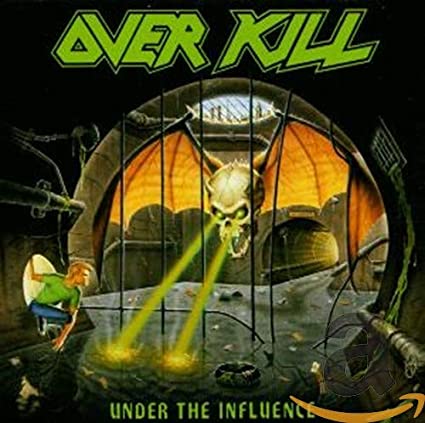
Overkill – Under The Influence (Album of the Week)

For the final week in 2021 I’m going all the way back to 1988. I’m also going back to last month, as this album was one of a series of sorely-needed reissues finally offered in box set form on vinyl. While Skid Row’s “Atlantic Years” box snagged a lot of attention, another in the Atlantic series with six full-length records grabbed my attention and my money.

Overkill – Under The Influence

Released July 5, 1988 via Atlantic Records/Megaforce Records

My Favorite Tracks – Drunken Wisdom, Hello From The Gutter, Brainfade

Overkill were one of the earlier thrash bands to sign a major label record deal. Their demos and debut full-length had brought a ton of hype to the band and labels began arming up with thrash acts as a way to counterbalance the glut of hair metal flowing from their assembly lines. And while thrash is often hailed as a Bay Area invention, Overkill were one of a few pioneering East Coast acts to take the reigns and build thrash into a truly worldwide phenomenon.

Under The Influence marked the band’s third full-length release after two acclaimed records. While this album does not bear the same weight as those two in the thrash lexicon, it does somewhat quietly sit on the upper end of the band’s more appreciated works.

Of course there is nothing quiet about the record. Proceedings open with Shred, which does simply state its point, just as the chorus says. The songs roll hot and heavy on the album’s first side, with everything kept under the five minute mark through songs like Never Say Never and Mad Gone World.

The first side closes with Brainfade – a banger that gets on someone’s case for being a mouth-running know-it-all who honestly doesn’t know a damn thing. I have an inside joke with a friend of mine about a former mutual acquaintance, we’ve decided that this is the guy’s theme song. I’m sure everyone knows someone like this. If a person doesn’t, then that person might be that guy.

While many thrash acts were incorporating other influences around this time, Overkill stayed on a more true thrash path. If anything, this record showcases an early example of groove metal – something that would start massive arguments years later between fans of pioneers Exhorder and the explosively popular Pantera. Whoever deserves credit or blame for the sound that made Pantera famous, there is a blueprint towards that groove on Under The Influence.

The album’s second side sees a turn to longer songs, with the tracks running over six minutes each. Drunken Wisdom enters with a somber acoustic intro but then gets into a pummeling attack that highlights the group’s contribution to the coming groove metal phenomenon.

It’s hard to tell who Bobby Blitz is bitching about in the song – I’ve heard it was a music journalist. That does track with lyrics like “defining our performance” and “just get the fuck out.” Either way, I’m sure most of us have been around someone imbued with drunken wisdom before, and have also possibly been that person a time or two. (Not me, of course…)

End Of The Lines picks up the speed again and hits hard with an apocalyptic message. This song has a lot of guitar in it, at times feeling Maiden-esque inbetween the thrash beatings of the verses and chorus. Head First continues in the much the same fashion, slamming toward the album’s conclusion.

The record ends on the third of a self-named series, this one subtitled Under The Influence. The song adds a layer of creepiness while still retaining the thrashing groove found through the rest of the album. It seems this Overkill song series ends here, with one future sequel found years later. Having one on every album would have been a nice bit of trivia, but I guess “Overkill Part 19” might be dragging things out a bit.

This album was my introduction to Overkill. I was a bit too young for the first albums and I got into thrash just as the movement was swinging into uncharted waters in 1990. This was among several tapes I was able to get my hands on in my podunk Midwest hometown without a vast music selection. Thankfully I was able to round out the catalog soon after. This one will always stand out for me, it was an album with an attitude and snarl that wasn’t found in a lot of other easy-to-come-by places.

Under The Influence checks all the boxes for a great thrash record. Overkill might not have seen the same success as thrash’s top acts but the band has endured and become a symbol of sticking to roots and longevity as they now prepare to release their 20th studio album in the coming months. The group has straddled lines between the mainstream and underground and have persevered as one of thrash’s enduring legends.