Welcome back to the “five songs from a year” series. Simple premise, as always – I choose five of my favorite songs from a particular year (not necessarily my five favorite, just five favorites). I started at 1967 and will run all the way through 2025.
Today is bittersweet as I’m now 22 entries into the series, which is really good. But it’s also sad since this is the final entry from the 1980’s. I grew up in that decade and it was a wonderland of entertainment of all avenues. It’s an era that hasn’t been, and probably can’t be, replicated.
All things must come to an end though, and here we are at the end of the ’80’s. Let’s get into my five picks from the end of the line.
Mötley Crüe – Kickstart My Heart
The Crüe had themselves a banner year in 1989. Their album Dr. Feelgood was a well-produced and written affair that saw them ride the end of the hair metal wave on top. The album contained this song, which ranks among the band’s very best. This is a total ass kicking burst of adrenaline that celebrates the band’s triumph of adversity and Nikki Sixx’s cheating death a few years prior. It doesn’t get much better.
Neil Young – Rockin’ In The Free World
Neil Young did NOT have a good decade in the 1980’s. He recorded some off the wall stuff and literally got sued for not sounding like himself. He spent the latter part of the ’80’s righting the ship and then lightning struck at the ass end of the decade with what has become one of his most well-known songs. Neil wrapped up criticism of the first George Bush administration in both poignant and noisy form. The political ramifications of the song have lived on for nearly 40 years since and the track is one of Young’s most beloved cuts from a discography that has roughly 9,000 albums in it.
Nine Inch Nails – Sin
The times they were a changin’, and the proof was in the pudding even before the decade turned. One signpost of the change was the advent of industrial and electronic music, and Nine Inch Nails would lead the charge into the next decade. This one has a bit of a dance beat to it, which isn’t really my thing in general but I’m cool with what Trent Reznor gets up to here. The song is about power struggle, control, lust and other cool stuff like masochism. It’s a twisted good time.
Aerosmith – What It Takes
When that gal who you had that crazy fling with in the last song is done with you, you can lean on this somber ballad from Steven Tyler and company to pull you through the tough times. This isn’t just a breakup song, it’s a lament of the most painful kind of loss, the end of that deep relationship that was supposed to be “the one.” The band did work with Desmond Child to craft this one but wanted to capture a different essence than the “big-time” ballad they went for on the album prior. I’d say they hit a home run.
Faith No More – Epic
Another sign that things were about to get a lot different was Faith No More’s 1989 hit album The Real Thing. It was their first with new singer Mike Patton and the band would become one of the harbingers of the coming weirdness of the next decade. This one would combine hard rock and a rapping vocal style, so feel free to direct the blame for nü-metal right here.
But there’s a lot more here than the primordial ooze that Korn and Limp Bizkit would crawl out of. This has pounding verses and a soaring chorus that will get wedged into any listener’s head. It’s full of musical movements and switches, including a moving piano outro that really flips things on its head. Faith No More were out in left field even for the coming alt-rock revolution, and the next decade would have their stamp all over it.
That does it for 1989 and the golden decade of the 1980’s. Next week I press on into the sea of changes that turned popular music on its head.
Time now to look back on a song that’s 35 years old now and was never a single in the first place, but just last month got about the biggest bump in visibility a song could possibly get.
Tom Petty released his first actual solo album, as in not entirely written and recorded with his band the Heartbreakers, in 1989. Full Moon Fever was a smash hit, heading to five times platinum sales in the US and generating three Top 40 hits that are some of Petty’s most recognizable songs. Petty would work with his Traveling Wilburys buddy and ELO mastermind Jeff Lynne on much of the album, though today’s song was co-written with fellow Heartbreaker Mike Campbell.
Love Is A Long Road cuts a familiar vibe for late ’80’s music. There is a bit of synth but the song is otherwise standard rock and easily at home on a Tom Petty record. It’s a tale of getting into somebody but finding that the actual act of being in love and carrying on in that manner is a lot tougher than simply falling for someone. It’s another take on the mentality of “the chase is better than the catch” and it’s certainly a part of life. Mike Campbell stated that he was inspired by a motorcycle when writing the song.
This song didn’t get released as a single but it was the B-side to Petty’s massive hit Free Fallin’. Radio stations wound up putting on the other side of the 45 record and this one got a pretty decent amount of airplay, so much so that the song wound up charting at number 7 on the Modern Rock chart. That’s quite the feat for something that didn’t get the promotion machine of a single behind it.
If that was the end of this song’s story it would be fine enough – charting like that as a B-side is impressive. But 34 years after the song’s release it would gain one hell of a second life, becoming attached to the hottest entertainment property in existence.
In early December of 2023, Rockstar Games released the first trailer to Grand Theft Auto VI. To say this is a hotly anticipated game would be a vast understatement – it is easily the most anticipated video game of all time and probably the most widely anticipated entertainment release of any form, ever. The prior game raked in over a billion dollars in its first 24 hours on sale and it will likely be a 12 year gap between it and this new installment.
Rockstar have a history of using the right music to market their games as well as programming in-game radio stations with solid hits. In this case, Petty’s song was chosen to feature in this first trailer, which garnered over 120 million views in its first few days online.
This spotlight sent Love Is A Long Road into hyperspace. The song saw a nearly 37,000% increase in Spotify streams after the trailer released, and digital sales propelled the song to number 7 on the US Rock Digital Song Sales Billboard chart.
Merely being attached to the GTA 6 hype is pretty monumental for a song of this age, no matter the impressive stature of the artist in question. But there’s more to this pairing of Tom Petty and Rockstar Games. GTA 6 will be set in a fictionalized version of Florida, also Petty’s home state. The vibes of Love Is A Long Road perfectly fit the Florida-ized game and also call back some to GTA’s prior installment set in Florida, the total ’80’s atmosphere of GTA Vice City. It’s a multi-tiered stroke of genius to use this song to plug the game.
Love Is A Long Road is a nice song from a fantastic album, and here we are all these decades later with the song front in center in a way no one would have dreamed of way back when. A shame that Tom isn’t around to see his handiwork, but it will be fun to cruise the streets of Vice City in 2025 with this song playing on the system of whatever stolen car I’m in.
It’s a well-told story by this point – rock music changed forever in 1991. What had been was gone and, no matter nostalgia movements, there was no going back. But the story around rock and 1991 leaves out a lot, including the huge buildup to “alternative” rock before ’91. Rock always had an alt side and several acts were already breaking the surface even before the fateful summer of grunge.
But for all the twists and turns rock and metal would take in the early 1990’s, one of the most influential artists of the era would get his start a few years sooner, in 1989.
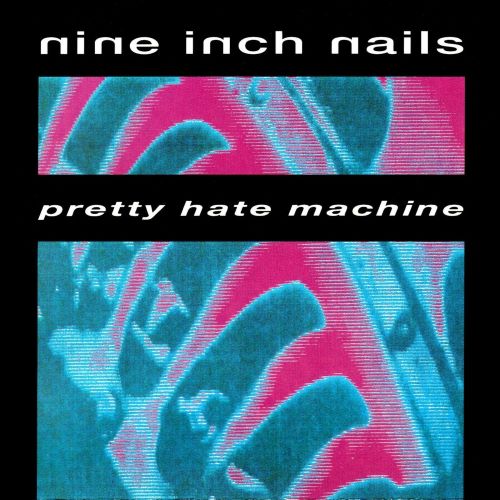
Nine Inch Nails – Pretty Hate Machine
Released October 20, 1989 via TVT Records
My Favorite Tracks – Sin, Head Like A Hole, Terrible Lie
Nine Inch Nails was the brainchild of Trent Reznor, who would be the band’s only member for the recording of the debut album. Reznor was able to record for free in a studio in Cleveland, Ohio; where he worked during the day then was allowed to do his recording at no cost.
The music here can bear multiple descriptors and still be pretty accurate. It is inudstrial, though far more rooted in conventional rock than many legacy industrial acts. It can easily be called electronic rock, though such a term doesn’t really mean much other than synthesizers and like instruments were used. And this was certainly alternative, in that it didn’t sound like much of anything else that was going on at the time. Yet, anyway.
Trent Reznor was the only musician involved in the bulk of recording Pretty Hate Machine, though others contributed spot appearances. The album was produced by a committee though, with Reznor and four others earning production credits. Among those was Flood, who had a long career in engineering and was now stepping up into production and whose future would be entwined with Nine Inch Nails’ rise.
The original issue of Pretty Hate Machine was 10 tracks at 48 minutes. A 2010 reissue includes a Queen cover and there are some other odd editions that comprise bonus tracks taken from the album’s many single releases, but today I’ll stick with the OG tracklist.
Head Like A Hole
Opening the album is the earliest NIN signature song and the album’s second single. This one comes in with synthesizer action but also sticks to a conventional rock formation, this song is probably as close as it gets to heavy metal on the first album. The verses spell out the presence of God Money, the true all holy presence that runs everything, then the chorus ramps up and lashes out, its refrain “I’d rather die than give you control” being a very recognizable shout from over 30 years prior.
Head Like A Hole has remained a NIN staple since release and is the band’s most played live song. Note that the music video features a remix of the song, though it is not radically different from the album cut.
Terrible Lie
It’s on to another NIN staple cut, this one wasn’t a single but has been in wide circulation anyway. This one keeps a slower pace but does still hit pretty hard. It’s one that sounds mostly more conventional though it still features plenty of synth and electronic programming. This one sees Reznor questioning god and religion, something he would not stop with here. Though this one is far less blasphemous and pointed than subsequent forays on the topic would be. This one is more about the disconnect between promise and reality, and the desire to cling to the fantasy.
Down In It
Up next is another album single and also the first song Reznor wrote for NIN. This one sees Trent showing off some rap skills and also goes very hard on the electronic side of things. Reznor has said that the song is a complete rip-off of Dig It, a 1986 track from influential act Skinny Puppy. And yeah he’s right about that.
The song is about what a lot of this album is, which is late teenage heartbreak and angst. It was based on an early relationship of Reznor’s and while the song is general enough to apply to a lot of things, the relationship angle is an obvious one. Also, the end of the song literally uses the “Rain, Rain Go Away” nursery rhyme for whatever reason. Kind of funny.
There is a funny story about how the FBI became involved with lost footage from the music video, but the story is lengthy so I’ll save it for another time. It’s widely available on Wikipedia and elsewhere for the super curious.
Sanctified
Here is a more atmospheric track that employs the electric elements to great effect. It couples the idea of relationships with the holy elements of purification, as though one is ascending or cleansing through the act of being with someone. Reznor has mentioned that the “relationship” might actually be one with drugs, though the song works quite well in the more conventional context of relationships.
Something I Can Never Have
A more quite ballad, and one that’s very forlorn. This revolves around love and loss, the unobtainable and the loss of what was. Reznor would showcase a special talent for this quiet electronic ballad style over the years, of course the culmination of that is a tale for later. This song got used for the soundtrack to Natural Born Killers, which Reznor produced.
Kinda I Want To
“Nine Inch Nails” and “fun” aren’t often words used in the same sentence but here on the debut we have a bit of it. It’s more upbeat, though still a bit twisted. I know nothing about dancing but I’m sure people could dance to this. This song centers around being tempted by something and the struggle around it, though honestly it sounds like the decision to go for it is already made. There’s no telling what the actual temptation is here – sex, drugs, slot machines, take your pick.
Sin
Up next is the album’s third single and my favorite from the record. Sin is, in its original form, a bit of a dance-pop tune, though with a theme and lyrics with a much darker bent. This song was remixed extensively, several versions exist and it’s done in a different style live, with less “fun” synth and more dark tones.
Sin is about what you would think a song named Sin is about on a NIN album. It does specifically deal with what sounds like an inadequate person in a relationship who’s caught in a power dynamic and is just fodder for their partner.
There is a music video for Sin, but it features a lot of sin and isn’t around on the usual video services. It’s around in other places for the sinfully curious.
That’s What I Get
This song turns down the intensity for awhile. It opens with a very weird yet compelling noise accent, then gets very quiet through the verses as Trent laments being cheated on. The song’s second half picks it up a bit but it’s still fairly minimal.
The Only Time
As the album winds down here’s another one that’s a bit minimal but is a fair bit louder than the track prior. This one is also kind of “fun” and deals yet again with being tempted by someone and all the feelings that go along with that for a young, naive person.
Ringfinger
The closer is a bit of an electro jam, with a fair bit of synth going on that’s more of the musical main event than an accent. Lyrically this tackles the “bliss” of marriage, as the title would indicate. There’s a small section with a very twisted electronic riff that would become a NIN staple going forward.
Pretty Hate Machine was a solid debut that would kick-start the legend of Nine Inch Nails. The album would chart very modestly on Billboard at 75, though word of mouth spread news of this new act around and the band caught fire. The album would eventually be certified triple platinum. Reznor would form a band for touring, the early live incarnation of NIN included Robert Patrick, who would go on to start Filter a few years later and land some hits of his own.
The word on Nine Inch Nails spread fairly quickly, by 1992 they were a fixture on MTV and elsewhere. It was also a pretty diverse crowd checking them out – the goth kids, industrial and synth-pop fans, metalheads and rockers, and hip-hop fans all came along for the ride. Axl Rose was one very famous early NIN adopter and he would take the group on a Guns N’ Roses European tour.
By the time 1995 rolled around Nine Inch Nails was one of music’s most unique and awe-inspiring acts, and the use of electronic/industrial music would seep its way into heavy rock for the rest of the decade. While it’s easy to pick on the emotionally immature themes of Pretty Hate Machine, something everyone including Trent Reznor does, the album still resonates with fans to this day and several songs are auto-includes on a setlist that now has a ton of material to pull from.
Sure, it was grunge in 1991 that symbolically changed music forever, but Trent Reznor had his own hand in shaping the future with his unexpected debut in 1989. Things would not be the same and Nine Inch Nails were a huge part of the new machine.
Leading off this week with the album that brought about the 1990’s before 1990 even hit. The album brought everything but the kitchen sink, though that was probably in there somewhere too.
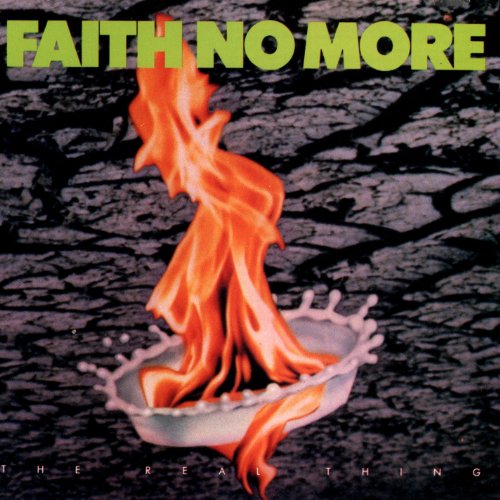
Faith No More – The Real Thing
Released June 20, 1989 via Slash/Reprise Records
My Favorite Tracks – Epic, Falling To Pieces, Surprise! You’re Dead!
Faith No More had started as early as 1979, with a lot of shifting line-ups that at one point included Courtney Love. The core of the band was settled with drummer Mike Bordin, bassist Billy Gould, guitarist Jim Martin and keyboard player Roddy Bottum. Vocalist Chuck Mosley joined for the band’s first few albums but was fired in 1988.
Faith No More recorded the music for The Real Thing without a vocalist through ’88. They quickly focused their singer search on Mr. Bungle vocalist Mike Patton, who joined Faith No More then wrote lyrics for all of The Real Thing over the course of a few weeks.
The album moved slowly out of the gate but would go on to success as the decade shifted and music tastes moved on from hair metal to alternative rock. The Real Thing lingered on MTV for a few years and Faith No More became a signpost for the major shift in music trends that shook the world in 1991.
Normally when I do an AOTW I leave off “bonus tracks” or things of that nature, but in the case of The Real Thing I will include two songs that were not available on vinyl but were on CD and cassette copies. I had the tape growing up so it’s the version I’m familiar with, so the two non-vinyl cuts are included here.
From Out Of Nowhere
The album opener also served as the lead single. It is an uptempo affair with the bass and keyboard lines providing the main drive behind the song and Jim Martin’s guitar a bit more in the background. The song’s lyrical fare is pretty simple and is about meeting someone who takes your breath away on first sight but then the person is gone. The song quickly follows suit at a hair over three minutes, not lingering around long enough to know what hit you.
Epic
In the Faith No More lexicon, Epic is surely the band’s most-known song. This is a true kitchen sink song that could be listed under ten different genres and not be wrong. Funk-metal and alt-metal are probably the two main descriptors, though the song is also an early example of rap-metal.
The song’s meaning is very obscure, though Patton offered that he wrote it about sexual frustration. Most remember the very simple “it’s it – what is it?” repeated at the end of the track.
Epic was the band’s first major hit and remains today as their best-performing US single. The iconic video saw heavy MTV play and drew a lot of attention, this is one of the prime cuts of pre-grunge 1990 rock.
The fish in the video also became famous – the band were assailed by animal rights activists for allowing the fish to flop around out of water. Reports are that the fish did survive. The band also started a joke that the fish belonged to singer Bjork and either she gave the band the fish or they stole it from her, a gag that Bjork went along with. This of course led to widespread belief that the story was true.
Falling To Pieces
The funk metal train continues on with another album single. Mike Patton expresses falling apart at the seams as the band slams through with more alt-groove and atmospheric keyboards. The single itself wasn’t a hit but again, the video was often found on MTV.
Surprise! You’re Dead!
A super heavy track that’s pretty simply about revenge killing someone. The song had a video filmed for it but was never released as a single.
Jim Martin actually began this song in the 1970’s while he was in a Bay Area band with future Metallica bassist Cliff Burton. While Burton has no connection to the song, he and Martin were great friends and Martin often paid tribute to Burton with shirts and in interviews.
Zombie Eaters
A very interesting premise that sees lyrics told from the point of view of a newborn baby who relies on its parents for everything. The baby winds up being the dominant figure in the relationship, as the parent becomes a zombie in caring for the infant. The music is also really well done here, starting with a very moody intro before going into a heavy groove for the rest of the track.
The Real Thing
The title track serves as a bit of an “all you can eat buffet” of what Faith No More is about on this record. It covers both groove and atmospheric ground and shifts between movements and passages. It’s perhaps an underrated highlight of the record.
Underwater Love
The upbeat music belies the lyrics actually being about murdering your loved one via drowning. A pretty trippy tune as the soundtrack to domestic discord.
The Morning After
The funk is in full effect here on this song that’s either about waking up after a one-night stand or becoming a vampire, no one is sure which. It’s a pretty rocking and peppy take on something that’s generally looked at through a gloomy lens.
Woodpecker From Mars
An instrumental that sounds like it’s based on some old piece of music but I can’t place it so I’m not sure. It’s a pretty nice tune that holds attention better than these kind of pieces in other places.
War Pigs
Here we have a cover of the famous Black Sabbath song. The band often performed this live, with Patton famously forgetting words and making up gibberish to fill the gaps. In the studio he got everything down right.
Edge Of The World
The other sort-of bonus track is a slow, jazzy/lounge piece. In it Mike Patton plays the part of an older man who makes advances on younger women. The song has been described in some circles as being about criminal acts but no actual evidence bears that out, this more of an old man of means preying upon young twenty-somethings. Sure it’s creepy but it’s legal creepy.
The Real Thing released to little fanfare but its audience built as Epic hit radio and MTV. The album would eventually hit platinum in the US and reach number 11 on the Billboard charts, while also getting platinum in Australia and peaking at 2 on its album chart. It also got a gold certification in the UK and is believed to have sold upwards of 4 million copies worldwide.
Faith No More would have vast influence over the music of the coming decade. They were a primary favorite of up-and-coming acts, members of Korn have practically written a book about how much they were into FNM while coming up. Faith No More’s ability to craft songs outside the confines of rock structure at the time led them to being a torch-bearer for many musicians who would make their own mark.
As an aside it’s worth noting that not everyone was entirely into Faith No More – specifically Red Hot Chili Peppers frontman Anthony Kiedis. Kiedis was unhappy about Mike Patton’s appearance in the Epic video, believing Patton to have copycatted Kiedis. While Kiedis kept his criticisms along those lines, it’s apparent that Faith No More and RHCP would be compared as their music was along similar lines. Patton did not engage Kiedis in the feud, at least as a member of Faith No More, but did express displeasure with him later due to RHCP interfering with a Mr. Bungle album release. The other members of both bands were not involved in the feud and reportedly got along well.
In the end the music is what matters, and Faith No More brought an album that would help transition music from its 1980’s rock phase into the more experimental period of the 1990’s. While Epic was the band’s most successful song, it’s arguable if The Real Thing is their biggest album, as the follow up Angel Dust did similar numbers and is hailed as a masterpiece in its own right. Obviously another story for another time.
This week I’m taking a dive into the album that really hooked me into music. I talked about it in an older post, now it’s time to get specific and go over the album in greater detail. I got the cassette as a Christmas gift a few months after its release and I played it over and over and over again, literally wearing out the tape and burning the album into my 12-year old brain. The results would have me chasing music all over and shape my pursuit of sound into a new decade while in my formative years.
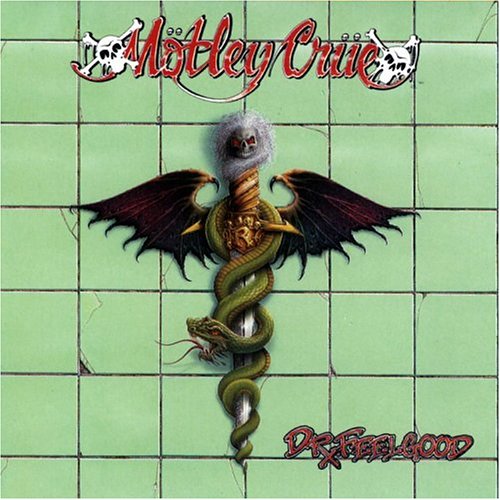
Motley Crüe – Dr. Feelgood
Released September 1, 1989 via Elektra Records
My Favorite Tracks – Kickstart My Heart, Dr. Feelgood, Don’t Go Away Mad (Just Go Away)
Dr. Feelgood was the fifth studio album from Motley Crüe. The album would be a smash success for the group, topping charts and selling several times platinum. The group had been instrumental in starting the hair metal era of the 1980’s and would end the decade with a massive triumph. The album spawned five singles which were in constant rotation on MTV. Hair metal as a whole was winding down as the calendar turned to 1990 but one of its most important acts was still running hot.
Dr. Feelgood
After a brief intro to set the scene, the album kicks off with the title track and lead single. Dr. Feelgood is a massive, heavy song that outlines the highs and lows of Jimmy, a fictional drug dealer. The full, bombastic production of Bob Rock was a welcome change from the thin sound of the band’s two prior albums. It went a long way to reminding everyone that the Crüe had the chops to play a harder brand of rock than what the L.A. Scene had largely devolved into in the late ’80’s.
Dr. Feelgood did great as a single – it was the band’s first top ten hit on the Billboard Hot 100 and also their only gold-certified single.
Slice Of Your Pie
Moving on to one of the many songs on the record about sex, here we have a song full of euphemisms and sex talk that skirts the lines between clever and explicit. Even as one of the perhaps secondary tracks, this song still provides a sleazy thrill ride with the band’s rediscovered chops and improved production. The end of the song borrows from the Beatles track “She’s So Heavy” because that’s what everyone was expecting from a Motley Crüe album in 1989.
Rattlesnake Shake
Another sleazy rocker that glorifies the evils of lust and fornication. Jesus wept.
Kickstart My Heart
This song was on offer as the album’s second single. Nikki Sixx wrote it about his infamous heroin overdose in 1987 where he was apparently injected with multiple doses of adrenaline to revive him and was dead for a few minutes. The story is disputed by some but the song remains.
Kickstart My Heart quickly caught fire on release and became noted as one of the album’s standout songs. It has gone on to become the band’s signature anthem. We aren’t simply talking about a good song here – this is possibly the best song the band ever recorded, and is easily in the conversation even if not. It is a blistering effort with an interlude that perfectly sums up the Motley Crüe experience. The song is a shot of adrenaline and is found on millions of workout playlists worldwide.
Without You
It’s not hair metal without a ballad and Dr. Feelgood hosts a few. The first is this decently crafted tune that is every sappy love stereotype possible shoved into a song. The song is noted to have been written by Tommy Lee about Heather Locklear. The song did well as a single, providing the band’s second top ten showing on the Billboard Hot 100.
This is one of those songs I can go back and forth on. I’ll admit that I probably liked it a lot better when I was 12 than I do 32 years later, but it’s not a song I feel a need to skip over when I play the album. It’s a bit much but I can generally live with it.
Same Ol’ Situation
We thankfully pick the pace way back up with what was the fifth and final single released from the album. It’s a hot, fun rocker about falling for a gal who ditches the guy for another gal. The video was a performance clip, showing the band at the height of their popularity. While some might argue that people only remember the singles more because they were aired out more, I’d say this is a case of picking the right singles to air out. The song is not necessarily any “different” than several others but it packs a harder punch and gets the listener’s attention.
Sticky Sweet
Another ode to the glorious activity of hooking up. It’s simple, to the point and well executed. The lyrics offer a bit of a reference to the earlier Crüe song Ten Seconds To Love.
She Goes Down
One more sleazy number, it’s blatantly obvious what the song is going for.
Don’t Go Away Mad (Just Go Away)
This quasi-ballad and top 20 single brings a change of pace and another signature track from the Crüe. Nikki Sixx lifted the title from a movie he doesn’t remember, though many speculate that it’s a line from Heartbreak Ridge that he his using.
While the title invokes a snarky vibe the song itself does not take that path and instead sticks to the high road. This is a quintessential break up song that celebrates the love found and then parts on fond terms. The song builds to a driving conclusion that uses the title to great effect. It’s another well-done effort.
Time For Change
I’ll just get straight to it – I hate the song. I think it sucks. It’s a shitty hair metal attempt to do The Greatest Love Of All or something like that. It has always bothered me and I can’t help but wish the song would somehow fall off the record. But it’s there, and here we are at the end of the album.
Dr. Feelgood was Motley Crüe’s best-selling album, having been certified six times platinum in the United States. It provided the biggest hits of the group’s career and defied the times to put an exclamation point on a genre of music that many were bemoaning at the time and whose death was just around the corner. Motley Crüe themselves seemed poised to survive the specter of 1991 and would only join the list of hair metal casualties due to their own problems a few years later.
The album was a success for more than the band, too. Producer Bob Rock had reinvigorated the group’s sound after two albums that left something to be desired in production. A lot of people noticed his work on Dr. Feelgood, including Lars Ulrich. The Bob Rock-Metallica meetup in 1991 would alter the face of music forever.
Is Dr. Feelgood the best Motley Crüe album? Some critics think so. I would agree that it’s in the conversation but it’s also hard to ignore the sheer ferocity of those first two records. This album is a career-defining effort though and was a huge victory lap for the band at the end of the decade.
As I’ve said, this is the album I played over and over again and that set my music fandom off the scale. I had been following along with music for several years before as a young tourist, but with Dr. Feelgood I became obsessed and had to have more. My own course would go every which way and much heavier as 1991 loomed on the horizon but this album is near the top of a list of the most important albums to me. It kickstarted me into the path I’m still on today, with piles of music in multiple formats and the thing I spend a great deal of my time discussing.

 The Crooked Wanderer