For the next week I’ll run several posts as a tribute to the late, great Ozzy Osbourne. I will continue covering Ozzy-related stuff next week, but I’m doing this all off the cuff so I don’t know exactly what form everything will take. You’ll find out just after I do!
Today I’ll get into the song that became Ozzy’s most successful single. We all know that Crazy Train is ubiquitous with Ozzy and is his most-recognized track, but it was Mama, I’m Coming Home that took the highest chart position of Ozzy’s solo career.
This well-known and loved ballad came to form on the 1991 album No More Tears. The album is often cited as one of Ozzy’s best, he and his music partners did a marvelous job of retooling for the 1990’s and offering up an album that was heavy and real. The songs were MTV and radio staples, and are still in rotation over 30 years later.
The song was composed by Ozzy and Zakk Wylde. The lyrics were written by Lemmy Kilminster, one of four lyrical contributions he made to No More Tears. Lemmy stated many times that he made more money from Mama, I’m Coming Home than he did from his career in Motörhead.
This ballad granted Ozzy his only solo Billboard Top 40 single, it peaked at number 28. His only other entries higher on the singles charts were collaborations with Lita Ford and Post Malone. The single also hit number 2 on the Mainstream Rock chart and was certified platinum in Canada.
Today’s song is a ballad, but one with a lot of power behind it. The song begins with some clean picking from Zakk Wylde and Ozzy ruminating through the first verse before the full band kicks in and delivers a fair bit of heft for what is considered such a tender ballad. Ozzy sings very powerfully here and the chorus soars along with the keyboard enhancements.
Lyrically this is a pretty dense and tough affair. The song is Ozzy’s lament to Sharon, who put up with a lot of Ozzy’s shit. The years just before No More Tears had some especially bad moments, but Sharon stuck with her husband through it all. The years following this song and album would be much better for the couple, both personally and professionally.
Mama, I’m Coming Home had two videos filmed for it. The first one was weird and Ozzy did not like it at all, so they went back and filmed the far more familiar second cut. The original is also really, really hard to find – my digging has not turned up a version that I could post here, so I won’t bother.
This song took a special place at Ozzy’s final show on July 5th in Birmingham. The Back To Beginning concert featured a slew of acts inspired by Ozzy and Black Sabbath, as well as brief sets from Ozzy’s solo outfit and Sabbath. Mama, I’m Coming Home was the only song played in Ozzy’s five song set that was not from the Blizzard Of Ozz album. The song’s performance was very emotional for many and clips of the performance have been among the show’s most-viewed highlights.
And of course now the song takes on a whole new meaning, as on July 22nd Ozzy truly did go home for the final time. While we are left without the powerful voice and simple charm of Ozzy Osbourne, his legacy is immortal and is etched in his songs, perhaps none more fitting of the end of the line than this sweet and somber ballad.
This was supposed to be last Friday’s post. Go figure that a holiday and an extra day off would cause me to miss a post. But I digress.
Here we are. This is my weekly series where I pick five of my favorite songs from a given year. This time around, that given year is 1991.
It’s safe to say that 1991 is the most important music year of my life. I have all the love in the world for 1984, as I put on display a lot of last year. But nothing was as earth shattering and life altering as everything that happened in 1991.
It wasn’t just everything that happened in music, either – I turned 14 and started my freshman year of high school in 1991. In fact, my birthday was about a week after Metallica released their megalithic self-titled album. Everything was changing fast and I honestly wasn’t even on top of it all – both in life and in music. It would all come together eventually (in music, not in life…)
But today’s exercise is pretty simple – I will select five of my favorite songs from the year. Five is barely a drop in the bucket in terms of the music of 1991, but I’m going to keep this series on the rails and just handle it like any other year. If/when this site gets to 2031 I will dedicate the bulk of that year’s posts to reminiscing about 1991, and probably in a big blowout way that dwarfs even what I did for 1984. Something to look forward to in 5.5 years, I guess.
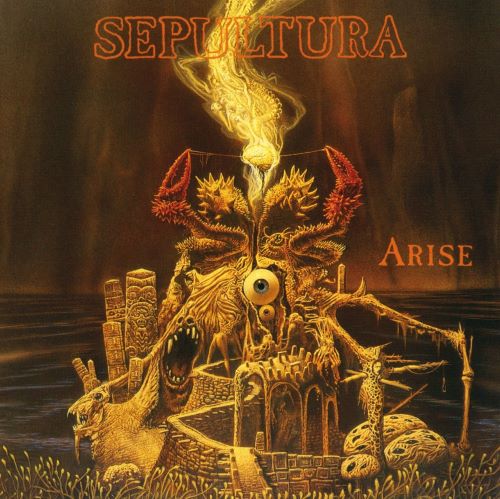
Sepultura – Dead Embryonic Cells
We kick off with this slice of obliteration from the album Arise, often regarded as the Brazilians’ magnum opus. It is equal parts thrash precision and a savage beating, with Sepultura crafting a sound that would serve as a bridge into extreme metal. The song is about being born in a world that is essentially dead and the brutality of the music captures the sentiment perfectly.
Skid Row – Wasted Time
The closing track from the seminal Slave To The Grind album is a ballad by which the bulk of other ballads can be judged. This haunting tale captures someone in the throes of drug addiction, the song was written about former Guns N’ Roses drummer Steven Adler. Sebastian Bach’s vocals soar here and everything comes together for a song that is simply beautiful.
Ozzy Osbourne – No More Tears
The tides of music were shifting in grand fashion in 1991, but the Prince of Darkness could still be counted on to deliver a worthy tune. Ozzy had a bit of a renaissance year in ’91 with the No More Tears album being a huge hit and this title track becoming one of his several signature tracks. This song is the twisted tale of a serial killer, but not told in open terms. Still it’s ominous and creepy.
Mötley Crüe – Primal Scream
Hair metal was being cast out by the second half of 1991, but no one gave Crüe the memo. They put out a greatest hits set with a handful of new songs on it, and this new track was electric. This was heavy, gritty and pounding, seeing the band move up a weight class in the heavy department. It foretold a massive new decade for Crüe, which did not pan out at all, but this kick ass song was a welcome drop in the minefield of ’91.
Carcass – Corporal Jigsore Quandary
By ’91 Carcass were on their third album and had shifted their sound from grindcore to death metal. This prime cut saw the band incorporate a bit of technicality into a very smooth death metal vehicle. And while the title and lyrics are overly wrought, as usual for earlier Carcass, the song is essentially about someone putting a human body back together. It is likely that the person doing the re-assembly is the same person responsible for the body’s dismembered state.
And that does it for five songs from the crazy year of 1991. I had originally thought picking a further five songs as I did for 1984, but in the end I decided against it as I want my focus to be on pushing on with the series.
Next week – I was originally going to restart album posts, but last week’s historic gigs have given us a handful of songs to go over so I will spend a few posts looking at stuff from both the final Ozzy show and the Oasis reunion instead. And I’ll press on with this, jumping in to 1992 where rock and metal were off to the races in many different directions.
This week I’ll leave 1984 alone and explore other waters. We can politely ignore the fact that I’m going to the other massive year in my musical fandom, the apocalyptic soundscape of 1991. And few soundscapes were more world-ending than that of Brazil’s metal madmen and their extreme thrash masterpiece.
Sepultura – Arise
Released March 25, 1991 via Roadrunner Records
My Favorite Tracks – Dead Embryonic Cells, Arise, Infected Voice
By 1991, Sepultura were through a few demos and two full-length efforts, and their profile was on the rise all through the world. As heavy metal was moving into more extreme directions, Sepultura were in prime position for their “thrash plus” metal to have an even bigger impact, which it certainly would.
Arise was recorded at Morrisound Studios in Tampa, Florida during 1990 and ’91. It was produced by the band as well as Morrisound mastermind Scott Burns, who had a massive impact on the early 1990’s metal scene. Burns cranked out a host of extreme metal’s finest albums out of the Morrisound hotbed, and this one was one of the crowning achievements from that period.
Sepultura’s line-up was the same as it had been through their full-length recording history – Max Cavalera was on guitars and vocals, his brother Igor Cavalera was the drummer, Andreas Kisser was the lead guitarist and Paulo Jr. was credited as the band’s bassist. In a twist, Paulo Jr. did not actually play bass on the albums, it was Andreas Kisser who actually recorded the bass parts. This was the final album for that arrangement, Paulo did begin recording bass on the follow-up Chaos A.D.
Today’s album features 9 songs in 42 minutes, a tad more bulky than a lot of peers at the time. A few re-issues and other editions exist with bonus tracks, they can be worth seeking out as they have a supremely excellent cover of Motörhead’s Orgasmatron.
Arise
The title track opens as many songs here do, with a creepy industrial-tinged intro. The setup is brief as the band slams in with riffs coated in their sick guitar tone, simple yet amazingly effective at hooking the listener in to this maelstrom of instrument bashing.
Arise may come off as an uplifting thing on surface level, but this song is about the war between religions, politics and other ways people define themselves as “better” and how it is killing the world. We only “arise” after the obliteration of mankind, under a pale grey sky – this is the end of it all, not a self-help track.
This was released as a single and got a music video, featuring the band playing in a desert. A few poked fun since the scene mimicked Slayer’s Seasons In The Abyss video. MTV was not a fan of the video in the US, not airing it due to a figure of Jesus hung on a cross and in a gas mask.
Dead Embryonic Cells
Another brief, crazy industrial sequence opens into another absolute scorcher of a thrash track. A sick rhythm riff slices through while Andreas offers up some trippy leads over everything. The song is about how people are born into a world already up shit creek. This is not simply a straight up thrash number, either – this song goes through several movements and changes, all the while retaining its core and brutal aura. My personal favorite of the entire Sepultura catalog.
Desperate Cry
This gets a nice, brief acoustic opening segment before launching into its doom-thrash main bit. It’s a tortured song (go figure) about someone facing their dying moments. The acoustic bit pops up again briefly in the middle, before more electric chugging commences to headbang out to the end.
Murder
This is a pretty straight ahead track in terms of thrashtality. The song is a grim look at Brazil’s prison system and their very, very bad track record in dealing with inmates. The topic is grotesquely disturbing and continues to this day, as I understand it.
Subtraction
On to another song that is like a thrash homing missile, this one takes off and doesn’t stop until it hits the target. There is a fair amount of “chug” and groove in this one too, showcasing that Sepultura would be a massive influence on 90’s metal to come. The song is about how a person loses their individuality through the pursuit of money and glory – subtraction of personality, as Max howls in the chorus.
Altered State
Here we get a howling wind start and some South American tribal drums to kick things off. This would be a new addition for Sepultura but would be far from the last – this drumming style would permeate Chaos A.D. The song’s title was taken from a movie of the same name and is about human experimentation on brains, fun stuff.
Under Siege (Regnum Irae)
A small bit of a stylistic departure here as the song moves quite slowly, but the doom-thrash thing fits the album well. Parts of the lyrics are transcribed from the controversial The Last Temptation Of Christ, and the song is about how people are generally born into or forced into their religion of “choice,” rather than freely picking it. In the hands of lesser bands this concept could have fallen apart pretty quick, but Sepultura show they are quite capable of working with different lyrical and musical concepts here.
Meaningless Movements
It’s back to full on thrash here, though still tempered a bit in pace. The song is another study in religion and the effects it can have on personality, essentially warping someone and especially casting out anyone with a dissenting view.
Infected Voice
The album’s closer is a true testament to Sepultura’s sheer thrash insanity, this song goes harder than hard. The running joke has been that the song is about Max Cavalera’s actual voice, which would get confused with a rabid grizzly bear before it was compared to another singer. But the song is actually about the fear of growing up, essentially, having to make tough decisions and all of that. It’s actually the most pragmatic song on an album full of deep and dark themes.
Just as music was shifting rapidly in 1991, Sepultura would truly announce their presence with Arise. The album would chart in at least six countries, no super high positions but a truly international showing. It would gain a silver certification in the UK as well as gold in Indonesia. By 1993 the album had shifted one million worldwide units, just as their true mainstream arrival in Chaos A.D. Would launch.
Arise is also critically hailed by many as Sepultura’s finest hour. The reviews from the metal press have been glowing, both on release and in the 33 years since. It makes many metal “best of” lists. The critical acclaim at the time helped vault Sepultura into widespread coverage just as heavy metal was again mutating into many other forms. The band’s influence on the mainsteam of 90’s metal can be heard in both the “groove thrash” and alt-metal to come and even in the nü-metal that would comprise the latter half of the decade. And Sepultura were kingpins of the extreme metal movement, being vastly influential to death metal and most any form of the world’s darkest arts.
I would personally hear this album for the first time in the late summer of 1991, just as I entered my freshman year of high school. A dude in front of me in algebra class knew I liked metal and asked if I’d heard this yet. I had not, so I borrowed his walkman for a minute and checked this out. I was totally blown away. I had been into the “big four” by this point but hearing this was a total ass kicker. Thank you Shane, wherever you are, for introducing me to this and shaping my musical journey, as well as probably truly rotting my young brain.
It’s time for one of the biggest albums in music history. This record literally conquered the world and made its makers one of the biggest acts in music history, a status they have not relinquished 32 years after the album’s release.
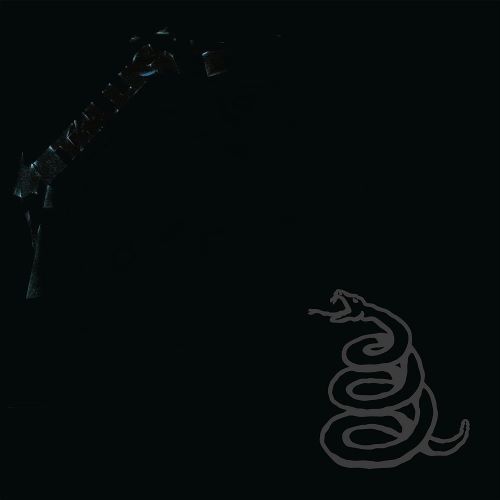
Metallica – self-titled, aka “The Black Album”
Released August 12 1991 via Elektra Records
My Favorite Tracks – Wherever I May Roam, Sad But True, The Unforgiven
Over the course of their prior two albums, Metallica had been stretching their songwriting and making longer and longer efforts with progressive twists and turns and other assorted things. When it came time to do the follow-up to And Justice For All, the group wanted to ditch the longer and complicated concept and keep things simpler.
The band hooked up with producer Bob Rock, based on what they’d heard from Mötley Crüe’s excellently-produced 1989 album Dr. Feelgood. Rock has recalled through interviews and documentaries that the process was long and difficult, not helped by the fact that 3/4ths of Metallica were going through divorces at the time.
In the end, Metallica got their album recorded and history was on offer. This has 12 songs at 62 minutes so there’s a bit to go over, not to mention the insane amount of accolades this album has racked up.
Enter Sandman
The lead single and one of the most-played songs in history (no citation for that, but it has to be). It is in stark contrast to stuff from the prior two albums – this is a simple riff and the song is basic as can be. But it works very well, and that’s why legions of people tuned in to Metallica when this song first hit in the all-important summer of 1991. Even though this is overplayed to absolute death I honestly still don’t mind hearing it.
Sad But True
This is another single and one of the album’s heavier tunes. It’s about the seedier side of life and being pulled into it by grim influences, it was apparently based on some old Anthony Hopkins movie I’ve never seen or heard of. This song absolutely crushes and is the true nexus for the marriage between ’80’s Metallica and ’90’s Metallica.
Holier Than Thou
This one holds a pretty good pace as it deals with self-righteous people in a religious context. I like the lyrics quite a bit, the song itself is ok but not my favorite. It is really, really simple and sometimes that can be a detriment, but there’s still a listenable quality to it.
The Unforgiven
Metallica have done ballads before and would again. Here the band flipped the typical ballad formula – it was hard-hitting verses and a quieter, somber chorus. This one is all about the perpetual struggle against the forces of control in life, and in this case it’s a losing battle. The picture is painted vividly through the words and music, this is truly soul-crushing stuff. Kirk Hammett reports struggling a lot with this solo before finally getting it right based on feel more than notation, something that would transform his guitar playing moving forward.
Wherever I May Roam
This gem features a few exotic instruments but is still fairly standard metal stuff. The song is all about its title -truly being a free wanderer who is at home wherever he happens to be. Perhaps this song indirectly inspired all of the van life stuff going around, or perhaps that’s our shitty economy, I don’t know. Awesome song here, though.
Don’t Tread On Me
A bit of good old American exceptionalism here, as James Hetfield crafted a song that pulls concepts from the American Revolution and celebrates the “kick their asses” mentality of US diplomacy. While today the phrase “don’t tread on me” has negative political connotations, this song was from a time well before anything said was taken as an absolute political stance so I don’t see it as a big deal. I also don’t see the song itself as that big of a deal, it’s fine but it’s not much to write home about.
Through The Never
This one is pretty hard-hitting and has a bunch of philosophical stuff in it that’s honestly above my head and probably also below my knees. I think the song is fine but I’m fairly indifferent to this one too, don’t go out of my way to hear it.
Nothing Else Matters
This was the really big topic of discussion when the album came out, Metallica had done a full on ballad – not the heavy metal sort of ballad they’d put on offer before, but just a regular old ballad. While my fandom usually falls on the metal side of things, this is a pretty well done song. Sure it was different, but a good song is a good song.
Of Wolf And Man
A mid-paced stomper about turning into a werewolf. It’s ok but doesn’t do a lot for me.
The God That Failed
This is a very nice, slow and heavy song. It deals with the let down of a god not providing the healing asked for, something that affected James Hetfield in his childhood. His mother died of cancer after not seeking treatment due to her strange sect of Christianity. The topic is grim and the song is pretty great.
My Friend Of Misery
This song’s about one of those awful people who drag everyone around them down. I like the concept and lyrics a lot. The song is a bit plodding but still pretty decent.
The Struggle Within
The closer gets a bit thrashy in spots as the bands kicks it in high gear to the finish line. Not entirely sure what’s going on lyrically but it’s clear someone is screwed up in the head to some degree. Pretty nice song to end on, I do go back and forth on how I feel about it at times.
“The Black Album” was every bit the success anyone hoped it would be, and then some. It debuted at the top spot on the Billboard 200 and stayed there 4 weeks. It would remain on the Billboard 200 for a very long time, being the second-longest charting album in history, behind only Pink Floyd’s Dark Side Of The Moon.
In the US the album has been certified platinum 16 times and is likely up for 17 now. It is the best selling album of the Nielsen Soundscan era, outpacing ’90’s titans like Shania Twain and Alanis Morissette. Worldwide Metallica has sales over 30 million copies. It is truly one of popular music’s most accomplished records, and Metallica have been mainstay titans of music ever since.
Of course the debate over this album takes on another turn when it comes to the older part of Metallica’s catalog. A fair few of the band’s legions felt betrayed by the switch away from thrash and complex song arrangement. It’s no doubt that this album is a lot less, uh, noisy than the band’s first four. In fact a good portion of “first four fans” would pop up as Metallica grew in stature exponentially with the Black Album’s success. That argument still rages today, even though we’re now 30 years removed from the “big switch.”
For me personally I have no big beef against this album. This came out a week before I turned 14 and just before I started my freshman year of high school, so it was perfectly positioned to be a game-changing album for me. My friends and I played this over and over again, though I did wear out on it long before they did. While many others were still playing this multiple times daily in 1993, I was off chasing down heavier stuff like death metal. I do much prefer Metallica’s first four, as my ranking from awhile back clearly illustrates. But there’s enough good stuff here to appreciate this album too. I have literally heard this album to death and honestly I’ve only played it a handful of times in the 2000’s, but there is no arguing the mark this record made.
Today I’m talking about a country song revolving around a small town, though this one is 32 years old and wasn’t a political lightning rod, instead it’s just an enjoyable song from the ’90’s country era.
Hal Ketchum came up in the Texas scene and began his recording career in the late 1980’s after playing for several years on the live club circuit. His second album Past The Point Of Rescue would be his major label debut for Curb Records and is where today’s song hails from. The album would go gold for half a million copies sold and was the start of Ketchum’s solid presence on the airwaves of 1990’s country.
Small Town Saturday Night was one of three singles from the album that went to number 2 on the Hot Country charts. This was the lead single and served as Ketchum’s introduction to the national country stage, where he picked up steam right off the bat. While Ketchum did write a lot of his own material, this song was brought in from outside songwriters Pat Alger and Hank DeVito.
Like much of country music from the 1990’s, this song is pretty smooth. Nothing was rough around the edges in this era of high production values and mining for radio hits. There is just a bit of rough and tumble to this song but it’s still a prototypical offering from country of this period.
Lyrically the song’s concept is self-explanatory – some bored kids need something to do on Saturday night in their small town. They have just enough for gas money to go cruising, enough booze to catch a buzz, and absolutely nothing of substance worth doing. The third verse offers a pretty stark reality about small town life – the main “character” Bobby tells his girlfriend Lucy that the world has to be flat because their small town is everything – anyone who leaves never comes back, so the world cant’ be round. And yes it’s a metaphor, that flat earth bullshit wasn’t taken literally in the 1990’s.
And yeah, I can confirm that this is life in a small town, Saturday night or otherwise. The town I grew up in had all of 2,500 people in it. There really wasn’t a lot going on and this song is what a lot of younger folks did. Ketchum didn’t have to stretch to write this song, it’s all right there for anyone who had spent more than a night in a small town. I was a bit more disaffected than most in my childhood so I wasn’t really partying back then, but we would go drive around backroads looking for old abandoned buildings to check out, which there were no shortage of on the old, isolated farm lands. Sometimes you just got in a vehicle and went somewhere, even if that place was nowhere, because it’ wasn’t the nowhere you were living in.
Small Town Saturday Night entered country radio rotation on release in 1991 and it never left. It’s on just about any station that plays classic country today, and even more so now since ’90’s country is having a huge retro appreciation wave. Hal Ketchum continued to record and tour into the late 2010’s when it was announced he had been diagnosed with Alzheimer’s, he would pass away in late 2020.
For me I was never a huge country fan when this stuff was actually going on in the 1990’s. By this point I was well on my way to exploring death metal and all of the “alt-metal” stuff showing up. But I do remember these songs being on, and this one especially was one I kind of always like hearing. As time has gone on I wound up getting more into country and came to appreciate more of these early ’90’s cuts. Country music today has become far too much of a thing for the politically-charged masses to spew venom at each other about, but a song like this is always enjoyable no matter what kind of crap is going on in the news cycle.
This week it’s time to head back to the fateful year of 1991, but in this case it’s to visit a band that was immune to the tectonic shift in rock that year. Van Halen were riding high heading into their third album with Sammy Hagar at the mic. While many dismissed Van Hagar as AOR rubbish that didn’t hold a candle to the beloved David Lee Roth era, VH were cranking out number one albums and hit singles as well as arenas full of eager fans.
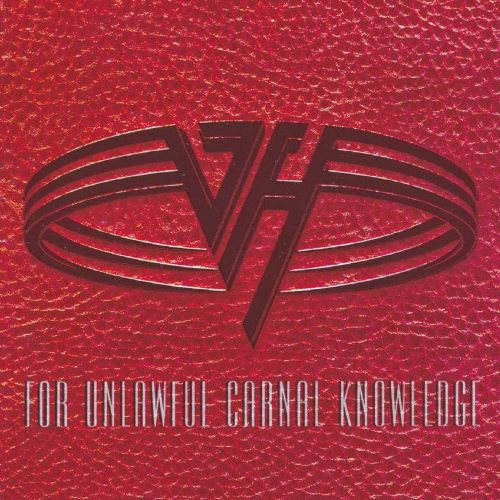
Van Halen – For Unlawful Carnal Knowledge
Released June 17, 1991
My Favorite Tracks – The Dream Is Over, Poundcake, Judgment Day
Van Halen spent a year recording their first effort of the 1990’s. While Andy Johns was tabbed to produce, the band also brought in an old friend – Ted Templeman, who had famously guided the band’s early albums but had been absent through the Van Hagar era. The duel producers were a means to satisfy Sammy, who apparently didn’t enjoy working with Johns.
This album would see Van Halen forego the synth-based AOR rock of the late ’80’s and move to a heavier song structure based on guitar, and the occasional power tool. While I’m sure the band made the decision on their own terms, it did coincidentally fit with the times as the album’s release slotted in the summer that hair metal, AOR and other venerable forms of rock met their mainstream end.
The album cover is nice though also basic, but the real art lore was in the inner booklet pictures. In first pressings of the album, one photograph showed a blackboard with a bunch of phone numbers on it. Some of the phone numbers got massive amounts of calls, so the record label repressed the album with the phone numbers removed. Note that these CD and cassette versions are not hard to acquire, it was a mass produced item so the phone numbers version carries no premium. Vinyl copies of the album did not have the blackboard photo that I know of, but vinyl of this album is scarce and does command huge value.
And of course there’s the album title. If it isn’t obvious, it spells out FUCK. The phrase was NOT the origin of the actual word “fuck,” which is a thing that’s out there but isn’t true.
There are 11 songs running at near 52 minutes total, time to head on in.
Poundcake
We start off with Eddie using a drill to mess with his pickups and then we’re off to the races. This is a heavy, driving track that doesn’t go too fast but really slams its point home. And that also happens to be what the song is about – slamming the point home with a nice, lovely woman.
Judgment Day
This one retains the heaviness but gets a bit faster as Sammy extols the virtues of kicking back in life and staying out of the ambitious rat race. This song was a big hit with my teenage self, perhaps informing me a bit more than it should. But hey, it’s all good.
Spanked
This one is pure sleaze and grime. This is some monster heaviness from Eddie and the band, it goes a degree further with it than Van Halen ever really went before. This one also has a good helping of the backing vocals that Van Halen were famous for but were not emphasized a lot on this album.
The song is about the old 1-900 numbers, which were a pre-Internet outlet for the sexually frustrated gentleman. They were total rip-offs as magazines were far cheaper, but I guess nothing beats that “personal” interaction. The song today would be about OnlyFans.
Runaround
One of the album’s featured singles, this track is a bit of a faster-paced and a less R-rated version of a sex song. It could be considered basic but it’s a pleasant song and I don’t find anything wrong with it. The video makes use of the rotating stage Van Halen were into using in their live shows, a pretty obvious fit given the song title.
Pleasure Dome
This one is a bit of an oddball. It’s still fittingly heavy for the record but is also a bit out in left field, at least in vibe it’s reminiscent of the prior album OU812. It seems like someone is caught in an artificial utopia of some sort but is aware and wants out, some kind of virtual reality or simulation kind of thing maybe. There is some seriously crazy riffing from Eddie on here, it hangs back a bit in the song but its truly something to behold.
In ‘N’ Out
A bit more of an “open” rocker here, it’s a song about how money makes the world go around and most people are basically screwed no matter what they do. The song’s loose rock vibe is a bit in contrast with the grave subject matter but it’s a sign that Van Halen were willing to explore more serious lyrical fare, something that comes up again on this album.
Man On A Mission
Another bit of a loose and upbeat song, this is Sammy motivating himself to go out and get his girl. Parts of the song are a bit self-help in nature and then other parts are total sleaze, it all works pretty well overall.
The Dream Is Over
A total vibe shift here from going out and getting some to a stark condemnation of the system and its leverage against the average citizen. This one really came from out of nowhere and delivered a powerful statement about the workings of society. Eddie and Sammy had discussed turning an eye toward more serious lyrical fare and they hit on it big time here. The song feels like nothing less than a death certificate for the American Dream and feels just as relevant today as it was 32 years ago.
Right Now
The album’s huge hit and a song that caused a lot discussion back on release. This was another of the songs with a more serious look at things and is the song Sammy Hagar has declared his proudest lyrical moment from his Van Halen days.
Right Now is about embracing change and reaching for it in the moment, even in the face of great adversity. The music video featured a bunch of random footage with text of things that were going on “right now,” some funny but many serious. The video was a smash hit and is likely the band’s biggest of their career.
Right Now was also used by Pepsi in a huge advertising campaign for Crystal Pepsi. The story of that soda is an odd one all its own, but for Van Halen it caused a fair bit of anger for the band “selling out” to corporate interest. Eddie justified the licensing, saying that the ad agency would have simply hired some jingle writers to do a basic cover of the song anyway, and he was correct in that assessment.
316
This instrumental track was originally written during the 5150 era but was brought back out by Eddie when his son Wolfgang Van Halen was born. Wolfgang’s birthdate was 3-16-1991, thus giving a title to the piece. This one is a quiet and reflective piece that sequences very well after the thematically heavy nature of Right Now.
Top Of The World
The album ends with a more “standard” Van Halen track that connects more to the prior Van Hagar releases. It’s a pretty simple and uplifting song that pretty well says what the title communicates. It’s a pretty nice way to close a record that was filthy in parts and serious in others.
For Unlawful Carnal Knowledge was another smash hit for the Van Hagar camp. It spent 3 weeks at the top of the Billboard 200 chart and would come out with 3 US platinum certifications. Singles from the album were all over radio and MTV, and the band’s tour for this cycle was one of their longest. While success can be defined by many different metrics, this period was easily one of the band’s most successful. Music critics were not very into this album, but the record won the popularity contest.
For me personally this was a pretty watershed moment in my music history. The summer of ’91 was when I really took off as far as getting into music goes, and I went to get this one on the day it was released. Along with it I also bought an album that had just come out a week prior, that being Skid Row’s second album Slave To The Grind. I went back and forth between both albums constantly and both tapes got wore out pretty quickly.
The “Van Hagar” era gets a fair bit of flack from Van Halen fans, with many people living and dying on the classic catalog built in the band’s first frame with David Lee Roth. I would never in a million years argue against that period of the band. But to discount Sammy’s tenure is short-sighted and for me, this album is the high point of that time.
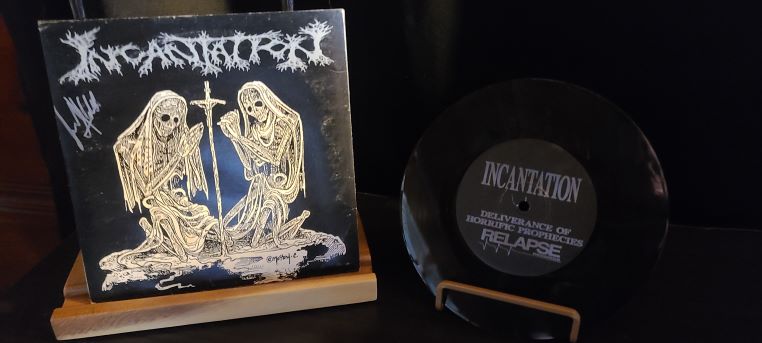
Today’s single is a relic, both of my collection of the death metal renaissance of the early 1990’s. I originally purchased this record via mail order in 1992 or ’93, not sure exactly. And it’s in my collection today, though it spent a very long time not in the collection. It’s a story I’ll tell after getting into the songs.
Incantation are a US East Coast death metal band, having been at it since 1989. While never a chart-topping act with radio play, they have had a huge influence across the extreme metal scene with their blend of death and doom elements. Their 1992 debut Onward To Golgotha is hailed 30 years later as a classic of death metal and it’s the album from which the songs on this 7 inch single are drawn.
There’s no need for me to get to long-winded about the songs. I’ll post them both here. The A-side is the title track and the B-side is Profanation, both songs are from Onward To Golgotha. The single was released in 1991 before the full length came along in 1992. Both of these are prime cuts of what’s known as “cavernous” death metal, like the kind of shit you’d hear if you were locked in a medieval dungeon.
I originally came into this record in 1992 (I think…), it was a part of my very first mail order of underground metal stuff. I got the record and the full-length album on tape, as well as the first album and another 7 inch single of Amorphis. I was pretty stoked to have this kind of stuff in my collection, there was only one other person in my pissant little hometown who was into this kind of music.
Fast forward a few years and I shipped off to the Navy. In fact I was in Europe for a bit over three years. My music collection, including all of this, sat at my mom’s house and survived a move (thankfully just a few miles away). I got back from the Navy and reintegrated my old crap, including this single, into my existence.
A few years after that in what I think was 2002, I met a friend who was very, very into metal in all its forms. He and I are very good friends to this day, in fact. I mentioned having this single as well as the Amorphis record and he was interested in buying them. Given that I didn’t really care about them at the time and was also pretty hard up for money, I cut the deal.
Now on to late 2006 – we went a few hours away to an Incantation show on Black Friday (the day after US Thanksgiving for those unfamiliar). My buddy took this record with him and Incantation mainstay John McEntee signed the cover for him. There was also a newer 7 inch single running around at that time that John also signed for my friend and which is now also in my collection, we’ll get to that in a few weeks.
Fast forward to, uh, 2019 or maybe even 2020, or hell 2021, I don’t recall exactly. I think it was 2020 but I don’t know, the hell with remembering stuff. Anyway – my buddy and I were doing as we often do on Friday nights, drinking beer and listening to metal. We were shooting the shit about the price of records and we wound up going through his 7 inch singles collection to see what the prices of things were. Well, it turns out the Discogs median on this Incantation record was pushing $50, as was the 2006 single he’d bought at the show.
So, after slamming a few more beers and discussing a price that was fair and saw my pal rake in a tidy little profit but also kept me from having to shell out median prices, I am once again the owner of my old single as well as the other one. The stuff you’ll do after a few beers, that could be a blog all its own.
And that is the story of this single, which is kind of beat to hell but still playable and very nice to have, as I honestly don’t have much stuff now that I did in my childhood.
So far I’ve issued several verdicts in the case of The People versus Whoever Killed Hair Metal. I’ve found grunge, and by extension alt-rock, guilty. Guns N Roses too is guilty, having set the bar too high for anyone else to attain. And Metallica, of all people, is certainly also guilty of providing another alternative to the stale and washed up format of hair metal. Here are links to my previous rundowns in the series.
But in the end, we all know who is truly guilty of killing hair metal.
And no, it isn’t hair metal.
It’s ok, I’ll give you a second to process that. But you know I’m right, if only technically.
Suspect Four – The Record Labels
No, hair metal did not kill hair metal. Sure, quality control was noticeably absent in the early 1990’s just before the death knell rang from Kurt Cobain’s guitar. It can be said that hair metal was a watered-down mess that was nearly unrecognizable from the form it began on in Motley Crue’s early recordings. It couldn’t even hit the high notes of the late 1980’s, struggling to keep pace with choice recordings from the likes of Cinderella and Skid Row.
It just wasn’t there anymore. Sure, some recordings of various merit came out. The last gasp of hair metal saw acts like Slaughter, Trixter, Firehouse and Winger generate interest while also seemingly flailing against the inevitable. The party was just about over on the Sunset Strip, at least for all but the few biggest acts who had transcended the genre in various ways. Skid Row would go on for a few years of touring success. Guns N Roses had big hits with their double albums in 1991. And Motley Crue seemed poised to take on a new decade with the excellent cut Primal Scream from a greatest hits collection, only to implode in band turmoil a year later.
Everyone else was left to either die off immediately or slowly flail away. White Lion split when guitarist Vito Bratta had enough of the music industry, totally unwilling to this day to return. Poison tried their hand replacing CC DeVille with up and coming guitarist Richie Kotzen. The move produced some worthwhile music but personally backfired for everyone involved in an extramarital affair.
But Poison had a bigger name and therefore more capital than most, and were able to reestablish themselves as a worthwhile nostalgia act years later. Many other of the hair bands would fall off a cliff in terms of notoriety. Small but dedicated fanbases would turn out for shows at far-flung clubs or state fairs, but hair metal had fallen and wasn’t getting back up.
Rock music as a whole had changed. The sound that grunge ushered in led way for rock’s alternative base, something aired on college radio in the 1980’s, to truly take over and redefine the sound of rock music. The sound of late ’90’s rock was more akin to a CW TV show theme song than a big party anthem. Even legacy rock acts like the Scorpions and Def Leppard, bigger than hair metal but not immune to its movements, had to take time to readjust as their favored sound faded away. It seemed like everyone in rock music, with the exception of Aerosmith, felt some kickback from the demise of hair rock in 1991.
It wasn’t the bands that killed hair metal. No one on Earth would kill their own livelihood. The bands might be complicit in recording drek that got worse as time went on, but it wasn’t really under their own direction.
No, music is a business, and it was the record labels who were milking the hair metal cow dry. Hair rock was a fad – the gaudy fashion, the good times and fast women, the massively excessive image and music was not going to last forever. Nothing last forever in music. Those acts who see longevity have pivoted over the course of years and decades. They languished at times and then resurged when the moment was right.
The record labels were living large in the 1980’s on piles of money from overpriced albums and hoarding of profits off the backs of its artists. They churned out act after act in the course of business, without considering the artistic effects this assembly line of hair rockers was going to have.
And it wasn’t hard to find willing acts to keep the hair metal machine going. Who doesn’t want to be a rock star? Hair metal represented the zenith of excess for rock stardom. Women, parties and drugs were the order of the day. Sure, every other genre of music sees its stars indulge in the same, but hair metal put the show front and center. Take the record company’s money and head out in search of the stars. Never mind the terms of that contract and the severe unlikelihood of reaching those stars…
No, hair metal did not kill hair metal, at least in a sense. The music had gotten derivative to a point of being parody of its earliest incarnation, but the bands themselves aren’t to blame for their demise. It was the record labels, in their perpetual avarice, who truly killed hair metal and shoulder the lion’s share of guilt in the case. The entity that brought the hair metal movement to light was the same one who killed it.
It has now been 30 years since the death of hair metal. Rock music shifted course forever after 1991. There still is that “old rock” sound to be found, many legacy acts and even newer bands born of inspiration from the old days abound, though mainly in the independent scenes. While I don’t necessarily yearn for the glory days of hair and makeup, I do sometimes miss the rock music that was the underpinning of the hair metal movement and I’m glad some old school folks are keeping that kind of rock around. But modes of music distribution and information sharing have changed so much since the 80’s that there is likely no way to truly bring that scene back into existence. Things are just way too different now.
This stands as my final testament to who and what killed hair metal. The record labels bear the blame in my eyes. There is no appeal to a higher authority regarding my verdict – my judgment is final. It’s time to move on to other scenes in music for a bit, and to have nothing but a good time while doing so.
It’s on to part three of this exploration of who killed hair metal. I’ve already rendered verdicts on grunge, the prime and obvious suspect. I’ve also convicted Guns N Roses of killing their own scene by being better than it. Check out the links below to see all that in action.
Grunge, and specifically Nirvana, get the lion’s share of blame for killing hair metal. It’s warranted, as I already went over in part one of this series. But grunge didn’t just kill hair metal. The truth is that heavy metal in all its forms was very much hurt by grunge’s influence.
Record labels weren’t only signing hair bands left and right – they were out to get on the next cash cow, and the next-heaviest thing that seemed logical to take off was thrash. The offshoot of punk had come in hard in the early ’80’s and was the polar opposite of its bastard cousin hair metal. Major record labels stocked up on thrash acts in order to be ahead of the curve and be there when thrash broke big.
The only problem was that thrash didn’t enter the music mainstream. Well, except for one band, and that band turned their back on the thrash that they helped invent and instead conquered every music chart known to man. I submit for consideration as a suspect in the murder of hair metal one of music’s most significant acts who made their own mark on 1991 – Metallica.
Suspect Three – Metallica
Metallica could have killed hair metal very early on. Lars Ulrich has told a story of his band wanting to fight Motley Crue in the streets in the early ’80’s, when both bands were getting their starts. Lars set out to find Tommy Lee and teach him a lesson on who is the bigger badass in music. Unfortunately for Lars, his 5’6” frame didn’t quite measure up to Tommy’s 6’2” stature, and Lars wisely chose to disengage.
Metallica might not have beaten up hair metal way back when, but they got to put their own nail in the coffin a decade later, even if Motley Crue themselves would outlive the death of the genre they founded.
The story is simple – Metallica arrived on the scene with an intense thrash record, they then refined their approach through songwriting and combined heavy with tasteful. They entered the 1990’s looking to do something different and hooked up with Bob Rock. The resulting record, the self-titled affair known as the Black Album, took over the world and is one of music’s best-selling records ever. The record has sold 31 million copies since release and served to catapult Metallica into the upper echelons of rock stardom, an unlikely feat for a group of nasty, long-haired geeks who cut songs like The Four Horsemen starting out.
As a whole, heavy metal did not do that well in the 1990’s. A few exceptions are noted – a brief movement from the early half of the decade loosely categorized as “alt-metal,” including Danzig and Type O Negative, saw some time in the Sun. Pantera rose to mainstream prominence as a pretty harsh act. Extreme metal bubbled toward the surface as thrash fell by the wayside, with black metal being the vanguard sound by decade’s end.
But heavy metal in the 1990’s largely belonged to one band. Metallica took over the world, one platinum certification and sold-out arena show at a time. While their sound was not the same as what they cut their teeth on, there is no denying the massive impact they had on all of music when they stole the show in 1991. Their influence lasted longer and was more far-reaching than grunge, and Metallica have sales records that outpace almost every album released in the decade, even industry titans like Shania Twain couldn’t keep pace.
But what does Metallica and their 1991 advent to superstardom mean in terms of hair metal? Hair metal was already on life support before Nirvana dealt the fatal blow that September. That summer, hair bands were already reshaping their music videos to be more plain-dressed, an effort to keep up with groups like Alice In Chains who were taking over airwaves. Gone were the gaudy shiny leather outfits and make-up of the decade prior, the bands left were scratching for a bit of relevance and a hope of lasting through the record contract they just signed.
Then Enter Sandman hit MTV on July 29, a few weeks removed from the Black Album’s release. It was a whole new ballgame the second that riff fired up. Rock could be menacing, dangerous and yet still accessible and catchy. There is no doubt that Enter Sandman is one of the catchiest songs in history. It might have been overplayed, sure, but that fatigue came later and detracts from its immediate impact on the music scene.
What did a person about to enter their freshman year of high school want to be caught dead listening to – some 12th generation hair band that was dead in the water before the first single released, or Metallica? If someone wasn’t on the grunge hype train, they’d better be sporting Metallica gear. No one could argue with that, even if Metallica had pared their sound down from the pioneering thrash days.
Metallica was a safe haven for the rocker who was caught with his bleached jeans down as hair metal made a quiet exit stage left. Was Nirvana too incomprehensible and dissonant? Check out Sad But True! Still need that feeling a good ballad generates? Nothing Else Matters and The Unforgiven scratch that itch. Metallica were just as big as hair metal – bigger, even – eventually eclipsing the mark that even Guns N Roses left on the music.
It might be something of an abstract link, but Metallica deserves some share of the responsibility for killing hair metal. It’s only fitting that the band throws darts at a picture of Winger in the Nothing Else Matters video. Metallica themselves irrevocably altered the face of rock and metal music while bands like Winger were left churning in the wake. It was the combination of a heralded reputation and the fusing of metal with accessible sounds that made Metallica one of music’s biggest bands, and that commercial likability helped give people a lifeline as they fled the sinking ship of hair metal. The alternative music wasn’t for everyone and heavy metal’s biggest act came to save the day.
Tomorrow – we deliver the final verdict on who really killed hair metal, in case anyone actually didn’t already know.
Music has been rife with death. Many songs are about death, many great players have died, and many scenes and movements have also passed on. Hell, there’s a whole metal subgenre about the subject, started by a band with the very name.
But this isn’t about death metal. No, this is about the death of a scene in rock and metal. 1991 marked the effective end of a distinct sound from the 1980’s, that oft-maligned but still beloved entity known as hair metal.
My purpose in this series is to examine the factors that led to the demise of hair metal. There are multiple issues at hand and different angles to look at. While a lot of ink has already been spilled on the matter, I wanted to go back 30 years after the fact and cover a few points that don’t always get brought up.
This will be a 4-part series, each one with its own “suspect” in the brutal death of hair metal. Our first look will be at the prime suspect, and the next 2 parts will cover suspects that maybe slide under the radar a bit.
And yes – any of us who were around then know exactly who killed hair metal. That’s part 4 of my series coming on Friday, so please air a bit of patience while I build up to the extremely obvious answer to the question that everyone already knows damn good and well.
We have a crime, a victim and a murder scene. Now it’s time to get into it – who killed hair metal?
Trixter tried warning everyone to get on the flannel bandwagon. Their call sadly went unheard on Sunset Strip.
Suspect One – Grunge
If this were a game of Clue, the answer is simple – Kurt Cobain with the guitar in the MTV lobby is what killed hair metal. The video premeir of Smells Like Teen Spirit on September 10, 1991 is as good of a time of death as any for hair metal – Nirvana was the figurehead that shifted music forever and rendered a lot that came before them obsolete. Nothing was the same after Nirvana hit the airwaves.
Of course, grunge doesn’t actually begin with Nirvana. There were a “big 4” to grunge, just as thrash metal has its big 4. And two bands were already making early waves before 1991 – both Soundgarden and Alice In Chains were quietly gaining momentum on MTV and radio before the actual “death” of hair metal, with AIC having a long-running hit single with Man In The Box and its album Facelift going gold before grunge really even “took off.” Seattle mates Pearl Jam would join in the popular explosion of grunge, releasing their debut in August 1991 and it taking off to untold heights in the next year.
Grunge rewrote the rules for how bands should look and how music should sound. Hair metal would suffer greatly under the weight of the new regime. Grunge fashion was flannel shirts and whatever else might be laying on the bedroom floor, a far cry from the leather and diamonds glitz of hair metal. And the sound was rough, unpolished and about heavy and vulnerable topics – a world removed from hair metal’s celebration of party life, sex and ballads about love (and sex). The worlds could not be more different, even if the instruments were the same.
I do think it’s fair to use Nirvana’s ascent as the symbolic end of hair metal, even if doing so obscures several truths. It’s a quick and easy place to point to without having to raise too much fuss. I will be going far beyond Smells Like Teen Spirit in this series, but that moment was a very stark turning point in the course of music in 1991.
I don’t think it’s entirely fair to only “blame” Nirvana, or even the others of grunge’s big 4. There always was a different strain of rock music playing out long before grunge hit. Some of the acts influenced the grunge movement and others became huge stars on their own terms, free of ties to any particular movement.
The fact is this – grunge ushered in the age of alternative rock, and alt-rock subsequently took over and became rock music. But it must be noted that alternative rock was going for a long time before grunge captured the scene. College radio was filled with alternatives to the hair bands, and MTV ran the 120 Minutes progam that showcased a large variety of alternative artists before the term alternative really became a thing.
The idea of having something else besides hair metal was already there. Honestly, I’m not sure Nirvana was even necessary in the equation. That doesn’t matter, of course, as history is what it is. But the apparatus to overthrow the excesses and poor record label decisions in regards to hair metal was already in place.
Grunge itself would die a death not totally unlike hair metal. Bands that came after the Seattle legends would be derided for riding coattails by critics, although fans flocked to the likes of Stone Temple Pilots and Bush without issue. And the acutal death of Kurt Cobain in 1994 threw the grunge scene into chaos. Pearl Jam would transcend the grunge label and go on their own way, while Soundgarden and Alice In Chains would go on long hiatus (the latter also fueled by death).
The death of grunge did not lead to new life for hair metal. The bands who defined the 1980’s Sunset Strip scene were not the same as they were before. Many members had quit or died, bands went on their own hiatus and even the return of Motley Crue did not serve to reawaken the hair metal beast. Rock music had moved on and hair metal would become a movement relegated to state fairs and legions of rights disputes and multiple lineups of the same band performing at clubs all over the land.
The cultural shift of 1991 was not just a change in sound – it marked the end of ’80’s excess and ushered in a new age of self-awareness and discussion of tough issues not normally given air in conversation before. It was the true defining mark of Generation X, a group sometimes lost in today’s “civil” discourse but still very much responsible for the need for change still felt today.
I’m not a lawyer or a judge, but this is my courtroom, and I do indeed find grunge guilty of the murder of hair metal. But I don’t stop at Nirvana, or Soundgarden or the others. I find the whole of alternative rock just as guilty. Alt-rock would supplant the norms of rock music before it, both hair metal and AOR and reshape what radio and TV played. The late ’90’s saw a whole new host of bands redefine rock, and then the early 2000’s saw the advent of who has become rock’s biggest band in the modern era. As maligned as they are, there is no doubt that Nickelback took a sound and sent rock music into a direction far away from the hair and makeup glitz of the 1980’s.
Yes, grunge and alt-rock are responsible for the death of hair metal. Sometimes the obvious answer is obvious because it’s simply true. Hair metal died on September 10, 1991, having lived barely a decade. It really was Kurt Cobain in the MTV lobby with the guitar that did hair metal in, even if he had tons of assistance.
Sure, grunge had its role to play in this “murder,” but grunge was not alone. Tomorrow I’ll cast light on a different suspect – was the death of hair metal an inside job?

 The Crooked Wanderer