So I took another unscheduled break, once again due purely to laziness as opposed to any tangible event. It seems like when I get days off from holidays or whatever that I wind up writing less. Oh well, I need to get back to it as I have a huge week upcoming so I’ll do a quick go-over of this song that popped back in my head recently after a long layoff.
Sponge came around in the mid 1990’s, they got their break not terribly long after forming in 1992 in Michigan. The band did form out of the remains of a few other acts so the group was fairly seasoned and ready to go, which might help explain their fairly quick rise.
The band released their debut album Rotting Pinata in 1994, and that’s where today’s song comes from. Plowed was the second single released from the album and was the song that put the band into public visibility. The album went gold in 1995 after Sponge grabbed attention with Plowed and the follow-up single Molly (Sixteen Candles). Plowed was the band’s biggest hit, landing at 41 on the Billboard Hot 100, scoring at 9 on the Album Rock Chart and 5 on the Modern Rock Tracks chart.
Plowed is a force of a song, with a classic hard rock backbone but also perfectly slotting into the burgeoning alternative rock scene of the time. It goes hard enough that a person could about headbang to it but it’s also smooth and perfectly fitting with the rock scene at the time. I know I hadn’t heard it in a long time when I pressed play on it awhile back and the song installed itself into my head, just as it did way back in ’94.
Lyrically this one is about just going on with your life, no matter what is going on around you. Things are messed up, probably now more than ever, and all you can do is just plow through and face reality. While a fair bit of alternative rock could be obtuse or even just plain full of shit lyrically, Sponge were fairly straightforward with their song concepts. And the title is apparently literal – singer Vinnie Dombroski came up with the words while shoveling snow in his driveway.
This is one of those songs that really takes a person right back to the moment in time when it was released. This is quintessential 1990’s right here, I definitely get a jolt of nostalgia when I hear it. Maybe part of it is just how long it’s been but I do think this song is a true signpost of the mid-90’s.
Plowed has appeared in a number of movies, TV shows and video games over the years. Perhaps its most fitting placement is in the 1995 flick Empire Records. The song is one of many that are in the film but not on the album’s soundtrack. While Empire Records didn’t light the world on fire when it came out, it is looked back on now as another totem of the 1990’s and I certainly regard it as a landmark of that time.
While Sponge had their “moment in the sun” during the mid 1990’s, the band has kept on through to this day, with singer Vinnie Dombroski being the long original member still around. I did discover that their most recent album is a very curious one and it’s something I’ll give a look at here in a few weeks. But for today it’s all about remembering the long-past times of 1994 and ’95 and the buzz of memories this excellent track provides. If there was a playlist or compilation record of songs that define that time period, Sponge would absolutely place on it and Plowed is a fair choice for that slot.
For reasons unclear, there isn’t an official version of the music video on YouTube. I have an unofficial copy posted above, I’ll also include the official audio only version below in case the first video does a disappearing act.
Next week will be a busy one here, as this weekend sees the release of Spinal Tap II – The End Continues. I will have my thoughts on both the movie and the soundtrack as I get back into the swing of updating once again.
So my post is late, big shock I know. This was actually due to an IT issue. I thought I had killed my trackball and I couldn’t find another mouse so I was navigating my PC with keyboard shortcuts and wasn’t having a grand time of it. I somehow got the trackball going again but everything got pushed back a little bit. No biggie.
I am now up to 1994 on this series. I was either a junior or senior in high school, depending on the time of year. I was still a fairly directionless, dumb teenager, though at some point in this year I did commit to joining the US Navy, which I would go through with a year later. But that’s a story for 1995, a post that’s coming tomorrow.
1994 was a big year for music. Grunge would symbolically “die” with the suicide of Kurt Cobain. New strains of alternative music were popping up. Alt-rock was really taking shape and was becoming the default version of rock on the radio and MTV. Heavy metal saw its older and more traditional forms fall off hard, but new, more extreme variants were having a field day around this time. Death metal was about as big as it would ever be, though it would have a short shelf life in the “almost mainstream.” And many of us in the pre-Internet USA were getting word of a crazy ass murder that happened in ’93 surrounding a form of music called “black metal.”
But neither of those forms of music are represented on today’s list. I was entrenched in death metal around this time, but the format doesn’t always lend itself to big, noticeable singles. And I wasn’t quite ready for black metal quite yet. I was fine with the music I had access to. I was still keeping an ear to what mainstream music had to offer, at least for the next few years. So with all that out of the way, let’s get into 1994.
Nine Inch Nails – Reptile
It’s fair to say The Downward Spiral has a handful of my favorite Nine Inch Nails cuts. One that’s really stood out to me when I’ve played it in recent years is this later into the album track that is, simply enough, about getting an STD (or STI now, I don’t know). Fine enough in itself but this dark and twisted musical accompaniment makes it almost desirable to engage in this chase. Conceptually this song is either a continuation of what happened in the big hit Closer, and/or it’s just some shit that happened to Trent Reznor. Musically it’s a titan of industrial metal.
Oasis – Live Forever
Britpop was big in ’94 and the eventual world leaders of the movement showed up with their debut album Definitely Maybe. Live Forever is a song I’ve gushed about several times before and I’m most likely going to do so several times again. Today I’ll do so, but briefly. This song is a beautiful account of the unbreakable bond between family, friends and other loved ones. The song can suit the most special of occasions like weddings and funerals, or simply sitting and contemplating those special bonds in life. This is easily one of the greatest Oasis songs.
Corrosion Of Conformity – Seven Days
Up next is a somber, powerful quasi-doom ballad from the long-running North Carolina noise merchants on their album Deliverance, a stark turn into southern rock and metal that redefined the band’s legacy. The song is a powerful statement that entwines the religious symbolism of Christ with the minefield of personal interactions. Hard not to get swept away in the emotions and desolate nature of this masterwork.
The Cranberries – Zombie
When The Cranberries hit I did not exactly go wild for them. Linger and Dreams didn’t connect with dull, disaffected teenage me. While I will gladly report that I am very into The Cranberries as a whole these days, our topic today is a whole other matter.
Zombie is a haunting, wretched heavy metal masterpiece about the woeful decades of The Troubles that plagued Ireland and England through a lot of the 1900’s. It isn’t just a case of a lily-white alt-rock darling going “metal” for a gag – this is full on the real deal, and with it a vocal performance from Dolores O’Riordran that goes down in immortality, and has already sadly outlived her.
For any song I’ll ever discuss on here, this is one I figure damn near everyone who might read would already know. And if you don’t, well, stop whatever you’re doing and educate yourself now.
Bruce Dickinson – Tears Of The Dragon
Bruce Bruce took a huge, frightful step in the mid 1990’s and left Iron Maiden, the band that made him and that also he made, or at least he helped put on the worldwide map. His second solo album Balls To Picasso was his first statement since leaving and it offered up this insane, massive power ballad.
This is an immense song about facing the fears of stepping out, which for Bruce was leaving Maiden, but the song is universal and everyone can find solace in its message. Bruce was able to explore space not available in Steve Harris’ vision of 1990’s Iron Maiden. While their paths would reconnect for one of music’s most electrifying reunion sagas, Bruce did acclimate himself very well on his own.
That wraps up 1994, which was a huge year in music and honestly a lot of songs I love are missing from this list. But hey, that’s the nature of picking five from each year. Up next is 1995, which was one of the most significant years of my life. And you, spoiled reader, get the goods tomorrow.
It’s a few days early but this week I’m going to celebrate the 30th anniversary of the debut Oasis album. I did cover this album way back in the first months of my site but now that I’m doing song and album grading, I figured I could dig this one out and commemorate it. Note that this is a look at the original album, this won’t cover the bonus tracks from the coming reissue. This also won’t address the rumors of a reunion, which is official as of 8/27.
Oasis – Definitely Maybe
Released August 29, 1994 via Creation Records
The Oasis story in a nutshell – Oasis was formed in 1991 by Liam Gallagher, Paul “Bonehead” Arturs, Paul “Guigsy” McGuigan and Tony McCarroll. Not long after Liam asked his older brother Noel to join the band. Noel agreed, on the condition that he take creative control since he had more experience with songwriting and the music business.
In 1993 Oasis were gigging around the UK when they were spotted by Alan McGee, owner of Creation Records. The band were offered and eventually signed a record deal, the deal went international as Sony was part owner of Creation at this time.
The album was recorded in several studios, with Owen Morris becoming the producer after a few stops and starts along the way. Eventually things got settled and the album was ready to go.
There are several versions of Definitely Maybe and one more on the horizon at the end of this week. The original album had a few versions – in this case, the vinyl had a song not on the CD or tape releases. I will cover that extra song today. In 2014 a massive reissue with 2 CD’s worth of bonus discs came along, and in 2024 a new 30th anniversary version with a different set of bonuses is slated for release at the end of August. I will likely cover those bonus tracks in separate posts later down the line. There’s also a DVD version from the 10th anniversary, this is one I haven’t laid eyes or ears on.
So given that I’m covering the vinyl tracklist, today I’ll handle 12 songs at a hair over 56 minutes. For some added context, here is an Oasis song ranking I did last year where several of these tracks make appearances.
Rock n Roll Star
We open with a great, loose track about a dreamer who lives a dreary life but wants to escape that by becoming a rock star. Even though the underlying theme is a bit dire, the song itself is fun and cheery and truly opens up that dream of escape. It runs straight through until the end where there’s an extended tempo switch and a psychedelic fade-out. Grade: A+
Shakermaker
This one is a bit of a psychedelic wall of noise. There’s not a ton going on lyrically but there are some shout outs to the Gallagher brothers’ ’70’s childhood and also Mister Sifter, the guy who Noel bought records from in his youth. Overall a really cool song that shows Oasis weren’t going to be literal or always obvious. Grade: A-
Live Forever
Up next is the song that “made” Oasis, after Noel wrote it and the band heard it they knew they had something above and beyond the makings of a simple indie band.
I covered this fairly recently so I won’t get too much into it, but it is my third favorite Oasis track. It’s such a lovely expression of friendship, love and whatever else that Noel wrote as an antidote to the negative leanings of Kurt Cobain and Nirvana. It’s a magnificent triumph and one of rock’s great songs, not just Oasis. Grade: S
Up In The Sky
This one is a contrast study, as the music is very bright and cheery, while the actual message behind the music is pretty angry. It takes aim at prominent people who talk about what a country like England needs without having any clue how the rank and file people are living. With or without the biting commentary it’s a pretty splendid track. Grade: A-
Columbia
Here we have one that was originally meant to be an instrumental that Oasis used to take the stage. After a bit they decided to throw some words on it. There was apparently LSD involved, which would reflect in the trippy vibe of the song. The words written don’t really “mean” much, this is one of several “all vibes” songs Oasis would write. It’s also a really damn good track and one of my Oasis favorites. Grade: A+
Sad Song
This is the song that is on vinyl copies but not on original CD editions. It is a bonus track for digital and CD reissues. Noel handles the singing here on this quiet acoustic track. It’s a fine song, nothing wrong with it, though it does honestly disrupt the vibe of the album between the songs before and after. There is a demo version of this with Liam singing that is coming on the new reissue this week. Grade: B
Supersonic
And now it’s to the band’s very first single, released several months in advance of the album. I covered a reissue of the single awhile back so I can keep it brief here. The song is excellent, it’s a good fun and total nonsense affair with a nice, consistent rhythm to it. Grade: A+
Bring It On Down
This is a great banger, more punch and energetic hard rock than the more careful pacing of other stuff on the album. It’s another look at living the layman’s life in England, similar to Rock n Roll Star. Though it’s a stylistic departure in some form, it fits in very well and stands out among the non-single tracks. Grade: A
Cigarettes And Alcohol
A riff and rhythm so nice that Marc Bolan might get a lawyer if he were still with us. This one is about diving into the title subjects to escape the drudgery of pointless work and life. And if you want something better, you gotta make it happen. So Oasis did make it happen while enjoying plenty of the mentioned substances, as well as others. And with they brought this excellent song. Grade: A+
Digsy’s Diner
This silly track was cooked up by Noel when his friend Peter “Digsy” Deary was singing a weird bit about lasagna. Noel turned it into picking up a gal and inviting her to lasagna for tea. Digsy fired off his own track later called Noel’s Nose in response. This one is funny and actually a pretty decent song that says its peace and gets out of the way quickly. Grade: B+
Slide Away
This song was written on a guitar given to Noel by Johnny Marr, a guitar previously owned by Pete Townsend. This was the first thing Noel did after getting the guitar.
Slide Away is a love song that Noel wrote in honor of his girlfriend of six years. Sadly they broke up just before this album was released. The song is brilliantly constructed and also brings out the best of Liam’s singing. Live versions of this song are regarded as the best of Liam’s performing career. Oddly, Noel didn’t want to release this as a single even though the record label wanted to. Grade: S
Married With Children
The album ends with a silly ditty about the day to day of living with someone. It’s also somewhat inspired by Noel’s girlfriend from Slide Away. It is pretty entertaining though it also doesn’t necessarily hold up to the other stuff on this pretty monolithic album. It does work on the album’s end. Grade: C+
Definitely Maybe was a hit out of the gate for Oasis. It sold 100,000 copies in the UK on its first week of release, hitting the UK number one and also setting a record for the fastest selling debut of all time. That record was later topped by Adele. It would also go platinum in the US despite a modest chart position of 61 and no mainstream hits, though songs did get aired on alternative rock stations and MTV. All in all, the album has sold over eight million copies and has eight platinum certifications in the UK. (note that 300,000 is platinum in the UK as opposed to a million in the US)
This is pretty easy to assign a grade to. There are many excellent songs on here that would anchor the Oasis live set all through their tumultuous career. There aren’t any real missteps on here, a couple of silly songs work where they’re at and the somber vinyl bonus song is still worthy material.
Album Grade: A+
Oasis got going in grand fashion with Definitely Maybe, and would only get hotter with their world-conquering next album (What’s The Story) Morning Glory? For a spell in the mid ’90’s Oasis were as big as it got in music. Sure we know the stories of the brothers’ temperaments and feud that runs to this day, but the music has stood the test of time.
Today I keep rolling with my mini-concept of visiting a song from the years ending in 4. Today I head back to 1994 and I’m finally going to address a song I’ve been dying to write about for awhile now. This was the song from the debut album that really got the ball rolling for England’s revered (and reviled) Oasis.
Live Forever was the third single from the 1994 debut Definitely Maybe. The album is cited for selling over 8 million copies, though no telling how much of that was the white-hot success of the follow-up record. The single did great business, earning Oasis their first UK top 10 hit and also placing at number 2 on the Billboard Alternative Airplay chart, as well as 10 on the Mainstream Rock chart in the US. The single is double platinum in the UK for sales of 1.2 million.
This song is a bright, positive one with a simple beat and riff that keeps things moving along. The lyrics visit the concept of wanting to shed a mundane life and finding happiness with a close friend or family member. It doesn’t wallow in the angst of being downtrodden, rather the song embraces reality and hopes for something better, coupled with the bond of friendship. While a lot of Oasis songs have lyrics that mean absolutely nothing, the words to Live Forever have a simple yet very powerful meaning to them.
This was one of the first songs Noel Gallagher started putting together, and it was the one that made him and the other members of Oasis realize they had something special. It was also the song that helped push Oasis over the edge when being offered a record deal by Creation Records. When it was released as a single just in advance of the album, music critics found something a bit more special than the average band in this song.
There a few bits of trivia here. One is that the vocal melody in the beginning was inspired by the Rolling Stones song Shine A Light. It’s not a rip off or anything like that, but there’s a link there for sure between the chorus of the Stones’ song and the opening line of this one.
Also, Noel Gallagher was inspired in part by Nirvana to write this song. Not due to any similarity in sound, it was Nirvana and grunge’s bleak outlook that caused Noel ire. Noel heard the Nirvana track I Hate Myself And Want To Die and wound up completing Live Forever. Gallagher was not offering a direct response to the down and out grunge tune – rather he fashioned an antidote.
Live Forever was played 570 times during Oasis’ run, making it their third most played song. It has also been aired out 72 times by Noel Gallagher’s High Flying Birds since Oasis ended. That is nearly doubled by brother Liam, who has played it out 139 times as a solo artist.
I do hold Live Forever in high regard – awhile back when I ranked my 20 favorite Oasis tracks, this clocked in at third place. It’s a beautiful song that’s honestly perfect for just about any occasion. Feeling bad? Put it on and feel better. Feeling good? Put it on and keep feeling good. It can fit weddings, funerals, celebrations and tragedies of about any kind. Maybe the biggest shame of Live Forever is that Oasis kind of outdid themselves with another song on the next album that fills a similar purpose, though there’s nothing wrong with having both this song and Don’t Look Back In Anger around.
That about covers it for today. I will be giving Definitely Maybe another look on its 30th anniversary date near the end of August. I covered it in one of my first posts on this site and only three people ever read it so I guess repeating myself is ok in this case. Tomorrow I’ll be back with a song from 2004 and on that is much, much less positive and upbeat than this one. Look forward to it!
This will be a song of the week as well as a look at a single, as forces have conspired to make this possible. So it will actually be two songs this week since the single has a B-side.
There is a feature track of course, and that song today is the debut single from Oasis. This was the start of what would become a white-hot run through music in the mid-’90’s, no one was bigger than Oasis through 1995 and 1996. But today revisits their beginnings in 1994 so we’re not quite to their shit hot moment in the sun.
Supersonic was released on April 11, 1994 as the lead track from the debut album Definitely Maybe. The single charted modestly well for a debut band – it hit 31 in the main UK chart and popped up on several US alternative charts despite not making the Billboard Hot 100. The single would eventually be certified platinum in the UK. The album it hailed from moved over 8 million copies.
This version of the single I’m covering is the 30th anniversary re-issue of the 7-inch version. While there are several other versions of the single out there, these two songs tie in nicely together due to the story of their creation.
The band set out to record their first single in early 1994, that song was supposed to be Bring It On Down, which became a non-single track from the debut album. Noel Gallagher wasn’t happy with the song and began messing with I Will Believe, which became a B-side for other versions of the single. Then totally off the cuff, Noel wrote Take Me Away, this single’s B-side.
On the last day of studio time, the band messed around with an instrumental. Also in the room were brothers Chris and Tony Griffiths of the band The Real People. Tony suggested that the bit Oasis were playing could be a hit song, so the band worked up what became Supersonic.
As a note on writing credits – Noel is the sole credit, though he did later confess that Paul “Bonehead” Arthurs and Paul “Guigsy” McGuigan helped him write the chords. Tony Griffiths also played some songwriting role but was not given a credit, Noel’s decision to leave the Griffiths brothers out of credits on the debut album was an issue that caused infighting in Oasis. I know, I know, no one could imagine the members of Oasis fighting among themselves.
Supersonic
The feature song opens with a bit of drumming then kicks in to a riff that plods along but has a bit of bite to it. The song’s run maintains this riff’s shape, with only minor alterations through the chorus. It is a pretty chill, laid-back affair with a bit of guitar work to provide a jolt of energy.
The lyrics open with a simple yet wise line – “I need to be myself, I can’t be no one else.” It is also the only part of the words that make any kind of sense at all. All of the rest of the lyrics are nonsense rhyming exercises. It’s a song that is all vibes and no meaningful underpinning – trying to find a deeper meaning to Supersonic will land you on the bottom of the Mariana Trench with nothing to show for your dive. This is a song style Oasis would excel at in their early career.
There is a shout-out to The Beatles in the song, something Oasis would do a lot of through their run. This one is simple, it’s an open mention of Yellow Submarine as one of many vehicles discussed through the track.
Supersonic is a great song to put on to just chill and not have to give a damn about anything for a few minutes. I ranked this one lucky number 13 awhile back when I lined out my 20 favorite Oasis tracks.
Take Me Away
The B-side is an acoustic track with Noel also handling vocals, something he would do every so often through the Oasis run. It’s a very nice and simple tune about just sitting and chilling for a bit longer as everything around you falls apart. There are a few homages to Beatles lyrics in this one, I’ll leave you all to find them. This is one of many B-sides considered underrated by the Oasis fandom, which I guess would make it not underrated if everyone who cares about Oasis rates it highly.
That does it for this look at the first and also newest Oasis single. It would be the start of one hell of a run through music as these lads literally took over the world for a bit of time.
Today marks thirty years since the release of this landmark album. This one hit me like a bullet when it was released and all these years later it’s still toward the top of my favorite releases ever.
Also, be warned – this post is really damn long.
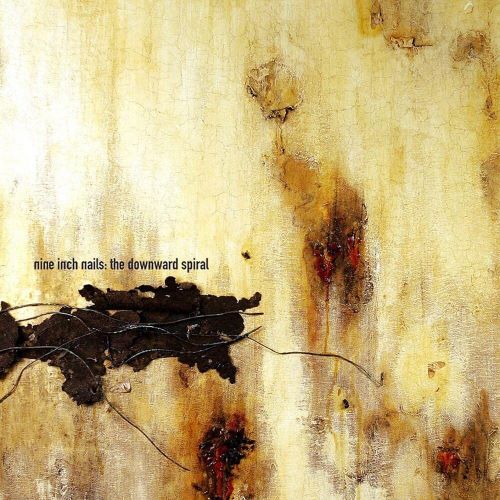
Nine Inch Nails – The Downward Spiral
Released March 8, 1994 via Nothing/Interscope Records
My Favorite Tracks – Mr. Self Destruct, Hurt, Reptile
Nine Inch Nails had arrived to a good degree of fanfare in 1989, and by 1994 the name had become household on MTV and in the now alternative music scene. The stage was set for Trent Reznor’s next move, which would prove to be career-defining.
No real need to discuss a band line-up, the recording roster for Nine Inch Nails was often Trent Reznor. Several friends and guests were brought in to help, including Mark “Flood” Ellis who would help with production. Other names that would become familiar to Nine Inch Nails were involved, including Chris Vrenna, Adrian Belew and Danny Lohner. The list of production credits is a mile long, this was the Manhattan Project in terms of recording engineering at the time.
This album also had a story in terms of where it was recorded – Reznor rented a house at 10050 Cielo Drive in Los Angeles. This was the site of infamous murder of Sharon Tate and four others in 1969. After dubbing the studio “Le Pig” and recording both Broken and this album there, Reznor felt remorse for possibly exploiting the house and vacated it, after which the house was torn down.
The meaning and themes of The Downward Spiral have long been a subject of debate and interpretation. It is clear that there is a person breaking down as the songs go along. It could be a solid theme that ties things together, or it could go as deep as being a true concept album where a specific story unfolds through the songs. It isn’t entirely clear and there are arguments both ways about it. I personally do support the “full concept” theory though I also see a few odd holes in the story. I’ll prod the meaning of these songs but I won’t be discussing the concept theory much here, I simply don’t have room. I may pick that thread up another time.
Reznor stated his primary influences for this album were Low by David Bowie and The Wall by Pink Floyd, Reznor was moved by both albums’ use of space and texture.
Today’s album has a massive 14 songs at a 65:02 runtime. An excellent 2 CD reissue offers up great bonus material, including the soundtrack song Burn and Reznor’s cover of Joy Division’s Dead Souls.
Mr. Self Destruct
The opener kicks off with a machine noise intro then launches into the harsh industrial noise that NIN had become familiar for. This song sees a dark force pushing a person into vices and ills, all in order to use the person up. A quiet interlude breaks up the mosh pit-worthy main sequence. This song is absolute gold and a great way to bridge into the new album from the equally harsh Broken EP.
Piggy
The next track is one of the album’s singles and is a slow, quiet march through a person’s breakup and the fallout from that. The song introduces the phrase “nothing can stop me now, ’cause I don’t care anymore,” which is repeated through the record. The bass anchors this song as it rolls along, then Reznor plays live drums toward the song’s end, one of the very few uses of “organic” drums on the record.
“Piggy” can have multiple interpretations here, given where the album was recorded and also the word’s use in other songs. But there is another story behind the name – Richard Patrick was in Nine Inch Nails as a guitarist from 1989 through 1993. Reznor nicknamed him Piggy, then Reznor felt resentment that Patrick was focused more on his own music than NIN. Patrick would leave the band and form his own group Filter, who had great success. Patrick has stated in interviews, such as this 2010 talk with the Sacramento Press, that Piggy is about him and Reznor’s anger with him.
Heresy
Up next is a techno-driven song with moments of distorted wailing. The angst is directed at religion, though the specifics are deeper than just ranting about church. Reznor wrote this one influenced by how Christian sects in the 1980’s and early ’90’s turned AIDS victims into scapegoats. This song is Trent’s response to the edict “there is no hate like Christian love.” Whether or not someone likes this song or not probably centers on one’s thoughts about religion. I’ve always enjoyed the track.
March Of The Pigs
This next song was also a single. Musically it is a contrast study with noisy and quiet parts, though it’s the verses that are loud and the chorus that is quiet. It is a clash between the main character and the “pigs” of society who are fake and without substance. At points Reznor is singing from the main character’s point of view and others the pigs, and the trade-offs are not easy to spot without actually reading the lyrics to see what the hell is going on.
Closer
And now on to the song that most people are likely familiar with. The song builds slowly, using mostly electronic instruments but this one remains easy to process on the surface, it’s all fitting and catchy. There is more going on under it all but this is a song that was taken purely on its surface level and became the most famous song Nine Inch Nails ever did, save perhaps for another from this album.
The song is about someone obsessing over an object of desire. The lyrics are a harsh account of the main character’s depression, lack of purpose and shallowness. But this song didn’t get famous for being psychoanalyzed to find a messed up human being’s story. No, the song got famous for being catchy and for the line “I wanna fuck you like an animal.” It was taken as a lust anthem rather than the desperate echoes of a tortured person. And that is what it will always be known for, and honestly there’s nothing wrong with that. Reznor has spoken out about the true meaning of the song and the popular reaction to it, but artists have to know that art isn’t yours anymore once it’s out in the wild.
Ruiner
Time for a bit of a rave here with some slamming techno beats. The song does call back a bit to the debut Pretty Hate Machine with its dance beats. Other parts of the song slow down and go harsh, and there’s also a bit of a guitar solo here and the old, jamming kind of solo. Reznor has said he was unsure of this song and that it was two songs mashed together. I personally think he got it right, it’s a good track.
The song deals with the “ruiner” who is likely a metaphor for someone in power. The ruiner could also be a specific person or even facet of the main character’s personality, but that’s more than what I can get into here for length reasons. Either way, here the narrator is lamenting the power that the ruiner has over him, and at the end we get the cold refrain of “nothing can stop me now” again.
The Becoming
This one sounds like a robot toy come to life and on the hunt to kill someone, pretty quirky intro. It slides into another techno-driven song with a bunch of screaming in the background. The song sees the narrator give in to what’s happening and figuratively become a machine. It’s the loss of the soul as life has been too much to bear. This is a lively descent into losing personhood.
I Do Not Want This
Kind of a mid-paced beat here that keeps quiet until a chorus where Reznor yells “You can’t tell me how I feel!” It seems here the narrator is struggling with his loss of humanity and is reaching back out for it, though he is also lashing out at everyone. The end offers up grandiose ambitions, such as “I want to know everything, I want to be everywhere, I want to fuck everyone in the world.” It is the sort of thing seen from people who truly have lost their mental center and are reaching for anything to cling to.
Big Man With A Gun
This one is a short, noisy track that is absolutely an allusion to rape and the lyrics don’t allude at all, they spell it out fairly clear. Reznor intended the song to be satire, he was calling out the other forms of music at the time that glorified rape and sexual assault. His take didn’t really come through and NIN landed in a bit of hot water with politicians, though noting ultimately came of it. Reznor said the song was originally created to be about madness and that this was another stage of the main character’s insanity. I do think this song misses its mark but I don’t think it’s that big of a deal either. It fits the album sonically and is over real quick.
A Warm Place
This one is an instrumental with one very quiet, almost unnoticeable spoken phrase at the beginning. It’s widely believed that line represents a last bit of the narrator’s humanity trying to poke through. The song itself is very pleasant, it’s a nice interlude in this descent into total madness.
Eraser
Up next is a song without a ton of words but there are a handful. The piece goes on for a few minutes of very nice music before Reznor sings a series of short blurted out lines that are likely tied to someone who has truly snapped now. The song goes out in a distorted mess as Trent screams “Kill Me!” repeatedly. Not a conventional song but one that fits this part of the story very well.
Reptile
This is one twisted track. It has very sick use of electronic beats and tells its sordid tale very well through music and words. Here the main character is admitting to being twisted by a woman, who might be the same object of desire from Closer and is also likely the Ruiner. This song is absolute magic and, given the “concept” theory, ties this whole album together. Reznor is famous for a fair few songs but this one is kind of slept on by the wider public.
The Downward Spiral
It’s another almost instrumental here. The main hook here is a guitar playing the piano outro of Closer. Here someone reaches rock bottom and commits suicide, the brief lyrics lay that out clearly. It is apparently the main character, though it doesn’t entirely jive with the story theory since, you know, there’s a whole other fucking song to go. This passage is pretty nice and twisted.
Hurt
The album closes on the other very well-known song. It is a quiet and haunting track featuring Trent’s voice, a keyboard, a bit of guitar and sparse noise to generate atmosphere. Here the narrator is reflecting on a lost life, being alone and having nothing to offer but his empire of dirt. Whatever the main character was supposed to achieve through his loss of humanity did not come to pass, and he lies here a broken shell of a person. The end does generate the smallest glimmer of hope that he will seek to regain his human self. The actual meaning of Hurt in terms of the album story is hotly debated and something I won’t get into here.
This was one of Nine Inch Nails’ signature songs, but of course that changed in 2002 when the venerable Johnny Cash, toward the end of his life, recorded a stark cover version that lit the music world on fire. Reznor admitted that the song was Cash’s after the cover was released.
The Downward Spiral would mark the crowning achievement of Nine Inch Nails’ career. The album hit at number two on Billboard and went four times platinum in the US. It has remained the centerpiece of Trent Reznor’s discography and the album’s legacy is still widely discussed now thirty years after its release. Closer remains NIN’s most well-known song and Hurt is close behind.
“Light Industrial” would become the new sound bands chased as NIN sound-alikes hit the scene in the years after this album. A few acts got a bit of mileage out of it and I won’t discount the whole scene as a rip-off, but this album was the clear reference point for the industrial-tinged rock and metal of the late ’90’s.
What this album gets right is most everything. The layers of electronic music do not alienate here, instead they build both a beat and atmosphere that allows the songs to mostly be taken in on a casual listen while also offering a lot of texture for the deeper listener to explore. It’s a masterpiece of arrangement and something that 99.99999% of musicians could never pull off. The story contained within is ugly and horrible, but told in splendid fashion and left with enough breathing room for personal interpretation. It isn’t handed out on a silver platter where everyone draws the same conclusions.
I don’t feel like the album really gets anything wrong, though Big Man With A Gun might be a miss. Maybe Reznor was a bit too opaque in his expression in a few places. That might be more of a discussion about Trent Reznor and pop culture views at the time rather than much to do with this album, though.
During and after this album’s release, NIN would tour and Reznor also went on to help launch the career of Marilyn Manson. It would take five years for another Nine Inch Nails record and Reznor has gone through various iterations in the years since. But there is no denying the legacy of The Downward Spiral, tortured though its story may be.
All the holiday stuff has me messed up and I could have sworn yesterday was Tuesday when it was Wednesday. On well, I’ll be a day late and at least a dollar short.
This week’s highlight song comes 1994 and the soundtrack to the film Natural Born Killers. Trent Reznor was the producer of that soundtrack so it’s not shocking that Nine Inch Nails wound up on the album. In fact, three NIN songs are found there, though Burn is the only one that was new. Burn was also released as a single from the soundtrack but either did not chart or chart info is not available.
Burn is also available on certain reissues of The Downward Spiral.
As for Burn’s place in the film, that is information that is a bit tough to track down. It does appear at the movie’s end in certain “director’s cut” and unrated versions of the film, but is not present in the theatrical release and many modern versions on streaming.
Burn is a song very indebted to the electronic soundscape, something Reznor had pursued a lot on his 1994 album The Downward Spiral, often hailed as his magnum opus. Burn does cut a fair bit heavier than a lot of TDS material, something of a callback to the 1992 EP Broken. There is distortion on pretty much everything in the song save vocals. Things do build somewhat quietly to an angry climax, but it is still very noisy even in that build.
Lyrically, Burn is a song of hatred and misanthropy. It is lashing out at being a reject of society and using the hurt and anger to seek revenge and burn the world down. It is extremely harsh stuff, perhaps dismissed by some as angsty nonsense, but qutie disturbing in an objective evaluation. It was the perfect song for a movie about a killer like Mickey Knox, a person who was pretty well cursed from birth and would embody the song’s lyrics in his actions through the film.
Burn got a music video, culled from scenes of Natural Born Killers that are all apparently cut from the original movie release. (no verification on that) I will post the video below but it is from an unofficial source and might not escape the wrath of YouTube AI copyright hunter bots.
Burn has been in pretty regular rotation in Nine Inch Nails live setlists – it is the band’s 14th most played song with 404 total airings, according to setlist.fm. Sadly they didn’t play it when I saw them live in 2000, but you can’t win ’em all. Its appearance on the 2007 live video release Beside You In Time is hailed as a standout of a fantastic live set.
This song did get some sideways glances in 1999 after the Columbine High School massacre. The killers were fond of Nine Inch Nails and often incorporated The Downward Spiral lyrics and references into their journals. The band took a fair bit of heat as a scapegoat for the murders and Burn was referenced a fair bit as a conduit to world decay, but in the end everyone moved on and NIN pressed on along with Burn.
In the end, Burn is a fantastic cut from the impressive Nine Inch Nails catalog. It fit the movie it was written for like a glove, and the song has gone on to be a feature in live sets even without the benefit of appearing on an album. It is “angsty crap,” but there’s something more visceral and real about this sort of angst. It is more than hollow-heading ranting at something just for fun, this is a true connection to the type of rage and anguish of being a “failed” member of society can bring.
It was 1994 and Slayer were set to release a new album into an uncertain climate. The label was concerned about explicit themes, the band were writing songs more based in the darkness of reality than ever before, and their legendary drummer had quit the group a few years before.
Slayer – Divine Intervention
Released September 27, 1994 via American Records
My Favorite Tracks – Divine Intervention, 213, Killing Fields
Slayer had previously navigated a line-up change at the drum position, but back in 1987 they were able to convince Dave Lombardo to come back. In 1992, Lombardo was gone for real and for a decade, so Slayer would have to replace someone for a recording for the first time in their history. With Lombardo being considered Slayer’s strongest asset, it would be all eyes and ears on the replacement.
That role would go to Paul Bostaph, who had been the drummer for thrash act Forbidden. Bostaph delivered far more convincing performances than others who auditioned and also took the time to practice up the back catalog in the style of Lombardo to ensure fans would get the experience they wanted. He joined Slayer’s usual suspects – bassist and vocalist Tom Araya and guitarists Kerry King and Jeff Hanneman.
Slayer had gathered up a new round of songs to follow up their 1990 album Seasons In The Abyss, which was a critical and fan hit. King and Hanneman composed the music while Araya handled a fair share of the lyrics along with King and a few contributions from Hanneman. This time around the themes would be mostly based in the grim facets of reality rather than exploring the supernatural or demonic.
The focus on murder would be an issue as the album was deemed very explicit. It was banned for a time in Germany, who have very stringent laws around that sort of thing. The album’s imagery would fall in line with the brutal themes. While the cover is a well-done piece by noted metal cover artist Wes Benscotter, the CD’s inside tray and CD itself featured the image of someone who had carved Slayer into their arm with a scalpel.
This album is 10 songs that finish in 36:33, a pretty lean effort but fairly typical of Slayer.
Killing Fields
The first thing this song does is allow Paul Bostaph an extended intro to let the world know who he is. It then jumps into a mid-tempo yet very loud affair about killing, which is a theme for the record. This song has a bit more of the subtle dynamics of Slayer than a lot of others here and comes out toward the top of the heap. Good way to open things.
Sex. Murder. Art.
This one is not even two minutes long and sounds like Slayer going back to their speedy past. This is another one about brutality, as a sadist takes pleasure in consuming his victim. This one feels like a blip on the radar with how other songs get a bit more space and tempo to breathe on here but it shouldn’t be overlooked for its throwback to Slayer of yore.
Fictional Reality
It’s a shift now to political and social issues, though of course through the filter of Slayer these are looked at from a grim perspective. This one is simply about how everything is messed up and is going down the tubes, it’s not so much a message as it is an observation. The song works really well as a 90’s era Slayer track, this one fits right in.
Dittohead
The band slams through this one, also a political sort of song. The title is taken from the name given to fans of now deceased conservative media figurehead Rush Limbaugh. The song’s message of how criminals walk free in society isn’t really a diss of Limbaugh and probably more something he’d agree with.
Divine Intervention
The title track cools things off for a bit and gets into a creepy, atmospheric vibe for a bit. It’s a fitting approach as the song is one about alien abduction. This is very well done, hitting on the sheer horror of what that process would actually be like. The one departure from reality here turns out to be the album’s real highlight.
Circle Of Beliefs
Another pretty standard Slayer cut that visits the topic of religon, one of Slayer’s favorites. The lyrics don’t break a ton of new ground, it is mostly a confrontational song and some of the stuff just sounds like words put together to fill the line. It’s not all a lost cause, there are nuggest of wisdom here and the song itself is pretty good.
SS-3
Up next is a song referencing notorious Nazi Reinhard Heydrich. He was the chief architect of the Holocaust and one of the SS’s darkest figures. The song doesn’t get much into Heydrich’s dark history other than to reference his nickname the Hangman of Prague. A lot of the lyrics are about how Heydrich was successfully assassinated by the Czech resistance in 1942, with the song’s title being the license plate of the car he was in when he was attacked.
Serenity In Murder
This song would serve as the album’s single as it was released as an EP and got a video. It is just as the title suggests – another song about murder. This was one of the songs focused on when controversy arose over the album’s dark themes. It is a pretty good song, reflective again of ’90’s Slayer and also maybe a hint of shifts in sound to come later in the decade.
213
With an album centering around murder, nothing would be more appropriate as a centerpiece than a deep dive into the realm of serial killer Jeffery Dahmer, one of America’s most notorious butchers. While a bunch of Slayer songs are words thrown together to compliment buzzsaw riffs, Tom Araya truly delved into this one and delivered a very haunting and specific account of Dahmer’s tortured psyche. The idea of consuming someone to make them a part of you is in vivid detail here and this song was crafted with care and is a standout. Dahmer likely wouldn’t have enjoyed the song as he did not celebrate his terrible crimes and also he wouldn’t have much time to – he was killed in prison just two months after the album’s release.
Mind Control
As I just said above, some Slayer songs are words thrown together over riffs. This closing track is one of those. It’s suitably heavy and brutal but it’s not covering any kind of new ground. It’s just Slayer being Slayer.
Divine Intervention would come out of the gate strong – the album debuted at number 8 on the US Billboard 200, at the time a record high position for Slayer. It would gain gold certification in both the US and Canada and has been one of the band’s most successful albums.
Despite that success, this one is kind of a quiet one when discussing Slayer albums. It doesn’t have the same legacy as Seasons… or other Slayer records. It is a bit of an underrated or forgotten album. Part of that might be down to the production, which every Slayer member has said could have been better. The album was recorded in fits and spurts across multiple studios and producers were changed a few times, so there is something to that. The music still works but it does lack certain sound dynamics, even for Slayer.
I personally do rate this album pretty highly, I enjoyed it right out of the gate in 1994 on release. Sure it’s a bunch of noise, but what else is Slayer supposed to be?
The song pick this week is one of the more iconic audio and video clips from the early ’90’s. The song is fantastic and the video is totally unforgettable.
Sabotage was the first singe from the Beasties’ fourth album Ill Communication. The single was released in January of 1994, while the album was a few months behind in May. The single had a rather light performance conventionally, landing at 18 on the US Alternative Airplay chart and 19 on the UK Singles chart. The album was a smash success, claiming a Billboard number 1 and hitting 3 times platinum in the US.
The Beastie Boys were always a genre-bending outfit, combining elements of hip-hop, rock, metal, punk and whatever else around the house wasn’t bolted down. In the music environment of 1994, Sabotage simply qualified as a rap-rock song, nothing unusual to find on the radio or MTV at the time. Of course, the Beastie Boys were also one of the primary influences on the fusion of rap and rock, so no great surprise that another single of theirs would be right at home among a host of music they helped influence.
Lyrically, Sabotage is a venomous rant against the music industry and specifically a producer that had screwed the band over – except that nothing of the sort really happened. Adam “Ad-Rock” Horovitz relayed in the 2020 Beastie Boys Story documentary that they were simply spewing a fictional rant at Mario Caldato, the song and album’s producer. Caldato was not truly doing anything untoward, it was just a way that the Beasties came up with lyric ideas.
Sabotage is inseparable from its music video, which was what truly launched the song into immortality. The clip was helmed by director Spike Jonze and was styled as the opening credits to a 1970’s-era cop show. Each member of the band played a member of the police force, with Adam “MCA” Yauch getting two roles in the video.
The video is simply amazing. It does truly look like a cop show from the time period it represents and could easily be mistaken for a trailer to a real show. Just ask Beavis, who is probably still wondering where the real Sabotage show is. All of the Beasties look the part and the high-flying action is captured perfectly. MTV did originally censor portions of the video, including the parts with bodies flying out of a car and off of a bridge, though it was abundantly clear that dummies were used in the “stunts.” The YouTube clip above features the full uncensored video.
The video was in constant rotation on MTV and was the catalyst to the song being played over and over again for anyone tuning in throughout 1994. The video was nominated for five awards at the 1994 VMA’s but was infamously shut out, mostly losing to Aerosmith’s Cryin’ video. That should be considered a crime, honesty. In 2009 MTV created a new award centering around videos that should have previously won awards and Sabotage was the winner.
Sabotage and Ill Communication would help turn the Beastie Boys into total household names, something they had been well on their way toward anyway, but the ever-present MTV video and success of the album would be the point of no return. No doubt that Sabotage is one of the defining songs and videos of the time period.
This post was part of a series that I called S-Tier Songs. I later decided to abandon the series in favor of a simpler Song of the Week format. I am keeping these posts as I wrote them but removing the old page that linked to the list of S-Tier Songs, so that is why these posts might look a bit odd. Enjoy.
Bruce Dickinson – Tears Of The Dragon
Today’s song is from Bruce’s second solo album Balls To Picasso. It was also Bruce’s first album after his infamous exit from Iron Maiden in 1993. Bruce had made a few attempts to start the record with other bands and producers, but he scrapped those efforts and hooked up with Roy Z and Tribe Of Gypsies. That band would back Bruce on this effort and the partnership with Roy Z would yield great results over the ensuing years.
Tears Of The Dragon is generally viewed as the best song from Balls To Picasso. The song has over 40 million streams on Spotify, which basically obliterates the totals from any other Dickinson solo tune. While none of the solo catalog did massive numbers sales-wise and The Chemical Wedding is widely hailed as a masterpiece, it is Tears Of The Dragon that is the first song recalled when talking about Bruce’s solo career.
Our song today is not a blazing metal scorcher. It would fit quasi-ballad territory – the song opens with soft, somber verses that build to a powerful chorus suiting The Human Air Raid Siren’s voice. It is replete with the standard fare you’ll find in any good hard rock/metal song, including a fast-paced solo and also a jazzy sort of interlude that, well, I guess you don’t find in every hard rock or metal song. And yeah, the very first time I heard the song I was really thrown off, but I’ve gotten used to the bit and now I can’t imagine the song without it.
Lyrically the song deals with the idea of overcoming one’s fears to “throw myself into the sea” and see what happens. The song revolves around Bruce’s decision to leave Iron Maiden and throw himself into the sea, to experience what else might be out there that he was missing. I can’t readily access the source material for this, but Bruce gave the info in an interview with Rolling Stone when he was promoting his biography in 2017. It was a huge gamble to cast off from Iron Maiden and go at it alone. And while it might not have been a lucrative prospect, in the end Bruce does have an acclaimed solo catalog from his endeavors.
And the song’s greatest strength is that it wasn’t specifically couched in the terms of him leaving Maiden – it was a song for anyone who was unsure about a course in life, who needed that push to go ahead and jump into the sea of doubt. I think music in general will grab people at places and times, be the right song in the right place for someone. That much doesn’t consider genre or form – people have benefited from a song bringing the right message at the right time.
But I think we know rock and metal have long been the refuge of the loner, the doubter, the unsure of foot. And Tears Of The Dragon is a call to anyone feeling those kind of emotions – metal is often at its best when it appeals to the outcasts, and this is a song for those on the margins that need a push for that motivation to succeed and overcome when the odds aren’t good or even known.
It’s the overriding reason why many of us chose this kind of music as our own. We didn’t fit, we didn’t like the same things as those around us, or whatever it was, we faced life with doubt and trepidation. It was shit like this that got many of us over the hump, just as this song did when I was just before the age of 17 in 1994.
While life wasn’t exactly great for Iron Maiden-Bruce Dickinson-hard rock and heavy metal fans in 1994, we still found our own way. And a fair bit of that had to do with the mainstays like Bruce offering viable product, updating with the times yet still staying the course. It would only come to pass years later that staying the course was the true line to walk, even in the turmoil of the early 90’s, and the greater turmoil of the years beyond.
Why is this an S-Tier song?
Tears Of The Dragon is a magnificent ballad of conquering self-doubt that offered its artist an early signature hit in a period of great uncertainty. While charts and sales figures weren’t entirely kind to Bruce’s solo efforts, the talk of the time and also the retrospective analysis paints his work away from Maiden in a fantastic light, and Tears is one of the main calling cards for his time in the 1990’s wilderness. It’s a song about conquering fears and embracing the unknown, which Bruce did by word and deed in a period where many thought rock and metal as we knew it was lost forever. Yet, by simply executing what he knew, we would be led back to a new legacy we couldn’t even begin to imagine.