Pulp – Common People (Song of the Week)

When Britpop gets brought up, it’s almost always a focus on the “Battle of Britpop” and the rivalry between Oasis and Blur. But when a “best songs of Britpop” list springs up, there’s often a whole other song at the top of it. If you are even halfway decent at guessing, you could probably figure that the song is Common People by the band Pulp.

Common People was the lead single from Pulp’s fifth album Different Class, which released toward the end of 1995 in the height of the Britpop phenomenon. The single was released 5 months in advance of the full-length.

While Pulp benefited from the wave of British alt-rock, they themselves were not newcomers to the scene – Pulp were formed in 1978 and were on the indie circuit until the 1990’s brought their form of music more into style. This was a case of a scene finding a band, rather than a band finding a scene. Nor was the success sudden – Pulp were a rising star already through the early part of the decade as alt-rock became the new dominant form of rock.

Common People is an upbeat, keyboard-driven tune, which has been the general territory of Pulp through the years. Its dance-ability differentiates it from the more rock-oriented “Britpop,” though Blur did have moments of electro-tourism in their music. Pulp’s simpler, “retro disco” themed take on songs worked extremely well here and caught the attention of music fans the world over.

The song’s theme is a big one – it addresses the issue of “slum tourism,” where people of means want to live in squalid conditions as some kind of thrill seeking thing. And while the song was dramatized a fair bit for effect, there is truth behind the opening lines. Common People was inspired by when singer Jarvis Cocker attended St. Martin’s College in 1988. He ran into a girl who was Greek and was studying art, and the girl indicated an interest in living “like common people.”

Cocker did add a bit to the song, chiefly that the girl was pursuing him, while in reality Cocker was pursuing the girl and she was not at all interested. There have also been attempts to nail down who the woman was and a few interesting possibilities came up, though nothing has definitely been said about the matter.

Common People does accomplish its mission in railing against the idea of class tourism. For a well-off person to “slum it” for a bit is really nothing – all that person has to do is pick up the phone and call, as in the case of the girl in the song, she can call her father and he can stop it all. For the common person, there is no one to call to get a lift out of the despair of being broke and having no prospects for a better future beyond a winning lottery ticket that never comes.

This song became a huge hit in the Britpop era of 1995, the single hit number 2 in the UK and sold over a million copies, it also propelled the album Different Class to also move a million each in the UK and on the continent. Common People has endured as a top shelf tune since its release, it is often found at or near the top of most “Best of Britpop” lists and NME magazine even voted it the best song of the 1990’s. Many bands from all across music have covered the song, one very notable rendition came from 2004 and the tandem of William Shatner and Ben Folds. The pair were joined by Joe Jackson for a pretty unique and crazy version of the song that got a lot of attention and did a lot to kick off Shatner’s quirky music career.

For Pulp, Common People would be their magnum opus, though the band held serve through the 1990’s as their sound was more diverse and proved able to navigate the sudden closure of the Britpop shop. Pulp have split and reconvened a few times through the 2000’s, including having just been on a reunion run this year. But no matter what they do now, their crown jewel of a song will remain immortal and speak to the lives of many all over who know all too well what’s it like to live like common people.
Elastica – Stutter

This post was part of a series that I called S-Tier Songs. I later decided to abandon the series in favor of a simpler Song of the Week format. I am keeping these posts as I wrote them but removing the old page that linked to the list of S-Tier Songs, so that is why these posts might look a bit odd. Enjoy.

Today’s entry is quick and to the point. It’s about two minutes long, it’s about being unable to “perform” while drunk, and that’s really about it.

Elastica – Stutter

As I said, this one is pretty cut and dry. It’s a simple punk tune, though delivered with smooth women’s vocals as opposed to some shouty drunk guy. The song is expertly constructed in its simplicity and walks a fine line between hard and catchy while getting both sides right. No need to reserves space to evaluate a guitar solo here, this song is out just a quick as it came in.

The lyrical content, while simple in two verses and the chorus, doesn’t quite “come and go.” The song is about a well-known phenomenon where a fella can’t quite get to business after having too much to drink. I suppose “erectile dysfunction” is the proper medical term here. Vocalist Justine Frischmann, also the songwriter, handles the problem in stride, she seems willing to encourage her down and out lover rather than be too upset about it. Though it’s clear she’d also prefer to get to some action.

Stutter was released as a single before Elastica had recorded a full-length. The single was packaged as a limited run of 1,500 records and they flew off store shelves. A series of British media articles shined more attention on the band, and the meteoric rise to fame was on. Two more singles would light up UK charts in 1994, then their debut album released to smash success in early 1995.

The powers that be delayed the release of Stutter in the US until late 1994, a move that likely paid off as the full-length was close to release at that point. Stutter did nominally well on the Billboard charts at position 67, though it did hang out on the charts for 9 weeks. It also broke the top 10 of the alternative rock chart. Subsequent singles would climb higher on both UK and US charts.

The music video was a simple yet effective shot that was in heavy rotation on MTV and other video channels in 1995. Stutter served a number of outlets at the time – “post-grunge” was coming in and Elastica were exactly in the right place at the right time for that. And Britpop was a movement with legs around this time. While Elastica’s sound might not “vibe” with what most consider Britpop, they were undeniably a successful act on the scene at the time. And they were one of the more successful Britpop outfits in the US, second in sales only to the mass success of Oasis. Also, Elastica even outdid Oasis in their shared home country of England – Elastica’s debut album outsold Oasis’ Definitely Maybe, handing Elastica the crown of “highest-selling debut album” in the UK until the Arctic Monkeys came around over a decade later.

There is one other bit of trivia surrounding Stutter that also, uh, sort of involves the Britpop phenomenon. It is widely speculated that the song’s lyrics might be about another of the luminaries of the Britpop movement. Justine Frischmann was an early member of Suede and was in a relationship with that band’s frontman Brett Anderson. Frischmann wound up leaving Anderson for Damon Albarn, frontman of Blur (and later Gorillaz). Frischmann and Albarn were together for a handful of years and were linked at the time Stutter was conceived.

So the question is often asked – is Stutter about either Anderson or Albarn? No answer has been provided and I doubt one ever will. It’s the fodder of endless speculation on ye olde Internet, but it’s also pretty slimy in a way. It’s not like I’d ever ask Justine that question were I in the same room as her. Kind of personal stuff there.

And also – it’s entirely possible the song has nothing to do with either Anderson or Albarn. It might have just been an idea that Frischmann ran with. I thought about not even including this part of the post, but honestly the post was kind of short for my tastes and it’s not like Frischmann is gonna read this and be like “you’re gross.”

Why is this an S-Tier song?

Stutter is a short and to-the-point affair that communicates its message in a clever and coy way despite the aural assault of the music. Justine Frischmann lends some subtle qualities to her vocal delivery that makes the song work in a more playful manner, even though she’d prefer her lover to get to business. The song was a moment in time that fit the time perfectly, as 1995 was a period of transition out of the darker air of the early 90’s. Elastica were in a great place to offer up a ligher-hearted and funny take on an issue not really getting airplay in the grunge years, and the result was very well-received.

Album Of The Week – November 28, 2022

This week’s pick is a tour back to the mid 1990’s and an early sign of what would become an explosion of European power metal.

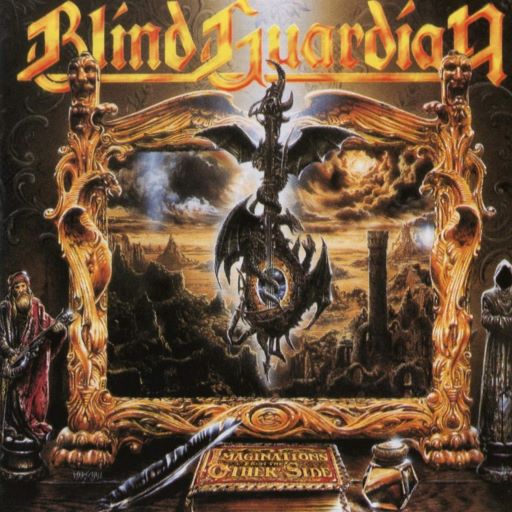
Blind Guardian – Imaginations From The Other Side

Released April 4, 1995 via Century Media Records and Virgin Records

My Favorite Tracks – Mordred’s Song, Imaginations From The Other Side, Bright Eyes

By 1995 Blind Guardian were gearing up for their fifth album release. The German group had started in speed metal and thrash territory but had been slowly morphing into a power metal outfit. Some of the hallmarks of their early sound would remain in their arsenal, setting their sound apart from the typical power metal fare that was on offer.

Blind Guardian were out to improve their sound on their next album and in doing so recruited producer Fleming Rasmussen to helm the effort. Rasmussen had come to prominence by producing Metallica’s second through fourth albums. The influence of an experienced producer, combined with the decision to only take the best parts of songs to the next step, set up Blind Guardian for a triumphant release.

Imaginations From The Other Side comprises nine tracks at a near-50 minute runtime. Two songs were released as singles – A Past And Future Secret, and Bright Eyes, marking the first single releases in Blind Guardian’s career.

Imaginations From The Other Side

The title track opens things and is an epic song that showcases both power metal leanings and the heavy-hitting instrumentation of the band’s early days. The song laments the loss of fantasy worlds as their magic power fades when one reaches adulthood. Many direct references are made to fictional institutions, such as The Wizard Of Oz, The Narnia series, The Lord Of The Rings, Peter Pan and many more.

I’m Alive

This fast-paced track recalls the earlier days of Blind Guardian and their speed metal attack. The song is based off of a book The Sunset Warrior by author Eric Van Lustbader. I’m unfamiliar with the book but the song is a great example of the band expanding their musical pallet while retaining their heavy metal feel.

A Past And Future Secret

A ballad that is one of two to center around the story of King Arthur. It is a haunting lament told from the viewpoint of the wizard Merlin, who prophecies that King Arthur will return to rule after his mortal death.

The Script For My Requiem

The pace comes back up for this twisted tale of a knight returning from the Crusades. The knight is haunted by the atrocities committed in the name of the holy and returns a broken shell of himself. It is one of many songs from the album to be a frequent staple in live sets.

Mordred’s Song

The second of two ballads about King Arthur, this track hits heavier than the first and would likely fall into power ballad territory. The song centers around its namesake Mordred, the illegitimate son of Arthur’s incestuous relationship. Mordred would come to wreak havoc on Camelot and eventually fight a battle with Arthur that would claim both.

The song does a fantastic job of painting the despair of Mordred’s life and the hollow feelings that would lead him to his history-altering course of action. The tragic tale could only end one way and this song provides the rationale for and perhaps even justification for Mordred’s brutal actions.

Born In A Mourning Hall

This scorcher of a tune mostly leaves behind the fantasy world and examines the real-world consequences of people living without any viable chance of moving upward in life. The struggle to live and cope with being a disposable tool of the higher class is a picture painted vividly on this song.

Bright Eyes

The next song is one that has become one of Blind Guardian’s signature offerings. It is another haunting tale of a young man abused and neglected who is now ready to wreak havoc on the world. While the song bears thematic similarities to Mordred’s Song, it was apparently based off of The Neverending Story but is mostly an original story spun by singer Hansi Kursh. The song is one of the band’s most played live and is a favorite of many Blind Guardian fans.

Another Holy War

This song could be seen as a companion to The Script For My Requiem, as it again involves the waging of holy war. It is told from the perspective of a messianic figure who will be crucified and kick off yet another religious war. It’s another song that preserves the thrash elements of the band’s early days.

And The Story Ends

The final track seems to pick up the story of Bright Eyes, though that is unconfirmed and there is speculation that this song might have something to do with The Wheel Of Time fantasy series. I tend to think it’s the first one, as there seems to be an occasional ongoing story told through various Blind Guardian songs over the years and a mirror is involved with them. The song still maintains a heavy feel but does slow things down at points to allow it and the somber album as a whole to settle in.

Imaginations From The Other Side would mark another notch in Blind Guardian’s belt. The band were already breaking through before this and would see their fortunes rise as power metal would become a resurgent genre in the latter half of the 90’s. Blind Guardian were among the standouts of the new wave of power metal groups and have remained a viable force in metal all this time.

Many of the songs from Imaginations… are staples of live sets to this day. Several tracks have been played a few hundred times in concert and the entire album was aired out as part of anniversary celebrations a few years ago.

Album Of The Week – November 14, 2022

This week’s pick is a watershed moment in extreme metal. The album is hailed as a cornerstone of its sound and it casts a massive influence on the direction of heavy metal for generations to come.

At The Gates – Slaughter Of The Soul

Released November 5, 1995 via Earache Records

My Favorite Tracks – Slaughter Of The Soul, Blinded By Fear, Under A Serpent Sun

By 1995, At The Gates were part of an emerging Swedish death metal scene also including In Flames and Dark Tranquillity. Their music would carry the term “Gothenburg Sound” in reference to their home city, but would widely come to be termed melodic death metal.

For At The Gates, fortunes had been rising after the release of their third album, 1994’s Terminal Spirit Disease. The stage was set for a release that would capture international attention and make the band top players in the death metal game. As it turns out, even that bar was too low to describe what happened.

The distinctions between melodic death metal and, uh, “normal” death metal lie in guitar and vocal delivery. Death metal was built on buzzsaw guitars and deep, guttural vocals; while melodic death employed riffs bearing influence from the traditional heavy metal of the 1980’s and a higher register of vocals, rendering the output more comprehensible.

Our album today comprises 11 tracks from the original version, with a very lean runtime of 33 minutes. I’ll handle that before tackling the legacy of the record, which could pretty well fill a book.

The album kicks off with Blinded By Fear, an intense thrasher reflecting on the concept of death being the only release from fear. The template for the record is set here, with fast riffs and vocals leading into a brief yet intense solo section. There isn’t a lot of deviation from this formula for the record’s course.

The title track arrives next. Slaughter Of The Soul has become the signature anthem for At The Gates, encapsulating perfectly the sound on display. The song both rolls smoothly and stomps over everything in its path. Cold comes next and features a guest guitar solo from Andy LaRocque of King Diamond and Death fame.

The assault continues with Under A Serpent Sun, tacking the tried and true metal theme of the end of the world. The album’s first half (roughly) is wrapped up with the instrumental Into The Dead World.

It is a nice, quiet break from the otherwise relentless proceedings.

Things pick straight back up with Suicide Nation. This song deftly straddles the line between thrash and death. World Of Lies emphasizes the low end a bit more, while Unto Others goes back to the higher register and also picks up the pace a fair bit. The album rounds out with Nausea and Need, two songs that lay on the throttle and bring the album home. Everything wraps up with another instrumental, The Flames Of The End, which would come to be a more fitting title than it would initially communicate.

Slaughter Of The Soul captured the attention of the metal underground and thrust At The Gates into the limelight. The band toured extensively behind the record, especially in the United States. The saturation of the market would lay the seeds for metal’s next big movements in the early 2000’s.

While the album would go on to be hailed as a genre-defining classic, much of At The Gates’ celebration of that legacy would not come until much later. In 1996, only a year after Slaughter… was released, ATG called it quits. The members would float through various projects until 2008, when they would reunite for a tour. It would be 19 years between albums as no new recorded music saw the light of day until 2014.

One could be forgiven for thinking that At The Gates did release albums in that time between – hundreds, in fact – the influence of Slaughter Of The Soul is stamped all over American heavy metal of the early millennium. Strains of melodic death metal would pop up all over the US and also abroad, and it wasn’t hard to hear the influence of At The Gates in the music. Both death metal and melodic metalcore would be top-selling fare during the 2000’s and lead the pack in terms of exposure and discussion.

Perhaps the true beauty of Slaughter Of The Soul is that its groundbreaking sound wasn’t really new or innovative, or even groundbreaking. At The Gates had already laid that foundation with three prior albums, along with their peers In Flames and Dark Tranquillity. Slaughter… is a beautifully executed record that is a high mark for melodic death metal but also doesn’t really do anything other than distill what already was into a finer form. There isn’t much in the way of innovation – rather, it’s just the sound turned up to 11.

Today Slaughter Of The Soul remains as a staple of the heavy metal diet, in fact At The Gates have been playing the entire record live in recent shows. The album’s legacy is secure and has honestly only grown as the music it inspired became the law of the land in heavy metal.

Oasis – Don’t Look Back In Anger

This post was part of a series that I called S-Tier Songs. I later decided to abandon the series in favor of a simpler Song of the Week format. I am keeping these posts as I wrote them but removing the old page that linked to the list of S-Tier Songs, so that is why these posts might look a bit odd. Enjoy.

Oasis – Don’t Look Back In Anger

The song is a curiosity from the get-go as guitarist/songwriter/head honcho Noel Gallagher sings the track as opposed to his brother, singer/man of the people/loose cannon Liam. It was an interesting choice and one that might be criticized in retrospect. The story goes that Noel told Liam he could choose between Wonderwall or this and Noel would tackle vocals on the other. Liam chose Wonderwall, probably correctly, and the rest is history.

It’s fun to imagine a world where Liam sang this tune but it doesn’t matter. Noel guided the ship well through the song. Of course, when you write a song as magnificent as Don’t Look Back In Anger, it’s probably not hard to carry a tune along with it.

As with much of Oasis, the song does borrow from the realm of the Beatles. In this case, DLBIA has direct ties to John Lennon. The song’s intro hearkens back to Lennon’s magnum opus Imagine, while lines in the pre-chorus like “the brains I have went to my head” and “gonna start a revolution in my bed” are culled from things Lennon said and did.

The song becomes Oasis’ own in the chorus, and it marks one of music’s signature anthems. The song’s message of letting things go really hits when “So Sally can wait…” comes on. It is an iconic chorus that has taken on a life of its own, often belted out at soccer/football matches. It’s also a song that, much like Live Forever, gets airplay at weddings, funerals and the like.

Of course the central theme of Don’t Look Back In Anger is spelled out directly in the title. And yeah, it’s an important one. I’ve been known to hold a grudge or two in my day, but as time wears on it becomes clear that holding on to old resentments is tiring and unproductive. It’s almost always wise to let shit go and let your soul slide away.

Don’t Look Back In Anger would help Oasis’ home city rally in the wake of tragedy – after the terrorist bombing at an Ariana Grande concert in Manchester in 2017, the town used the Oasis anthem to find their way through the devastation. A lone woman at a rally led the crowd in an impromptu rendition, and later at the One Love Manchester tribute concert Coldplay’s Chris Martin and Jonny Buckland would serenade Ariana Grande with the tune.

Why is this an S-Tier song?

Don’t Look Back In Anger is a masterful anthem with a gorgeous melody and an iconic chorus. The song’s message of letting it all go is powerful and important, and at times the world has used the song to soothe disappointment and even tragedy. In a time period when Noel Gallagher was maybe the hottest songwriter on the planet, this song perhaps stands out even over many of the other memorable tunes he wrote.