Candlemass – King Of The Grey Islands

Today I’m heading all the way back to 2007, which is somehow 18 years gone. We have a bit of a story to go over on how the legendary Swedish doom outfit Candlemass once again lost their singer, but this time they struck gold in terms of a replacement.
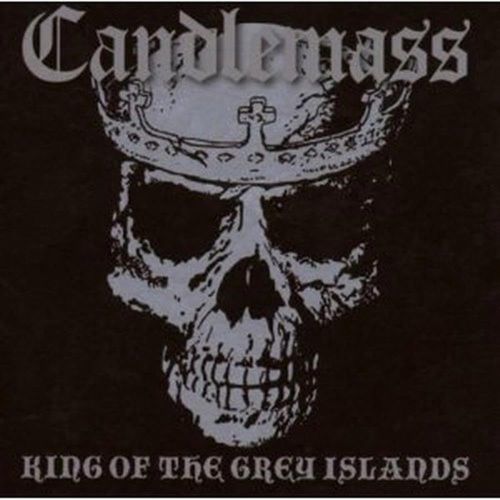
Candlemass – King Of The Grey Islands

Released June 22, 2007 via Nuclear Blast Records

Candlemass have had a whale of a ride, their whole story is pretty fascinating but is far too much to run down on an album post. I’ll pick up around 2004, when the band reunited with their legendary singer Messiah Marcolin for a well-received, self-titled album. As the band convened again in 2006 to record a follow-up, Messiah once again bailed on the group, in an episode the band described as “pre-recording psychosis.” This would be Marcolin’s end with the group, he has not convened with them since this departure (this is scheduled to change in September at a festival in Greece for a one-off reunion show).

Candlemass were left with their principal songwriter and founder Leif Edling on bass, Mats “Mappe” Björkman and Lars Johansson on guitars, and Jan Lindh on drums. Edling began doing vocal demos of their new material with singer Mats Levén, who had a side project with Edling and had also helped out with demos of the reunion album.

Edling had Levén in mind for the vacant singer’s position and Levén would eventually assume it, but there was a detour to take and Levén would not join Candlemass until 2012. The demos from these sessions became available in a box set titled Doomology, a set I have and will discuss at a future point in time.

The detour came in the form of Robert Lowe, singer of acclaimed Texas doom outfit Solitude Aeturnus. I’m recalling this story entirely from memory and hearsay without sources, but as I recall it, Lowe’s wife got in contact with people connected to Candlemass, perhaps Edling himself, and proposed they audition Lowe for the singer’s role. Lowe sent in his work on a few classic Candlemass songs, and Edling was sold. Lowe was hired, did the vocal sessions for the album, and we were off to the races.

Our album today, in its standard configuration, features 10 tracks at a beefy 53:55 runtime. There is a version with bonus tracks, that version is what I will cover today as the bonus stuff is significant and also the one I own. There are other bonus versions available but I will leave those out of what is going to already be a stupidly long post.

Prologue

This is a brief, slightly under one minute long intro piece. Just a simple guitar passage. Nothing to really ponder about here but nothing wrong with it either. Grade: B

Emperor Of The Void

I guess Doom Metal Lesson One is that not every song needs to be slow and mournful, not that Candlemass didn’t already long establish that lesson. This is a massively heavy and relatively fast pounding track that visits, figuratively and/or literally, an old ruler who is decaying away along with his empire. The album’s title comes into play in this tale of mortality crumbling. The guitar solo in this one stands tall above all else, then there is a brief quiet passage before the psychedelic pounding continues. Great work on this one. Grade: A+

Devil Seed

We get a slower paced one here. There are a lot of stoners drawn to doom metal and we don’t want to get them too excited. But what the song lacks in speed it more than makes up for in power. We even get into a bit of gallop in the chorus while still maintaining the 420-friendly tempo. Robert Lowe delivers quite a performance as he sings about someone descending into evil. Grade: A

Of Stars And Smoke

Another bit of a slow burner though not overly so, there is a bit of bite to this one. Heavy as hell yet again and a contemplation of fading away from existence, as nothing in doom metal is bright or cheery. Wonderfully done chorus from Lowe here too. Grade: B+

Demonia 6

This one is faster and quite creepy as the main character enters some ancient evil building and is taken by dark forces. This one does have a slow bridge portion out of the guitar solo but then goes back to the simple yet effective riff that anchors the song. It also goes on a trippy bit at the end. Grade: B+

Destroyer

This one goes slow but also pounds to a pulp with its heaviness. Fitting, as this dark tale speaks of a downtrodden, hellbent person who becomes the destroyer of the world. It is wanton slaughter brought by a mindless, hateful killer as opposed to an evil mastermind. The song maintains its form until the last few minutes where it goes in a doom-laden instrumental passage. Grade: A

Man Of Shadows

This one moves more mid-tempo and very much reminds me of something Robert Lowe’s other band Solitude Aeturnus would do. That similarity might come from his presence, of course. This song shifts form a few times through its six minutes, offering up a buffet of doom excellence. Grade: A

Clearsight

This one also sounds familiar, as its faster guitar romp is straight out of the classic Candlemass playbook. The song deals with a ship whose crew sailed to the edges of the world looking for some unnamed thing. The find is never made and the ship becomes a ghost ship, haunting the desolate seas. Grade: B+

The Opal City

This is another instrumental and again a brief one, at just 1:12. It’s a powerful riff and sets a nice atmosphere, but again it’s just a bit piece. Grade: B

Embracing The Styx

We close the standard album with a sweeping and powerful statement, both musically and lyrically. This one slams its way through heavy and haunting guitar work, riffing hard as razors when it needs to and letting in some atmosphere at other points. This has a bit of a bass passage from Leif Edling before resuming the guitar beating. The song is a morose tale of someone welcoming the embrace of death, using the famed River Styx and its ferryman Charon as imagery to mark the narrator’s voluntary transition to the afterlife. Grade: A+

That wraps up the main album. I will briefly discuss the version with two bonus tracks. The bonuses are re-recordings of two Candlemass standards, Solitude and At The Gallows End. The first song is originally from the debut album Epicus Doomicus Metallicus while the second hails from the band’s classic Nightfall.

Both of these takes with Robert Lowe are fantastic and are some of the best versions of the songs I’ve ever heard. That’s saying something too, as there are several versions of both with a variety of different singers, both live and studio retakes. These songs are also not officially available much of anywhere besides on the physical CD release, it is something I would highly advise people to seek out if interested.

Candlemass entered a new era with Robert Lowe behind the mic. Some fans were vocally upset that the legendary group was forging on without the band’s signature singer Messiah Marcolin, but others including me were ecstatic at Lowe’s involvement. This was a doom metal royalty marriage made in heaven, or hell, I don’t know, but it worked splendidly. Lowe would remain in the band until 2012, with two more albums issued.

This album is extremely easy for me to grade. It is excellent from front to back, with nothing weak or “secondary” on its tracklist. The music is crushing, Robert Lowe sounds amazing and this pairing fit like a hand in a glove.

Album Grade: A

Candlemass had many twists and turns to get to this point in their career, and years later would see another odd series of twists and turns. Their story is quite unlikely and compelling. But this particular fork in the road is an excellent place to stop and enjoy the crushing tones of the doom metal pioneers.
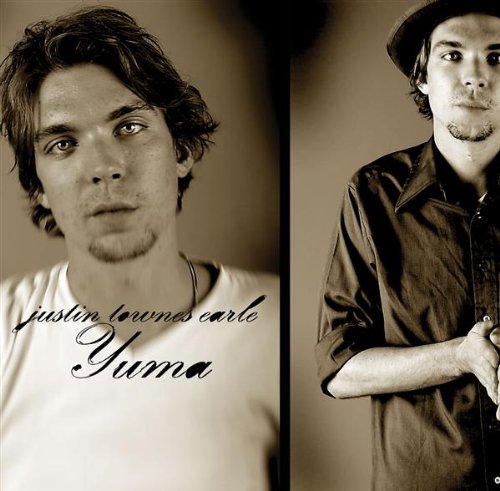
Justin Townes Earle – Yuma

This week I’m having a look at the debut offering from a second-generation artist who would embrace the independent spirit of music and leave a mark matched by few in his career. His career and life were tragically cut short, but his music still resonates today, just days after what would have been his 42nd birthday.

Justin Townes Earle – Yuma

Released February 8, 2007

My favorite tracks – Yuma, I Don’t Care

Justin Townes Earle was born in the country mecca of Nashville, Tennessee in 1982. He was the son of Steve Earle, who was just getting his alt-country career rolling when Justin was born. Justin’s middle name Townes was Steve’s tribute to good friend and mentor Townes Van Zandt. Justin would get his start in music early on, performing with a few Nashville bands as well as his father’s group the Dukes.

By 2007 Justin was ready to venture out on his own and he decided to cut an EP to have for sale while on tour. Yuma was the result. This was recorded entirely by Justin, simply him with his guitar. The release was initially self-funded and distributed, though Justin would soon sign a deal with Chicago-based Bloodshot Records and Yuma would be repressed by the label. Bloodshot would become a major player in the alternative and independent country scene and Justin would be one of its most prolific artists.

This will be a brief rundown today, as we are dealing with a pretty simple premise – 6 songs in 19 minutes. Justin recorded it over a weekend and it won’t take long to go through the particulars, though there are some noteworthy moments here.

The Ghost Of Virginia

The opener kicks off with a tall tale about a ghost train. In this case the train was Virginia, which apparently hauled Confederate troops during the US Civil War between North Carolina and Virginia. Ghost train sightings were something of a phenomenon in early railroad America and other countries. It’s an older thing of course but it’s a pretty interesting twist on the ghost thing. Train songs are literally a dime a dozen in country music, but Justin does a nice job here specifically describing the haunting visage of the ghost train.

You Can’t Leave

The second tune sees Justin strum fairly upbeat on the guitar, but the song is pleading with his woman not to leave him. Can’t have a country album without some heartbreak between couples, it’s pretty well mandatory. Hopefully it worked out for all involved in this likely hypothetical situation.

Yuma

The title track is the EP’s centerpiece and is a very sad and heartbreaking tale. In it a young man had tragically lost his girlfriend and the pain of the loss, as well as the man’s own vices, lead him to jumping from a ledge and claiming his life. Yuma recounts the man’s last hours as he has some drinks, phones home one last time, mails a postcard to home which is confirmed to be Yuma, and then succumbs to his pain and leaps off of a building.

Yuma is a very tragic song, spelling out in detail the man’s struggles against a backdrop of mundane happenings. At one point Justin remarks that “it wasn’t so much the girl, as the booze and the dope.” While Justin’s 2020 death would be due to an accidental overdose, it does feel sadly prophetic in a way hearing the song after Justin’s death.

I Don’t Care

Here Justin takes up the role of a drifter, someone with nowhere to go and looking to be anywhere but where he is. It’s a solid tale of being stuck where you’re at with no way to get where you want to be, which is anywhere else. The drifter’s lament is another highlight of this studded EP.

Let The Waters Rise

Now we get to a bit of a funny tune, at least funny in how it’s worded. Here the guy’s gal is apparently two-timing, so he wishes for the waters to rise and flood the place out. It’d be a bit overkill if applied literally but it’s quite nicely done in figurative speech here.

A Desolate Angel’s Blues

The EP wraps up with a solemn story of a person “going home.” While the imagery comes off like someone being baptized, this guys seems like he is preparing to actually drown to death. It’s a haunting yet fitting way to cap off the album.

Yuma was exactly what Justin Townes Earle wanted – a record to sell at his shows and it was a vehicle for a quickly rising star. He would soon have a record deal and also very soon be swept up in the issues of country music at the time – that is, a disdain for mainstream Nashville offerings and a desire for a savior from the independent ranks. While the anti-Nashville crowd had a figurehead in Hank Williams III, it was JTE who was often pegged as the messiah of the new country movement.

Justin did not seem pleased by or suited for such a christening. He would record 8 full-length albums, most well-regarded and praised, but it would not be JTE who would deliver a new, purer form of country that would gain mainstream attention. Not that any of us knew this in 2008, but the savior’s name was Sturgill Simpson and he was still a few years away.

For Justin, his career would be noted for his blending of country, folk, blues and soul influences at various points through his albums. He wasn’t the savior a lot of independent country fans wanted, but he was more than good enough to be regarded as a songwriter and storyteller often without peer. Yuma was the start of 12 years’ worth of releases that would carve a legacy that lives on even after Justin’s tragic demise.

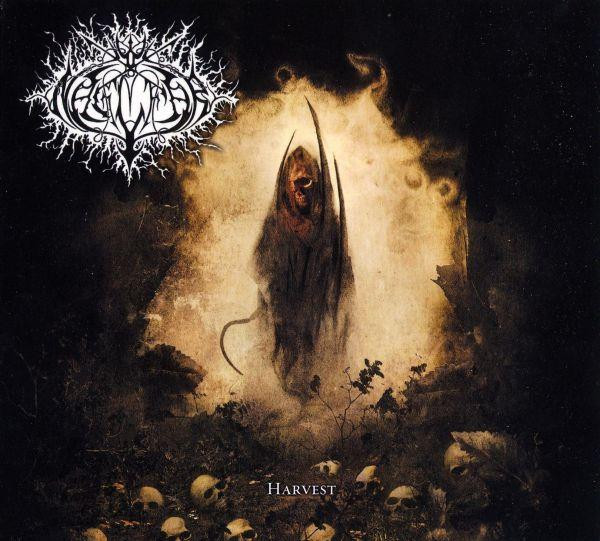
Naglfar – Harvest

Today I’m going back to 2007 and getting out a melodic black metal album that saw a subtle yet noticeable shift in the band’s sound and a change in theme from raging about external issues to focusing inward on one’s own shortcomings.

Naglfar – Harvest

Released April 2, 2007 via Century Media Records

My Favorite Tracks – Harvest, The Darkest Road, The Mirrors Of My Soul

Naglfar were fresh off their 2005 opus Pariah, which was the second to feature Kristoffer Olivius as the band’s principal member after the departure of co-founder Jens Rydén in 2003. Olivius kept at vocal duties for this album but passed bass playing to Morgan Lie. Andreas Nilsson and Marcus Norman handled guitars, and Mattias Grahn was the drummer.

While Pariah was a bomb aimed at the corruption and rot of society’s institutions, Harvest took a different approach and explored the decay of self. The themes here are depressing, bleak and suicidal. It is truly not for the faint of heart.

The album runs 9 songs out in 45 minutes. A few versions of this release had bonus material, including a DVD with live stuff, but the core album remains the same across versions.

The album opens with Into The Black. The pace is slower here, very noticeably so compared to the past few Naglfar albums. But the slower tempo works in the song’s favor, it is a creepy dive into the mind of someone who is done with life. It sets the table well for the rest of the album. Up next is Breathe Through Me, which musically sounds more like something from the prior album. It’s a faster black metal offering that gets into personal damnation, also wrapped up in the religious symbology that Naglfar often employ.

Next is The Mirrors Of My Soul and this one is a masterpiece. It a bit faster but also quite, well, groovy. It is a look at a person’s descent into total madness, with death the only option out of it. The lyrics to this one are pure poetry – the lines “Deeper into darkness, deeper I fell – When I close my eyes I see myself burn in Hell” are just amazing work by Olivius. I’ve held this as a personal favorite Naglfar track since first listen back in 2007.

It’s now on to Odium Generis Humani, which is Latin for “hatred of the human race.” This one leaves behind the self-hatred for a minute and revisits the “fuck you all” attitude of Pariah. The blistering music matches the intensity of the misanthropic delivery.

Song five is The Darkest Road and is another brilliant work from Naglfar. This is a haunting tale of someone embracing the “dark side” of life and also the nihilistic acceptance of life having no meaning. It is not necessarily a celebration, more of a matter-of-fact statement. This song was more or less an album single, and a wise pick for one as this both leaps out in its dire message and is also quite catchy.

The Way Of The Rope comes next and, if you at first think that it’s about Sweden’s long nautical history and the importance of ropes to seafaring, well, you’d be very wrong. If you guessed that it’s a savage tale of suicide, you’d be correct. After this comes Plutonium Reveries, another callback to Pariah and the misanthropic desire to see humanity perish in nuclear war as payment for misdeeds. The hits keep coming with Feeding Moloch. Moloch was an ancient entity mentioned in Hebrew texts that accepted child sacrifices, and the narrator of the song gladly supplies Moloch with its desires.

Everything winds to the end of the road and the title track Harvest. It’s clear from the drop that something extra is up here, as most of these songs run 4 or 5 minutes but this final song gets over 7. This is a dark and majestic song that feels like the whole album was building up to. Its theme is the concept of reaping what one sows, though of course it is again from a misanthropic perspective and aimed at everyone who has wronged the song’s subject, or perhaps all of humanity. While of course quite noisy like the rest of the album, the song goes out quietly with a piano outro. It’s an effective, unsettling quiet after the past 45 minutes of pure misanthropic hatred.

Harvest was another well-regarded success for Naglfar, displaying that the band still had staying power after the loss of a primary member after 2003. The band would tour behind this effort then re-enter the studio to prepare their next album in 2012. They would then take an extended layoff, something the group is known for doing, before their most recent album in 2020.

For me this has been my favorite Naglfar album, and it’s a lofty title since I love both Sheol and Pariah. The twist on theme here and the shift in music to something more catchy put this one above the others for me. When it released in ’07 I was not in the greatest of mental states, so this was either the absolute best or worst album to get into. But it all worked out in the end, and Harvest still holds up for me all these years later.

Neil Young – Ordinary People (Song of the Week)

Last week I finished off my Iron Maiden singles series with the 18-minute whopper Empire Of The Clouds. While throwing that together I was reminded of another 18-minute slugfest so that one gets the spot as the Song of the Week.

Neil Young originally composed this song in 1988 just after releasing This Note’s For You. The song theoretically was available for the album Freedom a year later, which was Young’s huge commercial comeback, but it was shelved because Young was concerned the audience might not take to the horn section.

Ordinary People got aired out some live over the years but did not see a studio version until 2007. The album Chrome Dreams II comprised a few older cuts as well as new material and the mammoth song finally got a release in 2007. The name of this album even calls back to old, unreleased Young material – the original Chrome Dreams was ready in 1976 but was shelved and its songs appeared in different forms elsewhere. The album sat for 47 years and is just now about to be released on August 11th of 2023. But that’s not today’s concern, there’s more than enough to talk about.

The song runs for 18:12. That’s a pretty vast undertaking and not something that hordes of music fans would be into, but Neil Young always marches to the beat of his own drummer so this isn’t something out of bounds for him. Hell, Chrome Dreams II has another 14 minute long song on it, No Hidden Path. It was even nominated for a Grammy in 2009.

Ordinary People comprises 9 verses over the course of its run. The song operates on the same formula the entire time – a verse that winds up with a bit of a chorus-like reprise at the end, then a bit of instrumental jam. That’s really all the song does for 18 minutes is repeat this process. There are no interludes, no movements in arrangement or anything like that. It’s just a straight jam all the way through.

The question becomes – does it work? It’s extremely long, it runs the same ground all the way through without the kinds of movements that most “long song” purveyors employ, and hell, it doesn’t even have a chorus. But, as it stands, yeah, the song is pretty good. It hooks you in pretty quickly with its rhythm that becomes almost hypnotic as the song goes along. Each spot between the verses holds a bit of horn and guitar jamming and it’s worth it to check out what’s going on through those passages.

And the verses serve to pay tribute to the title of the song – the ordinary people. Each verse is its own little story about someone screwing over the common people or maybe actually helping them out. Young offers up some choice phrases that he revisits later in the song, “patch of ground” people is one that really sticks out and also sums up the experience. It does honor the hardship and perseverance of not being one of the “silver spoon” people.

The song would be quite a feat to pull off live, especially given how much would have to be cut to fit it in. But Neil has managed 8 performances of it, all from 1988 and ’89, according to setlist.fm. The sites accuracy might be off too, especially going back to gigs that old, so it’s possible this got aired out a few more times. There is at least one recorded live performance found in Young’s insanely extensive archives series, that version runs more brief at 12 minutes and the band shifted up the verses some for that version.

The concept is something that honestly shouldn’t work. If someone pitched to me the idea of just playing roughly the same stuff over and over for 18 minutes without any breaks in the action or major shifts in the song to keep things fresh I would dismiss the idea out of hand. But here we are with just that and it’s something I enjoy quite a bit. Neil Young does exactly whatever the hell he wants, of course, and if he wants to play for 18 minutes then let him have at it.

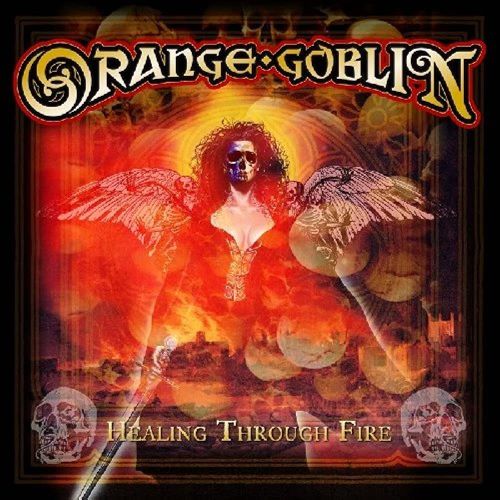
Orange Goblin – Healing Through Fire (Album of the Week)

This week I’m actually grabbing an album from this century, it’s back to 2007 and the very general genre descriptor of “stoner metal” for an ace of a record that would cast a new spotlight on a long-running band.

Orange Goblin – Healing Through Fire

Released May 21, 2007 via Sanctuary Records

My Favorite Tracks – They Come Back (Harvest Of Skulls), Cities Of Frost, The Ale House Braves

Orange Goblin of London, England had been active since 1995 and were on their sixth album at this point, and also first for what was a semi-major record label with Sanctuary. While the record deal would not really pan out as Sanctuary would essentially fold a year later, Orange Goblin would see expanded interest with this release.

Healing Through Fire is not a concept album but does tie a few themes through its songs, the theme being the Great Plague of medieval Europe. The plague’s worst years were in the 1300’s, though this record does reference events and people of 1600’s England as well, a century which also saw plague outbreaks.

Orange Goblin’s lineup had been stable through this point, with Ben Ward on vocals, Joe Hoare on guitar, Martyn Millard on bass and Chris Turner with the drums. Keyboards on the album were provided by Jason Graham. The album is a fairly lean affair with 9 songs in 43 minutes. Note that there is a deluxe reissue version with a ton of bonus and live tracks.

The Ballad Of Solomon Eagle

The opener kicks off loud and groovy with some very active riffing that clearly separates Orange Goblin from the more monotonous strains of stoner rock out there. The song deals with Solomon Eccles, also known as Solomon Eagle. Eagle was from 1600’s London and had been a composer, but later denounced his prior life and became a Quaker. This group were religious pariahs during this time. Solomon was known to go through public with few clothes on, if any, and denounce civilization. His proclamations of the end were fueled by the Plague as well as the 1666 Great Fire of London. He is a pretty curious person to feature in song, something he wouldn’t have liked as he considered music a sin after his Quaker conversion.

Vagrant Stomp

Another loud and stompy song that gets into some gross medical stuff from the time period. The song also uses the phrase “terminal spirit disease” in its lyrics, that also being the title of a 1994 album from Swedish melo-death pioneers At The Gates. No idea if the reference was meant for anything.

The Ale House Braves

This one is a faster-paced slammer that paints a picture of economic class disparity in medieval England. The destitute have nothing to lose and are coming for the well-off, a tale as old as time. There’s a very nice old-school guitar jam in this one too.

Cities Of Frost

Things slow down a bit here, which in stoner/doom parlance means it gets even heavier. This excellent song is a death march through a town being destroyed. No real clue what this is about, possibly the London Fire but it’s not specifically mentioned. Could be some random stuff that doesn’t tie into any real theme. While Orange Goblin are clearly their own entity, this is a song that gets a bit into High On Fire territory.

Hot Knives And Open Sores

Another one about the Plague and how gross everything was. I can’t imagine how nasty it would have been in the days before modern medicine when people were using every stupid thing in the book to try and treat the disease.

Hounds Ditch

More classic rock-based groovy stuff, again dealing with the piles of bodies around plague-ridden London and all the things that come to feed on the dead. This one switches to a pretty heavy end section to really emphasize the problem with lots of diseased dead bodies laying around.

Mortlake (Dead Water)

A quick and quiet instrumental gives a bit of a break here before jumping right back into the plague-laden mess.

They Come Back (Harvest Of Skulls)

This amazing song truly spells out the cost of the plague and its all-consuming nature. The dead themselves were a source of infection and would claim the living. This song has some very cool tempo changes and really brings the point home about how people thought the plague was a punishment from God and that it would be the endtime judgment a lot of people were waiting for.

Beginner’s Guide To Suicide

The closing track takes a left turn and lays out a slow blues-based effort. The lyrics are a haunting depiction of someone choosing suicide by poison as opposed to suffering from the plague. It’s a pretty harrowing position to be in but I’m sure plenty had to make that choice. The song is very well done and caught a lot of interest, today it stands as the band’s most-streamed track on Spotify.

Healing Through Fire was a watershed moment for Orange Goblin. While the album did not bust through charts, it truly put the band on the map and established their sound after several years of occasionally wandering through different parts of the rock and metal universe. The stoner genre had always been a constant presence though with a bit of a low ceiling in terms of dynamics and creativity, Orange Goblin were one band who showcased a higher degree of songwriting and arrangement to make something truly special out of the music.

The band’s choice to shape the songs around a theme was interesting and clearly paid off. It’s no secret among metal bands that the Great Plague is a fertile ground for lyrical inspiration, it was one of the most brutal times in human existence. Orange Goblin did fine work with the Plague as their creative backdrop.

The next decade would go well for Orange Goblin, three albums through the 2010’s would see the band’s stock continue to rise. While now an entity for nearly 30 years, it’s fair to say they really hit the nail on the head in 2007 with Healing Through Fire.

A Story And A Song, Vol. 4

We had a good round of winter weather in my area (and across much of the U.S.) a few weeks ago, and are seeing more as winter slowly rolls away into spring. That got me thinking about an odd little story from another notable winter storm many years ago. And as a result, here is a new story and song.

The song is Sightless, from the apparently final Solitude Aeturnus album Alone. The song is a massive doom offering that stays up-tempo despite its harrowing lyrical fare. It’s a highlight from an album that is full of them.

And for our story, which will get into when I first heard the band and the album. It was January 2007 and a major ice storm hit the U.S. Midwest and other parts of the country. My area of southwest Missouri was especially hard-hit. A combination of bad proactive city planning and just the massive nature of the storm left many without power for weeks in sub-freezing temperatures.

The storm came in on Friday night. Back then nothing stopped us from doing what we do, which is to play metal and drink beer. We knew the storm was coming so we headed to a nearby friend’s house to see the action from his huge, covered back deck.

The ice started piling on tree limbs and snapping them. The limbs crashed into power lines and knocked out power through the city. It seriously sounded like a war outside with the amount of trees and limbs cracking and snapping. This was the poor planning part of the whole thing – there were untrimmed limbs all over power lines through town. It was a mass casualty event as far as having electricity goes.

We wandered around a bit as it’s a bit tough to play music without power. The party spots of downtown still had power on Friday night so we hung around there awhile. Later I wound up over at another friend’s house where, in a desperate quest to eat something, we heated soup cans on a barbecue grill on his front porch. We were already settling in to our post-apocalyptic situation quite nicely.

The next night several of us convened at our house to try and find something to do. Power was still out and was going to be for days. The same friend who had offered up his BBQ grill and soup the night before had brought over a CD. My roommate had a boombox with a tape deck going but we had no other way to play the CD so we went out to my car and played it.

The disc was, of course, the Solitude Aeturnus album. We jammed out to a fair bit of it in my nice, warm car. The music was a perfect accompaniment to the surrounding frozen wasteland. While the situation overall could be looked at as quite dire, that bit of time playing the album in that setting just made everything seem peaceful and serene. Even a few exploding power transformers in the distance did not spoil the mood.

We went back to the house after playing a fair bit of the album. We got wind of one bar downtown that still had power so we loaded up in someone’s car and had a few pints there. Our house and neighborhood would not have power for 8 days, some other places went over 2 weeks without. Power crews from across the country came to repair the power lines, some who had worked Hurricane Katrina said our ice storm was worse.

In the end we got power back and eventually thawed out. Solitude Aeturnus would stick with me over time – Alone is a favorite album and I’ve gone back to the rest of their catalog and found other gems. Though the band did not continue on after that time, singer Robert Lowe would have a 5-year turn as the vocalist for doom legends Candlemass that began just a few months after the ice storm. Doom metal was a fitting soundtrack for my life around that time so all of this lined up quite nicely.

That’s about all there is to this story. The ice storm was a massive event that I had never seen before and will hopefully never see again. But at least I had some really badass music to help get through it.

Album Of The Week – January 3, Zero

America is reborn in 2022. A series of attacks and disasters have led to a global rebranding. Previous civil liberties have been suspended in the interest of survival. The Bureau of Morality ensures citizens are in lockstep with the current message and agenda. The government is now a Christian theocracy in partnership with the First Evangelical Church of Plano. Water supplies have been treated with a drug to ensure immunity to biological agents as well as complicity with the new order.

Welcome to Year Zero.

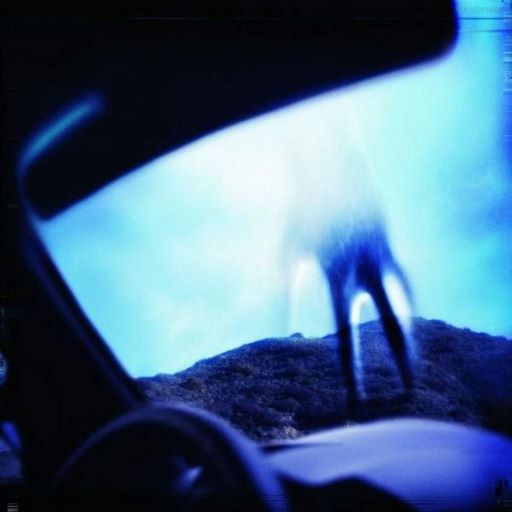
Nine Inch Nails – Year Zero

Released April 17, 2007 via Interscope Records

My Favorite Tracks – My Violent Heart, Capital G, The Beginning Of The End

The introduction is a dystopian fantasy, of course. This work of fiction, composed in 2006 and released in early 2007, is simply the figment of Trent Reznor’s imagination. Thankfully the world we enter in 2022, the fabled “year zero” of this album, looks nothing like the hellscape depicted on the record. (…)

Year Zero was released into the world in spurts with a viral campaign to distribute digital music files on USB drives in random locations. While fans ate up the media, the Recording Industry Association of America did not and began issuing cease and desist orders to people who were uploading the songs. They did this even while noting that the record label Interscope was on board with Reznor’s ideas and fully promoted the effort.

The album promotion did not stop with this viral distribution. An entire subsection of the Nine Inch Nails website was dedicated to lore about the story behind the new album, and a phone number on an album insert featured a faux message from the Bureau of Morality. A web-based “detective” game would also see release over a few months that provided a great deal of storyline for the events of 2022/Year Zero.

The lore and message of Year Zero can be (and has been) studied extensively. At the end of the day though, this is a recorded album of music and is also deserving of evaluation on those merits.

The album remains in the general realm of industrial rock that Nine Inch Nails had made a pioneering career of. This record would depart from its more accessible predecessor With Teeth by incorporating more electronic and what has been termed “digital hardcore” elements. Even for an unconventional act like Nine Inch Nails, the songs stand apart from others in the catalog.

Though the record features 16 tracks, the runtime is kept just over an hour and only one song breaks the 5-minute mark. The songs are lean and get to the point, even when invoking atmosphere and instrumental exposition rather than communicating a direct lyrical message. It’s a strange balance of concise music and extended passages that somehow work to elevate the work well above standard fare.

While some songs provide atmosphere, others stand out as highlight tracks. The Beginning Of The End, Survivalism, and Capital G all invoke their own individual meanings outside the context of Year Zero’s themes. The latter two especially stand out as real-world influences on this dystopian nightmare. It isn’t hard to make the links between 2007 political discourse and these tracks, and especially today both are ever-present themes in how things have wound up.

As a musical document, Year Zero is a standout effort from Nine Inch Nails. Electronic soundscapes give shape to these disturbing themes of fascist government control and the resistance fighting it. The album requires a degree of attention above and beyond casual music enjoyment, but this has long been the case with Nine Inch Nails. It is, in my canon, one of the band’s best records.

It is a bit challenging to access the themes and lore provided in supplemental material through these songs but the overarching story is still present. Songs like Survivalism and Capital G highlight the base greed and selfishness that brought about this grotesque future, while The Good Soldier and My Violent Heart question the status quo and establish a resistance. Something cataclysmic happens toward the end in the album’s final tracks In This Twilight and Zero-Sum. Whatever happened to this timeline, it was not a happy ending.

While this record is turning 15 this year, there is still a trove of information about the story behind Year Zero. The nin.wiki compiles a great deal of info taken from pre-release materials as well as the web game. Though incomplete, it appears that America and the world resets on 2022 to start a new age. Year Zero does not last very long as a mysterious Presence, thought to have been a drug-induced hallucination, appears over Washington DC and heralds the apparent end of the world. The album and supplemental products tell a tale of the heavy-handed government and the various resistance factions that pop up. One group attempts to send data back in time to warn people in 2007 of the coming problems. This message is symbolized by the instrumental Another Version Of The Truth.

Of course reality is not in line with the nightmare portrayed on Year Zero. But how far away really is it? We have not adopted a theocratic government in America, though many are still trying to make that happen. It might be year zero here, but there certainly is a downward spiral that doesn’t seem to be reversing itself.

I don’t have real answers to those kind of questions. I have little to no role to play in whatever might be unfolding, here in the US and in the world at large. While I don’t really expect a pair of ghostly hands to appear over the White House and end the world next month, I can’t act like I don’t see frightening real-world prospects that parallel the themes of Year Zero. The course of the world isn’t looking great, with pandemics, disasters and bitter arguments over how to handle it instead of any real action.

Year Zero the album is a landmark release from Nine Inch Nails. Its inventive viral distribution techniques captured the attention of many and the music behind the campaign went on to be considered among the group’s best by many. Year Zero the concept, however, is a much different issue that seems to be scarily playing out in front of us in some form or another.