Sponge – Plowed

So I took another unscheduled break, once again due purely to laziness as opposed to any tangible event. It seems like when I get days off from holidays or whatever that I wind up writing less. Oh well, I need to get back to it as I have a huge week upcoming so I’ll do a quick go-over of this song that popped back in my head recently after a long layoff.

Sponge came around in the mid 1990’s, they got their break not terribly long after forming in 1992 in Michigan. The band did form out of the remains of a few other acts so the group was fairly seasoned and ready to go, which might help explain their fairly quick rise.

The band released their debut album Rotting Pinata in 1994, and that’s where today’s song comes from. Plowed was the second single released from the album and was the song that put the band into public visibility. The album went gold in 1995 after Sponge grabbed attention with Plowed and the follow-up single Molly (Sixteen Candles). Plowed was the band’s biggest hit, landing at 41 on the Billboard Hot 100, scoring at 9 on the Album Rock Chart and 5 on the Modern Rock Tracks chart.

Plowed is a force of a song, with a classic hard rock backbone but also perfectly slotting into the burgeoning alternative rock scene of the time. It goes hard enough that a person could about headbang to it but it’s also smooth and perfectly fitting with the rock scene at the time. I know I hadn’t heard it in a long time when I pressed play on it awhile back and the song installed itself into my head, just as it did way back in ’94.

Lyrically this one is about just going on with your life, no matter what is going on around you. Things are messed up, probably now more than ever, and all you can do is just plow through and face reality. While a fair bit of alternative rock could be obtuse or even just plain full of shit lyrically, Sponge were fairly straightforward with their song concepts. And the title is apparently literal – singer Vinnie Dombroski came up with the words while shoveling snow in his driveway.

This is one of those songs that really takes a person right back to the moment in time when it was released. This is quintessential 1990’s right here, I definitely get a jolt of nostalgia when I hear it. Maybe part of it is just how long it’s been but I do think this song is a true signpost of the mid-90’s.

Plowed has appeared in a number of movies, TV shows and video games over the years. Perhaps its most fitting placement is in the 1995 flick Empire Records. The song is one of many that are in the film but not on the album’s soundtrack. While Empire Records didn’t light the world on fire when it came out, it is looked back on now as another totem of the 1990’s and I certainly regard it as a landmark of that time.

While Sponge had their “moment in the sun” during the mid 1990’s, the band has kept on through to this day, with singer Vinnie Dombroski being the long original member still around. I did discover that their most recent album is a very curious one and it’s something I’ll give a look at here in a few weeks. But for today it’s all about remembering the long-past times of 1994 and ’95 and the buzz of memories this excellent track provides. If there was a playlist or compilation record of songs that define that time period, Sponge would absolutely place on it and Plowed is a fair choice for that slot.

For reasons unclear, there isn’t an official version of the music video on YouTube. I have an unofficial copy posted above, I’ll also include the official audio only version below in case the first video does a disappearing act.

Next week will be a busy one here, as this weekend sees the release of Spinal Tap II – The End Continues. I will have my thoughts on both the movie and the soundtrack as I get back into the swing of updating once again.
Muse – Uprising (Song of the Week)

This week’s song is the biggest single hit from the British stadium rock outfit. This is easily Muse’s most recognizable song, if by chance a person reading hasn’t heard it, just watch a sporting event or go out in public somewhere – odds are you’ll hear it at some point.

Uprising was the lead single from the 2009 album The Resistance. The album is a bit of a “space rock opera” that overall is a fair tip of the hat to Queen. Much of the album was influenced by George Orwell’s novel 1984, a sentence I just typed yesterday for the Album of the Week. The Resistance would become Muse’s best-performing album and Uprising their best-moving single.

Uprising is nothing complex at all, in fact it follows the “keep it simple, stupid” formula very well. It’s an effective rhythm with a keyboard line thrown in and some handclaps and a bit of riffing here and there. That’s really all there is to it, yet it all feels and sound pretty expertly crafted. Muse had been on an “electro-stadium rock” path for awhile and Uprising feels like the culmination of those efforts.

Lyrically the song does go several shades deeper, it tackles the issue of governments and corporate powers controlling things and using misinformation, fear and paranoia to keep the general populace misinformed and in line. The song urges the rank and file citizen to recognize the charade and take power back. Something certainly born of both world events and the 1984 novel, though in both it would seem the powers that be won’t be swayed by popular rebellion.

As society has become more bitterly political and polarized over the years, Uprising has become an anthem for those that feel oppressed. The odd part of it all is that apparently everyone feels oppressed. I’ll refrain from going too hard into the political stuff but it would stand to reason that persecution and oppression are not visiting every person in the world. And not every dissenting viewpoint equals oppression, though in today’s political and social discourse it’s clear that many feel that way. As a note, Muse frontman Matt Bellamy disavowed the song’s use by right wing groups in the 2010’s.

While Uprising does offer bridges to these deeper, sometimes troubling and usually frustrating lines of thought, at its core it is really just a simple stadium anthem. It works extremely well over the PA at a sporting event and it catchy enough to easily earworm its way into someone’s head. No shock that this became a hit single.

Uprising did a tap-dance all over international charts, hitting singles charts in 20 countries and landing top 10’s in 7 of those, including their native UK. The song hit number 37 on the US Billboard Hot 100, marking Muse’s highest performance on that chart and in some technical sense actually garnering them “one hit wonder” status. It sold over 2 million in the US and has a host of gold and platinum certifications in 10 other countries.

But Uprising’s US fortunes can’t be summed up by just the pop chart. At the time Billboard also ran an Alternative Airplay chart and Uprising did an absolute number on that one. The song spent 17 weeks at number 1 and 52 weeks total on the chart, which at the time based on chart rules forced the song off for a week. Then it re-entered the chart the very next week. The 17 weeks at number 1 is good for fourth all time in the history of the chart, and one of the songs above it is also a Muse song.

Uprising was Muse’s call to power and also their apex in the mainstream music scene. The group has gone on to record and tour the world several times over, but their simple act of rebellion has continued to ring out across speakers everywhere. Perhaps a deeper message was lost, but the beat is pretty infectious.

L7 – Shitlist

This post was part of a series that I called S-Tier Songs. I later decided to abandon the series in favor of a simpler Song of the Week format. I am keeping these posts as I wrote them but removing the old page that linked to the list of S-Tier Songs, so that is why these posts might look a bit odd. Enjoy.

L7 – Shitlist

Today’s song hails from L7’s third album Bricks Are Heavy. The 1992 record was the band’s first involvement on a major label and was produced by Butch Vig, who a year earlier had produced Nirvana’s Nevermind which changed music forever. The album saw some grunge influence meet with L7’s already established hard ass alt/punk sound and was the group’s vanguard moment.

Shitlist was not a single for obvious reasons, though it was the B-side to Pretend We’re Dead, the band’s most popular single release. As the album and singles took hold through radio and MTV, this song got its fair share of notice. L7 were pretty hard ass as a whole, but Shitlist was another degree of that.

The song is pretty simple musically – it’s got some nasty distortion on a pounding riff and rhythm. The guitar adds some flair here and there, but this song is a vessel to communicate a message rather than provide an exercise in pentetonic scales. Donita Sparks delivers a vocal with a combination of snarl and disaffection to perfectly fit the nasty tone of the music.

Lyrically this is a blatantly obvious song – we’re pissed off, and there’s a list of those who did the foul deeds that led to this state. There’s maybe only 20 different words used in the lyrics but everything works so well to communicate the message – you’ve made my shitlist. It’s one of the first songs that comes up when people talk about “angry songs” or things like that, Shitlist has truly made its mark in that regard.

There are no real metrics to evaluate in terms of Shitlist’s success. The album Bricks Are Heavy was last certified at 327,000 copies sold in the year 2000. I’d wager that it’s moved a few more since then and maybe a re-certification would see it get past the gold threshold, but I can’t say for sure. The song didn’t get MTV play because, well, just look at the title.

But Shitlist did strike a chord with music-listening America in the early 1990’s. While the L7 singles like Pretend We’re Dead and Monster got video airplay, people in the know would make sure to tell you to get the damn album so you could hear Shitlist in all its glory. Word of mouth was still important in the pre-Internet days and that’s largely how a song with a controversial name like this would get out there.

Shitlist did get another boost from appearances in several movie soundtracks. The song was in quite a few movies, actually, though to be honest I’m not sure I want to go deep diving on some of those early ’90’s movies to recall the flicks more specifically. But Shitlist did land a very memorable part in one movie scene.

In the opening scene of 1994’s Natural Born Killers, the movie’s main couple Mickey and Mallory Knox are in a diner out in the middle of nowhere. A local patron starts putting moves on Mallory. Her response is to go to the jukebox and put on Shitlist, then beat the shit out of her harasser. Mickey joins in and the couple kill everyone in the diner, except for one they leave alive to report that Mickey and Mallory were responsible.

This is the scene, don’t count on it being upon YouTube for a long time.

The movie released just after L7 had released their next album Hungry For Stink. I don’t know if the movie scene had a huge impact on sales of that or Bricks Are Heavy, but the way that scene is still vividly recalled today, I’d guess that it had some influence.

L7 would continue on through the 1990’s but run out of steam by the turn of the millennium and call it quits in 2001. They would reconvene in 2014 and have been touring and releasing music since, with a renewed interest in a band that many felt didn’t quite get their full due in their first run.

Why is this an S-Tier song?

Shitlist is simple, heavy and powerful. Its message cuts true and is something every person on the planet can identify with, someone’s made our shitlists at some point in time, even the most zen of folks. L7 were known for bringing the nasty when they wanted to, and Shitlist was another extension of that. Its memorable tie to the scene in Natural Born Killers still resonates with viewers who may not have ever bought an L7 album in the ’90’s. This was not a band to mess with, and Shitlist was the calling card of that.

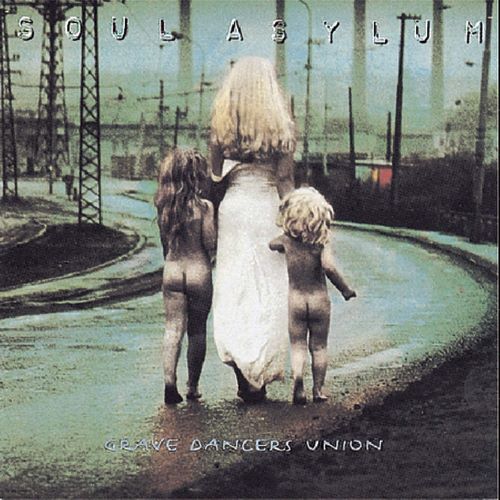
Soul Asylum – Grave Dancer’s Union (Album of the Week)

This week I’m taking a look at one of the breakout alt-rock albums of the early ’90’s. Soul Asylum had been a long-running independent band by 1992, but a massive single would propel them to the top of the board.

Soul Asylum – Grave Dancer’s Union

Released October 6, 1992 via Columbia Records

My Favorite Tracks – Without A Trace, April Fool, Black Gold

Soul Asylum found the stage for success when rock music turned on its head in the early 1990’s. What was alternative and independent was now mainstream, and Soul Asylum were gearing up their sixth album by this point. The band was experienced and ready to break out.

The lineup at this point had been stable for awhile but was going to experience a shift. Dave Pirner was the band’s frontman and rhythm guitarist, Dan Murphy provided lead guitar and Karl Mueller was on bass. Grant Young was the band’s drummer but issues cropped up during recording and Sterling Campbell was brought in to supplement the drumming. Each drummer played on roughly half of the album. Young would remain the band’s drummer for the tour but Campbell would take over before the next album.

The album’s cover photo was a curious choice, it is a 1970 photograph by Czech artist Jan Saudek titled “Fate Descends Toward The River Leading Two Innocent Children.” Other Saudek photos have been used in cover art over the years, this being the most prominent one.

The album runs through 12 songs in fairly quick 44 minutes. There is a reissued version with live bonus tracks but I’ll be tackling the main release today.

Somebody To Shove

Opening with the album’s lead single and very nice song. It has a great hook and a nice concept about being frustrated with trying to fall in love. This was Soul Asylum’s introduction to the world at large and it worked well, as the song landed toward the top of the Alternative and Mainstream Rock charts.

Also of note – both this and the Black Gold music videos were directed by one Zack Snyder. Not sure if there are Snyder Cuts of these videos, I’d assume not.

Black Gold

The second single kept the ball rolling for this album until the train was ready to leave the station. Though a very sad song, the chorus keeps things squarely in the rock realm. The lyrics do offer a ton of room for interpretation, though it is generally given that the song is about the Persian Gulf War of 1991. For me the lyrics hit pretty hard, especially the parts about being in a small town, and as it turned out my ticket out of there was the military.

Runaway Train

Probably not a more fitting name for a song that would become the vehicle to smash success in music. The song itself is a forlorn ballad that Dave Pirner wrote about depression. The song also features a cameo – Booker T of the MGs provided keyboards.

This desperate single would climb to number 5 on the Billboard Hot 100 and was everywhere on release. It was aided in great part by its music video, which took a different tack and featured pictures of missing children. The video and missing kids were changed for each major territory, and in the US there were 3 versions of the video each with different missing children.

The video is credited with helping locate at least 26 of these missing kids. This doesn’t have the happy ending it might convey, as many of the missing kids were murder victims. And several of the featured children were never found.

While the truth behind the video’s children might be stark, the song Runaway Train was a huge leap for Soul Asylum. The single itself went gold in the US and won the Best Rock Song Grammy in 1994. Its success would also fuel sales of the album and this would wind up being a runaway hit.

Keep It Up

After the weight of the prior song, this is a more uplifting tune both in music and theme. On its own it’s not a song I’d be all that into, but it does serve a great place in the album’s sequencing to come just after Runaway Train. And in general it was a more uplifting alternative to the gloomy grunge of the day.

Homesick

Another sad song, this one is hauntingly quiet as the narrator longs for a place they’ve never actually been. Not a ton to say about this one but it’s pretty well done.

Get On Out

Again keeping with the sequencing of going sad/uplifting, this one hammers at the depression and bad thoughts. This is a pretty good one and very well written.

New World

Another sad and quiet one though this one is a bit more abstract in theme. It does have to do with being stuck in a small town but it gets into some other territory as well. Like most everything else on the album it works pretty well.

April Fool

As the album winds toward its last third we take a detour into massive riffs. April Fool is a great song that combines riffs that are near heavy metal with some silly lyrics to paint a picture of cool and hip. It’s a departure from the album’s norm and it’s a wonderful back-half gem, though we’re just getting started on that front.

Without A Trace

The late-half gems continue with this amazing song. This did actually get released as a single toward the end of the album’s life cycle. While many of the songs here are either sad or not, this one combines all sentiments and distills them into an essence greater than the sum of its parts.

Dave Pirner wrote the song about always being on the move to try and find something new or try and get away from the trappings of the old place. And the guitar hook on this is just spectacular. It’s like a ’90’s country song but put on rock steroids.

Growing Into You

This one is a pretty straightforward alt-rock slammer. It doesn’t quite hold up to the two preceding tunes but it’s a nice song worth the time.

99%

One more hidden gem before the album winds down. This is a sloppy, distorted mess, which is always right up my alley. It’s also a pretty accurate treatise on love and how it’s a 99% thing. Not much else to really say about it, just a nice, dirty love song.

The Sun Maid

The album closes on a quiet and very melancholy track. It’s a departure from the songs prior to it for sure. The song in and of itself is not bad by any means but I’ll admit I’m one of the people who aren’t’ all that into it. It just crashes the mood after all the rocking out that just happened. I know some people passionately defend this song and I’ve had arguments over it in the past, but I’m not gonna be swayed off my position after 30 years.

Grave Dancer’s Union was the album that put Soul Asylum on the map. It charted at number 11 in the US and held high spots in many European countries. It has at least two US platinum certifications and maybe even three, this information is a bit hard to nail down sometimes.

It would not be a long stay in the mainstream eye for Soul Asylum. Their next album would produce another hit single but the band would ease back into the independent scene after that. This was more their moment in the sun than a great arrival. Soul Asylum are still an active outfit today.

For me I very much enjoyed this album when it came out, even though at the time I was mostly exploring the extreme metal scene. These songs had the right amount of creativity, sadness and wit to stand out from others in the alt-rock crowd. This is decidedly a rock record but it certainly has shades of country to it. It was fantastically written and played, and it remains a staple of the ’90’s alt-rock era.

Elastica – Stutter

This post was part of a series that I called S-Tier Songs. I later decided to abandon the series in favor of a simpler Song of the Week format. I am keeping these posts as I wrote them but removing the old page that linked to the list of S-Tier Songs, so that is why these posts might look a bit odd. Enjoy.

Today’s entry is quick and to the point. It’s about two minutes long, it’s about being unable to “perform” while drunk, and that’s really about it.

Elastica – Stutter

As I said, this one is pretty cut and dry. It’s a simple punk tune, though delivered with smooth women’s vocals as opposed to some shouty drunk guy. The song is expertly constructed in its simplicity and walks a fine line between hard and catchy while getting both sides right. No need to reserves space to evaluate a guitar solo here, this song is out just a quick as it came in.

The lyrical content, while simple in two verses and the chorus, doesn’t quite “come and go.” The song is about a well-known phenomenon where a fella can’t quite get to business after having too much to drink. I suppose “erectile dysfunction” is the proper medical term here. Vocalist Justine Frischmann, also the songwriter, handles the problem in stride, she seems willing to encourage her down and out lover rather than be too upset about it. Though it’s clear she’d also prefer to get to some action.

Stutter was released as a single before Elastica had recorded a full-length. The single was packaged as a limited run of 1,500 records and they flew off store shelves. A series of British media articles shined more attention on the band, and the meteoric rise to fame was on. Two more singles would light up UK charts in 1994, then their debut album released to smash success in early 1995.

The powers that be delayed the release of Stutter in the US until late 1994, a move that likely paid off as the full-length was close to release at that point. Stutter did nominally well on the Billboard charts at position 67, though it did hang out on the charts for 9 weeks. It also broke the top 10 of the alternative rock chart. Subsequent singles would climb higher on both UK and US charts.

The music video was a simple yet effective shot that was in heavy rotation on MTV and other video channels in 1995. Stutter served a number of outlets at the time – “post-grunge” was coming in and Elastica were exactly in the right place at the right time for that. And Britpop was a movement with legs around this time. While Elastica’s sound might not “vibe” with what most consider Britpop, they were undeniably a successful act on the scene at the time. And they were one of the more successful Britpop outfits in the US, second in sales only to the mass success of Oasis. Also, Elastica even outdid Oasis in their shared home country of England – Elastica’s debut album outsold Oasis’ Definitely Maybe, handing Elastica the crown of “highest-selling debut album” in the UK until the Arctic Monkeys came around over a decade later.

There is one other bit of trivia surrounding Stutter that also, uh, sort of involves the Britpop phenomenon. It is widely speculated that the song’s lyrics might be about another of the luminaries of the Britpop movement. Justine Frischmann was an early member of Suede and was in a relationship with that band’s frontman Brett Anderson. Frischmann wound up leaving Anderson for Damon Albarn, frontman of Blur (and later Gorillaz). Frischmann and Albarn were together for a handful of years and were linked at the time Stutter was conceived.

So the question is often asked – is Stutter about either Anderson or Albarn? No answer has been provided and I doubt one ever will. It’s the fodder of endless speculation on ye olde Internet, but it’s also pretty slimy in a way. It’s not like I’d ever ask Justine that question were I in the same room as her. Kind of personal stuff there.

And also – it’s entirely possible the song has nothing to do with either Anderson or Albarn. It might have just been an idea that Frischmann ran with. I thought about not even including this part of the post, but honestly the post was kind of short for my tastes and it’s not like Frischmann is gonna read this and be like “you’re gross.”

Why is this an S-Tier song?

Stutter is a short and to-the-point affair that communicates its message in a clever and coy way despite the aural assault of the music. Justine Frischmann lends some subtle qualities to her vocal delivery that makes the song work in a more playful manner, even though she’d prefer her lover to get to business. The song was a moment in time that fit the time perfectly, as 1995 was a period of transition out of the darker air of the early 90’s. Elastica were in a great place to offer up a ligher-hearted and funny take on an issue not really getting airplay in the grunge years, and the result was very well-received.

A Story And A Song – 3 AM

Today’s song and story come from a recent holiday drive. The song is 3 AM, one of the hit singles from the debut Matchbox Twenty album Yourself Or Someone Like You. In an odd bit of trivia, the song did not chart on the Billboard Hot 100 only because it was not released as a physical single in the US. But the song did very well and the album was a super smash hit.

Matchbox Twenty were a pretty important band at the time. While I think their proper classification is alternative rock, the term “post-grunge” is used a lot when talking about them. This was the shape of rock after grunge flamed out in the middle part of the 1990’s.

The story goes back to Thanksgiving Day, which was was back like two weeks ago here in the US. We were driving back from a Thanksgiving dinner in a car with me, my girlfriend, her sister and her sister’s kid (my girlfriend’s niece).

We were coming from a fairly remote part of southwest Missouri back to the one city in the region that we live in. Finding something on the radio on forlorn highway roads is always a chore. These areas are known for having country, talk radio or religious programming on the dial. And of course, FM stations tune in and out very easily out in these rural areas.

At one point a rock station came on and the song in question was playing. After a bit, my girlfriend’s sister asked her daughter what she thought of the song. Her response?

“It’s fine. It sounds like country music.”

It was a pretty funny observation to the rest of us in the car, who have all been plenty exposed to country music. But after a second I realized how telling of a statement it was from a 13 year old kid who probably isn’t up on the history of country music.

The point is obviously about the state of modern country music – is this where it’s at? Someone not alive in Matchbox Twenty’s heyday thinks that their stuff is representative of a different genre of music?

Country music takes a lot of hits these days. The bro-country phenomenon of the past several years was awful. There has been a long-running battle between the entrenched machine of the Nashville industry and artists wanting more creative freedom. Country also takes a lot of flak for representing “older” values as well as a slant towards conservative politics and a lot of the worse things associated with those, both fairly and unfairly.

But when someone on first listen to an old alt-rock song thinks it sounds like your genre? I think it speaks volumes about the genre. Granted, I’m not very up on country these days and if I do pay attention, it’s to more independent artists who aren’t part of the Music Row network. I don’t really know what’s playing on mainstream country radio these days. But from the bits and pieces I’ve picked up, it’s not a far leap to suggest that today’s country is yesterday’s alt-rock. That’s not an absolute statement, of course, but it’s probably fair.

There are probably a lot of larger issues about country music that warrant discussion but that’s not really what this post is about. It was just a funny comment that made me think “Wow, is that what country has come to?” And there may not be as much to it as I’m speculating, but I’d say there’s something to it.

I could wrap up by posting Rob Thomas’ actual biggest hit, but I won’t do that to myself or anyone else. Instead let’s bow out with a bit of country.

Alice In Chains – Down In A Hole

This post was part of a series that I called S-Tier Songs. I later decided to abandon the series in favor of a simpler Song of the Week format. I am keeping these posts as I wrote them but removing the old page that linked to the list of S-Tier Songs, so that is why these posts might look a bit odd. Enjoy.

Today’s offering is one of the finest moments of the grunge movement. Even with being “grunge,” it is a suiting power ballad that evokes sadness and despair in a way not a lot of artists can touch.

Alice In Chains – Down In A Hole

Our song today hails from the album Dirt, the 1992 masterpiece of the Seattle-led grunge period. The album sold millions and was ever-present on radio and video airwaves. It qualifies as “classic rock” today and is still in rotation far and wide.

Down In A Hole was the fifth and final single from the album. It was released as a single almost a full year after the album arrived. The single sold over a million copies and charted in several countries. On Spotify it is the third-most streamed song from Dirt, behind only the mega-hits Rooster and Would?

The song begins very softly, almost in a way that departs the hard-edged album it is from. But it remains within the Alice In Chains lexicon, with suitably melancholy guitar work from Jerry Cantrell and the sheer power of the vocals of Layne Stayley, with harmonies provided by Cantrell. The singing has always been a highlight of AIC and both Stayley and Cantrell shine especially bright on this song.

The lyrical content of a song called Down In A Hole is, of course, pretty downtrodden. Though not from the doom genre per se, this could easily be considered a doom song thematically. It sounds like someone in the grip of utter despair and hopelessness. Every line is awash in depression and soul-crushing anguish. Lines like “See my heart, I decorate it like a grave” and “You don’t understand who they thought I was supposed to be, look at me now I’m a man who won’t let himself be” are jewels in this crown of misery.

Jerry Cantrell, the song’s sole writer, shed some light on the song’s origins in the liner notes to the band’s 1999 box set Music Bank. He states that the song was written about his girlfriend at the time and the realities of a long-term relationship and how they clash with being in a band. While there are plenty of songs about that and about life on the road in general, I don’t know how he got Down In A Hole out of that. But hey, I’m glad he did.

Down In A Hole has been a staple of the Alice In Chains setlist, with one major caveat to that – they did not often perform the song when Layne Stayley was alive. It was not a regular part of the setlist on the band’s tours in the early 90’s, and the group did not tour much after that due to Stayley’s health issues. A vast majority of Down In The Hole performances are from the band’s modern incarnation with William Duvall at the vocal helm.

One notable exception was the 1996 MTV Unplugged performance. This did feature Layne and the song worked very well in the unplugged setting. Alice In Chains were always a proficient acoustic act anyway, so having this version of the song is a massive plus.

Why is this an S-Tier song?

Down In A Hole is both beautiful and soul-crushing. It communicates absolute sadness but in a very majestic way. It showcases the main strengths of Alice In Chains, those being the voice of Layne Stayley and the musicianship and songwriting of Jerry Cantrell. It is an amazing work that got huge airplay despite being such a depressing affair.

Tales From The Stage – Nine Inch Nails

Gonna turn back the clock to the year 2000 and talk about a much-anticipated show I took in. The gig was Nine Inch Nails with A Perfect Circle opening and it took place at the end of May in St. Louis. It was a gig with some marquee names and – well, something of a crowd, anyway.

No massive build-up for this one, it was pretty simple – NIN booked the gig, we got tickets and went. The show was at what was then called the Riverport Amphitheater outside St. Louis. If that name sounds vaguely familiar, it’s because it was the scene of the infamous Guns N’ Roses riot in 1991. (As opposed to the 1992 riot in Montreal, which was indoors). We had pretty decent seats that were under the awning, which extended a bit past the stage. The bill was simple – APC first, then NIN. No other openers or anything that I recall, and online archives seem to back me up.

A Perfect Circle were just getting started in 2000. Their debut Mer De Noms had just released a few days prior to the show, while the lead single Judith was getting a lot of play on the airwaves. The band was formed by Tool mainman Maynard James Keenan and his friend, guitar tech wizard Billy Howerdel. The album and touring cycle would prove immensely successful for the group and defined the band on their own terms as opposed to being Maynard’s side project.

APC would air a 40 minute set out in their opening slot. Given the compact nature of their songs this gave them time to play all but one song from Mer De Noms. Maynard opted to sing the gig front and center as opposed to his usual antics he gets up to in Tool, though I don’t recall any stage banter from him. The band played well and ran through the album, though not in album order. Future singles The Hollow and 3 Libras saw time and they wrapped their set up with the hit Judith.

One of the few clips I could find as opposed to full shows. This show is from a date after the NIN tour but still in 2000.

During their set a bit of rain fell from the sky. Our seats were a bit under the amphitheater roof but still close enough to the edge to get wet. It wasn’t a downpour or anything and it only lasted a moment but I did take a mental note to get seats closer if I wanted to avoid being caught in anything. The weather wouldn’t be a factor at future gigs there (rain-wise, anyway).

After the stage changeover it was time for the main event. Nine Inch Nails were touring the US on their 1999 double album The Fragile. While the album was lengthy it had gone over pretty well with the fanbase so the tour served as a showcase of that album as opposed to being a hits set with just a few newer tunes sprinkled in. The 19-song set would feature 3 tracks from the debut Pretty Hate Machine, 3 from the seminal Broken EP, 4 from the magnum opus The Downward Spiral and the remaining 9 all from The Fragile.

Trent and company made their way through their romp without much fuss. Much like Maynard and APC, there was not a ton of inbetween-song banter to be had from Trent Reznor. He did comment “fuck you pigs” at one point, without elaborating on who exactly he was referencing. He might have belched out another thing or two but it was pretty much get one song done and get on with another. Of course, one doesn’t go to a show that Trent Reznor and Maynard James Keenan are fronting for stage banter. Sammy Hagar was around a few months later, if memory serves.

One of The Fragile’s best songs with bad video but great audio from the same tour

I will say one thing – the crowd was very much not about energy that night. I mean, I suppose we can consider Nine Inch Nails a more ponderous experience than a straight up rock n’ roll band, but there just wasn’t a lot of life in the crowd. I thought it was a bit lame but honestly it didn’t detract from my enjoyment of the set. It would mark the start of generally lame Missouri concert crowds I would notice in the future, though (with some exceptions).

There was a bit of energy in the crowd at one point – in the aisle not far from our seats, a few people got into a fight at one point. I have no clue what they were into fisticuffs about since I was, like, listening to Nine Inch Nails, but they had it out over something. The fight didn’t last long – security came out and absolutely messed these two up. One of the combatants got thrown straight into the concrete. Remember, this is the very place that Axl Rose tore to the ground nine years earlier and the birth of pre-9/11 big concert security. The fight got broken up in far more brutal fashion than the fight itself went.

Undaunted by action they probably didn’t see, Nine Inch Nails pressed on with their visit through The Fragile and other works. They played a handful of other hits, stuff like Sin, Wish, Gave Up and Terrible Lie were all welcome inclusions. They wrapped up the set proper with obvious hits Closer and Head Like A Hole, before coming back for an encore that featured a few Fragile tunes as well as the finale Hurt. We were still a few years away from Johnny Cash working his magic with that song.

I was a bit stumped that they did not include The Fragile single We’re In This Together Now, but it was not to be found that night. And while it wasn’t a breaker for me, I would’ve loved to hear Last and Burn, though I think the former wasn’t played much live until several years on from this show.

Overall the concert was a good experience. It does mark my first and, to date, only time seeing either band. I would like to see them again, especially Nine Inch Nails, but we will see what time and circumstances have on hand. Both bands did great in the house that Axl Rose tried to unbuild.

One other note – at one time I had the Nine Inch Nails performance on burned CDs. This was back in the wilderness days of eBay and they let people get away with selling bootlegs. I didn’t pay much for it, less than $10. It was a cool memento to have but sadly I lost the discs before the age of digital ripping really caught on and I don’t have access to the set anymore.

Sin, from an earlier stop on the same tour

A Story And A Song, Vol. 3

Just a quick note – this series is an unconnected group of stories, just titled this way for summary purposes. Nothing missed before is necessary for this or the next, and so on. The category this is under on the right will lead one to other one-offs in this series.

This will be a bit of quickie. It’s a song and a quick story.

The song is this – the big hit from the Wallflowers in 1996. One Headlight would become the signature song for Jakob Dylan’s outfit amongst the alternative rock, post-grunge hits of the late ’90’s. It placed on multiple US Billboard rock charts and was a staple of mid- to late-90’s rock radio. The Wallflowers would have a few more noticeable songs, mostly from the same 1997 album Bringing Down The Horse, but One Headlight is the band’s bona fide hit.

Here’s the story – I think it’s 2018, or maybe 2019. It’s winter, so if it’s 2019 it’s just a bit before the pandemic came over to the United States. I can’t quite remember which winter this story fell into, but I recall the details clearly.

Several of us met up at a local brewery. Craft beer has been a social and economic boon the past decade, and our semi-sleepy Midwest town caught the late wave in the latter half of the 2010’s. One of the best ones in our town that now boasts 12 or 40 or however many has hosted music over their few years of existence. While now they have a mix of renowned local talent and hot regional acts come in to play on a prepared stage, such was not the case in 2018 or 2019 when this story happened.

I was out with several of my friends on that evening. As time wore on, our friends and significant others left us (for the evening), just leaving my friend and I behind at around 8 PM.

We were at one of those tall bench tables, standing and having a few more suds on a Saturday night. Around that time, some dude comes in and sets up shop with a mic, practice amp and an acoustic guitar. He does cover songs. A one-person project doing cover songs acoustically is not some huge deal, other than the guy is set up just a few feet away from us. We press on with our drinking and talking.

At some point this one-man band busts out his rendition of One Headlight. It was the first noteworthy song he did to point. My friend and I looked at each other with this combination spark of bewilderment and familiarity – “we know this song.” Then, “oh yeah, it’s that one song from way back when.”

We had to take a moment to assess this rendition being done basically in front of us. We started debating the merits of One Headlight and The Wallflowers. Are they worthy? Is it a good song or not? We defaulted to “nah,” but as the song went on we amended our two-person consensus to “you know, it isn’t terrible.”

We finished our brews and called it a night, leaving the one-man acoustic project whose name I can’t recall but I think was Tyler behind. Then I woke up the next day.

Come on, try a little, nothing is forever….

I had the damn song stuck in my head.

It’s ok. I’ve been jamming to music since I was like 5 and I was 43 at this point. I can hack this, I’ve had songs stuck in my head before.

But this wouldn’t go away.

Got to be something better than in the middle…

I honestly went for days with this song in my head. I get it, in a way – I really hadn’t heard it in many years and it was a sudden nostalgia trip. I have never had a song stuck in my head for as long as this ear worm crawled its way in. It was honestly days, even weeks that I had to play it. This wasn’t that momentary song you could get over after a bit – this fucker was straight stuck.

Me and Cinderella, we put it all together…

I had to reckon with this song for awhile. I’ve had songs stuck in my head that I don’t necessarily mind, but I don’t really want to be stuck with them. I’ve also had songs stuck in my head that I wish would die in a fire and the ashes be shot into the Sun.

But this was different. Hearing The Wallflowers again caused me to revisit the album and remember that, hey, I dug this stuff once upon a time. I do wind up in fond nostalgia from time to time, as I’m sure most music listeners do. This was one that had truly passed me by but I became re-acclimated through this dude with his guitar at the brewery on a Saturday night.

We can drive it home on one headlight…

That’s about all there is to this story. It isn’t world-changing or even that notable. Hell, it’s barely a story. But I do still vividly recall that night I got this damn song stuck in my head after nearly two decades of not hearing it. And now I’ll even cop to being a fan, even if on the edges, of The Wallflowers. Hell, they put out a record last year that I gave a minute to. It’s nice to get back in touch with something seemingly long lost, you only get so many of those moments before it’s all said and done.

Who Killed Hair Metal? Part One

Music has been rife with death. Many songs are about death, many great players have died, and many scenes and movements have also passed on. Hell, there’s a whole metal subgenre about the subject, started by a band with the very name.

But this isn’t about death metal. No, this is about the death of a scene in rock and metal. 1991 marked the effective end of a distinct sound from the 1980’s, that oft-maligned but still beloved entity known as hair metal.

My purpose in this series is to examine the factors that led to the demise of hair metal. There are multiple issues at hand and different angles to look at. While a lot of ink has already been spilled on the matter, I wanted to go back 30 years after the fact and cover a few points that don’t always get brought up.

This will be a 4-part series, each one with its own “suspect” in the brutal death of hair metal. Our first look will be at the prime suspect, and the next 2 parts will cover suspects that maybe slide under the radar a bit.

And yes – any of us who were around then know exactly who killed hair metal. That’s part 4 of my series coming on Friday, so please air a bit of patience while I build up to the extremely obvious answer to the question that everyone already knows damn good and well.

We have a crime, a victim and a murder scene. Now it’s time to get into it – who killed hair metal?

Trixter tried warning everyone to get on the flannel bandwagon. Their call sadly went unheard on Sunset Strip.

Suspect One – Grunge

If this were a game of Clue, the answer is simple – Kurt Cobain with the guitar in the MTV lobby is what killed hair metal. The video premeir of Smells Like Teen Spirit on September 10, 1991 is as good of a time of death as any for hair metal – Nirvana was the figurehead that shifted music forever and rendered a lot that came before them obsolete. Nothing was the same after Nirvana hit the airwaves.

Of course, grunge doesn’t actually begin with Nirvana. There were a “big 4” to grunge, just as thrash metal has its big 4. And two bands were already making early waves before 1991 – both Soundgarden and Alice In Chains were quietly gaining momentum on MTV and radio before the actual “death” of hair metal, with AIC having a long-running hit single with Man In The Box and its album Facelift going gold before grunge really even “took off.” Seattle mates Pearl Jam would join in the popular explosion of grunge, releasing their debut in August 1991 and it taking off to untold heights in the next year.

Grunge rewrote the rules for how bands should look and how music should sound. Hair metal would suffer greatly under the weight of the new regime. Grunge fashion was flannel shirts and whatever else might be laying on the bedroom floor, a far cry from the leather and diamonds glitz of hair metal. And the sound was rough, unpolished and about heavy and vulnerable topics – a world removed from hair metal’s celebration of party life, sex and ballads about love (and sex). The worlds could not be more different, even if the instruments were the same.

I do think it’s fair to use Nirvana’s ascent as the symbolic end of hair metal, even if doing so obscures several truths. It’s a quick and easy place to point to without having to raise too much fuss. I will be going far beyond Smells Like Teen Spirit in this series, but that moment was a very stark turning point in the course of music in 1991.

I don’t think it’s entirely fair to only “blame” Nirvana, or even the others of grunge’s big 4. There always was a different strain of rock music playing out long before grunge hit. Some of the acts influenced the grunge movement and others became huge stars on their own terms, free of ties to any particular movement.

The fact is this – grunge ushered in the age of alternative rock, and alt-rock subsequently took over and became rock music. But it must be noted that alternative rock was going for a long time before grunge captured the scene. College radio was filled with alternatives to the hair bands, and MTV ran the 120 Minutes progam that showcased a large variety of alternative artists before the term alternative really became a thing.

The idea of having something else besides hair metal was already there. Honestly, I’m not sure Nirvana was even necessary in the equation. That doesn’t matter, of course, as history is what it is. But the apparatus to overthrow the excesses and poor record label decisions in regards to hair metal was already in place.

Grunge itself would die a death not totally unlike hair metal. Bands that came after the Seattle legends would be derided for riding coattails by critics, although fans flocked to the likes of Stone Temple Pilots and Bush without issue. And the acutal death of Kurt Cobain in 1994 threw the grunge scene into chaos. Pearl Jam would transcend the grunge label and go on their own way, while Soundgarden and Alice In Chains would go on long hiatus (the latter also fueled by death).

The death of grunge did not lead to new life for hair metal. The bands who defined the 1980’s Sunset Strip scene were not the same as they were before. Many members had quit or died, bands went on their own hiatus and even the return of Motley Crue did not serve to reawaken the hair metal beast. Rock music had moved on and hair metal would become a movement relegated to state fairs and legions of rights disputes and multiple lineups of the same band performing at clubs all over the land.

The cultural shift of 1991 was not just a change in sound – it marked the end of ’80’s excess and ushered in a new age of self-awareness and discussion of tough issues not normally given air in conversation before. It was the true defining mark of Generation X, a group sometimes lost in today’s “civil” discourse but still very much responsible for the need for change still felt today.

I’m not a lawyer or a judge, but this is my courtroom, and I do indeed find grunge guilty of the murder of hair metal. But I don’t stop at Nirvana, or Soundgarden or the others. I find the whole of alternative rock just as guilty. Alt-rock would supplant the norms of rock music before it, both hair metal and AOR and reshape what radio and TV played. The late ’90’s saw a whole new host of bands redefine rock, and then the early 2000’s saw the advent of who has become rock’s biggest band in the modern era. As maligned as they are, there is no doubt that Nickelback took a sound and sent rock music into a direction far away from the hair and makeup glitz of the 1980’s.

Yes, grunge and alt-rock are responsible for the death of hair metal. Sometimes the obvious answer is obvious because it’s simply true. Hair metal died on September 10, 1991, having lived barely a decade. It really was Kurt Cobain in the MTV lobby with the guitar that did hair metal in, even if he had tons of assistance.

Sure, grunge had its role to play in this “murder,” but grunge was not alone. Tomorrow I’ll cast light on a different suspect – was the death of hair metal an inside job?