Last week David Coverdale made the announcement that many of us knew was coming – he has retired from music. He posted a short video with the announcement as well as a remixed version of the song Fare Thee Well, from Whitesnake’s 2011 album Forevermore.
David did not offer up a long-winded list of reasons for stepping away, nor did he need to. He has been visited with several health issues over the years which prevented Whitesnake from offering a proper farewell tour. The band’s final show wound up being a performance at France’s Hellfest in 2022, a show that featured a guest shot from former guitarist Steve Vai on the final song.
The writing was on the wall for this retirement for several years now, but does cap the end of a five decade career in rock. Coverdale played in UK bands for a few years before landing with Deep Purple for three albums in the mid-70’s. He would then embark on a solo venture after Purple disbanded. His solo efforts would morph into the band Whitesnake, which became Coverdale’s main vehicle for the remainder of his career. He also had a well-received collaboration with Jimmy Page in the early ’90’s.
I personally came into Whitesnake in their rising heyday in the mid-80’s. Slide It In had stuff in rotation in my area, which had a prominent rock station. Then in 1987 the self-titled album blew up and Whitesnake was off to the races. I would then backtrack to the earlier blues-based Whitesnake and the Deep Purple albums. I never got to see them live but I’ve been along for the ride with the albums over the years and I have really enjoyed the 2000’s Whitesnake output.
We do often joke about musician retirements because of, well, the mountain of evidence that retirements aren’t often worth the paper they’re printed on. But in David’s case this one is likely rock solid. He is sadly not up to the rigors of performing his music at 74 years old and with a host of health issues he has faced over the years. It is unfortunate that Whitesnake didn’t get to go out with a final tour or even a planned final show, but Coverdale still gets to bow out and enjoy his years. He has remained active with Whitesnake’s back catalog reissues so I’m sure more is coming from that and hopefully the Covedale-Page album gets its much-needed revisit at some point.
The curtain call has arrived for David Coverdale, but there is a half-century’s worth of great rock music to look back on and celebrate. And with any luck, David will be in a position to look back along with us and share more insights on his illustrious career.
Moving on with the songs by year thing, it’s time for 1972. This one was pretty easy, I have a few of these left before things get really crowded. We’re also now five years away from when I was actually around.
Deep Purple – Smoke On The Water
One of rock’s most immortal songs with the craziest of stories behind it. Perhaps the most iconic riff in history too. I know this song is over 50 years old so I don’t take it for granted that everyone “knows” it, but I do think just about everyone knows this song.
Alice Cooper – School’s Out
This might be The Coop’s prime anthem, kinda hard to say. But this song is an absolute blast. It’s great every year when school lets out for the summer, it’s great in movies about school, and it’s still great as an adult because school being out means less traffic and headaches than normal.
Neil Young – Heart Of Gold
Neil was 26 when he wrote this sad, sad song about searching for love and growing old while striking out. He’s now a few months from his 79th birthday and has about that many studio albums to his credit. But this song still resonates as one of his signature tracks. His unique vocal timber and acoustic guitar made some damn fine music.
David Bowie – Suffragette City
I talked about this song earlier this year. A nice, crazy and noisy affair with attitude and a great false ending. On heralded album full of classics, this one still jumps out to me. Bowie influenced rock of all stripes with this song and album.
Humble Pie – 30 Days In The Hole
This is a fun song about using every type of drug known to man and getting put away for it. Humble Pie were a supergroup before anyone really knew what that was, though Peter Frampton was gone by the time this song came out. This is one of those songs that wasn’t a hit at the time but it got picked up by FM radio and became an enduring classic in the years since.
That does it for this post. The ’70’s keep pushing on next week.
As for next week – the Album of the Week post will be held back until Tuesday. It lines up in order to celebrate the 40th anniversary of the album on the exact day. Not sure what album came out on September 3, 1984 that I’d be interested in…
It’s time this week for one of rock and metal’s most immortal albums. Deep Purple were looking to build on momentum from a prior album and also do a better job of capturing their live sound on a studio album when they made a series of recording choices that would both cement them as rock titans and also contribute one of rock and roll’s most infamous song origin stories.
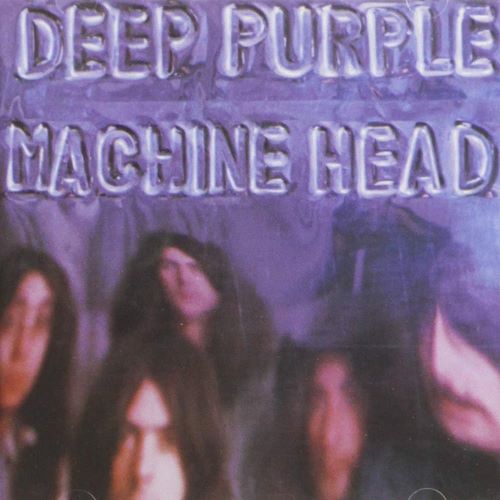
Deep Purple – Machine Head
Released March 25, 1972 via Purple Records
My Favorite Tracks – Space Truckin’, Smoke On The Water, Highway Star
The story of Machine Head and its recording has long been etched into rock music lore. Deep Purple were out to better capture their live sound on a record. The band had established some success on the basis of their album two records ago, Deep Purple In Rock, and were convinced that bringing their live sound to a studio record would help them along. The band booked the famous Rolling Stones Mobile Studio and lined up to record at the Montreux Casino in Switzerland. The original plan was to record a live set as well as the studio album and release a double record. Of course, those plans went up in flames, as we’ll get to.
Tracking Deep Purple line-ups could drive the world’s foremost scholars mad, there is a whole lore and science behind it. This album featured the band’s Mark II roster, which would be the band’s most successful configuration. It featured Ritchie Blackmore on guitar, Ian Gillan on vocals, Roger Glover with the bass, the immortal Jon Lord on keyboards and the band’s lone constant member Ian Paice on drums.
Deep Purple would be credited as album producers. They were joined by engineer Martin Birch, who had worked with Purple on previous albums as well as Fleetwood Mac in their early career. Birch would go on to produce for Blackmore again in Rainbow, handle the early Whitesnake albums as well as the first two Dio-fronted Black Sabbath records before settling in as the long-time producer of another British band I might happen to talk about all the time on this site.
Today’s album has a fairly lean 7 songs running at 37:46. Several deluxe editions of the album are also available.
Highway Star
The album opens with a quick hard rocker that was literally written in front of journalists on a bus after one reporter asked how the band wrote songs. Blackmore started jamming on a guitar while Gillan composed lyrics on the fly about simply “being a rock and roll band.” This was also released as a single.
This ode to cars and women accomplished its mission of depicting rock and roll, and the music laid a blueprint for many bands to follow – keep things simple and just rock out.
Maybe I’m A Leo
Up next is a blues jam soaked in Blackmore’s guitar tone and spiced up with Lord’s organ work. It’s a really nice song and a good bridge from rock’s recent past to what it was becoming. There are sparse lyrics here, but Gillan laments the loss of a woman, who maybe was taken away against her will, it’s hard to tell. But she is gone and Gillan is a Leo, but not a lion. (Hey, me too. And it turns out Ian Gillan and I have the same birthday, didn’t know that.)
Pictures Of Home
We have a very amped up jam session here, as each instrument player gets a spot to go off on his chosen weapon of rock. It’s far from just an individual showcase though, it’s also a cohesive song that works when everyone’s playing together as well as when one person takes the spotlight. It also features a harrowing lyrical tale of a mountain climber stuck on a mountain, which would be a pretty awful position to be in. And there’s probably not a British rock royalty jam session going on up on the mountain to pass the time with.
Never Before
It’s another blues-based tune here also with a bit of funk creeping in on occasion. While Lord and Blackmore are up to their usual mastery here, it’s Ian Gillan that really gets a chance to shine vocally here. His tale is one of sorrow, as he’s been done wrong by a woman, but the song is pretty hard hitting and ready to soar.
Smoke On The Water
And here we are. The truth is that this song’s full details deserve their own post so I will Cliffnotes things today. DP were set to record at the Montreaux Casino after it shut down for the winter, the last gig the venue booked was Frank Zappa. A “stupid with a flare gun” decided to burn the place down instead. DP had to find another place to record and also found lyrical inspiration for a song in the fire. In fact, the song’s lyrics give most of the details of the events.
Smoke On The Water was not immediately recognized as a hit. In fact, the band had a live album and another studio record out before this was officially released as a single. The song went on to hit number 4 on the US Billboard Hot 100 and was also certified gold in the US.
But the song’s true success goes far beyond charts and sales. The Blackmore riff is perhaps rock and roll’s most recognizable guitar sound. It is simple yet highly effective, and it led to generations of future guitar players annoying music shop employees with repeated plays of a riff so simple that most anyone could play it in a few minutes. This is quite possibly the greatest contribution to rock music ever, it is that massive and influential.
Lazy
This one is nearly an instrumental and is a fantastic jam between Blackmore and Lord. The song is 7:22 in length and these two take up most of the track. It is a jam in the truest sense, with them simply going off and doing what they want to do. The small verse section is about, well, being lazy. It is split in two with Ian Gillan on the harmonica between.
Space Truckin’
The album closes with a brilliant rock and, honestly, heavy metal track. It’s a fantastic, trippy march through the idea of being just what the title says – a space trucker. It’s like Han Solo a few years before he came around. The song is carried by Jon Lord’s just plain gross keyboard riffing. This song got turned into a massive jam in live settings, including an infamous one in 1974 when Blackmore was pissed off and destroyed thousands of dollars in gear.
Machine Head was to be the magnum opus of Deep Purple’s long and storied career. The album hit number 7 on the Billboard 200, and number 1 in 8 countries, including their home UK. It was certified gold in 4 countries and 2 times platinum in the US. Bear in mind that most record labels stop certification counts due to expense and it’s likely that the record has gone on to sell vastly more.
The immortality and legend of Machine Head is undisputed. When there is a list of the greatest rock and metal albums, this album is on there. When there is a list of the greatest songs, Smoke On The Water is on there. When there is a list of rocks’ greatest guitarists, Ritchie Blackmore is there. Deep Purple would, along with Led Zeppelin and Black Sabbath, form the “holy trinity” of rock music in the 1970’s. It is the influence of these three bands that shaped the face of music to come and the foundation upon what a lot of the stuff I listen to was built on. It was Deep Purple that influenced a lot of what I and we listen to, and specifically Machine Head that spun on the turntables of the next generation of musicians over and over again. There truly is nothing without this piece of rock history.

 The Crooked Wanderer