Wasted Years – My Iron Maiden Memories

If you’ve read any of my stuff you’ve noticed I get a lot into my memories associated with music. It’s something I like to do as a way of noting the personal meaning a song or album might have to me, something that separates what I do from a typical “review,” as it were. I like reading and hearing what others have to say about music but for me I prefer a different approach with the content I offer. I guess it also gives everyone context to understand what I listen to and why, where I came from and how I came into what I like today.

Of course I have to note that there are only so many memories. As I go on other content will necessarily take its place. I can only recall so many landmark moments, discoveries, highly personal matters related to songs, etc. But for the early going here, I think it’s fun to recount my first experiences with things. I don’t know how “good” of content it really is but it’s something I like doing and will roll with until its natural conclusion.

It’s time now to throw off all pretense and build-up. This post, on the week here celebrating the band and their new release, is all about my memories of my favorite band – Iron Maiden.

The first time I would encounter Iron Maiden was in a sixth grade class. For me in 1988, sixth grade was one where you’d have a homeroom class but then would maybe switch to a different class for one or two others. It was the last year of “homeroom” stuff, seventh grade and beyond would be different classes on an hour-to-hour basis.

Anyway, I was in the class I switched rooms and teachers for. I think it was English or something but who cares. The kid next to me was also from my homeroom class and was someone I was cool with. One day we were hanging out with not much to do and he pulled out a tape he wanted to show me. We were always passing music back and forth in sixth grade, we’d let each other borrow stuff or give blank tapes to people to make copies of albums.

The album he pulled out that day had the most intense cover I’d ever seen.
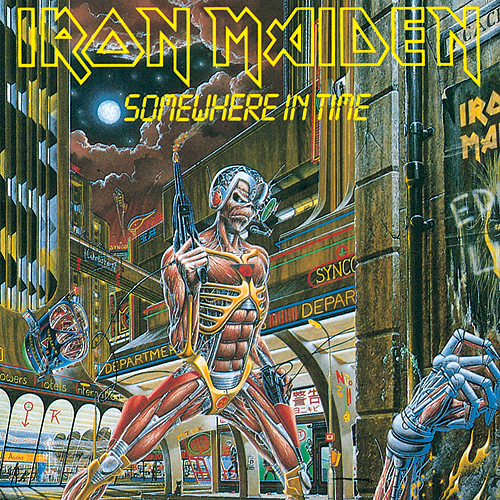
This album art is just amazing

I saw that cover and instantly wanted to hear what this band was up to. I’d heard the name but back then I was still firmly rooted in pop and hair metal. I hadn’t yet ventured out to much beyond. He told me he was listening to it a lot because they were getting ready to put out a new album. He’d let me take the tape home overnight to dub a copy, then when the new album hit I could give him a blank and he’d dub it off for me.

I dug it right off the bat. I obviously entered the band’s catalog right in their two-album symphonic era. It was a common theme in the late ’80’s so I was familiar with it but Iron Maiden was still a bit more than what I was used to at that tender age. I did like it and I played it a fair bit but it would be a year later with a different band that would make me totally obsessed with music.

So obviously the next album was Seventh Son Of A Seventh Son. A quasi-concept album, another symphonic leaning record and an epic, grandiose offering. On release it was perhaps a bit too dense for me, I could appreciate a standalone highlight like Can I Play With Madness but it took some time to digest the whole thing, or perhaps for me to grow into it. That would come in the passing year or two, though, and I was off to the races with Iron Maiden.

I’d get heavy into the band as I got heavier into music in general. I grabbed all the old stuff and liked pretty well all of it, including the first two albums fronted by Paul Di’Anno. Sure, Bruce is truly the voice of Iron Maiden but I really enjoyed stuff from those first two records.

Even as Bruce left the band in 1993 I still dug Maiden. I knew full well that the music landscape was constantly shifting, hell, I came into music hard and heavy in 1991 when the scene was completely blown apart. My own tastes would go to the extreme end of the spectrum in ’93 but I could still hold onto Maiden as a treasured part of my musical upbringing.

Just as I entered the military and a whole new phase of life, so did Iron Maiden. I wasn’t really impressed with the two Blaze Bayley-fronted albums, though my criticisms of them don’t stem with him so much as lackluster songwriting. I’ll probably pick this thread up more specifically later on, but their “low point” as a band just happened to coincide with a point where I wasn’t paying much attention anyway. Good times and fast women were more my speed in the late ’90’s.

Military time doesn’t last forever though. Just as I was leaving the Navy in the middle of 1999, the bombshell announcement hit that Bruce and Adrian were rejoining Maiden. This wasn’t a very shocking development – Maiden were scratching during the preceding years while Bruce and Adrian hit high critical acclaim with two of Bruce’s solo albums – especially the masterpiece The Chemical Wedding. The time was right for everyone to reconvene and see what they could do in the new millenium.

And damn, did they ever hit paydirt. The band’s longest-running era is now 22 years old and has brought new heights of popularity and legacy. Iron Maiden is mentioned in the same reverent tones as Black Sabbath and Metallica as the most important metal in existence. For as long as I run this blog and whatever other content I might get into, I will wind up heavily discussing Iron Maiden’s reunion era.

For now though I want to get to the other main memory, the other “first” that I have – the first time I saw Iron Maiden live. It was in August of 2000 at the outdoor ampitheater googleplex in St. Louis (yes, the same one Axl Rose tried tearing down in 1991). Of additonal significance was that the show was on my 23rd birthday. It was a pretty cool alignment of events.

The show was spectacular but didn’t start off well. Queensryche opened, and honestly I don’t have a lot of great things to say about their set. I was more than a little disappointed in the band that recorded my favorite album of all time. The sound was muddled and Geoff Tate had some pscyhotic reverb and echo on his vocals. Their material at the time was also not great, but the band did lean on their classic metal era at the blatantly obvious metal show.

Leave it to the metal god himself to save the day. Rob Halford emerged next with his solo band, a brilliant reinvigoration for an icon who’d, like the headliners, also spent the late ’90’s in a musical wildnerness. Halford was electric and metal through and through. The material from Resurection and select Judas Priest cuts more than held its own and was a perfect way to set the stage for Iron Maiden.

Then it was time for the main event. Iron Maiden took the stage, armed with their classic lineup and a new album, the excellent Brave New World. I’d already spun the disc many times, in awe of the band’s ability to chart new waters and make an epic return to form at such an advanced age, at least relatively speaking for a band from the ’80’s.

And Maiden did not come out to play a greatest hits set. They leaned hard on material from the new album, playing six songs from it. They even aired the 9 minute long epic Dream Of Mirrors, which Bruce led into with a bit of a rant. He complained, among other things, about Britney Spears and VH1 never having the balls to air a 9 minute song, so here was theirs. It was cool of its own merits but it was also hilarious since if you looked at your ticket stub for the show, you’d see the tour was sponsored by VH1. Pretty funny stuff.

Primitive video, but a clip from the same tour I saw

Of course the band also aired many of their classics. There isn’t an Iron Maiden show without The Trooper, at least as far as I know. They also aired The Number Of The Beast and Hallowed Be Thy Name, as well as their eponymous song. And in a rare show of form, the band performed two of their signature songs from the prior era, with Bruce leading the charge on Sign Of The Cross and The Clansman. It is especially rare for a new or returning singer to want to touch stuff from a time in the band they weren’t in, but Bruce seemingly has no problem performing those songs. I can’t think of too many instances like that where a singer wants to touch something someone else did. Halford doesn’t do it, Hagar hated doing it, Dio didn’t like doing it, the list goes on. But Bruce served them up and gave the fanbase something to find appreciation for in the oft-contested Blaze era.

The show would wrap up after the requisite Eddie appearance and songs from a few different eras thrown in to flesh out a pretty diverse set. It was absolutely remarkable and I was blown away by finally seeing my favorite band just into their return to form and at the start of an unparalleled era that few bands ever get to imagine.

Since then I’ve seen Iron Maiden three other times – in 2013, 2016 and ’17. I’ll go out on a limb and say that I’ll probably see them at least one more time, if not two. Yeah they’re getting up there but I know they won’t want to quit until they pretty well have to. I guess we’ll see what the future holds, what with this damn pandemic being a massive barrier for touring bands right now.

However the future unfolds I will still have the memories of discovering my favorite band and then finally seeing them in concert. There really isn’t any topping an Iron Maiden show. And their albums almost always offer an adventure to somewhere, be it a far away fantasy or the grim realities of the here and now. From now until the end of time, up the irons.
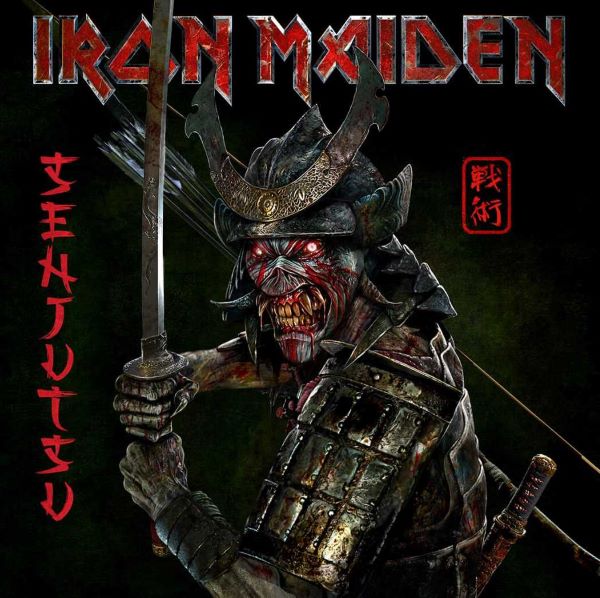
Iron Maiden – Senjutsu (Album of the Week)

Last Friday, heavy metal legends Iron Maiden released their 17th studio album Senjutsu. The double disc or triple vinyl album clocks in at a mammoth 82 minutes, rivaling their prior effort Book Of Souls. Maiden have been riding a wave of new popularity and legacy building for the past few decades since a reunion of their classic lineup in 1999. This new effort, correctly assumed to have been recorded before the events of 2020 put everything on hold, was instantly hyped and anticipated by fans.

Iron Maiden are my favorite band, they have been for a very long time. I’ll get more into that later this week, as all my posts for the week will be dedicated to Maiden in celebration of the new album and their overall legacy.

For today though it’s pretty simple – Monday is the Album Of The Week, and that pick for this week is Senjutsu.

Iron Maiden – Senjutsu

Released September 3, 2021 via Warner/Parlaphone Records

Favorite Tracks – Hell On Earth, Writing On The Wall, The Parchment

I’m not one much for doing album reviews right off the bat. I prefer the gift of hindsight to settle on a record’s place in my music library and in a band’s catalog. I honestly was going to do a ranking of Iron Maiden records as my debut video for YouTube later this fall – the second I started working on that was when they announced a new album was coming. So my Maiden ranking will have to sit until I have time to consider where Senjutsu fits with the rest of their discography.

But this AOTW thing is not always a strict review – it’s more often a discussion of a record I like. And I certainly like the new Maiden offering. It’s another epic, multi-faceted album that stands in fairly stark contrast to its predecesor. It is yet another movement for a band that hasn’t rested on its laurels since finding acclaim in the later years of existence.

It’s also clear that the captain is steering the ship again. After kind of talking Book Of Souls off and letting the rest of the band handle that, Steve Harris is all over this album. It does at times recall the mid- and late-90’s when he was the creative force in the band. That could mean different things to different people, but in this case it’s a good thing.

I think an easy way to approach this is to go track-by-track. Let’s dive into the hour and 20 minute epic that is Senjutsu. Something to note – I have not, to date, read or watched the fairly extensive interviews that the band have given discussing meaning and theme on the record. I will do so after I’ve spent some more time with the album. I wanted to go into it on my own and see what I came out of it with.

Senjutsu

Iron Maiden have almost always been on their game with title tracks. Senjutsu is no exception and is a standout for both the album and in consideration of past title tracks. This song about heading into battle features some sick drum sounds and an atmospheric, almost hazy layer to the production, as if recalling a fog of war. The song does a great job tying into the album’s samurai theme and setting the tone sonically as the lead track.

Stratego

This was the second of two preview singles released ahead of the album. I struggled with the song on its own, it too is atmospheric and a bit buried in itself. But in the context of the album it works very well. It’s another tune about war and tactics, which “tactics and strategy” are the rough translation of Senjutsu. I honestly never played the board game that this track took its name from so I can’t really comment on that.

My only real qualm with the album’s production is on this song – it’s almost done in the vein of a shoegaze song where the individual parts are left in vague layers to consumed as one unit. Iron Maiden isn’t a shoegaze band by any stretch and the music needs to stand out. I think Bruce’s vocals are supressed here. But again, I do like the song and I think it fits the album’s theme and mood.

Writing On The Wall

Here we have the album’s first single, released before we even knew the album title. Any Maiden fan is already well familiar with this post-apocalyptic biker metal jaunt that heralds the arrival of the Four Horsemen.


I’ve played WOTW hundreds of times since its July release. The song is terrific and is an instant classic from the Smith-Dickinson songwriting tandem that has delivered many crucial metal cuts over the years. The song also sets the stage for the album’s other theme, that being how screwed our civilization probably is. It’s a theme that has always grabbed my attention and does so especially now.

Lost In A Lost World

This excellent track gets into some conventional past Maiden melodies and also tells the tale of some long lost civilization. It could be a past reflection on a lost culture, something the band have tackled before. Or it could be a look from the future back on our time. That would certainly fit the album’s second, apocalyptic theme.

Days Of Future Past

This short, blistering song seems to outline some war against a god, perhaps the lines are from Satan’s perspective. Or maybe it’s a burned, scorned mortal who fell out of favor with a god or king, who knows. Either way it also seems on theme – some damned soul wandering the wasteland with no purpose or end. Pretty stark stuff from the band, though they are no strangers to that sort of introspection.

The Time Machine

This song has a fairly vague theme, it appears to be a man recounting what he’s seen over his life. It doesn’t get too specific into what that is. The music is great on this track, very much signature Iron Maiden with a few intersting movements and twists.

Darkest Hour

Another tune from Smith and Dickinson, this song recalls some sort of war. It does feel a bit like World War II, with the mention of the beaches in blood. I have to wonder if it’s purely a look back or again, if the darkest hour is one just on the horizon. The song is, like the rest of the album, great. Very dark and moody stuff.

Death Of The Celts

Here we have the first of 3 Steve Harris-penned epics that close Senjutsu. This track is an absolute callback to The Clansman, a highlight from Maiden’s oft-maligned Virtual XI album. It is again, the tale of a lost culture, this time in its final battle from the perspective of a lone remaining warrior.

It is yet another welcome addition to the Iron Maiden catalog of long, epic songs. A powerful yet somber recounting of a last stand in the face of the conquering enemy, the song itself triumphs in a way its protagonist could not.

The Parchment

Look, it’s a 12-minute long song about a piece of paper. What else is there to say? Is it some ancient text of forbideen knowledge being sought, or did the band forget to cash a royalty check from Powerslave and set out on a quest to be whole?

More seriously, the song tackles yet another war. This time the depth and meaning is not found on the surface, at least for me. It’s a song to sit with later on and find its hidden passages and themes.

What does stand out on this track? The guitars. For a guitar-driven band with 3 players, this song lets them have at it. It is, for Maiden, a shred fest disguised as another gradiose epic. It’s a song that stands out from the crowd to me and one I’ll be spending more time with down the line.

Hell On Earth

The album’s closing track rounds out the creative burst trilogy from Captain Harris. It brings the album’s theme of “we are doomed” to full bore as the song literally depicts what the title suggests. It isn’t hard to look at how things are going and reach the conclusion that we’re either already there or are about to get there. It came up in several spots on this record and now it has a fitting, full exploration.

And for the love of all that is Maiden – this one is a masterpiece. It almost immediately joins other post-reunion epics like Paschendale and For The Greater Good Of God as some of the best work the band has ever done. It’s early of course but I don’t really mind saying it so soon.

It’s all here on this song – Bruce’s command of the song, the guitars both flowing and slamming, and the band’s drive and rhythm in full force. The starkest and bleakest of songs on the record provides a true Maiden singalong moment and yet again shapes their ever-growing legacy.

I haven’t dove too far into others’ opinions on the record yet but I do know I’m really only offering consensus when I talk about how much this song stands out. People are going off about it on every corner of the Internet. Hell On Earth is absolute power, force and Iron Maiden.

Here we are on the release of yet another classic from one of heavy metal’s most enduring icons. Senjutsu is a well-crafted, on theme and on track record that offers a greater unity amongst its individual parts than some of its predecesors. It’s one I’ll have to spend a lot of time with to reach conclusions about its overall form and where it fits in the already bursting with treasures discography of the band. It will certainly be time well spent.

Judas Priest – The Sentinel

This post was part of a series that I called S-Tier Songs. I later decided to abandon the series in favor of a simpler Song of the Week format. I am keeping these posts as I wrote them but removing the old page that linked to the list of S-Tier Songs, so that is why these posts might look a bit odd. Enjoy.

Judas Priest – The Sentinel

The Sentinel comes from Priest’s 1984 classic Defenders Of The Faith. While Judas Priest elicit wide debate with what are considered their best albums, a fair number of people will point to this one as among the best.

And from the album I’m far from alone in highlighting this song. It catches the attention of many people and I’ve heard several say it’s their absolute favorite Judas Priest song. I am among those – this is my favorite Priest song, from a super rich catalog of songs that I’m deeply attached to. Saying it’s my pick is no small matter.

The song tells the tale of some silent warrior out for vengance. It’s a theme as old as time and was ever-present in 1980’s culture. We watched movie after movie about one man, often Chuck Norris, defeating an entire country with a machine gun and a cold, calculating attitude. Our protagonist here uses throwing knives, which is also very ’80’s and very badass.

This song gives the same vibe as some seminal movies of that time – though The Warriors was from the ’70’s it helped set the stage for the ’80’s. And Escape From New York – hell, The Sentinel could almost be Snake Plisken’s theme song.

The musicianship on the track is top-notch. The song is able to set itself apart even from other songs from Priest’s heavy metal period of the early ’80’s. It has both a grit and melodic flow, with this perfect guitar tone that both bends the ear and stands out. The song also has hints of symphonic elements that would come to define the band’s next era, for better or worse. While Iron Maiden will get a lion’s share of credit for kickstarting the subgenre of power metal, a listener would be unwise to ignore The Sentinel as another guidepost along the way.

The twin guitar attack of Glenn Tipton and K.K. Downing is in full force, with the use of pitch harmonics to add an edge to the song’s delivery. There is a fine line between a melody and a sharp edge that both walk with precision during the song. The solos are brief but in an important spot that lends urgence to the song’s plot.

Rob Halford doesn’t necessarily “go off” on The Sentinel the way he does on other songs but he delivers a smooth presentation while still occasionally showing off his prowess. He lets his timber and the weight of the words deliver here as opposed to a showcase of his range. He is almost whispering, at least in his style, the lengthy bridge before one more chorus at song’s end.

Why is this an S-Tier song?

The Sentinel gets everything right about early 1980’s heavy metal. It is a nod to the dystopian future we would watch on screen, and a bit later in person. It’s a tale of some badass, unnamed warrior carving up vengeance on his foes, just as we did it back in the day. The band doesn’t offer any one standout performance – instead all their elements combine for one precise attack that works on all levels. This song is the masters of the craft making sure everyone knows they are still in the game just as everyone and their mother is getting on the heavy metal train.

Enjoy your weekend, perhaps an extra long one if you’re like me in the U.S., and make sure you stock up on some throwing knives for your next badass revenge encounter.

Made By Metal

So far I’ve been over my first forays into music and also the period of the late ’80’s where I got big into hair metal. Today it’s time to drop the hair and really get into metal.

I’m going to save part of this for next week. Simply put, Iron Maiden is my favorite band of all time, and also they’re putting out a new album on Friday. Next week seems like a good time to talk more about them so I’ll get into them specifically then. But I did start listening to them in 1988, just for context.

I was content with hair metal in 1989 and even 1990, but let’s be real – change was coming. Grunge did not actually come out of nowhere when Nirvana hit in 1991 – they, Soundgarden and Alice In Chains were known entities already, though of course still a bit undeground before ’91. But grunge isn’t all that important to me because I didn’t entirely take to it, at least right away (save AIC).

What did start catching my attention was heavy metal. And at that time the strain of metal that was abundant was thrash.

I dabbled on the edges of thrash for a bit but nothing really took for awhile. That would change in October of 1990. For some reason we got out of school early that day, some sort of teacher conference or whatever. With my family being teachers I was left to do absolutely whatever I wanted. One of the skateboarders I was friendly with was also bored so we wandered around town a bit.

At one point he shows me a tape, an album that just came out. He said it was intense and killer and I should check it out. We went to my house and put it on.

That’s when heavy metal really hit for me. Before I would find thrash a bit off-putting, I was still young and more used to the slickly produced, smoother tones of hair metal and pop rock. But Megadeth eliminated whatever barriers remained between me and headbanging.

It was off to the races after that. It wasn’t always easy for me to come by thrash albums. It was less popular than other stuff so it wasn’t as easy to find. Plus, my tiny hometown wasn’t a mecca of music shopping.

But I made do. I slowly started accumulating Overkill, Testament, and the like. And sure, it wasn’t all about thrash – I did also start with King Diamond around that time, and I’d pick up Judas Priest right around the time Painkiller hit. I’d also, while intending to buy Queensryche’s current hit Empire, wind up with their prior album, Operation: Mindcrime. Though it’s another story for another time, that is my favorite album ever recorded. And this is the time period I acquired it in.

This all sets the table for entering 1991. I’ve touched on it before and will talk more about it again – 1991 was the most important year in music for me. No matter what came before or since, that was the year that blew everything wide open.

That year I’d work my first job over the summer. I was making enough money to have plenty of disposable income for an almost 14 year old. In most cases, a 14 year old’s entire paycheck is disposable income. While I’d previously been into baseball cards and comic books, my focus in 1991 shifted to music and very heavily into metal. I went from having a few tapes to having to buy a new caddy to hold them. (Of course, I wasn’t necessarily paying full market price for all of them, thanks again Columbia House!)

Heavy metal itself is kind of a mutating entity – it doesn’t remain constant, it is always shifting. Just as you find one strain of it, a new one is already being worked on. In the fall of 1991 in freshman algebra class, the guy sitting in front of me asked if I wanted to check out something he was listening to on his walkman. I said sure and got my first dose of Sepultura. It was the title track of Arise. I was instantly hooked and that also set the table for me to go even deeper than thrash.

Going beyond thrash and mainstream metal would take me a bit, though. There is one more metal-related issue to discuss involving 1991. One band refined and polished their sound and absolutey took over the world with it. That band, of course, was Metallica.

I got straight into the “Black Album” when it hit just as I was starting high school. There wasn’t going to be any hair metal parties like I had previously envisioned in high school so Metallica quickly became a badge to define one’s self. Poison posters would be replaced with Nirvana in most lockers, in mine it was Metallica. It was gratifying to be into something that was so popular, some kind of validation or whatever from it. (That’s absolutely a thread for future discussion, too).

But just as I went along wherever we might roam, I also sat with their first four albums. And that was the Metallica I wanted more of. Hell, Master Of Puppets is probably a perfect metal album. Ride The Lightning is ferocious and has some of their best songs on it. I sort of backed into the older albums due to my age, but I would wind up becoming one of the “old guard” Metallica fans who would eventually turn on the Black Album.

There’s another discussion about heavy metal and being young, especially in the early ’90’s, to be had here. For me it was deeper than just liking heavy music. It did mean something more.

As I was growing up I was supposed to be the proto-typical “good kid” – good grades, gifted classes, scholar-athlete type of thing. Well, I hated it. I couldn’t stand the people involved with that stuff, I got messed with one too many times for my tastes in junior high, and I felt the whole thing was soulless and useless. I came from a family of people who did all that stuff and achieved things through it, but I did not see myself on that same path.

My freshman year of high school I rebelled. No more sports – I wasn’t good at them and no one in my scholar-athlete family seemed to care enough to help me get better. No more “honor society” or whatever, I simply quit going to that. I went to school, then went home and sat in my room, listening to metal.

This line of discussion could certainly go on into more issues, deeper issues, all of that. I’ll leave that set where it is for now. I’ve considered writing more along those lines, about the trials of scene and identity as it relates to music. But being real, it gets to be some heavy shit sometimes and I don’t know if it serves my purposes in this day and age. Might be something that pops up down the line, though. We will see.

But the die was cast in 1991 – I was a metalhead. Of course people in my family scoffed at it, declarinig it was “just a phase.” I know many a metalhead has heard that.

Of course it’s just a phase. It’s a phase that is 30 years strong now and has no end in sight. Hails and horns, brothers and sisters – we’re riding this train of “satanic death rock crap” all the way to the end.

Album Of The Week – August 30, 2019

Yeah, I know it’s 2021. Yeah, I know the title says 2019. You’ll get the gist of it here in a minute, just bear with me.

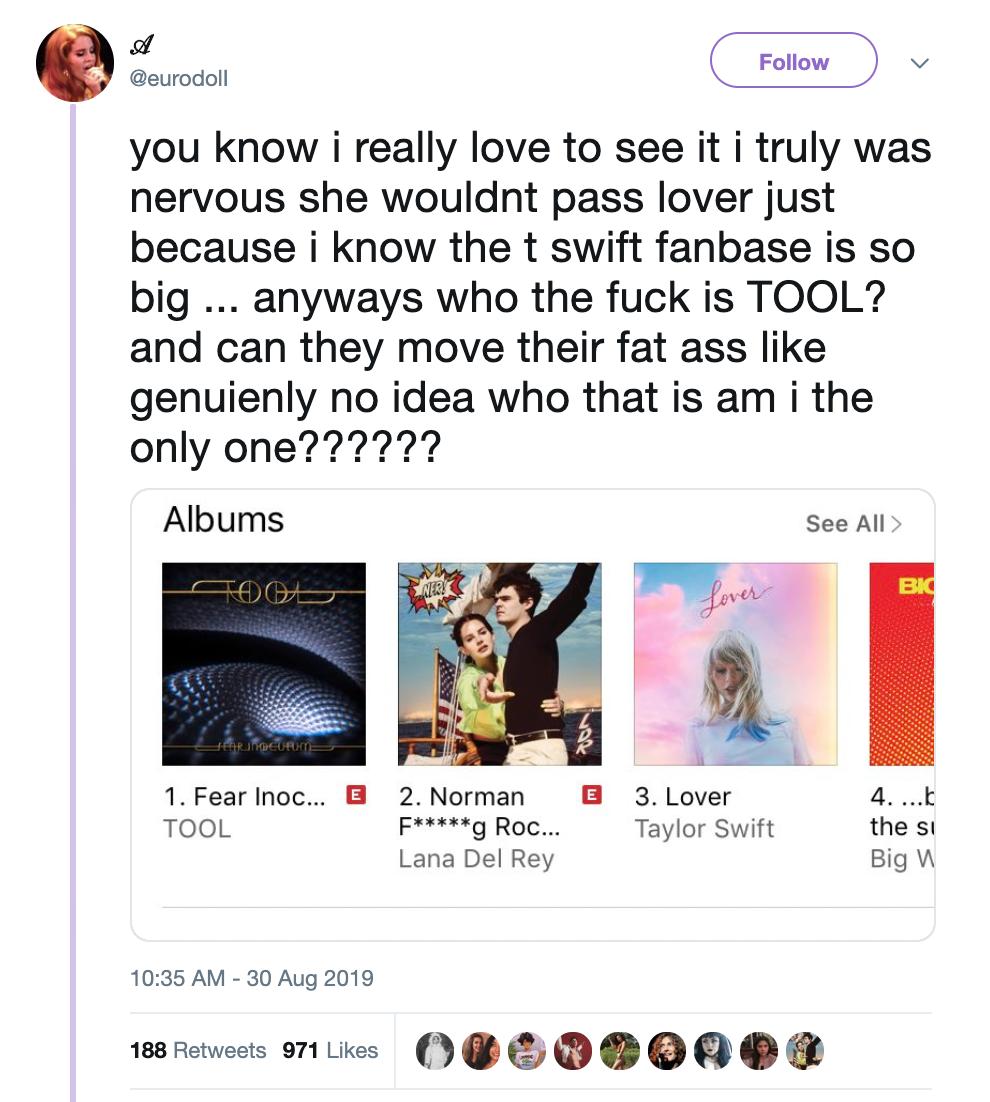
August 30th, 2019. It was to be the culmination of the great “Stan Wars” between Taylor Swift’s mega-huge fanbase and Lana Del Rey’s smaller but dedicated stan squad. Twitter was a raging dumpster fire of toxicity and hatred hurled back and forth between these warring factions. It was an epic showdown to see if LDR’s album release could dethrone Taylor’s second-week of release album from its throne at number one on the charts. Fans were lining up to buy multiple copies of everything they could get their hands on.

LOL

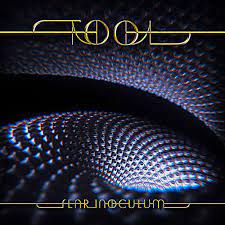
On August 30th, 2019, Tool released their long-awaited fifth studio album Fear Inoculum. It was a 13 year wait after 10,000 Days arrived in 2006. Whatever contributed to the delay, Tool fans were finally getting this eternally sough-after release. And, to the chagrin of mega-stans everywhere, it would claim the number one spot on the Billboard charts the following week.

Tool – Fear Inoculum

Released August 30, 2021 via Volcano Records

Favorite Tracks – Descending, Pneuma, 7empest

Me? Yes, I’m a Tool fan. I know there are annoying Tool fans out there. I know that I am annoying. But I am not an annoying Tool fan, I promise. I’ve been a fan since Sober first hit airwaves in the early ’90’s but I’m a sorta-casual.

And being sorta-casual is ok with Tool, since they spend 13 years between albums. Math is a thing so let’s figure – I was 28 when 10,000 Days came out. I had just turned 42 when Fear Inoculum released. That’s a lot of damn time. Trust me I know, I was there.

I was a bit concerned when the news of the album hit. The preview tracks were fine but unrefined phone recordings aren’t going to offer enough of a quality preview of a Tool song to pique my interest. I was cautiously optimistic that I’d be fine with it but I did have my concerns.

How was it really gonna be? It had been 13 years. What were they like now? What kind of headspace was I in to process a Tool album in my early 40’s? It was entirely possible that my enjoyment of Tool was from a bygone era and that they and I had both moved into different waters that just didn’t meet up anywhere.

Those fears were unfounded. Fear Inoculum is an absolute masterpiece. A collection of songs that are each over ten minutes in length, entwined with a few interludes. It is a dense album that conjures atmosphere at the expense of accesibility. But Tool have been drifiting toward that kind of sound anyway so it isn’t some huge leap, especially the powerful title track from 10,000 Days.

I do have to give Tool credit – they released an album and title song about inoculation and contagion less than 6 months before a world-altering pandemic struck. It’s almost like they themselves opened a portal to something and ushered in a whole new reality. It’s just an odd bit of coincidence, of course, but it’s a bit morbidly funny given the times we’re in now.

Of the 7 main songs that comprise the album I don’t find any real fault with any of them. A few do stand out, though. Pneuma is a fantastic cut that probably hearkens back most to past eras of the band and also offers a message either about unity, the interconnectedness of the universe, or something like that. 7Empest furthers the band’s fascination with the number 7 on this album and offers a more confrotational view of things, though what those things are lay beyond the scope of my understanding.

It would take me several listens to truly process the album as a whole and also figure out what my favorite song is here. Oddly enough, in the end it came back to Descending, one of two songs made available before release. It is truly a call to arms and order as our world descends into chaos. Many fans have made the connection that Descending is like the antithesis to Aenema, the band’s celebration of misanthropy that cheers the end of the world (or at least California).

And yeah, the world looks pretty bleak to me. Has for the past several years. I’m sure I’m not alone in that. I mean, I’m fine in my day-to-day life, I get through the days no problem. But this society, civilization, whatever, just looks like Hell. I don’t know if I really possess the strength of spirit or perspective to see through it to something better, it looks really ugly and like it’s headed down rather than up. And yeah, Descending might be a more fitting song for the times than Aenema, it might truly be time to sound the dread alarm. But in the end, might still wanna learn to swim in Arizona bay, I don’t know.

Fear Inoculum sees vocalist Maynard James Keenan take something of a backseat in terms of performance. He’s still there of course, but he’s not necessarily as out there front-and-center as he has been in the past. There is nothing wrong with that, this album is a marathon and the music as a whole sets the pace rather than any frentic vocal performance.

But there is a standout musical peformance on the album – this whole record is the Danny Carey show. The drums are unreal from front to back on this release. I’d highly recommend throwing on some headphones and just taking in the drums. It’s one hell of a trip.

We are now 2 years removed from Fear Inoculum releasing and giving long-starved fans new music for the first time in over a decade. I’d have to assume the band will not spend that long on a follow-up, given that them or us aren’t getting any younger. I guess we can place bets on whether their next album or Elder Scrolls 6 drops first. I’d put the money on Tool at this point.

I definitely enjoy the album and would dare say it’s at least my second-favorite of Tool’s releases, and an argument could be made for it taking the top spot. That’s a discussion for another time, though. For now I trudge on through the muck and mire of our world, taking solace in the fact that I love these really long, dense songs that so many people can’t stand.

My First Concert

As I grew up I went hard into music. I’ve discussed some of my earliest memories here, and a bit about my time with hair metal here. And more are coming, I’m building up to that pivotal year of 1991 where everything went wide open for me (and it might require more than one post to go over everything).

But for now I want to set aside my journey through tastes, genres and movements and get into a different memory – my first concert.

I always have been an album listener. A lot of my time has been spent at home with an album playing either as background noise or with my full attention focused on it. It’s the crux of what I do and my primary method of digesting music.

But, if you’re into music at all, you’re gonna go see a band live. It’s almost inevitable. I know the vast majority of music fans go to see live shows. I do know some people that bow out due to social anxiety concerns or other issues, but by and large we’re gonna pack the house and rock out with our favorite acts.

Before I get into my first actual show, let me take a minute to talk about what was almost my first show. Summer of 1991 – as I’ve said, the most important year in my music journey and also a year that the music landscape was pretty well blown apart and rebuilt.

I would be entering my freshmen year of high school that August, just as I turned 14. Like many, I had a friend who was in my grade but a few years older. He had his driver’s license and a car, and he had tickets to a hot show in St. Louis at a newly-opened outdoor amphitheater. He offered to take me.

Now, I won’t say I grew up sheltered, but perhaps semi-sheltered would be a fair description. If I was gonna go to this show I would have to just go and lie, saying I was spending the night at someone’s house. I could have plausibly done it but I decided against it. I was kind of a chickenshit kid and I feared the consequences, even if that was an abstract notion.

So the show I didn’t go to didn’t wind up being just a show. It was Skid Row opening for Guns N’ Roses. It was the infamous “Riverport Riot” show where Axl Rose stormed off stage after confronting a picture-taker up front. The crowd tore the new amphitheater apart for 3 hours after the band left the stage.

I could not imagine my life in high school if 13 year old me got caught up in a riot at a Guns N’ Roses concert over an hour away from where I lived. It wouldn’t have been much of a life, I know that much. As it was, my decision not to go at least left me to a quiet life of relative freedom, even if all I really did was listen to music and play video games. It would have been one hell of a story and perhaps worth it, but in the end it is what it is.

Now, let’s get to the point – my first actual concert. 3 year after the infamous St. Louis riot I was in a different place musically. I had been totally taken with what we now call extreme metal. I’d spent the last year-plus immersed in the true metal underground – death metal, grind, and the (literally) combustible black metal scene. Though back then death metal was my true jam.

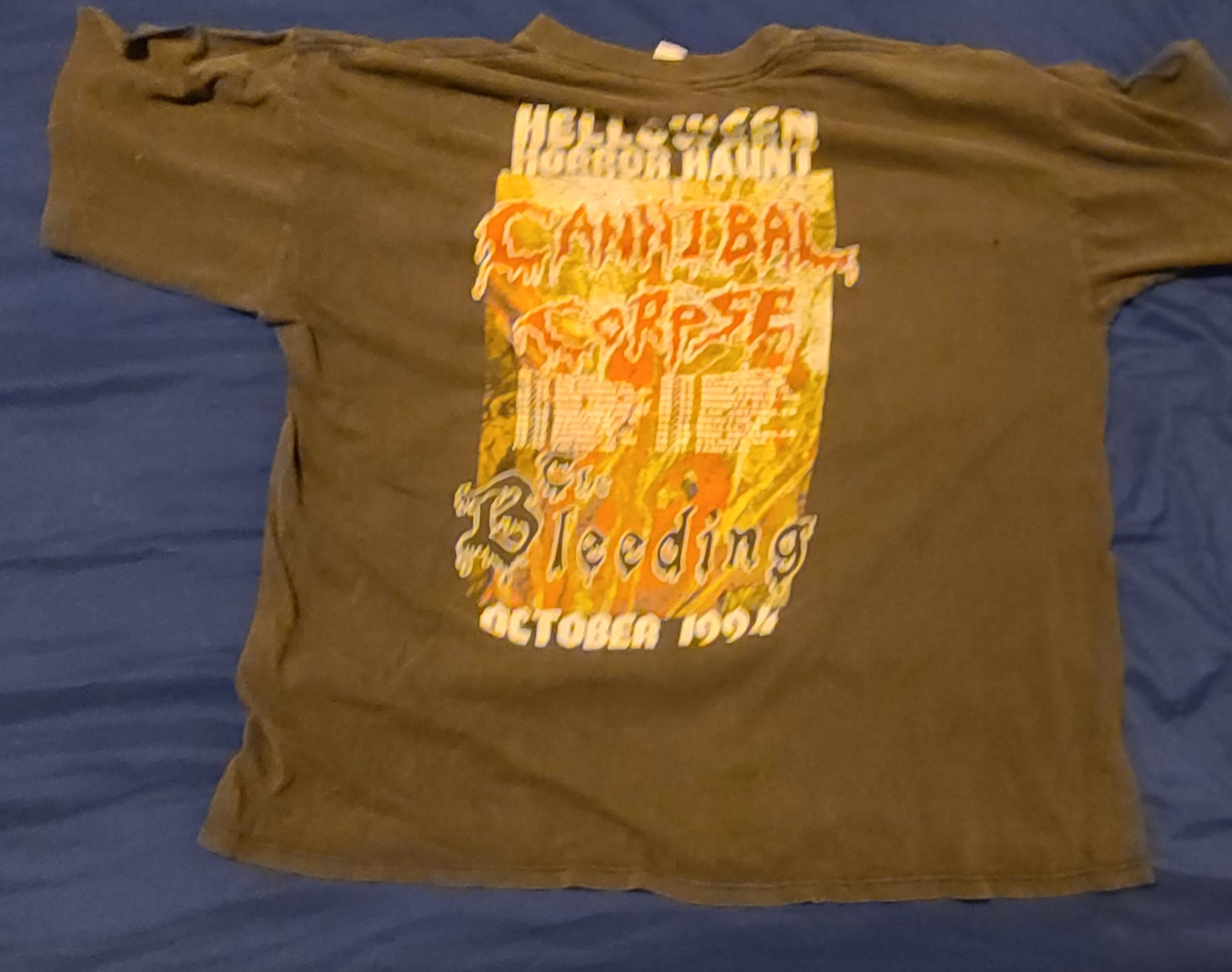
And so it would be that death metal became my first ever concert. The bill was Cannibal Corpse with support from Grave and Samael at a place called Club 367 in north St. Louis. This meant that I saw Cannibal Corpse on The Bleeding tour, Grave on Soulless and Samael on Ceremony Of Opposites. For those unfamiliar with metal’s underground in 1994, that is one hell of a touring lineup.

There was a local opener whose name escapes me all these years later. They were a competent death metal band though I never heard a thing about them after that show. I got my first taste of “moshing” while they were on, though that was a pretty half-assed affair with just me and the friends I was with. I did stay out of the pit during the main attractions.

Samael played next and were absolutely unreal. We were all mesmerized by the keyboard player who just stood still as a statue while jamming out along with Samael’s cacophony of blackened hellfire. I don’t remember if I’d heard Ceremony… before then but I sure as hell did afterward.

Same tour, a show several days later

Grave were next and I was already used to their brand of the Stockholm death metal sound, with that goddamn guitar tone that gives people headaches. Thankfully I don’t get headaches so I was, and am to this day, still all about it.

Grave’s full show from the same show just several days after I saw them

The main event, of course, was Cannibal Corpse. Touring behind their just-released opus The Bleeding and also finding interest through their appearance in the hit movie Ace Ventura: Pet Detective, the band were riding about as high as a death metal act could expect to in the early stages of the genre’s existence.

The set was electric, covering several tunes from the new album as well as classics cuts from their back catalog. I stood in awe more than anything – I was just a dumb 17 year old punk ass from a cowtown who was probably a bit out of his depth at a big city death metal show. It’d be a few years before I was a fixture at such shows.

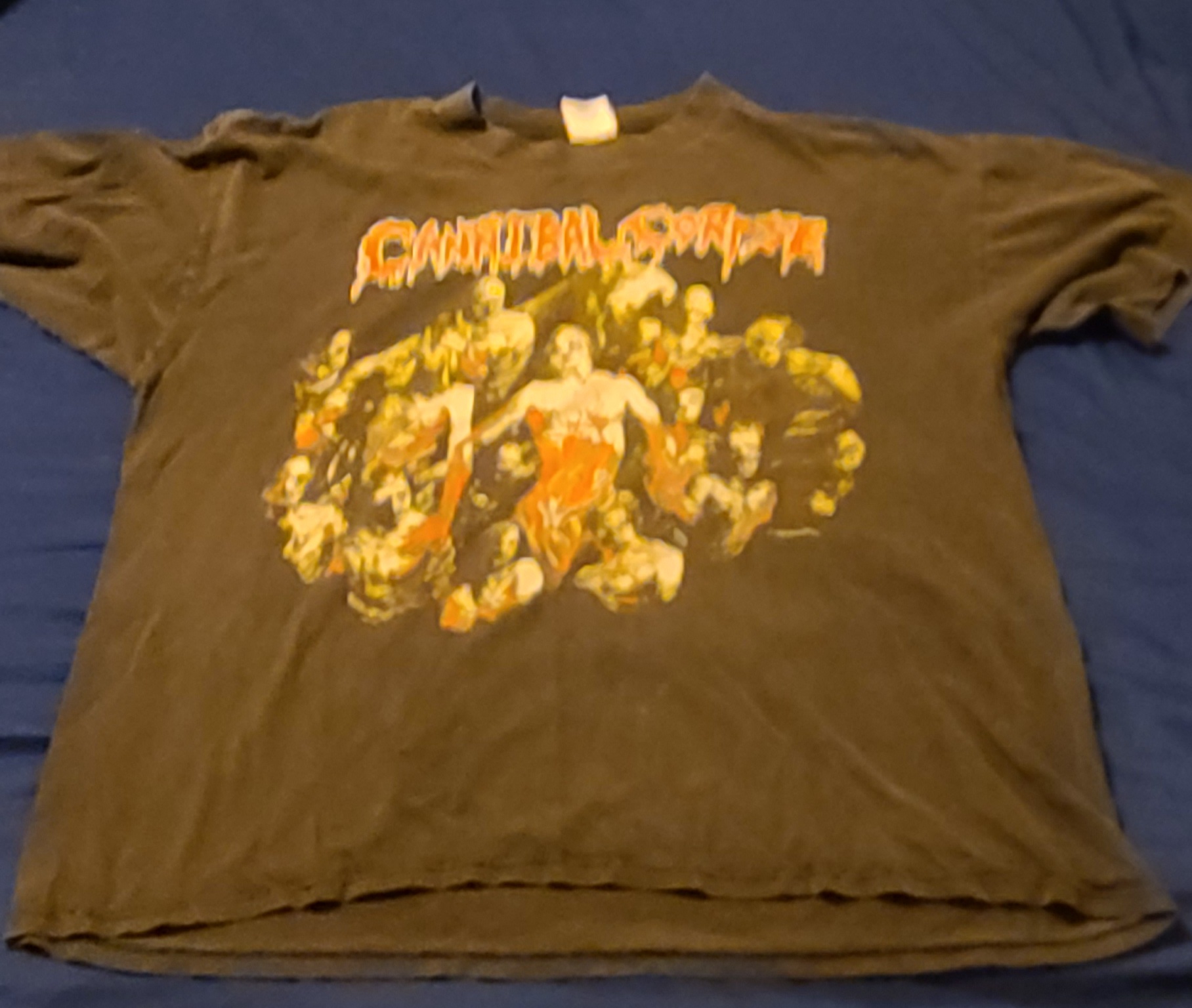
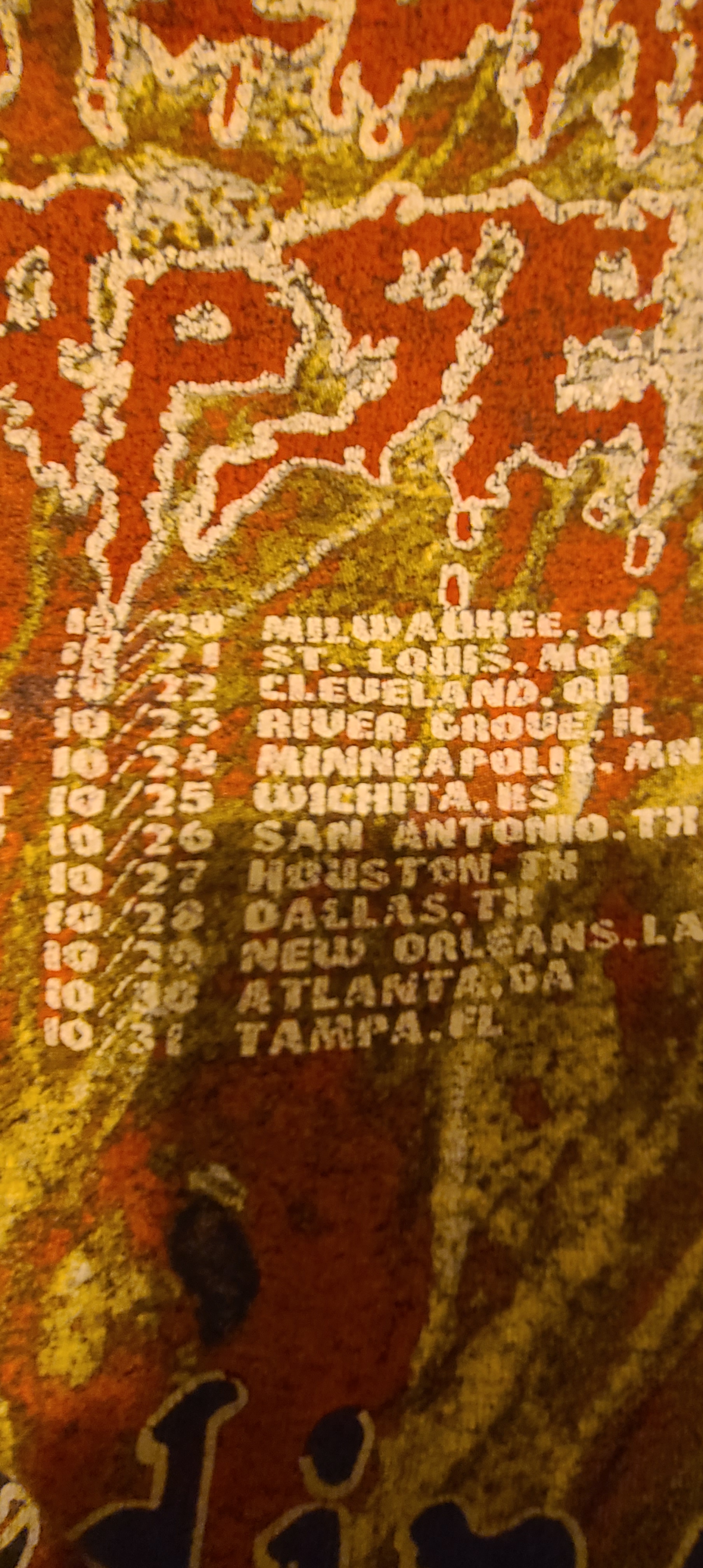
After the show Cannibal Corpse hung out in the parking lot. I got my CD copy of The Bleeding signed by Alex Webster and Jack Owens. Unfortunately I misplaced it years later and no longer have it. I do still have the shirt I got at that show, although these days it’s something I just hold on to for sentiment rather than something I wear.

The full Cannibal Corpse set in Houston on 10/27, just six days after I saw them in St. Louis

We went back to school as the death metal warriors, which meant everyone else wondered what in the hell we were listening to. But that was just fine with me – I didn’t really care for the norms of high school life in general or specifically mine, so being the disaffected underground metal freak was plenty fine with me. Thankfully that didn’t have any repercussions, as it did for others around that time.

I guess it’s fitting that I saw this show in my last year of high school. Not quite a year later I’d be in boot camp and off to an entirely different world. And all 3 bands at that show would move on to different eras – Samael would reinvent their sound several times over the years, Grave would take a long hiatus before returning in the early 2000’s, and Cannibal Corpse would famously part ways with Chris Barnes and bring on George “Corpsegrinder” Fischer to send them off in a different direction. There’s probably something to be said for coming of age coupled with enjoying the moment and shifting tides as well an absolute loss of permanence, but I can find that in just about everything so it’s a thread I’ll leave for other adventures.

That was my first concert, my first show, my first real experience with live music. I’d go on to have many, many more and several of those will be covered as we press on with the chronicle of my journey. I still sit all these decades later with perhaps a bit of hearing loss, a pile of black t-shirts with band logos, and a sometimes hazy recollection of shows I’ve been to. But I can still remember that first time like it was yesterday, or at least like it wasn’t that long ago. It certainly was, but it was a hell of a time.

A Bit About Collecting

One aspect of music fandom/appreciation/worship/whatever is collecting. In our day and age, having a collection is not at all necessary. Collections of anything are cumbersome – they take up space, they cost money, they are at risk to perils like flood and fire, and they cost money.

I came up in the old days, when everyone had a music collection. And I’ve maintained one most of my life, from when I started piling up cassettes in the late ’80’s and early ’90’s. (Thanks, fake names and Columbia House!)

I would quickly move to CDs as the ease of use over tapes was massive. No more rewinding or fast-forwarding the end of a side, just let the album play. The CD would be my primary music format for a long time, probably from 1992 through to 2017.

Then there is the matter of the vinyl record. I would be exposed to vinyl at an early age – it was abundant in the early ’80’s. It was still for sale at retail along with cassettes and the just-emerging CD. I messed around with my parents’ collections, including a bunch of old 45 singles. That was mostly popular ’70’s stuff like Fleetwood Mac and Heart.

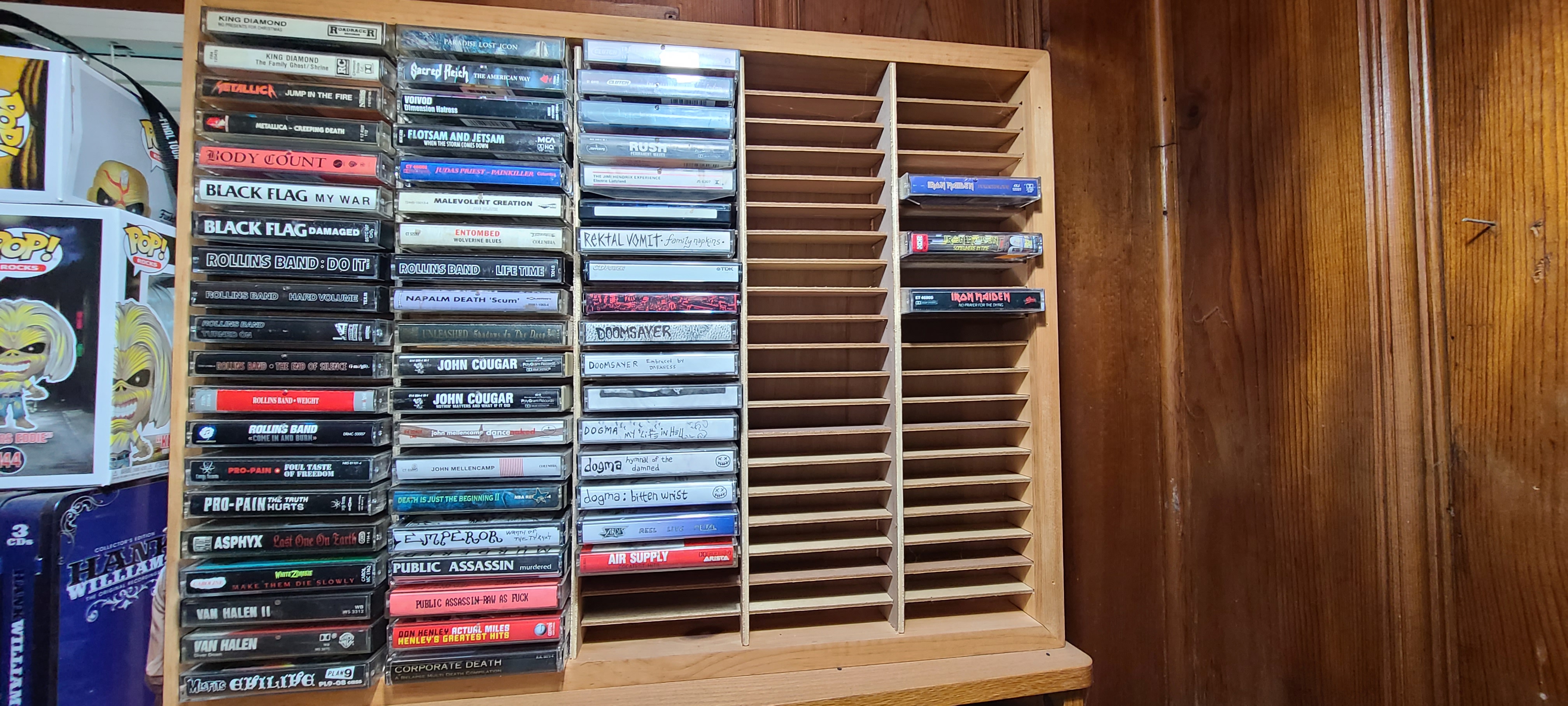
My current tape rack. This is only for looks, I don’t have a tape player.

I would wind up with a handful of my own records. I ended up with a stack of Sammy Hagar’s solo records that had originally belonged to my deceased uncle (sadly I no longer have those). I also wound up with other relatives’ hand-me-down records. I do recall having multiple copies of Boston’s first album and Frampton Comes Alive! There was some, uh, other stuff in there too – I kinda recall Captain and Tenille as well as a bit of Barbra Streisand. But overall I got some pretty good classic rock scores from my betters.

Then, of course, everything changed in the 2000’s. The digital music revolution hit – first as a pirated fileshare mechanic, then as a legit sales source innovated by Apple. What used to take up a lot of space on shelving could fit on a hard drive, on an iPod, and later on a phone.

I did not go quickly or quietly into the digital age – I went late as hell, kicking and screaming the whole way. “Only physical formats are real! I’d rather die with an 8-track in my hand than play an MP3!” I’m sure I said a bunch of other stupid shit, too.

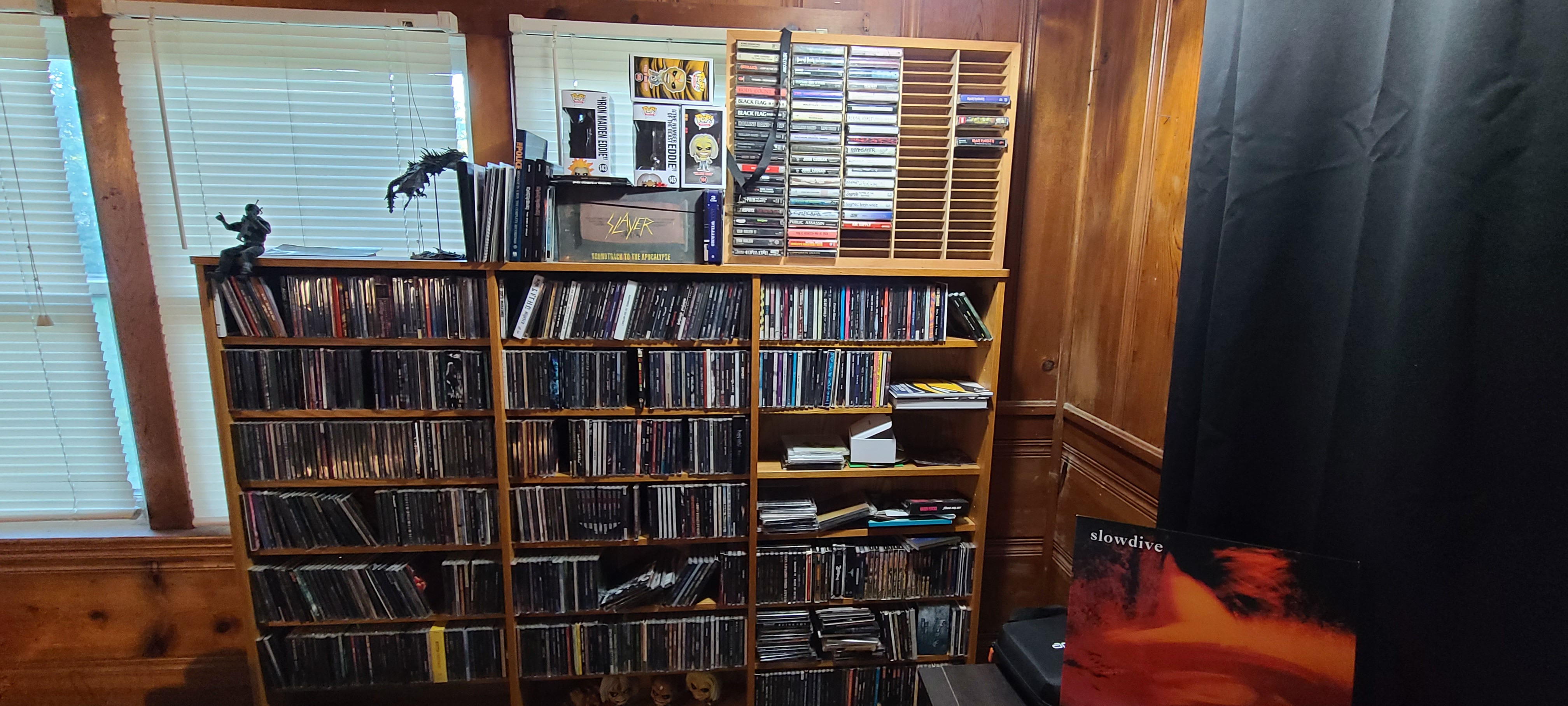
My very disorganized CD shelf

Eventually I would give in and truly join the digital wave. In 2008 a buddy of mine upgraded his iPod and sold me his old one. And yeah, I finally understood it. I don’t think I need to explain the nuances of digital music versus physical formats. Can’t play your records on a drive or a stroll through the park, we all know that.

I never did fully adopt buying digital music, though. I kept with the CD as my main purchase point and I wound up with a collection of about 800 before I finally got sick of looking at so many plastic cases taking up so much space. I still haven’t moved on from them to this day but I’m on the verge of actually downsizing and keeping only the ones I really want.

Of course I’m not going to be left without a physical format to collect, and I’m sure most know what every good hipster got into back several years ago. Yes, friends, the LP record is back in business.

I had been buying records occasionally over the years and I finally made the switch to it as my primary format a few years ago. I got a bit panicked by the collectibles price spike of 2020 and quickly fleshed out my Iron Maiden collection, and also bought a bunch of other stuff because fiscal responsibility is for losers.

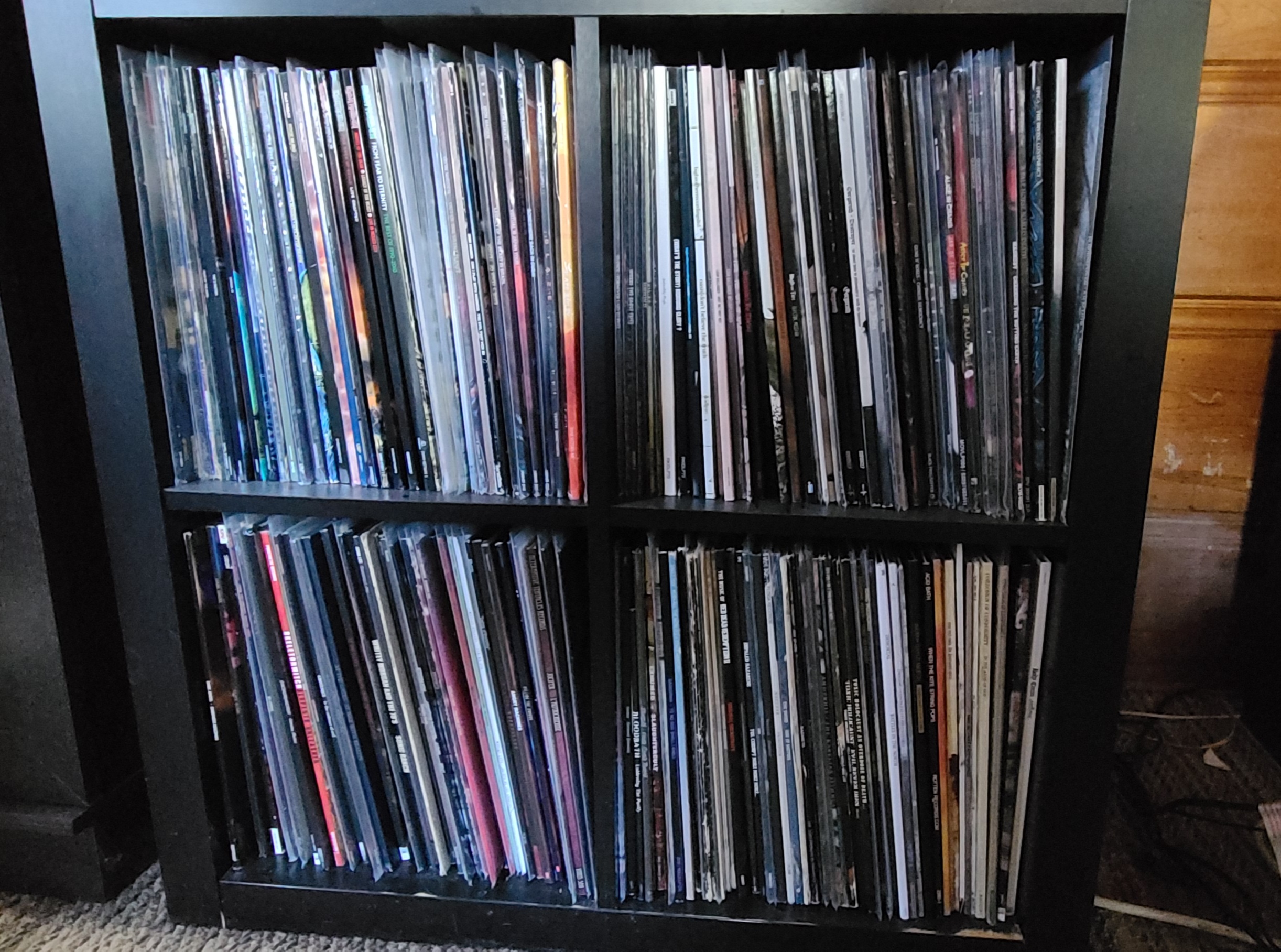
My first record shelf. Iron Maiden takes up the top left part, not sure how visible everything is.

As I sit today I do still buy records. Hell, I occasionally buy a CD because it’s cheap and I might need to evaluate it for a future project of some sort. But, like a lot of people, the allure of streaming music isn’t lost on me. I use Spotify pretty regularly to keep up on new releases and visit past music I don’t own or explore scenes and genres I haven’t previously had exposure to. And being blunt, it’s a hell of a lot cheaper to give them 10 bucks a month than it is to drop a few hundred on any record I might possibly be interested in. I know there are issues of artist support there but I’ll let that thread hang for another time.

It’s been quite an adventure going down these twists and turns in how music is distributed. I like having a collection but I could point to more than a few reasons not to. At this point though I have some pretty cool pieces and there’s stuff I wouldn’t part with unless a total catastrophe hit. I still have a fair bit of Iron Maiden stuff I want to get and that’s before getting into the more expensive things out there. And even if I pare down how much I spend there are still boatloads of old, cheap albums out there I certainly wouldn’t mind having.

We’ll see what roads music takes in the future. The ultimate physical format, the vinyl record, prevailed just as it looked like physical collections were dead. But digital still serves the masses when it comes down to it. Is the next step a sort of neural implant, akin to something from Cyberpunk? Hard to say, but until then, I guess I’ll have some form of music taking up too much space in the house.

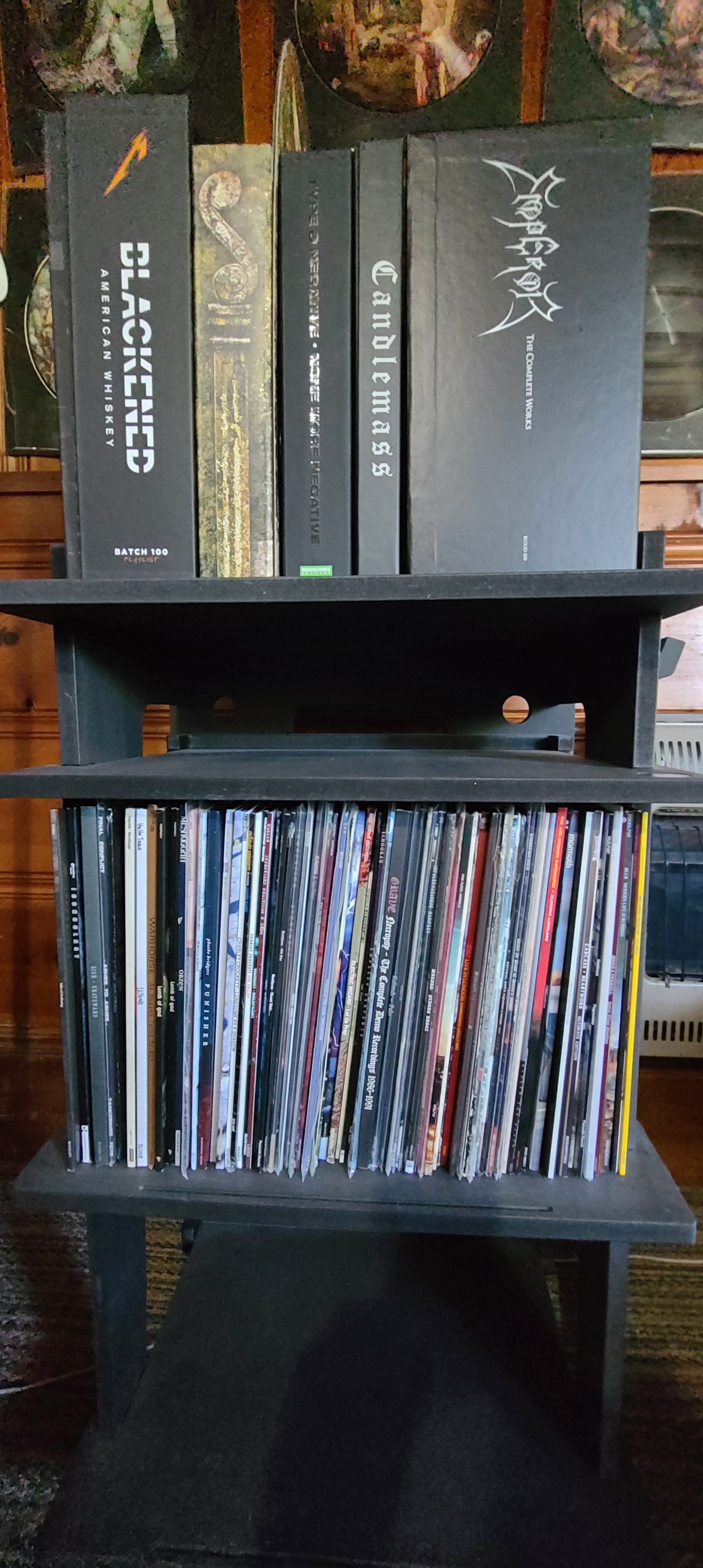
My second record shelf. Has some stuff on it.

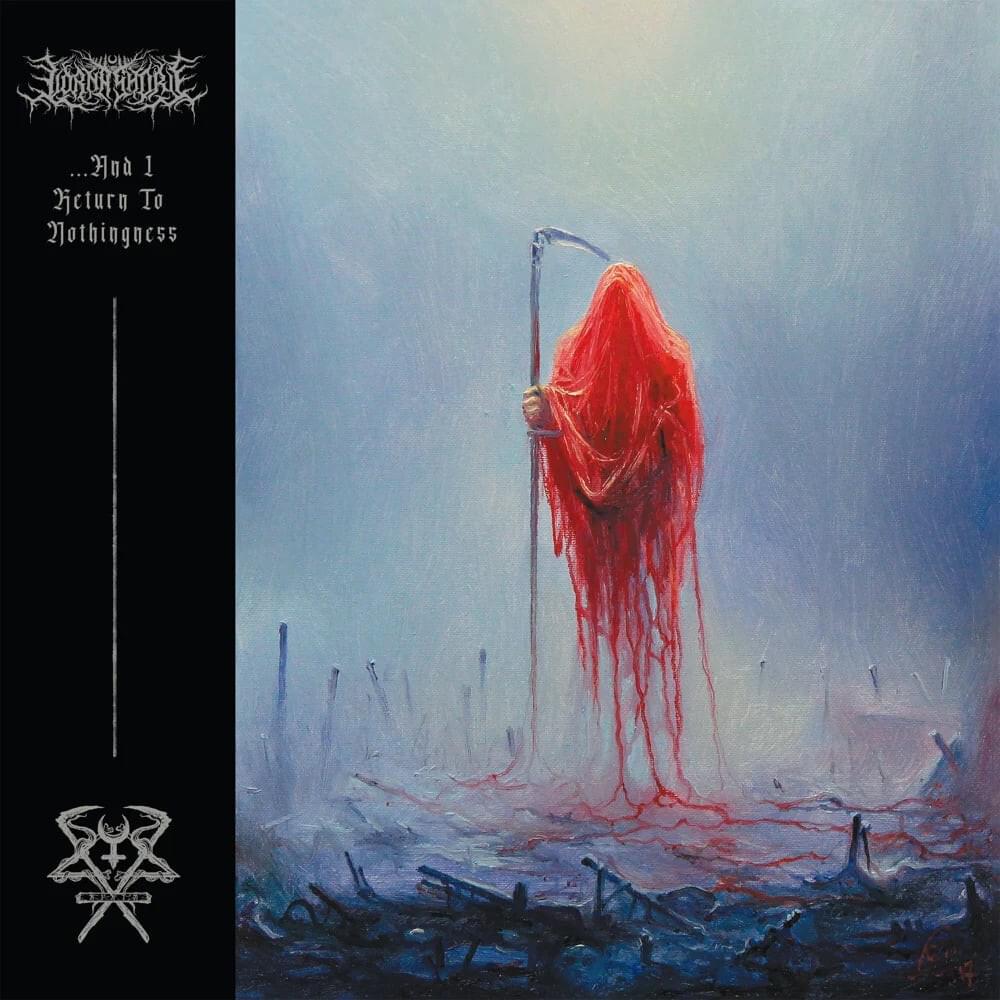
Lorna Shore – … And I Return To Nothingness (Album of the Week)

What is an album, really? If I were ranking an artist’s albums I would use some kind of metric to determine that I’m only going to include full-length studio records. No live albums, no EP’s, no extended singles, no greatest hits compilations.

But for an informal exercise like the Album of the Week? I’m certianly going to include live albums at some point. My favorite band has like 13 of them, there is no avoiding that. And EPs? Sure. Some of my favorite music is in EP form. Broken by Nine Inch Nails is probably my favorite piece of music they did and it’s not really a full-length album.

So this week it’s time to look at a newly-released EP, only 3 songs, that has moved mountains in the metal and deathcore landscape.

Lorna Shore – …And I Return To Nothingness

Released August 13, 2021 via Century Media Records

Favorite Track – To The Hellfire

Lorna Shore have been around for a bit over a decade and, like most any band, have had to endure a few lineup changs over the years. The band were left searching for a new vocalist after some unfortunate issues with their prior singer, and this new EP is a showcase of new vocalist Will Ramos as the band re-enters the touring scene after a year of pandemic-induced inactivity.

And yeah, it is quite the showcase.

It’s been a pretty kinetic summer for me – sort of coming out of the pandemic and trying to find some semblence of a life after 2020 so I haven’t really been keeping up with stuff. I do sometimes watch a fair amount of reaction content on YouTube and I noticed some of the ususal vocal coach people I watch covering To The Hellfire when it released in June. But I was too busy doing the early work to launch this blog and, well, going out and drinking beer to sit and pay attention to what was going on.

It was just before the EP’s release when the band dropped a video for And I Return To Nothingness. I was killing time one afternoon and checked it out. I hadn’t heard much at all of Lorna Shore before so I was trying to play catch-up both with an unfamiliar band and the hype that was generating around them. I liked what I heard so I went ahead and started checking out those reaction videos on To The Hellfire.

Holy shit.

I’ve been listening to extreme metal since the early ’90’s, so nearly 30 years. It has been around for roughly 40. It is exactly what the name implies – extreme. And over all this time, it makes you wonder where else there is to go with it. How far can you really go with war, death, Satan and Hell? It’s been done, redone, overdone, underdone and at every point inbetween. There’s only so much ground to cover, so much innovation to find.

And then To The Hellfire comes along. This song about the acceptance of death and damnation pulls off a rare feat – it sounds exactly like Hell. In a genre where the topic of dying and going to Hell is derivative at best, Lorna Shore invokes a soundscape that marries the lyrics and imagery and presents it in a way that transcends any individual medium. It absolutely stands out from the crowd of “Hell, fire, death, Satan” songs that are out there. Like, a person with enough money could fill a large building with nothing but physical releases of those songs.

Of special mention is the song’s final minute. Now, I’ve never had an issue with breakdowns in metal, they’re abundant. I have sometimes wondered what their purpose really is, though. I listen to plenty of stuff that has no need of a breakdown. This song employs 3 to great effect, but the final breakdown here does something totally different. In an already crazy song it puts a whole new stamp on things.

There are entire video comps of people’s reactions to simply the last minute of the song. It can be a question we ask each other in the future – where were you when you first heard that breakdown in To The Hellfire? And if you can find someone who has never heard it, well, you can have a lot of fun seeing their reaction for the first time.

This song can’t be discussed without mentioning the talent of new vocalist Will Ramos. He sounds absoulutely inhuman and has been described as everything from a demon to a Dark Souls boss. And this is all from one song, it doesn’t even consider the other 2 tracks on the record or his live performances of Lorna Shore’s older material. He has raised the bar, moved the goalposts, all of that. Hopefully he really is a demon or something because I don’t know for how many years a human can pull this kind of stuff off without shredding his throat.

I’ve been going on about To The Hellfire, as everyone has this summer. But there are 2 more songs on the EP and both are absolutely worthy of discussion. Of The Abyss is a twisted blackened metal tune about some kind of bastardized rebirth that has its own sick-as-hell breakdown. And the title track is another excellent symphonic blackened song that is its own highlight on this 3-song return.

In the end though the star of the show is To The Hellfire. Lorna Shore came out to make a statement after retooling and they very likely blew away their own expectations. Whatever the differences between my more familiar older strains of extreme metal and anything -core suffixed (a discussion for another time), this just blows any divisions or barriers clean apart. …And I Return To Nothingness is a signpost for the deepest and darkest of heavy metal.

Sometimes in our hypebeast, FOMO culture, things get built up to a level they could not possibly achieve. This often leads to disappointment and desensitization. But every now and again something lives up to all the hype. Lorna Shore is totally in the second category. This is one for the ages and something I’ll remember until I’m swallowed by the womb of death.

House Of Hair

I outlined before the first part of my journey through life with music a few weeks ago. It’s time to get to the next step in that process. I left off in the mid-1980’s where I was starting to assemble a bit of a cassette collection.

Well, what did people rock out to in the mid- and late-80’s? Come on, you know.

It was the glory days of hair metal.

Yeah, I thought they were girls the first time I saw the cover…

Yes, hair metal. The saccharine love ballads and railed out rockers performed by androgynous men in very tight-fitting clothing and great make-up. They ruled the airwaves back then and there was no escaping it. For a semi-sheltered, naive kid growing up in the Midwest, nothing shouted out to me louder than the bombastic party culture of the 1980’s hair metal rock star. It was the polar opposite of life as I knew it.

Hair metal was everywhere. It was all over MTV, on the radio, on magazine covers all over grocery store media racks. People far and wide adopted styles based on the scene – big hair, acid washed jeans, blinding and garish accessories. It was a fast, loud and eye-catching time.

For me it was what shaped me as I entered double-digit age and approached that all-important mark of adolescence. All the cool kids in grades above me at school were all-in on hair metal and they were setting the stage for what I’d be when I got there. They would move on and pass the torch to me and my crew and we’d live forever in glourious hair metal harmony.

Guess not. Thanks, Kurt.

As for what exactly I got into, well, it was everything. You couldn’t leave your house without tripping over some new hair band’s tape. Every day a new hard rocker or sappy ballad would premeire on MTV. I didn’t really keep track of what was what – I just consumed, as all good ’80’s kids were programmed to do.

I wasn’t really exercising any quality control. I was too young for that, just put in the tape and jam out, you know? Thankfully for all of us, the record labels also weren’t exercising any quality control. Gainful employment in the late ’80’s involved somewhat being able to play an instrument and sing about driving fast or liking girls.

It doesn’t mean that good music didn’t exist back then. I can go back today and check out stuff like Cindarella, Tesla, Ratt and Skid Row and find some great music. I can just as easily find a million copycat bands and less than stellar efforts, but even today there is room for curating high-level hair metal music.

And yes, I realize the very definition of hair metal can be questioned. Who is or who isn’t hair metal? Is Tesla really a hair band? I don’t really think so but in all reality it’s hard to seperate every corner case from the larger scene of that time period.

Everything would culminate in one album purchase, one band who would put a stamp on everything for me at the end of the ’80’s. The very band who started this whole hair metal mess in the first place released their 5th album right as I was turning 12 and getting ready to enter the 1990’s.

Motley Crue were the ultimate bad boys of hair metal. They were the ones who brought this music to life and turned the Sunset Strip into ground zero for ’80’s music. They were larger than life and apparently stronger than death. They put out the songs that defined the era and were the act that most everyone aspired to be.

I wound up getting Dr. Feelgood on tape as a gift for some thing or another and that was the moment when I became completely obsessed with music. I played that damn album over and over and over again. I played it when we vistied relatives out of town, I played it when I was at home, I played it everywhere I could play it.

That was what changed everything for me and sent me into the ’90’s ready to be a complete music junkie. That’s exactly what would happen, but of course that’s another story for another time.

As for hair metal, well, it definitely lefts its impression on me. The goofy, slight kid with some bleached jeans, high-top shoes and a jean jacket with a Poison patch on it really did enjoy his time with that scene. I wasn’t exclusively into it, hell I was already listening to Iron Maiden at this time and was on a crash course to the heavier end of the spectrum. But in that place in that time, I was all about that oft-derided hair metal scene. From now to Ragnarok, make mine hair.

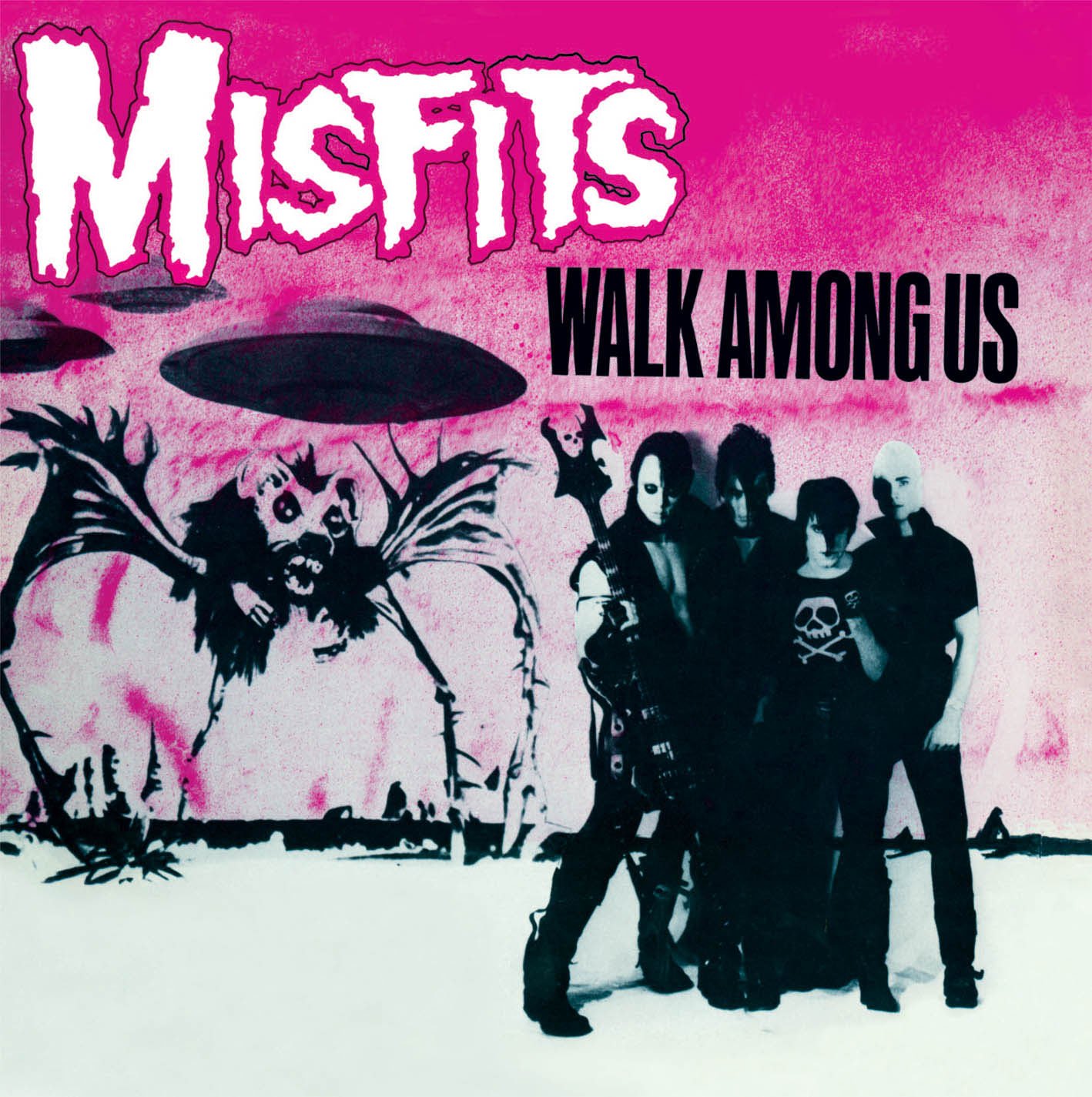
The Misfits -Walk Among Us (Album of the Week)

Our album of the week is an old-time cut from the early ’80’s. It’s a cult classic from a band that took on a life of its own after originally breaking up and has now ascended to legendary status.

The Misfits – Walk Among Us

Released March 1982 on Ruby Records

Favorite tracks – Astro Zombies, Mommy Can I Go Out And Kill Tonight, Skulls

Walk Among Us is a record I backed into for fairly obvious reasons – I was 4 years old when it came out. For whatever music I was exposed to in my early upbringing, The Misfits were not going to be counted among it.

About a decade later I was, like many adolescent dudes at the time, into Danzig. The Misfits’ former singer had found success in the early ’90’s with his Evil Elvis brand of metal. He was polarizing and is to this day reviled by some but I still hold up those early Danzig albums as examples of some truly great music.

At some point in that early half of the decade a buddy of mine needed to run to the next town over for something I can’t quite remember. I went along because well, you ain’t got much to do in mid-Missouri as a teen in 1993, or 1994, or 2004, or ever.

We wound up at a pawn shop and I sped straight over to their music section. The quality of music in a Midwest pawn shop was not up to the standards of any living being. It was the literal bottom of the barrel – just rejected tapes and CD’s that frankly should have never been recorded in the first place.

As luck would have it on that day, I spotted Walk Among Us in the pile of cast-off music. I paid $6 for a good used copy of this classic in a day and age where finding stuff like this wasn’t easy at all. The Internet was just barely a thing at the time and was not at all useful for commerce. And rural areas were sorely underserved for music – it was Wal-Mart or nothing.

I got home with my prized find and was instantly in love. I was nothing more than a tourist as it concerns punk but I was a Danzig fan and I was after everything he’d been involved in. And The Misfits were spectacular. The savage attack of unrefined horror punk was absolutely welcome to this young metalhead’s ears. It’s not some huge chasm between their stuff and metal anyway so it was pretty easy to see why so many in metal loved The Misfits.

The years wore on as they do and found both The Misfits and Danzig changing course and adding distance between them and their classic periods. Eventually they would find each other again and, if nothing else, they could count the money on the table and so they launched a few reunion gigs. I myself didn’t get to see them but that’s ok.

So there we have it – one of my all-time favorites and a more than fitting selection for the album of the week. 13 killer songs in 25 lean minutes and sometimes that, and some brains for lunch, is all you really need.