A Salute to Nicko McBrain

We’re now nearly two weeks removed from a massive announcement in the Iron Maiden camp. On December 7th, drummer Nicko McBrain played what stands as his final live show with the band in Sao Paulo, Brazil. Maiden were wrapping up their Future Past tour on this date and McBrain announced his intentions hours before the show.

Nicko McBrain was born in the Hackney district of London, England in 1952. He got his start drumming in the 1960’s in various pub bands. Through the ’70’s he would drum with Pat Travers, Gordon Giltrap and others before joining the group Trust. Through Trust, McBrain would meet Iron Maiden and would join that group in 1982.

For 42 years McBrain held down Iron Maiden’s drum throne, appearing on 14 studio albums and countless live shows. Nicko also owns a restaurant in Florida and a music store in England.

Recent years have been challenging for Iron Maiden’s oldest member. He had a bout with cancer in 2021, an early stage incident for which he has been treated. He also suffered a stroke in early 2023, just months before Maiden embarked on their recent Future Past tour. He was able to recover and perform the tour after rehabilitation.

The announcement was a sad yet celebratory matter – Nicko has clearly been through the ringer the past few years and his decision to step away from live performances is totally understandable. He has been a central cog to Iron Maiden’s sound, his unique sense of rhythm played well with Steve Harris’ kinetic bass playing and laid a solid foundation for the band’s music.

This also isn’t a full case of retirement. Nicko remains a member of Iron Maiden and is expected to participate in studio work. He is simply stepping away from live performances, of which Maiden are planning a two-year long tour celebrating their first 9 albums.

This news has caused even more speculation than normal about when the eventual end of Iron Maiden will be. While Nicko is a few years older than the rest of the band, it’s true that everyone is getting up there in age. Nothing has been officially announced or hinted at, only that Steve Harris has said he intends to keep going. News like this will naturally lead fans to wonder about the sad day when Iron Maiden hangs it up, but that does not appear to be on the horizon right now. The new touring drummer for Maiden is Simon Dawson, who has spent the past 12 years performing with Steve Harris in the band British Lion.

It is sad news but it’s also easy to celebrate Nicko’s decades of service to Iron Maiden. Here’s to you Nicko, and long may Iron Maiden reign.

Picking Five Songs From 1980

This little series that I’ve half-assed for the past while is now in to 1980. The 1980’s were the most significant decade in my musical development so this whole decade is gonna be loaded with songs I love.

And, as this series has gone, I will only pick five per year. It is more important than ever to remember that this is simply a list of five songs I like a lot from a particular year, this not a definitive list of my five favorite songs from any given year. There are so many awesome songs left off these ’80’s lists that it’s honestly impossible to mess with much – I just go with the vibe and choose five I really like. This stuff does get a hell of a lot easier once I get to the late ’90’s and especially the 2000’s.

But we are in it to win it here, so let’s kick off this look at the best decade the world has ever seen.

Judas Priest – Living After Midnight

In 1980 Priest would finally gain a foothold in the US with their landmark British Steel album, featuring this cut among others. The song is a bit more simple and fun than other things which was a point of debate, but it’s a glorious party anthem and there’s nothing wrong with that.

Iron Maiden – Iron Maiden

And now we’re on to the debut from my favorite band of all time. Pretty easy auto-include here with their self-named song from their self-titled album. This one is also fun, though much more murdery than the Priest track. Maiden have played this song live more than any other and by quite a margin. While they have a handful of signature songs, it’s pretty clear that this one is the real calling card.

Van Halen – And The Cradle Will Rock

Shocking stuff here, as the band who defined party rock offer up another party anthem. It’s also a rather simple offering, though Eddie makes quite a bit of noise as he often did. Rock on, indeed.

The Police – Don’t Stand So Close To Me

This one was huge business for Sting and company, a dark tale of a teacher wrapped up in lust for a student all set to the signature reggae-rock catchiness The Police had refined by this point. It’s moody and haunting at its core but a very infectious song on the surface, something the band would nail down again in a few years time.

Black Sabbath – Heaven And Hell

Sabbath had a bit of drug-fueled turmoil that saw the exit of singer Ozzy Osbourne. The band were able to regroup with Ronnie James Dio and offer up this massive slab of heavy metal. It features a grand battle between good and evil within a person, something that would be a calling card of Dio’s career. Although Sabbath wouldn’t enjoy the full fruits of the decade of metal, they were off to a very hot start.

And that wraps this one up, five songs of about five thousand great ones from the first year of the ’80’s. The tough sledding continues in the weeks after.

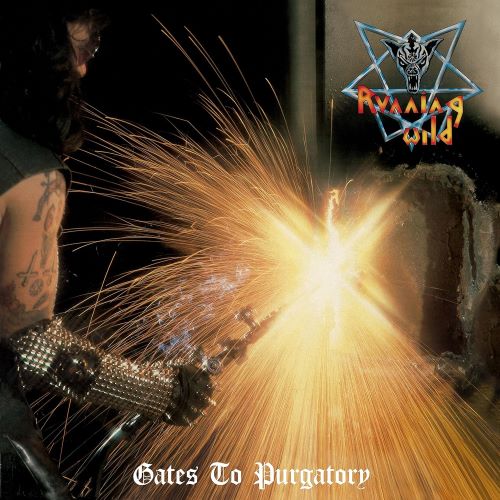
Running Wild – Gates To Purgatory

While today’s band are known as the purveyors of pirate metal, their debut was in a different vein with a lot less pirates and a lot more Satan.

Running Wild – Gates To Purgatory

Released October 1984 via Noise Records (Combat in US)

Running Wild started off in Germany in 1976 with the name Granite Heart. They changed their name to Running Wild in ’79, the name change was inspired by the Judas Priest song from Killing Machine. The band got some songs on compilations in the early ’80’s and then were set to offer their debut album on the fledgling German label Noise Records.

Running Wild were comprised of Rolf Kasparek on guitar and vocals, Gerald “Preacher” Warnecke on guitar, Stephan Boriss on bass and Wolfgang Hagermann on drums. The band would have numerous line-up changes over the years, including just after this album, with Kasparek being the one constant member. The album was recorded in Berlin and produced by the band as well as Horst Müller.

There were a few versions of the record – the original issue was 8 tracks, while the US and Canadian releases features 2 additional songs. It is the 10 song version I’ll review today. There was also a deluxe reissue in 2017 featuring a wealth of bonus tracks.

Victim Of States Power

Out of the gate we’re off with a crisp speed metal track that doesn’t take its foot off the gas. Musically it goes for the throat and lyrically it is a political themed track, fighting back against the oppressive power of the state with every metalhead’s old friend Lucifer. A very slamming way to kick off the album. Grade: A

Black Demon

Not quite as fast here but still a total metal ripper. Rolf’s vocals are somewhat cavernous here on this dark tale of a demon who is up to no good. The song is nothing out of this world but it’s simple and very effective. Grade: B

Preacher

An even slower grind here as we march through a dirge about Satanic forces conspiring against a preacher. A bit of irony here as Gerald “Preacher” Warnecke helped write this song, very soon after the album’s release he would be out of the band to become – wait for it – a preacher. The song is solid, if not unspectacular. Grade: B-

Soldiers Of Hell

The pace picks back up some on this prototypical 1980’s “Hail Satan!” song. A bit thrash and quite melodic, this one offers up a sneak peak at the power metal territory Running Wild would move into and stake their reputation on a few years later. Grade: B

Diabolic Force

Another speed metal attack here once again exploring some dark arts and hellish ends. Easy to headbang to and enjoy. Grade: B+

Adrian S.O.S.

This one ramps up the speed and threatens to fly off the tracks. The S.O.S. Refers to “Son of Satan” in this case, not a plea for help. Running Wild weren’t quite to the nautical themes just yet. This one is a short and brutal track, in line with something like early Slayer. Here, Adrian is an undead werewolf who comes to the world to liberate it from the oppressive binds of corporate overlords. Grade: A-

Genghis Khan

Running Wild set the evil shtick aside for a moment and offer up the first of what would become many historical explorations here as they look back on one of the world’s most famous conquerors. The song still fits the darker tone of the album but also showcases what Running Wild were soon set to become. Grade: A

Prisoner Of Our Time

We wrap up the original version of the album with a banging track that offers up the whole “metal is liberation from society” thing. This one is a bit of a darker take on it, mentioning Satanic imagery and even an early shout to “black metal.” The band also thrown their own name in for an extra push. Grade: B+

Walpurgis Night (The Sign Of Women’s Fight)

A bit of a Wicker Man vibe on this first US bonus track, as men are hiding from an all-out assault by witches in the night. The male narrator is taken by the witches and is then “taken” by the queen witch, because that’s what always happens in these dark witch stories. Overall a very nice track with some really cool guitar work on it. Grade: A-

Satan

The final track offers up another “Satan as liberator from the true evil of society” theme that this early incarnation of the band were very into. It’s a fine way to wrap up the album. Grade: B+

Gates To Purgatory was a successful debut for Running Wild. It became one of Noise Record’s most notable early releases and has gone on to sell close to 250,000 copies. Word spread through the metal world about Running Wild and the band would enjoy steadily growing momentum through the 1980’s. The band did one more album of dark themes before shifting gears in 1987 on Under Jolly Roger, kicking off a career-long exploration of pirate themes and becoming the flag-bearers of pirate metal.

But while Running Wild would become known for their power metal and pirate themes, Gates To Purgatory was still a very solid release into the heavy metal scene in ’84. It’s an occult themed speed metal record that still showcases a flair for melody and was also well-produced, especially in comparison to the other “occult metal” albums of the early ’80’s. The band made their mark later on in a somewhat different guise, but this album is essential early ’80’s listening.

Album Grade: B+

While Running Wild’s story will always revolve around pirates, their story can’t be told without recounting their dank and excellent 1984 debut. And the story of heavy metal in 1984 can’t be told without visiting this slab of speed metal excellence.

Picking Five Songs From 1979

It’s time for 1979, though we’ll find no Billy Corgan here, only songs actually from the year. I turned two in ’79 so I obviously have deep and specific memories of all these songs. Next week the 1980’s will kick off and these lists will be batshit for awhile, no two ways about it. But this one was pretty simple to put together so let’s enjoy this pretty easy week.

Tom Petty and the Heartbreakers – Refugee

1979 saw Petty and his band break through to true mainstream success, and it’s no wonder with songs like this. This a powerful groove with the organ and guitar working together to blast this freedom anthem into your head. I’ve heard the song all my life and it still gets me going any time it’s on.

The Police – Walking On The Moon

The Police obviously incorporated reggae into their sound, but on this one they just totally went reggae. Very atmospheric stuff here with the guitars accenting things at certain points, but the song as a whole moving on its gravity free march in trippy rhythm.

AC/DC – Highway To Hell

AC/DC have a trove of awesome songs and many were from the Bon Scott era, but I feel like this one really puts it all over the top. This is a seamless blend of great riffing and on-theme delivery that stands as one of rock’s truly great songs. It would also sadly be the bookend of Bon Scott’s time with the band, though the group dusted themselves off and kept on in world-conquering fashion after his death. No matter how much rock radio plays AC/DC, this is one song I never get tired of hearing.

Neil Young and Crazy Horse – Powderfinger

Rust Never Sleeps is my favorite Neil Young album and this is my favorite song from that album so here we are, pretty simple pick. Tough tale of a young man who shot at a gunboat to defend his family’s property. The gunboat won the battle, if you are keeping score. It’s an anti-war song for sure but one that offers its message in a poignant story rather than being super obvious about it. Grand work from Neil and company.

Judas Priest – Exciter

Heavy metal was about to blow up big in its golden age during the 1980’s. It was Judas Priest who flew the flag for the genre during its relative down period of the late ’70’s, and here they continued to round into form as their own fortunes would explode in just a year’s time. Here Priest laid the groundwork for the entity known as speed metal, lending not only a musical blueprint but also a band name to one of the subgenre’s pioneering acts.

That wraps it up for 1979 and also for the decade of the ’70’s. Great music to be sure, some of the best, but things really get going in the next decade. The absolute explosion of music and the toughest series of picks I’ve had to make kick off next week.

Saxon – Crusader

Saxon had been one of the leading acts of the New Wave of British Heavy Metal coming into 1984. By then it was time to shift gears into other sounds, and Saxon would set out to update themselves for the rest of the decade.

Saxon – Crusader

Released January 30, 1984 via Carrere Records

In the mid-80’s Saxon were riding a streak of albums that would go on to sell a million copies each and largely define the career of the pioneering British outfit. But the times were changing and Saxon were poised to explore new territory to adapt. Saxon had not failed in their career by any means, but by this time the NWOBHM was largely fading out as Iron Maiden had taken the crown and run with it while many other outfits were facing obscurity. Saxon were somewhere inbetween – successful but not world-conquering.

Saxon’s line-up through their history needs at least a short book to recount, but in this time period they had a stable group together. Biff Byford was and still is the band’s singer. Graham Oliver and Paul Quinn were the guitar tandem. Steve Dawson was on bass, and Nigel Glockler on drums. Glockler is with the band today along with Byford, and Quinn retains some degree of involvement though has retired from performing.

Crusader features 10 tracks at a decent 39:10 runtime. There was a deluxe reissue in 2009 that features a second disc full of bonus tracks. This is the version of the album I own but I’ll confine today’s conversation to the original album as my posts are too long as it is, no need to write 5,000 words about some bonus tracks. But in general terms, the 2009 CD reissues of these Saxon albums are worth the price of admission.

The Crusader Prelude

This is a small intro bit, with a bit of war and horse sounds. Nothing much too it and no reason for me to grade it, but a neat little piece that adds a bit of atmosphere to the impending title track.

Crusader

Now on to the title track and we get more build-up first, with the song establishing its main rhythm with a brief, ominous spoken intro before Biff comes in. The song operates at a bit of a slower pace, and is a bit militant in its presentation, just as a crusader marching into battle. There’s a kind of long breakdown section before another bellowing spoken part that then goes into a guitar solo.

There is nothing wrong with this song – it is the highlight of the album and will garner a high score here. I will say that this song does get an extra kick in the ass when done live. But this original recorded version is one of Saxon’s most-streamed songs, out of a catalog of 24 albums, so it clearly resonates with the fanbase. Grade: A

A Little Bit Of What You Fancy

This one is a fairly high-octane boogie with a very melodic gang chorus that sounds very, very ’80’s. It’s an odd proposition as it causes the fan of classic Saxon to raise an eyebrow, yet it’s a very enjoyable jam. Saxon are expanding their base through the rock realm here and it’s a bit mixed but a worthwhile listen overall. Grade: B

Sailing To America

This song’s premise is totally Saxon – it’s a historic account of the Pilgrims who sailed over on the Mayflower or however the story goes. The music is very airy and melodic here, it’s another push into other areas for Saxon and it’s honestly a bit weird. Like, this isn’t that far removed from a Journey track. But we didn’t get a Steve Perry Thanksgiving song, we got a Saxon one instead. It’s kind of befuddling though listenable by any measure. Grade: C+

Set Me Free

Now we get a cover song, this being from The Sweet. This version is a nice ’80’s update to the original, which actually has a fair bit more edge to it than this more smoothed over cover. This song does leap out a bit in comparison to most of the album. It is a good choice for a cover song as it does seem to fit what Saxon are largely up to here. Grade: A-

Just Let Me Rock

A very simple track here with an easy to grasp premise – Saxon would like to rock. They do so in the powerful chorus for sure. For the verses they go very light and melodically atmospheric (whatever that means). I find the contrast between verse and chorus a bit jarring but I can live with it. Grade: B-

Bad Boys (Like To Rock N’ Roll)

There were a whole lot of bad boys in ’80’s rock and Saxon were not going to be left out of the mix. What did get left out of the mix is a bit of beef to make this song more powerful. It’s not bad but man this is very light and kind of thin. I get that the band were pushing this sort of sound but I think they could have amped this one up a bit more. Grade: C

Do It All For You

This was one of the album’s two singles (the other being the Pilgrim song). It is a ballad that has some extra push behind it, but overall it’s still a ballad and one that I personally find a bit ill-advised. Not a bad song but not really what I’m looking for from Saxon. It’s tougher to grade this forty years out since the band have been balls to the wall since the mid-90’s, but this is a somewhat odd inclusion. Grade: C-

Rock City

This one is a more upbeat and pounding rocker, though again it is a very rock track and not particularly in line with Saxon as we generally know them. This one isn’t really ill-fitting though, it gets the job done and makes for a good listen. Grade: B-

Run For Your Lives

The record closes with another track along similar lines to the one before – very ’80’s and melodic, perhaps a hair light, but still pretty worthy and nice to hear. Grade: B-

Crusader comes off as something of a mixed bag. The album is very melodically pushed and in several places feels like it lacks a bit of bite that would put some of these songs over the edge. It’s also kind of a paint by numbers thing in many respects, this is a standard plate of rock music without a ton of dynamic ideas to set it apart. The grand exception is the title track, which is a total monster and could be considered an early power metal masterpiece. It’s also Saxon’s 5th most played song live, so it hit pretty hard and wasn’t even a single.

This one did confuse the fanbase a bit on release and still does confound many years later. But at the end, I find a decent and sometimes really good album, and overall I can play this without too many hang-ups over the change in direction that would only become more drastic on the next few albums.

Album Grade: B-

In terms of success, Saxon kept themselves in the game here. The album charted at 18 in the UK and in similar positions across many other European countries. It did very modestly chart at 174 in the US. While sources aren’t entirely official, the estimated sales total worldwide is 1.5 million copies, not a bad haul for a band that didn’t break the same way a few of their peers did.

I don’t know if Saxon wanted a piece of the ’80’s rock pie, something they never really got, or if they simply wanted to go in a new direction after five albums of heavy metal. While the ship did get a bit off course in this time period for the band, Crusader is still a pretty enjoyable listen.

Picking Five Songs From 1978

Now I’m up to 1978 on my songs by year lists. I turned one that year so I don’t exactly have memories associated with the time, but these songs were pretty easy for me to pick and are timeless ones I’ll always enjoy.

Times were really changing this year I think – three very significant new acts showed up in ’78 that are on this list and would be central to the sounds to come, which was what shaped my musical fandom in my early years. Let’s head in and see what’s up.

Van Halen – Runnin’ With The Devil

Up first is a great cut from the debut album of one of rock music’s most important bands. Van Halen were central in what would happen in the 1980’s and their ’78 debut was red hot. The way Eddie Van Halen played his guitar here, it was almost talking alongside David Lee Roth’s vocals and insane ranting. It’s an ode to living hard and running free, and a massive song.

Heart – Straight On

Another hard rocker from Heart here, as they’d wrap up their first era before transitioning into the next decade. This one has some dance/disco elements to it but still shines through as a Heart classic. It’s an auto-include on any Heart greatest hits or setlist for sure.

Judas Priest – Delivering The Goods

Priest would get in two albums in ’78, and by this time they were truly rounding the corner as heavy metal’s premier act. They would be in prime shape for the total explosion of metal soon to come. Here Priest show their muscle with a song that was composed about how they feel on stage. This was a great way to truly launch the new era of metal.

The Police – Can’t Stand Losing You

Up next is band new to the scene and one that would light the world on fire for the next several years. This chippy, upbeat music stands in contrast to the dismal lyrics about someone ready to off himself over losing his gal pal. The Police were a rock/reggae/punk/new wave machine that would dance across the ears of millions in their time, and all of us who heard them were lucky to have done so.

The Cars – You’re All I’ve Got Tonight

Speaking of new wave, it turns out it blended nicely with hard rock, and The Cars put that into full effect on their debut album. Pretty heavy, very melodic and insanely catchy, this song wasn’t released as a single but wound up all over radio as The Cars became a popular act. Super fun song to bop to.

1978 is now done and dusted. Just one more post to go from the decade before this turns to the 1980’s and things just go totally insane.

Picking Five Songs From 1977

Here is the latest in my songs series, on an unusual day. After the post I’ll have an update on this site over the next few weeks.

And now on this 50 year long musical journey we arrive at 1977. Seems like it was an interesting time in the world, a lot of weird world events and all that. It was a bit of a banner year in entertainment, as the first Star Wars movie hit theaters.

It was a mournful time in music. For one, I’m not sure this was the greatest year in music history. Kind of a whatever vibe with a lot of this stuff. I vaguely recall the 1977 Behind The Music and everyone was just like “fuck that year.” And the King himself Elvis Presley died on a hot August night.

And just three days after Elvis left the building, I was spat into existence. So no more “I wasn’t around for this year” on these posts. I was, in fact, around – though I can’t cop to having any memory of the year, obviously. I think I have one very small, vague memory from ’79 but that’s all I recall of the decade, I was busy filling diapers and crying.

But even if the year was kind of lame, I had no problem selecting five songs from it. Good music is always around.

Fleetwood Mac – Don’t Stop

This single from one of the biggest albums of all time was one of my earliest musical memories. My mom had a carrying spindle thing that held a bunch of jukebox 45’s and this was one of the singles in that set. I used to play through those 45’s a lot, and I whittled it down to the ones I really liked, this being among those. Honestly a somewhat heavy song, by Fleetwood Mac standards anyway, and a great duet between Lindsey Buckingham and Christine McVie.

Judas Priest – Dissident Aggressor

A cut from the band’s third album Sin After Sin and another testament to Priest being the glue that held heavy metal together just before metal kicked off big time. This saw Priest really up the ante with the heaviness and include some real divebombing guitars. The song was a thought piece on the city of Berlin, at the time caught in a Cold War split that was stark and honestly insane.

Heart – Barracuda

This was another of the 45’s in my mom’s tote and this would be the one I’d play over and over and over and over again. This was an aggressive song and with good reason – it was written by Ann and Nancy Wilson after the press grossly speculated on them being involved with each other despite being sisters. And that main riff of Nancy’s offers a very short and straight line to the heavy metal I would get into several years later. Definitely one of my favorite songs of all time.

Rush – Closer To The Heart

This is an all-time Rush song for sure. Well written and arranged, it brings out a sentimental flair while still sounding totally Rush. The song really opened up the world to Rush in terms of radio play, landing them a top 40 UK hit and also getting their foot in the door in the US. Always a good time to hear this one.

Kiss – Love Gun

This last slot was a tough choice – it was between this and Aerosmith’s Kings And Queens. The latter is an awesome song but Love Gun won out in the end. The album was one of my first Kiss albums and also one of my earlier music memories overall, so it’s easy to pick this signature Kiss song. It’s easy to hear why it’s one of Paul Stanley’s favorite songs.

That does it for ’77. Inching closer to the 1980’s, where this whole thing gets insane as far as picking only five songs per year.

And with that, here is a brief update – I am starting my new job next week and I’ve had a hell of a time lately with leaving my old job and getting stuff together for the new one. I am going on a two-week hiatus from this blog in order to get adjusted to my new work. I will be working a lot of hours but I think after I get into the new rhythm I should be able to get back into the swing here. I don’t know what my post frequency will be but I should be able to figure something out. See you all then.

Paul Di’Anno – 1958-2024

A brief and sad post today, as it was announced that Paul Di’Anno died earlier today. Paul was 66 and had been the first recording vocalist with Iron Maiden. He would see through the first two albums, then engage in a variety of solo and band projects after exiting Maiden in 1981.

Di’Anno had been dealing with injuries and illness for a long time, his recent appearances saw him in a wheelchair. Paul never would again rejoin Iron Maiden in any capacity, though he and Steve Harris had been met up awhile back and had been regularly communicating. Paul also met with his replacement Bruce Dickinson for the first time earlier this year, a meet-up that was reported to have been well-received by all parties.

Paul Di’Anno was a pretty rough and tumble guy – his antics would fuel Iron Maiden early on, giving them a bit of a punk edge. His same antics, often involving alcohol, would also see him leave the group. But Paul left quite the legacy in his work, both with Maiden and outside of it.

So it is a sad day in the Iron Maiden world. While other fanbases struggle a lot with members who were fired or quit, Maiden has keep a pretty even keel with its former members, especially in recent times. Paul’s works can be celebrated easily with no concerns over the perception of the other Iron Maiden material – everyone knows the first Bruce era represents the band’s classic works, but the first two albums are classics as well that were massively instrumental in shaping the New Wave of British Heavy Metal. Rest easy Paul, and may the world always know your signature sneer.

Picking Five Songs From 1976

After a few weeks layoff due to super busy stuff, I’m getting back to this thing again. I’m also working well ahead on these now so the series won’t be interrupted again. It’s not like it takes any massive amount of time to put these posts together.

We’re now to 1976, which is the last time you’ll see me say I wasn’t around for the year. This is also where things start getting tough – this was probably the most difficult five songs I had to pick of all I’ve been through so far. Yes, the 1980’s get insanely crowded but it’s so absurd by that point that it’s actually easier to just grab five songs. This year I had to bump things left and right, and really go over the five I wanted. But I did eventually get a list together so let’s have at it.

The Runaways – Cherry Bomb

Up first is this fantastic cut from the revolutionary all-woman group. It was the start of the illustrious careers of Joan Jett and Lita Ford, but even beyond that it was a massive dose of grit and attitude. And it was seriously heavy – heavier music was about to really take off and The Runaways were definitely a part of that.

Judas Priest – The Ripper

Speaking of heavy, it’s time to welcome Judas Priest to these lists. If you’re thinking this is just the first of many appearances, you’d be right. Heavy metal was kind of in a down period as Black Sabbath were fading during this time, but Priest served as the bridge between Sabbath and the metal golden era of the ’80’s. Here they cut into the gruesome tale of Jack The Ripper, perhaps the most notorious criminal in history. The guitar work that truly set heavy metal apart is center stage here, and while Rob Halford is fairly restrained through most of the song, he lets loose at the end.

Boston – Foreplay/Long Time

Up next is a cut from the world famous Boston debut. This has one of the best instrumental sections around in the Foreplay intro. Then the song breaks into Long Time, a fantastic rocker about having to move on. The lyrics are philosophically heavy, but it’s just as easy to totally rock out to the music too. And in defiance of the “shorter is better” pop song format, this nearly 8 minute long cut still gets airplay 48 years on.

Kiss – God Of Thunder

Kiss had a banner year in 1976, releasing two of their best albums and truly becoming a force in the live market. But for all of their triumphs that year, it’s this plodding heavy metal track that Paul Stanley brought to the table that does it for me. Bob Ezrin slowed the song down and gave it to Gene Simmons to sing, and this is easily one of Gene’s biggest moments on record. Even the most die-hard of extreme metalheads get down to this song.

AC/DC – Dirty Deeds Done Dirt Cheap

Wrapping up with another list debut, AC/DC crack this one with one of their early signature songs. This snarling, tough tale of a killer for hire is both rocking and pretty funny. It’s easily one of the band’s most recognizable songs today, though it took years for it to get from Australia to the US. But the gritty rock and sing-along chorus are just too good to be passed up.

That does it for 1976. The next few weeks will close out the ’70’s as music really started changing dramatically, then the ’80’s come around and make these lists damn near impossible to do. ‘Till then.

Cirith Ungol – King Of The Dead

Get out your 20-sided dice, character sheets and Dungeon Masters’ guides (first edition, of course). It’s time to go back to 1984 and get into some sword and sorcery.

Cirith Ungol – King Of The Dead

Released July 2, 1984 via Enigma Records

Cirith Ungol is well-known as a mountain pass between Mordor and Gondor in J.R.R. Tolkien’s legendary Lord Of The Rings series. It would also be known as one of the first heavy metal bands to name themselves after a part of Tolkien’s work.

Cirith Ungol the band formed in California in 1971. They would operate in the hard rock realm through the ’70’s, then shift into heavy metal when recording their debut album, 1981’s Frost And Fire. Three years later saw them ready to unleash this follow-up album.

The band was comprised of Tim Baker on vocals, Jerry Fogle on guitar, Michael Vujea on bass and Robert Garven on drums. Founding guitarist Greg Lindstrom was no longer with the band at this point but three of his song contributions were used (with his blessing, Lindstrom also would return to the band for their 2016 reunion). The band also retained creative control of their efforts and self-produced the affair.

The cover art was done by famed book and album cover artist Michael Whelan. This piece is actually from a prior book cover, that being Bane Of The Black Sword by Michael Moorcock. Whelan has provided cover art for every Cirith Ungol album as well as scores of other works.

The album features 8 songs at a fairly beefy 50:17 runtime. As usual a few reissues exist with various bonus tracks, though today I’ll tackle the original album.

Atom Smasher

We get going with a brief intro then a running riff establishes itself, one that will remain throughout the song. Vocals and bass come in next and man, that bass is going off here and basically through the whole album. The song is a bit of sci-fi, featuring Atom Smasher as a title character who was genetically engineered and is out to save humanity.

As a note, I don’t know if there’s any influence for the video game character Adam Smasher from the Cyberpunk 2077 game decades later. The two have similarities, though the game guy is a villain while the song character is a hero. An interesting coincidence, if nothing else. Grade: A+

Black Machine

While Cirith Ungol would easily fit into the emerging US power metal movement, this album and especially this song saw them establish early ties into the also emerging doom scene. This is a pounding song that invites the listener to ride the black machine, which is some kind of infernal afterlife construct as the lyrics tell it. It’s another riff that just runs all day long and slams its way into your head. Grade: A

Master Of The Pit

Here we get an intro guitar solo as we make our way down to tangle with the guy who the song is named after. The song pounds its music through at a slower pace, so that our hero has time to fight the diabolical foe. This is Dungeons and Dragons put to music for sure. Grade: A

King Of The Dead

The title track offers a similar vibe to the song prior, it establishes a different boss to fight. This one is even more evil and doomy as someone called the King of the Dead really isn’t someone to mess with. Keep that shit locked away. Grade: A+

Death Of The Sun

Nothing says heavy metal like a good old fashioned apocalypse song. This “blink and you’ll miss it” track rips through with a speed and fury. When you’re messing with stuff like the Master of the Pit and the King of the Dead, sometimes the world just won’t make it. It also turns out that the death of the Sun is mostly guitar solos. Grade: A-

Finger Of Scorn

We’re brought in with a mournful acoustic passage here that builds into a louder electric effort as things go on. It’s another “humanity is doomed” song and this one carries on with a fair bit of Black Sabbath groove in it. There are also parts in the song’s latter half that might make you wonder when Iron Butterfly picked up doom metal. Grade: B+

Toccata in Dm

Here Dm does not refer to “dungeon master,” rather it’s the key of D minor. This is actually a cover song, the source being the iconic composer Johann Sebastian Bach. The original piece has a history that is honestly insane and covers volumes of books, but I’ll skip all that today.

Here Cirith Ungol do an abridged version of the piece. It’s worth noting that while heavy metal came up as an offshoot of blues-based rock, what has gone on to become heavy metal can be rather directly linked to classical music. Now – this piece isn’t entirely “for me” and I personally wouldn’t have put it on the record, but it can be worth listening to. Grade: B-

Cirith Ungol

We close things out with a self-named song for the band, which is always something interesting to check out. This returns to the power and doom formula experienced through the balance of the album. This one mostly lets the music do the talking with just a few verses to tell the tale of the sinister area of Mordor. And the music does the talking here – it’s a blend of everything the band have been doing through the record and wraps everything up nicely. Grade: A

King Of The Dead would be an influential force in two distinct US metal scenes – power and doom. The album would stand alongside works from Jag Panzer, Manilla Road and Savatage in shaping the US power metal scene, while it would also slot alongside Saint Vitus, Pentagram and Trouble in crafting the very new doom metal landscape. Though Cirith Ungol, like many of the other bands mentioned, did not achieve commercial success with their music, their name has rang as a leader of the metal underground since their recording career kicked off in the ’80’s. The band split up in 1992 and was but a cult memory until 2016, when an unlikely reunion happened. The group is presently on their final tour now, which is due to wrap up at the end of ’24.

The album offers up songs that would inspire the metal genres mentioned, but this also has a distinctly retro feel to it. Cirith Ungol were clearly rooted in their 1970’s origins, this was taking music forward while keeping at least one foot in the past. I don’t need any deliberation to score this album, the grade is already laid out in the songs above.

Album Grade: A

While heavy metal became a lucrative commodity for the music industry in the 1980’s, the slice of the money pie was usually reserved for the hair metal acts or the higher-profile thrash bands. But a wealth of underground and independent heavy metal also came from this time, and Cirith Ungol were one of the looming giants of the scene. King Of The Dead is a testament to the true power of this music.