UPDATE 2-25-22: Pre-orders for the Fear Inoculum 5 LP version are now live, shipping on April 8th. The price is a manageable$169. A bit pricey but far less than I was expecting.
We are in a pandemic economy, rife with supply shortages, inflation, and a lot of other things that are complicated but make stuff cost more. We are also in the marketing era of the hypebeast, where FOMO rules the day and stuff that is hard to get becomes all the more attractive. Combine the two and things get really, really expensive.
Even all of that might not account for the latest music-related marketing craze. Earlier this week fans at Tool concerts began circulating the news – the long-awaited vinyl version of Fear Inoculum was for sale to VIP ticket holders.
The price? $750, with assorted fees and taxes, $810.
There is context here, though likely not $800 worth. The record box set comprises 5 LPs. Yes, Fear Inoculum is a long album at a bit over 80 minutes but it does not take up 5 records. The LPs are single-sided and feature etched designs on the second sides. The packaging is a deluxe version to accommodate the lofty record total and the editions being sold are signed by the band. A “general” edition will be for sale around April according to the band’s social media. No word yet if that version is this same one just unsigned (likely since it’s already pressed) or if there is a different (read: cheaper) configuration planned.
Obviously there’s a lot to unpack here. I’ve never been one to gripe about high-priced merch, as a rule. If Kiss wants to sell “Koffins” for stupid amounts of money, have at it. I don’t have to buy that, I don’t have to buy super mega deluxe collector’s versions of anything and I don’t have to spend $800 to buy Fear Inoculum on record.
All this does point to a problem, though – is this the only version of the record being released? I don’t expect it to hit for a $750 price tag on wider release in April but this could be $200 or $300 easily (EDIT – It’s $169, expensive but not horrible I guess). And if it’s the only official vinyl version of the album available, well, that kind of sucks. It forces a purchase at retail right away or a prospective buyer runs the risk of paying out the nose for it on the secondary market. It does break the line of affordability, even when considering this is something of a luxury market in the first place.
Tool is not one to shy from expensive memorabilia. Their merch table features many items priced far above the median line for arena bands. Having a $800 record might seem insane, and it is, but it’s not out of the ballpark for the group.
Perhaps this is just a limited, ultra version and a baseline, no-frills set will be released? Sure it will. I’d love to have their 2006 set 10,000 Days on vinyl. That album has been out for 5,778 days as of the date of this post and no official vinyl has been released. And their seminal 1996 set Aenima? An original pressing exists and will set a collector back several hundred dollars. No reasonable reissue in sight. I’m skeptical that there will be any consideration to a halfway affordable version of Fear Inoculum given the band’s proclivities with high-priced merch and no urgency to reissue scarce or non-existent pressings of past records.
I can easily say I won’t be buying this record, unless something happens and it is cheaper than expected (EDIT – it is cheaper and I am buying it) or a different version at a lower price point is released. I don’t have the money to prioritize to a high-end collectible thing at this point and honestly I don’t want to spend that much on what amounts to one album. I’ve spent a bit more on a highly collectible set before but that has 26 records in it and was a different story at a different time.
Tool fans are in a tizzy over the news of the record’s scope and price. Not Tool fans are having a laugh at the state of Tool merch and the six-figure job needed to acquire it. I guess time will tell if Fear Inoculum will be made available in a more budget-friendly configuration later on. After all – if the album takes up 5 sides, that only requires 3 LPs. I don’t know and we won’t know until release, but I pretty well do know what album won’t be on my record shelf.
One thing I’ve meant to write more about but haven’t got to much of is the topic of collecting. Though the issue of collecting is not necessary to discuss music, it is an important part of music for me and many other people.
Music collecting looked to be going the way of the dinosaur roughly a decade ago as digital music and streaming took completely over. But just as the digital revolution seemed to be ready to deal physical formats a death blow, something happened – vinyl sales shot up. They shot up big and are still going strong today. In fact, the industry is plagued with delays and shortages. The secondary market has become a nightmare of price gouging and watching stuff that was once a dollar in the bargain bin go for $20 or more.
While vinyl saw a new life in the 2010s, one format that looked to be on the way out was the compact disc. The CD revolutionized music in the 1980’s and especially the 90’s. It bulldozed cassettes and vinyl records into near oblivion, then saw itself outmoded in the face of digital formats. People sold off their CD collections, the prices tanked, and stores tied to the format faced extinction.
2021 delivered a bit of favorable news for the CD – sales were up a bit over 1% for the year. This article from Pitchfork gives the stats breakdown – the CD moved 40.4 million units in 2021, up from 40.1 a year prior. Though not the biggest sales spike ever, this is the first year CD sales increased since 2004.
One wonders how much life the CD truly has in it. The sales spike was prompted by the two biggest names in music – Adele and Taylor Swift. A new Adele album will cause sales to soar, and Taylor is re-recording her music to escape unfavorable rights management of her old catalog.
Is this sales surge a flash in the pan or a sign of a shift back to the nearly-dead CD format? Adele doesn’t release new music that often and can’t prop up the music industry on her own. And Taylor will run out of back catalog to re-do at some point. Are there other sales drivers to sustain a renewed push for CD’s?
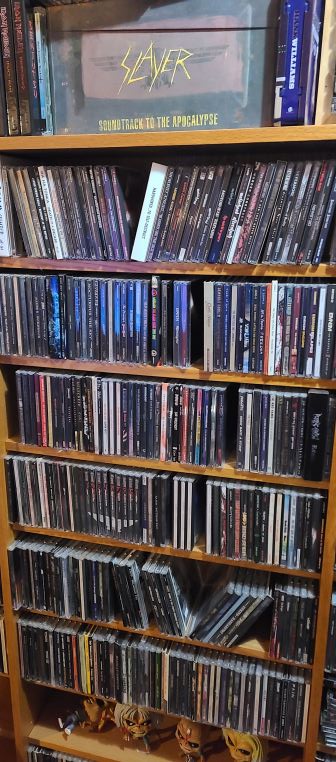
A fair portion of my disorganized CD collection
It is easy to write off the CD surge as a one-off event. After all, the CD format is outpaced by the convenience of streaming. While streaming is not generally of the same quality as a CD, it is obviously good enough for the masses. There doesn’t seem to be an indicator that people might move from streaming back to the CD.
Except, well, there are a few. The jump back to CDs might not have anything to do with streaming – it lies in the current state of vinyl.
Vinyl is in the midst of a huge renaissance right now. Sales are huge, record stores have opened across the land and collectors are gleefully shoving handfuls of cash off for the sweet new limited pressing of their favorite acts. It was an unlikely resurrection, fueled in no small part by the much-reviled hipster of the late 00’s and early 10’s.
But there are signs of trouble on the horizon. Right now vinyl is expensive and only growing in price, much like everything else these days. The secondary market is out of reach for most collectors of modest means. And manufacturing plants are backed up enough that some albums are getting their vinyl release almost a year after the same album dropped on CD and streaming. Major players like Adele hogging limited production resources only exacerbate the vinyl supply problem.
I know this shit is getting expensive
I don’t have statistical data in the same way we can track the rise in CD sales but I do have anecdotal evidence that some collectors are backing off vinyl and returning to the CD format. A little money goes a much longer way on CDs than on vinyl. Especially for back catalog collecting – imagine the amount of money someone would need to get, say, the Scorpions extensive catalog on record. Now have a look at used CD prices for the same band the next time you’re out. Much, much cheaper.
There is another issue looming – again anecdotal, but some independent and underground labels are having such fits getting vinyl pressed that they are considering abandoning the format. That might be a bit extreme but there is a realistic possibility that vinyl becomes a very niche and expensive high-end market while the masses may have to find content in CDs or streaming.
I don’t want to be a prophet of doom, except maybe when I’m plugging the doom genre, but it might be looking a bit hairy for vinyl. I’d guess it still has legs under it for awhile but the market forces do need some correction before a segment of the marketplace turns their backs on it. I don’t know if that will equal a new boom for CDs or not, or if this new advent of the format is just a glitch brought about by a few major artists releasing albums at once.
I do know that I and many others will maintain collections no matter what happens with the market at large, but the present and future states of affairs do shape and inform what we do. I hesitate to say that the CD is on the way back, even with some promising signs. The unfortunate part is that the most positive indicators for a CD revival are at the expense of the vinyl resurgence. Only time will tell.
One topic I want to cover more aspects of on here is music collecting. Not everyone does it these days but several of us still have collections of various physical formats. I’ve done one post so far on my own collection, as well as this post specifically about my Iron Maiden collection. And there are numerous issues within the realm of collecting that I plan to discuss going forward.
Today I want to get into vinyl collecting specifically and one huge elephant in the room that comes with modern-day record buying. Overall it’s the price of records today that has become an issue of huge concern among collectors. Back ten or so years ago old records were in flea markets for a few bucks apiece, while new records that were coming out could be had for maybe $20.
The music industry flipped on its head a few times in the past decade though, and now we live in a world where new releases push $30 or more and many old records are sought-after relics that command big prices depending on the shape they’re in. Flea market rummaging these days is reserved for the old polka classics that never had much of a market in the first place.
This isn’t a simple examination that ends with “damn, records are expensive.” There are a number of factors that play into the vinyl price inflation and why the market is the way it is today. Of course the prices of everything go up over time. If that was the only issue here I wouldn’t have a topic to write about. I know people love to lament how much cheaper things were way back when, but it’s a baseline business education fact that prices go up every year. This affects manufacturers, distributors and obviously, consumers. There’s nothing else to see here in regards to increasing prices.
What we have is a resurgence in vinyl interest. The record was a dead format, having been killed off in the early ’90’s in favor of the smaller CD. Then the digital revolution came and threatened the very existence of physical collections. I myself was still buying CDs and even a few records into the 2010’s but by and large people kept their music on their phones. This then gave way to streaming, where all you have to do is pay someone $10 a month to listen to more music than most people could ever bother with.
But then the vinyl boom came around and totally turned the physical market on its head. Records had never totally gone away – they were issued in limited pressings for diehard fans and collectors. Some of those 2000’s releases are now small goldmines. I’d love to have a vinyl copy of Neil Young’s 2007 Chrome Dreams II, but the price of admission is at least $100. And in the same year Nine Inch Nails released Year Zero, one of my favorite albums from them. If I want that record? We’re talking $250, at least.
Now both Neil Young and Trent Reznor have been pretty good about doing album reissues. I don’t have the income or desire to have original presses of everything ever released so I’d be more than happy with a new pressing of either album. Reissues do come around for a lot of albums, some that were scare in the first place or perhaps not even done on vinyl, as with much of the 1990’s. It is the saving grace for the middle-class or modest-income music collector.
But even reissues can be tough to come by, much like new releases. I don’t have a huge problem getting what I want but I have learned one valuable lesson – if I know a record is coming out, I better pre-order it and make sure I get a copy. Some new releases might be available at retail price until the pre-order sells out and will be two or three times higher ever after. And while some labels do their best to make sure reissues of even recent material are out there, the record manufacturing sector is in such short supply that lead times on new pressings are months out. It especially hits independent labels hard when the majors are filling orders in every available plant for Record Store Day reissues of the same ten albums.
I will say this about Record Store Day – I think it’s fantastic for the stores. Retail music stores were nearly extinct before this vinyl resurgence. I don’t at all mind seeing lines of people outside shops I frequent, I want these businesses to succeed and more customers is always going to be a good thing.
But RSD has a bad side, too. Multiple, in fact. It clogs up record plants, which again are in very short supply. But it also feeds into the modern market we have going on in music, gaming, shoes and even toilet paper at times – the secondary “flipper” market. In less savory terms, vinyl has fallen prey to the scalpers and price gougers.
The play is this – a record label offers a reissue or new release in limited scope, between 1,000 and 2,500 copies. Flippers buy up as many as possible and immediately post them on eBay and Discogs for insane mark-ups. Regular fans who really wanted the record but had no shot at the one copy in their local store with 35 people ahead of them in line on RSD are left out in the cold. It’s either suck it up and pay the scalpers’ prices or go without.
This issue plays out in consumer goods everywhere today. Scalpers using bots have turned current-gen gaming consoles into a total fiasco. PC stuff like GPUs are unobtainium these days. But it has redefined music collecting and not for the better.
I honestly have not gone to a Record Store Day. I’m not fond of huge lines for small buildings and also I often don’t see anything I absolutely have to have on the release lists. There’s always a record or two I wouldn’t mind having but nothing that gets me out of the house.
I did miss out on one record I would have like to have, though. In 2020 a reissue of Skid Row’s excellent Slave To The Grind was released for RSD in a limited format with bonus tracks, which is a creative way to get the clean and explicit versions of the album on one release. I was very stoked for a chance to get the record, but that chance never came. None of the local shops were able to get a single copy for their RSD allotments and the record instantly sold for $75 or more the day of release. The current price has gone over $100 on Discogs. It’s truly cheaper to get an original 1991 copy on record which was only released in a few countries and is pretty scarce.
I’m not willing to pay that much for the record even though I’d love to have it. It’s something I’ll just have to live without unless a local store gets a copy in someday and I can trade a bit into it. I’m fine with the CD copy of the explicit version I have that cost me $4.
Even without the dark aspect of flippers and scalpers, sticker shock is getting to be a thing with vinyl these days. Prices had moved to a rough average of $30 for a new copy of either a new release or reissue. But now that needle is moving upward. I’ve noticed a fair bit of new releases going for $40 or more. Hell, I paid $60 for the triple-vinyl copy of Iron Maiden’s new album Senjutsu. Yes, it’s Iron Maiden and yes I’m going to pay it, but I sure as hell noticed.
I do think this combination of factors like scalpers, supply shortages and rising prices might lead to the end of this vinyl boom. Let’s be real – this was never going to last forever. Collectibles as a whole are a weird market with unpredictable rises and falls, and in some cases those markets have now been entered into by investors. Just look at the collectible card game market for a prime example of that.
I’m not trying to be doom and gloom here, if I had my way a healthy vinyl market would continue on for the end of time. My town is lucky to have a handful of local stores that offer great selection and a much better shopping experience than ordering crap from Amazon or Discogs. But there are some alarming signs that, when put together, could lead to reduced interest in vinyl and an eventual crash in the market.
First off, labels are having issues getting records pressed. Smaller labels especially face months-long delays in getting their new albums to press. This causes smaller runs of vinyl, which feeds the scalper market by creating scarce supply to feed greater demand. The prices rise, both because of flippers and the natural or otherwise rise in prices.
What does this do? Seriously – Spotify is $10 a month. The other streaming services are roughly the same price. This is what the vast majority of music listeners use anyway so the economy of that is going to sway yet more people to it versus hunting down overpriced vinyl.
And for the diehard physical collector that refuses to give all the way in to streaming? As luck would have it, there is a much cheaper and more convenient format to consume music with. The CD is still around, though it was a battle for life there for awhile. I’ve noticed more collectors and music fans going back to the CD. Hell, any back catalog release is $5 or less these days and CD’s are literally all over the place. It’s a quiet undercurrent of people returning to that format but it’s noticeable and it’s getting a bit louder.
Should more people be turned off by the array of factors leading to higher record prices, I fear the market will suffer as a result. Many of the stores today are small businesses – they can’t survive a huge drop in demand. The vinyl boom needs to continue or at least plateau to something sustainable for them to continue on. If people keep running from the format or limit their purchases to their absolute favorite artists who often sell directly, it could spell trouble for what has been a fantastic renaissance for record stores.
Again, I hope this doomsday scenario doesn’t play out. In this crazy world that changes and mutates more often than most people change their underwear, I’d like to have something last for longer than a few years. I have X amount of life left and I’d like to spend it as a music fan and collector. Hopefully circumstances change a bit and the market can push through the rising prices, supply issues and scalper problems.
In the end, the price of records is an issue that needs to be dressed for the long-term health of the market. I can’t fix flipping nor do I have any practical ideas on how to, even though it’s a much-despised part of the modern process. But it’s not the only issue the vinyl industry faces today.
As a footnote – let’s give credit where credit is truly due to the vinyl resurgence. The independent and underground scenes in every genre kept vinyl going in a time where no one else cared. But it’s that oft-derided subculture from a decade or so ago that truly brought vinyl back. Give a round of applause to your local hipsters for kick-starting the vinyl revolution. I’ll talk more about them (uhhh, them…) another time but I wanted to throw a mention in while I was talking about this.

 The Crooked Wanderer