So my post is late, big shock I know. This was actually due to an IT issue. I thought I had killed my trackball and I couldn’t find another mouse so I was navigating my PC with keyboard shortcuts and wasn’t having a grand time of it. I somehow got the trackball going again but everything got pushed back a little bit. No biggie.
I am now up to 1994 on this series. I was either a junior or senior in high school, depending on the time of year. I was still a fairly directionless, dumb teenager, though at some point in this year I did commit to joining the US Navy, which I would go through with a year later. But that’s a story for 1995, a post that’s coming tomorrow.
1994 was a big year for music. Grunge would symbolically “die” with the suicide of Kurt Cobain. New strains of alternative music were popping up. Alt-rock was really taking shape and was becoming the default version of rock on the radio and MTV. Heavy metal saw its older and more traditional forms fall off hard, but new, more extreme variants were having a field day around this time. Death metal was about as big as it would ever be, though it would have a short shelf life in the “almost mainstream.” And many of us in the pre-Internet USA were getting word of a crazy ass murder that happened in ’93 surrounding a form of music called “black metal.”
But neither of those forms of music are represented on today’s list. I was entrenched in death metal around this time, but the format doesn’t always lend itself to big, noticeable singles. And I wasn’t quite ready for black metal quite yet. I was fine with the music I had access to. I was still keeping an ear to what mainstream music had to offer, at least for the next few years. So with all that out of the way, let’s get into 1994.
Nine Inch Nails – Reptile
It’s fair to say The Downward Spiral has a handful of my favorite Nine Inch Nails cuts. One that’s really stood out to me when I’ve played it in recent years is this later into the album track that is, simply enough, about getting an STD (or STI now, I don’t know). Fine enough in itself but this dark and twisted musical accompaniment makes it almost desirable to engage in this chase. Conceptually this song is either a continuation of what happened in the big hit Closer, and/or it’s just some shit that happened to Trent Reznor. Musically it’s a titan of industrial metal.
Oasis – Live Forever
Britpop was big in ’94 and the eventual world leaders of the movement showed up with their debut album Definitely Maybe. Live Forever is a song I’ve gushed about several times before and I’m most likely going to do so several times again. Today I’ll do so, but briefly. This song is a beautiful account of the unbreakable bond between family, friends and other loved ones. The song can suit the most special of occasions like weddings and funerals, or simply sitting and contemplating those special bonds in life. This is easily one of the greatest Oasis songs.
Corrosion Of Conformity – Seven Days
Up next is a somber, powerful quasi-doom ballad from the long-running North Carolina noise merchants on their album Deliverance, a stark turn into southern rock and metal that redefined the band’s legacy. The song is a powerful statement that entwines the religious symbolism of Christ with the minefield of personal interactions. Hard not to get swept away in the emotions and desolate nature of this masterwork.
The Cranberries – Zombie
When The Cranberries hit I did not exactly go wild for them. Linger and Dreams didn’t connect with dull, disaffected teenage me. While I will gladly report that I am very into The Cranberries as a whole these days, our topic today is a whole other matter.
Zombie is a haunting, wretched heavy metal masterpiece about the woeful decades of The Troubles that plagued Ireland and England through a lot of the 1900’s. It isn’t just a case of a lily-white alt-rock darling going “metal” for a gag – this is full on the real deal, and with it a vocal performance from Dolores O’Riordran that goes down in immortality, and has already sadly outlived her.
For any song I’ll ever discuss on here, this is one I figure damn near everyone who might read would already know. And if you don’t, well, stop whatever you’re doing and educate yourself now.
Bruce Dickinson – Tears Of The Dragon
Bruce Bruce took a huge, frightful step in the mid 1990’s and left Iron Maiden, the band that made him and that also he made, or at least he helped put on the worldwide map. His second solo album Balls To Picasso was his first statement since leaving and it offered up this insane, massive power ballad.
This is an immense song about facing the fears of stepping out, which for Bruce was leaving Maiden, but the song is universal and everyone can find solace in its message. Bruce was able to explore space not available in Steve Harris’ vision of 1990’s Iron Maiden. While their paths would reconnect for one of music’s most electrifying reunion sagas, Bruce did acclimate himself very well on his own.
That wraps up 1994, which was a huge year in music and honestly a lot of songs I love are missing from this list. But hey, that’s the nature of picking five from each year. Up next is 1995, which was one of the most significant years of my life. And you, spoiled reader, get the goods tomorrow.
After a few weeks off it’s time to get this series going again. Here I go to a year and pick five songs I really like from that year. Not necessarily my five favorites, but certainly five of my favorites.
This time we’ve arrived at 1992. The music scene was a lot different after the nuclear chaos of 1991. Grunge and alternative were in, and a lot of ’80’s rock and metal was out. The metal end of it hung on for a bit but ’80’s rock was basically vaporized by this point.
I myself turned 15 this year so I was just along for the ride, taking in things as they came. By this point I had long accepted that I wouldn’t have the “Hair Metal High School” party that I had long been looking forward to as everyone had traded in their garb for flannel. I was well on my way to the far heavier side of music but this hindsight list doesn’t necessarily reflect that. Anyway, let’s have at it.
Iron Maiden – Judas Be My Guide
Maiden did not have the best decade in the 1990’s, but they did crank out a handful of nice songs and many of them are found on the ’92 record Fear Of The Dark. The one that hit with me beyond all the others, even the stellar title track, is this quick and dirty cut that is widely considered one of the band’s most underrated songs. This one does a good job of showcasing the more stripped down rock approach Maiden took in this era. Overall the move wasn’t well advised but it did work in spots, this being the prime one.
The Black Crowes – Remedy
The Crowes hit big in 1990 with their debut, and they hit again two years later with a bit of a change in direction. They went all in on deep fried southern melodies here and created a hodgepodge of rock, funk and soul that charmed a captive audience. This song basically says “uh, actually drugs are good” and is a total musical explosion.
Black Sabbath – I
For a brief moment we had another glorious run of Ronnie James Dio-led Black Sabbath. It didn’t last long but we did get the excellent album Dehumanizer out of the brief run. I is a slamming song that is apparently a redress of grievances from Dio to people who criticize heavy metal. This was a nice blast from a reformed legend in an era where everything was turned on its head.
Nine Inch Nails – Last
Up next is this cut from the 1992 EP Broken, which saw Trent Reznor dive into extremely heavy metal to get his points across. The points in Last are either that Trent is a lousy hook-up, and/or he hates the record industry. It’s probably both. The riff here is heavy and hypnotic and anchors this absolute slamming romp through whoredom, real or symbolic.
Alice In Chains – Down In A Hole
This one hails from the band’s seminal album Dirt. I’ve gone on about this song before, it is a haunting and beautiful lament that is actually a love track to Jerry Cantrell’s then-girlfriend, but sounds like the stuff of despair from someone at the end of their rope. This song goes beyond just the confines of this annual list and is one of my all-time favorite songs.
That covers 1992. If you’re keeping score, that means 1993 is next. I’m sure most everyone had that figured out already, but there’s always one in a crowd.
Now, in the spirit of the Spanish Inquisition, the unexpected part – the 1993 post is coming tomorrow. I’ve decided to double up on these in order to get them out of the way around the end of the year. I will probably not get two posts every week, which will cause this to run into 2026 for a little bit, but I am going to sprint these out because my various hiatuses have pushed this series WAY off track. So I will be spitting out twice the goods for a bit. Enjoy, or not.
Welcome back to the “five songs from a year” series. Simple premise, as always – I choose five of my favorite songs from a particular year (not necessarily my five favorite, just five favorites). I started at 1967 and will run all the way through 2025.
Today is bittersweet as I’m now 22 entries into the series, which is really good. But it’s also sad since this is the final entry from the 1980’s. I grew up in that decade and it was a wonderland of entertainment of all avenues. It’s an era that hasn’t been, and probably can’t be, replicated.
All things must come to an end though, and here we are at the end of the ’80’s. Let’s get into my five picks from the end of the line.
Mötley Crüe – Kickstart My Heart
The Crüe had themselves a banner year in 1989. Their album Dr. Feelgood was a well-produced and written affair that saw them ride the end of the hair metal wave on top. The album contained this song, which ranks among the band’s very best. This is a total ass kicking burst of adrenaline that celebrates the band’s triumph of adversity and Nikki Sixx’s cheating death a few years prior. It doesn’t get much better.
Neil Young – Rockin’ In The Free World
Neil Young did NOT have a good decade in the 1980’s. He recorded some off the wall stuff and literally got sued for not sounding like himself. He spent the latter part of the ’80’s righting the ship and then lightning struck at the ass end of the decade with what has become one of his most well-known songs. Neil wrapped up criticism of the first George Bush administration in both poignant and noisy form. The political ramifications of the song have lived on for nearly 40 years since and the track is one of Young’s most beloved cuts from a discography that has roughly 9,000 albums in it.
Nine Inch Nails – Sin
The times they were a changin’, and the proof was in the pudding even before the decade turned. One signpost of the change was the advent of industrial and electronic music, and Nine Inch Nails would lead the charge into the next decade. This one has a bit of a dance beat to it, which isn’t really my thing in general but I’m cool with what Trent Reznor gets up to here. The song is about power struggle, control, lust and other cool stuff like masochism. It’s a twisted good time.
Aerosmith – What It Takes
When that gal who you had that crazy fling with in the last song is done with you, you can lean on this somber ballad from Steven Tyler and company to pull you through the tough times. This isn’t just a breakup song, it’s a lament of the most painful kind of loss, the end of that deep relationship that was supposed to be “the one.” The band did work with Desmond Child to craft this one but wanted to capture a different essence than the “big-time” ballad they went for on the album prior. I’d say they hit a home run.
Faith No More – Epic
Another sign that things were about to get a lot different was Faith No More’s 1989 hit album The Real Thing. It was their first with new singer Mike Patton and the band would become one of the harbingers of the coming weirdness of the next decade. This one would combine hard rock and a rapping vocal style, so feel free to direct the blame for nü-metal right here.
But there’s a lot more here than the primordial ooze that Korn and Limp Bizkit would crawl out of. This has pounding verses and a soaring chorus that will get wedged into any listener’s head. It’s full of musical movements and switches, including a moving piano outro that really flips things on its head. Faith No More were out in left field even for the coming alt-rock revolution, and the next decade would have their stamp all over it.
That does it for 1989 and the golden decade of the 1980’s. Next week I press on into the sea of changes that turned popular music on its head.
I was thinking about the state of my music collection recently. By this point I have a fair amount of stuff – around 800 CDs and 250 or so records. But the point of today’s post isn’t really the amount, but more of the timing of it all.
I’ve had a music collection of some sort since I was probably eight. Tapes and a few old records, then CDs for a long time, then back to records to some degree. As I got to thinking about it, I realized that the vast majority of my collection is from 2008 and on. I built most of it through the 2010’s, and honestly most of my records have been picked up these past couple of years.
It’s kind of sad in a way, as I wish I had more of the stuff I used to way back when. I honestly didn’t have any real collector’s items or anything, this isn’t about that – the stuff I have bought in the past several years commands way more value than the stuff I had in 1991.
But I do kind of hate that I had to let things go over the years. In some cases, stuff simply got lost due to moving. A box misplaced at one time was actually a bunch of old records my relatives gave me. It wasn’t all great stuff but there were some cool albums in there and I liked having them. Other odds and ends I couldn’t even really tell you what happened – I’m not even sure what I did with my old tape collection, it might have walked off when my family moved houses while I was in the Navy in the mid ’90s’.
The bulk of stuff though, mostly CDs, met a more obvious fate – at various points in my life I had to sell stuff off. Back in the early 2000’s, a CD could actually fetch a few bucks from a store. Throw ten in the pile and you got enough for food and gas money, or even beer and cigarette money, which honestly was where I blew a fair bit of that cash. I had one or two times where I had to basically start my life from scratch, and the vast majority of my music collection was sold off for that purpose. These days a CD collection probably isn’t valuable enough to float a person for a month’s rent or whatever, but back then it did work.
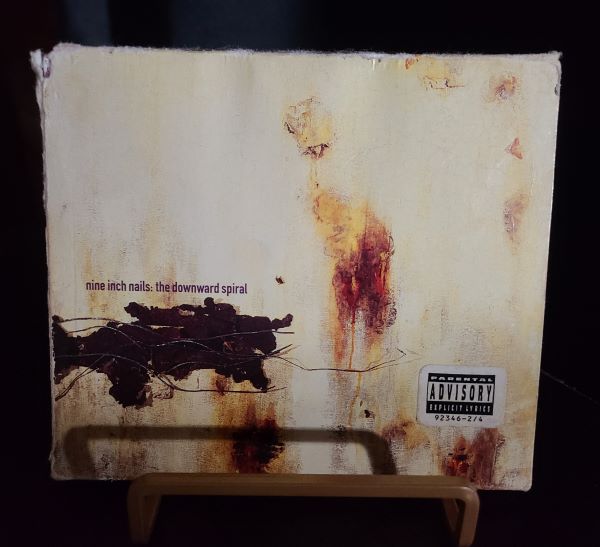
With ever rule or tendency there is an exception, of course. And my collection being a pile of stuff I’ve bought from ’08 onward does have its exception – this one CD that I bought on release day in 1994. It’s the unsellable CD – not because it’s worth anything or even for sentimental value – I love the album, but I have it on vinyl and a reissued CD edition. It’s unsellable because it’s just that – the packaging just doesn’t hold up and no one would buy it.
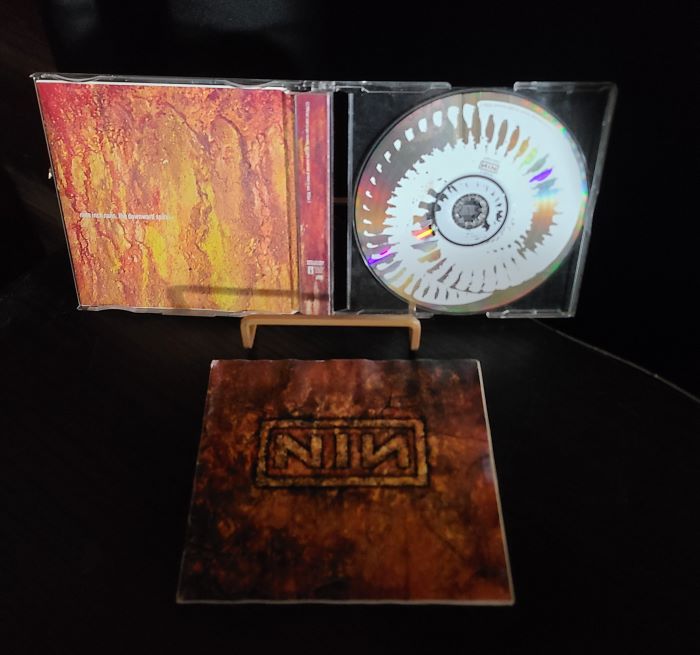
A lot of people reading now who were around back then probably already knew what album I was talking about. The CD packaging for The Downward Spiral was infamously “collector unfriendly.” It has a rickety cardboard sleeve to hold a slimline jewel case and a thick booklet. These did not hold up well at all and the packaging bombed out pretty quick on them, even if someone tried to take care of it. As I recall from a lot of collections back then, many people did not try to care for their stuff.
My copy I guess still holds up – the CD itself has small scratches but plays just fine and the whole jewel case part is in primo shape. But the outer packaging is hosed, in fact it broke apart when I dug it out for these pictures. It all looks a bit waterlogged but I can’t for the life of me figure when it got wet – I think it might just be from the famous Missouri humidity. Nothing else around it or in my collection at all has any signs of being waterlogged.
In the end I guess I do have one CD from my old collection, if only because it was such dim packaging that no one wanted to buy it. I’m kind of glad, it’s nice to have on hand even though it only serves sentimental purposes. I can’t be “that guy” who has an entire life’s worth of a collection on hand, but hey, that’s ok – I have this beat up old copy of a Nine Inch Nails album still.
Last week I covered The Downward Spiral in great detail for its 30th anniversary, that post is here.
For questions, comments or other concerns, use the comment form below or use my contact page to reach me.
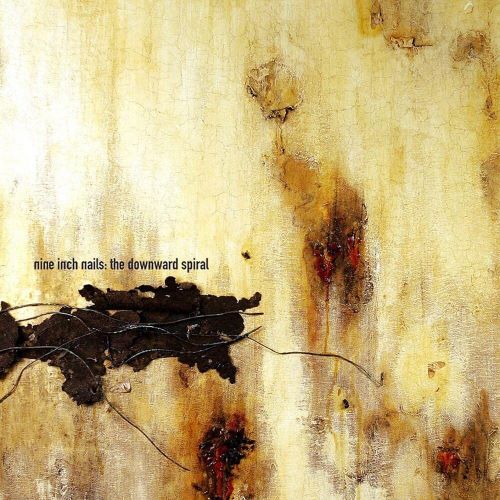
Today marks thirty years since the release of this landmark album. This one hit me like a bullet when it was released and all these years later it’s still toward the top of my favorite releases ever.
Also, be warned – this post is really damn long.
Nine Inch Nails – The Downward Spiral
Released March 8, 1994 via Nothing/Interscope Records
My Favorite Tracks – Mr. Self Destruct, Hurt, Reptile
Nine Inch Nails had arrived to a good degree of fanfare in 1989, and by 1994 the name had become household on MTV and in the now alternative music scene. The stage was set for Trent Reznor’s next move, which would prove to be career-defining.
No real need to discuss a band line-up, the recording roster for Nine Inch Nails was often Trent Reznor. Several friends and guests were brought in to help, including Mark “Flood” Ellis who would help with production. Other names that would become familiar to Nine Inch Nails were involved, including Chris Vrenna, Adrian Belew and Danny Lohner. The list of production credits is a mile long, this was the Manhattan Project in terms of recording engineering at the time.
This album also had a story in terms of where it was recorded – Reznor rented a house at 10050 Cielo Drive in Los Angeles. This was the site of infamous murder of Sharon Tate and four others in 1969. After dubbing the studio “Le Pig” and recording both Broken and this album there, Reznor felt remorse for possibly exploiting the house and vacated it, after which the house was torn down.
The meaning and themes of The Downward Spiral have long been a subject of debate and interpretation. It is clear that there is a person breaking down as the songs go along. It could be a solid theme that ties things together, or it could go as deep as being a true concept album where a specific story unfolds through the songs. It isn’t entirely clear and there are arguments both ways about it. I personally do support the “full concept” theory though I also see a few odd holes in the story. I’ll prod the meaning of these songs but I won’t be discussing the concept theory much here, I simply don’t have room. I may pick that thread up another time.
Reznor stated his primary influences for this album were Low by David Bowie and The Wall by Pink Floyd, Reznor was moved by both albums’ use of space and texture.
Today’s album has a massive 14 songs at a 65:02 runtime. An excellent 2 CD reissue offers up great bonus material, including the soundtrack song Burn and Reznor’s cover of Joy Division’s Dead Souls.
Mr. Self Destruct
The opener kicks off with a machine noise intro then launches into the harsh industrial noise that NIN had become familiar for. This song sees a dark force pushing a person into vices and ills, all in order to use the person up. A quiet interlude breaks up the mosh pit-worthy main sequence. This song is absolute gold and a great way to bridge into the new album from the equally harsh Broken EP.
Piggy
The next track is one of the album’s singles and is a slow, quiet march through a person’s breakup and the fallout from that. The song introduces the phrase “nothing can stop me now, ’cause I don’t care anymore,” which is repeated through the record. The bass anchors this song as it rolls along, then Reznor plays live drums toward the song’s end, one of the very few uses of “organic” drums on the record.
“Piggy” can have multiple interpretations here, given where the album was recorded and also the word’s use in other songs. But there is another story behind the name – Richard Patrick was in Nine Inch Nails as a guitarist from 1989 through 1993. Reznor nicknamed him Piggy, then Reznor felt resentment that Patrick was focused more on his own music than NIN. Patrick would leave the band and form his own group Filter, who had great success. Patrick has stated in interviews, such as this 2010 talk with the Sacramento Press, that Piggy is about him and Reznor’s anger with him.
Heresy
Up next is a techno-driven song with moments of distorted wailing. The angst is directed at religion, though the specifics are deeper than just ranting about church. Reznor wrote this one influenced by how Christian sects in the 1980’s and early ’90’s turned AIDS victims into scapegoats. This song is Trent’s response to the edict “there is no hate like Christian love.” Whether or not someone likes this song or not probably centers on one’s thoughts about religion. I’ve always enjoyed the track.
March Of The Pigs
This next song was also a single. Musically it is a contrast study with noisy and quiet parts, though it’s the verses that are loud and the chorus that is quiet. It is a clash between the main character and the “pigs” of society who are fake and without substance. At points Reznor is singing from the main character’s point of view and others the pigs, and the trade-offs are not easy to spot without actually reading the lyrics to see what the hell is going on.
Closer
And now on to the song that most people are likely familiar with. The song builds slowly, using mostly electronic instruments but this one remains easy to process on the surface, it’s all fitting and catchy. There is more going on under it all but this is a song that was taken purely on its surface level and became the most famous song Nine Inch Nails ever did, save perhaps for another from this album.
The song is about someone obsessing over an object of desire. The lyrics are a harsh account of the main character’s depression, lack of purpose and shallowness. But this song didn’t get famous for being psychoanalyzed to find a messed up human being’s story. No, the song got famous for being catchy and for the line “I wanna fuck you like an animal.” It was taken as a lust anthem rather than the desperate echoes of a tortured person. And that is what it will always be known for, and honestly there’s nothing wrong with that. Reznor has spoken out about the true meaning of the song and the popular reaction to it, but artists have to know that art isn’t yours anymore once it’s out in the wild.
Ruiner
Time for a bit of a rave here with some slamming techno beats. The song does call back a bit to the debut Pretty Hate Machine with its dance beats. Other parts of the song slow down and go harsh, and there’s also a bit of a guitar solo here and the old, jamming kind of solo. Reznor has said he was unsure of this song and that it was two songs mashed together. I personally think he got it right, it’s a good track.
The song deals with the “ruiner” who is likely a metaphor for someone in power. The ruiner could also be a specific person or even facet of the main character’s personality, but that’s more than what I can get into here for length reasons. Either way, here the narrator is lamenting the power that the ruiner has over him, and at the end we get the cold refrain of “nothing can stop me now” again.
The Becoming
This one sounds like a robot toy come to life and on the hunt to kill someone, pretty quirky intro. It slides into another techno-driven song with a bunch of screaming in the background. The song sees the narrator give in to what’s happening and figuratively become a machine. It’s the loss of the soul as life has been too much to bear. This is a lively descent into losing personhood.
I Do Not Want This
Kind of a mid-paced beat here that keeps quiet until a chorus where Reznor yells “You can’t tell me how I feel!” It seems here the narrator is struggling with his loss of humanity and is reaching back out for it, though he is also lashing out at everyone. The end offers up grandiose ambitions, such as “I want to know everything, I want to be everywhere, I want to fuck everyone in the world.” It is the sort of thing seen from people who truly have lost their mental center and are reaching for anything to cling to.
Big Man With A Gun
This one is a short, noisy track that is absolutely an allusion to rape and the lyrics don’t allude at all, they spell it out fairly clear. Reznor intended the song to be satire, he was calling out the other forms of music at the time that glorified rape and sexual assault. His take didn’t really come through and NIN landed in a bit of hot water with politicians, though noting ultimately came of it. Reznor said the song was originally created to be about madness and that this was another stage of the main character’s insanity. I do think this song misses its mark but I don’t think it’s that big of a deal either. It fits the album sonically and is over real quick.
A Warm Place
This one is an instrumental with one very quiet, almost unnoticeable spoken phrase at the beginning. It’s widely believed that line represents a last bit of the narrator’s humanity trying to poke through. The song itself is very pleasant, it’s a nice interlude in this descent into total madness.
Eraser
Up next is a song without a ton of words but there are a handful. The piece goes on for a few minutes of very nice music before Reznor sings a series of short blurted out lines that are likely tied to someone who has truly snapped now. The song goes out in a distorted mess as Trent screams “Kill Me!” repeatedly. Not a conventional song but one that fits this part of the story very well.
Reptile
This is one twisted track. It has very sick use of electronic beats and tells its sordid tale very well through music and words. Here the main character is admitting to being twisted by a woman, who might be the same object of desire from Closer and is also likely the Ruiner. This song is absolute magic and, given the “concept” theory, ties this whole album together. Reznor is famous for a fair few songs but this one is kind of slept on by the wider public.
The Downward Spiral
It’s another almost instrumental here. The main hook here is a guitar playing the piano outro of Closer. Here someone reaches rock bottom and commits suicide, the brief lyrics lay that out clearly. It is apparently the main character, though it doesn’t entirely jive with the story theory since, you know, there’s a whole other fucking song to go. This passage is pretty nice and twisted.
Hurt
The album closes on the other very well-known song. It is a quiet and haunting track featuring Trent’s voice, a keyboard, a bit of guitar and sparse noise to generate atmosphere. Here the narrator is reflecting on a lost life, being alone and having nothing to offer but his empire of dirt. Whatever the main character was supposed to achieve through his loss of humanity did not come to pass, and he lies here a broken shell of a person. The end does generate the smallest glimmer of hope that he will seek to regain his human self. The actual meaning of Hurt in terms of the album story is hotly debated and something I won’t get into here.
This was one of Nine Inch Nails’ signature songs, but of course that changed in 2002 when the venerable Johnny Cash, toward the end of his life, recorded a stark cover version that lit the music world on fire. Reznor admitted that the song was Cash’s after the cover was released.
The Downward Spiral would mark the crowning achievement of Nine Inch Nails’ career. The album hit at number two on Billboard and went four times platinum in the US. It has remained the centerpiece of Trent Reznor’s discography and the album’s legacy is still widely discussed now thirty years after its release. Closer remains NIN’s most well-known song and Hurt is close behind.
“Light Industrial” would become the new sound bands chased as NIN sound-alikes hit the scene in the years after this album. A few acts got a bit of mileage out of it and I won’t discount the whole scene as a rip-off, but this album was the clear reference point for the industrial-tinged rock and metal of the late ’90’s.
What this album gets right is most everything. The layers of electronic music do not alienate here, instead they build both a beat and atmosphere that allows the songs to mostly be taken in on a casual listen while also offering a lot of texture for the deeper listener to explore. It’s a masterpiece of arrangement and something that 99.99999% of musicians could never pull off. The story contained within is ugly and horrible, but told in splendid fashion and left with enough breathing room for personal interpretation. It isn’t handed out on a silver platter where everyone draws the same conclusions.
I don’t feel like the album really gets anything wrong, though Big Man With A Gun might be a miss. Maybe Reznor was a bit too opaque in his expression in a few places. That might be more of a discussion about Trent Reznor and pop culture views at the time rather than much to do with this album, though.
During and after this album’s release, NIN would tour and Reznor also went on to help launch the career of Marilyn Manson. It would take five years for another Nine Inch Nails record and Reznor has gone through various iterations in the years since. But there is no denying the legacy of The Downward Spiral, tortured though its story may be.
All the holiday stuff has me messed up and I could have sworn yesterday was Tuesday when it was Wednesday. On well, I’ll be a day late and at least a dollar short.
This week’s highlight song comes 1994 and the soundtrack to the film Natural Born Killers. Trent Reznor was the producer of that soundtrack so it’s not shocking that Nine Inch Nails wound up on the album. In fact, three NIN songs are found there, though Burn is the only one that was new. Burn was also released as a single from the soundtrack but either did not chart or chart info is not available.
Burn is also available on certain reissues of The Downward Spiral.
As for Burn’s place in the film, that is information that is a bit tough to track down. It does appear at the movie’s end in certain “director’s cut” and unrated versions of the film, but is not present in the theatrical release and many modern versions on streaming.
Burn is a song very indebted to the electronic soundscape, something Reznor had pursued a lot on his 1994 album The Downward Spiral, often hailed as his magnum opus. Burn does cut a fair bit heavier than a lot of TDS material, something of a callback to the 1992 EP Broken. There is distortion on pretty much everything in the song save vocals. Things do build somewhat quietly to an angry climax, but it is still very noisy even in that build.
Lyrically, Burn is a song of hatred and misanthropy. It is lashing out at being a reject of society and using the hurt and anger to seek revenge and burn the world down. It is extremely harsh stuff, perhaps dismissed by some as angsty nonsense, but qutie disturbing in an objective evaluation. It was the perfect song for a movie about a killer like Mickey Knox, a person who was pretty well cursed from birth and would embody the song’s lyrics in his actions through the film.
Burn got a music video, culled from scenes of Natural Born Killers that are all apparently cut from the original movie release. (no verification on that) I will post the video below but it is from an unofficial source and might not escape the wrath of YouTube AI copyright hunter bots.
Burn has been in pretty regular rotation in Nine Inch Nails live setlists – it is the band’s 14th most played song with 404 total airings, according to setlist.fm. Sadly they didn’t play it when I saw them live in 2000, but you can’t win ’em all. Its appearance on the 2007 live video release Beside You In Time is hailed as a standout of a fantastic live set.
This song did get some sideways glances in 1999 after the Columbine High School massacre. The killers were fond of Nine Inch Nails and often incorporated The Downward Spiral lyrics and references into their journals. The band took a fair bit of heat as a scapegoat for the murders and Burn was referenced a fair bit as a conduit to world decay, but in the end everyone moved on and NIN pressed on along with Burn.
In the end, Burn is a fantastic cut from the impressive Nine Inch Nails catalog. It fit the movie it was written for like a glove, and the song has gone on to be a feature in live sets even without the benefit of appearing on an album. It is “angsty crap,” but there’s something more visceral and real about this sort of angst. It is more than hollow-heading ranting at something just for fun, this is a true connection to the type of rage and anguish of being a “failed” member of society can bring.
It’s a well-told story by this point – rock music changed forever in 1991. What had been was gone and, no matter nostalgia movements, there was no going back. But the story around rock and 1991 leaves out a lot, including the huge buildup to “alternative” rock before ’91. Rock always had an alt side and several acts were already breaking the surface even before the fateful summer of grunge.
But for all the twists and turns rock and metal would take in the early 1990’s, one of the most influential artists of the era would get his start a few years sooner, in 1989.
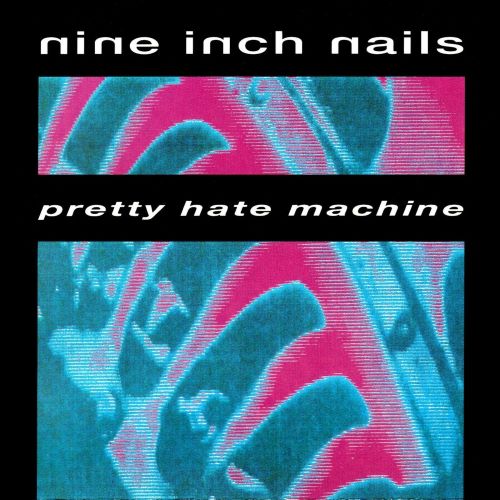
Nine Inch Nails – Pretty Hate Machine
Released October 20, 1989 via TVT Records
My Favorite Tracks – Sin, Head Like A Hole, Terrible Lie
Nine Inch Nails was the brainchild of Trent Reznor, who would be the band’s only member for the recording of the debut album. Reznor was able to record for free in a studio in Cleveland, Ohio; where he worked during the day then was allowed to do his recording at no cost.
The music here can bear multiple descriptors and still be pretty accurate. It is inudstrial, though far more rooted in conventional rock than many legacy industrial acts. It can easily be called electronic rock, though such a term doesn’t really mean much other than synthesizers and like instruments were used. And this was certainly alternative, in that it didn’t sound like much of anything else that was going on at the time. Yet, anyway.
Trent Reznor was the only musician involved in the bulk of recording Pretty Hate Machine, though others contributed spot appearances. The album was produced by a committee though, with Reznor and four others earning production credits. Among those was Flood, who had a long career in engineering and was now stepping up into production and whose future would be entwined with Nine Inch Nails’ rise.
The original issue of Pretty Hate Machine was 10 tracks at 48 minutes. A 2010 reissue includes a Queen cover and there are some other odd editions that comprise bonus tracks taken from the album’s many single releases, but today I’ll stick with the OG tracklist.
Head Like A Hole
Opening the album is the earliest NIN signature song and the album’s second single. This one comes in with synthesizer action but also sticks to a conventional rock formation, this song is probably as close as it gets to heavy metal on the first album. The verses spell out the presence of God Money, the true all holy presence that runs everything, then the chorus ramps up and lashes out, its refrain “I’d rather die than give you control” being a very recognizable shout from over 30 years prior.
Head Like A Hole has remained a NIN staple since release and is the band’s most played live song. Note that the music video features a remix of the song, though it is not radically different from the album cut.
Terrible Lie
It’s on to another NIN staple cut, this one wasn’t a single but has been in wide circulation anyway. This one keeps a slower pace but does still hit pretty hard. It’s one that sounds mostly more conventional though it still features plenty of synth and electronic programming. This one sees Reznor questioning god and religion, something he would not stop with here. Though this one is far less blasphemous and pointed than subsequent forays on the topic would be. This one is more about the disconnect between promise and reality, and the desire to cling to the fantasy.
Down In It
Up next is another album single and also the first song Reznor wrote for NIN. This one sees Trent showing off some rap skills and also goes very hard on the electronic side of things. Reznor has said that the song is a complete rip-off of Dig It, a 1986 track from influential act Skinny Puppy. And yeah he’s right about that.
The song is about what a lot of this album is, which is late teenage heartbreak and angst. It was based on an early relationship of Reznor’s and while the song is general enough to apply to a lot of things, the relationship angle is an obvious one. Also, the end of the song literally uses the “Rain, Rain Go Away” nursery rhyme for whatever reason. Kind of funny.
There is a funny story about how the FBI became involved with lost footage from the music video, but the story is lengthy so I’ll save it for another time. It’s widely available on Wikipedia and elsewhere for the super curious.
Sanctified
Here is a more atmospheric track that employs the electric elements to great effect. It couples the idea of relationships with the holy elements of purification, as though one is ascending or cleansing through the act of being with someone. Reznor has mentioned that the “relationship” might actually be one with drugs, though the song works quite well in the more conventional context of relationships.
Something I Can Never Have
A more quite ballad, and one that’s very forlorn. This revolves around love and loss, the unobtainable and the loss of what was. Reznor would showcase a special talent for this quiet electronic ballad style over the years, of course the culmination of that is a tale for later. This song got used for the soundtrack to Natural Born Killers, which Reznor produced.
Kinda I Want To
“Nine Inch Nails” and “fun” aren’t often words used in the same sentence but here on the debut we have a bit of it. It’s more upbeat, though still a bit twisted. I know nothing about dancing but I’m sure people could dance to this. This song centers around being tempted by something and the struggle around it, though honestly it sounds like the decision to go for it is already made. There’s no telling what the actual temptation is here – sex, drugs, slot machines, take your pick.
Sin
Up next is the album’s third single and my favorite from the record. Sin is, in its original form, a bit of a dance-pop tune, though with a theme and lyrics with a much darker bent. This song was remixed extensively, several versions exist and it’s done in a different style live, with less “fun” synth and more dark tones.
Sin is about what you would think a song named Sin is about on a NIN album. It does specifically deal with what sounds like an inadequate person in a relationship who’s caught in a power dynamic and is just fodder for their partner.
There is a music video for Sin, but it features a lot of sin and isn’t around on the usual video services. It’s around in other places for the sinfully curious.
That’s What I Get
This song turns down the intensity for awhile. It opens with a very weird yet compelling noise accent, then gets very quiet through the verses as Trent laments being cheated on. The song’s second half picks it up a bit but it’s still fairly minimal.
The Only Time
As the album winds down here’s another one that’s a bit minimal but is a fair bit louder than the track prior. This one is also kind of “fun” and deals yet again with being tempted by someone and all the feelings that go along with that for a young, naive person.
Ringfinger
The closer is a bit of an electro jam, with a fair bit of synth going on that’s more of the musical main event than an accent. Lyrically this tackles the “bliss” of marriage, as the title would indicate. There’s a small section with a very twisted electronic riff that would become a NIN staple going forward.
Pretty Hate Machine was a solid debut that would kick-start the legend of Nine Inch Nails. The album would chart very modestly on Billboard at 75, though word of mouth spread news of this new act around and the band caught fire. The album would eventually be certified triple platinum. Reznor would form a band for touring, the early live incarnation of NIN included Robert Patrick, who would go on to start Filter a few years later and land some hits of his own.
The word on Nine Inch Nails spread fairly quickly, by 1992 they were a fixture on MTV and elsewhere. It was also a pretty diverse crowd checking them out – the goth kids, industrial and synth-pop fans, metalheads and rockers, and hip-hop fans all came along for the ride. Axl Rose was one very famous early NIN adopter and he would take the group on a Guns N’ Roses European tour.
By the time 1995 rolled around Nine Inch Nails was one of music’s most unique and awe-inspiring acts, and the use of electronic/industrial music would seep its way into heavy rock for the rest of the decade. While it’s easy to pick on the emotionally immature themes of Pretty Hate Machine, something everyone including Trent Reznor does, the album still resonates with fans to this day and several songs are auto-includes on a setlist that now has a ton of material to pull from.
Sure, it was grunge in 1991 that symbolically changed music forever, but Trent Reznor had his own hand in shaping the future with his unexpected debut in 1989. Things would not be the same and Nine Inch Nails were a huge part of the new machine.
Gonna turn back the clock to the year 2000 and talk about a much-anticipated show I took in. The gig was Nine Inch Nails with A Perfect Circle opening and it took place at the end of May in St. Louis. It was a gig with some marquee names and – well, something of a crowd, anyway.
No massive build-up for this one, it was pretty simple – NIN booked the gig, we got tickets and went. The show was at what was then called the Riverport Amphitheater outside St. Louis. If that name sounds vaguely familiar, it’s because it was the scene of the infamous Guns N’ Roses riot in 1991. (As opposed to the 1992 riot in Montreal, which was indoors). We had pretty decent seats that were under the awning, which extended a bit past the stage. The bill was simple – APC first, then NIN. No other openers or anything that I recall, and online archives seem to back me up.
A Perfect Circle were just getting started in 2000. Their debut Mer De Noms had just released a few days prior to the show, while the lead single Judith was getting a lot of play on the airwaves. The band was formed by Tool mainman Maynard James Keenan and his friend, guitar tech wizard Billy Howerdel. The album and touring cycle would prove immensely successful for the group and defined the band on their own terms as opposed to being Maynard’s side project.
APC would air a 40 minute set out in their opening slot. Given the compact nature of their songs this gave them time to play all but one song from Mer De Noms. Maynard opted to sing the gig front and center as opposed to his usual antics he gets up to in Tool, though I don’t recall any stage banter from him. The band played well and ran through the album, though not in album order. Future singles The Hollow and 3 Libras saw time and they wrapped their set up with the hit Judith.
One of the few clips I could find as opposed to full shows. This show is from a date after the NIN tour but still in 2000.
During their set a bit of rain fell from the sky. Our seats were a bit under the amphitheater roof but still close enough to the edge to get wet. It wasn’t a downpour or anything and it only lasted a moment but I did take a mental note to get seats closer if I wanted to avoid being caught in anything. The weather wouldn’t be a factor at future gigs there (rain-wise, anyway).
After the stage changeover it was time for the main event. Nine Inch Nails were touring the US on their 1999 double album The Fragile. While the album was lengthy it had gone over pretty well with the fanbase so the tour served as a showcase of that album as opposed to being a hits set with just a few newer tunes sprinkled in. The 19-song set would feature 3 tracks from the debut Pretty Hate Machine, 3 from the seminal Broken EP, 4 from the magnum opus The Downward Spiral and the remaining 9 all from The Fragile.
Trent and company made their way through their romp without much fuss. Much like Maynard and APC, there was not a ton of inbetween-song banter to be had from Trent Reznor. He did comment “fuck you pigs” at one point, without elaborating on who exactly he was referencing. He might have belched out another thing or two but it was pretty much get one song done and get on with another. Of course, one doesn’t go to a show that Trent Reznor and Maynard James Keenan are fronting for stage banter. Sammy Hagar was around a few months later, if memory serves.
One of The Fragile’s best songs with bad video but great audio from the same tour
I will say one thing – the crowd was very much not about energy that night. I mean, I suppose we can consider Nine Inch Nails a more ponderous experience than a straight up rock n’ roll band, but there just wasn’t a lot of life in the crowd. I thought it was a bit lame but honestly it didn’t detract from my enjoyment of the set. It would mark the start of generally lame Missouri concert crowds I would notice in the future, though (with some exceptions).
There was a bit of energy in the crowd at one point – in the aisle not far from our seats, a few people got into a fight at one point. I have no clue what they were into fisticuffs about since I was, like, listening to Nine Inch Nails, but they had it out over something. The fight didn’t last long – security came out and absolutely messed these two up. One of the combatants got thrown straight into the concrete. Remember, this is the very place that Axl Rose tore to the ground nine years earlier and the birth of pre-9/11 big concert security. The fight got broken up in far more brutal fashion than the fight itself went.
Undaunted by action they probably didn’t see, Nine Inch Nails pressed on with their visit through The Fragile and other works. They played a handful of other hits, stuff like Sin, Wish, Gave Up and Terrible Lie were all welcome inclusions. They wrapped up the set proper with obvious hits Closer and Head Like A Hole, before coming back for an encore that featured a few Fragile tunes as well as the finale Hurt. We were still a few years away from Johnny Cash working his magic with that song.
I was a bit stumped that they did not include The Fragile single We’re In This Together Now, but it was not to be found that night. And while it wasn’t a breaker for me, I would’ve loved to hear Last and Burn, though I think the former wasn’t played much live until several years on from this show.
Overall the concert was a good experience. It does mark my first and, to date, only time seeing either band. I would like to see them again, especially Nine Inch Nails, but we will see what time and circumstances have on hand. Both bands did great in the house that Axl Rose tried to unbuild.
One other note – at one time I had the Nine Inch Nails performance on burned CDs. This was back in the wilderness days of eBay and they let people get away with selling bootlegs. I didn’t pay much for it, less than $10. It was a cool memento to have but sadly I lost the discs before the age of digital ripping really caught on and I don’t have access to the set anymore.
America is reborn in 2022. A series of attacks and disasters have led to a global rebranding. Previous civil liberties have been suspended in the interest of survival. The Bureau of Morality ensures citizens are in lockstep with the current message and agenda. The government is now a Christian theocracy in partnership with the First Evangelical Church of Plano. Water supplies have been treated with a drug to ensure immunity to biological agents as well as complicity with the new order.
Welcome to Year Zero.
Nine Inch Nails – Year Zero
Released April 17, 2007 via Interscope Records
My Favorite Tracks – My Violent Heart, Capital G, The Beginning Of The End
The introduction is a dystopian fantasy, of course. This work of fiction, composed in 2006 and released in early 2007, is simply the figment of Trent Reznor’s imagination. Thankfully the world we enter in 2022, the fabled “year zero” of this album, looks nothing like the hellscape depicted on the record. (…)
Year Zero was released into the world in spurts with a viral campaign to distribute digital music files on USB drives in random locations. While fans ate up the media, the Recording Industry Association of America did not and began issuing cease and desist orders to people who were uploading the songs. They did this even while noting that the record label Interscope was on board with Reznor’s ideas and fully promoted the effort.
The album promotion did not stop with this viral distribution. An entire subsection of the Nine Inch Nails website was dedicated to lore about the story behind the new album, and a phone number on an album insert featured a faux message from the Bureau of Morality. A web-based “detective” game would also see release over a few months that provided a great deal of storyline for the events of 2022/Year Zero.
The lore and message of Year Zero can be (and has been) studied extensively. At the end of the day though, this is a recorded album of music and is also deserving of evaluation on those merits.
The album remains in the general realm of industrial rock that Nine Inch Nails had made a pioneering career of. This record would depart from its more accessible predecessor With Teeth by incorporating more electronic and what has been termed “digital hardcore” elements. Even for an unconventional act like Nine Inch Nails, the songs stand apart from others in the catalog.
Though the record features 16 tracks, the runtime is kept just over an hour and only one song breaks the 5-minute mark. The songs are lean and get to the point, even when invoking atmosphere and instrumental exposition rather than communicating a direct lyrical message. It’s a strange balance of concise music and extended passages that somehow work to elevate the work well above standard fare.
While some songs provide atmosphere, others stand out as highlight tracks. The Beginning Of The End, Survivalism, and Capital G all invoke their own individual meanings outside the context of Year Zero’s themes. The latter two especially stand out as real-world influences on this dystopian nightmare. It isn’t hard to make the links between 2007 political discourse and these tracks, and especially today both are ever-present themes in how things have wound up.
As a musical document, Year Zero is a standout effort from Nine Inch Nails. Electronic soundscapes give shape to these disturbing themes of fascist government control and the resistance fighting it. The album requires a degree of attention above and beyond casual music enjoyment, but this has long been the case with Nine Inch Nails. It is, in my canon, one of the band’s best records.
It is a bit challenging to access the themes and lore provided in supplemental material through these songs but the overarching story is still present. Songs like Survivalism and Capital G highlight the base greed and selfishness that brought about this grotesque future, while The Good Soldier and My Violent Heart question the status quo and establish a resistance. Something cataclysmic happens toward the end in the album’s final tracks In This Twilight and Zero-Sum. Whatever happened to this timeline, it was not a happy ending.
While this record is turning 15 this year, there is still a trove of information about the story behind Year Zero. The nin.wiki compiles a great deal of info taken from pre-release materials as well as the web game. Though incomplete, it appears that America and the world resets on 2022 to start a new age. Year Zero does not last very long as a mysterious Presence, thought to have been a drug-induced hallucination, appears over Washington DC and heralds the apparent end of the world. The album and supplemental products tell a tale of the heavy-handed government and the various resistance factions that pop up. One group attempts to send data back in time to warn people in 2007 of the coming problems. This message is symbolized by the instrumental Another Version Of The Truth.
Of course reality is not in line with the nightmare portrayed on Year Zero. But how far away really is it? We have not adopted a theocratic government in America, though many are still trying to make that happen. It might be year zero here, but there certainly is a downward spiral that doesn’t seem to be reversing itself.
I don’t have real answers to those kind of questions. I have little to no role to play in whatever might be unfolding, here in the US and in the world at large. While I don’t really expect a pair of ghostly hands to appear over the White House and end the world next month, I can’t act like I don’t see frightening real-world prospects that parallel the themes of Year Zero. The course of the world isn’t looking great, with pandemics, disasters and bitter arguments over how to handle it instead of any real action.
Year Zero the album is a landmark release from Nine Inch Nails. Its inventive viral distribution techniques captured the attention of many and the music behind the campaign went on to be considered among the group’s best by many. Year Zero the concept, however, is a much different issue that seems to be scarily playing out in front of us in some form or another.

 The Crooked Wanderer