My tribute week (and a half) to Ozzy Osbourne wraps up with this post. Today I’ll discuss one of Black Sabbath’s most significant songs, perhaps their most profound and noted work.
In 1970 Black Sabbath released two albums – their self-titled debut, and the breakout hit record Paranoid. The latter has a whole story behind its name which directly relates to today’s song, so of course we’ll get into it.
Sabbath originally had the framework for a song they were going to call Walpurgis, which is some kind of pagan or witch’s sabbath. The record label was not cool with the name so they changed the song’s name to War Pigs. The band’s intent was also to name the album the same thing, so they devised a cover photo with someone dressed (loosely) as a pig, with a sword to indicate war-inclined thoughts, I guess.
The record label again intervened, this time because a quickly-recorded single from the record had gained a ton of traction and the label wanted the album named after that song. The record was rechristened Paranoid, but the band were stuck with the odd sword guy on the cover because there wasn’t enough time for a different concept.
Everything worked out in the end – Paranoid the album became the band’s breakthrough hit and also their signature record. Paranoid the song was the band’s biggest hit single, and War Pigs became a foundational track of heavy metal on its own.
The song opens with a plodding duel between Geezer Butler’s bass and Tony Iommi’s guitar, with Geezer anchoring the proceedings. Air raid sirens come in to generate the war atmosphere being discussed here. It’s a very effective intro for setting the tone.
The song delivers three verses without any sort of chorus or deviation. These feature short bursts of Bill Ward’s drumming with Iommi and Butler going on their own paths while Ozzy offers up the dark lyrics conflating warmongering politicians with evil and Satan. Each verse is broken up by jam-style pounding, fitting since the song was conceived out of jams the band used to do to fill time in sets in their early days.
The coupling of war-motivated politicians and evil was the original goal of lyricist Geezer Butler. Anti-war sentiment was huge around this time, as the US had mistakenly involved itself in Vietnam while UK residents were fearful of being dragged into it. Sabbath members have offered up differing opinions of just how much Vietnam played in the song’s conception – Butler considered it a central point, while Osbourne felt this was more just a general anti-war song. But there’s no denying War Pigs has a connection to the Vietnam era.
War Pigs caught fire with the crowds around the world also concerned about warmongering and became an immortal hit despite not being released as a single. The song has gone on to be one of the most covered tracks in history, both within heavy metal and beyond. It is often cited near the top of countless best of Black Sabbath lists as well as heavy metal and rock offerings. The song did not chart originally due to not being a single, but Black Sabbath’s final tour in the 2010’s did see War Pigs dance around the UK charts, and it again showed up after Ozzy’s death a few weeks ago.
War Pigs is one of heavy metal’s greatest treasures. The song has withstood the shift of time and generations to become immortalized in the collective conscious, both as an anti-war protest and as a heavy metal masterpiece. It is a true crown jewel in the legacy of heavy metal’s most iconic band, Black Sabbath.
This post concludes my Ozzy Osbourne tribute. There will be more Ozzy posts in the future, of course, but next week I will get up to some other stuff. There are a few unusual posts next Monday and Wednesday, one a commemoration and the other a hilarious story I was just made aware of last week. ‘Till then.
For this week I’ll continue discussing Ozzy Osbourne, honoring the legend who passed away July 22nd. Today I’ll get into the album he did to introduce the world to his new guitarist and to bow out of the 1980’s.
Ozzy Osbourne – No Rest For The Wicked
Released October 24, 1988 via Epic Records
Ozzy was still holding serve in the late ’80’s, with albums still going double platinum and certainly maintaining his reputation as the Prince of Darkness. While hair metal ruled the day, Ozzy was holding a winning hand with a heavier brand of rock and metal.
Where Ozzy did have to retool was in his band lineup. Randy Castillo returned on drums, but everyone else besides Ozzy was either a new or returning hand. Bob Daisley once again came around to play bass. John Sinclair also signed up to play keyboards. The album was produced by Roy Thomas Baker, whose studio credits are roughly five miles long.
Most significantly, Ozzy had a new axe slinger. Moving on from Jake E. Lee, Ozzy gambled on a young New Jersey player who had sent in an audition tape. Zakk Wylde would get the gig and become Ozzy’s most enduring guitarist after all was said and done.
Today’s album is a standard affair with 9 songs at 43:08. The album’s last song, Hero, was originally unlisted but is now labeled on subsequent reissues and streaming services. The album has been reissued with a couple of bonus tracks.
Miracle Man
We open hot out of the gate with an absolute shredder and the album’s lead single. Zakk Wylde introduces himself and his tone pretty quick and provides the drive behind this headbanging track. Here Ozzy is having a go at a nemesis who had plagued him for years – the televangelist Jimmy Swaggert, who by this time had fallen into scandal. Swaggert’s resulting fall from grace was like serving up a meatball pitch to Ozzy, who hit the home run and sent it out of the stadium. Ozzy would also get the ultimate last laugh – living 22 days after Swaggert passed away on July 1, 2025. Grade: A+
Devil’s Daughter
The shredfest continues as this time Ozzy does holy battle with the devil’s daughter. I’m not sure who the devil’s daughter was, but I’m sure she was a formidable foe. We get a creepy interlude with babies crying and keyboards before Zakk rips up the solo on this one, pretty cool song. Grade: A
Crazy Babies
Up next was the second of two singles. This one gets a lot of divided opinions – some feel the song is awful, others enjoy it as a nice piece of hot rock. I’m in the second camp, I think this song is really good. The lyrical fare is also a topic of debate – some think it’s about babies born into crack addiction, others think it’s an ode to Ozzy’s wild and crazy fanbase. I’m again in the second camp, though like anyone else I have no damn idea what it’s really about. But I enjoy it nonetheless. Grade: A
Breakin’ All The Rules
We have one here that sounds like it could have come from the prior album, The Ultimate Sin. It is still suitably heavy and hard and keeps the album moving along. Ozzy is taking on some unnamed adversary by doing just what the title says. Nothing diverges from the path here, another really good track. Grade: A-
Bloodbath In Paradise
If things were a little too “pretty” for some, this one should spice things up nicely. This is a creepy track about the infamous Tate-LaBianca murders. Everything is going at 11 here and this song is just splendid. Grade: A+
Fire In The Sky
A more atmospheric but still quite heavy track here that tackles someone who got along in life with a lot of deep-seated problems and now those issues are finally creeping out for all to see. This might be a bit introspective for something from the Prince of Darkness but the song still works well. Grade: B+
Tattooed Dancer
No introspection here – this is a wild and crazy song that flies off the seat of its pants. The title outlines exactly what the song is about. I’m sure we could dive deep and explore how “bad” the lyrics are in today’s socio-political contexts, but I have better shit to do. Grade: B+
Demon Alcohol
This one is really interesting, as Ozzy embodies the dark spirit of the literal spirits that often consumed him. He would continue to have his struggles over the years, but the song is a pretty cool look at the grip of addiction. And, in keeping with the rest of the album, quite white hot and rocking. Grade: A-
Hero
This song was originally unlisted, I’ve never come across the reasons why. It is shiner and brighter perhaps than the rest of the album but it’s not a massive departure either. It is also warm and sentimental, which is a bit of a departure for the record but not anything out of bounds when truly examining Ozzy Osbourne. It was a nice little bonus for those of us who played the album the first time without knowing it was there. Grade: B+
No Rest For The Wicked was another explosive round in the arsenal of Ozzy Osbourne. The album hit number 13 on the Billboard 200 and had several European chart placements. It is certified double platinum in the US and platinum in Canada.
Ozzy and company would tour behind the effort, though with one lineup change – Bob Daisley was out after recording, and Geezer Butler famously rejoined his old Sabbath bandmate for the shows.
This one is extremely easy to assess – I like everything here and enjoy the album from front to back. It’s not of the same “weight” as earlier Ozzy recordings, but honestly nothing is and it’s a fool’s errand to grade a person’s work against their most significant. The final verdict here is really simple.
Album Grade: A
Ozzy continued his decade of destruction with No Rest For The Wicked, and the start of the next decade would only bring greater success for the Prince of Darkness. He was now armed with a trusty guitarist who would stick around for a bit and things were still coming up aces. Ozzy would have one of his darkest personal moments in the year after this album’s release, but eventually he was able to rehab back into reality and continue adding to the legacy that we still celebrate today.
For the next week I’ll run several posts as a tribute to the late, great Ozzy Osbourne. I will continue covering Ozzy-related stuff next week, but I’m doing this all off the cuff so I don’t know exactly what form everything will take. You’ll find out just after I do!
Today I’ll get into the song that became Ozzy’s most successful single. We all know that Crazy Train is ubiquitous with Ozzy and is his most-recognized track, but it was Mama, I’m Coming Home that took the highest chart position of Ozzy’s solo career.
This well-known and loved ballad came to form on the 1991 album No More Tears. The album is often cited as one of Ozzy’s best, he and his music partners did a marvelous job of retooling for the 1990’s and offering up an album that was heavy and real. The songs were MTV and radio staples, and are still in rotation over 30 years later.
The song was composed by Ozzy and Zakk Wylde. The lyrics were written by Lemmy Kilminster, one of four lyrical contributions he made to No More Tears. Lemmy stated many times that he made more money from Mama, I’m Coming Home than he did from his career in Motörhead.
This ballad granted Ozzy his only solo Billboard Top 40 single, it peaked at number 28. His only other entries higher on the singles charts were collaborations with Lita Ford and Post Malone. The single also hit number 2 on the Mainstream Rock chart and was certified platinum in Canada.
Today’s song is a ballad, but one with a lot of power behind it. The song begins with some clean picking from Zakk Wylde and Ozzy ruminating through the first verse before the full band kicks in and delivers a fair bit of heft for what is considered such a tender ballad. Ozzy sings very powerfully here and the chorus soars along with the keyboard enhancements.
Lyrically this is a pretty dense and tough affair. The song is Ozzy’s lament to Sharon, who put up with a lot of Ozzy’s shit. The years just before No More Tears had some especially bad moments, but Sharon stuck with her husband through it all. The years following this song and album would be much better for the couple, both personally and professionally.
Mama, I’m Coming Home had two videos filmed for it. The first one was weird and Ozzy did not like it at all, so they went back and filmed the far more familiar second cut. The original is also really, really hard to find – my digging has not turned up a version that I could post here, so I won’t bother.
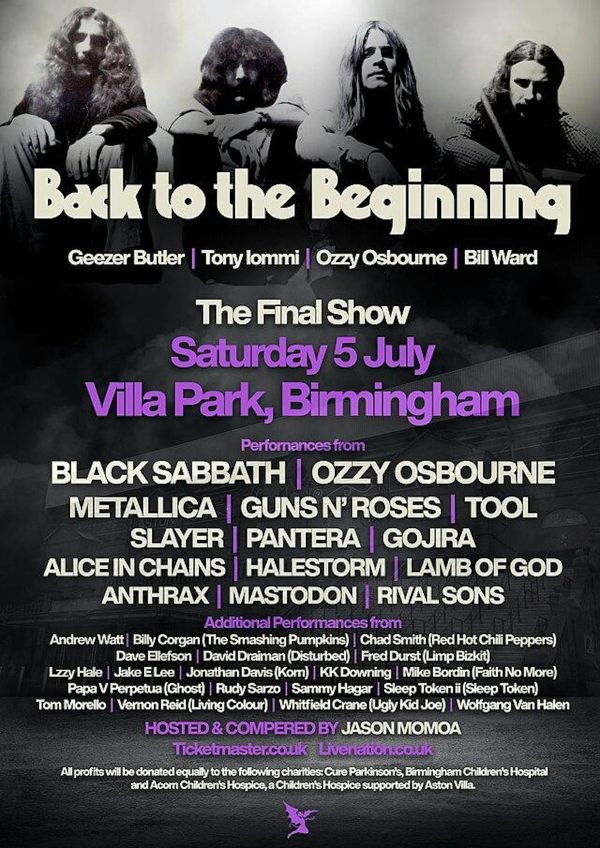
This song took a special place at Ozzy’s final show on July 5th in Birmingham. The Back To Beginning concert featured a slew of acts inspired by Ozzy and Black Sabbath, as well as brief sets from Ozzy’s solo outfit and Sabbath. Mama, I’m Coming Home was the only song played in Ozzy’s five song set that was not from the Blizzard Of Ozz album. The song’s performance was very emotional for many and clips of the performance have been among the show’s most-viewed highlights.
And of course now the song takes on a whole new meaning, as on July 22nd Ozzy truly did go home for the final time. While we are left without the powerful voice and simple charm of Ozzy Osbourne, his legacy is immortal and is etched in his songs, perhaps none more fitting of the end of the line than this sweet and somber ballad.
Yesterday came the news we knew was coming someday but came much quicker than any of us anticipated. Ozzy Osbourne died at 76 years old after a five-decade long career as the singer of Black Sabbath and ringleader of his own highly successful solo career.
Ozzy had been dealing with a slew of health problems the past several years which deteriorated his quality of life. He had Parkinson’s disease, had injuries sustained in a fall in his home as well as old injuries from an ATV accident.
He had just recently performed his final concert, the massive Back To The Beginning event in his hometown of Birmingham, England, which wound up being biggest money raiser of any charity concert ever. While his mobility was severely impacted, he was able to pull through a short solo set as well as a Black Sabbath stint.
We all knew Ozzy was in rough shape and that we would be writing posts and tributes like this, but it does seem very sudden just a few weeks after he triumphantly bowed down from the live stage. I assumed he would live a comfortable retirement, or as comfortable as possible given his health issues. But this grand, sad day is upon us and now we are left to mourn the legend of rock and metal’s godfather.
Ozzy was one of the most significant figures in music, especially in the realm of metal. From Black Sabbath to his solo career, to his massive and at times monstrous reputation, and to his kinship with many of rock and metal’s iconic figures, Ozzy has loomed large over this scene since the beginning. He drew legions of fans across several generations and his influence on this scene will be felt for time eternal.
Like many I have been massively entertained over the years by Ozzy’s music as well as his crazy and charming personality. It is difficult to truly put it into words now that I have to think about it in terms of his death, but I am one of many who are in this game to any degree largely due to Ozzy Osbourne.
I think Ozzy deserves an extended tribute, and to make that happen I will preempt my planned content for the rest of July to honor the fallen Prince Of Darkness. I’ll cover some of his songs, albums and also try to offer up a more focused post that discusses his impact to me. This will all be on the fly but it’s not like any of us had anything in the can for this dark day.
I will do those posts over the next several days and I’m sure the world will overflow with tributes to Ozzy, that seems to already be happening. Until then, I raise a glass to Ozzy and thank him for everything he brought to us over all these years, and condolences to his family, friends, bandmates and fans worldwide. We have lost a legend among legends.
This was supposed to be last Friday’s post. Go figure that a holiday and an extra day off would cause me to miss a post. But I digress.
Here we are. This is my weekly series where I pick five of my favorite songs from a given year. This time around, that given year is 1991.
It’s safe to say that 1991 is the most important music year of my life. I have all the love in the world for 1984, as I put on display a lot of last year. But nothing was as earth shattering and life altering as everything that happened in 1991.
It wasn’t just everything that happened in music, either – I turned 14 and started my freshman year of high school in 1991. In fact, my birthday was about a week after Metallica released their megalithic self-titled album. Everything was changing fast and I honestly wasn’t even on top of it all – both in life and in music. It would all come together eventually (in music, not in life…)
But today’s exercise is pretty simple – I will select five of my favorite songs from the year. Five is barely a drop in the bucket in terms of the music of 1991, but I’m going to keep this series on the rails and just handle it like any other year. If/when this site gets to 2031 I will dedicate the bulk of that year’s posts to reminiscing about 1991, and probably in a big blowout way that dwarfs even what I did for 1984. Something to look forward to in 5.5 years, I guess.
Sepultura – Dead Embryonic Cells
We kick off with this slice of obliteration from the album Arise, often regarded as the Brazilians’ magnum opus. It is equal parts thrash precision and a savage beating, with Sepultura crafting a sound that would serve as a bridge into extreme metal. The song is about being born in a world that is essentially dead and the brutality of the music captures the sentiment perfectly.
Skid Row – Wasted Time
The closing track from the seminal Slave To The Grind album is a ballad by which the bulk of other ballads can be judged. This haunting tale captures someone in the throes of drug addiction, the song was written about former Guns N’ Roses drummer Steven Adler. Sebastian Bach’s vocals soar here and everything comes together for a song that is simply beautiful.
Ozzy Osbourne – No More Tears
The tides of music were shifting in grand fashion in 1991, but the Prince of Darkness could still be counted on to deliver a worthy tune. Ozzy had a bit of a renaissance year in ’91 with the No More Tears album being a huge hit and this title track becoming one of his several signature tracks. This song is the twisted tale of a serial killer, but not told in open terms. Still it’s ominous and creepy.
Mötley Crüe – Primal Scream
Hair metal was being cast out by the second half of 1991, but no one gave Crüe the memo. They put out a greatest hits set with a handful of new songs on it, and this new track was electric. This was heavy, gritty and pounding, seeing the band move up a weight class in the heavy department. It foretold a massive new decade for Crüe, which did not pan out at all, but this kick ass song was a welcome drop in the minefield of ’91.
Carcass – Corporal Jigsore Quandary
By ’91 Carcass were on their third album and had shifted their sound from grindcore to death metal. This prime cut saw the band incorporate a bit of technicality into a very smooth death metal vehicle. And while the title and lyrics are overly wrought, as usual for earlier Carcass, the song is essentially about someone putting a human body back together. It is likely that the person doing the re-assembly is the same person responsible for the body’s dismembered state.
And that does it for five songs from the crazy year of 1991. I had originally thought picking a further five songs as I did for 1984, but in the end I decided against it as I want my focus to be on pushing on with the series.
Next week – I was originally going to restart album posts, but last week’s historic gigs have given us a handful of songs to go over so I will spend a few posts looking at stuff from both the final Ozzy show and the Oasis reunion instead. And I’ll press on with this, jumping in to 1992 where rock and metal were off to the races in many different directions.
Last Saturday on July 5th, Ozzy Osbourne hosted a special event in his hometown of Birmingham, England. This concert, dubbed “Back To The Beginning,” was a huge, star-studded affair that marks Ozzy’s final live performance.
This massive show was staged at Villa Park, the home of Aston Villa Football Club. Given attendance was 40,000. The event was also streamed, though it was a two-hour delay. This stream was how I took the show in. The event raised a considerable amount of money for a handful of Birmingham area charities.
There was a lot of buzz going in to the event – many wondered if Ozzy would be able to perform at all. The answer was a resounding yes. The concert’s somewhat unusual itinerary was also a source of concern – most bands were getting very short 15 minute sets with a bit more time afforded to a few marquee acts at the end. Many wondered how the show was going to go off with all the logistics involved, but a rotating stage and other accommodations made it run like clockwork.
A final source of controversy revolved around an act that Sharon Osbourne said was thrown off the show. This is a whole story unto its own so I won’t get into it here as it’s not relevant to the show itself. As of my writing in the afternoon of Sunday, July 6th, we do not yet know the identity of the jettisoned act. Sharon is supposed to reveal this information at some point soon.
Tom Morello of Rage Against The Machine fame was the musical director for the event. The show also had a host – you could be forgiven if you thought you were supposed to acknowledge your tribal chief Roman Reigns as the host, but no that was his clone, actor Jason Momoa.
This massive concert lasted ten hours so it was a hell of a time commitment. For me I had to miss the first portion of the stream as I had stuff to do around the house, like mowing the lawn in 85 degree hell heat. I picked up on the first all-star jam and watched through to Metallica’s first song, when I had to split because I was due at the theater for a showing of This Is Spinal Tap. Thankfully there was a few days of replay time for the stream so I was able to catch everything I missed, especially the main event of Ozzy and Black Sabbath.
I won’t run down the entire show as that would just be wasting words for the sake of it. I thought all of the bands did fantastic. For such a huge logistical challenge, most everyone sounded fine and the few hiccups there were weren’t glaring or show-ruining.
The time between the brief set changes was filled with video clips of fans as well as some tributes from musicians. Those included Dolly Parton, Def Leppard, AC/DC, Elton John as well as Judas Priest, who were unable to play the show due to already being booked for the Scorpions’ 60th anniversary concert the same night. Jack Black and Fred Durst each sent in pre-recorded performances of Mr. Crowley and Changes, respectively.
For a complete rundown of who performed what, the Wikipedia article on the show is honestly the most concise and easiest to read of the lists out there.
Both of the all-star jams were of special interest. The first one was especially cool as Jake E. Lee took the stage after not having contact with Ozzy in decades and just eight months after being shot multiple times in a botched robbery attempt. It was also nice to hear two songs from The Ultimate Sin album, a record that Sharon especially has run down over the years. Lzzy Hale did a fantastic job singing the title track from that album, it was one of the highlight performances of the show. Later in that same set, Whitfield Crane of Ugly Kid Joe came out and did a stellar rendition of Ozzy’s Believer. And the first all-star set concluded with a somewhat unlikely figure, as Yungblud performed Changes in one of the most talked-about and pleasantly surprising moments of the show.
The second all-star jam opened with Billy Corgan, K.K. Downing and others offering up a Judas Priest song, then having at Sabbath’s Snowblind. Sammy Hagar then came out with Vernon Reid of Living Colour for Flying High Again and Montrose’s classic Rock Candy. Following a rendition of Bark At The Moon from Ghost’s singer Tobias Forge (I don’t know what he’s calling himself these days), we got what was, at least to me, a surprise guest as Steven Tyler took the stage. Tyler sounded great and while his guest shot was only three songs, it does give hope that he might be able to pilot Aerosmith through their own farewell show of some sort.
After several hours of bands and all-star jams, it was finally time for the show’s reason for being. There wasn’t a ton of build-up or anything – after the set change, Ozzy was on hand for his solo set. Ozzy came out from the stage floor in a huge throne from which he’d perform. He is left unable to walk after Parkinson’s disease and spinal injuries. His band included a cast of his former associates, including Zakk Wylde, Mike Inez, Tommy Clufetos and Adam Wakeman.
Ozzy’s set comprised five of his classic songs – I Don’t Know, Mr. Crowley, Suicide Solution, Mama I’m Coming Home and the ubiquitous Crazy Train. Everything went off without a hitch and Ozzy sounded really good despite his physical condition. While the affects of age and debilitation are there, he still sounded strong.
And Ozzy was ever the showman – as he has always done, he implored the crowd to get into it by yelling, showing their hands and the like. The Prince of Darkness is clearly able to still command an audience. The power and energy of an Ozzy Osbourne performance was present and accounted for, any concerns about his ability to make it through the set vanished as he ruled over his domain.
After the solo set there was one more set change, and it was time for the final event – Black Sabbath, with all four original members present. While Black Sabbath bowed out on a farewell tour in 2017, drummer Bill Ward was controversially not included in that tour. Everyone had expressed regret for that decision in the years since, and for this final bow, Bill Ward was on hand alongside Tony Iommi, Geezer Butler and Ozzy Osbourne.
Sabbath performed four songs – War Pigs, N.I.B., Iron Man and Paranoid. Before going into Paranoid, Ozzy mentioned that it would be Sabbath’s final song ever and thanked the fans for everything over the years. With the stone cold classic knocked out, it was all over.
The film crew chose to focus on fireworks over the stadium rather than what was going on with Ozzy. Apparently the other members of Sabbath gave him a cake to commemorate the occasion. It was kind of odd not to show any real interaction with the rest of the band, but I guess those fireworks weren’t cheap.
And with that, Ozzy Osbourne’s live performance career is now over. He has mentioned still being able to record so we’ll see if the book’s shut or not on his studio output yet. Sharon Osbourne did relay that she is now happy to leave the music industry, so we’ll see if Ozzy will get to recording or not.
I will admit I was a bit concerned at how this event would go off, but after watching it I have to so it went off great. It was a fitting tribute to a man and band that have been the influence to several generations of heavy metal, rock and beyond. It is sad to think that the Prince of Darkness won’t be electrifying stages and terrorizing the populace, but this man definitely earned his rest at this point. Cheers to you Ozzy, may your retirement suit you well.
This coming weekend will feature the final performance of Ozzy Osbourne, an event I intend to cover next week. With that I figured I’d get into a song of his as a taster for the weekend.
Bark At The Moon was the title track from Ozzy’s third album, released in 1983. It was also the album’s lead single. The song hit number 21 in the UK and 12 on the US Album Rock Tracks chart. The album would go on to sell over 3 million copies in the US.
The road to Bark At The Moon was not smooth. In 1982, beloved guitarist Randy Rhodes tragically died in a small plane accident with Ozzy looking on. Ozzy would cycle through a few guitarists to replace Rhodes on tour, but later decided on Jake E. Lee for the album. There are some crazy stories from this time, one being how George Lynch was initially hired for the role and was then unceremoniously cast aside in favor of Lee. Another is Jake Lee’s royalty situation – he and Bob Daisley were forced to take buyouts on the album to hand all songwriting credits over to Ozzy. There is of course more to those stories but those are for another time.
Though the loss of Randy Rhodes is immeasurable, Ozzy would be off to the races with Jake E. Lee. Bark At The Moon features plenty of kinetic guitar work, keeping it in line with the guitar god legacy established on the first two Ozzy solo albums. Lee was certainly able to put his stamp on things, even if he didn’t receive songwriting credit for the work he did.
The music video features Ozzy committed to an asylum and being pursued by a werewolf. It’s goofy for sure but pretty fitting of the song and of MTV in those early years. One funny bit of trivia – Carmine Appice appears in the video as the drummer, though it was Tommy Aldridge who played on the album. Appice did not have a long stint in Ozzy’s band – he was dismissed and Aldridge returned for the rest of the tour.
One final bit of lore – Bark At The Moon features in a video game I bring up a lot, it being my favorite of all time – Grand Theft Auto: Vice City. Well, at least it did feature for awhile. It was on the original Playstation 2 release of the game. After some time Sony Records had a series of disputes about licensing, and Bark At The Moon was removed from the game’s many re-releases over the years. It was a nice addition to the V-Rock metal station and I do miss driving around Vice City with it blaring on the car stereo.
So all these years later we come to the end of Ozzy’s career, at least in live performances. Jake E. Lee is slated to perform at the event – the specifics of his performance are unknown and it’s very unlikely he’ll play alongside Ozzy. Whatever the case, we should get a fitting final rendition to close out one of rock and metal’s craziest careers.
This series, often delayed, is now up to 1981. Again, the ’80’s are a tough time to narrow things down to five songs, so take this list as “five of my favorite songs from the year” rather than being a definitive list of my five absolute favorites. Nothing much more to say, let’s get right after it.
Iron Maiden – Murders In The Rue Morgue
The final salvo from Maiden’s Paul Di’Anno era came with this pounding musical rendition of the classic Edgar Allan Poe story. It’s fast, noisy and a great cut from Di’Anno’s final bow. This song is a bit less celebrated than many other Maiden tracks but it’s always been my favorite slab from this record.
Van Halen – Unchained
This was an absolutely slamming track that became one of Van Halen’s signature songs. Eddie does all sorts of stuff with the guitar here – making noise, keeping rhythm and just going all out. And David Lee Roth is, well, DLR here in all his glory. In this case it totally enhances the song, as it usually did in the early Van Halen catalog. Easily one of my very favorite Van Halen tracks here, can’t go wrong with it.
Rush – Limelight
Funny thing here – Rush wrote a song about being uncomfortable with the increased attention they’d gotten around this time, so the song they wrote became a hit and one of their signature tracks. The song features Rush being quite accessible yet also still offering the mind-bending music they excelled at. This song in particular is the Alex Lifeson show, with one of his most memorable solos. Rush would commendably succeed and do so largely on their own terms.
Ozzy Osbourne – Over The Mountain
I’ll set aside the valid arguments about who didn’t get properly comped for their writing work on this and other Ozzy classics and simply focus on the amazing music. This is a massive triumph that was part of an unlikely second life for Ozzy, who came out swinging as the Prince of Darkness in the early ’80’s. The song is phenomenal in every way and especially with Randy Rhodes, this is one of his finest works in a brief yet crowded field. This would sadly be his swansong, but it’s a hell of a way to go out.
Black Sabbath – The Sign Of The Southern Cross
While Sabbath’s former singer was racking up his own accolades, Sabbath themselves were trucking along just fine with Ronnie James Dio. This crushing doom track sees Dio explore the darker side of religion. It was one more triumph for Black Sabbath before things came undone, but it was again one hell of a way to wrap up the first Dio stint.
That does it for ’81. More very awesome music next week as the hits keep coming in what has to be the greatest decade of human existence.
Back to an all-time classic this week, the debut solo album from Ozzy Osbourne. It was originally supposed to be a band package presentation but instead it would be the launch for the successful and controversial solo career of the Prince of Darkness.
Ozzy Osbourne – Blizzard Of Ozz
Released March 22, 1891 (US release) via Jet Records
My Favorite Tracks – Steal Away (The Night), Mr. Crowley, Revelation (Mother Earth)
The premsie behind the album is pretty simple – Ozzy had been fired from Black Sabbath and thought he was done with music. Don Arden was the record exec who not only fired Osbourne from Sabbath but also got him lined up with a solo deal from Jet Records. Don had his daughter Sharon oversee Ozzy, who was in a dark mindset after being axed.
After some twists and turns, Ozzy would form a group with guitarist Randy Rhodes, bassist Bob Daisley, drummer Lee Kerslake and Don Airey on keyboards. The group was named Blizzard Of Ozz at first, but when it came time to release the first album things were re-done so Ozzy had solo billing.
The decisions over the band’s billing would also bleed into writing credits. Rhodes and Daisley were primarily responsible for the music on the debut album and were credited as such. Kerslake received a credit for No Bone Movies, while Ozzy was credited on all songs. The Arden management clan would subsequently decide that they did not want other musicians getting songwriting credits, something that would start a chain of lawsuits, buyouts and other legal wrangling down the line. Things were fairly conventional for the first release, but the specter of Sharon soon-to-be Osbourne was looming large already over the reigns of Ozzy’s solo career.
The album was released in 1980 in the UK and 1981 in the US. It bears 9 songs with a runtime just shy of 40 minutes. I won’t get into any of the myriad other editions with bonus tracks today, though I’ll discuss one infamous re-issue version a bit later.
I Don’t Know
The opener is a blistering metal track that sets the early tone for this phase of Ozzy’s career. The lyrics are about the plague of self-doubt, presumably what Ozzy felt after the Sabbath firing. And while everyone sounds in fine form here, it is the guitars of Randy Rhodes that jump out here. Everything is set here for the creation of a new guitar god – the tone, the writing perfectly for the song with riffs that stand out, and the solos that very few could even hope to imitate.
Crazy Train
Up next is the lead single and what would become Ozzy’s signature song, even though it didn’t crack the Top 40 on release. It’s another crazy riff from Rhodes and a catchy melody and chorus that put the song over the top and cemented it as one of metal’s most-known songs. Crazy Train has been inescapable since then, played on the airwaves far and wide. Someone would have to be born yesterday not to know this one.
Goodbye To Romance
A somber ballad here and one with a pretty 70’s bent, this is another exploration of Ozzy’s down feelings after being sacked from Sabbath. I’ve always like a sad song and this is downright depressing, so it ticks the boxes for me. Not quite what anyone was expecting but a nice song nonetheless.
Dee
A brief instrumental passage from Randy Rhodes here. It’s named in honor of Randy’s mom.
Suicide Solution
And next is the infamous track that would lead to a lawsuit over the influence music has on youth. But before that, this is a slamming heavy metal tune with a riff Rhodes had re-calibrated from his early Quiet Riot days on Force Of Habit.
The song’s message is one of caution – beware of the destructive influence of drugs and especially alcohol. It’s origin is less clear – Ozzy claims he wrote the lyrics after the drinking death of Bon Scott, Bob Daisley claims he wrote the lyrics after observing Ozzy’s own crazy behavior.
But notoriety would come calling – in 1984 a teenager committed suicide, and the parents sued Ozzy and the record label on the basis of the song causing dangerous influences. The case was dismissed on First Amendment grounds, but this and other infamous heavy metal lawsuits would take their toll on the musicians and the scene as a whole.
Mr. Crowley
Another heavy metal standard here as Ozzy jumps into wondering about infamous occultist Aleister Crowley. Ozzy has stated that he had no clue about Crowley and the song was based on not knowing anything about him, though segments of the public would interpret the song as praise of the occult and label Ozzy a satanist. Ozzy was one of the central figures of the Satanic Panic, both this and the lawsuit were key in that casting.
Regardless of the nonsense, this song is wicked in the best way possible, with sublime work especially from Rhodes.
No Bone Movies
A heavy rocker that gets into the subject of “bone movies,” or as we commonly call it, porn. A pretty quick and simple romp through the degeneration of someone who is addicted to the flesh on screen, which back then you had to go to a theater to watch. Now you can log on from home and find out what your teacher or your mom gets up to after dark.
Revelation (Mother Earth)
While Ozzy was branded a Satanist, murderer by proxy and who knows what else, one thing he apparently actually was could be called an environmentalist. This song is the first of a handful over Ozzy’s solo career that tackle the issue of man-made environmental destruction. It personifies the Earth as “mother” and showcases the assault upon her by greed and complacency.
Beyond the song’s message is one absolutely gorgeous tune. This is splendid work by all involved, of course again highlighting Randy Rhodes and his sublime guitar work. Easily one of the best of Ozzy’s solo career.
And now between two songs we have perhaps the most interesting space in recorded music. Revelation ends on a jam that picks up a bit and then closes on a note that indicates more is to come, and that more would be the album’s last song which kicks off right away. After playing this album thousands of times, it feels perfect to have the next one come in right away and it feels wrong when it doesn’t. It is one of the disheartening parts of digital music that this transition often gets cut out by automatic time gaps between songs, or passed over altogether with shuffle features. Those who don’t regularly listen to full albums would be advised to investigate this passage further.
Steal Away (The Night)
The album’s closer is another barn burner that sees Randy shredding away and Ozzy out on a dark journey with some young, impressionable gal probably. It is my favorite song from the album and one I talked about previously here.
Blizzard Of Ozz would be a solid success for Ozzy. While neither single became a hit, at least at first, the album moved copies pretty quick and eventually wound up 5 times platinum in the US. It did also place 21 on the Billboard 200 as well as 7 in the UK and 8 in Canada.
The album would help kickstart Ozzy’s solo career and both his legacy and infamy. It would also establish Randy Rhodes as a top-tier guitarist, something we would all soon be robbed of in a tragic accident.
This album was reissued several times over the years, in 2002 it was redone in very controversial fashion. The powers that be decided to remove the bass and drums that Daisley and Kerslake had originally done, both were suing Camp Osbourne over unpaid royalties from the album. The parts were re-recorded with Robert Trujillo and Mike Bordin, Ozzy’s band members at the time. Also, Suicide Solution was edited to remove sound effect bits that some had suggested were subliminal messages that encouraged suicide.
The reaction to this new version was extremely negative. The execution was not good and the reason behind it, greed, was transparent to most everyone as the stories about the lawsuit were common in metal press. Later reissues worked with the original music and this version was swept under the rug.
Whatever the management of Ozzy’s career would take, no doubt the music itself was spectacular out of the gate. This is a stellar album, performed well by all parties involved. Ozzy would have a second act to his career and Randy Rhodes would become immortal through his work on the early Ozzy stuff. Millions of budding metalheads had a new album to shred out to, and the “moral majority” had a new enemy.



 The Crooked Wanderer