Bruce Springsteen – Born In The USA

By 1984, Bruce Springsteen had been on quite a run of albums – his past four records shaped his sound and defined who he was as an artist. But in 1984, The Boss would embrace some pop stylings and conquer the world.

Bruce Springsteen – Born In The USA

Released June 4, 1984 via Columbia Records

My Favorite Tracks – Born In The USA, Glory Days, I’m Goin’ Down

Recording of this landmark album turned out to be really easy – a lot of these songs were written during the same sessions for The Boss’s prior album Nebraska. In fact, there was a point where Nebraska and this record could have a been released as one double album. A trove of unreleased songs from this time period also exist, many of which wound up in the box set Tracks.

Springsteen recorded the album with his E-Street Band – Roy Bittan, Clarence Clemons, Danny Federici, Garry Tallent, Seven Van Zandt and Max Weinberg all on their chosen instruments for recording. Production was handled by Jon Landau, the journalist who had deemed Springsteen the “future of rock” in 1974 and would be Springsteen’s co-producer until the mid 1990’s. Also involved in production were Chuck Plotkin, Springsteen himself and Steven Van Zandt.

The album would get immediate press for its striking cover image – The Boss’s backside clad in jeans with a ballcap hanging in his ass pocket, standing in front of the American flag. The shot was taken by Annie Leibovitz and is one of rock’s enduring album covers. The Boss reportedly worked out to make sure his butt was in prime shape for the photo shoot.

This record comprises 12 songs with a run time of 46:57, none of the songs venture beyond 4 minutes and it’s a fairly lean playing time for that many songs. Fans have long awaited a massive reissue of this album with the surplus of unreleased songs from this time period though to date that reissue has not seen the light of day.

A note on the album’s singles – there were a total of 7. All of them wound up in Billboard’s Top 10, though famously Springsteen did not generate a number 1 hit that he performed. He still has not to this day, his only number 1 is Manfred Mann’s performance of his song Blinded By The Light. I wanted to make the note about singles here so that I don’t have to bring it up through each song.

Born In The USA

Right off the bat we’re into the storied title track. It’s a very simple song, bright keyboards and a steady march through verses and chorus that keeps a consistent tempo. While sounding very bright, the song’s verses are a dark portrayal of the struggle of the common American – many Vietnam veterans returned from an unpopular war, only to find a lack of available jobs. The simple chorus is just Bruce’s raspy delivery of the song’s title. Set against the upbeat, pop-tinged music, many mistook the song to be a celebration of the US rather than a criticism. It’s a misinterpretation that still goes on sometimes today.

In the end the song is brilliant in its simple delivery and stark contrast between the music and the theme. The plight of the working person in the early ’80’s dark economy was a focus of Bruce in his songwriting and here he hit a grand slam in his effort to highlight it.

Cover Me

This bright and grooving track was originally a song Bruce composed for Donna Summer, though Jon Landau convinced The Boss to hold on to it for his own album. Summer got the song Protection from Springsteen and Cover Me stayed here.

The song is a great jam featuring all of the E-Street band going off. The song’s theme is again a few shades darker than the music’s beat – here, Bruce seeks a companion to be into and see their way through the rough and tumble world. Stay in with the one you love to weather the “storm” of society.

Darlington County

Up next is a very fun song, highlighting two guys who couldn’t hack it in New York so they move to South Carolina to try and swing in a smaller town. They come with tall tales, bragging that their dads own the World Trade Center, and they’re trying to get lucky with the southern girls because they couldn’t get any action in NYC. It’s song that both in theme and musical style really sets the tone for the Heartland Rock scene that would explode after this album’s release.

Working On The Highway

This one has a marriage of rockabilly and ’80’s synth pop to it, another really fun song that still again possesses a darker lyrical offering. This time the song’s main character of a guy who worked on highway construction and winds up with a pretty young girl. The girl’s family is not happy with her relationship with this older, salt of the Earth kind of guy and the couple run off to Florida for a bit. The guy winds up getting busted and is out working on the highway again, this time as part of a prison work gang. It is a pretty amusing story so it’s not as “down” as other songs.

Downbound Train

Popularly known as the depressing song on this record, this song’s music actually matches the harrowing tale it tells. It’s about a guy who gets laid off of his job and loses his love in the process. The guy winds up working on the railroad, pretty brutal work that ties into the title’s figurative train. The music retains the fit of a song from this pop-oriented record but it’s also clear that this was conceived during and could have been put on the Nebraska album.

I’m On Fire

Very interesting stuff going on with this very brief song. A quiet rolling guitar part is accented by very, very quiet drums as Bruce is trying to pick up a married woman. Some misinterpret the song and believe Bruce is after an underage woman here but that is totally not the case and honestly it’s a pretty stupid take on the song. It’s clearly Bruce in over his head for a taken woman.

No Surrender

This is another straight up 80’s rock track that offers up a far more positive energy than the doom-laden lyrics of other songs. The song is a tribute to childhood friendship that endures through the struggles of life. There are some confusing parts of the song that seem to intertwine romantic interest, the meaning there is unclear and has been speculated on but I’ll leave all that alone for today.

This cut made the album at the insistence of Steven Van Zandt and can be seen as a tribute to Bruce and Steve’s long-running friendship and musical partnership. Van Zandt had wanted to see Bruce get famous and this album would accomplish that, and Van Zandt left the E-Street band just after recording on the album was wrapped. He would jump in as a guest and then later return to the group in full.

Bobby Jean

It’s on to what is another tribute to Van Zandt, the song was composed after Steve announced he was leaving and was one of the final tracks recorded. The song fits as a lost love sort of thing as well, with the fictional Bobby Jean. This one really goes in to a groove that eclipses the music found elsewhere on the album and could be seen as a lead-in to Bruce’s upcoming pop phase.

I’m Goin’ Down

This song offers up tinges of rockabilly in a very simple and pleasing rhythm through music and words. The music is again upbeat but the story told is a sad one of a couple that’s had the magic of their relationship wear off. Bruce also repeats the title about a million times through the song, making Iron Maiden and The Scorpions jealous. This one doesn’t get played much live because the band has a hard time recreating the swing of the recorded track, but the song is also offered up by some critics as one of Bruce’s best tracks.

Glory Days

Up next is one of the more well-known songs and one that still lingers on airwaves today. It’s another fun, upbeat jam with some thought-provoking lyrics but not necessarily down and dark this time. This is a tale of people who’ve gotten older looking back on their younger, more fun days as a way to relieve the tension and monotony of common adult life. It could be seen as a shot at those who “peaked in high school” but the idea of “glory days” is fairly universal.

This song did have a verse cut, it was about Bruce’s father being laid off of his long-time factory job. Versions with the missing verse are out there though it does cast the song in a more depressing light.

Dancing In The Dark

The album heads to the close with the lead single and a song that Bruce didn’t want to write that also became his biggest solo hit.

As the album was being compiled, Jon Landau felt like it needed a good hit single. Bruce and Jon got into it arguing over the point, then Bruce spent the night writing this track. The lyrics are Bruce’s frustrations with trying to do exactly what he wound up doing – writing a hit single. It’s set to a danceable pop rock beat, nothing overly complex here.

The song was the highest-charting of Springsteen’s career – it went to number 2 on the charts, blocked at first by Duran Duran and then Prince’s mega-hit When Doves Cry. It’s also the only Bruce single that sold over a million copies in the US. The music video featured a young Courtney Cox in an early acting role being picked as the girl to come on stage and dance with Bruce.

My Hometown

The finale is a somber and sparse atmospheric pop track that recounts a kid growing up and being stuck in his hometown. The song runs through racial tensions of the 60’s and the deterioration of the American job market in the 70’s. The final verse sees the narrator pass on the “legacy” of the hometown to his kid in the present day, just as his father did with him way back when. The narrator and his wife talk about packing up and splitting town, which I personally did to get out of my small hometown and I fully recommend. It’s a pretty nice song to wrap up the album.

Born In The USA was a runaway hit. The album spent a month of 1984 at number 1 on the Billboard Hot 100, then re-entered the top spot for 2 weeks in 1985. It was number 1 in 10 other countries and in the top 10 of 5 others. It has been certified diamond in the US for sales of 10 million copies, presently it has sold 17 million US and a total of 30 million worldwide. It is the best-selling album of Springsteen’s career and the best-selling album from 1984.

For Bruce this was a leap into the pop fray after years of more pure rock styling. He would continue to explore that ground on his next few albums as the E-Street band, at least officially, broke up around this time.

The success of Born In The USA would thrust the concept of “heartland rock” into the spotlight. It was already a term, meant to corral artists like Bob Seger, Tom Petty and Springsteen together. It would also envelop a few country artists, notably Steve Earle. This subgenre term, with country and rock leanings and a socially conscious song message, would mostly become entwined with Bruce and the man who’d quickly become his spiritual twin, John Mellencamp. It’s not hard to find people who confuse the two, some believing both artists are the same person.

For Bruce Springsteen, this album was the all-conquering victory he had long been plugging away for. He crafted one of the best-loved and best-selling albums in history. The seven singles from this record were inescapable in 1984 and for years beyond, the songs are still around today. The legend of The Boss was now solidified.
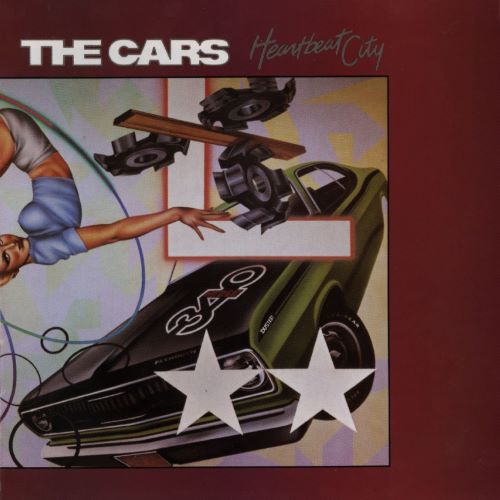
The Cars – Heartbeat City

Today it’s back to 1984 and also time to lean the focus away from heavy metal for a bit. Here today is one of pop rock’s massively triumphant albums and a career highlight for a band who was, sadly, not far from being done.

The Cars – Heartbeat City

Released March 13, 1984 via Elektra Records

My Favorite Tracks – Drive, Hello Again, You Might Think

By 1984, the sounds of new wave were at times synonymous with pop and rock. The innovators of this trend were none other than the Cars, who exploded on the scene in 1978 with a debut album that went six times platinum. The band had wrote several other hits in the years since, but had been a bit shunted off critically in 1981 and their most recent album Shake It Up. But the time was ripe for the Cars to ascend again, and that they would do in spades.

The Cars at this point were comprised of the two principal songwriters and vocalists, Ric Ocasek and Ben Orr. Joining them to round out the band were Elliot Easton on guitar, Greg Hawkes on bass and David Robinson on drums. Ocasek and Orr also handled guitar and bass, respectively.

Heartbeat City saw the band leave their long-time producer Roy Thomas Baker and instead set up show with Robert “Mutt” Lange. This album would slot into Mutt’s world-conquering production resume, which already had Back In Black and Pyromania to its list, and would add Hysteria a few years later.

There are 10 songs with a 38:41 runtime on today’s album, of course deluxe reissues with slews of bonus tracks do exist. There is a ton to get to here, given that the record spawned multiple top 10 hits.

Hello Again

The opener sees the Cars full-on new wave with some music that would sound to a younger listener like “total video game music.” It’s a fun, upbeat song generally about returning to a scene after a time away, pretty fitting for the Cars at this point.

This would be a single and hit 20 on the Billboard Hot 100, as well as number 8 on the Dance chart. Everyone was having fun with this one, including Andy Warhol, who directed and guest-starred in the video.

Looking For Love

One of the album’s few non-singles, this one keeps a mid-tempo, very melodic pace through the adventures of a young woman doing just what the title says. It’s another fun track that I suppose could be danced to, if dancing is one’s thing. This song did catch the attention of Falco, who reworked it in German as Munich Girls in 1985.

Magic

Up next is the second single and one that did great business, going to number 12 on the big chart and topping out at number 1 on the Mainstream Rock chart. It’s another simple, well-worked tune about how it’s magic when two people are together. It’s clear at this early point in the album that the Cars are about keeping an upbeat spirit with everything, they weren’t a band to explore the more somber side of things.

Drive

And here is the band’s sad, somber ballad which would mark a thematic departure from their prior work and also chart the highest of any Cars single, reaching number 3 on the Billboard Hot 100 and gaining top 10 placement on the charts of 9 other countries. It was also a major part of the campaign of the 1985 Live Aid concerts and fundraising drive.

Drive is a lovestruck ballad with a gorgeous atmosphere driven by the synth. It seems to be someone in love with someone else who is perhaps unavailable and also certainly on a downward spiral in life, this person needs someone to drive them home, to hear them scream or pick them up when they fall. Music and the lyrics delivered by Ben Orr come together for an absolute whale of a song.

This is a track that certainly deserves its own post and will get one some day. The music video is of note, as it starred young model Paulina Porizkova, who was the distressed woman in the video alongside Ric Ocasek and would later go on to marry him. This is my favorite Cars song and honestly one of my favorite songs, period.

Stranger Eyes

It’s back to the upbeat new wave stuff here with a song that is totally 1980’s. There’s no lyrical analysis here – this is a song that has words because most songs have words, there’s not much going on here. But it all comes together to produce another great song, one that was used in the trailer for the mega-hit film Top Gun but did not make the soundtrack.

You Might Think

Here is the lead single and the first sign that the Cars were on to something bigger. The single went to number 7 on the Billboard 100 and also topped the Mainstream Rock chart. The video was an early example of using computers for graphics and would land a brand new accolade – You Might Think was the winner of the first ever MTV Video of the Year award, even beating out Thriller for the trophy.

You Might Think is another upbeat and fun track, this one a bit more conventional and not as “video game” sounding. It’s a perfect representation of the Cars and a true link between this album and their earlier work. If songwriting were a poker game, the Cars were holding all aces in 1984.

It’s Not The Night

Another absolute 1980’s song with a fair bit of synth tricks sprinkled in. It’s not the night for a lot of things, according the lyrics Ben Orr is singing here, but it is the night for probably something that people who might fancy each other like to do. This song hit number 31 on the Mainstream Rock chart. And that’s without even being released as a single.

Why Can’t I Have You

This was the album’s fifth single and would go to 33 on the Hot 100 chart. It’s another ballad and another sad one, with Ric Ocasek heartbroken that he can’t still have his old flame. The music’s atmosphere suits the lovelorn words perfectly.

I Refuse

This poor song is the only one that either wasn’t released as a single or doesn’t have another piece of trivia to it. The song itself is a nice example of a prototypical ’80’s pop-wave track. While the music is upbeat, the lyrics see Ric Ocasek admonishing his lover for being a two-timer.

Heartbeat City

The album closer also serves as the title track, though the song was originally worked up as Jacki before the title change. This was also the final single and only released outside of the US. This one is total new wave, this sounds just like other NW examples from the time period and doesn’t feel pop much at all. It’s a very nice and trippy way to end the album, a slight bit of a left turn at the album’s close.

Heartbeat City was another massive win for the Cars. The album hit number 3 on the Billboard 200 and topped the Rock Album chart in the US. It also placed well internationally on several charts. The album is certified four times platinum in the US, with more updated sales figures for the US and abroad not readily available.

This was a huge score for the Cars, who were white hot in the late ’70’s but fell off in the early ’80’s after some experimentation. The band was back, and the next year would see the release of a greatest hits set that would sell over six million copies and have the Cars all over the place on radio and MTV.

The Cars would get one more album out in 1987 before disbanding a year later. A reunion wouldn’t come until many years later in 2010, and it would be without Ben Orr, who died in 2000. Ocasek and the remaining members would get out one more album and a few tours, then would reconvene one last time for a Rock and Roll Hall of Fame induction in 2018. The band was laid to rest for good with Ocasek’s death in 2019.

Describing Heartbeat City is pretty simple, in the end – if someone who wasn’t around in the ’80’s asks what the decade sounded like, just put this album on for reference.

Robert Palmer – Addicted To Love (Song of the Week)

I was just talking about Robert Palmer a bit yesterday so I might as well have at it and go over his best-known song. While this song is well known there is still a fair bit of interesting background to go through on it.

Addicted To Love was the second single from Palmer’s late 1985 album Riptide. The album sold well but that isn’t radically important in comparison to the massive success of this song, which was the driving force behind the album sales. This was a US number one hit and would be Palmer’s only actual chart topping single, though he got very close a few other times. It also hit number one in Australia and charted highly in several other countries.

If you think the band was Robert Palmer with a handful of extremely attractive women dressed as mannequins, well, you would be wrong. A bunch of people worked on the album with Palmer, but he would have some assistance from old bandmates in a group called Power Station. From there on this song are Tony Thompson, Bernard Edwards and Andy Taylor, yes that Andy Taylor from Duran Duran.

And this song was originally conceived as something extra – it was supposed to be a duet with Chaka Khan and was recorded as such. Khan’s management demanded that her parts be removed from the song because she had a few big hits around that time and they didn’t want her being overexposed.

It’s true that Khan had a lot going on at the time, she’d lit the charts up with her own songs as well as a guest shot on Steve Winwood’s hit single Higher Love. But I’d say her management dropped the ball here, as I don’t see the problem with having yet another number one hit to your name.

Addicted To Love is pretty simple to figure out, the song’s theme is spelled out in the title. Being hooked on love is a real thing and songs about love are what move a lot of people to listen to music so it all comes together pretty well. “Love as a drug” is something I guess is established by science but I don’t know much about science so I’ll leave it at that. Coupled with the smooth pop rock of the music, this is a winning formula right out of the gate.

The song did fantastically but many remember the music video. Palmer appeared on stage with a group of models who are acting as his backing band. This got everyone’s attention and Palmer would use the “girls in black” for his next few videos. Also, everyone and their mother either spoofed or copied the gimmick for their own videos over the course of the next several years. This remains one of the most iconic videos of the 1980’s and was nominated for the MTV Video of the Year, but it lost out – that was the same year Dire Straits did the Money For Nothing video and there’s no beating that.

This would be the peak of Robert Palmer’s success, though he’d still be lingering toward the top of the singles charts for awhile. His 1988 song Simply Irresistible was another massive tune but was kept out of the number one slot by some song called Sweet Child O’ Mine. Palmer would go on touring, recording and reuniting briefly with his Power Station bandmates until 2003 when he died of a heart attack at 54.

This song was everywhere just as I was growing up and really starting to pay attention to music. Though to be honest one didn’t have to venture far to find this on a radio or TV. This is truly one of the definitive cuts of the ’80’s and a magnificent time capsule of that period.

Mr. Mister – Broken Wings (Song of the Week)

I’m going back to the wonderful world of 80’s pop rock for this week’s song pick. Mr. Mister had a brief but successful career and this was one of two mega hits for the group. It was an age where synthesizers and technology were all over music, and Mr. Mister did not squander the opportunity to create something out of it.

Mr. Mister was the brainchild of Richard Page and Steve George, who had a project called Pages in the late ’70’s that didn’t gain much traction. The pair spent the next few years as session musicians for a number of pop luminaries, then formed Mr. Mister to give it another go on their own. They were joined again by their friend John Lang, who did not play in the band but provided lyrics. This time they’d garner a lot more notice.

Broken Wings hails from the group’s second album, Welcome To The Real World, released in late November 1985. While Broken Wings was released as a lead single a few months prior, it would gain hold of the top of the charts in December ’85, and the next single Kyrie would do the same.

Today’s song is a pretty simple one – musically it’s a pop rock thing, perhaps even new wave to some degree, I don’t know. It is electronic based with a lot of delays on the guitars, synth stuff and electronic drums going on. It’s not an “organic” rock song, which personally is fine by me, I’m up for something different once in awhile.

Lyrically the song is pretty easy to grasp – like, get up and fly. It does have a bit of depth to it, this isn’t some vapid pop experience. There’s a longing for a relationship and better times in the song, then the chorus with its motivational “fly again” is a pretty uplifting thing. The song does keep a pretty melancholy tone through it, which is probably why I like it.

There is an interesting quirk lyrically – the line from the chorus “Take these broken wings and learn to fly” is identical to one found in a Beatles song, Blackbird. This was not meant as an homage to the Beatles – rather, lyricist John Lang had read the 1912 book Broken Wings by Kahil Gibran and used that as inspiration. It was described as a totally unintentional aping of Paul McCartney’s lyrics. I don’t recall any controversy over it, but also I was 8 at the time so I probably wouldn’t have noticed, they didn’t air music news during episodes of G.I. Joe.

Mr. Mister scored big with their twin number one singles, but success wouldn’t linger for long. Their next album did not move a lot of copies and their 1990 album Pull was recorded but didn’t interest the label and the band broke up. That album wound up being released a whopping 20 years later. Mr. Mister did not reunite at all, though the members have collaborated on various other projects in the years since.

Broken Wings has remained on airwaves in many forms since its release, through movies and TV, as well as video games. In fact, the inspiration for this post was me hearing the song on my latest playthrough of Grand Theft Auto: Vice City, where Broken Wings takes up residence with several other pretty damn good songs on the soft rock station Emotion. After the heavy metal pounding of V-Rock, Emotion is probably my next-favorite station on the game.

This song holds up pretty well far outside of the shine of the 1980’s. Of course, that’s just my opinion. But I think Mr. Mister landed a pretty damn good tune with this hit.

For my two parter on the music of Grand Theft Auto: Vice City, check out the links below

Part 1 – The Music of Vice City

Part 2 – V Rock

The Song Remains The Same – Against The Wind

It’s time again for that silly little game where I take a handful of songs that have the same name but are not the same song. I’ll pit them against each other and see which one I like the best. Today’s works well because there are only three and I’ve only heard one of them and, as of the writing of this intro anyway, I don’t know who the winner will be but I have the same idea about that most of you reading probably do.

As with all of this series, this post should not be taken as a guide to all of the songs with this name. I just use a few websites to quickly run down things and decide if a particular one strikes my interest. Today I didn’t make it past A when I found this one that has a few talking points to it. There is no research on these things, I’m sure there are hundreds of songs called Against The Wind out there if someone really got to looking. These three are from well-known acts so I’ll run with them.

Bob Seger

I’ll lead off with the obvious choice. Against The Wind is the title track from Seger’s 1980 album and is one of his most popular songs. This was a single and did good business, peaking at number 5 on the Billboard Hot 100 and also gathering a number 6 in Canada. The single went US platinum and the namesake album sold over 5 million US copies. For some bonus trivia, Glenn Frey of the Eagles does backing vocals on the song.

On the topic of Seger and his hit songs, here’s a brief tale I told awhile back recalling his first ever number one hit.

Against The Wind has been one of Seger’s most influential songs, it had a special pull with the country artists of the 1990’s and beyond and also stretched out to many across all genres. It is a very nice song that checks a lot of boxes – sad but hopeful, polished yet personal. It’s one that seems primed to run off with the win today, but let’s at least check in on the other contenders.

Bonnie Tyler

A name familiar to many, Tyler had a few big hits in the 1980’s and was a star through Europe in the ’90’s. That is where today’s song is found, her Against The Wind is from the 1991 album Bitterblue. While it did not have US success, it did well in several nations on the Old Continent. This was also a single and put up modest results across several European singles charts.

This song is a prototypical soft rock ballad of the time. Bonnie has a great voice as always, though the song is not one I’d give a ton of repeat spins to. I don’t think it’s bad at all, it’s honestly a very nice song, just not one that moves the needle for me much at all. Bob Seger doesn’t have much competition here.

Stratovarius

While Bob Seger and Bonnie Tyler are well-known names to varying degrees, Stratovarius might not be quite as familiar to as many. But their pedigree is no less impressive – Stratovarius are one of the chief architects of the late 1990’s-early 2000’s power metal boom. While Stratovarius would become a keyboard-charged power metal stalwart, this song from 1995 sees them still in a transitional phase. This version of Against The Wind is from the band’s 1995 album Fourth Dimension and was released as the lone single for the record.

Now, I’ll talk all day about the influence Stratovarius had on the power metal movement, but one thing I’m honestly not is a Stratovarius fan. I never got into their stuff that much, I was much more drawn into Blind Guardian and Sonata Arctica when it comes to power metal. Startovarius is a more unabashed, full-on melodic power metal attack while the other bands listed have underpinnings in thrash and classic rock, respectively.

But my summary of Stratovarius tends to focus on their albums after Fourth Dimension. I honestly haven’t heard a note of this before I pushed play to write this piece. And well, I like this song quite a bit. It does sound firmly in the power metal vein, though not off in the sort of thing this and many other bands would get up to later. It’s fairly meat and potatoes and I dig this a fair bit.

Now, the question is – do I dig the Stratovarius song more than Bob Seger? While it’s closer than I first suspected, the answer is no. The winner of today’s silly little contest is Bob Seger. I don’t think that’s a real shock to anyone, though huge props to earlier-era Stratovarius for giving me something I may need to go back and check out.

That does it for this post and for the week. Have a great weekend and remember – the new Song of the Week series picks up on Tuesday next week. That is June 6, which as it turns out holds some significance in heavy metal. Until next week.