Scorpions – Love At First Sting

Keeping with 1984 this week as I have a bit of schedule re-shuffling coming up soon. Today I’m tackling one of rock’s signature albums.

The Scorpions – Love At First Sting

Released March 1984 via EMI Records and Mercury Records

My Favorite Tracks – Still Loving You, Bad Boys Running Wild, Rock You Like A Hurricane

The Scorpions were poised to conquer in 1984. They had already been forging a solid identity in the rock scene through the late ’70’s and especially with 1981’s Blackout. The band had shifted styles a few times through their career by this point but were settled on a line between rock and metal that suited the 1980’s soundscape perfectly.

The band’s form was the same as it had been for several years, this was the long-running, stable period of the band’s line-up. Rudolf Schenker played guitar and wrote the band’s music, Matthias Jabs was the lead guitarist for most songs. Francis Buchholz provided bass and Herman Rarebell was the drummer and occasional lyric writer. The incomparable Klaus Meine was the singer and wrote the bulk of the lyrics. The band did rehearse early in these sessions with Jimmy Bain and Bobby Rondinelli, late of Rainbow, but nothing from those sessions made the album. The record was produced by Dieter Dierks, the “sixth Scorpion” who was nearing the end of his long run as the band’s producer.

The album cover is yet another famous case of the band having to do an alternate version – the original features a couple making out and some retailers were concerned about the sideview of the woman’s breast, so a sanitized cover with a band photo was released. This one is a massive nothing burger in the history of Scorpions cover art lore, it’s super tame compared to a few of the scandalous earlier covers.

Love At First Sting features 9 songs at a nearly 41 minute runtime. There are deluxe editions with bonus material available but I’m handling the original release today. This includes a handful of the band’s best-known songs so let’s get into prime Scorpions here.

Bad Boys Running Wild

The opener brings the requisite energy and attitude to kick off an explosive rock album in 1984. Everything is loud and bombastic, the riffs lay a tough foundation for a song about a group of miscreants causing havoc, and everything here sounds fantastic. It’s a perfect song for the mullet-headed, denim and leather-clad metalhead that would run wild throughout the ’80s.

Rock You Like A Hurricane

A song that likely needs no introduction, this was a decent US hit at the time and has gone on to become the group’s signature song. Even people unfamiliar with The Scorpions are generally aware of this riff and Klaus Meine’s strangled accent singing about sex. The main riff and lead guitar work as well as the simple chorus make this one of rock’s biggest anthems. The song has stuck around and is still used in public now 40 years after its release.

It’s well known that The Scorp’s biggest song is 1990’s Wind Of Change, it was a mega hit that still stands as one of the best-selling singles ever. But I’d argue that Rock You Like A Hurricane is probably the band’s most recognizable song, especially in the US. This song was everywhere and has been ever since.

I’m Leaving You

Another single from the record, this is a perfectly written and recorded hard rock track. This one has a very ’80’s feel to it, showing off a sound The Scorpions would pursue further as the decade wore on. Its premise is very simple – I’m leaving you, woman, and I’ll be back some time later, so be ready to be rocked like a hurricane at some later point in time. Nothing to misinterpret here.

Coming Home

This one starts off with a ballad feel until it kicks in to an all-out rock track about two minutes in. The song is a take on the “being on the road” song that so many rock acts have composed over the years. On this one, The Scorpions don’t lament being on the road, instead they consider the stage to be their home and are looking forward to their next gig. They’d have a lot of them during this peak period of their existence so it’s a good thing they embraced the role.

The Same Thrill

This one has a touch of rawness to it, a shade of old glam or punk maybe. But in the end it is another rock anthem, again worshiping at the altar of the rock gods and also placing The Scorpions in the pantheon of those gods. There was nothing like it when all these guys who were “born to rock” were doing just that.

Big City Nights

It’s another more polished effort here, a smooth rock track that celebrates being out for love and fun in the big city. The song fits the “simple yet very effective” category and has become of the band’s better known hits. It’s an ear-pleasing number set against the halcyon backdrop of the immortal 1980’s.

As Soon As The Good Times Roll

A more mid-tempo number that keeps things moving along nicely here. The rhythm sounds like Rudolf Schenker had a record from The Police on his turntable while writing, with the quasi-reggae riff running through the song. This one’s all about letting go of the bad moments in life because there will be plenty of good times to still rock out.

Crossfire

This one has a marching drum thing going on throughout the song’s run while still retaining a solid rock feel that allows the song to fit on the record. It’s a plea for peace in the grim reality facing people, especially Germans, in the last decade of the Cold War. In some respects this might have been a dry run for the band’s later mega hit on the same theme.

Still Loving You

To say the album closes with a ballad would be a woeful understatement – more like the album closes with one of rock’s best ever ballads. This is not the formula-ridden, sappy ballad that would come to define later ’80’s rock – this is a masterfully written and executed tale of heartbreak and loss. The song slowly builds from a quiet introduction with only a guitar and Klaus singing into a full band performance. Klaus Meine conveys the pain felt in the lyrics splendidly here, he is totally on fire behind the mic.

This is an ever-relatable tale of losing someone but being unable to shake the feelings and it’s presented in a sublime package. It’s one of The Scorpions’ best songs and also one of the best ballads from the “rock ballad” era of the ’80’s. Europe was in agreement as the song was a huge hit across the continent. The song is even tagged as being responsible for a boom in France’s population in 1985, as so many in 1984 were succumbing to the feelings conveyed in the song.

Love At First Sting was a milestone for The Scorpions. The album charted in the top ten across Europe as well as the US, where it hit number 6 on the Billboard 200. It was certified triple platinum in the US for 3 million copies sold, and also has several other platinum and gold certifications across North America and Europe. The Scorps toured heavily behind the album and became household names in rock and metal through the ensuing tour cycle.

The Scorpions have endured as one of rock’s longest-running acts, continuing to wow audiences into 2024. Their ascension into rock godhood occurred in 1984 with this album, delivering a record without a single note of filler material and presenting several of their most recognizable songs. When the band’s legacy is examined, Love At First Sting is often found at or near the top of any discussion of their greatest works. The mark on 1980’s rock cannot be overstated – The Scorpions were instrumental in laying out the path for rock music going forward in the decade.
The Cars – Heartbeat City

Today it’s back to 1984 and also time to lean the focus away from heavy metal for a bit. Here today is one of pop rock’s massively triumphant albums and a career highlight for a band who was, sadly, not far from being done.

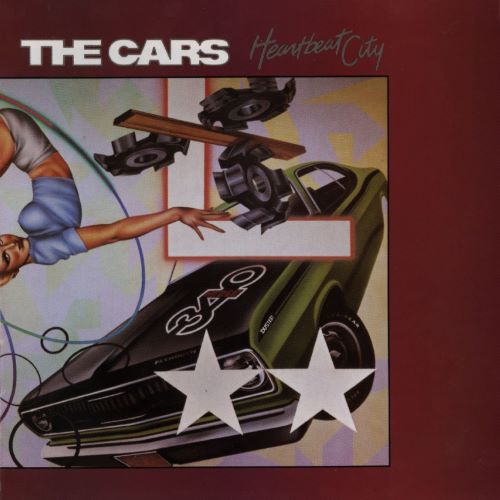
The Cars – Heartbeat City

Released March 13, 1984 via Elektra Records

My Favorite Tracks – Drive, Hello Again, You Might Think

By 1984, the sounds of new wave were at times synonymous with pop and rock. The innovators of this trend were none other than the Cars, who exploded on the scene in 1978 with a debut album that went six times platinum. The band had wrote several other hits in the years since, but had been a bit shunted off critically in 1981 and their most recent album Shake It Up. But the time was ripe for the Cars to ascend again, and that they would do in spades.

The Cars at this point were comprised of the two principal songwriters and vocalists, Ric Ocasek and Ben Orr. Joining them to round out the band were Elliot Easton on guitar, Greg Hawkes on bass and David Robinson on drums. Ocasek and Orr also handled guitar and bass, respectively.

Heartbeat City saw the band leave their long-time producer Roy Thomas Baker and instead set up show with Robert “Mutt” Lange. This album would slot into Mutt’s world-conquering production resume, which already had Back In Black and Pyromania to its list, and would add Hysteria a few years later.

There are 10 songs with a 38:41 runtime on today’s album, of course deluxe reissues with slews of bonus tracks do exist. There is a ton to get to here, given that the record spawned multiple top 10 hits.

Hello Again

The opener sees the Cars full-on new wave with some music that would sound to a younger listener like “total video game music.” It’s a fun, upbeat song generally about returning to a scene after a time away, pretty fitting for the Cars at this point.

This would be a single and hit 20 on the Billboard Hot 100, as well as number 8 on the Dance chart. Everyone was having fun with this one, including Andy Warhol, who directed and guest-starred in the video.

Looking For Love

One of the album’s few non-singles, this one keeps a mid-tempo, very melodic pace through the adventures of a young woman doing just what the title says. It’s another fun track that I suppose could be danced to, if dancing is one’s thing. This song did catch the attention of Falco, who reworked it in German as Munich Girls in 1985.

Magic

Up next is the second single and one that did great business, going to number 12 on the big chart and topping out at number 1 on the Mainstream Rock chart. It’s another simple, well-worked tune about how it’s magic when two people are together. It’s clear at this early point in the album that the Cars are about keeping an upbeat spirit with everything, they weren’t a band to explore the more somber side of things.

Drive

And here is the band’s sad, somber ballad which would mark a thematic departure from their prior work and also chart the highest of any Cars single, reaching number 3 on the Billboard Hot 100 and gaining top 10 placement on the charts of 9 other countries. It was also a major part of the campaign of the 1985 Live Aid concerts and fundraising drive.

Drive is a lovestruck ballad with a gorgeous atmosphere driven by the synth. It seems to be someone in love with someone else who is perhaps unavailable and also certainly on a downward spiral in life, this person needs someone to drive them home, to hear them scream or pick them up when they fall. Music and the lyrics delivered by Ben Orr come together for an absolute whale of a song.

This is a track that certainly deserves its own post and will get one some day. The music video is of note, as it starred young model Paulina Porizkova, who was the distressed woman in the video alongside Ric Ocasek and would later go on to marry him. This is my favorite Cars song and honestly one of my favorite songs, period.

Stranger Eyes

It’s back to the upbeat new wave stuff here with a song that is totally 1980’s. There’s no lyrical analysis here – this is a song that has words because most songs have words, there’s not much going on here. But it all comes together to produce another great song, one that was used in the trailer for the mega-hit film Top Gun but did not make the soundtrack.

You Might Think

Here is the lead single and the first sign that the Cars were on to something bigger. The single went to number 7 on the Billboard 100 and also topped the Mainstream Rock chart. The video was an early example of using computers for graphics and would land a brand new accolade – You Might Think was the winner of the first ever MTV Video of the Year award, even beating out Thriller for the trophy.

You Might Think is another upbeat and fun track, this one a bit more conventional and not as “video game” sounding. It’s a perfect representation of the Cars and a true link between this album and their earlier work. If songwriting were a poker game, the Cars were holding all aces in 1984.

It’s Not The Night

Another absolute 1980’s song with a fair bit of synth tricks sprinkled in. It’s not the night for a lot of things, according the lyrics Ben Orr is singing here, but it is the night for probably something that people who might fancy each other like to do. This song hit number 31 on the Mainstream Rock chart. And that’s without even being released as a single.

Why Can’t I Have You

This was the album’s fifth single and would go to 33 on the Hot 100 chart. It’s another ballad and another sad one, with Ric Ocasek heartbroken that he can’t still have his old flame. The music’s atmosphere suits the lovelorn words perfectly.

I Refuse

This poor song is the only one that either wasn’t released as a single or doesn’t have another piece of trivia to it. The song itself is a nice example of a prototypical ’80’s pop-wave track. While the music is upbeat, the lyrics see Ric Ocasek admonishing his lover for being a two-timer.

Heartbeat City

The album closer also serves as the title track, though the song was originally worked up as Jacki before the title change. This was also the final single and only released outside of the US. This one is total new wave, this sounds just like other NW examples from the time period and doesn’t feel pop much at all. It’s a very nice and trippy way to end the album, a slight bit of a left turn at the album’s close.

Heartbeat City was another massive win for the Cars. The album hit number 3 on the Billboard 200 and topped the Rock Album chart in the US. It also placed well internationally on several charts. The album is certified four times platinum in the US, with more updated sales figures for the US and abroad not readily available.

This was a huge score for the Cars, who were white hot in the late ’70’s but fell off in the early ’80’s after some experimentation. The band was back, and the next year would see the release of a greatest hits set that would sell over six million copies and have the Cars all over the place on radio and MTV.

The Cars would get one more album out in 1987 before disbanding a year later. A reunion wouldn’t come until many years later in 2010, and it would be without Ben Orr, who died in 2000. Ocasek and the remaining members would get out one more album and a few tours, then would reconvene one last time for a Rock and Roll Hall of Fame induction in 2018. The band was laid to rest for good with Ocasek’s death in 2019.

Describing Heartbeat City is pretty simple, in the end – if someone who wasn’t around in the ’80’s asks what the decade sounded like, just put this album on for reference.

Joe Walsh – Rocky Mountain Way

I am still behind on getting posts caught back up, I’ll just skip things here and there until I can truly get caught up and then ahead. No real big deal, I don’t guess.

Anyway – today I want to have a look at Joe Walsh’s breakout song from his solo career. While Walsh’s marquee performance will always be tied to the Eagles and usually Hotel California, there’s little doubt that Rocky Mountain Way is one of a small handful of Walsh’s landmark solo cuts.

The song comes from what turns out to technically be Walsh’s debut solo album The Smoker You Drink, The Player You Get in 1973. The album was billed as Joe Walsh, though the players actually went by the name Barnstorm, the group Walsh formed after quitting The James Gang in 1971. Barnstorm released a self-titled record in 1972, which was well-received critically but not a hot seller.

This album would do better business, hitting number 6 on the Billboard Pop Albums chart and receiving a US gold certification. Rocky Mountain Way hit number 23 on the Billboard Hot 100, Walsh’s first true chart success.

Rocky Mountain Way is a blues-rock jam with one big, fat riff guiding it along. The song meanders along at an easy pace, it is not in a hurry to go anywhere and we are all the better for it lingering around. Walsh also employs the talk box in the song, while its use is panned in general it is a great fit in this particular song.

Lyrically, the song is about how Joe’s move from The James Gang to going solo was a good move for him. It was his way of pushing back the regret of leaving a band with success to risk it on his own. Joe relays in a 2021 interview with Howard Stern (embedded below) that he was mowing his lawn in Colorado when he was “knocked back” by the majesty of the Rocky Mountains in the background. He went into the house, suddenly having words for the music he’d already recorded, and also amusingly left his lawnmower running while crafting the lyrics. Walsh also calls this song the greatest solo song he ever wrote in the interview.

Over the years the song has remained as a staple of rock radio and is ever present in entertainment. Baseball’s Colorado Rockies play the song after every home win (insert jokes here), and the Denver Broncos use a Godsmack cover version during their games. The song has appeared in several movies and is also a part of the Grand Theft Auto franchise, having appeared on the rock radio station in GTA 4.

Rocky Mountain Way is Joe Walsh’s most-played live song, according to setlist.fm. Not only that, but it ranks number 8 in terms of the most-played songs on The Eagles list as well. The song even ranks in another artist’s list with no relation to Walsh – Canadian rockers Triumph covered the song and played it a lot on tour and it secures the number 6 spot on Triumph’s live list.

There’s little doubt that Joe Walsh will be most remembered for his contributions with The Eagles, not the least of which is his part in the solo that closes out Hotel California. But his solo material also deserves consideration, and Rocky Mountain Way is perhaps the top of the heap in terms of magnificence. That fat riff places you right in a smoky dive bar of days past and is one of music’s great moments.

Tom Petty – Love Is A Long Road

Time now to look back on a song that’s 35 years old now and was never a single in the first place, but just last month got about the biggest bump in visibility a song could possibly get.

Tom Petty released his first actual solo album, as in not entirely written and recorded with his band the Heartbreakers, in 1989. Full Moon Fever was a smash hit, heading to five times platinum sales in the US and generating three Top 40 hits that are some of Petty’s most recognizable songs. Petty would work with his Traveling Wilburys buddy and ELO mastermind Jeff Lynne on much of the album, though today’s song was co-written with fellow Heartbreaker Mike Campbell.

Love Is A Long Road cuts a familiar vibe for late ’80’s music. There is a bit of synth but the song is otherwise standard rock and easily at home on a Tom Petty record. It’s a tale of getting into somebody but finding that the actual act of being in love and carrying on in that manner is a lot tougher than simply falling for someone. It’s another take on the mentality of “the chase is better than the catch” and it’s certainly a part of life. Mike Campbell stated that he was inspired by a motorcycle when writing the song.

This song didn’t get released as a single but it was the B-side to Petty’s massive hit Free Fallin’. Radio stations wound up putting on the other side of the 45 record and this one got a pretty decent amount of airplay, so much so that the song wound up charting at number 7 on the Modern Rock chart. That’s quite the feat for something that didn’t get the promotion machine of a single behind it.

If that was the end of this song’s story it would be fine enough – charting like that as a B-side is impressive. But 34 years after the song’s release it would gain one hell of a second life, becoming attached to the hottest entertainment property in existence.

In early December of 2023, Rockstar Games released the first trailer to Grand Theft Auto VI. To say this is a hotly anticipated game would be a vast understatement – it is easily the most anticipated video game of all time and probably the most widely anticipated entertainment release of any form, ever. The prior game raked in over a billion dollars in its first 24 hours on sale and it will likely be a 12 year gap between it and this new installment.

Rockstar have a history of using the right music to market their games as well as programming in-game radio stations with solid hits. In this case, Petty’s song was chosen to feature in this first trailer, which garnered over 120 million views in its first few days online.

This spotlight sent Love Is A Long Road into hyperspace. The song saw a nearly 37,000% increase in Spotify streams after the trailer released, and digital sales propelled the song to number 7 on the US Rock Digital Song Sales Billboard chart.

Merely being attached to the GTA 6 hype is pretty monumental for a song of this age, no matter the impressive stature of the artist in question. But there’s more to this pairing of Tom Petty and Rockstar Games. GTA 6 will be set in a fictionalized version of Florida, also Petty’s home state. The vibes of Love Is A Long Road perfectly fit the Florida-ized game and also call back some to GTA’s prior installment set in Florida, the total ’80’s atmosphere of GTA Vice City. It’s a multi-tiered stroke of genius to use this song to plug the game.

Love Is A Long Road is a nice song from a fantastic album, and here we are all these decades later with the song front in center in a way no one would have dreamed of way back when. A shame that Tom isn’t around to see his handiwork, but it will be fun to cruise the streets of Vice City in 2025 with this song playing on the system of whatever stolen car I’m in.

Oasis – Whatever

Originally I was going to discuss 2023 a bit more. I decided against that after I got to typing – this year has been a bit of a shit to me personally and I’d rather see it just go the hell away. Instead, I’ll go with what is supposed to be my normal Wednesday routine and talk about a song instead.

Whatever, indeed.

Our song today hails from Oasis, and was their first ever non-album single. We are now 29 years and 1 day removed from its single release, it was a UK Christmas single in 1994. This would do very well for what was about to become a behemoth of British rock, the song went to number 3 on the UK charts and sold over 540,00 copies.

This was recorded as part of the sessions for the debut album Definitely Maybe, and in fact I believe it was released on a few international versions of the album. I can’t immediately corroborate this, so if anyone has more concrete information about this, please share and I’ll be happy to correct this.

The thing that kept Whatever off the debut album was the use of orchestra strings, which were recorded by the London Session Orchestra. Among the players was violinist Wilfred Gibson, who had previously been part of Electric Light Orchestra, as well as contributing to early King Crimson work, among others. Imagine being this guy who had been on decades of mountain-moving work.

But Oasis and the powers that be, likely Alan McGee and Creation Records, decided that Whatever didn’t fit the debut album. I’d honestly say it’s a fair call, this song does stand out as different from the vibe on the record. It might have worked, but Definitely Maybe does work just great as it is, so it’s probably for the best that this is a bonus track.

Our song today isn’t that difficult to go through, most Oasis songs aren’t. It’s an ode to being free and embracing whoever you are, like a lot of Oasis it’s a celebration of the everyday person. It’s an embrace of the free spirit of the brief Britpop time of the mid-90’s where things weren’t as grim and everyone could take on the new form of rock music while still having a good time. It’s a celebration of self, it isn’t overly intellectual and it works pretty well.

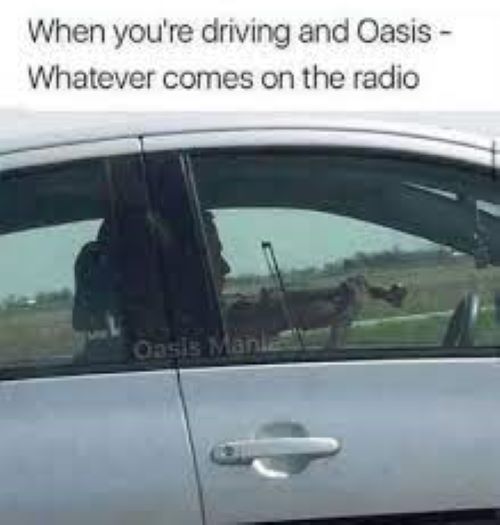
The signature part of this song might be at the end, as the last minute or so sees the strings lead the song out. It leads to memes like the one just below, and it sums up the spirit of the song. We aren’t supposed to take it all that seriously, yet in that time for us of the right age in the mid-90’s, this was pretty serious. For a brief moment in time, relatively speaking, Oasis were the voice of a generation.

Now, this song did give primary songwriter Noel Gallagher a bit of a fit – there was a lawsuit from celebrated English act Neil Innes, who contended that this song lifted parts from Innes’ 1973 song How Sweet To Be An Idiot. Oasis management chose to settle, and Innes is listed as a co-writer of Whatever.

This got played out live a fair bit, including during Oasis’ high time of 1996, and the Knebworth set that I go on and on about on here. All in all this is listed as being played 99 times during the band’s career, and was one they were playing on their final tour when shit came to shit and the band imploded. Both Noel and Liam have played this in solo sets post-split.

So at the end of the day we have a Christmas song, although it’s not about Christmas, as if Oasis would ever do that. But we do have a very nice song that didn’t quite fit the album they were putting out and we got this as a bonus single instead. A fine piece of work, if I do say.

Deep Purple – Machine Head (Album of the Week)

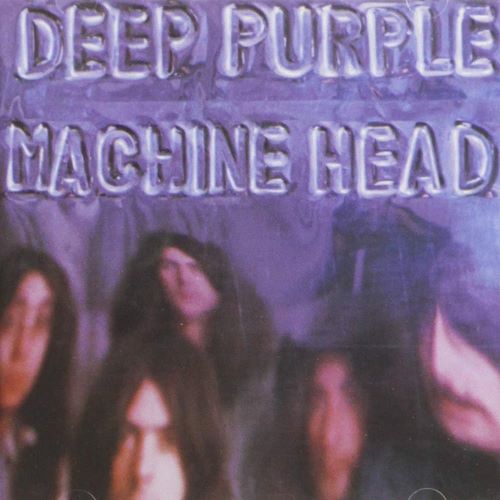
It’s time this week for one of rock and metal’s most immortal albums. Deep Purple were looking to build on momentum from a prior album and also do a better job of capturing their live sound on a studio album when they made a series of recording choices that would both cement them as rock titans and also contribute one of rock and roll’s most infamous song origin stories.

Deep Purple – Machine Head

Released March 25, 1972 via Purple Records

My Favorite Tracks – Space Truckin’, Smoke On The Water, Highway Star

The story of Machine Head and its recording has long been etched into rock music lore. Deep Purple were out to better capture their live sound on a record. The band had established some success on the basis of their album two records ago, Deep Purple In Rock, and were convinced that bringing their live sound to a studio record would help them along. The band booked the famous Rolling Stones Mobile Studio and lined up to record at the Montreux Casino in Switzerland. The original plan was to record a live set as well as the studio album and release a double record. Of course, those plans went up in flames, as we’ll get to.

Tracking Deep Purple line-ups could drive the world’s foremost scholars mad, there is a whole lore and science behind it. This album featured the band’s Mark II roster, which would be the band’s most successful configuration. It featured Ritchie Blackmore on guitar, Ian Gillan on vocals, Roger Glover with the bass, the immortal Jon Lord on keyboards and the band’s lone constant member Ian Paice on drums.

Deep Purple would be credited as album producers. They were joined by engineer Martin Birch, who had worked with Purple on previous albums as well as Fleetwood Mac in their early career. Birch would go on to produce for Blackmore again in Rainbow, handle the early Whitesnake albums as well as the first two Dio-fronted Black Sabbath records before settling in as the long-time producer of another British band I might happen to talk about all the time on this site.

Today’s album has a fairly lean 7 songs running at 37:46. Several deluxe editions of the album are also available.

Highway Star

The album opens with a quick hard rocker that was literally written in front of journalists on a bus after one reporter asked how the band wrote songs. Blackmore started jamming on a guitar while Gillan composed lyrics on the fly about simply “being a rock and roll band.” This was also released as a single.

This ode to cars and women accomplished its mission of depicting rock and roll, and the music laid a blueprint for many bands to follow – keep things simple and just rock out.

Maybe I’m A Leo

Up next is a blues jam soaked in Blackmore’s guitar tone and spiced up with Lord’s organ work. It’s a really nice song and a good bridge from rock’s recent past to what it was becoming. There are sparse lyrics here, but Gillan laments the loss of a woman, who maybe was taken away against her will, it’s hard to tell. But she is gone and Gillan is a Leo, but not a lion. (Hey, me too. And it turns out Ian Gillan and I have the same birthday, didn’t know that.)

Pictures Of Home

We have a very amped up jam session here, as each instrument player gets a spot to go off on his chosen weapon of rock. It’s far from just an individual showcase though, it’s also a cohesive song that works when everyone’s playing together as well as when one person takes the spotlight. It also features a harrowing lyrical tale of a mountain climber stuck on a mountain, which would be a pretty awful position to be in. And there’s probably not a British rock royalty jam session going on up on the mountain to pass the time with.

Never Before

It’s another blues-based tune here also with a bit of funk creeping in on occasion. While Lord and Blackmore are up to their usual mastery here, it’s Ian Gillan that really gets a chance to shine vocally here. His tale is one of sorrow, as he’s been done wrong by a woman, but the song is pretty hard hitting and ready to soar.

Smoke On The Water

And here we are. The truth is that this song’s full details deserve their own post so I will Cliffnotes things today. DP were set to record at the Montreaux Casino after it shut down for the winter, the last gig the venue booked was Frank Zappa. A “stupid with a flare gun” decided to burn the place down instead. DP had to find another place to record and also found lyrical inspiration for a song in the fire. In fact, the song’s lyrics give most of the details of the events.

Smoke On The Water was not immediately recognized as a hit. In fact, the band had a live album and another studio record out before this was officially released as a single. The song went on to hit number 4 on the US Billboard Hot 100 and was also certified gold in the US.

But the song’s true success goes far beyond charts and sales. The Blackmore riff is perhaps rock and roll’s most recognizable guitar sound. It is simple yet highly effective, and it led to generations of future guitar players annoying music shop employees with repeated plays of a riff so simple that most anyone could play it in a few minutes. This is quite possibly the greatest contribution to rock music ever, it is that massive and influential.

Lazy

This one is nearly an instrumental and is a fantastic jam between Blackmore and Lord. The song is 7:22 in length and these two take up most of the track. It is a jam in the truest sense, with them simply going off and doing what they want to do. The small verse section is about, well, being lazy. It is split in two with Ian Gillan on the harmonica between.

Space Truckin’

The album closes with a brilliant rock and, honestly, heavy metal track. It’s a fantastic, trippy march through the idea of being just what the title says – a space trucker. It’s like Han Solo a few years before he came around. The song is carried by Jon Lord’s just plain gross keyboard riffing. This song got turned into a massive jam in live settings, including an infamous one in 1974 when Blackmore was pissed off and destroyed thousands of dollars in gear.

Machine Head was to be the magnum opus of Deep Purple’s long and storied career. The album hit number 7 on the Billboard 200, and number 1 in 8 countries, including their home UK. It was certified gold in 4 countries and 2 times platinum in the US. Bear in mind that most record labels stop certification counts due to expense and it’s likely that the record has gone on to sell vastly more.

The immortality and legend of Machine Head is undisputed. When there is a list of the greatest rock and metal albums, this album is on there. When there is a list of the greatest songs, Smoke On The Water is on there. When there is a list of rocks’ greatest guitarists, Ritchie Blackmore is there. Deep Purple would, along with Led Zeppelin and Black Sabbath, form the “holy trinity” of rock music in the 1970’s. It is the influence of these three bands that shaped the face of music to come and the foundation upon what a lot of the stuff I listen to was built on. It was Deep Purple that influenced a lot of what I and we listen to, and specifically Machine Head that spun on the turntables of the next generation of musicians over and over again. There truly is nothing without this piece of rock history.

Robert Palmer – Addicted To Love (Song of the Week)

I was just talking about Robert Palmer a bit yesterday so I might as well have at it and go over his best-known song. While this song is well known there is still a fair bit of interesting background to go through on it.

Addicted To Love was the second single from Palmer’s late 1985 album Riptide. The album sold well but that isn’t radically important in comparison to the massive success of this song, which was the driving force behind the album sales. This was a US number one hit and would be Palmer’s only actual chart topping single, though he got very close a few other times. It also hit number one in Australia and charted highly in several other countries.

If you think the band was Robert Palmer with a handful of extremely attractive women dressed as mannequins, well, you would be wrong. A bunch of people worked on the album with Palmer, but he would have some assistance from old bandmates in a group called Power Station. From there on this song are Tony Thompson, Bernard Edwards and Andy Taylor, yes that Andy Taylor from Duran Duran.

And this song was originally conceived as something extra – it was supposed to be a duet with Chaka Khan and was recorded as such. Khan’s management demanded that her parts be removed from the song because she had a few big hits around that time and they didn’t want her being overexposed.

It’s true that Khan had a lot going on at the time, she’d lit the charts up with her own songs as well as a guest shot on Steve Winwood’s hit single Higher Love. But I’d say her management dropped the ball here, as I don’t see the problem with having yet another number one hit to your name.

Addicted To Love is pretty simple to figure out, the song’s theme is spelled out in the title. Being hooked on love is a real thing and songs about love are what move a lot of people to listen to music so it all comes together pretty well. “Love as a drug” is something I guess is established by science but I don’t know much about science so I’ll leave it at that. Coupled with the smooth pop rock of the music, this is a winning formula right out of the gate.

The song did fantastically but many remember the music video. Palmer appeared on stage with a group of models who are acting as his backing band. This got everyone’s attention and Palmer would use the “girls in black” for his next few videos. Also, everyone and their mother either spoofed or copied the gimmick for their own videos over the course of the next several years. This remains one of the most iconic videos of the 1980’s and was nominated for the MTV Video of the Year, but it lost out – that was the same year Dire Straits did the Money For Nothing video and there’s no beating that.

This would be the peak of Robert Palmer’s success, though he’d still be lingering toward the top of the singles charts for awhile. His 1988 song Simply Irresistible was another massive tune but was kept out of the number one slot by some song called Sweet Child O’ Mine. Palmer would go on touring, recording and reuniting briefly with his Power Station bandmates until 2003 when he died of a heart attack at 54.

This song was everywhere just as I was growing up and really starting to pay attention to music. Though to be honest one didn’t have to venture far to find this on a radio or TV. This is truly one of the definitive cuts of the ’80’s and a magnificent time capsule of that period.

Led Zeppelin (Album of the Week)

Time to go all the way back into ancient history for the debut of one of rock’s most titanic bands. There’s plenty of blues, a bit of heavy metal and a whole lot of rock.

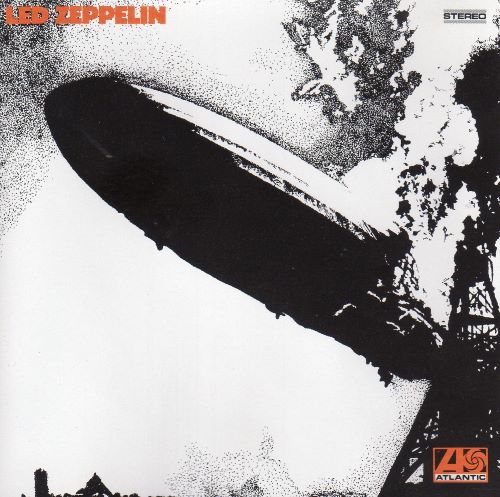
Led Zeppelin – self-titled

Released January 12, 1969 via Atlantic Records

My Favorite Tracks – Communication Breakdown, Good Times Bad Times, Dazed And Confused

I’ll sum this up as quickly as Page and company recorded the record – Jimmy Page had an obligation to tour with the Yardbirds but needed a band. He brought in Robert Plant, John Paul Jones and John Bonham to do it. After the tour the band self-financed a record and recorded this debut album in 36 hours of studio time. Page was the producer as well as guitarist. The band changed their name from The New Yardbirds to Led Zeppelin and got a major label deal with Atlantic Records that included creative freedom without even being heard.

Today’s album is 9 tracks with a 44 minute runtime. The album is a mix of originals and covers, and Jimmy Page’s long history with music copyright battles would begin on this very debut record.

Good Times Bad Times

The opener is a great introduction to Led Zeppelin – a noisy rocker that showcases bits of each band member at their strengths. Jimmy Page and John Paul Jones both leave some great embellishments through the song, pretty slick bass work from Jones especially. This is a general summation of the good and bad of relationships and it’s a pretty accurate look at things.

Babe I’m Gonna Leave You

This was originally written by Anne Bredon, Page and Plant were inspired to do the song based on a recording by Joan Baez. Zeppelin would not ply their trade in folk however, they doubled the length of the song and kicked up the ferocity several thousand times over. It shows that Zeppelin had more atmosphere to them and weren’t going to be a hard rock one-trick pony.

This one has an odd bit of trivia to it in regards to Anne Bredon’s proper royalties – Page was unaware of who originally wrote the song and Bredon was unaware of Zeppelin’s version for many years. Eventually she was properly credited and paid. This was more an honest mistake and a lot less messy than other “Who wrote this Zeppelin song?” fiascos.

You Shook Me

This is an early ’60’s blues tune written by Willie Dixon and originally performed by Muddy Waters. Again, Zeppelin take the original song and double its length and also run it through their own Zeppelin filter to distinguish it quite a bit from the original. It’s a pretty fun jam and Robert Plant really gets up to some vocal gymnastics here.

Dazed And Confused

This trippy jam was something Page did with the Yardbirds and wanted to bring to Zeppelin. Call it psychedelic, maybe, or perhaps acid rock, this song is a total journey. It keeps a fairly standard and slow pace for a bit, then starts jumping off the rails with crazy riffs and drum fills, and also Robert Plant sounding like he’s having an orgasm. This was a sterling showcase from Zeppelin and a song they would extend to a massive jam live, it also marks the band’s most-played live song.

This one has a contentious writing history – it was originally written by folk artist Jake Holmes, who opened for the Yardbirds in New York. Holmes would eventually have to sue Page in 2010 to get proper attribution. The case was settled out of court, so no specifics on how it played out.

Your Time Is Gonna Come

This is a bit of folk hard rock here with a jamming organ and acoustic guitar. The song has an uplifting and almost spiritual chorus, but is also admonishing a two-timing woman. It’s a study in contrasts to a degree. This song never got busted out much by the group but it’s a track I like quite a bit.

Black Mountain Side

This is a short instrumental piece that has the prior song bleeding into it. It’s a pretty standard acoustic thing up until a bit of Jimmy Page magic in a brief spot. It’s worth a listen.

Communication Breakdown

Here we get a very early example of an outright heavy metal song. Zeppelin’s blues-based rock would be a foundation on which heavy metal was built, but here they actually recorded the next step in the process. This brief song could also be considered a precursor to punk with its fast, static riffing along with all the damn noise Bonham is making. This song was an inspiration for future metal and punk bands, Iron Maiden and The Ramones among many others.

I Can’t Quit You Baby

This is another blues tune and another written by Willie Dixon. It was first performed by Otis Rush and Zeppelin’s interpretation is pretty faithful to the original. It does add a few minutes of space for Jimmy Page to get up to a few things on guitar but it’s otherwise a standard blues rendition.

How Many More Times

The album closes with a blues-based rocker that is an original band composition. This song is pretty jam packed with action for its 8 minutes. It gets a pretty long interlude before picking up the jam back into a whole other space and then revisiting the song’s beginning structure to close out on. The guitar tone here and song structure are a pretty good showcase of what Led Zeppelin would get up to on future albums.

Led Zeppelin was a pretty hot ticket right out of the gate. The album would hit number 10 on the US Billboard 200 and get number 6 on the UK Albums chart. It did pick up number 1 in Australia and Spain. Zeppelin would have a very successful US tour that kicked off just as the album launched and their interest in America and abroad grew quickly. All told the debut would be certified platinum 8 times in the US, 2 times in the UK and get a diamond certification in Canada. Nothing from Zeppelin has really stopped selling since they hit the scene, though of course exact sales figures from this era in music are difficult to track.

This one has always been one of my favorite Zeppelin albums. There’s something a bit different about this one before they really nailed down their winning formula. They’re credited with recording the perfect rock album, but there’s a charm to this one with its meandering through styles and clash of sounds.

I don’t see much point in getting into the legacy of Led Zeppelin – they’re one of rock’s most important bands. This was the start of their decade of domination and circumstances came together to make quite a debut.

Don Henley – The Boys Of Summer (Song of the Week)

Summer seems to be slipping away, both on the calendar and weather-wise, so it’s a good time to look back on the big Don Henley hit from 1984.

The Boys Of Summer is probably Henley’s most recognizable solo song, though not his biggest hit – that was Dirty Laundry. Today’s song was the lead single from Henley’s second solo album Building The Perfect Beast, which is a weird title since the album cover is just Don Henley. Not entirely sure what he’s getting at there but I was 7 at the time so it’s probably not for me to figure.

The song has quite a history involving a few music luminaries, the tale I’m telling today can be found in this 2022 article on loudersound.com.

This song was brought to Henley by Mike Campbell, known for his day job as the guitarist for Tom Petty and the Heartbreakers. Campbell had written up the music and offered the song to Tom. Petty turned it down because he didn’t feel it fit the mood of the album they were making, which was Southern Accents. That’s a fair assessment, though Petty would later regret not cutting the track after he heard Henley’s finished version.

Campbell was in luck though, as Southern Accents producer Jimmy Iovine knew Henley was recording a new record, so Iovine suggested Campbell pitch the song to Henley. Campbell and Henley hadn’t met before, but Henley was receptive to the track and cut it after writing lyrics and changing the song’s key. Fellow Heartbreakers Benmont Tench and Stan Lynch would contribute other songs to the Henley album as well.

The Boys Of Summer is a total ’80’s tune, far removed from the country-rock of Henley’s beloved Eagles. This song doesn’t even have real drums on it, Campbell programmed a machine to play those. There is guitar on this and also a generous helping of synthesizer. This is a nice, soft and atmospheric song that flows without issue and adds a moody air to the lyrical fare.

The theme of the song is very simple, it’s all about looking back at the past and longing for lost people and moments. The song and video make it all about a girl, and it’s often past lovers who bring out that longing the most. It’s fairly relatable stuff to anyone who’s at or around middle age, though the degree to which it’s relatable would vary from person to person. The third verse really brings the whole point home, it’s one that gets me nearly every time I hear the song even though I’ve heard it hundreds of times by now.

There’s also a bit to the title itself – the “boys of summer” was originally a phrase coined by Welsh poet Dylan Thomas. I have no clue what Thomas was on about in the poem and I don’t like poetry so I won’t dig for an answer. In 1972, author Roger Kahn used the phrase for the title of his book about the Brooklyn Dodgers, and since then “boys of summer” has usually been taken to mean a reference to baseball. It wasn’t the case for this song but the song and the sport have been intertwined at times.

The Boys Of Summer would go on to number 5 on the Billboard Hot 100 and chart significantly in many other countries. It is just off the number 3 high set by Henley with Dirty Laundry a few years prior. The video won huge accolades, taking home Video of the Year from the 1985 MTV VMA’s. As Henley quipped, he won the award for riding around in the back of a pickup.

The song would pop up again in conversation years later, as rock band The Ataris did a cover in 2003. This version was a hit, getting number 2 on the Billboard Modern Rock chart and 20 on the Hot 100. While it was a career moment for The Ataris, Henley was not really amused by their version, pretty much calling them out years later as a flash in the pan. Mike Campbell was far more complimentary of The Ataris and their cover effort.

Don Henley’s solo career would go on into the early 1990’s where he was derailed by lawsuits between he and his label Geffen Records. This would cause Henley to become very involved in issues concerning musicians and their rights, as well as an Eagles reunion. But he truly struck gold with this 1980’s hit, both in music and theme.

Jimmy Buffett – Margaritaville (Song Of The Week)

A quick post today, and one to eulogize the recently passed Jimmy Buffett. For those unaware, Buffett died last Friday, September 1st at the age of 76.

Buffett was the king of a subgenre that might constitute country and yacht rock to a degree. Some called it Gulf and Western, others termed it “tropical rock.” Buffett had a number of recognizable songs, like Cheeseburger In Paradise, Why Don’t We Get Drunk, and his hit duet with Alan Jackson, It’s Five O’Clock Somewhere.

But no Jimmy Buffett song is as recognizable as the strains of Margaritaville. The song is from his 1977 album Changes In Latitudes, Changes In Attitudes and the song has gone on to immorality in the decades since its release. At the time the song got to number 8 on the Billboard Hot 100, number 13 on the Hot Country chart, and it hit number 1 on the Easy Listening chart. This was Buffett’s highest charting song overall, though It’s Five O’Clock Somewhere was a big number 1 hit on the country chart.

Jimmy Buffett would cultivate an audience through touring, gaining a fanbase known as Parrotheads who followed Buffett from town to town similar to followings like what The Grateful Dead had. He gigged pretty regularly through the years, stopping only in spots when the cancer that would eventually claim him took too much of a toll.

Margaritaville is not just a hit song, and not just a song that took on a significant cultural status – it’s also become one of the most lucrative songs of all time. It’s not the song itself that made a mint, but Buffett would extend Margaritaville branding to a chain of resorts, booze, cruises and other stuff that would net over a billion dollars.

The song Margaritaville is fairly simple in origin – one day Buffett was on the beach in Key West and wound up having a bad day – he lost a flip flop, which led to him stepping on a beer can and cutting his foot. He also lost the salt for his margaritas. He worked the incident into a song, combined with some other stuff, and Margaritaville was born.

Jimmy Buffett and Margaritaville came to exemplify the beach bum, or “island escapism” lifestyle. It became the obligation of every suburban dad in the US to plan summer trips to a beach, no matter how far. While beaches are obviously quite appealing on their own, Buffett was responsible in no small part for a boom in resort and coastline tourism through the 1980’s. The industry has only grown since then, and Buffett himself cashed in nicely on it.

Though Jimmy Buffett has now passed on, Margaritaville remains an immortal tribute to a day at the beach. I myself was never a parrothead or anything, but I can appreciate the simple joy of this song as I recall that it’s been a few decades since I’ve seen a beach or coastline. Don’t lose your salt shakers, and have one for Jimmy.