The Haunted – Revolver (Album of the Week)

In 2004, one of Sweden’s leading purveyors of death and thrash hooked back up with an old flame, threw a few new bits into their metal, and had a day with the response.
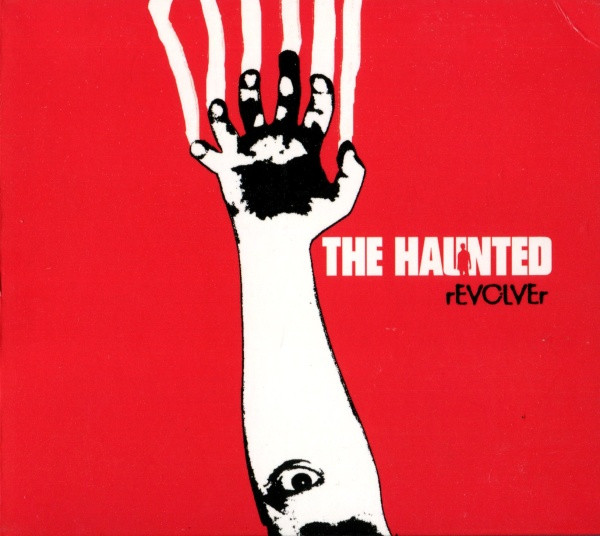
The Haunted – Revolver

Released October 18, 2004 via Century Media Records

My Favorite Tracks – Who Will Decide, Abysmal, Sabotage

The Haunted have a curious history, having been formed in 1996. The band was formed by 3/5 of the former lineup of Swedish death legends At The Gates, who had broken up one day prior to The Haunted’s founding. The band was founded by brothers Jonas (bass) and Anders Björler (guitar) and Adrian Erlandsson (drums), all former members of ATG. They were initially joined by vocalist Peter Dolving and guitarist Patrik Jensen. Dolving and Erlandsson would leave The Haunted after the band’s first album, to be replaced by Marco Aro and Per Möller Jensen.

The Haunted gained acclaim on their next two albums with a pretty straightforward Swedish thrash sound. Marco Aro left the band somewhat suddenly in 2003, which led to the group seeking a reunion with original vocalist Peter Dolving and the release of this album.

The album’s name was styled as rEVOLVEr, which was meant as an indication that The Haunted’s music was evolving from its entrenched roots in Swedish thrash. Though for the sake of clarity I will style the album’s name as Revolver in this post, maybe someone will get confused and think I’m talking about The Beatles. A few seconds of riffs from The Haunted album will likely correct any confusion.

Revolver is a hefty slab of music, no matter which configuration it comes in. The standard edition features 11 tracks at 47 minutes, while the red-covered deluxe edition offers 2 bonus tracks. And as usual, the Japanese version has its own bonus track and keeps another track from the deluxe set. For brevity’s sake I will go over the standard tracklist though I have always had the deluxe version. Here is the standard album’s tracklist:

No Compromise

99

Abysmal

Sabotage

All Against All

Sweet Relief

Burnt To A Shell

Who Will Decide

Nothing Right

Liquid Burns

My Shadow

The album opens with a pair of songs that are pretty standard fare for The Haunted – brutal, fast and loud. No Compromise and 99 both come in hard and stay that way. No Compromise is one of a few songs on the album that isn’t woefully negative in its outlook, it is more of a rallying cry for the outcasts. 99 is a very bleak look at the state of the system and doesn’t offer much in the way of hope, something that isn’t to be found on this album hardly at all.

Abysmal starts off as something quite unexpected – this is, in many respects, a ballad. It starts off very quiet, with Peter Dolving almost speaking the lines, until the song suddenly gets much heavier though keeps its dirge-like pace. The song lives up to it’s title, this is as dark as it gets with no way out and no light at the end of any tunnel.

Up next is Sabotage, which is a full-tilt delivery that is like punk on steroids. It’s followed by All Against All, a more mid-paced track that is a very harsh look at an ended relationship. This one has the “feel” of a hardcore song though still bringing its thrash underpinnings. The Swedish thrash and death sound was a huge influence on the metalcore scene and here we have one of the Swedish bands putting it all together.

If you were hoping that Sweet Relief would bring you respite from the bone-crunching riffs and stark lyrical themes, well your hope was misplaced, as the song slams in and keeps the metal flowing. The next song might be the one you’re really looking for – Burnt To A Shellis another quasi-ballad and this one is also not negative to the point of being psychologically disturbing. It does offer some of that bleak imagery but also gives a fair respite from it in the chorus.

Up next is Who Will Decide. This is another hard one and also features guest vocals from Sick Of It All frontman Lou Keller. This song really exposes the true problems with the system and why things never really seem to get truly better. And this was recorded in 2004, this one is even more relevant 19 years later.

The album heads into the home stretch with Nothing Right, another hard hitter that spells out exactly what the title says. Liquid Burns comes in next and is a very messed up look at some crazy relationship and abuse stuff, as well as the influence of alcohol and its numbing effects on the ills of society. The album closes with My Shadow, this being a full-on “ballad” and also the bleakest of the bleak in terms of theme. This conclusion is the most desperate and hopeless song of them all, just totally giving up and being nothing.

Revolver was a remarkable moment in The Haunted’s career. The album served to both honor the musical legacy of the band as well as update the sound a bit and it slotted in nicely alongside the emerging metalcore movement of the early 00’s. If The Haunted were living somewhat in the shadow of At The Gates, Revolver saw them cast off that legacy completely and fully flesh out their own identity.

It isn’t a huge secret that the lyrical themes of extreme metal tend to dwell on the negative side, but on this album the lyrics truly are dynamically written to be as hopeless as possible in many cases. It’s not like a lot of metalheads even really take in the lyrics on a lot of death or black metal – the voice is often just another instrument. But with this album Dolving’s vocal delivery is comprehensible and the words truly stand out in their desperation when they’re taken in.

The Haunted would continue course with Peter Dolving for three more albums before he departed the group in 2012. The band would also contend with double duty, as At The Gates reformed in 2008. The band nearly split up but would reconvene with singer Marco Aro and release yet more vital music in the 2010’s.

For all of the band’s history in the hallowed Swedish metal scene, Revolver might be the most unique and dynamic moment of The Haunted’s catalog. The songwriting featured variety and dynamics and the lyrical content went to a place far scarier than the imagined hells of most metal albums – the cold, stark facts of reality for many hopeless souls.
Bloodbath – Eaten

This post was part of a series that I called S-Tier Songs. I later decided to abandon the series in favor of a simpler Song of the Week format. I am keeping these posts as I wrote them but removing the old page that linked to the list of S-Tier Songs, so that is why these posts might look a bit odd. Enjoy.

Today it’s high time I included an extreme metal tune in the mix. Rock is great and all but there have been some gems come from the underground. Today’s pick is widely considered one of, if not the, catchiest death metal songs recorded. And it was recorded by a group of guys who wanted to form a side project just to mess around with some old school death metal. It’s also the case of a song where it can be argued that a live version outshines the original studio recording.

Bloodbath – Eaten

Eaten was originally released on Bloodbath’s second album, 2004’s Nightmares Made Flesh. While the group originally featured Opeth mainman Mikael Åkerfeldt, he would leave the project after their first recording. To complete the second album, joining the supergroup of Dan Swanö (Edge Of Sanity), Anders Nyström and Jonas Renske (Katatonia), and Martin Axenrot (Opeth) was Peter Tägtgren of Hypocrisy fame.

For those unfamiliar with the various ends of extreme metal – this is a who’s who of performers. Opeth was a juggernaut by 2004. Dan Swano was a mainstay of many forms of extreme metal since the early 1990’s. And Katatonia are one of doom’s main purveyors. Adding in the mainman of Hypocrisy, an early forerunner of melodic Swedish death metal and a guy responsible for producing many metal albums through the 90’s and 2000’s, is just icing on the cake.

The album was consumed rabidly by the metal fanbase. A centerpiece of the record was the song Eaten. While a lot of death metal’s buzzsaw guitars and psycho-paced drumming fly by many listeners, plenty of people caught on to the hooks in the song that reeled listeners in. Instead of playing at a breakneck pace, the group turned the speed dial down and stomped out a massive riff that pulled in a captive audience. It’s still very headbangable but also capable of being digested by people not as accustomed to death metal.

Any good death metal song needs the proper savage lyrics to accompany it, and Eaten delivered in spades. Peter Tägtgren spewed forth a fierce account of a person wishing to be eaten by a cannibal. Nothing totally unusual in death metal, though the twist of portraying the “victim” rather than the cannibal was interesting. One other interesting note?

It was a true story.

Eaten is based on the tale of German cannibal killer Armin Meiwes. Apparently Meiwes advertised for a willing victim in a cannibal fetish website section and found a volunteer in Bernd Brandes, who headed to Meiwes’ place and … well, here’s the Wikipedia page if you want to know more. The sensational murder has been used as a song, movie and TV prop since it first hit headlines.

Bloodbath had some issues maintaining a stable line-up due to everyone’s day jobs in well-known bands. Tägtgren would exit the group in early 2005 due to commitments with Hypocrisy and other projects. The rest of the band had a gig, to that date their first, planned for the 2005 edition of the famed Wacken Open Air Festival. Of course they would need a replacement singer to helm the vocals for the gig.

Re-enter Mikael Åkerfeldt . Opeth’s leader decided to front Bloodbath again for the show and would wind up staying with the group for several more years. The festival performance was later released on DVD and CD as The Wacken Carnage. Ending the set was the band’s rendition of Eaten, a performance often celebrated as superior to it studio recording.

There is something just extra savage in Åkerfeldt’s delivery of the Eaten lyrics that night, as well as the band’s frantic performance that outpaces the original. It’s not that there was fault with Tägtgren’s studio recording, it’s just that Bloodbath got into the moment at the Wacken gig and blew the figurative roof off on that day. Many fans express their opinion that the live version is the song’s definitive offering.

No telling if this stays up but it’s been lingering awhile so I’ll go with it

Why is this an S-Tier song?

Eaten is a masterwork of death metal songwriting, offered by a group of pros who mostly weren’t even involved otherwise in death metal at the time. The song is easily one of the catchiest death metal songs recorded and that’s something of a rare feat to combine hooky songwriting in a genre known for savagery and technical proficiency. Eaten made old school death metal cool again in a time when metal was going in many different directions and taking itself very seriously.

Note – Those name accents are pains in the ass.

As a bonus, here is a more recent performance from present-day Bloodbath singer Nick Holmes (Paradise Lost)

Naglfar – Pariah (Album of the Week)

Last week was fun, going back through hair metal and all the stuff that happened in 1991. This week is back to absolutely no fun. I’m going back to 2005 and grabbing one of my favorite “no fun, people suck and everything is awful” black metal albums.

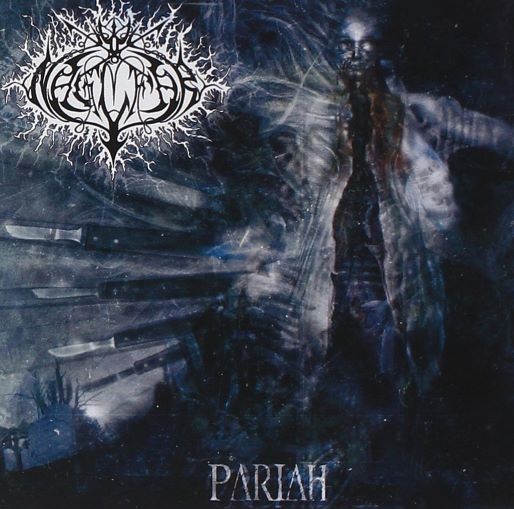
Naglfar – Pariah

Released June 30, 2005 via Century Media Records

My Favorite Tracks – And The World Shall Be Your Grave, A Swarm Of Plagues, Revelations Carved In Flesh

Naglfar underwent major change before the release of Pariah. The band’s founding vocalist Jens Rydén left the group after their prior effort Sheol, leaving bassist Kristoffer Olivius to helm the group. Naglfar had just gained a fair bit of momentum from Sheol and would be tested to provide a worthy follow-up.

Pariah sees an exploration of misanthropic themes, the album’s songs connected in an evisceration of the human experience. This is a level beyond being upset that Karen can’t put her shopping cart back in the proper place at the store – this album calls for the nuclear destruction of humankind in multiple songs. It moves past the need to express angst as a way to let off some steam and enters the territory of condemning civilization as a whole. We are far past the point of breaking stuff, this is all out war.

I will visit each of the 8 proper songs track-by-track, leaving off the brief intro Proclamation.

A Swarm Of Plagues

The album begins with a mission statement focusing on the destruction of humanity. It is pure textbook misanthropy – due to the wayward nature of humanity, it should perish in nuclear flames. The destruction is judgment rather than an accident. Sonically the song flies along at a frenetic pace until a mid-section interlude that offers one of the album’s few moments of subtlety.

Spoken Words Of Venom

This song embraces hatred, whether it’s of an individual or humanity as whole is unclear. The music does not let up off the accelerator through the track, while lyrically Olivius mows down his target with every negative word in the thesaurus. It is an unsettling way to dismiss the whole of someone’s existence.

The Murder Manifesto

Here the band turn the tempo down just a hair as the song’s narrator stalks his prey. There seems to be a theme of a dark cult confronting its more holy adversaries in this song rather than simply someone killing for the sake of doing so. It is a targeted, focused effort in the album’s setting of the end times of civilization.

Revelations Carved In Flesh

Another track about murder, though this time it seems this death cult is recruiting willing sacrificial lambs for its slaughter. This song stands out a bit for its melody and creativity amongst the ever-present backdrop of misanthropy. The lyrics do quite explicitly spell out the ritual murder and are in line with a fair bit of death metal fare. The grotesque final verse is especially something as easily found on a Cannibal Corpse album as opposed to black metal.

None Shall Be Spared

This song returns to the worldwide scope of things, declaring a war against the Abarahmic faiths. It is not openly stated though the lyric’s targeted aim of “2,000 years of lies” offers up the theme well enough. It is the ceremony of opposites in its final form, bringing about the end rather than existing in a perpetual state of debate.

And The World Shall Be Your Grave

It is again time to visit the ultimate expression of misanthropic leanings – the end times. Here the world perishes by way of nuclear war. The lyrics, of course, celebrate this outcome. Nothing could justify a misanthropic perspective more than humanity dooming itself with its own creation. Misanthropy is sometimes, like nihilism, a warning rather than an outlook, but on Pariah it is the perspective and the all-consuming nuclear end is the goal. It all leads to the same end regardless of what lenses one looks through things with.

The Perpetual Horrors

Heading toward the album’s close, this song begins to turn the concept of external hatred on its head a bit. Any expression of this kind of negativity will inevitably lead one to look in the mirror, and this song is a glimpse into the themes present on Naglfar’s next album. Humanity is still suffering and dying here, but the cause is looking at his own hollow, rotten core this time.

Carnal Scorn And Spiritual Malice

Perhaps conceptually, the album ends with all of the hatred and spite being turned on the album’s “protagonist.” Finding existence pointless, he brings about his own end in disturbing and explicit fashion. Still railing against the tenants of the world that irk him, mainly religion, our humble hater goes out on his own terms rather than the nuclear war prophesied throughout the rest of the album. The album’s final sound brings the point home.

Pariah is an album executed with ferocity and a fanatical railing against humanity. It does not often contain nuance and its lyrical offerings are explicit and profane. Naglfar’s sound does recall their renowned countrymen Dissection in both music and theme but is not purely an exercise in worship of that band. While Naglfar are on a prominent record label in Century Media and have had their name discussed in many circles over the years, they remain something of an underground proposition even within the structure of black metal.

I do hold that Pariah is my favorite album from the band, though there is stiff competition in the albums both proceeding and following this. Both Sheol and especially Harvest will get time here in the future. I by no means claim to espouse the intense level of misanthropy found here but I do “get” it just the same. My time not long after this album’s release was rather dark and music like this was a release. And now from what I’ve seen of humanity in the past several years I can’t help but wonder about those nuclear fires from this record. It is scary when society starts to catch up to the dark fantasy.