Let’s head back to 1984 and hop up to the Great White North for the song of the week. We’ll revisit the first hit of someone who became a prolific hitmaker in both the US and his native Canada.
Corey Hart had just launched his music career in earnest with his debut album First Offense, which hit shelves in November 1983. Oddly enough, Sunglasses At Night was the lead single but was not released in advance of the album or even with the full-length – it was served up as a single in January 1984.
The single did reasonably well for a debut artist – it was a top 10 hit in the US, landing at 7 on the Billboard 200. It charted at 24 in Canada and landed in fair spots in Australia and Europe as well. As a note to those unaware, Corey Hart was far from a one-hit wonder – this was only his first successful single. He would have subsequent hits that landed higher in the US and he has 30 Canadian Top 40 hits, on top of selling over 16 million albums. This is likely the song most people remember, but Corey was on top of it at several different points in his career and has done amazingly well through the years.
Sunglasses At Night is a pleasing synth-driven offering. It is at times bright but also with a subtle dark and twisted bent to it. The lyrics are vague and not out for easy meaning, but there’s a tale of a guy being cheated on here, he wears his sunglasses to hide his eyes from the truth of his unfaithful lover. It’s both a bit cheesy and also sensibly crafted for the time period, a nice pop rock hit for the era.
The actual origins of the song are very practical. Corey states in this 2019 interview with the CBC that he had bought a pair of shades while he was recording in England, but never got the chance to wear them. He joked that he’d have to wear them at night, then the idea stirred for a new song right as the record label asked for one more track. There is also an unverified story about an air vent being right over the mixing console in the studio and people wore sunglasses to shield their eyes from the forced air, but again I can’t corroborate that one. Either way, the genesis of the song was pretty simple.
The music video was put together with thought and care, and was also a vehicle to the song’s success. In it Corey is living in an Orwellian world, he winds up arrested for not wearing his sunglasses at night. He is eventually let out by the jail guard, played by Canadian TV personality Laurie Brown. The video went on to win the first ever award for Video of the Year at the 1984 Juno Awards. Corey relates in the same CBC interview I linked above that he had to borrow a suit from Rick Springfield for the awards event.
All told, Sunglasses At Night is a song that outlived its 1980’s lifespan and still gets brought up all these years later. It would lead Corey Hart to a run of success that spanned decades and the concept of sunglasses at night is something that gets brought up a fair bit, thus keeping the song in public discourse. A pretty nice outcome for something based originally on how England’s weather is cloudy.
It’s a well-told story by this point – rock music changed forever in 1991. What had been was gone and, no matter nostalgia movements, there was no going back. But the story around rock and 1991 leaves out a lot, including the huge buildup to “alternative” rock before ’91. Rock always had an alt side and several acts were already breaking the surface even before the fateful summer of grunge.
But for all the twists and turns rock and metal would take in the early 1990’s, one of the most influential artists of the era would get his start a few years sooner, in 1989.
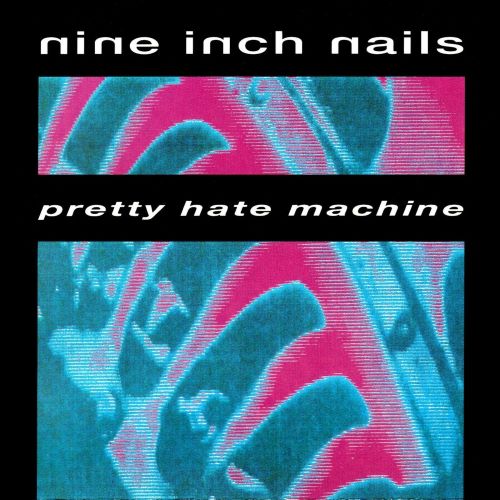
Nine Inch Nails – Pretty Hate Machine
Released October 20, 1989 via TVT Records
My Favorite Tracks – Sin, Head Like A Hole, Terrible Lie
Nine Inch Nails was the brainchild of Trent Reznor, who would be the band’s only member for the recording of the debut album. Reznor was able to record for free in a studio in Cleveland, Ohio; where he worked during the day then was allowed to do his recording at no cost.
The music here can bear multiple descriptors and still be pretty accurate. It is inudstrial, though far more rooted in conventional rock than many legacy industrial acts. It can easily be called electronic rock, though such a term doesn’t really mean much other than synthesizers and like instruments were used. And this was certainly alternative, in that it didn’t sound like much of anything else that was going on at the time. Yet, anyway.
Trent Reznor was the only musician involved in the bulk of recording Pretty Hate Machine, though others contributed spot appearances. The album was produced by a committee though, with Reznor and four others earning production credits. Among those was Flood, who had a long career in engineering and was now stepping up into production and whose future would be entwined with Nine Inch Nails’ rise.
The original issue of Pretty Hate Machine was 10 tracks at 48 minutes. A 2010 reissue includes a Queen cover and there are some other odd editions that comprise bonus tracks taken from the album’s many single releases, but today I’ll stick with the OG tracklist.
Head Like A Hole
Opening the album is the earliest NIN signature song and the album’s second single. This one comes in with synthesizer action but also sticks to a conventional rock formation, this song is probably as close as it gets to heavy metal on the first album. The verses spell out the presence of God Money, the true all holy presence that runs everything, then the chorus ramps up and lashes out, its refrain “I’d rather die than give you control” being a very recognizable shout from over 30 years prior.
Head Like A Hole has remained a NIN staple since release and is the band’s most played live song. Note that the music video features a remix of the song, though it is not radically different from the album cut.
Terrible Lie
It’s on to another NIN staple cut, this one wasn’t a single but has been in wide circulation anyway. This one keeps a slower pace but does still hit pretty hard. It’s one that sounds mostly more conventional though it still features plenty of synth and electronic programming. This one sees Reznor questioning god and religion, something he would not stop with here. Though this one is far less blasphemous and pointed than subsequent forays on the topic would be. This one is more about the disconnect between promise and reality, and the desire to cling to the fantasy.
Down In It
Up next is another album single and also the first song Reznor wrote for NIN. This one sees Trent showing off some rap skills and also goes very hard on the electronic side of things. Reznor has said that the song is a complete rip-off of Dig It, a 1986 track from influential act Skinny Puppy. And yeah he’s right about that.
The song is about what a lot of this album is, which is late teenage heartbreak and angst. It was based on an early relationship of Reznor’s and while the song is general enough to apply to a lot of things, the relationship angle is an obvious one. Also, the end of the song literally uses the “Rain, Rain Go Away” nursery rhyme for whatever reason. Kind of funny.
There is a funny story about how the FBI became involved with lost footage from the music video, but the story is lengthy so I’ll save it for another time. It’s widely available on Wikipedia and elsewhere for the super curious.
Sanctified
Here is a more atmospheric track that employs the electric elements to great effect. It couples the idea of relationships with the holy elements of purification, as though one is ascending or cleansing through the act of being with someone. Reznor has mentioned that the “relationship” might actually be one with drugs, though the song works quite well in the more conventional context of relationships.
Something I Can Never Have
A more quite ballad, and one that’s very forlorn. This revolves around love and loss, the unobtainable and the loss of what was. Reznor would showcase a special talent for this quiet electronic ballad style over the years, of course the culmination of that is a tale for later. This song got used for the soundtrack to Natural Born Killers, which Reznor produced.
Kinda I Want To
“Nine Inch Nails” and “fun” aren’t often words used in the same sentence but here on the debut we have a bit of it. It’s more upbeat, though still a bit twisted. I know nothing about dancing but I’m sure people could dance to this. This song centers around being tempted by something and the struggle around it, though honestly it sounds like the decision to go for it is already made. There’s no telling what the actual temptation is here – sex, drugs, slot machines, take your pick.
Sin
Up next is the album’s third single and my favorite from the record. Sin is, in its original form, a bit of a dance-pop tune, though with a theme and lyrics with a much darker bent. This song was remixed extensively, several versions exist and it’s done in a different style live, with less “fun” synth and more dark tones.
Sin is about what you would think a song named Sin is about on a NIN album. It does specifically deal with what sounds like an inadequate person in a relationship who’s caught in a power dynamic and is just fodder for their partner.
There is a music video for Sin, but it features a lot of sin and isn’t around on the usual video services. It’s around in other places for the sinfully curious.
That’s What I Get
This song turns down the intensity for awhile. It opens with a very weird yet compelling noise accent, then gets very quiet through the verses as Trent laments being cheated on. The song’s second half picks it up a bit but it’s still fairly minimal.
The Only Time
As the album winds down here’s another one that’s a bit minimal but is a fair bit louder than the track prior. This one is also kind of “fun” and deals yet again with being tempted by someone and all the feelings that go along with that for a young, naive person.
Ringfinger
The closer is a bit of an electro jam, with a fair bit of synth going on that’s more of the musical main event than an accent. Lyrically this tackles the “bliss” of marriage, as the title would indicate. There’s a small section with a very twisted electronic riff that would become a NIN staple going forward.
Pretty Hate Machine was a solid debut that would kick-start the legend of Nine Inch Nails. The album would chart very modestly on Billboard at 75, though word of mouth spread news of this new act around and the band caught fire. The album would eventually be certified triple platinum. Reznor would form a band for touring, the early live incarnation of NIN included Robert Patrick, who would go on to start Filter a few years later and land some hits of his own.
The word on Nine Inch Nails spread fairly quickly, by 1992 they were a fixture on MTV and elsewhere. It was also a pretty diverse crowd checking them out – the goth kids, industrial and synth-pop fans, metalheads and rockers, and hip-hop fans all came along for the ride. Axl Rose was one very famous early NIN adopter and he would take the group on a Guns N’ Roses European tour.
By the time 1995 rolled around Nine Inch Nails was one of music’s most unique and awe-inspiring acts, and the use of electronic/industrial music would seep its way into heavy rock for the rest of the decade. While it’s easy to pick on the emotionally immature themes of Pretty Hate Machine, something everyone including Trent Reznor does, the album still resonates with fans to this day and several songs are auto-includes on a setlist that now has a ton of material to pull from.
Sure, it was grunge in 1991 that symbolically changed music forever, but Trent Reznor had his own hand in shaping the future with his unexpected debut in 1989. Things would not be the same and Nine Inch Nails were a huge part of the new machine.

 The Crooked Wanderer