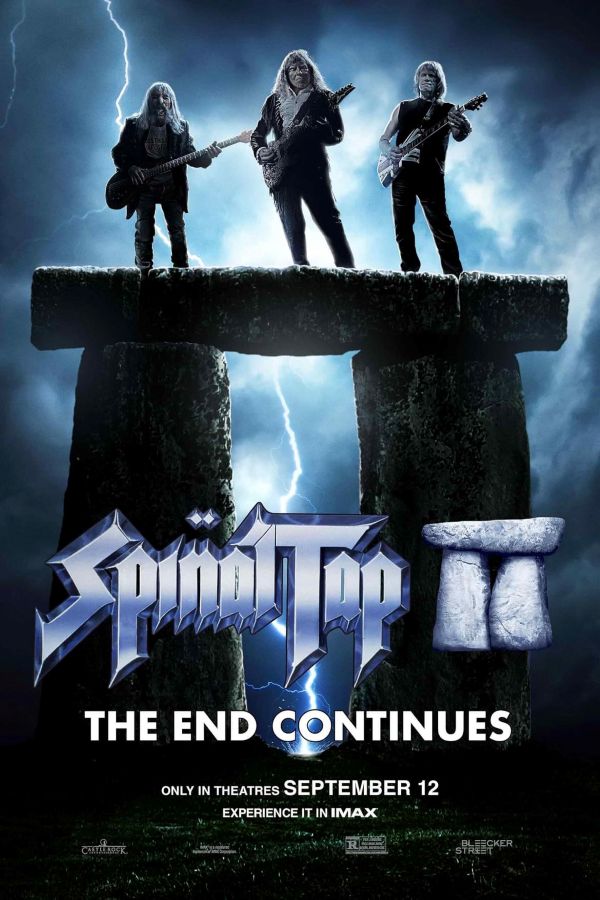
Spinal Tap II – The End Continues

This past weekend was the theatrical release of Spinal Tap II – The End Continues. This film is the sequel to the 1984 cult classic mockumentary This Is Spinal Tap. It’s not common to get a sequel film 41 years after the original, but a long-standing battle over rights issues and a simple desire to find the “right” story for a new film held things up for a long time.

This new film involves the four main characters – band members David St. Hubbins, Nigel Tufnel and Derek Smalls, as well as documentary maker Marty Di Bergi. There are also a number of new people involved, a handful of cameos from characters in the first movie, and several new guests.

The movie is quite short by today’s standards, going for 1 hour, 22 minutes. I was fine with it, there was more than enough to fill the screen and I didn’t see a reason to have a super long movie.

The plot is very simple and, to be honest, barely even there. Spinal Tap are contractually obligated to have one more show after 15 years of not playing together. The rest of the film is the lead-up to the show and then it caps off with the show itself. It’s extremely simple and doesn’t carry any excess baggage or dense weight to process.

This does make for easy watching but does also have a downside – there isn’t a ton of real tension or anything in the film. The first movie had a huge sense of wondering just how far the band was going to fall, as well as a true antagonist with Jeanine fouling up the band. Spinal Tap II doesn’t have much adversity going on – sure, David and Nigel have issues with each other and there’s an antagonist with a slimy concert promoter, but the film moves from “they’re reuniting” to the reunion in pretty short order. No one needed a crazy movie with twists and turns, but this is super, super light on plot.

We do get several guest appearances. A handful are small cameos that let us know how characters from the first film are doing, and a few others are new guests. Garth Brooks and Trisha Yearwood appear in one of the film’s most hilarious scenes and Paul McCartney makes a decently-sized appearance as himself. Elton John spends a bit more time on the screen and is pivotal to the film’s conclusion. There are a handful of other brief guest shots that come during an important story scene and I won’t spoil it, but they do make the joke that everyone thought they were going to make based on the pre-announced guest list.

One thing the movie gets right and probably the central thing they needed to get right is the humor. There are a few outright moments of gut-busting laughter, but most of the jokes are the same kind of faux-British, deadpan delivery that made the first movie so charming. Nigel especially is as full of nonsense as he was in the first movie.

Another thing done very well is honoring Spinal Tap lore. This movie fits very easily in alongside its 41 year old sibling film. The band’s long-running issues with drummers play a huge role, and the actual reunion show and aftermath are very much tied to incidents from the first movie. There isn’t a ton of new original music on offer in contrast to the first film, but Derek Smalls does air out a few bits of solo material. And while David St. Hubbins does seem a bit different as he’s gotten older, Nigel and Derek are almost straight-line continuations from the original flick. It’s very cool to catch up, albeit briefly, with old characters like Bobbi Flekman, Jeanine and Artie Fufkin. And the film honors the departed Ian Faith with a brief flashback before introducing his daughter. While the plot may be light, the story connection to the first film is rock solid.

I don’t feel much need to keep going with dry analysis so I’ll go ahead and wrap it up here. Spinal Tap II – The End Continues is a fitting sequel to the classic film of decades gone by. While it doesn’t offer up a lot in the way of story, it does great service to its lineage and offers up an entertaining array of laughs. It was nice to see the band back together for one more ride and the movie was more than worth the time.

Grade: B+

So now we have what seems to be a fitting conclusion to the Spinal Tap saga. I presume this is the final film, anyway. And in usual movie tie-in fashion, the band did offer up an album to accompany the film. I have since covered the album in this post.
This Is Spinal Tap gets limited holiday weekend theater showing

Super quick one today – kind of pointless post but I figured I’d take a moment to discuss this.

We are a few months away from the release of Spinal Tap II: The End Continues. This flick will be the sequel to the much-loved 1984 masterpiece This Is Spinal Tap, the great mockumentary that put rock and metal under a hilarious and critical lens.

While Spinal Tap II isn’t coming until September, there is a treat coming this weekend for fans. The first film This Is Spinal Tap will get a limited theatrical run over the July 4th holiday. This will only be for the few days following the holiday as far as I know – one local place is showing it on the 5th, 6th and 7th.

There are a few bonus features tossed our way, in case the thought of watching a 41 year old film you’ve seen dozens of times isn’t that appealing. First, Rob Reiner will reprise his role as Marty Di Bergi to offer up a new introduction. And we will also get a sneak preview of the new film. I’m sure the new bonus footage is brief, but it’s a fair little bit of a draw to go hang out in a movie theater and be treated to the fantastic film again.

Obviously since I’m talking about this I have my tickets for the Saturday showing and will be there. I won’t bother doing a report on it, the new snippets don’t really warrant their own post and I’ve already talked about the original film. I never need an excuse to put the movie on so watching it again is no problem for me. And this will make a busy Saturday for me, as Ozzy Osbourne’s final show is also happening that day and I’ll take that in via streaming as well. I’m glad I have an extra day off to process all of this heavy metal madness.

And that is about all I have to say on it. I’ll be at the theater this coming weekend to enjoy one of my favorite films, and I’ll be there again in September to enjoy the sequel. I know some people are cynical about the new film, but I’m old and tired and I’m ready to just enjoy something. I trust the people involved with the film to deliver something that entertains me for the film’s runtime. I doubt it will be as good as the original, but few things are. I’m sure there will be plenty in the new film to enjoy.

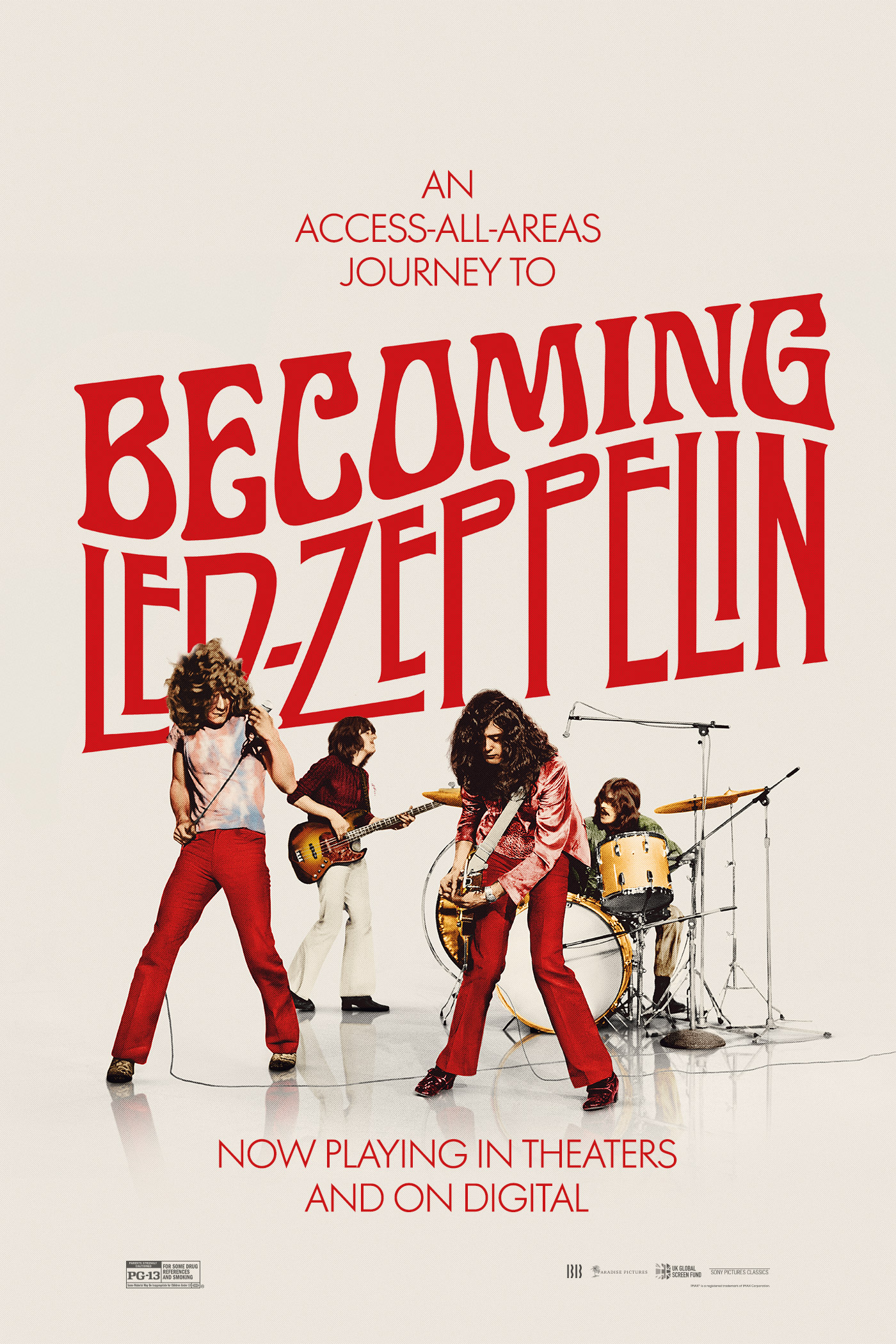
Becoming Led Zeppelin

Earlier this month we got a real rarity – a Led Zeppelin documentary with the full cooperation of the surviving members. Becoming Led Zeppelin was filmed a few years back and, after some theatrical screenings, hit streaming services earlier this month.

The film was put together by Bernard MacMahon and Allison McGoutry, who had previously worked on a music series called American Epic. The series had attracted the attention of the former Zep members, two of whom can be famously prickly about discussing their past. But everyone was on board for this specific treatment, which as far as I know is the first and only Zep documentary done with the participation of Page, Plant and Jones.

This documentary is not a tell-all that follows the band’s entire career. This focuses on what the members were doing in the years before Zeppelin and then runs through the release of Led Zeppelin II and a few landmark gigs from that time frame. And I’ll say that I prefer it this way – I honestly was not terribly familiar with Jones, Plant or Bonham’s pre-Zep days and this was a nice deep dive into their early musical forays. Page I had more knowledge of but it was still nice to have the run down.

What we get is the three surviving members saying their pieces in separate interviews. Some people lament the lack of interaction between the participants but I wasn’t concerned about it. John Bonham is represented by archival interview recordings from 1980, not long before his death. While the three living members don’t speak with each other, they do seem to listen to Bonzo’s parts at times.

I don’t know if this film is for people not familiar with Zeppelin – the pre-Zep days are covered fairly in-depth, but then the film moves fairly quickly through the key events of the band’s formation and rise to success. I do feel like some knowledge of the band’s progress might be warranted to fully appreciate this doc, but it’s entirely possible that folks who aren’t that familiar with the band might still get something out of this.

The main criticisms of the film I see are the separate interviews and also that the film ends “abruptly” without continuing on through their whole career. I’m personally fine with how it was done and I don’t share these criticisms. The only negative point I have to mention is that the audio is kind of hosed – the music performances are LOUD and the talking audio is very, very quiet in comparison. This might work well in an IMAX theater setting, but my humble home TV is not an IMAX. It can be a bit tough to pick up what British people are saying when the audio is super quiet, and the subtitles don’t always help because they are white and fairly often display on very light backgrounds, rendering them unreadable. I had to actively work my volume control through the film to keep things on the level.

That is my only real criticism. Beyond that, this is a very well-done film that offers a lot of lore for the pre-Zep days and hits the highlights of their first few years. There are several live clips in the film well worth checking out. I don’t know the ins and outs of how previously available some of the music footage is, some of it is billed as available for the first time (at least officially).

I do highly recommend this film for anyone with any kind of interest in Led Zeppelin. It’s wonderful to hear the guys talk about their upbringing and the band’s formation, especially the interview with the long-departed John Bonham. We also get plenty of Jimmy Page showcasing his drive to push for more success and John Paul Jones being along for the ride despite having a successful career as a session musician. And while Robert Plant has at times been reticent to lean on past glories, here he is fully willing to revisit his early days and the formation of the band. His recounting of his tough go of it before Jimmy Page found him is compelling, and his tales of working with Bonzo despite John’s wife totally not being into Robert is funny and heartwarming.

There isn’t much more for me to say – this is a great film on one of rock’s biggest bands, and we get the most compelling part of the story with the early years. This is well worth the watch.

Spinal Tap II gets release date

Yesterday we got official news of the sequel to the iconic movie This Is Spinal Tap. The movie is called Spinal Tap II: The End Continues and will hit theaters September 12 of 2025. This article from Consequence Of Sound lays out a lot of the details.

This sequel, which comes 41 years after the original, features the three main actors from the original film all taking up their roles again – Christopher Guest as Nigel Tufnel, Michael McKean as David St. Hubbins and Harry Shearer as Derek Smalls. Rob Reiner is again both in the director’s chair and also resuming his on-screen role as mockumentary host Marty Di Bergi.

The first movie featured an array of special guests from both the acting and music worlds, and the new Spinal Tap will feature a few returning guests and several new ones. Coming back to the film are Fran Drescher and Paul Shaffer. Drescher is confirmed to reprise her role as “the hostess with the mostess” Bobbi Flekman, while it’s not entirely confirmed if Shaffer will be back as the useless record label rep Artie Fufkin. (I would assume he is)

We do have quite the roll call for new guests in this second film. No less than Paul McCartney and Elton John will drop by, as well as Garth Brooks and Trisha Yearwood, Questlove, Chad Smith and Lars Ulrich. That’s a pretty titanic guest list and it’s most likely that we don’t have all the details on guest shots right now. And it sets up a funny possibility – both Chad Smith and Lars Ulrich are drummers, and Spinal Tap lore is not kind to drummers. Lars might meet the fictional end that some cynical Metallica fans have been longing for. (not me, I think he’s fine)

There are a host of other actors who will take up new roles, which is fairly obvious since this is a new story set a ways beyond the initial film. But there will sadly be a handful of both regular cast and guests who cannot make the sequel as they are no longer with us – Tony Hendra (Ian Faith) and R.J. Parnell (Mick Shrimpton) are gone, as are guests Bruno Kirby, Fred Willard and Howard Hesseman. (this is not a comprehensive list, the cast list for the first movie is pretty big)

In preparation for the new film, the original This Is Spinal Tap will get a new showing in theaters and then a digital and streaming release this summer.

Of course people are wondering if a sequel is really necessary, especially after this long, and if it will be worthwhile. There are several cynical comments about the new film, but with this being the Internet in 2025, those kind of comments are unavoidable. Plenty of others seem excited by the prospect of the new film, I among them. No, I don’t expect this to be as good as the first film or even nearly as so. That was a cultural moment that is unable to be replicated. But I do expect that the people involved can make an entertaining and amusing film that does justice to the Spinal Tap legacy. I’m not worried about that at all and I fully expect to enjoy the new film. These folks know what they’re doing and I don’t anticipate any real letdown here.

There’s not much left to do besides wait for the film. We don’t have a trailer yet, just a small teaser video included below. We just have to get through the summer so we can tap into another slab of hilarious rock and roll.

Dio – Dreamers Never Die

This long-desired documentary on the life and career of Ronnie James Dio finally saw the light in 2022. It had a limited theatrical run and then was on a streaming service I’m not sure of for awhile. That should tip you off that I hadn’t seen it yet. I think a month or so ago the doc was made available to buy in physical form or digitally. I bought it and finally sat to watch.

This film was fully authorized and assisted by the estate of Dio, helmed by his widow Wendy Dio. She was an executive producer of the film and also clearly had a lot to contribute about Ronnie in the film. Aside from Wendy, Dio biographer and renowned journalist Mick Wall was also a primary contributor to the project. And also involved was Dave “Rock” Feinstein, a former bandmate of Dio’s as well as his cousin.

The cast of people who lined up to film something for this doc is pretty staggering. I won’t bother with a complete list, but even summarizing it takes a moment. Rob Halford, Eddie Trunk, Lita Ford, Jack Black, Don Dokken and Sebastian Bach were all on hand. Every member of Black Sabbath that Dio worked with was on film as well, even Bill Ward who was only around for the first bit of Dio’s involvement. And the remaining list of contributor is honestly just too vast to get into here. There is also plenty of archival footage used to fill things out, and of course Dio’s own parts were necessarily culled from old interviews.

This goes through Dio’s early life and then into his music career. It spends a bit of time going over his early groups Ronnie and the Red Caps and Ronnie Dio and the Prophets. (note to record collectors – if you ever see those out while record hunting, GRAB THEM. They are scarce and expensive if people actually know who is involved.) These early old-style rock groups would transition to The Electric Elves and then Elf, all before Dio was tagged by Ritchie Blackmore as the first singer of Rainbow.

All this leads to the career path most people are familiar with – Rainbow, then Black Sabbath, then Dio. All this is discussed in detail by the principals involved, with some emphasis placed on just how huge of a gamble Dio was taking on going out solo and also with huge live production costs. They cover the highs of early Dio and then the crash of traditional metal in the 1990’s, all of it is covered pretty well.

I won’t go too hard on details in the film, but a few things are worth mentioning. One is the famous “devil horns” story. Dio is credited as the initial user of the famous metal hand gesture, with the story that he got it from his grandmother. Geezer Butler does have a very different take on the origins of the hand gesture and Dio’s use of it, that can be found with a quick search. Other noted rock musicians also have their own claims to the “devil horns” but I ain’t got time for that, Gene.

The other issue that gets brought up a lot is the stint that guitarist Vivian Campbell served in Dio’s band at the beginning. Campbell is on the first three solo albums but then left in less than cordial circumstances, and both he and Dio sniped at each other in the press until Dio’s death. Campbell was not brought in for the film itself, fairly understandable as relations between he and Wendy remain icy. But he is discussed as a key figure in Dio’s early work and also he is given a brief moment to say his own peace about his departure via an archived interview. I thought that was a pretty nice touch from the film makers to do that, at least his side is stated in some fashion. This wouldn’t happen in a lot of other musicians’ documentaries.

Overall I was very impressed with the film. It was a big league production, this was not skimped on at all. It was shot well, put together in a coherent fashion, and told the story of Dio in a fantastic way. All of the guests offer worthy contributions and everything is put together well. It flows great and uses every bit of its two hour runtime in great fashion.

The film also gets to the core of Dio’s motivations and background. It’s stated in the title, Dreamers Never Die. He was a man who offered a means of escape and dreams away from the trials of the world. It is central to what made heavy metal so popular in the first place – this was for the outcast and marginalized people, those who didn’t fit in with the popular culture or narrative. I was certainly one of those who came to metal for that reason. This was a nice narrative that tied everything together.

I’d fully recommend this film to anyone interested in music at all, whether or not you’re that familiar with Dio’s work. The film doesn’t fully explain things in reference fashion, but it also doesn’t require any degree of inside knowledge. It was wonderfully put together and is a fitting tribute to one of heavy metal’s enduring icons.

Revisiting The Legacy Of This Is Spinal Tap

On Monday I talked about the soundtrack to the movie This Is Spinal Tap. Today I’ll talk about the movie itself.

Of course, before I get into the main event, rest in peace again to Ric Parnell. Parnell played Mick Shrimpton in the movie and was the drummer for the 1984 album as well as the 1992 effort Break Like The Wind. Parnell died just a few days ago at age 70.

In terms of movies about music, there honestly are not many that measure up to This Is Spinal Tap. The “mockumentary” was a battle to get funding for and film, and then was a slow-burner that edged its way to cult classic and then eventually immortal status. While there are a handful of music films that are held in the highest regard (The Last Waltz comes to mind), there are few, if any, that do for rock and metal what Spinal Tap did.

The movie is a laugh riot, but the jokes aren’t the kind of setup-punchline thing. Much of the movie was done improv style and the jokes are left in a deadpan form for whoever wants to pick them up. Anyone else saying some of the stuff in the movie would come off just plain dumb, but it’s the most brilliant comedy when delivered in the movie.

And of course the film’s greatest legacy is that it’s almost not really a parody. There are many tales of rock stars seeing the movie and not finding humor in it – Steven Tyler of Aerosmith and The Edge of U2 are a few who thought the movie was so spot on that it wasn’t funny. Many musicians have recalled their own “Spinal Tap” moments on tour, the fake band’s name is now a term for real life happenings. And even the idea of having a black album cover would come to fruition – while Spinal Tap’s Smell The Glove didn’t get traction in America, Metallica’s “Black Album” seven years later would be the best-selling album of the 1990’s. That probably has more to do with Metallica than with Spinal Tap, but the parody band were openly cited as inspiration for Metallica’s cover.

And that’s really the thing about Spinal Tap – they’re pretty much just another band from the era of rock and metal. They informed the scene as much as they provided commentary on it. Rob Reiner went to see Judas Priest live as part of his homework to make the movie. And tell me that you don’t see Iron Maiden all over Spinal Tap, they’re almost the same damn band. Spinal Tap provided legitimate influence to countless bands over the years, and every big band has their “Spinal Tap” story of some absurd event almost too silly to be real.

This Is Spinal Tap is a movie that has entertained many rock denizens in the 38 years since its release and it has also bore real influence even as what was originally a mock band. The movie just rolls from start to finish with a completely packed guest list and absurd gag after absurd gag. It entered the general pop culture lexicon in many avenues – Harry Shearer’s gig on The Simpsons led to a Spinal Tap episode, Fran Drescher reprised her role as Bobbi Fleckman on her hit 90’s sitcom The Nanny, the esteemed Mick Fleetwood actually risked life and limb to become a Spinal Tap drummer for a spell in the early 2000’s, and Christopher Guest has helmed a series of award-winning mockumentaries in the same style of Spinal Tap. This led to a huge mash-up in 2003 on A Mighty Wind, where Guest mockumentary regulars Eugene Levy and Catherine O’Hara joined the other Spinal Tap primary players and a host of other Hollywood talent in a folk revival mockup that garnered a similar reception to Spinal Tap.

There is no questioning the legacy This Is Spinal Tap has left on the rock landscape. To wrap up I want to recall three of the movie’s most famous scenes. This isn’t a list of “my favorites” per se, honestly the whole movie is my favorite. But these scenes are the ones that people go back to and that people who don’t even know Spinal Tap at least have heard of the references.

Hello Cleveland!

This scene is an absolute laugh factory – the band are getting ready to go on stage to a very energetic crowd in Cleveland and begin their journey from backstage. The only problem is that backstage to stage is a journey longer than one of Skyrim’s longest dungeons. The band get lost at multiple points and have to ask for directions from an employee, but even that doesn’t get them on stage. The band are lost in a broken down labyrinth.

This is one of the many scenes that have happened to countless musical acts in real life. I can’t locate the exact text now but the scene might have been inspired by a similar gaffe by Tom Petty. Even if not, rock stars and luminaries from every genre of music have their own Hello Cleveland! Stories.

These Go To 11

This scene doesn’t need much exposition – I’d imagine it’s the most famous line from the movie. Nigel is showing Marty an impressive guitar collection (the sustain!) when the Marshall head that goes to 11 is shown.

And it’s not just the concept, it’s also in the delivery – when Marty suggests that 10 could be made louder, Nigel simply chews his gum for a moment and then remarks “these go to 11.” Just amazing delivery.

This is the phrase that people know from the movie even if they don’t know the movie. It’s the signature line and it’s why we’re all here.

Stonehenge

It’s all there – the band break into their epic, brought out to revive flagging attendance numbers on tour. Everything is going great, then a Stonehenge monument falls from the sky that isn’t big enough to use as a footrest. The aftermath sees manager Ian Faith quit the band and a path to oblivion unfolds – that is, until Sex Farm hits the charts in Japan.

Stonehenge is everything that goes wrong with stage props, something that happens to bands all the time. But Stonehenge actually did happen to a real band, just in the opposite fashion – in 1983, Black Sabbath had to cancel several Canadian shows on their Born Again tour because their Stonehenge replica was too big to fit in venues. And the funniest part is that one didn’t influence the other – Spinal Tap had a draft version of their Stonehenge gag before Black Sabbath’s tour. It’s just one of rock’s freaky coincidences. Spinal Tap would twist the bit and do the “too big” version in 1992 at their Royal Albert Hall performance.

Any time I go back and watch the movie, it’s always the Stonehenge scene that has me on the edge of my seat. It’s the movie’s most pivotal moment and the biggest turning point for a band slowly flailing away on a tour that isn’t working. Everything before builds up to Stonehenge and everything after is a result of what happened. The whole scene, sadly not entirely represented in the clip, is really the point of the movie.

And there we have it – one of the greatest movies of all time and one of rock and metal’s most important moments. I’m sure I’ll have more to say about the film in the future, this is a well that there is plenty more to go down before hitting bottom.

After all, what’s wrong with being sexy?