On again with this long-running series where I pick five songs from a year. As always, this list should be taken as “five of my favorite songs from 1969,” as opposed to “my five favorite songs from 1969.”
1969 was apparently a hell of a year. I wasn’t personally around for it, I still have eight years before I showed my pretty little face. But this was the big one – the Summer of Love, Woodstock, all of that jazz.
Now, I don’t know if music from ’69 really leapt out and grabbed me the same way stuff from ’67 did. But that could be more about that year than this one. It was no real problem finding five songs for this year.
Led Zeppelin – Communication Breakdown
First off is one from Zep’s debut. I do very much love the album and this song specifically is a huge selling point. A short blast of heavy metal from them, which is honestly a rare treat as they influenced the genre for sure but didn’t actually play it much. I’ve always loved the power and insanity of this track.
Credence Clearwater Revival – Fortunate Son
I guess one way to achieve musical immortality is to release three freaking albums in one year, which CCR did in 1969. This track was a shot at the elite, who kept their children out of the Vietnam War while the sons of the working class were shipped off to face death. It’s a fantastic song and an enduring protest anthem to this day. While CCR had a number of great songs in their career, which was apparently mostly in 1969, this song stands out to me as their magnum opus.
The Stooges – I Wanna Be Your Dog
What would become punk rock took shape in no small part thanks to this track from Iggy Pop and company. This is a pretty groovy track with piano from John Cale of The Velvet Underground and the simple, distorted three chord guitar structure which would become the anchor of punk. The song isn’t literal, Iggy Pop doesn’t want to be a dog. In part it’s the word God turned backwards because Iggy was bored one day and came up with it. The other part is naughty stuff, I’ll let you dwell on that.
Merle Haggard – Okie From Muskogee
Up next is a song written as a counter to the Vietnam protests. Haggard was in full support of the US troops and composed this ode to American life. Haggard later said his views changed after learning new information about the war but the song was an enduring hit and also a tribute to the small town folks of his home state so the song remained in play through his life.
And, while the song is politically charged and in a way I’m not personally inclined toward, it is a fair assessment of that “simpler” kind of life. I can appreciate that side of things, especially the more “small town” stuff. I also fondly recall Willie Nelson playing this live in tribute just after Merle died in 2016, nothing says irony like Willie playing this song.
The Rolling Stones – Gimme Shelter
And this year caps off with yet another song about the Vietnam War, though Keith Richards actually started it based on a far more mundane thunderstorm. But the anti-war sentiment rings strong through this excellent song. I’m not a massive Stones fan, I don’t have any of their albums or anything, but their top tracks do stand out and this is certainly one of them.
That does it for this edition and also wraps up the 1960’s. Things really kick off once I get rolling into the ’70’s. See you then.
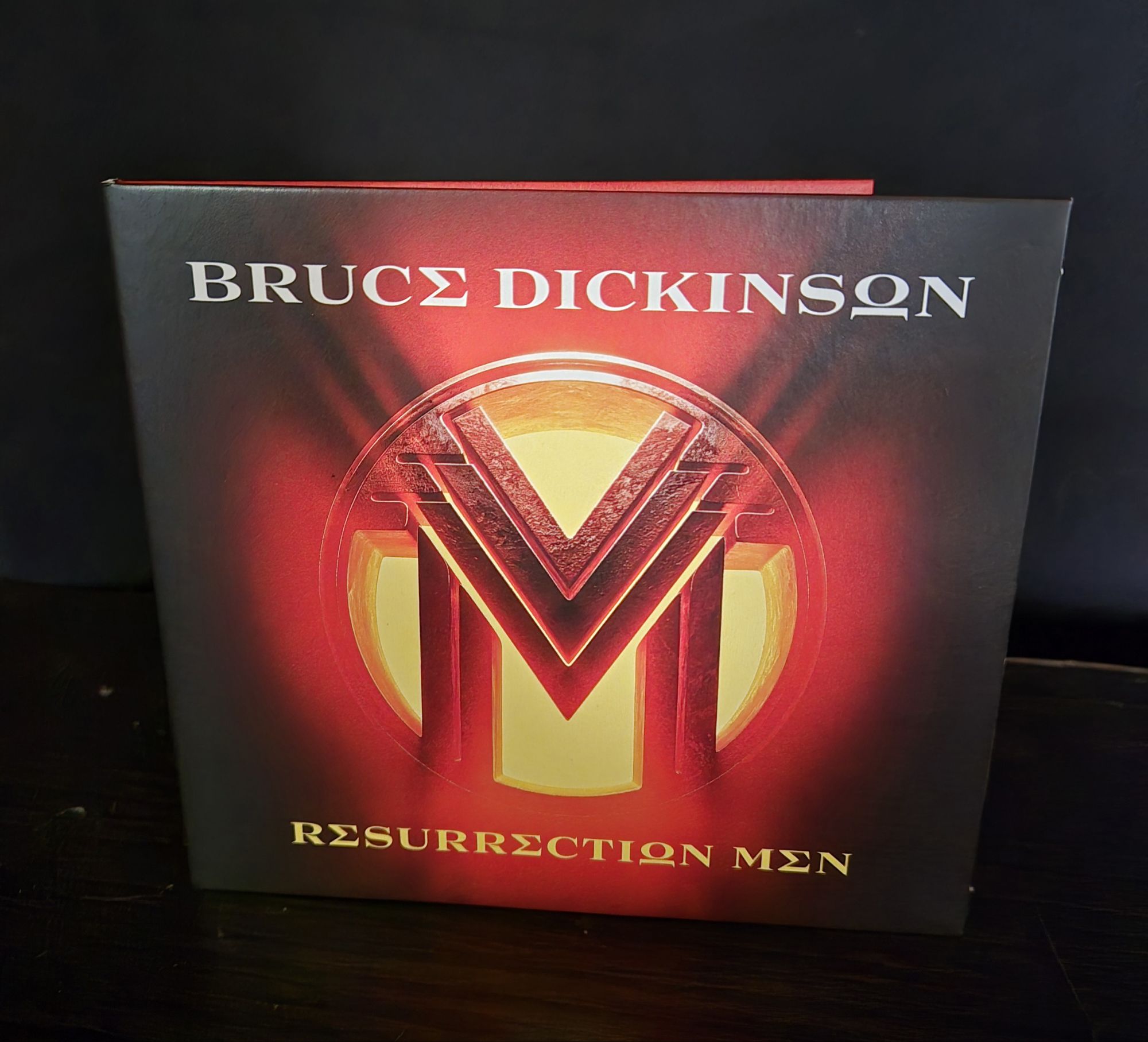
This week’s song is a bonus feature as it includes a few more tracks. Bruce Dickinson just released a single for another song from The Mandrake Project. For my full review of that album, look no further than here.
Resurrection Men is a curious choice for a single release. We got a vinyl release with the lead single Afterglow Of Ragnarok, and the excellent Rain On The Graves was a digital-only offering. Now we have another physical product, this time a CD only issue of this song. It does seem a bit odd to see a CD single in 2024 but hey, it’s not expensive so I’m not complaining. This release did come with a big poster that I’m not hanging up or folding out so no pics of it, sorry.
The main serving here is Resurrection Men. As I said when I reviewed the album, I was a bit thrown off by this song at first. It does feature a bit of a spaghetti western riff with it, which is fine and isn’t the part that throws me off. It’s a weird sort of a slow-tempo breakdown or interlude a bit into the song that I think doesn’t fit all that well and detracts from the power Bruce showcases on the song’s chorus. I have warmed up to it on repeated listens but I’ll still be honest and say I would have done the song differently and let it ring solid throughout. But I’ve grown to be ok with it so I’m not going to rip it apart or anything.
I have zero clue what this song is about. There is a story through some of the album’s songs that discuss being able to resurrect people and this is certainly one of those songs. It mentions Lazarus, who is both a Biblical figure of resurrection and also a character in the story so I’m not really going out on a limb to figure this is a “story song.” I don’t know the story beyond Lazarus, Necropolis and dead bodies being brought back to life so there’s that.
A new music video came with the single release. It is a standard live performance clip that doesn’t tie in to the story at all. Cool video but nothing to help dig further into the concept that is mostly presented in graphic novel form.
As B-sides there are two songs performed live in Sao Paulo, Brazil earlier in 2024. Bruce performed on this tour with his House Band From Hell, which curiously did not include Roy Z. There is fan speculation on there being untidy reasons for that but nothing has really been said by anyone so I’ll leave it at that. To my knowledge these B-sides are only available on the CD right now, I’m sure in the future they’ll find their way to a streaming platform.
The first song is Afterglow Of Ragnarok, already mentioned as the lead single from this current album. The crowd kicks off the recording and is in full form as South American crowds are. If you aren’t aware, they are the most boisterous crowds on the planet. Things then kick in to a bit of an introduction from Bruce and the song proper, which sounds very heavy and honestly quite good on here. On first listen I remember telling Deke that these B-sides might not be up to snuff for a full live album, but my ears might have been wrong about that. This one is sounding pretty damn good after repeated listens.
The second B-side goes back in time to Bruce’s prior solo album which was Tyranny Of Souls from 19 years ago in 2005. Abduction was the lead and only single from that effort. It is really cool to hear this live after not having Bruce solo material for so long. It’s a good performance for a song that’s shockingly about alien abduction, then the single fades out as Bruce gives a “how the fuck are you?” to Brazil.
Overall this is a pretty cool package. The poster isn’t my thing but it’s a cool bonus for those who would want it, and two live B-sides are worth the price of admission. This does tip us off that live material is being recorded and we can draw lines and speculate that a full live offering might be on the horizon, so if you’re a Bruce and Maiden fan it might be best to keep a few bucks handy, especially since Maiden themselves will most certainly have a new live album in the next year.
Last Friday marked three years of this site, or at least three years of me actually using it. Three years is nothing “special” in the grand scheme of things but it’s nice that I was able to get this actually going and keep it running for that long. I wasn’t sure if I’d have the desire to truly do this when I started out, it was a roll of the dice.
And while I haven’t had the time or energy to put effort into improving things in some areas, I’m pretty well content with how things are going so I’m not going to make a huge push for anything soon. I might actually tweak a few design things and all that but I’m in no rush, things will happen as they may.
Posting will remain fairly consistent. Three posts a week works out nicely for now, an occasional fourth post might pop up here and there with other things I’d like to discuss but don’t fit the weekly templates I have going right now.
The 1984 celebration will continue until the end of this year. There are plenty more albums and songs to talk about and I’ll have a few more special posts about ’84 before the end. I don’t have much else huge planned for now, the albums of 2024 will come up as we get to the end of the year. But not much beyond that.
I won’t be doing the same scope of a thing for 1985 that I’ve done for 1984. I might do a few posts looking at the year as there was plenty of great music then too, but 1984 was pretty special and I wanted to truly commemorate that one. The remainder of the ’80’s will mostly just get looked at as time rolls on, there won’t be another in the style of what I’ve done this year.
That said, IF this site is still going in seven years, that does bring up 1991. I would do a year-long commemoration of it as I’ve done for ’84 as 1991 was easily the most significant year in music in my life. But that’s all dependent on the huge IF of this site still going in seven years. This is purely a hobby for me, I don’t have enough traffic to make money off the site so there’s nothing there in that respect. And eventually one day I’m going to get bored with doing this. If the 40th anniversary of 1991 comes along before I get bored enough to quit, then it’ll happen. If not, then obviously not.
I think that about covers it for this three year mark. Not much else to do but continue to celebrate the forty year mark of 1984.
And we’re off – to the Great White North to revisit a glorious dose of speed metal.
Exciter – Violence & Force
Released February 1984 via Megaforce Records
Exciter formed in 1978 under the name Hell Razor, the same year Judas Priest released the song Exciter. The song would, not coincidentally, offer a template for a faster, more aggressive sound that would come to be known as speed metal. Exciter the band would rechristen themselves in 1980 and pursue the noisy, thrash-like aggressive metal.
Exciter’s debut album Heavy Metal Maniac came in 1983 after the band signed to Shrapnel Records. Not long after, Jonny Z of Megaforce would get Exciter’s contract and the band was set to offer their second album on that label.
Exciter rode as a three piece – Dan Beehler on drums and vocals, John Ricci on bass and Allan James Johnson on guitar. The album was produced by Carl Canedy, who was a member of The Rods and who also produced the Anthrax debut Fistful Of Metal. Jonny Z was along for a production credit as well.
The cover picture offers up a scene both sinister and goofy. A person decked out in leather and spikes is attempting to break through a door and presumably do bad things to a victim who is trying to keep the door shut. This same figure was on the debut album cover but this second album marked his final appearance. Some have tried linking
Violence & Force offers ten tracks at a 41:34 runtime. It has been reissued by different record labels over the years. Curiously, a 2004 reissue from Megaforce removed a song – Evil Sinner was struck from the record and this is what is found on streaming services. I have no information as to why the song was plucked from the album, though it did turn up as a bonus track on the reissue of the prior album. Also of some note – the reissues were made possible by fellow Canadian metal luminary Jeff Waters of Annihilator, who bought the rights to the Exciter catalog so Beehler and company could get new issues into circulation.
Oblivion
Up first is a noisy and very brief guitar intro. It’s not much of anything but it doesn’t really waste any time either so it isn’t a detraction of any real sort. Grade: B-
Violence & Force
The first song in earnest is the title track. This one is a ripping affair, slamming along at a breakneck pace through its run. The lyrics bring exactly what one would expect from a song with this title, while Beehler offers up a few ear-piercing screams in the chorus and there’s a wild, dissonant guitar solo as well. Great way to kick off the album. Grade: A
Scream In The Night
Another blast of speed and aggression here about the classic metal topic of stuff in the dark coming to get you. It’s intense and pounding all the way through, with the gang choruses used throughout the record coming in full effect. Grade: B
Pounding Metal
This one eases off the gas pedal just a bit but remains slamming and intense. It is a very basic metal track, as evidenced by the title being repeated about a million times. It does stick out but the song is still pretty good even with the psychotic repetition. Grade: C+
Evil Sinner
Here is the deleted track, again present on original versions but gone from reissues. This does maybe sound like it was recorded somewhere else, perhaps why it was pulled later on. There’s nothing maliciously blasphemous here, it’s just a song about some sort of evil tyrant ruining stuff as they do. Grade: B+
Destructor
This one goes all out on the speed and does show off how closely related speed and thrash metal are. A very solid offering. Grade: B+
Swords Of Darkness
Exciter lay off the pace by a literal hair here and throw in another dark fantasy tale of battle, death and destruction. None of these battles go well for people who aren’t dark and evil, by the way. Grade: B
Delivering To the Master
A fairly long one here at six minutes and it comes with a quiet, moody intro passage. This marches at a slower pace with pretty sick riffs as it relays someone presumably about to sell his soul. A nice change of pace here. Grade: B+
Saxons Of The Fire
This goes all out for sure. It’s a blistering track that venerates the ancient Saxons in battle. The limits of the albums’ production only enhance the atmosphere on this one, it is a barnburner that goes straight for the throat. Grade: A
War Is Hell
We close up shop with a song that goes back to a mid-pace setting and is also the longest track on the record. The punk and NWOBHM influences come straight through on the vocals while the main riff is a straight razor throughout. Grade: A-
Violence & Force was a landmark album for heavy metal, its cacophony of sound would inform thrash metal and later the extreme metal movement. Exciter would not become a “huge” band in the grand scheme of things but they would enjoy a bit of sales success for these early albums and also be cited as an influence from people all over the metal spectrum. The production was a bit lacking due to financial limitations but that would become an album highlight as opposed to a detriment.
Exciter would go on to tours with Anthrax, Mercyful Fate and Motörhead. They would subsequently begin shifting band members and pursuing a more melodic sound. Exciter broke up a few times over the years but have reformed under various line-ups, no one original member had a constant presence through the band’s full run.
This album offers up a fine slab of nasty, aggressive heavy metal. While it’s not technically challenging or “innovative” I suppose, it is a significant point in metal history. It is also, while sounding heavy like other offerings of the day, very much its own thing. Exciter didn’t sound like Metallica or Slayer nor did the reverse happen. Violence & Force is its own experience that won’t be found in anyone else’s recording catalog.
Album Grade: B+
Understanding the full scope of heavy metal requires getting under the hood. No doubt that Ride The Lightning was influential in 1984. But Exciter lie as a central cog in the development of heavy metal in the early 1980’s. It was ok to be fast and nasty, and also listenable alongside that.
Back again to pick songs from a year. This time it’s on to 1968, which again I’m not radically familiar with the time period. This was nine years before I was born so this is me going back to songs I’ve heard in the years since.
And as always, this is more of a “five of my favorite songs” kind of thing as opposed to “my five favorite songs” of any year. Nothing radically definitive here, just me going through stuff. Let’s get to it.
The Jimi Hendrix Experience – All Along The Watchtower
Up first is something definitive, this being the definitive cover song. Hendrix worked on this before Bob Dylan even released his version and Hendrix’s cover was out only six months after Dylan’s original. And Jon Bon Jovi’s cousin was the recording engineer in with Hendrix for long sessions of recording guitar tracks over and over again.
But in the end what came out was a masterpiece of a song. Hendrix did such wonders with the song that Dylan wound up working some of the cover into his performances. The song is a crazy, mind-melting trip through what sounds like an apocalyptic wasteland. There’s really nothing more I can say, the song is just flat out amazing.
Johnny Cash – Cocaine Blues
Another cover song here, as Cash pulled out this old time song for his famous set at Folsom Prison. A twisted tale of Willy Lee, who gets messed up on the white powder and shoots his woman for having other lovers. Lee runs off to Mexico buts gets caught and put away for life in Folsom (it was San Quentin in older versions).
This is one hell of a heavy song for a country performance, though also one fitting for the audience Cash was playing for. Cash said he almost “did himself in” playing it, it’s a pretty hard hitting tune to play out with basic country instruments. And it’s a magnificent highlight of a landmark performance.
The Beatles – Back In The USSR
For a bit of a spoiler alert – this is the only Beatles song to appear on my lists. And the one I pick is essentially a joke song, this one mocks up the Beach Boys and Chuck Berry and clowns around with their takes on the USA. And Ringo was pissed off during this time so Paul had to do the drums, or something, I’m not entirely sure.
But this is a fantastic boogie, it’s both funny and also a really good song on its own merits. And it was a great way to open an album, especially one with all the crazy shit that the White Album had on it. Paul and company took some flack for recording this back then but the song outlived the Soviet Union and it’s been a widely played and celebrated track.
Cream – White Room
One more Cream song for the list before the group bowed out. This one is another crazy psychedelic offering but was actually just about Jack Bruce’s poet friend who had just got an apartment or something. It’s also probably about drugs, I don’t know that but it has to be because these lyrics are totally crazy. Another fine jam from a group that did more than they probably want credit for to get heavy metal off and running.
Merle Haggard – Mama Tried
A little more country to wrap this one up. But this is not just a country song, Mama Tried was a huge hit for Merle and has been all over the place since its recording over 50 years ago. The song is partially a look at Merle’s own early life – he was a petty criminal growing up and wound up doing a stretch in San Quentin. A series of events with other inmates led to him turning his life around, and also he happened to catch a Johnny Cash performance while locked up.
This song is far more tragic than Merle’s own life, though. The guy here gets put away for life, even with his mother doing her damnedest to keep her son from going astray. It’s a sad, sad tale that gets to just about anyone who listens to the song. This was 18 And Life long before Skid Row was a thing.
That covers it for 1968. Just eight more of these and we’ll actually get to years that I was around for.
Speaking of years, a quick note – today marks the third anniversary of this site. I’ll have a more in-depth acknowledgment of that some time next week. Until then, enjoy your weekend.
It’s time to get back to the celebration of 1984, which will run to the end of this year to commemorate the 40th anniversary of this great music.
Today’s song comes from the debut album of Seattle metal outfit Queensrÿche. I covered the album last year before I realized I’d be doing this running 1984 deal, but I can pull the signature song and have a deeper look at it.
Take Hold Of The Flame was released as the second single from the album The Warning. It didn’t chart in the US and I don’t have any international chart information, but this was reportedly “big in Japan.” That does track, as Queensrÿche headed over there in short order and even recorded live stuff in Tokyo.
This is honestly a straightforward metal song from an album with a bit of embellishment on it, and from a band whose career could accurately be described as “out in left field.” But this is off and running riffs that are largely contained and pounding drums and bass. There’s a solo, of course, this one I believe credited to Chris DeGarmo, but nothing really wild or flashy going on with this song.
The star of the song is the band’s singer Geoff Tate. Even in an age with luminaries like Rob Halford, Bruce Dickinson, Ronnie James Dio and others providing a master class on heavy metal singing, Tate seemed to be from another planet on these early performances. He doesn’t necessarily show off here except for a small part at the very end, but his voice delivers these lyrics with full force.
Queensrÿche were really on some trippy stuff lyrically during their early run – AI robots, war, more AI robots, wives of prisoners and all sorts of other stuff that does somewhat involve AI robots. But on this song the group chose to hold off on predicting more of what 2024 would be like and provide a more relatable treatise on motivation and “grabbing the brass ring,” if you will. To some extent the song does dwell on those who did not get up and go get it, those lost who will fade from history. But overall the song is a memo to get off your ass and get it done, whatever “it” might be.
Take Hold Of The Flame became an early crowd favorite and Queensrÿche were happy to oblige – it remains the band’s fourth most-played song out live. This is counting the lineage of the band present today, Geoff Tate has played the song 214 times live while solo, good for sixth on his own list.
For Queensrÿche, this song was a part of a triumphant beginning that would launch one of the more unique careers in music. The band wouldn’t sound like this again but this early material is still widely hailed to this day.
I’m altering my post format this week due to what was breaking and ground-shaking stuff from Friday.
Friday was the official launch of the 2024 Summer Olympics, being held in Paris, France. This was obviously going to be a big deal from the jump, with Paris being one of the world’s most renowned and historical cities, the place has more culture in the cracks of its sidewalks than some entire nations have. But boy howdy I was not prepared for just how impactful it would be.
While some sporting events get going days before the festivities, the true start of the Olympics is the opening ceremonies. This usually involves the athletes marching into a stadium, some pageantry associated with the host country, some speeches and lighting a fire. I do personally love the Olympics but I often pass on the opening ceremony, generally nothing there for me.
But Paris went out of their way to command attention on Friday. The ceremony was not held in a stadium – rather it was spread out across the city, mostly along the River Seine where the athletes floated in a boat parade. The ceremony was a series of performances, filmed pieces and other bits strung together over a few hours.
Among the performances was that of long-running heavy metal act Gojira. They have been an active unit since the mid-90’s and rose to prominence in the metal scene in the mid-2000’s, and through the 2010’s became one of the biggest and most revered acts within metal. But their performance on Friday put them on a stage no act that can be considered extreme metal has ever been anywhere near.
Gojira did a take on a song from the French Revolution called Ça Ira, which translates to “it’ll be fine.” Gojira also teamed up with singer Marina Viotti, who has performed both opera and heavy metal through her career.
The performance was held on the Conciergerie building, which was once a royal building but was used to house royal prisoners during the Revolution. Marie Antoinette was a famous resident of the prison, and a headless guise of the former queen kicked off the performance.
Gojira played while standing in various windows of the Conciergerie, with other headless effigies of Antionette in other windows. Viotti was on a mock ship that was “floating” by the building, though not actually on the nearby river. The performance was of the highest production and also bombast, with flames shooting and a red mist of fireworks let off at the end, likely to symbolize the beheadings famous during the Revolution.
The entire Opening Ceremonies have been the talk of the world since Friday, with many in awe of the sheer craziness of the show, and others critical of certain aspects. Some, perhaps rightfully, were down on the somewhat disjointed nature of the whole thing and how it didn’t really play out watching in person, it was much more of a TV event. Others found less logical arguments to stew in, I won’t bother getting into those.
For Gojira this was a huge moment. Sure the band are well regarded across the metal landscape and are one of the more successful bands in heavy metal, but this was the Olympics. It’s one of the biggest stages anyone could ever perform on and is seen worldwide by many millions, if not billions. The US ratings indicate at least 26 million people watched.
Heavy metal has never been on a stage that big. Some bands have played massive festivals, but those shows didn’t really have a worldwide audience watching all at once. And especially for anything that can be classified as extreme metal, this is by far the biggest spotlight any band has ever been under.
Now, what will all of this translate to? It’s hard to say. I’m sure Gojira will get a nice bump out of all this. I don’t know if this will carry over to the scene as a whole and I don’t know if this will be any lasting sort of thing or if it’s just a plot point on a timeline, but it is as big as anything ever has been in metal.
Whatever happens, Gojira and Viotti’s performance on Friday was epic. Heavy metal has often been the red-headed stepchild of music but on a day full of talk, this performance stole the show in the eyes of many. I don’t know if this will translate to metal being more incorporated into big time events in the future and I doubt it will, but this was certainly something to behold. Bang your head or lose your head.
NBC and the Olympics famously lock down their footage of this stuff. A YouTube video is available but embedding is not permitted. Follow this link to watch the performance – https://youtu.be/TgzDfVfn6w8?si=FlObnwZuepNOFVFo
It’s time for a new series. This one is really quick and easy but it’s also going to run for a long time.
This is a very simple premise that I’ve seen several other people hammer out on their blogs. I’m simply going to pick five songs from a year. It should be thought of more as “five of my favorite songs from that year” as opposed to “my five favorite songs from that year,” this isn’t terribly definitive. It’s just a fun thing to do.
I decided to start this off with 1967 as it’s where I find stuff that really sticks out to me music-wise. Bear in mind that I wasn’t around until ten years after 1967, but it’s a year that has stuff in it that resonates so it’s where I’ll start.
I know a lot of other people ended their runs at various points. For me, it’s honestly not that tough to keep this going all the way through 2024. I’ll go ahead and run this for, uh, 58 weeks or however many posts I need to get to that point, so obviously this will run well into next year.
Enough about that, this is pretty simple and doesn’t need a ton of exposition to get it going. Here are five of my favorite songs from 1967.
Johnny Cash and June Carter – Jackson
This one was written a few years earlier but got famous off of the Cash-Carter duet. Like many I was at one time not into country music at all, but Johnny Cash was always an exception to that. This hellraising song about a guy who wants to go wild because he’s bored in his marriage is always a welcome listen.
Cream – Sunshine Of Your Love
It’s not hard at all to include this hit track from Cream. The band were massively influential in hard rock and what would become heavy metal just a few years later. The psychedelic edge to rock from this era really caught my ear, as you’ll clearly see just looking down this list. The song is a trip but it also pulls no punches, jamming all the way through.
This was also important based on who the song was inspired by. Jack Bruce came up with this after seeing Jimi Hendrix live. Hendrix himself played the song as tribute to Cream after the troubled trio announced their breakup a year later, Hendrix was not aware the song was an ode to him.
Jefferson Airplane – White Rabbit
This ode to Alice In Wonderland is world famous so there’s not a ton I have to really bring up about it. Another crazy, trippy song that’s insanely memorable and also over just as soon as it starts. Just an awesome song to crank up and I wish it was about ten minutes longer, honestly. But it’s also perfect just the way it is.
Procol Harum – A Whiter Shade Of Pale
Another monolithic entry to the list. This song is a sad dirge but also, again, quite the trip. And while England is clearly spoiled for great music, this is actually one of the biggest songs to ever come from the country. It conquered more of the world than the British Empire did. The crazy organ piece along with the sad tale of a guy and girl splitting up is just mind blowing.
The Jimi Hendrix Experience – Purple Haze
This is why I started at 1967 – this was what got me into music. I was a 5 year old kid staying over and my grandparents’ place overnight, my uncle was out at prom so I was sleeping over in his room. I spent the evening playing his tapes and 8 tracks, and when I got to the first Hendrix album my puny little mind was absolutely blown.
Hendrix has been one of my favorite artists since this early point in my life and Purple Haze is perhaps my favorite song of his. This song is crazy, electric and just amazing. And another, perhaps largely uncredited, contribution to the development of heavy metal.
That’s all for 1967. This damn thing will run all the way into September of ’25 I think, so buckle up and enjoy this and the next 57 Fridays of songs.
Gonna go quick and dirty for this week’s song, this one popped up on a playlist of mine recently and I hadn’t heard it in quite some time so I figured I’d get into it. I also haven’t talked about The Misifts since my third-ever Album of the Week post back nearly three years ago, which covered this very album.
Astro Zombies comes from The Misfits’ only “real” studio album Walk Among Us, which was released in 1982. Noting here was released as a single or given any promotional status, the band didn’t even have the money to release the album at first. There is nothing statistically to offer for this one, but The Misfits have gone on to become a cult classic punk rock act.
Astro Zombies is the second to last song on the album. It clocks in at a handy 2:14, which seems very quick compared to most conventional music but is also the third-longest song on the album.
This bashes through at a pretty good pace, there’s a lot going on with all the of instruments that Jerry Only, Doyle and Arthur Googy are playing here. And of course present is the voice of Glenn Danzig, who is packing a lot of words into this song at a quick clip. Danzig did also play some guitar on this song.
Like the rest of the album, Astro Zombies is a horror romp, this time a group of zombies are out under the command of Danzig and are looking to destroy the world. The song is based on a 1968 movie The Astro-Zombies. The plot of the movie is pretty well like the song – a fired scientist creates zombies to terrorize the world. The film is generally hailed as one of the worst movies of all time, I personally have not watched it but am curious to maybe check it out.
But the song is fantastic, a true highlight from the album and my favorite track of the record. The Misfits were firing on all cylinders here, the song is quick and catchy and fully developed. While The Misfits had quite a few very awe-inspiring songs, they also had a few more sloppy performances and were also massively constrained by a shoestring budget.
Astro Zombies is a great song to get the blood flowing and the energy up, and who doesn’t want to destroy the world after a crappy day at work or whatever? Let the zombies get the show on the road.
This week I go back once again to 1984 and this time it’s to dig up an artifact that marks the true beginning of heavy metal’s most infamous subgenre.
Bathory – self-titled
Released October 1984 via Tyfon Grammofon Records
The story of Bathory is a fairly simple one. The project was the mastermind of young Swede Thomas Forsberg, aka Quorthon. Quorthon’s father, Borje Forsberg aka Boss, owned the record label Tyfon Grammofon and Quorthon’s fledgling band would fill out songs on a compilation when a planned act dropped out. Those recordings generated a high degree of interest and Boss commissioned Bathory for a full-length debut album.
The work of Bathory would later fall under the sub-label Black Mark Productions, which Tyfon Grammofon is more commonly known as today.
Quorthon handled guitar and vocals on this release, he was joined by Stefan Larsson on drums and Rickard Bergman on bass. The lineup of Bathory would change often, with Quorthon being the only constant member and years down the line the only member.
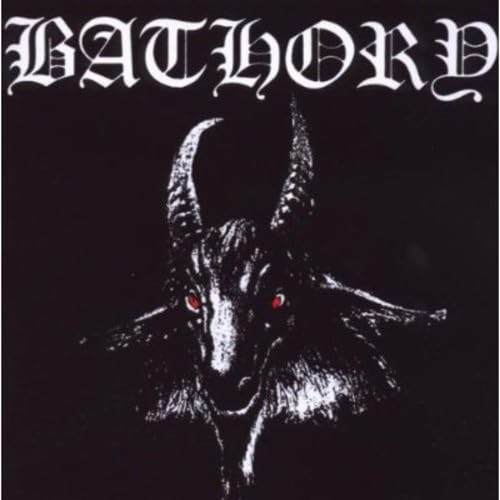
The album cover was fussed over a little bit, with a pentagram originally planned but the idea was scrapped in favor of the goat artwork. After the first pressings of the album, Quorthon found the yellow coloring of the goat an eyesore and the cover was changed to black and white for all subsquent pressings. The back cover also features an error due to supply issues. Quorthon found some kind of rub-off lettering in a font he wanted to use, but he ran out of the letter C, so the song Necromansy is spelled as I just typed it instead of “necromancy” as the dark art is typically known as.
The influence of Bathory was a huge question mark during the early years – Quorthon cited acts like Motorhead and GBH as his primary guides, while everyone on the planet Earth thought that the early Bathory recordings sounded much like Venom. Quorthon chafed at comparisons to Venom and even suggested that the two bands were completely different – he isn’t wrong, per se, but there is a definite vibe that’s similar to Venom in these early Bathory recordings. In this 1987 interview with Metal Forces, Quorthon did clarify that he thinks Venom’s Black Metal is a masterpiece and he goes further into what led him to make the music he did.
I’m going to handle this album differently than my usual format. Today I’ll offer up the tracklist and then give a summary of what we have here, I’m not going to jump into detail track by track like I usually do.
Storm Of Damnation (intro)
Hades
Reaper
Necromansy
Sacrifice
In Conspiracy With Satan
Armageddon
Raise The Dead
War
The Winds Of Mayhem (outro)
This album takes less time to listen to than it takes to get a Domino’s pizza – this one is in and out in 26:58, and 3:30 of that is the intro and outro.
The music on tap is rooted in thrash, but is very lo-fi production and a bit more “messy” than the polished offering thrash would mostly become. It bears some comparison to Slayer’s Show No Mercy with the “evil” imagery and creepy music, but even Slayer’s debut was refined compared to this. This is a ghastly, cavernous listening experience that isn’t for the faint of heart.
The concept of “under producing” might be strange but it’s also perhaps the most important part of this record. The lo-fi production turned off some listeners but brought others in, and some of those listeners would seek to emulate this “sloppy” work. It’s one direct link from this to the genre of black metal, and its infamous “second wave” which would show up in the late 1980’s and terrorize the world by the early ’90’s.
It’s actually a bit inaccurate to call this album and black metal two separate things – while black metal was influenced by Venom, Celtic Frost, Slayer and Mercyful Fate, none of those acts were playing the style of music. Bathory, on the other hand, offered up an early blueprint on what black metal could actually sound like. Songs like Sacrifice and Armageddon are not far removed from what the Norweigian scene would put on display when black metal truly got rolling. Nothing wrong with calling this the world’s first black metal album, though it’s a subgenre whose listeners like to argue about everything so the point could be debated.
For me personally this wasn’t a part of my collection until a lot later down the line, when the most infamous events of black metal’s early days had played out and Quorthon himself had moved on to other styles. But it is absolutely worth a visit to truly understand where the depths of extreme metal got their influence, and this album is the birth of black metal.
This album basically starts playing and bashes for its 27 minutes of existence, save the eerie intro and outro. If there is a standout track I find Raise The Dead to be it. This one peels the speed back just a touch and is a savage, noisy march about coming back from the grave. This is the song that does grab out a little bit and offers something perhaps “catchy.”
But this album is an all or nothing proposition as a whole. You’ll either like it or not. There is no range of dynamics to consider here or a few songs that leap out and others that are “less than.” It also makes grading a bit of a chore – honestly the album sounds like shit and could be given an F for that alone. It’s also the start of something that became massive within heavy metal and could be given an A or even an S for that factor.
The actual grade lies somewhere inbetween – for me personally I have listened to black metal for decades now so the sound is not an adverse factor – this is exactly what black metal is supposed to sound like, and it’s primarily because of this album that black metal sounds like that. This is worthwhile to listen to and is interesting on its own merits, not just because it’s a historical marker.
Album Grade: B+
Bathory’s first offering got the ball rolling on Quorthon’s own lengthy career and also the genre of black metal. The next few Bathory albums, including the classics Blood Fire Death and Under The Sign Of The Black Mark, would cement Bathory’s status as early extreme metal legends and draw a line to the start of Mayhem’s career, thus kicking off black metal in earnest. Quorthon would leave black metal behind after awhile, serving up several albums of more melodic fare that now classify as Viking metal and also experimenting from time to time. Bathory would run until 2004, while Quorthon died of heart issues.
Bathory did not run the usual course of a band – they rarely played live and gave up on that pursuit after a few years. Bathory was simultaneously world famous and totally obscure – not known to the larger world but hailed as legendary among the denizens of the metal underground. And this debut album was a fitting start to a heavy metal legacy.
For more on the grading scale I didn’t really use much this week, head here.
Questions, comments or concerns? Use the comment form below or head to my contact page.



 The Crooked Wanderer