Anthrax – Fistful Of Metal

Two of thrash’s “Big Four” had already debuted before 1984. Right at the start of ’84, the third would make their presence known and also help give this newer genre its name.

Anthrax – Fistful Of Metal

Released January 6, 1984 via Megaforce Records

Anthrax had started off in 1981 in New York, with Scott Ian and Dan Lilker forming the group. I’ll skip the Spinal Tap-worthy list of members who came and went through the first few years. The lineup for this album would feature Scott Ian on guitar along with Dan Spitz, Dan Lilker on bass, Neil Turbin on vocals and Charlie Benante on drums.

Fistful Of Metal was recorded in Ithica, New York; with Carl Canedy producing. Songwriting was credited based on member contributions, with Turbin having a huge role in shaping the material. Former Anthrax guitarist Greg Walls has said he contributed parts to various songs and was left uncredited – this was just one piece of the Anthrax band drama file folder, which needs its own warehouse to store at this point.

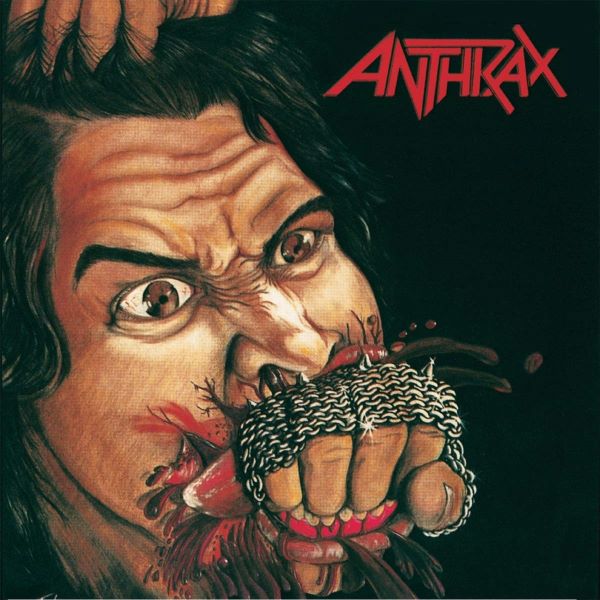
The album artwork was done by Kent Joshpe, a friend of Spitz’s. Joshpe had already designed the band’s logo so he was also commissioned for the interesting cover art, featuring a guy being smacked with a fistful of metal. The album art was actually banned in Germany for a time, though that ban is no longer in effect.

This album features ten songs at a thrash-tastic 35 minute runtime. There are various editions and reissues from over the years, I’m sticking with the original because tracking all the various incarnations of this album is a fool’s errand.

Deathrider

First song from the first album and jump straight into one of the best songs Anthrax have recorded in their 40+ year long career. If I had to suggest one song to someone to explain what thrash sounded like, it would probably be this one. This is all pounding and speed, straight ahead with zero bullshit. There’s probably a reason Neil Turbin named his later band after this song. Grade: S

Metal Thrashing Mad

Up next is another pounding, as relentless as the first. It’s a song about racing that sits in the standard thrash template, though Turbin executes some vocals not typically associated with thrash. That would be par for the course on this album.

This song is also where the term “thrash metal” came from, the phrase was sprung by legendary journalist Malcom Dome in the pages of Kerrang! Magazine while discussing this song. Grade: A+

I’m Eighteen

Easy enough here – Anthrax covered the classic Alice Cooper song. It’s fine, they did a good job on it. I don’t consider it essential or anything but there’s nothing wrong with it. Grade: B-

Panic

This one kicks up the speed a notch and lays an all out assault. This is Anthrax’s version of a “being on the road” song, which is a fair bit different from those of Bob Seger and Bon Jovi. The road was a long grind for those others, the road is literally beating your ass in this song. Grade: A+

Subjugator

It’s another amped up thrash track about fighting. It seems as though whoever is in the way is who is getting the beating. Also it seems Anthrax’s weapon of choice in the fight is Dan Spitz’s guitar, as he wields it here for plenty of solo action. Grade: A

Soldiers Of Metal

We’re fighting again, this time we are banded together to fight for metal. Can’t get through an ’80’s metal album without fighting for metal at some point. This is a pretty standard song but solid. Grade: B

Death From Above

Another straightforward song, this time about planes and bombing and all that. Grade: B+

Anthrax

I had sorta forgot that Anthrax had their own self-named song. It’s a pretty ripping one too, though it’s hard to tell if this actually about contracting the disease anthrax or just general mayhem. Cool stuff though. Grade: A-

Across The River

A quick instrumental here, but this one absolutely shreds and could have been fleshed out into a full song. No harm, though – still totally worthwhile. Grade: A-

Howling Furies

The last track is a bit of a horror story, being caught by some pretty nasty people or things that want to cut you up. I do wonder if this isn’t, at least in part, based off of The Warriors movie as both the Furies and “come out and play” are part of the song. I’m not sure but I’d wager a guess that it’s so. Grade: A-

Fistful Of Metal hit the streets on release – though it did not chart it was a big mover in the emerging metal scene. Anthrax themselves would tour behind the release, then endure several lineup changes before prepping the next album. Dan Lilker was fired and Neil Turbin quit, as Scott Ian and Charlie Benante became the driving forces behind Anthrax’s songwriting. The new incarnation of Anthrax would go on to a handful of gold-selling records and buzz throughout the scene, solidifying their place among thrash’s “Big Four” and somewhat leaving the first album behind.

But this album is more than deserving of its own praise. While it might not sound “original” among the decades of thrash offerings in this day and age, it had very little to be compared against in 1984. This was a nice, curbstomping record more than worth the time to visit with, even if other Anthrax albums overshadow this one.

Album Grade: A

At the end of the day, nothing to do but crank this up, start some shit and recall the good times of 40 years past.

Picking Five Songs From 1974

I press on with my look at songs from a particular year, this time we’ve hit 50 years ago exactly as it’s time to look at 1974. And this year offered up something a bit different – I’ve previously been able to easily reference Black Sabbath and Led Zeppelin albums for songs I absolutely love, but both bands did not offer up any recorded material in ’74. Not to be deterred, it was honestly pretty easy to locate five songs I like a lot from the year.

We do see a few debuts from acts now legendary, and in the next several years things really get different with all the debuts. And also these lists get really hard to compile, to this point I haven’t had to “bump” a song from a list due to finding another I like better, but that is coming very soon. And we’re just a few years removed from where I was actually around.

But that’s all for later – for today, let’s enjoy a few choice cuts from 1974.

Kiss – Strutter

Here we have the first track from the first album from the group that would take over the world with their stage shows and theatrics. But out of the gate we get a fairly simple yet quite ass kicking rock track. Even up against the music of the time, there was something a bit different in what Kiss had on offer. And just listen to Paul Stanley’s voice from 50 years back, damn that dude could carry a tune.

Rush – Working Man

The debut surge continues with Canada’s greatest export. Rush were still not in their final form here as Neil Peart had not yet joined the band, but this first album did feature this choice cut that helped the band get their break when it got played on FM radio. This isn’t the crazy, prog-driven music of Rush to come, but it’s a nice and loud ode to the existence of the rank and file worker, which I can totally identify with in my late 40’s with shit prospects of upward mobility. But hey, great song.

UFO – Doctor Doctor

This next one came to me from less conventional means, as to this day I’m woefully uneducated on the music of UFO. But this early contribution from new and then young guitarist Michael Schenker slowly became a fan favorite after years of live performances. It starts with an epic intro but the song itself is a pretty lean and mean rock track.

What led me to this song was its use as intro music – since 2000, Iron Maiden have played this song over the PA just before taking stage. Maiden also did cover the song during the Blaze Bayley years just prior. But that’s how I came to know this song and I should get off my ass and get into more UFO.

Dolly Parton – Jolene

This time there’s no debut as Dolly had already been around. I’m also playing with the timeline a bit since this song was released in ’73 as a single, but the album of the same name was released in early ’74 so I’m running with that. It’s like the Marvel Cinematic Universe in here, I just play with time to suit my needs at any given moment.

Jolene is one of country music’s all time songs, as Dolly laments that the title character seems to be making moves on Dolly’s man. Nothing is entirely clear – Dolly thinks Jolene is on the prowl, but it’s never said if that’s really the case. But Dolly’s insistence that Jolene keep away is one of country’s crown jewels.

Queen – Stone Cold Crazy

If you had “Queen would invent thrash metal” on your 1974 bingo card, well I guess you cashed in. This short hyperblast of frantic rock featured everything that would come along in the early ’80’s – ripping guitars, pounding drums and rapid fire vocals. I didn’t hear it at the time of course, but even going back to music from before I was around, this one really sticks out as something out of the ordinary. I bet it was crazy to hear when it was released.

That does it for 1974. I guess that means there are either 49 or 50 more of these to do, I don’t know because I don’t have enough fingers to count it all. See you next week.

Laura Branigan – Self Control

So I have a song from this year I want to talk about but it’s a damn headache. Even typing out the title is an exercise in supreme frustration. I’m gonna save it for next week and for today I’ll go back to 1984 and discuss a beloved song from then.

In all reality there are two versions of this song to talk about. This was originally released by Raf in ’84. Raf co-wrote the song along with Giancarlo Bigazzi and Steve Piccolo. The song was a European hit, scoring number ones in Italy and Switzerland and charting in the top ten elsewhere on the continent.

Long story short, the song also needed to be a hit in the US and everyone took a familiar turn to get there – Bigazzi had already been working with US artist Laura Branigan, a partnership that had marked the smash hit Gloria in ’82. So Bigazzi and Branigan turned their attention to Self Control, and yet another hit was made.

Branigan had previously offered up some very revised versions of songs – Gloria is not only done in a different language than the original, but the lyrics were also re-written to tell a completely different story. The music was also changed up as a 1980’s “update” of sorts. But on Self Control, Laura’s cover is honestly not far removed at all from Raf’s original. The songs are distinguishable, but not by a huge degree. I’ll post Raf’s original at the bottom of this post so everyone can compare.

Laura’s version of Self Control would be a huge hit – it reached number four on the Billboard Hot 100, and the album of the same name would go platinum. It also did some huge business in Europe – it charted at number one in several countries, including Switzerland – where it actually bumped Raf’s original version out of the top spot. The two versions flipped places a few times again, making for some really interesting music trivia. Both versions were charting all over the continent as they were not released too far apart.

As for the song, it is what is described as “dance rock” or even disco-driven. It has the ’80’s zazz to it but is certainly a dance-able track. The lyrical theme of being taken by the night is actually a fair bit darker than what you might think you’d get with a song of this genre.

This would come into play with the music video. The clip was a huge hit in Europe, but US MTV required the video to be edited, due to the risque nature of the masked personification of The Night entering Laura’s room and, well, you can figure it out in the video. Anything sex oriented was a huge no-no in the year before the PMRC came riding high horses into the nation’s capitol.

Laura would continue charting both mainstream and dance songs as the ’80’s wore on, but like many her career was largely claimed by the shifting tides of the 1990’s. In 2002, Self Control would get another big boost. Stop me if you’ve read me say this about a song before, but Self Control was featured in the soundtrack to the video game Grand Theft Auto: Vice City, which introduced the song to a lot of younger people who didn’t experience it firsthand in ’84. Laura was preparing to relaunch her career around the same time, a prospect that was tragically cut short when she passed away in 2004.

Self Control has lived on as Branigan’s signature song, reigning as her top-streamed track to this day. This would be adjusted a bit in 2019, when Gloria came out of nowhere to return to the public eye as the result of an unexpected run in sports. But that is another story for another time and is tied to one of the best sports memories of my life, so I will save it for down the line.

At the end of the day, everyone involved with both versions of Self Control scored big hits around the world. The song is totally tied to the fabric of 1984, one of the best and most unique years in music history.

Whitesnake – Slide It In

It’s time this week for a key album from 1984, and one with a whopper of a story to accompany it.

Whitesnake – Slide It In

Released January 1984 AND April 1984

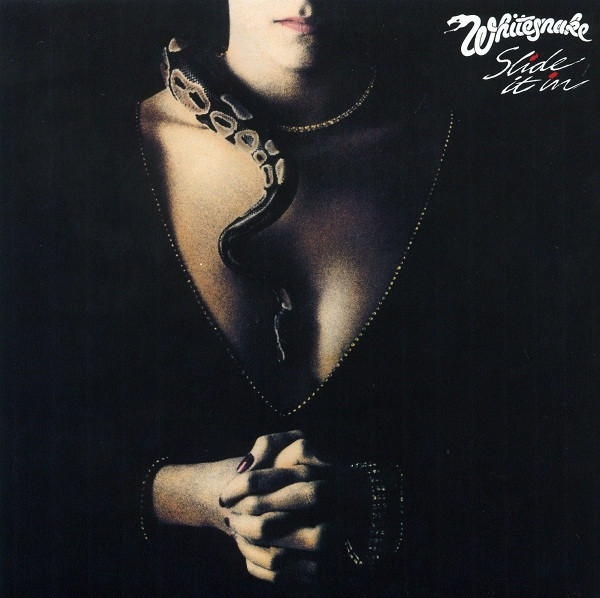
So in 1983, Whitesnake set out to record this new album in Germany. The band was David Coverdale on vocals, guitarists Mel Galley and Mick Moody, bassist Colin Hodgkinson, drummer Cozy Powell and keyboard wizard Jon Lord. Eddie Kramer was in for production, for a moment anyway. The band were not satisfied with his work so he was replaced with Martin Birch, who’d helmed the Whitesnake catalog prior to this. It marked Birch’s last album production not related to Iron Maiden. The album was recorded and released in January 1984 after some delays.

Sounds fairly simple, right? It was until it wasn’t. The first issue was that of the album’s production. The music press was not happy with the album’s flat sound. Whitesnake were contracted in the US with Geffen Records, who also weren’t happy with the production. Geffen commissioned Keith Olsen to remix the album.

But even that wasn’t so simple – David Coverdale was also eyeballing a personnel change. On the advice of label exec John Kalonder, Coverdale began looking for a “guitar hero” type of lead player to further enhance the band’s image. Michael Schenker was approached but was either uninterested or uninteresting, depending on who you ask. Adrian Vandenberg was more interested but he declined, choosing to operate with his own successful outfit instead. Vandenberg would find his way in a few years later.

This led Coverdale to John Sykes, late of Tygers Of Pan Tang and currently with Thin Lizzy. Sykes was agreeable to the Whitesnake gig but also very reluctant to leave Phil Lynott hanging. Sykes made an ask for an absurd amount of money, which Whitesnake surprisingly agreed to. Lynott gave his blessing for Sykes to move on and Coverdale now had his guitar hero. This would shift Whitesnake away from their long-held blues-based sound and into the hair metal era, which was gaining a ton of steam in 1984.

Mick Moody was still on the Whitesnake roster, so Coverdale acted like a complete asshole to Moody, who took the hint and quit the band. Bassist Colin Hodgkinson was also fired, and former pal Neil Murray was brought back in. Sykes and Murray would re-record parts for the US remix of Slide It In.

And today I will be going over the US version of the album, as it’s what I’m familiar with. There are countless versions and re-issues of this available. For simplicity’s sake I’m going to use the old US tracklisting, which won’t match up with most versions found today on streaming. Either way, it’s 10 songs at a bit over 40 minutes.

Slide It In

The title track keeps things very, very simple – driving riff with double entendre lyrics. Honestly the song is so horribly basic that it’s like wearing a beige suit to a middle management conference. But the song also works splendidly, it’s a textbook example of a rocking track from this era. Not a bad way to mark your territory on the Sunset Strip scene. Grade: A+

Slow An’ Easy

Up next is the song Whitesnake would offer as the US single and the song that would help them finally break into the coveted American market. This one has it all – build-up and mood-shifting, with a bit extra behind the guitars and Powell’s drumming to really push it all over. It still has marks of the blues as it was co-written by Moody, but the song functions amazingly well in the ’80’s rock pantheon. It’s exactly the kind of song you’d want to write to get attention. Grade: S

Love Ain’t No Stranger

Whitesnake joined the ballad fray here, but this ballad is on steroids and totally rocks out. It had the rock for the rockers and the more melodic hook and twinge of melancholy for the ballad seekers. The song performed modestly as singles in both the UK and US, but over time it has become a staple of the Whitesnake set. Grade: A+

All Or Nothing

One of many tracks on here that showcase the “old” blues sound coupled with the updated ’80’s rock approach. This one slams right in and makes itself at home, with the organ adding some spice in the mid-section. Grade: A

Gambler

Here we have the sad tale of someone who is stuck “outside” of love, apparently struck by chance to remain loveless. Overall the song is well done, I do think maybe the two versions of the album clash here a little bit between the guitars and keyboards. But it’s a minor gripe. Grade: B+

Guilty Of Love

Now this song sounds totally like an ’80’s track. It keeps a quick pace but keeps a bright enough tone not to be a headbanging track. And yes, Coverdale is totally guilty of love, as we would all find out as the ’80’s wore on. Grade: A-

Hungry For Love

No, we’re not dealing with a concept or prog album by any means here, our themes today are very meat and potatoes for the ’80’s. This one is more of an old school boogie with a bit of sleaze on it. I do wonder if the song might have stood out more without the keyboards, I’d have just let the guitars carry this one. But no matter, still a nice song. Grade: B+

Give Me More Time

This song showcases Whitesnake’s transition perhaps better than any other. It still has some old-school underpinnings but it’s also a total ’80’s rocker too, a very good mark of what Whitesnake was turning into. It’s catchy and rocking and hits all the right notes. Grade: A+

Spit It Out

As we round the bend to the album’s close we get another total rocker absolutely fit for the time. It’s another pretty basic track but it gets the job done and then some. Grade: A-

Standing In The Shadow

The album wraps up with another well done song that highlights Whitesnake’s new approach. It’s a simple and effective mid-paced rocker that keeps the album’s quality high through the whole run. Grade: A

Slide It In would help Whitesnake break the American market – somewhat slowly. The album got to 40 on the Billboard 200 and would eventually earn gold certification in 1986. The original UK version went to 9 there are charted decently across Europe. The band toured behind the record, with members slowly dropping off – Jon Lord would reconvene with Deep Purple, Cozy Powell left over money disputes and Mel Galley was out due to injury.

This left Coverdale along with Murray and Sykes to work on the next record. The album was put together, but Coverdale was under massive financial pressure and was also not getting along with his bandmates, yet again. Murray left voluntarily (I guess) while Sykes was fired in acrimonious circumstances.

The story was far from done though, as Whitesnake’s self-title album would massively dominate airwaves and sales charts. This also floated up Slide It In, which went platinum in 1987, double platinum later and a total of six million copies sold worldwide. This album was the closest musically to the self-titled behemoth so its further success was no surprise.

All of the truckloads of drama aside, Slide It In was a wonderful rock album that stood up fine on its own merits. It has no filler and it combined the contrasting sounds of the early and modern Whitesnake eras very well.

Album Grade: A

I’m sure multiple books could be written about all of the events up to, including and after Slide It In. It’s one of rock’s crazier stories that in the end saw David Coverdale’s gambles pay off. But the album itself is a perfect testament to the rock scene of 1984 and an essential piece for any rock fan’s catalog.

For more on the grading scale, head here.

Questions, comments or concerns? Use the comment form below or head to my contact page.

Picking Five Songs From 1973

Time marches on and it’s now 1973 on my songs and years thing. I honestly don’t have much to say about the year – I was not around for it and nothing really jumped out at me when I was looking through stuff. I had no problem picking five songs, it does get to be a problem a few years down the line as a lot more acts started up and things get really crowded. But for today, no problem.

Black Sabbath – Sabbath Bloody Sabbath

Sabbath had issues recording their fifth album but when it came down to it they were able to belt stuff out, including this masterpiece of a title track. The song is somewhat bright and melodic (but still plenty heavy) for most of the way, then descends into one of the heaviest pieces of music ever recorded in the song’s final moments. This is truly the stuff of legend.

Pink Floyd – Time

One of the cuts from Floyd’s Dark Side Of The Moon album that took over the world and never let go. Time is a remarkable song with both atmospheric elements and also some flat out rocking all contained within. Time is the thing that rules over all our lives and also may very well not really exist outside our perceptions, but I don’t have time for all of that today. A marvelous song.

Joe Walsh – Rocky Mountain Way
Splendid stuff here as Joe was struck by songwriting inspiration while mowing his lawn in Colorado. It was the boost Walsh needed to get over his depression from leaving The James Gang and get his solo career kickstarted. Find a dive bar, get a cheap beer and enjoy this slice of rock n roll greatness.

Alice Cooper – Elected

Here lies one of the last vestiges of the Alice Cooper band, as after ’73 Coop would rebrand as a solo artist. Alice has actually run for President in most elections since this song, though obviously he hasn’t broke the threshold and been elected. But he put out this fun staple of his live set.

Montrose – Rock Candy

Montrose wound up billed as “the US’s answer to Led Zeppelin” when their debut album dropped in ’73. And this song was one huge reason why – it’s sleazy, groovy and balls out rocking. Montrose never got their commercial due, but this song was massively influential to legions of rockers who would come along later. This early version of Montrose was short-lived but they cranked out some badass music.

That does it for 1973. Nothing much else to go over, have a good weekend and we’ll get back to the grind next week.

Chat Pile – Masc

This week let’s have a look at a preview track from an upcoming album. Chat Pile generated a fair bit of buzz on the back of 2022’s God’s Country full-length. Their new effort is titled Cool World and will be available on October 11 via The Flenser Records. If anyone is interested in getting their hands on a vinyl copy of the new album, it would be very wise to pre-order. The label has already sold out of all the first pressings and are into a second run, something that also happened to God’s Country.

I have talked about Chat Pile a time or two in the past but I figure it’s worth it to give a refresher on them. The band hails from Oklahoma and drew inspiration from the sometimes bleak surroundings to craft a crazy version of noise rock, sometimes venturing into various kinds of very noisy metal. It’s not for the faint of heart, that’s for sure.

Masc is the second song we’ve had as a preview from the new album. And Masc is a bit of a departure for Chat Pile in that it is two things – melodic and conventional. The words are sung rather than screamed and the more mellow tone is kept throughout, no sudden breaking into a shouting frenzy here. And the music is more reminiscent of some ’90’s alternative metal than anything else – a bit quirky, sure, but it’s honestly a fairly straightforward song with the usual verse-chorus structure. Chat Pile offered up the expected with the first single I Am Dog Now, here on Masc they showcase another side.

And this new take is very welcome. It doesn’t diverge greatly from the band’s sound, the underpinning is still there in the rhythm and instruments. But this is a very cool change of pace. Music under the “noise” genre is often considered to be just what the descriptor says, but here the band flex out a bit and showcase the ability to explore other waters.

Also of note is the video. It was directed by short film creator Stephen Mondics and it is very, very visually striking. Now, I can’t tell exactly what the hell is going on in there, but I can say that I like looking at it very much.

Masc is a great track from Chat Pile, and it will be interesting to hear the new album next month. This will be one of the more hotly anticipated records of the indie/underground scene this year.

1984 Overdrive

So the year is sort of winding down, we’re now into the final third. It will have implications on how I run things through the remainder of 2024.

I have been on a year-long quest to pay tribute to the music of 1984, I’ve discussed an album roughly every other week and also included a song on the weeks when I haven’t been doing albums. But as we are approaching the calendar flipping to ’25 I am going to adjust my approach.

As it stands, I have about enough albums I want to cover for the remaining weeks I would need to fill spots. So it will be 1984 from here until January. There is one exception baked in as I’ll have a Best of 2024 post sometime in December. And I may have one or two free slots where I might also discuss an album from this year. But beyond that I will kick the 1984 celebration up a notch to close it out with a bang.

As for songs I will still have some from ’84 that I want to talk about. But outside of that, my focus running out the year will go to this year. There are a fair few preview tracks from upcoming albums I want to discuss and also some songs already released this year, so ’24 will be my primary focus on the song front.

Now – once 2025 hits, I am closing the book on the 1984 celebration and I won’t be running any themes through the next year. I will simply choose albums I want to discuss, as I did before ’24. I won’t do another year-long theme again until 2031, which would mark the 40th anniversary of 1991. That was by far the most significant year in music to me so I will commemorate it in a huge way – that is, if I’m still running this in six years. We will see.

On another note – with the 1984 thing and also with me generally choosing albums that I tend to like or love, my reviews are often pretty glowing. I’ve probably given out more A grades than anything and in the past few weeks I’ve even handed out S’s like candy. That’s somewhat unavoidable with the 1984 thing going on – if I’m going to talk about those albums, they are often the ones with super high marks.

But next year I won’t be on any rails as far as album selection. So I will make a point to dig out some stuff that doesn’t quite clear the bar grade-wise. It will be a nice change of pace from what’s been going on lately, though again it’s understandable based on my theme and also that it’s far easier to talk about stuff you like. But I do look forward to going the other way and having at a few albums that maybe shouldn’t have been recorded.

That’s about all for this little update. Enjoy the rest of the year and I’ll see you with some bags of crap on the other side of it.

Iron Maiden – Powerslave 40th Anniversary

Forty years ago today, Iron Maiden unleashed their fifth album upon the world. Nothing would be the same after this all-consuming affair.

Iron Maiden – Powerslave

Released September 3, 1984 via EMI Records

This is a re-review for me, I did cover this album about two years ago, long before I started doing song and album grades. I’ll leave the old one up as I have no problem with that post but I’ll be referencing this new one as I go forward.

Iron Maiden convened in the Bahamas to record this effort. That must have been tough. The band was the classic line-up of the 1980’s – Steve Harris playing bass, Bruce Dickinson on the mic, Dave Murray and Adrian Smith on guitar, and Nicko McBrain on drums. Martin Birch was the producer, in the middle of his immortal run of Maiden albums. The massively iconic cover art was courtesy of Derek Riggs, also in the middle of his legendary run depicting Eddie.

Simple stuff today – eight songs with a total runtime of 51:12. Nothing exists in the way of bonus tracks besides the rare Castle Records reissue, that stuff is B-side material and is available on the singles and elsewhere.

A bit of context before I start – Powerslave came in at number 2 when I did the Iron Maiden album ranking awhile back. And for additional reference, the album cover also came in at number 2 when I ranked album covers a long time ago. So clearly we’re dealing with an album I hold in very high regard.

Aces High

The opener is one of Maiden’s most beloved songs. It is an intense, soaring tune that captures the essence of airplane combat, which is nice since the song is about the legendary Battle of Britain during World War II. While Maiden’s guitar work is often widely celebrated, this song features some of the best-known riffing around. This song is flawless and one of the best songs the band have recorded. Grade: S

2 Minutes To Midnight

Another energetic track, this time about the modern state of warmongering and arms dealing. I’m always a sucker for world-ending type stuff and this reference to the Atomic Clock and impending doom of nuclear destruction is spot on. As I’ve said several times in the past, this is my favorite Iron Maiden song so I think I can wrap this one up. Grade: S

Losfer Words (Big ‘Orra)

Up next is an instrumental – it was the fourth Maiden had done to that point and to date it is still the last one they’ve done. It’s a pretty brilliant song and it fits perfectly among the other tunes on the album. This wasn’t some experimental piece, it was Maiden being Maiden from opening note to close. Grade: A+

Flash Of The Blade

We have two songs back-to-back about sword-fighting. This first one features a young kid who plays with a wooden sword but then grows up and has to take up the real thing to avenge his family. And the music on this one is fantastic as well – with climbing riffs and Bruce especially soaring over even himself at points. Grade: A

The Duellists

This next sword-fighting piece was inspired by the movie of the same name, which was Ridley Scott’s first film as a director. It was set during Napoleon’s reign, which is a great backdrop for a story about people who want to kill each other. This song lets the music do most of the talking and is a bit more low-key than other stuff here, but it’s still a wonderful song and very much easily recognizable as Iron Maiden. Grade: A

Back In The Village

This one is a sequel to the song The Prisoner from The Number Of The Beast. It plays again in the land of the old TV show, The Village being the area where the prisoners were kept. This one sounds like the main character of the show is attacking the village or something, I’m not entirely sure. But again it all wraps itself up nicely as another great Maiden tune. Grade: A

Powerslave

The title track makes full use of the Egyptian theme on the cover art to weave the desperate tale of a pharaoh who is dying and cannot accept his mortality. The pharaoh is supposed to be a god and yet is dying just the same as any other person, it is quite the existential struggle for this soon to be corpse.

The song is absolutely magnificent and marks an evolution of the band’s running rhythms and approach to storytelling in songs. It would be hailed as a magnum opus epic – if it wasn’t for the very next track. Grade: S

Rime Of The Ancient Mariner

The final song on the album makes its presence felt both musically and time-wise – this one song takes up over 10% of the album’s runtime. At 13:45 it is was a ridiculously long track for 1984 and would stand as Iron Maiden’s longest song until 2015.

The song is obviously inspired by Samuel Taylor Coleridge’s famous poem and in fact follows the grim story pretty closely. A sailor is cursed for killing a bird, it’s the genesis of the idea of “an albatross around one’s neck.”

Musically, Maiden did not mess around here. The song features several distinct movements that capture the mood of the story as it goes along. It was a feat of arrangement uncommon in heavy metal at that time but a whole generation of younger musicians were paying attention and the power metal subgenre would become a playground for more classical arrangements later on.

In the end this stands as one of the top few songs in the Maiden catalog. It was a masterpiece of arrangement and execution, its lofty ambitions matched by what was presented. Grade: S

Powerslave was an absolute masterpiece from Iron Maiden. The album charted all over the world, reaching a high of number 2 in their native UK. It has been certified platinum in the US and Canada, as well as gold in the UK and several other territories.

Maiden would embark on the World Slavery tour in support of the album – the tour was the band’s longest to date, playing 189 shows in 331 days. While the tour was grueling, it also established Maiden as a prime player in heavy metal all across the world. The tour was also immortalized in the band’s first live album Live After Death a year later.

As for the album grade, well, it’s honestly a little tricky. I’ve only been using grades for a little while now and it does seem as if I’m about to do something I haven’t done yet, and honestly have very little intention to do outside of a select few albums. But this is one of those albums.

Album Grade: S

There is no doubt that Powerslave was what cemented Iron Maiden as metal legends. They’ve only expanded on their legacy since, quite the story in and of itself. But this album and tour reached the world over and developed the kind of die-hard fans that would follow the band anywhere, regardless of what the music industry thought of it. When people ask why Iron Maiden are so beloved, this album is honestly the best possible answer one could give.

For more details about my song and album grading, head here.

Questions, comments or concerns? Use the comment form below or head to my contact page.

For more of my ever-running coverage on Iron Maiden, check out the Band Index.

Picking Five Songs From 1972

Moving on with the songs by year thing, it’s time for 1972. This one was pretty easy, I have a few of these left before things get really crowded. We’re also now five years away from when I was actually around.

Deep Purple – Smoke On The Water

One of rock’s most immortal songs with the craziest of stories behind it. Perhaps the most iconic riff in history too. I know this song is over 50 years old so I don’t take it for granted that everyone “knows” it, but I do think just about everyone knows this song.

Alice Cooper – School’s Out

This might be The Coop’s prime anthem, kinda hard to say. But this song is an absolute blast. It’s great every year when school lets out for the summer, it’s great in movies about school, and it’s still great as an adult because school being out means less traffic and headaches than normal.

Neil Young – Heart Of Gold

Neil was 26 when he wrote this sad, sad song about searching for love and growing old while striking out. He’s now a few months from his 79th birthday and has about that many studio albums to his credit. But this song still resonates as one of his signature tracks. His unique vocal timber and acoustic guitar made some damn fine music.

David Bowie – Suffragette City

I talked about this song earlier this year. A nice, crazy and noisy affair with attitude and a great false ending. On heralded album full of classics, this one still jumps out to me. Bowie influenced rock of all stripes with this song and album.

Humble Pie – 30 Days In The Hole

This is a fun song about using every type of drug known to man and getting put away for it. Humble Pie were a supergroup before anyone really knew what that was, though Peter Frampton was gone by the time this song came out. This is one of those songs that wasn’t a hit at the time but it got picked up by FM radio and became an enduring classic in the years since.

That does it for this post. The ’70’s keep pushing on next week.

As for next week – the Album of the Week post will be held back until Tuesday. It lines up in order to celebrate the 40th anniversary of the album on the exact day. Not sure what album came out on September 3, 1984 that I’d be interested in…

Oasis announce 2025 reunion

So Sally can wait … about 16 years, as it turns out.

Hell has frozen over and Oasis are back together. Noel Gallagher and his brother Liam announced the first Oasis shows since 2009 will take place in the United Kingdom in 2025. So far 14 gigs are booked across 6 cities in Wales, England, Scotland and Ireland. Tickets go on sale Saturday, August 31st, with per-registration and pre-sale events already announced.

All of this seemed to come together quickly over the weekend, with Liam Gallagher all but announcing a reunion through his very whimsical use of social media. He and Noel also praised each other at varying points, with Noel paying homage to Liam’s vocal prowess in an interview and Liam dedicating a song to Noel while on stage solo over the weekend.

In fairness, this reunion was tipped off over a month in advance, with most of the information presented proving to be accurate. Both the reunion and general structure of the tour were leaked, though of course everyone was pretty skeptical until this past weekend. Also disclosed was that the brothers Gallagher will be taking home more money than anyone reading or writing this post will see in their lifetimes. This stands to reason with how much of a unicorn this reunion is.

As of now not much else is known about the shows, which are of course nearly 11 months away. We don’t know the Oasis line-up. The same, seemingly reliable sources indicate that it will be Noel, Liam and the members of Noel Gallagher’s High Flying Birds. That band includes two people who were in the final iteration of Oasis with Chris Sharrock and Gem Archer, so it would be a logical choice. But no word yet if Paul “Bonehead” Arthurs or any other past Oasis alum will make an appearance. I’m sure we’ll find out as we get closer to the gigs.

I’m not a betting person but if I were I’d be a bit poorer today. Three years back I wrote a post examining the Oasis reunion and I concluded that I didn’t think it would happen. But here we are and all is well, or well enough to launch a hyped and certainly lucrative tour. But cynicism aside, people are very hyped for this reunion and the brothers are giving people what they want.

Among the other rumored information not yet totally confirmed are a handful of North American dates for later this year. Toronto and Mexico City are listed, as well as New Jersey, Boston, Chicago and Los Angeles in the US. While all of the UK performances are multiple nights in the same venue, the North American shows are all one-shot deals.

Certainly there are a ton of ifs still to go, but if Oasis do make their way over here next September, I might see if I can’t wind up at a gig. Chicago would be the most logical choice. I’m not in a position where I’m falling all over myself to spend tons of money on something, but if this all materializes I might have a go at it. We will see.

And I guess we’ll see a lot between now and then – there are already betting lines of if Noel and Liam start a fight with each other before or during the reunion. I suspect the shows will go off without any real incident, though both brothers are sure to supply plenty of fodder for headlines during it all. Rejoice or despair, depending on how you feel about it, but Oasis are back together.

We were supposed to just be talking about the 30th anniversary of the debut album Definitely Maybe. I covered that just a few days ago, just before the reunion rumors began to take a life of their own.