I am still running through the years on this very long series. And here we are at 1984. Funny that, given that I spent a great deal of time last year discussing the music of ’84 on its 40th anniversary. Had I kept to my original posting schedule I would have gotten to this last year, but I was both busy and lazy so here we are.
Given that 1984 is special in my lexicon, I’m going to do something a bit different here. I’m going to offer up five songs today, and then I’m going to do five more tomorrow. This was always the plan on ’84 when I got to it. In a way it’s “cheating” since I’m only supposed to pick five a year, but it’s not like there are any real rules to this anyway. It’s just something I saw other people doing and stole from them.
At any rate, let’s do five songs from 1984, then do it all again tomorrow.
Queensrÿche – Take Hold Of The Flame
This ripper still stands as one of the band’s most immortal offerings over 40 years later. This was one hell of a debut full-length for a band who got signed to a record deal without playing a show. It’s a motivational tale, one lamenting those who did not, in fact, take hold of the flame.
Judas Priest – The Sentinel
My favorite Priest song of all time was bound to make this list. It’s a badass tale of some dark avenging force that wipes out all his enemies. Very dank guitar work here leads to a massive, heavy atmosphere and Rob Halford singing “sworn to avenge” in his unholy voice puts it all over the top.
Iron Maiden – Rime Of The Ancient Mariner
My favorite Maiden song came out in ’84 but I’ve spent enough time going over 2 Minutes To Midnight. This time I chose the monster epic based on the hit poem of the same name. This was the band’s longest song for 37 years and every second of it is massive and pounding. A true heavy metal masterpiece.
Van Halen – Hot For Teacher
1984 was Van Halen’s triumphant year (and album). This song was one last blast of fun party rock before the classic Van Halen era came to an end. Alex played a monster drum intro and the song celebrates the ages-old concept of being into a teacher. Fun all around.
Mercyful Fate – Gypsy
It’s time for some evil, as King Diamond and company romp through a dark visit with a mystical woman. It’s a great, catchy riff and replete with the signature King Diamond vocals. This one is a bit “simpler” than other MF tunes but it works extremely well.
That does it for this first installment of 1984. Tomorrow I’ll bring five more songs on a rare weekend post as a bit of bonus content.
A young Jersey kid had a dream of making it big on the stage. Stop me if you’ve heard this one before.
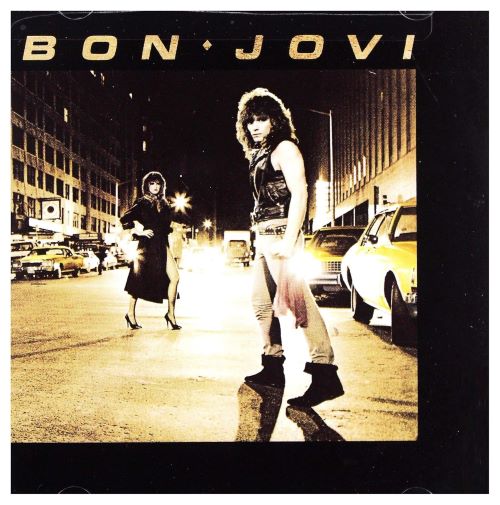
Bon Jovi – self-titled
Released January 23, 1984 via Mercury Records
To sum up a long story in a few words – young Jon Bongiovi got his musical start in the ’70’s in a variety of bands. By 1980 he was looking to take the next step and record music. As luck would have it, Jon’s cousin Tony Bongiovi owned the Power Station studio in New York. Tony had worked extensively as producer and engineer on Motown recordings and was also the night engineer on the grueling Electric Ladyland sessions with Jimi Hendrix. Jon worked at the studio and also used it in off-time to work on his own demos.
The album was eventually assembled from a series of demos recorded with a variety of musicians. Jon did put together a band before tracking the actual record – he brought in his old friend David Rashbaum (later to go by David Bryan) on keyboards, Tico Torres on drums and Alec John Such on bass. The guitar spot was initially occupied by Dave Sabo, who wasn’t looking to be a full-time member of the band. He was replaced by Richie Sambora. Sabo would form Skid Row years later, a band Jon helped get going.
This band would comprise the group Bon Jovi for the next several years and through the band’s first wave of massive popularity. But they were not the only musicians involved on this recording. The song Runaway was recorded a few years prior with a different group of players. I won’t run down the whole history of the song because that would take forever, but one person involved was Hugh McDonald, who would eventually wind up as a full-fledged member of Bon Jovi.
But wait, there’s more – there were other people also in on the album recording beyond Runaway. Among those was Aldo Nova, noteworthy for his solo career and continued relationship with Jon Bon Jovi beyond the session work on this debut record.
With all that out of the way, the album was recorded at the Power Station with Tony Bongiovi and Lance Quinn producing. JBJ and various band members have the writing credits, with a few additional people here and there. One song in particular had a totally different writer, which we’ll get to.
The album clocks in with nine songs at a 38:33 runtime. Several deluxe reissues exist, including a 40th anniversary edition released earlier in the year. Bonus tracks abound on those releases and only most of them are different versions of Runaway.
Runaway
Up first is the song that had already been recorded with other musicians and made the rounds through radio stations and promo copies. It wound up as the lead single from the album and cracked the Top 40, the first of many for Bon Jovi.
It’s easy to hear why this one wound up getting some play – it’s a perfectly crafted rock song. The keyboard runs the song and all the other instruments join in to move this sleek vehicle forward. It’s all smooth, polished and on the rails and very few could hook up a song like this. Bon Jovi and this album are off to a kick ass start. Grade: S
Roulette
We get a fairly heavy track here on this one of many co-writes between JBJ and Sambora. Even with the riffing, Bon Jovi retains the very melodic frills that keep their stuff in the pop-rock realm. A pretty nice jam here. Grade: A-
She Don’t Know Me
This is, as I understand it, the only song in the Bon Jovi catalog that is totally attributed to an outside writer. As far as stuff that made an album, anyway. And it’s a bit of a story – the song was composed by Mark Avsec, who was writing for a disco group called LaFlavour. Disco was out, so the band changed their name and Avsec got to work crafting more rock-based stuff for them. Sadly, the band chose the name Fair Warning and the record label got rid of the band when Van Halen released an album of the same name. Bon Jovi was on the same label so they wound up with the song.
This one is a bit too saccharine for my tastes, but it’s not a horrible song or anything. I think it could use a bit more power behind it, but it’s not out of Bon Jovi’s wheelhouse either. Grade: C+
Shot Through The Heart
Here we have the song that gets confused with the band’s later hit You Give Love A Bad Name, as this song bears the first part of that song’s chorus. And while this song isn’t the mega-hit the later one would be, this is a quality rock track by any measure. Very nice tempo and melody here, it indicates that Bon Jovi was perhaps a bit further along in development than the early material gets credit for. Grade: B+
Love Lies
This song is absolute ’80’s here, with some higher register vocals that Bon Jovi didn’t do a ton of. It’s a pretty good song and something a hair outside the Bon Jovi lexicon. Grade: B
Breakout
The keyboard melody might pierce your eardrums in the open, but the song itself is a pretty basic mid-paced rocker. It does have a nice bit of force behind it to push it a bit over the edge. Grade: B-
Burning For Love
Here the keyboard offers up a rhythm that sounds like it came from an old racing video game, though the game would have come long after the song. A fairly heavy guitar riff through this recount of being taken by desire. Nothing leaps out here but still a quality composition. Grade: B
Come Back
This runs right on the rails with a pretty nice tempo and riff. It’s doesn’t venture out of its box but it’s a pretty nice box so the cat will keep playing in it. Grade: B
Get Ready
The closer gets aggressive in a way Bon Jovi wouldn’t do a ton of, though there is a fair bit of melody and boogie thrown in to keep things a bit lighter. The song is all about a gal getting ready for JBJ to take her on a night on the town, but it could just as easily be interpreted as “get ready, this band is on the way.” They most certainly were. Grade: B
For first albums, bands could do a whole lot worse than Bon Jovi. The album hit the Billboard charts at 43 and offered up a handful of decently performing singles, with Runaway being the signature track. This record would earn two US platinum certifications and several international gold records, though in fairness a lot of that may have piled up after the band hit superstardom a few years later.
The album offers up a nice collection of songs, very strong for a debut. While it’s very “on the rails” and perhaps pales in some form to the stuff to come from Bon Jovi, it’s overall a nice listening experience with one song to rule them all and a strong collection of stuff to back that.
Album Grade: B+
Bon Jovi is an album that even Bon Jovi themselves have left behind, but this debut is worth more than dismissal in the wake of music that would follow it. This is a quality offering that showcases more of what would make Bon Jovi than perhaps JBJ would like to admit. And while this album was not a world-conquering beast like the two that would come in the later ’80’s, this one is certainly a worthy entry on the list of 1984 music.
While today’s band are known as the purveyors of pirate metal, their debut was in a different vein with a lot less pirates and a lot more Satan.
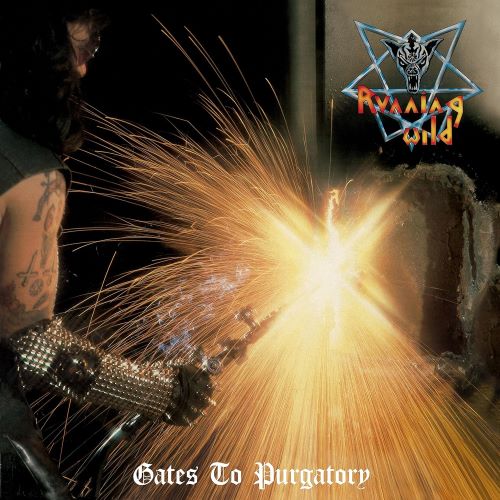
Running Wild – Gates To Purgatory
Released October 1984 via Noise Records (Combat in US)
Running Wild started off in Germany in 1976 with the name Granite Heart. They changed their name to Running Wild in ’79, the name change was inspired by the Judas Priest song from Killing Machine. The band got some songs on compilations in the early ’80’s and then were set to offer their debut album on the fledgling German label Noise Records.
Running Wild were comprised of Rolf Kasparek on guitar and vocals, Gerald “Preacher” Warnecke on guitar, Stephan Boriss on bass and Wolfgang Hagermann on drums. The band would have numerous line-up changes over the years, including just after this album, with Kasparek being the one constant member. The album was recorded in Berlin and produced by the band as well as Horst Müller.
There were a few versions of the record – the original issue was 8 tracks, while the US and Canadian releases features 2 additional songs. It is the 10 song version I’ll review today. There was also a deluxe reissue in 2017 featuring a wealth of bonus tracks.
Victim Of States Power
Out of the gate we’re off with a crisp speed metal track that doesn’t take its foot off the gas. Musically it goes for the throat and lyrically it is a political themed track, fighting back against the oppressive power of the state with every metalhead’s old friend Lucifer. A very slamming way to kick off the album. Grade: A
Black Demon
Not quite as fast here but still a total metal ripper. Rolf’s vocals are somewhat cavernous here on this dark tale of a demon who is up to no good. The song is nothing out of this world but it’s simple and very effective. Grade: B
Preacher
An even slower grind here as we march through a dirge about Satanic forces conspiring against a preacher. A bit of irony here as Gerald “Preacher” Warnecke helped write this song, very soon after the album’s release he would be out of the band to become – wait for it – a preacher. The song is solid, if not unspectacular. Grade: B-
Soldiers Of Hell
The pace picks back up some on this prototypical 1980’s “Hail Satan!” song. A bit thrash and quite melodic, this one offers up a sneak peak at the power metal territory Running Wild would move into and stake their reputation on a few years later. Grade: B
Diabolic Force
Another speed metal attack here once again exploring some dark arts and hellish ends. Easy to headbang to and enjoy. Grade: B+
Adrian S.O.S.
This one ramps up the speed and threatens to fly off the tracks. The S.O.S. Refers to “Son of Satan” in this case, not a plea for help. Running Wild weren’t quite to the nautical themes just yet. This one is a short and brutal track, in line with something like early Slayer. Here, Adrian is an undead werewolf who comes to the world to liberate it from the oppressive binds of corporate overlords. Grade: A-
Genghis Khan
Running Wild set the evil shtick aside for a moment and offer up the first of what would become many historical explorations here as they look back on one of the world’s most famous conquerors. The song still fits the darker tone of the album but also showcases what Running Wild were soon set to become. Grade: A
Prisoner Of Our Time
We wrap up the original version of the album with a banging track that offers up the whole “metal is liberation from society” thing. This one is a bit of a darker take on it, mentioning Satanic imagery and even an early shout to “black metal.” The band also thrown their own name in for an extra push. Grade: B+
Walpurgis Night (The Sign Of Women’s Fight)
A bit of a Wicker Man vibe on this first US bonus track, as men are hiding from an all-out assault by witches in the night. The male narrator is taken by the witches and is then “taken” by the queen witch, because that’s what always happens in these dark witch stories. Overall a very nice track with some really cool guitar work on it. Grade: A-
Satan
The final track offers up another “Satan as liberator from the true evil of society” theme that this early incarnation of the band were very into. It’s a fine way to wrap up the album. Grade: B+
Gates To Purgatory was a successful debut for Running Wild. It became one of Noise Record’s most notable early releases and has gone on to sell close to 250,000 copies. Word spread through the metal world about Running Wild and the band would enjoy steadily growing momentum through the 1980’s. The band did one more album of dark themes before shifting gears in 1987 on Under Jolly Roger, kicking off a career-long exploration of pirate themes and becoming the flag-bearers of pirate metal.
But while Running Wild would become known for their power metal and pirate themes, Gates To Purgatory was still a very solid release into the heavy metal scene in ’84. It’s an occult themed speed metal record that still showcases a flair for melody and was also well-produced, especially in comparison to the other “occult metal” albums of the early ’80’s. The band made their mark later on in a somewhat different guise, but this album is essential early ’80’s listening.
Album Grade: B+
While Running Wild’s story will always revolve around pirates, their story can’t be told without recounting their dank and excellent 1984 debut. And the story of heavy metal in 1984 can’t be told without visiting this slab of speed metal excellence.
Saxon had been one of the leading acts of the New Wave of British Heavy Metal coming into 1984. By then it was time to shift gears into other sounds, and Saxon would set out to update themselves for the rest of the decade.
Saxon – Crusader
Released January 30, 1984 via Carrere Records
In the mid-80’s Saxon were riding a streak of albums that would go on to sell a million copies each and largely define the career of the pioneering British outfit. But the times were changing and Saxon were poised to explore new territory to adapt. Saxon had not failed in their career by any means, but by this time the NWOBHM was largely fading out as Iron Maiden had taken the crown and run with it while many other outfits were facing obscurity. Saxon were somewhere inbetween – successful but not world-conquering.
Saxon’s line-up through their history needs at least a short book to recount, but in this time period they had a stable group together. Biff Byford was and still is the band’s singer. Graham Oliver and Paul Quinn were the guitar tandem. Steve Dawson was on bass, and Nigel Glockler on drums. Glockler is with the band today along with Byford, and Quinn retains some degree of involvement though has retired from performing.
Crusader features 10 tracks at a decent 39:10 runtime. There was a deluxe reissue in 2009 that features a second disc full of bonus tracks. This is the version of the album I own but I’ll confine today’s conversation to the original album as my posts are too long as it is, no need to write 5,000 words about some bonus tracks. But in general terms, the 2009 CD reissues of these Saxon albums are worth the price of admission.
The Crusader Prelude
This is a small intro bit, with a bit of war and horse sounds. Nothing much too it and no reason for me to grade it, but a neat little piece that adds a bit of atmosphere to the impending title track.
Crusader
Now on to the title track and we get more build-up first, with the song establishing its main rhythm with a brief, ominous spoken intro before Biff comes in. The song operates at a bit of a slower pace, and is a bit militant in its presentation, just as a crusader marching into battle. There’s a kind of long breakdown section before another bellowing spoken part that then goes into a guitar solo.
There is nothing wrong with this song – it is the highlight of the album and will garner a high score here. I will say that this song does get an extra kick in the ass when done live. But this original recorded version is one of Saxon’s most-streamed songs, out of a catalog of 24 albums, so it clearly resonates with the fanbase. Grade: A
A Little Bit Of What You Fancy
This one is a fairly high-octane boogie with a very melodic gang chorus that sounds very, very ’80’s. It’s an odd proposition as it causes the fan of classic Saxon to raise an eyebrow, yet it’s a very enjoyable jam. Saxon are expanding their base through the rock realm here and it’s a bit mixed but a worthwhile listen overall. Grade: B
Sailing To America
This song’s premise is totally Saxon – it’s a historic account of the Pilgrims who sailed over on the Mayflower or however the story goes. The music is very airy and melodic here, it’s another push into other areas for Saxon and it’s honestly a bit weird. Like, this isn’t that far removed from a Journey track. But we didn’t get a Steve Perry Thanksgiving song, we got a Saxon one instead. It’s kind of befuddling though listenable by any measure. Grade: C+
Set Me Free
Now we get a cover song, this being from The Sweet. This version is a nice ’80’s update to the original, which actually has a fair bit more edge to it than this more smoothed over cover. This song does leap out a bit in comparison to most of the album. It is a good choice for a cover song as it does seem to fit what Saxon are largely up to here. Grade: A-
Just Let Me Rock
A very simple track here with an easy to grasp premise – Saxon would like to rock. They do so in the powerful chorus for sure. For the verses they go very light and melodically atmospheric (whatever that means). I find the contrast between verse and chorus a bit jarring but I can live with it. Grade: B-
Bad Boys (Like To Rock N’ Roll)
There were a whole lot of bad boys in ’80’s rock and Saxon were not going to be left out of the mix. What did get left out of the mix is a bit of beef to make this song more powerful. It’s not bad but man this is very light and kind of thin. I get that the band were pushing this sort of sound but I think they could have amped this one up a bit more. Grade: C
Do It All For You
This was one of the album’s two singles (the other being the Pilgrim song). It is a ballad that has some extra push behind it, but overall it’s still a ballad and one that I personally find a bit ill-advised. Not a bad song but not really what I’m looking for from Saxon. It’s tougher to grade this forty years out since the band have been balls to the wall since the mid-90’s, but this is a somewhat odd inclusion. Grade: C-
Rock City
This one is a more upbeat and pounding rocker, though again it is a very rock track and not particularly in line with Saxon as we generally know them. This one isn’t really ill-fitting though, it gets the job done and makes for a good listen. Grade: B-
Run For Your Lives
The record closes with another track along similar lines to the one before – very ’80’s and melodic, perhaps a hair light, but still pretty worthy and nice to hear. Grade: B-
Crusader comes off as something of a mixed bag. The album is very melodically pushed and in several places feels like it lacks a bit of bite that would put some of these songs over the edge. It’s also kind of a paint by numbers thing in many respects, this is a standard plate of rock music without a ton of dynamic ideas to set it apart. The grand exception is the title track, which is a total monster and could be considered an early power metal masterpiece. It’s also Saxon’s 5th most played song live, so it hit pretty hard and wasn’t even a single.
This one did confuse the fanbase a bit on release and still does confound many years later. But at the end, I find a decent and sometimes really good album, and overall I can play this without too many hang-ups over the change in direction that would only become more drastic on the next few albums.
Album Grade: B-
In terms of success, Saxon kept themselves in the game here. The album charted at 18 in the UK and in similar positions across many other European countries. It did very modestly chart at 174 in the US. While sources aren’t entirely official, the estimated sales total worldwide is 1.5 million copies, not a bad haul for a band that didn’t break the same way a few of their peers did.
I don’t know if Saxon wanted a piece of the ’80’s rock pie, something they never really got, or if they simply wanted to go in a new direction after five albums of heavy metal. While the ship did get a bit off course in this time period for the band, Crusader is still a pretty enjoyable listen.
Note – I am back at it now after my “new job” break. As of now I’m good as far as time to post goes, that might change as things go along but I should have enough time to keep up with the site. My post schedule might be irregular but at least for this week it is set.
1984 saw the debut of an act that would go on to reap success through the rest of the decade, remain a constant through the turbulent rock era of the 1990’s, then suffer great tragedy in the early 2000’s. But their start would be plagued by roadblocks.
Great White – self-titled
Released in 1984 via EMI America
Great White had been around for several years, having formed in 1977, just ahead of the newly-emerging rock scene in Los Angeles. Even their early years were rife with turbulence, but by 1983 the band had released a debut EP and secured a recording contract with EMI. The band worked with producer Michael Wagener, who already had his hands all over 1984 with works by Dokken and Accept.
Great White had already undergone a score of line-up and name changes by their debut full-length. Mark Kendall was, and is, the band’s lone constant member at guitar. He was joined by Jack Russell on vocals, Lorne Black on bass and Gary Holland on drums. Only Kendall remains with the band today, and only he and Holland remain alive as of late 2024.
The album features 10 songs at 38:22. Three of the songs are re-recorded versions from the Out Of The Night EP a year prior. Along with the band members having writing credits, manager Alan Niven, producer Wagener and Wagener’s great pal Don Dokken all have various writing credits as well.
This album was reissued in 1999 with bonus tracks and under the name Stick It. The bonus songs are a series of covers.
Out Of The Night
Up first is the title track of the previously released EP. This song jumps out and goes for the throat, it’s a steady and very hard rock track. This metal attack is well worth the listen, Great White came out of the gate sharp here. Grade: A
Stick It
This one comes in at a bit of a slower pace than the opener but remains quite heavy and pounding. It is a relatively basic song, though Kendall gets up to some nice guitar work as the song heads into the close. This song sounds exactly like a 1984 metal song and it’s a wonder that it never got any traction, this fit the scene like a glove. Despite that, this is the song with far and away the most traction on this largely forgotten album. Grade: A-
Substitute
And now we have a cover of the classic track from The Who. Great White perform the song well and make the sound fit to what they’re doing on the album. It’s one of a million covers of the song but it fits with what’s going on here so it comes out as worthwhile. Grade: B
Bad Boys
Time now for the standard ’80’s metal “badass” song. Great White do a good job of it here, this one is again pounding and intense. I don’t have any real criticism of the song or anything that came before it, but in terms of an album experience things are a bit samey. It’s similar, pounding rhythms throughout and it is noticeable. But on their own the songs do hold up. Grade: B+
On Your Knees
This is another song re-recorded from the EP and also the track that Don Dokken contributed to. This one is much alike the prior songs, though there are some more guitar flourishes and Jack Russell goes pretty sinister with his vocals. It’s again simple yet very effective. Grade: B+
Streetkiller
Here things switch up a hair, this one distinguishes itself from other songs with an extra bit of flair. This dark tale of a killer on the prowl has a nice snarl to it and is easy to headbang to. Grade: A
No Better Than Hell
One could wonder here if Great White picked up a bit of Judas Priest through osmosis or something. This song pounds pretty deep, even with a small section of drums that doesn’t entirely come off but overall does add some grim atmosphere to the proceedings. This song might give a moment’s pause to people more familiar with Great White through their signature works. Grade: B
Hold On
This one has the makings of a ballad but isn’t quite there, it’s still pretty heavy and retains the more gritty themes of the album as a whole. It isn’t the album’s most interesting song but it’s a step above filler material. Grade: B-
Nightmares
This one is another standard headbanger on par with the first half of the record. The album is keeping up its momentum throughout, again perhaps too similar in song style but delivering enough to overlook that. Grade: B
Dead End
The album closer injects some speed into this affair. It’s the third song brought over from the EP. It’s a pretty shit hot way to close things out – this one runs full steam ahead and gets the blood flowing. Grade: A
Great White was a nicely constructed debut for a band who’d been grinding away in some form or another for several years already. While the album fit the sound and feel of what was going on in 1984, sadly very few people took notice. The album charted at 144 on the Billboard 200 and quickly faded away. This led EMI to drop Great White, who would retool and come back with a more melodic, blues-based sound that got the band their traction through the 1980’s.
While the story of Great White comes with many twists and turns as well as tragedy, it is a shame this album did not catch on. It might perhaps lack the fully dynamics of the W.A.S.P. debut or the absolute red hot delivery of Out Of The Cellar or Tooth And Nail, but this record absolutely belongs in the pantheon of 1984 rock albums. The band rebounded nicely out of this commercial failure, but it’s a true shame that this one got overlooked.
This one is pretty easy to grade. The album maintains a nice flow and offers up many quality tracks. It’s a step below those albums we consider the greatest of the year, but it’s still a very quality offering that is well worth checking out.
Album Grade: B+
Not everything works like it should in the music industry, and it’s unfortunate that Great White were not able to gain a foothold with their debut. This one shines far above its status as an idle curiosity and should absolutely be in the discussion of the great albums of 1984.
Get out your 20-sided dice, character sheets and Dungeon Masters’ guides (first edition, of course). It’s time to go back to 1984 and get into some sword and sorcery.
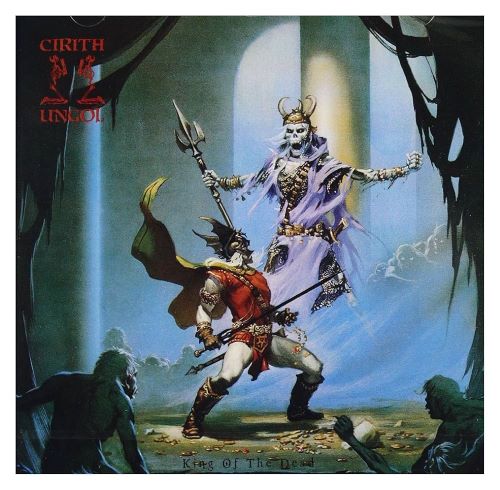
Cirith Ungol – King Of The Dead
Released July 2, 1984 via Enigma Records
Cirith Ungol is well-known as a mountain pass between Mordor and Gondor in J.R.R. Tolkien’s legendary Lord Of The Rings series. It would also be known as one of the first heavy metal bands to name themselves after a part of Tolkien’s work.
Cirith Ungol the band formed in California in 1971. They would operate in the hard rock realm through the ’70’s, then shift into heavy metal when recording their debut album, 1981’s Frost And Fire. Three years later saw them ready to unleash this follow-up album.
The band was comprised of Tim Baker on vocals, Jerry Fogle on guitar, Michael Vujea on bass and Robert Garven on drums. Founding guitarist Greg Lindstrom was no longer with the band at this point but three of his song contributions were used (with his blessing, Lindstrom also would return to the band for their 2016 reunion). The band also retained creative control of their efforts and self-produced the affair.
The cover art was done by famed book and album cover artist Michael Whelan. This piece is actually from a prior book cover, that being Bane Of The Black Sword by Michael Moorcock. Whelan has provided cover art for every Cirith Ungol album as well as scores of other works.
The album features 8 songs at a fairly beefy 50:17 runtime. As usual a few reissues exist with various bonus tracks, though today I’ll tackle the original album.
Atom Smasher
We get going with a brief intro then a running riff establishes itself, one that will remain throughout the song. Vocals and bass come in next and man, that bass is going off here and basically through the whole album. The song is a bit of sci-fi, featuring Atom Smasher as a title character who was genetically engineered and is out to save humanity.
As a note, I don’t know if there’s any influence for the video game character Adam Smasher from the Cyberpunk 2077 game decades later. The two have similarities, though the game guy is a villain while the song character is a hero. An interesting coincidence, if nothing else. Grade: A+
Black Machine
While Cirith Ungol would easily fit into the emerging US power metal movement, this album and especially this song saw them establish early ties into the also emerging doom scene. This is a pounding song that invites the listener to ride the black machine, which is some kind of infernal afterlife construct as the lyrics tell it. It’s another riff that just runs all day long and slams its way into your head. Grade: A
Master Of The Pit
Here we get an intro guitar solo as we make our way down to tangle with the guy who the song is named after. The song pounds its music through at a slower pace, so that our hero has time to fight the diabolical foe. This is Dungeons and Dragons put to music for sure. Grade: A
King Of The Dead
The title track offers a similar vibe to the song prior, it establishes a different boss to fight. This one is even more evil and doomy as someone called the King of the Dead really isn’t someone to mess with. Keep that shit locked away. Grade: A+
Death Of The Sun
Nothing says heavy metal like a good old fashioned apocalypse song. This “blink and you’ll miss it” track rips through with a speed and fury. When you’re messing with stuff like the Master of the Pit and the King of the Dead, sometimes the world just won’t make it. It also turns out that the death of the Sun is mostly guitar solos. Grade: A-
Finger Of Scorn
We’re brought in with a mournful acoustic passage here that builds into a louder electric effort as things go on. It’s another “humanity is doomed” song and this one carries on with a fair bit of Black Sabbath groove in it. There are also parts in the song’s latter half that might make you wonder when Iron Butterfly picked up doom metal. Grade: B+
Toccata in Dm
Here Dm does not refer to “dungeon master,” rather it’s the key of D minor. This is actually a cover song, the source being the iconic composer Johann Sebastian Bach. The original piece has a history that is honestly insane and covers volumes of books, but I’ll skip all that today.
Here Cirith Ungol do an abridged version of the piece. It’s worth noting that while heavy metal came up as an offshoot of blues-based rock, what has gone on to become heavy metal can be rather directly linked to classical music. Now – this piece isn’t entirely “for me” and I personally wouldn’t have put it on the record, but it can be worth listening to. Grade: B-
Cirith Ungol
We close things out with a self-named song for the band, which is always something interesting to check out. This returns to the power and doom formula experienced through the balance of the album. This one mostly lets the music do the talking with just a few verses to tell the tale of the sinister area of Mordor. And the music does the talking here – it’s a blend of everything the band have been doing through the record and wraps everything up nicely. Grade: A
King Of The Dead would be an influential force in two distinct US metal scenes – power and doom. The album would stand alongside works from Jag Panzer, Manilla Road and Savatage in shaping the US power metal scene, while it would also slot alongside Saint Vitus, Pentagram and Trouble in crafting the very new doom metal landscape. Though Cirith Ungol, like many of the other bands mentioned, did not achieve commercial success with their music, their name has rang as a leader of the metal underground since their recording career kicked off in the ’80’s. The band split up in 1992 and was but a cult memory until 2016, when an unlikely reunion happened. The group is presently on their final tour now, which is due to wrap up at the end of ’24.
The album offers up songs that would inspire the metal genres mentioned, but this also has a distinctly retro feel to it. Cirith Ungol were clearly rooted in their 1970’s origins, this was taking music forward while keeping at least one foot in the past. I don’t need any deliberation to score this album, the grade is already laid out in the songs above.
Album Grade: A
While heavy metal became a lucrative commodity for the music industry in the 1980’s, the slice of the money pie was usually reserved for the hair metal acts or the higher-profile thrash bands. But a wealth of underground and independent heavy metal also came from this time, and Cirith Ungol were one of the looming giants of the scene. King Of The Dead is a testament to the true power of this music.
It’s time today to look at one of the pioneering acts of the 1980’s sound, and also one of the more overlooked acts of the 1980’s sound.
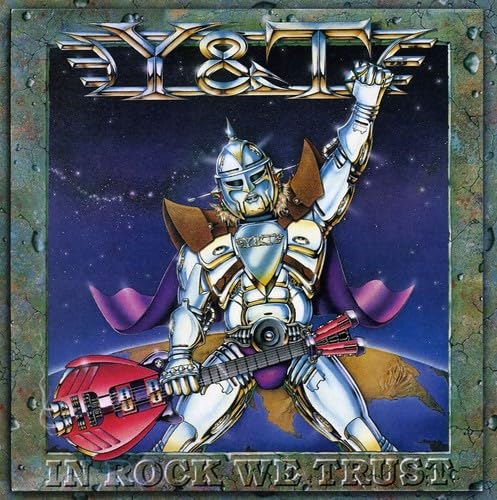
Y&T – In Rock We Trust
Released July 1984 via A&M Records
By 1984, Y&T were on to their sixth album. They had formed in the ’70’s and got their ball rolling in earnest just before the ’80’s hit. The band were making some buzz for themselves alongside the emerging Sunset Strip scene. Y&T were both opening for a who’s who of rock and metal acts like Kiss, AC/DC and Iron Maiden, while also serving as the headliner for fresh new acts like Mötley Crüe.
The band’s lineup was Dave Meniketti on guitar and vocals, Joey Alves on guitar, Phil Kennemore on bass and Leonard Haze on drums. Y&T also brought in outside help for this record – Geoffrey Leib, who is more popularly known as Jeff Paris, was in as a co-writer. The album was produced by Tom Allom, most known for his long tenure with Judas Priest.
Pretty standard issue album today – 10 tracks at 43:20. There is at least one version of a re-issue out there with a bonus track but I’ll be handling the original copy today. Also – this isn’t on streaming services that I know of, at least not on Spotify or Amazon. I have it on record but I had to use an unofficial YouTube source to review it, stopping and starting a record all the time to collect a thought isn’t a lot of fun. That’s probably why old school music critics were often full of shit.
Rock & Roll’s Gonna Save The World
We open with a nice, big track that brings nice riffs and a huge chorus that handles just what the song’s title says. Fitting that this came out just as a newer version of rock was taking over the airwaves, a version that Y&T were quite responsible for. Grade: A+
Life, Life, Life
This one is pretty melodic and bright rock-wise, though it’s a really dark topic on hand. This is a lament against what was the modern war machine, which in the 1980’s was a machine-filled monster. We were in the final years of the Soviet Union and Cold War then, though we didn’t totally know it was about to end. But we kept rocking and railing against it, and eventually it all fell apart. Grade: A
Masters And Slaves
Another bit of a social and political commentary here, wrapped up again in a prototypical 1980’s hard rock shell. This one’s about how a few have the power and everyone else is left out, something that didn’t get much better 40 years on. Grade: B+
I’ll Keep On Believin’ (Do You Know)
It’s on to a bit of a ballad now, though like many other 1984 ballads, this one packs quite the punch. It’s kind of funny to track the progression of ’80’s power ballads from ’84 to, say, ’89, when they were loaded with saccharine and sap. But these guys in ’84 were doing them right, having at the melody and softer edge while still rocking out. This song wasn’t a “hit” for Y&T per se but did get them a bit of traction in airplay. Grade: A-
Break Out Tonight!
This is a strong and powerful rock track that is just the perfect example of the ’80’s rock scene. The quiet build into the loud chorus works just great and we’re left with another fantastic song. Grade: A
Lipstick And Leather
Another uptempo rocker here, as a badass woman takes over the thoughts of the narrator. Nothing out of place here, it’s another straight and simple rock song that keeps the head banging. Grade: B+
Don’t Stop Runnin’
Nothing deviates from the formula here. It’s another solid rock song that’s both powerful and melodic. Y&T did a great job of blending the heavier edge of things with the more bright sounds that would please people not necessarily into all-out heavy metal. This is also one you can really hear the ’80’s creeping into the song, not that the rest of the album doesn’t totally scream 1984. Grade: B+
(Your Love Is) Driving Me Crazy
Not to be confused with the Sammy Hagar song of the same name (note taken for a future post), Y&T are again hard and heavy in this “on the prowl” song. This one does step over the edge a bit and retain a heavy metal feel throughout. Grade: A-
She’s A Liar
This one brings the heavy and plenty of boogie, with the band belting this one out at a breakneck pace. Very nicely done song, again combining the heavy with the melodic. This one got picked up for use in a Dr. Pepper commercial, too, so a bit more cash for the band. Grade: A-
This Time
The album ends with another ballad, and this one is a more stereotypical ’80’s ballad. The song is fine for what it is, though it honestly never won me over. I’ve heard far worse, but Y&T has also done far better. Grade: C
In Rock We Trust would not be a massive, multi-platinum release for Y&T, but just the same it did become the band’s biggest record. It charted at number 46 on the Billboard 200 and has sold around 450,000 copies. The band would be on a huge series of tours through this time, including Rush, Dio, Ratt, Dokken and Night Ranger, among others. Y&T saw their profile go from the regional Los Angeles scene to a national and international hard rock act. And while the band never “got their due” in a way, they have remained a staple of rock and metal for the 40 years since, even with Dave Meniketti being the lone surviving member from this album.
Grading this album is pretty easy – it’s a bunch of high quality hard rock. It’s done “in the vein” of the 1980’s scene at the time, but that’s primarily because Y&T were a band who helped shape that scene. This was the case of a band meeting their time more than anything, even if they didn’t benefit as much as others did from the new strain of rock going around.
Album Grade: A-
1984 contained a handful of the most essential albums in 1980’s rock – Out Of The Cellar, Tooth And Nail, W.A.S.P. And Slide It In just to name a few, much less 1984 itself. But just under the surface of the new movement in rock was Y&T, now six album veterans who offered up their own slab of high quality rock and metal. This album and band aren’t just “another good, somewhat out of the way” thing that also happened in the ’80’s, these guys were just as essential to the sound of that era as the other bands and albums mentioned in this post.
Two of thrash’s “Big Four” had already debuted before 1984. Right at the start of ’84, the third would make their presence known and also help give this newer genre its name.
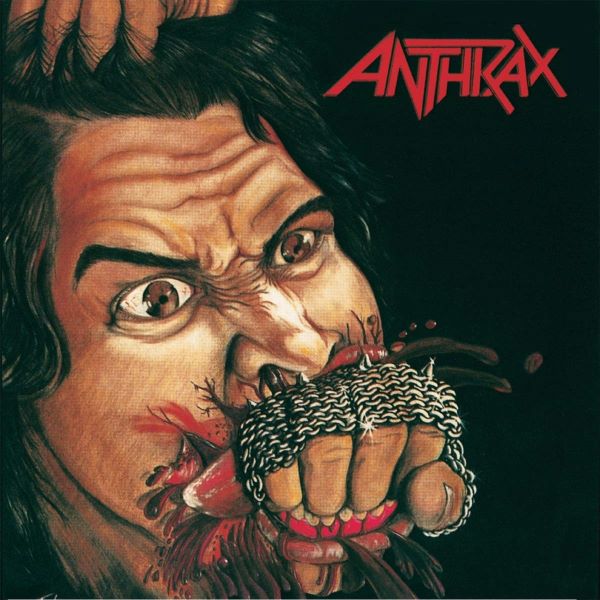
Anthrax – Fistful Of Metal
Released January 6, 1984 via Megaforce Records
Anthrax had started off in 1981 in New York, with Scott Ian and Dan Lilker forming the group. I’ll skip the Spinal Tap-worthy list of members who came and went through the first few years. The lineup for this album would feature Scott Ian on guitar along with Dan Spitz, Dan Lilker on bass, Neil Turbin on vocals and Charlie Benante on drums.
Fistful Of Metal was recorded in Ithica, New York; with Carl Canedy producing. Songwriting was credited based on member contributions, with Turbin having a huge role in shaping the material. Former Anthrax guitarist Greg Walls has said he contributed parts to various songs and was left uncredited – this was just one piece of the Anthrax band drama file folder, which needs its own warehouse to store at this point.
The album artwork was done by Kent Joshpe, a friend of Spitz’s. Joshpe had already designed the band’s logo so he was also commissioned for the interesting cover art, featuring a guy being smacked with a fistful of metal. The album art was actually banned in Germany for a time, though that ban is no longer in effect.
This album features ten songs at a thrash-tastic 35 minute runtime. There are various editions and reissues from over the years, I’m sticking with the original because tracking all the various incarnations of this album is a fool’s errand.
Deathrider
First song from the first album and jump straight into one of the best songs Anthrax have recorded in their 40+ year long career. If I had to suggest one song to someone to explain what thrash sounded like, it would probably be this one. This is all pounding and speed, straight ahead with zero bullshit. There’s probably a reason Neil Turbin named his later band after this song. Grade: S
Metal Thrashing Mad
Up next is another pounding, as relentless as the first. It’s a song about racing that sits in the standard thrash template, though Turbin executes some vocals not typically associated with thrash. That would be par for the course on this album.
This song is also where the term “thrash metal” came from, the phrase was sprung by legendary journalist Malcom Dome in the pages of Kerrang! Magazine while discussing this song. Grade: A+
I’m Eighteen
Easy enough here – Anthrax covered the classic Alice Cooper song. It’s fine, they did a good job on it. I don’t consider it essential or anything but there’s nothing wrong with it. Grade: B-
Panic
This one kicks up the speed a notch and lays an all out assault. This is Anthrax’s version of a “being on the road” song, which is a fair bit different from those of Bob Seger and Bon Jovi. The road was a long grind for those others, the road is literally beating your ass in this song. Grade: A+
Subjugator
It’s another amped up thrash track about fighting. It seems as though whoever is in the way is who is getting the beating. Also it seems Anthrax’s weapon of choice in the fight is Dan Spitz’s guitar, as he wields it here for plenty of solo action. Grade: A
Soldiers Of Metal
We’re fighting again, this time we are banded together to fight for metal. Can’t get through an ’80’s metal album without fighting for metal at some point. This is a pretty standard song but solid. Grade: B
Death From Above
Another straightforward song, this time about planes and bombing and all that. Grade: B+
Anthrax
I had sorta forgot that Anthrax had their own self-named song. It’s a pretty ripping one too, though it’s hard to tell if this actually about contracting the disease anthrax or just general mayhem. Cool stuff though. Grade: A-
Across The River
A quick instrumental here, but this one absolutely shreds and could have been fleshed out into a full song. No harm, though – still totally worthwhile. Grade: A-
Howling Furies
The last track is a bit of a horror story, being caught by some pretty nasty people or things that want to cut you up. I do wonder if this isn’t, at least in part, based off of The Warriors movie as both the Furies and “come out and play” are part of the song. I’m not sure but I’d wager a guess that it’s so. Grade: A-
Fistful Of Metal hit the streets on release – though it did not chart it was a big mover in the emerging metal scene. Anthrax themselves would tour behind the release, then endure several lineup changes before prepping the next album. Dan Lilker was fired and Neil Turbin quit, as Scott Ian and Charlie Benante became the driving forces behind Anthrax’s songwriting. The new incarnation of Anthrax would go on to a handful of gold-selling records and buzz throughout the scene, solidifying their place among thrash’s “Big Four” and somewhat leaving the first album behind.
But this album is more than deserving of its own praise. While it might not sound “original” among the decades of thrash offerings in this day and age, it had very little to be compared against in 1984. This was a nice, curbstomping record more than worth the time to visit with, even if other Anthrax albums overshadow this one.
Album Grade: A
At the end of the day, nothing to do but crank this up, start some shit and recall the good times of 40 years past.
So I have a song from this year I want to talk about but it’s a damn headache. Even typing out the title is an exercise in supreme frustration. I’m gonna save it for next week and for today I’ll go back to 1984 and discuss a beloved song from then.
In all reality there are two versions of this song to talk about. This was originally released by Raf in ’84. Raf co-wrote the song along with Giancarlo Bigazzi and Steve Piccolo. The song was a European hit, scoring number ones in Italy and Switzerland and charting in the top ten elsewhere on the continent.
Long story short, the song also needed to be a hit in the US and everyone took a familiar turn to get there – Bigazzi had already been working with US artist Laura Branigan, a partnership that had marked the smash hit Gloria in ’82. So Bigazzi and Branigan turned their attention to Self Control, and yet another hit was made.
Branigan had previously offered up some very revised versions of songs – Gloria is not only done in a different language than the original, but the lyrics were also re-written to tell a completely different story. The music was also changed up as a 1980’s “update” of sorts. But on Self Control, Laura’s cover is honestly not far removed at all from Raf’s original. The songs are distinguishable, but not by a huge degree. I’ll post Raf’s original at the bottom of this post so everyone can compare.
Laura’s version of Self Control would be a huge hit – it reached number four on the Billboard Hot 100, and the album of the same name would go platinum. It also did some huge business in Europe – it charted at number one in several countries, including Switzerland – where it actually bumped Raf’s original version out of the top spot. The two versions flipped places a few times again, making for some really interesting music trivia. Both versions were charting all over the continent as they were not released too far apart.
As for the song, it is what is described as “dance rock” or even disco-driven. It has the ’80’s zazz to it but is certainly a dance-able track. The lyrical theme of being taken by the night is actually a fair bit darker than what you might think you’d get with a song of this genre.
This would come into play with the music video. The clip was a huge hit in Europe, but US MTV required the video to be edited, due to the risque nature of the masked personification of The Night entering Laura’s room and, well, you can figure it out in the video. Anything sex oriented was a huge no-no in the year before the PMRC came riding high horses into the nation’s capitol.
Laura would continue charting both mainstream and dance songs as the ’80’s wore on, but like many her career was largely claimed by the shifting tides of the 1990’s. In 2002, Self Control would get another big boost. Stop me if you’ve read me say this about a song before, but Self Control was featured in the soundtrack to the video game Grand Theft Auto: Vice City, which introduced the song to a lot of younger people who didn’t experience it firsthand in ’84. Laura was preparing to relaunch her career around the same time, a prospect that was tragically cut short when she passed away in 2004.
Self Control has lived on as Branigan’s signature song, reigning as her top-streamed track to this day. This would be adjusted a bit in 2019, when Gloria came out of nowhere to return to the public eye as the result of an unexpected run in sports. But that is another story for another time and is tied to one of the best sports memories of my life, so I will save it for down the line.
At the end of the day, everyone involved with both versions of Self Control scored big hits around the world. The song is totally tied to the fabric of 1984, one of the best and most unique years in music history.
It’s time this week for a key album from 1984, and one with a whopper of a story to accompany it.
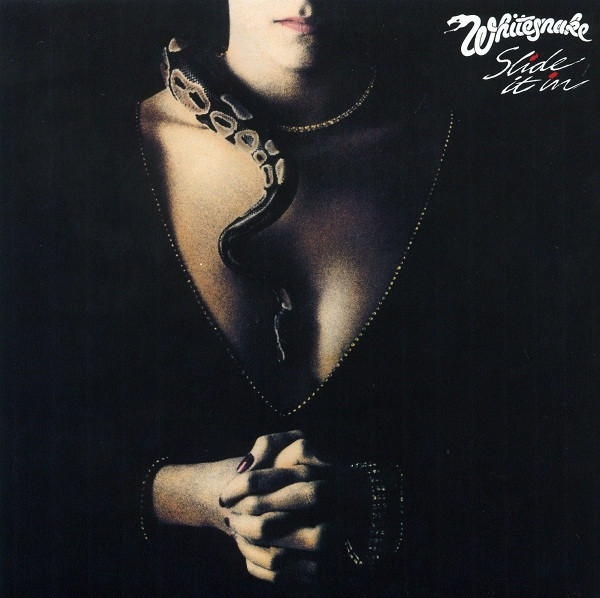
Whitesnake – Slide It In
Released January 1984 AND April 1984
So in 1983, Whitesnake set out to record this new album in Germany. The band was David Coverdale on vocals, guitarists Mel Galley and Mick Moody, bassist Colin Hodgkinson, drummer Cozy Powell and keyboard wizard Jon Lord. Eddie Kramer was in for production, for a moment anyway. The band were not satisfied with his work so he was replaced with Martin Birch, who’d helmed the Whitesnake catalog prior to this. It marked Birch’s last album production not related to Iron Maiden. The album was recorded and released in January 1984 after some delays.
Sounds fairly simple, right? It was until it wasn’t. The first issue was that of the album’s production. The music press was not happy with the album’s flat sound. Whitesnake were contracted in the US with Geffen Records, who also weren’t happy with the production. Geffen commissioned Keith Olsen to remix the album.
But even that wasn’t so simple – David Coverdale was also eyeballing a personnel change. On the advice of label exec John Kalonder, Coverdale began looking for a “guitar hero” type of lead player to further enhance the band’s image. Michael Schenker was approached but was either uninterested or uninteresting, depending on who you ask. Adrian Vandenberg was more interested but he declined, choosing to operate with his own successful outfit instead. Vandenberg would find his way in a few years later.
This led Coverdale to John Sykes, late of Tygers Of Pan Tang and currently with Thin Lizzy. Sykes was agreeable to the Whitesnake gig but also very reluctant to leave Phil Lynott hanging. Sykes made an ask for an absurd amount of money, which Whitesnake surprisingly agreed to. Lynott gave his blessing for Sykes to move on and Coverdale now had his guitar hero. This would shift Whitesnake away from their long-held blues-based sound and into the hair metal era, which was gaining a ton of steam in 1984.
Mick Moody was still on the Whitesnake roster, so Coverdale acted like a complete asshole to Moody, who took the hint and quit the band. Bassist Colin Hodgkinson was also fired, and former pal Neil Murray was brought back in. Sykes and Murray would re-record parts for the US remix of Slide It In.
And today I will be going over the US version of the album, as it’s what I’m familiar with. There are countless versions and re-issues of this available. For simplicity’s sake I’m going to use the old US tracklisting, which won’t match up with most versions found today on streaming. Either way, it’s 10 songs at a bit over 40 minutes.
Slide It In
The title track keeps things very, very simple – driving riff with double entendre lyrics. Honestly the song is so horribly basic that it’s like wearing a beige suit to a middle management conference. But the song also works splendidly, it’s a textbook example of a rocking track from this era. Not a bad way to mark your territory on the Sunset Strip scene. Grade: A+
Slow An’ Easy
Up next is the song Whitesnake would offer as the US single and the song that would help them finally break into the coveted American market. This one has it all – build-up and mood-shifting, with a bit extra behind the guitars and Powell’s drumming to really push it all over. It still has marks of the blues as it was co-written by Moody, but the song functions amazingly well in the ’80’s rock pantheon. It’s exactly the kind of song you’d want to write to get attention. Grade: S
Love Ain’t No Stranger
Whitesnake joined the ballad fray here, but this ballad is on steroids and totally rocks out. It had the rock for the rockers and the more melodic hook and twinge of melancholy for the ballad seekers. The song performed modestly as singles in both the UK and US, but over time it has become a staple of the Whitesnake set. Grade: A+
All Or Nothing
One of many tracks on here that showcase the “old” blues sound coupled with the updated ’80’s rock approach. This one slams right in and makes itself at home, with the organ adding some spice in the mid-section. Grade: A
Gambler
Here we have the sad tale of someone who is stuck “outside” of love, apparently struck by chance to remain loveless. Overall the song is well done, I do think maybe the two versions of the album clash here a little bit between the guitars and keyboards. But it’s a minor gripe. Grade: B+
Guilty Of Love
Now this song sounds totally like an ’80’s track. It keeps a quick pace but keeps a bright enough tone not to be a headbanging track. And yes, Coverdale is totally guilty of love, as we would all find out as the ’80’s wore on. Grade: A-
Hungry For Love
No, we’re not dealing with a concept or prog album by any means here, our themes today are very meat and potatoes for the ’80’s. This one is more of an old school boogie with a bit of sleaze on it. I do wonder if the song might have stood out more without the keyboards, I’d have just let the guitars carry this one. But no matter, still a nice song. Grade: B+
Give Me More Time
This song showcases Whitesnake’s transition perhaps better than any other. It still has some old-school underpinnings but it’s also a total ’80’s rocker too, a very good mark of what Whitesnake was turning into. It’s catchy and rocking and hits all the right notes. Grade: A+
Spit It Out
As we round the bend to the album’s close we get another total rocker absolutely fit for the time. It’s another pretty basic track but it gets the job done and then some. Grade: A-
Standing In The Shadow
The album wraps up with another well done song that highlights Whitesnake’s new approach. It’s a simple and effective mid-paced rocker that keeps the album’s quality high through the whole run. Grade: A
Slide It In would help Whitesnake break the American market – somewhat slowly. The album got to 40 on the Billboard 200 and would eventually earn gold certification in 1986. The original UK version went to 9 there are charted decently across Europe. The band toured behind the record, with members slowly dropping off – Jon Lord would reconvene with Deep Purple, Cozy Powell left over money disputes and Mel Galley was out due to injury.
This left Coverdale along with Murray and Sykes to work on the next record. The album was put together, but Coverdale was under massive financial pressure and was also not getting along with his bandmates, yet again. Murray left voluntarily (I guess) while Sykes was fired in acrimonious circumstances.
The story was far from done though, as Whitesnake’s self-title album would massively dominate airwaves and sales charts. This also floated up Slide It In, which went platinum in 1987, double platinum later and a total of six million copies sold worldwide. This album was the closest musically to the self-titled behemoth so its further success was no surprise.
All of the truckloads of drama aside, Slide It In was a wonderful rock album that stood up fine on its own merits. It has no filler and it combined the contrasting sounds of the early and modern Whitesnake eras very well.
Album Grade: A
I’m sure multiple books could be written about all of the events up to, including and after Slide It In. It’s one of rock’s crazier stories that in the end saw David Coverdale’s gambles pay off. But the album itself is a perfect testament to the rock scene of 1984 and an essential piece for any rock fan’s catalog.


 The Crooked Wanderer