Let’s head back to 1984 and hop up to the Great White North for the song of the week. We’ll revisit the first hit of someone who became a prolific hitmaker in both the US and his native Canada.
Corey Hart had just launched his music career in earnest with his debut album First Offense, which hit shelves in November 1983. Oddly enough, Sunglasses At Night was the lead single but was not released in advance of the album or even with the full-length – it was served up as a single in January 1984.
The single did reasonably well for a debut artist – it was a top 10 hit in the US, landing at 7 on the Billboard 200. It charted at 24 in Canada and landed in fair spots in Australia and Europe as well. As a note to those unaware, Corey Hart was far from a one-hit wonder – this was only his first successful single. He would have subsequent hits that landed higher in the US and he has 30 Canadian Top 40 hits, on top of selling over 16 million albums. This is likely the song most people remember, but Corey was on top of it at several different points in his career and has done amazingly well through the years.
Sunglasses At Night is a pleasing synth-driven offering. It is at times bright but also with a subtle dark and twisted bent to it. The lyrics are vague and not out for easy meaning, but there’s a tale of a guy being cheated on here, he wears his sunglasses to hide his eyes from the truth of his unfaithful lover. It’s both a bit cheesy and also sensibly crafted for the time period, a nice pop rock hit for the era.
The actual origins of the song are very practical. Corey states in this 2019 interview with the CBC that he had bought a pair of shades while he was recording in England, but never got the chance to wear them. He joked that he’d have to wear them at night, then the idea stirred for a new song right as the record label asked for one more track. There is also an unverified story about an air vent being right over the mixing console in the studio and people wore sunglasses to shield their eyes from the forced air, but again I can’t corroborate that one. Either way, the genesis of the song was pretty simple.
The music video was put together with thought and care, and was also a vehicle to the song’s success. In it Corey is living in an Orwellian world, he winds up arrested for not wearing his sunglasses at night. He is eventually let out by the jail guard, played by Canadian TV personality Laurie Brown. The video went on to win the first ever award for Video of the Year at the 1984 Juno Awards. Corey relates in the same CBC interview I linked above that he had to borrow a suit from Rick Springfield for the awards event.
All told, Sunglasses At Night is a song that outlived its 1980’s lifespan and still gets brought up all these years later. It would lead Corey Hart to a run of success that spanned decades and the concept of sunglasses at night is something that gets brought up a fair bit, thus keeping the song in public discourse. A pretty nice outcome for something based originally on how England’s weather is cloudy.
Once again I’m going back to 1984. This time it’s to explore a debut album that would prove massively influential to the coming extreme metal movement.
Celtic Frost – Morbid Tales
Released November 1984 via Enigma and Metal Blade Records (US)
Celtic Frost was formed in Switzerland in 1984, out of the ashes of Hellhammer. That band had been intentionally lo-fi in sound and had generated some nasty reviews from parts of the heavy metal press, to a degree that the negative reputation would follow Celtic Frost through their first few albums.
Celtic Frost was formed by guitarist and vocalist Thomas Gabriel Fischer, credited to the stage name Tom G. Warrior; and bassist Martin Erich Stricker, who went by the stage name Martin Eric Ain. While Tom Warrior would go by his real name and pseudonym interchangeably, Ain used his stage name strictly through the course of his life. Drums for this recording were provided by Stephen Priestly, who would later join the group fully during the ill-fated Cold Lake period.
Morbid Tales was initially released as a six song EP in the European market by Noise Records, who financed and helped produce the recording. In the US two songs were added and the album was licensed to Enigma and Metal Blade Records. I will be covering the US version today. A few reissue versions with bonus tracks and the Emperor’s Return EP are available.
Note that on streaming and on certain reissues, the intro to the first song is a separate track called Human. This was originally part of the first proper song Into The Crypts Of Rays.
Into The Crypts Of Rays
The opener is a straightforward, pummeling thrash tune that sounds suitably primitive but also a fair bit developed. This isn’t the woeful noise of Hellhammer, there is clearly something more here right from the drop. While CF were significantly influential on black metal, there’s also something here as an early template for death metal.
The song is a bio piece on Gilles de Rais, a French baron who was an ally of Joan of Arc. The baron was also implicated in and convicted of murdering 140 people, mainly children. The truth of de Rais’ guilt has been in question since his execution in 1440, but his supposed bloody deeds have been fodder for metal songs for the past few decades. This may have been the first one but I am not able to say that with certainty.
Whatever the case, this song introduces Celtic Frost to the world with a swift kick in the ass. Grade: A+
Visions Of Mortality
This one opens as a mid-paced effort, showing off the true haunting and sinister atmosphere Celtic Frost would conjure up throughout their career. It jumps into a thrash movement at one point and bears early indications that this band would offer up more in the way of song arrangement than simply playing loud riffs. A nice musical setting for a dark tale of someone seeking to become immortal through whatever means necessary. Grade: A
Dethroned Emperor
A very sick and twisted riff for this one, total caveman stuff here as CF run down the tale of a ruler who is removed from his throne by force. Even with the primitive feel, there are bits of arrangement and atmosphere thrown in. Grade: A-
Morbid Tales
This one kind of rocks out a bit in the intro before the song proper offers up a very early slice of what could be called black metal. The morbid tale in question is a battle between sorcerers or demons or something, it’s like a Dungeons and Dragons adventure laid out in lyrics. But yes, the foundation upon which one of the world’s most controversial subgenres was built can be found right here. Grade: A
Procreation (Of The Wicked)
Nothing too complicated here, but this riff is just impossibly savage and also catchy. The tale offered up here is one of how people are basically cruel and evil and there isn’t much to be done about it. There’s also a brief demonic utterance at the end to drive it all home. This song is just impossibly brutal and hypnotic. Grade: S
Return To The Eve
This is a fanciful tale of someone who longs to be in a recurring dream they have but the person is often rudely interrupted by reality, which becomes its own nightmare. A pretty simple tune but there are bits of atmosphere building in here with a spoken word passage and other small embellishments. Grade: B+
Danse Macabre
This goes off the beaten path and conjures up an eerie interlude. It is a creepy, horror movie passage vibe with no true discernible lyrics, just a few phrases echoed out in distorted fashion. The bit is well done but I do think it overstays its welcome at 3:52. But the album isn’t that long anyway so it’s not eating a ton of time either way. Grade: C+
Nocturnal Fear
The album closes with a balls-out thrasher that screams Venom. It’s another twisted tale with demon’s names and stuff like that in it, I don’t know what it’s talking about any more than Tom G. Warrior did when he wrote it. But it’s a total burner of a song. Grade: A
Morbid Tales was not just a debut offering from Celtic Frost, it was an album upon which the future of extreme metal would be based on. No need to offer up chart information here because there isn’t any – CF doesn’t seem to have any chart placements at all until their final album in 2006.
But rest assured this album got around on to the turntables of willing subjects the world over, and within five years there was both a death metal scene and the early strains of the infamous black metal movement were taking shape. Scores of artists from the extreme metal pantheon credit Celtic Frost and this album with being the first early guide into the true depths of sound. This band would join Bathory and Mercyful Fate as the 1984 pioneers of extreme metal, coupled of course with the earlier influence of Venom.
When I ranked the Celtic Frost albums some time ago, I had this slotted in at number three. As my grades here indicate, I am very high on this one so just imagine what I think of the other two above it. There is no doubt that this is an essential piece of heavy metal history.
Album Grade: A
Celtic Frost would have many peaks and valleys over their winding, on and off again career. But this album helped kick off a revolution within heavy metal that has kept generations of headbangers in business.
For an explanation of my grading scale, head here.
For questions, comments or concerns, use the comment form below or head to my contact page.
The celebration of 1984 continues. Today it’s the album that helped cement a bona fide god of heavy metal.
Dio – The Last In Line
Released July 2, 1984 via Warner Bros. Records
Ronnie James Dio went for broke, and went broke, to launch what wound up being his solo venture the year prior. Holy Diver was a critical success and after touring behind it, the band were quickly back in the studio to do a follow-up. The band had a great deal of cohesion and momentum behind them and were able to pull of a quick turnaround for the next year.
Dio, ever present on vocals, was rejoined by the same line-up from the album prior – Vivian Campbell on guitar, Jimmy Bain on bass and Vinny Appice on drums. In addition, Claude Schnell had been brought in on the prior tour for keyboards and was now a full-fledged band member for this album. The record was produced by Ronnie James, just as the first effort had been.
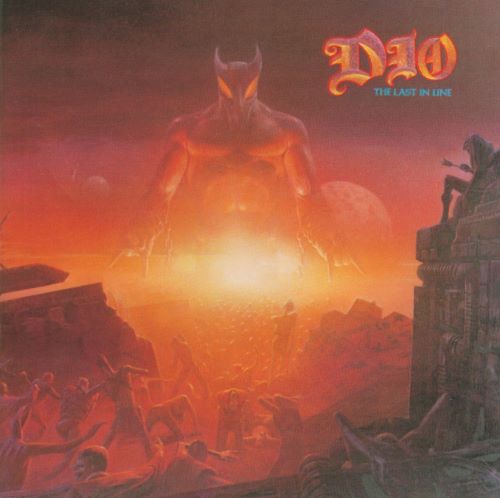
The cover again features the band’s mascot, a devil-like figure named Murray. This time Murray presides over a group of people who are brought back from the dead. Thought maybe not a striking as the Holy Diver cover, this one is still a fine piece of heavy metal art and let the album buyer know they were in for a headbanging good time.
I’ll cover the original album today, which comprises 9 songs at 41:07 in runtime. There are reissues with a wealth of bonus tracks of this album that are certainly worth investigating.
We Rock
The opener gets things going in the most straightforward manner possible – it’s a fast, hard riff brought with lyrics that are literally about going to a Dio concert. It makes a great album opener, though Dio did often use it to close concerts. It can’t get a whole lot better than this to kick off the record. Grade: A+
The Last In Line
The title track is next and it handles a quiet build until exploding into the rest of the song. This one tackles a “final quest” of people who are gripping with the ultimate battle of good versus evil. It could be a sword and sorcery adventure or it could apply to real life, it is a universal thing. And Vivian Campbell gets all day to play a wicked solo. This song is a triumph of the Dio machine and stands head and shoulders above other recorded material. Grade: S
Breathless
This one keeps a nice hard rock pace while exploring the fear of the night and “going for it” regardless of fear. A nice song by any measure though Campbell’s solo does run away as the highlight here. Grade: A-
I Speed At Night
Up next is a total burner of a song. Easy premise – guy likes driving fast at night. Everyone sang like driving like a psychopath in 1984 and everyone does it 40 years later. Anyway, fantastic song that picks up the pace and again, Vivian Campbell goes ham on the solo. Grade: A+
One Night In The City
A great riff opens this tale of two young people who appear to have run off from their typecast lives for the adventure and uncertainty found in the city at night. While the story is a bit mysterious, it is another epic telling of light and dark and two people up against it, as Dio became famous for. Grade: A
Evil Eyes
This track was originally issued as the B-side to the single Holy Diver a year prior, it was then re-recorded for this album session. It’s another high-flying adventure of two people, this time the narrator is the one with “evil eyes,” the deeper meaning of that isn’t revealed. But the adventure soars just fine in this song, it is in and out while making its point in nice fashion. Grade: A
Mystery
While the song’s theme is how things are often mysterious with no ready answers, there is no mystery to the song itself – it’s a bright offering that doesn’t lament the mystery, but rather embraces it. That was the way of Ronnie, ever the dreamer. Grade: A-
Eat Your Heart Out
A nice rocker that looks over someone leaving his woman for being bad. Bad isn’t elaborated on, but this guy is very happy to be free of his prison. This is the least heralded song on the album but that doesn’t damage its own score at all – 99% of albums would be thrilled to have this as its “weakest” track. Grade: B+
Egypt (The Chains Are On)
The closing track heads back to the infamous Bible story of the Hebrews being enslaved in Egypt. Not the only time in 1984 we’d get a song about that, go figure. Dio wasn’t only speaking about the events as told – he was also using the chains as a symbol for the types of chains that entrap people in modern society.
The song builds in epic fashion, telling the story in a way that would likely bear influence on epic and power metal to come, as well as foreshadowing the latter part of Dio’s career. A magnificent way to wrap up the album. Grade: A+
The Last In Line continued the momentum Dio established a year before and built upon it. The album charted at 23 in the US, 4 in the UK and brought 3 other European Top 10 positions. It was also Dio’s first US platinum, hitting the mark a few years before Holy Diver garnered its first plat. It was also certified silver in the UK.
It’s kind of a perpetual argument whether this or Holy Diver is the better album. Both are fantastic and have their moments. I honestly won’t go out on that limb today as it is a very, very close race for me between the two. I will say that it’s very, very easy to grade this one, it’s pretty well written across the song grades.
Grade: A+
This album is a remarkable piece of heavy metal history. It would help push trends in heavy metal that would carry on through the ’80’s and beyond, and it would solidify Dio’s presence as an immortal figure of the metal scene. While the band would not maintain its form for too long after this, there is no doubt the music of these early Dio albums was spectacular and timeless.
For an explanation of my grading scale, head here.
For questions, comments or concerns, use the comment form below or head to my contact page.
It’s time to continue the 40th anniversary celebration for 1984. And today I’ll have a look at one of the big pop and dance hits of the year. If there’s anything my site is known for, pop and dance are not it, but there is no denying the song-crafting genius of Hall and Oates.
Out Of Touch hails from the duo’s twelfth album Big Bam Boom, which arrived in October of 1994. The album would hit Billboard top 5 and go double platinum and was carried mainly on the success of today’s single. Out Of Touch would be the duo’s sixth and final number 1 single. It was also their 14th consecutive Top 40 single, they would go on to have 29 total Top 40 placements.
With this song Hall and Oates were exploring new wave and dance territory. The group had worked with many different music styles over their long tenure, and by 1984 they were riding a wave of huge pop hits and were working with the sounds of the day. It was a synthesizer where the track was born, and John Oates came up with the chorus on the synth while not really knowing how to use the instrument and while also enjoying herbal supplements. He intended the song to go to Philadelphia soul group The Stylistics but a producer told him to keep it for Hall and Oates, which he did. Oates and Daryl Hall finished the track and yet another number one hit was born. Oates tells this story in pretty funny fashion during a performance for Ditty TV, I have embedded that video below.
Today’s song is not overly loud or obtrusive by any means but it is still a banger. It does the dreamy synth thing pretty well through the chorus while the verses are honestly standard pop rock. It is, just like the duo’s other hits, insanely catchy and this one hooks in right off the bat. Hall and Oates were able to maintain their precision songwriting while using a host of new music tech. It was exactly the kind of ear-pleasing pop that would turn heads in 1984 and the song has been one of a handful from the group to still hook in listeners many years later.
If the standard version of Out Of Touch is a bit pedestrian for you, well, you’re in luck. There is an extended club mix of the song too, which the music video uses a few parts of. If you like your songs harder and probably also your drugs harder, then the Out Of Touch club mix is just up your alley. I’ll toss that one down below, it’s totally worth a listen.
And speaking of the music video – it’s another total ’80’s offering. The beginning is a funny sequence that sees Hall and Oates trapped in a drum, then steamrolled and pinned on a wall. The video then goes into a more conventional performance bit after that, but the giant drum set does get some more screen time.
Not much more to say about this one – Out Of Touch is a quintessential ’80’s hit and another jewel in the Hall and Oates crown. I doubt anyone made it through the early ’80’s without hearing Hall and Oates and if they did they are much poorer for it.
For questions, comments or concerns, use the comment form below or head to my contact page.
It’s time again to jump back 40 years to 1984 and revisit some of the great music from that great year. I’ve been running this site for well over 2 years now and, until today, I haven’t talked about a Kiss album yet. Well, Kiss released an album in 1984 so I guess now is as good a time as any.
Kiss – Animalize
Released September 17, 1984 via Mercury Records
By 1984, Kiss were re-stabilizing after a few ill-received albums and massive line-up turbulence. The band had not landed with Unmasked and The Elder, though Creatures Of The Night and Lick It Up did restore some shine to the Kiss diamond. But just as the music was turning back around, the line-up blew apart and in spectacular fashion.
By the time of Animalize, Kiss were comprised of Paul Stanley on vocals and guitar, Gene Simmons on bass, Eric Carr as drummer and new to the band Mark St. John on lead guitar. St. John would be the band’s third guitarist in two years and the spot would turn over again by the end of 1984.
It would also be fair to present the Kiss line-up as follows for this album – Paul Stanley and Eric Carr. Gene Simmons was laser focused on making an acting career and was barely present for these recording sessions. Jean Beauvoir helped out some on bass and Stanley played the opening track. Desmond Child joined in to help write a few songs, including one of Kiss’s most enduring ’80’s hits, as well as provide backing vocals. And Mitch Weismann also joined on to help write and play guitar.
Long story short, Mark St. John did not mesh with his new bandmates and was a problem during album recording. Bruce Kulick came in to help finish guitars for two songs. Kulick also filled in for St. John when the latter cited medical issues for being unable to tour behind this album. St. John would play all of 2.5 shows with Kiss before being replaced permanently by Kulick.
Paul Stanley was able to fashion a competent and well-received record out of all the mess he had to work with, including serving as the album’s producer in addition to band leader, fill-in guitarist and bassist and composer and arranger. Easy to see why he was getting stressed out while Gene was off becoming an actor and the lead guitar slot was a revolving door.
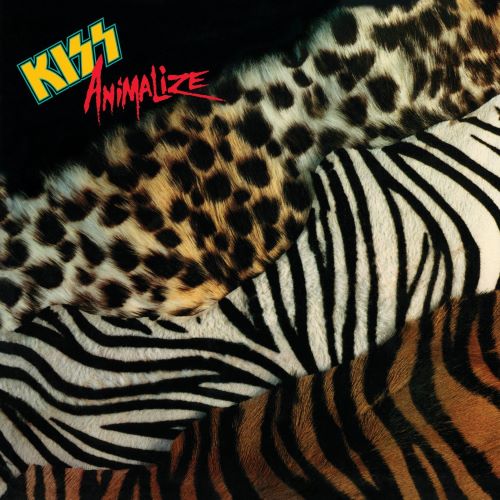
One part that Stanley was unable to salvage was that of the album cover. The cover is credited to an advertising agency as opposed to an artist. I won’t say it’s awful but it’s also not very good – there are about a million and one other ideas that would have worked better.
Will all that background out of the way, we have an album with 9 songs and a very lean 35:42 runtime. This one has had a few remasters and re-issues but I am not aware of any bonus tracks floating around, I don’t think this album got the super deluxe treatment that other Kiss albums have.
I’ve Had Enough (Into The Fire)
The opener is a shit-hot rock track that gets the ol’ adrenaline flowing from the word go. It’s a prime, uptempo blast of rock with a message of making it against all odds, that ever-present theme of ’80’s music. This one was co-penned by Stanley and Child and is a fantastic way to kick things off. Grade: A
Heaven’s On Fire
Up next is the album’s lead single. The fire theme keeps going as here Paul is getting ready for a hook-up so hot that Heaven itself will burn. It’s another song that Desmond Child helped out on and it is impossibly catchy. The chorus is infectious enough to be classified as a disease. It’s no shock that the acronym for writing good songs is K-I-S-S for Keep It Simple, Stupid; and that is in full effect here.
Heaven’s On Fire charted modestly across several countries but did become a staple of the Kiss live set, it is one of the band’s most enduring ’80’s songs. Grade: A+
Burn Bitch Burn
One of a few Gene Simmons contributions here and thankfully he kept up the burning theme despite barely being around for the recording. Here Gene is apparently paying homage to the exchange of bodily fluids and the nasty germs that can come from such exchanges. The song is pretty good overall, very suitably heavy and all, though I could have done without the “whoo whoo whoo” in the chorus. But it’s not a major detraction and I do like this one overall. Grade: B
Get All You Can Take
This song is the result of a Stanley- Weissman tag team and is another just splendid rocking track. There are guitars everywhere and Paul really shows off his once-impressive vocal register here. It’s another one of those “go out and get it no matter what” songs, great for pumping iron or sitting back 40 years later and realizing you did no going out and getting it at all. Grade: A-
Lonely Is The Hunter
Another Gene track here, it’s a mid-paced offering that has a nice shape to it but doesn’t stray anywhere beyond its main, plodding riff. The song isn’t bad but it doesn’t leap out and grab attention in the way the other songs so far have. Grade: C+
Under The Gun
And now it’s on to a Stanley-Carr-Child offering that does absolutely come out scorching. This one is a guitar showcase and a balls-out rocker from front to back. There was no letting up on the second side of this album. Grade: A
Thrills In The Night
This was the album’s other single and it marries the heavy metal feel going on with the venerable Kiss sense of melody. A very nicely done song that sees a woman who is an office stiff during the day a but a total freak out on the prowl at night. Grade: B+
While The City Sleeps
Both of the final tracks were written by Simmons and Weissman. This one is a good, uptempo mover and shaker that’s again about finding stuff out in the night. It does a good job of keeping the album’s momentum going into the close. Grade: B
Murder In High Heels
The closer has a nice, playful riff and a typical premise about a hot woman out to take on the world. The song doesn’t necessarily go much of anywhere but is decently put together. Grade: C
Animalize was a success for Kiss, continuing their rebound from the turn of the decade. The album hit 19 on the Billboard chart and had several top 10 placements internationally. It was the first Kiss album since Dynasty to be certified platinum (Lick It Up would hit that mark later).
It was a great turnaround for Kiss, who wandered into the wilderness a bit at the start of the ’80’s but by this time had found solid footing and made themselves right at home in the new rock and metal scene. Even with all the band turmoil and this record almost being a Paul Stanley solo effort, Kiss were able to re-integrate themselves into a 1980’s rock scene that they helped influence with their early career.
Album Grade: B+
Animalize was a nice offering and exactly the shot in the arm Kiss needed. There are no real duds here, even the secondary songs offer worthwhile listening. And there are several highlights among the hard rock on full display here. The rest of the decade would be a topsy-turvy one for Kiss, but here they had put together the third in a string of solid albums that kept them from being a memory of the 1970’s.
For an explanation of the grading scale, head here.
For questions, comments or concerns – use the comment form below, or head to my contact page.
For my song pick this week I’m headed back to that glorious year of 1984. Today’s song was the fourth and final single from Van Halen’s monumental album 1984. The album was a smash success, making Van Halen one of 1984’s biggest acts and eventually moving over 10 million copies. Our single today did not hit quite as well as other singles from the record, clocking in at a modest 56 on the Billboard Hot 100. But it is still a beloved offering from the band.
Hot For Teacher is a fun, all out rocker that gets going from the word go with a drum intro that sounds like a motorcycle. It is a very attention-grabbing thing to hear what Alex got up to there. The band jumps in after a bit and keeps up the bombastic instrumentation for a bit, then things settle down a hair and we get the first instance of David Lee Roth.
Roth comes in with introductory banter. While DLR’s ramblings are a point of contention with some in a fair few Van Halen songs, he was totally on point here as he set the table for the song’s topic of, well, being hot for teacher. There are a few other spoken word bits through the song and here they all fit very well.
When Roth does get to actual singing he is in full force, and it’s pure magic paired with the heavy and playful riff that Eddie Van Halen lays out. Van Halen often toed the line between rock and heavy metal and at times were the line, and this song is a prime example of it. Fun and rocking yet heavy and slamming, it’s all here on display.
The music video for this one pulled out all the bells and whistles. It features the concept of a nerdy kid being overwhelmed in school by a kid version of the Van Halen band as well as a few teachers who were certainly easy to be hot for. The kid, named Waldo, was voiced by Phil Hartman. The video shows what “happened” to the band members when they grew up and old Waldo really turned his image around after growing up. In terms of concept and added entertainment value, Hot For Teacher is the number one video from the early Van Halen era.
The video came with a bit of controversy – some felt it was objectifying and sexualized, and some broadcasts used black boxes to censor when band members would grab their crotches. There are uncorroborated reports on various sites that the video did, in part, influence Tipper Gore to start the PMRC. It should be noted that neither the song nor Van Halen made the infamous Filthy Fifteen list.
As I said in the open, this was the final single from 1984. That would also mean it was the final single from the first David Lee Roth era of the band. The song was featured in the band’s set through the 9 months of touring before Roth left the band, and it appeared again once Roth returned in 2007. It ended up getting 285 live airings, not a bad total considering the song didn’t see stage from 1984 to 2004. If setlist.fm is to be taken as an accurate source, Van Halen did the song with Sammy Hagar one time in 2004. I have no idea how correct that is, though.
At the end of it all, Hot For Teacher is one monster of a Van Halen song and a great addition to the list of hallowed songs from the year 1984. The song’s subject matter rings true with a great many students over the decades – though I must admit I personally never really had a “hot for teacher” issue. But hey, I do have this amazing song to jam out to.
My posting schedule is still all messed up – though the things that happen are minor in significance, things do keep happening and they keep pushing me back. I will again pivot and adjust and get things on track.
This week I’m going to pull out the “EASY” button. Slayer did not release an album proper in 1984, but they did release two distinct records – an EP and a live set. Today I’ll discuss the EP, which is very short but a significant marker in Slayer’s development.
Slayer – Haunting The Chapel
Released June 1984 via Metal Blade Records
Slayer’s debut record Show No Mercy was a huge success for upstart label Metal Blade, so label head Brian Slagel quickly commissioned an EP from his hot new act. The members of Slayer – Tom Araya on vocals and bass, Kerry King and Jeff Hanneman on guitar, and Dave Lombardo on drums – were brought to a North Hollywood studio with Slagel himself turning the knobs on the production console.
The studio would have a negative effect on sound initially but also provide a hell of a positive. The studio did not have carpeting, which meant that drums slid everywhere when Dave Lombardo tried to play them. He had to resort to having the band’s roadie help out by holding the drums. This roadie was Gene Hoglan, widely known today as one of heavy metal’s greatest drummers after stints with Dark Angel, Death, Testament, Strapping Young Lad and many others. Hoglan also helped Lombardo set up the latter’s first double kick drum and helped him along with how to play it. All these years later both drummers are considered the top of the pack, but forty years ago it was them trying to figure out how to hold a kit together in a shitty studio.
Since this is just an EP there’s room for another funny Gene Hoglan story – Gene recounted in this 2006 interview with Decibel Magazine about Slayer that when he joined up to be the band’s roadie, he thought he was only going to be working the lights. He didn’t know he was also supposed to help schlep gear in and out and set up the stage show. The band gave Hoglan his walking papers a bit later, and he would join Dark Angel not long after.
Also involved in the EP’s production was Bill Metoyer, who held the engineering role on Show No Mercy. Metoyer recounts in the same Decibel interview that he was Catholic but for whatever reason had no problems with the lyrics on the debut album. But when he heard Tom Araya belting out the first lyrics to the EP, which were “The Holy Cross, symbol of lies, intimates the lives of Christians born, he quipped that he would be going to Hell for it. Metoyer seemed to take it in stride and is still very much among the non-Hell dwelling living today, having served as producer to a massive list of metal albums since then.
With those amusing stories out of the way, let’s get to the topic at hand. The original version of Haunting The Chapel was three songs, the first three in order here. The fourth song was added later on in a reissue capacity, I will include it here today because it’s not a ton of ground to cover. The total runtime with the added song is 16:55, I hope you all didn’t have anywhere important to be.
Chemical Warfare
Up first is a track with a fairly hefty six minutes. Slayer here shift gears some from the “general chaos and evil” of their debut album and head decidedly into a thrash direction. And this song is thrash, 100% through. It does retain that cavernous, evil Slayer feel but this is pure thrash. There are a few changes in structure to keep the fairly long track moving along.
This is a wicked song with its lyrical depiction of being hit with chemical weapons, a terrible way to die or be wounded. Anyone who thinks Kerry King or Jeff Hanneman couldn’t play solos should listen to this song – they were both quite capable of playing. The song is great and is an early Slayer classic. Grade: A
Captor Of Sin
This one calls back to the evil ways of Show No Mercy, though still retaining a thrash underpinning to it. It’s a wild ride as the son of Satan comes to Earth and takes over, vanquishing everything in its path. The bad guys win this one. Grade: B+
Haunting The Chapel
The title track is another Satanic romp through holy victims. It’s another dissonant, thrash-filled journey on the Dark Lord’s conquest of the mortal realm. It doesn’t offer a whole ton of dynamics but it’s still a quality Slayer track. Grade: B
Aggressive Perfector
This final song, a bonus on reissue versions of the EP, was originally released on the third volume of the Metal Massacre series. This was the first Slayer song ever released, pre-dating the debut album. It does stand out with a bit less production than the other three songs but this is not a rudimentary throw-away track – it’s a very good early offering from the group. Grade: B
Haunting The Chapel did not perform on charts but it was a solid release that kept Slayer’s name in the forefront as the thrash scene unfolded in the mid-’80s. Even today with the band’s work (apparently) done, the EP stands as a fan favorite for its marked transition between the first two albums. The first two songs remained live favorites through Slayer’s entire career and the EP is still sought after 40 years later.
Album Grade: B+
This was a well-done EP that offered up fresh material, it was not by any means a throw-away effort just to make a buck. It was a smart way to help out both upstart band and record label, both of whom became central to heavy metal in the years since.
I’m gonna stick with 1984 for the song this week. I’ve long since talked about this album, which was a given since it’s my favorite Judas Priest record. Today I’ll have a look at the album’s lead single.
Freewheel Burning was released in January 1984 as the first single from Defenders Of The Faith. Oddly, the single was apparently released the same day as the album, at least from the sources I can gather. The single held a few very modest chart positions though the album as a whole was quite successful.
This song is 100% quintessential heavy metal. While Priest have always been a heavy metal band devoid of sub-genres like thrash, this song does easily fit the speed metal category. It is fast and furious, just as the first words of the song indicate. Fast And Furious was also the working title for the song before recording, just imagine the crossovers Priest could have had with the movie franchise.
Two stars of this show are the classic guitar tandem of Glenn Tipton and K.K. Downing. Not only is the song’s main riff a total barnburner, but the extended solo section of this song is absolute fire.
Also of note, as would be expected, is Rob Halford’s vocal performance. He is all over this one, shrieking through the verses while using a bit of his range in the bridge. He also delivers a rapid-fire performance a few minutes in that moves faster than rap, it’s a Halford machine gun. It’s certainly among his signature performances.
The theme with this one is simple – it’s about getting in your car and going fast. Not only fast, but as fast as possible. There’s nothing more to read into this one, just grab your vehicle of choice and put the pedal to the metal, high speed at all costs. Given the sorry state of US drivers these days, it’s like this song is used for driver’s ed.
Freewheel Burning has been a favorite song among Priest fans since 1984. Surprisingly, the song ranks a rather modest 20th in terms of how many times it’s been played live. I would have expected more but that’s why I look these things up. But it is a favorite when it does get set time, and I was happy to hear it when I saw them in 2018.
One other fun little bit of trivia – on the vinyl single, there is an extra guitar intro that isn’t heard anywhere else. It’s a slow, atmospheric bit that takes up an extra 50 or so seconds. Sadly I can’t find a good video of it so if you want to check that out you’ll have to hunt down the single or watch some video of a dude playing it on his turntable.
That’s about all there is to it, it’s pretty quick and easy to run down this speedy beast of a song. It was yet another triumph for Judas Priest as they helped cement the foundation of heavy metal in the 1980’s and are still leading the charge 40 years later.
The 40 year celebration of 1984 marches on, and today it’s a monumental debut that would turn the decade’s rock and metal music on its head.
Ratt – Out Of The Cellar
Released February 17, 1984 via Atlantic Records
The early history of Ratt is actually long and a bit windy, but this is their debut full-length after an EP one year prior so it’s the best place to pick up the story. In short, the band formed out of a series of other California-based groups (including Dokken) and the line-up eventually solidified into a recording and touring group.
That line-up featured Stephen Pearcy on vocals, Warren DeMartini and Robbin Crosby on guitar, Juan Croucier on bass and Bobby Blotzer on drums. The album was produced by Beau Hill, who had broke into Atlantic Records after work with Stevie Nicks and Sandy Stewart. After this album, Hill’s production career would move into full swing. Ratt were also managed by Marshall Berle. This would pay dividends as Berle had a famous uncle who would contribute to the video for Ratt’s signature song.
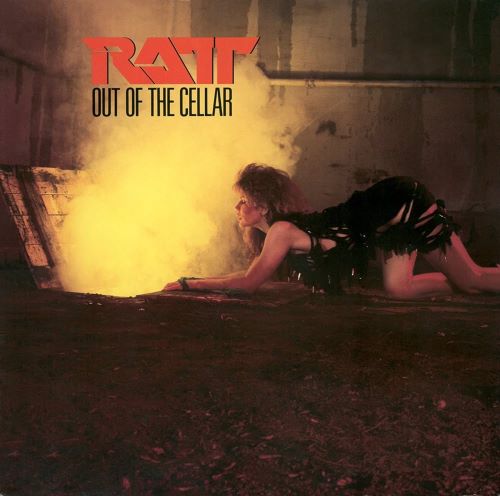
The album cover features a starlet of 80’s lore – actress and model Tawny Kitaen is featured in full on here after having her legs on the EP cover. Kitaean was dating Robbin Crosby at the time and would go on to be the face and body of hair metal after her turn in the 1987 Whitesnake videos.
Today’s album features 10 songs at a quite lean 36:41 runtime. It is all action here today, as we will soon see.
Wanted Man
1984 meets the Old West here as the Ratt gang saddle up for some outlaw adventures. The song walks the fine line between melody and edge very well, an ever-present feature of the album. It’s wasn’t very often that hair metal met western movie culture but it was done by Ratt splendidly. Grade: A+
You’re In Trouble
This song came from some versions of the EP a year prior. It’s a mid-paced banger with a great guitar solo and keeps with the rougher theme of things, almost being a spiritual sequel to Wanted Man. This early version of what would become hair metal had a ton more attitude to it than what was on offer by the late ’80’s. Grade: A
Round And Round
Up next is the song Ratt is best known for. This one was an MTV staple and would be the band’s biggest hit, going to 12 on Billboard.
And this is an expertly crafted hit song. Everything from riff, verse and chorus is so catchy that it could be its own STD. The song’s premise is simple enough – the Ratt gang is out on the prowl and kicking ass. Nothing that requires a philosopher’s interpretation here.
The video for Round And Round was all over the place back in the ’80’s. It guest-starred famed actor and comedian Milton Berle, the uncle of Ratt’s manager. Berle played two characters in the video, both a “normal” guy and in drag. The clip stands as one of the immortal videos of ’80’s rock.
It’s no surprise that Round And Round became the song for Ratt. It hooks you in from the word go and maintains its hold throughout. This one has been in wide use in TV, movies and commercials since 1984 and hasn’t gone away yet, it is Ratt’s legacy summed up in a song. Grade: A+
In Your Direction
A meaty riff here and a touch more bite to this song. As with everything on the album, this has a perfect rhythm across all facets of the song – in riffs and vocal delivery, and the back end of the drums and bass. Ratt were not considered virtuoso’s beyond the guitar of DeMartini, but their ability to get the tempo and rhythm of a song perfect is unsurpassed. Grade: A
She Wants Money
Ratt excel in the mid-pace offerings of the songs before, but this one kicks up the speed by a good bit. It is a tale as old as time, or at least money – if you want the girl, you gotta have some cash. No one likes some broke dude. This one is a nice way to switch things up a bit. Grade: A-
Lack Of Communication
The opening riff here leaps out of the speaker and pounds you in the head, and keeps up through the song’s length. This song stomps through humanity’s universal problem as illustrated in the title. No doubt this is the theme song for every single work place in recorded history. The song does a great job of communicating the problem, no issues here. Grade: A+
Back For More
Another cut from the EP that was redone for the full-length. It again sits in that mid-paced pocket that Ratt have masterfully established, though this one does have a bit more noise in the riffs and vocals. It’s a grimy tale of an on-again, off-again relationship and may have been based on the hook-up between Robbin Crosby and Tawny Kitaen. This song did get a video but wasn’t officially a single, the history on this is a bit confusing.
What isn’t confusing is that this song absolutely rocks. There’s just enough of things here and there in the track to push this one over the other songs, which are already excellent. Grade: S
The Morning After
Time to rock out again. Super great riff running through this one and Stephen Pearcy delivers the news of an impending one-night stand with the requisite force. A nice extended solo in this one too, this album is definitely not sputtering out towards the end. Grade: A
I’m Insane
Another hot rocker about a favorite topic in heavy metal, being crazy. There isn’t a lot to discuss about it – it’s a song that works great and keeps the energy up heading into the album’s close. Grade: A
Scene Of The Crime
The closer offers up a fair bit of melody, though the subject matter is far from bright and cheery. The “crime” is a figure for two-timing, or at least that’s what I get from it. The song is, like everything else, fantastically done and makes most people wish there were another ten songs of this album to go. Grade: A
Out Of The Cellar was a massive debut for Ratt. It would peak at number 7 on the Billboard 200 and has been certified 3 times platinum. Note that certifications are not always kept up to date by record labels and the album is believed to have moved at least 5 million copies. Ratt would continue to have multi-platinum success through the decade though this album remains their hottest seller.
With this album, Ratt would be instrumental in shaping the rock scene for the coming years. There is little doubt that they played a huge role in the ascension of hair metal, the sound that was so pervasive through the ’80’s. It’s also clear that there’s more on offer here than what would come by the time hair metal became a ballad writing machine. But that’s the usual state of music – it’s usually the early innovators who had the freshest stuff on offer.
Grading this album couldn’t be easier, the justification for my grade is laid out in the song grades and there’s not much else to say. This record has no weaknesses and many strengths.
Album Grade: A+
I suppose people who didn’t enjoy hair metal might actually wish to blame Ratt for being a central cog in its formation. But for those of us who did like it, it never really got much better than Out Of The Cellar. An amazing album that stands toward the top of the brilliant offerings of 1984.
Today I’m off back to that wonderful year of 1984 and into my ongoing celebration of the 40th anniversary.
I do run into one problem when I do this year-long 1984-versary – I’ve already covered a lot of this ground already. And in today’s case I’ve covered it twice – I have long since talked about Powerslave, one of my favorite Iron Maiden albums. And I’ve talked about the song before, when I ran it down as a part of the series where I visited the Maiden singles in my collection. But the occasion to celberate 1984 and also Iron Maiden gives me the opportunity to talk about this song yet again.
Aces High was released on the Powerslave album and was also released as the second single from that record. The song charted decently in the band’s native UK, going number 20 there as well as 29 in Ireland. But the sheer immortality of the song goes far beyond chart positions.
Aces High has a clear subject matter on hand – it depicts a British RAF pilot flying his Spitfire during the Battle of Britain in 1940. The British held out over a long campaign of German bombing that caused devastating damage to England’s cities and military infrastructure. But the inability of Nazi Germany to affect a British surrender would be a major turning point in World War II, and the resolve of the British people during a horrifying time is the stuff of legend.
One main way Britain held off Germany’s assault was through the use of the Spitfire, which was not in vast production at the onset of the battle but did showcase that it could keep up with the Luftwaffe’s well-rendered aircraft. And while the song today doesn’t identify the RAF pilot who flew these sorties, the single’s cover clearly depicts one Eddie as the pilot in question.
The lyrics paint a daring and detailed picture of the bombings and the dogfights that would ensue to defend Great Britain. The first line mentions the air raid siren, which was a constant feature of life in England during this campaign and also, likely coincidental, is the nickname of singer Bruce Dickinson. The rest of the lyrics are filled with the plane fight to shoot down bombers and then engage German fighters. The chorus soars, just as a plane does up in the open sky.
Not only do the words do a great job of communicating the story of the Spitfire, but the music is a muscular beast that also compliments the plane fight theme. The song is all action, kicking off hard from the word go and not letting up for a millisecond throughout. The guitar work from Dave Murray and Adrian Smith is exactly the kind of twin guitar attack you’d want to depict a dogfight, and Steve Harris’ bassline here is one of the best of his career. Accompanied by the bashing of skins from Nicko McBrain, this is a metal song that couldn’t get any more complete.
As presented on Powerslave and on the single, you simply get Aces High the song. But Maiden quickly appended a verbal introduction to the video as well as when playing the song live and it has become just as much a part of the song as the instruments and vocals. The verbiage in question is from Winston Churchill and is a part of his famous June 1940 speech, informally referred to as “On the beaches.” Churchill had been vehemently opposed to Hitler for the Nazi tyrant’s entire career, and Churchill’s dogged adversity would pay off when he became Prime Minister and helped lead Great Britain through the war. His speech was a celebrated rallying cry when delivered in Parliament. Do note that Churchill’s recording of the speech is actually from 1949, the original speech was not recorded.
Aces High instantly became a highlight piece of Iron Maiden’s catalog. It would open the World Slavery tour, as famously represented on Live After Death. While the song ranks at a relatively modest number 19 in terms of how many times Maiden have played it live, it is no doubt one of the band’s most-known and loved tracks. The list of signature Maiden songs can get a bit long but Aces High belongs there no question.
1984 was a banner year for heavy metal, and it was also the year Iron Maiden unleashed one of their best albums and truly took over the world. Aces High is one of the standout metal songs from that year, from Iron Maiden and honestly from heavy metal in general.



 The Crooked Wanderer