Lamb Of God – Laid To Rest

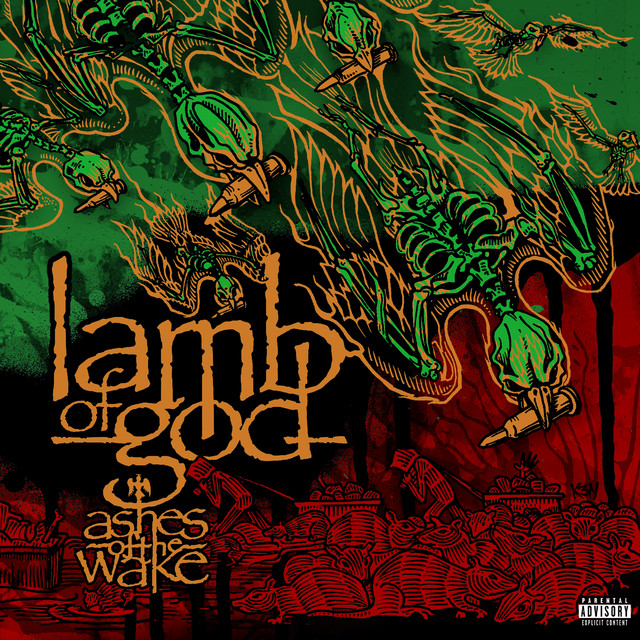
This week’s song pick goes back to 2004 and was the opening track from Lamb Of God’s fourth studio album Ashes Of The Wake. The song was the opening track and was also the “feature” song from the album, though it doesn’t seem to have been “officially” recognized as a single. There is a promo CD single around so it did get a standalone release but not terribly widespread.

This was a huge step for Lamb Of God. The band were a part of what was termed the “New Wave of American Heavy Metal” movement alongside bands like Shadows Fall, God Forbid and Killswitch Engage. While those other bands would continue to ply their trades on the metal-centric record labels like Nuclear Blast and Century Media, Lamb Of God had struck a major label deal with Epic Records. It was a huge leap for a group that was working day jobs even through the release of their acclaimed prior album As The Palaces Burn.

As a quick note – the term New Wave of American Heavy Metal is not nearly as developed in a scholarly fashion as the much more familiar New Wave of British Heavy Metal. Thoughts and writings about the American scene are all over the place and can encompass bands from as far back as the 1990’s. But it was commonly used in the early 2000’s for this group of bands.

While Lamb Of God were wrapped up with a newer scene term, the basis of their sound was groove metal. It was a noise struck up by thrash acts like Overkill and Exhorder and made popular by Pantera. Lamb Of God released this album awhile after the bitter dissolution of Pantera and just months before the murder of Dimebag Darrell Abbot. It’s not specifically important to know when discussing today’s song, but it does provide background on Lamb Of God’s ascent during this time.

Laid To Rest is an impossibly brutal song in both music and theme. The core of the song is built around guitarist Mark Morton’s absolutely monstrous riffing. According to this 2020 interview with Louder Sound, Morton worked to incorporate more melodic guitar passages to work in contrast with singer Randy Blythe’s harsh vocals. It’s quite the run that Morton makes through this song on six strings and this new focus on working with guitars as Morton did would lead to a new golden age for Lamb Of God.

The theme of Laid To Rest is a bit buried in vague terms, which was a deliberate act by Morton, who also wrote the lyrics. In the same interview cited above, Morton discussed that the song was about personal issues he was enduring at the time. He covered the specifics of his own issues to dress the song up a bit in a guise that would fit the rest of the album’s general theme, which was taking aim at the Iraq War.

Laid To Rest honesty sounds like a breakup song. It’s not just any kind of breakup, but the harsh, dreadful kind that eats away at your core. Screaming out “destroy yourself – see who gives a fuck” might not be the most healthy way to get over a deep emotional trauma, but hey it works so why not. And while I obviously can’t speculate what Mark Morton’s issues were at the time, I would have to guess that they were along the lines of relationships, but again I don’t know. While very brutal, it can be a cathartic release from any sort of angst or trouble.

But Laid To Rest can also be taken to fit in the context of war – this song could be about someone who was killed and their remaining spirit looking to see their killer handled. There was certainly a lot of aggression and atrocity in the Iraq War and this could be a tragic tale from someone unjustly killed there.

The music video does not offer any more clarity as to meaning – instead, it features the band playing in an empty warehouse of some sort, which was a mandatory shooting location for metal videos in the early 2000’s. Interspersed is footage of a guy running from another guy wearing a red hoodie. At the end of the video, the chaser catches the chasee but then the guy being pursued winds up with the hoodie. The off-screen confrontation could have been a violent one, or perhaps the guy in the red hoodie was simply chasing the other guy to try and sell the hoodie to him. We’ll never know.

For Lamb Of God, Laid To Rest opened the band to a new, wider audience and has become the band’s signature anthem. Ashes Of The Wake would be certified gold in the US and Laid To Rest is the band’s most-played song live. There is stiff competition for that spot as the band’s anthem, as songs like Redneck and Walk With Me In Hell are also up there in popularity, but at the end of the day it appears that Laid To Rest wins that overall battle.

This was all a huge deal for Lamb Of God as they rose out of the independent metal scene and became players on the upper end of the metal market. They became the new kings of groove metal just as the prior occupant of the throne went away. It’s been a monstrous run and it all kicked off with some guitar work and the use of the word fuck.

Questions, comments or concerns? Use the comment form below or head to my contact page.
The Haunted – Revolver (Album of the Week)

In 2004, one of Sweden’s leading purveyors of death and thrash hooked back up with an old flame, threw a few new bits into their metal, and had a day with the response.

The Haunted – Revolver

Released October 18, 2004 via Century Media Records

My Favorite Tracks – Who Will Decide, Abysmal, Sabotage

The Haunted have a curious history, having been formed in 1996. The band was formed by 3/5 of the former lineup of Swedish death legends At The Gates, who had broken up one day prior to The Haunted’s founding. The band was founded by brothers Jonas (bass) and Anders Björler (guitar) and Adrian Erlandsson (drums), all former members of ATG. They were initially joined by vocalist Peter Dolving and guitarist Patrik Jensen. Dolving and Erlandsson would leave The Haunted after the band’s first album, to be replaced by Marco Aro and Per Möller Jensen.

The Haunted gained acclaim on their next two albums with a pretty straightforward Swedish thrash sound. Marco Aro left the band somewhat suddenly in 2003, which led to the group seeking a reunion with original vocalist Peter Dolving and the release of this album.

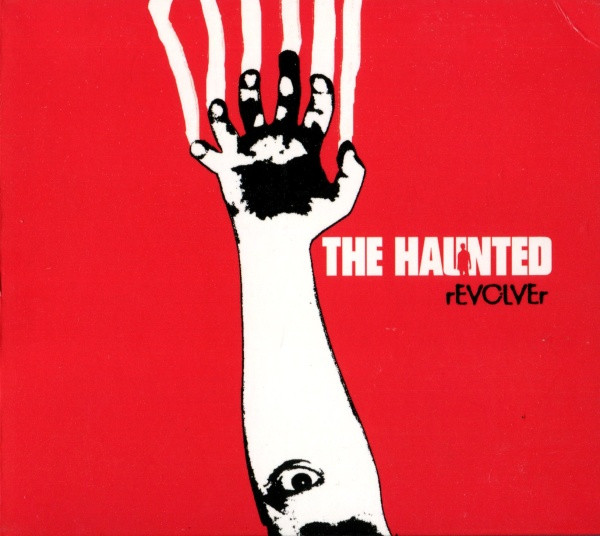
The album’s name was styled as rEVOLVEr, which was meant as an indication that The Haunted’s music was evolving from its entrenched roots in Swedish thrash. Though for the sake of clarity I will style the album’s name as Revolver in this post, maybe someone will get confused and think I’m talking about The Beatles. A few seconds of riffs from The Haunted album will likely correct any confusion.

Revolver is a hefty slab of music, no matter which configuration it comes in. The standard edition features 11 tracks at 47 minutes, while the red-covered deluxe edition offers 2 bonus tracks. And as usual, the Japanese version has its own bonus track and keeps another track from the deluxe set. For brevity’s sake I will go over the standard tracklist though I have always had the deluxe version. Here is the standard album’s tracklist:

No Compromise

99

Abysmal

Sabotage

All Against All

Sweet Relief

Burnt To A Shell

Who Will Decide

Nothing Right

Liquid Burns

My Shadow

The album opens with a pair of songs that are pretty standard fare for The Haunted – brutal, fast and loud. No Compromise and 99 both come in hard and stay that way. No Compromise is one of a few songs on the album that isn’t woefully negative in its outlook, it is more of a rallying cry for the outcasts. 99 is a very bleak look at the state of the system and doesn’t offer much in the way of hope, something that isn’t to be found on this album hardly at all.

Abysmal starts off as something quite unexpected – this is, in many respects, a ballad. It starts off very quiet, with Peter Dolving almost speaking the lines, until the song suddenly gets much heavier though keeps its dirge-like pace. The song lives up to it’s title, this is as dark as it gets with no way out and no light at the end of any tunnel.

Up next is Sabotage, which is a full-tilt delivery that is like punk on steroids. It’s followed by All Against All, a more mid-paced track that is a very harsh look at an ended relationship. This one has the “feel” of a hardcore song though still bringing its thrash underpinnings. The Swedish thrash and death sound was a huge influence on the metalcore scene and here we have one of the Swedish bands putting it all together.

If you were hoping that Sweet Relief would bring you respite from the bone-crunching riffs and stark lyrical themes, well your hope was misplaced, as the song slams in and keeps the metal flowing. The next song might be the one you’re really looking for – Burnt To A Shellis another quasi-ballad and this one is also not negative to the point of being psychologically disturbing. It does offer some of that bleak imagery but also gives a fair respite from it in the chorus.

Up next is Who Will Decide. This is another hard one and also features guest vocals from Sick Of It All frontman Lou Keller. This song really exposes the true problems with the system and why things never really seem to get truly better. And this was recorded in 2004, this one is even more relevant 19 years later.

The album heads into the home stretch with Nothing Right, another hard hitter that spells out exactly what the title says. Liquid Burns comes in next and is a very messed up look at some crazy relationship and abuse stuff, as well as the influence of alcohol and its numbing effects on the ills of society. The album closes with My Shadow, this being a full-on “ballad” and also the bleakest of the bleak in terms of theme. This conclusion is the most desperate and hopeless song of them all, just totally giving up and being nothing.

Revolver was a remarkable moment in The Haunted’s career. The album served to both honor the musical legacy of the band as well as update the sound a bit and it slotted in nicely alongside the emerging metalcore movement of the early 00’s. If The Haunted were living somewhat in the shadow of At The Gates, Revolver saw them cast off that legacy completely and fully flesh out their own identity.

It isn’t a huge secret that the lyrical themes of extreme metal tend to dwell on the negative side, but on this album the lyrics truly are dynamically written to be as hopeless as possible in many cases. It’s not like a lot of metalheads even really take in the lyrics on a lot of death or black metal – the voice is often just another instrument. But with this album Dolving’s vocal delivery is comprehensible and the words truly stand out in their desperation when they’re taken in.

The Haunted would continue course with Peter Dolving for three more albums before he departed the group in 2012. The band would also contend with double duty, as At The Gates reformed in 2008. The band nearly split up but would reconvene with singer Marco Aro and release yet more vital music in the 2010’s.

For all of the band’s history in the hallowed Swedish metal scene, Revolver might be the most unique and dynamic moment of The Haunted’s catalog. The songwriting featured variety and dynamics and the lyrical content went to a place far scarier than the imagined hells of most metal albums – the cold, stark facts of reality for many hopeless souls.

Megadeth – The System Has Failed (Album of the Week)

This week’s album is a band’s reformation effort, though also a reconfiguration in terms of how the band operated and who it worked with. It is noted as a new beginning and a return to form.

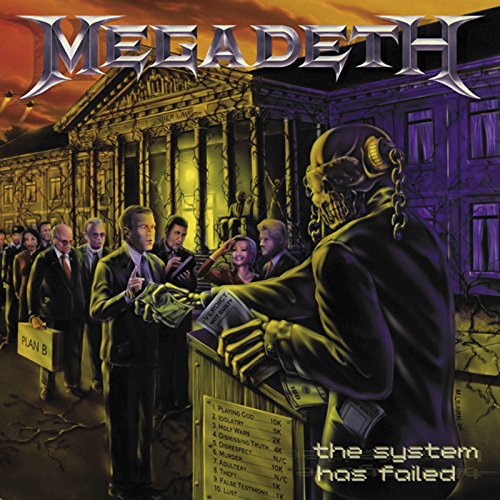
Megadeth – The System Has Failed

Released September 14, 2004 via Sanctuary Records

My Favorite Tracks – Kick The Chair, Blackmail The Universe, The Scorpion

The story leading up to The System Has Failed is quite a whopper. In 2002, with Megadeth’s fortunes on the low end of things, Dave Mustaine suffered an arm injury and was not sure if he would ever be able to play guitar again. He disbanded Megadeth and spent time healing his arm and building up to playing guitar again. His rehab was successful and he was able to resume his mastery of the instrument.

Mustaine set out to record a solo album but was held up by contractual obligations, hence the new effort would bear the title Megadeth. With this new mandate in mind, Mustaine gathered a group of session musicians and held the creative reigns of the new album. Megadeth was now Dave Mustaine and Company, a configuration that has held up to this day.

Notable among the session players on the album is Chris Poland, former Megadeth guitarist for the band’s classic Peace Sells … But Who’s Buying? Poland contributed solos to this album, though his time back with Mustaine would be short-lived.

Megadeth had been on the downslide since the late 1990’s and the ill-received Risk album. An attempted return to form with The World Needs A Hero met with mixed results, and so fan perspective was skeptical after the mess of the band’s breakup and “reformation” under a Mustaine dictatorship.

The only way to reignite fan interest would be to deliver the goods. With 12 tracks going for a 48 minute runtime, did Dave deliver? The album cover certainly brought the old vibes back, but what about the music? I’ll get into that in more detail, though the short answer is yes.

Blackmail The Universe

The opener sets a harrowing and urgent tone, as a mock news piece details a terrorist attack on the US President. The leader of the free world is missing and the nation is in chaos about how to respond. Megadeth are no strangers to the world ending via nuclear holocaust and that is the ultimate fate of everything here.

The song is fantastic and was instantly hailed as one of the band’s best in years. The music was explosive and the twisted fate of the world was communicated in powerful fashion. Though in a new form, Megadeth was back.

Die Dead Enough

The album’s lead single is a mid-tempo affair, more in line with what was issued on albums like Cryptic Writings. The song was originally conceived for a movie soundtrack but the deal fell through and it found its home here. Die Dead Enough seems an odd premise but the action sequence sort of vibe works pretty well with the music.

Kick The Chair

Any concerns about Megadeth’s standing were lifted when Kick The Chair hit peoples’ ears. This was Megadeth back in form – snarling, angry and lashing out at a broken system. Kick The Chair takes aim at the justice system and its corrupted ties with money and power. This is a precise thrash masterpiece and one of the best Megadeth songs in years.

The Scorpion

A twisted guitar passage stands out as Mustaine recalls the fable about a scorpion hitching a ride across a river from a frog and stinging the frog, dooming both animals to death. The “scorpion” in this case is a human doing bad things simply because they will. A fantastic song even without the thrash.

Tears In A Vial

A more melodic tune in line with Megadeth’s “commercial” work of the 1990’s. It’s a song about someone walking away from some kind of relationship or thing. While the song veers into more accessible territory it’s still pretty good – the dark secret about Megadeth’s “radio rock” phase is that a lot of it was actually good.

I Know Jack

A very brief interlude at only 40 seconds. No lyrics here, instead a famous 1988 quote from US Senator and Vice Presidential candidate Lloyd Bentsen is played over the riff. Bentsen was attacking rival Dan Quayle, who had compared himself to JFK. In fairness to Quayle, he was only comparing his time in Congress with JFK, but Bentsen’s response became pretty famous in political circles. Quayle, despite his bungling nature, would still wind up as Vice President under George Bush, mostly because we don’t vote for vice presidents.

Why is this track here? I have no idea.

Back In The Day

Here Mustaine pays tribute to the old thrash scene of the early ’80’s. A good track though maybe not as “thrashy” as one would expect from a song talking about that very thing.

Something That I’m Not

Mustaine launches a shot at someone who betrayed him on this song. It is most likely about Lars Ulrich. This song was a bit after Metallica’s Some Kind Of Monster film, which features Dave in a scene that gets mocked a lot. Dave apparently asked not to be in the film but his request was ignored, hence this song. A few years later everyone would start getting along better and the Big Four stuff would happen. The song itself isn’t really my cup of tea.

Truth Be Told

Here we have Mustaine handing out Bible references, probably in line with his “born again” status that happened sometime after his arm injury. The song is pretty good and doesn’t suffer for its religious influences, it ties in Bible stories with its points pretty well.

Mustaine would go on to use his religious beliefs to influence concert promoters to keep other bands off of festival line-ups that Megadeth were playing, most notably Rotting Christ and Dissection. The attempts were not always successful and it generated a lot of nastiness in the metal community at the time.

Of Mice And Men

While sharing a name with John Steinbeck’s famous story, the song has no other connection to the book. Here Dave is reflecting on his life and offering wisdom gained through experience. It’s another track that feels like it could have come from Cryptic Writings and it’s one I don’t mind hearing.

My Kingdom

After the interlude Shadow Of Deth, the album’s closer comes with Dave coming back to claim his kingdom after years away. He is directly referring to how Megadeth pursued areas outside of thrash and now the band is back and ready to get back to it. The song itself kind of misses the mark but the goods were delivered with the album as a whole.

The System Has Failed was a return to prominence for Megadeth – the album charted in several countries, including number 18 in the US. Reviews were positive and fan reception was good after several years in the murk and the break-up.

Initially this album was advertised as Megadeth’s last, with Dave wishing to do a Megadeth farewell tour and then pursue solo music. That did not quite happen and Megadeth would remain in existence to this day. It could be said that, in a way, it really is a Dave Mustaine solo project with a different name. The twists and turns of what happened with Megadeth’s lineups in the 2000’s could literally fill a book and is far more than I wish to get into here. In short, a new band was assembled for touring and members would come and go for years after, with no shortage of drama and weird shit.

But Dave Mustaine did successfully right the ship with The System Has Failed. While the back half of the album trails off some, the front is loaded with some of the best Megadeth songs in years. The new era had begun and more highlights were on the horizon.

Sonata Arctica – Don’t Say A Word

This post was part of a series that I called S-Tier Songs. I later decided to abandon the series in favor of a simpler Song of the Week format. I am keeping these posts as I wrote them but removing the old page that linked to the list of S-Tier Songs, so that is why these posts might look a bit odd. Enjoy.

Today I’m going to delve into the world of power metal, though this pick is from an act that broke out of that categorization. The song on it’s own is a gruesome tale of lovelorn heartbreak and just how far a person can go in that desperate mindset. As we’ll see, the song isn’t in isolation and is part of a long-running story told in several songs across the band’s career.

Sonata Arctica – Don’t Say A Word

Note – the video is an edit that cuts a spoken word portion from the song. The full album version is posted at the end of this post from Spotify.

Our song today hails from Sonata Arctica’s fourth album Reckoning Night, released in September 2004. Don’t Say A Word was given advanced release as an EP the month prior to the full-length.

Sonata Arctica had made a name for themselves in the early 2000’s power metal scene but also had quickly showcased that there was more to their songwriting chops than the typical fare found in the genre. Though replete with guitar and keyboard riffs as well as soaring vocals, the band exercised a higher form of songwriting on tracks like Fullmoon and The End Of This Chapter that separated them from the pack. On Reckoning Night they began the process of departing the usual power metal scene altogether – still incorporating its structure but also bringing in new influences and stylistic departures to liven things up. It would be a prelude to the next phase of their career, where the group would pursue different directions than the power metal they’d come up on.

While the album has a share of standout songs, none ring quite as true or hard as Don’t Say A Word. It is a lively track despite its dark content. Both guitars and keyboards ring with melody through an uptempo affair. Singer and band mainman Tony Kakko’s voice soars in some parts and goes hauntingly quiet in others, doing well to tell this messed up story. The track does a great job of keeping a balance between flowing music and darker, heavier parts. Sonata Arctica didn’t abandon their calling cards on this track or album, they simply repurposed and refined them.

The lyrical matter is very dark and disturbing – it is from the perspective of a scorned lover seeking the ultimate retribution for their pain. There is no room for ambiguity – the subject intends to end the life of his former mistress. The message is communicated in very eloquent fashion through the lyrics, this certainly isn’t a Cannibal Corpse song.

The song paints a terrible picture of the subject’s suffering – the love that’s meant to fade away, I tolerate your hate as long as you’re afraid, all I wanted was to be with you and suffer everyday. These are heavy and desperate thoughts, far beyond the stock thoughts often communicated in typical “break-up” songs. Obviously this work is removed from that, though the same general sentiments remain.

Purely taken on its own, Don’t Say A Word weaves a dark tale of a jilted lover who sets out to murder his fallen object of desire. It is a great song despite its treacherous story. And, as luck would have it, there is a lot more story to the principal actors in the song than what’s in this lone tune.

In 2006 Sonata Arctica released the album Unia and on it was a track named Caleb. That song serves as a prequel to Don’t Say A Word and also the aforementioned The End Of This Chapter. Caleb the song gives background on Caleb the man, the dark subject of today’s song. Caleb had a pretty bad childhood, wound up in and then out of a relationship with a woman who he then sets out to smite in Don’t Say A Word. The background provided from the song Caleb helps explain Don’t Say A Word’s chorus, where Caleb refers back to things his mother said.

The saga has been added to occasionally over the years, the song Juliet finally giving a name to the woman and seeing her enact (seemingly) cold revenge on Caleb. The band performed the entire saga live in the 2010’s, just before adding to it again in 2019 with The Last Of The Lambs, which is possibly an alternate ending to Juliet’s grim conclusion.

I’ll admit that I’m not very well-read on the Caleb Saga as a whole, a lot of fan theories tend to cloud the truth. It may be something I dive into on a future post, but as it stands and through piecing together interview fragments with Tony Kakko over the years, it would seem that the saga has six songs currently. And while most of them do tell a fairly coherent story, there might be more than one ending as I mentioned above. Either way, Don’t Say A Word plays an integral role in the story and is immediately after The End Of This Chapter in chronology.

Why is this an S-Tier song?

Don’t Say A Word is a fantastic melodic metal tune that stands out well in a band’s catalog already somewhat crowded with signature songs. It tells a harrowing, pained story that would later be expanded on in a rare lore-building exercise. It’s not every day we get that in music, especially spaced out across several albums and years. But even on its own the lyrics deliver a gripping tale beyond the conventions of a lot of popular music.

Bloodbath – Eaten

This post was part of a series that I called S-Tier Songs. I later decided to abandon the series in favor of a simpler Song of the Week format. I am keeping these posts as I wrote them but removing the old page that linked to the list of S-Tier Songs, so that is why these posts might look a bit odd. Enjoy.

Today it’s high time I included an extreme metal tune in the mix. Rock is great and all but there have been some gems come from the underground. Today’s pick is widely considered one of, if not the, catchiest death metal songs recorded. And it was recorded by a group of guys who wanted to form a side project just to mess around with some old school death metal. It’s also the case of a song where it can be argued that a live version outshines the original studio recording.

Bloodbath – Eaten

Eaten was originally released on Bloodbath’s second album, 2004’s Nightmares Made Flesh. While the group originally featured Opeth mainman Mikael Åkerfeldt, he would leave the project after their first recording. To complete the second album, joining the supergroup of Dan Swanö (Edge Of Sanity), Anders Nyström and Jonas Renske (Katatonia), and Martin Axenrot (Opeth) was Peter Tägtgren of Hypocrisy fame.

For those unfamiliar with the various ends of extreme metal – this is a who’s who of performers. Opeth was a juggernaut by 2004. Dan Swano was a mainstay of many forms of extreme metal since the early 1990’s. And Katatonia are one of doom’s main purveyors. Adding in the mainman of Hypocrisy, an early forerunner of melodic Swedish death metal and a guy responsible for producing many metal albums through the 90’s and 2000’s, is just icing on the cake.

The album was consumed rabidly by the metal fanbase. A centerpiece of the record was the song Eaten. While a lot of death metal’s buzzsaw guitars and psycho-paced drumming fly by many listeners, plenty of people caught on to the hooks in the song that reeled listeners in. Instead of playing at a breakneck pace, the group turned the speed dial down and stomped out a massive riff that pulled in a captive audience. It’s still very headbangable but also capable of being digested by people not as accustomed to death metal.

Any good death metal song needs the proper savage lyrics to accompany it, and Eaten delivered in spades. Peter Tägtgren spewed forth a fierce account of a person wishing to be eaten by a cannibal. Nothing totally unusual in death metal, though the twist of portraying the “victim” rather than the cannibal was interesting. One other interesting note?

It was a true story.

Eaten is based on the tale of German cannibal killer Armin Meiwes. Apparently Meiwes advertised for a willing victim in a cannibal fetish website section and found a volunteer in Bernd Brandes, who headed to Meiwes’ place and … well, here’s the Wikipedia page if you want to know more. The sensational murder has been used as a song, movie and TV prop since it first hit headlines.

Bloodbath had some issues maintaining a stable line-up due to everyone’s day jobs in well-known bands. Tägtgren would exit the group in early 2005 due to commitments with Hypocrisy and other projects. The rest of the band had a gig, to that date their first, planned for the 2005 edition of the famed Wacken Open Air Festival. Of course they would need a replacement singer to helm the vocals for the gig.

Re-enter Mikael Åkerfeldt . Opeth’s leader decided to front Bloodbath again for the show and would wind up staying with the group for several more years. The festival performance was later released on DVD and CD as The Wacken Carnage. Ending the set was the band’s rendition of Eaten, a performance often celebrated as superior to it studio recording.

There is something just extra savage in Åkerfeldt’s delivery of the Eaten lyrics that night, as well as the band’s frantic performance that outpaces the original. It’s not that there was fault with Tägtgren’s studio recording, it’s just that Bloodbath got into the moment at the Wacken gig and blew the figurative roof off on that day. Many fans express their opinion that the live version is the song’s definitive offering.

No telling if this stays up but it’s been lingering awhile so I’ll go with it

Why is this an S-Tier song?

Eaten is a masterwork of death metal songwriting, offered by a group of pros who mostly weren’t even involved otherwise in death metal at the time. The song is easily one of the catchiest death metal songs recorded and that’s something of a rare feat to combine hooky songwriting in a genre known for savagery and technical proficiency. Eaten made old school death metal cool again in a time when metal was going in many different directions and taking itself very seriously.

Note – Those name accents are pains in the ass.

As a bonus, here is a more recent performance from present-day Bloodbath singer Nick Holmes (Paradise Lost)

Album Of The Week – April 4, 2022

This week’s pick is an album that saw a band move on from their power metal roots and lean fully into the symphonic sound they had been prodding at their last few records before. The results would launch the group into the stratosphere and put them at the forefront of heavy metal in their native Finland and worldwide. The symphonic movement in metal would explode, while the very group that put it on the map would unexpectedly reconfigure after the touring cycle for this album.

Nightwish – Once

Released June 7, 2004 via Nuclear Blast Records (Europe)

My Favorite Tracks – Ghost Love Score, Planet Hell, Nemo

Keyboardist and band leader Tuomas Holopainen has always been the chief force behind Nightwish’s compositions. For Once he chose to record most of the album with orchestra accompaniment, utilizing the London Philharmonic. The album would be the most expensive to have been recorded in Finland, a record to be broken again by Nightwish years later.

While Holopainen was the band’s mastermind, its showcase would be singer Tarja Turunen. Turunen is a classically-trained soprano singer whose operatic style was an unlikely but welcome fit in heavy metal. The power and character of her singing would be the centerpiece of Nightwish’s presentation.

While Once is available in a few configurations with bonus tracks, I will be discussing the standard 11-track version most widely released.

Dark Chest Of Wonders

The opener is epic and heavy. It’s the perfect blend of symphonic composition and heavy metal attack. The song goes on a fantasy-laden adventure far from the grind of reality, a recurring theme in Holopainen’s songwriting. It’s clear through the Nightwish catalog that he wishes to go on a fantastic journey and Nightwish is his vehicle for that trip.

Wish I Had An Angel

Another heavy tune that was also one of the album’s hit singles. It features Tarja on the verses and bassist Marco Hietala belting the chorus. While the song is dripped in very intense imagery and symbology, its roots are far more basic – Holopainen spawned the concept after seeing people hit on his girlfriend while out on the town. Some people get into fights over that, Tuomas writes hit songs from it instead. While many of the songs on Once are epic and far-reaching, this song keeps it pretty simple and drives everything home.

Nemo

Written about the origins of the name Nemo, meaning nameless or no one. The song is based in more of Holopainen’s sense of loss and search for meaning. Despite the dour subject matter, the music is lush and uplifting, creating a beautiful soundscape. The song was the album’s first single and was a major hit ahead of Once’s release. It stands as the group’s most-played song live and one of the three most recognizable for the group, all which hail from this album.

Planet Hell

A heavier approach sees Nightwish tackle the scenario of the planet devolving into total chaos. That’s subject matter than any thrash band would do any day of the week, but here Nightwish wrap the harrowing ordeal up in another epic, operatic offering featuring both Tarja and Marco handling vocals.

Planet Hell would take an odd place in gaming lore a few years after its release as part of a compilation video featuring players in Runescape exploiting a glitch to attack others outside of the traditional player versus player area. It’s odd how songs sometimes get used in weird places and wind up being a piece of lore.

Creek Mary’s Blood

Holopainen wrote this song based upon a book of the same name. It is another sad account of the plight of the Native Americans, this time told in epic fashion by a group of Finnish musicians. The song’s conclusion features a poem originally written in English but subsequently read in the Lakota language by musician John Two-Hawks.

The Siren

A song clearly about the mythical sirens who would lure sailors to the rocks and their deaths with beautiful singing. It’s a perfectly fitting song to record when your singer is Tarja Turunen. The Siren was the album’s fourth and final single release.

Dead Gardens

It was reportedly written by Holopainen about a bad period of writer’s block. I’d imagine a lot of writers wish they could come up with stuff like this in down periods. This song does shade a bit toward the sound Nightwish would pursue on albums after Once.

Romanticide

We’re into a blistering track that goes for the throat and tackles more lovelorn concepts of self-worth. It’s a tale as old as time but told in grand and heavy fashion here. Tarja’s operatic delivery of the heavy-hitting chorus punctuates the affair.

Ghost Love Score

Although not released as a single, this ten-minute epic has possibly become Nightwish’s most famous song in retrospect. While the song was noted as a standout upon the album’s release, it would be years later when the YouTube song reaction community got a hold of this track that it would take on a whole new life.

Ghost Love Score is a monster of a song, offering movements and passages that stand out from the typical popular music compositions. It is a bit of a hybrid prog-opera offering that puts all of Tarja Turunen’s talents on full display, as well as the compositional strengths of Tuomas Holopainen.

The song’s theme is simple – two lovers have parted but the connection and fondness remains. It is a hauntingly mesmerizing and victorious song that couples beauty and tragedy in the most grand manner.

Despite its extended runtime and challenging architecture, Ghost Love Score would become a live staple for the band. It was difficult to imagine anyone besides Tarja handling the vocal duties on the song, but in 2013 at the Wacken festival present-day Nightwish singer Floor Jansen delivered a performance that has the Internet buzzing still almost nine years later. The line from Tarja to Floor is a story for another time but, after everything, Ghost Love Score stands as perhaps Nightwish’s most triumphant moment.

Kuolema tekee taiteilijan

This obvious cut-and-paster of a title was a single released in Finland and Japan. The song was performed entirely in Finnish, a rarity for the group. The song’s title translates to “Death Makes An Artist.” Even without a translation guide, the song conveys a sense of beauty and sadness, ever-present themes in the Nightwish discography.

Higher Than Hope

The album’s closer is one with a tragic yet triumphant story behind it. Marc Brueland was a former comic book artist in San Diego who was pitched in a seven-year battle with cancer and began doing DJ sets at a local club. One night he stumbled across a cover version of Nightwish’s Walking In The Air. This would lead to Marc getting in contact with the band and forging a friendship with Tuomas. Marc would join the band on stage for a performance of Walking In The Air.

Higher Than Hope was a song Tuomas wrote about Marc’s battle and spirit. Marc delivers the spoken word passage in the song’s mid-point interlude. Sadly Marc would pass away several months before the release of Once and was never able to hear the song he inspired. Nightwish do not play the song live unless members of the Brueland family are in attendance.

When Marc Brueland joined Nightwish on stage in 2003

Once marked the moment that Nightwish broke free from the power metal scene and established themselves as a premier act across the world. The album sold over two million copies and its songs are among the most famous from the group still to this day. It made Nightwish practically royalty in Finland and well known everywhere else.

Nightwish would embark on a successful touring cycle for Once, culminating in a show at Helsinki’s Hartwall Arena on October 25, 2005 that was immortalized on video and audio as the End Of An Era set. The name was well-chosen as, just after the show, Holopainen and the band made the shocking decision to fire Tarja Turunen from the group. The move would reverberate through the metal world and cause months, if not years, of drama and toxic chaos on the Internet.

Whatever came after, Once was a glorious moment in the sun for Nightwish. They delivered on the promise creeping into their prior few albums to break the mold and combine heavy metal with classical arrangement in a way that would spark a series of new scenes within metal. The time and expense poured into the album paid off and put the band on a new plane of existence.

Lamb Of God – Ashes Of The Wake (Album of the Week)

This week’s AOTW pick is a classic from 2004 that saw one of metal’s rising stars reach new heights and start to secure their place as the genre’s premier act. The album is largely based thematically on the second U.S.-Iraq War and features one of the best 3-song (if not 5-song) opening album sequences ever put to record. The new gods of groove metal arrived in 2004 to headbang through the new millennium.

Lamb Of God – Ashes Of The Wake

Released August 31, 2004 via Epic Records

My Favorite Tracks – Laid To Rest, Hourglass, Now You’ve Got Something To Die For

The album leads off with Laid To Rest – a track that is one of LoG’s most popular songs to this day. The song is one of a few that doesn’t betray its meaning right away – it could be about a victim haunting their killer, as is often surmised. That same concept could play out with the album’s overall theme of looking at the U.S. Wars in the Middle East. Perhaps a “collateral damage” victim is looking for their killers.

Or, the song could simply be a damn break-up tune. That’s what it sounds like to me. There’s definitely something under there to pull that conclusion out, even if the result is quite screwed up. I don’t necessarily recommend screaming “Destroy yourself – see who gives a fuck” over and over again if you’re trying to get over somebody, but hey, it’s there if you need it.

The next few songs jump more overtly into the issue of the wars in the Middle East. Hourglass is a sharp warning of the dangers of nation-building, warnings that have largely come to pass. Now You’ve Got Something To Die For gets into the true cost of war, that being the piles of bodies wrapped in flags and dollars.

The Faded Line continues the harrowing exploration of the cost of war, this time looking at the loss of faith and connection to one’s country, vision and values. It’s a definite standout and one I can truly connect with, it’s kind of shit living in a place where I can’t connect with the ideals that so many among me are rabidly shouting in defense of.

Ashes Of The Wake goes on to explore a handful of other themes. Omerta is a clear visitation of the Mafia’s “code of silence” and the brutal consequences of violating it. There’s more political musing on One Gun, and Break You is about some specifically unidentified heavy stuff.

The album’s title track takes a different approach to outlining the horrors of war. An interview with a Marine who saw combat in Iraq presents the harsh realities of the orders the combatants were given. The song offers a handful of guitar solos, including guest shots from Testament’s Alex Skolnick and Chris Poland, formerly of Megadeth.

Lamb Of God were one of the many bands lumped into the “New Wave Of American Heavy Metal” tag in the early 00’s. That tag got a bit confusing over time and grouped many dissimilar acts together. Either way, Lamb Of God separated themselves from the pack with Ashes Of The Wake. The road ahead would see even more success and exposure for the group through the rest of the 00’s.