
This week I’m heading into 2009 and having a look at the album that would sadly be Ronnie James Dio’s final living testament.
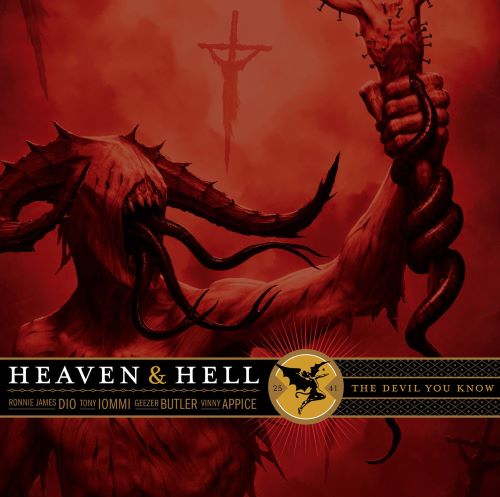
Heaven & Hell – The Devil You Know
Released April 27, 2009 via Rhino Records
The story of how Dio-led Black Sabbath got together one last time is pretty straighforward. In 2007 a greatest hits compilation of the Dio-Sabbath albums was released. Tony Iommi did not have a wealth of usable material from these albums in the vault, so he convened with the other members to record a few new songs for the comp.
This led to touring and rather quickly morphed into recording a new studio album. The only roadblock present was one sprung by her grace Sharon Osbourne – this band could not use the name Black Sabbath, as Camp Osbourne had secured full control of Sabbath’s rights from Iommi several years prior. This led Sharon to release a flimsy PR statement declaring that there was “only one Black Sabbath,” even though anyone with even a passing knowledge of heavy metal is familiar with the several Ozzy-less versions of the band. At any rate, Iommi, Dio, Geezer Butler and Vinny Appice chose to rechristen themselves Heaven & Hell in order to tour and record. It was Black Sabbath in all but name, and many record stores even filed the release under Black Sabbath on the shelf.
The album features 10 songs with a 54:01 runtime. There were some digital editions with bonus tracks, these were live cuts and I don’t know of any studio material that was left on the cutting room floor.
Atom And Evil
The opener keeps a slow pace in fitting with the doom aspect of Sabbath’s music. Dio gets to shine on the verses while Iommi opens up the riffing in the chorus and solo break. While not outright headbanging, it’s honestly a great listening experience with the more droning tempo.
And the theme here is very deep, interwoven and well done. Atom And Evil is clearly a play on the Adam and Eve story and the song explores the concept of someone finding forbidden knowledge, just as in the creation story. In this case the knowledge is that of nuclear weapons.
And also of note – this isn’t the first time someone used this song title to express the same sentiments. In 1947, the gospel act Golden Gate Quartet released a single with the same title and theme. Rather different songs, but same idea. Grade: A+
Fear
This one gets going with a fair bit of power and has one hell of a doom riff running through it. The song is simply about being afraid of the dark. This one is actually more about the reality of nyctophobia, which is a feature of prehistoric times when light sources at night were quite scarce and a fear of the dark was perfectly rational. It has lingered with humans ever since and now we have this great song about it. Grade: A
Bible Black
Up next was the advance single from the album. This one builds from a softer intro into a full-on vintage Iommi pounder of a riff. The song is about a guy who becomes possessed by a book of dark knowledge. It’s easy to see why they picked this as the single – this song is full and rich and hits all the right notes. Grade: A+
Double The Pain
This one comes out at a more uptempo, rocking pace. The premise here is of someone who isn’t happy unless they’re miserable, so “double the pain” and make them euphoric. Interesting concept, but honestly I can’t help but feel like I’m listening to a heavy metal commercial jingle for Doublemint gum (that stuff still around?). A good song but maybe just a bit off. Grade: B-
Rock And Roll Angel
This one moves in a straight line with a simple yet effective Iommi riff. This was first called Rock and Roll Jesus, but then Kid Rock released something with that name so this one got changed up. It’s a nice song that’s far from the standout of the album but it’s not bad by any stretch. Grade: B-
The Turn Of The Screw
A song with a fairly upbeat rhythm to it, even Iommi’s riffs have a bit of lift to them on here. A bit juxtaposed with the subject matter as this is about using people up and discarding them. Another song that doesn’t leap out of the speaker but still offers up something worth listening to. Grade: B
Eating The Cannibals
An outright speed song here, this one picks up the tempo and bashes out from start to end. There are even a few melodic rock runs from Iommi over the top of this one, not something you hear from him every day. The theme here is one of violence and also a sort of twist on the “eat the rich” concept. I don’t know that it entirely comes off but the song works just the same. Grade: B+
Follow The Tears
Another more standard Dio doom offering with a few keyboards up front to help differentiate things a bit. It’s a dark tale of how human generosity can be self-serving and ultimately a trap. Another song that’s fine but doesn’t quite go over the hump. Grade: C+
Neverwhere
One more fast and fairly upbeat and tempo track as we wind to album’s end. It’s one of Dio’s fantasy tales though this one is really dark, about someone giving in to the temptation of witchcraft and the like. Pretty good stuff here. Grade: B
Breaking Into Heaven
The final song is a more plodding doom track with the vintage Iommi guitar work. This one’s about the rebel angels who left Heaven with Satan, now they are plotting to return to Heaven and they aren’t going to ask politely to get back in. Not a bad way to close out the album and the Dio era of Black Sabbath. Grade: B+
The Devil You Know was hotly anticipated and would see a rush of success upon release. It charted all over the world, though in fairness many of the chart positions were modest. In the US it did very well, landing at number 8. This would match Master Of Reality for best US chart position of any Black Sabbath album, though a few years down the line the original version of the band would land the number 1 spot with the band’s final album 13.
While the stage was set for Heaven & Hell to take off and run, this chapter would sadly close after less than 50 shows. Ronnie James Dio was diagnosed with stomach cancer and died in May of 2010. For a group who had formed and split up twice over infighting but had come together older and wiser for this last run, it was a tragic way for everything to have to end. The end of Heaven & Hell left Tony and Geezer available to work with Ozzy as Black Sabbath one final time, a run that concluded in 2017.
Today’s album does have a mixed reception. Some people ate up anything that Dio Sabbath released, I am generally among that number. Others didn’t find much worthwhile in the album, longing more for the prior classic albums of the group.
For me this is a solid effort. It has a few standout cuts that show up at the beginning of the record, then the remainder offers up secondary tracks that are still quality and a bit above the “filler” line. It’s a good listening experience front to back, nothing on here sticks out as not fitting.
Album Grade: B+
This last chapter of work between Dio and Iommi blessed us with another round of their somewhat unique blend of doom and high fantasy metal. It is a Black Sabbath album in all but name, a policy enacted by her benevolent grace Sharon Osbourne. But there is no quashing the legacy that “Dio Sabbath” were able to forge, and The Devil You Know serves as a fitting conclusion to that legacy. It’s also the final testament of bona fide heavy metal god Ronnie James Dio.
For the details of my grading scale, head here.
Questions, comments or concerns? Use the comment form below or head to my contact page.
 The Crooked Wanderer