Picking Five Songs From 1987

And now we’re on to 1987. This was a massive year at the top end of rock. It’s pretty crazy – the albums Hysteria, Appetite For Destruction and The Joshua Tree sold a combined 75 million copies worldwide. Two of those albums didn’t really gain steam until a year later, but that’s a different story.

Things were moving on musically in the later 1980’s. A lot of bands seemed to be chasing the brass ring and not quite grabbing it. Acts that had vital, fresh albums a few years back were now stagnating. There’s still plenty of good music to be found, but in retrospect, the signs of the coming nuclear assault of 1991 were already there by ’87.

But there’s no need for massive analysis of everything. All I really need to do is pick five songs I really like from 1987. Not necessarily my five definitive favorites, simply five of my favorites. This is a fast and loose exercise so let’s get into it.

Mötley Crüe – Wild Side

The Crüe got back to form after a bit of a letdown a few years prior. Wild Side is a heavy, pounding track that outlines the sleazier part of life. Not everything was fast women and good times in the ’80’s, there was a seedy side to things and Wild Side captured the grit and grime of the streets at night. This is one of my very favorite Crüe songs.

Guns N’ Roses – Welcome To The Jungle

1987 was the year GnR were thrust into the wider world. It would take them a bit to break, but break they did, to the tune of selling 30 million copies of Appetite For Destruction. The tune that really gets me going is the album’s opening track. It is a monster song, and much like the one from their bitter rivals above, relays how the big, bad city can swallow you whole. This threw a whole new level of intensity into the rock scene and made titans out of Guns N’ Roses.

Whitesnake – Still Of The Night

David Coverdale was not to be left out of the big winnings of 1987. Gambling his whole fortune on the album he’d just crafted, he would be paid back in spades as his album sold 10 million copies. While honestly just a song about a romp between the sheets, this is laid out with great care, featuring movements and interludes and the dynamite guitar of John Sykes. This song could be considered Whitesnake’s greatest triumph, though that’s not a question I’m here to discuss today.

U2 – Where The Streets Have No Name

U2 were big winners from 1987, bringing in a haul from their 25 million plus selling The Joshua Tree record. I’m not the band’s biggest fan but there’s no doubt that the album is a piece of work and that this song is absolutely stunning. This is simply a massive rock song packed with emotion and imagery that is too vivid to escape.

Dio – All The Fools Sailed Away

By 1987, Ronnie James Dio was operating without his wunderkid guitarist Vivian Campbell, who departed the band in acrimonious fashion. Though Dio’s “golden era” would be over, he was still capable of striking gold, as he did on this magnificent track. It’s a splendid quasi-ballad that stands alongside his prime cuts as one of his best works.

That wraps it up for 1987. Just two more years of the golden 1980’s to go, then things get really, really different – both in music and in my tastes.
Picking Five Songs From 1983

I obviously have not been on much lately. I am looking to return to more regular posting in the next few weeks.

We are now up to 1983 on this long-running series of picking five songs from a year. As is the case with all of the 1980’s posts, these are tough to nail down and this list should be taken as “five of my favorite songs from the year” as opposed to “my set in stone five favorites from the year.”

1983 is particularly challenging as there is a ton of stuff out there. In some respects it might have even been easier – I picked five songs in about that many seconds when I looked at the music released that year. I did a bit of looking around to make sure I was comfortable with my picks and I am, but wow there’s so much stuff that got released that year. Doing just five songs is like trying to fill an ocean by pissing in it, but five keeps things short and simple so I’ll stick with it. Let’s get into 1983.

Metallica – The Four Horsemen

Thrash was now on the scene and with it one of heavy metal’s most significant acts. This savage tale of the famed Four Horsemen of the Apocalypse from the Book of Revelations in the Holy Bible was right up my alley when I first played Metallica way back when. It’s a fun-filled romp through the end times, replete with horse galloping riffs and neck-snapping thrash aplenty.

Also – Dave Mustaine would very much like for you to know that he wrote this song originally, Metallica redid the lyrics and added some stuff after they shitcanned him from the band.

Mötley Crüe – Shout At The Devil

The Crüe were back with their second album and it would be both career- and genre-defining. The title track is an absolute ripper with its so simple yet effective sliding intro riff and lyrics about combating the influence of the Devil, though many in society would interpret the song differently. Still one of the greatest things ever recorded, hands down.

The Police – King Of Pain

The Police had a mega-hit album in ’83 with their swansong Synchronicity. This is an amazing piece, with Sting’s personal turmoil interspersed lyrically with the beautiful backdrop of Jamaica. It’s an absolute blast of mesmerizing synth rock that always captured my imagination.

Dio – Rainbow In The Dark

Ronnie James Dio was on his own after a dramatic exit from Black Sabbath. He wrote this song about his down feelings on leaving the band. It became an immortal metal anthem and one of Dio’s most heralded songs. He had a few more shots with Sabbath but he only needed one solo attempt to make this signature anthem count.

Iron Maiden – The Trooper

Maiden were on a roll by ’83 and they offered up one of their signature anthems on the Piece Of Mind album. The song is based on The Charge of the Light Brigade, an ill-fated British military maneuver in the 1800’s that saw a cavalry unit slaughtered based on bad military intelligence. But in the song Maiden capture the charge as the heroic last stand of ferocious soldiers fighting to the last. It quickly and easily became of of the top Maiden songs and has endured to this day toward the top of that list.

That does it for 1983. This is one hell of a slab of songs, tough to top this one. But the 1980’s abound with great music and I will press on to make it through.

Dio – The Last In Line

The celebration of 1984 continues. Today it’s the album that helped cement a bona fide god of heavy metal.

Dio – The Last In Line

Released July 2, 1984 via Warner Bros. Records

Ronnie James Dio went for broke, and went broke, to launch what wound up being his solo venture the year prior. Holy Diver was a critical success and after touring behind it, the band were quickly back in the studio to do a follow-up. The band had a great deal of cohesion and momentum behind them and were able to pull of a quick turnaround for the next year.

Dio, ever present on vocals, was rejoined by the same line-up from the album prior – Vivian Campbell on guitar, Jimmy Bain on bass and Vinny Appice on drums. In addition, Claude Schnell had been brought in on the prior tour for keyboards and was now a full-fledged band member for this album. The record was produced by Ronnie James, just as the first effort had been.

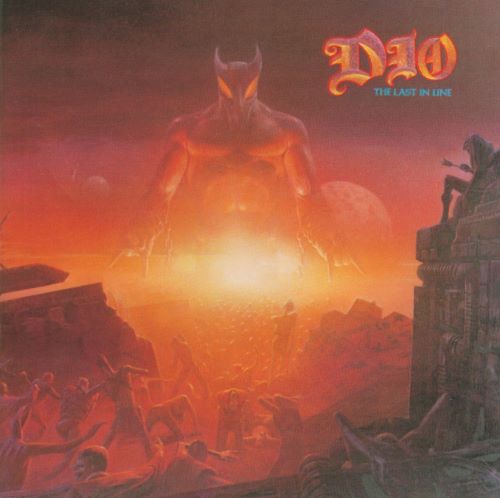
The cover again features the band’s mascot, a devil-like figure named Murray. This time Murray presides over a group of people who are brought back from the dead. Thought maybe not a striking as the Holy Diver cover, this one is still a fine piece of heavy metal art and let the album buyer know they were in for a headbanging good time.

I’ll cover the original album today, which comprises 9 songs at 41:07 in runtime. There are reissues with a wealth of bonus tracks of this album that are certainly worth investigating.

We Rock

The opener gets things going in the most straightforward manner possible – it’s a fast, hard riff brought with lyrics that are literally about going to a Dio concert. It makes a great album opener, though Dio did often use it to close concerts. It can’t get a whole lot better than this to kick off the record. Grade: A+

The Last In Line

The title track is next and it handles a quiet build until exploding into the rest of the song. This one tackles a “final quest” of people who are gripping with the ultimate battle of good versus evil. It could be a sword and sorcery adventure or it could apply to real life, it is a universal thing. And Vivian Campbell gets all day to play a wicked solo. This song is a triumph of the Dio machine and stands head and shoulders above other recorded material. Grade: S

Breathless

This one keeps a nice hard rock pace while exploring the fear of the night and “going for it” regardless of fear. A nice song by any measure though Campbell’s solo does run away as the highlight here. Grade: A-

I Speed At Night

Up next is a total burner of a song. Easy premise – guy likes driving fast at night. Everyone sang like driving like a psychopath in 1984 and everyone does it 40 years later. Anyway, fantastic song that picks up the pace and again, Vivian Campbell goes ham on the solo. Grade: A+

One Night In The City

A great riff opens this tale of two young people who appear to have run off from their typecast lives for the adventure and uncertainty found in the city at night. While the story is a bit mysterious, it is another epic telling of light and dark and two people up against it, as Dio became famous for. Grade: A

Evil Eyes

This track was originally issued as the B-side to the single Holy Diver a year prior, it was then re-recorded for this album session. It’s another high-flying adventure of two people, this time the narrator is the one with “evil eyes,” the deeper meaning of that isn’t revealed. But the adventure soars just fine in this song, it is in and out while making its point in nice fashion. Grade: A

Mystery

While the song’s theme is how things are often mysterious with no ready answers, there is no mystery to the song itself – it’s a bright offering that doesn’t lament the mystery, but rather embraces it. That was the way of Ronnie, ever the dreamer. Grade: A-

Eat Your Heart Out

A nice rocker that looks over someone leaving his woman for being bad. Bad isn’t elaborated on, but this guy is very happy to be free of his prison. This is the least heralded song on the album but that doesn’t damage its own score at all – 99% of albums would be thrilled to have this as its “weakest” track. Grade: B+

Egypt (The Chains Are On)

The closing track heads back to the infamous Bible story of the Hebrews being enslaved in Egypt. Not the only time in 1984 we’d get a song about that, go figure. Dio wasn’t only speaking about the events as told – he was also using the chains as a symbol for the types of chains that entrap people in modern society.

The song builds in epic fashion, telling the story in a way that would likely bear influence on epic and power metal to come, as well as foreshadowing the latter part of Dio’s career. A magnificent way to wrap up the album. Grade: A+

The Last In Line continued the momentum Dio established a year before and built upon it. The album charted at 23 in the US, 4 in the UK and brought 3 other European Top 10 positions. It was also Dio’s first US platinum, hitting the mark a few years before Holy Diver garnered its first plat. It was also certified silver in the UK.

It’s kind of a perpetual argument whether this or Holy Diver is the better album. Both are fantastic and have their moments. I honestly won’t go out on that limb today as it is a very, very close race for me between the two. I will say that it’s very, very easy to grade this one, it’s pretty well written across the song grades.

Grade: A+

This album is a remarkable piece of heavy metal history. It would help push trends in heavy metal that would carry on through the ’80’s and beyond, and it would solidify Dio’s presence as an immortal figure of the metal scene. While the band would not maintain its form for too long after this, there is no doubt the music of these early Dio albums was spectacular and timeless.

For an explanation of my grading scale, head here.

For questions, comments or concerns, use the comment form below or head to my contact page.

Dio – Dreamers Never Die

This long-desired documentary on the life and career of Ronnie James Dio finally saw the light in 2022. It had a limited theatrical run and then was on a streaming service I’m not sure of for awhile. That should tip you off that I hadn’t seen it yet. I think a month or so ago the doc was made available to buy in physical form or digitally. I bought it and finally sat to watch.

This film was fully authorized and assisted by the estate of Dio, helmed by his widow Wendy Dio. She was an executive producer of the film and also clearly had a lot to contribute about Ronnie in the film. Aside from Wendy, Dio biographer and renowned journalist Mick Wall was also a primary contributor to the project. And also involved was Dave “Rock” Feinstein, a former bandmate of Dio’s as well as his cousin.

The cast of people who lined up to film something for this doc is pretty staggering. I won’t bother with a complete list, but even summarizing it takes a moment. Rob Halford, Eddie Trunk, Lita Ford, Jack Black, Don Dokken and Sebastian Bach were all on hand. Every member of Black Sabbath that Dio worked with was on film as well, even Bill Ward who was only around for the first bit of Dio’s involvement. And the remaining list of contributor is honestly just too vast to get into here. There is also plenty of archival footage used to fill things out, and of course Dio’s own parts were necessarily culled from old interviews.

This goes through Dio’s early life and then into his music career. It spends a bit of time going over his early groups Ronnie and the Red Caps and Ronnie Dio and the Prophets. (note to record collectors – if you ever see those out while record hunting, GRAB THEM. They are scarce and expensive if people actually know who is involved.) These early old-style rock groups would transition to The Electric Elves and then Elf, all before Dio was tagged by Ritchie Blackmore as the first singer of Rainbow.

All this leads to the career path most people are familiar with – Rainbow, then Black Sabbath, then Dio. All this is discussed in detail by the principals involved, with some emphasis placed on just how huge of a gamble Dio was taking on going out solo and also with huge live production costs. They cover the highs of early Dio and then the crash of traditional metal in the 1990’s, all of it is covered pretty well.

I won’t go too hard on details in the film, but a few things are worth mentioning. One is the famous “devil horns” story. Dio is credited as the initial user of the famous metal hand gesture, with the story that he got it from his grandmother. Geezer Butler does have a very different take on the origins of the hand gesture and Dio’s use of it, that can be found with a quick search. Other noted rock musicians also have their own claims to the “devil horns” but I ain’t got time for that, Gene.

The other issue that gets brought up a lot is the stint that guitarist Vivian Campbell served in Dio’s band at the beginning. Campbell is on the first three solo albums but then left in less than cordial circumstances, and both he and Dio sniped at each other in the press until Dio’s death. Campbell was not brought in for the film itself, fairly understandable as relations between he and Wendy remain icy. But he is discussed as a key figure in Dio’s early work and also he is given a brief moment to say his own peace about his departure via an archived interview. I thought that was a pretty nice touch from the film makers to do that, at least his side is stated in some fashion. This wouldn’t happen in a lot of other musicians’ documentaries.

Overall I was very impressed with the film. It was a big league production, this was not skimped on at all. It was shot well, put together in a coherent fashion, and told the story of Dio in a fantastic way. All of the guests offer worthy contributions and everything is put together well. It flows great and uses every bit of its two hour runtime in great fashion.

The film also gets to the core of Dio’s motivations and background. It’s stated in the title, Dreamers Never Die. He was a man who offered a means of escape and dreams away from the trials of the world. It is central to what made heavy metal so popular in the first place – this was for the outcast and marginalized people, those who didn’t fit in with the popular culture or narrative. I was certainly one of those who came to metal for that reason. This was a nice narrative that tied everything together.

I’d fully recommend this film to anyone interested in music at all, whether or not you’re that familiar with Dio’s work. The film doesn’t fully explain things in reference fashion, but it also doesn’t require any degree of inside knowledge. It was wonderfully put together and is a fitting tribute to one of heavy metal’s enduring icons.

Album Of The Week – May 9, 2022

This week brings one of heavy metal’s all-time classic albums. There’s a bit of a celebration in order for it as the album was just certified double platinum in the US. But shiny things on walls don’t really matter when we’re talking about one of heavy metal’s greatest statements.

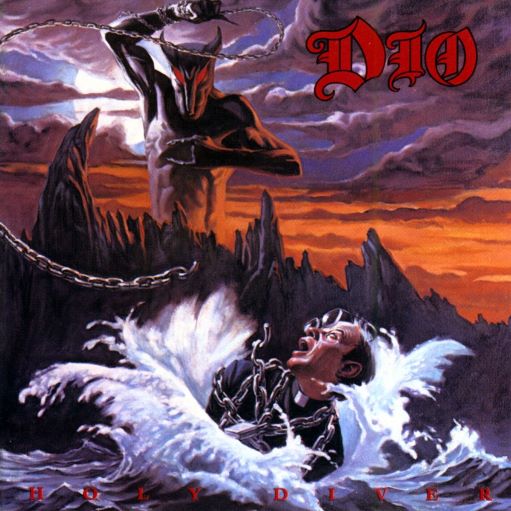
Dio – Holy Diver

Released May 25, 1983 via Warner Records

My Favorite Tracks – Holy Diver, Gypsy, Rainbow In The Dark

The debut effort from Ronnie James Dio’s newly-formed band was a big deal from the word go. Dio had made his mark with turns in Rainbow and Black Sabbath and was stepping out on his own to take control after arguments over live album mixes and such. Dio would secure the services of former bandmates from both groups – Jimmy Bain from Rainbow on bass and drummer Vinny Appice from Black Sabbath. Rounding out the group was a younger hand, guitarist Vivian Campbell.

Holy Diver entered a landscape in 1983 where heavy metal was growing to become a major force in the music world. Hair metal was well on its way to taking over the decade, thrash was emerging from either US coast and even the beginnings of extreme metal were showing up. The New Wave of British Heavy Metal had already launched its most successful bands and the foundation for power metal was laid down.

Dio would enter the landscape along those lines, with a melodic-driven, classic approach to metal. It wasn’t a massive departure from work done in Rainbow and Sabbath and it brought the older form of metal into the new age. The music would also offer elements of fantasy in theme and lyrics, something that stood a bit apart from the subject matter of hair metal or thrash.

While the album is a heavy metal monolith, it’s also an easy piece to get into at 9 tracks in 41 minutes. Let’s have at it.

Stand Up And Shout

It’s an up-tempo offering to open the proceedings. While the song’s main riff would be at home on a Scorpions album, the song is given an extra bit of kick by the rest of the band. The song offers a positive, uplifting message – it’s one of many motivating tunes that would come from Dio and became one of his calling cards. And Vivian Campbell offers the first of many electric solos he would perform in his time with the band.

Holy Diver

There is a bit of an intro here that serves a bit of an anticipation-builder for the album’s title track and its signature song. Then the band launches into a mid-tempo ass kicker while Ronnie sings about some messiah figure on another planet or some such shit.

There isn’t a lot I really need to say – Holy Diver is one of heavy metal’s best songs. This is the top of the mountain, in 1983 or any other year really. It is every bit the masterpiece it is made out to be.

Gypsy

A high-flying number with Vivian going off from the word go, the song goes on about that kind of bad girl you just can’t help getting tied up with. The song has been a bit under the radar compared to other Dio standards but it’s always been a favorite of mine.

Caught In The Middle

The pace keeps going with another song about conquering inner doubt and rising up. For all of the talk about negative theme and energy in heavy metal and music in general, Dio always provided a fair amount of “self-help” type of stuff that always got left out of those conversations. Songs like this were at the forefront of heavy metal’s motivating power.

Don’t Talk To Strangers

Often highlighted as a personal favorite by many, we get a slow-builder to change things up a bit. After a quieter first verse, the band launches back into the heaviness and pace. Vivian is really putting on a show here without any hint of wankery, it’s some very solid guitar work all over the song. Ronnie has said the song is about his distrust of people after his Sabbath experience but the track is really about not taking candy or rides from strangers, which we 80’s kids were brought up to avoid.

Straight Through The Heart

This stomping number turns the heaviness up to 11 and lives up to its title. Ronnie apparently wrote the song about the woeful love life of their recording engineer. Suffering always makes for the best art, even better when it’s someone else’s suffering. Learning the easy way is great.

Invisible

This haunting tune delves into the issue of feeling lost to the world. Even in dealing with the tough issues of confusion and trauma, Dio still manages to impart an uplifting conclusion to the proceedings. And it’s more brilliant shredding from Vivian, something not in short supply through the album.

Rainbow In The Dark

The album’s second single has become one of Dio’s signature anthems alongside the title track. It’s another song Ronnie wrote after his acrimonious split with Black Sabbath and the darkness of that time period led to one of his greatest triumphs. Everything on the track works like magic, even that synth line that stands out like a sore thumb.

Shame On The Night

We close the record with a slow burner that uses the day and night as symbolism for life and death, light and dark. Again Dio offers triumph over the evil and darkness. The music provides a bit of atmosphere to contrast from the general heavy attack but still also stomps its way through the track.

That wraps up Holy Diver and one of heavy metal’s finest moments. Dio would go on to establish a legacy nearly three decades long before his death in 2010. The band on the debut would not hold, led by the acrimonious departure of Vivian Campbell in 1986.

But nothing can diminish the legacy of Holy Diver. The album is a cornerstone in the foundation of heavy metal and its influence is felt to this day. The album got its first US platinum certification in 1989 and just recently received its second certification. And no matter the sales, it is always at the forefront of heavy metal discussion. When someone new to metal asks for a list of recommended albums to explore the genre, Holy Diver is always toward the top of that list.