Album Of The Week – August 1, 2022

Last week I covered one of the most significant albums in heavy metal history. Let’s go 2 for 2 on that front.
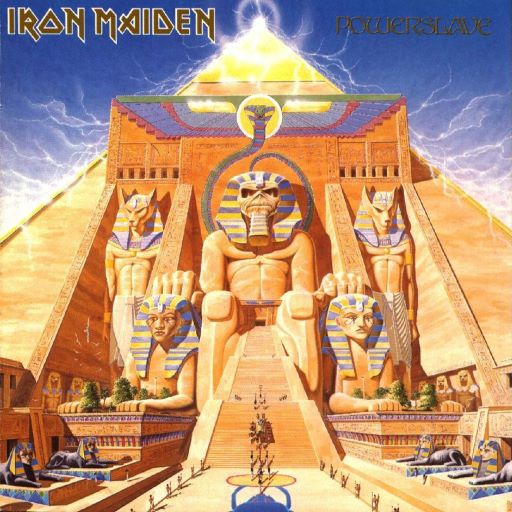
Iron Maiden – Powerslave

Released September 3, 1984 via EMI

My Favorite Tracks – 2 Minutes To Midnight, Rime Of The Ancient Mariner, Aces High

This release marks Maiden’s fifth studio album and the one where the band truly became a worldwide phenomenon. The album and resulting tour would get the band in front of audiences across most of the civilized world.

And of course, it usually isn’t an Iron Maiden album without an epic cover. Powerslave does not disappoint on that front. Our friend Eddie was worked into a pharaoh sitting atop his throne and the Derek Riggs cover is one of Maiden’s most celebrated art pieces.

Discussion is a fairly easy task with eight songs coming in a hair over 50 minutes (and also I’ve heard this album a billion times), though the huge epic looms at the album’s close.

Aces High

The album’s opener would also serve as the band’s long-time concert opener. Maiden’s sound was now dialed in and this energetic track showcases the rumbling bass, galloping guitars and soaring vocals the band are known for. The lyrics recreate British air forces during the Battle Of Britain in World War II. It is one of the most well-known and loved songs from the groups catalog.

2 Minutes To Midnight

It’s a song that employs the world’s simplest yet most effective rock riff and tells a tale of destruction through the military industrial complex. The title references the Doomsday Clock and the close setting to midnight, which would signify atomic destruction.

This also is my favorite Iron Maiden song. I don’t really know “why,” just that it is.

Losfer Words (Big ‘Orra)

This is an instrumental and (I think) the final one the band ever did. It’s a very nice song that certainly could have been something with vocals but does just fine on its own. It fits the sound of the album perfectly.

Flash Of The Blade

A two-song mini arc about swordfighting starts here. A young kid plays with his toy sword, then becomes a real swordsman after his family is killed in an attack. He sets out for revenge against the killers with his real sword skills as an adult. The chorus is a pretty clever twist on “live by the sword, die by the sword.”

The Duellists

A pretty simple premise – the song is about a sword duel. The two combatants fight in the lyrics through Maiden’s pummeling musical delivery. Both of the swordfighting songs sometimes get dismissed or overlooked but I’ve always enjoyed them.

Back In The Village

This song isn’t entirely clear but it is another reference by Maiden to the old British TV show The Prisoner. The band had already recorded the song The Prisoner on The Number Of The Beast inspired by the show and are revisiting the setting here. I’m not familiar with the show but here are a handful of direct quotes from it in the lyrics here, such as “I’m not a number, I’m a name,” also words worked into The Prisoner song.

Powerslave

The title track heads to ancient Egypt and visits with a dying pharaoh who is not happy with the premise of mortality. The pharaohs were considered gods, yet here this dude is about to kick the bucket. Probably a startling conclusion to a worshiped and revered figure. Maiden kicked the track length up a bit here to 7 minutes, though even Powerslave pales in comparison to the journey to come.

Rime Of The Ancient Mariner

We arrive now at the album’s close, but it’ll be awhile before we get to the actual finish. This song, a direct adaptation of Samuel Coleridge’s famous poem of the same name, clocks in at 13:45. It would be Iron Maiden’s longest song until 2015, where Empire Of The Clouds from The Book Of Souls would dwarf Rime’s runtime (and The Red And The Black would come very close).

The song and poem’s plot can be summed up in concise fashion – ship gets lost, bird helps ship out of ice, guy shoots bird, guy is cursed for shooting bird. Sure, there’s a hell of a lot more to it than that but it’s the gist of the story.

Maiden makes extensive use of movements and arrangement to convey the poem in song form. An unfamiliar listener could be forgiven for thinking this is more than one song, at least until the curse is lifted in the song’s final few minutes. I’ve even had my mind wander off and forget what I was listening to when playing this album in the background.

While doing a song of such scope posed risks, Iron Maiden was all the better for it. They were not ever a radio hits band, so a lengthy epic based on a poem was eaten up by the fanbase. To this day it is listed among their finest works and no shortage of people have it at the top of their lists.

The Live After Death performance

Powerslave was an immense triumph for a band already on the rise in the mid 1980’s. The album charted in many countries and has several platinum and gold certifications. The resulting World Slavery tour took Iron Maiden all over the world and culminated in their first live album, the immortal Live After Death.

Iron Maiden’s ’80’s run is widely hailed as a series of classic albums and performances, yet Powerslave may be the cornerstone of that era. The two singles Aces High and 2 Minutes To Midnight are constant live presences, the title track is a celebrated epic, and of course Rime Of The Ancient Mariner is hailed as a masterpiece. The album’s influence is inescapable – hell, it’s even used by some to criticize other periods of the band’s work. Even as the band has endured and carved a unique legacy within heavy metal, the shadow of Pharaoh Eddie looms large over Iron Maiden’s work.

Also the Live After Death performance

Heaven Can Wait – Would Iron Maiden Replace Bruce Dickinson (again)?

This is a kind of “current events” post I’m not all that into doing, but the topic at hand is significant enough to warrant my interest. It involves my favorite band and I just talked about them on Monday, so when this bit of news dropped the same day it certainly got my attention.

Iron Maiden’s legendary singer Bruce Dickinson recently gave an interview to UK tabloid Daily Star. The interview’s contents are transcribed via this Blabbermouth.net article. In the interview, Bruce gets at the (dark) possibility of not being able to perform to his usual standard as age wears on. He is on board with the band finding a replacement singer, with Bruce perhaps making small guest spots. It would be a situation like what Glenn Tipton does with Judas Priest, making spot appearances here and there as his battle with Parkinson’s disease keeps him from touring full-time.

In the abstract I honestly don’t see anything wrong with the sentiment. I get the thought here – if I can’t do it the way it needs to be done, get someone else who can. I’m generally not opposed to a band going out without a key piece for whatever reason – it is a job and if you can function as a unit with a replacement, go for it.

But we’re not in the abstract. This is Iron Maiden, and this is Bruce Dickinson. People don’t want a replacement for Bruce because it would be insanely tough to even find one, and because we’ve been down this road before. Bruce was replaced in the 1990’s by Blaze Bayley, who found rough footing behind the mic and took a lot of heat for his tenure. While a lot of Maiden’s backslide during the 90’s isn’t the fault of Blaze at all, it is true that he had a difficult time with some of the band’s classic material. With the band unwilling to step down in tuning to help, it left Blaze hanging at times in the live department. It was one oft-cited complaint from fans of that era.

Casting someone else in the role of Bruce Dickinson just isn’t going to work. There are some very talented singers out there, but is anyone really going to replace Bruce? Even if it was limited to being a touring vocalist, I just don’t see it happening.

And Bruce doesn’t see it happening either – he flat-out says “this will never happen” in the interview, referencing both being replaced and the idea of a hologram tour. And this is what leads to the speculative but curious part of the interview – if it isn’t happening at all, why discuss the topic with the media?

I have to begin with this thought – the Daily Star is a tabloid and one with a not-always sterling reputation. While I doubt there was any deception involved here, did the paper simply lead Bruce into this line of questioning? I don’t have access to the paper itself so I didn’t see the whole interview, and we know that media types know how to lead interview subjects into lines of questioning that provide sensational headlines. I can’t say either way but it’s a possibility.

The interview sent Maiden fans into a bit of a tizzy. One possibility discussed was that Bruce was foreshadowing – maybe he knows something we don’t and that his time as Maiden’s air raid siren is nearing its end. Of course we have zero evidence of this, and also the band is presently on tour and Bruce doesn’t sound like Jon Bon Jovi, er, someone who needs to step down from his duties. I doubt this is the case and I also hope it isn’t. Bruce has survived throat cancer and was able to return to the stage, and is presently in fine form on tour.

Some fans are speculating that Bruce is talking in code here – that he is in favor of replacement of a member who can’t continue, and that the rest of the band is against it. While it’s a wild theory that leads down a few rabbit holes, it’s also purely based on speculation about things we have no information on, so I’m going to leave it at that. I don’t see enough based in reality to commit more words to the series of ideas and I don’t think that’s what Bruce is doing here.

At the end of the day I’ll take the part where Bruce says “this is never happening” as the gospel from the interview. He could very well have just been making conversation or talking off the top of his head, who knows? It gave me and others pause, but after looking at it a bit there’s probably nothing of real concern here.

Someday, of course, Iron Maiden will ride off into the sunset. That day is closer than it ever has been, but it’s also not happening tomorrow or anytime soon. They have this tour to finish, they have a planned tour to air out the Senjutsu album in its entirety, and there has been talk about new albums and other things. This lineup of the band has remained in tact for over 20 years and the band has cemented its legacy as one of metal’s greatest acts in this time. Hopefully when they do call it a day, it will be with this lineup bowing out.

Album Of The Week – June 13, 2022

This week it’s time look at a much-anticipated album that marked a reunion. It wasn’t to be just a reunion album though, it would kickstart a new chapter for the band that now marks their longest era and has continued to this day.

Iron Maiden – Brave New World

Released May 29, 2000 via EMI

My Favorite Tracks – Blood Brothers, Dream Of Mirrors, Ghost Of The Navigator

Brave New World was released to the world with a lot of suspense and anticipation. What were Iron Maiden going to sound like in the new millennium? The group had ruled the 1980’s with their epic take on heavy metal, yet the 90’s saw the band founder as times and members changed.

Maiden were an afterthought by 1998, when former singer Bruce Dickinson released an acclaimed masterpiece with The Chemical Wedding. (My post on that album here). The album saw Dickinson working with former Maiden guitarist Adrian Smith and the consensus was that the two ex-members outdid Steve Harris and the remaining group.

In 1999 the two entities decided to reconvene and start a new chapter for the once-legendary Maiden. Dickinson’s replacement Blaze Bayley would exit, but rather than jettison Adrian’s replacement guitarist Janick Gers, the group made the decision to function as a three-guitar outfit. The group toured a “hey we’re back!”/greatest hits set and then got to work on was going to be a highly judged reunion album. Nostalgia tours are fine and honestly probably the best way to reintroduce one’s self, but could Iron Maiden be a relevant force in the 2000’s?

The answer would be yes, as we’ll see in the 10 tracks with a run time of 67 minutes.

The Wicker Man

Iron Maiden have a solid history of hot opening tracks and The Wicker Man would add to that. The song is a simple one with an identifiable riff and with the world’s easiest chorus to sing along to, a stated goal of the tune. The title is borrowed from the 1973 British film but the song’s words do not tell that tale, instead presenting a hodgepodge that keeps the song moving.

Ghost Of The Navigator

This song heads back to the high seas, a place the band previously explored on their beloved epic Rime Of The Ancient Mariner. The lyrics use a difficult sea voyage as a metaphor for life and death. The music is bright and melodic while also moving and hitting hard – after several years of sounding dark and dour, the signature Iron Maiden sound is back.

Brave New World

The title track is vintage Maiden – galloping riffs and bass lines, guitars all over, and a one-line chorus that repeats many, many times. That repetition is a sticking point for some listeners but it never really bothered me.

Blood Brothers

A song written by Steve Harris after the death of his father. The song highlights the hardships of mortality and the “great beyond” after life. Blood Brothers was a much-discussed track when the album released and has been featured in Maiden’s live set several times in the years since. The chorus has been a rallying cry for Maiden fans in the reunion era.

The Mercenary

We’re on to one of a handful of songs from the band’s prior era that was used for this album. It’s a pretty simple affair about a soldier of fortune. While not being one of the album’s standout moments, the song still gets the job done well and is far above “filler” status.

Dream Of Mirrors

Another track conceived during the Virtual XI sessions. The song is a long epic, running over nine minutes and providing the first hint that reunion-era Maiden were unconcerned with song length. The song depicts the confusion and non-linear form of dreams and how harrowing they can be. The band knocked their first reunion epic out of the park and provided a template for many more to come.

The Fallen Angel

An uptempo number about good and evil, this song is one of the least-heralded among the fanbase from Brave New World but still isn’t lacking for quality. It’s nice to hear the band let loose a bit after keeping things mid-pace (save The Mercenary).

The Nomad

Off into another nine-minute monster and this time we’re in the desert on high adventure. Steve Harris stated the song was inspired by the epic film Lawrence Of Arabia. The Nomad does not suffer for its length – the atmosphere invoked by the music and each guitarist getting a solo keeps things moving along just fine.

Out Of The Silent Planet

We’re getting to the close with the penultimate track and also the album’s second single. The song was based on an old sci-fi film called Forbidden Planet, about aliens who tore their own planet up and are now targeting us. Although the song was released as a single, it was rarely played live during the touring cycle for the album. While the song gets mixed reactions I personally have no issue with it.

The Thin Line Between Love And Hate

We close with another lengthy track at over eight minutes. It’s your usual song about the choices between good and evil and the ultimate consequences of those choices. You know, typical pop fare. The song doesn’t break any new ground or anything but is still a nice way to close out this epic return to form record.

Brave New World marked a huge milestone in the career of Iron Maiden. The album charted well across Europe and was beloved by a long-suffering fanbase that thought the group’s best moments were 20 years behind them. Tours for the new album saw half or more of the record being aired out live, Maiden were not content to go out as a pure legacy act. The line between playing classics and new material would be an issue several years later but that is another story unrelated to this album.

This album was very, very important in so many ways. It brought the band back into the spotlight, it rejuvenated the fanbase and it succeeded as a recording without leaning on past glories. Maiden were able to record songs they wanted to on their own terms, they didn’t try to revisit the past or move in some experimental direction.

And most importantly – it was just the beginning. The “reunion” era of Iron Maiden is now in its 23rd year, with the group having cut six albums and are heading out on tour yet again. Their reputation and legacy have only grown in the past two decades and they are rightfully heralded as one of heavy metal’s most significant acts. While opinions on their reunion albums differ, there is no arguing with the success they have had in this period.

Album Of The Week – March 6, 2022

Today’s album is widely-regarded as the magnum opus of a legendary singer’s solo career. This crown jewel of an album, coupled with the low-water mark his former band was at in the late 90’s, would result in a reunion and a new legacy.

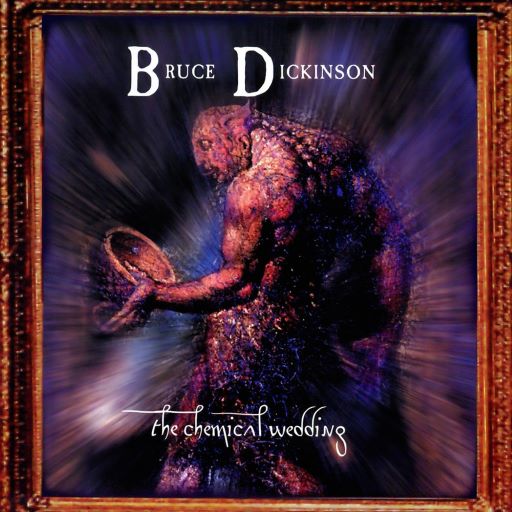
Bruce Dickinson – The Chemical Wedding

Released September 25, 1998 via Air Raid Records UK

My Favorite Tracks – The Tower, Chemical Wedding, The Book Of Thel

The Chemical Wedding was Bruce’s 5th solo outing and his 4th since leaving Iron Maiden in 1993. Former Maiden guitarist Adrian Smith was also along for the ride, having joined with Bruce the year prior for the Accident Of Birth album. Helming the console for production and also picking up a guitar was Roy Z, whose Tribe Of Gypsies bandmates would also fill out Dickinson’s solo band.

The album’s lyrics and themes were inspired by the works of English poet and painter William Blake. Blake’s painting The Ghost Of A Flea was used as the cover art. The marriage of Blake’s themes of religion and nationality along with heavy metal would create a stunning and unique record. At a few points where Blake’s works were directly read as song intros, English shock rocker Arthur Brown provided the narration.

King In Crimson

Things open with a banger. The guitars are low and heavy and Bruce builds through a powerful pre-chorus to deliver the to-the-point chorus. Adrian and Roy Z are all over this track with an extended solo section. This is one of the songs from the album that one really wonders what it would have sounded like with Maiden.

Chemical Wedding

A more atmospheric and brooding tune, the title track evokes images of marriage and death. It’s unclear what a “chemical wedding” actually is but it sounds pretty messed up. Bruce again stays quiet through the verses then goes air raid siren on the chorus. Play to your strengths, so they say, and Bruce does just that.

The Tower

A bass line opens the track, reminiscent of that band. The song goes into another metal outing that sees Bruce attacking the vocals from the get-go. The lyrics possess a ton of symbolism that some speculate is derived from tarot cards. This blend of heavy metal and spooky, mysterious symbology persists throughout the record and creates a vibe that transcends the cliches of heavy metal songwriting.

Killing Floor

The heaviness ratchets up a few notches on this slamming tune about the Devil. Satan is out on the prowl here, seemingly attacking people through their dreams in the vein of Freddy Kruger. The pre-chorus offers a bit of a melodic reprieve before the band tears through the heavy as hell chorus. This song also got a video with Arthur Brown fittingly in the role of Satan.

Of all the music videos, this is certainly one of them

The Book Of Thel

Directly lifted from a William Blake work, both Blake’s story and Dickinson’s song ponder the inevitable loss of innocence and the bleak ultimate fate of life. The song tears through the twisted tale of Thel discovering her terrible destiny.

Gates of Urizen

More from Blake’s mythology here, Urizen is a powerful figure that represents one aspect of a central god who later fell and created the material world out of spite. The song offers a vague recounting of being at Urizen’s gates and a dark transformation happening. Despite the heavy subject matter the song is one of the lighter offerings on the record.

Jerusalem

Most Dickinson-related fare requires an epic and Jerusalem serves that purpose here. Tied to Blake’s most ambitious and ponderous work of the same name, Dickinson sings of Jerusalem being re-established in England. The lyrics hold to Blake’s vague work, not offering a clear picture of whatever symbolism is delivered here. The band are up to the task of bringing a lush soundscape to this epic tale.

Trumpets Of Jericho

Here Bruce takes a story from the Bible, one where soldiers march around the outer walls of the city of Jericho until the walls crumble. In this song the unconventional siege tactic doesn’t work, because nothing about science indicates it would work, and the walls remain. The tune discusses the feeling of futility after being unable to break the walls down.

Machine Men

This song makes use of a well-worn topic in heavy metal – the literal use of metal to create engines of war. Soulless metal monsters storm the landscape and devour humanity in their jaws. The creations here seem to be made of humans now repurposed as war machines. The song’s heaviness matches the weight of the subject matter.

The Alchemist

The album closes with a very trippy and atmospheric number. The meaning is somewhat unclear but the protagonist seems to be rejecting the ills of civilization, it is a last stand against death and decay. As the song winds to its conclusion it offers the chorus of the title track as a reprise.

The Chemical Wedding was a critically acclaimed success for Bruce Dickinson. It is widely considered his solo masterpiece. Commercial success was more elusive for this traditional metal album in 1998, just as it was for Bruce and Adrian’s former bandmates toiling in obscurity. Less than 6 months after the release of this album, Bruce and Adrian rejoined Iron Maiden for a reunion that kicked off a new legacy for that group and an era that has now lasted 23 years.

It is believed by many that The Chemical Wedding was the catalyst for the reunion, as Bruce and Adrian were outshining Iron Maiden’s maligned output of late 90’s. It seems to have been a more practical decision involving finances but this doesn’t stop fans from ranking this record highly, even slotting it ahead of some of Maiden’s classics. Many wonder what this album would have sounded like backed by Iron Maiden, though that discounts the influence of Roy Z. Rather than ponder what-ifs, the reformed Maiden pushed forward with creativity on their own terms. We get occasional live samples of what Bruce would sound like on the Blaze Bayley material, but The Chemical Wedding stands on its own as a Bruce Dickinson classic.

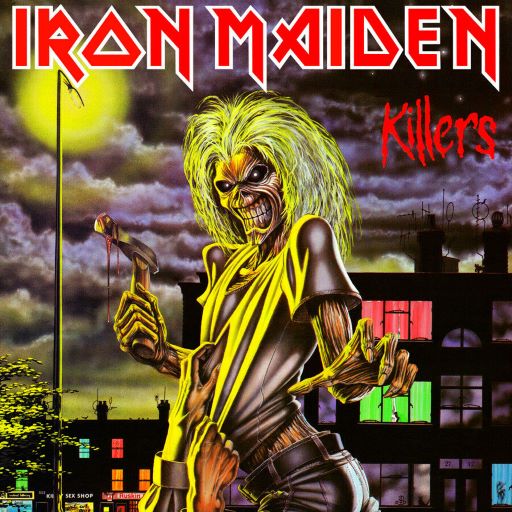
Iron Maiden – Killers (Album of the Week)

This week I’m going back to the second album from the band that would go on to become my favorite musical act ever. The album got solid reviews from critics and fans but would be the end of a brief beginning era for the group, who would soon re-tool and launch their signature sound on several coming albums through the 1980’s.

Iron Maiden – Killers

Released February 2, 1981 via EMI Records (U.K.)

My Favorite Tracks – Murders In The Rue Morgue, Wrathchild, Purgatory

This album has several versions – for this write-up I am using what is up on Spotify, a 2015 remaster that mirrors the initial British release. I have the original U.S. release on vinyl and a 1998 reissue on CD that feature the bonus track Twilight Zone, but for purposes of simplicity I’ll be covering the UK version. Other territories in the world got other versions of the album with slightly altered track listings.

Iron Maiden would see the first of a few significant lineup changes prior to recording Killers. Guitarist Dennis Stratton left the group due to disagreements with bandleader Steve Harris and manager Ron Smallwood. Stratton was replaced by Adrian Smith, who would go on alongside Dave Murray to establish Iron Maiden’s signature twin guitar attack through the rest of the 1980’s.

Killers was written almost entirely by Steve Harris, with a few notable exceptions – the title track is co-credited to singer Paul Di’Anno, and there is some funny business with the opening instrumental in terms of songwriting. Most of the songs except for two were written before the band recorded their self-named debut a year prior.

The Ides Of March

The first of two instrumentals on the album, which is a curious choice for the group. The song itself is fine and serves as a good intro to the album.

There are questions raised over the songwriting credits to this. Harris is the only credited songwriter for the song on Killers. However, a very similar-sounding instrumental called Thunderburst appears on fellow NWOBHM group Sampson’s 1980 album Head On. It credits the Sampson band members (including one Bruce Dickinson) as well as Steve Harris. It was Samson drummer Thunderstick who served as the common link – he had been in Iron Maiden in the late 70’s before that group recorded and apparently brought this instrumental over to Samson. It is a bit of interesting trivia if not much more, though there have been several other questions about where Steve Harris got songs from over the years.

Wrathchild

The “signature song” from Killers, this is the only song from the album that is still consistently performed live by Maiden. It opens with a trademark bassline from Steve Harris and gets down and dirty with a sound that still suits Paul Di’Anno but does seem to be morphing more into the business the band were about to get to after Killers. It features plenty of lead guitar flourishes and establishes the trademark rhythmic drive that the band would stake their name on. The song was one of two singles from the album, released as a “double A-side” with the US bonus track Twilight Zone.

Murders In The Rue Morgue

This is one of the two songs written specifically for the Killers recording sessions. It is an excellent tune that turns up the pace and fits with the “proto-punk/metal” hybrid the band had on offer on their debut. It is perfectly suited to Paul Di’Anno’s brash singing style. It’s a bit of a shame this song is kind of lost to time as it would be a joy to hear it today.

Another Life

This upbeat number hits home with more trademark Smith and Murray guitar work. The song rolls away with Di’Anno’s typical delivery and stands out a bit amongst the rest of the “leftovers” that Killers is home to.

Genghis Khan

The album’s second instrumental and apparently not one ghostwritten by a former member. I don’t mind the track at all but it doesn’t necessarily stand out and feels like a bit of padding for a record with a lot of songs but a fairly lean running time under 40 minutes.

Innocent Exile

It’s another song that, while not exceptional, does possess the hallmarks of that early Maiden sound and puts in a workmanlike performance on the album. It’s certainly fitting for the band at the time and it makes for a worthwhile listen.

Killers

The title track has always stood out a bit, as many of Maiden’s title tracks do. The tune gets a little time to build rather than being a brief attack like so many of the other songs. It displays a bit of both where the band was and where they were going. It’s another song that wouldn’t hurt by the occasional inclusion on a live set, though this album as a whole seems to be left aside for consideration anymore.

Prodigal Son

Up next is what stands out as the biggest departure sound-wise for Iron Maiden. Nothing across the rest of their 17-album catalog sets itself apart nearly as much as Prodigal Son does, save for perhaps the B-side Burning Ambition that was never released on an album. It is also the other song besides Murders… that was not written well ahead of time.

The songs is about someone who has consumed himself through the use of black magic or other mystic arts. It rolls more in the vein of a 70’s rock tune as opposed to the heavy metal that the band were playing at the time. It has an almost folk-like undertone to it. Many in the fanbase are very turned off by the song, I myself find it a nice inclusion though I certainly see where it sticks out like a sore thumb from the rest of the band’s work.

Purgatory

If the prior track is the band’s biggest departure from their sound, Purgatory is the biggest and brightest display of what Iron Maiden had on offer in the early 80’s. The blistering track slams through with those now well-known bass and guitar lines that just seem to roll off the instruments for the band. This song was released as the album’s second and last single. And in a bit of trivia – the artwork Derek Riggs originally drew for Purgatory’s single was held back by the band and used as the cover for The Number Of The Beast.

Drifter

The album and the Paul Di’Anno tenure of the band concludes with Drifter. It’s a fast and fine rocker that wouldn’t have been out of place on the debut. It wraps the up the album nicely.

Killers stands out as a record perhaps greater than its status as a collection of Steve Harris’ leftovers. Though the Paul Di’Anno era is widely revered in Maiden fandom, this album does tend to fly under the radar at times. The record did not perform as well in the UK charts as Iron Maiden did and only one song remains today as a typical inclusion into the band’s live set. Di’Anno would soon be booted from the group for a number of reasons and the band would go on to new heights with his replacement. I don’t spin this album as much as others from the catalog but I never find myself being upset when I do play it.

This song didn’t have an easily found live version with Paul, so this one with Bruce will do

The Number Of The Beast – Satanic Panic in 2021

Note – I originally intended to post this last Friday, the 15th. I started coming into updated information about this incident so I held off until the final news of the matter came through. I had to rewrite most of what I had. This is why I don’t mess with current event stuff much. I’m a hobby blogger, not a damn reporter and I don’t have time for breaking news. I’ll still post this but it’s kind of a damn mess.

A strange case that seemed ripped out of headlines from 1986 came to the attention of heavy metal social media a few weeks ago. A group of parents with children in a high school in Ontario, Canada started an online petition to have the school’s principal removed from her job.

The original petition, since deleted, had a bit over 500 signatures to it. A counter petition filed by students of the school in support of the principal and obviously noticed by Iron Maiden fans, was over 23,000 signatures when I last looked Sunday afternoon. I will briefly mention that I think online petitions are totally useless, and then move on.

After some back and forth over the issue, someone who filed the original petition doubled down on their efforts. The filer suggested that they were uninterested in the principal’s music taste, but was concerned about the use of the number 666 on a sign the school official made in support of the band. Also, the principal dared flash the dreaded “devil horns” gesture in photos involving her obvious love of Iron Maiden. It is worth noting that the photos were posted to the principal’s official Instagram account as agent of the school, not a personal account.

Metal and rock sites offered details of the story and metal Twitter and Facebook lit aflame with criticism of the original petition filers. The filer continued to double down on the criticism of the Satanic imagery, even suggesting that the “battle” wasn’t over after the principal removed the photos from the school’s IG account. A campaign to “get to know” the “real” issue came from the first petition, even as the counter petition swallowed the original in signatures.

Someone file a petition to get me to stop using quotation marks in a sardonic manner, please.

This issue would dissolve for good on Saturday, October 16, when the school announced the principal would remain in her potion with no sanctions or action taken. The original petition was disabled and everyone went their merry way, I suppose. Here is a link to a Blabbermouth.net article outlining the likely final resolution in this case.

This case did remind me of something and also easily caught my attention since Iron Maiden is my favorite band. The following text is the second part of what I wrote originally about this whole thing and I’ve decided to post it unedited. It might make for an incoherent narrative so I wanted to make a note of it for context.

There is no escaping the number 666 with Iron Maiden – it is woven into one of their most famous songs. The Number Of The Beast is usually an auto-include in any tour setlist and is one of the band’s most celebrated works. I would imagine that shirts, posters, tapestries and other merchandise of the album are among the band’s highest-selling merch offerings, and the album itself is a classic that is often ranked at least top 5 in the band’s catalog, if not at the very top.

And the devil horns? A common sign from heavy metal and also often rock fans. Hell, it’s used in other applications outside of music, such as fans of the University of Texas Longhorns sports teams. Sure, they’re popularly known as “devil horns,” but the gesture likely not invented by Gene Simmons does not truly bear any Satanic connotations. It’s just a thing, that’s all it really is.

I won’t get into some huge theological argument here. I’m not a religious person but this site isn’t a space where I intend to really discuss that outside of any relevant context to music. I know plenty of very awesome religious people who are into heavy metal, and I know plenty of very awesome religious people who aren’t into heavy metal who probably think this whole thing is a joke and would not want someone removed from her job because she likes a band.

The overriding point I get out of all this is flashbacks to that absurd battle of the 1980’s – the Satanic Panic. It was quite the chore to grow up and get into rock and metal while everyone was flipping out about real and perceived Satanism in music, movies, behind bushes and in shadows everywhere. That panic informed a great deal of my music-listening childhood and adolescence. I will get much deeper into these themes another time, but I and many others had some memories surface when hearing about this kind of crap going on toward the end of 2021, and about 27 years after the harrowing conclusion of the Satanic Panic.

In the end, all I can really do is hope the principal gets to keep her job (she will). She seems loved by her students and hopefully reason will prevail in a world where it often doesn’t. I don’t expect the group of parents calling for her head to grasp the folly of their argument or to open their perspectives to any different views. That’s not how we do business in the world in 2021.

If nothing else, I’m sure this woman will not have to pay for any beverage of her choice the next time she sees Iron Maiden in concert. If I know anything, it’s that this community does rally around its own. Down with panic, and as always, Up The Irons.

Iron Maiden – Hallowed Be Thy Name

This post was part of a series that I called S-Tier Songs. I later decided to abandon the series in favor of a simpler Song of the Week format. I am keeping these posts as I wrote them but removing the old page that linked to the list of S-Tier Songs, so that is why these posts might look a bit odd. Enjoy.

Iron Maiden – Hallowed Be Thy Name

From the Beast Over Hammersmith live performance

Iron Maiden hit the scene in 1980 after several years in England’s club circuit but found themselves scratching for a new direction after two albums. They canned singer Paul Di’Anno and replaced him with Samson’s eclectic frontman Bruce Dickinson. The ensuing decade would see them make an indelible stamp on heavy metal, one of the genre’s most defining and influential acts.

Dickinson’s debut with Maiden would come in the form of 1982’s The Number Of The Beast. Songs like the title track and Run To The Hills would be released as singles, but in the end Hallowed Be Thy Name would become a legacy-defining song and a staple of the band’s epic live sets.

Our song today would mark a shift in Iron Maiden’s sound from a punk/metal hybrid to a more epic direction. Dickinson’s trademark “air raid siren” vocals soared above the band’s now signature gallop. The epic would be a direction Maiden would pursue to greater degree, including many much-debated longer treks included in their longest-enduring “reunion” era of the 2000’s.

But back to the point – Hallowed Be Thy Name is a bombastic tale of a condemned man facing his final moments before he’s taken to the gallow’s pole. The narrator reflects on the meaning of life and his final fate, a trope in song found with Queen’s signature Bohemian Rhapsody, among many others. It’s a haunting and tragic tale, told in fine form through the song’s lyrics and Dickinson’s unparalleled delivery.

Live from the Powerslave tour in Long Beach, the definitive Live After Death performance

The song builds quietly with bells to accent the opening verse but then quickly moves into its signature galloping riff. Bruce’s vocal power is on full display as he pleads for his life in the second verse, interchanging with the riff rather than using a conventional chorus. A bridge takes us to the final verse, where the condemned man accepts his fate.

What happens when one accepts the end of their existence? Guitar solos, usually. At least that’s what I’m led to believe, I did grow up in the ’80’s after all. The solos play out then the song builds to its climax, with Bruce delivering the title before an epic finale.

Hallowed Be Thy Name has been played on nearly every Iron Maiden tour since Number‘s release. It was removed from the second leg of the Book Of Souls tour in 2017 after a lawsuit alleging that Steve Harris ripped parts of the song off from a ’70’s work. I’m not a scholar or a journalist so I’m not going to recount the specifics of that lawsuit, I’ll simply mention that the case was settled out of court on more than one occasion between different members of that band.

Did Maiden rip off someone else for this song? I don’t know and I don’t care. Moving on.

Why is this an S-Tier song?

Hallowed Be Thy Name is an epic masterwork that highlights the strengths of what would become Iron Maiden’s most prolific creative era. The song is often considered the very best of the band’s output. It is a stunning, moving tale that is executed in spectacular fashion and showcases the various signature factors that would make Iron Maiden one of metal’s most celebrated acts.

Live footage from the Flight 666 motion picture release

Wasted Years – My Iron Maiden Memories

If you’ve read any of my stuff you’ve noticed I get a lot into my memories associated with music. It’s something I like to do as a way of noting the personal meaning a song or album might have to me, something that separates what I do from a typical “review,” as it were. I like reading and hearing what others have to say about music but for me I prefer a different approach with the content I offer. I guess it also gives everyone context to understand what I listen to and why, where I came from and how I came into what I like today.

Of course I have to note that there are only so many memories. As I go on other content will necessarily take its place. I can only recall so many landmark moments, discoveries, highly personal matters related to songs, etc. But for the early going here, I think it’s fun to recount my first experiences with things. I don’t know how “good” of content it really is but it’s something I like doing and will roll with until its natural conclusion.

It’s time now to throw off all pretense and build-up. This post, on the week here celebrating the band and their new release, is all about my memories of my favorite band – Iron Maiden.

The first time I would encounter Iron Maiden was in a sixth grade class. For me in 1988, sixth grade was one where you’d have a homeroom class but then would maybe switch to a different class for one or two others. It was the last year of “homeroom” stuff, seventh grade and beyond would be different classes on an hour-to-hour basis.

Anyway, I was in the class I switched rooms and teachers for. I think it was English or something but who cares. The kid next to me was also from my homeroom class and was someone I was cool with. One day we were hanging out with not much to do and he pulled out a tape he wanted to show me. We were always passing music back and forth in sixth grade, we’d let each other borrow stuff or give blank tapes to people to make copies of albums.

The album he pulled out that day had the most intense cover I’d ever seen.

This album art is just amazing

I saw that cover and instantly wanted to hear what this band was up to. I’d heard the name but back then I was still firmly rooted in pop and hair metal. I hadn’t yet ventured out to much beyond. He told me he was listening to it a lot because they were getting ready to put out a new album. He’d let me take the tape home overnight to dub a copy, then when the new album hit I could give him a blank and he’d dub it off for me.

I dug it right off the bat. I obviously entered the band’s catalog right in their two-album symphonic era. It was a common theme in the late ’80’s so I was familiar with it but Iron Maiden was still a bit more than what I was used to at that tender age. I did like it and I played it a fair bit but it would be a year later with a different band that would make me totally obsessed with music.

So obviously the next album was Seventh Son Of A Seventh Son. A quasi-concept album, another symphonic leaning record and an epic, grandiose offering. On release it was perhaps a bit too dense for me, I could appreciate a standalone highlight like Can I Play With Madness but it took some time to digest the whole thing, or perhaps for me to grow into it. That would come in the passing year or two, though, and I was off to the races with Iron Maiden.

I’d get heavy into the band as I got heavier into music in general. I grabbed all the old stuff and liked pretty well all of it, including the first two albums fronted by Paul Di’Anno. Sure, Bruce is truly the voice of Iron Maiden but I really enjoyed stuff from those first two records.

Even as Bruce left the band in 1993 I still dug Maiden. I knew full well that the music landscape was constantly shifting, hell, I came into music hard and heavy in 1991 when the scene was completely blown apart. My own tastes would go to the extreme end of the spectrum in ’93 but I could still hold onto Maiden as a treasured part of my musical upbringing.

Just as I entered the military and a whole new phase of life, so did Iron Maiden. I wasn’t really impressed with the two Blaze Bayley-fronted albums, though my criticisms of them don’t stem with him so much as lackluster songwriting. I’ll probably pick this thread up more specifically later on, but their “low point” as a band just happened to coincide with a point where I wasn’t paying much attention anyway. Good times and fast women were more my speed in the late ’90’s.

Military time doesn’t last forever though. Just as I was leaving the Navy in the middle of 1999, the bombshell announcement hit that Bruce and Adrian were rejoining Maiden. This wasn’t a very shocking development – Maiden were scratching during the preceding years while Bruce and Adrian hit high critical acclaim with two of Bruce’s solo albums – especially the masterpiece The Chemical Wedding. The time was right for everyone to reconvene and see what they could do in the new millenium.

And damn, did they ever hit paydirt. The band’s longest-running era is now 22 years old and has brought new heights of popularity and legacy. Iron Maiden is mentioned in the same reverent tones as Black Sabbath and Metallica as the most important metal in existence. For as long as I run this blog and whatever other content I might get into, I will wind up heavily discussing Iron Maiden’s reunion era.

For now though I want to get to the other main memory, the other “first” that I have – the first time I saw Iron Maiden live. It was in August of 2000 at the outdoor ampitheater googleplex in St. Louis (yes, the same one Axl Rose tried tearing down in 1991). Of additonal significance was that the show was on my 23rd birthday. It was a pretty cool alignment of events.

The show was spectacular but didn’t start off well. Queensryche opened, and honestly I don’t have a lot of great things to say about their set. I was more than a little disappointed in the band that recorded my favorite album of all time. The sound was muddled and Geoff Tate had some pscyhotic reverb and echo on his vocals. Their material at the time was also not great, but the band did lean on their classic metal era at the blatantly obvious metal show.

Leave it to the metal god himself to save the day. Rob Halford emerged next with his solo band, a brilliant reinvigoration for an icon who’d, like the headliners, also spent the late ’90’s in a musical wildnerness. Halford was electric and metal through and through. The material from Resurection and select Judas Priest cuts more than held its own and was a perfect way to set the stage for Iron Maiden.

Then it was time for the main event. Iron Maiden took the stage, armed with their classic lineup and a new album, the excellent Brave New World. I’d already spun the disc many times, in awe of the band’s ability to chart new waters and make an epic return to form at such an advanced age, at least relatively speaking for a band from the ’80’s.

And Maiden did not come out to play a greatest hits set. They leaned hard on material from the new album, playing six songs from it. They even aired the 9 minute long epic Dream Of Mirrors, which Bruce led into with a bit of a rant. He complained, among other things, about Britney Spears and VH1 never having the balls to air a 9 minute song, so here was theirs. It was cool of its own merits but it was also hilarious since if you looked at your ticket stub for the show, you’d see the tour was sponsored by VH1. Pretty funny stuff.

Primitive video, but a clip from the same tour I saw

Of course the band also aired many of their classics. There isn’t an Iron Maiden show without The Trooper, at least as far as I know. They also aired The Number Of The Beast and Hallowed Be Thy Name, as well as their eponymous song. And in a rare show of form, the band performed two of their signature songs from the prior era, with Bruce leading the charge on Sign Of The Cross and The Clansman. It is especially rare for a new or returning singer to want to touch stuff from a time in the band they weren’t in, but Bruce seemingly has no problem performing those songs. I can’t think of too many instances like that where a singer wants to touch something someone else did. Halford doesn’t do it, Hagar hated doing it, Dio didn’t like doing it, the list goes on. But Bruce served them up and gave the fanbase something to find appreciation for in the oft-contested Blaze era.

The show would wrap up after the requisite Eddie appearance and songs from a few different eras thrown in to flesh out a pretty diverse set. It was absolutely remarkable and I was blown away by finally seeing my favorite band just into their return to form and at the start of an unparalleled era that few bands ever get to imagine.

Since then I’ve seen Iron Maiden three other times – in 2013, 2016 and ’17. I’ll go out on a limb and say that I’ll probably see them at least one more time, if not two. Yeah they’re getting up there but I know they won’t want to quit until they pretty well have to. I guess we’ll see what the future holds, what with this damn pandemic being a massive barrier for touring bands right now.

However the future unfolds I will still have the memories of discovering my favorite band and then finally seeing them in concert. There really isn’t any topping an Iron Maiden show. And their albums almost always offer an adventure to somewhere, be it a far away fantasy or the grim realities of the here and now. From now until the end of time, up the irons.

Iron Maiden – Senjutsu (Album of the Week)

Last Friday, heavy metal legends Iron Maiden released their 17th studio album Senjutsu. The double disc or triple vinyl album clocks in at a mammoth 82 minutes, rivaling their prior effort Book Of Souls. Maiden have been riding a wave of new popularity and legacy building for the past few decades since a reunion of their classic lineup in 1999. This new effort, correctly assumed to have been recorded before the events of 2020 put everything on hold, was instantly hyped and anticipated by fans.

Iron Maiden are my favorite band, they have been for a very long time. I’ll get more into that later this week, as all my posts for the week will be dedicated to Maiden in celebration of the new album and their overall legacy.

For today though it’s pretty simple – Monday is the Album Of The Week, and that pick for this week is Senjutsu.

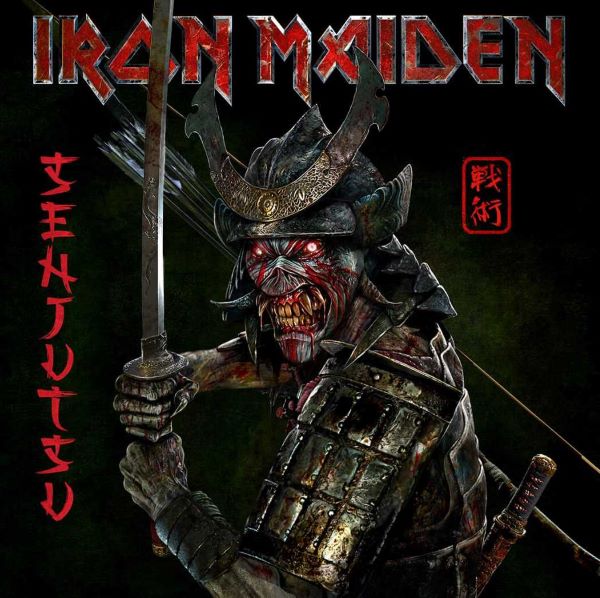
Iron Maiden – Senjutsu

Released September 3, 2021 via Warner/Parlaphone Records

Favorite Tracks – Hell On Earth, Writing On The Wall, The Parchment

I’m not one much for doing album reviews right off the bat. I prefer the gift of hindsight to settle on a record’s place in my music library and in a band’s catalog. I honestly was going to do a ranking of Iron Maiden records as my debut video for YouTube later this fall – the second I started working on that was when they announced a new album was coming. So my Maiden ranking will have to sit until I have time to consider where Senjutsu fits with the rest of their discography.

But this AOTW thing is not always a strict review – it’s more often a discussion of a record I like. And I certainly like the new Maiden offering. It’s another epic, multi-faceted album that stands in fairly stark contrast to its predecesor. It is yet another movement for a band that hasn’t rested on its laurels since finding acclaim in the later years of existence.

It’s also clear that the captain is steering the ship again. After kind of talking Book Of Souls off and letting the rest of the band handle that, Steve Harris is all over this album. It does at times recall the mid- and late-90’s when he was the creative force in the band. That could mean different things to different people, but in this case it’s a good thing.

I think an easy way to approach this is to go track-by-track. Let’s dive into the hour and 20 minute epic that is Senjutsu. Something to note – I have not, to date, read or watched the fairly extensive interviews that the band have given discussing meaning and theme on the record. I will do so after I’ve spent some more time with the album. I wanted to go into it on my own and see what I came out of it with.

Senjutsu

Iron Maiden have almost always been on their game with title tracks. Senjutsu is no exception and is a standout for both the album and in consideration of past title tracks. This song about heading into battle features some sick drum sounds and an atmospheric, almost hazy layer to the production, as if recalling a fog of war. The song does a great job tying into the album’s samurai theme and setting the tone sonically as the lead track.

Stratego

This was the second of two preview singles released ahead of the album. I struggled with the song on its own, it too is atmospheric and a bit buried in itself. But in the context of the album it works very well. It’s another tune about war and tactics, which “tactics and strategy” are the rough translation of Senjutsu. I honestly never played the board game that this track took its name from so I can’t really comment on that.

My only real qualm with the album’s production is on this song – it’s almost done in the vein of a shoegaze song where the individual parts are left in vague layers to consumed as one unit. Iron Maiden isn’t a shoegaze band by any stretch and the music needs to stand out. I think Bruce’s vocals are supressed here. But again, I do like the song and I think it fits the album’s theme and mood.

Writing On The Wall

Here we have the album’s first single, released before we even knew the album title. Any Maiden fan is already well familiar with this post-apocalyptic biker metal jaunt that heralds the arrival of the Four Horsemen.


I’ve played WOTW hundreds of times since its July release. The song is terrific and is an instant classic from the Smith-Dickinson songwriting tandem that has delivered many crucial metal cuts over the years. The song also sets the stage for the album’s other theme, that being how screwed our civilization probably is. It’s a theme that has always grabbed my attention and does so especially now.

Lost In A Lost World

This excellent track gets into some conventional past Maiden melodies and also tells the tale of some long lost civilization. It could be a past reflection on a lost culture, something the band have tackled before. Or it could be a look from the future back on our time. That would certainly fit the album’s second, apocalyptic theme.

Days Of Future Past

This short, blistering song seems to outline some war against a god, perhaps the lines are from Satan’s perspective. Or maybe it’s a burned, scorned mortal who fell out of favor with a god or king, who knows. Either way it also seems on theme – some damned soul wandering the wasteland with no purpose or end. Pretty stark stuff from the band, though they are no strangers to that sort of introspection.

The Time Machine

This song has a fairly vague theme, it appears to be a man recounting what he’s seen over his life. It doesn’t get too specific into what that is. The music is great on this track, very much signature Iron Maiden with a few intersting movements and twists.

Darkest Hour

Another tune from Smith and Dickinson, this song recalls some sort of war. It does feel a bit like World War II, with the mention of the beaches in blood. I have to wonder if it’s purely a look back or again, if the darkest hour is one just on the horizon. The song is, like the rest of the album, great. Very dark and moody stuff.

Death Of The Celts

Here we have the first of 3 Steve Harris-penned epics that close Senjutsu. This track is an absolute callback to The Clansman, a highlight from Maiden’s oft-maligned Virtual XI album. It is again, the tale of a lost culture, this time in its final battle from the perspective of a lone remaining warrior.

It is yet another welcome addition to the Iron Maiden catalog of long, epic songs. A powerful yet somber recounting of a last stand in the face of the conquering enemy, the song itself triumphs in a way its protagonist could not.

The Parchment

Look, it’s a 12-minute long song about a piece of paper. What else is there to say? Is it some ancient text of forbideen knowledge being sought, or did the band forget to cash a royalty check from Powerslave and set out on a quest to be whole?

More seriously, the song tackles yet another war. This time the depth and meaning is not found on the surface, at least for me. It’s a song to sit with later on and find its hidden passages and themes.

What does stand out on this track? The guitars. For a guitar-driven band with 3 players, this song lets them have at it. It is, for Maiden, a shred fest disguised as another gradiose epic. It’s a song that stands out from the crowd to me and one I’ll be spending more time with down the line.

Hell On Earth

The album’s closing track rounds out the creative burst trilogy from Captain Harris. It brings the album’s theme of “we are doomed” to full bore as the song literally depicts what the title suggests. It isn’t hard to look at how things are going and reach the conclusion that we’re either already there or are about to get there. It came up in several spots on this record and now it has a fitting, full exploration.

And for the love of all that is Maiden – this one is a masterpiece. It almost immediately joins other post-reunion epics like Paschendale and For The Greater Good Of God as some of the best work the band has ever done. It’s early of course but I don’t really mind saying it so soon.

It’s all here on this song – Bruce’s command of the song, the guitars both flowing and slamming, and the band’s drive and rhythm in full force. The starkest and bleakest of songs on the record provides a true Maiden singalong moment and yet again shapes their ever-growing legacy.

I haven’t dove too far into others’ opinions on the record yet but I do know I’m really only offering consensus when I talk about how much this song stands out. People are going off about it on every corner of the Internet. Hell On Earth is absolute power, force and Iron Maiden.

Here we are on the release of yet another classic from one of heavy metal’s most enduring icons. Senjutsu is a well-crafted, on theme and on track record that offers a greater unity amongst its individual parts than some of its predecesors. It’s one I’ll have to spend a lot of time with to reach conclusions about its overall form and where it fits in the already bursting with treasures discography of the band. It will certainly be time well spent.