I’m gonna stick with 1984 for the song this week. I’ve long since talked about this album, which was a given since it’s my favorite Judas Priest record. Today I’ll have a look at the album’s lead single.
Freewheel Burning was released in January 1984 as the first single from Defenders Of The Faith. Oddly, the single was apparently released the same day as the album, at least from the sources I can gather. The single held a few very modest chart positions though the album as a whole was quite successful.
This song is 100% quintessential heavy metal. While Priest have always been a heavy metal band devoid of sub-genres like thrash, this song does easily fit the speed metal category. It is fast and furious, just as the first words of the song indicate. Fast And Furious was also the working title for the song before recording, just imagine the crossovers Priest could have had with the movie franchise.
Two stars of this show are the classic guitar tandem of Glenn Tipton and K.K. Downing. Not only is the song’s main riff a total barnburner, but the extended solo section of this song is absolute fire.
Also of note, as would be expected, is Rob Halford’s vocal performance. He is all over this one, shrieking through the verses while using a bit of his range in the bridge. He also delivers a rapid-fire performance a few minutes in that moves faster than rap, it’s a Halford machine gun. It’s certainly among his signature performances.
The theme with this one is simple – it’s about getting in your car and going fast. Not only fast, but as fast as possible. There’s nothing more to read into this one, just grab your vehicle of choice and put the pedal to the metal, high speed at all costs. Given the sorry state of US drivers these days, it’s like this song is used for driver’s ed.
Freewheel Burning has been a favorite song among Priest fans since 1984. Surprisingly, the song ranks a rather modest 20th in terms of how many times it’s been played live. I would have expected more but that’s why I look these things up. But it is a favorite when it does get set time, and I was happy to hear it when I saw them in 2018.
One other fun little bit of trivia – on the vinyl single, there is an extra guitar intro that isn’t heard anywhere else. It’s a slow, atmospheric bit that takes up an extra 50 or so seconds. Sadly I can’t find a good video of it so if you want to check that out you’ll have to hunt down the single or watch some video of a dude playing it on his turntable.
That’s about all there is to it, it’s pretty quick and easy to run down this speedy beast of a song. It was yet another triumph for Judas Priest as they helped cement the foundation of heavy metal in the 1980’s and are still leading the charge 40 years later.
This week it’s a special one, as we finally have our first taste of the new Judas Priest record. Finally announced for March 8 of 2024, Invincible Shield will be the band’s 19th album. It features the very colorful album cover shown above.
Panic Attack is the first single released from said album, this hit digital airwaves last Friday, October 13th. It does appear to be a digital only single, as most are nowadays. The clip on YouTube has already snagged over half a million views since Friday so this is was a pretty well anticipated drop.
One quick thing before I get further into things – I’ve checked out a fair few reviews and reactions to this song and almost everyone is saying that it’s “very long.” Folks, this song is 5:27. It isn’t some huge stretch to have a 5 minute song, I don’t know where people are getting that this is super long or anything. We aren’t in Opeth territory where 8 songs comprise a double live album, this is a fairly average traditional heavy metal song. That one has been throwing me off and I felt the need to say something there.
This one opens with a synth intro for the first 40 or so seconds. It’s not a return to the days of Turbo or Ram It Down, it’s an intro more reminiscent of something from Iron Maiden’s Somewhere In Time, if anything. The intro is fine and there are small but effective uses of electronic effects throughout the song, like sirens here and there and something akin to the “Transformers” sound at transitions between the verses and chorus. These enhancements work out really well and I think add to the song just fine, the base structure of things is still guitar, bass, drums and Rob Halford’s unholy wail.
The proper song is another burner and in keeping with what Priest have been up to on their past few albums – a more straight-on heavy metal attack. It’s fresh and relevant for a band with guys over 70 years old in it, no small feat when many others fall by the wayside at over 50 years into their existence.
There’s a good bit of guitar soloing here, which you would expect from a band famous for its twin guitar attack. And yes, Glenn Tipton is playing here along with Richie Faulkner. But even when not taking center stage, the guitars are kicking out very nice riffs to move the music along.
The star performer here though has to be Rob Halford. 72 years old and he sounds like this? He is in full voice here and also using different parts of his range. Many singers have sadly fallen off as they hit their mid-60’s, but Halford joins Klaus Meine as those who have kept their power and vitality well beyond that. His stint here is something to behold.
Lyrically, Panic Attack is a direct shot aimed at the culture of the 2020’s. It tackles the misinformation, screeching keyboard warriors, opportunistic politicians and all of the dread and hostility surrounding pretty much everything these days. It’s not common for Judas Priest to take on these kind of current issues so directly, but here they go for it full throat. It’s very impressive and they do very well to avoid the now common trap of simply complaining about cancel culture – instead they really get to everything and all of the various issues that come together to create this shitshow we’re currently in.
The one and only “criticism” I have isn’t even really a complaint, it’s just something pretty funny in the song. At one point roughly 3 minutes in, Rob in full high-range wail belts out “World Wide Web.” I got a chuckle out of that, it does seem a bit out of place but then again it’s kind of what the song is about.
Overall I’m very impressed with Panic Attack, and I’m looking forward to exiting the winter that hasn’t even hit yet to get my hands on the full length Invincible Shield. So far it’s lining up to be yet another nice entry in the Judas Priest catalog.
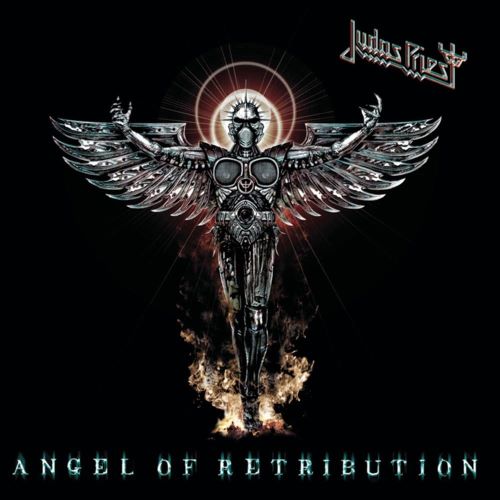
Today it’s time to have a look under the hood of a milestone album in the Judas Priest catalog – this was the studio return of Rob Halford to the band after having been gone since 1992. Big things were expected, especially on the heels of England’s other huge heavy metal band having a very successful reunion with their legendary singer, so Priest was on the clock here to deliver.
Judas Priest – Angel Of Retribution
Released February 23, 2005 via Epic Records
My Favorite Tracks – Judas Rising, Revolution, Deal With The Devil
Judas Priest were busy touring after Halford’s return so it would take a little bit to get a new album out. The band worked with producer Roy Z on the effort. Roy had worked with Halford on his last few solo albums and was also instrumental in Bruce Dickinson’s acclaimed solo material. The band’s line-up was unchanged beyond Rob Halford – Glenn Tipton and K.K. Downing on guitars, Ian Hill on bass and Scott Travis on the drums.
One thing about the lyrics that I’m going to get out of the way now so I don’t have to bring it up every song – this is absolutely loaded with references to earlier Judas Priest songs. Soem stick out like sore thumbs, like nods to Stained Class and The Sentinel in Eulogy, while others are a bit subtle. I recall music critics pointing this out a lot and not always in a flattering way when this was released. I personally don’t mind but I’ll admit that it’s a lot.
The CD was originally released in one of two configurations – a two-disc set with an accompanying DVD documentary, and a DualDisc version with the DVD portion on the back of the music CD. Technology was really offering it up just before CDs became obsolete. The album is 10 tracks that clock in at 52:37, though a look at the final track’s runtime reveals the rest of the album is pretty lean.
Judas Rising
The album opens with a heavy track that re-establishes the band pretty well. This one maintains a bit of the heavy feel of the 1990’s, when Priest were a notch or two heavier. There is a lot of lightning and fighting with the fate of the world in the balance kind of stuff here, or usual fare for Judas Priest. This was a good way to kick things off.
Deal With The Devil
This more fast-paced track looks at the band’s early days, when they rehearsed in a school building next to a church. This has some nice solo work from Tipton and Downing and the song feels like it slots in well with the overall Priest catalog.
Revolution
This is more of a hard rocker than a metal track, it has a simpler structure. This was the album’s only single. This one works pretty well, even if it’s a bit outside the box for Priest. The sort of southern riff is very effective and the song’s beat pulls you in. The lyrics are about the heavy metal revolution, which Priest were a huge part of and heavy metal was on the way up again in the early 00’s when this song came around.
Worth Fighting For
This song has a feel of something off of Point Of Entry and that is apparently by design, as this is a companion of sorts to the song Desert Plains from that album. It’s about someone wandering the desert, looking for their lost love. While the song comes off as light compared to other material, it really brings out Priest’s “softer” side pretty well and is a good compliment to the era it recalls.
Demonizer
The intensity picks up here on this all out metal assault. It’s another all out war among celestial forces in this one, even the famed Painkiller makes another appearance here. This song doesn’t quite go as hard as Painkiller but this is still a worthy slab of metal.
Wheels Of Fire
Here the song keeps a middling pace but slams in with some very heavy guitar tone. This is another callback to Priest’s long flirtation with motorcycle culture, this is all about being out on the open road and the freedom of the journey itself. It’s not their best song and not even their best song on that topic, but it’s a pretty good listen.
Angel
It’s ballad time and this one is very forlorn and sad. This is very minimal and quiet, very slowly adding elements to get a power ballad feel in the song’s final minute or so. It is a nicely done song though also not one I or many others were expecting from Priest. Given that this album is a mixed bag anyway, it leads to an appreciation for this one. And curiously, this song is by far the most-streamed track from this album, dwarfing the other songs with over 21 million plays.
Hellrider
Another attempted scorcher, though this one feels like it could use more pace to really open it up. It’s another one about giant robot monsters fighting each other, Megatron is even mentioned by name here. Overall it’s pretty good but I’d like a faster beat to this one, all of these mid-paced bangers get a bit plodding all on the same album.
Eulogy
Here we have a more quiet interlude sort of thing. It’s pretty short and to the point, with a quiet piano bit and Rob keeping things on the quiet end of his delivery. It maintains its form throughout, with no big build-up to anything more powerful. It’s a nice piece but who knows what this is a eulogy to.
Lochness
The album closes with something no one had on their Judas Priest bingo cards – a 13 minute long song about the famed Loch Ness Monster.
This is slow and plodding, and I mean if someone could take a picture of this song, it should be in the dictionary next to the definition of plodding. I guess a song about a mythical creature that may or may not (and probably does not) exist doesn’t need to be a metal barnburner, but man I’ve heard doom bands play faster than this.
This song was brutally reviewed when the album first came out. In years since a bit of an appreciation society has formed for it. I am not a member of that group, I think this is pretty awful. If the song were like half the length or even shorter I wouldn’t mind it at all, but this does not justify its use of 13:29 at all. This song is an anchor on the album, that is for sure. I could even call it an albatross around the album’s neck…
Have at it, if you have time to spare
Angel Of Retribution was welcomed by a listening audience ready for Rob Halford’s return and also well into a revival of the traditional heavy metal sound of the 1980’s. The album charted at 13 in the US, 39 in the UK and 2 on the UK Rock and Metal chart, as well as placing on at least 17 other music charts worldwide. No certification info is available so it’s tough to gauge any actual sales numbers.
This album is somewhat uneven and a very mixed bag. It has some metal, it has some more rock-oriented stuff that calls back to other points of Judas Priests’ fairly diverse catalog. There aren’t any massive triumphs here but there are songs worth a listen for sure. And of course it was nice to hear Rob Halford back at the band’s helm after a very long absence.
Judas Priest would go on to continue adding to their legacy and find more solid footing for future albums, though not without massive band drama. But a group has to start again somewhere, and Angel Of Retribution is as good a starting again point as any. It’s rather unheralded in their catalog overall but not “bad” by any stretch, save for what you might think about that thing at the end.
Our song this week comes from Fight, the early 1990’s project of the metal god himself, Rob Halford. Rob had left Judas Priest in 1992 in order to “spread his wings” and do some solo stuff. The story is that Rob had only wanted to do a side project and the rest of Priest was cool with it, but someone in band or label management screwed it all up and Halford’s letter of intent to do another band turned into him resigning. Judas Priest has some messed up management gaffes but that’s all for another time.
Halford’s first post-priest project would be Fight, a band a little more “with the times.” This band was heavy with a groove edge. It was reminiscent of Pantera, who were quickly becoming heavy metal’s most talked about band around this time.
Halford didn’t come from Priest alone – along for the ride was drummer Scott Travis, who did double duty in Priest and Fight, though Priest was not doing much at the time. Rounding out the band were bassist Jay Jay and guitarists Brian Tilse and Russ Parrish, the latter who you might know today as Satchel from Steel Panther.
Little Crazy was the second of three singles from the band’s debut album War Of Words. The album sold rather softly but did generate good critical and fan buzz. Halford’s gamble on updating for the times did pay off, at least in reputation. The videos from this album got pretty good airplay on MTV and there still was a good noise around the group, even if true commercial success was elusive.
This song isn’t a ballad by any means but it’s a slower tune, a bit “in the pocket” for a metal band. It does kick hard though, there’s no doubting its ferocity even in its middle pace. The riff here is totally southern deep fried, like this song came straight off the bayou. Everything here is played fantastically and the recording was fantastic.
Rob Halford keeps it subdued here, at least in terms of his general wail. Of all the renowned heavy metal singers, Halford is the one that can really take his voice to some different places. Here he keeps things on the level but it fits the song perfectly.
The song’s theme is exactly that of the title – it’s all about going crazy, or in fact being crazy. It isn’t the kind of hyped up, hey I’m batshit and going a million miles an hour kind of crazy often portrayed in old entertainment and especially metal songs. This is the creepy, crawly kind of crazy that is more like what going crazy is truly like (so I’ve read).
The music video fits the song very well and is also a product of its time. It features mostly shots of Halford writhing around as if he is slipping into the abyss, and some brief clips of the band playing. It’s all cut apart and pieced together with multiple angles in one frame, it’s very ’90’s and the sort of thing young, dumb meatheads like me ate up on MTV at the time.
Little Crazy wasn’t a hit in the commercial sense of the word. It did place at number 21 on the Mainstream Rock Chart, which is a bit of a feat for a debuting band, even one with a legendary singer in front of it. But this song was a hit with us at the time, the end of Generation X growing up on the alt-metal videos sprouting up around then. Fight would do one more album before folding, but their brief time around produced some pretty cools songs, and Little Crazy might be the biggest gem in the bag.
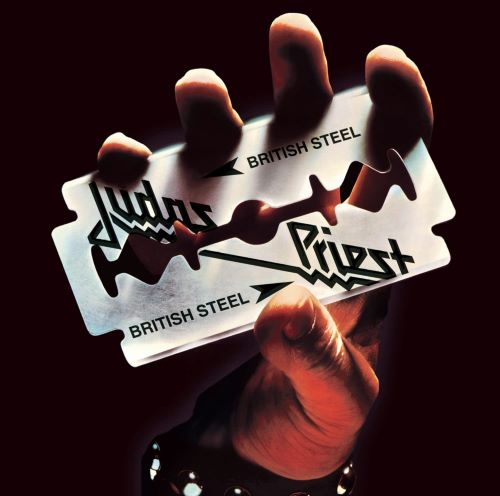
This week it’s an all-time classic, really just me typing the band and album name should suffice for build-up.
Judas Priest – British Steel
Released April 11, 1980 via Columbia Records
My Favorite Tracks – Living After Midnight, Metal Gods, Breaking The Law
Judas Priest were coming out of the 1970’s on a string of albums that slowly gained them recognition and where they shaped a commercially pleasing yet still distinctly heavy metal sound. Their prior album Killing Machine had gained a fair bit of notice and their first live record Unleashed In The East was a hit that showcased the highlights of their early career. And now the stage was set for Priest to truly establish themselves as metal stars at the turn of the decade.
The band’s line-up would hold through the decade – Rob Halford of course holding clinics at vocals, the guitar duo of Glenn Tipton and K.K. Downing, Ian Hill on bass and Dave Holland on drums, he having joined the band a year prior. The album was recorded at Tittenhurst Park, at the time property of Ringo Starr, which Ringo had acquired from John Lennon. Priest were going to use the studio on the grounds but found the house itself more suitable and that’s where British Steel was tracked.
There are 9 songs to go over in a 36 minute runtime, so nothing bloated here but these are some of heavy metal’s most significant songs. I’ll be using the modern reissues as my sequencing guide here, they are in the same order as the original UK/international versions. The US originally had a version with Breaking The Law opening and a few other songs swapped later on.
Rapid Fire
The album opens with a metal attack that kicks in right off the bat. The song chugs along with a monster riff that goes all over the place. The lyrical fare is about the world being done in by a battering ram, which might be figurative but is probably literal as the album has a pretty apocalyptic theme. That’s one big battering ram but the cosmos offers boundless possibilities. The solos on the song aren’t done in a conventional fashion – they’re inserted in vocal breaks on the third verse, creating a vocal/guitar trade-off kind of thing, pretty cool stuff.
Metal Gods
It’s on to another world-ending proposition, as this time robots are taking over and killing everyone. This would be a popular scenario throughout entertainment in the ’80’s. Metal Gods goes hard while also maintaining a steady pace and very smooth and almost quiet chorus.
Breaking The Law
One of the album’s singles and the band’s best-known track. The riff is fairly simple yet so, so effective at hooking a listener in and also making aspiring guitarists want to play it. The lyrics tackle the frustration of working class life in a recession and the ultimate decision to go out and raise some hell with a lack of other options. The simple chorus of chanting “breaking the law” is just as catchy as the opening hook and the song quickly infected airwaves. A goofy music video that features the band robbing a bank to score a gold record for British Steel would only enhance the song’s reach.
Breaking The Law stands as the most recognizable Judas Priest song around, perhaps only challenged by You Got Another Thing Coming. But this one has been all over the place for decades now and hasn’t ever really left the airwaves. The song’s deeper exploration of socio-economic woes might have been left behind, but the simple, catchy effectiveness has people breaking the law all over the world.
Grinder
This one starts out with a nice rock riff but then gets heavier as it goes along. While the song has been misinterpreted by many to be about sex, it’s actually about how the powers that be basically “grind up” the rank and file citizens. The song is a great showcase of the line between rock and heavy metal, and how at the time there really wasn’t much of a line, Priest were significant in taking things in a heavier direction.
United
This was crafted as a stadium anthem, something Priest did a fair bit of during the early ’80’s. It’s a simple song with a message of unity, both within the metal community that had been overlooked by the explosion of punk rock, and the general population who were being trampled by the establishment. It could be said that the song is a bit too simple, but it’s certainly in keeping with Priest’s direction at the time.
You Don’t Have To Be Old To Be Wise
Listeners could be forgiven for thinking that an AC/DC album suddenly came across their speakers. This one is about casting off the chains of society, again an ever-present theme, and going out on your own to blaze a trail. It’s something Priest certainly did during this time frame.
Living After Midnight
This is a good old party song, as usual it’s simple and very effective. While the song celebrates the night life, it was actually conceived because Glenn Tipton was keeping everyone else up with late night guitar playing, Halford eventually told him “you’re really living after midnight,” thus naming the tune. While not quite as renowned as Breaking The Law, this one does present as one of Priest’s most-known songs.
The Rage
The intro begs to be on a Police record but then a full-on heavy metal assault comes in. This one definitely moves the line in terms of heavy metal and where Priest would be off to on the next few albums. This one is a bit unusual as it doesn’t have a chorus, it is a few verses of Halford evoking the same “damn it all and go for it” spirit that embodies much of the album.
Steeler
The tempo goes up on the closer as Halford again embraces a self-motivation sort of theme. This song lets the guitars carry it, as both Tipton and Downing provide some fireworks to wrap up the album.
British Steel was a triumph for Judas Priest. It would hit platinum in the US and Canada, and peaked at number 4 on the UK albums chart. And the legacy of Breaking The Law has carried through over the decades.
The album was a massive point in the evolution of heavy metal. While bearing plenty of rock influence, Priest crafted simple, to the point songs with easy-to-chant choruses that would take hold of live crowds all over the world. Heavy metal was going to move in a whole new series of directions through the 1980’s and Judas Priest were possibly the chief architects of that movement.
Priest would take the British Steel sound and work upon it on their next two albums, crafting a trifecta of heavy metal records that would influence the world over. And a host of British and American bands, and of course many others from all over, would find influence in British Steel and heavy metal would have its golden years through the next decade. This is one of heavy metal’s most important records, hands down.
Yesterday I summed up the long line at the Judas Priest drummer’s spot, and also covered the absence of Rob Halford from the group. After 2003 Rob was back and the band’s line-up was stable for several years. Then around the turn of the decade, things started getting weird.
In 2010 the band announced their retirement after a multi-year world farewell tour. Then, somewhat out of nowhere, they announced they were working on a new album and that they were not retiring. It was an odd series of statements that didn’t seem to fully address what caused them to change their minds and it was a confusing period of time, not knowing if they were done or not. A bit of light was shed on things the next year
K.K. Downing retires, replaced by Richie Faulkner
In 2011, Downing announced his individual retirement from Priest. He expressed a desire to pursue other interests, which would involve golf course design. Downing departed on great terms and has led a quiet life in his post-Priest career.
Or not.
First, let’s quickly run through the new guy, Richie Faulkner. Richie is a British guitarist who had logged time in several bands, including playing with Lauren Harris. If that name isn’t familiar, she is the daughter of Iron Maiden legend Steve Harris. The elder Harris had produced some of Richie’s other bands and had already tabbed Richie as an option if anything happened to any of Maiden’s twelve (or three) guitarists.
Instead, Richie wound up in Judas Priest. He remains with them to this day and is likely to stick with the group through the close. While he’s had some detractors, he has been largely embraced by the Priest fanbase and is an excellent guitarist as well as a seemingly great person. He is also the kid of the group – far younger than anyone else in the band and hell, a few years younger than me.
But the focal point of K.K. Downing’s departure has always been K.K. Downing. His exit from Priest left a lot of fans upset and the specifics that have come out since 2011 have been a hotbed of drama. I won’t run down a lot of it – if anyone is interested in learning more, either read Downing’s 2017 biography Heavy Duty: Days and Nights In Judas Priest or read any Blabbermouth.net article about Downing as they run down the whole history anytime he gives an interview.
But it is clear there were personality clashes in the band, and it’s fairly clear who the main adversary was for Downing. If it wasn’t clear right at the time everything happened, it would become much clearer a few years later.
Glenn Tipton steps aside, replaced by Andy Sneap
In 2018, Glenn Tipton announced he was diagnosed with Parkinson’s disease. He had struggled with the disease for about a decade before stepping down as Priests’ regular touring guitarist. Tipton would remain a creative member of the band, but would only make sporadic appearances for a few songs on tour.
Tipton’s replacement was renowned producer Andy Sneap, also a guitarist in classic British act Sabbat and part of the reformed Hell. Sneap would serve as the touring guitarist in Tipton’s place while Tipton would continue performing in studio.
Many fans asked the obvious question – if Judas Priest needed a new guitar player, why not their old one? K.K. Downing had not been involved with music since leaving several years earlier and was clearly cut out for the job. Downing himself publicly stated that he would like to come back to the band, but no one reached out to him about the vacancy.
Again, I’m not going to get into the specifics of the drama surrounding Downing and Priest. It’s clear the issues center around Glenn Tipton and there are plenty of Downing interviews readily available where he discusses what happened. And Priest management was also a target of Downing’s ire. That would seem fitting, since just last week longtime Priest manager Jayne Andrews did a podcast where she dumped on Downing in regards to his appearance at the Hall of Fame induction. All other reports from Downing and Priest members about that time had been glowing, so the Andrews interview was a bit of a shock. Maybe not as shocking when it’s known that she is also the long-time partner of Glenn Tipton.
Clearly I don’t know any of these people and I don’t want to get into casting aspersions when I don’t have a lot of information. But it’s also clear that Priest have some management issues. Think back to Rob Halford’s departure in the 1990’s – all he wanted to do was a side project. He had to “quit” the band due to contract technicalities. Instead, he was gone for a decade. And there has been a lot of mudslinging and bad press over the K.K. Downing retirement, a lot more and sustained for a lot longer than many band breakups.
And there’s one more line-up change, albeit minor, that might highlight more odd issues in Priest management. This one happened earlier in the year.
Andy Sneap is dismissed, replaced by … wait for it … Andy Sneap
In early 2022, Priest announced that Andy Sneap would no longer be a touring guitarist. He would focus on producing the new record. The band would tour as a four-piece, with Faulkner being the sole guitarist. The thought of one guitar player in Judas Priest sent fans into a frenzy, and not long after, Sneap was reinstated as the second guitarist. Rob Halford was the one who fell on a sword in public, taking blame for the decision to initially dismiss Sneap.
While this is little more than a footnote in Priest lore, it does speak to how the band is run. I’m personally not buying that Halford was the one who had anything to do with the fiasco. Maybe he did, but I think he took one for the team and jumped on the grenade because he has the most goodwill among fans and could easier absorb the backlash. The Sneap thing was a mess and the idea of Priest heading out without two guitar players is just unreal.
That does it for Judas Priest line-up changes – for now, anyway. Priest is a legend among legends in heavy metal, no dispute there. But they have some wonky management and get up to some weird shit at times. The drama surrounding K.K. Downing still lives on, even as Downing has his own band now featuring former Priest singer Tim “Ripper” Owens. And the Downing fire is one that likely won’t die in the press or the respective comment sections anytime soon. It’s a monster at this point.
But at the end of the day we still get music from some configuration of a band that’s been running for over 50 years now. There is something to be said for that.
This one threatens to be a 90 page term paper but I’ll keep it simple, though it will require two parts to get to the most significant stuff. The line-up changes of Judas Priest are numerous – in technical terms, the band as it exists today contains no original members. Singer Al Atkins formed the group in 1969, then it went by the wayside. A new group joined with Atkins after 1970 and this would include K.K. Downing and Ian Hill. While it’s technically correct that neither were “original” members of Judas Priest, in any common parlance it’s fair to suggest that both are founding members. It’s not like the original outfit did a whole lot.
Atkins would depart in 1972 due to the financial strain of being in a band not making any money. He was replaced by Rob Halford, and second guitarist Glenn Tipton was brought in to the band shortly before setting out to record the debut Rocka Rolla. This, along with what was already the tenth or so drummer, would comprise the core Judas Priest line-up for many years. The changes I’ll discuss will mainly revolve around what’s happened in the 1990’s and since, save for the revolving door of drummer. Today I’ll handle that and also the huge changes at singer, then tomorrow I’ll get into all of the guitarist drama of the 2010’s.
Scott Travis (eventually) becomes the drummer of Judas Priest
The movie This Is Spinal Tap is renowned for its gag of exploding drummers. The joke most likely came from the insane amount of times Judas Priest changed members at that position. I guess there were nine different drummers but that’s just a quick glance on my part.
I suppose it’s fair to use the criteria that the Rock And Roll Hall Of Fame used to induct Priest earlier this year. Three drummers were inducted – Les Binks, Dave Holland and current drummer Scott Travis. Binks played on Stained Class and Killing Machine, while Dave Holland was the drummer through all of the 1980’s albums.
In 1989 Dave Holland left Priest due to health issues and musical differences. This led to the arrival of Scott Travis, who had played previously with Racer X and Saints Or Sinners (who became The Scream). Travis immediately made his mark with his drum-in intro to the song Painkiller, and Priest was off to the races.
Travis was the youngest member of the band by a mile when he joined, though this would change a few years later. His drumming proficiency and energy injected new life into Priest, who had flagged a bit in the synth era of the late ’80’s. The band would purse a decidedly metal direction with Travis at the drum throne.
Travis has engaged in some side activity during his time in Priest – he is the drummer for the present incarnation of Thin Lizzy, continued work with Racer X and also lent his talents to a few albums I’ll talk about in a minute. But his time with Priest has been fantastic and he was a great addition to the band.
Rob Halford departs, replaced by Tim Owens
Just a few years after Priest had seen renewed interest with their very metal-forward Painkiller album, Rob Halford told the band’s management about his interest in doing a solo album/side project. For whatever goofy reason, the band’s management told him he would technically have to resign from Priest to do this. In the resulting confusion over Halford’s statement, he was gone from the band for a decade. How anyone let that happen is beyond me, but there has been some dysfunction in the Priest camp over the years.
Halford would spend his time with a variety of projects which I have previously covered here. The first one happened to also involve Scott Travis, who was still a member of Priest yet the band was inactive during that time.
Priest would eventually seek to find a new singer and, due in large part to Scott Travis’ suggestion, picked Tim “Ripper” Owens. Owens had done work in the band Winter’s Bane and also the Judas Priest tribute act British Steel.
Judas Priest’s “Ripper” era would be defined by a very heavy sound and subdued interest, though not the same level of vitriol aimed at fellow British metal legends Iron Maiden and their late-90’s period. The band would offer two albums as well as two live efforts during this time.
As with any kind of replacement like this, it was a struggle for Tim Owens to step into the shoes of one of metal’s most renowned frontmen. While I personally always liked him and thought he got a fair bit of unfair treatment, there was no replacing Rob Halford in the hearts and minds of Priest diehards.
The fortunes of Judas Priest were flagging in the early 2000’s, just as they watched Iron Maiden spark new interest with a much-hyped reunion with their legendary singer. And the inevitable came in 2003.
Rob Halford returns to Judas Priest
After some success with a few solo efforts in the early decade, Halford was a rising star again just as heavy metal was finding its way back into fashion. The no-brainer reunion with Judas Priest came in 2003. This left Tim Owens the odd man out, of course. He would go on to sing for Iced Earth for awhile and also participate in a variety of other projects.
Judas Priest have essentially ignored the Ripper period in retrospect. The songs from his albums are not performed live and the albums remain almost untouched reissue-wise, save for the super mega huge box set that came out last year. A bit unfair to not even acknowledge that period, I think, but again, there are some shifty decisions that come out of the Priest camp from time to time.
Priest themselves were back in form with their signature frontman in place. Rob Halford has since taken on a legend all his own and is one of heavy metal’s enduring icons. The band would see mixed success with their post-reunion albums, with the greater success coming from the more recent offerings.
If that were the whole story on Judas Priest line-up changes, it would be more than enough. But some huge moves came in the 2010’s and led to a lot of drama and headaches for all involved. Tomorrow I’ll get into the shakeups at the guitar positions.
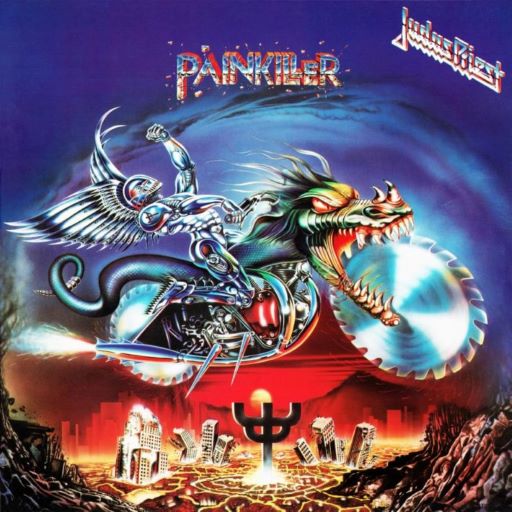
This week’s pick is the album released in 1990 after one of heavy metal’s legendary acts spent some time in the late 80’s indulging in the sound of the times a bit. It was both a return to form and a new phase for the group, that sadly would not last much beyond the album’s cycle.
Judas Priest – Painkiller
Released September 14, 1990 via Columbia Records
My Favorite Tracks – Painkiller, All Guns Blazing, Between The Hammer & The Anvil
Judas Priest in the late 1980’s was a mixed bag – both Turbo and Ram It Down had varying degrees of commercial success but both albums were also not received as well as the band’s early-80’s classic metal phase. The band came into 1990 with a new drummer and a new approach to album crafting.
Priest were also engaged in public turmoil around this time – the infamous trial over subliminal messages was held in the summer, it was only after the dismissal of the lawsuit when Painkiller would see release.
Painkiller comprises 10 songs at about 46 minutes in its original form, the version I’ll discuss today. 3 singles were released from the record – A Touch Of Evil, the title track and Night Crawler.
Painkiller
Opening with the title track and one hell of an introduction for new drummer Scott Travis as he blasts his way through the first seconds of the song. The intensity keeps up as the riffs enter and especially when Rob Halford wails his way through the song in a manner raising the bar even for him. Painkiller has to do with some robot thing saving the world and has become an all-time Priest classic.
Hell Patrol
The tempo goes down a touch but the heaviness and atmosphere remain on this track having to do with fighter plane combat. Glenn Tipton and K.K. Downing get a bit of time to flex some solos on this one and they stand out a touch more given the less violent musical presentation.
All Guns Blazing
Back with the speed on this aptly-named song. It’s a tried and true metal song about going for it at full capacity, as the title suggests. The slowdown of the main riff at the song’s conclusion is a nice touch to end the song in a bit unconventional fashion.
Leather Rebel
By now a standard Priest theme, get decked out in leather and kick ass. The guitars go ham on this one, it’s a marriage of classic Priest subjects with the updated speed metal of 1990.
Metal Meltdown
Another scorcher that lives up to its name and could be an accurate description of the album as a whole, as if the band were reviewing their own work in song.
Night Crawler
Rather than being an homage to the X-Men character, this song invents a monster that comes to eat everyone. Making up their own monsters worked out better for Priest than singing about famous ones, though we’re not there yet in the Priest chronology. This one is a fairly simple tune that executes very well.
Between The Hammer & The Anvil
The title offers another take on the “between a rock and a hard place” concept. The song was apparently created out of the subliminal messages trial. Rather than being a literal offering of their feelings on it, things are dressed up here to fit a song that very much recalls the classic Priest era.
A Touch Of Evil
A song that hearkens back to the late 80’s time period, replete with synth. It’s a track about how love can be painful and twisted. Though it sticks out a bit on the album it’s still a very nice addition and doesn’t detract from the proceedings.
One Shot At Glory
After the brief intro Battle Hymn, the album wraps up with this solid metal offering. It delves into the “good side” of war, that rush of adrenaline and desire to do something greater that comes with stepping onto the battlefield. It’s a nice, motivating track to close out the record.
Painkiller marked both a return to the old ways and a new direction for Judas Priest. It was heavy on a scale beyond what the band had done before, entering speed metal territory and deftly changing direction as the sounds of the 1980’s were quickly dismissed in the new decade. The album made a decent showing on several nations’ charts and has a handful of gold certifications.
Acclaim and praise would come with Painkiller. It left some jaws on the floor upon release and in the years since it is widely hailed as one of the band’s strongest efforts. It was an impressive effort all around for the metal legends.
Sadly this time period would not spark a new era of Priest classics. Not long after the touring cycle for this album, Rob Halford wished to do a side project. Due to strange contract wording Halford had to leave the band to release anything else, and he would be out of Priest for a decade. The rest of Priest took some time off before regrouping with a new singer and a couple of albums that also explored the heavier side of things.
In the end, Painkiller was a triumphant piece of the Judas Priest catalog. An old dog learned a few new tricks and translated an already successful formula to a heavier shade of metal. Even in modern times, Priest have still made a fair bit of stuff that sounds like it could have come from this album. Metal would go on to be a timeless beast, and Judas Priest were one of the ones chiefly responsible.
I was putting together some info for a near-future Judas Priest post when I got to thinking about Rob Halford’s solo career. This seed also got planted a few weeks ago when a few of us were at a buddy’s house and he had one of the the Halford albums on.
So today I present a quick run through the non-Judas Priest albums of Rob Halford. He did quite a bit of stuff in his time away from his legendary outfit, and threw a few more solo efforts out there after returning to Priest in 2003.
Let’s go all the way back to 1993 and begin the look at Rob Halford’s solo offerings.
Fight – War Of Words (1993)
Halford came out swinging with his first non-Priest effort. Fight were a band of the times, in a thrash/groove pocket that slotted very well with the metal in rotation in 1993. Though Priest had done well to update their sound with Painkiller, Halford took his own leanings into even more of a current direction with Fight. Also note that Scott Travis double dips here – he was drumming with JP and also with Fight. Also notable is Russ Parrish on guitar, now more well-known as Satchel from Steel Panther.
Nailed To The Gun was a single from War Of Words and it was a great introduction to Halford’s post-Priest life. It got plenty of MTV play and the buzz set Halford and Fight up decently well out of the gate.
Fight – A Small Deadly Space (1995)
Fight’s second and last release didn’t quite hit the same way the debut did. It maybe lacked the dynamics of the first and was a bit stripped down or “grungy,” perhaps. It’s not horrible by any means but it kind of flopped and spelled the end of the project. I did see Fight live on this tour, it was my first Halford live experience of any kind. Between the Fight stuff and a small handful of Priest tunes thrown in it was a hell of a show.
2wo – Voyeurs (1998)
Halford’s next move would be into the industrial metal space, a form of music that was huge at the time and something he had long expressed a desire to do. This one-off project saw him team up with John 5, now known as Rob Zombie’s guitarist and the new guy in Motley Crue. The record was released on Trent Reznor’s record label, though this was not a collaboration between the artists.
2wo did not make waves at all, in fact the album was derided on release and the project scrapped pretty early on. It has gotten some more love in retrospect but remains more of a curiosity than anything in the distinguished career of Rob Halford. I always thought the album was a worthwhile listen but I can see why it didn’t really take off.
Note that while I’ve only posted the song, there is a fairly crazy video out there for I Am A Pig. It takes a bit of digging to find.
Halford – Resurrection (2000)
As the calendar flipped to a new everything in 2000, Halford returned to his metal roots and launched a new project. This time he would collaborate with producer Roy Z, who had lent great weight to Bruce Dickinson’s solo career.
This project would be very well-received and reinvigorate interest in Rob Halford and the more traditional strain of heavy metal. The band toured extensively, including opening for a reunited Iron Maiden, which really spiked interest in the “old sound” again. Bruce Dickinson also appears as a guest on the song The One You Love To Hate, making true a long-desired fantasy pairing in metal.
Halford – Crucible (2002)
Halford’s next move would be to get a bit heavier and actually move aside a bit from the “trad metal” leaning of the last record. This record accomplished its mission and kept the Halford train rolling, with the featured song Betrayal being an absolute barn burner.
This is the point where Halford reconnected with Judas Priest. It would be several more years before a new Halford solo offering.
Halford – Winter Songs (2009)
The third Halford solo outing would be a bit of a departure for heavy metal in general – while not explicitly stated as such, this is a Christmas album. There are a ton of old Christmas standards here, as well as a few originals penned by Halford and Roy Z.
While this isn’t my cup of tea, there also isn’t really anything wrong with it. It’s what you’d want, if what you wanted was a Rob Halford Christmas album. Halford would revisit the Christmas album in 2019 with Celestial, an album billed as a “friends and family” effort.
Halford – Made Of Metal (2010)
It would be a quick turnaround from the Christmas special to the next proper Halford release, which to date remains the final solo offering. This would return to the more traditional metal sound of the first album and serves as a respectable bookend to Halford’s solo catalog, if indeed nothing further materializes.
It’s unknown if there will be another Halford release outside the bounds of Judas Priest. Halford has expressed a desire to collaborate with some specific artists, among them Ihsahn from Emperor. It has yet to happen though, and it’s been all quiet on the Halford solo camp after some mess about label and catalog rights years ago that somehow saw Halford not have the rights to his own solo music for a time. I’m not even sure how that story ended or if it did, but it was kind of a mess.
Whatever may come, Rob Halford has led quite a career, both with his main gig and outside of it. He has displayed a clear willingness to pursue sounds outside of the box and has had some great moments, both within and outside of the bounds of strict heavy metal.
I’ll have at a quick post today to discuss the unexpected but very welcome news that came down yesterday – Judas Priest will be among the inductees to the 2022 Class of the Rock N’ Roll Hall Of Fame.
The induction is kind of surprising. Priest were on a months-long fan ballot with other acts and did not place well in the results. The institution behind the Hall of Fame has always stated that the fan ballot is only one component of selection and so the group saw fit to grant Judas Priest induction.
In fact the group is being inducted in a different category from the typical “performers” one. Priest are being inducted via the Musical Excellence category. This is not a very big deal, despite some of the wankery being aired on social media about it. There are several different categories for the HoF so getting in by way of this one is not some huge issue.
With induction to the HoF comes the issue of who exactly gets in. In the case of Judas Priest, the following members will be inducted – current members Rob Halford, Ian Hill, Scott Travis and Glenn Tipton will be enshrined. Along with them, former members K.K. Downing, Les Binks and Dave Holland will also be inducted.
This does leave a few people out, of course. Original Priest singer Al Atkins won’t be inducted and I’m sure he’ll have something to say about it. Halford’s replacement in the 90’s Tim “Ripper” Owens also will not be enshrined, and I’m sure will be gracious as he often is about such things. There are a smattering of other members with some contributions but the Rock Hall generally just gets the classic-era names in for induction.
There are a few points of potential drama with a few of the names on the former members list. I won’t even get into one of them, I don’t know how that’s gonna play out but hey, they’re inducting him so I guess that’s decided. In the case of K.K. Downing there has been some past acrimony over his departure, but there’s no point in getting into all of that now. Early indications are that Downing is very happy about the induction and Rob Halford has already extended an invitation for Downing to be there so I’ll just play the part of the optimist and hope it all ends well.
But in the end drama is just drama, the point still stands – Judas Priest will be in the Rock N’ Roll Hall of Fame. I wasn’t really expecting to see the day, I’d honestly given up on the institution years ago. I’ve deliberately avoided writing posts about who I think are the biggest snubs and things like that – I would prefer to just not give a shit about the whole thing. But I will set all that aside to celebrate the very deserved induction of one of my favorite groups and one of heavy metal’s pioneering outfits. It is fully earned and finally realized, and may the world celebrate the glory of Judas Priest later this year at their induction to the Rock N’ Roll Hall of Fame.


 The Crooked Wanderer