It’s time to get back to the celebration of 1984, which will run to the end of this year to commemorate the 40th anniversary of this great music.
Today’s song comes from the debut album of Seattle metal outfit Queensrÿche. I covered the album last year before I realized I’d be doing this running 1984 deal, but I can pull the signature song and have a deeper look at it.
Take Hold Of The Flame was released as the second single from the album The Warning. It didn’t chart in the US and I don’t have any international chart information, but this was reportedly “big in Japan.” That does track, as Queensrÿche headed over there in short order and even recorded live stuff in Tokyo.
This is honestly a straightforward metal song from an album with a bit of embellishment on it, and from a band whose career could accurately be described as “out in left field.” But this is off and running riffs that are largely contained and pounding drums and bass. There’s a solo, of course, this one I believe credited to Chris DeGarmo, but nothing really wild or flashy going on with this song.
The star of the song is the band’s singer Geoff Tate. Even in an age with luminaries like Rob Halford, Bruce Dickinson, Ronnie James Dio and others providing a master class on heavy metal singing, Tate seemed to be from another planet on these early performances. He doesn’t necessarily show off here except for a small part at the very end, but his voice delivers these lyrics with full force.
Queensrÿche were really on some trippy stuff lyrically during their early run – AI robots, war, more AI robots, wives of prisoners and all sorts of other stuff that does somewhat involve AI robots. But on this song the group chose to hold off on predicting more of what 2024 would be like and provide a more relatable treatise on motivation and “grabbing the brass ring,” if you will. To some extent the song does dwell on those who did not get up and go get it, those lost who will fade from history. But overall the song is a memo to get off your ass and get it done, whatever “it” might be.
Take Hold Of The Flame became an early crowd favorite and Queensrÿche were happy to oblige – it remains the band’s fourth most-played song out live. This is counting the lineage of the band present today, Geoff Tate has played the song 214 times live while solo, good for sixth on his own list.
For Queensrÿche, this song was a part of a triumphant beginning that would launch one of the more unique careers in music. The band wouldn’t sound like this again but this early material is still widely hailed to this day.
I’m altering my post format this week due to what was breaking and ground-shaking stuff from Friday.
Friday was the official launch of the 2024 Summer Olympics, being held in Paris, France. This was obviously going to be a big deal from the jump, with Paris being one of the world’s most renowned and historical cities, the place has more culture in the cracks of its sidewalks than some entire nations have. But boy howdy I was not prepared for just how impactful it would be.
While some sporting events get going days before the festivities, the true start of the Olympics is the opening ceremonies. This usually involves the athletes marching into a stadium, some pageantry associated with the host country, some speeches and lighting a fire. I do personally love the Olympics but I often pass on the opening ceremony, generally nothing there for me.
But Paris went out of their way to command attention on Friday. The ceremony was not held in a stadium – rather it was spread out across the city, mostly along the River Seine where the athletes floated in a boat parade. The ceremony was a series of performances, filmed pieces and other bits strung together over a few hours.
Among the performances was that of long-running heavy metal act Gojira. They have been an active unit since the mid-90’s and rose to prominence in the metal scene in the mid-2000’s, and through the 2010’s became one of the biggest and most revered acts within metal. But their performance on Friday put them on a stage no act that can be considered extreme metal has ever been anywhere near.
Gojira did a take on a song from the French Revolution called Ça Ira, which translates to “it’ll be fine.” Gojira also teamed up with singer Marina Viotti, who has performed both opera and heavy metal through her career.
The performance was held on the Conciergerie building, which was once a royal building but was used to house royal prisoners during the Revolution. Marie Antoinette was a famous resident of the prison, and a headless guise of the former queen kicked off the performance.
Gojira played while standing in various windows of the Conciergerie, with other headless effigies of Antionette in other windows. Viotti was on a mock ship that was “floating” by the building, though not actually on the nearby river. The performance was of the highest production and also bombast, with flames shooting and a red mist of fireworks let off at the end, likely to symbolize the beheadings famous during the Revolution.
The entire Opening Ceremonies have been the talk of the world since Friday, with many in awe of the sheer craziness of the show, and others critical of certain aspects. Some, perhaps rightfully, were down on the somewhat disjointed nature of the whole thing and how it didn’t really play out watching in person, it was much more of a TV event. Others found less logical arguments to stew in, I won’t bother getting into those.
For Gojira this was a huge moment. Sure the band are well regarded across the metal landscape and are one of the more successful bands in heavy metal, but this was the Olympics. It’s one of the biggest stages anyone could ever perform on and is seen worldwide by many millions, if not billions. The US ratings indicate at least 26 million people watched.
Heavy metal has never been on a stage that big. Some bands have played massive festivals, but those shows didn’t really have a worldwide audience watching all at once. And especially for anything that can be classified as extreme metal, this is by far the biggest spotlight any band has ever been under.
Now, what will all of this translate to? It’s hard to say. I’m sure Gojira will get a nice bump out of all this. I don’t know if this will carry over to the scene as a whole and I don’t know if this will be any lasting sort of thing or if it’s just a plot point on a timeline, but it is as big as anything ever has been in metal.
Whatever happens, Gojira and Viotti’s performance on Friday was epic. Heavy metal has often been the red-headed stepchild of music but on a day full of talk, this performance stole the show in the eyes of many. I don’t know if this will translate to metal being more incorporated into big time events in the future and I doubt it will, but this was certainly something to behold. Bang your head or lose your head.
NBC and the Olympics famously lock down their footage of this stuff. A YouTube video is available but embedding is not permitted. Follow this link to watch the performance – https://youtu.be/TgzDfVfn6w8?si=FlObnwZuepNOFVFo
This week I go back once again to 1984 and this time it’s to dig up an artifact that marks the true beginning of heavy metal’s most infamous subgenre.
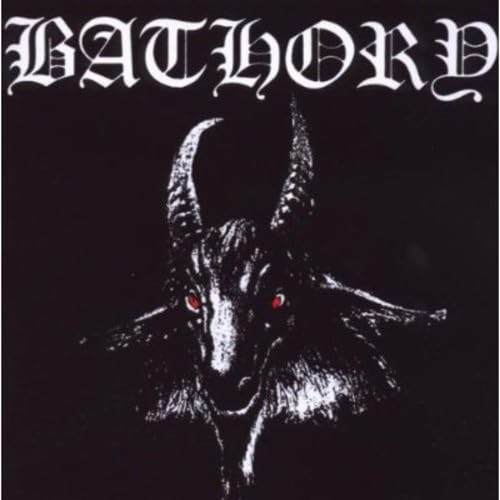
Bathory – self-titled
Released October 1984 via Tyfon Grammofon Records
The story of Bathory is a fairly simple one. The project was the mastermind of young Swede Thomas Forsberg, aka Quorthon. Quorthon’s father, Borje Forsberg aka Boss, owned the record label Tyfon Grammofon and Quorthon’s fledgling band would fill out songs on a compilation when a planned act dropped out. Those recordings generated a high degree of interest and Boss commissioned Bathory for a full-length debut album.
The work of Bathory would later fall under the sub-label Black Mark Productions, which Tyfon Grammofon is more commonly known as today.
Quorthon handled guitar and vocals on this release, he was joined by Stefan Larsson on drums and Rickard Bergman on bass. The lineup of Bathory would change often, with Quorthon being the only constant member and years down the line the only member.
The album cover was fussed over a little bit, with a pentagram originally planned but the idea was scrapped in favor of the goat artwork. After the first pressings of the album, Quorthon found the yellow coloring of the goat an eyesore and the cover was changed to black and white for all subsquent pressings. The back cover also features an error due to supply issues. Quorthon found some kind of rub-off lettering in a font he wanted to use, but he ran out of the letter C, so the song Necromansy is spelled as I just typed it instead of “necromancy” as the dark art is typically known as.
The influence of Bathory was a huge question mark during the early years – Quorthon cited acts like Motorhead and GBH as his primary guides, while everyone on the planet Earth thought that the early Bathory recordings sounded much like Venom. Quorthon chafed at comparisons to Venom and even suggested that the two bands were completely different – he isn’t wrong, per se, but there is a definite vibe that’s similar to Venom in these early Bathory recordings. In this 1987 interview with Metal Forces, Quorthon did clarify that he thinks Venom’s Black Metal is a masterpiece and he goes further into what led him to make the music he did.
I’m going to handle this album differently than my usual format. Today I’ll offer up the tracklist and then give a summary of what we have here, I’m not going to jump into detail track by track like I usually do.
Storm Of Damnation (intro)
Hades
Reaper
Necromansy
Sacrifice
In Conspiracy With Satan
Armageddon
Raise The Dead
War
The Winds Of Mayhem (outro)
This album takes less time to listen to than it takes to get a Domino’s pizza – this one is in and out in 26:58, and 3:30 of that is the intro and outro.
The music on tap is rooted in thrash, but is very lo-fi production and a bit more “messy” than the polished offering thrash would mostly become. It bears some comparison to Slayer’s Show No Mercy with the “evil” imagery and creepy music, but even Slayer’s debut was refined compared to this. This is a ghastly, cavernous listening experience that isn’t for the faint of heart.
The concept of “under producing” might be strange but it’s also perhaps the most important part of this record. The lo-fi production turned off some listeners but brought others in, and some of those listeners would seek to emulate this “sloppy” work. It’s one direct link from this to the genre of black metal, and its infamous “second wave” which would show up in the late 1980’s and terrorize the world by the early ’90’s.
It’s actually a bit inaccurate to call this album and black metal two separate things – while black metal was influenced by Venom, Celtic Frost, Slayer and Mercyful Fate, none of those acts were playing the style of music. Bathory, on the other hand, offered up an early blueprint on what black metal could actually sound like. Songs like Sacrifice and Armageddon are not far removed from what the Norweigian scene would put on display when black metal truly got rolling. Nothing wrong with calling this the world’s first black metal album, though it’s a subgenre whose listeners like to argue about everything so the point could be debated.
For me personally this wasn’t a part of my collection until a lot later down the line, when the most infamous events of black metal’s early days had played out and Quorthon himself had moved on to other styles. But it is absolutely worth a visit to truly understand where the depths of extreme metal got their influence, and this album is the birth of black metal.
This album basically starts playing and bashes for its 27 minutes of existence, save the eerie intro and outro. If there is a standout track I find Raise The Dead to be it. This one peels the speed back just a touch and is a savage, noisy march about coming back from the grave. This is the song that does grab out a little bit and offers something perhaps “catchy.”
But this album is an all or nothing proposition as a whole. You’ll either like it or not. There is no range of dynamics to consider here or a few songs that leap out and others that are “less than.” It also makes grading a bit of a chore – honestly the album sounds like shit and could be given an F for that alone. It’s also the start of something that became massive within heavy metal and could be given an A or even an S for that factor.
The actual grade lies somewhere inbetween – for me personally I have listened to black metal for decades now so the sound is not an adverse factor – this is exactly what black metal is supposed to sound like, and it’s primarily because of this album that black metal sounds like that. This is worthwhile to listen to and is interesting on its own merits, not just because it’s a historical marker.
Album Grade: B+
Bathory’s first offering got the ball rolling on Quorthon’s own lengthy career and also the genre of black metal. The next few Bathory albums, including the classics Blood Fire Death and Under The Sign Of The Black Mark, would cement Bathory’s status as early extreme metal legends and draw a line to the start of Mayhem’s career, thus kicking off black metal in earnest. Quorthon would leave black metal behind after awhile, serving up several albums of more melodic fare that now classify as Viking metal and also experimenting from time to time. Bathory would run until 2004, while Quorthon died of heart issues.
Bathory did not run the usual course of a band – they rarely played live and gave up on that pursuit after a few years. Bathory was simultaneously world famous and totally obscure – not known to the larger world but hailed as legendary among the denizens of the metal underground. And this debut album was a fitting start to a heavy metal legacy.
For more on the grading scale I didn’t really use much this week, head here.
Questions, comments or concerns? Use the comment form below or head to my contact page.
This week’s song looks back to 1984 and was the third and final single from Twisted Sister’s landmark album Stay Hungry. I talked about the album to help lead off my celebration of 1984’s 40th anniversary. The song has its origins in the album prior, 1983’s You Can’t Stop Rock n’ Roll, as we’ll soon get into.
The Price did not have the same singles success that the other two songs from Stay Hungry did – it would get to 19 on the Top Rock Tracks chart and 24 on the long defunct Radio and Records chart, but it did not crack the Billboard 100, only hitting 8 on the Bubbling Under chart. It was a different style and theme to the prior singles, with We’re Not Gonna Take It and I Wanna Rock being balls-out rockers. The band cites a lack of a radio mix from producer Tom Werner as a factor, Werner was not given enough heads up to do up a radio edit of the song the same way he did for the two other singles. Not necessarily related but worth noting is that Dee Snider has been critical of Werner’s production (and Werner has fired back at Snider and all of his various critics).
On our hands today is a ballad, and one with more lofty concerns than the typical love song. It is an existential question of whether or not it is worth it to carry on, as the powerful chorus asks. This song doesn’t answer the question – it’s up to the listener to come to their own conclusions. There’s nothing over the moon about the song’s music but the basic approach fits this one very well.
Dee Snider was inspired to write this one while away in Europe recording the previous album. He relays the story in this 2016 interview with Carl Wiser on Songfacts. Dee and the band were holed up recording their album with not even money to make phone calls back home. Jay Jay French’s sister-in-law called to the band to check on them and Dee relayed that he was missing his family, the reply was “I guess that’s the price you have to pay.” Dee gave the phone to Jay Jay, then went into the bathroom and began working on the song.
The Price really does raise those kinds of questions, and well beyond the specific scope of if it was worth it for Twisted Sister to be pushing for their career. The grind can be a tough one, trying to figure out how to “make it” or even how to just get by in life. This song resonates, sometimes as encouragement and sometimes as a point of reflection, on that journey.
While The Price wasn’t a hit in the same way the other singles from Stay Hungry were, this one did become a fan favorite. It’s the band’s sixth most-played song live and Dee frequently played the show on his long-running House of Hair radio show, speaking highly of the track that many fans have listens to in order to help them pull through. Especially in tough times like these, it doesn’t hurt to have some encouragement.
Questions, comments or concerns? Use the comment form below or head to my contact page.
This week I’m heading into 2009 and having a look at the album that would sadly be Ronnie James Dio’s final living testament.
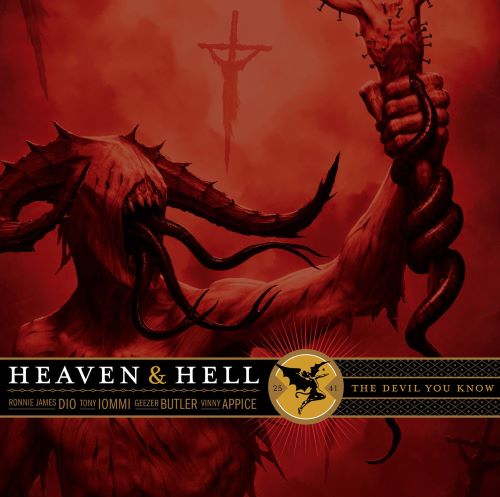
Heaven & Hell – The Devil You Know
Released April 27, 2009 via Rhino Records
The story of how Dio-led Black Sabbath got together one last time is pretty straighforward. In 2007 a greatest hits compilation of the Dio-Sabbath albums was released. Tony Iommi did not have a wealth of usable material from these albums in the vault, so he convened with the other members to record a few new songs for the comp.
This led to touring and rather quickly morphed into recording a new studio album. The only roadblock present was one sprung by her grace Sharon Osbourne – this band could not use the name Black Sabbath, as Camp Osbourne had secured full control of Sabbath’s rights from Iommi several years prior. This led Sharon to release a flimsy PR statement declaring that there was “only one Black Sabbath,” even though anyone with even a passing knowledge of heavy metal is familiar with the several Ozzy-less versions of the band. At any rate, Iommi, Dio, Geezer Butler and Vinny Appice chose to rechristen themselves Heaven & Hell in order to tour and record. It was Black Sabbath in all but name, and many record stores even filed the release under Black Sabbath on the shelf.
The album features 10 songs with a 54:01 runtime. There were some digital editions with bonus tracks, these were live cuts and I don’t know of any studio material that was left on the cutting room floor.
Atom And Evil
The opener keeps a slow pace in fitting with the doom aspect of Sabbath’s music. Dio gets to shine on the verses while Iommi opens up the riffing in the chorus and solo break. While not outright headbanging, it’s honestly a great listening experience with the more droning tempo.
And the theme here is very deep, interwoven and well done. Atom And Evil is clearly a play on the Adam and Eve story and the song explores the concept of someone finding forbidden knowledge, just as in the creation story. In this case the knowledge is that of nuclear weapons.
And also of note – this isn’t the first time someone used this song title to express the same sentiments. In 1947, the gospel act Golden Gate Quartet released a single with the same title and theme. Rather different songs, but same idea. Grade: A+
Fear
This one gets going with a fair bit of power and has one hell of a doom riff running through it. The song is simply about being afraid of the dark. This one is actually more about the reality of nyctophobia, which is a feature of prehistoric times when light sources at night were quite scarce and a fear of the dark was perfectly rational. It has lingered with humans ever since and now we have this great song about it. Grade: A
Bible Black
Up next was the advance single from the album. This one builds from a softer intro into a full-on vintage Iommi pounder of a riff. The song is about a guy who becomes possessed by a book of dark knowledge. It’s easy to see why they picked this as the single – this song is full and rich and hits all the right notes. Grade: A+
Double The Pain
This one comes out at a more uptempo, rocking pace. The premise here is of someone who isn’t happy unless they’re miserable, so “double the pain” and make them euphoric. Interesting concept, but honestly I can’t help but feel like I’m listening to a heavy metal commercial jingle for Doublemint gum (that stuff still around?). A good song but maybe just a bit off. Grade: B-
Rock And Roll Angel
This one moves in a straight line with a simple yet effective Iommi riff. This was first called Rock and Roll Jesus, but then Kid Rock released something with that name so this one got changed up. It’s a nice song that’s far from the standout of the album but it’s not bad by any stretch. Grade: B-
The Turn Of The Screw
A song with a fairly upbeat rhythm to it, even Iommi’s riffs have a bit of lift to them on here. A bit juxtaposed with the subject matter as this is about using people up and discarding them. Another song that doesn’t leap out of the speaker but still offers up something worth listening to. Grade: B
Eating The Cannibals
An outright speed song here, this one picks up the tempo and bashes out from start to end. There are even a few melodic rock runs from Iommi over the top of this one, not something you hear from him every day. The theme here is one of violence and also a sort of twist on the “eat the rich” concept. I don’t know that it entirely comes off but the song works just the same. Grade: B+
Follow The Tears
Another more standard Dio doom offering with a few keyboards up front to help differentiate things a bit. It’s a dark tale of how human generosity can be self-serving and ultimately a trap. Another song that’s fine but doesn’t quite go over the hump. Grade: C+
Neverwhere
One more fast and fairly upbeat and tempo track as we wind to album’s end. It’s one of Dio’s fantasy tales though this one is really dark, about someone giving in to the temptation of witchcraft and the like. Pretty good stuff here. Grade: B
Breaking Into Heaven
The final song is a more plodding doom track with the vintage Iommi guitar work. This one’s about the rebel angels who left Heaven with Satan, now they are plotting to return to Heaven and they aren’t going to ask politely to get back in. Not a bad way to close out the album and the Dio era of Black Sabbath. Grade: B+
The Devil You Know was hotly anticipated and would see a rush of success upon release. It charted all over the world, though in fairness many of the chart positions were modest. In the US it did very well, landing at number 8. This would match Master Of Reality for best US chart position of any Black Sabbath album, though a few years down the line the original version of the band would land the number 1 spot with the band’s final album 13.
While the stage was set for Heaven & Hell to take off and run, this chapter would sadly close after less than 50 shows. Ronnie James Dio was diagnosed with stomach cancer and died in May of 2010. For a group who had formed and split up twice over infighting but had come together older and wiser for this last run, it was a tragic way for everything to have to end. The end of Heaven & Hell left Tony and Geezer available to work with Ozzy as Black Sabbath one final time, a run that concluded in 2017.
Today’s album does have a mixed reception. Some people ate up anything that Dio Sabbath released, I am generally among that number. Others didn’t find much worthwhile in the album, longing more for the prior classic albums of the group.
For me this is a solid effort. It has a few standout cuts that show up at the beginning of the record, then the remainder offers up secondary tracks that are still quality and a bit above the “filler” line. It’s a good listening experience front to back, nothing on here sticks out as not fitting.
Album Grade: B+
This last chapter of work between Dio and Iommi blessed us with another round of their somewhat unique blend of doom and high fantasy metal. It is a Black Sabbath album in all but name, a policy enacted by her benevolent grace Sharon Osbourne. But there is no quashing the legacy that “Dio Sabbath” were able to forge, and The Devil You Know serves as a fitting conclusion to that legacy. It’s also the final testament of bona fide heavy metal god Ronnie James Dio.
This week’s song pick goes back to 2004 and was the opening track from Lamb Of God’s fourth studio album Ashes Of The Wake. The song was the opening track and was also the “feature” song from the album, though it doesn’t seem to have been “officially” recognized as a single. There is a promo CD single around so it did get a standalone release but not terribly widespread.
This was a huge step for Lamb Of God. The band were a part of what was termed the “New Wave of American Heavy Metal” movement alongside bands like Shadows Fall, God Forbid and Killswitch Engage. While those other bands would continue to ply their trades on the metal-centric record labels like Nuclear Blast and Century Media, Lamb Of God had struck a major label deal with Epic Records. It was a huge leap for a group that was working day jobs even through the release of their acclaimed prior album As The Palaces Burn.
As a quick note – the term New Wave of American Heavy Metal is not nearly as developed in a scholarly fashion as the much more familiar New Wave of British Heavy Metal. Thoughts and writings about the American scene are all over the place and can encompass bands from as far back as the 1990’s. But it was commonly used in the early 2000’s for this group of bands.
While Lamb Of God were wrapped up with a newer scene term, the basis of their sound was groove metal. It was a noise struck up by thrash acts like Overkill and Exhorder and made popular by Pantera. Lamb Of God released this album awhile after the bitter dissolution of Pantera and just months before the murder of Dimebag Darrell Abbot. It’s not specifically important to know when discussing today’s song, but it does provide background on Lamb Of God’s ascent during this time.
Laid To Rest is an impossibly brutal song in both music and theme. The core of the song is built around guitarist Mark Morton’s absolutely monstrous riffing. According to this 2020 interview with Louder Sound, Morton worked to incorporate more melodic guitar passages to work in contrast with singer Randy Blythe’s harsh vocals. It’s quite the run that Morton makes through this song on six strings and this new focus on working with guitars as Morton did would lead to a new golden age for Lamb Of God.
The theme of Laid To Rest is a bit buried in vague terms, which was a deliberate act by Morton, who also wrote the lyrics. In the same interview cited above, Morton discussed that the song was about personal issues he was enduring at the time. He covered the specifics of his own issues to dress the song up a bit in a guise that would fit the rest of the album’s general theme, which was taking aim at the Iraq War.
Laid To Rest honesty sounds like a breakup song. It’s not just any kind of breakup, but the harsh, dreadful kind that eats away at your core. Screaming out “destroy yourself – see who gives a fuck” might not be the most healthy way to get over a deep emotional trauma, but hey it works so why not. And while I obviously can’t speculate what Mark Morton’s issues were at the time, I would have to guess that they were along the lines of relationships, but again I don’t know. While very brutal, it can be a cathartic release from any sort of angst or trouble.
But Laid To Rest can also be taken to fit in the context of war – this song could be about someone who was killed and their remaining spirit looking to see their killer handled. There was certainly a lot of aggression and atrocity in the Iraq War and this could be a tragic tale from someone unjustly killed there.
The music video does not offer any more clarity as to meaning – instead, it features the band playing in an empty warehouse of some sort, which was a mandatory shooting location for metal videos in the early 2000’s. Interspersed is footage of a guy running from another guy wearing a red hoodie. At the end of the video, the chaser catches the chasee but then the guy being pursued winds up with the hoodie. The off-screen confrontation could have been a violent one, or perhaps the guy in the red hoodie was simply chasing the other guy to try and sell the hoodie to him. We’ll never know.
For Lamb Of God, Laid To Rest opened the band to a new, wider audience and has become the band’s signature anthem. Ashes Of The Wake would be certified gold in the US and Laid To Rest is the band’s most-played song live. There is stiff competition for that spot as the band’s anthem, as songs like Redneck and Walk With Me In Hell are also up there in popularity, but at the end of the day it appears that Laid To Rest wins that overall battle.
This was all a huge deal for Lamb Of God as they rose out of the independent metal scene and became players on the upper end of the metal market. They became the new kings of groove metal just as the prior occupant of the throne went away. It’s been a monstrous run and it all kicked off with some guitar work and the use of the word fuck.
Questions, comments or concerns? Use the comment form below or head to my contact page.
When you have 22 albums in the course of a music career, you have to start somewhere with number 1. For German metal titans Grave Digger, that first album came in the hallowed metal year of 1984.
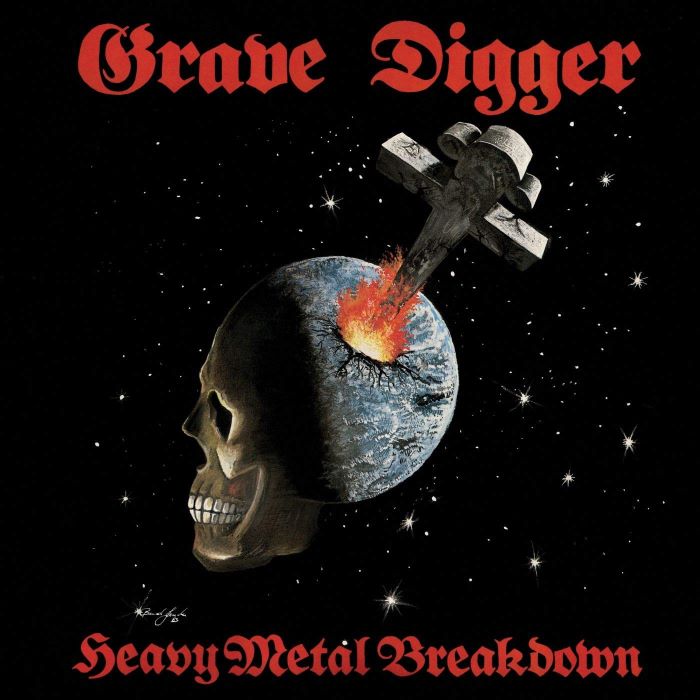
Grave Digger – Heavy Metal Breakdown
Released April 7, 1984 via Noise Records (European release)
Grave Digger formed in 1980 and spent a few years on the live circuit before stepping into recorded music. The band was comprised of Chris Boltendahl on vocals, Peter Masson on guitar, Willi Lackman on bass and Albert Eckardt on drums. Boltendahl remains as the lone original member of the band and even by 1984 the group had replaced a few members.
All music on Heavy Metal Breakdown is credited to Grave Digger as a collective, while all lyrics were credited to Boltendahl. (with two exceptions noted below) This was due to legal reasons, as the band only had the money to register one person with Germany’s publishing rights group. The album was produced by Grave Digger and Karl-Ulrich Walterbach, the head of Noise Records. Harris Johns engineered the album, he would also produce many of the essential Noise Records releases.
This album exists in several versions with different tracklists and sequencing. I will be covering the original European release as that’s the LP I have in my collection. The US version was released a bit later in the year and has an extra song and also omits a cover song. Several reissues of this album also exists with plenty of bonus tracks, but again I’m sticking with the original today.
Headbanging Man
The opener is a barn-burning speed metal outburst. Boltendahl establishes his trademark snarl on vocals right off the bat while the song bashes through in heavy as hell fashion. No deeper meaning to dig into here – this song is an ode to the now-established metalhead, the headbanging man. The song is quite simple but it’s also very nice and gets the ball rolling well. Grade: A-
Heavy Metal Breakdown
The title track does not veer too far off of the tone set in the opener. It’s another burst of fury paying homage to the headbanger. It’s easy to laugh at a lyric like “we come to shake your hands and legs as fast as we can do,” but the song rises above any simplicity and offers up a heavy metal triumph. Even in a career spanning 22 albums, this one stands out as the band’s signature song. Grade: A+
Back From The War
This one starts off with a very cool, ominous intro and first verse passage before kicking into a more thrashy passage that remains through the rest of the song. The song recounts the horrors of war, a tried and true subject within metal. It also has a very long fade-out at the end, which has next to nothing to do with anything, I just wanted to bring it up. Grade: B+
Yesterday
Grave Digger decided to switch things up here and offer up something that could be considered a ballad. The song writing here is credited to Beate Marquardt, who I am totally unfamiliar with. It’s not an outright, sap on sap 80’s ballad but it’s a bit of a curveball for the record. It has a few quiet passages in the beginning and middle, but does thrash it up a little bit for the song’s very few lyrics. This one is fine to listen to but also doesn’t really move me all that much. Grade: C
We Wanna Rock You
We are back to the main point of the album, which is headbanging. This is another meat and potatoes metal song about heavy metal. Sure it’s basic, but this is the kind of stuff kids lived for in the 1980’s. Another finely done slab of headbanging. Grade: A
Legion Of The Lost
There’s an acoustic intro here that transitions into a mournful first verse passage, then the speed metal comes back a few minutes in and takes us to the end. This song really goes for the throat and slams the heavy metal home. Grade: A
Tyrant
In shocking news, it’s another crisp headbanging track. Boltendahl gets some screams going here and this one is heavy and also showcasing dynamics. Groovy guitar solo in this one, too. Grade: A-
2000 Light Years From Home
On the original version of the album we get this cover of the 1967 Rolling Stones song. This cover does not resemble the original song in any way, shape or form – rather than implementing the psychedelia of the Stones song, Grave Digger pound their way through this one in the same fashion they’ve done the rest of this album.
The production here is pretty rough, this sounds like it was taken from a different session than the other songs. It is a decently done cover song and it’s interesting how Grave Digger twisted the song up to fit their sound, but this is really more of a trivia piece than anything. Grade: C+
Heart Attack
The closer gets going right away and goes all out, it’s an extra bit of speed on top and this is honestly an outright thrash song. It’s just the right kick in the ass to end the album with, even if the lyrics themselves have absolutely nothing to do with a heart attack. Grade: B+
Heavy Metal Breakdown was a loud and noisy debut for Grave Digger. Like most Noise Records albums, this one did not chart on release. Like many of the Noise releases, this one would spread around the tape traders and heavy metal parking lots of the day as Grave Digger slowly built their name. Separately, Grave Digger didn’t seem to chart at all until 2010, though I can’t totally verify that information.
And it would be quite awhile for Grave Digger to get their notoriety – the band scratched through the rest of the 80’s without any real breakthrough. They even shortened their name to Digger and tried to emulate the sounds of the day for a bit. The band then went on hiatus for several years, returning in the early 90’s with a sound somewhere between speed and power metal that Grave Digger would then run with for the ensuing decades.
It was quite the long road for Grave Digger to get where they were going, but it started in grand fashion with the release of this killer debut album. The production was a tad rough around the edges but the album is still perfectly listenable, and there is no doubt this a heavy metal loving band.
Album Grade: A-
We have plenty of esteemed and celebrated heavy metal albums from 1984, and while Grave Digger never earned the profile of the likes of Maiden or Priest, this band still offered up a fine slab of metal to headbang along with. Germany is one of heavy metal’s most prolific nations and Grave Digger are without a doubt a highlight of that country’s pantheon.
To see the details of my grading system, head here.
For questions, comments or concerns, use the comment form below or head to my contact page.
Let’s kick off a short run through songs from “The 4’s” and start with the feature year of my site this year, 1984. In shocking news, it’s a song from my favorite band and also just happens to be my favorite song from them.
1984 would be Iron Maiden’s banner year – with the release of Powerslave and the subsequent world tour that went on forever, Maiden were at the forefront of heavy metal during its boom period. The album would go on to pop platinum and gold awards around the world, and todays’ song hit number 11 on the UK charts as the lead single from the album.
And yes, before I go on, I have discussed this song a bit previously as part of the singles series I did. Oh well, gonna do it again.
2 Minutes To Midnight is a fast, hard hitting song that keeps it basic. It’s meat and potatoes metal, which Maiden execute well despite being known for their more epic fare. We do get a soaring chorus and a nice guitar solo section, but this tune written by Adrian Smith and Bruce Dickinson does generally plunge straight ahead.
The theme here is how the powers that be perpetuate a state of war to keep raking in the money from selling instruments of war. It was a common and corrupt practice through the 1980’s and hasn’t really gone away today. The rank and file people suffer while corporations and politicians feed at the trough, it’s a well-worn theme that hasn’t gotten any better over the past 40 years.
The song’s title is a reference to the Doomsday Clock, a symbolic device issued by a group of scientists to gauge how close civilization is to a global catastrophe. This classicly meant nuclear war but can also refer to other wild disasters and non-nuclear war threats. 2 minutes was the closest the clock had ever been to midnight, this was set in 1953 during the build-up of the Cold War. Iron Maiden used it as a symbol of world destruction to set with their song about warmongering, a fair pairing if there ever was one.
The only issue is that the Doomsday Clock has now moved closer than 2 minutes – in 2023 it was set to 90 seconds to midnight, and remains there as of mid-2024. We are setting records, baby!
2 Minutes To Midnight has been one of Maiden’s more recognizable tracks over the years. It’s not quite at the same level as stuff like The Trooper or Hallowed Be Thy Name but the song does qualify as a “greatest hit.” It has been played nearly 1,400 times live, good for 6th-most in the Maiden live pantheon.
The song’s main riff has been the subject of some funny speculation. The riff is a very generic one that’s easy to play and also can be found all throughout rock history. There’s no telling where it actually first came from – my rough guess is Ritchie Blackmore but I’m honestly not sure about that, it could go back even farther. But some astute listeners picked up on a 1980 song by British group White Spirit, fittingly called Midnight Chaser, with a guitar run that sounds suspiciously familiar to this song. I’ll post the song below so everyone can do their own comparisons if they wish.
In and of itself this isn’t a huge deal – one, this riff is very stock and I would hesitate to think it could even be copyrighted or whatever. Two, Iron Maiden have “borrowed” from more obscure British acts from time to time, usually with proper settlements in place (depending on who you ask).
But there is a hilarious coincidence here, and that revolves around White Spirit’s guitar player. He was none other than Janick Gers. Six years after the release of the Iron Maiden song, Janick would find himself in Iron Maiden, replacing Adrian Smith and remaining with the band even when Smith returned in 1999. So maybe, not really but it’s funny to say anyway, maybe Iron Maiden ripped off their future guitar player’s super generic riff. I don’t know.
As I said above, this is my favorite Iron Maiden song. Yes, I do mean of all their catalog. People do sometimes look at me weird when I tell them that – this one is usually held in high regard but not on the same degree as other songs. And some fans do feel it’s too basic. But it all struck the right chords with me, and I’ve always been a fan of “brink of nuclear disaster” kind of stuff so this checked that box. It was also featured in my favorite video game of all time, the often-mentioned Grand Theft Auto: Vice City, with how much I’ve played it I’ve easily heard this Maiden song more times than any other.
That’s about all I have to go over today. As part of my 1984 celebration and my perpetual Iron Maiden celebration, I will be giving Powerslave a second look and a proper grading on its 40th anniversary date of September 3rd. The day before will be the normal Album of the Week slot and I’ll have a Maiden double feature then – another Maiden album released on September 3rd will get a reassessment and grading on the 2nd. But we have two months to worry about all of that.
It’s time now to turn attention to this year and one of the more anticipated releases from a few months back. It had been a very long time since Bruce Dickinson had dropped a solo album and buzz was high for it. Did it deliver?
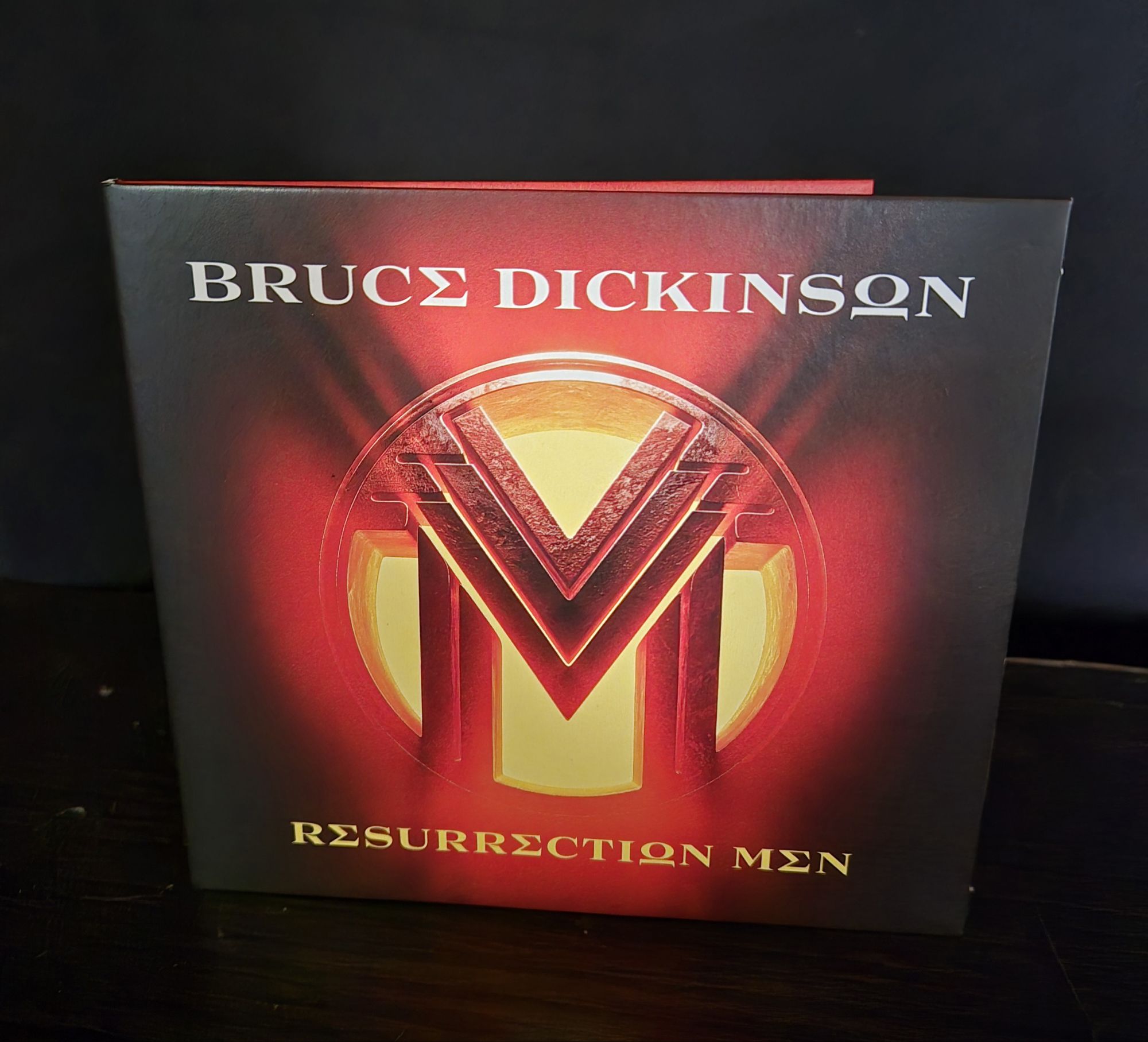
Bruce Dickinson – The Mandrake Project
Released March 1, 2024 via BMG Records
This marked Bruce’s first solo album since 2005’s excellent Tyranny Of Souls. The planning for this record dates back to at least 2015, when Bruce and Roy Z recorded an early version of a song that wound up on an Iron Maiden album and then repurposed for inclusion here.
Bruce was joined by Roy Z, who produced and also played guitar and bass. Dave Moreno was the drummer and Maestro Mistheria provided keyboards. A few guests dropped by for cameos, including Gus G on a solo for Eternity Has Failed.
The Mandrake Project is a concept record, though the full story is not really available in the songs. A series of graphic novels are being released that detail the story. There isn’t a ton to go on other than someone has learned the secret to raising the dead. There has been speculation that not all songs on the album tie into the story and I personally can’t make much sense of it so I won’t drag the point out further.
Today we have 10 songs with a 58:44 runtime. There are several editions of the album around but the differences revolve around covers and booklets, the music is the same across formats and versions.
Afterglow Of Ragnarok
The album opens with the lead single and thus the song we’re most familiar with. It’s a pretty big track with a fat main riff and the song shifts up its focus a few times throughout. Some contrasting light and dark stuff going on.
It is really nice to hear Bruce sing over a Roy Z riff again, it does stand out in contrast to Bruce’s main gig. This song is good but it is also very all over the place. The lyrical fare is dense and hard to get into without knowing the full story and the song jumps around a bit too much for my liking. It’s one I don’t mind hearing but it’s a bit jumpy for me. Grade: C+
Many Doors To Hell
Up next is a pretty bright and powerful tune. It’s a more standard offering than the prior track and is a signature Roy Z rocker. Here Bruce opines about a vampire who actually wishes to feel what’s it like to be human again. It’s a pretty cool song. Grade: B+
Rain On The Graves
This one kicks off with a pretty sly and playful riff, which accents the premise that someone is meeting the devil in a graveyard. The chorus is more straight-up and powerful so it creates a nice contrast. An awesome song and the standout track of the record. Grade: A
Resurrection Men
It’s now on to a song with a spaghetti western motif to it. The intro riff establishes the unconventional theme, then the song moves into a more typical presentation. It’s a very interesting presentation through the first part of the song, then there is a weird breakdown kind of section that is very jarring on first listen. I was able to get more into it on later listens but it really threw me off at first. Grade: B+
Finger In The Wounds
This one starts up ballad-like but gains a lot of power into the first chorus. Bruce said in an interview with Apple Music that this one is about the stigmata of Christ. There is also a Roy Z “off in la-la land” interlude here which, honestly, fits the song very well. Grade: B
Eternity Has Failed
Now we’re on to a song that was in process a decade ago, then Steve Harris heard it and the song got included on Iron Maiden’s The Book Of Souls album. That song was called If Eternity Should Fail, so Bruce and Roy Z reworked some lyrics to freshen things up for the song’s intended purpose here.
For me I can’t separate the two entities. It’s tough to listen to this one in the shadow of the Maiden track. I feel like the Maiden song is better sounding and better executed. I don’t think this is awful, but it really does pale knowing what else is out there, this doesn’t have the same feel. Grade: C-
Mistress Of Mercy
This is a pretty standard, fast-paced rocker. Bruce said this one is about music and how it is a mistress, in the sense of a dominatrix. I don’t get it but the song is still pretty fun to hear. Grade: B-
Face In The Mirror
Now we get a ballad and it’s a very somber one about both addicts and the people who judge addicts. I’d say it’s pretty well done, it is very much on rails and the same all the way through and might get a bit dull toward the end, but I can appreciate the song’s concept and overall presentation. Grade: B-
Shadow Of The Gods
This one goes way back to Bruce’s prior solo album Tyranny Of Souls. It was written with intent to use for the Three Tremors project, which originally was to include Rob Halford and Ronnie James Dio alongside Bruce. There were attempts to insert Geoff Tate in place of Dio and the whole story behind it is a mess that is another story for another time. In the end this never got off the ground, so Bruce included the song here.
The song opens as a ballad but kicks into a heavy mother later on. It’s fairly evident where the part Halford was supposed to sing is at. But the song is very good and offers up plenty of worth even without the intended collaborators. Grade: A-
Sonata (Immortal Beloved)
The closing track is a ten minute ballad that I guess they forgot to put on Senjutsu. In seriousness, the song is the oldest track on the album and was something Roy Z put together based on the 1994 film Immortal Beloved, which covers an aspect of Ludwig van Beethoven’s life.
This one is more ballad-like with a fair bit of atmosphere and layering behind it. While the song has been around forever, Bruce winged the lyrics off the cuff. The song is interesting and after I’ve played it several times I find more to like about it then not. Maybe it could use a bit in the way of variety in the arrangement, but it’s still a nice song to hear. Grade: B
The Mandrake Project was a hotly anticipated release after 19 years without a Bruce Dickinson solo album. It charted number one in three countries and top ten in many others. It had a soft US performance, landing at 176 on the Billboard 200 but claiming spots on the Independent Album and Hard Rock Album charts. It did land at number three in the UK, where the album had stiff competition from Rod Stewart as well as Liam Gallagher. It’s too early for any sales or certification info.
This album was a challenge for me in the beginning. It isn’t easy and accessible right off the bat, there are some layers and more dense portions. I mean, I have no real clue what The Chemical Wedding is about and I hail it as a masterpiece, but this one didn’t hit with that kind of immediacy. The album’s reception was also impacted a week later by the Judas Priest album Invincible Shield, which is widely hailed as an instant classic and drew a lot of attention away from this one.
But over time I gave this one more spins and a fair few of my concerns were lifted. I could appreciate more of what was going on and some stuff that put me off at first, like Resurrection Men, I came around on. This album isn’t a masterpiece or a career record but it still offers up plenty to enjoy.
Album Grade: B
In the end I can appreciate what is on offer here. I sort of assume Bruce will work on another solo record someday, though I also believe his main gig will be taking up his time in the foreseeable future. But The Mandrake Project is a serviceable album to end a very long solo layoff.
I was talking with a buddy awhile back about canceled shows. It’s the hidden scourge of attending concerts – you show up to the venue ready to have a good time and someone’s back is out or they have the flu or a new divorce to navigate, and they aren’t playing that night. Usually these things come around in time enough to absorb, but there are times people have found out in front of the venue or even in their seats.
I’ve never personally had the worse scenario happen – I haven’t even traveled some distance only to find last-minute that the show is off. A few friends of mine have been in that predicament before, I recall many years ago texting a good friend to let him know that the band he was driving up to Kansas City to see was buried under snow in Denver. And my friend was just outside of KC, a three hour drive from here, when he found out.
But I have had a few cancellations in various circumstances. I figured I’d run through them today just for something different to do.
Megadeth
The first one is also the most recent one. Megadeth planned a huge tour with Lamb Of God, In Flames and Trivium and included little ol’ Springfield on the original routing. Well, this was early 2020 when the shows were announced, and we all know that COVID hit not long after. The tour was pushed to 2021 and Springfield was dropped entirely.
I wasn’t surprised, the show was being held in our 10,000 seat college arena and I was very skeptical that Megadeth was going to even come close to filling that. And they didn’t – tickets weren’t moving much at all, so they quietly threw our show into the bin when re-routing the tour.
And one person really made out like a bandit over it – me. I excitedly hopped on to buy tickets as soon as I could dig up a pre-sale code and I used the seat map to buy two awesome seats right on the aisle. Only problem was the seat map was oriented weird and I bought seats in the upper most row of the section instead of closest to the stage. I bought the two tickets I intended to buy so I was on the hook for four tickets at $125 a pop. When the show canceled and I got all my money back I felt a lot less stupid, I wasn’t gonna have to try and sell expensive tickets to a show people weren’t lining up to attend.
Oh, and that wasn’t all – I had bought the two closer seats under some kind of package deal involving Lamb Of God. A few months later when they released a new album, that record showed up to my doorstep, signed by the band. I can only assume that was part of the deal I bought as I didn’t order a signed record on my own. Or maybe it was a quiet kind of make-good thing after the tour got postponed and later canned. Either way, thanks.
Deicide
This goes back to 2004 and doesn’t involve a whole show cancellation but rather just one band. The tour package was Superjoint Ritual, the post-Pantera outfit of Phil Anselmo. Deicide were opening the show along with someone else. I wasn’t ever into Superjoint but I was happy for the chance to see Deicide, I do love my old school death metal.
Well, Deicide did what they often did in those years and didn’t show. I got to the front of the venue and there was a sign saying that they canceled. I hadn’t bought a ticket so I turned around and left. Deicide would jettison their troublesome members not long after and go on a run of more stability. This one didn’t really bother me too much, Deicide canceling shows was not out of the blue back then and they were the only reason I was going so it was a free evening for me.
Merle Haggard
This next one goes back to early 2016 and, if you know Merle’s life story at all, you already know the tragic reason for this one.
Merle had booked a tour with Willie Nelson, with Jamey Johnson opening. You talk about a chance to see two legends under one roof, this was it on a silver platter. And Jamey was no slouch either, he was running high around this time.
Well, sadly Merle wouldn’t make it. He came down with pneumonia and wasn’t able to shake it. He canceled his participation on the tour fairly early, and then died on April 6. This was only two days before the show was set to hit my town.
Willie and Jamey went on with their sets, both paying homage to Merle. It was a fantastic show but it’s sad that Merle passed away and couldn’t be a part of it as well. But it’s one cancellation I’d have a hard time complaining about. Totally understandable.
Slayer
These last two are inter-related. At some point in 2004, Slayer announced a tour for later in the year that was to include our humble little village. I had never seen Slayer live so I was very much looking forward to it.
Well, fast forward 20 years, and I’ve never seen Slayer live.
This one was pretty simple – just as the tour started, Tom Araya was having some kind of issues, I think with his throat but I’m not sure. The band postponed the first few shows, of which ours was one. A bit later they announced the rescheduled dates, and our show was not among the new dates. No official word was given but the rumor mill indicated that soft ticket sales were the reason.
I was disappointed by this one but not much I can really do about it. The saddest part of all is that it might have played a role in a gig we never got.
Cradle Of Filth
This final one is not an officially canceled gig. Nothing was ever booked and no tickets were sold. And all of the info I’m about to give is all second-hand information that I can’t confirm, and also it was 20 years ago so my own memory might not be the best on it all.
But the premise was this – Cradle Of Filth were looking to book US shows and somehow got in touch with a booker here. The band’s fee was huge, which is understandable as they were the most successful extreme metal band going back then. But I guess our booker was willing to play ball and everyone exchanged dates. The kink in the hose that killed the show was this – the only available date was the same night as the Slayer gig.
So we didn’t get a Cradle Of Filth show because Slayer were running town the same night. That much is understandable, as the crossover in audiences is pretty big. But, as we’ve just seen above, that Slayer gig wound up canceled. So that’s a possible double bummer, if this story is true.
I really don’t know if CoF were actually close to playing here. It’s possible that there was a low-level inquiry that didn’t pan out and then someone in the scene added a bunch of layers to the story that weren’t really there. Or it’s possible that it is all true – it’s one of life’s dumb series of coincidences that is just strange and stupid enough to happen. I kind of don’t buy it because CoF’s tour routing for the fall of ’04 doesn’t line up with Slayer’s that much but something still could have been brewing.
That about does it for the canceled shows, at least the ones I can recall. I consider myself fortunate – I never had to drive a great distance to find a show canceled at the last minute. But I’m sure many of you who read here have your own canceled gig stories, feel free to share them below. And may any future gigs go on without a hitch.
For questions, comments or concerns, either use the comment form below or head to my contact page.