Last week David Coverdale made the announcement that many of us knew was coming – he has retired from music. He posted a short video with the announcement as well as a remixed version of the song Fare Thee Well, from Whitesnake’s 2011 album Forevermore.
David did not offer up a long-winded list of reasons for stepping away, nor did he need to. He has been visited with several health issues over the years which prevented Whitesnake from offering a proper farewell tour. The band’s final show wound up being a performance at France’s Hellfest in 2022, a show that featured a guest shot from former guitarist Steve Vai on the final song.
The writing was on the wall for this retirement for several years now, but does cap the end of a five decade career in rock. Coverdale played in UK bands for a few years before landing with Deep Purple for three albums in the mid-70’s. He would then embark on a solo venture after Purple disbanded. His solo efforts would morph into the band Whitesnake, which became Coverdale’s main vehicle for the remainder of his career. He also had a well-received collaboration with Jimmy Page in the early ’90’s.
I personally came into Whitesnake in their rising heyday in the mid-80’s. Slide It In had stuff in rotation in my area, which had a prominent rock station. Then in 1987 the self-titled album blew up and Whitesnake was off to the races. I would then backtrack to the earlier blues-based Whitesnake and the Deep Purple albums. I never got to see them live but I’ve been along for the ride with the albums over the years and I have really enjoyed the 2000’s Whitesnake output.
We do often joke about musician retirements because of, well, the mountain of evidence that retirements aren’t often worth the paper they’re printed on. But in David’s case this one is likely rock solid. He is sadly not up to the rigors of performing his music at 74 years old and with a host of health issues he has faced over the years. It is unfortunate that Whitesnake didn’t get to go out with a final tour or even a planned final show, but Coverdale still gets to bow out and enjoy his years. He has remained active with Whitesnake’s back catalog reissues so I’m sure more is coming from that and hopefully the Covedale-Page album gets its much-needed revisit at some point.
The curtain call has arrived for David Coverdale, but there is a half-century’s worth of great rock music to look back on and celebrate. And with any luck, David will be in a position to look back along with us and share more insights on his illustrious career.
And now we’re on to 1987. This was a massive year at the top end of rock. It’s pretty crazy – the albums Hysteria, Appetite For Destruction and The Joshua Tree sold a combined 75 million copies worldwide. Two of those albums didn’t really gain steam until a year later, but that’s a different story.
Things were moving on musically in the later 1980’s. A lot of bands seemed to be chasing the brass ring and not quite grabbing it. Acts that had vital, fresh albums a few years back were now stagnating. There’s still plenty of good music to be found, but in retrospect, the signs of the coming nuclear assault of 1991 were already there by ’87.
But there’s no need for massive analysis of everything. All I really need to do is pick five songs I really like from 1987. Not necessarily my five definitive favorites, simply five of my favorites. This is a fast and loose exercise so let’s get into it.
Mötley Crüe – Wild Side
The Crüe got back to form after a bit of a letdown a few years prior. Wild Side is a heavy, pounding track that outlines the sleazier part of life. Not everything was fast women and good times in the ’80’s, there was a seedy side to things and Wild Side captured the grit and grime of the streets at night. This is one of my very favorite Crüe songs.
Guns N’ Roses – Welcome To The Jungle
1987 was the year GnR were thrust into the wider world. It would take them a bit to break, but break they did, to the tune of selling 30 million copies of Appetite For Destruction. The tune that really gets me going is the album’s opening track. It is a monster song, and much like the one from their bitter rivals above, relays how the big, bad city can swallow you whole. This threw a whole new level of intensity into the rock scene and made titans out of Guns N’ Roses.
Whitesnake – Still Of The Night
David Coverdale was not to be left out of the big winnings of 1987. Gambling his whole fortune on the album he’d just crafted, he would be paid back in spades as his album sold 10 million copies. While honestly just a song about a romp between the sheets, this is laid out with great care, featuring movements and interludes and the dynamite guitar of John Sykes. This song could be considered Whitesnake’s greatest triumph, though that’s not a question I’m here to discuss today.
U2 – Where The Streets Have No Name
U2 were big winners from 1987, bringing in a haul from their 25 million plus selling The Joshua Tree record. I’m not the band’s biggest fan but there’s no doubt that the album is a piece of work and that this song is absolutely stunning. This is simply a massive rock song packed with emotion and imagery that is too vivid to escape.
Dio – All The Fools Sailed Away
By 1987, Ronnie James Dio was operating without his wunderkid guitarist Vivian Campbell, who departed the band in acrimonious fashion. Though Dio’s “golden era” would be over, he was still capable of striking gold, as he did on this magnificent track. It’s a splendid quasi-ballad that stands alongside his prime cuts as one of his best works.
That wraps it up for 1987. Just two more years of the golden 1980’s to go, then things get really, really different – both in music and in my tastes.
It’s time this week for a key album from 1984, and one with a whopper of a story to accompany it.
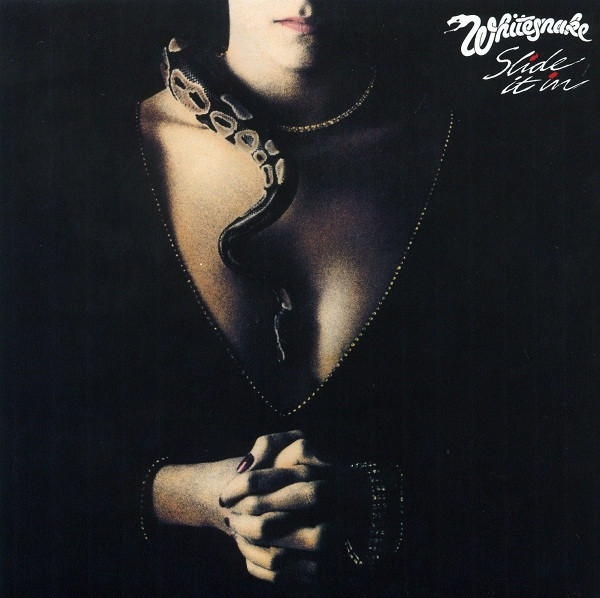
Whitesnake – Slide It In
Released January 1984 AND April 1984
So in 1983, Whitesnake set out to record this new album in Germany. The band was David Coverdale on vocals, guitarists Mel Galley and Mick Moody, bassist Colin Hodgkinson, drummer Cozy Powell and keyboard wizard Jon Lord. Eddie Kramer was in for production, for a moment anyway. The band were not satisfied with his work so he was replaced with Martin Birch, who’d helmed the Whitesnake catalog prior to this. It marked Birch’s last album production not related to Iron Maiden. The album was recorded and released in January 1984 after some delays.
Sounds fairly simple, right? It was until it wasn’t. The first issue was that of the album’s production. The music press was not happy with the album’s flat sound. Whitesnake were contracted in the US with Geffen Records, who also weren’t happy with the production. Geffen commissioned Keith Olsen to remix the album.
But even that wasn’t so simple – David Coverdale was also eyeballing a personnel change. On the advice of label exec John Kalonder, Coverdale began looking for a “guitar hero” type of lead player to further enhance the band’s image. Michael Schenker was approached but was either uninterested or uninteresting, depending on who you ask. Adrian Vandenberg was more interested but he declined, choosing to operate with his own successful outfit instead. Vandenberg would find his way in a few years later.
This led Coverdale to John Sykes, late of Tygers Of Pan Tang and currently with Thin Lizzy. Sykes was agreeable to the Whitesnake gig but also very reluctant to leave Phil Lynott hanging. Sykes made an ask for an absurd amount of money, which Whitesnake surprisingly agreed to. Lynott gave his blessing for Sykes to move on and Coverdale now had his guitar hero. This would shift Whitesnake away from their long-held blues-based sound and into the hair metal era, which was gaining a ton of steam in 1984.
Mick Moody was still on the Whitesnake roster, so Coverdale acted like a complete asshole to Moody, who took the hint and quit the band. Bassist Colin Hodgkinson was also fired, and former pal Neil Murray was brought back in. Sykes and Murray would re-record parts for the US remix of Slide It In.
And today I will be going over the US version of the album, as it’s what I’m familiar with. There are countless versions and re-issues of this available. For simplicity’s sake I’m going to use the old US tracklisting, which won’t match up with most versions found today on streaming. Either way, it’s 10 songs at a bit over 40 minutes.
Slide It In
The title track keeps things very, very simple – driving riff with double entendre lyrics. Honestly the song is so horribly basic that it’s like wearing a beige suit to a middle management conference. But the song also works splendidly, it’s a textbook example of a rocking track from this era. Not a bad way to mark your territory on the Sunset Strip scene. Grade: A+
Slow An’ Easy
Up next is the song Whitesnake would offer as the US single and the song that would help them finally break into the coveted American market. This one has it all – build-up and mood-shifting, with a bit extra behind the guitars and Powell’s drumming to really push it all over. It still has marks of the blues as it was co-written by Moody, but the song functions amazingly well in the ’80’s rock pantheon. It’s exactly the kind of song you’d want to write to get attention. Grade: S
Love Ain’t No Stranger
Whitesnake joined the ballad fray here, but this ballad is on steroids and totally rocks out. It had the rock for the rockers and the more melodic hook and twinge of melancholy for the ballad seekers. The song performed modestly as singles in both the UK and US, but over time it has become a staple of the Whitesnake set. Grade: A+
All Or Nothing
One of many tracks on here that showcase the “old” blues sound coupled with the updated ’80’s rock approach. This one slams right in and makes itself at home, with the organ adding some spice in the mid-section. Grade: A
Gambler
Here we have the sad tale of someone who is stuck “outside” of love, apparently struck by chance to remain loveless. Overall the song is well done, I do think maybe the two versions of the album clash here a little bit between the guitars and keyboards. But it’s a minor gripe. Grade: B+
Guilty Of Love
Now this song sounds totally like an ’80’s track. It keeps a quick pace but keeps a bright enough tone not to be a headbanging track. And yes, Coverdale is totally guilty of love, as we would all find out as the ’80’s wore on. Grade: A-
Hungry For Love
No, we’re not dealing with a concept or prog album by any means here, our themes today are very meat and potatoes for the ’80’s. This one is more of an old school boogie with a bit of sleaze on it. I do wonder if the song might have stood out more without the keyboards, I’d have just let the guitars carry this one. But no matter, still a nice song. Grade: B+
Give Me More Time
This song showcases Whitesnake’s transition perhaps better than any other. It still has some old-school underpinnings but it’s also a total ’80’s rocker too, a very good mark of what Whitesnake was turning into. It’s catchy and rocking and hits all the right notes. Grade: A+
Spit It Out
As we round the bend to the album’s close we get another total rocker absolutely fit for the time. It’s another pretty basic track but it gets the job done and then some. Grade: A-
Standing In The Shadow
The album wraps up with another well done song that highlights Whitesnake’s new approach. It’s a simple and effective mid-paced rocker that keeps the album’s quality high through the whole run. Grade: A
Slide It In would help Whitesnake break the American market – somewhat slowly. The album got to 40 on the Billboard 200 and would eventually earn gold certification in 1986. The original UK version went to 9 there are charted decently across Europe. The band toured behind the record, with members slowly dropping off – Jon Lord would reconvene with Deep Purple, Cozy Powell left over money disputes and Mel Galley was out due to injury.
This left Coverdale along with Murray and Sykes to work on the next record. The album was put together, but Coverdale was under massive financial pressure and was also not getting along with his bandmates, yet again. Murray left voluntarily (I guess) while Sykes was fired in acrimonious circumstances.
The story was far from done though, as Whitesnake’s self-title album would massively dominate airwaves and sales charts. This also floated up Slide It In, which went platinum in 1987, double platinum later and a total of six million copies sold worldwide. This album was the closest musically to the self-titled behemoth so its further success was no surprise.
All of the truckloads of drama aside, Slide It In was a wonderful rock album that stood up fine on its own merits. It has no filler and it combined the contrasting sounds of the early and modern Whitesnake eras very well.
Album Grade: A
I’m sure multiple books could be written about all of the events up to, including and after Slide It In. It’s one of rock’s crazier stories that in the end saw David Coverdale’s gambles pay off. But the album itself is a perfect testament to the rock scene of 1984 and an essential piece for any rock fan’s catalog.
This week’s pick is the album that saw a change in style for a long-running band and a shift that would pay massive dividends. The band was on the verge of ending and instead launched one of rock’s most successful albums in the genre’s commercial peak.
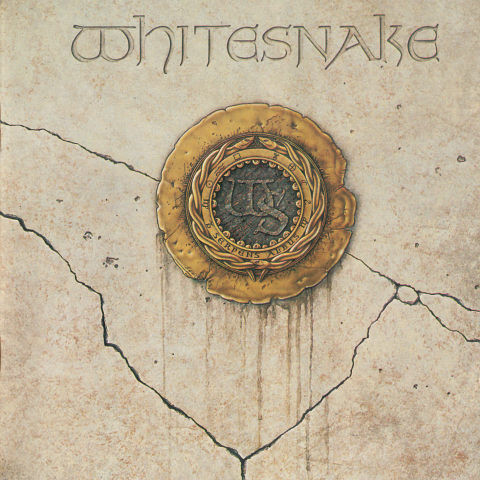
Whitesnake – self-titled
Released March 23, 1987 via EMI/Geffen Records
My Favorite Tracks – Still Of The Night, Crying In The Rain, Here I Go Again
The giant success of this record wouldn’t come without drama and turmoil. David Coverdale had been plunged into depression over Whitesnake’s prior lack of success and personal issues with his band. While guitarist John Sykes helped write the album, Sykes and the rest of the band were out before touring on the white hot record. The group that appeared in the mega-successful videos for this album was not the same group that made the album, save for Coverdale and Adrian Vandenburg’s involvement in recording Here I Go Again.
There are several different versions of this album – it was self-titled in North America and other places, while in Europe and Australia it was called 1987. Japan had yet another name for it and there are different track lists across the disparate versions. For simplicity’s sake I’ll cover the 9 track US version.
Crying In The Rain
The opener marks one of two songs redone from the 1982 Saints And Sinners album, both re-recorded songs would be hits. Originally a blues-based rocker, John Sykes reportedly despised blues music and turned it into a heavy metal riff fest. The lyrics are a depressing look inside Coverdale’s mind through a divorce, dude was down in the dumps a lot apparently. While the premise of crying in the rain seems silly, the song’s riffs and presentation keep it from slipping into parody.
Bad Boys
A standard fare, fast rocker about being a bad boy, a pretty common offering for 80’s rock. It’s a good offering for the “wild in the streets” theme that was ever-present back then.
Still Of The Night
The album’s lead single was a modest chart hit but would serve to generate interest in the album and was a very popular music video. This song is a fantastic composition with John Sykes going full on guitar god and the full album version of the song is a nice series of movements with the violins and build up back to the rocking at the end. The video was the first of three from the album to feature future Coverdale wife Tawney Kitaen, who would become one of music video’s most iconic performers for the videos.
Here I Go Again
The other re-recorded song from Whitesnake’s earlier days and one of the mega hits from this album, this is the most widely-known song from the Whitesnake discography. The song about venturing on one’s own has remained in cultural consciousness enough to be meme material these days. The video was a monster hit and features the late Tawney Kitaen’s most memorable video performance.
The song topped the Billboard Top 100 and was in constant MTV rotation. And yes, the album cut and single version are two different recordings with some differences, I’d personally take the album version.
Give Me All Your Love Tonight
Another single, this one didn’t quite crack the top 40. It’s an uptempo rocker about love, which in hair metal parlance means sex, as I’m sure everyone is aware. The single release is noteworthy as it features a redone guitar solo from Vivian Campbell, marking the only time he contributed music to Whitesnake material.
Is This Love
The album’s other massive hit single originated when Coverdale was trying to write a song for Tina Turner. David Geffen told Coverdale to keep it and here we are, with the track going to number two on the charts. The song couldn’t be any more elementary in its concept but again its presentation is fantastic and it’s one of time’s honored power ballads.
Children Of The Night
It’s another badass rocker about going out and getting in trouble. It’s a track worthy of partying and headbanging to.
Straight For The Heart
Getting toward the end of the album with this rocker about Coverdale going to get his girl. This song definitely jumps the hair metal shark a bit but it’s still a fun time.
Don’t Turn Away
The US album closes with a power ballad that keeps the rock going in full effect. It offers a nice inspirational message that hooking up with David Coverdale will cure whatever ails you.
Whitesnake was a monster success, launching the band from the brink of extinction to the toast of the town. The album would go on to eight US platinum certifications and would peak at number two on the Billboard 200, being blocked from the top spot by monster albums like The Joshua Tree, Whitney and Bad. It was a stunning reversal of fortunes for Coverdale, who was despondent after failing to break through significantly with his prior work. The rising tide of this album would lift other ships, most notably Slide It In, which went from a modest gold certification to multi-platinum.
While the album and singles did very well in traditional markets, Whitesnake’s videos were perhaps the most iconic part of this album cycle. The trio of videos featuring Tawney Kitaen were all over MTV. The band dressed the part of ’80’s rockers for their videos, something Coverdale admits was pandering to fashion. But hey – no arguing with the success of it. You were rockers in the 80’s, might as well go all in.
Whitesnake is an interesting band in that they found success almost all at once, with the self-titled album outshining the modest success that the US release of Slide It In had. The band’s music is a lynchpin of classic rock radio but it’s stuff from these two albums that comprises the entirety of those playlists. The old blues rock albums are well-regarded but also left to be discovered by the active seeker. Albums after the self-titled wouldn’t land quite the same way, though in retrospect 2003’s Good To Be Bad was a critical success and catalyst for a new era of Whitesnake.
But at the end of the day, it is this album that serves as Whitesnake’s defining legacy. The group shot out of a cannon and landed square in the rock/metal prime of the late 80’s and hit on a success not seen by all that many others. Leaving behind the blues-based rock and injecting a metal guitar hero’s sound into the mix lend to some staggering results, even if said guitar hero was booted from the group before touring behind the record.

 The Crooked Wanderer