Album Ranking – Metallica

It’s time to cap off Metallica week and that means it’s time for my album ranking. I’ll be going worst to first on the Metallica discography, sorting out the cream from the chaff (whatever that really means, I don’t know).

This ranking will include the ten full-length studio albums credited to Metallica. It will not include EP’s , singles, live albums with orchestras, live albums without orchestras, etc. It will also not include Lulu, the 2011 collaboration album with Lou Reed. That one is a bit tricky since it’s a full-length album that features the band in its entirety, but I’m going to go with the typical list that most people use. Also, Lulu is an abomination.

Let’s head into the waters here, I don’t think my list is radically unpredictable (mostly).

10 – St. Anger (2003)
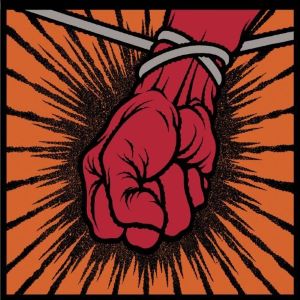
This isn’t a hard call. I can find people in the wild who defend this album, but honestly I think it sounds bad and I have a hard time even listening to it. The production choices are beyond questionable, they’re flat out trash. And the songs are generally a mess. Finding a few diamonds in the shit doesn’t mean the album is redeemed in any way.

9 – Death Magnetic (2008)
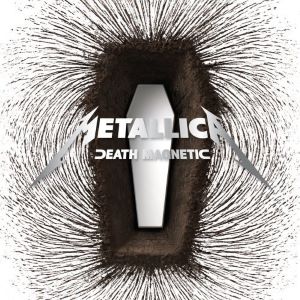
This album is far, far better than its predecessor, but it’s still not all that great. The band did sound like they were trying again, but it also does sound like they are trying, rather than succeeding. And the album after this stands as proof that such is the case. There are a few nice songs on here, The Day That Never Comes stands out to me. But it’s not an album I feel like visiting much, or at all really.

8 – Reload (1997)
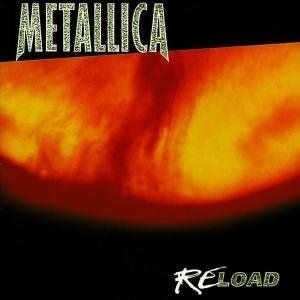
Kind of a “second half” album to their 1996 effort, Reload is a groove-based, almost blues and country styled album. A departure for Metallica, sure, but a pretty decent sounding effort overall. I do think this lacks real heavy hitters but it’s a collection of songs that are fine enough to listen to. I’d cite The Memory Remains as my favorite.

7 – Load (1996)
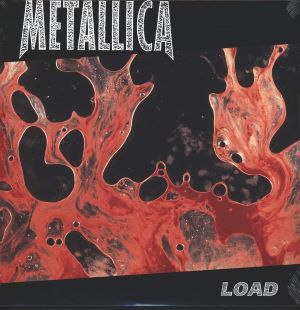
The band, not content with their 1991 reinvention, got haircuts and released some alt-metal. The world was abuzz about the physical and musical changes, but honestly they put out some stuff here that I really like. I think the first seven tracks are all bangers, that includes I think all of the singles. I like the last two songs as well – it’s the stuff inbetween that loses me a bit. If that were trimmed up some, I’d probably be ranking this one higher. I do truly think they wrote some really good songs here, regardless of what they were “supposed” to do.

6 – Hardwired … To Self Destruct (2016)
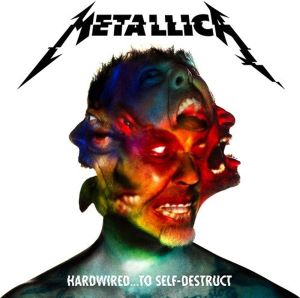
If Death Magnetic was supposed to be a return to form, Hardwired truly was, at least in places. Several of the songs here are the kind of bangers not really heard since 1991, if not even earlier. There are some secondary tracks on this huge album, to be sure, but even some of those are pretty nice. This album did recapture the magic in some way and it was damn nice to hear. The title track and Spit Out The Bone are the best work Metallica have cranked out in a very long time.

5 – The Black Album (1991)
I’d almost be cheeky and rank this lower but that would be dishonest – while I’m not in love with the whole thing, there some damn great songs on here. Wherever I May Roam and Sad But True are stellar songs, a handful of others are very nice and a few are good without being great. There are some, mostly towards the end of the album, that I can’t quite get into, but overall this was a success, both in my book and in the sales book. Can’t really argue with it.

4 – …And Justice For All (1988)
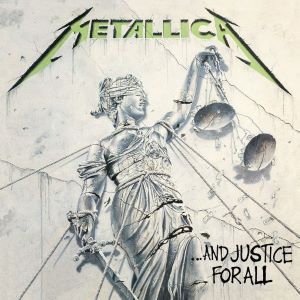
The first album without Cliff Burton could have went any number of ways, but Metallica were able to alter their formula some without sacrificing the core of their sound. Harvester Of Sorrow always gets me going, and One is a masterpiece and one of the band’s most iconic songs. While it sounds odd production wise (and lacking in bass), it makes up for that with a batch of great songs.

And this was the album I talked about in much more detail back on Monday – post here.

3 – Kill ‘Em All (1983)
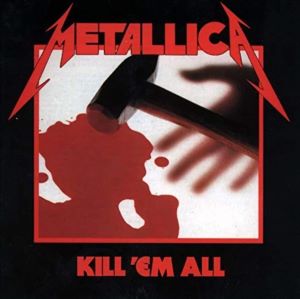
The debut was a monster of a record – putting thrash on the map when the genre wasn’t a known quantity yet outside of local live scenes. This was very hard-hitting, fast and savage metal that pulled no punches and delivered a fist full of great songs. Not a weak note here and a still beloved collection of metal all these decades later.

2 – Master Of Puppets (1986)
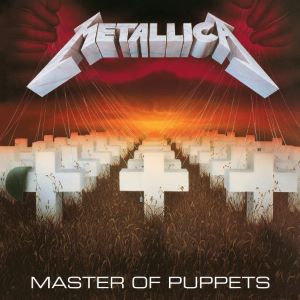
The band’s third album is often cited as a “perfect” metal record, and for good reason. All eight songs are total masterpieces and every note hits hard. The album is crisp, clear and totally devastating. It set the band on a path of superstardom not touched by any other thrash act.

I had this record as an Album of the Week awhile back, here is that post.

1 – Ride The Lightning (1984)
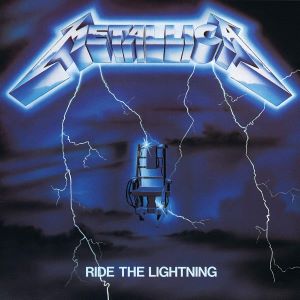
Metallica’s second effort still possessed a bit of the savage energy found on the debut, but the songwriting refinement here ramped things up exponentially. Some stuff still hits heavy, like For Whom The Bell Tolls and Creeping Death. And the band’s first ballad Fade To Black was a metal masterpiece. While some find fault with a few songs on the album, especially Escape, nothing on the record bothers me any. I’ve played this album thousands of times and I’ll likely play it thousands more before I push up daisies.

Ride The Lightning has been an Album of the Week in the past, here is that post.

That does it for the Metallica album ranking. I doubt this is a “final” ranking as I would expect at least one more album, but all that can be sorted out down the road. And while I’ve talked plenty about them this week, this will be far from the final time I discuss Metallica on here – they are a lynchpin in heavy metal as well as my own musical formation.

Metallica – Creeping Death and Jump In The Fire

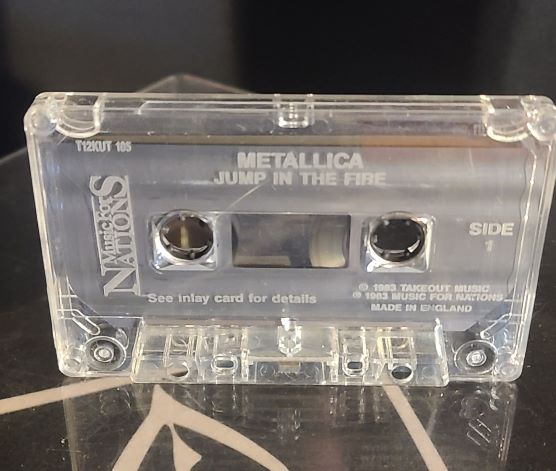
Today I’m going over the two Metallica singles I have in my collection, both on cassette. These are the early singles Creeping Death and Jump In The Fire. Both were released in Europe when Metallica was distributed by Music For Nations over there, I don’t think these singles ever got North America releases.

These are somewhat collectible, owing to them being Metallica releases. They aren’t all that rare and can be had without coughing up huge cash, at least for the cassettes. They do get price gouged a fair bit, but these aren’t worth a huge premium or anything.

Creeping Death

I’m going out of chronological order just because this one was sitting on top of the stack. First up is Creeping Death, from Ride The Lightning. It is absolutely one of my favorite Metallica songs. It’s one I’ll probably talk about in the future in more detail so I won’t get too much into it here, but it is a total beast of a song and is a staple in live sets, I believe it is their most played song. It really doesn’t get much better from Metallica.

The two B-sides are cover songs and are very iconic in Metallica lore. Up first is Am I Evil?, a song that has become an anthem for the originators, England’s own Diamond Head. While Diamond Head’s original did make some waves in the UK, they did not break international markets until Metallica’s cover.

The original is a fantastic tune and Metallica’s version is amazing. This might be the best cover song they ever did, and they’ve done quite a few. It was a boon to Diamond Head, who never broke huge but have had a respectable career.

The obscure picks for cover songs theme marches on with Blitzkrieg. This is a case of the song Blitzkrieg by the band Blitzkrieg. Sadly it was not also from the album Blitzkrieg, as it was a B-side to their debut single and they have never had a self-titled album.

This is also a well-executed cover and one that’s still a highlight of Metallica’s covers selection. Blitzkrieg the band have been on-again and off-again over the decades but were active as of 2019.

Jump In The Fire

The next single on the list is Jump In The Fire. This song is from the debut album Kill ‘Em All and the single was released in early 1984, roughly six months before Ride The Lightning hit shelves. This one has three tracks and repeats the program on both sides. I’ll still use A-side and B-side to denote things but I guess they aren’t technically correct terms here.

The A-side is a fantastic cut from the ferocious debut album. James Hetfield could wail back in the day and it’s on full display here. This is also one of Dave Mustaine’s contributions to the group (no shaking his immense influence).

The two B-sides promise live tracks in the form of Phantom Lord and Seek And Destroy, both also from the debut album. The thing is that both songs are fake live tracks – Metallica recorded alternate versions of the songs and added crowd noise to the recordings. Odd choice but I’m guessing capturing the band live during their first tours didn’t result in the best audio, so this was the chosen alternative. It’s fine from a curiosity standpoint but these B-sides clearly don’t push any real value.

That’s it for my Metallica cassette singles. Tomorrow I’ll wrap up Metallica week with my album ranking.

When The Line Up Changes – Metallica (Part Two)

Yesterday I talked about two line-up changes from Metallica’s early days. Today I’ll get into the two remaining changes, both at the bass position. (Three if you ask Bob Rock, I guess…)

The first change came in 1986 and was born of tragedy – a bus accident claimed the life of Metallica’s legendary bassist.

Cliff Burton dies, succeeded by Jason Newsted

On September 27, 1986, Metallica’s tour bus crashed in Sweden. The cause is disputed – a point I’ll leave alone here. The result was the death of Cliff Burton at 24 years old.

Cliff’s death was an obvious shockwave through the Metallica camp, as well as the metal scene in general. Cliff was a massive force and contributor to the Metallica sound, his presence was going to be missed no matter what.

The band did decide to press on and after a huge audition process, chose Jason Newsted for the role. Newsted hailed from Arizona thrashers Flotsam And Jetsam, who had just been getting the ball rolling on their output. F&J would go on to have a nice career, but Newsted would find something far beyond nice in Metallica.

The lineup formed in 1987 would stay intact until 2001. In this period, Metallica would become one of the best-selling bands in the world. Their first effort with Newsted, …And Justice For All, would become their biggest seller to date. Then in 1991, their self-titled effort smashed records and stands as one of the best sellers of the 1990s.

Success would not necessarily be easy for Newsted. He wound up with just a few songwriting credits during his time in the band, which saw four full-length albums released. Jason was a total sparkplug when playing live, he was often cited as a highlight of the show for his energy and headbanging. The physical toll of that, coupled with another huge issue, led to him departing the band in 2001.

Jason Newsted quits, replaced by Robert Trujillo

When Jason Newsted announced his departure from Metallica, it wasn’t a quiet event. The band happened to have a film crew around them, shooting for a very drama-filled movie that became Some Kind Of Monster.

Newsted cited physical issues from touring, as well as discouragement from the band when he wished to do a side project. The discouragement came solely from James Hetfield, Newsted originally found the rest of the band and management keen on the idea.

Newsted would perform in a variety of bands over the years after Metallica – with that “side project” Echobrain, a tour with Ozzy Osbourne, as a member of Voivod and in a self-named band. Newsted disbanded that outfit sometime in 2014, citing the extreme expenses he was funding to take the band on tour. He has sporadically appeared in various capacities since, though not with a full time act.

For Metallica, they were between a rock and a hard place as they were working on their next album. With a lot of delays and drama found in plentiful supply on the Some Kind Of Monster film, the band’s producer Bob Rock filled in on bass for the album. It did at least come off as if Bob thought he was joining the band in a full capacity, though I don’t wish to speak for someone I’ve never met.

In any case, the audition process for a new bass player commenced, also documented on Some Kind Of Monster. The band chose Robert Trujillo, a career musician with an impressive resume spanning from Suicidal Tendencies to Black Label Society and Ozzy Osbourne (Newsted directly replaced Trujillo as Ozzy’s bassist, in fact).

Trujillo hit it off well with the established members of Metallica and was accepted fully into the band, something that never found his predecessor Jason. And it’s fair to say that Robert’s embrace into the group was the result of lessons learned from Newsted’s departure, James and Lars have said as much over the years. The band have released two albums with Trujillo and have toured extensively as the bearers of a now 40 year legacy as metal’s most successful band.

That about does it for the line-up changes in Metallica. There are other things that could be discussed, like fill-in guitarists when James has injured himself, the luminaries who auditioned for the bass role in 1986 and 2001, and the band’s idea to bring in John Bush as a vocalist and let James concentrate on guitar. But all of that is side stuff that can wait for another day. For today I’ll rest on the band’s present (and likely final) construction, ending with a final mention of Dave Mustaine simply because it’s not a Metallica discussion without Dave Mustaine.

When The Line Up Changes – Metallica (Part One)

Today and tomorrow I’m going to look at the major line-up changes in Metallica. The band have had a few over the years and they are some of the most-talked about personnel changes in music.

For the first part I’ll go into the two early era changes that would shape the band’s first run. One saw the addition of the “heart and soul” of the group, while the other change is one of the most discussed band member exits in music history.

Ron McGovney quits, replaced by Cliff Burton

When Metallica originally formed, James Hetfield brought with him Ron McGovney, a bandmate in prior outfits. The band used McGovney’s parents’ house to rehearse in during the early days, and Ron played bass on several demos.

There were apparent tensions between McGovney and the rest of the band, and Ron quit in late 1982. McGovney was not especially active in music after departing Metallica, but has joined the band at anniversary celebrations in the years since.

The titanic shift in Metallica came when McGovney was replaced – James and Lars watched the band Trauma performing at the famed Whiskey A Go Go. They discovered that the crazy sounds came from the band’s bassist, Cliff Burton. Burton was approached about joining Metallica and agreed, as long as the band relocated from Los Angeles to the Bay Area. The move was made and history would follow.

Burton would be a massive addition to the band. He played his bass much like a guitar, employing effects pedals and playing riffs seemingly more suited to six strings. His unique sound became a hallmark of the band’s early recordings and landed him solo spots on albums. Burton was also a huge contributor to the songwriting process, responsible for many of the band’s landmark songs in the first era.

While Cliff Burton’s time would be cut short through tragedy in 1986, he bears great responsibility for Metallica becoming a worldwide phenomenon. His entry into Metallica in 1982 is the catalyst for the band becoming what they were. There isn’t a Metallica as we know them without Cliff Burton.

Tomorrow I’ll talk about Cliff’s death and the shockwaves from that. But for now, it’s time to write about that which has already had trillions of words spilled about it. A few line-up changes in history have been titanic and are discussed widely even to this day, but this one might take the cake as far as how often it’s brought up, both by fans and by the aggrieved party.

Dave Mustaine is fired, replaced by Kirk Hammett

The story is well-known – Dave was in the early version of Metallica. The band were drunken hellraisers as a rule, but Dave took it to a line beyond that. Though specific stories are thrown around and disputed, Dave was eventually booted from the group just as they prepared to record their debut album. Mustaine was given a cross-country bus ticket back to Los Angeles from New York and he would form Megadeth. With a giant chip on his shoulder, Mustaine blazed his own trail in the thrash realm and remains the head of the Megadeth table today (a Megadeth line-up change post would be novel length and may or may not materialize someday).

To replace Mustaine, Metallica called across the country and asked Exodus guitarist Kirk Hammett to join. Hammett flew out directly to New York and was given the Metallica job in quick order. Hammett remains Metallica’s lead guitar player to this day.

It’s kind of funny how much there can be to talk about regarding this line-up change, and almost none of it revolves around Kirk Hammett. Kirk seems to be a pretty reserved, quiet guy who doesn’t stir the pot much. Kirk left Exodus, the band he had formed, for Metallica.

Exodus already had a reputation in the Bay Area scene, much of it for their violent live shows. Kirk’s departure left Gary Holt to be the main creative force in Exodus, a path that has served the band well in the decades since. Hammett has appeared live and in studio on occasion with Exodus in the years since.

But, as most already likely know, this line-up change isn’t really about Kirk Hammett. No, it’s about Dave Mustaine. Dave has given countless interviews over the years expressing his displeasure at being bounced from Metallica. While Mustaine is credited for songwriting contributions on the first two Metallica albums, he has in the past claimed to have written far more than he was credited on.

Mustaine also attacked Hammett in the past, accusing Kirk of simply ripping Mustaine off. Mustaine was a vocal thorn in the side of Metallica for many years, though the members of Metallica didn’t often take the bait and discuss Mustaine in any great detail.

It was clear that Mustaine was bitter about Metallica – most likely envious of their huge success, even as he found his own way with Megadeth. I hate to speculate about a person’s thoughts and motivations, but it’s pretty clear there was something to that with Mustaine and Metallica.

Over the years stances would soften, and Mustaine wound up jamming a bit with his old bandmates and his replacement during the Big Four shows. The feud entered an era of relative peace, even though Mustaine can still be counted on to say something occasionally.

A lot is made of Mustaine’s contributions to early Metallica, and this sometimes gets heated fan discussion going over what the band would have sounded like had he stayed, or if he really did provide more early material than he’s credited for, what have you. Various scenarios are argued over and over again, to no real effect but to take up bandwidth on the Internet. No one really “knows” what happened since none of us were there, and it’s so long ago now that it really isn’t important. But people have to have stuff to talk trash on, I guess.

It was just one line-up change for a band in their early years, just before recording their first record. But the saga of Dave Mustaine being tossed from Metallica lives on 40 years later, and will probably remain in the metal consciousness for so long as people have access to the Internet (and Mustaine is around to offer his occasional thoughts).

That wraps up the first part of Metallica’s line-up changes. I’ll be back tomorrow with the death of Cliff Burton and also the departure of the guy who replaced him.