L7 – Shitlist

This post was part of a series that I called S-Tier Songs. I later decided to abandon the series in favor of a simpler Song of the Week format. I am keeping these posts as I wrote them but removing the old page that linked to the list of S-Tier Songs, so that is why these posts might look a bit odd. Enjoy.

L7 – Shitlist

Today’s song hails from L7’s third album Bricks Are Heavy. The 1992 record was the band’s first involvement on a major label and was produced by Butch Vig, who a year earlier had produced Nirvana’s Nevermind which changed music forever. The album saw some grunge influence meet with L7’s already established hard ass alt/punk sound and was the group’s vanguard moment.

Shitlist was not a single for obvious reasons, though it was the B-side to Pretend We’re Dead, the band’s most popular single release. As the album and singles took hold through radio and MTV, this song got its fair share of notice. L7 were pretty hard ass as a whole, but Shitlist was another degree of that.

The song is pretty simple musically – it’s got some nasty distortion on a pounding riff and rhythm. The guitar adds some flair here and there, but this song is a vessel to communicate a message rather than provide an exercise in pentetonic scales. Donita Sparks delivers a vocal with a combination of snarl and disaffection to perfectly fit the nasty tone of the music.

Lyrically this is a blatantly obvious song – we’re pissed off, and there’s a list of those who did the foul deeds that led to this state. There’s maybe only 20 different words used in the lyrics but everything works so well to communicate the message – you’ve made my shitlist. It’s one of the first songs that comes up when people talk about “angry songs” or things like that, Shitlist has truly made its mark in that regard.

There are no real metrics to evaluate in terms of Shitlist’s success. The album Bricks Are Heavy was last certified at 327,000 copies sold in the year 2000. I’d wager that it’s moved a few more since then and maybe a re-certification would see it get past the gold threshold, but I can’t say for sure. The song didn’t get MTV play because, well, just look at the title.

But Shitlist did strike a chord with music-listening America in the early 1990’s. While the L7 singles like Pretend We’re Dead and Monster got video airplay, people in the know would make sure to tell you to get the damn album so you could hear Shitlist in all its glory. Word of mouth was still important in the pre-Internet days and that’s largely how a song with a controversial name like this would get out there.

Shitlist did get another boost from appearances in several movie soundtracks. The song was in quite a few movies, actually, though to be honest I’m not sure I want to go deep diving on some of those early ’90’s movies to recall the flicks more specifically. But Shitlist did land a very memorable part in one movie scene.

In the opening scene of 1994’s Natural Born Killers, the movie’s main couple Mickey and Mallory Knox are in a diner out in the middle of nowhere. A local patron starts putting moves on Mallory. Her response is to go to the jukebox and put on Shitlist, then beat the shit out of her harasser. Mickey joins in and the couple kill everyone in the diner, except for one they leave alive to report that Mickey and Mallory were responsible.

This is the scene, don’t count on it being upon YouTube for a long time.

The movie released just after L7 had released their next album Hungry For Stink. I don’t know if the movie scene had a huge impact on sales of that or Bricks Are Heavy, but the way that scene is still vividly recalled today, I’d guess that it had some influence.

L7 would continue on through the 1990’s but run out of steam by the turn of the millennium and call it quits in 2001. They would reconvene in 2014 and have been touring and releasing music since, with a renewed interest in a band that many felt didn’t quite get their full due in their first run.

Why is this an S-Tier song?

Shitlist is simple, heavy and powerful. Its message cuts true and is something every person on the planet can identify with, someone’s made our shitlists at some point in time, even the most zen of folks. L7 were known for bringing the nasty when they wanted to, and Shitlist was another extension of that. Its memorable tie to the scene in Natural Born Killers still resonates with viewers who may not have ever bought an L7 album in the ’90’s. This was not a band to mess with, and Shitlist was the calling card of that.
Heart (Album of the Week)

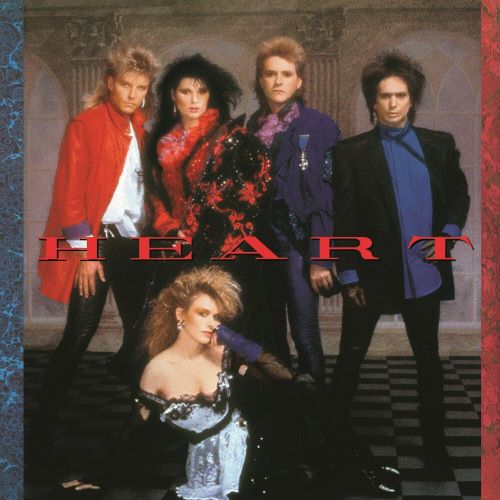
For this week I’m pulling out one of rock music’s greatest transformation albums – a band shifting their sound to fit with the times. Some call that selling out, others call it the smart play. In the case of Heart it was very much the latter, and the group would land the biggest success of their career by fully embracing the glitz of 1980’s hair and glam rock.

Heart – self-titled

Released June 21, 1985 via Capitol Records

My Favorite Tracks – What About Love?, If Looks Could Kill, The Wolf

Heart began in the 1970’s and released a string of renowned albums that resided in the hard rock/folk rock realm, an interesting combination not heard every day. The band gained notice with their unique blend of music and also for their front-line sisters, guitarist Nancy Wilson and lead vocalist Ann Wilson.

Then the 1980’s came and rock music changed. Heart entered the decade well enough but had two dud albums through the early ’80’s. It could be said that Heart’s musical transition was started on those albums, though the true fruits of the change would arrive with this self-titled record in 1985, just as hair metal and its associated sounds were becoming the music of the day.

The songwriting on Heart is its own tale, as some of the songs were shaped by the Wilson sisters and several others were done by outside songwriters. I won’t be running down each individual one, just a few of the more notable ones, because it would make this post 10,000 words long. Credits are available in the album’s liner notes and in many places on the Internet for those curious. The album was produced by Ron Nevison, who was one of the go-to producers of the 1980’s.

Heart boasts 10 songs in 39 minutes so not an overly stuffed album, but half of these songs were singles and a few were major hits so there’s plenty to talk about here.

If Looks Could Kill

The album opens with a cover tune of a song also done in 1985 as a dance song. Heart took a more rock approach and fashioned a pretty cool song out of it. It’s very synth heavy, which would figure since it came from the dance/disco world but it’s translated well to the melodic rock environment. The song sees a cheating lover being the object of scorn.

If Looks Could Kill was the album’s fifth and final single, and also the only one not hit the Billboard 100’s top 10.

What About Love?

Another cover song, this time from Canadian band Toronto and one that group did not release originally. Heart would up with the song and would make hay with it, hitting the top 10 of the Billboard 100.

While unfortunate that Toronto did not get to enjoy the original fruits of their labor, this song fits the Heart album like a glove. It is a defining power ballad of the ’80’s and was the keys to the car for Heart’s comeback. It is a song that reminds people who are chasing their “way to the top” that love is still out there and is a more important force than whatever comes at the end of the rat race.

Two notable guests appear to help with backing vocals – Grace Slick and Mickey Thomas from Starship.

Never

Another album single and one that would get to the 4 position on the Billboard 100. This is an upbeat, very poppy melodic rock offering about being disgruntled by love but being ready to give it another go.

These Dreams

Up next is another single and Heart’s first chart-topping hit. The song was originally written by the songwriting duo of Bernie Taupin and Martin Page, two folks who’ve had hands in countless hits. The pair offered the song to Stevie Nicks, who turned it down. Heart were more receptive to it and the rest is history.

Heart switched tack on this song as Nancy Wilson handled the vocals. Nancy had been ill during recording and the production team was quite happy with her raspy take, so much so that she’d be asked in the future to “get sick again” to emulate her style here.

These Dreams is an atmospheric track with the lyrical concept of going to a different world while sleeping and getting away from the issues of regular life. The album’s liner notes dedicate the song to Sharon Hess, a fan who was battling leukemia and met the Wilson sisters during the recording of the song. Hess died just before the album’s release.

The Wolf

Here we hit the first of a few songs that weren’t singles. This is a very nice track that’s all rock and deals with a man out on the prowl who isn’t worth the trouble he brings. This song didn’t get the attention of the hit singles obviously, but it’s well worth a listen as it’s a great ’80’s rock song.

All Eyes

Its 2 for 2 on album deep cuts here with another good rock song. It’s a nice song about hooking up, pretty standard fare for the time. So far the album’s deep cuts compliment the singles well and make for a nice album listening experience.

Nobody Home

This one is a slow ballad that also kind of throws things off for a moment. It is very keyboard driven, which is not a problem in and of itself but the key part sounds like the soundtrack bits of a Final Fantasy video game. FF didn’t exist when this song was recorded but it’s the vibe I get from the song.

The song doesn’t pick up much steam as it goes along even with other instruments coming in. It’s a nice enough sentiment about someone finding no one around when they inevitably fall, but the song doesn’t do a lot for me.

Nothin’ At All

This was the album’s fourth single and also the fourth straight to hit the Billboard 100’s hallowed top 10, hitting exactly that position. This is a very easy-going rock track about how sometimes love just happens super easy without any fuss or drama. The video for this one was pretty popular and features the band simply goofing around.

What He Don’t Know

It’s back to the rock, this one is a fairly tame number but it does pick things back up after that last song. This one puts the shoe on the other foot in contrast to the opening song, as this time a couple is cheating while the singer’s significant other is unaware. It was fairly scandalous song material for the day as adultery and cheating was a huge deal back then, but no one gives a damn today. I don’t recall this song catching any actual grief though.

Shell Shock

The album closes on one more really cool song, it’s a straight ahead rock song. Ann Wilson is going a bit rapid fire in the verses here, it’s a neat way to wrap up the record.

Heart was not only a return to commercial success for the band, this was the peak of their album success. The record topped the Billboard 200 and was on the charts for 78 weeks. It has been certified 5 times platinum in the US and 6 times in Canada. Along with four straight singles in the top 10 of the Billboard Hot 100, and this was a massive win for Heart’s ’80’s glam makeover.

Heart were successful in updating for the times and re-energizing their career, though for some it was too drastic of a move away from the classic sound that made them popular in the first place. I personally have no issue with it at all – while I think their ’70’s output is spectacular, I also love their ’80’s hair era. The songs were there and the band rode the wave of big hair and power rock/pop, usually doing it better than many others in the same era.

This would mark the start of a three-album run that saw Heart churn out more hits, including the biggest single of their run in 1987. After the “big hair” era ended, the Wilson sisters would return to their roots and explore more of the work that put them on the map in the first place. But they certainly left their mark on the 1980’s.

In On The Scam – Rip Offs for Live Tickets and Records

The past few weeks have seen an uptick in the dark art of scamming, and some of it relates to music. The worlds of live ticketing and record buying have both been hit with a flood of scams, mostly related to the modern age of electronic payments and digital goods.

In today’s world many concert tickets are digital codes. Simply show the QR code on your phone to the door person, they scan the code, you’re in. Physical tickets do still exist but the COVID era has seen a huge rise in the amount of paperless ticketing going on.

And with that comes the scam – a person on a Facebook group (where a lot of this is going on) says they have tickets for a show, at a decent price compared to the predatory resale market. Someone agrees to buy the tickets. The buyer pays the seller through PayPal or Venmo (same company, btw). The seller gets the money then vanishes into the ether, leaving the buyer hanging for tickets that never truly existed.

I’ve heard about this happening with concerts but I’ve personally witnessed it in the sports world – St. Louis has a new Major League Soccer team and it’s been a hot ticket so far with a massive resale market. Scammers have popped up in Facebook groups offering non-existent tickets quite a bit the past few weeks. It’s the only stuff I’ve really seen, but I’ve heard these same scammers are floating around with fake concert tickets too.

The easiest way to not be scammed like this is obviously not to buy from an untrusted source, which is tough if you want decently price resale tickets. Using the Goods and Services option through PayPal does provide a measure of protection, it is an absolute red flag if a seller asks for payment via the Friends and Family option, no one should ever make a PayPal purchase through that unless the person selling is a family member or friend. But buying from some random poster on a Facebook page is not really the way to go, even if legit sales do happen.

This will continue to be a thing as concert tickets go digital. I don’t know what real solutions are for this, the digital ticket market kind of lends itself to needing an official resale outlet- which is just what the few companies who engage in that trade want, of course. It used to be pretty easy to buy a paper ticket from someone who needed to sell, now it’s a whole other ballgame.

The other realm seeing scam activity is the secondary vinyl market, and specifically on the Discogs site. Discogs has become the premier place to catalog records as well as sell them. It’s a mostly convenient site for doing anything vinyl-related, though the scam bug has infiltrated it as of late.

Most of the information I’m using here comes from the Discogs subreddit. There’s been a lot of discussion about scammers in the past while, though there’s also been some misplaced hysteria over it too.

The Discogs scam goes like this – someone lists a record for sale, usually a hot item that goes for a few hundred bucks. For awhile the going price on these scam listings was around $80. A susceptible buyer jumps on the deal, then the seller disappears and the money with them. Even with word getting around about this type of scam, it appears plenty of buyers have fallen for it.

Discogs offers a few degrees of protection that the concert ticket thing does not. There is a seller and buyer feedback system, though the scammers are usually long gone by the time feedback means anything. There is also a reporting system for suspicious listings, and it seems to have some effectiveness. The typical method of payment is also PayPal Goods and Services, which provides PayPal’s own protection that often favors a spurned buyer. A seller seeking payment through means that circumvent PayPal G&S is an auto red flag and also against the Discogs terms of service.

There are a lot of if, and’s and but’s about this whole thing. Discogs themselves issued a message about scamming on Friday, April 28th to all users. They are going to take action on the matter, including a waiting period for new sellers. It’s a good move but it also affects me, since I am getting ready to sell on the platform. But I can’t really bitch since they are taking active steps to stem the scamming tide.

The actual email Discogs sent outlining their response to scamming

One bit BUT to this is the issue of user feedback. The feedback is essentially a score on Discogs, and in all honesty it doesn’t work out that great. I’ve only been a buyer on the platform to this point and all of my transactions have cleared without issue, about 50. I have a 24 score in feedback, all positive, and all on the buyer side. That’s less than half of what I’ve truly bought on there. Many sellers have reported getting less than 50% feedback on successful transactions as well.

The mitigating factor is that you don’t need a massive buyer score. Mine is 100% and is totally fine, even if it doesn’t represent half of my actual purchases. For a seller? Discogs feedback is massively important. A new seller might ship off three records to three different buyers and get dinged on one for some odd reason. The 66% seller feedback rating is a killer for them. To add in new metrics that affect new sellers is another hurdle to clear that sometimes isn’t practical.

The big issue which is sort of in the background here is the scammers and their accounts. No one should buy a cheap record from a new account, that ought to yell out scam to anyone. But – scammers have also been hacking accounts of established sellers and pulling this same crap. I don’t know how often it’s happened but there has been a bit of talk about it on the reddit forum.

Some have wondered just how much scamming was really going on through Discogs. Some feel the issue is overblown, while others point to a fair amount of clear scam listings as well as testimony from people who got ripped off. And an official response from the site itself would indicate it’s a big enough issue, at least in perception, to make official policy around it.

There are a mess of other issues entwined in this – what about the person who actually wants to sell a record cheap? Some personal collectors do fire sale their stuff because they need money pretty badly. Selling below the Discogs median will still net far more money than what most local shops will pay. These scams have been far below the price line so hopefully it won’t catch up anyone truly needing to make a buck or the lucky person who scores a nice haul out of it.

And yes, buyers do scam too. One common one is to pretend the item never showed up and get a refund. Another is to order a clean, nice condition record, request a refund and then return a damaged record to the seller. This is a thread I intend to pick up in a separate post.

In the case of Discogs scams, the easiest way to protect yourself is to not buy listings that are far below the median price. No one is selling a rare Cure record for $200 less than its median price. PayPal does offer its usual degree of buyer protection, but it’s still far easier to not get caught up in the scam to begin with.

This issue will likely crop up again, as it’s clear that the digital money age has lent itself to a whole host of predatory people. I don’t know how the live concert/digital ticket market will shake out, that one is kind of a frontier. I do expect the Discogs saga to relent some but that’s just a gut feeling, I could be totally wrong about that. Either way, be careful out there with your money, it’s a shark tank.

The Clairvoyant – The Iron Maiden Singles Series

The Iron Maiden Singles Series is now on to Seventh Son Of A Seventh Son, the band’s seventh album. As noted previously and also via the list below, I don’t have the first two singles from this album so they aren’t part of the series at present. Today I’ll get into the third one, which actually represents live material and is a bit of a gem in that the songs aren’t from a full-length live record of any sort.

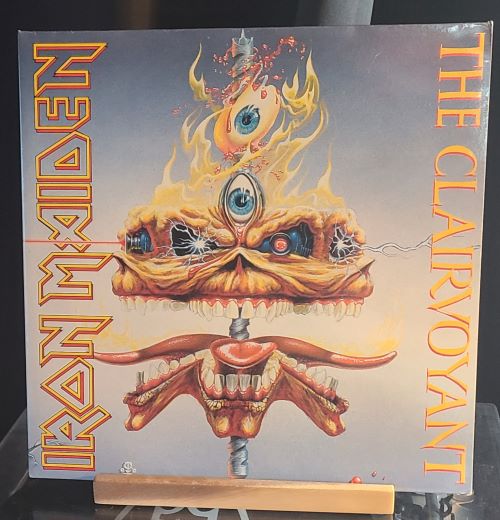
The cover art today is pretty trippy – it’s Eddie’s head in some kind of occult/crazy configuration. Out in left field for sure but you gotta do something off the wall once in awhile, and it does fit the song’s theme. Don’t drop acid and look at this (I wouldn’t know, just seems like good advice)

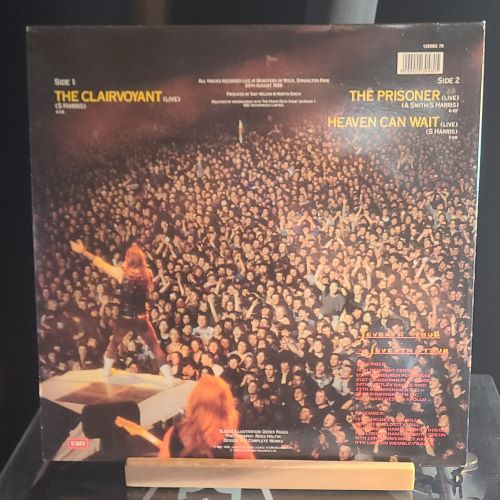
There are several versions of the single available – the usual 12-inch and 7-inch versions, as well as some picture discs, clear vinyl and even a shaped picture disc. The singles from this album were also issued on CD, which as far as I know are the first CD singles for Maiden. My single is a typical black vinyl 12-inch version, though it is housed in a very nice gatefold sleeve as opposed to the thin paper stuff many of the singles came in. And, in a change of pace, there actually is a pretty big difference between the 12-inch and 7-inch singles as it relates to the lead track. That’ll be covered in a minute.

All of the live performances on the record came from the Monsters Of Rock festival in Donington on August 20, 1988. That was the day after I turned 11 for anyone wondering. These are the only songs I know of from the performance that were released in an official capacity. I’d guess this has bootleg versions but I honestly have never looked for them.

As usual with these, this first video has the two sides from the 7-inch single. We’ll get to the difference between versions right in the first track, though the fact that the lead single doesn’t sound very live should tip most people off.

The Clairvoyant

The feature song today is one of the pivotal moments from the sort-of story being told on the Seventh Son… album. The title character has gained the gift of clairvoyance but becomes troubled by it, and also very ironically cannot foresee his own death. The music is pretty spectacular on this song, as it is throughout the album. Very nice, almost prog-lite guitar work on here and the chorus is very nicely done even with being a mouthful of words.

Steve Harris has said that the song was inspired by the death of British psychic Doris Stokes. This person seems to have been a giant fraud and died just when the band was cooking up new song ideas, and Steve came up with the central premise of a clairvoyant being blind to their own death.

Now, here’s the kicker as far as different versions of this single go – on most 7-inch pressings of the single, The Clairvoyant is the studio track. On the 12-inch versions and a very few 7-inches, the live cut from Monsters Of Rock is present. To add to the confusion, the band shot a video featuring live shots from Donington but the song is the studio track with bits of live crowd noise rather badly cut in. So to have this single with the more desirable live cut on side A, a prospective collector should seek out a 12-inch record.

The Prisoner

The first B-side is a cut from The Number Of The Beast and is a more low-key favorite of quite a few fans, myself included. The song was inspired by the late ’60’s British sci-fi drama of the same name, and the show was also the inspiration for Powerslave’s Back In The Village.

This one flies a bit under the radar on the hierarchy of Maiden songs but in my view it is an excellent song. This live performance is well captured and presented without any issues. The Prisoner would get more time on the Maiden England tour, which was presented as a live album.

And it’s worth noting that all versions of the single have the same live cut of The Prisoner – unlike The Clairvoyant, there are not different presentations.

Heaven Can Wait

The 12-inch “bonus” B-side is a nice cut from the Somewhere In Time album. It is also live from Donington and also the same across all versions it appears on. It too is well done and nicely presented, no crappy live audio or anything. It’s nice to have live versions from this album because any official presentations are few and far between. I assume that will change once the next tour and inevitable live album from it is presented.

That wraps up today’s pretty interesting single. On deck is another live cut, this time from the Maiden England tour and album. And also next week we’ll have something we haven’t had in quite some time – a departing band member. Until then.

The Iron Maiden Singles Series

Live! + One

Running Free

Sanctuary

Women In Uniform

Maiden Japan

Purgatory

Twilight Zone/Wrathchild

Run To The Hills

The Number Of The Beast

Flight Of Icarus

The Trooper

2 Minutes To Midnight

Aces High

Run To The Hills (live)

Running Free (live)

Stranger In A Strange Land

Wasted Years

The Clairvoyant (you are here)

Infinite Dreams

Bring Your Daughter … To The Slaughter

Holy Smoke

Be Quick Or Be Dead

From Here To Eternity

Virus

Out Of The Silent Planet

Rainmaker

Different World

The Reincarnation Of Benjamin Breeg

Empire Of The Clouds

Orange Goblin – Healing Through Fire (Album of the Week)

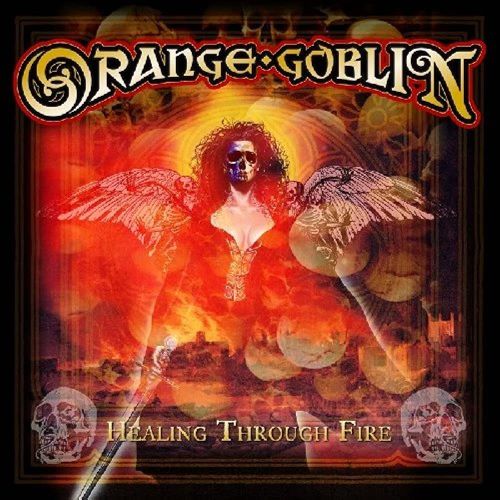
This week I’m actually grabbing an album from this century, it’s back to 2007 and the very general genre descriptor of “stoner metal” for an ace of a record that would cast a new spotlight on a long-running band.

Orange Goblin – Healing Through Fire

Released May 21, 2007 via Sanctuary Records

My Favorite Tracks – They Come Back (Harvest Of Skulls), Cities Of Frost, The Ale House Braves

Orange Goblin of London, England had been active since 1995 and were on their sixth album at this point, and also first for what was a semi-major record label with Sanctuary. While the record deal would not really pan out as Sanctuary would essentially fold a year later, Orange Goblin would see expanded interest with this release.

Healing Through Fire is not a concept album but does tie a few themes through its songs, the theme being the Great Plague of medieval Europe. The plague’s worst years were in the 1300’s, though this record does reference events and people of 1600’s England as well, a century which also saw plague outbreaks.

Orange Goblin’s lineup had been stable through this point, with Ben Ward on vocals, Joe Hoare on guitar, Martyn Millard on bass and Chris Turner with the drums. Keyboards on the album were provided by Jason Graham. The album is a fairly lean affair with 9 songs in 43 minutes. Note that there is a deluxe reissue version with a ton of bonus and live tracks.

The Ballad Of Solomon Eagle

The opener kicks off loud and groovy with some very active riffing that clearly separates Orange Goblin from the more monotonous strains of stoner rock out there. The song deals with Solomon Eccles, also known as Solomon Eagle. Eagle was from 1600’s London and had been a composer, but later denounced his prior life and became a Quaker. This group were religious pariahs during this time. Solomon was known to go through public with few clothes on, if any, and denounce civilization. His proclamations of the end were fueled by the Plague as well as the 1666 Great Fire of London. He is a pretty curious person to feature in song, something he wouldn’t have liked as he considered music a sin after his Quaker conversion.

Vagrant Stomp

Another loud and stompy song that gets into some gross medical stuff from the time period. The song also uses the phrase “terminal spirit disease” in its lyrics, that also being the title of a 1994 album from Swedish melo-death pioneers At The Gates. No idea if the reference was meant for anything.

The Ale House Braves

This one is a faster-paced slammer that paints a picture of economic class disparity in medieval England. The destitute have nothing to lose and are coming for the well-off, a tale as old as time. There’s a very nice old-school guitar jam in this one too.

Cities Of Frost

Things slow down a bit here, which in stoner/doom parlance means it gets even heavier. This excellent song is a death march through a town being destroyed. No real clue what this is about, possibly the London Fire but it’s not specifically mentioned. Could be some random stuff that doesn’t tie into any real theme. While Orange Goblin are clearly their own entity, this is a song that gets a bit into High On Fire territory.

Hot Knives And Open Sores

Another one about the Plague and how gross everything was. I can’t imagine how nasty it would have been in the days before modern medicine when people were using every stupid thing in the book to try and treat the disease.

Hounds Ditch

More classic rock-based groovy stuff, again dealing with the piles of bodies around plague-ridden London and all the things that come to feed on the dead. This one switches to a pretty heavy end section to really emphasize the problem with lots of diseased dead bodies laying around.

Mortlake (Dead Water)

A quick and quiet instrumental gives a bit of a break here before jumping right back into the plague-laden mess.

They Come Back (Harvest Of Skulls)

This amazing song truly spells out the cost of the plague and its all-consuming nature. The dead themselves were a source of infection and would claim the living. This song has some very cool tempo changes and really brings the point home about how people thought the plague was a punishment from God and that it would be the endtime judgment a lot of people were waiting for.

Beginner’s Guide To Suicide

The closing track takes a left turn and lays out a slow blues-based effort. The lyrics are a haunting depiction of someone choosing suicide by poison as opposed to suffering from the plague. It’s a pretty harrowing position to be in but I’m sure plenty had to make that choice. The song is very well done and caught a lot of interest, today it stands as the band’s most-streamed track on Spotify.

Healing Through Fire was a watershed moment for Orange Goblin. While the album did not bust through charts, it truly put the band on the map and established their sound after several years of occasionally wandering through different parts of the rock and metal universe. The stoner genre had always been a constant presence though with a bit of a low ceiling in terms of dynamics and creativity, Orange Goblin were one band who showcased a higher degree of songwriting and arrangement to make something truly special out of the music.

The band’s choice to shape the songs around a theme was interesting and clearly paid off. It’s no secret among metal bands that the Great Plague is a fertile ground for lyrical inspiration, it was one of the most brutal times in human existence. Orange Goblin did fine work with the Plague as their creative backdrop.

The next decade would go well for Orange Goblin, three albums through the 2010’s would see the band’s stock continue to rise. While now an entity for nearly 30 years, it’s fair to say they really hit the nail on the head in 2007 with Healing Through Fire.