Danzig – Thrall-Demonsweatlive (Album of the Week)

This week I’ll take a look at an EP that had both some live and studio tracks on it. One of the songs would gain hold on MTV and launch the commercial peak of “Evil Elvis.”
Danzig – Thrall-Demonsweatlive

Released May 25, 1993 via Def American Records

Glenn Danzig was in a pretty good spot entering 1993 – his profile had risen considerably on the back of three strong albums and the music environment was accepting of a lot of alternative metal that probably wouldn’t have gotten the time of day in the ’80’s. Danzig would become one of the flagship acts of this “alt-metal” movement with the hit contained here.

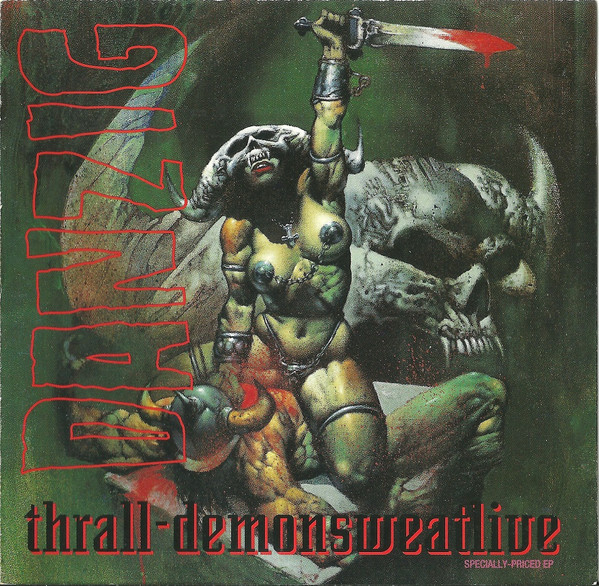
The cover art was done by renowned comics artist Simon Bisley. This was the first of many collaborations between Bisley and Danzig, as Bisley would soon join Danzig’s new comic book company Verotik as an artist.

The band’s lineup remained the same as it had since the group’s inception – Glenn Danzig on vocals, John Christ on guitar, Eerie Von on bass and Chuck Biscuits at the drums. This roster would remain for one more studio album after this then all three others besides Danzig would vacate their positions, marking the end of the “classic” era.

This EP comprises two parts, as well as a “hidden” track. The hidden song was on track 93 of the CD, leaving 86 tracks of silence between the listed songs and this bonus. This was a thing back in the CD days and not the last time Danzig would use the gimmick to place a hidden song. As a note to those hunting for this on Spotify, only the 7 listed tracks appear on that service.

Thrall

The first three songs are all new studio recordings, done in early 1993. All of the songs were knocked out in a day. Up first is the heavy banger It’s Coming Down. This is one of the heavier tracks the old Danzig lineup did. It is a very meat and potatoes metal song, with very few lyrics and just a bunch of heavy riffs and drumming. This one works pretty well and is the highlight of the new songs. There was a music video filmed for this but it contained a lot of bondage scenes in it so MTV said no. A less saucy version is linked up at the end of this post.

Up next is The Violet Fire, a bit more of a gothic vibe to this one but still a pretty heavy tune. The lyrics are about the dark arts of seduction, a Danzig staple. The last of the three studio cuts is Trouble, which is a cover song. In keeping with Danzig’s nickname and vocal styling, the song is an Elvis cover. The song is suitably spruced up for the atmosphere of a Danzig song and works pretty well. It’s fair to say that a lot of people listening to this EP in 1993 might not have been aware that this was an Elvis song.

Demonsweatlive

The four live tracks are from a 1992 Halloween concert at the Irvine Meadows Amphitheater in the Los Angeles area. The entire show was pretty available in bootleg form, though that boot probably came about as a result of this EP’s notoriety.

Up first is Snakes Of Christ from the album II – Lucifuge. Like everything here, this is an excellent live version that captures the raw and gritty sound of this music at its best. One of two cuts from the self-titled debut is up next. Am I Demon gets a whole new level of energy from the live outing and sounds like Danzig at the top of his demonic underworld. This could be considered the prime offering of the live cuts, though another one would go on to claim all of the glory.

The third song is Sistinas from III – How The Gods Kill. This is a bit of a different song, being a quiet ballad that fits Danzig’s style pretty well despite being well outside the usual heavy offerings. Even when I was a dumb 15 year old listening to this and only wanting heavy stuff I could appreciate a slower tune like this one.

Another song from the first album rounds out the live stuff – Mother was a single initially but did not move the needle back in 1988. Several years later, the song’s appearance on this EP would catapult it and Danzig into another layer of the atmosphere.

What appears first on the EP is the actual live cut from the Irvine show. It is certainly a live performance, it is a much more raw and open vocal outing from Danzig than any sort of studio track. It is a worthy live cut, as all four of these songs are, but it’s also not the version that actually got popular, even though footage from the same live performance is in the music video.

After letting the CD play for about seven minutes of silent tracks, track 93 hits with the Mother 93 mix of the song. This is a re-recorded version the band did in studio and is the single release that wound up getting so popular. The video was put with this new studio version and the release got huge traction on MTV.

Mother would hit the singles charts, getting to number 17 on the Hot Mainstream Rock Chart and just missing being a top 40 hit on the Billboard Hot 100, getting to 43. Sales of Thrall-Demonsweatlive and the original Danzig album would shoot up after the video’s explosion, netting the original a platinum cert and this EP at least a gold, its actual certification status is a bit murky and it may also be platinum.

Mother has lived on as a mainstream one-hit wonder and found use in many movies, video games and other places over the years. Danzig would depart his hard gothic metal sound a few years later, specifically citing the “MTV audience” as one he was happy to part ways with, though he did also appreciate his time in the sun.

While this is just an EP and the actual version of the song that got popular was an odd hidden track, Thrall-Demonsweatlive was a triumphant moment for the first iteration of the Danzig lineup. The breakout success of Mother can be attributed to the changed state of rock at the time, back when the song first came out it didn’t move the general music audience but did bring on some of Danzig’s core fans. This EP might not have been the touchstone moment it was without the single doing insane MTV business, but there are still several worthwhile cuts to check out here.

Oasis – My 20 Favorite Songs 10-1

Now on to part two of my list of favorite Oasis songs. If you missed the first part, head here to play catch up. No real further elaboration needed here so it’s right into my ten favorite tunes from the Gallagher brothers and their cohorts.

#10 – Rock N Roll Star

The opening track from the debut is a killer slice of rock music. This song spells out the dreams of Noel Gallagher in his early days of playing music and his ambitions for Oasis, dreams he would realize many times over. But before stardom hit he and Oasis were just a bunch of council estate lads from Manchester, dreaming as many of us do for a different kind of life. Even outside the song’s deeper meaning, this is just a great rock and roll tune, it’s exactly why I listen to this stuff.

#9 – D’ You Know What I Mean?

And now, the first single from Be Here Now, the 1997 album that came in with more hype than ever but fell a bit short of what were impossible expectations. This one is over 7 minutes long but every second of it works, even the oddball helicopter noises and Morse code stuff at the beginning. Musically this is really solid and slots in well with other Oasis anthems, lyrically it is all style and no substance but there’s some hidden lyrical gems in here. Some are borrowed from the Beatles, others are original quips. This one sums up the Oasis attitude really well.

#8 – The Masterplan

We now arrive to another B-side from Noel’s golden era of songwriting in 1995. This was originally the B-side to a single Oasis released called “Wonder Wall,” maybe you’ve heard of it. Noel cranked this song out because he needed another B-side for the single and when he was told that this was good enough to be on an album he didn’t listen. He should have, because this song is wonderful. Noel handles the vocals on this one about “coming of age” or even just accepting where you are at whatever point in life and doing what you please. It’s also worth watching the Knebworth ’96 documentary to see the part where this song features, it’s a very touching piece of the film.

#7 – Slide Away

It’s back to the debut album again, it’s almost like there are a lot of really good songs on that one or something. This is an actual love song, something Noel wrote for an old girlfriend. It’s a wonderful song musically, and also Liam totally kills it singing this one. And for the last mention of Knebworth on this list – the second night’s performance of Slide Away is the highlight of the concerts and an absolutely splendid rendition. But you’ll have to seek it out on your own, I’m posting the studio track here because it’s easier to find and I’m lazy.

#6 – Cigarettes & Alcohol

Again from the debut record and one of its singles. The pace is kept down here but the track just oozes rock and roll sleaze. The song gets at the heart of stuff like cigarettes and alcohol – they are small distractions from a dull and dismal life of work and being on the low end of the earning scale. I suppose the true meaning could be missed, though it’s kind of right there out in the open. Even if the topic is a bummer, the song itself is a great jam that gets the spirits moving.

#5 – Columbia

I don’t know if I’ve mentioned the album yet in this series, but this song comes from the debut Oasis record Definitely Maybe. Columbia was originally intended as an instrumental cut to use as intro music but the band later decided to add words to it. As with many good Oasis songs, the words here aren’t saying much and especially on Columbia there really isn’t shit here lyrically. But the song is absolutely great, it is a total vibe setter and is just cool and awesome. It’s kind of like pro wrestling entrance music for a hipster.

#4 – Morning Glory

This did NOT come from the debut album, I’ll let you guess which album it’s off of. Oasis had their share of banging song and this one is the mother of all bangers. This one rocks asses off, something a lot of people probably didn’t realize Oasis were capable of. The song is about drugs and specifically cocaine, something the members of Oasis have masters degrees in.

#3 – Live Forever

Yes it’s also from the debut album. Noel wrote this one earlier on and it’s when he and others realized that he was on to something more than the average chap looking to make it in music. This was meant as a response to the depressing nature of grunge, the music of the day back then. This one is just a beautiful song, it says about all there needs to be said. It’s pretty easy to see why this song has resonated with so many people.

#2 – Don’t Look Back In Anger

Back to the second record for one of the many singles from it. It’s another majestic song, wonderfully composed and performed. Noel took the vocals on this one, a choice that gets questioned to this day but it still worked out just fine. There is a nice message to the song about letting go and moving forward, and yet also the song is full of mind-twisting riddles through the lyrics. It all just works so well and it’s a masterpiece of a tune.

I have previously discussed this on in greater detail on my S-Tier songs series.

#1 – Champagne Supernova

At the top of my mountain of Oasis songs is this long, trippy cut from the second album. This song is such a trip and a journey, can’t say where exactly you wind up but it is worth the ride. I really got into Oasis when I first heard this one, I’m pretty sure my actual reaction was “WTF was that?” This isn’t a song with some message or even a meaning, it means whatever the listener needs or wants it to mean. What it means to me is over seven minutes of pure enjoyment.

That does it for my favorite Oasis tracks. Feel free to offer your own personal favorites below. I will tackle an Oasis album ranking at some point but I have a few others lined up first so it’ll be a little while. Until then, head to the nearest dive bar, ask for a Champagne Supernova as a drink, and see what you get.

Oasis – My 20 Favorite Songs 20 – 11

And now, nearly two years into this website blogging thing I’ve been doing, it’s time to finally spit out a favorite songs list. I intended to start this way back when but just never got around to it. It’s not really hard to do so I don’t know what the hang up was. But there’s no time like the present so here we go.

I’ve chosen to tackle Oasis first. I wrote about them a bunch when I started this but haven’t got a ton into them lately. When I was debating on exactly how many songs I was going to post I wound up with being able to fill 20 spots, so I’ll go with that. I’m going to split this into two parts. There isn’t a ton of writing on these but the YouTube clips take up a bit of space and I want to keep things kind of clean.

So the first 10 will be up today then the top 10 will be tomorrow. Pretty simple concept so off we go.

20 – Gas Panic!

This track hails from the band’s fourth album, 2000’s Standing On The Shoulder Of Giants. The album as a whole had a psychedelic vibe and this song benefited greatly from it. It’s actually about Noel Gallagher having panic attacks which were attributed to his drug use and the music fits a drug trip sort of thing perfectly. I’d kind of passed on Oasis after their mid-90’s glory days but this one is a gem from their life after the peak.

19 – The Shock Of The Lightning

This one comes from the final Oasis album Dig Out Your Soul which hit in 2008. Oasis actually had a bit of a late-life comeback just before their 2009 implosion and this single was fair part of that. It rocks pretty hard, gives off vibes of the classic Oasis while still hanging out in that trippy territory they’d done quite a bit in through the 2000’s. This one made it easy to get a bit excited about them again, though fate had other plans.

18 – My Big Mouth

First appearing live at the legendary Knebworth 1996 gigs, this song got its studio version on 1997’s Be Here Now. This one is a total banger and it addresses the Gallagher brothers’ reputation for having big mouths. This did nothing to shut them up, it was just a song they sang, but this was a good cut. This is one where I do prefer the Knebworth live presentation a bit to the studio track but the studio cut is still really good.

17 – The Hindu Times

It’s on now to Heathen Chemistry from 2002 and the lead single from that record. While the album was all over the place, this song was a good lead off and probably the strongest song from the record, though not the most well-known. This is a light, cheery and a bit of a trippy song. Noel named the track based on a t-shirt he saw in a shop but the lyrics were written later and have no connection to the title. But it’s no matter, this is a really good one.

16 – Lyla

Up next is the lead single from Don’t Believe The Truth released in 2005. This is a simple, fun song about a gal who is really great or something. It’s not a love song per se, more of just this person is generally awesome kind of thing. This one really has the vibe of Oasis getting it right and is one of the best singles of their 2000’s era.

15 – Wonderwall

And here we are. I know that music is relative and subjective, and that a lot of people don’t have exposure to a lot of things that seem common to others. But if you haven’t heard this song you’ve literally been living under a rock since 1995. The most secluded of hermits have heard Wonderwall.

This was the mega hit that still rings loud and clear 28 years later. It might be overplayed but that doesn’t really affect my opinion of it much. This was a very well-done song and there’s a reason it got so popular. I’m honestly never upset to hear it, no matter how many times I already have.

14 – Acquiesce

This one originally appeared as a B-side to Some Might Say in 1995, then this got its own single release ahead of The Masterplan compilation in 1998. It features both Liam and Noel singing, with Liam handling the verses and Noel on the chorus. This is one where the studio version is very good and this easily could have been an album track, but the Knebworth live performance of this really puts it over the top. That raw, energetic version is massive and a must-listen.

13 – Supersonic

The first of probably more than one from the red hot debut Definitely Maybe, this is a total hard rock ass kicker. The lyrics are straight up nonsense and great fun and the song is just a magical trip to where the hell ever. While many think of Oasis as a one hit wonder, they clearly had more up their sleeves, even from the word go.

12 – Cast No Shadow

The second pick here from the band’s magnum opus (What’s The Story) Morning Glory? Oasis were not a band prone to a lot of sad songs, and even when they did go that route they were often sweet and sentimental about it. But here they did pursue the more forlorn path of outright despair, offering a dirge about a hard luck guy. The song was inspired by and dedicated to Richard Ashcroft of The Verve, someone who had his fair share of knocks through the 90’s music scene. This was a bit of a thematic departure for Oasis but this is more my kind of sad song, generally speaking.

11 – Some Might Say

The first part of the list wraps up with another of the many singles from WTSMG. This is a pretty nice alt-rock track at mid-pace that also has some fun with strings of words that don’t really say a hell of a lot, though there’s also some bits of common wisdom in there too. This song often gets overlooked by the heavyweights it’s paired with on the album but people really shouldn’t sleep on this one.

That nails down the first part of the list. The top ten will be known tomorrow. Part II is now live.

Neil Young – Ordinary People (Song of the Week)

Last week I finished off my Iron Maiden singles series with the 18-minute whopper Empire Of The Clouds. While throwing that together I was reminded of another 18-minute slugfest so that one gets the spot as the Song of the Week.

Neil Young originally composed this song in 1988 just after releasing This Note’s For You. The song theoretically was available for the album Freedom a year later, which was Young’s huge commercial comeback, but it was shelved because Young was concerned the audience might not take to the horn section.

Ordinary People got aired out some live over the years but did not see a studio version until 2007. The album Chrome Dreams II comprised a few older cuts as well as new material and the mammoth song finally got a release in 2007. The name of this album even calls back to old, unreleased Young material – the original Chrome Dreams was ready in 1976 but was shelved and its songs appeared in different forms elsewhere. The album sat for 47 years and is just now about to be released on August 11th of 2023. But that’s not today’s concern, there’s more than enough to talk about.

The song runs for 18:12. That’s a pretty vast undertaking and not something that hordes of music fans would be into, but Neil Young always marches to the beat of his own drummer so this isn’t something out of bounds for him. Hell, Chrome Dreams II has another 14 minute long song on it, No Hidden Path. It was even nominated for a Grammy in 2009.

Ordinary People comprises 9 verses over the course of its run. The song operates on the same formula the entire time – a verse that winds up with a bit of a chorus-like reprise at the end, then a bit of instrumental jam. That’s really all the song does for 18 minutes is repeat this process. There are no interludes, no movements in arrangement or anything like that. It’s just a straight jam all the way through.

The question becomes – does it work? It’s extremely long, it runs the same ground all the way through without the kinds of movements that most “long song” purveyors employ, and hell, it doesn’t even have a chorus. But, as it stands, yeah, the song is pretty good. It hooks you in pretty quickly with its rhythm that becomes almost hypnotic as the song goes along. Each spot between the verses holds a bit of horn and guitar jamming and it’s worth it to check out what’s going on through those passages.

And the verses serve to pay tribute to the title of the song – the ordinary people. Each verse is its own little story about someone screwing over the common people or maybe actually helping them out. Young offers up some choice phrases that he revisits later in the song, “patch of ground” people is one that really sticks out and also sums up the experience. It does honor the hardship and perseverance of not being one of the “silver spoon” people.

The song would be quite a feat to pull off live, especially given how much would have to be cut to fit it in. But Neil has managed 8 performances of it, all from 1988 and ’89, according to setlist.fm. The sites accuracy might be off too, especially going back to gigs that old, so it’s possible this got aired out a few more times. There is at least one recorded live performance found in Young’s insanely extensive archives series, that version runs more brief at 12 minutes and the band shifted up the verses some for that version.

The concept is something that honestly shouldn’t work. If someone pitched to me the idea of just playing roughly the same stuff over and over for 18 minutes without any breaks in the action or major shifts in the song to keep things fresh I would dismiss the idea out of hand. But here we are with just that and it’s something I enjoy quite a bit. Neil Young does exactly whatever the hell he wants, of course, and if he wants to play for 18 minutes then let him have at it.

Nine Inch Nails – Pretty Hate Machine (Album of the Week)

It’s a well-told story by this point – rock music changed forever in 1991. What had been was gone and, no matter nostalgia movements, there was no going back. But the story around rock and 1991 leaves out a lot, including the huge buildup to “alternative” rock before ’91. Rock always had an alt side and several acts were already breaking the surface even before the fateful summer of grunge.

But for all the twists and turns rock and metal would take in the early 1990’s, one of the most influential artists of the era would get his start a few years sooner, in 1989.

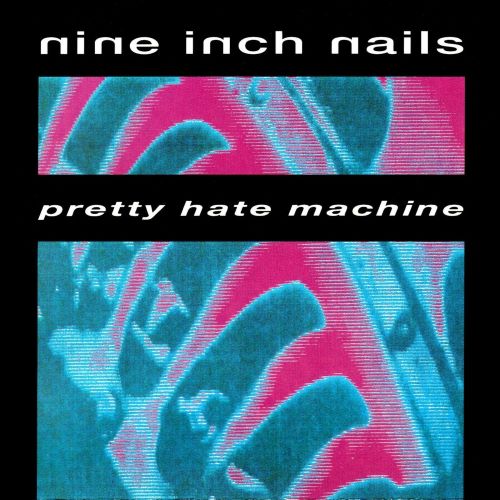
Nine Inch Nails – Pretty Hate Machine

Released October 20, 1989 via TVT Records

My Favorite Tracks – Sin, Head Like A Hole, Terrible Lie

Nine Inch Nails was the brainchild of Trent Reznor, who would be the band’s only member for the recording of the debut album. Reznor was able to record for free in a studio in Cleveland, Ohio; where he worked during the day then was allowed to do his recording at no cost.

The music here can bear multiple descriptors and still be pretty accurate. It is inudstrial, though far more rooted in conventional rock than many legacy industrial acts. It can easily be called electronic rock, though such a term doesn’t really mean much other than synthesizers and like instruments were used. And this was certainly alternative, in that it didn’t sound like much of anything else that was going on at the time. Yet, anyway.

Trent Reznor was the only musician involved in the bulk of recording Pretty Hate Machine, though others contributed spot appearances. The album was produced by a committee though, with Reznor and four others earning production credits. Among those was Flood, who had a long career in engineering and was now stepping up into production and whose future would be entwined with Nine Inch Nails’ rise.

The original issue of Pretty Hate Machine was 10 tracks at 48 minutes. A 2010 reissue includes a Queen cover and there are some other odd editions that comprise bonus tracks taken from the album’s many single releases, but today I’ll stick with the OG tracklist.

Head Like A Hole

Opening the album is the earliest NIN signature song and the album’s second single. This one comes in with synthesizer action but also sticks to a conventional rock formation, this song is probably as close as it gets to heavy metal on the first album. The verses spell out the presence of God Money, the true all holy presence that runs everything, then the chorus ramps up and lashes out, its refrain “I’d rather die than give you control” being a very recognizable shout from over 30 years prior.

Head Like A Hole has remained a NIN staple since release and is the band’s most played live song. Note that the music video features a remix of the song, though it is not radically different from the album cut.

Terrible Lie

It’s on to another NIN staple cut, this one wasn’t a single but has been in wide circulation anyway. This one keeps a slower pace but does still hit pretty hard. It’s one that sounds mostly more conventional though it still features plenty of synth and electronic programming. This one sees Reznor questioning god and religion, something he would not stop with here. Though this one is far less blasphemous and pointed than subsequent forays on the topic would be. This one is more about the disconnect between promise and reality, and the desire to cling to the fantasy.

Down In It

Up next is another album single and also the first song Reznor wrote for NIN. This one sees Trent showing off some rap skills and also goes very hard on the electronic side of things. Reznor has said that the song is a complete rip-off of Dig It, a 1986 track from influential act Skinny Puppy. And yeah he’s right about that.

The song is about what a lot of this album is, which is late teenage heartbreak and angst. It was based on an early relationship of Reznor’s and while the song is general enough to apply to a lot of things, the relationship angle is an obvious one. Also, the end of the song literally uses the “Rain, Rain Go Away” nursery rhyme for whatever reason. Kind of funny.

There is a funny story about how the FBI became involved with lost footage from the music video, but the story is lengthy so I’ll save it for another time. It’s widely available on Wikipedia and elsewhere for the super curious.

Sanctified

Here is a more atmospheric track that employs the electric elements to great effect. It couples the idea of relationships with the holy elements of purification, as though one is ascending or cleansing through the act of being with someone. Reznor has mentioned that the “relationship” might actually be one with drugs, though the song works quite well in the more conventional context of relationships.

Something I Can Never Have

A more quite ballad, and one that’s very forlorn. This revolves around love and loss, the unobtainable and the loss of what was. Reznor would showcase a special talent for this quiet electronic ballad style over the years, of course the culmination of that is a tale for later. This song got used for the soundtrack to Natural Born Killers, which Reznor produced.

Kinda I Want To

“Nine Inch Nails” and “fun” aren’t often words used in the same sentence but here on the debut we have a bit of it. It’s more upbeat, though still a bit twisted. I know nothing about dancing but I’m sure people could dance to this. This song centers around being tempted by something and the struggle around it, though honestly it sounds like the decision to go for it is already made. There’s no telling what the actual temptation is here – sex, drugs, slot machines, take your pick.

Sin

Up next is the album’s third single and my favorite from the record. Sin is, in its original form, a bit of a dance-pop tune, though with a theme and lyrics with a much darker bent. This song was remixed extensively, several versions exist and it’s done in a different style live, with less “fun” synth and more dark tones.

Sin is about what you would think a song named Sin is about on a NIN album. It does specifically deal with what sounds like an inadequate person in a relationship who’s caught in a power dynamic and is just fodder for their partner.

There is a music video for Sin, but it features a lot of sin and isn’t around on the usual video services. It’s around in other places for the sinfully curious.

That’s What I Get

This song turns down the intensity for awhile. It opens with a very weird yet compelling noise accent, then gets very quiet through the verses as Trent laments being cheated on. The song’s second half picks it up a bit but it’s still fairly minimal.

The Only Time

As the album winds down here’s another one that’s a bit minimal but is a fair bit louder than the track prior. This one is also kind of “fun” and deals yet again with being tempted by someone and all the feelings that go along with that for a young, naive person.

Ringfinger

The closer is a bit of an electro jam, with a fair bit of synth going on that’s more of the musical main event than an accent. Lyrically this tackles the “bliss” of marriage, as the title would indicate. There’s a small section with a very twisted electronic riff that would become a NIN staple going forward.

Pretty Hate Machine was a solid debut that would kick-start the legend of Nine Inch Nails. The album would chart very modestly on Billboard at 75, though word of mouth spread news of this new act around and the band caught fire. The album would eventually be certified triple platinum. Reznor would form a band for touring, the early live incarnation of NIN included Robert Patrick, who would go on to start Filter a few years later and land some hits of his own.

The word on Nine Inch Nails spread fairly quickly, by 1992 they were a fixture on MTV and elsewhere. It was also a pretty diverse crowd checking them out – the goth kids, industrial and synth-pop fans, metalheads and rockers, and hip-hop fans all came along for the ride. Axl Rose was one very famous early NIN adopter and he would take the group on a Guns N’ Roses European tour.

By the time 1995 rolled around Nine Inch Nails was one of music’s most unique and awe-inspiring acts, and the use of electronic/industrial music would seep its way into heavy rock for the rest of the decade. While it’s easy to pick on the emotionally immature themes of Pretty Hate Machine, something everyone including Trent Reznor does, the album still resonates with fans to this day and several songs are auto-includes on a setlist that now has a ton of material to pull from.

Sure, it was grunge in 1991 that symbolically changed music forever, but Trent Reznor had his own hand in shaping the future with his unexpected debut in 1989. Things would not be the same and Nine Inch Nails were a huge part of the new machine.

Iron Maiden – Singles Series Postmortem, Live Album Series Incoming

Just yesterday I put the finishing touches on the Iron Maiden singles series. It was a long one but it was fun to actually visit through each single and check out the songs, the B-sides and of course the covers. Maiden have a whole lot of singles and running through what I have was a task but certainly a worthwhile one.

The singles series will return again, once I fill in the gaps in my collection. That will be a ways off, at least late 2024 for sure, if not later. There are a few that are not easy to get, but a fair bit of what I still need is generally obtainable. I’m not going to rush the process and also re-doing a series list will be a whole lot of tedious fun, so it will be some time before I get back into that. I want to do my best to make the next update the last one so I don’t have to tinker with it all again, but we’ll see what I can or can’t get my hands on.

Up next on my list of Maiden stuff are the live albums. There are, at present, 13 official live albums. I will only be handling the officially released stuff in this next series, I’ll save bootlegs for another time. I want to get this one over with since it’ll be a year or so before the next triple-LP live set that’s inevitably coming after the Future Past tour. Though updating a live album series is not near the chore that the singles list will be.

My run through the live albums will only include the audio releases. Many of these have video releases as well, save for the last few, but the video content is something I’ll save for another series. There are a lot of documentaries and extra footage things on the videos, and there are other video releases not tied to album recordings so I’ll do that as a separate thing and that’s also a ways off.

I will also be handling the live albums in the order they were released, not the order the shows were originally played. There are some older live albums that were released several years on, though this really only applies to a couple. Just easier to do it this way. And, unlike the singles series, these will actually be in the proper release order since it’s kind of hard to screw up.

I intend to kick off the live album series in September, that’ll give me time to set up most everything. That leaves a bit of a gap for awhile, which I’ll fill with a few things. Up first will be a bit of a look at Iron Maiden’s four-song saga about Charlotte the Harlot. And I’ll also do what I intended to do when I was first setting up this site, which is offer up an actual Maiden studio album ranking. I was going to post that awhile back but I decided to wait to help fill space between the singles and live records.

An actual run through each studio album is a ways off, though it will happen someday. In fact, a new series where I go through and actually score songs and albums is coming soon, though it won’t involve Iron Maiden. Their studio records have and will continue to pop up as Albums of the Week, which is a separate thing from this new scoring deal.

I do also intend to actually go through and rank every Maiden song, something I talked about before. It’s a hell of a lot of tedious work and hard yet usually pointless decision making, but that series might be the one that pops up after the live album run is complete, maybe sometime early next year. That’s not something I’m going to do with any other band but I figured I’d take the plunge for Maiden.

I think that covers about everything – the singles series is laid down for now, the live album run is coming soon, and a review series for a different band is also just about out of the gate. There is plenty of other Maiden content I can milk, er, run but I’ll get to that as time rolls on. For more general updates about things upcoming, hang on for a few weeks until early August when I commemorate two years of running the site, there I’ll get into some other stuff. For now, everything else runs as usual and some other one-off content will show up to help occupy the void left by the end of the singles series.

Empire Of The Clouds – The Iron Maiden Singles Series

It’s time now to wrap up the Iron Maiden singles series. The final entry, and to date the last single to have a physical release, is Empire Of The Clouds from 2015’s The Book Of Souls. This was the album’s second single and it was released as part of Record Store Day in 2016.

There is only one version of this release, a 12-inch picture disc vinyl. There are a few CD promos out there but the mainline release was on this vinyl. It does feature some very nice cover art courtesy of Hervé Monjeaud. The art features the ever-present Eddie safely guiding an airship on fire to a comfortable landing spot. That or he’s knocking it out of the sky, who knows. I know last week I said that The Reincarnation Of Benjamin Breeg was the undisputed winner in reunion era Maiden singles art, but obviously I’d forgotten about this one. This is really great and might be even better than the Breeg art.

The “thing” about Empire Of The Clouds is its length. At 18:01, it is Iron Maiden’s longest song by a mile, outpacing Rime Of The Ancient Mariner by nearly 5 minutes. And The Book Of Souls had another track that came within 12 seconds of Rime – The Red And The Black. It’s clear that in their later career, Iron Maiden have abandoned any concern about song length. The song length thing generates plenty of arguments but there’s little room for that today since there’s so much to talk about here.

Empire Of The Clouds was composed by singer Bruce Dickinson. He played the piano parts that run through the entire piece, then he and producer Kevin Shirley brought the band in and directed them on where and how to play their stuff. After this the piece was filled out with orchestra arrangements by Jeff Bova, a multi-instrumental session musician who has worked on a ton of stuff.

The song recounts a specific event, that being the disaster of the British R101 airship. The ship sailed on its maiden voyage and crashed in France in 1930, killing 48 of the 54 passengers and was a particularly infamous airship disaster. It ended Great Britain’s airship program and has a ton of history written about it.

The song begins with a piano intro and then spends the first several minutes in verses setting up the flight of the airship. After about seven minutes the song shifts focus and we get a bunch of guitars. That goes for another five minutes or so, then a new set of verses set to more intense music kick in and the demise of the R101 unfolds lyrically and musically.

This is an epic tale and song, and Bruce made sure the song had enough going on to not be 18 minutes of the same thing over and over again. I would say I’m hard pressed to think of an 18 minute long song that just does the same thing over and over again, but it’s not all that hard to come up with one….

Empire Of The Clouds got a mixed response from Maiden fans, though many more people embraced it that might have been guessed. The people down on it are generally the ones who find fault with song length anyway so it doesn’t really matter what this song specifically had going on. But it’s also not hard to find people who consider this one of their favorite Maiden songs.

I myself fall somewhere well in the middle of the argument – I have no issue with them doing a long song, do whatever you want, it’s your band. I do enjoy this track but it is one that requires me to focus to really listen to it. I can play The Book Of Souls and if I’m just hanging out listening to it, my attention might wander while this song is going, whereas there are other long songs I enjoy that hold my attention just fine. But when I do bring myself to pay attention I do think this is a wonderfully done song. I don’t think it’s long just for the sake of it, it’s clear that this was put together with thought and that the song wound up at its 18 minutes out of purpose.

This song has captured attention and generated opinion of all variety. It’s ridiculous on one hand but it also works. Whatever the case, Iron Maiden did something out of their norm here and wound up with a curiosity that did its job and grabbed attention. And hey, whatever you might think of this song, at least it’s not a 13 minute long dirge fest about the Loch Ness monster.

Maiden Voyage

The “B-side” isn’t a song, rather it’s a long interview piece with Bruce and Nicko McBrain discussing the background and recording of the song. It’s a very insightful talk, especially to hear how Bruce’s other career in aviation fuels his songwriting. It is long and perhaps not something a lot of people would find that interesting, but it’s a good supplement to the single and probably a far better choice than putting some random songs on that don’t fit the scale of the lead track at all.

And with this I mark the conclusion of the Iron Maiden singles series. I’ll have a bit of a postmortem on this tomorrow and some more about a potential resurrection of the series after I fill in my collection, as well as a look at the upcoming Maiden live album rundown I’ll begin soon. Thanks for tagging along on this journey through the Maiden singles, it was fun.

The Iron Maiden Singles Series

Live! + One

Running Free

Sanctuary

Women In Uniform

Maiden Japan

Purgatory

Twilight Zone/Wrathchild

Run To The Hills

The Number Of The Beast

Flight Of Icarus

The Trooper

2 Minutes To Midnight

Aces High

Run To The Hills (live)

Running Free (live)

Stranger In A Strange Land

Wasted Years

The Clairvoyant

Infinite Dreams

Bring Your Daughter … To The Slaughter

Holy Smoke

Be Quick Or Be Dead

From Here To Eternity

Virus

Out Of The Silent Planet

Rainmaker

Different World

The Reincarnation Of Benjamin Breeg

Empire Of The Clouds (you are here)

Candlemass – Solitude (Song of the Week)

This week’s songs presents an interesting perspective with it – Candlemass have been playing for decades now and have had several membership changes. As a result, there is a massive supply of live and alternate recordings of this song available to go through. It’s quite a history which, of course, I’ll get right into.

Solitude is the opening track to Candlemass’ debut album Epicus Doomicus Metallicus. The album was released in 1986 and did not sell well out of the gate, leading the band to be dropped from the small-time record label they were signed to. Singer Johan Längqvist would quit the group without ever performing a single concert, a distinction that was a curiosity in metal trivia and would last over 20 years.

Candlemass would soon see their fortunes buoy – they were joined at vocals by the voice and character of Messiah Marcolin and they’d go on a run of three albums that would help define the landscape of doom metal at a time when the genre was little more than whatever Black Sabbath had done. As the profile of Candlemass rose, so did the sales of the debut album. With this, many new fans took notice of Solitude and the song grew to become one of the band’s signature tunes.

This song is a recording by a doom metal band and as such it is a “sad” song. The music is suitably slow and morose – while a lot of heavy metal was caught up in pushing the envelope of thrash, Candlemass and a few others were exploring the territory that would become doom.

Lyrically, Solitude goes well beyond just being a sad song – this is a desperate track about someone at their total wit’s end who is contemplating suicide. This is the final words of a tortured soul who simply wishes to pass in peace – there is no hope or anything greater to reach for here. Candlemass didn’t have a high enough profile for the song to be picketed by the “moral majority” in the same way a lot of metal music got twisted as encouragements of suicide, which is a bit ironic since this song is very much a bleak and open portrayal of such circumstances while the media-fueled witch hunts were targeting songs not really about suicide.

As Candlemass wound on with their career, Solitude has gone on to see several versions released. By a very quick count I can identify at least 10 versions across different official live releases, as well as 2 more live and one demo session from a rarities box set. Additionally, the song was re-recorded in studio in 2007 when new singer Robert Lowe joined the band and was released on his first album with the group, King Of The Grey Islands. And I’ll hold that version up as an awesome rendition and, at the risk of blasphemy, perhaps the definitive version of the song.

Earlier I mentioned how original singer Johan Längqvist did not sing Solitude with the band, or any song as he didn’t perform live at all with them before quitting. This was corrected in 2007 when the band celebrated a slightly late 20th anniversary by having Johan join them for a handful of songs live. He would link up with Candlemass on a few other occasions through the 2010’s before fully re-joining as singer in 2018. It was a true case of coming full circle.

Solitude is often hailed as Candlemass’ magnum opus, and even in debate it’s a top 2 or 3 pick. This was from a time when a scene could take years to form, when having a soft selling debut didn’t necessarily mean the death of the band, and when word of mouth and snail mail were the ways music spread across the world. Now nearly 30 years on from its release, Solitude is still just as haunting and soul-wrenching as it was back in 1986.

Kreator – Endless Pain (Album of the Week)

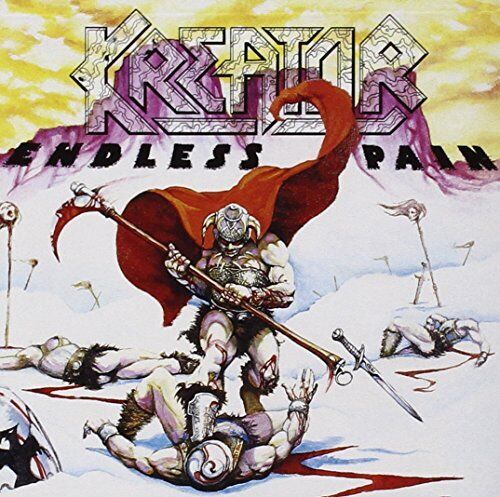
Going back to the mid-80’s to visit with a cornerstone of the German thrash scene and the debut of one of metal’s most prolific acts. This week will also showcase a new feature – me not using a shitload of words.

Kreator – Endless Pain

Released October 11, 1985 via Noise Records

My Favorite Tracks – Endless Pain, Flag Of Hate, Total Death

Kreator formed in 1982, known by the names Metal Militia, Tyrant and Tormentor before finally settling on Kreator. The band was staffed by guitarist/vocalist Mille Petrozza, bassist Rob Fioretti and drummer/singer Jürgen Reil, aka Ventor. Both Mille and Ventor remain the nucleus of Kreator to this day.

Noise Records was an upstart metal record label in Europe that was just off the ground and running by 1985. The label signed Kreator and Endless Pain was recorded in just ten days. Noise would become a hotbed of European heavy metal and Kreator would rise to be a signature act for Noise.

Endless Pain was a primitive and cruel-sounding record, a thrash album coupled with the early extreme metal noise fathered by the likes of Venom, Celtic Frost, Bathory and Mercyful Fate. This was raw, aggressive and evil – it was not cultivated for a greater pop audience, rather it was metal made by and for the growing masses who were pushing for heavier and heavier music in the wake of thrash’s arrival.

Given the album’s savage and simple construction, as well as no real need to visit the lyrical themes of each song in isolation, I’ll skip a lot of steps today and simply list the tracks, then discuss a few highlights.

There is one other thing to note here – while Mille has been the voice of Kreator for the bulk of existence, on this album Mille and Ventor split vocal duties. Mille does vocals on songs 2, 4, 6, 8 and 10 while Ventor handles the odd-numbered stuff.

Endless Pain

Total Death

Storm Of The Beast

Tormentor

Son Of Evil

Flag Of Hate

Cry War

Bonebreaker

Living In Fear

Dying Victims

This album is a buzzsaw, with lo-fi production and a savage approach to both instruments and lyrics. There is a similar cadence to many of the songs, it is in some ways an embryonic version of what Kreator would become. It doesn’t offer much in the way of variety – either you like this album or you don’t, there isn’t a lot of “track 5 is cool but 6 I can skip.” It’s an all or nothing deal.

While this could be called “underdeveloped” by some, Endless Pain is hailed as a classic just the way it is. Thrash as a whole was moving toward major label deals and high-end production values around this time in the US, while in Germany it was a far more raw offering that kept the underground and “dangerous” feeling alive – while Satanic Panic parents where wailing about hair metal, this kind of stuff was also around.

For me this album is the perfect balance of listenable production and the raw sound many metal bands were looking for, or were perhaps stuck with due to budget constraints. No this production won’t win any industry awards, but the music is clear and listenable. I have heard and even liked a fair number of awfully produced albums in my years, but Endless Pain was never one that upset me. It walks the line very well and its lo-fi atmosphere enhances the record.

And this noise would bear influence – just as Kreator and their countrymen Sodom and Destruction were keeping thrash lo-fi and running along the same lines as Venom and the like, a new group of musicians influenced by all of this would lay the groundwork for death metal and black metal. By the time 1990 rolled around, heavy metal had mutated quite a bit from how it entered the 1980’s.

A few of the songs from Endless Pain have become Kreator staples – the title track and Flag Of Hate are the signature tunes from the record, and Tormentor also sees a fair bit of play to this day. This raw set was not forgotten as Kreator refined their sound through the ensuing years, rather it was celebrated as the savage beginning of a new metal legend.

Endless Pain kicked off the nearly 40-year career of the band that became legends of thrash, German and worldwide. While US thrash was creeping up sales charts and was just about to explode in mainstream popularity, Kreator and their peers offered up a new, raw approach that would help steer several other metal subgenre offshoots in the years since. Kreator have refined and reinvented themselves over the decades but at times it seems their first notes still ring the loudest.

The Reincarnation Of Benjamin Breeg – The Iron Maiden Singles Series

We are almost done with the single series, but there are two doozies lined up to close things out. Next week’s is … well, next week is next week. Today we have a special song that got a bit of an Internet mystery marketing campaign behind it before its 2006 release.

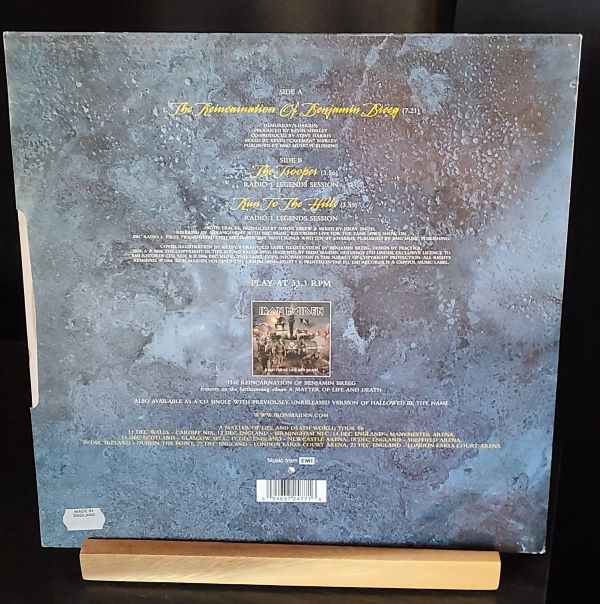
This single, like most “modern era” ones, was available in a few different versions. This is an oddity in record collecting as far as I’m concerned because I have a 10-inch vinyl. The song itself was too long for 7-inch so instead of throwing in on a 12-inch, they put out this oddity of vinyl physics. While 10-inch vinyl is cool from the standpoint of having something different, it’s also a horrible pain in the ass for storage. I have like, three 10-inch records in my collection and they’re just in with their bigger brothers, at risk of damage but I’m not setting aside a new area for three stupid records. But outside of the storage issues, it’s kind of a cool format since it’s not a common thing.

The cover art was done by Melvyn Grant, one of Eddie’s more prominent artists over the years. The cover features Eddie taking a pickaxe to the grave of one Benjamin Breeg, who we’ll get to in just a second. There are shades of Live After Death here, the art isn’t the same but it certainly evokes that memorable cover.

And honestly, this is the best Eddie art in the reunion era. Maybe I’m forgetting something, and this doesn’t include the really great t-shirt designs, but cover wise this is pretty much it. It’s reminiscent of the classic era stuff but still is distinct from the Derek Riggs line with the whole grave thing.

This single came with a very curious line of hype, though the hype was cryptic. A website sprung up for a Benjamin Breeg in 2006, with posts from a cousin of this Breeg fellow. The cousin was out of find more information about his mysterious relative. It became clear early on that the site was a marketing tool for the single when the cousin’s second post mentioned that the band were releasing a song about Benjamin, but the cryptic updates would continue.

Benjamin Breeg was born on September 3, 1939 – this was the date that Allied nations declared war on Germany in the kick-off to World War II. Breeg was orphaned some years later and developed a series of horrible nightmares that would plague him for the rest of his life. He painted the stuff he saw in his nightmares and later he wrote books about paranormal activity. He disappeared in 1978 with no leads as to what happened.

Breeg’s cousin makes a series of posts updating on the quest to find Benjamin’s fate. A person contacts the cousin and arranges a meet-up on August 14, 2006, coincidentally the same date as the single’s release. No further updates were posted and the site was eventually shut down, though the Web Archive does have a version still viewable.

In the second to last post, the cousin relays finally being able to see one of Benjamin’s paintings. I’ll just link to the site here if you want to look at the painting, but for those looking to save time, of course the painting features Eddie.

Nothing was ever revealed further about Benjamin Breeg and the connection to Eddie. It leaves several questions – was Eddie simply a figment of Breeg’s nightmares and then came to life when Breeg disappeared, around the same time Eddie was originally conceived? Was Eddie actually Breeg in an undead form? Did the cousin meet Eddie and also get dispatched? Or did the cousin actually meet Benjamin himself, rumored by some to still be alive? We’ll never know, though the first line of questioning seems the most logical in terms of impact to Eddie’s unknown origin story. Maybe one day the band will commission someone to tell the full tale of Edward the Head, which now must include Benjamin Breeg in some form.

This was a clever way to generate buzz around the band and their new album. The single was received warmly as was the entire album, still often rated as the best or one of the best from the reunion years in consensus opinion. While it was a bit disappointing there was no real “closure” to the Breeg saga, the whole thing was a very cool deal to experience when it was running in ’06.

All that was fun but there’s an actual song to talk about.

The Reincarnation Of Benjamin Breeg

The song opens up with a nice intro that definitely gives off some vibes from old Maiden days, especially the “synth era” of the band. The vocals kick in with a quiet piece before the song builds into the pretty loud main riff that will back the balance of the track.

This one, like many from AMOLAD, was very well done. The music hits hard and has the “epic Maiden song” feel and Bruce is on point with the singing, as always. Lyrically the song is pretty vague. Divorced from the website story about Breeg, there really isn’t anything to go on to glean the meaning of this one. Someone needs saved and the world kind of sucks, that’s about it. With the background of Breeg the song’s words get a bit more clear but it’s still not an open book.

The single did reasonably well on European charts, landing a few number one spots and placing on several others. Maiden’s glory days were behind them by this point but the reunion era was bearing real fruit and at this time proving itself to be more than a flash in the pan.

Also – I have a t-shirt of this song with the cover on the front the “here lies a man about whom little is known” grave inscription on the back. Sadly the shirt now has an armpit hole in it, which just means I’ll have a hole in the pit when I still wear it.

The B-sides

No need to get too detailed here – both B-sides are “live in studio” sessions from BBC Radio One. It’s the same session that the B-sides from the Different World single are from, and one of them, The Trooper, is the exact same song. Here we also get Run To The Hills. These Radio One B-sides are available across all AMOLAD single configurations so they’re easy to get. Very worthwhile stuff.

That’s about all for the saga of Benjamin Breeg and Eddie. I don’t have any of the singles from The Final Frontier, they are not the easiest to come across. So that means next week is the finale of the Iron Maiden singles series. But don’t fret, we’re going out on an absolute whopper.

The Iron Maiden Singles Series

Live! + One

Running Free

Sanctuary

Women In Uniform

Maiden Japan

Purgatory

Twilight Zone/Wrathchild

Run To The Hills

The Number Of The Beast

Flight Of Icarus

The Trooper

2 Minutes To Midnight

Aces High

Run To The Hills (live)

Running Free (live)

Stranger In A Strange Land

Wasted Years

The Clairvoyant

Infinite Dreams

Bring Your Daughter … To The Slaughter

Holy Smoke

Be Quick Or Be Dead

From Here To Eternity

Virus

Out Of The Silent Planet

Rainmaker

Different World

The Reincarnation Of Benjamin Breeg (you are here)

Empire Of The Clouds