Alice In Chains – Dirt

This week I’m heading back to 1992 and digging up one of the most revered albums of the period.

Alice In Chains – Dirt

Released September 29, 1992 via Columbia Records

Alice In Chains were the first of the grunge bands to hit the scene in a big way in 1990. By 1992, the “Seattle sound” had taken over national airwaves and a new era of rock music was underway. This was the environment AiC found themselves in while recording their second album.

Dirt was recorded with the same line-up as Facelift – Layne Stayley on vocals, Jerry Cantrell on guitar and vocals, Mike Starr on bass and Sean Kinney on drums. The album was produced by Dave Jerden, also producer for Facelift.

This is one very dark record, with tales of drug abuse and mortality. While each big grunge act was set against a particular kind of rock that helped shape their sounds, Alice In Chains had heavy metal in their blood and were always a downcast lot. Layne Stayle’s personal demons also went a long way to informing the music of AiC, as several of the songs here form a mini-story of an addicted person crashing all the way.

Dirt comes in with a lofty 13 tracks at a runtime of 57:37. Some early pressings of the album had the track Down In A Hole as the 12th song, while most versions have it in the band’s preferred sequence at number 4. The album saw 5 single releases, all of which charted on the US Mainstream Rock charts and the UK Charts. Note that the band never actually charted on the Billboard Hot 100 until 2009, an odd fact that I wasn’t aware of until just now. This is at least what I could find while looking, it could possibly be incorrect information.

Them Bones

The album opens with a sick, heavy riff with Stayley reflecting on mortality over it. The song is a fatalistic look at how we’re all going to wind up a pile of bones, no matter what. The monstrous riff and Stayley occasionally yelling out suddenly add a creepy feel to the proceedings.

Grade: A

Dam That River

This one is heavy and more fast-paced, conventional rocker. The song was apparently written about a fight that Sean Kinney and Jerry Cantrell had – Kinney smashed a table over Cantrell’s head and the blood flow was such that “you couldn’t dam that river.” It’s kind of amazing that they kept together and also wrote a song about it. Grade: A-

Rain When I Die

This has a very nice, funky and creepy guitar running through it. The lyrics are a lament of a relationship not gone right and may have been composed based on experiences from both Stayley and Cantrell. The title “rain when I die” invokes various old cultural customs that it should rain when someone dies to cleanse everything still remaining. And yes, it did rain the day Layne Stayley died in 2002, which probably amounts to him having lived in Seattle where it rains all the time. Grade: A

Down In A Hole

This magnificent ballad that just drips in misery was crafted by Cantrell about his girlfriend at the time. I won’t get too heavy into it as I discussed this song in the past here. It is my favorite AiC song and one of my favorite songs of all time from anyone. Also, the name of the old series where I covered it was called S-Tier Songs, so the grade should be obvious. Grade: S

Sickman

This is one of several songs owing to drug addiction, which Layne Stayley would live in the grip of for the remainder of his life. Stayley asked Cantrell to write the sickest and darkest thing he could for this song, and the lyrics deal with someone who is totally aware they are messed up but are unable to fight their own thoughts and do anything about it. Grade: A-

Rooster

Up next is probably the most well-known song from the album. Cantrell wrote this about his father’s time in the Vietnam War. It is a harrowing tale of being stuck fighting a war no one wanted in the jungle of a hot, tropical land against a ruthless enemy. The song is fantastically done and maintains a tradition across generations of musicians speaking out about this war. Grade: A+

Junkhead

This one slows things down with a bit of a groovy doom-crawl. It brings the point home that it’s very tough to understand the mind of an addict, that many times it’s only another addict who can grasp what’s really going on with someone. The outsider doesn’t experience the euphoria of the high and escape from the despair of reality that the addict does. Grade: B+

Dirt

The music is another twisted mire and the subject matter is devastating – this is someone at the bottom who doesn’t want to exist anymore. It is a very deep and disturbing jaunt through the mind of someone who seems totally gone. Grade: A-

God Smack

This has a few running riffs that Jerry Cantrell would use to great effect in both AiC and his solo career. The song is about heroin, the term “god smack” refers to a heroin overdose. The music along with the willing descent of someone into addiction is like a dark circus trip. Grade: B+

Untitled (or ‘Iron Gland’)

This brief interlude was something Cantrell used to mess around with in rehearsal. It was mashed up in a small way with Black Sabbath’s Iron Man for a little fun. The few vocals here are provided by Tom Araya of Slayer. Grade: B

Hate To Feel

This is the first of two songs Layne Stayley wrote entirely on his own for Dirt. There are some interesting jumps from the quiet, buzzy verse to a noisy chorus. Here Stayley regrets even being able to feel – he knows he is an addict and is tired of the constant realization that he needs to get better, and is also sick of the judgment of outsiders who think he should “just stop,” as if it were that easy. Grade: A

Angry Chair

The other song composed by Stayley, this is a very, very dark and twisted song. This one is still about the grip of addiction, though it is couched in more abstract and metaphorical language. It is one wild ride and a very enjoyable cut. Grade: A+

Would?

The album’s closer is a tribute to Andrew Wood. He was the singer of Mother Love Bone and died of a heroin overdose in 1991. The song itself offers up a bit more bright atmosphere than the rest of the very dark record, though the lyrical fare is still an addict asking if he’s even alive or if he has already died and has left everyone behind. Grade: A+

Dirt would quickly become Alice In Chains’ magnum opus. The album hit the Billboard 200 at number 6. Its 30th anniversary reissue would re-enter the same chart at number 9 in 2022. The record has been certified five times platinum in the US.

The band toured behind this album, playing all manner of shows alongside both rock and metal acts. This would mark the practical end of touring for Alice In Chains, despite releasing one more album and a celebrated MTV Unplugged set, the group would not get out on the road much in this original incarnation. Mike Starr would exit the band in 1993, replaced by Mike Inez.

But that wouldn’t matter as Dirt cemented a legacy as one of the best albums of the 1990’s. The five singles were in constant rotation on radio and MTV for years after release and are still found out and about today. While grunge was considered a reaction movement to the rock music of the time, Alice In Chains were a bridge act that made it very easy for metalheads to enjoy. AiC perfectly complimented the other alternative metal of the time, bringing in a uniquely creative scene that has yet to be replicated since.

Album Grade: A+

Dirt is a stone cold classic. The real pain of Layne Stayley’s addiction was mined for the most haunting and memorable song material. Jerry Cantrell provided a guitar masterclass in writing compelling riffs that both grab attention and work for the song. The album is harrowing in that both Stayley and Starr would lose their lives to addictions in 2002 and 2011 respectively, but it does not detract from the gift we were given with this masterpiece of a record.

For an explanation of the grading scale, head here.

For questions, comments or concerns, use the comment for below or head to my contact page.

Johnny Cash – New album Songwriter coming

2024 has been fairly hot with releases so far and that tone isn’t changing as the year winds on. News dropped recently that none other than the Man In Black himself, Johnny Cash will have a new album hit stores on June 28th. Songwriter will mark Cash’s 72nd studio album (!) and 5th since his death in 2003.

Songwriter is an album that Cash recorded demos for in early 1993 and then shelved, as it was not long after when he was approached by Rick Rubin. The Rubin collaboration launched a late-career revitalization with the American Recordings series that grew Cash’s legend up to and beyond his death, so the Songwriter demos remained an afterthought.

These demos would be discovered many years later by Cash and June Carter’s son John Carter Cash. The younger Cash presented them to engineer David Ferguson, who had worked in that role on the American Recordings series. Cash and Ferguson stripped down everything from the demos but for Johnny’s vocals and guitar (with one exception) and then set about finding a new cast to reshape the music.

Joining in to help flesh out the album were Marty Stuart and Harry Stinson, as well as guest spots from Vince Gill and Dan Auerbach. There is also another posthumous presence on the record, as Waylon Jennings had dropped in to sing on a few songs with Cash on the original recordings.

One other interesting quirk of Songwriter – many of Johnny Cash’s albums featured a hefty dose of cover songs. This upcoming album is different in that it features all original material. Two of the songs, Ride On and Like A Soldier, were re-recorded and used on American Recordings.

With the news of the album also came the first single, a quick two-minute tune called Well Alright. The song is upbeat and pretty amusing, it’s simply about meeting up with a gal at a laundromat. It’s a song that easily puts a smile on your face and is maybe just ever so slightly suggestive in a phrase or two, but nothing out of bounds. It also sounds really good – merging Cash’s 1993 recording with 2023 musicians worked out great and the production is crystal clear without being too sterile.

I know posthumous releases can be a touch subject in the music world, and Johnny Cash is reported to have enough unreleased material to release an album a year for eons if his legacy caretakers so desired. But Songwriter is filling in a gap from a moment in time just before Cash had his last big break and I consider it an important offering for the Cash catalog. I’m also totally fine with posthumous releases, I honestly just want to hear the music so bring it on. I’m looking forward to the end of June and the rest of this album.

Oasis – Supersonic

This will be a song of the week as well as a look at a single, as forces have conspired to make this possible. So it will actually be two songs this week since the single has a B-side.

There is a feature track of course, and that song today is the debut single from Oasis. This was the start of what would become a white-hot run through music in the mid-’90’s, no one was bigger than Oasis through 1995 and 1996. But today revisits their beginnings in 1994 so we’re not quite to their shit hot moment in the sun.

Supersonic was released on April 11, 1994 as the lead track from the debut album Definitely Maybe. The single charted modestly well for a debut band – it hit 31 in the main UK chart and popped up on several US alternative charts despite not making the Billboard Hot 100. The single would eventually be certified platinum in the UK. The album it hailed from moved over 8 million copies.

This version of the single I’m covering is the 30th anniversary re-issue of the 7-inch version. While there are several other versions of the single out there, these two songs tie in nicely together due to the story of their creation.

The band set out to record their first single in early 1994, that song was supposed to be Bring It On Down, which became a non-single track from the debut album. Noel Gallagher wasn’t happy with the song and began messing with I Will Believe, which became a B-side for other versions of the single. Then totally off the cuff, Noel wrote Take Me Away, this single’s B-side.

On the last day of studio time, the band messed around with an instrumental. Also in the room were brothers Chris and Tony Griffiths of the band The Real People. Tony suggested that the bit Oasis were playing could be a hit song, so the band worked up what became Supersonic.

As a note on writing credits – Noel is the sole credit, though he did later confess that Paul “Bonehead” Arthurs and Paul “Guigsy” McGuigan helped him write the chords. Tony Griffiths also played some songwriting role but was not given a credit, Noel’s decision to leave the Griffiths brothers out of credits on the debut album was an issue that caused infighting in Oasis. I know, I know, no one could imagine the members of Oasis fighting among themselves.

Supersonic

The feature song opens with a bit of drumming then kicks in to a riff that plods along but has a bit of bite to it. The song’s run maintains this riff’s shape, with only minor alterations through the chorus. It is a pretty chill, laid-back affair with a bit of guitar work to provide a jolt of energy.

The lyrics open with a simple yet wise line – “I need to be myself, I can’t be no one else.” It is also the only part of the words that make any kind of sense at all. All of the rest of the lyrics are nonsense rhyming exercises. It’s a song that is all vibes and no meaningful underpinning – trying to find a deeper meaning to Supersonic will land you on the bottom of the Mariana Trench with nothing to show for your dive. This is a song style Oasis would excel at in their early career.

There is a shout-out to The Beatles in the song, something Oasis would do a lot of through their run. This one is simple, it’s an open mention of Yellow Submarine as one of many vehicles discussed through the track.

Supersonic is a great song to put on to just chill and not have to give a damn about anything for a few minutes. I ranked this one lucky number 13 awhile back when I lined out my 20 favorite Oasis tracks.

Take Me Away

The B-side is an acoustic track with Noel also handling vocals, something he would do every so often through the Oasis run. It’s a very nice and simple tune about just sitting and chilling for a bit longer as everything around you falls apart. There are a few homages to Beatles lyrics in this one, I’ll leave you all to find them. This is one of many B-sides considered underrated by the Oasis fandom, which I guess would make it not underrated if everyone who cares about Oasis rates it highly.

That does it for this look at the first and also newest Oasis single. It would be the start of one hell of a run through music as these lads literally took over the world for a bit of time.

Slayer – Haunting The Chapel

My posting schedule is still all messed up – though the things that happen are minor in significance, things do keep happening and they keep pushing me back. I will again pivot and adjust and get things on track.

This week I’m going to pull out the “EASY” button. Slayer did not release an album proper in 1984, but they did release two distinct records – an EP and a live set. Today I’ll discuss the EP, which is very short but a significant marker in Slayer’s development.

Slayer – Haunting The Chapel

Released June 1984 via Metal Blade Records

Slayer’s debut record Show No Mercy was a huge success for upstart label Metal Blade, so label head Brian Slagel quickly commissioned an EP from his hot new act. The members of Slayer – Tom Araya on vocals and bass, Kerry King and Jeff Hanneman on guitar, and Dave Lombardo on drums – were brought to a North Hollywood studio with Slagel himself turning the knobs on the production console.

The studio would have a negative effect on sound initially but also provide a hell of a positive. The studio did not have carpeting, which meant that drums slid everywhere when Dave Lombardo tried to play them. He had to resort to having the band’s roadie help out by holding the drums. This roadie was Gene Hoglan, widely known today as one of heavy metal’s greatest drummers after stints with Dark Angel, Death, Testament, Strapping Young Lad and many others. Hoglan also helped Lombardo set up the latter’s first double kick drum and helped him along with how to play it. All these years later both drummers are considered the top of the pack, but forty years ago it was them trying to figure out how to hold a kit together in a shitty studio.

Since this is just an EP there’s room for another funny Gene Hoglan story – Gene recounted in this 2006 interview with Decibel Magazine about Slayer that when he joined up to be the band’s roadie, he thought he was only going to be working the lights. He didn’t know he was also supposed to help schlep gear in and out and set up the stage show. The band gave Hoglan his walking papers a bit later, and he would join Dark Angel not long after.

Also involved in the EP’s production was Bill Metoyer, who held the engineering role on Show No Mercy. Metoyer recounts in the same Decibel interview that he was Catholic but for whatever reason had no problems with the lyrics on the debut album. But when he heard Tom Araya belting out the first lyrics to the EP, which were “The Holy Cross, symbol of lies, intimates the lives of Christians born, he quipped that he would be going to Hell for it. Metoyer seemed to take it in stride and is still very much among the non-Hell dwelling living today, having served as producer to a massive list of metal albums since then.

With those amusing stories out of the way, let’s get to the topic at hand. The original version of Haunting The Chapel was three songs, the first three in order here. The fourth song was added later on in a reissue capacity, I will include it here today because it’s not a ton of ground to cover. The total runtime with the added song is 16:55, I hope you all didn’t have anywhere important to be.

Chemical Warfare

Up first is a track with a fairly hefty six minutes. Slayer here shift gears some from the “general chaos and evil” of their debut album and head decidedly into a thrash direction. And this song is thrash, 100% through. It does retain that cavernous, evil Slayer feel but this is pure thrash. There are a few changes in structure to keep the fairly long track moving along.

This is a wicked song with its lyrical depiction of being hit with chemical weapons, a terrible way to die or be wounded. Anyone who thinks Kerry King or Jeff Hanneman couldn’t play solos should listen to this song – they were both quite capable of playing. The song is great and is an early Slayer classic. Grade: A

Captor Of Sin

This one calls back to the evil ways of Show No Mercy, though still retaining a thrash underpinning to it. It’s a wild ride as the son of Satan comes to Earth and takes over, vanquishing everything in its path. The bad guys win this one. Grade: B+

Haunting The Chapel

The title track is another Satanic romp through holy victims. It’s another dissonant, thrash-filled journey on the Dark Lord’s conquest of the mortal realm. It doesn’t offer a whole ton of dynamics but it’s still a quality Slayer track. Grade: B

Aggressive Perfector

This final song, a bonus on reissue versions of the EP, was originally released on the third volume of the Metal Massacre series. This was the first Slayer song ever released, pre-dating the debut album. It does stand out with a bit less production than the other three songs but this is not a rudimentary throw-away track – it’s a very good early offering from the group. Grade: B

Haunting The Chapel did not perform on charts but it was a solid release that kept Slayer’s name in the forefront as the thrash scene unfolded in the mid-’80s. Even today with the band’s work (apparently) done, the EP stands as a fan favorite for its marked transition between the first two albums. The first two songs remained live favorites through Slayer’s entire career and the EP is still sought after 40 years later.

Album Grade: B+

This was a well-done EP that offered up fresh material, it was not by any means a throw-away effort just to make a buck. It was a smart way to help out both upstart band and record label, both of whom became central to heavy metal in the years since.

The Digital Evolution

searching for my favorite hits on Spotify

I had a pretty big change in how I do things as far as music is concerned, and I thought it’d be a good bit for a post. Digital music has been around a very long time if you want to consider the CD, but for my purposes today I will refer to the MP3 or digital revolution of the early 2000’s, that which more or less displaced the CD as a viable format.

In the early 2000’s I was not an early convert to hard drive-based digital. I was “old school” and still respected the physical format of music. I recall between 2004 and 2006 people I knew were themselves fully converted to the iPod or whatever MP3 device was around. I was not having it, I was very die hard against it and was a total elitist snob about it. Yes, I had digital music on my computer where I made playlists out of albums I wouldn’t necessarily buy, and yes that digital music was not necessarily acquired legally, but I was still in the “so and so put out an album, and I’m going to buy it” mindset. And the prevalent format at the time was still the CD, this was just before the hipster revolution that saw the massive comeback of vinyl.

It wasn’t until sometime in 2008 that I relented and got my first iPod. A good friend bought a new one for himself and sold me his old one at a good price. I had all of my CD collection and also copied my friend’s collection to a hard drive to put on my new iPod. Additionally I had great access to several other friends’ CD collections and I was able to quickly build a massive digital library. I had my iPod almost stuffed, and it was something like 17,000 albums or some crazy shit like that.

And going digital did truly work out well. I have to give props to those who spoke well about it when I was too obstinate to listen. It changed how I listened to stuff, mainly in that I would give far more time to albums I had laying around but didn’t often play. I also took more chances on styles outside of my general vision, even if I didn’t always land on something I really wanted to hear again.

As time wore on, the concept of maintaining a digital collection gave way to streaming. Spotify was first, then many others hopped in the streaming market. It’s far more convenient to pay a few bucks a month to access a vast catalog of music instantly than it is to rip CDs or buy digital downloads. Just as digital became the prevalent format, the concept of a streaming library overtook a hard drive full of stuff. Artists might not get paid worth a damn out of streaming and especially Spotify, but that is another conversation for another time.

Once Spotify worked out a few early issues (their search function was pure trash when it first released) and they cut deals to land many prominent artist hold-outs like Metallica, Pink Floyd and others, I did start using it. Far easier for me to check out an artist I never heard of on there and decide if I liked them enough to buy the album, rather than shell out on a blind purchase that I may not like and, at least in terms of a CD, was now worthless due to the digital market.

I did still hold on to my digital collection, though. For a long time phones had SD card slots and it was really easy for me to keep my digital collection on it. I would use some whatever player to access my own collection and then use Spotify when I was playing stuff I didn’t own or new stuff.

That all changed just last month, when I upgraded my phone. Most smartphones no longer use SD cards, their own internal storage is pretty huge. I decided to not move my digital music collection over to my new phone – I have more than enough space if I don’t move it, but copying it all would take up nearly half of the storage.

This does mean that I’m now using Spotify for all of my on-the-go music. I do download stuff if I’m gonna be in a spot without service, but it’s all streaming for me now. I either go for albums I know and love, new stuff I want to check out, or old things I missed. I also have some massive playlists I’m building based on decade or genre, those are works in progress but I’ve already got a massive amount of stuff on a few of them.

It is cool how Spotify sucks as much as any other digital music player when it comes to the shuffle feature. I’ve never found one that has a really good randomization, most of them seem to gravitate to songs that get played a lot, and that often means the first batch of songs it plays out of a shuffle. I have seen worse programs, but the Spotify shuffle does leave something to be desired. It has a massive recency bias, in that if I add new songs to a playlist, well, guess what I’m gonna hear on my next shuffle? I guess it gets the job mostly done, though.

That just about wraps up what I wanted to say about this next step in my listening evolution. I do still maintain both vinyl and CDs at home, but it’s all in on streaming now for me when not at the house, or when checking out unfamiliar stuff. I do wonder what the “next steps” in music listening are, but I’m far too old and unimaginative to speculate on how things might go.

Judas Priest – Freewheel Burning

I’m gonna stick with 1984 for the song this week. I’ve long since talked about this album, which was a given since it’s my favorite Judas Priest record. Today I’ll have a look at the album’s lead single.

Freewheel Burning was released in January 1984 as the first single from Defenders Of The Faith. Oddly, the single was apparently released the same day as the album, at least from the sources I can gather. The single held a few very modest chart positions though the album as a whole was quite successful.

This song is 100% quintessential heavy metal. While Priest have always been a heavy metal band devoid of sub-genres like thrash, this song does easily fit the speed metal category. It is fast and furious, just as the first words of the song indicate. Fast And Furious was also the working title for the song before recording, just imagine the crossovers Priest could have had with the movie franchise.

Two stars of this show are the classic guitar tandem of Glenn Tipton and K.K. Downing. Not only is the song’s main riff a total barnburner, but the extended solo section of this song is absolute fire.

Also of note, as would be expected, is Rob Halford’s vocal performance. He is all over this one, shrieking through the verses while using a bit of his range in the bridge. He also delivers a rapid-fire performance a few minutes in that moves faster than rap, it’s a Halford machine gun. It’s certainly among his signature performances.

The theme with this one is simple – it’s about getting in your car and going fast. Not only fast, but as fast as possible. There’s nothing more to read into this one, just grab your vehicle of choice and put the pedal to the metal, high speed at all costs. Given the sorry state of US drivers these days, it’s like this song is used for driver’s ed.

Freewheel Burning has been a favorite song among Priest fans since 1984. Surprisingly, the song ranks a rather modest 20th in terms of how many times it’s been played live. I would have expected more but that’s why I look these things up. But it is a favorite when it does get set time, and I was happy to hear it when I saw them in 2018.

One other fun little bit of trivia – on the vinyl single, there is an extra guitar intro that isn’t heard anywhere else. It’s a slow, atmospheric bit that takes up an extra 50 or so seconds. Sadly I can’t find a good video of it so if you want to check that out you’ll have to hunt down the single or watch some video of a dude playing it on his turntable.

That’s about all there is to it, it’s pretty quick and easy to run down this speedy beast of a song. It was yet another triumph for Judas Priest as they helped cement the foundation of heavy metal in the 1980’s and are still leading the charge 40 years later.

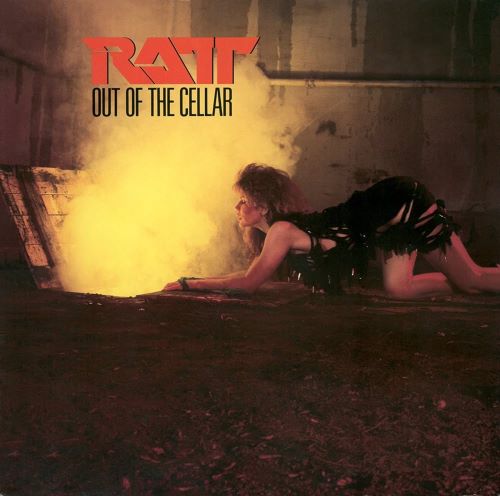
Ratt – Out Of The Cellar

The 40 year celebration of 1984 marches on, and today it’s a monumental debut that would turn the decade’s rock and metal music on its head.

Ratt – Out Of The Cellar

Released February 17, 1984 via Atlantic Records

The early history of Ratt is actually long and a bit windy, but this is their debut full-length after an EP one year prior so it’s the best place to pick up the story. In short, the band formed out of a series of other California-based groups (including Dokken) and the line-up eventually solidified into a recording and touring group.

That line-up featured Stephen Pearcy on vocals, Warren DeMartini and Robbin Crosby on guitar, Juan Croucier on bass and Bobby Blotzer on drums. The album was produced by Beau Hill, who had broke into Atlantic Records after work with Stevie Nicks and Sandy Stewart. After this album, Hill’s production career would move into full swing. Ratt were also managed by Marshall Berle. This would pay dividends as Berle had a famous uncle who would contribute to the video for Ratt’s signature song.

The album cover features a starlet of 80’s lore – actress and model Tawny Kitaen is featured in full on here after having her legs on the EP cover. Kitaean was dating Robbin Crosby at the time and would go on to be the face and body of hair metal after her turn in the 1987 Whitesnake videos.

Today’s album features 10 songs at a quite lean 36:41 runtime. It is all action here today, as we will soon see.

Wanted Man

1984 meets the Old West here as the Ratt gang saddle up for some outlaw adventures. The song walks the fine line between melody and edge very well, an ever-present feature of the album. It’s wasn’t very often that hair metal met western movie culture but it was done by Ratt splendidly. Grade: A+

You’re In Trouble

This song came from some versions of the EP a year prior. It’s a mid-paced banger with a great guitar solo and keeps with the rougher theme of things, almost being a spiritual sequel to Wanted Man. This early version of what would become hair metal had a ton more attitude to it than what was on offer by the late ’80’s. Grade: A

Round And Round

Up next is the song Ratt is best known for. This one was an MTV staple and would be the band’s biggest hit, going to 12 on Billboard.

And this is an expertly crafted hit song. Everything from riff, verse and chorus is so catchy that it could be its own STD. The song’s premise is simple enough – the Ratt gang is out on the prowl and kicking ass. Nothing that requires a philosopher’s interpretation here.

The video for Round And Round was all over the place back in the ’80’s. It guest-starred famed actor and comedian Milton Berle, the uncle of Ratt’s manager. Berle played two characters in the video, both a “normal” guy and in drag. The clip stands as one of the immortal videos of ’80’s rock.

It’s no surprise that Round And Round became the song for Ratt. It hooks you in from the word go and maintains its hold throughout. This one has been in wide use in TV, movies and commercials since 1984 and hasn’t gone away yet, it is Ratt’s legacy summed up in a song. Grade: A+

In Your Direction

A meaty riff here and a touch more bite to this song. As with everything on the album, this has a perfect rhythm across all facets of the song – in riffs and vocal delivery, and the back end of the drums and bass. Ratt were not considered virtuoso’s beyond the guitar of DeMartini, but their ability to get the tempo and rhythm of a song perfect is unsurpassed. Grade: A

She Wants Money

Ratt excel in the mid-pace offerings of the songs before, but this one kicks up the speed by a good bit. It is a tale as old as time, or at least money – if you want the girl, you gotta have some cash. No one likes some broke dude. This one is a nice way to switch things up a bit. Grade: A-

Lack Of Communication

The opening riff here leaps out of the speaker and pounds you in the head, and keeps up through the song’s length. This song stomps through humanity’s universal problem as illustrated in the title. No doubt this is the theme song for every single work place in recorded history. The song does a great job of communicating the problem, no issues here. Grade: A+

Back For More

Another cut from the EP that was redone for the full-length. It again sits in that mid-paced pocket that Ratt have masterfully established, though this one does have a bit more noise in the riffs and vocals. It’s a grimy tale of an on-again, off-again relationship and may have been based on the hook-up between Robbin Crosby and Tawny Kitaen. This song did get a video but wasn’t officially a single, the history on this is a bit confusing.

What isn’t confusing is that this song absolutely rocks. There’s just enough of things here and there in the track to push this one over the other songs, which are already excellent. Grade: S

The Morning After

Time to rock out again. Super great riff running through this one and Stephen Pearcy delivers the news of an impending one-night stand with the requisite force. A nice extended solo in this one too, this album is definitely not sputtering out towards the end. Grade: A

I’m Insane

Another hot rocker about a favorite topic in heavy metal, being crazy. There isn’t a lot to discuss about it – it’s a song that works great and keeps the energy up heading into the album’s close. Grade: A

Scene Of The Crime

The closer offers up a fair bit of melody, though the subject matter is far from bright and cheery. The “crime” is a figure for two-timing, or at least that’s what I get from it. The song is, like everything else, fantastically done and makes most people wish there were another ten songs of this album to go. Grade: A

Out Of The Cellar was a massive debut for Ratt. It would peak at number 7 on the Billboard 200 and has been certified 3 times platinum. Note that certifications are not always kept up to date by record labels and the album is believed to have moved at least 5 million copies. Ratt would continue to have multi-platinum success through the decade though this album remains their hottest seller.

With this album, Ratt would be instrumental in shaping the rock scene for the coming years. There is little doubt that they played a huge role in the ascension of hair metal, the sound that was so pervasive through the ’80’s. It’s also clear that there’s more on offer here than what would come by the time hair metal became a ballad writing machine. But that’s the usual state of music – it’s usually the early innovators who had the freshest stuff on offer.

Grading this album couldn’t be easier, the justification for my grade is laid out in the song grades and there’s not much else to say. This record has no weaknesses and many strengths.

Album Grade: A+

I suppose people who didn’t enjoy hair metal might actually wish to blame Ratt for being a central cog in its formation. But for those of us who did like it, it never really got much better than Out Of The Cellar. An amazing album that stands toward the top of the brilliant offerings of 1984.

Making The Grade

So this week I did a new thing – I introduced grading songs and albums into my Album of the Week feature. This is going to be a new thing going forward. I’m using this post today to discuss the grading scale in detail. I will have this post around as a guide for people who happen across my album reviews. At the end of this I’ll also touch on stuff regarding the Album of the Week going forward.

I had a long period of indecision about how to do a scoring system. I was torn between the 5 point number system and a 10 point scale. The 5 point scale is nice and compact and very easy to understand scoring differences, a 2.5 is a world away from a 5 or even a 4.5. A 5 point scale with half steps is also a 10 step scale, or 11 if you count zero, but that’s beside the point.

I honestly thought about doing a 10 scale just to be “different.” A lot of people use the 5 point scale and I wanted to present things a bit differently. But I was having fits with stuff like a 6 or a 7, those kind of scores just look weird to me and seem like they’re just numbers hanging out somewhere. What the hell is a 7, really? The 10 point scale didn’t fit me.

Being bright as I am, it took me a really long time to hit on the letter grade system. Seriously, I deliberated on this for over a year and then finally messed around with letter grades just a few weeks back. I really liked the results and I feel like I can accurately express what I want with the grades so that’s what I’ll go with.

I will lay out the various letter grades and what they represent on my grading system below. And yes, I’m using plus and minus on all but the very bottom and top grades, so there are 14 possible grades for songs and albums. Most people understand the letter grade system but my top grade is somewhat unconventional in western society so I’ll lay it all out here.

F – the lowest end of the scale and a failing grade. It’s a song that sucks in irredeemable fashion. I don’t even know if I’ll use it all that much but I can think of a few total stinkers that would get the harshest of grades. No need for a plus or minus here, an F is an F.

D – really bad. Not failing, but not that far off. D on my grade scale is not a great thing. I’m not trying to keep a student from failing a class, this isn’t a pity grade. I’m judging final work here and a D is just not cutting the mustard. Anything on a D scale is a song I don’t really want to listen to again but I can find something about it that keeps if from earning the dreaded F.

C – this does generally denote average and is how I’ll use it. There are plenty of average songs out there and even great albums have some less than stellar tracks a lot of the time. There isn’t anything “wrong” with being average, though of course music fans are looking for something more. But I’m sure I’ll hand out plenty of stuff in the C range as I go along, there are a lot of ho-hum songs out there.

B – B is a very good, solid grade. Better than average, as would stand to reason. For a song it doesn’t represent a transcendent work but is still a very good song worth listening to. It is me saying that this is very much worth giving a spin to and is ideally the minimum grade for any music I listen to, but that obviously won’t happen.

A – the top of the Western grading scale, an A is usually as good as it gets. It won’t be the top rank on my scale but it will commonly be the best possible grade. This is a band or act getting the music really, really right. Every student wants an A and every band wants an A. But they’re not that easily earned.

S – S is a grade above A that is used in Japan and it has also seeped into Internet culture on tier lists and things like that. S-Tier stuff is the greatest stuff possible. An S song is a rare gem and is absolutely the best of the best. I used to run an S-tier songs series on here and that is the same concept here – any song that gets this grade is just truly magnificent. It won’t been seen a whole hell of a lot but those S-tier songs are out there. I won’t use plus or minus for S grades either – S is as good as it gets.

That sums up the letter grading scale. It will take me a bit of time to get used to doing it but early returns are pretty good so I’ll rock it out going forward. This feature will apply to the Album of the Week series, as well as any other albums I happen to write about. I won’t use it for the Song of the Week or other stuff like that. I may do brief album grades for more current releases in short review form as well.

If you came here to get an explanation for my grading scale, you’ve reached the end of relevant content. I’ll throw a YouTube clip in here and then discuss some stuff relevant to my Album of the Week series in April 2024 below, it won’t really pertain to the grading system outline. If you’re reading this on or about Friday April 12 and are a regular reader, you may (or may not) want to read the below passage.

So with this grading thing also comes a re-evaluation of the Album of the Week feature. I started it when I started the blog as a way to ensure I had something consistent to write about at least once a week. It has served that purpose well but like anything I have also evaluated it over time.

At one point last year I was actually thinking of pulling the plug on AOTW – I was getting a bit bored with it and felt it was a grind to finish off the post each Saturday before it went live. But doing the 1984 thing this year has reinvigorated me a bit and I feel fine with continuing AOTW going forward.

It will take me a little time to truly integrate the grading system into my posts. There may be one or two that pop up without it as I have a few things nearly ready to go – my inability to post a few times so far this year has left me with a bit of extra material.

As I go along I’ll be playing with the posts a little bit, small changes to formatting and such. I don’t have a grand direction here – I just want to play with a few things and see how they look, it’s not a huge deal.

One other hope as I introduce the grading system – I am reasonably confident that I can cut down the length of these album posts as I switch my focus more to the song’s grade. I’ve had a few of my posts this year really get away from me. I will be working on keeping things more compact in the near future.

Also – I’ve done nearly three years’ worth of album posts without grades. Over time I will likely drag a few back up again and hand out grades. I will make them separate posts and I’ll probably just do those on other days rather than doing a second AOTW post about those albums. Honestly I only have plans for one right now and that will come up in August on the album’s 30th anniversary, but I will recycle content a little bit to integrate this new grading scale.

And one small aside about the AOTW and the grading system – I by no means want to only review great albums. There is plenty of other music out there worth looking at that isn’t A material. But, as it would happen, the next few albums lined up in queue are, well, pretty damn amazing and so it’s gonna look like I’m the easy teacher handing out As like candy. That will be somewhat true as I keep doing the 1984 thing, but I think this will actually get me to dig into some less heralded albums as I go along. But there are a few ringers lined up here in the near future.

I think that about covers what I wanted to talk about. I will leave you to guess which 1984 classic album I’ll discuss on Monday, I’m sure it’s hard to figure out, lol. See you then.

Iron Maiden – Aces High

Today I’m off back to that wonderful year of 1984 and into my ongoing celebration of the 40th anniversary.

I do run into one problem when I do this year-long 1984-versary – I’ve already covered a lot of this ground already. And in today’s case I’ve covered it twice – I have long since talked about Powerslave, one of my favorite Iron Maiden albums. And I’ve talked about the song before, when I ran it down as a part of the series where I visited the Maiden singles in my collection. But the occasion to celberate 1984 and also Iron Maiden gives me the opportunity to talk about this song yet again.

Aces High was released on the Powerslave album and was also released as the second single from that record. The song charted decently in the band’s native UK, going number 20 there as well as 29 in Ireland. But the sheer immortality of the song goes far beyond chart positions.

Aces High has a clear subject matter on hand – it depicts a British RAF pilot flying his Spitfire during the Battle of Britain in 1940. The British held out over a long campaign of German bombing that caused devastating damage to England’s cities and military infrastructure. But the inability of Nazi Germany to affect a British surrender would be a major turning point in World War II, and the resolve of the British people during a horrifying time is the stuff of legend.

One main way Britain held off Germany’s assault was through the use of the Spitfire, which was not in vast production at the onset of the battle but did showcase that it could keep up with the Luftwaffe’s well-rendered aircraft. And while the song today doesn’t identify the RAF pilot who flew these sorties, the single’s cover clearly depicts one Eddie as the pilot in question.

The lyrics paint a daring and detailed picture of the bombings and the dogfights that would ensue to defend Great Britain. The first line mentions the air raid siren, which was a constant feature of life in England during this campaign and also, likely coincidental, is the nickname of singer Bruce Dickinson. The rest of the lyrics are filled with the plane fight to shoot down bombers and then engage German fighters. The chorus soars, just as a plane does up in the open sky.

Not only do the words do a great job of communicating the story of the Spitfire, but the music is a muscular beast that also compliments the plane fight theme. The song is all action, kicking off hard from the word go and not letting up for a millisecond throughout. The guitar work from Dave Murray and Adrian Smith is exactly the kind of twin guitar attack you’d want to depict a dogfight, and Steve Harris’ bassline here is one of the best of his career. Accompanied by the bashing of skins from Nicko McBrain, this is a metal song that couldn’t get any more complete.

As presented on Powerslave and on the single, you simply get Aces High the song. But Maiden quickly appended a verbal introduction to the video as well as when playing the song live and it has become just as much a part of the song as the instruments and vocals. The verbiage in question is from Winston Churchill and is a part of his famous June 1940 speech, informally referred to as “On the beaches.” Churchill had been vehemently opposed to Hitler for the Nazi tyrant’s entire career, and Churchill’s dogged adversity would pay off when he became Prime Minister and helped lead Great Britain through the war. His speech was a celebrated rallying cry when delivered in Parliament. Do note that Churchill’s recording of the speech is actually from 1949, the original speech was not recorded.

Aces High instantly became a highlight piece of Iron Maiden’s catalog. It would open the World Slavery tour, as famously represented on Live After Death. While the song ranks at a relatively modest number 19 in terms of how many times Maiden have played it live, it is no doubt one of the band’s most-known and loved tracks. The list of signature Maiden songs can get a bit long but Aces High belongs there no question.

1984 was a banner year for heavy metal, and it was also the year Iron Maiden unleashed one of their best albums and truly took over the world. Aces High is one of the standout metal songs from that year, from Iron Maiden and honestly from heavy metal in general.

Megadeth – Countdown To Extinction

I was absent from here last week, had a minor injury that laid me up for a moment. All is well now and things should be routine from this point.

Also – this week I’m introducing a new aspect to this – I’ll grade each song as well as the album. Instead of reviewing by numbers I’ve chosen to use letter grades. This transition will take a little time to become a regular feature and I’ll do a quick post later this week to explain it more, but I decided to go with it starting today as I’ve been sitting on it for awhile now.

Today I’m going back to 1992 and looking at an album that saw Megadeth gain a great deal of mainstream success, though not quite as much as one member was hoping for.

Megadeth – Countdown To Extinction

Released July 14, 1992 via Capitol Records

Megadeth were hot off of their 1990 masterwork Rust In Peace, widely considered one of thrash metal’s finest hours. By 1992 the music scene was still reshuffling from the nuclear fallout of the summer of 1991 – while hair metal was the biggest casualty, thrash also suffered under the weight of grunge.

Thrash also suffered due to its biggest practitioner changing tack – concurrent with grunge was the arrival of Metallica’s “Black Album,” which abandoned the general structure of thrash and offered a more accessible version of heavy metal. Dave Mustaine’s former band saw the highest levels of success possible from this shift, and less than a year later a more accessible version of Megadeth was on offer.

The band accomplished something they had not managed before this point – they brought back every member from the prior album. Dave Mustaine would lead the band on guitars and vocals. Marty Friedman was the lead guitarist. Dave Ellefson provided bass and Nick Menza was the drummer. Songwriting was credited to Mustaine, with individual music and lyrics offered up by the other members and credited as such. The album was produced by Max Norman and Dave Mustaine.

This record features 11 songs at a time of 47:26. There are several re-issue versions available with a wealth of bonus material, today I’ll stick to the base album. Four songs were released as singles and were constant presences on MTV during the album cycle.

Skin o’ My Teeth

The opener shows that Megadeth didn’t sacrifice being heavy in the quest to be more accessible. This is a rolling, groovy beast of a song that quickly establishes itself as one of the album’s highlights. The song has its subject escape a number of near-death situations. It’s not entirely clear of this is a suicidal rampage or just bad luck and Mustaine has waffled on the answer to that over the years.

Whatever the case, this is one banger of a track and even while shifting direction, Megadeth kept their heaviness and guitar-focused attack in place. Grade: A+

Symphony Of Destruction

Up next is the album’s lead single and what has become Megadeth’s most widely recognized song. This one is super simple, with a riff that anyone can play and short, concise lyrics about how power corrupts and some world leaders send their people into chaos. It borders on being overly simple but still possesses the trademark Megadeth precision and Mustaine’s snarling delivery really enhances the track. Grade: A

Architecture Of Aggression

The song itself punches well but it also very straightforward, perhaps to its detriment. Its subject matter is that of the first Gulf War in 1991, and parts of CNN reporting on the first night of bombing are interspersed through the song. The song also offers the message that a nation’s leader is often credited for building their country, while the truth is that the country is often built upon the bones and blood of common people. Grade: B

Foreclosure Of A Dream

This one offers up a bit of thrash to it while also incorporating some acoustic runs alongside the more conventional electric passages. This one is concise but does offer up some movement to it, shaping up to be a more dynamic offering. The topic at hand is the end of the American Dream, as the 1980’s and early ’90’s saw erosion of the job base and farming sector of average US households. The dream was sold out for favorable deals with corporations, something that has only grown in scope 30 years later. This song does a great job of both delivering its message and making a heavy song accessible. Grade: A

Sweating Bullets

Up next is easily the most contentious song from this record. It does seem in some cases that whether or not someone likes the album hinges on what they think of this song.

It’s a song about insanity, Mustaine inserts several references to multiple personalities and schizophrenia here as well as overall metal health demise. Some of the song’s lines can be funny or cringe, depending on how someone takes them. While I wouldn’t suggest Dave Mustaine is mentally ill, he is clearly nuts so this probably wasn’t hard for him to write. The music is again suitably heavy and kept simple.

So what do I think? I personally love this song. Hell of a jam. Grade: A

This Was My Life

This is a song that keeps pretty strictly on the rails. Here Mustaine ruminates over the wreckage of an old affair he had and has apparently composed several songs about over the years. This song is fine but it does pale compared to a lot of the other stuff on this album. Just not nearly as much going on here. Grade: C+

Countdown To Extinction

Megadeth covered nuclear annihilation on their last album but here they take the title track and do something a bit different. The band focus on the extinction of species as well as the practice of “canned hunting,” where animals are kept in confined spaces and unscrupulous hunters pay big money to “hunt” them in close quarters. This is not Ted Nugent’s favorite song.

This tracks is very well done, a melodic and mid-paced tune with a socially conscious message very much in place with the atmosphere of the early ’90’s. Grade: A

High Speed Dirt

The pace kicks up a bit here as Megadeth offer up a song about skydiving, something they were very much into around this time and did on MTV’s Headbangers Ball in a memorable episode. There is a kicker, of course – the term “high speed dirt” means the diver is getting to the ground far faster than they’re supposed to, as in the parachute isn’t working. At some point there will be a splat. Grade: B+

Psychotron

This one is a plodder to a degree, another mid-paced marching riff kind of thing that Megadeth would use a lot over the next many years. The song is about the semi-obscure Marvel comics character Deathlok, a partial cyborg of some kind. The song is good though not really a standout. Grade: B-

Captive Honour

Up next is one very curious track. It is pretty well done musically, with the arrangement going a few different places and moving the song along more than the straightline approach on many others here. The subject matter is about the pretty awful conditions of US prisons, how some young punk who did something seriously wrong gets tossed into the can and becomes the “bitch of the block.”

The lyrical presentation here is a bit all over the place and does cast the song in a dimmer light for me. There’s rumination on the famous Stalin quote “one death is a tragedy, a million is a statistic” and then there’s a whole skit between judge and convict that seems more goofy than anything. About the time the phrase “man-pussy” is used is when I kind of check out on this one, though again the music is really good and it’s a very mixed bag. Grade: C

Ashes In Your Mouth

The album’s closer is the longest song and also the biggest throwback to prior Megadeth albums. This is a blistering jam that recalls some of the more complex passages of Rust In Peace, though also keeps the verses slimmer in keeping with this album’s presentation. It’s a pretty brutal track about the human condition and the need to inflict violence on one another for perceived transgressions, all the while never being satisfied with the hollow victory of revenge. This is a total smokeshow of a song and a fantastic entry in the Megadeth catalog. Grade: A+

Countdown To Extinction would do what Mustaine set out to – generate a wider audience for Megadeth. The album debuted at number 2 on the Billboard chart and has been certified 2 times platinum, both career highs for Megadeth. It may have alienated some of the old school metalheads, but by 1992 that contingent was pretty much alienated from all sides. The pick-up of new fans more than made up for any disgruntled old fans.

Someone else who might have been disgruntled was Dave Mustaine. While Megadeth was seeing more success than ever, they still paled in comparison to Metallica, who were at stratospheric heights by this time. I do recall some derision over this album only getting to number 2, when Metallica’s opus hit the top spot. I don’t know totally how Mustaine felt about it all, trying to track his thoughts over the years would be utter madness. But barely anyone in music through that decade touched what Metallica did, there shouldn’t be any shame in how Megadeth fared in these years. Mustaine would chase the elusive “radio single” for awhile after this.

I always enjoyed Countdown To Extinction. I think it has a lot of great songs on it and even the songs that aren’t all that hot are pretty decent listens. The change to more lean songs didn’t bother me, I already had my mind well blown by the music shift of 1991 and I was game for anything by this point.

I was happy to see Megadeth get their due and with a quality album that still ran heavy and with a strain of socially aware topics.

Album Grade: A

Countdown To Extinction is a fantastic cut of metal from the “alt-metal” years of the 1990’s. Megadeth fashioned songs that could reach out to a wider audience but also held up credibly well against the rest of the now legendary Megadeth catalog. The album’s singles were memorable cuts, the lyrical commentary was often more sophisticated that what was found across other metal albums, and Mustaine and Friedman were still able to include a fair bit of guitar theatrics. Great work all around.