It’s time to get back to the celebration of 1984, which will run to the end of this year to commemorate the 40th anniversary of this great music.
Today’s song comes from the debut album of Seattle metal outfit Queensrÿche. I covered the album last year before I realized I’d be doing this running 1984 deal, but I can pull the signature song and have a deeper look at it.
Take Hold Of The Flame was released as the second single from the album The Warning. It didn’t chart in the US and I don’t have any international chart information, but this was reportedly “big in Japan.” That does track, as Queensrÿche headed over there in short order and even recorded live stuff in Tokyo.
This is honestly a straightforward metal song from an album with a bit of embellishment on it, and from a band whose career could accurately be described as “out in left field.” But this is off and running riffs that are largely contained and pounding drums and bass. There’s a solo, of course, this one I believe credited to Chris DeGarmo, but nothing really wild or flashy going on with this song.
The star of the song is the band’s singer Geoff Tate. Even in an age with luminaries like Rob Halford, Bruce Dickinson, Ronnie James Dio and others providing a master class on heavy metal singing, Tate seemed to be from another planet on these early performances. He doesn’t necessarily show off here except for a small part at the very end, but his voice delivers these lyrics with full force.
Queensrÿche were really on some trippy stuff lyrically during their early run – AI robots, war, more AI robots, wives of prisoners and all sorts of other stuff that does somewhat involve AI robots. But on this song the group chose to hold off on predicting more of what 2024 would be like and provide a more relatable treatise on motivation and “grabbing the brass ring,” if you will. To some extent the song does dwell on those who did not get up and go get it, those lost who will fade from history. But overall the song is a memo to get off your ass and get it done, whatever “it” might be.
Take Hold Of The Flame became an early crowd favorite and Queensrÿche were happy to oblige – it remains the band’s fourth most-played song out live. This is counting the lineage of the band present today, Geoff Tate has played the song 214 times live while solo, good for sixth on his own list.
For Queensrÿche, this song was a part of a triumphant beginning that would launch one of the more unique careers in music. The band wouldn’t sound like this again but this early material is still widely hailed to this day.
I’m altering my post format this week due to what was breaking and ground-shaking stuff from Friday.
Friday was the official launch of the 2024 Summer Olympics, being held in Paris, France. This was obviously going to be a big deal from the jump, with Paris being one of the world’s most renowned and historical cities, the place has more culture in the cracks of its sidewalks than some entire nations have. But boy howdy I was not prepared for just how impactful it would be.
While some sporting events get going days before the festivities, the true start of the Olympics is the opening ceremonies. This usually involves the athletes marching into a stadium, some pageantry associated with the host country, some speeches and lighting a fire. I do personally love the Olympics but I often pass on the opening ceremony, generally nothing there for me.
But Paris went out of their way to command attention on Friday. The ceremony was not held in a stadium – rather it was spread out across the city, mostly along the River Seine where the athletes floated in a boat parade. The ceremony was a series of performances, filmed pieces and other bits strung together over a few hours.
Among the performances was that of long-running heavy metal act Gojira. They have been an active unit since the mid-90’s and rose to prominence in the metal scene in the mid-2000’s, and through the 2010’s became one of the biggest and most revered acts within metal. But their performance on Friday put them on a stage no act that can be considered extreme metal has ever been anywhere near.
Gojira did a take on a song from the French Revolution called Ça Ira, which translates to “it’ll be fine.” Gojira also teamed up with singer Marina Viotti, who has performed both opera and heavy metal through her career.
The performance was held on the Conciergerie building, which was once a royal building but was used to house royal prisoners during the Revolution. Marie Antoinette was a famous resident of the prison, and a headless guise of the former queen kicked off the performance.
Gojira played while standing in various windows of the Conciergerie, with other headless effigies of Antionette in other windows. Viotti was on a mock ship that was “floating” by the building, though not actually on the nearby river. The performance was of the highest production and also bombast, with flames shooting and a red mist of fireworks let off at the end, likely to symbolize the beheadings famous during the Revolution.
The entire Opening Ceremonies have been the talk of the world since Friday, with many in awe of the sheer craziness of the show, and others critical of certain aspects. Some, perhaps rightfully, were down on the somewhat disjointed nature of the whole thing and how it didn’t really play out watching in person, it was much more of a TV event. Others found less logical arguments to stew in, I won’t bother getting into those.
For Gojira this was a huge moment. Sure the band are well regarded across the metal landscape and are one of the more successful bands in heavy metal, but this was the Olympics. It’s one of the biggest stages anyone could ever perform on and is seen worldwide by many millions, if not billions. The US ratings indicate at least 26 million people watched.
Heavy metal has never been on a stage that big. Some bands have played massive festivals, but those shows didn’t really have a worldwide audience watching all at once. And especially for anything that can be classified as extreme metal, this is by far the biggest spotlight any band has ever been under.
Now, what will all of this translate to? It’s hard to say. I’m sure Gojira will get a nice bump out of all this. I don’t know if this will carry over to the scene as a whole and I don’t know if this will be any lasting sort of thing or if it’s just a plot point on a timeline, but it is as big as anything ever has been in metal.
Whatever happens, Gojira and Viotti’s performance on Friday was epic. Heavy metal has often been the red-headed stepchild of music but on a day full of talk, this performance stole the show in the eyes of many. I don’t know if this will translate to metal being more incorporated into big time events in the future and I doubt it will, but this was certainly something to behold. Bang your head or lose your head.
NBC and the Olympics famously lock down their footage of this stuff. A YouTube video is available but embedding is not permitted. Follow this link to watch the performance – https://youtu.be/TgzDfVfn6w8?si=FlObnwZuepNOFVFo
It’s time for a new series. This one is really quick and easy but it’s also going to run for a long time.
This is a very simple premise that I’ve seen several other people hammer out on their blogs. I’m simply going to pick five songs from a year. It should be thought of more as “five of my favorite songs from that year” as opposed to “my five favorite songs from that year,” this isn’t terribly definitive. It’s just a fun thing to do.
I decided to start this off with 1967 as it’s where I find stuff that really sticks out to me music-wise. Bear in mind that I wasn’t around until ten years after 1967, but it’s a year that has stuff in it that resonates so it’s where I’ll start.
I know a lot of other people ended their runs at various points. For me, it’s honestly not that tough to keep this going all the way through 2024. I’ll go ahead and run this for, uh, 58 weeks or however many posts I need to get to that point, so obviously this will run well into next year.
Enough about that, this is pretty simple and doesn’t need a ton of exposition to get it going. Here are five of my favorite songs from 1967.
Johnny Cash and June Carter – Jackson
This one was written a few years earlier but got famous off of the Cash-Carter duet. Like many I was at one time not into country music at all, but Johnny Cash was always an exception to that. This hellraising song about a guy who wants to go wild because he’s bored in his marriage is always a welcome listen.
Cream – Sunshine Of Your Love
It’s not hard at all to include this hit track from Cream. The band were massively influential in hard rock and what would become heavy metal just a few years later. The psychedelic edge to rock from this era really caught my ear, as you’ll clearly see just looking down this list. The song is a trip but it also pulls no punches, jamming all the way through.
This was also important based on who the song was inspired by. Jack Bruce came up with this after seeing Jimi Hendrix live. Hendrix himself played the song as tribute to Cream after the troubled trio announced their breakup a year later, Hendrix was not aware the song was an ode to him.
Jefferson Airplane – White Rabbit
This ode to Alice In Wonderland is world famous so there’s not a ton I have to really bring up about it. Another crazy, trippy song that’s insanely memorable and also over just as soon as it starts. Just an awesome song to crank up and I wish it was about ten minutes longer, honestly. But it’s also perfect just the way it is.
Procol Harum – A Whiter Shade Of Pale
Another monolithic entry to the list. This song is a sad dirge but also, again, quite the trip. And while England is clearly spoiled for great music, this is actually one of the biggest songs to ever come from the country. It conquered more of the world than the British Empire did. The crazy organ piece along with the sad tale of a guy and girl splitting up is just mind blowing.
The Jimi Hendrix Experience – Purple Haze
This is why I started at 1967 – this was what got me into music. I was a 5 year old kid staying over and my grandparents’ place overnight, my uncle was out at prom so I was sleeping over in his room. I spent the evening playing his tapes and 8 tracks, and when I got to the first Hendrix album my puny little mind was absolutely blown.
Hendrix has been one of my favorite artists since this early point in my life and Purple Haze is perhaps my favorite song of his. This song is crazy, electric and just amazing. And another, perhaps largely uncredited, contribution to the development of heavy metal.
That’s all for 1967. This damn thing will run all the way into September of ’25 I think, so buckle up and enjoy this and the next 57 Fridays of songs.
Gonna go quick and dirty for this week’s song, this one popped up on a playlist of mine recently and I hadn’t heard it in quite some time so I figured I’d get into it. I also haven’t talked about The Misifts since my third-ever Album of the Week post back nearly three years ago, which covered this very album.
Astro Zombies comes from The Misfits’ only “real” studio album Walk Among Us, which was released in 1982. Noting here was released as a single or given any promotional status, the band didn’t even have the money to release the album at first. There is nothing statistically to offer for this one, but The Misfits have gone on to become a cult classic punk rock act.
Astro Zombies is the second to last song on the album. It clocks in at a handy 2:14, which seems very quick compared to most conventional music but is also the third-longest song on the album.
This bashes through at a pretty good pace, there’s a lot going on with all the of instruments that Jerry Only, Doyle and Arthur Googy are playing here. And of course present is the voice of Glenn Danzig, who is packing a lot of words into this song at a quick clip. Danzig did also play some guitar on this song.
Like the rest of the album, Astro Zombies is a horror romp, this time a group of zombies are out under the command of Danzig and are looking to destroy the world. The song is based on a 1968 movie The Astro-Zombies. The plot of the movie is pretty well like the song – a fired scientist creates zombies to terrorize the world. The film is generally hailed as one of the worst movies of all time, I personally have not watched it but am curious to maybe check it out.
But the song is fantastic, a true highlight from the album and my favorite track of the record. The Misfits were firing on all cylinders here, the song is quick and catchy and fully developed. While The Misfits had quite a few very awe-inspiring songs, they also had a few more sloppy performances and were also massively constrained by a shoestring budget.
Astro Zombies is a great song to get the blood flowing and the energy up, and who doesn’t want to destroy the world after a crappy day at work or whatever? Let the zombies get the show on the road.
This week I go back once again to 1984 and this time it’s to dig up an artifact that marks the true beginning of heavy metal’s most infamous subgenre.
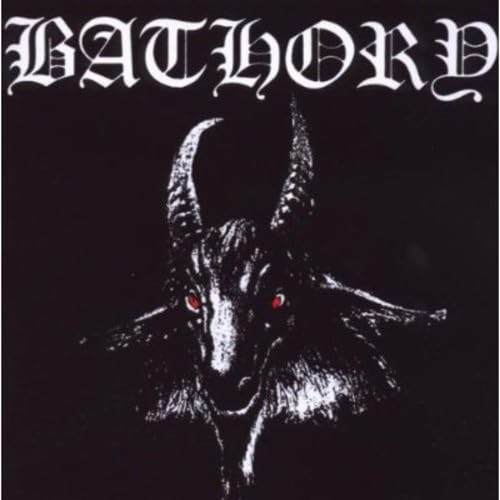
Bathory – self-titled
Released October 1984 via Tyfon Grammofon Records
The story of Bathory is a fairly simple one. The project was the mastermind of young Swede Thomas Forsberg, aka Quorthon. Quorthon’s father, Borje Forsberg aka Boss, owned the record label Tyfon Grammofon and Quorthon’s fledgling band would fill out songs on a compilation when a planned act dropped out. Those recordings generated a high degree of interest and Boss commissioned Bathory for a full-length debut album.
The work of Bathory would later fall under the sub-label Black Mark Productions, which Tyfon Grammofon is more commonly known as today.
Quorthon handled guitar and vocals on this release, he was joined by Stefan Larsson on drums and Rickard Bergman on bass. The lineup of Bathory would change often, with Quorthon being the only constant member and years down the line the only member.
The album cover was fussed over a little bit, with a pentagram originally planned but the idea was scrapped in favor of the goat artwork. After the first pressings of the album, Quorthon found the yellow coloring of the goat an eyesore and the cover was changed to black and white for all subsquent pressings. The back cover also features an error due to supply issues. Quorthon found some kind of rub-off lettering in a font he wanted to use, but he ran out of the letter C, so the song Necromansy is spelled as I just typed it instead of “necromancy” as the dark art is typically known as.
The influence of Bathory was a huge question mark during the early years – Quorthon cited acts like Motorhead and GBH as his primary guides, while everyone on the planet Earth thought that the early Bathory recordings sounded much like Venom. Quorthon chafed at comparisons to Venom and even suggested that the two bands were completely different – he isn’t wrong, per se, but there is a definite vibe that’s similar to Venom in these early Bathory recordings. In this 1987 interview with Metal Forces, Quorthon did clarify that he thinks Venom’s Black Metal is a masterpiece and he goes further into what led him to make the music he did.
I’m going to handle this album differently than my usual format. Today I’ll offer up the tracklist and then give a summary of what we have here, I’m not going to jump into detail track by track like I usually do.
Storm Of Damnation (intro)
Hades
Reaper
Necromansy
Sacrifice
In Conspiracy With Satan
Armageddon
Raise The Dead
War
The Winds Of Mayhem (outro)
This album takes less time to listen to than it takes to get a Domino’s pizza – this one is in and out in 26:58, and 3:30 of that is the intro and outro.
The music on tap is rooted in thrash, but is very lo-fi production and a bit more “messy” than the polished offering thrash would mostly become. It bears some comparison to Slayer’s Show No Mercy with the “evil” imagery and creepy music, but even Slayer’s debut was refined compared to this. This is a ghastly, cavernous listening experience that isn’t for the faint of heart.
The concept of “under producing” might be strange but it’s also perhaps the most important part of this record. The lo-fi production turned off some listeners but brought others in, and some of those listeners would seek to emulate this “sloppy” work. It’s one direct link from this to the genre of black metal, and its infamous “second wave” which would show up in the late 1980’s and terrorize the world by the early ’90’s.
It’s actually a bit inaccurate to call this album and black metal two separate things – while black metal was influenced by Venom, Celtic Frost, Slayer and Mercyful Fate, none of those acts were playing the style of music. Bathory, on the other hand, offered up an early blueprint on what black metal could actually sound like. Songs like Sacrifice and Armageddon are not far removed from what the Norweigian scene would put on display when black metal truly got rolling. Nothing wrong with calling this the world’s first black metal album, though it’s a subgenre whose listeners like to argue about everything so the point could be debated.
For me personally this wasn’t a part of my collection until a lot later down the line, when the most infamous events of black metal’s early days had played out and Quorthon himself had moved on to other styles. But it is absolutely worth a visit to truly understand where the depths of extreme metal got their influence, and this album is the birth of black metal.
This album basically starts playing and bashes for its 27 minutes of existence, save the eerie intro and outro. If there is a standout track I find Raise The Dead to be it. This one peels the speed back just a touch and is a savage, noisy march about coming back from the grave. This is the song that does grab out a little bit and offers something perhaps “catchy.”
But this album is an all or nothing proposition as a whole. You’ll either like it or not. There is no range of dynamics to consider here or a few songs that leap out and others that are “less than.” It also makes grading a bit of a chore – honestly the album sounds like shit and could be given an F for that alone. It’s also the start of something that became massive within heavy metal and could be given an A or even an S for that factor.
The actual grade lies somewhere inbetween – for me personally I have listened to black metal for decades now so the sound is not an adverse factor – this is exactly what black metal is supposed to sound like, and it’s primarily because of this album that black metal sounds like that. This is worthwhile to listen to and is interesting on its own merits, not just because it’s a historical marker.
Album Grade: B+
Bathory’s first offering got the ball rolling on Quorthon’s own lengthy career and also the genre of black metal. The next few Bathory albums, including the classics Blood Fire Death and Under The Sign Of The Black Mark, would cement Bathory’s status as early extreme metal legends and draw a line to the start of Mayhem’s career, thus kicking off black metal in earnest. Quorthon would leave black metal behind after awhile, serving up several albums of more melodic fare that now classify as Viking metal and also experimenting from time to time. Bathory would run until 2004, while Quorthon died of heart issues.
Bathory did not run the usual course of a band – they rarely played live and gave up on that pursuit after a few years. Bathory was simultaneously world famous and totally obscure – not known to the larger world but hailed as legendary among the denizens of the metal underground. And this debut album was a fitting start to a heavy metal legacy.
For more on the grading scale I didn’t really use much this week, head here.
Questions, comments or concerns? Use the comment form below or head to my contact page.
This week’s song looks back to 1984 and was the third and final single from Twisted Sister’s landmark album Stay Hungry. I talked about the album to help lead off my celebration of 1984’s 40th anniversary. The song has its origins in the album prior, 1983’s You Can’t Stop Rock n’ Roll, as we’ll soon get into.
The Price did not have the same singles success that the other two songs from Stay Hungry did – it would get to 19 on the Top Rock Tracks chart and 24 on the long defunct Radio and Records chart, but it did not crack the Billboard 100, only hitting 8 on the Bubbling Under chart. It was a different style and theme to the prior singles, with We’re Not Gonna Take It and I Wanna Rock being balls-out rockers. The band cites a lack of a radio mix from producer Tom Werner as a factor, Werner was not given enough heads up to do up a radio edit of the song the same way he did for the two other singles. Not necessarily related but worth noting is that Dee Snider has been critical of Werner’s production (and Werner has fired back at Snider and all of his various critics).
On our hands today is a ballad, and one with more lofty concerns than the typical love song. It is an existential question of whether or not it is worth it to carry on, as the powerful chorus asks. This song doesn’t answer the question – it’s up to the listener to come to their own conclusions. There’s nothing over the moon about the song’s music but the basic approach fits this one very well.
Dee Snider was inspired to write this one while away in Europe recording the previous album. He relays the story in this 2016 interview with Carl Wiser on Songfacts. Dee and the band were holed up recording their album with not even money to make phone calls back home. Jay Jay French’s sister-in-law called to the band to check on them and Dee relayed that he was missing his family, the reply was “I guess that’s the price you have to pay.” Dee gave the phone to Jay Jay, then went into the bathroom and began working on the song.
The Price really does raise those kinds of questions, and well beyond the specific scope of if it was worth it for Twisted Sister to be pushing for their career. The grind can be a tough one, trying to figure out how to “make it” or even how to just get by in life. This song resonates, sometimes as encouragement and sometimes as a point of reflection, on that journey.
While The Price wasn’t a hit in the same way the other singles from Stay Hungry were, this one did become a fan favorite. It’s the band’s sixth most-played song live and Dee frequently played the show on his long-running House of Hair radio show, speaking highly of the track that many fans have listens to in order to help them pull through. Especially in tough times like these, it doesn’t hurt to have some encouragement.
Questions, comments or concerns? Use the comment form below or head to my contact page.
This week I’m heading into 2009 and having a look at the album that would sadly be Ronnie James Dio’s final living testament.
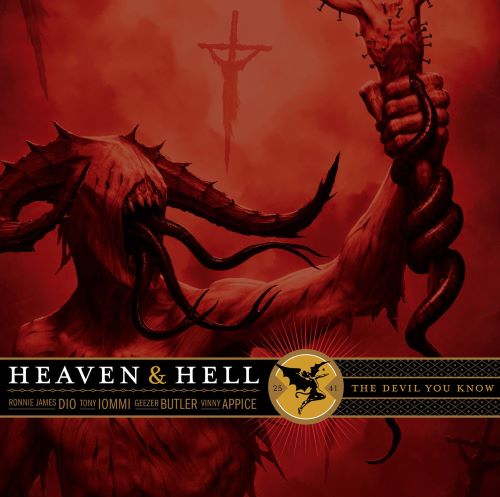
Heaven & Hell – The Devil You Know
Released April 27, 2009 via Rhino Records
The story of how Dio-led Black Sabbath got together one last time is pretty straighforward. In 2007 a greatest hits compilation of the Dio-Sabbath albums was released. Tony Iommi did not have a wealth of usable material from these albums in the vault, so he convened with the other members to record a few new songs for the comp.
This led to touring and rather quickly morphed into recording a new studio album. The only roadblock present was one sprung by her grace Sharon Osbourne – this band could not use the name Black Sabbath, as Camp Osbourne had secured full control of Sabbath’s rights from Iommi several years prior. This led Sharon to release a flimsy PR statement declaring that there was “only one Black Sabbath,” even though anyone with even a passing knowledge of heavy metal is familiar with the several Ozzy-less versions of the band. At any rate, Iommi, Dio, Geezer Butler and Vinny Appice chose to rechristen themselves Heaven & Hell in order to tour and record. It was Black Sabbath in all but name, and many record stores even filed the release under Black Sabbath on the shelf.
The album features 10 songs with a 54:01 runtime. There were some digital editions with bonus tracks, these were live cuts and I don’t know of any studio material that was left on the cutting room floor.
Atom And Evil
The opener keeps a slow pace in fitting with the doom aspect of Sabbath’s music. Dio gets to shine on the verses while Iommi opens up the riffing in the chorus and solo break. While not outright headbanging, it’s honestly a great listening experience with the more droning tempo.
And the theme here is very deep, interwoven and well done. Atom And Evil is clearly a play on the Adam and Eve story and the song explores the concept of someone finding forbidden knowledge, just as in the creation story. In this case the knowledge is that of nuclear weapons.
And also of note – this isn’t the first time someone used this song title to express the same sentiments. In 1947, the gospel act Golden Gate Quartet released a single with the same title and theme. Rather different songs, but same idea. Grade: A+
Fear
This one gets going with a fair bit of power and has one hell of a doom riff running through it. The song is simply about being afraid of the dark. This one is actually more about the reality of nyctophobia, which is a feature of prehistoric times when light sources at night were quite scarce and a fear of the dark was perfectly rational. It has lingered with humans ever since and now we have this great song about it. Grade: A
Bible Black
Up next was the advance single from the album. This one builds from a softer intro into a full-on vintage Iommi pounder of a riff. The song is about a guy who becomes possessed by a book of dark knowledge. It’s easy to see why they picked this as the single – this song is full and rich and hits all the right notes. Grade: A+
Double The Pain
This one comes out at a more uptempo, rocking pace. The premise here is of someone who isn’t happy unless they’re miserable, so “double the pain” and make them euphoric. Interesting concept, but honestly I can’t help but feel like I’m listening to a heavy metal commercial jingle for Doublemint gum (that stuff still around?). A good song but maybe just a bit off. Grade: B-
Rock And Roll Angel
This one moves in a straight line with a simple yet effective Iommi riff. This was first called Rock and Roll Jesus, but then Kid Rock released something with that name so this one got changed up. It’s a nice song that’s far from the standout of the album but it’s not bad by any stretch. Grade: B-
The Turn Of The Screw
A song with a fairly upbeat rhythm to it, even Iommi’s riffs have a bit of lift to them on here. A bit juxtaposed with the subject matter as this is about using people up and discarding them. Another song that doesn’t leap out of the speaker but still offers up something worth listening to. Grade: B
Eating The Cannibals
An outright speed song here, this one picks up the tempo and bashes out from start to end. There are even a few melodic rock runs from Iommi over the top of this one, not something you hear from him every day. The theme here is one of violence and also a sort of twist on the “eat the rich” concept. I don’t know that it entirely comes off but the song works just the same. Grade: B+
Follow The Tears
Another more standard Dio doom offering with a few keyboards up front to help differentiate things a bit. It’s a dark tale of how human generosity can be self-serving and ultimately a trap. Another song that’s fine but doesn’t quite go over the hump. Grade: C+
Neverwhere
One more fast and fairly upbeat and tempo track as we wind to album’s end. It’s one of Dio’s fantasy tales though this one is really dark, about someone giving in to the temptation of witchcraft and the like. Pretty good stuff here. Grade: B
Breaking Into Heaven
The final song is a more plodding doom track with the vintage Iommi guitar work. This one’s about the rebel angels who left Heaven with Satan, now they are plotting to return to Heaven and they aren’t going to ask politely to get back in. Not a bad way to close out the album and the Dio era of Black Sabbath. Grade: B+
The Devil You Know was hotly anticipated and would see a rush of success upon release. It charted all over the world, though in fairness many of the chart positions were modest. In the US it did very well, landing at number 8. This would match Master Of Reality for best US chart position of any Black Sabbath album, though a few years down the line the original version of the band would land the number 1 spot with the band’s final album 13.
While the stage was set for Heaven & Hell to take off and run, this chapter would sadly close after less than 50 shows. Ronnie James Dio was diagnosed with stomach cancer and died in May of 2010. For a group who had formed and split up twice over infighting but had come together older and wiser for this last run, it was a tragic way for everything to have to end. The end of Heaven & Hell left Tony and Geezer available to work with Ozzy as Black Sabbath one final time, a run that concluded in 2017.
Today’s album does have a mixed reception. Some people ate up anything that Dio Sabbath released, I am generally among that number. Others didn’t find much worthwhile in the album, longing more for the prior classic albums of the group.
For me this is a solid effort. It has a few standout cuts that show up at the beginning of the record, then the remainder offers up secondary tracks that are still quality and a bit above the “filler” line. It’s a good listening experience front to back, nothing on here sticks out as not fitting.
Album Grade: B+
This last chapter of work between Dio and Iommi blessed us with another round of their somewhat unique blend of doom and high fantasy metal. It is a Black Sabbath album in all but name, a policy enacted by her benevolent grace Sharon Osbourne. But there is no quashing the legacy that “Dio Sabbath” were able to forge, and The Devil You Know serves as a fitting conclusion to that legacy. It’s also the final testament of bona fide heavy metal god Ronnie James Dio.
Yesterday I had a look at the first ten songs that hit number one in the year 1984. Today I’ll finish the list with the other ten. Part One is back this way if you want to catch up.
Prince And The Revolution – When Doves Cry
Right off the bat we get to the other song to stay on top for five weeks during the year. We also get to what was crowned the single of the year in many contexts, including being the best seller. It was also a soundtrack song to the film Purple Rain, landing Prince the rarity of having the number one album, song and movie all at the same time. Only Elvis and The Beatles can also brag about that.
When Doves Cry is a masterpiece of a song. Equal parts pop, synth and funk, this track has all the emotions in it. It’s fairly complex lyrical fare, revolving around a complicated childhood and a love affair. It’s considered one of Prince’s greatest tracks and it is the reigning winner, with a few qualifications to discuss later, of 1984.
Ray Parker Jr. – Ghostbusters
Up next is yet another soundtrack song, and no we’re not done with those. Movies and music were huge business in the 1980’s. Ray Parker Jr. got a lot of mileage off of his hit theme song for the smash movie, it stayed on top of the charts for three weeks.
Here is where I get to save a lot of time – I talked about this song earlier this year and I can just link that post here. Needless to say I love the song, I don’t often write about songs I don’t like in full posts. But I’m sure it will happen someday.
Tina Turner – What’s Love Got To Do With It
And now it’s on to a much deserved comeback and career-defining achievement. Tina Turner’s only number one hit came from her 1984 album Private Dancer and logged three weeks on top in September of ’84. This song also cleaned up at the Grammys, being the huge winner for 1984 songs at that awards show.
The song is smooth and deceivingly upbeat musically as the subject matter is pretty complex and a bit down. For Tina it was a smash success, the second best-selling single of the year, and launched her into a new phase of superstardom that was well-earned after all she’d been through. Quite the triumphant story here.
John Waite – Missing You
When I first looked over the list I honestly couldn’t remember this song, but it came back pretty quickly when I pressed play. This song occupies a unique spot on the 1984 number one list – it was the only song to be in the top spot for only one week. It would be John Waite’s only number one as a solo act – he would score another as the singer for Bad English a few years later on.
After looking back on it I don’t mind this song. I’m not all that into it, it’s a bit too soft rock for my tastes really. I’m literally writing about Exciter’s Violence And Force album for a future album post so this here isn’t totally my cup of tea. But it’s ok and a bit better than what I was expecting going in.
Prince And The Revolution – Let’s Go Crazy
Prince logs his second number one of the year, the only artist to pull that off in 1984. This spent two weeks on top and gave Prince the most weeks at number one for the year. The song is fun and fast and, like the title and its creator, crazy.
Stevie Wonder – I Just Called To Say I Love You
One of the world’s most innovate musicians took a career turn in the ’80’s to more commercial accessibility, and this song was the ultimate payoff. Crafted as a song for the movie The Woman In Red, this spent three weeks at the chart’s top. It didn’t just go number one in the US either – the world charts show bunch of 1’s in the chart positions list.
This is another one I remember being all over the place back then, no real getting away from it. I won’t call it my favorite song in the world but I do enjoy hearing it again, it does take me back to that glorious time.
Billy Ocean – Caribbean Queen
Billy Ocean would land the first of a handful of number one hits with this track. The funny thing was this song bombed originally in Europe with a different name, then won over the same audience after the reworked Caribbean theme caught hold in the US. This had two weeks topping the chart.
This may seem odd but I’m honestly enjoy Billy Ocean’s music quite a bit. There’s something maybe a bit more accessible or fuller about his songs and I’ve always had an ear for when he had a song on radio or TV. I clearly wasn’t the only one, Billy caught on with a hell of a lot of people given his solid run through the years.
Wham! – Wake Me Up Before You Go-Go
It was now go-go time for Wham!, as George Michael would kick off a stellar career with, well, a pretty goofy song and an extremely goofy video. It hung out at the top of the chart for three weeks and was the start of a run of three number one songs for the group as Michael morphed into a solo artist in the next year.
This song is, well, it’s certainly a song. I don’t mean to dump on it as it was intentionally crafted to be bubblegum pop as opposed to a song like Careless Whisper that has something deeper going on with it. The video might call for actual eye bleach depending on just how ’80’s you wanna get and it was an outlier even then. But overall I do enjoy Wham! And I can even jam out to this one now and again.
Hall and Oates – Out Of Touch
The dynamic pop duo would land their sixth and final number one hit with this snazzy dance number toward the end of 1984. The song got two weeks at the top.
I can again save a lot of time here since I wrote about this one not too long ago, so here’s that post.
Madonna – Like A Virgin
The year wrapped up with one hell of a bang, as Madonna landed the first of 44 singles at the top of the Billboard chart. Yes, 44. The Queen of Pop had arrived. Like A Virgin held the spot for one actual week in 1984 though the calendar shows two – Billboard didn’t do a last-week chart so positions were frozen for the holidays. It held on to the top spot for four weeks in 1985, so it matched When Doves Cry and Jump with five weeks at the top of the chart.
Even with such a long line of hits, Like A Virgin is extra iconic. It was both a catchy song and a provocative statement, the open sexuality of the song being a massive topic of conversation. 1984 went out with one hell of a bang and one of music’s biggest stars was on the big stage.
That does it for the number one songs of 1984. When Doves Cry is generally hailed as the “winner” of the year, though Madonna has a hell of an argument for that title. Tina Turner also came away with a ton of accolades for her signature song. There were a few last-time number ones, a few first timers and a hell of a lot of soundtracks.
1984 was curious chart-wise for a few reasons. When I did the top albums list that was one short section, with only five albums when other years see over twenty. The songs were a stable rotation of stuff up and down – many other years see songs bounce in and out of the top spot but that never happened once in 1984.
And none of these can be considered one hit wonders. Everyone had other hits on the charts and many of these folks had other number one hits. It was a true hit maker’s parade at the top of the Billboard in 1984.
That does it for this post. I will continue my year-long celebration of 1984 with more album and song discussions as the second half of the year winds along, and probably a few more special looks at other things from the year. Enjoy the ride, because we’re not ever getting the 1980’s back again.
Questions, comments or concerns? Use the comment form below or head to my contact page.
It’s time to have a look at the songs that hit number one on the Billboard charts during 1984. It’s a pretty memorable selection overall so this will be fun to go through. There is a fair bit of trivia and whatnot to go through and it cuts through a fair cross section of music, while of course being mainly oriented toward pop.
There were twenty total number one songs so that makes it easy for me to divide this into two parts. Part two will arrive tomorrow.
Paul McCartney and Michael Jackson – Say Say Say
Up first is one of three holdovers from 1983. This song comes from Macca’s 1983 album Pipes Of Peace. The album itself wasn’t fawned over but this song was a massive hit, hanging out on the top of the chart for six weeks, two of those being in 1984. It of course doesn’t hurt that it had Michael Jackson on it, who had cemented himself as the King of Pop after the world-conquering run Thriller had been on.
Say Say Say is a pretty simple pop track, there isn’t a whole hell of a lot to it. I don’t find it all that interesting, though Jackson does add some spice to the song and is the worthwhile part of it. It honestly sounds more like a Jackson song that McCartney showed up on rather than the other way around. Nothing really wrong with it, but it was number one because of Michael and everyone knows it.
Yes – Owner Of A Lonely Heart
This next song from 1983 became the one and only chart topper for the progressive rock act. There’s a whole story behind this song but it’s too long and windy for here. Basically the band got back together with a few new members, one being Trevor Rabin, who brought this song with him. The band fussed over recording it for several months before finally nailing it down.
This is a really cool song that I remember fondly from back then. It has the fit of a nice synth rock track from the era, though it does incorporate some noisy zaniness as well. I’m not familiar with Yes’s initial era so I didn’t feel “burned” by their pop turn, hell I wasn’t even alive for most of their 70’s stuff. So I can enjoy this one with no reservations about the band’s changes. This one held down the top spot for two weeks.
Culture Club – Karma Chameleon
This is the final song from 1983 on the list and also the only number one US hit for the British pop merchants. This song was massive and sold millions of copies, both of single and album. Culture Club were a relatively brief phenomenon and Boy George’s tabloid presence long outlived the music itself, but this band sold records like hotcakes back in the day. I’m sure one thing helped the other there, of course.
This one is a fun, upbeat new wave number with just a small twinge of country in it. The music video is also fun, filled with vibrant colors that catch attention. It’s probably fun to watch the video while on certain drugs but I wouldn’t know. The song spent three weeks at number one though it was a cultural moment that hung around for quite awhile after its run at the top. I also can’t imagine what people a lot younger than me think of it, especially the video, but hey it was the 1980’s and this is what we did.
Van Halen – Jump
And now we’re on to one I’m very, very familiar with. Van Halen turned gears a bit for their 1984 album and Eddie used synth lines to full effect, including as a foundation for this song. The recipe was a successful one and Van Halen rode this to their one and only number one single.
Jump hung out on the top of the chart for five weeks. Only one other song did five weeks at number one in 1984 and one other did six weeks bleeding into 1985, both obviously will be covered tomorrow.
I personally love this song. Van Halen and specifically this album got me really into rock music at a young age so this is kind of where things really kicked off for me. It’s easily my favorite of the number one list, though there are plenty of other worthy songs to go over.
Kenny Loggins – Footloose
This is the first of two songs from the film soundtrack that hit number one. It hung out on top for three weeks as soundtracks took over the top spot for awhile in this period of the year.
I don’t have a ton to say about this one. I honestly was never into the movie and I have no affinity for it. I do like Kenny Loggins’ music though and this song is fine, I get why it caught on like it did.
Phil Collins – Against All Odds (Take A Look At Me Now)
Up next is a song from a different soundtrack, as Phil Collins cut a song for a film of the same name. The song was Phil’s first US number one hit, he would go on to have several more. This one did what seems to be a standard run of three weeks at the chart’s peak.
I only very, very vaguely recall the movie and I can only recall that I think it sucked. The song isn’t nearly that bad although it’s also maybe a bit meh. I’m not down on Phil Collins like a lot of people can be, I’m pretty sure he’s taken so much shit that it makes Nickelback hate look like child’s play. I even like some of Phil’s stuff, both with Genesis and his solo songs. But this one doesn’t quite move me the same way as other songs of his. It’s ok but not one I’d playlist or anything.
Lionel Richie – Hello
We get a brief respite from soundtrack songs as Lionel Richie jumped into the number one fray for two weeks with this slow jam. Richie was becoming quite the megastar during this time, by 1985 he’d be pretty well on top of the world and solidified himself as one of the best-selling artists of the 1980’s. He was all over the place back in the day and this was a time when there were only like three real TV channels, not the wall-to-wall coverage like we have today.
Hello is a quiet, soft ballad in the style Richie had taken up for his solo run. It was one of his biggest hits so obviously he got it right. He put together quite the concept piece for a video too, with full on acting and an actual story as opposed to just flashy images and clothing.
Deniece Williams – Let’s Hear It For The Boy
Back to the Footloose soundtrack here for the other number one hit from that record. This was Williams’ second of two number one hits and this one did two weeks on the top. Also of note are backing singers George Merrill and Shannon Rubicam, who would go on to form the writing and performing duo Boy Meets Girl. They would craft a pair of Whitney Houston’s number one hits a few years down the road.
Again not a whole lot to say here. It’s a fun, upbeat track and I remember this being on radio and TV all the time. A very easy, inoffensive song to play for most any occasion.
Cyndi Lauper – Time After Time
Up next is this pop ballad from Lauper, who found her first number one with this and kept the spot for two weeks. She would hit the top again but not for several years, though she had a lot of other hits that were not far off of the top. And she’s an artist that many people might not realize is as successful as she truly is, she’s had quite the career.
This is a song I do really like and one again I remember fondly from 40 years ago. It’s a nice ballad with some tempo and atmosphere to it and it’s a very sweet and affirming message. Always nice to hear this song.
Duran Duran – The Reflex
We’ll close out part one of the list with one of two songs to go number one for the iconic British new wave group. The song spent the customary two weeks on the chart before giving way to what became the single of the year. This was also part of a two-song “block” that prevented Bruce Springsteen from having a number one single, a feat the Boss hasn’t accomplished with work he has performed to this day.
The Reflex is a crazy ass song, in fact this is a dance remix that is different from what is on the studio album. This isn’t my favorite Duran Duran song but I don’t have anything bad to say about it, just not my cup of tea really.
That wraps up part one. Tomorrow I’ll kick things off straight away with the top song of 1984, a few other titanic cuts including Tina Turner’s massive comeback and Stevie Wonder’s best-charting song, and also what actually counts as the most successful charting song of 1984. Oh, and after nearly three years of writing this blog, I’ll finally get to talk about Wham! Looking forward to it.
For questions, comments or concerns, use the comment form below or head to my contact page.
This week’s song pick goes back to 2004 and was the opening track from Lamb Of God’s fourth studio album Ashes Of The Wake. The song was the opening track and was also the “feature” song from the album, though it doesn’t seem to have been “officially” recognized as a single. There is a promo CD single around so it did get a standalone release but not terribly widespread.
This was a huge step for Lamb Of God. The band were a part of what was termed the “New Wave of American Heavy Metal” movement alongside bands like Shadows Fall, God Forbid and Killswitch Engage. While those other bands would continue to ply their trades on the metal-centric record labels like Nuclear Blast and Century Media, Lamb Of God had struck a major label deal with Epic Records. It was a huge leap for a group that was working day jobs even through the release of their acclaimed prior album As The Palaces Burn.
As a quick note – the term New Wave of American Heavy Metal is not nearly as developed in a scholarly fashion as the much more familiar New Wave of British Heavy Metal. Thoughts and writings about the American scene are all over the place and can encompass bands from as far back as the 1990’s. But it was commonly used in the early 2000’s for this group of bands.
While Lamb Of God were wrapped up with a newer scene term, the basis of their sound was groove metal. It was a noise struck up by thrash acts like Overkill and Exhorder and made popular by Pantera. Lamb Of God released this album awhile after the bitter dissolution of Pantera and just months before the murder of Dimebag Darrell Abbot. It’s not specifically important to know when discussing today’s song, but it does provide background on Lamb Of God’s ascent during this time.
Laid To Rest is an impossibly brutal song in both music and theme. The core of the song is built around guitarist Mark Morton’s absolutely monstrous riffing. According to this 2020 interview with Louder Sound, Morton worked to incorporate more melodic guitar passages to work in contrast with singer Randy Blythe’s harsh vocals. It’s quite the run that Morton makes through this song on six strings and this new focus on working with guitars as Morton did would lead to a new golden age for Lamb Of God.
The theme of Laid To Rest is a bit buried in vague terms, which was a deliberate act by Morton, who also wrote the lyrics. In the same interview cited above, Morton discussed that the song was about personal issues he was enduring at the time. He covered the specifics of his own issues to dress the song up a bit in a guise that would fit the rest of the album’s general theme, which was taking aim at the Iraq War.
Laid To Rest honesty sounds like a breakup song. It’s not just any kind of breakup, but the harsh, dreadful kind that eats away at your core. Screaming out “destroy yourself – see who gives a fuck” might not be the most healthy way to get over a deep emotional trauma, but hey it works so why not. And while I obviously can’t speculate what Mark Morton’s issues were at the time, I would have to guess that they were along the lines of relationships, but again I don’t know. While very brutal, it can be a cathartic release from any sort of angst or trouble.
But Laid To Rest can also be taken to fit in the context of war – this song could be about someone who was killed and their remaining spirit looking to see their killer handled. There was certainly a lot of aggression and atrocity in the Iraq War and this could be a tragic tale from someone unjustly killed there.
The music video does not offer any more clarity as to meaning – instead, it features the band playing in an empty warehouse of some sort, which was a mandatory shooting location for metal videos in the early 2000’s. Interspersed is footage of a guy running from another guy wearing a red hoodie. At the end of the video, the chaser catches the chasee but then the guy being pursued winds up with the hoodie. The off-screen confrontation could have been a violent one, or perhaps the guy in the red hoodie was simply chasing the other guy to try and sell the hoodie to him. We’ll never know.
For Lamb Of God, Laid To Rest opened the band to a new, wider audience and has become the band’s signature anthem. Ashes Of The Wake would be certified gold in the US and Laid To Rest is the band’s most-played song live. There is stiff competition for that spot as the band’s anthem, as songs like Redneck and Walk With Me In Hell are also up there in popularity, but at the end of the day it appears that Laid To Rest wins that overall battle.
This was all a huge deal for Lamb Of God as they rose out of the independent metal scene and became players on the upper end of the metal market. They became the new kings of groove metal just as the prior occupant of the throne went away. It’s been a monstrous run and it all kicked off with some guitar work and the use of the word fuck.
Questions, comments or concerns? Use the comment form below or head to my contact page.

 The Crooked Wanderer