Y&T – In Rock We Trust

It’s time today to look at one of the pioneering acts of the 1980’s sound, and also one of the more overlooked acts of the 1980’s sound.

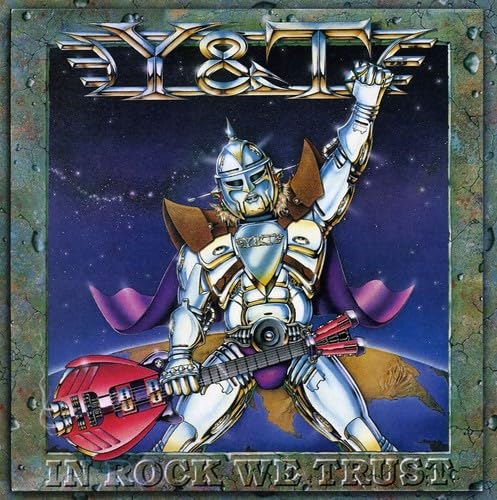
Y&T – In Rock We Trust

Released July 1984 via A&M Records

By 1984, Y&T were on to their sixth album. They had formed in the ’70’s and got their ball rolling in earnest just before the ’80’s hit. The band were making some buzz for themselves alongside the emerging Sunset Strip scene. Y&T were both opening for a who’s who of rock and metal acts like Kiss, AC/DC and Iron Maiden, while also serving as the headliner for fresh new acts like Mötley Crüe.

The band’s lineup was Dave Meniketti on guitar and vocals, Joey Alves on guitar, Phil Kennemore on bass and Leonard Haze on drums. Y&T also brought in outside help for this record – Geoffrey Leib, who is more popularly known as Jeff Paris, was in as a co-writer. The album was produced by Tom Allom, most known for his long tenure with Judas Priest.

Pretty standard issue album today – 10 tracks at 43:20. There is at least one version of a re-issue out there with a bonus track but I’ll be handling the original copy today. Also – this isn’t on streaming services that I know of, at least not on Spotify or Amazon. I have it on record but I had to use an unofficial YouTube source to review it, stopping and starting a record all the time to collect a thought isn’t a lot of fun. That’s probably why old school music critics were often full of shit.

Rock & Roll’s Gonna Save The World

We open with a nice, big track that brings nice riffs and a huge chorus that handles just what the song’s title says. Fitting that this came out just as a newer version of rock was taking over the airwaves, a version that Y&T were quite responsible for. Grade: A+

Life, Life, Life

This one is pretty melodic and bright rock-wise, though it’s a really dark topic on hand. This is a lament against what was the modern war machine, which in the 1980’s was a machine-filled monster. We were in the final years of the Soviet Union and Cold War then, though we didn’t totally know it was about to end. But we kept rocking and railing against it, and eventually it all fell apart. Grade: A

Masters And Slaves

Another bit of a social and political commentary here, wrapped up again in a prototypical 1980’s hard rock shell. This one’s about how a few have the power and everyone else is left out, something that didn’t get much better 40 years on. Grade: B+

I’ll Keep On Believin’ (Do You Know)

It’s on to a bit of a ballad now, though like many other 1984 ballads, this one packs quite the punch. It’s kind of funny to track the progression of ’80’s power ballads from ’84 to, say, ’89, when they were loaded with saccharine and sap. But these guys in ’84 were doing them right, having at the melody and softer edge while still rocking out. This song wasn’t a “hit” for Y&T per se but did get them a bit of traction in airplay. Grade: A-

Break Out Tonight!

This is a strong and powerful rock track that is just the perfect example of the ’80’s rock scene. The quiet build into the loud chorus works just great and we’re left with another fantastic song. Grade: A

Lipstick And Leather

Another uptempo rocker here, as a badass woman takes over the thoughts of the narrator. Nothing out of place here, it’s another straight and simple rock song that keeps the head banging. Grade: B+

Don’t Stop Runnin’

Nothing deviates from the formula here. It’s another solid rock song that’s both powerful and melodic. Y&T did a great job of blending the heavier edge of things with the more bright sounds that would please people not necessarily into all-out heavy metal. This is also one you can really hear the ’80’s creeping into the song, not that the rest of the album doesn’t totally scream 1984. Grade: B+

(Your Love Is) Driving Me Crazy

Not to be confused with the Sammy Hagar song of the same name (note taken for a future post), Y&T are again hard and heavy in this “on the prowl” song. This one does step over the edge a bit and retain a heavy metal feel throughout. Grade: A-

She’s A Liar

This one brings the heavy and plenty of boogie, with the band belting this one out at a breakneck pace. Very nicely done song, again combining the heavy with the melodic. This one got picked up for use in a Dr. Pepper commercial, too, so a bit more cash for the band. Grade: A-

This Time

The album ends with another ballad, and this one is a more stereotypical ’80’s ballad. The song is fine for what it is, though it honestly never won me over. I’ve heard far worse, but Y&T has also done far better. Grade: C

In Rock We Trust would not be a massive, multi-platinum release for Y&T, but just the same it did become the band’s biggest record. It charted at number 46 on the Billboard 200 and has sold around 450,000 copies. The band would be on a huge series of tours through this time, including Rush, Dio, Ratt, Dokken and Night Ranger, among others. Y&T saw their profile go from the regional Los Angeles scene to a national and international hard rock act. And while the band never “got their due” in a way, they have remained a staple of rock and metal for the 40 years since, even with Dave Meniketti being the lone surviving member from this album.

Grading this album is pretty easy – it’s a bunch of high quality hard rock. It’s done “in the vein” of the 1980’s scene at the time, but that’s primarily because Y&T were a band who helped shape that scene. This was the case of a band meeting their time more than anything, even if they didn’t benefit as much as others did from the new strain of rock going around.

Album Grade: A-

1984 contained a handful of the most essential albums in 1980’s rock – Out Of The Cellar, Tooth And Nail, W.A.S.P. And Slide It In just to name a few, much less 1984 itself. But just under the surface of the new movement in rock was Y&T, now six album veterans who offered up their own slab of high quality rock and metal. This album and band aren’t just “another good, somewhat out of the way” thing that also happened in the ’80’s, these guys were just as essential to the sound of that era as the other bands and albums mentioned in this post.

Anthrax – Fistful Of Metal

Two of thrash’s “Big Four” had already debuted before 1984. Right at the start of ’84, the third would make their presence known and also help give this newer genre its name.

Anthrax – Fistful Of Metal

Released January 6, 1984 via Megaforce Records

Anthrax had started off in 1981 in New York, with Scott Ian and Dan Lilker forming the group. I’ll skip the Spinal Tap-worthy list of members who came and went through the first few years. The lineup for this album would feature Scott Ian on guitar along with Dan Spitz, Dan Lilker on bass, Neil Turbin on vocals and Charlie Benante on drums.

Fistful Of Metal was recorded in Ithica, New York; with Carl Canedy producing. Songwriting was credited based on member contributions, with Turbin having a huge role in shaping the material. Former Anthrax guitarist Greg Walls has said he contributed parts to various songs and was left uncredited – this was just one piece of the Anthrax band drama file folder, which needs its own warehouse to store at this point.

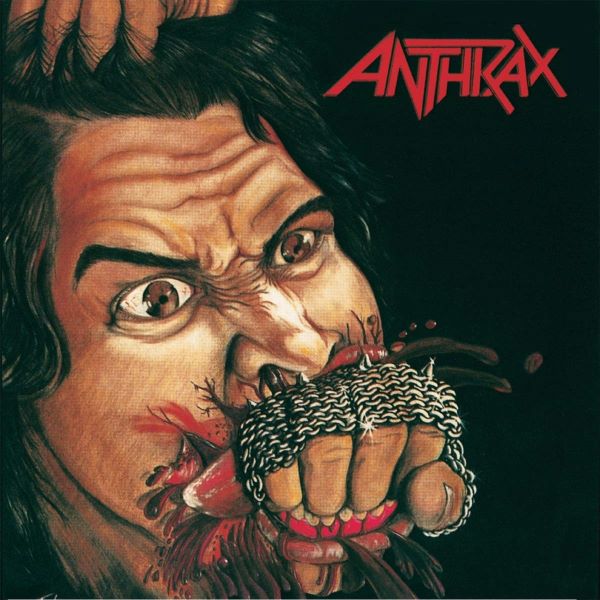
The album artwork was done by Kent Joshpe, a friend of Spitz’s. Joshpe had already designed the band’s logo so he was also commissioned for the interesting cover art, featuring a guy being smacked with a fistful of metal. The album art was actually banned in Germany for a time, though that ban is no longer in effect.

This album features ten songs at a thrash-tastic 35 minute runtime. There are various editions and reissues from over the years, I’m sticking with the original because tracking all the various incarnations of this album is a fool’s errand.

Deathrider

First song from the first album and jump straight into one of the best songs Anthrax have recorded in their 40+ year long career. If I had to suggest one song to someone to explain what thrash sounded like, it would probably be this one. This is all pounding and speed, straight ahead with zero bullshit. There’s probably a reason Neil Turbin named his later band after this song. Grade: S

Metal Thrashing Mad

Up next is another pounding, as relentless as the first. It’s a song about racing that sits in the standard thrash template, though Turbin executes some vocals not typically associated with thrash. That would be par for the course on this album.

This song is also where the term “thrash metal” came from, the phrase was sprung by legendary journalist Malcom Dome in the pages of Kerrang! Magazine while discussing this song. Grade: A+

I’m Eighteen

Easy enough here – Anthrax covered the classic Alice Cooper song. It’s fine, they did a good job on it. I don’t consider it essential or anything but there’s nothing wrong with it. Grade: B-

Panic

This one kicks up the speed a notch and lays an all out assault. This is Anthrax’s version of a “being on the road” song, which is a fair bit different from those of Bob Seger and Bon Jovi. The road was a long grind for those others, the road is literally beating your ass in this song. Grade: A+

Subjugator

It’s another amped up thrash track about fighting. It seems as though whoever is in the way is who is getting the beating. Also it seems Anthrax’s weapon of choice in the fight is Dan Spitz’s guitar, as he wields it here for plenty of solo action. Grade: A

Soldiers Of Metal

We’re fighting again, this time we are banded together to fight for metal. Can’t get through an ’80’s metal album without fighting for metal at some point. This is a pretty standard song but solid. Grade: B

Death From Above

Another straightforward song, this time about planes and bombing and all that. Grade: B+

Anthrax

I had sorta forgot that Anthrax had their own self-named song. It’s a pretty ripping one too, though it’s hard to tell if this actually about contracting the disease anthrax or just general mayhem. Cool stuff though. Grade: A-

Across The River

A quick instrumental here, but this one absolutely shreds and could have been fleshed out into a full song. No harm, though – still totally worthwhile. Grade: A-

Howling Furies

The last track is a bit of a horror story, being caught by some pretty nasty people or things that want to cut you up. I do wonder if this isn’t, at least in part, based off of The Warriors movie as both the Furies and “come out and play” are part of the song. I’m not sure but I’d wager a guess that it’s so. Grade: A-

Fistful Of Metal hit the streets on release – though it did not chart it was a big mover in the emerging metal scene. Anthrax themselves would tour behind the release, then endure several lineup changes before prepping the next album. Dan Lilker was fired and Neil Turbin quit, as Scott Ian and Charlie Benante became the driving forces behind Anthrax’s songwriting. The new incarnation of Anthrax would go on to a handful of gold-selling records and buzz throughout the scene, solidifying their place among thrash’s “Big Four” and somewhat leaving the first album behind.

But this album is more than deserving of its own praise. While it might not sound “original” among the decades of thrash offerings in this day and age, it had very little to be compared against in 1984. This was a nice, curbstomping record more than worth the time to visit with, even if other Anthrax albums overshadow this one.

Album Grade: A

At the end of the day, nothing to do but crank this up, start some shit and recall the good times of 40 years past.

Whitesnake – Slide It In

It’s time this week for a key album from 1984, and one with a whopper of a story to accompany it.

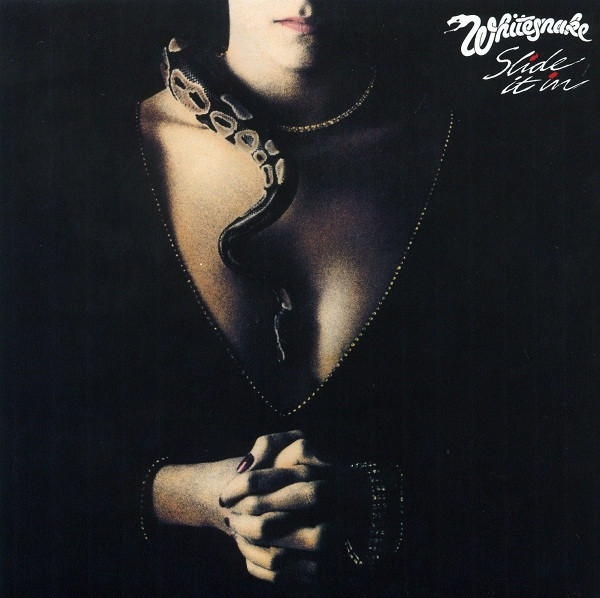
Whitesnake – Slide It In

Released January 1984 AND April 1984

So in 1983, Whitesnake set out to record this new album in Germany. The band was David Coverdale on vocals, guitarists Mel Galley and Mick Moody, bassist Colin Hodgkinson, drummer Cozy Powell and keyboard wizard Jon Lord. Eddie Kramer was in for production, for a moment anyway. The band were not satisfied with his work so he was replaced with Martin Birch, who’d helmed the Whitesnake catalog prior to this. It marked Birch’s last album production not related to Iron Maiden. The album was recorded and released in January 1984 after some delays.

Sounds fairly simple, right? It was until it wasn’t. The first issue was that of the album’s production. The music press was not happy with the album’s flat sound. Whitesnake were contracted in the US with Geffen Records, who also weren’t happy with the production. Geffen commissioned Keith Olsen to remix the album.

But even that wasn’t so simple – David Coverdale was also eyeballing a personnel change. On the advice of label exec John Kalonder, Coverdale began looking for a “guitar hero” type of lead player to further enhance the band’s image. Michael Schenker was approached but was either uninterested or uninteresting, depending on who you ask. Adrian Vandenberg was more interested but he declined, choosing to operate with his own successful outfit instead. Vandenberg would find his way in a few years later.

This led Coverdale to John Sykes, late of Tygers Of Pan Tang and currently with Thin Lizzy. Sykes was agreeable to the Whitesnake gig but also very reluctant to leave Phil Lynott hanging. Sykes made an ask for an absurd amount of money, which Whitesnake surprisingly agreed to. Lynott gave his blessing for Sykes to move on and Coverdale now had his guitar hero. This would shift Whitesnake away from their long-held blues-based sound and into the hair metal era, which was gaining a ton of steam in 1984.

Mick Moody was still on the Whitesnake roster, so Coverdale acted like a complete asshole to Moody, who took the hint and quit the band. Bassist Colin Hodgkinson was also fired, and former pal Neil Murray was brought back in. Sykes and Murray would re-record parts for the US remix of Slide It In.

And today I will be going over the US version of the album, as it’s what I’m familiar with. There are countless versions and re-issues of this available. For simplicity’s sake I’m going to use the old US tracklisting, which won’t match up with most versions found today on streaming. Either way, it’s 10 songs at a bit over 40 minutes.

Slide It In

The title track keeps things very, very simple – driving riff with double entendre lyrics. Honestly the song is so horribly basic that it’s like wearing a beige suit to a middle management conference. But the song also works splendidly, it’s a textbook example of a rocking track from this era. Not a bad way to mark your territory on the Sunset Strip scene. Grade: A+

Slow An’ Easy

Up next is the song Whitesnake would offer as the US single and the song that would help them finally break into the coveted American market. This one has it all – build-up and mood-shifting, with a bit extra behind the guitars and Powell’s drumming to really push it all over. It still has marks of the blues as it was co-written by Moody, but the song functions amazingly well in the ’80’s rock pantheon. It’s exactly the kind of song you’d want to write to get attention. Grade: S

Love Ain’t No Stranger

Whitesnake joined the ballad fray here, but this ballad is on steroids and totally rocks out. It had the rock for the rockers and the more melodic hook and twinge of melancholy for the ballad seekers. The song performed modestly as singles in both the UK and US, but over time it has become a staple of the Whitesnake set. Grade: A+

All Or Nothing

One of many tracks on here that showcase the “old” blues sound coupled with the updated ’80’s rock approach. This one slams right in and makes itself at home, with the organ adding some spice in the mid-section. Grade: A

Gambler

Here we have the sad tale of someone who is stuck “outside” of love, apparently struck by chance to remain loveless. Overall the song is well done, I do think maybe the two versions of the album clash here a little bit between the guitars and keyboards. But it’s a minor gripe. Grade: B+

Guilty Of Love

Now this song sounds totally like an ’80’s track. It keeps a quick pace but keeps a bright enough tone not to be a headbanging track. And yes, Coverdale is totally guilty of love, as we would all find out as the ’80’s wore on. Grade: A-

Hungry For Love

No, we’re not dealing with a concept or prog album by any means here, our themes today are very meat and potatoes for the ’80’s. This one is more of an old school boogie with a bit of sleaze on it. I do wonder if the song might have stood out more without the keyboards, I’d have just let the guitars carry this one. But no matter, still a nice song. Grade: B+

Give Me More Time

This song showcases Whitesnake’s transition perhaps better than any other. It still has some old-school underpinnings but it’s also a total ’80’s rocker too, a very good mark of what Whitesnake was turning into. It’s catchy and rocking and hits all the right notes. Grade: A+

Spit It Out

As we round the bend to the album’s close we get another total rocker absolutely fit for the time. It’s another pretty basic track but it gets the job done and then some. Grade: A-

Standing In The Shadow

The album wraps up with another well done song that highlights Whitesnake’s new approach. It’s a simple and effective mid-paced rocker that keeps the album’s quality high through the whole run. Grade: A

Slide It In would help Whitesnake break the American market – somewhat slowly. The album got to 40 on the Billboard 200 and would eventually earn gold certification in 1986. The original UK version went to 9 there are charted decently across Europe. The band toured behind the record, with members slowly dropping off – Jon Lord would reconvene with Deep Purple, Cozy Powell left over money disputes and Mel Galley was out due to injury.

This left Coverdale along with Murray and Sykes to work on the next record. The album was put together, but Coverdale was under massive financial pressure and was also not getting along with his bandmates, yet again. Murray left voluntarily (I guess) while Sykes was fired in acrimonious circumstances.

The story was far from done though, as Whitesnake’s self-title album would massively dominate airwaves and sales charts. This also floated up Slide It In, which went platinum in 1987, double platinum later and a total of six million copies sold worldwide. This album was the closest musically to the self-titled behemoth so its further success was no surprise.

All of the truckloads of drama aside, Slide It In was a wonderful rock album that stood up fine on its own merits. It has no filler and it combined the contrasting sounds of the early and modern Whitesnake eras very well.

Album Grade: A

I’m sure multiple books could be written about all of the events up to, including and after Slide It In. It’s one of rock’s crazier stories that in the end saw David Coverdale’s gambles pay off. But the album itself is a perfect testament to the rock scene of 1984 and an essential piece for any rock fan’s catalog.

For more on the grading scale, head here.

Questions, comments or concerns? Use the comment form below or head to my contact page.

Iron Maiden – Powerslave 40th Anniversary

Forty years ago today, Iron Maiden unleashed their fifth album upon the world. Nothing would be the same after this all-consuming affair.

Iron Maiden – Powerslave

Released September 3, 1984 via EMI Records

This is a re-review for me, I did cover this album about two years ago, long before I started doing song and album grades. I’ll leave the old one up as I have no problem with that post but I’ll be referencing this new one as I go forward.

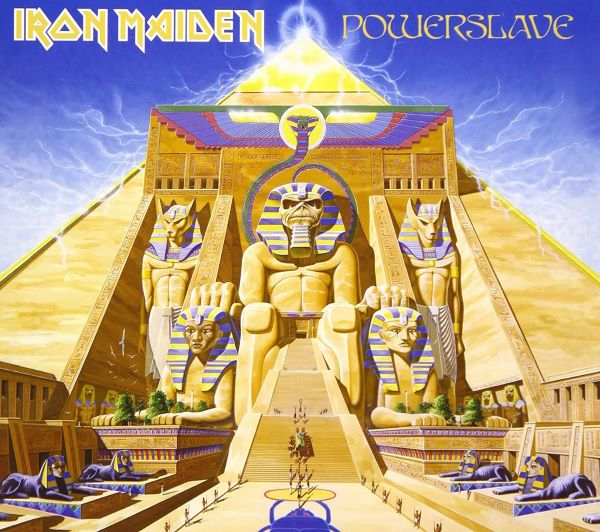
Iron Maiden convened in the Bahamas to record this effort. That must have been tough. The band was the classic line-up of the 1980’s – Steve Harris playing bass, Bruce Dickinson on the mic, Dave Murray and Adrian Smith on guitar, and Nicko McBrain on drums. Martin Birch was the producer, in the middle of his immortal run of Maiden albums. The massively iconic cover art was courtesy of Derek Riggs, also in the middle of his legendary run depicting Eddie.

Simple stuff today – eight songs with a total runtime of 51:12. Nothing exists in the way of bonus tracks besides the rare Castle Records reissue, that stuff is B-side material and is available on the singles and elsewhere.

A bit of context before I start – Powerslave came in at number 2 when I did the Iron Maiden album ranking awhile back. And for additional reference, the album cover also came in at number 2 when I ranked album covers a long time ago. So clearly we’re dealing with an album I hold in very high regard.

Aces High

The opener is one of Maiden’s most beloved songs. It is an intense, soaring tune that captures the essence of airplane combat, which is nice since the song is about the legendary Battle of Britain during World War II. While Maiden’s guitar work is often widely celebrated, this song features some of the best-known riffing around. This song is flawless and one of the best songs the band have recorded. Grade: S

2 Minutes To Midnight

Another energetic track, this time about the modern state of warmongering and arms dealing. I’m always a sucker for world-ending type stuff and this reference to the Atomic Clock and impending doom of nuclear destruction is spot on. As I’ve said several times in the past, this is my favorite Iron Maiden song so I think I can wrap this one up. Grade: S

Losfer Words (Big ‘Orra)

Up next is an instrumental – it was the fourth Maiden had done to that point and to date it is still the last one they’ve done. It’s a pretty brilliant song and it fits perfectly among the other tunes on the album. This wasn’t some experimental piece, it was Maiden being Maiden from opening note to close. Grade: A+

Flash Of The Blade

We have two songs back-to-back about sword-fighting. This first one features a young kid who plays with a wooden sword but then grows up and has to take up the real thing to avenge his family. And the music on this one is fantastic as well – with climbing riffs and Bruce especially soaring over even himself at points. Grade: A

The Duellists

This next sword-fighting piece was inspired by the movie of the same name, which was Ridley Scott’s first film as a director. It was set during Napoleon’s reign, which is a great backdrop for a story about people who want to kill each other. This song lets the music do most of the talking and is a bit more low-key than other stuff here, but it’s still a wonderful song and very much easily recognizable as Iron Maiden. Grade: A

Back In The Village

This one is a sequel to the song The Prisoner from The Number Of The Beast. It plays again in the land of the old TV show, The Village being the area where the prisoners were kept. This one sounds like the main character of the show is attacking the village or something, I’m not entirely sure. But again it all wraps itself up nicely as another great Maiden tune. Grade: A

Powerslave

The title track makes full use of the Egyptian theme on the cover art to weave the desperate tale of a pharaoh who is dying and cannot accept his mortality. The pharaoh is supposed to be a god and yet is dying just the same as any other person, it is quite the existential struggle for this soon to be corpse.

The song is absolutely magnificent and marks an evolution of the band’s running rhythms and approach to storytelling in songs. It would be hailed as a magnum opus epic – if it wasn’t for the very next track. Grade: S

Rime Of The Ancient Mariner

The final song on the album makes its presence felt both musically and time-wise – this one song takes up over 10% of the album’s runtime. At 13:45 it is was a ridiculously long track for 1984 and would stand as Iron Maiden’s longest song until 2015.

The song is obviously inspired by Samuel Taylor Coleridge’s famous poem and in fact follows the grim story pretty closely. A sailor is cursed for killing a bird, it’s the genesis of the idea of “an albatross around one’s neck.”

Musically, Maiden did not mess around here. The song features several distinct movements that capture the mood of the story as it goes along. It was a feat of arrangement uncommon in heavy metal at that time but a whole generation of younger musicians were paying attention and the power metal subgenre would become a playground for more classical arrangements later on.

In the end this stands as one of the top few songs in the Maiden catalog. It was a masterpiece of arrangement and execution, its lofty ambitions matched by what was presented. Grade: S

Powerslave was an absolute masterpiece from Iron Maiden. The album charted all over the world, reaching a high of number 2 in their native UK. It has been certified platinum in the US and Canada, as well as gold in the UK and several other territories.

Maiden would embark on the World Slavery tour in support of the album – the tour was the band’s longest to date, playing 189 shows in 331 days. While the tour was grueling, it also established Maiden as a prime player in heavy metal all across the world. The tour was also immortalized in the band’s first live album Live After Death a year later.

As for the album grade, well, it’s honestly a little tricky. I’ve only been using grades for a little while now and it does seem as if I’m about to do something I haven’t done yet, and honestly have very little intention to do outside of a select few albums. But this is one of those albums.

Album Grade: S

There is no doubt that Powerslave was what cemented Iron Maiden as metal legends. They’ve only expanded on their legacy since, quite the story in and of itself. But this album and tour reached the world over and developed the kind of die-hard fans that would follow the band anywhere, regardless of what the music industry thought of it. When people ask why Iron Maiden are so beloved, this album is honestly the best possible answer one could give.

For more details about my song and album grading, head here.

Questions, comments or concerns? Use the comment form below or head to my contact page.

For more of my ever-running coverage on Iron Maiden, check out the Band Index.

Oasis – Definitely Maybe 30th Anniversary

It’s a few days early but this week I’m going to celebrate the 30th anniversary of the debut Oasis album. I did cover this album way back in the first months of my site but now that I’m doing song and album grading, I figured I could dig this one out and commemorate it. Note that this is a look at the original album, this won’t cover the bonus tracks from the coming reissue. This also won’t address the rumors of a reunion, which is official as of 8/27.

Oasis – Definitely Maybe

Released August 29, 1994 via Creation Records

The Oasis story in a nutshell – Oasis was formed in 1991 by Liam Gallagher, Paul “Bonehead” Arturs, Paul “Guigsy” McGuigan and Tony McCarroll. Not long after Liam asked his older brother Noel to join the band. Noel agreed, on the condition that he take creative control since he had more experience with songwriting and the music business.

In 1993 Oasis were gigging around the UK when they were spotted by Alan McGee, owner of Creation Records. The band were offered and eventually signed a record deal, the deal went international as Sony was part owner of Creation at this time.

The album was recorded in several studios, with Owen Morris becoming the producer after a few stops and starts along the way. Eventually things got settled and the album was ready to go.

There are several versions of Definitely Maybe and one more on the horizon at the end of this week. The original album had a few versions – in this case, the vinyl had a song not on the CD or tape releases. I will cover that extra song today. In 2014 a massive reissue with 2 CD’s worth of bonus discs came along, and in 2024 a new 30th anniversary version with a different set of bonuses is slated for release at the end of August. I will likely cover those bonus tracks in separate posts later down the line. There’s also a DVD version from the 10th anniversary, this is one I haven’t laid eyes or ears on.

So given that I’m covering the vinyl tracklist, today I’ll handle 12 songs at a hair over 56 minutes. For some added context, here is an Oasis song ranking I did last year where several of these tracks make appearances.

Rock n Roll Star

We open with a great, loose track about a dreamer who lives a dreary life but wants to escape that by becoming a rock star. Even though the underlying theme is a bit dire, the song itself is fun and cheery and truly opens up that dream of escape. It runs straight through until the end where there’s an extended tempo switch and a psychedelic fade-out. Grade: A+

Shakermaker

This one is a bit of a psychedelic wall of noise. There’s not a ton going on lyrically but there are some shout outs to the Gallagher brothers’ ’70’s childhood and also Mister Sifter, the guy who Noel bought records from in his youth. Overall a really cool song that shows Oasis weren’t going to be literal or always obvious. Grade: A-

Live Forever

Up next is the song that “made” Oasis, after Noel wrote it and the band heard it they knew they had something above and beyond the makings of a simple indie band.

I covered this fairly recently so I won’t get too much into it, but it is my third favorite Oasis track. It’s such a lovely expression of friendship, love and whatever else that Noel wrote as an antidote to the negative leanings of Kurt Cobain and Nirvana. It’s a magnificent triumph and one of rock’s great songs, not just Oasis. Grade: S

Up In The Sky

This one is a contrast study, as the music is very bright and cheery, while the actual message behind the music is pretty angry. It takes aim at prominent people who talk about what a country like England needs without having any clue how the rank and file people are living. With or without the biting commentary it’s a pretty splendid track. Grade: A-

Columbia

Here we have one that was originally meant to be an instrumental that Oasis used to take the stage. After a bit they decided to throw some words on it. There was apparently LSD involved, which would reflect in the trippy vibe of the song. The words written don’t really “mean” much, this is one of several “all vibes” songs Oasis would write. It’s also a really damn good track and one of my Oasis favorites. Grade: A+

Sad Song

This is the song that is on vinyl copies but not on original CD editions. It is a bonus track for digital and CD reissues. Noel handles the singing here on this quiet acoustic track. It’s a fine song, nothing wrong with it, though it does honestly disrupt the vibe of the album between the songs before and after. There is a demo version of this with Liam singing that is coming on the new reissue this week. Grade: B

Supersonic

And now it’s to the band’s very first single, released several months in advance of the album. I covered a reissue of the single awhile back so I can keep it brief here. The song is excellent, it’s a good fun and total nonsense affair with a nice, consistent rhythm to it. Grade: A+

Bring It On Down

This is a great banger, more punch and energetic hard rock than the more careful pacing of other stuff on the album. It’s another look at living the layman’s life in England, similar to Rock n Roll Star. Though it’s a stylistic departure in some form, it fits in very well and stands out among the non-single tracks. Grade: A

Cigarettes And Alcohol

A riff and rhythm so nice that Marc Bolan might get a lawyer if he were still with us. This one is about diving into the title subjects to escape the drudgery of pointless work and life. And if you want something better, you gotta make it happen. So Oasis did make it happen while enjoying plenty of the mentioned substances, as well as others. And with they brought this excellent song. Grade: A+

Digsy’s Diner

This silly track was cooked up by Noel when his friend Peter “Digsy” Deary was singing a weird bit about lasagna. Noel turned it into picking up a gal and inviting her to lasagna for tea. Digsy fired off his own track later called Noel’s Nose in response. This one is funny and actually a pretty decent song that says its peace and gets out of the way quickly. Grade: B+

Slide Away

This song was written on a guitar given to Noel by Johnny Marr, a guitar previously owned by Pete Townsend. This was the first thing Noel did after getting the guitar.

Slide Away is a love song that Noel wrote in honor of his girlfriend of six years. Sadly they broke up just before this album was released. The song is brilliantly constructed and also brings out the best of Liam’s singing. Live versions of this song are regarded as the best of Liam’s performing career. Oddly, Noel didn’t want to release this as a single even though the record label wanted to. Grade: S

Married With Children

The album ends with a silly ditty about the day to day of living with someone. It’s also somewhat inspired by Noel’s girlfriend from Slide Away. It is pretty entertaining though it also doesn’t necessarily hold up to the other stuff on this pretty monolithic album. It does work on the album’s end. Grade: C+

Definitely Maybe was a hit out of the gate for Oasis. It sold 100,000 copies in the UK on its first week of release, hitting the UK number one and also setting a record for the fastest selling debut of all time. That record was later topped by Adele. It would also go platinum in the US despite a modest chart position of 61 and no mainstream hits, though songs did get aired on alternative rock stations and MTV. All in all, the album has sold over eight million copies and has eight platinum certifications in the UK. (note that 300,000 is platinum in the UK as opposed to a million in the US)

This is pretty easy to assign a grade to. There are many excellent songs on here that would anchor the Oasis live set all through their tumultuous career. There aren’t any real missteps on here, a couple of silly songs work where they’re at and the somber vinyl bonus song is still worthy material.

Album Grade: A+

Oasis got going in grand fashion with Definitely Maybe, and would only get hotter with their world-conquering next album (What’s The Story) Morning Glory? For a spell in the mid ’90’s Oasis were as big as it got in music. Sure we know the stories of the brothers’ temperaments and feud that runs to this day, but the music has stood the test of time.

Dokken – Tooth And Nail

This week let’s go back to 1984 and head right into the fire – Dokken were on the ropes with their record company after a debut that failed to sell. They needed to get their name out there and move some records. This was the result.

Dokken – Tooth And Nail

Released September 14, 1984 via Elektra Records

Dokken had at least broken onto the scene by 1984 via US remix and re-release of their debut Breaking The Chains a year prior. The album did not perform to label expectations and Elektra weren’t all that into the concept of funding more Dokken music. But they were talked into ponying up for another record and the band convened in Hollywood to record their second effort.

Dokken’s line-up already had one change between albums. While mainman Don Dokken was still around, along with guitarist George Lynch and drummer Mick Brown, it was the bass position that needed a new hand. Juan Croucier took his bass and dance moves to Ratt, so Dokken filled the void with Jeff Pilson.

The album was produced by Tom Werman, up until the point that it wasn’t. Werman vacated the job after a nasty confrontation with George Lynch. Don Dokken wanted Michael Wagener from the beginning, so Wagener was brought in despite objections from the rest of the band. Roy Thomas Baker was also brought in to babysit the angry cocaine fiends. The actual stories of all the drama around this album are numerous and can be found in many books and interviews, the whole thing is just crazy and worth a deep dive.

Eventually the album got recorded and released, and we have a 10 track record running at a somewhat lean 38 minutes. There is a Rock Candy reisusse with a few bonus tracks but there’s not much else that I know of in the way of reissues, this album is generally one that you’re getting what you get.

Without Warning

Up first is an instrumental intro. It’s fairly brief at 1:34. Here Lynch is setting a tone more than anything, it’s not a firecracker guitar virtuoso thing. It works just fine to get the ears warmed up for the rest of the album. Grade: B+

Tooth And Nail

Up next is the title track and a total scorcher of a song. It outlines the exact mindset of the band through this time – desperate and ready to do everything to take a shot at the top. While Dokken would handle several of their songs in a more pop-oriented format, this one is a total callback to the more heavy metal-oriented debut album. Grade: A+

Just Got Lucky

And now for one of those more pop-leaning songs. This one has a pretty bright and melodic ring to it, though it still has a nice crunch. This ages-old tale of hooking up with the wrong person did modestly well on the Modern Rock chart as a single, but in the years since it has become one of the band’s signature songs. George Lynch filmed his solo for the music video on top of an active volcano in Hawaii. It was so active that he and the film crew were sent away by the parks department and the volcano erupted while they were flying off. Grade: A+

Heartless Heart

A straightforward rocker with some nice gang vocals and the usual guitar work. Again, Dokken retained a pretty nice heavy-rooted sound while they pursued more commercial accessibility. This sounds like death metal compared to some of the sap of the late-80’s glam and hair scene. Grade: A

Don’t Close Your Eyes

Lynch just plain goes ham here, almost maybe showing off stuff he might have used if he’d gotten the Ozzy gig. Very well done, nice and heavy song here. This wasn’t a single but it’s another essential parrt of the Dokken catalog. Grade: S

When Heaven Comes Down

The hits keep coming with another sharp, heavy song at just the perfect pace for headbanging along to. This album started off hot and hasn’t let up one moment. Grade: A+

Into The Fire

The rock keeps going here though Dokken do thrown in a bit more in the way of pop sensibilities here. It worked, as this was a decently performing single and has also been Dokken’s most-played live song. It’s exactly the right balance of rocking and catchy to draw people in. The pop as all hell third verse coming right out of the guitar solo says it all. Grade: A+

Bullets To Spare

Nothing dives off the path here – it’s another heavy, crisp song. Again with a pretty good headbanging pace to it. If this is the least heralded track from the album, then you have one hell of an album on your hands. Grade: A

Alone Again

And now it’s time for the ballad. That’s what the record label told Don when the album was underway – the ballad was becoming a mandatory inclusion as the 80’s rock world formed around this glam rock sound. So Don dusted off this old piece of a song he and Jeff Pilson had lying around and they recorded the ballad.

And it worked. Alone Again was the best-performing single, going to 64 on the Billboard Hot 100 and getting to 20 on the Top Rock Songs chart. It also works in the context of the album – this isn’t a saccharine mess, it’s a well-constructed song that still rocks even with its more somber tone and content. Grade: A

Turn On The Action

And we close out the album with one more hot rocker. It’s a nice, high-energy groove to leave off with. Nothing much more to say, the album keeps it up all the way through. Grade: A

Tooth And Nail was not the smash hit Dokken were looking for, but it did provide much-needed momentum to placate the record label and get their name out there more. The album got to number 49 on the Billboard 200 and would go gold in 1985 after steady sales. It would eventually get platinum after the band’s next few albums provided the commercial peak everyone was truly after. Dokken toured as opener for a range of acts through the year, before setting back into studio to record the follow-up that would see their fortunes shine even brighter.

After looking back at my song grades, it makes the album itself very easy to grade.

Album Grade: A+

This one is more than just a band who pushed themselves to record something worth listening to – this album helped define the sound of what 80’s rock could be and also would be. This was more melodic and catchy, but also retained a solid, heavy feel to it. Not many could handle that kind of balancing act and not many did, with some being on the heavy side of it and many others going for the quick hit off the pop ballad. But in 1984 Dokken helped establish would rock was going to do through the ensuing years.

Aerosmith – Toys In The Attic

Given the announcement recently that Aerosmith are pretty much hanging it up, I figured it was a good time to pull out this classic album that really got the ball rolling for them nearly 50 years ago.

Aerosmith – Toys In The Attic

Released April 8, 1975 via Columbia Records

Aerosmith had very light success with their first two records. They had gained a bit of notice but were dismissed as a bit of a “dumb” act and didn’t bring a ton to the table, even with a few of their now classic songs being on those records. But after a year of touring behind Get Your Wings, the band were tighter than ever before and ready to let loose in the studio. They convened with Jack Douglas, who had produced the prior album and would handle this and two more.

The line-up is the band’s classic formation and honestly the same folks they’ve had in the band for the vast majority of their existence. Steven Tyler commanded attention at the mic, while Joe Perry and Brad Whitford were on guitar. Tom Hamilton was on bass and Joey Kramer on drums. There are some other performances credited on this album, including something called a marimba. I don’t know what the hell that is.

Today we have 9 songs that wrap up in a tidy 37 minutes. I don’t honestly know of any real “deluxe” versions of this with bonus tracks, Aerosmith typically park their bonuses on other sorts of releases.

Toys In The Attic

The balls gets rolling right out of the gate with scorching hot rocker. Flying guitar work takes center stage here, this is a vehicle that would get flagged for speeding down the freeway. This isn’t a high concept song by any means. The phrase generally refers to being crazy. There are other interpretations of the song’s meaning but no need to dwell on those. This is a massive way to open an album, great sequencing work here. Grade: A

Uncle Salty

The song itself is a pretty sweet jam, this one gets down with melodic rhythm parts while Steven Tyler goes down and dirty on some of the vocals. Lyrically the song is pretty damn dark – it’s about a young woman who grows up in abuse and later becomes a prostitute. Fairly brutal stuff to contemplate on a ’70’s hard rock record. Grade: B+

Adam’s Apple

Here we have the Shakespearean combination of the Adam and Eve story from the Bible and a blowjob. The music plays out nicely here – a good groove without doing too much. Tyler has the sole writing credit on this song but has admitted he has no memory of composing the song, which is fair given the state he used to run around in way back when. Grade: B

Walk This Way

Bands who “make it” for a brief time usually do so on the back of one signature song, and bands who last over half a century still have a signature song. While Aerosmith have no shortage of ammo in their “great song” chamber, this one is the one that made them. Twice.

We have a simple yet very infectious main riff, with some additional playful guitar notes running through. Steven Tyler employs vocals that in 1975 didn’t really have a term, it could be called scatting. His main impetus for the vocals was that he used to be a drummer so he employed a percussive rhythm to his words. It all adds up to a massively catchy and entertaining song, all about some kid in high school who’s looking to lose his virginity.

I’ll be brief for this last part – Run DMC did a remix of the song in 1986, this would help launch a new act in Aerosmith’s career that saw them become megastars. The full story is really interesting but can wait for another time. Grade: S

Big Ten Inch Record

We can save a fair bit of space here – this is an old blues cover. It’s a pretty decent song to listen to musically. Lyrically it’s one of those things that’s funny the first time. It’s not out of place for Aerosmith, hell it fits right in. But it doesn’t set the world on fire either. Grade: C+

Sweet Emotion

And now on to what was the lead single from the record and another song that has become a staple of the band’s catalog. This one sets a mood with some different instruments (and apparently sugar packets for shakers) and some ungodly guitar riffs. Aerosmith could play a basic rock song and make it compelling but here they threw in elements to really up the boogie and sleaze.

And yeah, this one is sleazy. It’s an ode to everyone’s favorite pastime of sex. Maybe too sleazy, especially in light of certain news items from the past few years. But overall this song glistens in its grime and remains a favorite Aerosmith jam.

This song also got a second lease on life in 1991 when it was remixed to promote a box set (that the remixed single isn’t even on). It came with a funny music video about phone sex operators (that’s pre-Internet stuff for any of you under 40). Grade: S

No More No More

A really fun rocker that’s just about life on the road for a young, partying band. It’s nice and bright but also has some power behind it, a really cool song. Grade: A

Round And Round

For those who frown on Aerosmith and knock them for sounding too much like Led Zeppelin, we would call this Exhibit A. It’s a cool song and it definitely has Page and Plant vibes all over it. Nothing really wrong with that. Grade: B+

You See Me Crying

The album closes with a ballad and yet another song that Steven Tyler forgot he wrote. This has some pretty elaborate stuff going on, it’s a song more loaded with stuff than any prior Aerosmith track. It’s a ballad for sure and it’s also very, very 70’s – this isn’t the prototypical power ballad of the 1980’s. Overall it’s really well put together and makes its mark, all of the extra arrangement doesn’t hurt it at all. Grade: A

Toys In The Attic was a move up for Aerosmith, who hadn’t made many waves with their first two records. The album would do a slow roll, eventually charting at number 11 on Billboard. It would go gold around the same time.

But the album’s success wouldn’t stop there. Aerosmith rose from the ashes and became a massive record-moving machine years later, and now this album has nine platinum certifications in the US.

This album pairs along with its successor Rocks as an immortal one-two punch from Aerosmith, these are widely hailed as the band’s best works. And my view is no different than many others – this is a great triumph of a rock record, offering up a wonderful listening experience.

Album Grade: A

Toys In The Attic is a hallmark moment in American rock, showing that the US could rock out on par with their former colonial overlords across the pond. And while the story on Aerosmith might have come to a sad end recently, their work and especially this one remains as an immortal piece of an unparalleled American legacy.

Exciter – Violence & Force

And we’re off – to the Great White North to revisit a glorious dose of speed metal.

Exciter – Violence & Force

Released February 1984 via Megaforce Records

Exciter formed in 1978 under the name Hell Razor, the same year Judas Priest released the song Exciter. The song would, not coincidentally, offer a template for a faster, more aggressive sound that would come to be known as speed metal. Exciter the band would rechristen themselves in 1980 and pursue the noisy, thrash-like aggressive metal.

Exciter’s debut album Heavy Metal Maniac came in 1983 after the band signed to Shrapnel Records. Not long after, Jonny Z of Megaforce would get Exciter’s contract and the band was set to offer their second album on that label.

Exciter rode as a three piece – Dan Beehler on drums and vocals, John Ricci on bass and Allan James Johnson on guitar. The album was produced by Carl Canedy, who was a member of The Rods and who also produced the Anthrax debut Fistful Of Metal. Jonny Z was along for a production credit as well.

The cover picture offers up a scene both sinister and goofy. A person decked out in leather and spikes is attempting to break through a door and presumably do bad things to a victim who is trying to keep the door shut. This same figure was on the debut album cover but this second album marked his final appearance. Some have tried linking

Violence & Force offers ten tracks at a 41:34 runtime. It has been reissued by different record labels over the years. Curiously, a 2004 reissue from Megaforce removed a song – Evil Sinner was struck from the record and this is what is found on streaming services. I have no information as to why the song was plucked from the album, though it did turn up as a bonus track on the reissue of the prior album. Also of some note – the reissues were made possible by fellow Canadian metal luminary Jeff Waters of Annihilator, who bought the rights to the Exciter catalog so Beehler and company could get new issues into circulation.

Oblivion

Up first is a noisy and very brief guitar intro. It’s not much of anything but it doesn’t really waste any time either so it isn’t a detraction of any real sort. Grade: B-

Violence & Force

The first song in earnest is the title track. This one is a ripping affair, slamming along at a breakneck pace through its run. The lyrics bring exactly what one would expect from a song with this title, while Beehler offers up a few ear-piercing screams in the chorus and there’s a wild, dissonant guitar solo as well. Great way to kick off the album. Grade: A

Scream In The Night

Another blast of speed and aggression here about the classic metal topic of stuff in the dark coming to get you. It’s intense and pounding all the way through, with the gang choruses used throughout the record coming in full effect. Grade: B

Pounding Metal

This one eases off the gas pedal just a bit but remains slamming and intense. It is a very basic metal track, as evidenced by the title being repeated about a million times. It does stick out but the song is still pretty good even with the psychotic repetition. Grade: C+

Evil Sinner

Here is the deleted track, again present on original versions but gone from reissues. This does maybe sound like it was recorded somewhere else, perhaps why it was pulled later on. There’s nothing maliciously blasphemous here, it’s just a song about some sort of evil tyrant ruining stuff as they do. Grade: B+

Destructor

This one goes all out on the speed and does show off how closely related speed and thrash metal are. A very solid offering. Grade: B+

Swords Of Darkness

Exciter lay off the pace by a literal hair here and throw in another dark fantasy tale of battle, death and destruction. None of these battles go well for people who aren’t dark and evil, by the way. Grade: B

Delivering To the Master

A fairly long one here at six minutes and it comes with a quiet, moody intro passage. This marches at a slower pace with pretty sick riffs as it relays someone presumably about to sell his soul. A nice change of pace here. Grade: B+

Saxons Of The Fire

This goes all out for sure. It’s a blistering track that venerates the ancient Saxons in battle. The limits of the albums’ production only enhance the atmosphere on this one, it is a barnburner that goes straight for the throat. Grade: A

War Is Hell

We close up shop with a song that goes back to a mid-pace setting and is also the longest track on the record. The punk and NWOBHM influences come straight through on the vocals while the main riff is a straight razor throughout. Grade: A-

Violence & Force was a landmark album for heavy metal, its cacophony of sound would inform thrash metal and later the extreme metal movement. Exciter would not become a “huge” band in the grand scheme of things but they would enjoy a bit of sales success for these early albums and also be cited as an influence from people all over the metal spectrum. The production was a bit lacking due to financial limitations but that would become an album highlight as opposed to a detriment.

Exciter would go on to tours with Anthrax, Mercyful Fate and Motörhead. They would subsequently begin shifting band members and pursuing a more melodic sound. Exciter broke up a few times over the years but have reformed under various line-ups, no one original member had a constant presence through the band’s full run.

This album offers up a fine slab of nasty, aggressive heavy metal. While it’s not technically challenging or “innovative” I suppose, it is a significant point in metal history. It is also, while sounding heavy like other offerings of the day, very much its own thing. Exciter didn’t sound like Metallica or Slayer nor did the reverse happen. Violence & Force is its own experience that won’t be found in anyone else’s recording catalog.

Album Grade: B+

Understanding the full scope of heavy metal requires getting under the hood. No doubt that Ride The Lightning was influential in 1984. But Exciter lie as a central cog in the development of heavy metal in the early 1980’s. It was ok to be fast and nasty, and also listenable alongside that.

Bathory (Album of the Week)

This week I go back once again to 1984 and this time it’s to dig up an artifact that marks the true beginning of heavy metal’s most infamous subgenre.

Bathory – self-titled

Released October 1984 via Tyfon Grammofon Records

The story of Bathory is a fairly simple one. The project was the mastermind of young Swede Thomas Forsberg, aka Quorthon. Quorthon’s father, Borje Forsberg aka Boss, owned the record label Tyfon Grammofon and Quorthon’s fledgling band would fill out songs on a compilation when a planned act dropped out. Those recordings generated a high degree of interest and Boss commissioned Bathory for a full-length debut album.

The work of Bathory would later fall under the sub-label Black Mark Productions, which Tyfon Grammofon is more commonly known as today.

Quorthon handled guitar and vocals on this release, he was joined by Stefan Larsson on drums and Rickard Bergman on bass. The lineup of Bathory would change often, with Quorthon being the only constant member and years down the line the only member.

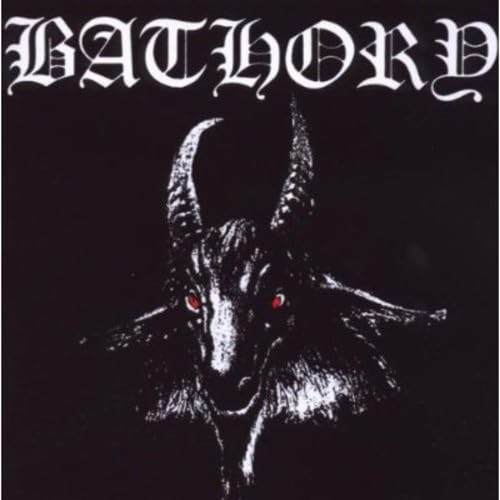
The album cover was fussed over a little bit, with a pentagram originally planned but the idea was scrapped in favor of the goat artwork. After the first pressings of the album, Quorthon found the yellow coloring of the goat an eyesore and the cover was changed to black and white for all subsquent pressings. The back cover also features an error due to supply issues. Quorthon found some kind of rub-off lettering in a font he wanted to use, but he ran out of the letter C, so the song Necromansy is spelled as I just typed it instead of “necromancy” as the dark art is typically known as.

The influence of Bathory was a huge question mark during the early years – Quorthon cited acts like Motorhead and GBH as his primary guides, while everyone on the planet Earth thought that the early Bathory recordings sounded much like Venom. Quorthon chafed at comparisons to Venom and even suggested that the two bands were completely different – he isn’t wrong, per se, but there is a definite vibe that’s similar to Venom in these early Bathory recordings. In this 1987 interview with Metal Forces, Quorthon did clarify that he thinks Venom’s Black Metal is a masterpiece and he goes further into what led him to make the music he did.

I’m going to handle this album differently than my usual format. Today I’ll offer up the tracklist and then give a summary of what we have here, I’m not going to jump into detail track by track like I usually do.

Storm Of Damnation (intro)

Hades

Reaper

Necromansy

Sacrifice

In Conspiracy With Satan

Armageddon

Raise The Dead

War

The Winds Of Mayhem (outro)

This album takes less time to listen to than it takes to get a Domino’s pizza – this one is in and out in 26:58, and 3:30 of that is the intro and outro.

The music on tap is rooted in thrash, but is very lo-fi production and a bit more “messy” than the polished offering thrash would mostly become. It bears some comparison to Slayer’s Show No Mercy with the “evil” imagery and creepy music, but even Slayer’s debut was refined compared to this. This is a ghastly, cavernous listening experience that isn’t for the faint of heart.

The concept of “under producing” might be strange but it’s also perhaps the most important part of this record. The lo-fi production turned off some listeners but brought others in, and some of those listeners would seek to emulate this “sloppy” work. It’s one direct link from this to the genre of black metal, and its infamous “second wave” which would show up in the late 1980’s and terrorize the world by the early ’90’s.

It’s actually a bit inaccurate to call this album and black metal two separate things – while black metal was influenced by Venom, Celtic Frost, Slayer and Mercyful Fate, none of those acts were playing the style of music. Bathory, on the other hand, offered up an early blueprint on what black metal could actually sound like. Songs like Sacrifice and Armageddon are not far removed from what the Norweigian scene would put on display when black metal truly got rolling. Nothing wrong with calling this the world’s first black metal album, though it’s a subgenre whose listeners like to argue about everything so the point could be debated.

For me personally this wasn’t a part of my collection until a lot later down the line, when the most infamous events of black metal’s early days had played out and Quorthon himself had moved on to other styles. But it is absolutely worth a visit to truly understand where the depths of extreme metal got their influence, and this album is the birth of black metal.

This album basically starts playing and bashes for its 27 minutes of existence, save the eerie intro and outro. If there is a standout track I find Raise The Dead to be it. This one peels the speed back just a touch and is a savage, noisy march about coming back from the grave. This is the song that does grab out a little bit and offers something perhaps “catchy.”

But this album is an all or nothing proposition as a whole. You’ll either like it or not. There is no range of dynamics to consider here or a few songs that leap out and others that are “less than.” It also makes grading a bit of a chore – honestly the album sounds like shit and could be given an F for that alone. It’s also the start of something that became massive within heavy metal and could be given an A or even an S for that factor.

The actual grade lies somewhere inbetween – for me personally I have listened to black metal for decades now so the sound is not an adverse factor – this is exactly what black metal is supposed to sound like, and it’s primarily because of this album that black metal sounds like that. This is worthwhile to listen to and is interesting on its own merits, not just because it’s a historical marker.

Album Grade: B+

Bathory’s first offering got the ball rolling on Quorthon’s own lengthy career and also the genre of black metal. The next few Bathory albums, including the classics Blood Fire Death and Under The Sign Of The Black Mark, would cement Bathory’s status as early extreme metal legends and draw a line to the start of Mayhem’s career, thus kicking off black metal in earnest. Quorthon would leave black metal behind after awhile, serving up several albums of more melodic fare that now classify as Viking metal and also experimenting from time to time. Bathory would run until 2004, while Quorthon died of heart issues.

Bathory did not run the usual course of a band – they rarely played live and gave up on that pursuit after a few years. Bathory was simultaneously world famous and totally obscure – not known to the larger world but hailed as legendary among the denizens of the metal underground. And this debut album was a fitting start to a heavy metal legacy.

For more on the grading scale I didn’t really use much this week, head here.

Questions, comments or concerns? Use the comment form below or head to my contact page.

Heaven & Hell – The Devil You Know

This week I’m heading into 2009 and having a look at the album that would sadly be Ronnie James Dio’s final living testament.

Heaven & Hell – The Devil You Know

Released April 27, 2009 via Rhino Records

The story of how Dio-led Black Sabbath got together one last time is pretty straighforward. In 2007 a greatest hits compilation of the Dio-Sabbath albums was released. Tony Iommi did not have a wealth of usable material from these albums in the vault, so he convened with the other members to record a few new songs for the comp.

This led to touring and rather quickly morphed into recording a new studio album. The only roadblock present was one sprung by her grace Sharon Osbourne – this band could not use the name Black Sabbath, as Camp Osbourne had secured full control of Sabbath’s rights from Iommi several years prior. This led Sharon to release a flimsy PR statement declaring that there was “only one Black Sabbath,” even though anyone with even a passing knowledge of heavy metal is familiar with the several Ozzy-less versions of the band. At any rate, Iommi, Dio, Geezer Butler and Vinny Appice chose to rechristen themselves Heaven & Hell in order to tour and record. It was Black Sabbath in all but name, and many record stores even filed the release under Black Sabbath on the shelf.

The album features 10 songs with a 54:01 runtime. There were some digital editions with bonus tracks, these were live cuts and I don’t know of any studio material that was left on the cutting room floor.

Atom And Evil

The opener keeps a slow pace in fitting with the doom aspect of Sabbath’s music. Dio gets to shine on the verses while Iommi opens up the riffing in the chorus and solo break. While not outright headbanging, it’s honestly a great listening experience with the more droning tempo.

And the theme here is very deep, interwoven and well done. Atom And Evil is clearly a play on the Adam and Eve story and the song explores the concept of someone finding forbidden knowledge, just as in the creation story. In this case the knowledge is that of nuclear weapons.

And also of note – this isn’t the first time someone used this song title to express the same sentiments. In 1947, the gospel act Golden Gate Quartet released a single with the same title and theme. Rather different songs, but same idea. Grade: A+

Fear

This one gets going with a fair bit of power and has one hell of a doom riff running through it. The song is simply about being afraid of the dark. This one is actually more about the reality of nyctophobia, which is a feature of prehistoric times when light sources at night were quite scarce and a fear of the dark was perfectly rational. It has lingered with humans ever since and now we have this great song about it. Grade: A

Bible Black

Up next was the advance single from the album. This one builds from a softer intro into a full-on vintage Iommi pounder of a riff. The song is about a guy who becomes possessed by a book of dark knowledge. It’s easy to see why they picked this as the single – this song is full and rich and hits all the right notes. Grade: A+

Double The Pain

This one comes out at a more uptempo, rocking pace. The premise here is of someone who isn’t happy unless they’re miserable, so “double the pain” and make them euphoric. Interesting concept, but honestly I can’t help but feel like I’m listening to a heavy metal commercial jingle for Doublemint gum (that stuff still around?). A good song but maybe just a bit off. Grade: B-

Rock And Roll Angel

This one moves in a straight line with a simple yet effective Iommi riff. This was first called Rock and Roll Jesus, but then Kid Rock released something with that name so this one got changed up. It’s a nice song that’s far from the standout of the album but it’s not bad by any stretch. Grade: B-

The Turn Of The Screw

A song with a fairly upbeat rhythm to it, even Iommi’s riffs have a bit of lift to them on here. A bit juxtaposed with the subject matter as this is about using people up and discarding them. Another song that doesn’t leap out of the speaker but still offers up something worth listening to. Grade: B

Eating The Cannibals

An outright speed song here, this one picks up the tempo and bashes out from start to end. There are even a few melodic rock runs from Iommi over the top of this one, not something you hear from him every day. The theme here is one of violence and also a sort of twist on the “eat the rich” concept. I don’t know that it entirely comes off but the song works just the same. Grade: B+

Follow The Tears

Another more standard Dio doom offering with a few keyboards up front to help differentiate things a bit. It’s a dark tale of how human generosity can be self-serving and ultimately a trap. Another song that’s fine but doesn’t quite go over the hump. Grade: C+

Neverwhere

One more fast and fairly upbeat and tempo track as we wind to album’s end. It’s one of Dio’s fantasy tales though this one is really dark, about someone giving in to the temptation of witchcraft and the like. Pretty good stuff here. Grade: B

Breaking Into Heaven

The final song is a more plodding doom track with the vintage Iommi guitar work. This one’s about the rebel angels who left Heaven with Satan, now they are plotting to return to Heaven and they aren’t going to ask politely to get back in. Not a bad way to close out the album and the Dio era of Black Sabbath. Grade: B+

The Devil You Know was hotly anticipated and would see a rush of success upon release. It charted all over the world, though in fairness many of the chart positions were modest. In the US it did very well, landing at number 8. This would match Master Of Reality for best US chart position of any Black Sabbath album, though a few years down the line the original version of the band would land the number 1 spot with the band’s final album 13.

While the stage was set for Heaven & Hell to take off and run, this chapter would sadly close after less than 50 shows. Ronnie James Dio was diagnosed with stomach cancer and died in May of 2010. For a group who had formed and split up twice over infighting but had come together older and wiser for this last run, it was a tragic way for everything to have to end. The end of Heaven & Hell left Tony and Geezer available to work with Ozzy as Black Sabbath one final time, a run that concluded in 2017.

Today’s album does have a mixed reception. Some people ate up anything that Dio Sabbath released, I am generally among that number. Others didn’t find much worthwhile in the album, longing more for the prior classic albums of the group.

For me this is a solid effort. It has a few standout cuts that show up at the beginning of the record, then the remainder offers up secondary tracks that are still quality and a bit above the “filler” line. It’s a good listening experience front to back, nothing on here sticks out as not fitting.

Album Grade: B+

This last chapter of work between Dio and Iommi blessed us with another round of their somewhat unique blend of doom and high fantasy metal. It is a Black Sabbath album in all but name, a policy enacted by her benevolent grace Sharon Osbourne. But there is no quashing the legacy that “Dio Sabbath” were able to forge, and The Devil You Know serves as a fitting conclusion to that legacy. It’s also the final testament of bona fide heavy metal god Ronnie James Dio.

For the details of my grading scale, head here.

Questions, comments or concerns? Use the comment form below or head to my contact page.