Revisiting The Legacy Of This Is Spinal Tap

On Monday I talked about the soundtrack to the movie This Is Spinal Tap. Today I’ll talk about the movie itself.

Of course, before I get into the main event, rest in peace again to Ric Parnell. Parnell played Mick Shrimpton in the movie and was the drummer for the 1984 album as well as the 1992 effort Break Like The Wind. Parnell died just a few days ago at age 70.

In terms of movies about music, there honestly are not many that measure up to This Is Spinal Tap. The “mockumentary” was a battle to get funding for and film, and then was a slow-burner that edged its way to cult classic and then eventually immortal status. While there are a handful of music films that are held in the highest regard (The Last Waltz comes to mind), there are few, if any, that do for rock and metal what Spinal Tap did.

The movie is a laugh riot, but the jokes aren’t the kind of setup-punchline thing. Much of the movie was done improv style and the jokes are left in a deadpan form for whoever wants to pick them up. Anyone else saying some of the stuff in the movie would come off just plain dumb, but it’s the most brilliant comedy when delivered in the movie.

And of course the film’s greatest legacy is that it’s almost not really a parody. There are many tales of rock stars seeing the movie and not finding humor in it – Steven Tyler of Aerosmith and The Edge of U2 are a few who thought the movie was so spot on that it wasn’t funny. Many musicians have recalled their own “Spinal Tap” moments on tour, the fake band’s name is now a term for real life happenings. And even the idea of having a black album cover would come to fruition – while Spinal Tap’s Smell The Glove didn’t get traction in America, Metallica’s “Black Album” seven years later would be the best-selling album of the 1990’s. That probably has more to do with Metallica than with Spinal Tap, but the parody band were openly cited as inspiration for Metallica’s cover.

And that’s really the thing about Spinal Tap – they’re pretty much just another band from the era of rock and metal. They informed the scene as much as they provided commentary on it. Rob Reiner went to see Judas Priest live as part of his homework to make the movie. And tell me that you don’t see Iron Maiden all over Spinal Tap, they’re almost the same damn band. Spinal Tap provided legitimate influence to countless bands over the years, and every big band has their “Spinal Tap” story of some absurd event almost too silly to be real.

This Is Spinal Tap is a movie that has entertained many rock denizens in the 38 years since its release and it has also bore real influence even as what was originally a mock band. The movie just rolls from start to finish with a completely packed guest list and absurd gag after absurd gag. It entered the general pop culture lexicon in many avenues – Harry Shearer’s gig on The Simpsons led to a Spinal Tap episode, Fran Drescher reprised her role as Bobbi Fleckman on her hit 90’s sitcom The Nanny, the esteemed Mick Fleetwood actually risked life and limb to become a Spinal Tap drummer for a spell in the early 2000’s, and Christopher Guest has helmed a series of award-winning mockumentaries in the same style of Spinal Tap. This led to a huge mash-up in 2003 on A Mighty Wind, where Guest mockumentary regulars Eugene Levy and Catherine O’Hara joined the other Spinal Tap primary players and a host of other Hollywood talent in a folk revival mockup that garnered a similar reception to Spinal Tap.

There is no questioning the legacy This Is Spinal Tap has left on the rock landscape. To wrap up I want to recall three of the movie’s most famous scenes. This isn’t a list of “my favorites” per se, honestly the whole movie is my favorite. But these scenes are the ones that people go back to and that people who don’t even know Spinal Tap at least have heard of the references.

Hello Cleveland!

This scene is an absolute laugh factory – the band are getting ready to go on stage to a very energetic crowd in Cleveland and begin their journey from backstage. The only problem is that backstage to stage is a journey longer than one of Skyrim’s longest dungeons. The band get lost at multiple points and have to ask for directions from an employee, but even that doesn’t get them on stage. The band are lost in a broken down labyrinth.

This is one of the many scenes that have happened to countless musical acts in real life. I can’t locate the exact text now but the scene might have been inspired by a similar gaffe by Tom Petty. Even if not, rock stars and luminaries from every genre of music have their own Hello Cleveland! Stories.

These Go To 11

This scene doesn’t need much exposition – I’d imagine it’s the most famous line from the movie. Nigel is showing Marty an impressive guitar collection (the sustain!) when the Marshall head that goes to 11 is shown.

And it’s not just the concept, it’s also in the delivery – when Marty suggests that 10 could be made louder, Nigel simply chews his gum for a moment and then remarks “these go to 11.” Just amazing delivery.

This is the phrase that people know from the movie even if they don’t know the movie. It’s the signature line and it’s why we’re all here.

Stonehenge

It’s all there – the band break into their epic, brought out to revive flagging attendance numbers on tour. Everything is going great, then a Stonehenge monument falls from the sky that isn’t big enough to use as a footrest. The aftermath sees manager Ian Faith quit the band and a path to oblivion unfolds – that is, until Sex Farm hits the charts in Japan.

Stonehenge is everything that goes wrong with stage props, something that happens to bands all the time. But Stonehenge actually did happen to a real band, just in the opposite fashion – in 1983, Black Sabbath had to cancel several Canadian shows on their Born Again tour because their Stonehenge replica was too big to fit in venues. And the funniest part is that one didn’t influence the other – Spinal Tap had a draft version of their Stonehenge gag before Black Sabbath’s tour. It’s just one of rock’s freaky coincidences. Spinal Tap would twist the bit and do the “too big” version in 1992 at their Royal Albert Hall performance.

Any time I go back and watch the movie, it’s always the Stonehenge scene that has me on the edge of my seat. It’s the movie’s most pivotal moment and the biggest turning point for a band slowly flailing away on a tour that isn’t working. Everything before builds up to Stonehenge and everything after is a result of what happened. The whole scene, sadly not entirely represented in the clip, is really the point of the movie.

And there we have it – one of the greatest movies of all time and one of rock and metal’s most important moments. I’m sure I’ll have more to say about the film in the future, this is a well that there is plenty more to go down before hitting bottom.

After all, what’s wrong with being sexy?

Album Of The Week – May 2, 2022

I finished this post last Wednesday and got it all put together and scheduled yesterday, May 1. Just as I was about to head off to bed I checked my socials one last time and got unfortunate news very much related to my post today.

On May 1st, 2022, long-time drummer Ric Parnell passed away at the age of 70. Parnell was involved in a large variety of projects over his 50-plus year career, including Atomic Rooster and also being the drummer on the hit song Mickey by Toni Basil. But Parnell’s most well-known work would come as one of many to occupy the drum throne of British heavy metal legends Spinal Tap. Parnell played on the soundtrack I’m discussing today and also portrayed drummer Mick Shrimpton in the motion picture. Parnell would outlive his fictional counterpart nearly 40 years.

Condolences to the family and friends of Ric Parnell. Today I’ll do as I originally intended to, which is look at his most celebrated work.

I’m back after a bit of time off. I took some time to acclimate to a new work schedule. That’s pretty well sorted now and I’m ready to get back to business.

This week is the first time I’ll be offering up a movie soundtrack as the AOTW. Of course, this is a bit more than just a soundtrack. It’s not a compilation of songs with a few highlights and a lot of filler like most soundtracks. It’s a full-on offering of songs written for a movie and also performed by the cast. The band is fake but also became very, very real and are one of the rock and metal’s defining legacies despite being conceived to make fun of the scene.

There is none more black, and none more iconic

Spinal Tap – This Is Spinal Tap

Released March 2, 1984 via Polydor Records

My Favorite Tracks – Hell Hole, Stonehenge, Tonight I’m Gonna Rock You Tonight

It’s not totally unusual for a band to be contracted to record songs for a music-centric movie soundtrack. It is very unusual for the same actors in the movie to be the ones to also record the music. It worked in the case of Spinal Tap, who featured Michael McKean and Christopher Guest, who had already played together for several years and had conceived the Spinal Tap idea for a TV show pilot in the late 70’s. Harry Shearer, who had worked with McKean through the 70’s in another comedy group, joined in along with director Rob Reiner to give life to the Spinal Tap concept. The band was rounded out by some musicians – drummer Ric Parnell (again, RIP) and keyboardist David Kaff. Both Parnell and Kaff would assume roles in the movie as Mick Shrimpton and Viv Savage.

For simplicity and lore’s sake, I will be referring to the band members by their stage names in this discussion.

The original release of the This Is Spinal Tap soundtrack comprises 11 tracks (mostly) from the motion picture. A 2000 reissue offers a bonus track and is available on Spotify (I will not be covering the song today). A 2009 release called Back From The Dead does feature many of the songs in re-recorded form but should not be confused with the movie soundtrack.

Hell Hole

Opening the track is a song that was actually released as a single, complete with music video. Hell Hole is a great mid-tempo rock track that outlines the ups and downs of “making it,” then wishing for the simpler pleasures of being a pauper. The grass is always greener on the other side. The song features Nigel Tufnel handling the verse vocals while David St. Hubbins tackles the chorus.

Tonight I’m Gonna Rock You Tonight

The song that opens and closes the movie finds its spot as the second track of the record. It’s a splendid rocker that doesn’t seem like it has any business being as good as it is. The guitars, lyrics, keys and rhythm section are firing on all cylinders through this high-octane tune that gets both concert and film crowds going.

Heavy Duty

A proper heavy metal tune from Spinal Tap, this song goes hard and heavy and is all about the rock. It is totally one of those cliched “rock” songs which is so silly yet so good, something that serves the band and movie doubly well. They just want to make some eardrums bleed, and have accomplished the goal. It does seem to be pure coincidence that this Heavy Duty and Judas Priests’ song of the same name were both released in 1984. One probably couldn’t have taken from the other given the concurrent timelines and the obscurity of Spinal Tap pre-film. It’s certainly fitting but by no means is there any greater link.

Rock N’ Roll Creation

A track that feels NWOBHM-inspired or perhaps a “precursor to power metal” cut. It plays a role in the film when bassist Derek Smalls cannot release from his pod in time and has to hang out inside for most of the performance, only getting out when the others get back in at the end. The song is the genesis of rock and roll so of course it is cannon to me.

America

One song that did not make it into the movie, America is simply about the awe of a British band discovering the size and scope of America for the first time. The tune begins very slowly, perhaps betraying the actors’ future participation in another mockumentary as a folk outfit. As the song builds it suddenly shifts into a riff that 100% sounds borrowed from the first two Iron Maiden albums. Nothing says America like …, uh, anyway, on to the next song.

Cups And Cakes

This tune got a brief airing in the film on the radio that also put the band in the awkward spot of being in the “where are they now?” file. The song is utterly goofy and doesn’t really move the needle on the soundtrack but was a pivotal piece of the movie.

Big Bottom

One of the movie and by proxy album’s signature cuts, the song features both guitarists wielding bass guitars along with usual bassist Derek. It is probably the only time in recorded music history that guitar players actually sought to be bass players.

Big Bottom is a favorite of many from the movie and is a laugh riot through the praise of ample rear ends. It’s probably a pointed shot at the heaps of sleazy love songs populating the 1980’s but it’s a damn good time no matter what it is. The all-out bass assault with Viv’s keyboard embellishments just throw the whole track into overdrive. Big Bottom was the b-side to the Hell Hole single and, looking back, probably should have been the lead feature.

Sex Farm

I almost called Cups And Cakes the dumbest song on the album but I quickly held up because that isn’t true. Sex Farm is crude, rude and – well, pretty damn good. Not every good rock song needs to be a thesis statement or a pithy philosophical musing – some great rock songs are about the dumbest shit. The song that saw Spinal Tap rebound from a near-fatal end in the movie also lifts the soundtrack with its dumber than dogshit quips about sex and farms.

Stonehenge

While not “long” by any practical measurement, Stonehenge serves as Spinal Tap’s “epic” song. It tells a story and builds from a haunted intro into a full-out rock attack outlining the lives of those Britons who lived at ancient Stonehenge. It’s also one of the movie’s most memorable scenes, a topic I’ll save for a near-future post.

The song has elements of NWOBHM and what would come to be known as power metal. It builds from a quiet, haunting intro and launches into a melodic, rollicking tune that puts historical and fantasy elements on display. The song stands fine on its own but really can’t be separated from one of the movie’s signature events.

Gimme Some Money

This song is an offering from the band’s past before Spinal Tap was christened. The band performed as The Thamesmen in the apparent height of the British Invasion, as this song is absolutely cut from the same cloth as The Beatles, Rolling Stones and the whole 60’s British scene. It’s quite well-done, another one of their works that doesn’t feel like it has a right to be as good as it is. And of course it’s absolutely hilarious.

Also – The Thamesmen is a great name, someone should get that together if it hasn’t been done already.

(Listen To The) Flower People

The final song on the album is also the first offering from the properly-dubbed Spinal Tap, who jumped into the late-60’s psychedelia phase before charting a course for rock n roll. One one hand it’s not my favorite tune of the collection but on the other it’s a pretty well-done effort that does recall the music of the time (though not my most well-versed period of music, admittedly). This one does feel a little too on-the-nose humor-wise where the jokes in the movie and other parts of the soundtrack are allowed to land on their own. But again, still a nice song to round it all out.

This Is Spinal Tap stands on its own in the realm of movie soundtracks. Of course there are iconic soundtracks out there, they were huge especially in the 80’s. But to have the actual actors in the film record their own music and make it work and also fit in to the film is just an unbelievable feat.

The songs work in the movie, of course, but they also stand on their own. Though Spinal Tap’s legacy will always be the now legendary film, the songs have been talked about worldwide and covered by a who’s who of rock greats over the past 38 years. Spinal Tap themselves have toured and recorded again and again since and have become their own part of the institution of rock.

I’ll have a different post on Wednesday but on Friday I’ll do the obvious and discuss the movie This Is Spinal Tap in more detail. For all of the talk about rock and often the 80’s scene that I and others do, so much of it was informed by this off the wall and at the time obscure mockumentary that wound up taking on a life of its own and being its own influence on the life and times of 1980’s rock and metal. But in the wake of that discussion, the music of the film can’t and certainly shouldn’t be ignored.

Judas Priest – Defenders Of The Faith (Album of the Week)

I’m gonna head back in time this week and talk about one of heavy metal’s most excellent albums. The record just had its 38th anniversary a few days ago on January 4th. It still stands today as one of the band’s best works as well as one of heavy metal’s best efforts.

Judas Priest – Defenders Of The Faith

Released January 4, 1984 via Columbia Records

My Favorite Tracks – The Sentinel, Freewheel Burning, Love Bites

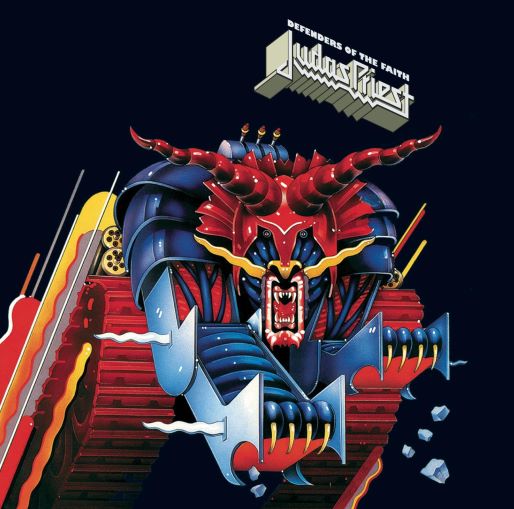
The album art lets everyone know that this is a mid 1980’s heavy metal release. The giant monster/machine referred to as the Metallian looks ready for business. The same could be said of the band, who entered their ninth studio album ready to keep on the track they’d set with Screaming For Vengeance a few years prior.

The album opens with an absolute metal masterpiece in Freewheel Burning. This song absolutely rips and sets a high bar for the rest of the proceedings. It’s become a staple of the Judas Priest live set, a bit of a task for a band now with 18 and counting studio albums.

The album continues to roll with cuts like Jawbreaker and Rock Hard Ride Free. While not matching the ferocity of Freewheel Burning, both fit in well as complementary pieces to this set. Both feature the dueling guitar attack of Glen Tipton and K.K. Downing along with suited-to-the-stage arrangements with simple, shoutable choruses (if Jawbreaker really even has a chorus).

Up next is The Sentinel. I have previously discussed the song in isolation, it was the second entry of my S-Tier Songs. This is my favorite Priest track, bar none. I’ve found that I’m not alone in that assessment, which surprises me a bit but there’s no denying the excellence of the song.

The album moves on into Love Bites, one of the album’s singles. While this track could be considered a bit goofy, its execution lifts it above being consigned to the silly song bin. It doesn’t get as flashy with guitar work as other songs on the record and it might be a preview of the direction Priest would move after this record.

The album moves on in a mini-exploration of silliness with Eat Me Alive. In fact this track might go beyond silly into disturbing territory, I’d imagine that certain specific acts referenced in the lyrics would be frowned upon today. In fact they were frowned upon then, as this song caught the attention of a group of US senators’ wives known as the Parent’s Music Resource Council. Eat Me Alive joined other naughty luminaries like Twisted Sister, WASP and Sheena Easton on the Filthy Fifteen. I won’t claim to have any issue with the song but yeah, that one line in it does stand out in a pretty dark way.

We move on to other matters with another of the album’s singles Some Heads Are Gonna Roll. The song was actually written by Bob Halligan, Jr., who has collaborated with Priest and others over the years. This tune slows things down just a hair but still retains the atmosphere found everywhere else on the record. While the single was not a hit in the conventional sense, it did bear influence over the years and has been one of Priest’s more recognizable songs. It’s been reported that George Lynch either “took inspiration” from or “ripped off” the song for Dokken’s 1984 track Into The Fire. (The specific interview Lynch gave about this hasn’t come up in my cursory searches.)

The final portion of Defenders… gets going with a slower number. Night Comes Down turns down the tempo but still offers a powerful ballad-like tune. It showcases Rob Halford’s considerable range as he is able to evoke power and emotion while a bit further down on the register than his famous screams. The song fits with the times very well and again shows that the band were considering waters a bit past the blistering heavy metal they had come into the decade with.

The album closes with a single song divided into two parts. Heavy Duty is a very brief stomper that closes out these metal proceedings well and is appended by Defenders Of The Faith, a brief title track that is honestly little more than an outro to Heavy Duty.

Heavy Duty would be very on the nose for Priest and for heavy metal as a whole. Just a few months after Defenders… saw release, the mocumentary This Is Spinal Tap would hit theaters and feature a tune by the same name. It’s almost eerie how similar the songs are in tone and attitude. Judas Priest were certainly one of many embodiments of the metal and rock culture that Spinal Tap were lampooning. Priest are also one of many bands to share Spinal Tap’s woes of a revolving door upon the drum set, though thankfully the drummer on this particular album has moved on.

A reissued version of Defenders… offers a bonus track called Turn On Your Light. The song is … certainly a song and is actually a leftover from the Turbo sessions so I don’t know what it’s really doing here. A more worthy bonus offers a live cut of Heavy Duty and Defenders.

Defenders Of The Faith is a triumphant album from Judas Priest that closes the door on their early ’80’s heavy metal prime. The band would go on to explore other sounds of the 1980’s on their next efforts, though still with success and their reputation now established. And while Defenders… sometimes flies under the radar compared to the celebrated records Screaming For Vengeance and British Steel, time has been kind to this 1984 effort and its retrospective has often been through rose-colored lenses.

And while Judas Priest have certainly embodied no small amount of the goofiness of heavy metal culture that saw parody around that time, both Priest and the parody lived on to be celebrated for what they were rather than dragged by the roasting. Defenders… certainly has its sillier moments, but they only help round out the work as a whole. And with the band still going strong despite major lineup changes almost 40 years later, it’s tough to dispute the impact Judas Priest have had on the heavy metal movement.

Metallica – Ride The Lightning (Album of the Week)

This week it’s time to dust off an all-time metal classic. One of heavy metal’s most important bands and one of their most significant albums. I haven’t had the occasion yet to discuss Metallica besides in passing mention, now it’s time for my first exploration into a band who will certainly be discussed here more in the future.

Metallica – Ride The Lightning

Released July 27, 1984 via Megaforce Records

My Favorite Tracks – For Whom The Bell Tolls, Creeping Death, Fade To Black

The album had an immediate impact on the market, selling out of its original pressing in a few months and forcing the band’s move to a major label as they outgrew underground infrastructure. As Metallica entered a supernova period of growth, they gave rise to a heaver version of metal than what was being favored by radio and MTV.

But even as Metallica brought forth the ferocity that would be a hallmark of heavy metal to come, they also displayed a refined songwriting approach that would serve them in the future as they went from being one of metal’s biggest bands to the biggest band in the world. Their musical evolution would being on Ride The Lightning.

Books could, and likely have, been written about this record. I’ll not bother with too much exposition, instead I’ll go in to the 8 songs on Ride The Lightning track-by-track and get under the hood of one of metal’s greatest albums.

Fight Fire With Fire

The album opens with a short, melodic intro that belies the sheer force to come. Fight Fire With Fire is the song that connects this record to Metallica’s savage debut Kill ‘Em All. It is pummeling and unrelenting throughout its 4:44 runtime. This misanthropic plea for nuclear annihilation sets an image and tone that would be ever-present in the oft-pessimistic world of metal.

Ride The Lightning

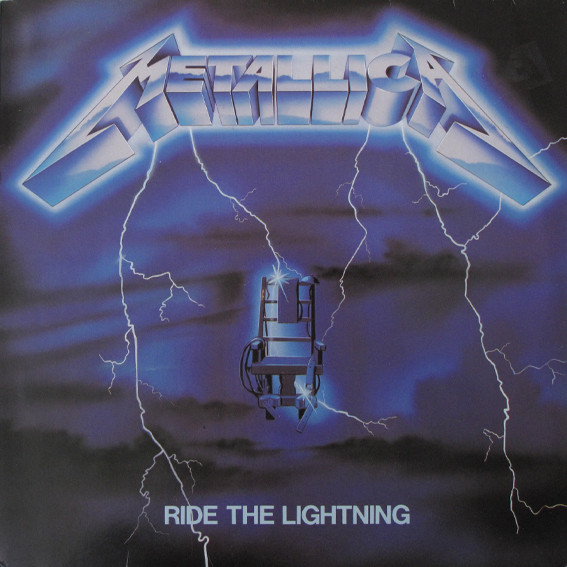
The title track marks one of two writing contributions from former guitarist Dave Mustaine, he of subsequent Megadeth fame. The song chugs along to the lament of a convicted killer being executed by electrocution. (Shocking, I know). The track flies along in a precise, militant manner while James Hetfield executes some of his best early vocal work in the higher register, his screaming sounding like the pleading of a condemned man.

For Whom The Bell Tolls

It’s time now for one of Metallica’s most iconic and beloved songs. For Whom The Bell Tolls is a long-celebrated staple of the band’s live set and is always in the conversation when discussing the band’s best songs. The song was inspired by Ernest Hemingway’s novel of the same name and depicts a particularly brutal sequence where a group of 5 soldiers die in an airstrike after capturing a hill.

Everything about this song is pure magic – Cliff Burton’s effect-drenched bass intro, the lyrics, the frenetic music. It all just works on a level few bands ever achieve.

I did read Hemingway’s book after hearing Metallica’s song. Hey, at least I like the song.

Fade To Black

Perhaps the most unique track on the album, Metallica have a go at a power ballad. For a band that had so heavily thrown the gauntlet into thrash metal, a subgenre they were helping invent, Fade To Black marks the first sign that more than savage heavy metal was to come from the group.

This song, like the preceding track, fires on all cylinders. The guitar work is gorgeous and perfectly suited to the morose subject matter. James Hetfield delivers haunting vocals that portray someone giving up on life. While such is common lyrical fare in metal music, very few acts execute it on this level.

Trapped Under Ice

Now for the first of two songs that are, at best, considered less than their fellows on Ride The Lightning. Trapped Under Ice is a perfectly fine thrasher that doesn’t break new ground or anything, but also isn’t a total stinker. It fits fine on the record, it’s sufficiently thrashy and I don’t feel it should be as maligned as it sometimes is. It might stick out a bit on an album with at least 3 of the band’s best-ever works, but in the end only a few songs can be the greatest. Not everything has to be best ever or worst ever, there’s plenty of room in the middle, and Trapped Under Ice fits just fine there.

Escape

The second, and the truest version of, what the hell were they thinking? Escape was apparently an attempt at a radio single that was apparently forced on them by the record label. James Hetfield supposedly hates the song, an opinion shared by a lot of Metallica fans. This song is the runt of the litter on the album, whereas the records before and after this tend to lack for a lesser track.

I honestly have no real problem with Escape. It’s still heavy enough, it has some attitude, and I never feel the need to skip it when I play the album. I’m used to it and I’m not that offended by it. No, it’s not great and it does ding the record, but it’s not that big of a deal in the end. It didn’t become a single and the 3 songs that needed to be singles did, so no harm no foul.

Creeping Death

It’s back to business in full for Metallica on the last vocal track of the record. Creeping Death is an epic headbanger about the biblical story of plagues in Egypt. This is thrash at its finest as the band shreds through verse and chorus in true Old Testament style (not to be confused with Testament the band).

The song’s mid section offers a breakdown that translates to one of music’s iconic live moments, with thousands of people screaming “Die!” along with the band. Sunday school at church was never as badass as Metallica.

The Call Of Ktulu

The record closes with a great instrumental piece that fits with the album musically and provides an interesting listen, something that some instrumentals find hard to do. The song would mark the end of leftover Dave Mustaine riffs for Metallica, something I’m sure they were happy to move on from just as Mustaine was about to start his own legacy.

Ride The Lightning is one of heavy metal’s all-time classic albums. It bridged a few gaps between their raw beginning and the polished sound to come, but also offered its own weight in thrash metal gold. Metallica would go on to become a massive band in the 80’s without the benefit of radio play, an effort owing to the force of their music.

It’s long been argued that some old-school die hards have a problem with recognizing anything beyond Metallica’s first four albums. Plenty of those arguments can be had another time but, for the sake of the albums themselves, just listen to them and then ask yourself why people wouldn’t be hung up on them. They are high points of heavy metal and lie on the summit of the genre.

W.A.S.P. (Album of the Week)

There’s no real huge occasion for this week’s pick other than I recently scored a sweet copy of this on vinyl at my local record shop. Let’s head back to 1984 for one of rock and metal’s best debut albums.

W.A.S.P. – self-titled

Released August 17, 1984 via Capitol Records

Favorite Tracks – I Wanna Be Somebody, The Flame, The Torture Never Stops

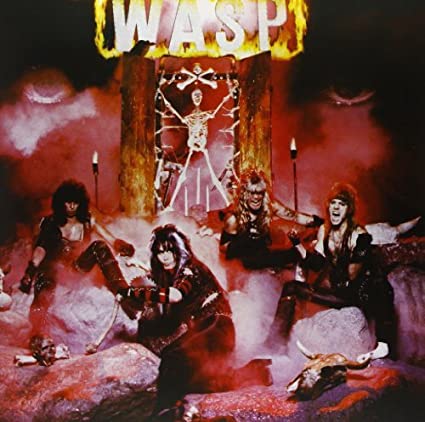
WASP weren’t messing around with this collection of sleaze and riffage. The band had already made a name for themselves with raunchy, over-the-top theatrics on stage prior to their debut album drop. The band and album shocked and awed their way to rock stardom in the down and dirty prime of the 1980’s.

The album would court controversy before its release. The intended first single Animal (Fuck Like A Beast) drew the ire of watchdog groups, including the Parent’s Resource Music Center. The infamous PMRC, a collection of senators’ wives who were busybodies with nothing better to do, decided to try and moralize music. Their list of the “Filthy Fifteen” songs included WASP’s first-ever single. As a result, the band’s label decided to drop the song from the album. Of course, as with much that the PMRC lamented back then, both the album and the banned song would become highly sought after. Thank you, PMRC, for letting us know where to look for music.

If you were to pick up this CD in a shop or look this up on Spotify, you will find Animal in its place as the album’s lead track. In 1998 the album was reiussed, both restoring Animal and adding two bonus tracks. I’m personally not a huge fan of bonus tracks on the original portion of a reissued album – I’d rather things be kept separate from the known recording. But in this case I’m happy to have Animal on the reissue and honestly I’m more used to it at this point than I was without it. In contrast, the vinyl I picked up awhile back is an original press and doesn’t have it.

And yes I do like the song Animal. It’s not the best on the album but it’s a cool tune. I think the uproar over it was more funny than anything and was mainly due to the naughty word in the sub-title. It’s a bit of interesting lore and trivia from back when people tried to play morality police with popular music. Even more tidbit trivia – Blackie Lawless refuses to play the song live anymore due to his personal beliefs. Odd, but there’s enough of a WASP back catalog to not need it I suppose.

Animal is just one song though. This album is loaded with killer selections from rock and metal’s prime. Album opener by default I Wanna Be Somebody is a classic, one of the band’s most celebrated tracks. I know I’ve been there and many others likely have after a miserable grind at an unfulfilling job – I wanna freaking be somebody. Alas, we press on, lost to time and without the fame and notoriety of Blackie.

The album’s closer hits on a similar issue – The Torture Never Stops is totally about work. The band’s image from back then might lead a person to think that the song is some dark S&M romp but nah, that shit’s about work. It’s something darker and more hardcore than any sex dungeon could ever be (unless that is your job, I dunno).

Inbetween is a selection of all killer, no filler cuts. And also a lot of spelling things out with periods – L.O.V.E. Machine, B.A.D., hell the band name W.A.S.P. C’mon, this is kind of annoying to type out. But the songs are worth the suffering.

Sleeping (In The Fire) is a nice ballad-like track that sees the band set down the shred and offer some melody while still bringing the power. Tormentor and On Your Knees bring more of the hard and sleazy sound that WASP would become known for. And School Daze knocks the hallowed “class life” that was such a huge thing in America and a natural point of rebellion for many of the nation’s youth.

WASP’s debut album marked the beginning of a legacy that walked lines between hair, glam, shock rock and true heavy metal. Chris Holmes would become a guitar idol even in the midst of a less-than-savory portrayal on film a few years later. And band leader Blackie Lawless has left a very complicated legacy in his wake, but in the context of this debut album there is no disputing the power and prestige.

I did grow up in a semi-sheltered home but honestly my parents never really messed with my music much. But this album was one I kept hidden from plain sight – I knew the reputation WASP had and I wasn’t going to risk having this gem ripped away from me in the name of protecting my fragile psyche from this raw, primal power. Now that I’m all grown up I can freely play Fuck Like A Beast all I want.

WASP’s debut album was a metal classic and would start the band on a path to some unique and rocking albums throughout the ’80’s. The band truly cemented their place as one of hard rock and metal’s defining acts in a crowded era, and they crossed subgenres and defied categorization with an intense, well-executed set of songs that brought rapt attention from an eager fanbase. Blackie Lawless could wear a Skil Saw as a codpiece all he wants, but at the end of the day he and the band brought the tunes to back that brash sort of theatrics off.