Celtic Frost – Morbid Tales

Once again I’m going back to 1984. This time it’s to explore a debut album that would prove massively influential to the coming extreme metal movement.

Celtic Frost – Morbid Tales

Released November 1984 via Enigma and Metal Blade Records (US)

Celtic Frost was formed in Switzerland in 1984, out of the ashes of Hellhammer. That band had been intentionally lo-fi in sound and had generated some nasty reviews from parts of the heavy metal press, to a degree that the negative reputation would follow Celtic Frost through their first few albums.

Celtic Frost was formed by guitarist and vocalist Thomas Gabriel Fischer, credited to the stage name Tom G. Warrior; and bassist Martin Erich Stricker, who went by the stage name Martin Eric Ain. While Tom Warrior would go by his real name and pseudonym interchangeably, Ain used his stage name strictly through the course of his life. Drums for this recording were provided by Stephen Priestly, who would later join the group fully during the ill-fated Cold Lake period.

Morbid Tales was initially released as a six song EP in the European market by Noise Records, who financed and helped produce the recording. In the US two songs were added and the album was licensed to Enigma and Metal Blade Records. I will be covering the US version today. A few reissue versions with bonus tracks and the Emperor’s Return EP are available.

Note that on streaming and on certain reissues, the intro to the first song is a separate track called Human. This was originally part of the first proper song Into The Crypts Of Rays.

Into The Crypts Of Rays

The opener is a straightforward, pummeling thrash tune that sounds suitably primitive but also a fair bit developed. This isn’t the woeful noise of Hellhammer, there is clearly something more here right from the drop. While CF were significantly influential on black metal, there’s also something here as an early template for death metal.

The song is a bio piece on Gilles de Rais, a French baron who was an ally of Joan of Arc. The baron was also implicated in and convicted of murdering 140 people, mainly children. The truth of de Rais’ guilt has been in question since his execution in 1440, but his supposed bloody deeds have been fodder for metal songs for the past few decades. This may have been the first one but I am not able to say that with certainty.

Whatever the case, this song introduces Celtic Frost to the world with a swift kick in the ass. Grade: A+

Visions Of Mortality

This one opens as a mid-paced effort, showing off the true haunting and sinister atmosphere Celtic Frost would conjure up throughout their career. It jumps into a thrash movement at one point and bears early indications that this band would offer up more in the way of song arrangement than simply playing loud riffs. A nice musical setting for a dark tale of someone seeking to become immortal through whatever means necessary. Grade: A

Dethroned Emperor

A very sick and twisted riff for this one, total caveman stuff here as CF run down the tale of a ruler who is removed from his throne by force. Even with the primitive feel, there are bits of arrangement and atmosphere thrown in. Grade: A-

Morbid Tales

This one kind of rocks out a bit in the intro before the song proper offers up a very early slice of what could be called black metal. The morbid tale in question is a battle between sorcerers or demons or something, it’s like a Dungeons and Dragons adventure laid out in lyrics. But yes, the foundation upon which one of the world’s most controversial subgenres was built can be found right here. Grade: A

Procreation (Of The Wicked)

Nothing too complicated here, but this riff is just impossibly savage and also catchy. The tale offered up here is one of how people are basically cruel and evil and there isn’t much to be done about it. There’s also a brief demonic utterance at the end to drive it all home. This song is just impossibly brutal and hypnotic. Grade: S

Return To The Eve

This is a fanciful tale of someone who longs to be in a recurring dream they have but the person is often rudely interrupted by reality, which becomes its own nightmare. A pretty simple tune but there are bits of atmosphere building in here with a spoken word passage and other small embellishments. Grade: B+

Danse Macabre

This goes off the beaten path and conjures up an eerie interlude. It is a creepy, horror movie passage vibe with no true discernible lyrics, just a few phrases echoed out in distorted fashion. The bit is well done but I do think it overstays its welcome at 3:52. But the album isn’t that long anyway so it’s not eating a ton of time either way. Grade: C+

Nocturnal Fear

The album closes with a balls-out thrasher that screams Venom. It’s another twisted tale with demon’s names and stuff like that in it, I don’t know what it’s talking about any more than Tom G. Warrior did when he wrote it. But it’s a total burner of a song. Grade: A

Morbid Tales was not just a debut offering from Celtic Frost, it was an album upon which the future of extreme metal would be based on. No need to offer up chart information here because there isn’t any – CF doesn’t seem to have any chart placements at all until their final album in 2006.

But rest assured this album got around on to the turntables of willing subjects the world over, and within five years there was both a death metal scene and the early strains of the infamous black metal movement were taking shape. Scores of artists from the extreme metal pantheon credit Celtic Frost and this album with being the first early guide into the true depths of sound. This band would join Bathory and Mercyful Fate as the 1984 pioneers of extreme metal, coupled of course with the earlier influence of Venom.

When I ranked the Celtic Frost albums some time ago, I had this slotted in at number three. As my grades here indicate, I am very high on this one so just imagine what I think of the other two above it. There is no doubt that this is an essential piece of heavy metal history.

Album Grade: A

Celtic Frost would have many peaks and valleys over their winding, on and off again career. But this album helped kick off a revolution within heavy metal that has kept generations of headbangers in business.

For an explanation of my grading scale, head here.

For questions, comments or concerns, use the comment form below or head to my contact page.

Saxon and Uriah Heep – Live at the Gillioz Theatre 5/24

Last Friday was the big show, one that I would have never expected to book in my town. But it happened against any expectations and it was quite a night.

The venue was the Gillioz Theatre. This is a historic spot that was originally opened in 1926, then closed in 1980 and re-opened after restoration in 2006. The spot holds roughly 1,000 people. It has been an occasional hotspot for shows and I’ve seen a handful there. It is a seated venue with not a ton of room to stand around in, a point that will come up in a bit.

The show was Saxon and Uriah Heep, two long-running British rock and metal acts who are still going strong after decades. Uriah Heep started in 1970 and have been running since, and Saxon got off the ground in 1975 and released their first album in 1979.

While Saxon was the first act to play, this was a co-headliner tour where each band got equal stage time, roughly an hour and twenty minutes. No openers or anything like that, just long sets for the featured acts and straight to the point. I’m getting to enjoy this kind of show without openers who I forget about before they’re sometimes even off stage. Opening a show like this would be a killer opportunity for an emerging band, though I do also appreciate the extra spare time from not having one.

Saxon were up first and got right into it, they played the intro and then the title track from their newest album Hell, Fire and Damnation, which I conveniently reviewed the other day. In all, five songs from the new disc got into the setlist so Saxon are clearly high on this new material.

Another thing Saxon do a lot of are title tracks – including the new album, a total of seven title tracks got stage time. This ran the string from early Saxon releases like Denim And Leather and Wheels Of Steel, to the more recent Sacrifice and also stuff like Power And The Glory being somewhere inbetween it all.

Saxon celebrating after their set

The band were totally on point all night, these guys are seasoned pros and there wasn’t going to be any let down. It could be said that their intensity was greater than that of the seated crowd, who to be honest were a bit tame. This did seem to capture Biff Byford’s attention as he brought it up more than once and a fair portion of the crowd got up and put in some energy in response. I have nothing bad to say about the venue, but an open standing sort of place would have been a much more appealing venue for this show. Sadly we don’t have much of anything like that in town, at least for a show this size.

Even with the contrast between a heavy metal band on stage and a crowd all stuffed in theater seats, the show went off without a hitch. I was very happy to see Saxon as it was my first time. I don’t know why I hadn’t caught them before, they aren’t exactly shy about touring, but whatever the case I finally got another band off my bucket list.

In a bit of trivia – I have no clue if Saxon had ever played Springfield in the past, this town did get some shows in the ’80’s long before I lived here. But I do know that their most recent member, guitarist Brian Tatler, had played town just seven years prior with his main outfit Diamond Head. There’s a story or more in that show that I will tell in a post sometime down the road.

After Saxon left the stage there was a pretty quick stage turnover to get ready for Uriah Heep. Saxon were actually only occupying the front part of the stage in fairly cramped conditions, as UH already had their gear set up behind Saxon so the changeover was pretty seamless. I’ve noticed that set turnover is a very quick process these days – back in the ’90’s when I started attending shows, the change from one band to next could take an eternity.

Uriah Heep is a band I have been familiar with but haven’t spent a ton of time listening to. They’ve had a few songs in rotation on classic rock radio but I hadn’t played an album of theirs or anything. I did put together a playlist of sets they’d done at shows prior to my stop in order to familiarize myself more with their stuff, another nice convenience of the modern age.

Uriah Heep does have one remaining original member, guitarist Mick Box. In fact, Mick is the only surviving original member so it’s not like anyone else would have the opportunity to join him. Mick was joined by singer Bernie Shaw, who has been with the group since 1986. Bassist Dave Rimmer has been around since 2013, and Drummer Russell Gilbrook has been on board since 2007. Regular keyboardist Phil Lanzon was unable to join Heep for the tour, so the band landed one hell of a special guest in his place – Adam Wakeman, the son of legendary Yes keyboardist Rick Wakeman, helmed the organ keys for this show.

The Heep are also touring behind a recent album, 2023’s Chaos and Colour. Three songs from that album made the set, as well as one from their 2018 effort Living The Dream. The rest of the set was culled from the band’s classic early 1970’s work. I will say that the newer songs were all really good and have me eager to visit these more recent albums. It’s a tough task to catch up with the group as they have 25 total studio albums.

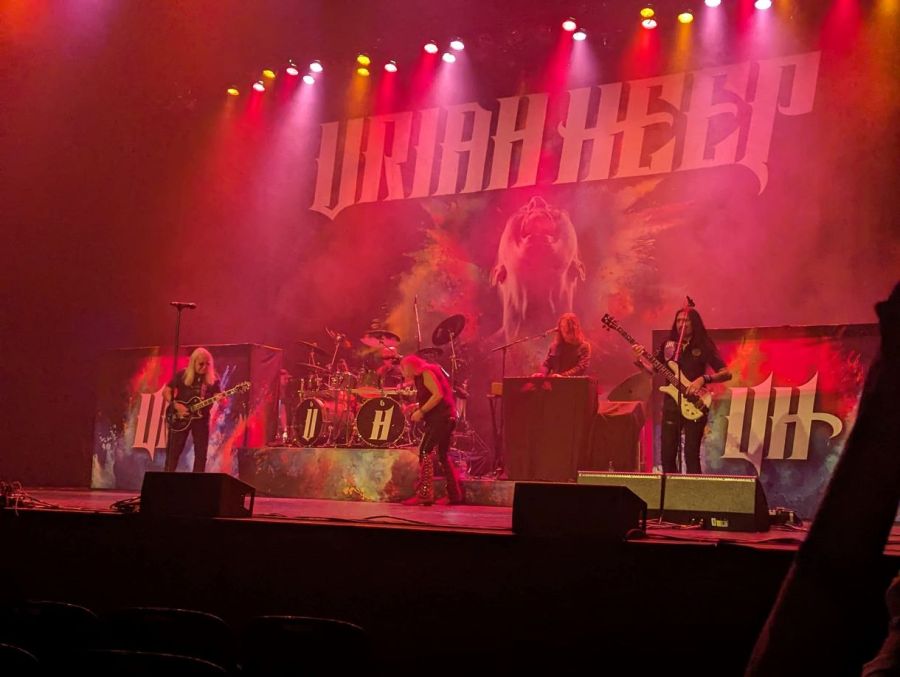
Uriah Heep in action

The band were in fine form as they delivered their goods. Most of the stuff was performed faithful to the original, while UH took a few liberties here and there. After shouting out Saxon, Shaw made a remark that today’s music is pigeonholed into genres, while when Uriah Heep were starting out music was mostly either good or not. Then UH showed off their own metal chops with a heavy rendition of Free n’ Easy. Russell Gilbrook especially got down hard and heavy on the song, an illustration that sometimes drums are honestly the line between rock and metal.

There were a few treats in store for those, like me, who enjoy extended live jams and departures from the original recordings. UH again struck up a heavier tone on Look At Yourself and also drew the jam out for a pretty long time. They also aired out their long ballad July Morning, a gentle reminder that ten-minute long songs existed long, long before Taylor Swift. We then got the encore, which was capped off with the band’s obvious hit Easy Livin’.

That was all for the show, it was off into the night for us afterward. It was a true honor to finally see Saxon live, a true stalwart of the NWOBHM. And it was a real privilege to see Uriah Heep and I will be working their albums into my rotation as I move along, they are far too good to not listen to. I was surprised that this show got booked here and I’m damn glad it did, my gigs these days are very few and far between and this was a true highlight of my concert going.

Photography by Susan Cummins

For questions, comments or concerns, use the comment form below or head to my contact page.

Saxon – Hell, Fire And Damnation (Album of the Week)

After seeing them live last week, it’s finally time to sit down and go over the 24th album from the long-running legends of the New Wave of British Heavy Metal.

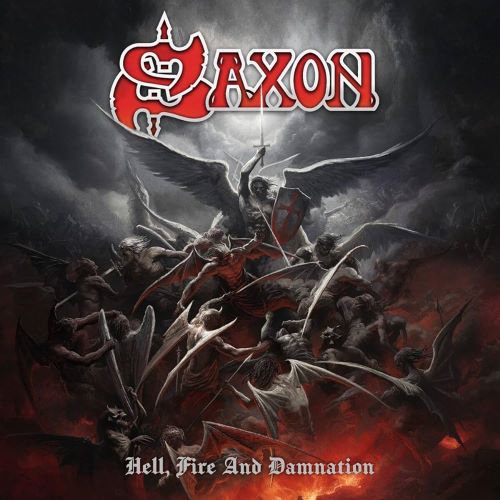
Saxon – Hell, Fire And Damnation

Released January 19, 2024 via Silver Lining Music

For Saxon it has been business as usual throughout the 2000’s, as they have landed album after album of consistent material. Some might wonder when the group will call it a day, but nothing indicates that day will be anytime soon.

There was one major departure from Saxon’s line-up before recording, but the rest of the band remained as it had for a long time. Biff Byford helms the group from the vocal spot. Doug Scarratt is on guitar, Nibbs Carter on bass and Nigel Glockler is on drums. All have been with the band for a great deal of time, with Byford being an original member, Glockler and Carter on board since the ’80’s, and Scarratt having come on in 1995.

One original member did leave the band – guitarist Paul Quinn retired in 2023 after having been with Saxon since 1975. He did contribute to two songs on this album, keeping a streak of appearances going from the band’s start. Quinn was replaced by Brian Tatler, the long-running bandleader of Diamond Head. Tatler was first brought on to be a touring guitarist but later become a permanent member of Saxon.

This album was produced by Andy Sneap. Sneap has been producing for Saxon since 2011 and has been at the forefront of heavy metal production for quite some time now. It’s been a busy year for Sneap as he’s also a member of Judas Priest, who have lit the metal world on fire with their latest release.

Today’s album has 10 songs at a 42:20 runtime. The first track is an intro so I’ll set it aside and discuss the other 9.

Hell, Fire and Damnation

The title track gets things going after an intro. This is a pretty epic depiction of the eternal struggle between good and evil, Heaven and Hell. The song runs mid-paced and quite heavy to paint the battle in sound. Saxon don’t really pick sides here – rather they illustrate the ongoing war. And there is a bit of something extra in this title track, something Saxon often do. Grade: A

Madame Guillotine

It’s on to a song that pretty well gives away its theme in the title. The topic at hand is the French Revolution and the fate of Marie Antoinette and many others at the hands of the vengeful populace. The song keeps it simple and direct, letting the instrument of beheading take the lead over the instruments in the band. Nicely done song with a sly and funny chorus. Grade: A

Fire And Steel

This one goes quick and hard. It is not just figuratively about “heavy metal,” it is literally about making heavy metal. Well, sort of – steel is not actually classified as a heavy metal in the scientific sense. But steel is heavy so let’s just go with it. Grade: B

There’s Something In Roswell

Over the course of nearly 50 years and 24 albums, Saxon have covered a lot of topics, ranging from the JFK assassination, to an out of service steam train, to an airliner crashing. Now Biff and company take a peek under the blanket of a huge conspiracy, the aliens of Roswell, New Mexico.

We don’t get anything concrete about the truth of Roswell here, but Saxon do believe something is up. It’s set to another nice mid-paced stroll through government secrets. Grade: B+

Kubla Khan And The Merchant Of Venice

This song covers a lot of ground and I’m not entirely sure what’s going on here. Kubla Khan was a poem by Samuel Coleridge set in China’s Yuan Dynasty, which is referenced in the song. The Merchant of Venice was a Shakespeare play with no bearing on the Yuan Dynasty, that I know of. But here are presented the two concepts. It’s a nice, fast song with a bit of an adventure feel to it. Grade: B

Pirates Of The Airwaves

This is a fantastic track that goes back to the history of pirate radio in the 1960’s. That’s all before my time but apparently there were some rogue stations out there that got away from payola and other shady record label practices and simply played the music people wanted to hear. It even mentions a radio station out of St. Louis despite being an England-centric song, or at least I assume the song is referencing that station. Very cool stuff to hear, we’re so far removed from “pirate radio” that many people would have no clue what it was. Grade: A-

1066

Pretty simple concept here – Saxon are returning to the days of their namesake, when the Saxons were defeated by William the Conqueror in 1066. Maybe it makes Saxon the band feel less old to look back on something almost a thousand years ago, I don’t know. Pretty cool song. Grade: B

Witches Of Salem

One more history lesson from this album, the topic is evident in the title. The Salem Witch Trials were a horrific display of inhumanity but has also been fodder for heavy metal and horror stories forever now. Another fine Saxon song that also made the setlist on the current tour. Grade: B+

Super Charger

We wrap the album up with a old-school heavy metal tale of engines, racing and speeding. Pretty standard fare for sure but that’s probably why most people listen to Saxon in the first place, we want the meat and potatoes of metal without all the bells and whistles, and Saxon deliver just that. Grade: B

Hell, Fire And Damnation was another in a long line of Saxon albums that pleased fans and gained notice as the band performs beyond the confines of their age. The album charted at 19 in the UK and landed top 10 positions in Austria, Germany, Scotland, Sweden and Switzerland.

Saxon would tour Europe alongside Uriah Heep, opening for Judas Priest. Saxon and Uriah Heep would then bring the tour to the US, a show I saw this past Friday. A recap of that show is coming Wednesday.

As for this album? It’s another in a very long line of solid and consistent Saxon releases. The band had a run of aiming for commercial airplay through the late ’80’s, then began righting the ship through the ’90’s. Their modern run of consistent ass-kicking might begin with 1999’s Metalhead, or might even go back to an earlier 1990’s album. Whatever the case, Saxon continue to deliver quality music each time they press the record button in the studio.

Album Grade: B+

This was another, uh, solid ball of rock from Saxon that did not disappoint. The band shows zero signs of slowing down, on record or on stage. Nothing is slowing down this beast of Britain as it heads forward into metal immortality.

For an explanation of my grading system, head here.

For questions, comments or concerns, use the comment form below or head to my contact page.

Dio – The Last In Line

The celebration of 1984 continues. Today it’s the album that helped cement a bona fide god of heavy metal.

Dio – The Last In Line

Released July 2, 1984 via Warner Bros. Records

Ronnie James Dio went for broke, and went broke, to launch what wound up being his solo venture the year prior. Holy Diver was a critical success and after touring behind it, the band were quickly back in the studio to do a follow-up. The band had a great deal of cohesion and momentum behind them and were able to pull of a quick turnaround for the next year.

Dio, ever present on vocals, was rejoined by the same line-up from the album prior – Vivian Campbell on guitar, Jimmy Bain on bass and Vinny Appice on drums. In addition, Claude Schnell had been brought in on the prior tour for keyboards and was now a full-fledged band member for this album. The record was produced by Ronnie James, just as the first effort had been.

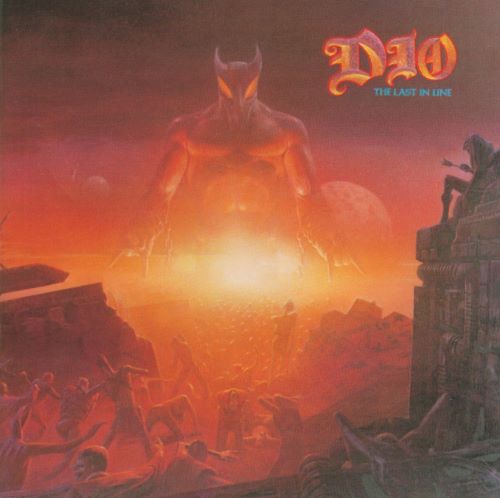
The cover again features the band’s mascot, a devil-like figure named Murray. This time Murray presides over a group of people who are brought back from the dead. Thought maybe not a striking as the Holy Diver cover, this one is still a fine piece of heavy metal art and let the album buyer know they were in for a headbanging good time.

I’ll cover the original album today, which comprises 9 songs at 41:07 in runtime. There are reissues with a wealth of bonus tracks of this album that are certainly worth investigating.

We Rock

The opener gets things going in the most straightforward manner possible – it’s a fast, hard riff brought with lyrics that are literally about going to a Dio concert. It makes a great album opener, though Dio did often use it to close concerts. It can’t get a whole lot better than this to kick off the record. Grade: A+

The Last In Line

The title track is next and it handles a quiet build until exploding into the rest of the song. This one tackles a “final quest” of people who are gripping with the ultimate battle of good versus evil. It could be a sword and sorcery adventure or it could apply to real life, it is a universal thing. And Vivian Campbell gets all day to play a wicked solo. This song is a triumph of the Dio machine and stands head and shoulders above other recorded material. Grade: S

Breathless

This one keeps a nice hard rock pace while exploring the fear of the night and “going for it” regardless of fear. A nice song by any measure though Campbell’s solo does run away as the highlight here. Grade: A-

I Speed At Night

Up next is a total burner of a song. Easy premise – guy likes driving fast at night. Everyone sang like driving like a psychopath in 1984 and everyone does it 40 years later. Anyway, fantastic song that picks up the pace and again, Vivian Campbell goes ham on the solo. Grade: A+

One Night In The City

A great riff opens this tale of two young people who appear to have run off from their typecast lives for the adventure and uncertainty found in the city at night. While the story is a bit mysterious, it is another epic telling of light and dark and two people up against it, as Dio became famous for. Grade: A

Evil Eyes

This track was originally issued as the B-side to the single Holy Diver a year prior, it was then re-recorded for this album session. It’s another high-flying adventure of two people, this time the narrator is the one with “evil eyes,” the deeper meaning of that isn’t revealed. But the adventure soars just fine in this song, it is in and out while making its point in nice fashion. Grade: A

Mystery

While the song’s theme is how things are often mysterious with no ready answers, there is no mystery to the song itself – it’s a bright offering that doesn’t lament the mystery, but rather embraces it. That was the way of Ronnie, ever the dreamer. Grade: A-

Eat Your Heart Out

A nice rocker that looks over someone leaving his woman for being bad. Bad isn’t elaborated on, but this guy is very happy to be free of his prison. This is the least heralded song on the album but that doesn’t damage its own score at all – 99% of albums would be thrilled to have this as its “weakest” track. Grade: B+

Egypt (The Chains Are On)

The closing track heads back to the infamous Bible story of the Hebrews being enslaved in Egypt. Not the only time in 1984 we’d get a song about that, go figure. Dio wasn’t only speaking about the events as told – he was also using the chains as a symbol for the types of chains that entrap people in modern society.

The song builds in epic fashion, telling the story in a way that would likely bear influence on epic and power metal to come, as well as foreshadowing the latter part of Dio’s career. A magnificent way to wrap up the album. Grade: A+

The Last In Line continued the momentum Dio established a year before and built upon it. The album charted at 23 in the US, 4 in the UK and brought 3 other European Top 10 positions. It was also Dio’s first US platinum, hitting the mark a few years before Holy Diver garnered its first plat. It was also certified silver in the UK.

It’s kind of a perpetual argument whether this or Holy Diver is the better album. Both are fantastic and have their moments. I honestly won’t go out on that limb today as it is a very, very close race for me between the two. I will say that it’s very, very easy to grade this one, it’s pretty well written across the song grades.

Grade: A+

This album is a remarkable piece of heavy metal history. It would help push trends in heavy metal that would carry on through the ’80’s and beyond, and it would solidify Dio’s presence as an immortal figure of the metal scene. While the band would not maintain its form for too long after this, there is no doubt the music of these early Dio albums was spectacular and timeless.

For an explanation of my grading scale, head here.

For questions, comments or concerns, use the comment form below or head to my contact page.

The Weirdest Thing

There are always things to consider about having a physical collection of music – what’s your favorite piece? What’s the most expensive thing you have? What act’s works are complete in your collection? What rare or out of the way pieces do you own that are cool to have? And the most important question that we ask all of the time and plagues our bank accounts – what’s next?

Today I’m not going to ask or answer any of those questions. The one I’m going to work with is this – what is the weirdest thing in my collection?

Being weird isn’t a matter of the music itself – I have a bunch of stuff on my shelves that would be considered weird. Death metal and jazz is a hell of a combo and I’m not sure why I own several examples of it. But that’s not the issue at hand today.

What I’m concerned with is weird, as in format or presentation. I have a few oddball things that do stick out, like a few albums on DVD audio that are in bigger cases, oddly-sized box sets and things of that nature. But none of those really qualify as the most weird thing in my collection.

I considered the question for a moment but then I quickly remembered something I’ve owned for a long time that easily qualifies to answer this question. I proudly present the 2007 album from British doom merchants Paradise Lost, In Requiem.

There’s nothing odd about the album itself – Paradise Lost are a great band and I really enjoyed their material in the 00’s. But if you notice the box in the picture, this presentation is a box set. And it’s a box set of 7-inch vinyl. Yes, this is the full album presented on four small records, as opposed to a standard 12-inch record. And yes, the album is available in that standard format as well.

This box set did come with a few extras – it has the CD version of the album as well as a poster. The CD was important at the time, as we were in the “digital collection” age and it was super cool to get a CD along with vinyl so we could import the album into our collections with ease. Those days are long gone, as streaming has rendered a digital collection unneeded for many.

This edition also comes with a few bonus tracks – the vinyl has a bonus called Missing, while the CD includes that as well as Silent In Heart. These two songs were also available on a few deluxe CD versions of the album but those and this seem to be the only sources of the material. So I guess this can qualify as weird but not necessarily useless.

I honestly can’t say why I even bought this. I don’t specifically recall wanting it. I did used to order from Century Media records on occasion back then and I probably just thought it was a neat thing to have so I put it in with my usual order. It’s possible they also had it on clearance, but again I don’t remember. All I know is I bought it and here it is 17 years later.

And, all else being equal, it will remain in my collection. The box has a tiny premium online, not enough to really bother with unloading – it’s just a hair more “valuable” than its retail price. I would also figure that the box is not a high demand item – there aren’t lines of people queued up to score a 7-inch box set copy of a doom metal album from 2007.

So I will speculate that this oddball box set will remain in my collection until I’m not around to have a collection anymore. The only practical way this gets unseated as the weirdest thing in my collection is if I buy something weirder than it. I don’t go out of my way to find weird music stuff but it is out there, so that is certainly a possibility.

Do you have questions, comments or concerns? Feel free to use the comment form below, or head to my contact page.

Iron Maiden – Fear Of The Dark

I switched gears for this week after finding out this album just had its 32nd anniversary (or birthday, whichever) over the weekend. It is a mixed bag for sure and the record marked the end of an era for the group as they continued drifting away from the golden years of the 1980’s.

Iron Maiden – Fear Of The Dark

Released May 11, 1992 via EMI Records

Iron Maiden has entered the 1990’s with a retooled, stripped-down sound. The synth era of the late ’80’s was over and the band explored a meat and potatoes rock approach on No Prayer For The Dying. That album spawned the band’s only UK number one hit but is also widely held as one of the worst albums of the entire catalog. There was more variety on display here but the sounds and vibes weren’t terribly far off of this record’s predecessor.

The band’s line-up was the same as the album prior – Steve Harris as always on bass and band leading, Bruce Dickinson on vocals, Dave Murray and Janick Gers on guitar and Nicko McBrain on drums. Martin Birch helped Steve Harris produce, it marked Birch’s final involvement with Maiden as he would head into retirement. This was also Dickinson’s final album with the group until 2000, Bruce was off to his solo career about a year later.

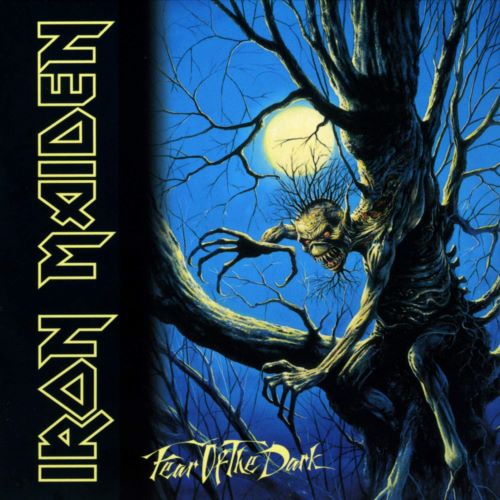
This also marks the end of the line for Derek Riggs album covers – this one was done by Melyvn Grant, who is now the second-most credited artist for Maiden covers. And this one was a pretty good job, very nice and different depiction of Eddie.

This is one loaded album – it is 12 tracks at 57:58, marking Maiden’s first double album. As I recall from my Iron Maiden album ranking, this one did not place very well at all, landing at number 14 on my list. As I said then, this album has a lot of variety but also a lot of varied results, so let’s jump in and see what’s what.

Be Quick Or Be Dead

The opener also served as the lead single. It is a very fast and aggressive song, something a bit over the bar for Maiden. The intensity helps drive home the song’s message about how screwed up corporations and governments are, something that has only gotten worse 32 years on. This one is really good and certainly among the album’s keepers. Grade: B

From Here To Eternity

Another single and the conclusion of the long-running Charlotte saga. It’s a muscular hard rock affair that is fairly basic but I enjoy what it has on offer. It won’t set the world on fire but I don’t have an issue listening to it. Grade: C+

Afraid To Shoot Strangers

On now to a song that fits the Iron Maiden identity full and true. This haunting track starts quietly then builds into explosive action later and it features the movements and thoughtfulness typically expected from Maiden. The song examines the first Gulf War from the eyes of a young soldier who is sent to kill – it’s a new take on the classic “government starts the war and poor people fight it” trope found in music of all stripes. It could be said this is what Maiden used to sound like before the 1990’s shift, but I think it’s more accurate to say that this is what Maiden would sound like in their second “golden” era in the coming reunion years. An absolute whale of a song, very well done. Grade: A

Fear Is The Key

Up next is a song lyrically inspired by the death of Freddy Mercury to AIDS and the concept how how no one really “gave a shit” about the disease until celebrities started dying to it. The issues around HIV and AIDS were a massive shitshow in the 1980’s and early ’90’s for sure.

This song has some good hooks and riffs though it does feel a bit odd in structure. And the song’s last few minutes really throw a wrench into the works – I don’t know what’s going on but it reminds me of Spinal Tap playing Jazz Odyssey. Hilarious in the movie, not so hot on record. Overall this one doesn’t command my attention much, bit of a roller coaster. Grade: D+

Childhood’s End

Another bit of a fierce pounder here and a song that very much offers the sound of Maiden to come for the rest of the decade. Interesting use of drums here and everything comes off pretty sharp and well done. It’s a look at how the whims of politicians lead to children around the world caught up in war, famine and other shitty situations. While this song is one of the album’s secondary tracks, it does a pretty good job. Grade: B

Wasting Love

If you had “Iron Maiden will release a power ballad in 1992” on your bingo card way back when, well, you probably cashed in. I don’t know why Maiden would do a ballad or why they’d release one in 1992 when the ballad was persona non grata in the alt-music world. But none of that is really important because the song is pretty damn good. It’s a sad look at someone trying to end their loneliness through casual hook-ups and only finding more loneliness at the end of it all. This one was a curveball but curveballs are valid pitches to throw. Grade: B+

The Fugitive

Here’s one inspired by the old TV show, there were since movie remakes and whatever. Not a bad song but not radically interesting either, easy to listen to but also easy to forget. Grade: C

Chains Of Misery

It’s a song about the “devil on your shoulder” concept. It’s an outright sleazy glam track with gang vocals and the whole nine yards. It’s not a terrible song per se but it’s so out of place on an Iron Maiden record. This song is another curveball but the pitch doesn’t really land. It’s musically just good enough to not be a total trash affair. Grade: C-

The Apparition

Whether or not you like this song hinges on what you think of Bruce’s climbing vocals through the verses here. If you like them then you probably think this ghost tale is at least ok. I personally don’t like them much and it’s all the song does so I think it’s awful. One way to make a double album is to not make it and cut certain songs that don’t work – this would be one of them. Grade: D

Judas Be My Guide

This one’s about how everyone is basically “for sale,” in that everyone has a price and will eventually sell out to the high bidder. It’s of course tied to the biblical story of Judas, the betrayer of Jesus. It’s also an absolutely fantastic song. It’s short and a quick rock track but it works on every level. The Iron Maiden “butt rock” era could have been something else if more of the songs were like this. I and many others consider this to be one of the most underrated tracks of the Maiden catalog, this one is a true hidden gem. Grade: A+

Weekend Warrior

The Maiden butt rock era might have worked with more songs like the last one, unfortunately there were also tracks like this. It’s a song about football/soccer hooliganism, something Steve Harris is quite familiar with as a West Ham United fan. Whatever the topic, I don’t know what the hell is going on with this song – it’s so basic that it hurts and it goes nowhere. It’s very close to the worst Maiden song I’ve ever heard. Grade: F

Fear Of The Dark

The title track and album closer offers a very simple premise – it’s about being afraid of the dark, being paranoid about what might lurk in the shadows and corners that light doesn’t penetrate. It’s also the Maiden song from the 1990’s that has endured and earned the title of classic.

This song is a total Iron Maiden track through and through, with running riffs and quiet/loud dynamics and about anything you’d want out of a Maiden song. After slogging through an uneven album that has some massive question marks in creative choices, this song nails everything about Iron Maiden. Grade: A+

Although this era of Iron Maiden is lightly regarded, Fear Of The Dark was a bit of a success as the group pressed on in the wilderness of the 1990’s. The album charted at 12 in the US, 1 in the UK and claimed many other top 10 positions. It has been certified gold in 5 countries and has a platinum cert from Italy. It was, as of 2008, at least in the ballpark of a US gold certification as well, no known updates on that.

So what happens when you have a few really awesome songs, a handful of average tracks, and a few real stinkers? I guess, in the end things kind of average out and I can consider this an average album. It’s not average in that all of the songs are consistent and ok – it’s average because it’s great in a few spots and awful in a few others. But average is average when all is said and done.

Album Grade: C

This would be the end of an era for Iron Maiden – they would spend the balance of the decade with a new singer and song direction before restoring the glory years line-up in 1999 and being at the forefront of the new interest in traditional metal in the 2000’s. It is easy to dismiss these albums as a lost period, but there are songs certainly worth visiting on this one.

For an explanation of the grading scale, head here.

For questions, comments or concerns, either use the comment form below or head to my contact page.

For more of what I’ve posted about Iron Maiden, check out the band index.

Van Halen – Hot For Teacher

For my song pick this week I’m headed back to that glorious year of 1984. Today’s song was the fourth and final single from Van Halen’s monumental album 1984. The album was a smash success, making Van Halen one of 1984’s biggest acts and eventually moving over 10 million copies. Our single today did not hit quite as well as other singles from the record, clocking in at a modest 56 on the Billboard Hot 100. But it is still a beloved offering from the band.

Hot For Teacher is a fun, all out rocker that gets going from the word go with a drum intro that sounds like a motorcycle. It is a very attention-grabbing thing to hear what Alex got up to there. The band jumps in after a bit and keeps up the bombastic instrumentation for a bit, then things settle down a hair and we get the first instance of David Lee Roth.

Roth comes in with introductory banter. While DLR’s ramblings are a point of contention with some in a fair few Van Halen songs, he was totally on point here as he set the table for the song’s topic of, well, being hot for teacher. There are a few other spoken word bits through the song and here they all fit very well.

When Roth does get to actual singing he is in full force, and it’s pure magic paired with the heavy and playful riff that Eddie Van Halen lays out. Van Halen often toed the line between rock and heavy metal and at times were the line, and this song is a prime example of it. Fun and rocking yet heavy and slamming, it’s all here on display.

The music video for this one pulled out all the bells and whistles. It features the concept of a nerdy kid being overwhelmed in school by a kid version of the Van Halen band as well as a few teachers who were certainly easy to be hot for. The kid, named Waldo, was voiced by Phil Hartman. The video shows what “happened” to the band members when they grew up and old Waldo really turned his image around after growing up. In terms of concept and added entertainment value, Hot For Teacher is the number one video from the early Van Halen era.

The video came with a bit of controversy – some felt it was objectifying and sexualized, and some broadcasts used black boxes to censor when band members would grab their crotches. There are uncorroborated reports on various sites that the video did, in part, influence Tipper Gore to start the PMRC. It should be noted that neither the song nor Van Halen made the infamous Filthy Fifteen list.

As I said in the open, this was the final single from 1984. That would also mean it was the final single from the first David Lee Roth era of the band. The song was featured in the band’s set through the 9 months of touring before Roth left the band, and it appeared again once Roth returned in 2007. It ended up getting 285 live airings, not a bad total considering the song didn’t see stage from 1984 to 2004. If setlist.fm is to be taken as an accurate source, Van Halen did the song with Sammy Hagar one time in 2004. I have no idea how correct that is, though.

At the end of it all, Hot For Teacher is one monster of a Van Halen song and a great addition to the list of hallowed songs from the year 1984. The song’s subject matter rings true with a great many students over the decades – though I must admit I personally never really had a “hot for teacher” issue. But hey, I do have this amazing song to jam out to.

Alice In Chains – Dirt

This week I’m heading back to 1992 and digging up one of the most revered albums of the period.

Alice In Chains – Dirt

Released September 29, 1992 via Columbia Records

Alice In Chains were the first of the grunge bands to hit the scene in a big way in 1990. By 1992, the “Seattle sound” had taken over national airwaves and a new era of rock music was underway. This was the environment AiC found themselves in while recording their second album.

Dirt was recorded with the same line-up as Facelift – Layne Stayley on vocals, Jerry Cantrell on guitar and vocals, Mike Starr on bass and Sean Kinney on drums. The album was produced by Dave Jerden, also producer for Facelift.

This is one very dark record, with tales of drug abuse and mortality. While each big grunge act was set against a particular kind of rock that helped shape their sounds, Alice In Chains had heavy metal in their blood and were always a downcast lot. Layne Stayle’s personal demons also went a long way to informing the music of AiC, as several of the songs here form a mini-story of an addicted person crashing all the way.

Dirt comes in with a lofty 13 tracks at a runtime of 57:37. Some early pressings of the album had the track Down In A Hole as the 12th song, while most versions have it in the band’s preferred sequence at number 4. The album saw 5 single releases, all of which charted on the US Mainstream Rock charts and the UK Charts. Note that the band never actually charted on the Billboard Hot 100 until 2009, an odd fact that I wasn’t aware of until just now. This is at least what I could find while looking, it could possibly be incorrect information.

Them Bones

The album opens with a sick, heavy riff with Stayley reflecting on mortality over it. The song is a fatalistic look at how we’re all going to wind up a pile of bones, no matter what. The monstrous riff and Stayley occasionally yelling out suddenly add a creepy feel to the proceedings.

Grade: A

Dam That River

This one is heavy and more fast-paced, conventional rocker. The song was apparently written about a fight that Sean Kinney and Jerry Cantrell had – Kinney smashed a table over Cantrell’s head and the blood flow was such that “you couldn’t dam that river.” It’s kind of amazing that they kept together and also wrote a song about it. Grade: A-

Rain When I Die

This has a very nice, funky and creepy guitar running through it. The lyrics are a lament of a relationship not gone right and may have been composed based on experiences from both Stayley and Cantrell. The title “rain when I die” invokes various old cultural customs that it should rain when someone dies to cleanse everything still remaining. And yes, it did rain the day Layne Stayley died in 2002, which probably amounts to him having lived in Seattle where it rains all the time. Grade: A

Down In A Hole

This magnificent ballad that just drips in misery was crafted by Cantrell about his girlfriend at the time. I won’t get too heavy into it as I discussed this song in the past here. It is my favorite AiC song and one of my favorite songs of all time from anyone. Also, the name of the old series where I covered it was called S-Tier Songs, so the grade should be obvious. Grade: S

Sickman

This is one of several songs owing to drug addiction, which Layne Stayley would live in the grip of for the remainder of his life. Stayley asked Cantrell to write the sickest and darkest thing he could for this song, and the lyrics deal with someone who is totally aware they are messed up but are unable to fight their own thoughts and do anything about it. Grade: A-

Rooster

Up next is probably the most well-known song from the album. Cantrell wrote this about his father’s time in the Vietnam War. It is a harrowing tale of being stuck fighting a war no one wanted in the jungle of a hot, tropical land against a ruthless enemy. The song is fantastically done and maintains a tradition across generations of musicians speaking out about this war. Grade: A+

Junkhead

This one slows things down with a bit of a groovy doom-crawl. It brings the point home that it’s very tough to understand the mind of an addict, that many times it’s only another addict who can grasp what’s really going on with someone. The outsider doesn’t experience the euphoria of the high and escape from the despair of reality that the addict does. Grade: B+

Dirt

The music is another twisted mire and the subject matter is devastating – this is someone at the bottom who doesn’t want to exist anymore. It is a very deep and disturbing jaunt through the mind of someone who seems totally gone. Grade: A-

God Smack

This has a few running riffs that Jerry Cantrell would use to great effect in both AiC and his solo career. The song is about heroin, the term “god smack” refers to a heroin overdose. The music along with the willing descent of someone into addiction is like a dark circus trip. Grade: B+

Untitled (or ‘Iron Gland’)

This brief interlude was something Cantrell used to mess around with in rehearsal. It was mashed up in a small way with Black Sabbath’s Iron Man for a little fun. The few vocals here are provided by Tom Araya of Slayer. Grade: B

Hate To Feel

This is the first of two songs Layne Stayley wrote entirely on his own for Dirt. There are some interesting jumps from the quiet, buzzy verse to a noisy chorus. Here Stayley regrets even being able to feel – he knows he is an addict and is tired of the constant realization that he needs to get better, and is also sick of the judgment of outsiders who think he should “just stop,” as if it were that easy. Grade: A

Angry Chair

The other song composed by Stayley, this is a very, very dark and twisted song. This one is still about the grip of addiction, though it is couched in more abstract and metaphorical language. It is one wild ride and a very enjoyable cut. Grade: A+

Would?

The album’s closer is a tribute to Andrew Wood. He was the singer of Mother Love Bone and died of a heroin overdose in 1991. The song itself offers up a bit more bright atmosphere than the rest of the very dark record, though the lyrical fare is still an addict asking if he’s even alive or if he has already died and has left everyone behind. Grade: A+

Dirt would quickly become Alice In Chains’ magnum opus. The album hit the Billboard 200 at number 6. Its 30th anniversary reissue would re-enter the same chart at number 9 in 2022. The record has been certified five times platinum in the US.

The band toured behind this album, playing all manner of shows alongside both rock and metal acts. This would mark the practical end of touring for Alice In Chains, despite releasing one more album and a celebrated MTV Unplugged set, the group would not get out on the road much in this original incarnation. Mike Starr would exit the band in 1993, replaced by Mike Inez.

But that wouldn’t matter as Dirt cemented a legacy as one of the best albums of the 1990’s. The five singles were in constant rotation on radio and MTV for years after release and are still found out and about today. While grunge was considered a reaction movement to the rock music of the time, Alice In Chains were a bridge act that made it very easy for metalheads to enjoy. AiC perfectly complimented the other alternative metal of the time, bringing in a uniquely creative scene that has yet to be replicated since.

Album Grade: A+

Dirt is a stone cold classic. The real pain of Layne Stayley’s addiction was mined for the most haunting and memorable song material. Jerry Cantrell provided a guitar masterclass in writing compelling riffs that both grab attention and work for the song. The album is harrowing in that both Stayley and Starr would lose their lives to addictions in 2002 and 2011 respectively, but it does not detract from the gift we were given with this masterpiece of a record.

For an explanation of the grading scale, head here.

For questions, comments or concerns, use the comment for below or head to my contact page.

Slayer – Haunting The Chapel

My posting schedule is still all messed up – though the things that happen are minor in significance, things do keep happening and they keep pushing me back. I will again pivot and adjust and get things on track.

This week I’m going to pull out the “EASY” button. Slayer did not release an album proper in 1984, but they did release two distinct records – an EP and a live set. Today I’ll discuss the EP, which is very short but a significant marker in Slayer’s development.

Slayer – Haunting The Chapel

Released June 1984 via Metal Blade Records

Slayer’s debut record Show No Mercy was a huge success for upstart label Metal Blade, so label head Brian Slagel quickly commissioned an EP from his hot new act. The members of Slayer – Tom Araya on vocals and bass, Kerry King and Jeff Hanneman on guitar, and Dave Lombardo on drums – were brought to a North Hollywood studio with Slagel himself turning the knobs on the production console.

The studio would have a negative effect on sound initially but also provide a hell of a positive. The studio did not have carpeting, which meant that drums slid everywhere when Dave Lombardo tried to play them. He had to resort to having the band’s roadie help out by holding the drums. This roadie was Gene Hoglan, widely known today as one of heavy metal’s greatest drummers after stints with Dark Angel, Death, Testament, Strapping Young Lad and many others. Hoglan also helped Lombardo set up the latter’s first double kick drum and helped him along with how to play it. All these years later both drummers are considered the top of the pack, but forty years ago it was them trying to figure out how to hold a kit together in a shitty studio.

Since this is just an EP there’s room for another funny Gene Hoglan story – Gene recounted in this 2006 interview with Decibel Magazine about Slayer that when he joined up to be the band’s roadie, he thought he was only going to be working the lights. He didn’t know he was also supposed to help schlep gear in and out and set up the stage show. The band gave Hoglan his walking papers a bit later, and he would join Dark Angel not long after.

Also involved in the EP’s production was Bill Metoyer, who held the engineering role on Show No Mercy. Metoyer recounts in the same Decibel interview that he was Catholic but for whatever reason had no problems with the lyrics on the debut album. But when he heard Tom Araya belting out the first lyrics to the EP, which were “The Holy Cross, symbol of lies, intimates the lives of Christians born, he quipped that he would be going to Hell for it. Metoyer seemed to take it in stride and is still very much among the non-Hell dwelling living today, having served as producer to a massive list of metal albums since then.

With those amusing stories out of the way, let’s get to the topic at hand. The original version of Haunting The Chapel was three songs, the first three in order here. The fourth song was added later on in a reissue capacity, I will include it here today because it’s not a ton of ground to cover. The total runtime with the added song is 16:55, I hope you all didn’t have anywhere important to be.

Chemical Warfare

Up first is a track with a fairly hefty six minutes. Slayer here shift gears some from the “general chaos and evil” of their debut album and head decidedly into a thrash direction. And this song is thrash, 100% through. It does retain that cavernous, evil Slayer feel but this is pure thrash. There are a few changes in structure to keep the fairly long track moving along.

This is a wicked song with its lyrical depiction of being hit with chemical weapons, a terrible way to die or be wounded. Anyone who thinks Kerry King or Jeff Hanneman couldn’t play solos should listen to this song – they were both quite capable of playing. The song is great and is an early Slayer classic. Grade: A

Captor Of Sin

This one calls back to the evil ways of Show No Mercy, though still retaining a thrash underpinning to it. It’s a wild ride as the son of Satan comes to Earth and takes over, vanquishing everything in its path. The bad guys win this one. Grade: B+

Haunting The Chapel

The title track is another Satanic romp through holy victims. It’s another dissonant, thrash-filled journey on the Dark Lord’s conquest of the mortal realm. It doesn’t offer a whole ton of dynamics but it’s still a quality Slayer track. Grade: B

Aggressive Perfector

This final song, a bonus on reissue versions of the EP, was originally released on the third volume of the Metal Massacre series. This was the first Slayer song ever released, pre-dating the debut album. It does stand out with a bit less production than the other three songs but this is not a rudimentary throw-away track – it’s a very good early offering from the group. Grade: B

Haunting The Chapel did not perform on charts but it was a solid release that kept Slayer’s name in the forefront as the thrash scene unfolded in the mid-’80s. Even today with the band’s work (apparently) done, the EP stands as a fan favorite for its marked transition between the first two albums. The first two songs remained live favorites through Slayer’s entire career and the EP is still sought after 40 years later.

Album Grade: B+

This was a well-done EP that offered up fresh material, it was not by any means a throw-away effort just to make a buck. It was a smart way to help out both upstart band and record label, both of whom became central to heavy metal in the years since.

Judas Priest – Freewheel Burning

I’m gonna stick with 1984 for the song this week. I’ve long since talked about this album, which was a given since it’s my favorite Judas Priest record. Today I’ll have a look at the album’s lead single.

Freewheel Burning was released in January 1984 as the first single from Defenders Of The Faith. Oddly, the single was apparently released the same day as the album, at least from the sources I can gather. The single held a few very modest chart positions though the album as a whole was quite successful.

This song is 100% quintessential heavy metal. While Priest have always been a heavy metal band devoid of sub-genres like thrash, this song does easily fit the speed metal category. It is fast and furious, just as the first words of the song indicate. Fast And Furious was also the working title for the song before recording, just imagine the crossovers Priest could have had with the movie franchise.

Two stars of this show are the classic guitar tandem of Glenn Tipton and K.K. Downing. Not only is the song’s main riff a total barnburner, but the extended solo section of this song is absolute fire.

Also of note, as would be expected, is Rob Halford’s vocal performance. He is all over this one, shrieking through the verses while using a bit of his range in the bridge. He also delivers a rapid-fire performance a few minutes in that moves faster than rap, it’s a Halford machine gun. It’s certainly among his signature performances.

The theme with this one is simple – it’s about getting in your car and going fast. Not only fast, but as fast as possible. There’s nothing more to read into this one, just grab your vehicle of choice and put the pedal to the metal, high speed at all costs. Given the sorry state of US drivers these days, it’s like this song is used for driver’s ed.

Freewheel Burning has been a favorite song among Priest fans since 1984. Surprisingly, the song ranks a rather modest 20th in terms of how many times it’s been played live. I would have expected more but that’s why I look these things up. But it is a favorite when it does get set time, and I was happy to hear it when I saw them in 2018.

One other fun little bit of trivia – on the vinyl single, there is an extra guitar intro that isn’t heard anywhere else. It’s a slow, atmospheric bit that takes up an extra 50 or so seconds. Sadly I can’t find a good video of it so if you want to check that out you’ll have to hunt down the single or watch some video of a dude playing it on his turntable.

That’s about all there is to it, it’s pretty quick and easy to run down this speedy beast of a song. It was yet another triumph for Judas Priest as they helped cement the foundation of heavy metal in the 1980’s and are still leading the charge 40 years later.