Remembering Headbanger’s Ball

I’m going with the anniversary theme again today, and this one wasn’t something I was originally planning on but it fell in my lap so I decided to run with it. On April 18, 1987, MTV aired the first episode of Headbanger’s Ball. The first episode featured guest hosts Lemmy Kilminster and Phil “Philthy Animal” Taylor of Motörhead. This was the start of an institution that ran for 8 years on Saturday nights on MTV.

While MTV had previously flirted with an all-metal show called Heavy Metal Mania, hosted by Dee Snider, Headbanger’s Ball would become the true home of metal through the late ’80’s and early ’90’s. It was blocks of all metal music videos, with interviews, live footage and occasional off-the-wall content sprinkled in.

Guests hosts filled the first handful of episodes, then MTV VJ’s began hosting the gig. Kevin Seal was an early host, then Adam Curry ran the show for a few years. In the ’80’s, MTV kept the programming mostly true to the music of the time – hair metal. There were heavier bands played at times though, and Headbanger’s Ball was the only time on MTV to see thrash, power metal and other forms not related to the hair bands.

For me personally I saw occasional episodes of the Curry-hosted shows, but it would be into 1990 when I became an every-week watcher of the Ball. By this point Riki Rachtman was the host and the show transitioned away from hair metal and into the more aggressive strains of the genre. The studio got a set designed by Rob Zombie at one point, the hours were expanded and Headbanger’s Ball was one of the most-watched programs on MTV.

The early ’90’s period of the Ball saw a slew of bands get airtime – thrash mainstays like Slayer and Megadeth, legends like Ozzy, and a lot of new blood from a lot of metal avenues came up on the show. The new grunge acts got some Ball time, like Alice In Chains and Soundgarden. Rap metal like Biohazard was around before nu-metal was a thing. The “alt-metal” scene was very well represented on the Ball, with acts like Danzig and Type O Negative getting frequent appearances. And extreme metal also got in the act a bit, with Cannibal Corpse and Morbid Angel getting some airtime.

I don’t remember exactly when it was, I’ll peg it sometime in 1994, the writing kind of started to appear on the wall for the Ball. The show would lose an hour of true programming and that got swapped with something called The Countdown to the Ball. The countdown played ten videos that were popular elsewhere on MTV, stuff like Pearl jam and whatnot.

The end of the main era of Headbanger’s Ball came at the turn of the year in 1995. In typical corporate TV fashion, no announcement or farewell episode was given. Rachtman and the staff were simply called and told not to come back to work after filming what wound up being the final episode. MTV ran a show called Superock in the old Ball timeslot awhile later, before airing re-runs of The Real World 24/7 and giving up on music videos altogether.

I was one of many pretty upset with the sudden demise of the show. It was a fantastic place to learn about new bands and upcoming releases. Remember, this was just before the Internet became a household thing – this kind of information was not at everyone’s fingertips or instantly accessible. It was a few years before the Internet became a reliable source of news and commerce. Seriously, you should have seen some of the websites up in 1995 – it was unreal.

So Headbanger’s Ball went away. Metal went into a fairly dark place in the late 1990’s, but then came roaring back in the early 2000’s. And with it, MTV saw fit to bring back the Ball. It showed up on MTV2, again with guest hosts in the beginning but with a long run from Hatebreed’s Jamey Jasta at the helm. The show has gone through various cancellations and renewals over the years both on MTV and online, so its status today is murky at best.

For me and many other young metalheads that watched over the 8 years that Headbanger’s Ball ran, it was Saturday night church of the metal variety. We got to see some videos that we knew would be played during the time, and we got to see a lot of stuff we never would have otherwise. This wasn’t MTV, it was a small subset of MTV that happened to catch on with a large fanbase and last even through music’s most seismic shift in 1991.

We also got to see a lot of stuff we wouldn’t have otherwise in the pre-Internet era – we got a candid interview with Ozzy Osbourne after No More Tears released. We got Megadeth skydiving somewhere “in the vicinity” of Area 51. Alice In Chains went down a waterslide, Soundgarden went bowling, and a bunch of acts went across the Iron Curtain to play the Moscow Peace Festival, with MTV and Headbanger’s Ball right there on the action. Even in more simple TV studio interviews, we got candid talk from bands all over the metal spectrum.

For the 2000’s MTV2 revival, I’ll say this – the show did a lot to put metal back into the consciousness, and also brought a lot of the 2000’s era extreme metal into a new light. The show would be hosted for awhile by Hatebreed’s Jamey Jasta, still today an advocate for heavy music far and wide.

But nothing for me will replace the original. It was Saturday nights, skipping over the run of Saturday Night Live and choosing instead to wreck my neck for a few hours with first Adam Curry, then mainly Riki Rachtman and the truly heavy tones that came from his tenure on the gig. Riki today is doing spoken word tours across the country recounting any number of experiences, including Headbanger’s Ball, and I hope to catch one someday.

It was Saturday nights from 11 to 1, for me in the Central time zone. Then for awhile 10 to 1, then 11 to 2, then one day it all went away without so much as a thanks. But the work done by Riki and the Headbanger’s Ball staff, the fans of metal worldwide, and most importantly the bands themselves, lives on all these years later. Headbanger’s Ball was how we found this stuff and was our church, and is very responsible for a way of life that continues 28 years after the show originally went off the air. It’s one memory of sitting in front of the TV that I’ll truly never forget.

This is an apparently unofficial compilation of a bunch of HB highlights over the years. Worth checking out if the video stays up.

Iron Maiden (Album of the Week)

As of last Friday, April 14, Iron Maiden’s debut album is 43 years old. Seems like as good of time as any to explore it here.

Iron Maiden – self-titled

Released April 14, 1980 via EMI

My Favorite Tracks – Iron Maiden, Transylvania, Phantom Of The Opera

Iron Maiden had spent five years playing in pubs and shifting line-ups in advance of their full-length debut, but the actual recording process for the record took all of 13 days. The band had mis-fired on two attempts to record the month prior and went through two producers before settling on Wil Malone. This would not be a fruitful partnership as Steve Harris recalls that the band did most of the actual production.

The recording line-up would be bassist and band founder Steve Harris, Dave Murray and Dennis Stratton on guitar, Paul Di’Anno at vocals and Clive Burr on drums. By album four, only Harris and Murray would remain of this line-up.

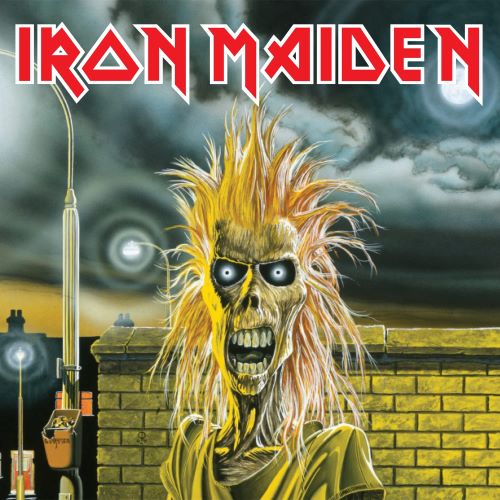
The cover art depicts the band’s legendary mascot Eddie. This was not Eddie’s cover debut as a shadowy form of him appeared on the Running Free single and the Japanese single release featured Eddie in full form, but this album still serves as the popular introduction. Derek Riggs was the artist behind Eddie’s appearances through Iron Maiden’s first decade of operation.

The album would release with 8 tracks, but I will be covering the US version which also offered the song Sanctuary. This was added to subsequent re-issues later on, though the current day pressings seem to omit it.

Prowler

The opener slams in with great guitar work between the Murray-Stratton duo and the signature rumble of Steve Harris’ bass. Di’Anno sings a desperate tale of a depraved man out to stalk and flash women.

I am warmed to the album’s production after decades of hearing it, but I will admit that Prowler is one song that maybe could have used a bit more work in the mixing stage. Still a very nice track but I can hear where it could be cleaned up a touch.

Remember Tomorrow

A remarkable song that starts out slow and contemplative but later launches into a Maiden guitar fireworks show fast break, showing that the band would forego typical pop-based song structure in their expressions. The song’s title was a phrase Di’Anno’s grandfather used frequently.

Running Free

This was the band’s debut single and still lives today as an iconic track. It is a simple banger that would get an extended live cut with a call and response passage added. The song is about the simple pleasures of being a wild and crazy youth and was based in part on Di’Anno’s young lifestyle.

For more on the single of this song, visit my recap of it as part of my Iron Maiden singles series.

Phantom Of The Opera

We move now to an extended cut and one with shifts and movement as Maiden take on the famous novel which has been adapted musically far and wide. The groundwork for the Iron Maiden sound to come can be found here, with a focus on epic storytelling. Phantom remained a staple of the live set long after Paul Di’Anno’s exit from the band and the song is hailed as one of the best from the early era.

Transylvania

Up next is the band’s first instrumental. The song was originally intended to have lyrics but after hearing the instrument cuts they decided to keep it as is. This is a fantastic song that plays out just fine without words and I’d say ranks at the top of the band’s handful of instrumental tracks. Transylvania would see a fair bit of stage time in the band’s early years and then again in 1993.

Strange World

Now it’s on to a song that’s aptly titled as this is very strange and a huge departure from what is recognized as the Iron Maiden sound. This is a trippy, atmospheric track that doesn’t feature the distinctive Maiden rumble at all. The song is maybe about vampires, or drugs or who knows what. It’s very odd and it’s jarring to hear when set against the rest of the album but it’s not bad in and of itself.

Sanctuary

The US bonus track slots here on original pressings of the album, note that re-issues can have it in different spots. This song about a killer on the run from the law would be a mainstay of early Maiden setlists. For more on this one, head to my rundown of the Sanctuary single.

Charlotte The Harlot

Here we have one of just a few songs written entirely by Dave Murray. This is celebrating a woman of the night and Murray has stated it’s based on a true story, though that story has never emerged. While the song itself is not the most celebrated track from this album, Charlotte would make three further appearances in Iron Maiden songs before her story was completed in 1992.

Iron Maiden

The album closes with an eponymous song, which is always a treat when a band does that on a self-titled album. And this one is truly a gem – there is no more signature Maiden sound than the guitars and bass on this song. Just as the chorus says, Iron Maiden’s gonna get you, and that they did with this track. This is the band’s most-played song live.

Iron Maiden marked the start of a heavy metal legacy. The album would hit number 4 on the UK charts and get platinum certifications in the UK and Canada. Critics took to Maiden right out of the gate, and the band found ready and willing audiences when they entered new countries to play there for the first time. The days of grinding in London pubs were over and the world was waiting. The New Wave of British Heavy Metal had been bubbling around England for years and Iron Maiden helped bring it into the light for the world to experience.

The raw production gave the album a “metal meets punk” feel, though band members insist they were not chasing punk as a sound. But the identity would follow Maiden through the Paul Di’Anno era and a subset of fans lament the turn toward something more akin to power metal that Maiden took when Bruce Dickinson stepped into the singer’s role. Those fans represent a minority of course, but they are out there.

For me I was a hair too young to catch this on release, I was not quite 3 years old when this album hit. It would be several years later when I got into Maiden and backtracked through the early stuff. This one was always a favorite of mine, I loved the raw energy yet still finding a lot of the band’s signature sound that was present on later albums.

This album was the start of something very special and a legacy that has now run close to half a century. All things must end, but they also must begin and Iron Maiden’s start was a great thing.

Running Free (live) – The Iron Maiden Singles Series

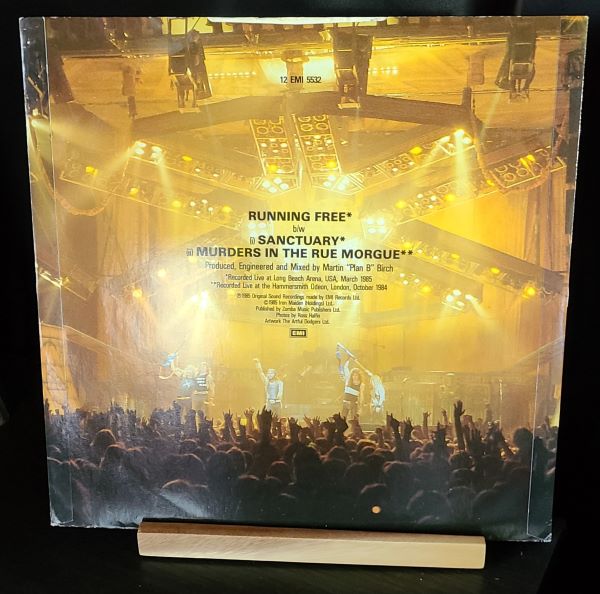
And we’re in to the second of the singles from Live After Death, Iron Maiden’s first live album. This one offers the rare chance for brevity – the cover is a live shot as opposed to an Eddie illustration. The songs are mostly self-explanatory – the A-side is off of the full album and the B-sides are not. Mostly.

I have a 12-inch version of the single, which includes a second B-side. 7-inch records have just one, physics and all that. As usual, the video below has the A-side and the first B-side, this is because Maiden put the 7-inch versions of the singles up on their YouTube during a reissue series last decade.

Running Free

Up first is one of the iconic songs from the band’s debut. Here we get Bruce Dickinson handling the song’s vocals. Far from the first time he sang this tune, but the first time it was offered up on a live album.

Running Free was done in an extended jam format at the Long Beach Arena in 1985, where Bruce and the crowd do a great call and response part for a few minutes. It’s a very cool rendition that everyone should check out – on the full-length release of Live After Death, because this is a single and it’s an edited song with the crowd part chopped out.

I do get the reasoning – this was released as a single and they weren’t doing 8-minute long live jams on the radio in the ’80’s. BUT, it sucks not to have the full song on this 12-inch record. The brief version is fine to listen to but is obviously not the full experience.

A note on the B-sides before I get into them – while not available on Live After Death, there is a 1995 Iron Maiden reissue series from Castle Records with bonus discs that do have the B-sides with the album, though on a second CD. To my knowledge this is the only way to get these songs “packaged” with the live album in any official capacity. And the Castle Records discs aren’t the easiest things to come by these days so it’s not a huge deal anyway.

Sanctuary

Our first B-side is a track from the Long Beach shows. Sanctuary is from the first album, though only in certain countries and was its own single as well. It’s well done here with Bruce in full air raid siren mode and the band keeping pace with the rest of their set, a bit frantic and faster than the albums. That style fits this tune fine. I will admit I do prefer Paul Di’Anno’s vocals on this particular track, there’s something about his snarl that fits the song a bit more than Bruce’s operatic approach. This version is totally fine though, no complaints here.

Murders In The Rue Morgue

This is the “bonus” B-side for the 12-inch record and is a super cool treat as it’s my favorite track from the Killers album. As with the other songs, this one is cranked up a bit but it’s executed very well. Not a whole lot else to say other than I consider this a special treat and very worthy listening.

That’s all for this week. Next time we’re into the band’s synth era and we are just two weeks away from what’s considered the most interesting and lore-ridden B-side in Maiden history.

The Iron Maiden Singles Series

Live! + One

Running Free

Sanctuary

Women In Uniform

Maiden Japan

Purgatory

Twilight Zone/Wrathchild

Run To The Hills

The Number Of The Beast

Flight Of Icarus

The Trooper

2 Minutes To Midnight

Aces High

Run To The Hills (live)

Running Free (live) (you are here)

Stranger In A Strange Land

Wasted Years

The Clairvoyant

Infinite Dreams

Bring Your Daughter … To The Slaughter
Holy Smoke

Be Quick Or Be Dead

From Here To Eternity

Virus

Out Of The Silent Planet

Rainmaker

Different World

The Reincarnation Of Benjamin Breeg

Empire Of The Clouds

Run To The Hills (live) – The Iron Maiden Singles Series

Today it’s time to move into the singles from Iron Maiden’s first official live album, the heralded Live After Death. This live set is a massively celebrated treasure of the catalog and there were two singles offered up.

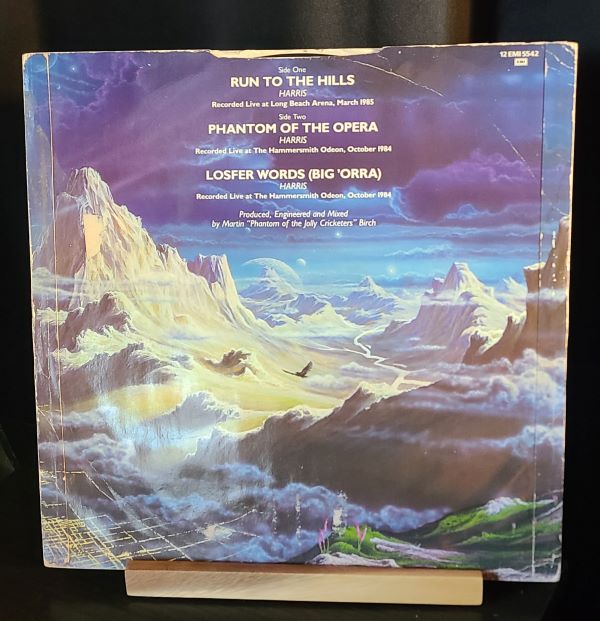
Live After Death has a bit of a confusing make-up – most of the songs were recorded over four nights in Long Beach, California in March of 1985. A handful of others were recorded in October 1984 in London. It’s these London shows that provide the B-sides for the single and the only relevant part for the singles series – actually tracking how Live After Death has been released in its many versions is a pain in the ass to be reserved for another time.

The cover art is another Derek Riggs piece, though this one is a bit confusing. Eddie is playing a huge synthesizer/organ on top of some mountains. It doesn’t make sense to the uninformed eye. Riggs was given instructions to combine Run To The Hills and Phantom Of The Opera in his artwork so this cover was the result and makes a great deal more sense with that context behind it. It actually is a pretty interesting piece of the Eddie art lore, even for its initial WTF aura. Still odd, but understandable given the artistic direction.

The single was released in 12-inch and 7-inch vinyl versions as well as cassette. I have and will be discussing the 12-inch record. The following YouTube clip has the first two songs of the single.

Run To The Hills

This cut is directly from Live After Death and is on all versions. It was from the Long Beach concerts, though discerning which specific concert is a research and argument-filled road I’m not going to go down.

The live cuts from these shows see Maiden playing at a high intensity and picking up the pace on pretty well all of the songs. This does make a very stark contrast to some songs, especially Hallowed Be Thy Name. On Run To The Hills there is a noticeable uptick in pace but the song functions very similar to its familiar studio version. It is one of Maiden’s most-known songs and it works very well in the live setting. There isn’t anything terribly different or interesting lore-wise to recount about the song here so let’s move on to the B-sides.

Phantom Of The Opera

The first B-side is one of the London performances and this one is on several versions of the full album. I’m not going to track the specific ones because it’s a lot of if’s, and’s or but’s and it would take up too much space. The relevant part is that this is the B-side on all of the singles.

What we have here is a cut from the debut album, done in the faster-paced live setting of the period and with the huge difference of having Bruce Dickinson on vocals as opposed to Paul Di’Anno. While there was nothing wrong with the original cut at all, there is something special here with Bruce tearing into this one. The song gets a pretty different feel with the faster pace and bits that are done different than the original. And Bruce showcases his range pretty well here, hanging out in the lower end for a lot of the song but truly making his mark on the track. This one is quite a treat.

Losfer Words (Big ‘Orra)

Our 12-inch “bonus” B-side is an instrumental track from the Powerslave album. This performance is also from one of the London shows and is not available on most versions of Live After Death, only on a 2-disc 1995 CD reissue series.

Despite being instrumental, Bruce gets in a few words before the band starts, basically lamenting his lack of presence on the song. Then the band launches in to the tune. It is performed faithfully to the original version though still a touch faster than. There is not a whole lot to say about an instrumental tune but this one is certainly worth checking out, it is a pretty nice jam.

That’s all for today’s single. Next week it’s on to the other one from Live After Death.

The Iron Maiden Singles Series

Live! + One

Running Free

Sanctuary

Women In Uniform

Maiden Japan

Purgatory

Twilight Zone/Wrathchild

Run To The Hills

The Number Of The Beast

Flight Of Icarus

The Trooper

2 Minutes To Midnight

Aces High

Run To The Hills (live) (you are here)

Running Free (live)

Stranger In A Strange Land

Wasted Years

The Clairvoyant

Infinite Dreams

Bring Your Daughter … To The Slaughter

Holy Smoke

Be Quick Or Be Dead

From Here To Eternity

Virus

Out Of The Silent Planet

Rainmaker

Different World

The Reincarnation Of Benjamin Breeg

Empire Of The Clouds

Black Sabbath – Dehumanizer

This week it’s a visit back to 1992 and how a handful of line-up changes, some planned and one not, spawned a reunion. And then winds of another reunion would quash this reunion. The Black Sabbath soap opera rolls on.

Black Sabbath – Dehumanizer

Released June 1992 via IRS and Reprise Records

My Favorite Tracks – I, TV Crimes, Letters From Earth

Black Sabbath had been on a wild run of line-ups and albums through the 1980’s. While Tony Iommi had found stability at vocals with Tony Martin for a three album run, the other players in the band came and went like one of those temp hiring services.

Eventually a line-up was nailed down – Iommi, the returning Geezer Butler on bass, and Cozy Powell to drum. Powell was soon out though with a hip injury and was replaced with Vinny Appice, who was previously Sabbath drummer during Ronnie James Dio’s first Sabbath stint.

And Dio himself was brought in to make a full reunion of the Mob Rules line-up. Except that Tony Martin briefly came into the studio to try out the songs but didn’t stay due to solo commitments. I don’t know why this was a thing but it was and it was probably a sign of things to come. But at least for this album, Dio was back in Black Sabbath.

The album was recorded in an odd and expensive manner, going back and forth between England and the US. It turned out to be a pretty expensive logistical mistake but it worked out well creatively, as the band honed down a basic and heavy sound. While the 1980’s music scene turned its back on Black Sabbath, the band were in a position to capitalize on the 1990’s music scene turning its back on the ’80’s.

Today there are 10 tracks in 52 minutes to go through. There are several different bonus versions around as well as a bootleg that offers a bunch of bonus stuff, including a few tracks with Powell drumming.

Computer God

The album kicks off in heavier than hell fashion, right out of the gate with monster Iommi riffs and the familiar tone of Dio leading the proceedings. This song gets into the idea of computers becoming sentient and taking over the world, something Dio called science fiction in 1992 but we are so gloriously close to 31 years later. There’s also a wild solo from Iommi here.

After All (The Dead)

A slower and haunting track that truly brings out Sabbath’s doom leanings. The song gets into the issue of wondering what the afterlife is like and if the dead can talk, and reaching the conclusion that there’s only one way to find out.

TV Crimes

A massive rocking song here that dials it up to 11 and takes aim at the scourge of televangelism that plagued American society around this time. The TV preachers were known for their sermons with their hands out for follower donations, while taking the cash to spend on hookers and drugs, as well as other extravagant purchases. Many of the same preachers were ones to call out the “evil” of heavy metal music, so it was a field day for metal bands to return the favor and call out the hypocrisy of the preachers. This has been a fan favorite from the Dio and Sabbath collaborations.

Letters From Earth

A slower-paced affair with riffs aplenty that sees Dio writing letters to God from Earth about how everything is screwed. The song is pretty similar to a collection of essays from Mark Twain of the same title. The Twain essays were not published until many decades after his death as his surviving daughter was concerned about Twain’s very scathing tone towards religion in the essays. I don’t know if there is a connection between the Twain writings and this song, I had thought I’d seen Dio reference Twain in a past interview but I have no luck on finding that.

Master Of Insanity

A song brought to the band from Geezer Butler and his prior solo project. It’s a smashing hard tune about going mad and the capacity of anyone to find the worst version of themselves. Geezer brings in a few crazy bass lines for this one and the song moves around in different arrangements a bit.

Time Machine

Another slamming song and one of heavy metal’s great motivating tracks. The time machine is a figurative device here, the song suggests that we have control over our own destinies and can “use the time machine” to chart the course of our lives. There was an alternate version of the song recorded for the soundtrack to the Wayne’s World movie.

Sins Of The Father

A bit slower but still hard as hell here. The polar opposite of the last song, this one gets into a person suffering for the ill actions of someone else. It is wrapped in the religious symbolism around sin and all that sort of suffering for what happened before. Though the song does still offer the chance of breaking free of the vicious cycle.

Too Late

This one starts off in ballad territory before ramping up the heavy a bit later into the song. It’s a nice contrast between quiet and loud in parts. The moral of this story is not to sell your soul to the Devil because, well, you sold your soul to the Devil and that turns out to be a bad thing. So don’t do that.

I

The hardest song to search for on Google in history storms in with a massive riff that marches through the balance of the track. Dio is lit up on this one, the concept behind it is how he uses criticism of his music as fuel to create rather than being dragged down by it. He becomes an all-conquering monster here and the song is pretty emblematic of his career. This is easily my favorite off this album one of my top Dio Sabbath tracks overall.

Buried Alive

The album wraps up with a song that goes even harder and heavier. It’s a track about being “buried alive” by the constraints of a religion that offers no truth but a lot of dogma. When a person spends their time worried about the weight of their sins they don’t truly live a life and they wind up buried in the guilt and trappings. A quite elaborate philosophical statement to close the record.

Dehumanizer brought Black Sabbath back to a semblance of success. The album charted at number 28 in the UK and 44 in the US, as well as scoring good positions on the charts of many other countries. The stage would seem to be set for a great tour cycle behind this effort, but it was not to be.

The band would tour for a few months but then trouble struck when Sabbath was invited to open what were to be Ozzy Osbourne’s final concerts in November. Dio was not into the idea and he promptly left the group, taking Vinny Appice with him. Black Sabbath would play the shows with Rob Halford famously providing the vocals, and the original incarnation of Sabbath did a few songs during Ozzy’s set.

Dio was back into his solo career, with a few albums that bear some influence sound-wise from Dehumanizer. Black Sabbath would regroup with Tony Martin and release a few ill-received albums before finally biting the bullet and pulling off the reunion with a suddenly unretired Ozzy in the later ’90’s. This series of events would put Black Sabbath’s rights and management in the purview of Sharon Osbourne, and the campaign to have Ozzy-era Sabbath recognized as the “only one” was now underway. This did not stop the Dehumanizer line-up from reconvening one more time under the Heaven and Hell name for several tours and one more album in the late 2000’s.

For all the ups and downs of Black Sabbath, Dehumanizer came as an unexpected and well-received work at a time when the band had not been firing on all cylinders. The prior albums with Tony Martin were of quality but did not break the market in any meaningful way, and Martin’s second stint after was not well-received. It could be said that Dehumanizer is Sabbath’s last great album, depending on personal feelings over the final salvo 13. This one’s only real competition might come from the Heaven and Hell record, though it’s fair to say this one wins that battle.

While the band didn’t fully capitalize on the record, Dehumanizer was a fantastic album that brought a new sense of respectability back to Black Sabbath, if only for a moment. In hindsight it’s one of the band’s better albums overall and it stands head and shoulders above Sabbath’s other work of the time period. While it’s a shame the group couldn’t hold together in the mire that is the Sabbath soap opera, just the existence of this album is enough to hang one’s hat on.

Metallica – 72 Seasons single

A super quick post today, just gonna cover the new song Metallica posted yesterday. It is the title track from their upcoming album 72 Seasons, which is about to hit its due date of April 14th. This the the fourth song they’ve posted from the album, at least I think.

This is the album’s opening track and is also a bit of a longer one – the video here runs for 8:38 but the actual song lists for 7:39. It is a pretty good song, very firmly in the latter-day Metallica vibe. I wonder if it really justifies its length, though I’m not usually one to complain about long songs. Length isn’t new territory for Metallica at all, they’ve had plenty of longer cuts over the years.

The album is near and I’m pretty stoked for it. I’ve enjoyed what I’ve heard so far, a few songs do get me going a bit and the others don’t put me off or anything. I don’t know where this album will rate at the end of it all but there’s certainly something to look forward to here. I’m also guessing that there will be a video for every song like there was for the last album so there will be more entertainment to dig into.

That is about all for this one, happy weekend.

Aces High – The Iron Maiden Singles Series

This week it’s another of Iron Maiden’s signature tunes. These are being rattled off one right after the other since, well, it’s when they released all of this stuff. We get two B-sides this time, a cover song and a live track.

As with all Maiden cover art of this era, the cover here is totally on point. It’s very simple – Eddie is a British pilot flying a Spitfire during the Battle of Britain in World War II. Pretty easy premise and wonderfully executed by Derek Riggs.

There are some version differences here, the obvious one being the extra B-side on the 12-inch record versus the 7-inch. As usual I have the 12-inch version, this one from the UK. There were some further differences among cassette singles across territories but those were B-sides available on singles I’ve recently covered so nothing huge to worry about there.

Aces High

The single kicks off with its feature and namesake track, a magnificent song that soars as high as its subject matter. The music is anchored by the twin guitar attack of Dave Murray and Adrian Smith, alongside the rumbling bassline of Steve Harris. Nicko McBrain bashes the skins accordingly, and Bruce Dickinson has another moment to live up to his nickname as the “Human Air Raid Siren,” this time more fitting than ever. The band fires on all cylinders here, but that guitar and bass combination really stands out here.

The song is about the Battle of Britain during World War II. It was when the Royal Air Force and all of the citizens of the UK banded together to fend off the onslaught of the Nazi Luftwaffe over the course of several months in 1940 and 1941. The British spirit held through the relentless campaign and Germany was unable to accomplish its objectives of destroying the RAF or breaking British morale through terror bombing, and the tide of the war would turn to the Allies’ favor. It is obviously a major point of pride in British history.

For Iron Maiden, Aces High is yet another signature track from their golden era. It would be paired with Winston Churchill’s famous speech to Parliament in 1940 both in the music video and in live presentations. The song would be an opener on several tours and is a well-regarded crowd favorite. It would peak at number 20 on the UK singles chart.

King Of Twilight

Here Maiden cover 1970’s German prog-rock act Nektar. This cover is actually a bit of a medley, combining King Of Twilight with Crying In The Dark, both Nektar tracks from 1972. It’s a pretty well-executed cover and toes the line pretty well between honoring the original and “Maidenizing” the songs as well.

I’ll also admit that I haven’t checked out Nektar at all before. There was no Internet access to just look bands up when these covers were around so the originals remained a mystery to me. From what I’m hearing it’s some pretty cool classic prog and I’ll have to check more of them out.

The Number Of The Beast

Our bonus B-side is a live performance from December of 1983 in Dortmund, Germany. There is also video of this clip, this same song was later shown in video form on the 12 Wasted Years video comp.

There is nothing that really “jumps out” about this performance, but it is competently executed and the crowd was really into it. The video does show Dave Murray riding atop Bruce’s shoulders in Ozzy and Randy Rhodes fashion, though of course that doesn’t translate to the audio-only single. It is a nice song to have in official form.

And yes, you’ll likely notice someone wrote their name on the back of the record jacket. This was fairly common practice way back when, to prevent theft. And this is not some random stranger who I never knew, either – Steve Childers was a musician from the area I live in who lived in both Missouri and Florida and played in number of death and black metal bands. Steve had moved back to this area in the mid 2010’s and I got to know him some in that time, he was a fantastic guy.

Sadly, Steve died in a car accident in early 2016. I bought this and some other records from his personal collection after his death to help raise funds for his final expenses and family. While it’d be far better to have Steve still around, it’s nice to have something from his old stash.

That’s all for this week’s single. Next week it’s into the band’s first official live album and the first of two singles from that.

The Iron Maiden Singles Series

Live! + One

Running Free

Sanctuary

Women In Uniform

Maiden Japan

Purgatory

Twilight Zone/Wrathchild

Run To The Hills

The Number Of The Beast

Flight Of Icarus

The Trooper

2 Minutes To Midnight

Aces High (you are here)

Run To The Hills (live)

Running Free (live)

Stranger In A Strange Land

Wasted Years

The Clairvoyant

Infinite Dreams

Bring Your Daughter … To The Slaughter
Holy Smoke

Be Quick Or Be Dead

From Here To Eternity

Virus

Out Of The Silent Planet

Rainmaker

Different World

The Reincarnation Of Benjamin Breeg

Empire Of The Clouds

Ozzy Osbourne – Steal Away (The Night)

This post was part of a series that I called S-Tier Songs. I later decided to abandon the series in favor of a simpler Song of the Week format. I am keeping these posts as I wrote them but removing the old page that linked to the list of S-Tier Songs, so that is why these posts might look a bit odd. Enjoy.

Today it’s time for yet another singer to get his second song on the list. I’m still running with the “only one song per act” rule (it’s almost over), but being in two different projects or one band and solo outing works fine. Joining Bruce Dickinson and Maynard James Keenan as two-timers is the one and only Ozzy Osbourne, who has a prior S-tier song as a member of Black Sabbath and now gets one from his solo catalog.

Ozzy Osbourne – Steal Away (The Night)

Today’s song is the closing track from Ozzy’s debut solo album Blizzard Of Ozz, released in 1980. The album is a banger from front to back, so odds are good that this album will have other appearances on this list in the future.

Steal Away is an experience from the word go, and it starts immediately out of the prior song Revelation (Mother Earth). It is a jarring and pretty awesome way to kick the track off, and an experience that’s almost necessary to have a physical copy of to achieve. Digital music in a lot of forms has inserted gaps between songs, rendering this kind of playback ineffective. Though I did play with it on Spotify and it seems to hold up there with maybe just a nanosecond between the closing and opening notes.

There is a good variety of music on Blizzard Of Ozz, but the closing track is a pretty straightforward, high-engery rocker. There isn’t anything at all wrong with it – everyone is in top form on their instruments – the immortal Randy Rhodes on guitar, Bob Daisley on bass and Lee Kerslake with the drums. Add in Ozzy’s typically underrated sense of melody and we’re off to the races.

The song’s lyrical matter is not some deep plunge into existential lore – this is a song about enjoying the night and having a good time. It’s beyond the “party rock” stuff common to this decade, though. This is Ozzy truly living as the Prince of Darkness. Ozzy and whatever woman of the evening hours he has found are off on an adventure in lyrics that fit the music like a glove.

There is no talking about an early Ozzy song without talking more about the guitars. Randy Rhodes is in fine form here and playing a very nice riff that is certainly more than what the average guitar player would have brought to a tune like this, but also is not “full Rhodes” either. The solo, which gets a fair amount of time in this short song, does have a bit more of Randy on offer but even then he is playing more to the song in the full instrumental break as opposed to getting up to any virtuoso stuff.

Being that Steal Away The Night wasn’t a single, there isn’t a lot of statistics or lore to go over. The song did get played hundreds of times in the early Ozzy setlists, though it was taken out after 1985 and hasn’t been played live since (at least according to Setlist.fm) There is a live version on the 1987 Tribute album dedicated to Randy Rhodes – the song boasts an 8 minute runtime but is the song played normally then followed with a Tommy Aldridge drum solo.

Why is this an S-Tier song?

Steal Away The Night is a blistering track that showcases a great collection of talent. It is primarily the work of Randy Rhodes that shines, but this was a songwriting and recording effort that fires on all cylinders. It it a fun song that adds to the aura that Ozzy Osbourne would develop through the 1980’s and is also a great track for the ’80’s in general.

2 Minutes To Midnight – The Iron Maiden Singles Series

Today we enter the Powerslave album cycle and the heights of Iron Maiden’s career. Our single today has one of the signature tunes from that album, as well as a cover with a bit of trivia behind it and also our first bit of nonsense as a B-side.

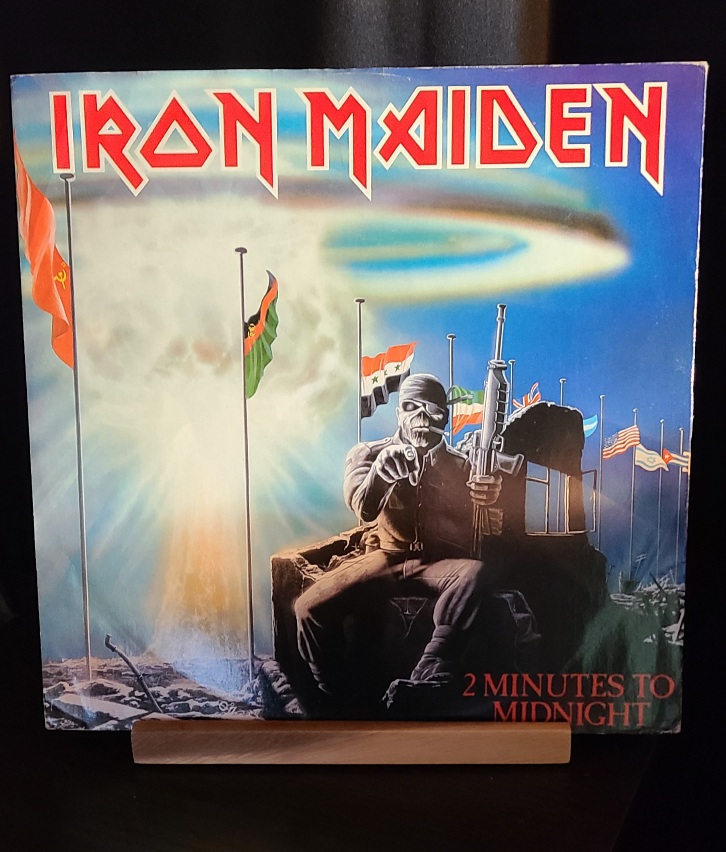
For the first time in a while we get a bit of content variation across versions – the 7-inch does not have the second B-side Mission From ‘Arry, one must possess the 12-inch record to have that. Thankfully I have said 12-inch version so I’ll get to cover a funny argument secretly recorded by that bastard Bruce Dickinson.

The cover art is another unique depiction of Eddie, this time posing as a military guy/arms dealer as a nuclear bomb goes off around flags of the United Nations. A very on-point theme given the main song’s content and honestly this to me is a bit of an underrated piece of Eddie art. It isn’t as iconic as several of the more noted images of Eddie but this one communicates its message really well. I do happen to have the Eddie action figure of this pose too, only one of two that I own. There may be something a bit more to my love of this cover, which we’ll get to in a minute.

2 Minutes To Midnight

The lead song is a rocker making use of a tried but true riff to set the tone. The song is perhaps a bit more basic that some of the other stuff Maiden had gotten up to around this time, it’s certainly no 13 minute long song about some old poem, that’s for sure. But the simplicity is effective in this case.

Lyrically the song discusses the art of war, or the true nature behind the greed behind needless wars. It’s all about the war machine and the dollars that generates, which is why there’s always a war.

The song’s title also references the Doomsday Clock, a thing started during the early Cold War that scientists use to indicate how close to nuclear holocaust the world is getting. 2 minutes was the closest it had ever been set, which was in 1953. In our modern age of advancement in 2023, we’re now as close as the clock has ever been, 90 seconds from midnight. Go us.

One more thing about the song – this one just happens to be my favorite Iron Maiden song. Yes, out of all of them. This song was around quite a bit when I was growing up – Powerslave hit just as I was really paying attention to music and this was probably the heaviest thing I heard at the time. Iron Maiden were never huge hit makers singles-wise but some songs got airplay on various formats and I recall this one being around a lot. I’m also a sucker for doomsday stuff, which may say something about me more than anything, but no worries.

And while the issue was long decided by the time 2003 rolled around, it didn’t hurt that this song was included on the soundtrack to my favorite video game of all time – Grand Theft Auto: Vice City. I heard this as part of the V-Rock station over and over and over again when playing the game as much as I did. I’ve truly beat this one into my brain.

Rainbow’s Gold

Our first B-side is a proper song and a cover of a perhaps not well-known act. Beckett were a 70’s progressive rock outfit from Great Britain. The band recorded one album and folded soon after, though their stuff got around a little bit. One of many Beckett/Iron Maiden trivia points of note – Beckett’s agent was Ron Smallwood, who has been Iron Maiden’s longtime manager.

Maiden does a pretty good job on this song, they take what was a pretty groovy original track and speed it up some. I’d probably say I prefer the original by a hair as it has a bit more dynamic stuff to it than Maiden’s straight-ahead cover version. But this is a worthy cover track in Maiden’s discography.

The Beckett and Iron Maiden tie-ins are numerous – Beckett singer Terry Slesser actually auditioned to replace Paul Di’Anno in Maiden. (Slesser also briefly replaced Brian Johnson in Geordie when Johnson joined AC/DC).

But that is more a footnote, there is one far deeper interaction here between the two bands. In short, Iron Maiden lifted a portion of the lyrics to their classic Hallowed Be Thy Name from Beckett’s song Life’s Shadow. While only a few lines it is pretty clearly the same lyrics. Maiden settled early on with one songwriter from Beckett, who claimed to be the sole songwriter. Decades later another former Beckett member emerged with a lawsuit – this was why Hallowed… was not played on the 2016 tour. Maiden also eventually settled the newer suit.

Mission From ‘Arry

If you thought 2 Minutes To Midnight was the main event of this single, you’d be wrong. We have an actual bout on our hands here. While the fight didn’t get physical, we have a spirited argument between Steve Harris and Nicko McBrain, with Bruce Dickinson also involved.

Here’s what happened – one night during a Nicko drum solo, Steve’s bass rig bit the bullet. Unsure of when he’d be going again, Steve sent a rigger to tell Nicko to extend his drum solo to give the crew time to repair Steve’s setup. The crewman tried getting Nicko’s attention, which distracted him and screwed up the solo. Nicko also failed to understand the message so it was a total failure.

This recording is the backstage argument after the show between Steve and Nicko. Steve was upset with Nicko’s attitude about the whole thing, while Nicko was very upset about being interrupted during his solo. Bruce seems to generally side with Steve. The argument goes on for nearly 7 minutes before Steve figures out that someone was recording, that someone being Bruce, who stumbled into the tape recorder in the room and hit record. The band later thought it was funny and here it is as a B-side.

This is a bit hard to follow if you’re unaccustomed to British accents, which I am not at all. There is a transcript of who is saying what, but without that it can take several listens to figure out who is saying what and what exactly they’re saying. But it is pretty funny stuff, hearing them all have a go at each other over miscommunication. I can see everyone’s side of it – Steve wants to set up a way to communicate to Nicko while playing, Nicko wants everyone to piss off while he’s playing. No real side to take here, everyone has a point.

While later Maiden singles would host a fair bit of nonsense as B-sides, this one is pretty cool and unique. Music acts go out of their way to present the best side of themselves to the public so it’s cool to hear people having at one another.

That does it for this week’s single, quite a whopper all told. Next week it’s time to fly.

The Iron Maiden Singles Series

Live! + One

Running Free

Sanctuary

Women In Uniform

Maiden Japan

Purgatory

Twilight Zone/Wrathchild

Run To The Hills

The Number Of The Beast

Flight Of Icarus

The Trooper

2 Minutes To Midnight (you are here)

Aces High

Run To The Hills (live)

Running Free (live)

Stranger In A Strange Land

Wasted Years

The Clairvoyant

Infinite Dreams

Bring Your Daughter … To The Slaughter

Holy Smoke

Be Quick Or Be Dead

From Here To Eternity

Virus

Out Of The Silent Planet

Rainmaker

Different World

The Reincarnation Of Benjamin Breeg

Empire Of The Clouds

The Postage of the Beast – Iron Maiden stamps

A quick post today and more of just a show-off thing. I have apparently entered the world of philately, which isn’t a strange sex act but rather the practice of stamp collecting. Since I’m pretty well broke from buying music, my stamp collecting begins and ends with this series of Iron Maiden stamps the Royal Mail issued earlier this year.

There were a wide variety of stamps and collectible packages available, I settled on the presentation pack as a one-shot deal to cover all the bases. It includes the stamps pictured below as well as a pretty detailed biography on both sides of the presentation card. Eddie gets his own bio on the back of his stamp series, as the most important member of the band surely should.

In ironic fashion it did take a little while for these stamps to arrive, because mailing stuff between the British mail and the US Post Office can’t be as quick and easy and one would figure. I know people in Canada got theirs a bit before anyone here in the US did. Though in fairness I’ve had these for a bit now, I’m just now finally getting around to taking the pictures and making this post.

I am very impressed with the setup and how well done it is. I have no previous exposure to the Royal Mail’s collectible stamp issues, as honestly Iron Maiden is the only band I’d really drop money on for stamps. My intent was to frame this and I probably still will, but it seems a bit of a shame to do that when the double-sided layout is so neatly done. But in the end framing is still likely the best option for display.

And that about does it for the Iron Maiden stamps. Not much more to say, really – they’re very nice and a pretty high-class presentation. Behold the postage of the beast.