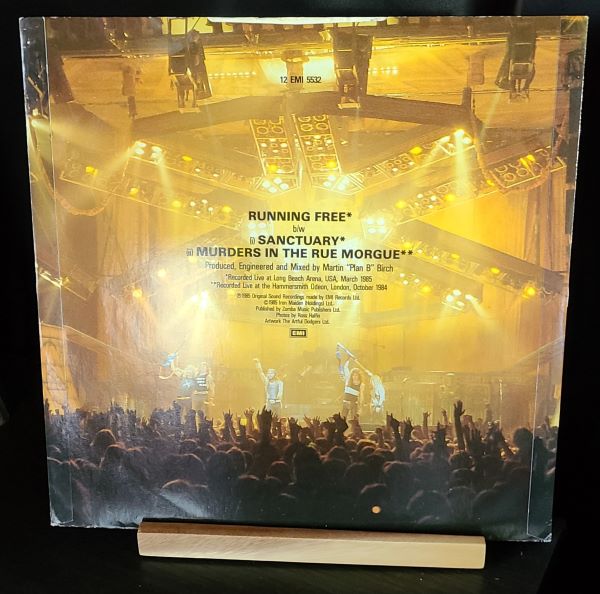
And we’re in to the second of the singles from Live After Death, Iron Maiden’s first live album. This one offers the rare chance for brevity – the cover is a live shot as opposed to an Eddie illustration. The songs are mostly self-explanatory – the A-side is off of the full album and the B-sides are not. Mostly.
I have a 12-inch version of the single, which includes a second B-side. 7-inch records have just one, physics and all that. As usual, the video below has the A-side and the first B-side, this is because Maiden put the 7-inch versions of the singles up on their YouTube during a reissue series last decade.
Running Free
Up first is one of the iconic songs from the band’s debut. Here we get Bruce Dickinson handling the song’s vocals. Far from the first time he sang this tune, but the first time it was offered up on a live album.
Running Free was done in an extended jam format at the Long Beach Arena in 1985, where Bruce and the crowd do a great call and response part for a few minutes. It’s a very cool rendition that everyone should check out – on the full-length release of Live After Death, because this is a single and it’s an edited song with the crowd part chopped out.
I do get the reasoning – this was released as a single and they weren’t doing 8-minute long live jams on the radio in the ’80’s. BUT, it sucks not to have the full song on this 12-inch record. The brief version is fine to listen to but is obviously not the full experience.
A note on the B-sides before I get into them – while not available on Live After Death, there is a 1995 Iron Maiden reissue series from Castle Records with bonus discs that do have the B-sides with the album, though on a second CD. To my knowledge this is the only way to get these songs “packaged” with the live album in any official capacity. And the Castle Records discs aren’t the easiest things to come by these days so it’s not a huge deal anyway.
Sanctuary
Our first B-side is a track from the Long Beach shows. Sanctuary is from the first album, though only in certain countries and was its own single as well. It’s well done here with Bruce in full air raid siren mode and the band keeping pace with the rest of their set, a bit frantic and faster than the albums. That style fits this tune fine. I will admit I do prefer Paul Di’Anno’s vocals on this particular track, there’s something about his snarl that fits the song a bit more than Bruce’s operatic approach. This version is totally fine though, no complaints here.
Murders In The Rue Morgue
This is the “bonus” B-side for the 12-inch record and is a super cool treat as it’s my favorite track from the Killers album. As with the other songs, this one is cranked up a bit but it’s executed very well. Not a whole lot else to say other than I consider this a special treat and very worthy listening.
That’s all for this week. Next time we’re into the band’s synth era and we are just two weeks away from what’s considered the most interesting and lore-ridden B-side in Maiden history.
This week it’s time to head back to the fateful year of 1991, but in this case it’s to visit a band that was immune to the tectonic shift in rock that year. Van Halen were riding high heading into their third album with Sammy Hagar at the mic. While many dismissed Van Hagar as AOR rubbish that didn’t hold a candle to the beloved David Lee Roth era, VH were cranking out number one albums and hit singles as well as arenas full of eager fans.
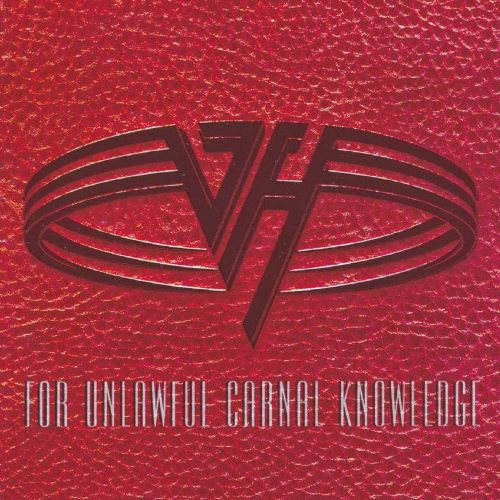
Van Halen – For Unlawful Carnal Knowledge
Released June 17, 1991
My Favorite Tracks – The Dream Is Over, Poundcake, Judgment Day
Van Halen spent a year recording their first effort of the 1990’s. While Andy Johns was tabbed to produce, the band also brought in an old friend – Ted Templeman, who had famously guided the band’s early albums but had been absent through the Van Hagar era. The duel producers were a means to satisfy Sammy, who apparently didn’t enjoy working with Johns.
This album would see Van Halen forego the synth-based AOR rock of the late ’80’s and move to a heavier song structure based on guitar, and the occasional power tool. While I’m sure the band made the decision on their own terms, it did coincidentally fit with the times as the album’s release slotted in the summer that hair metal, AOR and other venerable forms of rock met their mainstream end.
The album cover is nice though also basic, but the real art lore was in the inner booklet pictures. In first pressings of the album, one photograph showed a blackboard with a bunch of phone numbers on it. Some of the phone numbers got massive amounts of calls, so the record label repressed the album with the phone numbers removed. Note that these CD and cassette versions are not hard to acquire, it was a mass produced item so the phone numbers version carries no premium. Vinyl copies of the album did not have the blackboard photo that I know of, but vinyl of this album is scarce and does command huge value.
And of course there’s the album title. If it isn’t obvious, it spells out FUCK. The phrase was NOT the origin of the actual word “fuck,” which is a thing that’s out there but isn’t true.
There are 11 songs running at near 52 minutes total, time to head on in.
Poundcake
We start off with Eddie using a drill to mess with his pickups and then we’re off to the races. This is a heavy, driving track that doesn’t go too fast but really slams its point home. And that also happens to be what the song is about – slamming the point home with a nice, lovely woman.
Judgment Day
This one retains the heaviness but gets a bit faster as Sammy extols the virtues of kicking back in life and staying out of the ambitious rat race. This song was a big hit with my teenage self, perhaps informing me a bit more than it should. But hey, it’s all good.
Spanked
This one is pure sleaze and grime. This is some monster heaviness from Eddie and the band, it goes a degree further with it than Van Halen ever really went before. This one also has a good helping of the backing vocals that Van Halen were famous for but were not emphasized a lot on this album.
The song is about the old 1-900 numbers, which were a pre-Internet outlet for the sexually frustrated gentleman. They were total rip-offs as magazines were far cheaper, but I guess nothing beats that “personal” interaction. The song today would be about OnlyFans.
Runaround
One of the album’s featured singles, this track is a bit of a faster-paced and a less R-rated version of a sex song. It could be considered basic but it’s a pleasant song and I don’t find anything wrong with it. The video makes use of the rotating stage Van Halen were into using in their live shows, a pretty obvious fit given the song title.
Pleasure Dome
This one is a bit of an oddball. It’s still fittingly heavy for the record but is also a bit out in left field, at least in vibe it’s reminiscent of the prior album OU812. It seems like someone is caught in an artificial utopia of some sort but is aware and wants out, some kind of virtual reality or simulation kind of thing maybe. There is some seriously crazy riffing from Eddie on here, it hangs back a bit in the song but its truly something to behold.
In ‘N’ Out
A bit more of an “open” rocker here, it’s a song about how money makes the world go around and most people are basically screwed no matter what they do. The song’s loose rock vibe is a bit in contrast with the grave subject matter but it’s a sign that Van Halen were willing to explore more serious lyrical fare, something that comes up again on this album.
Man On A Mission
Another bit of a loose and upbeat song, this is Sammy motivating himself to go out and get his girl. Parts of the song are a bit self-help in nature and then other parts are total sleaze, it all works pretty well overall.
The Dream Is Over
A total vibe shift here from going out and getting some to a stark condemnation of the system and its leverage against the average citizen. This one really came from out of nowhere and delivered a powerful statement about the workings of society. Eddie and Sammy had discussed turning an eye toward more serious lyrical fare and they hit on it big time here. The song feels like nothing less than a death certificate for the American Dream and feels just as relevant today as it was 32 years ago.
Right Now
The album’s huge hit and a song that caused a lot discussion back on release. This was another of the songs with a more serious look at things and is the song Sammy Hagar has declared his proudest lyrical moment from his Van Halen days.
Right Now is about embracing change and reaching for it in the moment, even in the face of great adversity. The music video featured a bunch of random footage with text of things that were going on “right now,” some funny but many serious. The video was a smash hit and is likely the band’s biggest of their career.
Right Now was also used by Pepsi in a huge advertising campaign for Crystal Pepsi. The story of that soda is an odd one all its own, but for Van Halen it caused a fair bit of anger for the band “selling out” to corporate interest. Eddie justified the licensing, saying that the ad agency would have simply hired some jingle writers to do a basic cover of the song anyway, and he was correct in that assessment.
316
This instrumental track was originally written during the 5150 era but was brought back out by Eddie when his son Wolfgang Van Halen was born. Wolfgang’s birthdate was 3-16-1991, thus giving a title to the piece. This one is a quiet and reflective piece that sequences very well after the thematically heavy nature of Right Now.
Top Of The World
The album ends with a more “standard” Van Halen track that connects more to the prior Van Hagar releases. It’s a pretty simple and uplifting song that pretty well says what the title communicates. It’s a pretty nice way to close a record that was filthy in parts and serious in others.
For Unlawful Carnal Knowledge was another smash hit for the Van Hagar camp. It spent 3 weeks at the top of the Billboard 200 chart and would come out with 3 US platinum certifications. Singles from the album were all over radio and MTV, and the band’s tour for this cycle was one of their longest. While success can be defined by many different metrics, this period was easily one of the band’s most successful. Music critics were not very into this album, but the record won the popularity contest.
For me personally this was a pretty watershed moment in my music history. The summer of ’91 was when I really took off as far as getting into music goes, and I went to get this one on the day it was released. Along with it I also bought an album that had just come out a week prior, that being Skid Row’s second album Slave To The Grind. I went back and forth between both albums constantly and both tapes got wore out pretty quickly.
The “Van Hagar” era gets a fair bit of flack from Van Halen fans, with many people living and dying on the classic catalog built in the band’s first frame with David Lee Roth. I would never in a million years argue against that period of the band. But to discount Sammy’s tenure is short-sighted and for me, this album is the high point of that time.
This post was part of a series that I called S-Tier Songs. I later decided to abandon the series in favor of a simpler Song of the Week format. I am keeping these posts as I wrote them but removing the old page that linked to the list of S-Tier Songs, so that is why these posts might look a bit odd. Enjoy.
The Black Crowes – She Talks To Angels
Today’s subject was the fourth single from the 1990 multi-platinum smash Shake Your Money Maker. The song got to number 30 on the Billboard Hot 100, but caught the number 1 spot on both the Mainstream rock chart and the Radio And Records AOR Tracks chart. If you haven’t heard of that last chart, you are in good company because I haven’t either, but a number 1 is a number 1.
For the Black Crowes, this kept the train rolling. They were literally living up to the name of their album – the money maker was in full swing. This southern band bucked all trends and were a hot commodity all through the turmoil of 1991, essentially immune to the seismic shifts in rock trends that happened during the fateful summer.
She Talks To Angels is a fairly simple acoustic tune. After a bit the drums and an organ join in but the song is basically the background music and the singing. Simple is often best for songs, especially those intended for mainstream appeal, and everyone hit the nail on the head here. While the Black Crowes were certainly capable of more than a catchy tune, that would be an exploration for their future albums. Here on the debut things are kept trim and effective.
Where the song really connects with people is in its theme, and it’s a very sad one of a young woman caught in the grip of addiction. This isn’t a story-song so much as a peek into the life of someone gripped in the pains of drug addiction. This song paints a picture and leaves it for inspection, there is no beginning and end here.
It is a fairly universal theme, one that a fair number of people have some experience with. Many have either been the girl in the song or know the girl in the song. Well, that applied to a lot of people, but not so much the song’s creator Chris Robinson, who just kind of knew the girl who inspired the song.
Chris tells the story in the 2010 YouTube piece embedded below – the song is about a goth girl he knew growing up that was addicted to heroin. Everything else about the song came from Chris’ imagination, as at the time he had no experience with the issues he was writing about. He did know the girl and was friendly with her but did not relay any of her personal story through the song.
This song has lived on through classic rock radio and is also a streaming champion with over 100 million Spotify plays. It would make any list of essential Black Crowes tunes, even after the band spent a career carving their own path out since the debut. It’s also a song that has been covered endlessly by artists from all genres of music.
Why is this an S-Tier song?
She Talks To Angels is a sweet yet sad acoustic ballad outlining the trials of a young person caught in addiction. The theme caught on with a wide audience and the song itself was one of several hits from a mega debut album. Over 30 years later the song remains a staple of rock formats and a favorite of many far and wide.
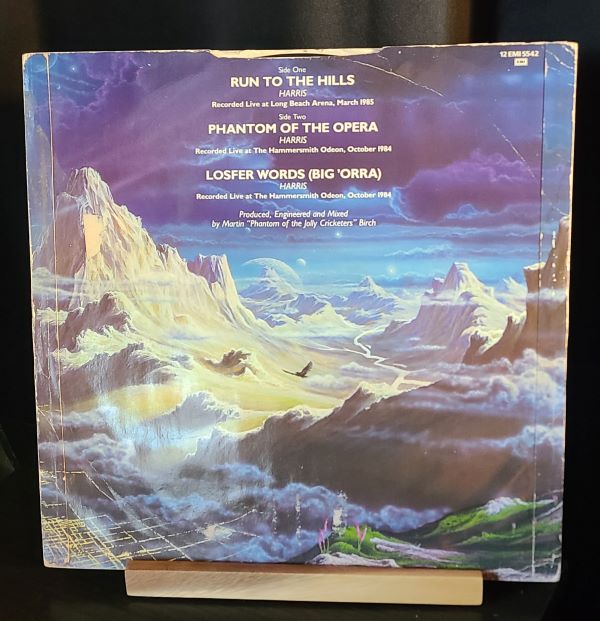
Today it’s time to move into the singles from Iron Maiden’s first official live album, the heralded Live After Death. This live set is a massively celebrated treasure of the catalog and there were two singles offered up.
Live After Death has a bit of a confusing make-up – most of the songs were recorded over four nights in Long Beach, California in March of 1985. A handful of others were recorded in October 1984 in London. It’s these London shows that provide the B-sides for the single and the only relevant part for the singles series – actually tracking how Live After Death has been released in its many versions is a pain in the ass to be reserved for another time.
The cover art is another Derek Riggs piece, though this one is a bit confusing. Eddie is playing a huge synthesizer/organ on top of some mountains. It doesn’t make sense to the uninformed eye. Riggs was given instructions to combine Run To The Hills and Phantom Of The Opera in his artwork so this cover was the result and makes a great deal more sense with that context behind it. It actually is a pretty interesting piece of the Eddie art lore, even for its initial WTF aura. Still odd, but understandable given the artistic direction.
The single was released in 12-inch and 7-inch vinyl versions as well as cassette. I have and will be discussing the 12-inch record. The following YouTube clip has the first two songs of the single.
Run To The Hills
This cut is directly from Live After Death and is on all versions. It was from the Long Beach concerts, though discerning which specific concert is a research and argument-filled road I’m not going to go down.
The live cuts from these shows see Maiden playing at a high intensity and picking up the pace on pretty well all of the songs. This does make a very stark contrast to some songs, especially Hallowed Be Thy Name. On Run To The Hills there is a noticeable uptick in pace but the song functions very similar to its familiar studio version. It is one of Maiden’s most-known songs and it works very well in the live setting. There isn’t anything terribly different or interesting lore-wise to recount about the song here so let’s move on to the B-sides.
Phantom Of The Opera
The first B-side is one of the London performances and this one is on several versions of the full album. I’m not going to track the specific ones because it’s a lot of if’s, and’s or but’s and it would take up too much space. The relevant part is that this is the B-side on all of the singles.
What we have here is a cut from the debut album, done in the faster-paced live setting of the period and with the huge difference of having Bruce Dickinson on vocals as opposed to Paul Di’Anno. While there was nothing wrong with the original cut at all, there is something special here with Bruce tearing into this one. The song gets a pretty different feel with the faster pace and bits that are done different than the original. And Bruce showcases his range pretty well here, hanging out in the lower end for a lot of the song but truly making his mark on the track. This one is quite a treat.
Losfer Words (Big ‘Orra)
Our 12-inch “bonus” B-side is an instrumental track from the Powerslave album. This performance is also from one of the London shows and is not available on most versions of Live After Death, only on a 2-disc 1995 CD reissue series.
Despite being instrumental, Bruce gets in a few words before the band starts, basically lamenting his lack of presence on the song. Then the band launches in to the tune. It is performed faithfully to the original version though still a touch faster than. There is not a whole lot to say about an instrumental tune but this one is certainly worth checking out, it is a pretty nice jam.
That’s all for today’s single. Next week it’s on to the other one from Live After Death.
This week it’s a visit back to 1992 and how a handful of line-up changes, some planned and one not, spawned a reunion. And then winds of another reunion would quash this reunion. The Black Sabbath soap opera rolls on.
Black Sabbath – Dehumanizer
Released June 1992 via IRS and Reprise Records
My Favorite Tracks – I, TV Crimes, Letters From Earth
Black Sabbath had been on a wild run of line-ups and albums through the 1980’s. While Tony Iommi had found stability at vocals with Tony Martin for a three album run, the other players in the band came and went like one of those temp hiring services.
Eventually a line-up was nailed down – Iommi, the returning Geezer Butler on bass, and Cozy Powell to drum. Powell was soon out though with a hip injury and was replaced with Vinny Appice, who was previously Sabbath drummer during Ronnie James Dio’s first Sabbath stint.
And Dio himself was brought in to make a full reunion of the Mob Rules line-up. Except that Tony Martin briefly came into the studio to try out the songs but didn’t stay due to solo commitments. I don’t know why this was a thing but it was and it was probably a sign of things to come. But at least for this album, Dio was back in Black Sabbath.
The album was recorded in an odd and expensive manner, going back and forth between England and the US. It turned out to be a pretty expensive logistical mistake but it worked out well creatively, as the band honed down a basic and heavy sound. While the 1980’s music scene turned its back on Black Sabbath, the band were in a position to capitalize on the 1990’s music scene turning its back on the ’80’s.
Today there are 10 tracks in 52 minutes to go through. There are several different bonus versions around as well as a bootleg that offers a bunch of bonus stuff, including a few tracks with Powell drumming.
Computer God
The album kicks off in heavier than hell fashion, right out of the gate with monster Iommi riffs and the familiar tone of Dio leading the proceedings. This song gets into the idea of computers becoming sentient and taking over the world, something Dio called science fiction in 1992 but we are so gloriously close to 31 years later. There’s also a wild solo from Iommi here.
After All (The Dead)
A slower and haunting track that truly brings out Sabbath’s doom leanings. The song gets into the issue of wondering what the afterlife is like and if the dead can talk, and reaching the conclusion that there’s only one way to find out.
TV Crimes
A massive rocking song here that dials it up to 11 and takes aim at the scourge of televangelism that plagued American society around this time. The TV preachers were known for their sermons with their hands out for follower donations, while taking the cash to spend on hookers and drugs, as well as other extravagant purchases. Many of the same preachers were ones to call out the “evil” of heavy metal music, so it was a field day for metal bands to return the favor and call out the hypocrisy of the preachers. This has been a fan favorite from the Dio and Sabbath collaborations.
Letters From Earth
A slower-paced affair with riffs aplenty that sees Dio writing letters to God from Earth about how everything is screwed. The song is pretty similar to a collection of essays from Mark Twain of the same title. The Twain essays were not published until many decades after his death as his surviving daughter was concerned about Twain’s very scathing tone towards religion in the essays. I don’t know if there is a connection between the Twain writings and this song, I had thought I’d seen Dio reference Twain in a past interview but I have no luck on finding that.
Master Of Insanity
A song brought to the band from Geezer Butler and his prior solo project. It’s a smashing hard tune about going mad and the capacity of anyone to find the worst version of themselves. Geezer brings in a few crazy bass lines for this one and the song moves around in different arrangements a bit.
Time Machine
Another slamming song and one of heavy metal’s great motivating tracks. The time machine is a figurative device here, the song suggests that we have control over our own destinies and can “use the time machine” to chart the course of our lives. There was an alternate version of the song recorded for the soundtrack to the Wayne’s World movie.
Sins Of The Father
A bit slower but still hard as hell here. The polar opposite of the last song, this one gets into a person suffering for the ill actions of someone else. It is wrapped in the religious symbolism around sin and all that sort of suffering for what happened before. Though the song does still offer the chance of breaking free of the vicious cycle.
Too Late
This one starts off in ballad territory before ramping up the heavy a bit later into the song. It’s a nice contrast between quiet and loud in parts. The moral of this story is not to sell your soul to the Devil because, well, you sold your soul to the Devil and that turns out to be a bad thing. So don’t do that.
I
The hardest song to search for on Google in history storms in with a massive riff that marches through the balance of the track. Dio is lit up on this one, the concept behind it is how he uses criticism of his music as fuel to create rather than being dragged down by it. He becomes an all-conquering monster here and the song is pretty emblematic of his career. This is easily my favorite off this album one of my top Dio Sabbath tracks overall.
Buried Alive
The album wraps up with a song that goes even harder and heavier. It’s a track about being “buried alive” by the constraints of a religion that offers no truth but a lot of dogma. When a person spends their time worried about the weight of their sins they don’t truly live a life and they wind up buried in the guilt and trappings. A quite elaborate philosophical statement to close the record.
Dehumanizer brought Black Sabbath back to a semblance of success. The album charted at number 28 in the UK and 44 in the US, as well as scoring good positions on the charts of many other countries. The stage would seem to be set for a great tour cycle behind this effort, but it was not to be.
The band would tour for a few months but then trouble struck when Sabbath was invited to open what were to be Ozzy Osbourne’s final concerts in November. Dio was not into the idea and he promptly left the group, taking Vinny Appice with him. Black Sabbath would play the shows with Rob Halford famously providing the vocals, and the original incarnation of Sabbath did a few songs during Ozzy’s set.
Dio was back into his solo career, with a few albums that bear some influence sound-wise from Dehumanizer. Black Sabbath would regroup with Tony Martin and release a few ill-received albums before finally biting the bullet and pulling off the reunion with a suddenly unretired Ozzy in the later ’90’s. This series of events would put Black Sabbath’s rights and management in the purview of Sharon Osbourne, and the campaign to have Ozzy-era Sabbath recognized as the “only one” was now underway. This did not stop the Dehumanizer line-up from reconvening one more time under the Heaven and Hell name for several tours and one more album in the late 2000’s.
For all the ups and downs of Black Sabbath, Dehumanizer came as an unexpected and well-received work at a time when the band had not been firing on all cylinders. The prior albums with Tony Martin were of quality but did not break the market in any meaningful way, and Martin’s second stint after was not well-received. It could be said that Dehumanizer is Sabbath’s last great album, depending on personal feelings over the final salvo 13. This one’s only real competition might come from the Heaven and Hell record, though it’s fair to say this one wins that battle.
While the band didn’t fully capitalize on the record, Dehumanizer was a fantastic album that brought a new sense of respectability back to Black Sabbath, if only for a moment. In hindsight it’s one of the band’s better albums overall and it stands head and shoulders above Sabbath’s other work of the time period. While it’s a shame the group couldn’t hold together in the mire that is the Sabbath soap opera, just the existence of this album is enough to hang one’s hat on.
A super quick post today, just gonna cover the new song Metallica posted yesterday. It is the title track from their upcoming album 72 Seasons, which is about to hit its due date of April 14th. This the the fourth song they’ve posted from the album, at least I think.
This is the album’s opening track and is also a bit of a longer one – the video here runs for 8:38 but the actual song lists for 7:39. It is a pretty good song, very firmly in the latter-day Metallica vibe. I wonder if it really justifies its length, though I’m not usually one to complain about long songs. Length isn’t new territory for Metallica at all, they’ve had plenty of longer cuts over the years.
The album is near and I’m pretty stoked for it. I’ve enjoyed what I’ve heard so far, a few songs do get me going a bit and the others don’t put me off or anything. I don’t know where this album will rate at the end of it all but there’s certainly something to look forward to here. I’m also guessing that there will be a video for every song like there was for the last album so there will be more entertainment to dig into.
This week it’s another of Iron Maiden’s signature tunes. These are being rattled off one right after the other since, well, it’s when they released all of this stuff. We get two B-sides this time, a cover song and a live track.
As with all Maiden cover art of this era, the cover here is totally on point. It’s very simple – Eddie is a British pilot flying a Spitfire during the Battle of Britain in World War II. Pretty easy premise and wonderfully executed by Derek Riggs.
There are some version differences here, the obvious one being the extra B-side on the 12-inch record versus the 7-inch. As usual I have the 12-inch version, this one from the UK. There were some further differences among cassette singles across territories but those were B-sides available on singles I’ve recently covered so nothing huge to worry about there.
Aces High
The single kicks off with its feature and namesake track, a magnificent song that soars as high as its subject matter. The music is anchored by the twin guitar attack of Dave Murray and Adrian Smith, alongside the rumbling bassline of Steve Harris. Nicko McBrain bashes the skins accordingly, and Bruce Dickinson has another moment to live up to his nickname as the “Human Air Raid Siren,” this time more fitting than ever. The band fires on all cylinders here, but that guitar and bass combination really stands out here.
The song is about the Battle of Britain during World War II. It was when the Royal Air Force and all of the citizens of the UK banded together to fend off the onslaught of the Nazi Luftwaffe over the course of several months in 1940 and 1941. The British spirit held through the relentless campaign and Germany was unable to accomplish its objectives of destroying the RAF or breaking British morale through terror bombing, and the tide of the war would turn to the Allies’ favor. It is obviously a major point of pride in British history.
For Iron Maiden, Aces High is yet another signature track from their golden era. It would be paired with Winston Churchill’s famous speech to Parliament in 1940 both in the music video and in live presentations. The song would be an opener on several tours and is a well-regarded crowd favorite. It would peak at number 20 on the UK singles chart.
King Of Twilight
Here Maiden cover 1970’s German prog-rock act Nektar. This cover is actually a bit of a medley, combining King Of Twilight with Crying In The Dark, both Nektar tracks from 1972. It’s a pretty well-executed cover and toes the line pretty well between honoring the original and “Maidenizing” the songs as well.
I’ll also admit that I haven’t checked out Nektar at all before. There was no Internet access to just look bands up when these covers were around so the originals remained a mystery to me. From what I’m hearing it’s some pretty cool classic prog and I’ll have to check more of them out.
The Number Of The Beast
Our bonus B-side is a live performance from December of 1983 in Dortmund, Germany. There is also video of this clip, this same song was later shown in video form on the 12 Wasted Years video comp.
There is nothing that really “jumps out” about this performance, but it is competently executed and the crowd was really into it. The video does show Dave Murray riding atop Bruce’s shoulders in Ozzy and Randy Rhodes fashion, though of course that doesn’t translate to the audio-only single. It is a nice song to have in official form.
And yes, you’ll likely notice someone wrote their name on the back of the record jacket. This was fairly common practice way back when, to prevent theft. And this is not some random stranger who I never knew, either – Steve Childers was a musician from the area I live in who lived in both Missouri and Florida and played in number of death and black metal bands. Steve had moved back to this area in the mid 2010’s and I got to know him some in that time, he was a fantastic guy.
Sadly, Steve died in a car accident in early 2016. I bought this and some other records from his personal collection after his death to help raise funds for his final expenses and family. While it’d be far better to have Steve still around, it’s nice to have something from his old stash.
That’s all for this week’s single. Next week it’s into the band’s first official live album and the first of two singles from that.
It’s time again for my occasional look at aspects of scene and identity in music culture. Today’s topic is a bit of an odd one but it’s been a prevalent factor in music for this century so it’s time to get under the hood and look at the inner workings of the most die-hard and devoted fans of all, the stans.
The term “stan” came to us in 2000 from the hit Eminem song of the same name. Eminem’s Stan was an obsessive super fan who wound up going way over the line in a murder-suicide simply because Eminem hadn’t responded to Stan’s fan mail – and it was just a delay, Eminem was actually getting around to it.
In the years since the song Stan, the term stan has come to represent the most die-hard of die-hard fans. It is the person who totally dedicates their social media space to their favorite artist, who buys everything released no matter what, and who staunchly defends their favorite artist from criticism and ridicule, no matter what. The stan is the next step in the evolution of the super-fan, and the advent of social media in the mid 2000’s gave rise to this new form.
And let’s make sure to note the differences here – this isn’t just being into an artist, even being really into one. The average social media user posts about a number of wide-ranging topics, from music to TV shows and movies, sports, hobbies and whatever else under the sun someone might be interested in. The stan, however, rarely posts much of anything not directly related to the object of their affection.
With the rise in social media use, mobile phone technology and, well, arguing online, the stan occupies a spot as the first-line defender of their chosen artist. As little of a thing as an offhand joke about someone can lead to a tirade from a stan, even a brigade if the stans group together in force. It’s not a pleasant thing to be on the end of and results in death threats, attempts to flag and deplatform accounts, and all sorts of weird harassment and vile shit slung one’s way. I’m glad I’ve never been a target of them. It’s not like I care if people don’t like what I say, but dealing with that level of attack can be withering to anyone.
Stans can theoretically pop up in any fanbase, though the demographic skews younger in most instances. Boy bands are a stan hotbed and the early 2000’s scene might be the true genesis of stan culture. Even before social media magnified everything, there were flame wars over the Backstreet Boys and N’Sync, and Eminem was there to give it a name and also clown all of them.
As the years have gone on, stan culture has taken root in several areas. K-Pop from Korea is known for fanatical fanbases. One Direction was a huge stan congregation I recall on Twitter in the early 2010’s. A lot of pop stars like Lady Gaga, Lana Del Rey and countless others have pretty representative stan cultures. And there is the mother of all stans, the biggest artist in the world, Taylor Swift. The Swifties are a base not to be trifled with. Just ask Damon Albarn, among others.
The true epicenter of stan culture is Twitter. While other forms of social media do harbor it (the site Tumblr was a stan haven for many years through the 2010’s), there is no outrage engine quite like the microblogging of Twitter. Assassinate your target in 280 characters or less (or in total blog form now, thanks Elon…) A total average Joe or Jane with a few hundred followers, or even less, can feel the wrath of stan culture if they dare even raise an eyebrow at an artist. It’s super easy to search your favorite artist, see a disparaging tweet about them, then call to arms across your mutual followers to have at the offending party. Block and report, talk endless shit, dig up personally identifying information to try and ruin the person’s life, this is the face of cyber warfare in the 2020’s. Of course this warfare is over the most low-level shit possible.
To the outsider, stans appear obnoxious, dumb and totally lacking in perspective. Normally I feel the truth of most anything lies somewhere in the middle, but in the case of stan culture I think the outsider observation is accurate. I certainly enjoy music and I have my favorite acts, but there is nothing compelling me to defend them from every slight posted on social media. Someone thinks Iron Maiden is overrated crap? Good, that’s one less person I have to compete with to buy singles and bootlegs. People think heavy metal is loud and noisy? Good, go away. It’s no skin off my back if someone doesn’t like something I do, I have no need to defend the people I listen to online.
It does stand to reason that metal and other independent and other underground forms of music don’t really lend themselves to stan culture. Sure, there are obnoxious fans in these circles, but there isn’t the same strength in numbers as pop stans possess and the isolated jerkoff indie fan is usually an island unto themselves.
I don’t know what the ultimate issues behind stan culture are. I’m sure part of it has to do with the proliferation of social media over the past 15 or so years, something I’m not really qualified to discuss specifically. Part of it might be a lack of identity or purpose in life, something fairly common in modern society and its great transition out of the norms of the past century or so. I’m sure there’s a need for belonging, which is pretty universal among fanbases of all sizes and genres.
And the worst parts of stan culture are mirrored in other aspects of social media and society. Political and social arguments are now more stan culture than music stans. It is the most grotesque and non-constructive discourse on the Internet today, all seemingly fallout from the 2016 US Presidential election.
Does stan culture provide any benefit? Maybe it does to the artists. It might be nice to have a rabid defense force that will deploy without you even asking. That’s probably mitigated by the times that stans go way too far on a perceived enemy, causing the artist to have to apologize for stuff they didn’t say or do. And while die-hard fans are cheerleaders for the artist, everyone knows it’s the casual fans that fill arenas, boost streaming numbers and truly line the pockets of the music industry. Selling a few records to some snot-nosed ultra fans is a far cry from having half a town at your show. Odds are the benefits of stan culture are minimal, if they exist at all.
It’s easy to make fun of, but stan culture is a thing and it’s probably not going away anytime soon. There is no reason to use reason on the Internet these days, so go ham and support your favorite act until you stroke out. Most of us won’t be stans because we can’t enter that kind of head space and, well, most of us have lives.
This week I’m heading in to one of music’s most significant and unique live albums. One of America’s most iconic performers and a totally captive audience forged history one Sunday morning in a California prison.
Johnny Cash At Folsom Prison
Released May 6, 1969 via Columbia Records
My Favorite Tracks – Folsom Prison Blues, Cocaine Blues, The Legend Of John Henry’s Hammer
The history of Johnny Cash and prison performances goes all the way back to 1956 and his second single, Folsom Prison Blues. After release the song circulated among inmates and it became a favorite among them, they would write Cash asking him to perform at their prisons. Cash obliged and began a run of prison concerts. Both the inmates and Cash enjoyed the performances and the shows became an occasional part of his schedule.
By 1967 Cash had a bit of a career layoff, the given reason being drug use. He got cleaned up a bit and then approached a newly-reorganized Columbia Records country division about doing a live prison album. A maverick exec agreed and the plan was put in place to record live at Folsom. It took a while for the show to materialize but it was finally recorded in January 1968.
Cash and his outfit recorded two full sets on a Sunday morning – much of the material that would make the original release is from the first set, only two songs from the second were included as the band sounded tired and down on the later set. A 1999 re-issue saw 3 more tracks included, and this edition is what I’ll be discussing today. A later 2008 release saw both sets offered in full as well as a documentary in a Legacy edition. I am currently looking to get that version and may do a rundown of it when I get it, but today will be a more comprehensive look at the wider release.
The album opens with Folsom Prison Blues, which is an obvious choice to open a concert at Folsom but was also Cash’s long-time opener anyway. The song runs on a pretty upbeat tempo despite being about a man languishing in prison while free people ride the trains to anywhere. It’s pretty easy to picture yourself on the train rolling along to the music, going to anywhere but Folsom Prison. The infamous line “I shot a man in Reno just to watch him die” is here, though it was cut out of the single release after the assassination of Senator Robert F. Kennedy.
Up next is Busted, a song originally penned by Harlan Howard. It is a sad but also funny song about being broke, something that hasn’t changed much since the 1960’s. Then comes Dark As A Dungeon, a tragic tale about working in a coal mine written by Merle Travis. The song resonated through the mining community as mining work is extremely tough, though on this live cut there is some funny banter between Cash and an inmate. After the song Cash lets the crowd know the concert is being recorded and you can’t say “hell and shit.” Cash then goes into one of his originals, I Still Miss Someone. It is a brief lament about an old lover and would become a frequent setlist inclusion after the Folsom concert.
It’s now on to Cocaine Blues, another tale about ending up put away for murder and one of the highlights of the record. The song was originally written by Troy Arnall and recorded by Roy Hogsed in 1944. Cash’s version changes up a few lyrics to suit the Folsom audience and also throws the word “bitch” in, something that got a bit of discussion through the years and Cash went back and forth on through different versions.
Cocaine Blues sees Willy Lee shoot his woman for being unfaithful, then he hides out in Mexico but is found and brought back for trial. The lesson is apparently not to use cocaine, as opposed to maybe don’t shoot people. Though I guess the song isn’t as interesting without the murder, I don’t know. The song was a hit with the inmates and also the people on the outside.
Up next is 25 Minutes To Go which was originally composed by Shel Silverstein. It’s a funny look at someone condemned to execution who is counting down each minute by observing what’s about to happen to him. Cash famously skips a few of the minutes in the song but his delivery is spot on. Cash then next announces he’s going to do Orange Blossom Special and then do a few ballads by himself. He also has some trouble locating his setlist in a funny bit of banter.
Orange Blossom Special is an old 1938 tune from Erwin T. Rouse that was a popular hit at bluegrass festivals and a favorite of fiddlers to play. Cash had recorded a studio cut of the song a few years prior to the Folsom concert and brought it out live here. He also used a harmonica to replace the fiddle parts and the performance marks yet another highlight from the set.
And now it’s into a trio of sad ballads. First is The Long Black Veil, a 1959 song first recorded by Lefty Frizzell. In it a man is executed despite not having committed the murder, the problem is his alibi – he was in bed with his best friend’s wife during the murder. Send A Picture To Mother is a Cash original that sees a man in prison relaying to his released cellmate to give regards to the narrator’s family. Ending the trilogy is The Wall, a Howard Harlan-penned song about a prisoner who is lovesick and dies trying to climb the prison wall.
Up next is a trio of funny songs Cash had done on a novelty album a few years prior. First comes Dirty Old Egg-Suckin’ Dog, written by Jack Clement and originally performed by Cash. The poor dog keeps eating the owner’s chickens and is the target of contempt. Clement also wrote the next track, Flushed From The Bathroom Of Your Heart, a funny track that laments the loss of the narrator’s woman. The humor wraps up with Joe Bean, a young man who is being executed for a murder he didn’t commit. Joe’s mother knows his alibi – he was robbing a train when the murder was committed. The governor doesn’t pardon Joe but does wish him a happy birthday, which falls on the same date as his execution.
Cash would then introduce his wife June Carter to duet on a song. There’s some funny banter between the two before they go into Jackson, one of the more famous offerings from the pair. The song was originally written in 1963 by Billy Wheeler and Jerry Leibler. Cash and Carter had a hit with their version in 1967 and the performance of it here was a huge hit with the crowd.
The next two selections are from the day’s second set. First is Give My Love To Rose. It’s a Cash original where a man finds a dying person who was just released from prison. The ex-con was trying to make it back to see his family one last time but won’t make it so the man agrees to give his love to Rose. Cash then pulls out another original, I Got Stripes. Its another tune lamenting being in prison, assuredly another hit with the crowd of prisoners.
Up next is The Legend Of John Henry’s Hammer. The origins of the song are murky but are centered around a real African-American freedman who drove steel on the railroad lines. Henry famously raced a steam powered machine and won the race, though it cost him his life.
Cash’s rendition includes the sounds of spikes being driven and the various sounds of the steam engine. In this version John Henry bests the steam machine but succumbs to over-exertion the next morning. It is a true man versus machine tale that highlights the encroachment of technology on human life. John Henry has to drive steel to feed his large and destitute family, the advancement of technology doesn’t do him any favors.
The set heads into the home stretch with Green, Green Grass Of Home. The song was a very popular standard written by Curly Putnam and performed by Porter Wagoner and Tom Jones, among many others. A man is walking back through his hometown recounting memories, though in reality he is actually walking to his execution. The song has a very uplifting feel despite its pretty morose twist.
The set ends with Greystone Chapel, which is a very unique bit of lore from this live set. The song was written by Folsom inmate Glen Sherley, the song is about the very chapel at Folsom. The Folsom minister gave Cash a tape of the song the night before the live show and Cash decided to perform it. The song is a praise tune that uplifts the bastion of the chapel in the face of Folsom prison.
Note – the story of Glen Sherley is an interesting one, but one that won’t fit in today’s already-crowded post. I’ll do some digging on his tragic tale and offer up a separate post later on.
The band jams out a bit to wrap up the set, to a thunderous response from the crowd. The recording ends with the second set’s conclusion, which introduces Johnny Cash’s father Ray, as well as the warden (who doesn’t get the same loving reception Mr. Cash does).
Johnny Cash At Folsom Prison was an unconventional experiment that paid huge dividends for Cash’s flagging career. The record would top the country charts and also spend a very long time on the Billboard Pop Albums chart, the precursor to the Billboard 200. The album spent a total of 124 weeks on the album chart.
The legacy of At Folsom Prison is vast. This live set has books and documentaries about it and it is widely hailed as one of music’s greatest live performances. It was a landmark moment in Johnny Cash’s career and set him on a course for more hitmaking in the early 1970’s, including a handful of other prison performances. This was one of the Man In Black’s several career reinventions, a theme he’d continue until his death in 2003.
Beyond the scope of the album’s place in music, Cash was also noted for his egalitarian treatment of prison inmates. Many people simply cast off prisoners as people suffering the consequences of their actions, but Cash approached them as humans and did not let them rot forgotten. It’s a type of outreach that’s hard to quantify but certainly had its effects. One 1958 Cash performance at San Quentin had a great deal of influence on one of the inmates there – a guy by the name of Merle Haggard. By the time Cash was releasing live prison albums, Haggard was well on the way to his own country stardom.
Johnny Cash was a country legend, but also didn’t always fit the scene. His out-of-the-box approach to doing a live album shaped a legacy otherwise unseen in music. It is a vital piece of country music history and music as a whole.
This post was part of a series that I called S-Tier Songs. I later decided to abandon the series in favor of a simpler Song of the Week format. I am keeping these posts as I wrote them but removing the old page that linked to the list of S-Tier Songs, so that is why these posts might look a bit odd. Enjoy.
Today it’s time for yet another singer to get his second song on the list. I’m still running with the “only one song per act” rule (it’s almost over), but being in two different projects or one band and solo outing works fine. Joining Bruce Dickinson and Maynard James Keenan as two-timers is the one and only Ozzy Osbourne, who has a prior S-tier song as a member of Black Sabbath and now gets one from his solo catalog.
Ozzy Osbourne – Steal Away (The Night)
Today’s song is the closing track from Ozzy’s debut solo album Blizzard Of Ozz, released in 1980. The album is a banger from front to back, so odds are good that this album will have other appearances on this list in the future.
Steal Away is an experience from the word go, and it starts immediately out of the prior song Revelation (Mother Earth). It is a jarring and pretty awesome way to kick the track off, and an experience that’s almost necessary to have a physical copy of to achieve. Digital music in a lot of forms has inserted gaps between songs, rendering this kind of playback ineffective. Though I did play with it on Spotify and it seems to hold up there with maybe just a nanosecond between the closing and opening notes.
There is a good variety of music on Blizzard Of Ozz, but the closing track is a pretty straightforward, high-engery rocker. There isn’t anything at all wrong with it – everyone is in top form on their instruments – the immortal Randy Rhodes on guitar, Bob Daisley on bass and Lee Kerslake with the drums. Add in Ozzy’s typically underrated sense of melody and we’re off to the races.
The song’s lyrical matter is not some deep plunge into existential lore – this is a song about enjoying the night and having a good time. It’s beyond the “party rock” stuff common to this decade, though. This is Ozzy truly living as the Prince of Darkness. Ozzy and whatever woman of the evening hours he has found are off on an adventure in lyrics that fit the music like a glove.
There is no talking about an early Ozzy song without talking more about the guitars. Randy Rhodes is in fine form here and playing a very nice riff that is certainly more than what the average guitar player would have brought to a tune like this, but also is not “full Rhodes” either. The solo, which gets a fair amount of time in this short song, does have a bit more of Randy on offer but even then he is playing more to the song in the full instrumental break as opposed to getting up to any virtuoso stuff.
Being that Steal Away The Night wasn’t a single, there isn’t a lot of statistics or lore to go over. The song did get played hundreds of times in the early Ozzy setlists, though it was taken out after 1985 and hasn’t been played live since (at least according to Setlist.fm) There is a live version on the 1987 Tribute album dedicated to Randy Rhodes – the song boasts an 8 minute runtime but is the song played normally then followed with a Tommy Aldridge drum solo.
Why is this an S-Tier song?
Steal Away The Night is a blistering track that showcases a great collection of talent. It is primarily the work of Randy Rhodes that shines, but this was a songwriting and recording effort that fires on all cylinders. It it a fun song that adds to the aura that Ozzy Osbourne would develop through the 1980’s and is also a great track for the ’80’s in general.





 The Crooked Wanderer