It’s time to get back into the series and an actual, proper single this time. This is one of a very few 7-inch Maiden singles I own. It makes today simple as it’s A-side and B-side, the 12-inch singles have some beefy contents sometimes.
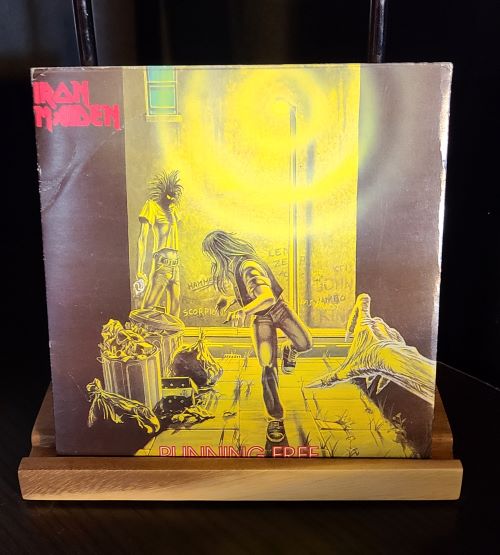
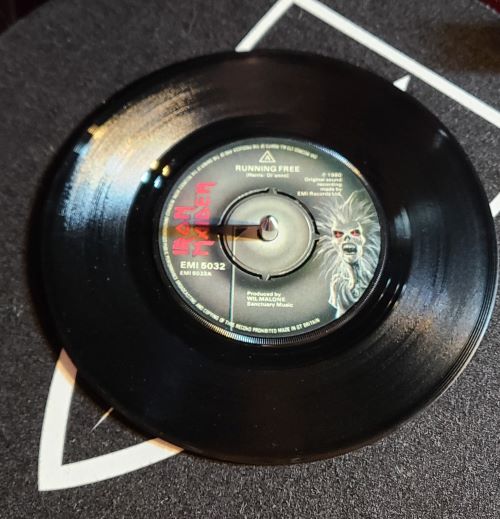
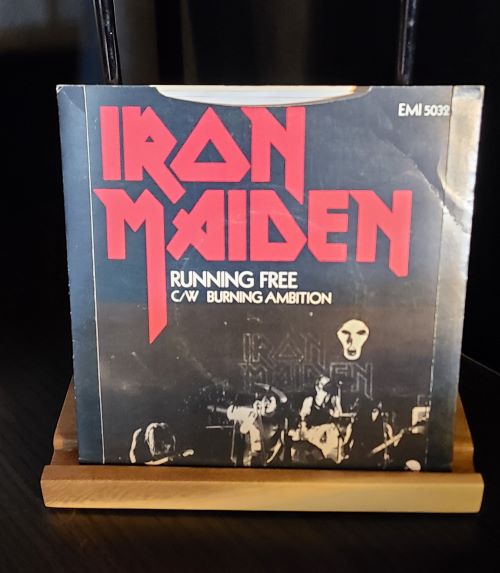
There are some different versions of this single around, but in this case they’re mostly just territorial presses and all of the versions have the same content. Mine is a UK pressing in a cardboard sleeve, nothing special to it.
This was the true debut multi-territory single from Iron Maiden, in so far as conventional single releases go. It was put out in advance of the debut album. This is the first official cover appearance of Maiden’s most famous member, Eddie. But as you can see he’s not that easy to make out – the band wanted the album to be his true “reveal” so here you see his face obscured. Putting his face on the label of the single’s record itself probably didn’t generate much suspense for the future “reveal.”
This official video from IM’s channel features both sides of the single in one clip.
Running Free
Maiden’s first single is a very simple and basic rock song, one of the relative few the group recorded. Paul Di’Anno penned the lyrics about being wild, young and free, somewhat inspired by his own young life.
The song is a long-time staple – it’s been played live a trillion times (don’t quote that) and is still one of the band’s best-known even in a career with 17 albums and a peak a few years away yet. A live version got its own single release a few years down the road, which I’ll cover when its time comes.
While Running Free doesn’t necessarily fit the mold of a quintessential Iron Maiden song, it’s one I enjoy quite a bit. It’s simple and pleasing and it works great live. It’s a massive part of the Maiden lexicon even if it got technically outclassed by other material.
Burning Ambition
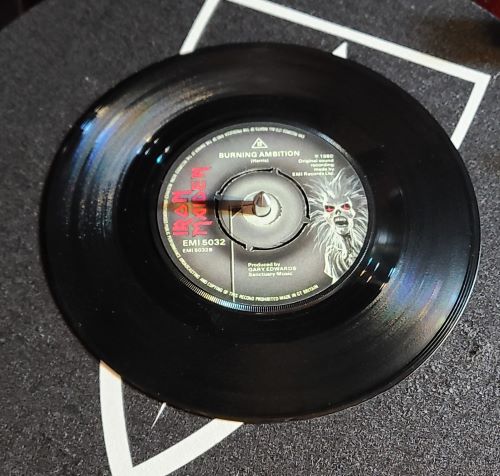
There’s a lot to talk about when it comes to Maiden B-sides, and honestly a lot of it isn’t good. But we come out of the gate with what might be the best B-side the band ever did. The song comes out with a classic rock vibe uncommon in Iron Maiden’s music but hits pretty hard once Di’Anno starts singing. The song deals with someone who warns his significant other not to hold him down as he pursues something beyond the mundane life.
Burning Ambition has a bit of band trivia behind it – it marks one of the few recorded performances of drummer Doug Sampson. Sampson played on the famous Soundhouse Tapes demo and a handful of other demo tracks, but that is all of his Maiden recording history for his year or so in the band.
Burning Ambition is on the short list of “best Maiden B-sides.” It does feel like enough of a departure to excuse its absence from an album but its quality is undeniable. The song has surfaced on some reissue and archive material over the years but is still a bit of a hidden gem in the catalog.
That’s all for today. It’s on through a run of 12 inch singles next, all with a bunch of stuff on them. Also the list will get a bit bigger next week – I’ve got a few CD singles in, and also I discovered that I have a few more records that what I thought I did. Thanks for not updating, Discogs.
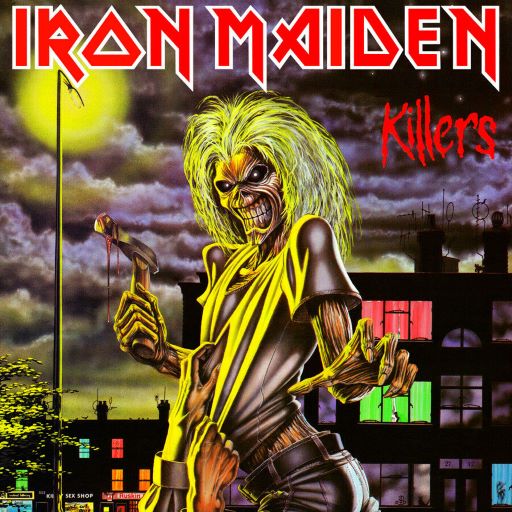
This week I’m going back to the second album from the band that would go on to become my favorite musical act ever. The album got solid reviews from critics and fans but would be the end of a brief beginning era for the group, who would soon re-tool and launch their signature sound on several coming albums through the 1980’s.
Iron Maiden – Killers
Released February 2, 1981 via EMI Records (U.K.)
My Favorite Tracks – Murders In The Rue Morgue, Wrathchild, Purgatory
This album has several versions – for this write-up I am using what is up on Spotify, a 2015 remaster that mirrors the initial British release. I have the original U.S. release on vinyl and a 1998 reissue on CD that feature the bonus track Twilight Zone, but for purposes of simplicity I’ll be covering the UK version. Other territories in the world got other versions of the album with slightly altered track listings.
Iron Maiden would see the first of a few significant lineup changes prior to recording Killers. Guitarist Dennis Stratton left the group due to disagreements with bandleader Steve Harris and manager Ron Smallwood. Stratton was replaced by Adrian Smith, who would go on alongside Dave Murray to establish Iron Maiden’s signature twin guitar attack through the rest of the 1980’s.
Killers was written almost entirely by Steve Harris, with a few notable exceptions – the title track is co-credited to singer Paul Di’Anno, and there is some funny business with the opening instrumental in terms of songwriting. Most of the songs except for two were written before the band recorded their self-named debut a year prior.
The Ides Of March
The first of two instrumentals on the album, which is a curious choice for the group. The song itself is fine and serves as a good intro to the album.
There are questions raised over the songwriting credits to this. Harris is the only credited songwriter for the song on Killers. However, a very similar-sounding instrumental called Thunderburst appears on fellow NWOBHM group Sampson’s 1980 album Head On. It credits the Sampson band members (including one Bruce Dickinson) as well as Steve Harris. It was Samson drummer Thunderstick who served as the common link – he had been in Iron Maiden in the late 70’s before that group recorded and apparently brought this instrumental over to Samson. It is a bit of interesting trivia if not much more, though there have been several other questions about where Steve Harris got songs from over the years.
Wrathchild
The “signature song” from Killers, this is the only song from the album that is still consistently performed live by Maiden. It opens with a trademark bassline from Steve Harris and gets down and dirty with a sound that still suits Paul Di’Anno but does seem to be morphing more into the business the band were about to get to after Killers. It features plenty of lead guitar flourishes and establishes the trademark rhythmic drive that the band would stake their name on. The song was one of two singles from the album, released as a “double A-side” with the US bonus track Twilight Zone.
Murders In The Rue Morgue
This is one of the two songs written specifically for the Killers recording sessions. It is an excellent tune that turns up the pace and fits with the “proto-punk/metal” hybrid the band had on offer on their debut. It is perfectly suited to Paul Di’Anno’s brash singing style. It’s a bit of a shame this song is kind of lost to time as it would be a joy to hear it today.
Another Life
This upbeat number hits home with more trademark Smith and Murray guitar work. The song rolls away with Di’Anno’s typical delivery and stands out a bit amongst the rest of the “leftovers” that Killers is home to.
Genghis Khan
The album’s second instrumental and apparently not one ghostwritten by a former member. I don’t mind the track at all but it doesn’t necessarily stand out and feels like a bit of padding for a record with a lot of songs but a fairly lean running time under 40 minutes.
Innocent Exile
It’s another song that, while not exceptional, does possess the hallmarks of that early Maiden sound and puts in a workmanlike performance on the album. It’s certainly fitting for the band at the time and it makes for a worthwhile listen.
Killers
The title track has always stood out a bit, as many of Maiden’s title tracks do. The tune gets a little time to build rather than being a brief attack like so many of the other songs. It displays a bit of both where the band was and where they were going. It’s another song that wouldn’t hurt by the occasional inclusion on a live set, though this album as a whole seems to be left aside for consideration anymore.
Prodigal Son
Up next is what stands out as the biggest departure sound-wise for Iron Maiden. Nothing across the rest of their 17-album catalog sets itself apart nearly as much as Prodigal Son does, save for perhaps the B-side Burning Ambition that was never released on an album. It is also the other song besides Murders… that was not written well ahead of time.
The songs is about someone who has consumed himself through the use of black magic or other mystic arts. It rolls more in the vein of a 70’s rock tune as opposed to the heavy metal that the band were playing at the time. It has an almost folk-like undertone to it. Many in the fanbase are very turned off by the song, I myself find it a nice inclusion though I certainly see where it sticks out like a sore thumb from the rest of the band’s work.
Purgatory
If the prior track is the band’s biggest departure from their sound, Purgatory is the biggest and brightest display of what Iron Maiden had on offer in the early 80’s. The blistering track slams through with those now well-known bass and guitar lines that just seem to roll off the instruments for the band. This song was released as the album’s second and last single. And in a bit of trivia – the artwork Derek Riggs originally drew for Purgatory’s single was held back by the band and used as the cover for The Number Of The Beast.
Drifter
The album and the Paul Di’Anno tenure of the band concludes with Drifter. It’s a fast and fine rocker that wouldn’t have been out of place on the debut. It wraps the up the album nicely.
Killers stands out as a record perhaps greater than its status as a collection of Steve Harris’ leftovers. Though the Paul Di’Anno era is widely revered in Maiden fandom, this album does tend to fly under the radar at times. The record did not perform as well in the UK charts as Iron Maiden did and only one song remains today as a typical inclusion into the band’s live set. Di’Anno would soon be booted from the group for a number of reasons and the band would go on to new heights with his replacement. I don’t spin this album as much as others from the catalog but I never find myself being upset when I do play it.
This song didn’t have an easily found live version with Paul, so this one with Bruce will do

 The Crooked Wanderer